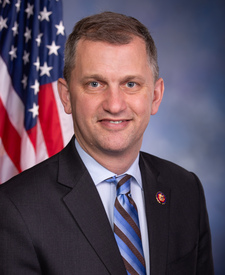
See how Sean Casten actually votes — against your values.
DeepSyte scores Sean Casten's record on the issues you care about — not party, not press releases. Take the 2-minute values quiz to see your personal alignment.
Sign in and take the values quiz to see how Sean Casten's votes line up with your views.
Prediction track record
How often we called Sean Casten's passage votes correctly, from their stated positions on each bill's tagged topics. Excludes “unclear” calls and abstentions.
A joint resolution to direct the removal of United States Armed Forces from hostilities within or against the Islamic Republic of Iran that have not been authorized by Congress.
Based on 7 data points across public statements and recorded votes · AI analysis of public records
119-hconres-64·Consistent
To direct the removal of United States Armed Forces from hostilities within or against Venezuela that have not been authorized by Congress.
85/100
What they said
Apr 7, 2026
The congressman opposes the president's stated threat to destroy a civilization, characterizing it as dangerous, reckless, and potentially constituting a war crime. He calls for accountability for administration officials who act on the threat and argues the president is unfit to serve under the 25th Amendment.
Voted Yea on To direct the removal of United States Armed Forces from hostilities within or against Venezuela that have not been authorized by Congress.
The congressman's statement opposes the president's threat to destroy a civilization and calls for accountability and restraint in military action. The bill directs removal of U.S. Armed Forces from unauthorized hostilities in Venezuela, which aligns with the statement's concern about reckless military threats and the need for congressional authorization before military action. The YES vote is consistent with the stated position that military action must be lawful, authorized, and not driven by dangerous rhetoric.
To direct the removal of United States Armed Forces from Venezuela that have not been authorized by Congress.
85/100
What they said
Apr 7, 2026
The congressman opposes the president's stated threat to destroy a civilization, characterizing it as dangerous, reckless, and potentially constituting a war crime. He calls for accountability for administration officials who act on the threat and argues the president is unfit to serve under the 25th Amendment.
The congressman's statement opposes the president's threat to destroy a civilization and calls for accountability and removal of unfit leadership. The bill directs removal of U.S. Armed Forces from Venezuela absent congressional authorization. Both reflect opposition to unilateral executive military action and concern about unauthorized use of force. The vote aligns with the statement's core position that military action requires proper legal and congressional authority, though the statement focuses on the president's fitness and war crimes while the bill addresses the specific mechanism of congressional authorization.
To direct the removal of United States Armed Forces from Venezuela that have not been authorized by Congress.
85/100
What they said
Jan 28, 2026
The lawmakers warn oil companies of legal and financial risks from participating in Trump Administration arrangements to control Venezuelan oil assets, citing constitutional limits on presidential authority and potential invalidation by Congress or future administrations.
The statement warns of legal risks from Trump Administration assertions of authority over Venezuelan assets without congressional authorization, citing constitutional limits on presidential power. The concurrent resolution directly implements that concern by requiring congressional authorization before U.S. Armed Forces remain in Venezuela. The rep's yes vote aligns with the statement's core position that unilateral executive action on Venezuela lacks legal foundation and congressional approval.
To direct the removal of United States Armed Forces from hostilities within or against Venezuela that have not been authorized by Congress.
85/100
What they said
Jan 28, 2026
The lawmakers warn oil companies of legal and financial risks from participating in Trump Administration arrangements to control Venezuelan oil assets, citing constitutional limits on presidential authority and potential invalidation by Congress or future administrations.
Voted Yea on To direct the removal of United States Armed Forces from hostilities within or against Venezuela that have not been authorized by Congress.
The statement warns of legal risks from Trump Administration assertions of authority over Venezuelan assets without congressional authorization, citing constitutional limits on presidential power and IEEPA constraints. The bill directs removal of armed forces from Venezuela absent congressional authorization. Both express concern about executive overreach regarding Venezuela and emphasize congressional constitutional authority. The statement focuses on economic/contractual risks while the bill addresses military force, but both align on the core principle that unilateral executive action on Venezuela lacks proper legal foundation.
To direct the removal of United States Armed Forces from Venezuela that have not been authorized by Congress.
75/100
What they said
Apr 7, 2026
The congressman opposes the president's stated threat to destroy a civilization, characterizing it as dangerous, reckless, and potentially constituting a war crime. He calls for accountability for administration officials who act on the threat and argues the president is unfit to serve under the 25th Amendment.
Casten's statement opposes military action against Venezuela (characterizing threats as dangerous war crimes) and his procedural 'yes' vote on a resolution directing removal of unauthorized armed forces from Venezuela aligns with that opposition. However, the vote is procedural rather than on final passage, and the statement focuses on the president's rhetoric and fitness for office rather than specifically on the Venezuela deployment question, creating some interpretive distance.
To direct the removal of United States Armed Forces from hostilities within or against Venezuela that have not been authorized by Congress.
75/100
What they said
Jan 28, 2026
The lawmakers warn oil companies of legal and financial risks from participating in Trump Administration arrangements to control Venezuelan oil assets, citing constitutional limits on presidential authority and potential invalidation by Congress or future administrations.
Voted Yea on To direct the removal of United States Armed Forces from hostilities within or against Venezuela that have not been authorized by Congress.
The statement and bill both address congressional authority over U.S. policy toward Venezuela, with the lawmakers asserting constitutional limits on presidential power. The rep's yes vote on a procedural motion to advance a resolution requiring congressional authorization for military hostilities in Venezuela aligns with the statement's emphasis on Congress's constitutional war powers and limits on presidential authority. However, the statement focuses on legal risks from oil asset control arrangements, while the bill specifically addresses military hostilities authorization—related but distinct questions within the broader Venezuela policy domain. The procedural vote type introduces some ambiguity about the rep's substantive intent.
To direct the removal of United States Armed Forces from Venezuela that have not been authorized by Congress.
75/100
What they said
Jan 28, 2026
The lawmakers warn oil companies of legal and financial risks from participating in Trump Administration arrangements to control Venezuelan oil assets, citing constitutional limits on presidential authority and potential invalidation by Congress or future administrations.
The statement and bill both challenge the Trump Administration's asserted authority over Venezuelan affairs without explicit congressional authorization. The rep's YES vote on the concurrent resolution directing removal of unauthorized armed forces aligns with the statement's emphasis on constitutional limits on presidential authority and Congress's war powers. However, the vote is procedural rather than passage, and the bill addresses military presence specifically while the statement focuses on oil asset control arrangements—related but distinct mechanisms of executive overreach.
Pairs with ambiguous language and high uncertainty are withheld until more data is available. Procedural, cloture, and amendment votes are excluded — they don't cleanly signal substantive support or opposition.
Pro analysis
AI rep analysis — Pro
Get an AI-narrated read on Sean Casten's full voting record against your stated values — aligned themes, conflicts, notable votes, and what to watch for.
We haven't extracted campaign positions for Sean Casten yet. Once their campaign website or position pages are processed, this card will track what they said vs how they voted.
Crossing the aisle
Passage votes where Sean Casten broke ranks with ≥75% of Democrats. Threshold catches substantively partisan splits; unanimous-ish or close votes are excluded.
Casten, Schakowsky Demand Trump Administration Prevent Displacement of Palestinians in West Bank
Position: The representatives urge the State Department to use diplomatic pressure on the Israeli government to prevent forced displacement of Palestinians from Khallet al-Sidra in the West Bank, ensure displaced families can safely return and rebuild, and hold perpetrators of settler violence accountable.
Washington, D.C. — U.S. Representatives Sean Casten (IL-06) and Jan Schakowsky (IL-09) led 30 House Democrats in a letter to Secretary of State Marco Rubio demanding the State Department engage with the Israeli government to prevent the forced displacement of Palestinian residents from the village of Khallet al-Sidra in the West Bank and to ensure displaced families can safely return and rebuild their homes.
“U.S. pressure on the Israeli government has proven crucial in protecting Palestinian communities in the past. Some communities facing significant demolition threats have remained in place in part due to sustained international and U.S. diplomatic attention” the lawmakers wrote. “We urge you to use your diplomatic influence to help ensure that residents of Khallet al-Sidra can safely return to their land without fear of violence and that immediate steps are taken to prevent further settler attacks and hold perpetrators accountable. This should include permitting the reconstruction of homes and essential infrastructure destroyed in recent incidents, as well as ensuring that Israeli authorities provide adequate protection to vulnerable communities consistent with their legal obligations.”
Khallet al-Sidra is a small shepherding community that has existed for decades, but in recent months, residents have faced escalating violence and intimidation from Israeli settlers, including arson attacks that have destroyed homes, vehicles, and essential livelihood structures. Reports indicate that these attacks, combined with threats and restricted access to the area, have created conditions that have forced families to flee and prevented them from returning or rebuilding.
This situation reflects a broader pattern of increasing settler violence and displacement across the West Bank. Since October 2023, hundreds of Palestinian communities have faced sustained attacks and pressure, contributing to widespread displacement and raising serious concerns under international humanitarian law. In 2025, the United Nations documented over 1,800 settler attacks affecting approximately 280 communities, and displacement has accelerated further in 2026.
In addition to Reps. Casten and Schakowsky, the letter was signed by Reps. Jerrold Nadler, Becca Balint, Eleanor Holmes Norton, Lloyd Doggett, Dave Min, Jennifer McClellan, Lateefah Simon, Jamie Raskin, Rosa DeLauro, Chris Deluzio, Betty McCollum, Mark Pocan, Al Green, Sylvia Garcia, Nikema Williams, André Carson, Chellie Pingree, Val Hoyle, Jared Huffman, Steve Cohen, Veronica Escobar, Mike Quigley, James McGovern, Mark DeSaulnier, Nanette Diaz Barragán, Joaquin Castro, Derek Tran, and Seth Moulton.
A copy of the letter can be found here. Text of the letter can be found below.
As Members of Congress who support a strong U.S.-Israel relationship, we are writing to urge you to engage with the Israeli government to prevent the forced displacement of Palestinian residents from the Bedouin village of Khallet al-Sidra, located near Mukhmas in the West Bank, and to ensure that residents are permitted to safely return and rebuild their homes following multiple devastating arson attacks by Israeli settlers. Allowing settlers to successfully use violence to displace shepherds from their homes, expand territorial control, and undermine prospects for peace is an unbearable injustice that runs counter to U.S. values and jeopardizes the possibility of a negotiated two-state solution to the Israel-Palestine conflict.
Khallet al-Sidra is a small shepherding community that has existed for decades. In recent months, residents have faced escalating violence and intimidation from Israeli settlers, including arson attacks that have destroyed homes, vehicles, and essential livelihood structures. Reports indicate that settlers have explicitly threatened residents, contributing to a coercive environment that has forced families to flee. When residents have attempted to return and rebuild, Israeli authorities have reportedly restricted access to the area and denied reconstruction, leaving families displaced and without recourse.
For decades, the Bedouin families of Khallet al-Sidra have made this land their home. They have bravely tried to remain despite increasing threats and pressure, but cannot continue to do so if the Israeli government continues to enable displacement and violence persists without effective intervention.
This situation reflects a broader and deeply concerning pattern of escalating settler violence and forced displacement across the West Bank. For the past two and a half years, Palestinian communities, especially Bedouin and shepherding communities in Area C, have faced sustained attacks, intimidation, and increasing barriers to remaining on their land. In 2025, the United Nations documented over 1,800 settler attacks that resulted in deaths, injuries, or property damage in approximately 280 communities across the West Bank. The United Nations has also documented the accelerating displacement this violence is causing. As of late March 2026, the Office for the Coordination of Humanitarian Affairs reported that 1,697 Palestinians from 33 communities had already been displaced in 2026 due to settler violence and access restrictions, surpassing the total for all of 2025, and that 38 communities have been emptied since 2023. This sustained pattern contributes to de facto forced displacement and raises serious concerns under international humanitarian law, including obligations related to the protection of civilian populations under occupation.
U.S. pressure on the Israeli government has proven crucial in protecting Palestinian communities in the past. Some communities facing significant demolition threats have remained in place in part due to sustained international and U.S. diplomatic attention. We urge you to use your diplomatic influence to help ensure that residents of Khallet al-Sidra can safely return to their land without fear of violence and that immediate steps are taken to prevent further settler attacks and hold perpetrators accountable. This should include permitting the reconstruction of homes and essential infrastructure destroyed in recent incidents, as well as ensuring that Israeli authorities provide adequate protection to vulnerable communities consistent with their legal obligations.
Thank you for your attention to this urgent humanitarian matter. Protecting vulnerable communities from displacement and violence is critical to upholding shared values and preserving the possibility of a just and lasting peace.
Casten Proposes Measure to Protect Ballot Access for Overseas Service Members
Position: Rep. Casten introduced the Military VOTE Act to modernize absentee voting procedures for overseas service members and their families by requiring online voter registration and ballot requests, electronic ballot delivery by default, and multi-election absentee ballot provisions without reapplication.
Washington, D.C. — Today, Congressman Sean Casten (IL-06) introduced the Military Voter Overseas Technical Enhancement (VOTE) Act, legislation to eliminate the bureaucratic hurdles that often hinder American servicemembers’ ability to vote while overseas on active duty.
“Our service members defend our democracy abroad; they shouldn't have to fight to participate in it at home,” said Rep. Casten. “For too long, outdated absentee processes have effectively disenfranchised those in uniform. The Military VOTE Act modernizes this system, ensuring that a transition in duty station never means a loss of their fundamental right to vote.”
“The introduction of the Military VOTE Act marks a significant step forward in modernizing access for eligible military and overseas voters,” said Sam Oliker-Friedland, CEO of Responsive Gov Action. “By implementing commonsense reforms, the men, women, and families who sacrifice so much for our freedoms will face fewer burdens to exercising their right to vote. If passed, the bill will also ease administrative burdens, provide funding for election officials, and include a study of automatic voter registration for American service members. Congress must now build on this momentum to ensure the right to vote remains accessible for all service members, their families, and overseas citizens, and I thank Congressman Casten for his leadership on this initiative."
The 1986 Uniformed and Overseas Citizens Absentee Voting Act (UOCAVA) requires states to allow military members on active duty stationed away from their voting residence, their eligible family members, and other overseas citizens to vote via absentee ballot in federal elections.
However, members of the Armed Forces often face barriers to full participation as voters, particularly as they move between duty sites domestically and around the world. In 2022, 26% of military voters participated in the election, as compared to 48% of all voting-eligible Americans. Many who would have voted reported that the process of requesting an absentee ballot and not receiving a ballot prevented them from voting.
The Military VOTE Act remedies this issue by requiring states to accept voter registration and absentee ballot requests online or by email. It ensures ballots are sent electronically by default if a voter hasn’t selected a preference, guarantees absentee ballots for all future elections without the need to reapply, and prohibits rejecting applications simply because they were submitted early.
Specifically, the Military VOTE Act would:
Require acceptance of voter registration and absentee requests online or by email;
Require that states send ballots electronically by default when a voter hasn’t selected a preference;
Require that states provide absentee ballots for at least two federal elections, and for all elections thereafter if the voter receives their blank ballot electronically, without needing to reapply once a voter registers and requests an absentee ballot;
Prohibit absentee ballot application rejections based on early submission; and
Task the Department of Defense with improving voter information for service members and studying automatic registration when they join or move.
Full text of the legislation can be found here.
A one-page summary can be found here.
Casten, Schakowsky, Beyer Reintroduce Energy Consumer Protection Act to Crack Down on Market Manipulation
Position: The representatives support legislation that would strengthen Federal Energy Regulatory Commission authority to ban companies from energy markets for price manipulation or false market information, framed as protecting consumers from rising energy costs.
Washington, D.C. – Today, U.S. Representatives Sean Casten (IL-06), Jan Schakowsky (IL-09), and Don Beyer (VA-08) reintroduced the Energy Consumer Protection Act, bicameral legislation aimed at strengthening federal oversight of energy markets and protecting consumers from price manipulation.
The legislation would provide the Federal Energy Regulatory Commission (FERC) with additional authority to ban companies from participating in electricity and natural gas markets if they are found to have manipulated energy prices or submitted false or misleading market information.
“Electricity prices have skyrocketed under the Trump Administration due to policies that protect fossil fuel companies at the expense of consumers,” said Congressman Sean Casten. “Our bill, the Energy Consumer Protection Act, helps bring those costs down and prioritizes American families by giving FERC the additional authorities it needs to prevent market manipulation."
“As energy costs soar, we can’t risk letting bad actors rig the electricity market to line their own pockets at the expense of families," said Congresswoman Jan Schakowsky. "I'm reintroducing the Energy Consumer Protection Act to give the Federal Energy Regulatory Commission the tools it needs to hold traders who manipulate the market accountable and protect consumers from corporate greed.”
"American families are spending more on their energy bills than ever before as the Trump Administration continues to prioritize fossil fuel profits over affordability, and we can't afford market manipulators making matters worse," said Congressman Don Beyer. "Our bill, the Energy Consumer Protection Act, would provide the FERC with the ability to hold those manipulators accountable and keep energy costs down for consumers."
Current law prohibits energy market manipulation and false or misleading information. However, existing enforcement tools are not sufficient to deter repeat violations or protect consumers from ongoing abuse.
Just last week, a company was ordered to pay more than $1 billion in penalties for fraud in energy capacity markets, underscoring the need for stronger enforcement authority.
Companion legislation was introduced in the U.S. Senate by U.S. Senators Catherine Cortez Masto (D-NV) and Maria Cantwell (D-WA).
Text of the legislation can be found here.
Casten, Castro, Van Hollen, Kaine Demand Transparency from Trump Administration on United States-Venezuela Energy Deal
Position: The lawmakers demand transparency and a Government Accountability Office audit of the Trump Administration's energy deal with Venezuela, citing concerns about lack of oversight, potential corruption, money laundering risks, and unclear anti-corruption controls.
Washington, D.C. — Today, Congressman Sean Casten (IL-06), Congressman Joaquin Castro (TX-20), Senator Chris Van Hollen (D-MD), and Senator Tim Kaine (D-VA) are demanding transparency from the Trump Administration on its energy deal with Venezuela, an unprecedented attempt in seizing control of a sovereign nation’s natural resources. The members are pressing the Government Accountability Office (GAO) to conduct a full audit of this deal.
The lawmakers underscored that President Trump’s executive order gives his administration unprecedented authority over Venezuelan oil supply, writing, “This gives senior Trump Administration officials sweeping discretion over how the Venezuelan oil funds will be spent and it is unclear whether the appropriate anti-corruption and anti-money laundering controls exist to ensure that the funds are not enabling the illicit drug trade and other criminal activities in Venezuela.
The lawmakers criticized the lack of oversight of the deal, writing, “Treasury Secretary Scott Bessent said that no formal audit agreement was in place, but his agency plans to engage outside auditors to review future payments. This lack of a defined oversight mechanism, combined with the arrangement's significant scale and its national security and foreign policy implications, warrants independent congressional oversight.”
They concluded by requesting a GAO audit and that the “scope of the review cover both the period of time that the funds were routed to accounts in Qatar, the current arrangement for funds to be routed to U.S. accounts controlled by the Treasury Department, and any other successor mechanism utilized by the Administration to facilitate the sale of Venezuelan oil, custody of these assets, and disbursement of these funds.”
In part, the lawmakers are requesting that the GAO audit include:
A full accounting of the agencies, employees, and contractors involved in the deal.
A full account of the financial structure of the arrangement, including how proceeds are dispersed and the financial executives who stand to benefit.
Potential areas for fraud, waste, abuse, and conflicts of interest.
Read the full details of the audit and the full letter here.
Casten Statement on Trump Threat to Destroy a "Whole Civilization"
Position: The congressman opposes the president's stated threat to destroy a civilization, characterizing it as dangerous, reckless, and potentially constituting a war crime. He calls for accountability for administration officials who act on the threat and argues the president is unfit to serve under the 25th Amendment.
Washington, D.C. — U.S. Congressman Sean Casten released the following statement:
"The president’s threat to wipe out an entire civilization is dangerous, reckless, and would constitute a war crime under both domestic and international law. This rhetoric undermines U.S. credibility, endangers civilians, and places American personnel in untenable legal, moral, and mortal jeopardy. Anyone in the Trump Administration who acts on this threat and violates the law must be held accountable, including criminal liability.
"The urgency of the situation demands immediate action. This is the type of moment the 25th Amendment was drafted to address. The president is unfit to serve, and lives are at stake. The entire chain of command has a responsibility in this moment to step up and put their country over their loyalty to the president."
Casten Introduces Bill to Ensure American Workforce Meets National Defense Needs
Position: Rep. Casten introduced legislation to clarify that Defense Production Act funds can be used by domestic companies to recruit, train, and place workers in defense-critical occupations, addressing skilled labor shortages in industries essential to national defense.
Washington, D.C. — U.S. Congressman Sean Casten (IL-06) introduced the DPA Workforce and Skilled Labor Needs Act of 2026, legislation that allows available funds to be used to recruit, train, or place workers in defense-critical occupations, ensuring that U.S. businesses have the necessary resources to fulfill production needs under the Defense Production Act (DPA).
“Ensuring the federal government stands ready to meet any skilled labor needs required to support the national defense of the United States is of the utmost importance,” said Rep. Sean Casten. “This bill addresses the current gap between need and ability by directing federal agencies to assess existing workforce challenges, while also providing for greater funding flexibility for domestic companies to fill their workforce proactively.”
The DPA provides the president with an array of authorities to ensure that domestic companies, when called upon, are capable of providing essential materials and goods needed for the national defense, including for responding to military conflicts, natural disasters, acts of terrorism, or other national emergencies. For example, the DPA has been used to facilitate immediate access to emergency shelter, food, communications equipment, and other essential items during major hurricanes, floods, and wildfires. In addition, during the COVID-19 pandemic, the DPA was used to secure medical supplies, including ventilators, masks, and vaccine materials.
Under the DPA, the president can extend funding to eligible businesses to address projected shortfalls in industrial resources, critical technology items, or essential materials needed for national defense. This can include supporting initiatives to address skilled workforce shortages in critical industries. The DPA Workforce and Skilled Labor Needs Act fills a funding gap by clarifying that domestic companies can use funds to hire or retrain workers to address those shortages proactively. For example, according to a recent Government Accountability Office (GAO) report, private maritime shipbuilders face workforce limitations that make it difficult to meet goals set by the Department of Defense (DoD).
The DPA Workforce and Skilled Labor Needs Act of 2026 permits the use of available funds to address workforce shortages and skills gaps that could affect U.S. national defense preparedness. In addition, this bill would direct the appropriate federal agencies to identify any existing skilled labor gaps in critical industries that could affect their ability to fulfill DPA production requirements, to provide legislative and administrative recommendations, and to include relevant information in annual reports.
These provisions were included as a part of H.R. 7688, the DPA Modernization Act of 2026, which unanimously passed the House Financial Services Committee on March 4, 2026.
Text of the legislation can be found here.
Casten Hosts Roundtable to Highlight Sheldon Peck Homestead Historic Site | U.S. Congressman Sean Casten
Lombard, IL — U.S. Congressman Sean Casten (IL-06) hosted a roundtable with historians, preservationists, and local leaders to highlight the importance of historic sites and stories that have shaped our nation’s history. The roundtable was co-hosted by Landmarks Illinois and the Lombard Historical Society and took place at the Sheldon Peck Homestead in Lombard.
“The Sheldon Peck Homestead is a notable place in both American and Illinois’ history. Sheldon and Harriet Peck were not only outspoken abolitionists, but they also provided shelter to freedom seekers along the Underground Railroad,” said Rep. Sean Casten. “Now more than ever, as the Trump Administration attempts to erase our nation’s past, it’s important to preserve and honor places like the Peck Homestead. It’s past time the Peck Homestead is recognized on the National Register of Historic Places.”
The Peck Homestead is registered on the National Park Service Network to Freedom as a verified stop on the Underground Railroad. Congressman Casten, along with experts and local leaders, participated in a discussion on the importance of the Peck Homestead, other historic sites in Illinois, and why naming the Peck Homestead to the National Register of Historic Places would benefit the local community.
"The Sheldon and Harriet Peck Homestead in Lombard should be included in the National Register of Historic Places,” said Bonnie McDonald, President & CEO of Landmark Illinois. “The fact that this documented Underground Railroad site, which is included in the Network to Freedom, has been determined ineligible for National-Register listing proves that preservation practices must evolve. Landmarks Illinois has been working hard to do just that. We thank Rep. Casten for joining us in this work and for his commitment to ensuring the Peck Homestead receives the recognition it deserves. The National Register of Historic Places was created to recognize significant places across the nation, its territories, and tribal lands that tell our country's collective story. The lack of places included in the National Register that tell our full history, like the Peck Homestead, must be rectified."
"The Sheldon Peck Homestead is one of the most important historic sites in Lombard and an essential part of Illinois history,” said Alison Costanzo, Executive Director of the Lombard Historical Society. “For decades, the Lombard Historical Society and our community have worked to preserve this place and the stories it holds, from Sheldon Peck’s legacy as a nationally recognized folk artist and abolitionist to the story of 'Old Charley,' a freedom-seeking man connected to the household. Since the 2012 review, we have undertaken additional research, archaeology, and documentation to address the questions raised during the earlier nomination process. As our nation approaches America 250, this is the right moment to ensure that places like the Peck Homestead — where the ideals of democracy, freedom, and civic courage were lived out — are recognized as part of our national story."
Other attendees of the event included Jeanne Schultz Angel from the Midwest Underground Railroad Network and Illinois Association of Museums, Sara Faddah and Dario Durham from 77 Flavors of Chicago, Jeffrey Nevins from the Illinois Department of Natural Resources, and Sara Phalen from the West Chicago City Museum, Illinois America 250 Commission.
Photos and videos from the roundtable can be found here.
Casten, Van Hollen Push for Answers on Venezuelan Oil Proceeds in U.S. Treasury-Run Accounts
Position: The lawmakers are requesting transparency and congressional oversight of the Treasury Department's handling of Venezuelan oil sale proceeds, questioning the legal authority and proper documentation for the arrangement.
Washington, D.C. — U.S. Congressman Sean Casten (IL-06) and U.S. Senator Chris Van Hollen (D-MD) pressed Treasury Secretary Scott Bessent for answers on the Treasury’s claimed authority over, and handling of, funds generated from the sale of Venezuelan oil.
“On February 4, 2026, at a House Financial Services Committee hearing, you agreed to provide the specific statutory authority the Treasury Department is relying on to custody and exercise control over Venezuela’s sovereign assets, as well as a copy of the written agreement referenced in your testimony and additional details regarding the arrangement with the Qatari bank,” the lawmakers wrote. “Regardless of whether the Qatari bank account has been wound down, it is important that the Administration produce related documents, submit to congressional oversight, and provide the American people with much-needed transparency on this opaque and legally questionable plan.”
On January 9th, President Donald Trump issued an Executive Order directing the Treasury Secretary to hold and safeguard the proceeds from the sale of Venezuelan oil and to facilitate transactions of these funds as directed by the Secretary of State.
In January, Secretary of State Marco Rubio confirmed that $500 million in proceeds from the first sale of Venezuelan oil were placed into a bank account in Qatar. Secretary Rubio also claimed that the Treasury Department has a written agreement with the Venezuelan government to review monthly budget requests from this bank account in Qatar. Energy Secretary Chris Wright recently stated that these funds are no longer going to Qatar and are being deposited into a U.S. Treasury-managed account.
In February, under questioning from Rep. Casten during a House Financial Services Committee hearing, Secretary Bessent was unable to detail where, how, or under what authority the Treasury Department is controlling these Venezuelan oil funds. Secretary Bessent also denied the existence of any written agreement with the Venezuelan government that governs how these funds will be spent. A video of this testimony can be found here.
Text of the letter can be found below. A copy of the letter can be found here.
In the weeks since the United States captured Venezuelan President Nicolás Maduro, the Trump Administration has overseen the sale of Venezuelan oil. President Trump stated that the United States would take control of up to 50 million barrels of Venezuelan oil, valued at approximately $2.8 billion, and sell the oil at market price. In a January 6, 2026, Truth Social post, President Trump stated that the oil revenues “will be controlled by me, as President of the United States of America, to ensure it is used to benefit the people of Venezuela and the United States!”
On January 9, 2026, President Trump issued an Executive Order (EO) declaring that the proceeds from these oil sales are the sovereign property of the Government of Venezuela and directing the Treasury Secretary to hold these funds solely in a “custodial and governmental capacity.” The EO further directs the Treasury Secretary to “comply with instructions regarding disbursements or transfers…as may be determined by the Secretary of State”. The President invoked the International Emergency Economic Powers Act (IEEPA) and declared a national emergency, stating that the risk of court-ordered seizure or other actions against these funds constitutes an unusual and extraordinary threat to U.S. national security and foreign policy.
At a January 28, 2026, Senate Foreign Relations Committee hearing, Secretary of State Marco Rubio confirmed the first sale of Venezuelan oil, valued at $500 million, had been deposited in a Qatari bank account. He further testified that $300 million had been transferred to the Venezuelan government to meet payroll obligations for public sector employees. Secretary Rubio also testified that the Treasury Department has a written agreement with the Venezuelan government to review monthly budget requests from the Qatari bank account. He stated that the $200 million in oil proceeds remained in a “short-term account” and would ultimately be transferred to a U.S. Treasury account.
On February 4, 2026, at a House Financial Services Committee hearing, you agreed to provide the specific statutory authority the Treasury Department is relying on to custody and exercise control over Venezuela’s sovereign assets, as well as a copy of the written agreement referenced in your testimony and additional details regarding the arrangement with the Qatari bank. Regardless of whether the Qatari bank account has been wound down, it is important that the Administration produce related documents, submit to congressional oversight, and provide the American people with much-needed transparency on this opaque and legally questionable plan.
We request that you respond to the following questions by no later than March 25, 2026:
Under what statutory authority is the Treasury Department relying on to exercise custody over the sovereign assets of another country? Please provide the relevant statutory citations.
Under what statutory authority did the Treasury Department exercise custody indirectly through a third-country financial institution and direct the release of funds through an offshore bank account owned by the Government of Venezuela? Please provide the relevant statutory citations.
Has the Treasury Department’s Office of the General Counsel issued a written legal opinion concluding that the Department can lawfully exercise custody over Venezuela’s sovereign assets under these circumstances?
If so, please provide a copy of that legal opinion.
If not, please describe the legal analysis on which the Department is relying.
Did the Treasury Department request or receive a legal opinion from the Justice Department’s Office of General Counsel regarding the Department’s custody of Venezuelan sovereign assets under these circumstances?
If so, please provide a copy of this opinion.
Please provide a copy of the written agreement between the Treasury Department and Venezuela’s interim government regarding monthly budget requests, payments, and disbursements.
Is there a memorandum of understanding or other written agreement that governed or is currently governing the role of the Qatari bank that held or is currently holding these funds?
If so, please provide a copy of this document.
In your testimony, you indicated that no formal audit agreement is currently in place, but the Treasury Department will bring in outside auditors. Secretary Rubio committed to notifying the Senate Foreign Relations Committee once an audit system is established.
Has this audit system been established, and if so, when did it begin operating?
Will you commit to providing notification once the Treasury Department has finalized this audit system?
On February 13, 2026, Energy Secretary Chris Wright stated that these funds “won’t go to Qatar anymore” and there is a U.S. Treasury account. He also said that Venezuelan oil sales have totaled $1 billion and in the next few weeks will bring in another $5 billion.
As of the date of your response to this letter, what is the current balance being held in this Qatari bank account?
Has the Qatari bank account been closed? If so, were any funds transferred to another account upon closure? To what account or where were these funds transferred?
Under what statutory authority is the Treasury Department transferring Venezuelan oil revenues from an offshore bank account to a U.S. Treasury account?
As of the date of your response to this letter, what is the current balance being held in the designated U.S. Treasury account?
Since January 28, 2026, has the Treasury Department authorized or facilitated any additional payments to the Venezuelan government or to any other recipients from either the Qatari account or from the U.S. Treasury account? If so, please provide an itemized list with details on the transaction amounts, recipients, and the purposes for which the payments were authorized.
The Federal Reserve Bank of New York serves as the primary fiscal agent for the Treasury Department, including related to management of the Treasury General Account.
Are the Venezuelan oil funds being held in a U.S. Treasury custodial account at the Federal Reserve Bank of New York? If so, are these funds being held in the Treasury General Account or held in a segregated custodial account?
Are the Venezuelan oil funds being held in a subaccount of the Government of Venezuela or Central Bank of Venezuela at the Federal Reserve Bank of New York or at any other U.S. insured depository institution?
Has any U.S. financial institution been involved in or will be involved in transactions related to or the movement of Venezuelan oil funds?
In early January, the Office of Foreign Assets Control (OFAC) issued licenses permitting the commodity firms Vitol and Trafigura to engage in certain sales of Venezuelan oil. Both firms have previously been involved in bribery schemes, and a senior employee of Vitol was a major donor to President Trump’s 2024 campaign. Please describe the process by which Vitol and Trafigura received these licenses, including whether other firms with comparable businesses were considered for these licenses.
Casten, Castro Propose Measure to Investigate Trump’s Questionable Handling of Venezuelan Oil Money
Position: Representatives Casten and Castro introduced legislation requiring an independent Government Accountability Office audit of the Trump Administration's handling of Venezuelan oil proceeds, citing lack of transparency regarding hundreds of millions of dollars in funds held in offshore accounts.
Washington, D.C. — U.S. Congressmen Sean Casten (IL-06) and Joaquin Castro (TX-20) introduced the Venezuela Oil Proceeds Transparency Act, legislation that directs the non-partisan Government Accountability Office to conduct an independent audit of the Trump Administration’s handling of hundreds of millions of dollars in Venezuelan oil funds concealed in offshore bank accounts.
The Trump Administration funneled $500 million in proceeds from its first sale of Venezuelan oil through a bank account in Qatar, without providing any transparency into how these funds were controlled, spent, or used by the interim Venezuelan government.
“From the very beginning, it’s been clear that key members of the Trump Administration are either unaware or unwilling to detail where, how, and under what authority they are controlling funds from Venezuelan oil sales,” said Rep. Sean Casten. “Americans deserve a clear answer, but as Secretary Bessent demonstrated when testifying to the House Financial Services Committee, the Trump Administration isn’t going to provide the information voluntarily. The Venezuela Oil Proceeds Transparency Act will help show where these funds are and who is benefiting from the president’s scheme.”
“President Trump’s regime change war in Venezuela was always about oil,” said Rep. Joaquin Castro. “The Trump Administration has ignored the will of the American people and avoided transparency since the very beginning to gain power, land, and oil. After ousting Nicolás Maduro, the administration seized millions of barrels of oil and created offshore accounts to enrich President Trump and his cronies. It is a brazen act of fraud and corruption. The Venezuela Oil Proceeds Transparency Act will provide answers to the American people and hold oil executives and President Trump accountable for their unprecedented self-dealing.”
During a recent House Financial Services Committee hearing, Treasury Secretary Scott Bessent testified, under questioning from Rep. Casten, that he was unaware which accounts Treasury was using to manage the funds from Venezuelan oil sales, despite President Trump’s January 9th Executive Order explicitly stating that Treasury is to hold these assets in custody and facilitate disbursements or transfers. A video of the testimony can be found here.
Specifically, the Venezuela Oil Proceeds Transparency Act requires the GAO to:
Within 30 days, initiate an audit of the United States-Venezuela energy deal, including the activities of the State, Energy, and Treasury Departments, and any other agencies, employees, or contractors or entities involved in implementing the deal;
Within 30 days after the audit is completed, provide a briefing to the chair and ranking members of the Senate and House committees and subcommittees of jurisdiction, which shall include preliminary findings, scope, and any identified risks of fraud, abuse, or conflicts of interest identified while conducting the audit.
Within 90 days after the audit is completed, provide a report (which may include a classified annex) to House and Senate leadership, chairs and ranking members of committees of jurisdiction, and any other members of Congress that request the report.
A Senate-companion of the Venezuela Oil Proceeds Transparency Act was previously introduced by Senate Democratic Leader Chuck Schumer (D-NY) and U.S. Senator Adam Schiff (D-CA).
Text of the legislation can be found here.
Position: Congressman Casten opposes the Trump Administration's military hostilities against Iran, arguing that the president lacks constitutional and legal authority to wage war without congressional authorization and has failed to demonstrate an imminent threat to the United States.
Washington, D.C. — U.S. Congressman Sean Casten (IL-06) voted for House Concurrent Resolution 38, a bipartisan War Powers Resolution to prohibit the Trump Administration’s hostilities against Iran, and released the following statement:
“The president started a war without a plan, clear endgame, legal justification, or congressional authorization. American service members and innocent civilian lives have been lost because of the president’s actions. He has done everything he can to plunge the region into dangerous instability and drag the United States into another open-ended conflict.
“This war has already cost the American people billions of dollars and comes in the wake of the Trump Administration’s unauthorized spending cuts to programs that actually benefit Americans. He has violated our power of the purse and prioritized chaos in Iran over making life better for Americans at home.
“Neither the Constitution nor the War Powers Act allows the president to start a war. That authority rests solely with Congress. As recently as yesterday, the president himself called this a war. As did his Secretary of Defense.
“In order for the president to engage in hostilities against another country without congressional authorization, he must demonstrate there is an imminent threat to the United States. In the weeks leading up to the strikes, as the president moved US troops into the region, he did not make the case for an imminent threat. In the days since the attack, he has not shown that there is an imminent threat. The word “imminent” does not even appear once in the Administration’s War Powers notification to Congress.
“Instead, the president and his administration have provided questionable reasoning for their actions that are on shaky legal grounds. They have obfuscated, backtracked, contradicted, and embarrassed themselves. No one in the White House is quite sure why they bombed another country. They only know that Donald Trump’s ego told them to.
“Our Constitution is clear: our sons and daughters should not be sent into harm’s way without debate and authorization by the people’s representatives in Congress. While Iran’s regime is repressive and destabilizing, that does not justify unauthorized military strikes. That is why I voted to stop the Trump Administration’s hostilities against Iran.”
Source: GDELT 2.0 GKG, filtered to a curated list of national outlets. Inclusion is not endorsement; opinion pieces and reported news are mixed.
Recent stock activity
Periodic transaction reports filed under the STOCK Act — disclosed by the rep, sourced from public filings.
No disclosed trades on record.
Source: open-data mirrors of the Senate eFD and House Clerk financial-disclosure systems. Disclosure within 30 days of trade is required by law (45 for spouse/dependent trades).
Top PAC donors · 2026 cycle
Political action committees that gave the most to this rep's principal campaign committee this cycle. PAC giving is direct organizational support — industry, ideological, or leadership.
1.PAC TO THE FUTURELeadership3 contributionsMember-of-Congress leadership PAC — specific affiliations and policy positions not inferable from the name.AI · low$15,000
2.MACHINISTS NON PARTISAN POLITICAL LEAGUE OF THE INTERNATIONAL ASSOCIATION OF MACHINISTS & AEROSPACE WORKERSLabor3 contributionsTrade-union PAC of the International Association of Machinists & Aerospace Workers — backs candidates supporting union organizing, prevailing wages, and aerospace manufacturing jobs.AI$15,000
3.NEW DEMOCRAT COALITION PAC, A QUALIFIED MULTI CANDIDATE COMMITTEELeadership3 contributionsMember-of-Congress leadership PAC affiliated with the New Democrat Coalition caucus — directs contributions to allied Democratic candidates.AI$15,000
4.AMERIPAC THE FUND FOR A GREATER AMERICAIdeological3 contributionsIdeological PAC with a patriotic framing — specific policy positions not inferable from the name alone.AI · low$15,000
5.NEWDEM FUND FOR THE FUTURELeadership1 contributionMember-of-Congress leadership PAC affiliated with the New Democrat Coalition — directs contributions to allied Democrats.AI$10,802
6.UBS AMERICAS INC. POLITICAL ACTION COMMITTEE (UBS PAC)Finance2 contributionsFinancial-services PAC for UBS Americas — backs candidates and policies supporting banking, investment, and capital-markets regulation.AI$10,000
7.NATIONAL ASSOCIATION OF LETTER CARRIERS OF U.S.A. POLITICAL FUND (LETTER CARRIER POLITICAL FUND)Public Sector2 contributionsPublic-sector union PAC representing U.S. Postal Service letter carriers — backs candidates supporting postal worker wages, benefits, job security, and USPS funding.AI$10,000
8.IBEW PAC VOLUNTARY FUNDLabor2 contributionsTrade-union PAC for the International Brotherhood of Electrical Workers — backs candidates supporting union organizing, prevailing wages, and infrastructure investment.AI$10,000
9.INT'L UNION OF BRICKLAYERS AND ALLIED CRAFTWORKERS2 contributions$10,000
10.AMALGAMATED TRANSIT UNION - COPELabor2 contributionsTrade-union PAC for transit workers — backs candidates supporting public transportation funding, worker protections, and collective bargaining rights.AI$10,000
Source: OpenFEC (api.open.fec.gov) Schedule A receipts where contributor type is “committee.” Aggregated by contributing committee. Self-transfers from joint-fundraising / victory committees are excluded.
Top individual contributors · 2026 cycle
Itemized individual contributions over $200 to this rep's campaign committee, aggregated by donor employer. PAC giving is shown above; this section is people, not organizations.
1.CME GROUP$9,850
2.INTERCAPITAL PARTNERS LLC$7,100
3.NORTHWESTERN UNIVERSITY$7,050
4.CREATIVE WERKS LLC$7,000
5.FORWARD FINANCING$7,000
6.DUPAGE MEDICAL GROUP$7,000
7.NEWSWEB CORPORATION$7,000
8.CAPITAL GROUP.$7,000
9.WANXIANG AMERIC CORPORATION$7,000
10.GROSVENOR CAPITAL MANAGEMENT$7,000
Source: OpenFEC Schedule A receipts where contributor type is “individual,” aggregated by the donor's self-reported employer. This is a geographic / industry correlation, not a corporate endorsement.