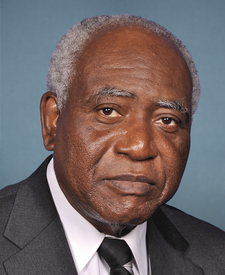
See how Danny K. Davis actually votes — against your values.
DeepSyte scores Danny K. Davis's record on the issues you care about — not party, not press releases. Take the 2-minute values quiz to see your personal alignment.
Sign in and take the values quiz to see how Danny K. Davis's votes line up with your views.
Prediction track record
How often we called Danny K. Davis's passage votes correctly, from their stated positions on each bill's tagged topics. Excludes “unclear” calls and abstentions.
100%
Accuracy
1
Correct
0
Incorrect
12
Pending
Right119-hconres-68
To direct the removal of United States Armed Forces from Venezuela that have not been authorized by Congress.
A joint resolution to direct the removal of United States Armed Forces from hostilities within or against the Islamic Republic of Iran that have not been authorized by Congress.
A joint resolution to direct the removal of United States Armed Forces from hostilities within or against the Islamic Republic of Iran that have not been authorized by Congress.
Based on 8 data points across public statements and recorded votes · AI analysis of public records
119-hconres-68·Consistent
To direct the removal of United States Armed Forces from Venezuela that have not been authorized by Congress.
95/100
What they said
Jan 8, 2026
The congressman opposes unilateral executive military action in Venezuela without congressional authorization, arguing that such action violates constitutional separation of powers and that Congress, not the President alone, holds authority over acts of war.
The congressman's statement explicitly opposes unilateral executive military action in Venezuela without congressional authorization, citing constitutional separation of powers concerns. His yes vote on a resolution directing removal of U.S. Armed Forces from Venezuela unless Congress has authorized such action directly aligns with this stated position. Both the statement and vote reflect the same constitutional principle: that Congress, not the President alone, holds authority over acts of war.
To direct the removal of United States Armed Forces from hostilities within or against Venezuela that have not been authorized by Congress.
92/100
What they said
Apr 9, 2026
Congressman Davis calls for immediate House passage of a War Powers Resolution to reassert congressional constitutional authority over military action, require congressional approval for continued military engagement, and prevent unauthorized escalation of U.S. military involvement abroad.
Voted Yea on To direct the removal of United States Armed Forces from hostilities within or against Venezuela that have not been authorized by Congress.
Congressman Davis's statement explicitly calls for immediate passage of a War Powers Resolution to reassert congressional authority, require congressional approval for military action, and end unauthorized hostilities. His vote in favor of H.Con.Res. 64, which directs removal of U.S. Armed Forces from unauthorized hostilities in Venezuela absent congressional authorization, directly aligns with these stated positions. Both the statement and vote reflect the same constitutional principle that military engagement requires congressional approval.
To direct the removal of United States Armed Forces from hostilities within or against Venezuela that have not been authorized by Congress.
92/100
What they said
Jan 8, 2026
The congressman opposes unilateral executive military action in Venezuela without congressional authorization, arguing that such action violates constitutional separation of powers and that Congress, not the President alone, holds authority over acts of war.
Voted Yea on To direct the removal of United States Armed Forces from hostilities within or against Venezuela that have not been authorized by Congress.
Rep. Davis's statement explicitly opposes unilateral executive military action in Venezuela without congressional authorization, arguing that the Constitution vests authority over acts of war in Congress, not the President alone. His yes vote on H.Con.Res. 64, which directs removal of U.S. Armed Forces from Venezuela unless Congress has authorized the action, directly aligns with this stated constitutional position. Both the statement and vote point in the same direction on the shared question of congressional versus executive authority over military action.
To direct the removal of United States Armed Forces from Venezuela that have not been authorized by Congress.
88/100
What they said
Apr 9, 2026
Congressman Davis calls for immediate House passage of a War Powers Resolution to reassert congressional constitutional authority over military action, require congressional approval for continued military engagement, and prevent unauthorized escalation of U.S. military involvement abroad.
Congressman Davis's statement explicitly supports immediate passage of a War Powers Resolution to reassert congressional authority, require congressional approval for military action, and end unauthorized hostilities. His vote in favor of H.Con.Res. 68, which directs removal of U.S. Armed Forces from Venezuela absent congressional authorization, directly aligns with this stated position. Both the statement and vote reflect the same constitutional principle: military engagement requires congressional approval.
To direct the removal of United States Armed Forces from hostilities within or against Venezuela that have not been authorized by Congress.
85/100
What they said
Jan 8, 2026
The congressman opposes unilateral executive military action in Venezuela without congressional authorization, arguing that such action violates constitutional separation of powers and that Congress, not the President alone, holds authority over acts of war.
Voted Yea on To direct the removal of United States Armed Forces from hostilities within or against Venezuela that have not been authorized by Congress.
The congressman's statement explicitly opposes unilateral executive military action in Venezuela without congressional authorization, citing constitutional separation of powers concerns. His YES vote on a concurrent resolution directing removal of U.S. Armed Forces from Venezuela unless Congress authorizes such action aligns with that stated position. The procedural vote type introduces some uncertainty about whether the vote reflects full substantive agreement or tactical procedural positioning, but the direction of the vote matches the stated opposition to unauthorized executive action.
To direct the removal of United States Armed Forces from Venezuela that have not been authorized by Congress.
85/100
What they said
Jan 8, 2026
The congressman opposes unilateral executive military action in Venezuela without congressional authorization, arguing that such action violates constitutional separation of powers and that Congress, not the President alone, holds authority over acts of war.
The congressman's statement opposes unilateral executive military action in Venezuela without congressional authorization, emphasizing that Congress holds constitutional authority over acts of war. His YES vote on a concurrent resolution directing removal of U.S. Armed Forces from Venezuela unless Congress authorizes them is directionally aligned with that position. However, the vote is procedural rather than passage of substantive legislation, which introduces some ambiguity about whether the vote reflects full endorsement of the resolution's specific language or support for the procedural motion to consider it.
To direct the removal of United States Armed Forces from hostilities within or against Venezuela that have not been authorized by Congress.
75/100
What they said
Apr 9, 2026
Congressman Davis calls for immediate House passage of a War Powers Resolution to reassert congressional constitutional authority over military action, require congressional approval for continued military engagement, and prevent unauthorized escalation of U.S. military involvement abroad.
Voted Yea on To direct the removal of United States Armed Forces from hostilities within or against Venezuela that have not been authorized by Congress.
Congressman Davis's statement calls for a War Powers Resolution to reassert congressional authority over military action and prevent unauthorized escalation. The bill directs removal of U.S. Armed Forces from Venezuela unless Congress has authorized such hostilities. Both address the core principle that military action requires congressional approval. However, the vote is procedural rather than on final passage, which limits clarity about Davis's substantive intent on this specific Venezuela provision versus his broader War Powers position.
To direct the removal of United States Armed Forces from Venezuela that have not been authorized by Congress.
75/100
What they said
Apr 9, 2026
Congressman Davis calls for immediate House passage of a War Powers Resolution to reassert congressional constitutional authority over military action, require congressional approval for continued military engagement, and prevent unauthorized escalation of U.S. military involvement abroad.
Congressman Davis's statement strongly supports reasserting congressional authority over military action and ending unauthorized hostilities, which aligns with the bill's directive to remove U.S. Armed Forces from Venezuela absent congressional authorization. His vote in favor is consistent with his stated position. However, the vote was procedural rather than on final passage, and the statement was issued months after the vote, limiting certainty about whether Davis was specifically addressing this Venezuela resolution or a broader War Powers measure.
Pairs with ambiguous language and high uncertainty are withheld until more data is available. Procedural, cloture, and amendment votes are excluded — they don't cleanly signal substantive support or opposition.
Pro analysis
AI rep analysis — Pro
Get an AI-narrated read on Danny K. Davis's full voting record against your stated values — aligned themes, conflicts, notable votes, and what to watch for.
We haven't extracted campaign positions for Danny K. Davis yet. Once their campaign website or position pages are processed, this card will track what they said vs how they voted.
Crossing the aisle
Passage votes where Danny K. Davis broke ranks with ≥75% of Democrats. Threshold catches substantively partisan splits; unanimous-ish or close votes are excluded.
Statement from Congressman Danny K. Davis on U.S. Supreme Court Decision Undermining Voting Rights
Position: Congressman Davis opposes the Supreme Court's decision on voting rights and congressional redistricting, arguing it undermines voter protections for minority communities. He calls on Congress to restore and strengthen voting rights protections.
FOR IMMEDIATE RELEASE
April 30, 2026
Statement from Congressman Danny K. Davis on U.S. Supreme Court Decision Undermining Voting Rights
Washington, DC — Congressman Danny K. Davis issued the following statement in response to the U.S. Supreme Court’s recent decision impacting voter protections and congressional redistricting:
“The Supreme Court’s decision issued today is a serious blow to the principle that every American—regardless of race, background, or zip code—deserves equal protection under the law when it comes to voting rights.
This ruling threatens to further erode critical safeguards that protect voters, particularly Black communities and other minority groups, and opens the door to unfair congressional redistricting that dilutes the voices of the many in favor of the few.
At a time when our nation should be strengthening access to the ballot, this decision moves us backward. It deepens divisions, undermines confidence in our democratic institutions, and risks making hard-won civil rights protections meaningless.
I stand in strong disagreement with this ruling and join the NAACP, the American Civil Liberties Union, and civil rights advocates across the country in calling for immediate action. Congress must act to restore and strengthen voting rights protections and ensure that every voice is heard and every vote counts.
Our democracy depends on it.”
CONGRESSMAN DANNY K. DAVIS CALLS FOR IMMEDIATE HOUSE ACTION TO END UNAUTHORIZED WAR AND RESTORE CONGRESSIONAL AUTHORITY
Position: Congressman Davis calls for immediate House passage of a War Powers Resolution to reassert congressional constitutional authority over military action, require congressional approval for continued military engagement, and prevent unauthorized escalation of U.S. military involvement abroad.
Chicago, IL — Congressman Danny K. Davis today joined House Democrats in calling for immediate passage of a War Powers Resolution to reassert Congress’s constitutional authority and prevent further escalation of U.S. military involvement abroad.
Following a coordinated effort led by House Democrats to bring the resolution forward, Congressman Davis emphasized the urgent need for congressional oversight and accountability.
“Congress cannot sit idle while the United States is drawn deeper into a dangerous and costly conflict without clear authorization,” said Davis. “The Constitution is clear — the power to declare war rests with Congress. We must act now to uphold that responsibility and protect American lives.”
Davis warned that continued escalation risks further loss of life, economic instability, and broader regional conflict, while American families are already feeling the consequences.
“Families should not have to bear the burden of rising costs and uncertainty caused by decisions made without transparency or strategy,” Davis said. “We owe it to our service members, their families, and the American people to ensure that any military engagement is lawful, justified, and accountable.”
The resolution, introduced by Ranking Member Gregory Meeks, seeks to require congressional approval for continued military action and to bring an end to unauthorized hostilities.
Congressman Davis called on his colleagues on both sides of the aisle to support the measure.
“This is not a partisan issue — it is a constitutional duty,” Davis added. “Members of Congress must decide whether to stand for the rule of law and the authority of this institution, or allow unchecked executive action to continue.”
Davis also urged House leadership to allow a full vote on the resolution without delay.
“The American people deserve accountability. Congress must act immediately.”
Reps. Davis, LaHood Champion Bill to Help Foster Youth Transition to Adulthood by Improving Access to Legal Representation
Position: Representatives Davis and LaHood introduced legislation to expand the Chafee Program for foster youth by requiring states to consider legal issues in case planning and permitting use of program funds to support access to legal representation and counseling for youth transitioning out of care.
Washington, D.C. - U.S. Representatives Danny K. Davis (D-IL) and Darin LaHood (R-IL) introduced the Fresh Starts for Foster Youth Act (H.R. 7529) to help foster youth transition to adulthood by resolving legal issues affecting housing, education, employment entry, and family conditions.
As the top Democrat and Republican on the Subcommittee with jurisdiction over child welfare, Reps. Davis and LaHood have heard from foster youth and advocates about ways to improve the John H. Chafee Program for Successful Transition to Adulthood program, which provides $143 million a year in flexible funding to states, territories, and Indian tribal entities to support older foster youth as they exit care. Leading advocacy organizations have highlighted that foster youth can experience legal needs that often are acute and time-sensitive, threatening a young person’s housing, educational goals, income, and family stability at a time when they have the least support. For example, in 2020, the National Foster Care Youth & Alumni Policy Council listed quality legal representation as one of its four Youth & Alumni Priorities to help older foster youth. Similarly, since launching its Virtual Support Services program in 2021, Think of Us reports that 18 percent of all requests from transition-age youth relate to legal services. A few of the most common categories of legal need include: housing stability and eviction defense; guardianship and custody, especially for youth informally caring for siblings or relatives; and access to vital records.
The Fresh Starts for Foster Youth Act would improve access to legal representation and counseling to help foster youth transition to adulthood by resolving legal issues affecting housing, education, employment entry, and family conditions. Specifically, the bill would amend the Chafee Program to require States to consider legal issues affecting youth as part of case planning and to provide States with the option to use funds to support access to legal representation and counseling.
“Foster youth face numerous challenges as they exit care,” said Rep. Davis. “I proudly join with Chairman LaHood to help older youth transition to adulthood by improving access to legal representation and counseling. I am grateful to the current and former youth who have used their lived experience to share how legal assistance could help young people secure stable housing, resolve guardianship and custody issues, remove barriers to employment, and pursue educational opportunities to thrive.”
"Youth aging out of foster care are one of the most vulnerable populations in our country,” said Rep. LaHood. “One of my top priorities as Chairman of the Work and Welfare Subcommittee is to ensure every child has a chance to thrive and a pathway to success. I thank Ranking Member Davis for his leadership in introducing the bipartisan Fresh Starts for Foster Youth Act to build on our Subcommittee’s work to modernize the Chafee Foster Care Program. It is critical that we continue our work to expand access to education, housing, and employment opportunities to help foster youth successfully transition into adulthood.”
The Fresh Starts for Foster Youth Act is supported by numerous foster youth, child welfare, and legal advocates, including: Brightpoint; Child Welfare League of America; Children’s Advocacy Institute; Foster Care Alumni of America; FosterClub; Juvenile Law Center; National Foster Youth Institute; Think of Us; Youth Law Center; and Youth Villages.
Brightpoint
“Ultimately, this bill is about believing in young people and not giving up hope on them, nor allowing them to give up hope on themselves. We applaud Reps. Davis and LaHood for working together on this important bill that ensures a brighter future for our youth aging out of foster care.” Mike Shaver, president and CEO of Brightpoint, which has served Illinois children and families for more than 142 years
Child Welfare League of America
“Young adults transitioning from foster care to adulthood often face obstacles and barriers to establishing independence and security. It is incumbent upon the agencies and organizations serving these young people to help them access resources and navigate the relevant systems, including the legal system. The Fresh Starts for Foster Youth Act will give child welfare agencies additional flexibility to help youth in foster care address pressing legal concerns, allowing them to build a steady foundation for their future. CWLA applauds Chairman LaHood and Ranking Member Davis for their introduction of this important legislation.” Linda S. Spears, President and CEO of the Child Welfare League of America (CWLA)
FosterClub
“Foster youth face unique legal barriers that can derail their journey to adulthood. This bill ensures Chafee funds can be used to quickly resolve those challenges so young people can stay on track. We’re grateful to Representative Davis for listening to young people as his ‘North Star’.” Celeste Bodner, Executive Director of FosterClub, the national network for youth in foster care
Think of Us
“Through our Virtual Support Services program, Think of Us has worked with thousands of transition-age foster youth across the country — and legal assistance consistently ranks among their most pressing needs. Young people come to us facing eviction proceedings, benefit denials, and guardianship filings with no one to help them navigate these systems. These barriers do not disappear when a young person leaves foster care. They follow them into housing applications, job interviews, and college enrollment. Access to legal representation should be part of how we prepare young people for adulthood, not something they have to fight for on their own. We are proud to support this legislation, and we are grateful to Representatives LaHood and Davis for their commitment to listening to young people and advocating on their behalf.” Sixto Cancel, CEO, Think of Us
The legislative text of the bill is available HERE.
A summary of the bill is available HERE.
CONGRESSMAN DANNY K. DAVIS MARKS ANNIVERSARY OF SECOND CHANCE ACT WITH CALL TO EXPAND REENTRY INVESTMENTS
Chicago, IL — Congressman Danny K. Davis today commemorated the anniversary of the signing of the Second Chance Act, landmark bipartisan legislation he led in Congress to support individuals returning home from incarceration and strengthen communities through successful reentry.
Signed into law in 2008, the Second Chance Act fundamentally reshaped federal reentry policy by investing in job training, housing support, substance use treatment, mentoring, and community-based services designed to reduce recidivism and improve long-term outcomes.
“When we passed the Second Chance Act, we recognized that permanent punishment should not define a person’s future,” said Congressman Davis. “We made a commitment to redemption, accountability, and opportunity—and that work continues today.”
Nationally, approximately 70 million to 100 Americans—about one in three adults—have a criminal record, and nearly 2 million women are released from U.S. jails each year, underscoring the scale of reentry challenges.
In Illinois’ 7th Congressional District, an estimated 140,000 to 145,000 adults live with a criminal record—roughly one in four adults and nearly one in five households—representing a significant portion of the community directly impacted by reentry policies.
Since its passage, Congress has appropriated more than $1.2 billion for Second Chance Act programs, supporting state and local initiatives across the country that reduce recidivism, improve employment outcomes, and strengthen public safety.
“These investments have helped build a national reentry infrastructure, but the need remains urgent,” Davis said. “Too many returning citizens still face barriers to employment, housing, and healthcare that prevent full reintegration into society.”
Congressman Davis emphasized that reentry is not only a matter of justice, but also of economic stability and community safety.
“When individuals successfully reenter society, families are stronger, communities are safer, and our economy benefits,” Davis said. “The Second Chance Act has proven that smart investments in people lead to better outcomes for everyone.”
As Congress looks ahead, Davis called for expanding and modernizing reentry programs to meet the current scale of need.
“We must build on the foundation we created,” Davis added. “That means increasing funding, removing systemic barriers, and ensuring that every person returning home has a real opportunity to succeed.”
SUCCESS SUMMARY
The Second Chance Act has delivered measurable results by shifting federal policy toward evidence-based reentry.
According to the U.S. Department of Justice Bureau of Justice Assistance and program evaluations:
Second Chance Act programs have reduced recidivism, with some initiatives showing 10–20 percentage point declines in reoffending compared to similar populations.
Participants have seen improved employment outcomes, including higher job placement and retention rates after release.
The Act helped build a national reentry infrastructure, funding hundreds of state and local programs providing housing, workforce training, and behavioral health services.
Programs have expanded substance abuse and mental health treatment, addressing key drivers of incarceration.
Youth reentry initiatives have improved school re-enrollment and reduced juvenile recidivism.
Since its passage, Congress has invested over $1.2 billion in Second Chance Act programs, supporting efforts that strengthen public safety by helping individuals successfully return to their communities.
Rep. Davis Honors 40th Anniversary of National TRIO Day by Championing Bills to Help First-Generation, Low-Income, and Veteran Students Succeed in College
Position: Rep. Davis introduced legislation to increase stipends for TRIO Upward Bound and Student Support Services programs for low-income, first-generation, and veteran students, and opposes the Trump Administration's efforts to reduce funding for these college access programs.
Washington, D.C. - February 25 , 2026. In honor of the 40th Anniversary of National TRIO Day on February, 28 2026, Representative Danny K. Davis (D-IL) introduced the Dr. William W. Sullivan TRIO Upward Bound Student Stipend Support Act and the Earl N. Williams, Sr., First Chance Act to help vulnerable students succeed in college by modernizing the financial supports for participants in the TRIO Upward Bound and Student Support Services programs. The bills reject the Trump Administration’s efforts to gut essential TRIO programs that help students overcome barriers to higher education.
“Higher education offers a critical pathway to economic security,” said Rep. Davis. “The TRIO Upward Bound and Student Support Services programs provide essential supports to help low-income, first-generation students access and thrive in college. Shockingly, Congress has not increased the student stipends in over four decades. Moreover, at a time when the Trump administration is trying to slash funding for critical college access programs like TRIO, it is of utmost importance that Congress pass legislation to expand educational opportunities for all Americans—particularly first-generation, low-income students and veterans." To honor the 40th Anniversary of National TRIO Day, I am proud to lead these bills that draw on the expertise of Chicago TRIO administrators to modernize the TRIO stipends. The bills increase the flagship Upward Bound stipends to support student participation in the programs and provide new stipends for Student Support Services participants to cover basic expenses as they start college and small emergencies to help them remain in college.”
Higher education offers a critical pathway to economic security. The Federal TRIO programs have increased the enrollment and success of millions of students underrepresented in postsecondary education - including students who are low-income, first-generation, individuals with disabilities, experiencing homelessness, in foster care, limited English proficient, and veterans. The three Upward Bound programs – Upward Bound, Upward Bound Math and Science, and Veterans Upward Bound - provide skills needed to enter and succeed in college, such as academic instruction, financial literacy, mentoring, and counseling. In FY23, Upward Bound, Upward Bound Math Science, and Veterans Upward Bound funded a combined 1,351 projects[i] that served approximately 98,860 participants.[ii] These TRIO programs offer monthly stipends to help participants engage and persist in focusing on college success. Remarkably, these stipends remain the same as when they were created in 1980. Similarly, the Student Support Services program has empowered college students under-represented in higher education to reach their full potential via academic tutoring, counseling regarding education and finances, and mentoring. In FY23, Student Support Services funded 1,159 projects[iii] that served over 208,738 students.[iv]
The Dr. William W. Sullivan TRIO Upward Bound Student Stipend Support Act would increase Upward Bound stipends and index future awards to inflation to help aspiring students remain engaged in college-focused programming. In particular, the bill would:
Increase the maximum stipend for youth participants from $40 to $120 monthly during the school year and from $60 to $180 monthly during summer recess;
Raise the maximum stipend award for participants in a work-study position from $300 to $900 monthly during summer recess; and
Boost the maximum stipend for veteran participants from $40 to $300 monthly.
The Earl N. Williams, Sr., First Chance Act would provide Supplemental Support Services participants with small stipends to help cover basic expenses during the first year of college and unexpected emergency costs during college. A group of Chicago TRIO program administrators realized that their students struggled to afford basic college necessities and emergency expenses compared to their peers, increasing student stress and disconnection from school. To meet these needs and barriers to college success, the bill would:
Provide basic assistance grants to cover initial expenses during the first year of college, with the amount of grant and uses determined by programs; and
Allow up to $500 per academic year per student for emergency assistance grants to cover unanticipated expenses fundamental for students’ persistence in college.
The Earl N. Williams, Sr., First Chance Act and The Dr. William W. Sullivan TRIO Upward Bound Student Stipend Support Act are supported by the Council for Opportunity in Education that offers training and services to student support staff at more than 1,000 colleges, universities, and agencies to help low-income students enter college and graduate.
Council for Opportunity in Education.
“As high school students are often forced to choose between learning and earning, particularly during the summer, we are thrilled that The Dr. William W. Sullivan TRIO Upward Bound Student Stipend Support Act eases this burden for students in TRIO’s Upward Bound, Upward Bound Math-Science, and Veterans Upward Bound programs by raising the statutory limit on student stipends, which haven’t budged in decades. The Council for Opportunity in Education is grateful to Congressman Davis for his leadership on this bill and The Earl N. Williams, Sr. First Chance Act, which together will make a significant difference in the lives of low-income, potential first-generation college graduates in Chicago and beyond." – Kimberly Jones, President, Council for Opportunity in Education
Introspect Youth Services
“The Dr. William W. Sullivan TRIO Upward Bound Student Stipends Support Act will lessen the financial insecurities many first-generation students experience during high school. Coupled with The Earl N. Williams, Sr., First Chance Act, which will provide supplemental support for low-income students in Student Support Programs, increases the safety net for our most vulnerable students. Congressman Davis continues to be one of the strongest advocates for first-generation and low-income students in Higher Education.” – Bernard Clay, Executive Director of Introspect Youth Services
A summary of the Earl N. Williams, Sr., First Chance Act is available HERE.
A summary of the Dr. William W. Sullivan TRIO Upward Bound Student Stipends Support Act is available HERE.
[i]ope-ub-funding-history-109920.pdf
[ii]The TRIO Programs: A Primer | Congress.gov | Library of Congress
[iii]Student Support Services Program | U.S. Department of Education
[iv]The TRIO Programs: A Primer | Congress.gov | Library of Congress
REP. DAVIS AND ILLINOIS DEMOCRATS DEMAND THAT TRUMP ADMINISTRATION COMPLY WITH FEDERAL LAW AND RELEASE $1 BILLION IN CHILD CARE AND SERVICES FUNDING
Position: Rep. Davis and Illinois Democrats demand that the Trump administration release $1 billion in frozen federal child care and social services funding to Illinois, arguing the administration lacks legal authority to withhold appropriated funds and has failed to follow statutory procedures for addressing alleged compliance issues.
REP. DAVIS AND ILLINOIS DEMOCRATS DEMAND THAT TRUMP ADMINISTRATION COMPLY WITH FEDERAL LAW AND RELEASE $1 BILLION IN CHILD CARE AND SERVICES FUNDING
Washington, DC: Representative Danny K. Davis, Senator Dick Durbin, Senator Tammy Duckworth, and Representatives Jan Schakowsky, Mike Quigley, Bill Foster, Robin Kelly, Bradley Schneider, Raja Krishnamoorthi, Sean Casten, Chuy García, Lauren Underwood, Nikki Budzinski, Jonathan Jackson, Delia Ramirez, and Eric Sorenson sent a letter to the Secretary of the Department of Health and Human Services (HHS) and Assistant Secretary of the Administration for Children and Families (ACF) demanding that they comply with the law and immediately release the $1 billion in frozen federal funding for essential services that support hundreds of thousands of Illinoisans served by the Child Care and Development Fund (CCDF), the Temporary Assistance for Needy Families (TANF), and the Social Services Block Grant (SSBG).
“As the senior Democrat on the House Subcommittee with jurisdiction over child care, welfare, and social services funding, I know that HHS has no statutory or constitutional authority to prevent states from accessing these funds,” said Davis. “The statutes governing these funds outline clear, specific processes for how to identify and sanction noncompliance, and the Administration followed none of them. I strongly support the Illinois lawsuit against ACF and HHS because it is fundamental to preventing the harm to children, families, the elderly, people with disabilities, community organizations, and businesses that will occur without the court’s temporary restraining order.”
The lawmakers wrote, “Under federal law, the State of Illinois is entitled to receive TANF, SSBG, and CCDF funding, and your letter provided no evidence of any failure on the part of the state. If HHS does have concerns, federal law provides a specific process in each program for it to bring concerns to the state’s attention and give the state an opportunity to address them. Federal law outlines penalties if the issues are not resolved and describes in detail the data states must provide to HHS. However, HHS made no attempt to communicate with us or our state or to follow the law regarding alleged operational failures and is now demanding that the state provide them with individual, personally-identifiable information for our constituents that is not required by the law. We demand that you immediately release the funds Congress appropriated to Illinois children and families.”
“Disruption to this funding will have substantial, immediate, and destructive consequences to Illinois children, families, businesses, and communities,” they continued. “Withholding both CCDF and TANF funding will cripple child care for low-income families in Illinois, threaten child protection services, and undermine the economic well-being of children and families…In addition to the substantial harm inflicted on vulnerable Illinoisans by halting funds for these three programs, the ACF’s action will devastate several hundred nonprofits and small businesses in our state.”
“Government has a responsibility to protect its citizens while ensuring appropriate use of federal funds,” the lawmakers closed. “However, halting all federal CCDF, SSBG, and TANF funds to the State of Illinois without any legitimate basis will dangerously cut child care, child welfare, and health and well-being services, making the lives of children and families worse, not better. We expect that you quickly will release the funding our state is entitled to so that hundreds of thousands of Illinoisans do not suffer.”
The lawmakers’ full letter to Secretary Kennedy and Assistant Secretary Adams is available HERE
STATEMENT FROM CONGRESSMAN DANNY K. DAVIS ON PASSAGE OF THE AFFORDABLE CARE ACT TAX CREDIT EXTENSION
Position: Congressman Davis supports the passage of legislation extending Affordable Care Act tax credits to prevent millions of Americans from losing healthcare coverage and to protect working families and seniors from rising healthcare costs.
Today’s victory proves a simple truth: when Democrats stay unified, listen to the people, and remain focused on results, we win. A people united will never be defeated. Democrats are on a roll, and this vote shows exactly why. We are fighting for ordinary, everyday Americans—not billionaires and trillionaires who already have more than enough power over our economy and our democracy.
I commend House Democratic leadership—Hakeem Jeffries, Katherine Clark, and Pete Aguilar—for leading the successful effort, alongside 17 Republicans, to pass legislation restoring Affordable Care Act tax credits and preventing millions of Americans from losing their healthcare. This was a necessary and overdue action to protect working families and seniors from skyrocketing healthcare costs.
Let’s be clear: while Donald Trump and far-right Republicans talk about lowering the cost of living, their actions repeatedly undermine healthcare access for working- and middle-class Americans. House Democrats are doing the opposite—lowering costs, fixing what is broken, and standing up for the fundamental right to affordable healthcare.
Now the Senate must act. The American people cannot afford delay or political gamesmanship. We will take the House back this year, put America back on track, and ensure that decisions in Washington are made by and for the people—not a wealthy few at the top.
Congressman Danny K. Davis Raises Constitutional Concerns Over Executive Overreach in Foreign Military Action
Position: The congressman opposes unilateral executive military action in Venezuela without congressional authorization, arguing that such action violates constitutional separation of powers and that Congress, not the President alone, holds authority over acts of war.
President Trump’s actions with respect to Venezuela raise serious concerns, not only about his apparent tolerance for authoritarian behavior abroad, but about his willingness to disregard democratic norms at home.
I join with millions of people and elected officials who believe that the principles of democracy are relevant and essential for all people, not just the powerful, but also the most vulnerable.
I have no respect for President Nicolás Maduro. I agree that drug trafficking originating in Venezuela must be addressed, and that the Venezuelan people deserve competent leadership and a stable, functional system of government in which the people, not force rule.
However, for the President of the United States, acting as Commander in Chief, to invade another country, attempt to impose leadership, and unilaterally determine that nation’s future is wholly unacceptable and has no place in our constitutional system.
Congress, not the executive alone, holds the authority over acts of war. For that reason, I join my colleagues in calling for immediate briefings from the executive branch to fully inform Congress of the nature, scope, and objectives of this action.
At a minimum, these events raise profound constitutional concerns. At worst, they represent a direct violation of the separation of powers that underpins our democracy.
CONGRESSMAN DANNY K. DAVIS CONDEMNS DOJ ACTION UNDERMINING MINORITY SERVING INSTITUTIONS AND EDUCATIONAL EQUITY
Position: Congressman Davis opposes the Department of Justice's decision to declare Minority Serving Institution programs unconstitutional and the resulting curtailment of federal education programs designed to expand access for historically marginalized communities. He argues these programs are necessary to address documented educational inequities and support economic mobility.
Chicago, IL — Congressman Danny K. Davis issued the following statement today in response to the U.S. Department of Justice Office of Legal Counsel opinion declaring key Minority Serving Institution (MSI) programs unconstitutional, prompting the Department of Education to halt or curtail their operation:
“Today’s action by the Department of Justice denies both the constitutionality and the necessity of targeted, compensatory efforts designed to expand educational access for Black, Hispanic, Asian American, Native American, and other historically marginalized communities.
This decision wipes away formal recognition of the very real and well-documented legacy of racism, slavery, Jim Crow segregation, systemic poverty, and structural barriers that continue to shape educational opportunity in America.
To suggest—by any stretch of the imagination—that the playing field in education is equal is simply false."
Minority Serving Institutions educate roughly five million students—nearly one-third of all undergraduates in this country. These institutions are not symbolic. They are proven engines of economic mobility. They meet students where they are, support low-income and first-generation students, and strengthen entire communities.
When President Lyndon B. Johnson signed the Higher Education Act, he made clear that no student should be turned away from college because their family is poor. Today’s actions are deeply at odds with that promise.
Background:
Following the DOJ Office of Legal Counsel opinion, the Department of Education will no longer operate or will significantly curtail several programs, including: Developing Hispanic-Serving Institutions; Hispanic-Serving Institutions–STEM; Native American Serving Non-Tribal Institutions; Asian American and Native American Pacific Islander Serving Institutions; Predominantly Black Institutions formula grants; Alaskan Native and Native Hawaiian Serving Institutions; the Minority Science and Engineering Improvement Program; and Native Hawaiian Career and Technical Education programs. Components of TRIO programs, including the Ronald E. McNair Postbaccalaureate Achievement Program, are also affected.
Congressman Davis has long championed policies that expand access to education and confront structural inequality as essential to economic mobility and a healthy democracy.
Source: GDELT 2.0 GKG, filtered to a curated list of national outlets. Inclusion is not endorsement; opinion pieces and reported news are mixed.
Recent stock activity
Periodic transaction reports filed under the STOCK Act — disclosed by the rep, sourced from public filings.
No disclosed trades on record.
Source: open-data mirrors of the Senate eFD and House Clerk financial-disclosure systems. Disclosure within 30 days of trade is required by law (45 for spouse/dependent trades).
Top PAC donors · 2026 cycle
Political action committees that gave the most to this rep's principal campaign committee this cycle. PAC giving is direct organizational support — industry, ideological, or leadership.
1.MACHINISTS NON-PARTISAN POLITICAL LEAGUELabor9 contributionsTrade-union PAC of the International Association of Machinists and Aerospace Workers — backs candidates supporting union organizing, prevailing wages, and aerospace/manufacturing jobs.AI$45,000
2.UNITED AUTO WORKERS VOLUNTARY COMMUNITY ACTION PROGRAMLabor7 contributionsTrade-union PAC for the United Auto Workers — backs candidates supporting collective bargaining, worker protections, and domestic auto manufacturing.AI$35,000
3.CARPENTERS LEGISLATIVE IMPROVEMENT CMTE.Labor6 contributionsTrade-union PAC for the United Brotherhood of Carpenters and Joiners of America — backs prevailing-wage protections, project labor agreements, and federal infrastructure funding.AI$30,000
4.AMERICAN FEDERATION OF TEACHERS COMMITTEE ON POLITICAL EDUCATIONLabor5 contributionsTrade-union PAC for the American Federation of Teachers — backs candidates supporting public education funding, teacher compensation, collective bargaining rights, and labor-friendly policies.AI$25,000
5.INTERNATIONAL BROTHERHOOD OF ELECTRICAL WORKERS CMTE. ON POL EDLabor4 contributionsTrade-union PAC for electrical workers — backs candidates supporting union organizing, prevailing-wage standards, and infrastructure investment.AI$20,000
6.INTERNATIONAL UNION OF OPERATING ENGINEERS3 contributions$15,000
7.REALTORS PACReal Estate3 contributionsReal-estate industry PAC — backs candidates supporting property-owner interests, mortgage lending, and residential and commercial real-estate development.AI$15,000
8.NATIONAL ASSOCIATION OF REAL ESTATE INVESTMENT TRUSTS, INC. POLITICAL ACTION COMMITTEE3 contributions$15,000
9.AMERICAN OPTOMETRIC ASSOCIATION POLITICAL ACTION COMMITTEEHealth1 contributionTrade association PAC for optometrists — backs candidates supporting scope-of-practice protections, vision-care access, and regulatory policies favoring independent eye-care providers.AI$10,000
Source: OpenFEC (api.open.fec.gov) Schedule A receipts where contributor type is “committee.” Aggregated by contributing committee. Self-transfers from joint-fundraising / victory committees are excluded.
Top individual contributors · 2026 cycle
Itemized individual contributions over $200 to this rep's campaign committee, aggregated by donor employer. PAC giving is shown above; this section is people, not organizations.
1.BOJER FINANCIAL LTD.$3,500
2.GLOBAL STRATEGIC ALLIANCE$3,500
3.UNITED SCAFFOLDING$3,300
4.OWNER$2,000
5.CONLON PUBLIC STRATEGIES$1,500
6.CEO/FOUNDER$1,200
7.NANIRA LLC$1,000
8.CISCO$1,000
9.VEIN AND VASCULAR CENTERS$1,000
10.PRIVATE PRACTICE$1,000
Source: OpenFEC Schedule A receipts where contributor type is “individual,” aggregated by the donor's self-reported employer. This is a geographic / industry correlation, not a corporate endorsement.