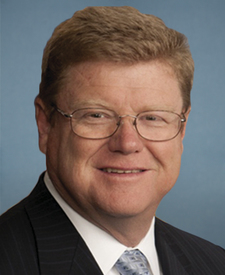
See how Mark E. Amodei actually votes — against your values.
DeepSyte scores Mark E. Amodei's record on the issues you care about — not party, not press releases. Take the 2-minute values quiz to see your personal alignment.
Sign in and take the values quiz to see how Mark E. Amodei's votes line up with your views.
Prediction track record
We haven't made any vote predictions for Mark E. Amodei yet. Predictions are generated for bills with tagged effects; they show up here as soon as the predict-votes job covers this rep's upcoming docket.
Consistency insights
No paired statements and votes yet for Mark E. Amodei
We haven't yet found statement/vote pairs on the same topic for Mark E. Amodei. This usually means either the rep hasn't taken public positions on bills that have come to a passage vote, or those bills haven't been tagged yet. The checker runs as new press releases and votes come in.
Pro analysis
AI rep analysis — Pro
Get an AI-narrated read on Mark E. Amodei's full voting record against your stated values — aligned themes, conflicts, notable votes, and what to watch for.
We haven't extracted campaign positions for Mark E. Amodei yet. Once their campaign website or position pages are processed, this card will track what they said vs how they voted.
Crossing the aisle
No party-break passage votes recorded for Mark E. Amodei. Either they've voted with Republicans on every substantive passage vote in the corpus, or their tenure overlaps few high-threshold party-line votes so far.
Carson City gets its piece of $1.7 trillion spending bill
Carson City is getting a late holiday gift in the form of $1.1 million in federal infrastructure funding for a south Carson project.
“This project includes a traffic signal and intersection improvements in Carson City’s designated Redevelopment Area #2,” reads a project description on U.S. Rep. Mark Amodei’s website. “This is an area identified by the city as an area to plan, incentivize and encourage revitalization with the hope of encouraging and attracting private sector investment that may not otherwise occur.”
The funding stems from the Community Project Funding (CPF) program, which starts with local requests that make their way through the federal appropriations process. Carson City’s award is rolled up in the omnibus spending bill passed by Congress on Dec. 23. According to the House Committee on Appropriations, the Consolidated Appropriations Act, 2023 includes $1.7 trillion in “discretionary resources” for this federal fiscal year, including $800 billion in non-defense funding.
“This is the highest level for non-defense funding ever and a larger increase in both dollar and percentage than fiscal year 2022,” reads the committee’s website.
On Wednesday, Amodei, a Republican, told the Appeal he has no philosophical problems with the CPF program – which starts at the local level – but couldn’t support the omnibus bill as a whole. Having voted against the bill, Amodei pointed out the legislation is more than 4,000 pages.
“As the federal budget goes, I think that bill is a mistake,” he said.
At the same time, Amodei said he’s willing to combine forces with Nevada’s two Democratic senators to get needed community projects across the finish line. As a member of the appropriations committee, he lobbied for and secured more than $32 million in CPF for Nevada’s 2nd Congressional District.
On Dec. 21, Nevada Sens. Jacky Rosen and Catherine Cortez Masto issued a joint statement saying they secured roughly $167 million in CPF as part of the appropriations bill. The funding will be used for 85 programs and projects throughout Nevada, including “upgrading pedestrian safety and traffic signal infrastructure in Carson City, Las Vegas, and Clark County.”
Amodei, a Carson City native, said improvements to improve traffic flow in south Carson is what the CPF program was made for.
“Transportation has been an issue in Carson since Marv Teixeira started fighting with NDOT (Nevada Department of Transportation) about the bypass,” he said.
Teixeira was Carson City mayor from 1989-97 and 2005-09.
As of Wednesday, President Joe Biden was expected to sign the appropriations bill. The president lauded the bill’s bipartisan support in a statement from the White House.
Carson City also issued a statement about the federal funding.
“Thanks to the tireless advocacy of Congressman Mark Amodei, Senator Catherine Cortez Masto, and Senator Jacky Rosen, this legislation includes Community Project Funding for the Appion Way Improvement Project,” city officials said in a Dec. 23 press release. “The project is focused on improving safety and traffic circulation by placing a traffic signal at Appion Way and South Carson Street to accommodate current and future growth in the area.”
“This funding for the Appion Way Improvement Project is just one more example of the great working relationship between Carson City and our federal delegation which has focused on many great improvement projects that have benefitted all of Carson City,” added Carson Mayor Lori Bagwell.
The release said the funding will “accelerate” Carson City’s economic development.
“The funding for this project enacted in this legislation will accelerate Carson City’s economic development, decrease travel times for city residents and visitors, and implement safety improvements for this vibrant and fast-growing portion of the South Carson Street corridor,” the release said.
According to Amodei’s office, the funding will be available to the capital city before the end of the federal fiscal year, which is Sept. 30, 2023.
More CPF projects in Northern Nevada can be viewed online at https://amodei.house.gov/2nd-district/fy23-cpf-financial-disclosures-and-2022-wrda-disclosure.
Congressman Mark Amodei announced Thursday that the Fallon Range Training Complex expansion and modernization has passed the House version of the Fiscal Year 2023 National Defense Authorization Act, which was overwhelmingly approved in a bicameral-negotiated update to the bill Thursday morning, December 8.
The FRTC provisions and most final agreements came after the senate worked through negotiations between the house and senate committees. The final senate vote is expected in the next few days. Once the senate passes the action, the approved NDAA would go to President Biden for his signature.
Community leadership is pleased with the resolution after nearly seven years of negotiations on the FRTC modernization effort, which will offset land losses to the local community while supporting the U.S. military. The original expansion proposal was first introduced to Fallon residents in October 2016 by then NAS Fallon Commanding Officer, David Halloran.
“Rep. Amodei has supported the City of Fallon and other local stakeholders tirelessly to ensure that our voices were heard, and our priorities included, since Day 1 of the Navy's proposal,” said Mayor Ken Tedford. “Were it not for Rep. Amodei's efforts, this monumental legislation would not have been possible. He is a true champion for Nevada.”
Press releases from the Nevada congressional delegation explained the agreement will provide NAS Fallon with an additional 558,535 acres for military training vital to national security. Some of the lands will remain under the Department of Interior’s oversight to facilitate other regional land management interests. The legislation designates over 581,887 acres of conservation, wilderness areas, and other protected areas, and holds a total of 18,170 acres of land in trust for the Walker River Paiute and Fallon Paiute Shoshone tribes.
The bill transfers $20 million to the Walker River Paiute Tribe in recognition of the historical contamination of their tribal lands and $20 million to the FPST to create a new cultural center to sustain the knowledge, culture, and language of the Fallon Paiute Shoshone tribe. The agreement will also allow Churchill and Lander counties to access land for economic growth.
“A large swath of this land in Dixie Valley will remain under the control of the Department of Interior,” Amodei said.
According to Churchill County Manager Jim Barbee, the county and its partners have been working with the congressional delegation as the proposed range expansion made its way through the various congressional committees. He said provisions for Dixie Valley received input from both tribal and county governments. Barbee said Dixie Valley will not be withdrawn as requested by the Navy. The area will be under BLM management which will consult with the Navy, county, Tribal groups, and cattle grazers for implementation that allows “dark sky training” for the Navy. The area will remain open to the public.
The U.S. Fish and Wildlife Service last week listed the Dixie Valley toad as an endangered species. The toad has been at the center of a legal battle with Ormat over their geothermal power project. “It is my understanding the toad area is outside the special management area,” Barbee added. “The easements for the future water line and well development as well as Green Link are included in the language.”
In addition, the community will benefit from land closer to Fallon for economic development purposes.
“We received 14,000 acres in direct conveyance for municipal and economic development and 7,000 acres for public purpose,” Barbee said.
The public purpose projects could include land for a gravel pit, for example, or to expand the landfill area 18 miles south of Fallon. Barbee said the commissioners are looking at trading some of the lands that border the 40-mile desert in northern Churchill County. The land is in the Fallon National Wildlife Refuge and extends into the Navy’s Bravo Range 20 withdrawal.
Barbee said a checkerboard resolution has been created in the northwest portion of the county to facilitate land swaps and direct conveyances for creating larger federal blocks of land and larger blocks of private lands that can be developed. Funding is a result of the county’s new membership in the Southern Nevada Public Lands Management Act fund (SNPLMA Fund)
Barbee said the Navy is committed to rerouting Pole Line Road, the alternate Sand Canyon Road, and Nevada State Highway 361 outside of the withdrawal areas.
The county will also receive $20 million to offset the land conveyance. Barbee said the money will help offset the funding for a new courthouse.
In 2021, Congress renewed the current FRTC withdrawn lands that consist of more than 234,124 acres of land within the training areas Bravo-16, southwest of Fallon, Bravo-17 east near Fairview Peak, Bravo-19, 30 miles south of town off U.S. Highway 95, Bravo-20, northeast of Fallon, and the Dixie Valley and Shoal Site training areas. The land was permanently withdrawn in 1953 through Public Land Order 898.
The proposed bill also includes three new wilderness areas: Clan Alpine, Agusta, and Desatoya which were formerly Wilderness Study Areas. Barbee said the 70-mile-long Stillwater Range east of Fallon, which is a wilderness study area, is being replaced with the Numunaa Nobe National Conservation Area which will allow more flexible access than wilderness. Grimes Point will also be placed within the conservation area.
Capt. Shane Tanner, commanding officer of NAS Fallon, said the need to modernize the FRTC has never been more urgent. “Naval Air Station Fallon remains committed to working with all stakeholders as we implement congressional legislation over the next several years,” Tanner said.
Tanner, who became commanding officer in March, said he appreciates the support and cooperation among all the stakeholders that have been involved with the FRTC expansion.
Earlier this year, Carlos Del Toro, Secretary of the Navy, visited NAS Fallon and met with community leaders. He said this piece of critical legislation will enhance the nation’s security by allowing the Navy’s carrier air wings and special warfare teams to train in a more realistic environment.
One hundred percent of all naval aviation and naval special warfare units train on Fallon ranges before deployment. Advanced weaponry and more air space are needed to launch missiles toward their targets. The expansion of Bravo-16 will give the SEALs (Sea, Air, and Land) Teams the ability to conduct more realistic worldwide training.
Churchill County Commission Chairman Pete Olsen and Fallon Mayor Ken Tedford said the stakeholders in the expansion talks stood and worked together and created what Olsen called an “exciting” plan for the future.
“When this bill becomes law, we will commence a new chapter focused on ensuring that Congressional intent translates into real-world progress,” said Olsen in a press release. “Churchill County looks forward to continuing its strong relationship with the Navy in support of their important mission and partnering with Nevada’s congressional delegation to ensure the administration’s implementation accounts for the realities of day-to-day life in Northern Nevada.”
Amber Torres, chairwoman of the Walker River Paiute Tribe, addressed the contamination of tribal lands and said an injustice has been resolved. “We can now begin the healing process, with restored sacred lands, expansion of our tribal homeland, just compensation, and the opportunity for new economic development for the benefit of our people,” Torres said. “This landmark legislative settlement marks a new day for the Walker River Paiute Tribe and our friends and neighbors in the great state of Nevada.”
Tedford said their voices were heard and their views represented in this legislation. “We know many parties’ interests were involved but as always, Senator Cortez Masto was masterful in bringing those many different interests together to reach a solution that both addresses national security and respects local interests,” Tedford said. “We’re grateful for the collaboration from the entire Nevada delegation to move this proposal forward.”
Cortez Masto said the expansion of the Navy’s Fallon Range Training Complex will improve national security, fuel economic growth in Churchill County, and preserve important cultural heritage sites for Tribal nations. “I worked closely with Senator Rosen and Congressman Amodei, the administration, Senate Armed Services Committee, congressional leadership, and all local stakeholders to secure this agreement and will make sure it is in the final NDAA,” Cortez Masto said.
The range expansion and the NDAA will be discussed in more detail at the December 21 Churchill County commission meeting, which begins at 1:15 p.m. in the commission chambers.
Senate Backs Big Land Transfer for Nevada Military Complex
RENO, Nev. (AP) — The U.S. Senate has voted for a massive expansion of a northern Nevada naval air training complex that will transfer of a huge swath of public land to the military.
The Senate on Thursday approved as part of the annual defense spending bill what is likely to be one of the final steps in years long negotiations to designate 872 additional square miles (2,258 square kilometers) of land for bombing and military use to the Naval Air Station (NAS) Fallon, which is 65 miles (104 kilometers) east of Reno.
The measure also designates more than 906 square miles (2,347 square kilometers) of land for conservation, wilderness areas and other protected areas, as well as roughly 28 square miles (73 square kilometers) of land and $20 million each to two Native American tribes. Churchill County, where the training facility is located, will also receive $20 million.
The Fallon complex is the Navy’s main aviation training range, supporting aviation and ground training, including live-fire exercises. All naval strike aviation units and some Navy SEALs train at Fallon before deployment.
The House approved the National Defense Authorization Act last week. It now awaits President Joe Biden’s signature.
The management of Nevada’s vast swaths of federal land, and the differing needs it serves, has long been a push-and-pull for different groups in Nevada that has resulted in legal battles over lithium mining, development, national monuments and endangered species designations. The training facility expansion has been under consideration for years as Nevada’s congressional delegation has introduced it time and again while trying to balance the interests of different groups, including the Navy, conservationists, counties and Native American tribes who have long considered the land to be sacred.
The expansion will “improve our national security, fuel economic growth in Churchill County, and preserve important cultural heritage sites for Tribal nations,” Democratic Sen. Catherine Cortez Masto said in a statement. Praise also came from Nevada Gov. Steve Sisolak and Sen. Jacky Rosen, both Democrats, and Republican Rep. Mark Amodei and Churchill County Chairman Pete Olsen.
The Navy has said the expansion is critical to meeting combat training needs for modern aircraft and weapons systems that have outgrown training capabilities over the past two decades.
“This critical legislation enhances our Nation’s security by allowing our Carrier Air Wings and Naval Special Warfare Teams to train in a more realistic environment and better prepare for strategic competition,” Secretary of the Navy Carlos Del Toro said in a statement.
Several groups have historically been split or mixed on the expansion, including conservationists and some nearby tribes. Brian Sybert, the executive director for the Conservation Lands Foundation, thanked Cortez Masto, Rosen and Amodei for “crafting a delicate community compromise that has resulted in the only conservation win within this year’s NDAA.”
But Patrick Donnelly of the Center for Biological Diversity called it “a devastating loss for Nevada wildlife.”
He said the public land set to be transferred is one of the few swaths of U.S. land that is largely absent of humans. He added that even parts of the land that will still be maintained by the U.S. Interior Department will still hold combat training exercises that can harm wildlife.
Tribes that have been living in the area where the training complex is located and who consider the valley to be sacred were more optimistic.
“While our tribe will never support the expansion of NAS taking more of our ancestral lands,” said Cathy Williams-Tuni, the chairwoman of the Fallon Paiute-Shoshone tribe, “we’re still very thankful and grateful of the many benefits that the NDAA for our tribe has.”
Williams-Tuni has said that they would work closely with the military and Nevada’s delegation to “come up with — we don’t always want to say this word, but a compromise.”
The Paiute-Shoshone Tribe is not against national defense, she added, but there is also an importance to the ancestral lands, with burial sites and artifacts spread out across it.
Over the past year, the Nevada congressional delegation, Interior Department, and Navy officials have engaged with northern Nevada tribes that would be affected by the expansion. The assistant secretary of the interior also flew to Nevada to visit the land and the tribe. About two weeks ago, Williams-Tuni met with Department of Interior and Indian Health Service officials in Washington D.C.
Williams said Thursday that the next step is for the tribe to co-steward the lands with the Department of the Interior and the Navy, which she could potentially include a cleanup program of military residue and the transfer of some vital materials to the tribe for heating subsystems.
The Fallon Paiute-Shoshone tribe funding will go toward building and maintaining a cultural center, and the Walker River Paiute tribe’s $20 million is due to past ordnance contamination on tribal land, with about 13 square miles (34 square kilometers) held in trust.
Williams-Tuni said Thursday that although she still opposes the plan as a whole, she is looking forward to “explaining to our membership how we didn’t just give away, and we didn’t give in.”
When the NDAA passed the House last week, Amber Torres, Chairman of the Walker River Paiute tribe, called it “a momentous day where an historic injustice against the Walker River Paiute Tribe has been resolved” in a statement.
The U.S. Senate approved the proposed expansion of the U.S. Navy’s Fallon Range Training Complex Thursday, and the bill is headed to President Joe Biden’s desk for a signature.
The deal, which the House approved last week, is part of the annual defense spending bill and includes compromises on behalf of the Navy, Native American tribes in the area, Churchill County and conservationists.
The agreement designates an additional 558,535 acres to expand the Fallon Range Training Complex, most of which will be buffer zones. The base, located about 65 miles east of Reno, comprises 12,256 nautical miles of airspace and 232,000 acres of land and is home to the Navy’s fighter weapons school, known as “Top Gun.”
Fallon serves as the Navy’s premier tactical air warfare training center and includes four bombing ranges, an electronic warfare range and the longest runway in naval aviation at 14,000 feet. The expansion will allow for its carrier air wings and Navy special warfare teams to train “in a more realistic environment and better prepare for strategic competition,” Secretary of the Navy Carlos Del Toro said in a statement.
Two Native American tribes in the area will also receive land as well as money. The Walker River Paiute Tribe, located in Schurz, will receive 8,000 acres in trust land and $20 million in recognition of contamination after bombing materials fell on the tribe’s lands inadvertently from the military base.
The Fallon Paiute Shoshone Tribe will receive 10,000 acres in trust land and $20 million to build a cultural center to showcase the tribe’s culture, language and history.
The agreement also allows Churchill County to access land for economic growth.
More than 573,000 acres will be protected for conservation and wilderness. Three new wilderness areas included in the agreement are the Clan Alpine, Cain and Desatoya mountains. The wilderness area consists of rugged and mountainous terrain with huge rock formations, spires and hoodoos. Wildlife that call the place home include mountain lions, mule deer, gray foxes, sage grouse and red-tailed hawks, according to nevadawilderness.org.
Plans to expand the military base have been a long time in the making. For about five years the Navy has sought to expand but was met with resistance by the local tribes who have lived on the land for thousands of years and sought to protect the land, as well as conservationists looking to preserve nature and wildlife.
“While our tribe will never support the expansion of (Naval Air Station Fallon) taking more of our ancestral lands,” said Cathy Williams-Tuni, the chairwoman of the Fallon Paiute-Shoshone tribe told the Associated Press, “we’re still very thankful and grateful of the many benefits that the (National Defense Authorization Act) for our tribe has, and how it’s going to affect our tribe and other tribes.”
Sen. Catherine Cortez Masto, D-Nev., worked with Rep. Mark Amodei, R-Nev., and Sen. Jacky Rosen, D-Nev., to negotiate with the different parties involved and reach a compromise. The Navy’s original proposal did not include provisions to support local tribal nations and the nearby communities.
“The responsible expansion of the Navy’s Fallon Range Training Complex that I negotiated will improve our national security, fuel economic growth in Churchill County, and preserve important cultural heritage sites for Tribal nations,” Cortez Masto said in a statement.
Amber Torres, chair of the Walker River Paiute Tribe, said the legislation resolves an historic injustice against the tribe.
“We can now begin the healing process, with restored sacred lands, expansion of our tribal homeland, just compensation and the opportunity for new economic development for the benefit of our people,” Torres said in a statement.
Holding conservation for ‘ransom’
Some conservationists, however, are not happy with the “compromise.”
Patrick Donnelly with the Center for Biological Diversity, said the deal is not a compromise, but rather a “ransom note.”
“It looks to me like the military is holding conservation areas hostage,” Donnelly said. The military is agreeing to put land into conservation only if they get to expand, he said.
“We support conserving public land for their own sake,” Donnelly said. While 575,000 acres of land will be protected, large unbroken tracks of wildlife in central Nevada will still be split. The increased flying overhead could impact the Stillwater National Wildlife Refuge, which hundreds of thousands birds fly through every year as part of their migratory path south.
Donnelly also objects to the expansion of the military industrial complex and the “philosophy of the military machine.”
With House passage complete, Fallon naval range expansion nears finish line
After years of negotiation between the military, conservationists, tribal nations, and Nevada’s congressional delegation, the House last week passed an expansion of Churchill County’s Fallon Range Training Complex.
In exchange, the federal government will designate three new wilderness areas in Nevada and new funding and land holdings for two of the state’s tribes. The compromise – part of the FY2023 National Defense Authorization Act – marks a moment of celebration for Sens. Catherine Cortez Masto (D-NV) and Jacky Rosen (D-NV), and Rep. Mark Amodei (R-NV) and, in the tradition of Nevada lands bills, sparked a mixed reaction among the conservation community.
Fallon expansion – long a target of the Navy, which trains high-level personnel there – had been years in the making. In 2020, Cortez Masto’s legislation to expand the Fallon Range Training Complex stalled out. This summer, Amodei, whose district contains the base, tried to amend the National Defense Authorization Act to include the expansion, but was ultimately voted down in committee.
But on Tuesday night, the Navy and the Nevada delegation finally succeeded. The FY2023 NDAA, which sets the budget and policies for defense agencies, will withdraw 558,535 new acres of land in Churchill, Lyon, Mineral, Nye, and Pershing Counties for Fallon expansion, and, in the tradition of Nevada lands bills, protect 581,887 acres of land for new conservation and wilderness areas.
The Navy will also transfer $20 million each to the Walker River Paiute and Fallon Paiute Shoshone Tribes. More than 8,000 and 10,000 acres of federal land will be held in trust for each tribe, respectively. There are also more than 20,000 acres in land conveyances to Churchill County and 22,000 acres to Lander County for economic development.
The NDAA passed the House Thursday, with the support of all four representatives in the Nevada delegation, by a vote of 350-80. The bill will next head to the Senate, where it is expected to pass, before awaiting President Joe Biden’s signature.
“The responsible expansion of the Navy’s Fallon Range Training Complex has been a major priority of the Navy for years,” Cortez Masto said in a statement to The Nevada Independent. “I knew how vital this compromise was to both our national security and to the local economies and Tribal nations in Northern Nevada.”
The Fallon expansion is the first significant federal lands legislation in Nevada – though not a traditional lands bill – since the retirement of former Senate Majority Leader Harry Reid (D-NV).
Members of the Nevada delegation celebrated the expansion – which also counts Gov. Steve Sisolak, Churchill County Chairman Pete Olsen, Fallon mayor Ken Tedford, and several tribal leaders and conservation groups as supporters – as a win for the military, conservationists, and tribes alike.
“This is bipartisan, bicameral, historic landmark legislation that’s been years in the making,” Rosen, who sits on the Senate Armed Services Committee, said in an interview. “What we’ve done by getting it in is we’ve brought everyone to the table.”
Currently, the Fallon Range Training Complex, comprising four training ranges, sits on 232,290 acres of land in the Dixie Valley. The complex is anchored by the Fallon Naval Air Station, which hosts the training of Navy SEALs and Topgun fighters. The Navy has long eyed Fallon expansion in order to enlarge its bombing ranges.
Given that the surrounding area, like most of Nevada, is federal land, Congress has the authority to transfer it to military control. Now, the total area of the complex will be 790,825 acres. The military designated 270,000 acres for the Dixie Valley Training Area, which will remain open to the public under the direction of the Bureau of Land Management, in consultation with the Navy – a status that Churchill County successfully challenged the military for.
“This critical legislation enhances our Nation’s security by allowing our Carrier Air Wings and Naval Special Warfare Teams to train in a more realistic environment and better prepare for strategic competition,” Secretary of the Navy Carlos Del Toro said in a release.
Conservation groups had mixed reactions to the bill. The NDAA authorizes the creation of three new wilderness areas, two national conservation areas and two additional protected areas. The wilderness areas will be designated in the Clan Alpine Mountains, the Desatoya Mountains and Cain Mountain.
Patrick Donnelly, the Great Basin director for the Center for Biological Diversity, said he will hike in the new wilderness areas and that their designation will protect the mountain lions, bighorn sheep, and mule deer, among other species, that live in those mountains. But he finds the concept of land swaps illegitimate.
“We really challenge the idea of the tradeoff – that somehow protecting these mostly remote mountain ranges compensates for the military taking over hundreds of thousands of acres of public land,” Donnelly said in an interview.
Donnelly also questioned how the Bureau of Land Management would run the Dixie Valley Training Area given that the Navy now has input on its land use.
“It's going to be pretty weird, because it's still public land – you can still go out there and recreate,” Donnelly said. “But there's going to be guys driving tanks around and low-lying aircraft performing exercises. I kind of don't want to be around when that's happening.”
The Great Basin Water Network also opposed the legislation because it supports the Dixie Valley Water Project, a county proposal to pump water from the Dixie Valley Training Area into Churchill County. GWBN is worried that the project would dry up critical water resources and threaten endangered species.
The NDAA specifies that the Navy should work with the Department of the Interior and Churchill County on permitting “subject to the public land laws and environmental review,” which Cortez Masto’s office confirmed just clarifies that the Navy cannot block the project, and that any further action will still be subject to environmental compliance law.
Shaaron Netherton, the executive director of Friends of Nevada Wilderness, said that while the prospect of any military expansion is not exciting, the creation of the three new wilderness areas – as well as the tribal provisions – mark a win for the conservation community. Netherton was particularly proud that Fox Peak, the origin site of the Fallon Shoshone Paiute Tribe, is now permanently protected.
“It just provides certainty,” Netherton said. “These areas have been wilderness study areas since the late 1970 and 1980s. Now, stakeholders know what’s wilderness and what isn’t wilderness, and we can move forward with management plans and celebrating new wilderness areas.”
The largest new protected area will be the nearly 218,000-acre Numu Newe Special Management Area, in Churchill and Mineral counties, to “protect, conserve, and enhance the unique and nationally important historic, cultural, archaeological, natural, and educational resources of the Numu Newe traditional homeland,” per the legislation.
The Secretary of the Interior will have two years to create a management plan for the land with tribal leaders and local entities, incorporating Fallon Paiute Shoshone Tribe historical knowledge and prioritizing the preservation of their cultural and religious sites. The $20 million for the Fallon Paiute Shoshone Tribe is also designated for the construction and endowment of a cultural center on their reservation to sustain and promote Numu Newe knowledge and language.
The $20 million for the Walker River Paiute Tribe is recompense for the Navy’s use and contamination of reservation land.
“This is a momentous day where an historic injustice against the Walker River Paiute Tribe has been resolved because of the great leadership of Senator Catherine Cortez Masto in concert with the Nevada congressional delegation,” Amber Torres, chairperson of the Walker River Paiute Tribe, said in a statement. “We can now begin the healing process, with restored sacred lands, expansion of our tribal homeland, just compensation, and the opportunity for new economic development for the benefit [of] our people.”
Amodei said the “cultural resource” component of the legislation – the financial and land transfers to tribal nations – is the Department of Defense’s largest ever such commitment.
“We’ve gone from not much going on for cultural resource purposes of Great Basin Native nations, to probably – when this is fully implemented – the number one program in the nation,” Amodei said in an interview.
Amodei had hoped that other lands bills in the works – including land transfers in the Ruby Mountains, Douglas County and Pershing County – would make it into the bill, but he said they were left out because of a longstanding grudge held by a staffer on the Senate Energy and Natural Resources Committee against a lands bill championed by Reid in the 1990s.
But Amodei said Fallon expansion was ultimately able to get into the NDAA because it had the backing of key allies such as Rep. John Garamendi (D-CA), an influential member of the House Armed Services Committee, and Sen. John Barrasso (R-WY), the ranking member of the Senate Energy and Natural Resources Committee. While the expansion always had the support of both chambers’ Armed Services Committees, Amodei said his amendment failed over the summer due to a lack of communication with the House Natural Resources Committee.
When the Senate took up the bill, Cortez Masto’s office said she helped shepherd the provision through the eight committees that approved the amendment text. By re-engaging those committee chairs, Amodei said the Fallon provision – which has been floating around for five years and thus gave other members confidence in it – successfully made the bill.
“The bill didn’t have any hidden stink bugs in it,” Amodei said. “If you want some certainty, and something that’s been vetted for half a decade, then the timing was appropriate.”
New Report Shows Significance of Public Radio in Rural America
The Alliance of Rural Public Media
The Alliance of Rural Public Media released a first-of-its-kind look at the role and impact of public radio in rural America today. The report, "Connecting America: The Essential Service of Rural Public Radio," is drawn from the 2022 Rural Public Media Survey, which gathered data on the public services, local news coverage, and cultural activities that rural radio stations provide to rural American communities. It also examined the challenges—financial and otherwise—facing these stations.
Data from the report demonstrates how rural public radio remains an essential service for rural Americans across broadcast and digital platforms, and continues to keep rural residents informed. The Alliance of Rural Public Media, a new grassroots initiative, focuses on the service that public radio delivers to rural audiences and provides a collective voice for the work of these stations.
This report details the following:
"Public broadcasting is a critical institution that educates, informs, and inspires. Nowhere is that more important than in rural America where public radio stations are one of the few locally owned and managed news and information services," said Congressman Blumenauer (D-OR), Founder and Co-Chair of the Public Broadcasting Caucus. "During the pandemic, the educational benefits have been magnified because children in rural and small-town America have fewer opportunities. Public radio is also an essential part of emergency warning systems and provides critical safety information in real time. Public radio plays a vital part in the lives of Americans but nowhere is it more evident than for rural America."
"Rural public radio in Nevada is every bit as much infrastructure as electrical power, telephone services, water systems, and other things of that nature," said Rep. Mark Amodei (R-NV-2), Co-Chair of the Public Broadcasting Caucus. "During a time when everything is viewed through the lens of political preferences, from the source of power to phone companies themselves, there is no mistaking that when it comes down to an emergency, if things get really bad, public radio transmission may be the only link to public safety. Nevadans know that well, and that is true in both cities and rural areas. It is a resource that needs to be maintained."
"A largely rural state like Maine is particularly hard-hit by the decline in newspapers and reduced coverage of rural news," said Rick Schneider, general manager of Maine Public Radio. "Maine Public Radio is uniquely positioned to fill the gaps, sharing rural stories and connecting all Mainers to a shared experience. Robust federal funding is essential for our ability to serve distant counties across the state."
"Public media in rural Alaska isn't an alternative to other media service. It is often the only daily local source of critical health and safety messaging," said Mollie Kabler, executive director of CoastAlaska Inc. "News reporting by local reporters known in their communities is an antidote to distrust of the media and the proliferation of misinformation. Federal support for the infrastructure and operations of small stations is essential to our democracy."
"In many Eastern Kentucky communities, WEKU is the only source of news and information," said Mike Savage, director and general manager of WEKU. "We've told so many stories that impacted our community, including how a local folk singer organized a musical instrument donation program to help Western Kentucky residents who experienced severe loss following deadly tornados in December 2021. It is a prime example of how rural public radio stations are able to tell the story of rural America."
"As a rural station serving four Native American tribes and 13 distinct communities in the remote four corners region, our multiple collaborations with other media outlets are absolutely essential in providing accurate, timely, and relevant news and information to communities," said Tami Graham, KSUT executive director. "In fact, with limited broadband access in most of our region, we are often the only reliable source of critical and timely information in emergency situations."
In January 2023, the Alliance of Rural Public Media will officially launch. In addition to serving as a resource for stations who serve rural Americans, the Alliance will work to expand and deepen the understanding of policy makers about the public service role of rural public media across all 50 states and U.S. territories, and improve the policy, legal and regulatory environments that influence these stations.
Source: GDELT 2.0 GKG, filtered to a curated list of national outlets. Inclusion is not endorsement; opinion pieces and reported news are mixed.
Recent stock activity
Periodic transaction reports filed under the STOCK Act — disclosed by the rep, sourced from public filings.
No disclosed trades on record.
Source: open-data mirrors of the Senate eFD and House Clerk financial-disclosure systems. Disclosure within 30 days of trade is required by law (45 for spouse/dependent trades).
Top PAC donors · 2026 cycle
Political action committees that gave the most to this rep's principal campaign committee this cycle. PAC giving is direct organizational support — industry, ideological, or leadership.
1.WYNN RESORTS LIMITED PAC4 contributions$30,000
2.LAS VEGAS SANDS CORP. POLITICAL ACTION COMMITTEE (SANDS PAC)4 contributions$20,000
3.NV ENERGY POLITICAL ACTION COMMITTEE4 contributions$20,000
4.NATIONAL AUTOMOBILE DEALERS ASSOCIATION POLITICAL ACTION COMMITTEEBusiness4 contributionsTrade association PAC for new-car dealers — backs candidates supporting dealer franchise protections, vehicle sales regulations, and automotive retail interests.AI$20,000
5.NATIONAL BEER WHOLESALERS ASSOCIATION POLITICAL ACTION COMMITTEEBusiness3 contributionsTrade association PAC for beer wholesalers — backs candidates supporting alcohol distribution regulations, tax policy, and industry supply-chain interests.AI$15,000
6.NATIONAL ASSOCIATION OF REALTORS POLITICAL ACTION COMMITTEEReal Estate3 contributionsTrade association PAC for U.S. real estate agents and brokers — backs candidates supporting property-rights protections, mortgage-lending access, and tax incentives for homeownership.AI$15,000
7.THE EYE OF THE TIGER POLITICAL ACTION COMMITTEEOther3 contributionsPAC with a motivational slogan name — specific policy positions and affiliations not inferable from the name alone.AI · low$15,000
8.SCALISE LEADERSHIP FUND 2024Leadership2 contributionsMember-of-Congress leadership PAC affiliated with Steve Scalise — directs contributions to allied Republican candidates and causes.AI$14,632
9.RED ROCK RESORTS, INC. PAC2 contributions$10,000
10.AMERICAN SOCIETY OF ANESTHESIOLOGISTS2 contributions$10,000
Source: OpenFEC (api.open.fec.gov) Schedule A receipts where contributor type is “committee.” Aggregated by contributing committee. Self-transfers from joint-fundraising / victory committees are excluded.
Top individual contributors · 2026 cycle
Itemized individual contributions over $200 to this rep's campaign committee, aggregated by donor employer. PAC giving is shown above; this section is people, not organizations.
1.BEAVERFIT$17,500
2.DI LORETO CONSTRUCTION AND DEV$14,000
3.SELF$13,000
4.SAVAGE AND SON, INC$10,500
5.PEAK CAPITAL$7,000
6.J&J MECHANICAL$7,000
7.WATERFRONT GLOBAL$7,000
8.ATS COMMUNICATIONS$7,000
9.TULIP INTERIORS AND DESIGN$5,000
10.S-3 GROUP$5,000
Source: OpenFEC Schedule A receipts where contributor type is “individual,” aggregated by the donor's self-reported employer. This is a geographic / industry correlation, not a corporate endorsement.