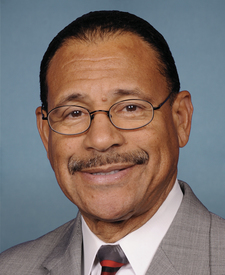
See how Sanford D. Bishop's votes line up with your values.
DeepSyte scores Sanford D. Bishop's record on the issues you care about — not party, not press releases. Take the 2-minute values quiz to see your personal alignment.
Sign in and take the values quiz to see how Sanford D. Bishop's votes line up with your views.
Prediction track record
How often we called Sanford D. Bishop's passage votes correctly, from their stated positions on each bill's tagged topics. Excludes “unclear” calls and abstentions.
4 predictions on record · none have been resolved by a passage vote yet. Check back as bills move.
No paired statements and votes yet for Sanford D. Bishop
We haven't yet found statement/vote pairs on the same topic for Sanford D. Bishop. This usually means either the rep hasn't taken public positions on bills that have come to a passage vote, or those bills haven't been tagged yet. The checker runs as new press releases and votes come in.
Pro analysis
AI rep analysis — Pro
Get an AI-narrated read on Sanford D. Bishop's full voting record against your stated values — aligned themes, conflicts, notable votes, and what to watch for.
Positions Sanford D. Bishop took during their campaign, scored against their subsequent record — public statements cross-checked with related votes. “Kept” means 80%+ of those statement-vs-vote pairs aligned; “Broken” means 30% or fewer.
0 kept0 broken0 mixed0 no action yet
Sanford D. Bishop has 9 tracked positions but no scored statement-vs-vote pairs touching them yet. Verdicts will appear here as related statements and votes accumulate.
No action yetSupports
Enhanced ACA premium subsidies should be made permanent at expanded levels.
“He strongly supports the Affordable Care Act because it makes significant strides toward improving the health and well-being of the citizens of Georgia's 2nd District.”
The estate tax (the "death tax") should be eliminated.
“Reducing or eliminating the estate tax while providing farmers and small business owners with the stability, certainty, and peace of mind they need as they plan for the future.”
Tariffs on foreign goods should be used to protect American jobs.
“protects American manufacturing jobs and exports by allowing the U.S. Department of Commerce to continue to apply countervailing duties in cases involving non-market economy nations like China and Vietnam.”
Passage votes where Sanford D. Bishop broke ranks with ≥75% of Democrats. Threshold catches substantively partisan splits; unanimous-ish or close votes are excluded.
To prohibit individuals who are not citizens of the United States from voting in elections in the District of Columbia and to repeal the Local Resident Voting Rights Amendment Act of 2022
Congressman Bishop Votes to End Penalty on Combat-Wounded Veterans
Position: The release states that Congressman Bishop voted for H.R. 2102, the Major Richard Star Act, which would extend full concurrent receipt of military retirement and VA disability pay to combat-wounded veterans who medically retire before 20 years of service. The release also states he opposed a Republican leadership alternative that would have cut disability compensation for future veterans to pay for a partial version of the change.
WASHINGTON – Yesterday, Congressman Sanford D. Bishop, Jr. (GA-02) voted for the Major Richard Star Act (H.R. 2102). The bill fixes an unfair rule that cuts the pay of veterans who were wounded in combat. It passed the House, 392 to 18, with strong support from both parties and now goes to the Senate. Congressman Bishop is a senior member of the House Appropriations Subcommittee on Military Construction and Veterans Affairs.
The problem is simple. Many veterans who serve a full 20-year career receive both their military retirement and their VA disability pay. Receiving both at the same time is known as “concurrent receipt.” But when a servicemember is wounded in combat and forced to medically retire before reaching 20 years, the law cuts their pay. They cannot receive both in full. In effect, they are penalized because they were hurt while serving their country.
The Major Richard Star Act ends that penalty by extending full concurrent receipt to these combat-wounded veterans. They could keep their current arrangement or choose to receive their full retirement pay and their full disability pay, whichever works best for them and their families. About 58,000 veterans would benefit.
“If you were wounded fighting for this country, you should not lose pay because of it,” said Congressman Bishop. “These veterans earned their retirement and they earned their disability compensation. Middle and Southwest Georgia is home to thousands of veterans and military families, and they understand that a promise made should be a promise kept.”
House Republican leaders had kept the bill from getting a vote. Members of both parties, including Congressman Bishop, signed a discharge petition, a rule that lets a majority of the House force a vote, and the House voted on the bill yesterday. Republican leaders had pushed a separate package instead. It included part of the Star Act but paid for it by cutting at least $57 billion in disability compensation for future veterans. Congressman Bishop opposed that approach.
The bill is named for Army Reserve Major Richard Star. He was medically retired after combat service and fought for this change while battling cancer. He died in 2021 at age 51.
###
Issues:Military, Veterans, & National SecurityVeterans
Congressional 4-H Caucus Leaders Introduce National 4-H Week Resolution
Position: Representatives introduced a resolution designating October 4 through October 10 as National 4-H Week and expressed support for the youth development program's work in agriculture, health, science, and civic leadership.
WASHINGTON – U.S. Representatives Sanford D. Bishop, Jr. (GA-02), Glenn “GT” Thompson (PA-15), Angie Craig (MN-02), and Andy Harris (MD-01), co-chairs of the bipartisan 4-H Caucus, introduced a resolution today to designate the week of October 4 through October 10 as "National 4-H Week.”
As the youth development program of the Cooperative Extension System of Land-Grant Universities, 4-H engages young people in hands-on projects in the critical areas of agriculture, health, science, and civic leadership. 4-H is the largest youth development organization in the country, with six million current members and 35 million alumni.
“Georgia is proud to be an early home for 4 H, starting in 1904, with programs reaching every county in our state and preparing young people to lead in agriculture, science, and civic life. I’ve had the pleasure to meet with National 4 H Council President & CEO Jill Bramble to discuss how 4 H continues to strengthen youth leadership nationwide. As an Eagle Scout, I know how essential positive role models and supportive environments are for young people, and 4 H delivers that every day. As Ranking Member of the House Agriculture Appropriations Subcommittee, I remain committed to investing in programs that uplift rural communities and build a stronger future for Georgia and our nation,” Rep. Bishop said.
“The work ethic and curiosity of each 4-H member I’ve met over the years is one of the reasons I feel so confident in the future of our country's agriculture industry. I am proud to introduce this bipartisan resolution to recognize the important work of 4-H members across the country, and encourage others to get involved as well,” Rep. Thompson said.
“The work that 4-H does to develop our youth into the next generation of leaders in agriculture and beyond is more important than ever. American agriculture has come under great pressure, and fostering a love of agriculture in young people is crucial for America’s future. I am proud to celebrate 4-H today and stand with them as they work to empower America’s youth,” Rep. Craig said.
“4-H gives young people in Maryland and across our nation the chance to experience agriculture firsthand. Representing farming communities across Maryland’s First District, I understand the hard work that farming requires and why it matters for young people to learn about agriculture and the work behind it. I’m proud to recognize National 4-H Week and the millions of young Americans who participate in 4-H,” Rep. Harris said.
“We are grateful for the bipartisan support of the Congressional 4-H Caucus and its recognition of the millions of young people who are building the skills and confidence to be ready for work and life. For nearly 125 years, 4-H and Cooperative Extension have helped young people discover what they’re capable of, explore career skills and opportunities, and become Beyond Ready for what comes next,” National 4-H Council President and CEO Jill Bramble said.
Read the full resolution here.
###
Issues:Community Groups & NewsBuilding Our CommunitiesAgriculture & Rural Development
Bishop Supports Bipartisan Funding Bill, Protects Vital Services on Which Americans Rely
Position: The release states the representative voted to support a short-term continuing funding bill through December 11, 2026, and argues it prevents a government shutdown that would affect healthcare, food access, education, law enforcement, and national security.
WASHINGTON – Congressman Sanford D. Bishop, Jr. (GA-02), a senior member of the U.S. House Appropriations Committee, voted to support a short-term funding bill that would fund federal departments and agencies at Fiscal Year 2026 levels through December 11, 2026, while Congress continues to negotiate a full-year funding bill for Fiscal Year 2027. The bill was passed with overwhelming bipartisan support, 370-48, and now goes to the President for his signature.
“Our responsibility in Congress is to make sure that the government is open and working for the people. Today’s bipartisan bill reasserts Congress’s Constitutional authority to direct funding and check the Executive Branch. This bill funds the government through early December, giving Congress time to work towards a full-year funding bill,” said Congressman Bishop. “It also removes the immediate threat of a shutdown that would jeopardize Americans’ healthcare, access to affordable food, quality education, support for local law enforcement, and our country’s national security. I will continue to work hard in Congress to ensure long-term certainty for our federal departments and agencies so that they can best serve Georgians and all Americans.”
###
Issues:Federal Budget, Jobs, & the EconomyFederal Budget, Appropriations, & Taxes
Bishop Opposes Politicized House Defense Bill, Pledges to Protect Georgia Military Priorities
Position: Congressman Bishop voted against H.R. 8800, the House version of the FY2027 National Defense Authorization Act, objecting to the inclusion of the SAVE America Act and other unrelated provisions, while supporting the bill's military pay raise, Georgia installation provisions, and readiness investments.
WASHINGTON – Yesterday, Congressman Sanford D. Bishop, Jr. (GA-02) voted against the House version of the National Defense Authorization Act for Fiscal Year 2027, H.R. 8800. The legislation passed the House by a vote of 216-212, with Congressman Bishop voting no.
“The National Defense Authorization Act should represent Congress at its best—Republicans and Democrats working together to provide for our national defense and support the men and women who wear our nation’s uniform,” said Congressman Bishop. “Unfortunately, Republican leadership took legislation that should unite us and loaded it down with unrelated, divisive provisions that have little to do with military readiness or national security.”
The House-passed bill contains several provisions Congressman Bishop strongly supports, including a 5% to 7% military pay raise, improvements to military housing, childcare and education, and investments in munitions production, advanced technology, and the defense industrial base.
The legislation also includes provisions that could benefit Georgia’s military communities. It would prevent proposed service reductions at the 78th Medical Group at Robins Air Force Base, and it also authorizes investments in Army maneuver units, combat training centers, infantry weapons, next-generation combat vehicles, and short-range air defense capabilities that support the training and modernization missions carried out at Fort Benning.
Congressman Bishop also supported a bipartisan amendment included in the bill that removes the cap on the number of accrued leave days for which separating servicemembers may receive payment.
“These investments matter to military families throughout Middle and Southwest Georgia,” continued Congressman Bishop. “I support providing our troops with a well-earned pay raise, strengthening the readiness and modernization mission at Fort Benning, protecting access to health care at Robins Air Force Base, and ensuring servicemembers receive the compensation they have earned.
“However, House Republican leaders chose to combine the defense bill with the so-called SAVE America Act—unrelated election legislation that would prevent millions of American citizens from voting, along with poison-pill provisions that do nothing to improve readiness, strengthen our installations, or help military families. Their inclusion made this version of the bill impossible for me to support.
“I remain committed to working across the aisle to remove these objectionable provisions in the Senate in order to produce a responsible, bipartisan NDAA. As negotiations continue, I will fight to preserve the pay raise, quality-of-life improvements, Georgia installation priorities, and readiness investments while removing the unrelated political provisions that undermine the longstanding bipartisan tradition of the defense authorization process.”
Ultimately, the House and Senate must reconcile their respective versions of the FY2027 NDAA before final legislation can be sent to the President.
###
Issues:Healthcare, Social Security, & Support ProgramsHealthcareLaw, Individual Rights, & EqualityVoting & Civil RightsMilitary, Veterans, & National SecurityArmed Services
Congressman Bishop Opposes Funding Bill and Amendment that Undermines Diplomacy and Regional Security
Position: Opposes an appropriations amendment that would prohibit funds for Israel and for humanitarian aid to Palestinian refugees and civilians in Gaza, citing effects on regional missile defense and counterthreat capabilities. Also opposes the underlying FY2027 National Security, State Department appropriations bill, citing concerns about diplomacy and national security.
WASHINGTON – Congressman Sanford D. Bishop, Jr. (GA-02) issued the following statement after voting against an amendment offered by Congressman Thomas Massie of Kentucky to the Fiscal Year 2027 National Security, Department of State, and Related Programs Appropriations Act. The amendment prohibited funds in the bill from being used for Israel as well as humanitarian aid for Palestinian refugees and civilians in Gaza.
“Today, I opposed the Fiscal Year 2027 funding bill that funds our State Department and provides the resources to implement American foreign policy. This bill will lead to the continued erosion of American diplomacy, a foreign policy that ignores our highest ideals, and compromises our national security.
“I also could not support the Massie Amendment. While it drew attention to how our support, including military aid, can be misused and abused, its broad language effectively cut off our nose to spite our face. I remain committed to supporting the rights, security, freedom, and self-determination of both Israelis and Palestinians. I remain opposed to expanding settlements and occupation.
“But this amendment does not limit its effects to just Israelis and Palestinians. It jeopardizes the investment we need in regional missile defense and our ability to counter other regional state and non-state groups that threaten the United States.
“This amendment did not enjoy bipartisan support and no Republicans, other than Congressman Massie, supported the measure. If we are going to help Israelis and Palestinians achieve a just and sustainable resolution, we need to work together to find a bipartisan solution.”
###
Issues:Federal Budget, Jobs, & the EconomyFederal Budget, Appropriations, & TaxesMilitary, Veterans, & National SecurityForeign Affairs
Reps. Sanford Bishop and Austin Scott Highlight Their Bipartisan Ocmulgee Mounds Bill at House Subcommittee Hearing
Position: Representatives Bishop and Scott support H.R. 9416, a bipartisan bill to redesignate the Ocmulgee Mounds as a National Park, citing its cultural and historical significance and expected benefits for Middle Georgia tourism and jobs.
PHOTO: Congressman Bishop and Congressman Scott with the Macon-Bibb Delegation at the U.S. House Natural Resources Subcommittee Hearing on July 1
WASHINGTON – Today, Congressman Sanford D. Bishop, Jr. (GA-02) and Austin Scott (GA-08) testified before the U.S. House Natural Resources Subcommittee on Federal Lands regarding their bill, H.R. 9416, the Ocmulgee Mounds National Park Redesignation Act. H.R. 9416 continues a more than decade long, but steady and combined effort of local, state, and federal leaders to create Georgia’s first National Park and more closely realize the original vision for this historic and cultural treasure which will also bring more visitors and jobs to Middle Georgia.
“As our nation prepares to celebrate its 250th birthday this Saturday, it is vital that we preserve and protect our ancient history, including the stories of the indigenous peoples who lived here long before July 4, 1776,” said Congressman Bishop. “Our bill today represents a small, albeit meaningful, step forward that will strengthen Ocmulgee and ensure that its cultural and religious sites are protected now and into the future.”
“In Georgia's 8th Congressional District, and across the state, the Ocmulgee Mounds are a source of deep pride. Just as the Grand Canyon, Yosemite, and Yellowstone reflect the heritage of their regions, the Ocmulgee River corridor represents one of the most important cultural landscapes in the Southeast. By redesignating the Ocmulgee Mounds as a National Park, we can ensure that this extraordinary history is recognized at the national level and shared with visitors from across the country and around the world. I’m proud of the bipartisan work that has brought us to this point, and I look forward to continuing our efforts to move this legislation all the way to President Trump's desk and establish Georgia's first national park,” said Congressman Scott.
WATCH: Congressman Bishop’s Testimony and Congressman Scott’s Testimony
The area is the ancestral home of the Muscogee (Creek) Nation and has been inhabited continuously by humans for over 12,000 years. American Indians first arrived in the area during the Paleo-Indian Period hunting Ice Age mammals. Around 900 CE, the Mississippian Period began, and Muskogean people constructed mounds for meeting, living, burial, agricultural, and other purposes, many of which remain today and would be encompassed in the new U.S. National Park and Preserve.
###
Issues:Community Groups & NewsBuilding Our CommunitiesPublic Lands & EnvironmentNative American Communities
Congressman Bishop Announces $20 Million In Grants to Help Georgia Longleaf Pine Forests
Position: Congressman Bishop supports federal and partner funding for longleaf pine forest restoration in Georgia, citing wildlife habitat, water quality, rural economic benefits, and post-Hurricane Helene recovery. The release also opposes the Trump Administration's proposed elimination of the Forest Service State, Private, and Tribal Forestry account.
WASHINGTON – Today, Congressman Sanford D. Bishop, Jr. (GA-02) announced that the National Fish and Wildlife Foundation is awarding $20 million for projects that will restore and protect longleaf pine forests in Georgia.
“Longleaf pine forests are part of Georgia’s natural heritage, and restoring them means healthier working lands, stronger wildlife habitat, cleaner water, and a more resilient rural economy for the families who live and work here,” said Congressman Bishop. “Georgia’s forest industry supports more than 140,000 jobs and contributes billions of dollars to the state’s economy, so investments like these are not just about conservation, they are also about protecting livelihoods, communities, and a way of life. This funding will help landowners, farmers, and foresters voluntarily care for their land while keeping it productive for generations to come.”
The grants are part of the National Fish and Wildlife Foundation’s 2026 Longleaf Landscape Stewardship Fund, a public-private partnership supported by the U.S. Department of Agriculture’s Natural Resources Conservation Service, the U.S. Forest Service, the U.S. Fish and Wildlife Service, and private partners. The grants will fund 25 projects covering Georgia and surrounding states. These projects are expected to establish more than 30,000 acres of new longleaf pine and improve another 350,000 acres through prescribed burning, private landowner assistance, wildlife habitat improvements, seedling production, and at-risk species recovery. In Georgia, this work is especially important as communities continue recovering from Hurricane Helene, which damaged forestland across the state and increased the need for replanting, forest health treatments, and responsible fuel-load reduction to help protect landowners, forestry businesses, and nearby communities.
The longleaf pine ecosystem is one of the most biologically diverse forest systems in North America. The Natural Resources Conservation Service has designated the Longleaf Pine Range as one of the country’s Critical Conservation Areas because of degraded plant conditions, inadequate habitat, and water quality degradation. Restoring and maintaining these forests can help Georgia communities by protecting water resources, improving wildlife habitat, supporting outdoor recreation, strengthening working forest markets, and making forests more resilient after major storms.
The Trump Administration’s recent Forest Service budget requests have proposed eliminating funding for the State, Private, and Tribal Forestry account, which helps states, tribes, communities, and private landowners sustain forests and grasslands, protect communities from wildland fire, and restore fire-adapted ecosystems. These programs support the kind of technical assistance, forest health work, landowner outreach, prescribed fire support, wildfire planning, and rural fire capacity that are needed after major storms such as Hurricane Helene. Cutting them would make it harder for landowners and rural communities to replant damaged forestland, reduce wildfire risks, protect forestry businesses, and carry out the same locally led conservation work supported by these grants.
As Ranking Member of the House Appropriations Subcommittee on Agriculture, Congressman Bishop has long championed the conservation, forestry, and working lands programs that help farmers and rural communities care for their land while keeping it productive. He will continue working to protect the federal investments and partnerships that support Georgia landowners, strengthen rural economies, conserve wildlife habitat, and preserve working forests for future generations.
More information about the Longleaf Landscape Stewardship Fund and the 2026 grant slate is available through the National Fish and Wildlife Foundation.
###
Issues:Building Our CommunitiesAgriculture & Rural DevelopmentPublic Lands & Environment
Congressman Bishop Applauds U.S. Court Ruling Blocking Trump Administration’s $100,000 Visa Fee
Position: Congressman Bishop applauds a federal court ruling blocking the Trump administration's $100,000 fee on employers' H-1B visa applications. He also supports bipartisan legislation (H.R. 7961) to exempt physicians and other health care workers from the fee.
WASHINGTON – Congressman Sanford D. Bishop, Jr. (GA-02) applauded the ruling by a federal judge today blocking President Trump’s $100,000 fee for employers’ H-1B applications. Judge Leo Sorokin declared in the ruling in the U.S. District Court in Massachusetts that “the substance and application of the $100,000 payment reveal that it is a tax” and that Congress had not delegated that power to the executive branch.
Hospitals and health care centers from underserved and rural areas, including Southwest Georgia, informed members of Congress that they already were facing challenges recruiting enough staff and that the Trump Administration fee made providing care even more expensive to these communities. In response, Bishop, along with Representatives Mike Lawler (R-NY), Maria Elvira Salazar (R-FL), and Yvette Clarke (D-NY), introduced bipartisan legislation in March 2026 (H.R. 7961), which will exempt physicians and other health care workers from the new $100,000 fee for H-1B petitions. It also prohibits new H-1B fees from being imposed on health care workers that exceed the existing fees under the U.S. Code.
“The $100,000 fee for employers’ H1-B applications would have discouraged the best and the brightest from coming to America and helping our economy grow and to innovate,” said Congressman Bishop. “While the bipartisan legislation that I introduced earlier this year applied only to health care professionals, the ruling by Judge Sorokin is a victory for every American concerned about attracting the world’s smartest talent to our country.”
###
Issues:Healthcare, Social Security, & Support ProgramsHealthcareLaw, Individual Rights, & EqualityImmigration
Congressman Bishop Statement on Supreme Court Decision Destroying the Voting Rights Act
Position: Congressman Bishop opposes the Supreme Court's decision in Louisiana v. Callais, which he argues erodes Section 2 of the Voting Rights Act. He calls for Congress to pass the John R. Lewis Voting Rights Advancement Act to strengthen voting protections.
WASHINGTON – Congressman Sanford D. Bishop, Jr. (GA-02) issued the following statement in response to today’s U.S. Supreme Court decision in Louisiana v. Callais, which erodes Section 2 of the Voting Rights Act of 1965:
“The price of freedom is truly eternal vigilance. Today’s U.S. Supreme Court decision is the latest in a line of decisions which has decimated the Voting Rights Act and left it a shell of the landmark legislative achievement of the Civil Rights Movement. This decision ignores our country’s history of racism and reopens the door to Jim Crow era, undemocratic tactics that suppressed and denied power to minority voters and communities.
“Nonetheless, we shall not be moved, and I will not be deterred. I will continue to use the democratic process to fight for free and fair elections and do all I can to strengthen democratic safeguards.
“Congress should pass the John R. Lewis Voting Rights Advancement Act, forthwith. As John Lewis, my dear friend and colleague, once said, ‘the right to vote is precious, almost sacred. It is the most powerful nonviolent tool or instrument in a democratic society. We must use it.’”
###
Issues:Law, Individual Rights, & EqualityVoting & Civil Rights
Bishop Urges House GOP Leaders to Vote on Senate Bipartisan Bill to Fund Homeland Security
Position: Rep. Bishop calls on House Republican leaders to allow a vote on a bipartisan Senate-passed bill to fund the Department of Homeland Security, arguing that the bill addresses accountability concerns regarding ICE and CBP while ensuring continued funding for TSA, Coast Guard, FEMA, and other public safety agencies.
WASHINGTON – Tonight, Congressman Sanford D. Bishop, Jr. (GA-02) issued the following statement after U.S. House Republican leaders prevented a bipartisan bill that would fund the Department of Homeland Security from being voted on after it had been passed in the U.S. Senate by unanimous consent:
“Congress must pay the TSA, Coast Guard, FEMA, and other public safety agencies while we negotiate commonsense reforms to ICE and CBP in response to their aggressive actions which have hurt, and even killed, American citizens and law-abiding immigrant families. Americans demand accountability and transparency.
“Ignoring these concerns, House Republican leaders repeatedly sent partisan Homeland Security funding bills to the Senate over the past several weeks, all of which were voted down.
“Now, this morning, Senate Democrats and Republicans negotiated a solution to fund Homeland Security which passed by unanimous consent. Even President Trump was signaling that he was supportive of the bill. We could have ended the shutdown today!
“Instead, House Republican leaders, have said the House cannot vote on a bipartisan bill and instead insist on sending yet another bill to the Senate that cannot pass.
“Our federal workers at our airports, disaster assistance, the Coast Guard – and the millions of Americans who rely on them – all hang in the balance. I am confident that if the House could vote on today’s Senate funding bill, the House would pass it and end this chaos.”
###
Issues:Federal Budget, Jobs, & the EconomyFederal Budget, Appropriations, & TaxesMilitary, Veterans, & National SecurityHomeland Security
Source: GDELT 2.0 GKG, filtered to a curated list of national outlets. Inclusion is not endorsement; opinion pieces and reported news are mixed.
Recent stock activity
Periodic transaction reports filed under the STOCK Act — disclosed by the rep, sourced from public filings.
No disclosed trades on record.
Source: open-data mirrors of the Senate eFD and House Clerk financial-disclosure systems. Disclosure within 30 days of trade is required by law (45 for spouse/dependent trades).
Top PAC donors · 2026 cycle
Political action committees that gave the most to this rep's principal campaign committee this cycle. PAC giving is direct organizational support — industry, ideological, or leadership.
1.AFLAC POLITICAL ACTION COMMITTEE (AFLAC PAC)3 contributions$15,000
2.NATIONAL CATTLEMEN'S BEEF ASSOCIATION PAC (NCBA-PAC)2 contributions$10,000
3.NATIONAL TELECOMMUNICATIONS COOPERATIVE ASSOCIATION PAC2 contributions$10,000
4.U.S. PEANUT PAC2 contributions$10,000
5.TROUTMAN PEPPER LOCKE LLP POLITICAL ACTION COMMITTEE, INC.2 contributions$10,000
7.NATIONAL PECAN FEDERATION INC. PAC (PECAN PAC)2 contributions$10,000
8.NATIONAL PEANUT BUYING POINTS ASSOCIATION PEANUT BUYING POINT PAC2 contributions$10,000
9.NATIONAL AUTOMOBILE DEALERS ASSOCIATION POLITICAL ACTION COMMITTEEBusiness2 contributionsTrade association PAC for new-car dealers — backs candidates supporting dealer franchise protections, vehicle sales regulations, and automotive retail interests.AI$10,000
10.INTERNATIONAL ASSOCIATION OF SHEET METAL, AIR, RAIL, AND TRANSPORTATION WORKERS PAL2 contributions$10,000
Source: OpenFEC (api.open.fec.gov) Schedule A receipts where contributor type is “committee.” Aggregated by contributing committee. Self-transfers from joint-fundraising / victory committees are excluded.
Top individual contributors · 2026 cycle
Itemized individual contributions over $200 to this rep's campaign committee, aggregated by donor employer. PAC giving is shown above; this section is people, not organizations.
1.AFLAC, INC.$17,300
2.THE STONE LAW GROUP - TRIAL LAWYERS, L$14,000
3.PHOEBE PUTNEY HOSPITAL$13,850
4.AFLAC INC.$13,000
5.BROYDRICK AND ASSOCIATES$8,250
6.THEGROUP$8,000
7.PEZOLD MANAGEMENT$7,000
8.AFLAC, INC$7,000
9.HOLIDAY INN$7,000
10.WISEMEN MULTIMEDIA LLC$6,000
Source: OpenFEC Schedule A receipts where contributor type is “individual,” aggregated by the donor's self-reported employer. This is a geographic / industry correlation, not a corporate endorsement.