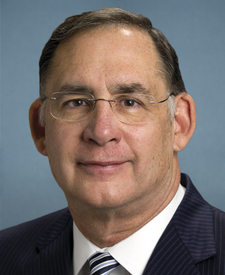
See how John Boozman actually votes — against your values.
DeepSyte scores John Boozman's record on the issues you care about — not party, not press releases. Take the 2-minute values quiz to see your personal alignment.
Sign in and take the values quiz to see how John Boozman's votes line up with your views.
Prediction track record
We haven't made any vote predictions for John Boozman yet. Predictions are generated for bills with tagged effects; they show up here as soon as the predict-votes job covers this rep's upcoming docket.
Consistency insights
John Boozman · statement ↔ vote record
45
Consistency score
Based on 2 data points across public statements and recorded votes · AI analysis of public records
118-hr-815·Mixed signal
Making emergency supplemental appropriations for the fiscal year ending September 30, 2024, and for other purposes.
45/100
What they said
Jul 20, 2026
The senators support legislation imposing sanctions on major purchasers of Russian oil and gas to increase costs on Russia's war effort in Ukraine and encourage negotiated peace.
The statement supports sanctions on Russian oil purchasers to pressure Russia on Ukraine. The bill provides FY2024 supplemental appropriations for defense support to Ukraine, Israel, and Indo-Pacific allies—a related but distinct approach to supporting Ukraine. The rep's yes vote on this amendment is directionally consistent with pro-Ukraine policy, but the statement and bill address different specific mechanisms (sanctions on energy purchasers vs. military/defense appropriations). Additionally, the vote is procedural (amendment), making substantive intent unclear.
Making emergency supplemental appropriations for the fiscal year ending September 30, 2024, and for other purposes.
45/100
What they said
Jul 20, 2026
The senators support legislation imposing sanctions on major purchasers of Russian oil and gas to increase costs on Russia's war effort in Ukraine and encourage negotiated peace.
The statement supports sanctions on Russian oil purchasers to pressure Russia on Ukraine. The bill provides FY2024 supplemental appropriations for defense support to Ukraine, Israel, and Indo-Pacific allies—a different mechanism addressing related but distinct foreign policy objectives. The rep's yes vote on this amendment is directionally consistent with supporting Ukraine against Russia, but the statement and bill address different specific policy tools (targeted sanctions vs. military/defense appropriations). The amendment vote type also limits clarity on the rep's substantive intent regarding the broader bill.
Pairs with ambiguous language and high uncertainty are withheld until more data is available. Procedural, cloture, and amendment votes are excluded — they don't cleanly signal substantive support or opposition.
Pro analysis
AI rep analysis — Pro
Get an AI-narrated read on John Boozman's full voting record against your stated values — aligned themes, conflicts, notable votes, and what to watch for.
We haven't extracted campaign positions for John Boozman yet. Once their campaign website or position pages are processed, this card will track what they said vs how they voted.
Crossing the aisle
No party-break passage votes recorded for John Boozman. Either they've voted with Republicans on every substantive passage vote in the corpus, or their tenure overlaps few high-threshold party-line votes so far.
Boozman Highlights Arkansas Ag Voices in Push for Farm Bill 2.0
Position: Senator Boozman advocates for passage of Farm Bill 2.0, emphasizing that the legislation provides necessary tools, resources, and modernized provisions to support farmers, rural communities, and agricultural operations.
WASHINGTON—U.S. Senate Committee on Agriculture, Nutrition, and Forestry Chairman John Boozman (R-AR) is continuing his push to advance Farm Bill 2.0 by highlighting the voices of farmers, conservationists and rural Americans in The Natural State and nationwide. These men and women represent all those who rely on a strong, comprehensive and modern Farm Bill to support their operations, families and communities.
Boozman has been featuring real-world stories from the people who feed and fuel America, steward our natural resources and strengthen rural communities in a social media campaign launched last month. The effort has included several Arkansans' perspectives and showcases why they urgently need the provisions included in Farm Bill 2.0.
"In developing Farm Bill 2.0, we've gone directly to the men, women, families and communities impacted by these policies to hear what's working, what's not and what they need from a modernized Farm Bill. Their experiences and ideas helped shape this legislation. Farm Bill 2.0 is about giving the people who produce our food, protect our land and sustain our rural communities the tools and certainty they need to succeed. These stories, including key voices from Arkansas, make clear just how necessary Farm Bill 2.0 is to deliver long-term resources and stability. The committee must advance this bill, and I look forward to doing so this week," said Boozman.
"As fish farmers, our operations rely heavily on maintaining stable water levels and managing high input costs, especially when extreme weather hits. Farm Bill 2.0's ELAP improvements are a gamechanger for aquaculture producers like us. By helping offset the heavy financial burdens of transportation costs and feed during severe droughts or adverse conditions, this program provides a crucial safety net," said Mike Freeze, Arkansas fish farmer.
"I understand firsthand that managing soaring input costs and keeping our operations capitalized in today's economic climate is an ongoing challenge. Farm Bill 2.0 addresses these modern realities head-on by updating vital credit and loan limits, such as Farm Service Agency operating and ownership loans. Getting a fully modernized farm bill across the finish line in the Senate is crucial to providing farm families with the financial stability and risk-management tools we desperately need to keep producing," said Arkansas Farm Bureau President Dan Wright.
"As an emergency physician in rural Arkansas, I've delivered babies in an ER because the nearest labor and delivery unit closed years ago. Farm Bill 2.0 takes that seriously — a Commission on Rural Maternal Health, financing tools for rural hospitals and EMS, and the broadband that makes telehealth possible. I'm grateful to Chairman Boozman and the Senate Agriculture Committee for keeping rural access at the center of this bill," said Lee Johnson, physician and Arkansas State Representative.
The #FacesOfFarmBill campaign puts producers and rural Americans at the center of the farm bill conversation, sharing their stories of how Farm Bill 2.0 would impact their operations, communities and livelihoods as well as help them navigate the challenges they face.
Farm Bill 2.0 is built for farmers, for rural communities and for the future. The legislation includes more than 100 bipartisan priorities designed to strengthen agriculture, support rural America and provide producers with greater certainty. Boozman announced his intention to reconvene the committee to resume consideration of the legislation at a business meeting on Wednesday, September 16.
To follow the campaign and read the stories from the people who are relying on an updated Farm Bill, follow #FacesOfFarmBill and visit the committee's social media channels on Facebook, Instagram and X.
Farmers and rural advocates in Arkansas have shared what Farm Bill 2.0 means to them in the #FacesOfFarmBill campaign.
Permalink: https://www.boozman.senate.gov/public/index.cfm/2026/9/boozman-highlights-arkansas-ag-voices-in-push-for-farm-bill-2-0
Position: Senator Boozman supports the SUSTAIN 340B Act, bipartisan legislation designed to provide greater stability, clarity, and transparency in the 340B drug discount program while preserving its benefits for hospitals, clinics, and community health centers serving rural and underserved communities.
WASHINGTON—U.S. Senators John Boozman (R-AR), Jerry Moran (R-KS), Tammy Baldwin (D-WI), Shelley Moore Capito (R-WV), Tim Kaine (D-VA) and John Hickenlooper (D-CO) – members of the Senate 340B Bipartisan Working Group – recently introduced the SUSTAIN 340B Act to provide greater stability, clarity and transparency in the 340B program. Arkansas healthcare leaders are praising the bipartisan legislation and Boozman's leadership to strengthen the program and ensure it continues to support Natural State patients and healthcare providers.
"Arkansas hospitals, clinics and healthcare providers rely on the 340B program to stretch their resources and provide care to more patients, especially in rural and underserved communities. The SUSTAIN 340B Act will strengthen this critical program by providing the clarity and stability Arkansas providers need while preserving their ability to support patients. Our bipartisan effort is carefully crafted to protect this important resource and ensure providers in Arkansas can continue delivering quality care their communities depend on," said Boozman.
"The Arkansas Hospital Association applauds Senator Boozman's participation in the working group responsible for introducing the SUSTAIN 340B Act. The benefits our eligible hospitals receive from the 340B program allow them to maintain critical care and access for patients across Arkansas — a vital lifeline given that our state's hospital reimbursement rates rank among the lowest in the nation. By moving away from a rebate model, this legislation helps clarify and protect the original intent of the 340B program, ensuring our hospitals can continue delivering quality care to every Arkansan," said Arkansas Hospital Association CEO & President Bo Ryall.
"Community health centers across Arkansas rely on the 340B program to stretch limited resources and reinvest those savings into the care and services our patients and communities need. For rural and underserved communities in particular, protecting 340B means protecting access to care. We are deeply grateful to Senator Boozman for his longstanding support of Arkansas's community health centers and his continued commitment to listening to the providers and communities we serve. His leadership, alongside his bipartisan colleagues, reflects the thoughtful collaboration necessary to strengthen 340B while preserving its critical benefits for patients. The SUSTAIN 340B Act is an important step toward providing greater clarity, accountability, and long-term stability while reaffirming the program's fundamental purpose: helping safety-net providers stretch scarce resources to expand access to care. We appreciate Senator Boozman's leadership in working to ensure 340B remains strong and sustainable for the patients and communities who depend on it,"said Community Health Centers of Arkansas Chief Executive Officer Lanita S. Shaverd, PharmD.
"Sen. John Boozman has long been a champion for Arkansas patients and the hospitals that serve them, especially in our rural communities. His leadership and steadfast support for meaningful 340B reform will help preserve a program that enables providers like UAMS to expand access to care, invest in critical services, and meet the needs of our most vulnerable patients. UAMS is grateful for Senator Boozman's commitment to protecting the 340B program and ensuring it remains a strong resource for improving the health of Arkansans," said UAMS Chancellor C. Lowry Barnes, M.D.
"The 340B program works because it was built around a straightforward idea: extend the reach of healthcare into communities that need it most. At Community Clinic, the benefits of the program through our contract pharmacy partnerships allow us to deliver integrated medical, dental, behavioral health, and pharmacy services to more than 70,000 patients across Arkansas and northeastern Oklahoma. Senator Boozman has long understood what's at stake — for patients and for the health systems that serve them. I'm encouraged that the SUSTAIN 340B Act works to keep the program true to its original intent while bringing the clarity and accountability that will sustain it for years to come," said Community Clinic President & CEO Judd Semingson, APRN, MSN, MBA.
In 2021, Arkansas was the first state in the nation to enact a law protecting 340B covered entities' ability to use contract pharmacies. Many covered entities participate in the 340B program in Arkansas, including several federally-qualified health centers and 40 hospitals. The program enables these safety-net providers to purchase discounted outpatient medications and use the resulting savings to stretch limited resources, including by providing free or discounted medications, reducing patient's out-of-pocket costs and providing charity care as well as other services for underserved and medically vulnerable patients.
Learn more about the SUSTAIN 340B Act here.
Permalink: https://www.boozman.senate.gov/public/index.cfm/2026/8/arkansas-healthcare-leaders-praise-boozman-led-340b-legislation
Boozman: Farm Bill Markup is Choice Between Voting to Help Farmers or More Rhetoric
Position: Chairman Boozman advocates for passage of the Agricultural Act of 2026 (Farm Bill 2.0), which he characterizes as strengthening commodity programs, expanding crop insurance access, improving disaster assistance, and investing in animal health. He presents the bill as the final offer on SNAP program concerns and warns that defeat would result in current law remaining in effect with increased state costs.
The following is the Chairman's opening statement as prepared for delivery:
"Good morning. I call to order today's business meeting of the U.S. Senate Committee on Agriculture, Nutrition, and Forestry to consider an original bill, the Agricultural Act of 2026, or what I like to call Farm Bill 2.0.
"Before I begin my formal comments, I would like to recognize my friend and colleague, Senator Mitch McConnell, who continues his recovery and is unable to join us for today's business meeting.
"I spoke with Senator McConnell yesterday. I know how much he would have wanted to be here to advocate for Kentucky's farmers and rural communities. Throughout his career, Senator McConnell has been a steadfast champion for the Bluegrass State's agricultural producers, advancing policies that expand opportunity, strengthen rural America, and enhance the competitiveness of American agriculture.
"He's served on this committee his entire tenure in the Senate, and this is the eighth farm bill he has helped shape. Few members bring the depth of experience and institutional knowledge that he does or better understand how important this legislation is to America's farmers, ranchers and rural communities.
"His leadership has helped deliver meaningful solutions for the men and women who work every day to feed, fuel, and clothe our nation. We wish him a full and speedy recovery, and we look forward to welcoming him back to the committee soon.
"During this journey of drafting a new farm bill, I have visited many states. While I was in North Dakota with my good friend Senator Hoeven, a woman told me that we needed to put more 'farm in the farm bill'. That statement stuck with me and has served as a mantra during this process.
"Last year we answered the call for more farm in the farm bill through the Working Families Tax Cuts.
"Those improvements delivered meaningful support to producers by strengthening commodity programs, expanding access to affordable crop insurance, improving disaster assistance, investing in animal health programs and making farm programs more responsive to the risks farmers face every today.
"The bill before you today, Farm Bill 2.0, is a sincere attempt to finalize our work for the farmers, ranchers, producers, and rural communities that are the backbone of our nation and give them the five-year farm bill they deserve. Beyond that, this legislation, once we adopt the en bloc amendment, represents the best and final offer I can make to address the concerns the minority has raised on the Supplemental Nutrition Assistance Program.
"I want to be clear a two-year delay does not have the support of the majority in Congress or of the White House. The offer before you is the best and final offer. Should this legislation be defeated today, current law will remain in effect and states with poorly administered SNAP programs will begin to pay for a portion of benefit costs next year.
"We have worked very hard to provide a one-year extension. In return, we have gotten: 'It's two years or nothing. And by the way, we don't want to even discuss the farm bill until you give us two years.'
"How is that taking care of hardworking families trying to make a living in farm country? In the last year, Arkansas has had more farm bankruptcies than the last four and a half years combined.
"Finally, thanks to the efforts of Senators Fischer, Thune, Capito, and Daines we have included year-round E15. Today, senators will have an opportunity for the first time to advance out of committee, legislation that will authorize the blending of E15 year-round.
"I'm proud of the bill we put together. It builds on the House-passed Farm Bill. This is the best opportunity to do good things for our farmers, rural communities and the future of agriculture.
"This bill incorporates more than 100 bipartisan bills and priorities from my colleagues with feedback from farmers, ranchers, and rural community leaders.
"We took great effort to craft a bipartisan product that reflects the needs and ideas of producers from every region of the country.
"In Arkansas, producers are facing extraordinarily difficult circumstances. I've heard firsthand from farm families whose roots in agriculture stretch back generations. Today, many are being forced to decide whether to continue operating at a loss or close their operations for good.
"I know every member of this committee has heard similar stories from farmers back home. These are families who rise before dawn every day to grow the food, fuel and fiber that sustain our nation.
"They aren't asking for special treatment—they're asking for the certainty and support they need to keep farming.
"They're looking to us to act. They're looking to us for hope.
"This Farm Bill provides that hope. It gives producers the tools and confidence they need to keep farming, keep investing, and keep feeding America.
"This legislation is about far more than agricultural policy. It's about ensuring family farms remain viable, rural communities remain strong, and future generations have the opportunity to carry forward America's proud agricultural tradition.
"We have built a farm bill for the people who feed America and today we'll see who talks about supporting farmers and who is voting to help farmers.
"I now recognize the Ranking Member for any comments she may have."
Click play to view the video or follow this link
https://youtu.be/gRELiHYfL6M
Permalink: https://www.boozman.senate.gov/public/index.cfm/2026/8/boozman-today-s-choice-is-between-voting-to-help-farmers-or-more-rhetoric
Senate 340B Bipartisan Working Group Introduces Comprehensive 340B Reform Legislation
Position: The senators support comprehensive reform of the 340B drug discount program to increase stability, clarity, and transparency while preserving benefits for eligible healthcare providers and patients.
WASHINGTON—U.S. Senators John Boozman (R-AR), Jerry Moran (R-KS), Tammy Baldwin (D-WI), Shelley Moore Capito (R-WV), Tim Kaine (D-VA) and John Hickenlooper (D-CO) – members of the Senate 340B Bipartisan Working Group – released the following statement after introducing sweeping legislation to reform the 340B program:
"We have received invaluable input from stakeholders throughout our process, and the legislation we are introducing reflects that feedback by aiming to provide greater stability, clarity, and transparency in the 340B program. The SUSTAIN 340B Act makes comprehensive reforms to the program while preserving its critical benefits that support eligible health care providers and the patients they serve throughout the country. By continuing to work together in bipartisan fashion, we are committed to strengthening the 340B program and helping make certain it remains accessible to serve patients and communities for years to come."
Permalink: https://www.boozman.senate.gov/public/index.cfm/2026/8/senate-340b-bipartisan-working-group-introduces-comprehensive-340b-reform-legislation
Senators Introduce Bipartisan Provider Reimbursement Stability Act to Ensure Long-Term Access to Medical Care
Position: The senators support modernizing Medicare's Physician Fee Schedule to increase physician reimbursement rates, citing decades of inflation-adjusted payment declines and the need to preserve patient access to care.
WASHINGTON—U.S. Senators John Boozman (R-AR), Peter Welch (D-VT), Roger Marshall M.D. (R-KS), Angus King (I-ME), Thom Tillis (R-NC) and Jeanne Shaheen (D-NH) introduced the Provider Reimbursement Stability Act to modernize Medicare's Physician Fee Schedule (MFPS). The bipartisan, comprehensive legislation would create greater predictability in Medicare physician payments, preserve patient access to care and better reflect the actual cost of delivering medical services.
According to the American Medical Association (AMA), when adjusted for inflation, Medicare reimbursement for physician services has declined 33 percent since 2001. This reduction, attributed to the Medicare budget neutrality threshold last updated in 1992 and other factors, has failed to keep pace with the rising cost of care. The legislation reforms key structural components of the MPFS, helping preserve physicians' ability to care for Medicare patients.
"Providers should not face unpredictable payment cuts that make it more difficult to care for patients. Modernizing Medicare reimbursement is an important step toward ensuring long-term financial stability for our health care providers and preserving access to quality care. Our bill is a bipartisan solution that will more accurately reflect the costs of delivering quality care, which ultimately benefits patients in Arkansas and across our country," said Boozman.
"Outdated policies are creating instability for doctors and threatening access to care for Medicare patients in Vermont and across the country. Our commonsense, bipartisan bill will help ensure physicians can continue providing vital care to our communities," said Welch.
"For 25 years, I cared for patients in western Kansas. Like many, I didn't go into medicine to worry about Washington's payment formulas – I went into medicine to take care of people," said Marshall. "When doctors can't make the numbers work, patients lose access to care. This legislation is a commonsense step toward stabilizing physician reimbursement so doctors can spend more time caring for patients and less time worrying about whether they can afford to stay in practice."
"Accessible, reliable health care is essential for seniors across Maine, particularly in our rural communities where providers are already stretched thin," said King. "The Provider Reimbursement Stability Act would help ensure that Medicare providers are fairly reimbursed so they can continue delivering the full range of care that Maine seniors depend on for their healthcare needs. I'm proud to join my colleagues in supporting this commonsense bipartisan legislation to strengthen access to quality care for older Americans."
"More than two million Medicare beneficiaries in North Carolina depend on timely access to quality care," said Tillis. "Year after year, Medicare reimbursement cuts have made it harder for physicians to care for patients. This bipartisan legislation makes long overdue reforms to outdated policies to ensure physicians are fairly reimbursed and seniors continue to have access to the care they deserve."
"It's critical we do all we can to ensure that Granite Staters who rely on Medicare for health insurance have access to the quality, affordable care they need," said Shaheen. "This bipartisan bill would make sure physicians are fairly compensated and guarantee adequate reimbursement for providers, which would help strengthen Medicare's dependability for patients now and into the future."
The Provider Reimbursement Stability Act would:
This legislation is supported by the American Medical Association, American Association of Neurological Surgeons, Congress of Neurological Surgeons, American Society for Radiation Oncology, Alliance of Specialty Medicine, American College of Rheumatology, American Academy of Otolaryngology - Head and Neck Surgery, College of American Pathologists, Society of Thoracic Surgeons, American College of Cardiology, American Osteopathic Association, National Organization of Rheumatology Management, American Academy of Dermatology Association, National Infusion Center Association, Obesity Medicine Association, American Academy of Family Physicians, American Psychological Association Services, American College of Surgeons, American Society of Plastic Surgeons, Emergency Department Practice Management Association, American Association of Orthopaedic Surgeons, American Society of Breast Surgeons, American Academy of Ophthalmology, Society for Vascular Surgery, American Medical Group Association, American Psychiatric Association, American College of Radiology, American Society of Echocardiography, American Optometric Association, American College of Physicians, American Gastroenterological Association, American College of Obstetricians & Gynecologists, American College of Emergency Physicians, Medical Group Management Association, American Association of Colleges of Osteopathic Medicine, American Academy of Neurology, American Academy of Allergy, Asthma and Immunology, and American Urological Association.
Companion legislation was introduced in the House of Representatives by Rep. Greg Murphy, M.D. (R-NC), and a bipartisan group of lawmakers.
Click here to view a section-by-section summary.
Permalink: https://www.boozman.senate.gov/public/index.cfm/2026/7/senators-introduce-bipartisan-provider-reimbursement-stability-act-to-ensure-long-term-access-to-medical-care
Boozman Presses VA on Failure to Establish Oncology Program Partnership with UAMS
Position: Senator Boozman criticizes the VA for failing to establish a prostate cancer oncology partnership between the Little Rock VA Medical Center and the University of Arkansas for Medical Sciences as intended by Congress, and calls for the VA to expand the Precision Oncology Program for Cancer of the Prostate to additional sites.
WASHINGTON—U.S. Senator John Boozman, a senior member of the Senate Veterans' Affairs Committee, pushed U.S. Department of Veterans Affairs (VA) National Oncology Program Executive Director Dr. Michael Kelley to explain its failure to expand the Precision Oncology Program for Cancer of the Prostate (POPCaP) in contrast to congressional intent. The department was required to extend the prostate cancer initiative, including fostering a new partnership with the Little Rock VA and University of Arkansas for Medical Sciences (UAMS), which has not occurred.
At a VA Committee hearing, Boozman highlighted Chairman Jerry Moran's (R-KS) introduction of the Precision Oncology Program for Cancer of the Prostate Authorization Act that would designate the Little Rock VA Medical Center, among others, as a Center of Excellence for the POPCaP program.
"Arkansas has built a strong partnership between the Little Rock VA and the University of Arkansas for Medical Sciences, and I believe it is well positioned to become a national leader in precision oncology research and care for veterans," Boozman said. "Congress provided $5 million to expand the Precision Oncology Program for Cancer of the Prostate to additional VA medical centers and increased academic cancer center partnerships. It is my understanding that VA instead used those funds to establish a broader precision oncology research program covering multiple cancers."
Expanding access to clinical oncology trials, particularly to areas that currently lack those opportunities, is critical. Boozman worked to secure funding to facilitate a new partnership between UAMS and the VA in the Fiscal Year 2024 appropriations package.
To date, that partnership has not been realized. Instead, the VA utilized the allocated funding to create a broad precision oncology cancer research program without expanding POPCaP sites. The senator has since included language in subsequent appropriations legislation directing the department to submit a report within 30 days after enactment on its plan to maintain the 21 current POPCaP sites and expand to additional locations.
Click play to view the video or follow this link
https://youtu.be/s8WPMoeZID4
Permalink: https://www.boozman.senate.gov/public/index.cfm/2026/7/boozman-presses-va-on-failure-to-establish-oncology-program-partnership-with-uams
Boozman Among EPW Committee Members Championing Bipartisan Wildfire Emissions Prevention Act
Position: The release expresses support for the Wildfire Emissions Prevention Act, which would streamline regulatory barriers to prescribed burns and prevent states from being penalized under the Clean Air Act for using controlled fires as a forest management tool to reduce wildfire risk.
WASHINGTON—Today, six members of the U.S. Senate Environment and Public Works (EPW) Committee, Senators John Boozman (R-AR), John Curtis (R-UT), Jeff Merkley (D-OR), Shelley Moore Capito (R-WV), Alex Padilla (D-CA) and Mark Kelly (D-AZ), introduced the bipartisan Wildfire Emissions Prevention Act (WEPA) of 2026.
WEPA 2026 would make it easier for states and communities to use prescribed fires to prevent wildfire emissions, protect ecosystems and wildlife habitats, and make American forests and communities safer, healthier, and cleaner. The bill also promotes the efficient use of state air quality resources and provides certainty that states will not be penalized for taking action to prevent wildfires.
"In light of the devastating wildfires we now see far too often, Congress should do everything it can to encourage better forest management practices. Prescribed burns are an important way to prevent large-scale fires that threaten homes and property while damaging natural resources. I am proud to join colleagues on both sides of the aisle on this legislation to ensure controlled burns do not generate an adverse Clean Air Act impact or penalize states taking proactive mitigation steps," said Boozman.
"If we're serious about reducing the size and severity of wildfires, we need to stop punishing local authorities for doing the right thing to improve forest health and remove hazardous fuels. By removing unnecessary regulatory burdens on prescribed burns, our legislation helps ensure states and localities can take proactive measures to help keep our forests and communities safe from the threat of wildfires," said Curtis.
"When the 2020 Labor Day fires swept across Oregon, I drove over 600 miles and never once escaped the thick, dark smoke that blanketed our state. As Oregonians face yet another record-breaking fire season this year, we need to tackle this crisis at every stage. Our bipartisan bill supports more prescribed fire on the landscape—an essential forest management activity—while giving our communities the resources to plan and prepare for smoke events. Climate chaos is fueling more severe wildfires, and I'll keep fighting to ensure Oregon and communities nationwide have the tools they need to protect public health and save lives," said Merkley.
"I am very proud to cosponsor this legislation, which will help reduce the impact of wildfires on our land, our air, and our people. Wildfires have ravaged many parts of our country over the past several years, and change is necessary to ensure that states can successfully prevent the most dangerous and damaging fires. States should have the right to use known prevention practices, including prescribed fires, to mitigate potential catastrophes and care for their land. This bill gives states another tool in their toolbox, and will reduce barriers to successfully managing wildfires and protecting communities nationwide," said Capito.
"We know prescribed burns help prevent catastrophic wildfires and save lives. This bipartisan bill cuts red tape so California and the whole country can make greater use of this proven, cost-effective tool to protect communities before the next major wildfire. It's a commonsense step that prioritizes prevention instead of waiting to respond after disaster strikes," said Padilla.
"Arizona knows the damage catastrophic wildfires can do to our communities and forests. Prescribed burns are one of the best ways to reduce that risk before a fire gets out of control, and states shouldn't be penalized for taking action. This bipartisan effort will help prevent larger, more destructive wildfires, keep our forests healthier, and better protect families from the smoke and pollution they leave behind," said Kelly.
The Wildfire Emissions Prevention Act would:
Permalink: https://www.boozman.senate.gov/public/index.cfm/2026/7/boozman-among-epw-committee-members-championing-bipartisan-wildfire-emissions-prevention-act
Boozman, Cotton Join Blumenthal and Darline Graham to Introduce Updated Russian Oil Sanctions Bill
Position: The senators support legislation imposing sanctions on major purchasers of Russian oil and gas to increase costs on Russia's war effort in Ukraine and encourage negotiated peace.
WASHINGTON—U.S. Senators John Boozman (R-AR) and Tom Cotton (R-AR) joined Senators Richard Blumenthal (D-CT) and Darline Graham (R-SC) in leading more than 60 members of the Senate in introducing the Lindsey O. Graham Sanctioning Russia Act of 2026, legislation to hold major purchasers of Russian oil and gas accountable for supporting Russia's war in Ukraine.
U.S. Senator Lindsey Graham (R-SC) met with Ukrainian President Volodymyr Zelenskyy to discuss the effort and secured an agreement with the White House on the Friday before his sudden passing. The late senator spent the last year building support for the effort in Congress and the Trump administration.
"Senator Graham tirelessly worked to impose real consequences on Putin and end Russia's war of aggression against Ukraine. This bipartisan and thoughtfully crafted legislation is a testament to his tremendous leadership. I am proud to join my colleagues and send a clear message that Senator Graham's work will not go unfinished and that Moscow must finally end its unprovoked attack on Ukrainian sovereignty," said Boozman.
"Vladimir Putin's unprovoked war has dragged on for more than four years. As Senator Graham knew well, raising the costs on Russia is the only solution. Our bill will further restrict their energy sales to strangle Putin's war machine and bring him to the negotiating table. Congress should pass this bill immediately and help finish a war Lindsey fought so hard to end," said Cotton.
"Ukraine is at a critical crossroads — and we must meet this pivotal moment with a powerful sanctions bill. As Ukraine turns the tide on the battlefield, our Russia sanctions bill would be historically impactful in stopping Russia's murderous slaughter," Blumenthal said. "When Senator Graham and I last spoke, he was absolutely exultant, calling from Kyiv with news that President Trump would support this bill to impose scorching tariffs and sanctions on purchasers of Russian oil and stop them from fueling Putin's war machine. Now is the time to push Russia toward peace. Ukraine is gaining net territory and reaching deep into Russia with its drones and missiles. Sanctions provide a path toward peace. Our bill is the product of lengthy, detailed, difficult bipartisan work, and now has broad bipartisan support. Passing this legislation right now would be a fitting tribute to Senator Graham's fierce support for Ukraine's freedom."
"Until the very day he passed, Lindsey remained focused on passing the Russia sanctions bill. Passing this legislation would honor my brother's steadfast commitment to our national security and it would provide President Trump with additional leverage to bring this war to an end. I look forward to working with my colleagues to pass this legislation and send it to President Trump's desk," said Darline Graham.
The Lindsey O. Graham Sanctioning Russia Act of 2026 would impose primary and secondary sanctions against Russia and actors supporting Russia's war in Ukraine.
The sanctions target Russian officials, oligarchs, their family members, foreign persons, and Russian banks and financial institutions, as well as the Russian Shadow Fleet.
The legislation also directs the president to impose up to 100 percent tariffs on imported goods from countries that buy the majority of Russian oil and gas, and enable Russian sanctions evasion. The new text limits these tariffs to the five largest importers of Russian crude oil and gas.
The legislation is cosponsored by U.S. Senate Majority Leader John Thune (R-SD) and Senators Jeanne Shaheen (D-NH), Katie Britt (R-AL), Dick Durbin (D-IL), Roger Wicker (R-MS), Sheldon Whitehouse (D-RI), Jim Risch (R-ID), Chris Coons (D-DE), Chuck Grassley (R-IA), Michael Bennet (D-CO), Jack Reed (D-RI), Tim Scott (R-SC), Angus King (I-ME); John Barrasso (R-WY), Tim Kaine (D-VA), Susan Collins (R-ME), Mitch McConnell (R-KY), Mark Kelly (D-AZ), Thom Tillis (R-NC), Kirsten Gillibrand (D-NY), Joni Ernst (R-IA), Jacky Rosen (D-NV), Pete Ricketts (R-NE), Brian Schatz (D-HI), John Cornyn (R-TX), Adam Schiff (D-CA), Tim Sheehy (R-MT), Amy Klobuchar (D-MN), John Curtis (R-UT), John Fetterman (D-PA), Dan Sullivan (R-AK), Tammy Duckworth (D-IL), Gary Peters (D-MI), James Lankford (R-OK, John Hickenlooper (D-CO), Cindy Hyde-Smith (R-MS), Martin Heinrich (D-NM), Marsha Blackburn (R-TN), Angela Alsobrooks (D-MD), Chris Van Hollen (D-MD), Kevin Cramer (R-ND), Shelley Moore Capito (R-WV), Jon Husted (R-OH), John Hoeven (R-ND), Deb Fischer (R-NE), Jim Justice (R-WV), Mike Rounds (R-SD), Ted Cruz (R-TX), John Kennedy (R-LA), Cynthia Lummis (R-WY), Lisa Murkowski (R-AK), Rick Scott (R-FL), Ted Budd (R-NC), Jerry Moran (R-KS), Tommy Tuberville (R-AL), Dave McCormick (R-PA), Alan Armstrong (R-OK) and Steve Daines (R-MT).
Permalink: https://www.boozman.senate.gov/public/index.cfm/2026/7/boozman-cotton-join-blumenthal-and-darline-graham-to-introduce-updated-russian-oil-sanctions-bill
Boozman, Gillibrand Introduce Bipartisan More Paid Leave for More Americans Act
Position: Senators Boozman and Gillibrand introduced bipartisan legislation to expand paid leave access through a state-driven, public-private partnership model with a three-year pilot program and an interstate coordination network.
WASHINGTON—U.S. Senators John Boozman (R-AR) and Kirsten Gillibrand (D-NY) introduced the More Paid Leave for More Americans Act, legislation to expand access to paid leave through an innovative state-driven, public-private partnership model while creating a national framework that empowers employers to administer this benefit efficiently across state lines.
The bill would authorize a three-year pilot program through the U.S. Department of Labor (DOL) to help states, in partnership with private employers, offer paid family, caregiving or medical leave. It would also establish the Interstate Paid Leave Action Network (I-PLAN) –– a working group of participating states to foster collaboration, reduce compliance burdens and create a standardized system for processing interstate claims.
"As a former business owner, father of three daughters and Member of Congress, I have learned just how much there is to gain from expanding paid leave resources for working families. Our bipartisan, bicameral approach offers a flexible way for more states and employers to help fewer Americans face the dilemma between career progression and financial security or meeting theirs or a loved one's needs. I am optimistic this model will spur wider adoption across the country and appreciated collaborating with my colleagues alongside passionate advocates to achieve meaningful progress that will support families and our economy," said Boozman.
"No American should have to choose between earning a paycheck and caring for a new baby, a sick parent, or their own health," said Gillibrand. "The More Paid Leave for More Americans Act is a commonsense, bipartisan step toward solving a challenge facing millions of hardworking families. By empowering states to create robust paid parental, caregiving, and medical leave programs, this bill would help protect Americans' financial security and allow them the flexibility to deal with life's emergencies without sacrificing their income. I will fight to pass this bill through Congress and will continue working until every American has guaranteed access to paid family and medical leave."
Companion legislation was introduced in the House of Representatives by Rep. Stephanie Bice (R-OK) and Rep. Chrissy Houlahan (D-PA).
"After years of hard work and dedication, I am thrilled that my colleagues in the Senate have introduced companion legislation to my bipartisan bill, the More Paid Leave for More Americans Act. As Co-Chair of the Bipartisan House Paid Family Leave Working Group alongside Rep. Chrissy Houlahan, I have been proud to work across the aisle to advance practical solutions that support both families and businesses. As a mother myself, I understand the challenges parents face and the importance of ensuring they do not have to choose between caring for a newborn and earning a paycheck. We must continue this momentum and advance policies that address the real needs of America's families," Bice said.
"Four years ago, when I founded the House Bipartisan Paid Leave Working Group with Rep. Bice, I did so with a simple goal: to find durable, bipartisan policy solutions that help American workers, businesses, and families gain access to paid family and medical leave. Today, I am proud that our bill, the More Paid Leave for More Americans Act, now has a Senate companion, and I applaud Senators Boozman and Gillibrand for their leadership and partnership in advancing this effort. For more than three decades, roughly three in four American workers have lacked access to paid leave. We have a real opportunity to help states build programs that change that reality. Today, we've charted a clear bipartisan, bicameral path forward, and I urge House and Senate leadership to seize this opportunity and finally deliver paid leave for more American families," Houlahan said.
Roughly one-quarter of American workers currently have access to employer-provided paid family leave benefits. Disparities among state paid leave policies also create compliance challenges for employers operating in multiple states. Currently, 14 states and the District of Columbia have enacted mandatory paid leave laws.
This bipartisan legislation addresses a significant coverage gap by encouraging states and private companies to adopt or expand scalable, sustainable access to paid leave benefits.
Under the More Paid Leave for More Americans Act, eligible states would be awarded grants to implement their paid leave program and participate in I-PLAN. The programs must provide at least six weeks of paid leave and replace at least 67 percent of wages while capping the benefit at 150 percent of the state's average weekly wage rate. The bill instructs DOL to prioritize states that do not currently have an established paid leave program, emphasize paid family leave, participate in I-PLAN and have a lower percentage of the working population with access to paid leave benefits.
The bill is endorsed by Engage: Promoting Women's Economic Security, AARP, Bipartisan Policy Center (BPC) Action, Third Way, Chamber of Mothers and Patriot Voices.
"Engage celebrates the work of Senator John Boozman and Senator Kirsten Gillibrand with the introduction of the Senate companion of the More Paid Leave for More Americans Act. The legislation incentivizes the public and private sectors to work together responsibly and address the unique challenges facing caregivers. This is meaningful bipartisan governing at its best," said Engage Founder Rachel Pearson.
"The introduction of the More Paid Leave for More Americans Act in the Senate marks a pivotal moment for working families across America. This bill cuts through the confusing patchwork of state-paid family and medical leave laws, making it easier for workers to access these benefits when they need them most. Too many Americans lack access to paid leave. While more than 70 percent of young children live in households where both parents work, only 27 percent of employers offer paid leave benefits. This bill helps more families access this necessary support, which is why BPC Action applauds Sens. John Boozman (R-AR) and Kirsten Gillibrand (D-NY) for their leadership. We also commend the House and Senate Bipartisan Paid Family Leave Working Groups for the collaboration that made this milestone possible," said BPC Action President Michele Stockwell.
"We appreciate that your legislation recognizes and supports paid leave for life's major events, including caring for a loved one. America is at a watershed moment, with 10,000 Americans turning 65 a day, a workforce struggling to keep pace with demand, and an increasing number of family members taking care of loved ones as they age. Seventy percent of working-age caregivers, ages 18 to 64, work while also caregiving. Your legislation will help support both a strong economy and family well-being by better equipping workers with the tools they need to meet their responsibilities at home and at work," said AARP Executive Vice President and Chief Advocacy and Engagement Officer Nancy LeaMond.
Click here to view text of the bill.
Click here for a section-by-section summary.
Permalink: https://www.boozman.senate.gov/public/index.cfm/2026/7/boozman-gillibrand-introduce-bipartisan-more-paid-leave-for-more-americans-act
Boozman, Scott, Coons Champion Effort to Modernize HBCU Campuses
Position: The senators introduced bipartisan legislation to establish a competitive federal grant program within the Department of Education to help rebuild and modernize aging campus infrastructure at Historically Black Colleges and Universities.
WASHINGTON—U.S. Senator John Boozman (R-AR) joined Senators Tim Scott (R-SC) and Chris Coons (D-DE) in introducing the Institutional Grants for New Infrastructure, Technology, and Education (IGNITE) for Historically Black Colleges and Universities (HBCUs) Excellence Act. The bipartisan legislation would help rebuild and modernize aging campus infrastructure at HBCUs across the country by establishing a competitive federal grant program within the Department of Education.
"Arkansas is the proud home to four HBCUs that provide quality, unique educational opportunities to thousands of students. I am proud to help recognize their historical significance and positive impact on aspiring college graduates from a variety of backgrounds. The IGNITE for HBCU Excellence Act will ensure these institutions' infrastructure is able to continue preparing students for successful careers in the years to come," Boozman said.
"HBCUs have long been engines of opportunity, but for far too long, too many have been asked to do more with less. The IGNITE for HBCU Excellence Act will help modernize campuses, expand research and workforce training opportunities, and ensure students are prepared to succeed in a 21st-century economy," said Scott, co-chair of the Bipartisan HBCU Caucus.
"Historically Black Colleges and Universities like Delaware State University have long been institutions that create opportunity and academic excellence for future generations of community leaders, innovators, educators, and freedom fighters," said Coons, co-chair of the Bipartisan HBCU Caucus. "Funding for HBCUs is critical to providing educational resources for low-income students, first generation college students, and those most at risk of not entering college. Congress needs to take up and pass the IGNITE for HBCU Excellence Act to modernize campuses across the country so that HBCUs have the technology, facilities, and resources they need to educate the next generation."
In addition to Boozman, Scott and Coons, the legislation is cosponsored by Senators Raphael Warnock (D-GA), Thom Tillis (R-NC), Chris Van Hollen (D-MD), Lisa Blunt Rochester (D-DE) and Cory Booker (D-NJ). Companion legislation was introduced in the House by U.S. Representatives French Hill (R-AR) and Alma Adams (D-NC).
The IGNITE for HBCU Excellence Act is supported by the Thurgood Marshall College Fund, the United Negro College Fund, the White House Initiative on Historically Black Colleges and Universities and the Office of Management and Budget.
The IGNITE for HBCU Excellence Act would:
Click here to view text of the bill.
Permalink: https://www.boozman.senate.gov/public/index.cfm/2026/7/boozman-scott-coons-champion-effort-to-modernize-hbcu-campuses
Source: GDELT 2.0 GKG, filtered to a curated list of national outlets. Inclusion is not endorsement; opinion pieces and reported news are mixed.
Recent stock activity
Periodic transaction reports filed under the STOCK Act — disclosed by the rep, sourced from public filings.
No disclosed trades on record.
Source: open-data mirrors of the Senate eFD and House Clerk financial-disclosure systems. Disclosure within 30 days of trade is required by law (45 for spouse/dependent trades).
Top PAC donors · 2026 cycle
Political action committees that gave the most to this rep's principal campaign committee this cycle. PAC giving is direct organizational support — industry, ideological, or leadership.
1.VOTESANE PACIdeological8 contributionsSingle-issue advocacy PAC — supports candidates based on positions related to mental health, healthcare policy, or rational governance approaches.AI · low$56,500
2.PRO-ISRAEL AMERICA PAC4 contributions$39,505
3.TAKE BACK THE SENATE5 contributions$34,850
4.2021 SENATORS CLASSIC COMMITTEELeadership2 contributionsMember-of-Congress leadership PAC — likely affiliated with a Senate Republican or Democrat who organizes an annual fundraising event or caucus.AI$17,270
5.TEAM MCCONNELL2 contributions$11,200
Source: OpenFEC (api.open.fec.gov) Schedule A receipts where contributor type is “committee.” Aggregated by contributing committee. Self-transfers from joint-fundraising / victory committees are excluded.
Top individual contributors · 2026 cycle
Itemized individual contributions over $200 to this rep's campaign committee, aggregated by donor employer. PAC giving is shown above; this section is people, not organizations.
1.ANDREESSEN HOROWITZ$21,000
2.ROBINHOOD MARKETS$7,000
3.SOROBAN CAPITAL PARTNERS LP$7,000
4.O'KEEFFE SHAHMORADI STRATEGIES$7,000
5.1ST FINANCIAL BANK USA$7,000
6.RIVER BEND INDUSTRIES$7,000
7.ROBINHOOD$6,000
8.VETERANS UNITED HOME LOANS$3,900
9.COINBASE$3,500
10.AE INDUSTRIAL$2,000
Source: OpenFEC Schedule A receipts where contributor type is “individual,” aggregated by the donor's self-reported employer. This is a geographic / industry correlation, not a corporate endorsement.