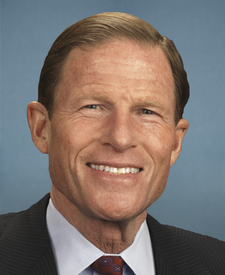
See how Richard Blumenthal actually votes — against your values.
DeepSyte scores Richard Blumenthal's record on the issues you care about — not party, not press releases. Take the 2-minute values quiz to see your personal alignment.
Sign in and take the values quiz to see how Richard Blumenthal's votes line up with your views.
Prediction track record
How often we called Richard Blumenthal's passage votes correctly, from their stated positions on each bill's tagged topics. Excludes “unclear” calls and abstentions.
19 predictions on record · none have been resolved by a passage vote yet. Check back as bills move.
Proposing an amendment to the Constitution of the United States relating to the authority of Congress and the States to regulate contributions and expenditures intended to affect elections and to enact public financing systems for political campaigns.
No paired statements and votes yet for Richard Blumenthal
We haven't yet found statement/vote pairs on the same topic for Richard Blumenthal. This usually means either the rep hasn't taken public positions on bills that have come to a passage vote, or those bills haven't been tagged yet. The checker runs as new press releases and votes come in.
Pro analysis
AI rep analysis — Pro
Get an AI-narrated read on Richard Blumenthal's full voting record against your stated values — aligned themes, conflicts, notable votes, and what to watch for.
We haven't extracted campaign positions for Richard Blumenthal yet. Once their campaign website or position pages are processed, this card will track what they said vs how they voted.
Crossing the aisle
No party-break passage votes recorded for Richard Blumenthal. Either they've voted with Democrats on every substantive passage vote in the corpus, or their tenure overlaps few high-threshold party-line votes so far.
Blumenthal Condemns Supreme Court Decision Undermining Independence of Consumer Protection Agencies | U.S. Senator Richard Blumenthal of Connecticut
Position: Senator Blumenthal opposes the Supreme Court decision allowing the President to remove FTC commissioners without cause, arguing it undermines the agency's independence and enables corporate favoritism at the expense of consumer protection.
[WASHINGTON, D.C.] – U.S. Senator Richard Blumenthal (D-CT) today released the below statement following the Supreme Court’s decision allowing President Donald Trump to fire commissioners of the independent Federal Trade Commission (FTC):
“President Trump fired Commissioners Slaughter and Bedoya because they had the tenacity to fight monopolists and to protect consumers from predatory corporate abuses. Since then, Trump’s obsequious FTC has spent more time engaged in illegitimate harassment of the President and his financial backers’ critics than taking on Big Tech or enforcing Made in America rules.
“The Supreme Court has now handed Donald Trump unchecked dominion over independent commissions like the FTC—allowing the President to stack consumer protection agencies with hand-picked cronies who will cater to his billionaire friends. By eroding the FTC’s independence, the Supreme Court is fulfilling Trump’s vision for a weakened consumer watchdog and leaving Americans vulnerable to monopolistic business practices and higher costs.”
Senator Blumenthal: Week in Review 6/19/2026-6/26/2026 | U.S. Senator Richard Blumenthal of Connecticut
Position: Senator Blumenthal advocates for passage of the Kids Online Safety Act (KOSA), which would impose a duty of care on social media platforms to prevent harms to young users including suicide, eating disorders, substance use, and sexual exploitation. He criticizes Congress for inaction and calls on lawmakers to reject campaign contributions from tech companies and pass the legislation.
Demanding Action on Social Media Victims Remembrance Day
[WASHINGTON, D.C.] – On Tuesday, June 23, U.S. Senator Richard Blumenthal (D-CT) joined 48 bereaved families, lawmakers, youth advocates, and child safety experts at a memorial marking Social Media Victims Remembrance Day.
“We are here to honor so many young people. But we need to honor them with more than words – we need to honor them with action,” Blumenthal said. “I’m angry at Big Tech and Mark Zuckerberg, but I’m also angry at my colleagues in that building. I am angry at the United States Congress for its inaction.”
“And as all of you know, because you’ve knocked on those doors, you’ve talked to them, they all know how to talk the talk, right? Oh, we feel for you, we grieve with you. Well, they need to put some spine where their words are, and reject the campaign contributions, and shut out the lobbyists, and say no to the lawyers.”
In his remarks, Blumenthal called on Congress to act by passing the Kids Online Safety Act (KOSA) approved by the Senate in an overwhelming bipartisan 91-3 vote. In the Senate, KOSA has 76 co-sponsors and creates a duty for online platforms to take meaningful steps to prevent users of their products from being hurt, just as every other industry in America is required to do. The “duty of care” requires social media companies to prevent and mitigate certain harms that they know their platforms and products are causing to young users as a result of their own design choices, such as their recommendation algorithms and addictive product features. The specific covered harms include suicide, eating disorders, substance use disorders, and sexual exploitation.
“If my colleagues are serious, they’re going to reject laws that eliminate the Duty of Care. Well, they’ll tell you, you know, again, it’s complicated, it’s difficult – there’s nothing complicated about the Duty of Care,” Blumenthal said. “If you make a defective toaster and it blows up in someone’s home, they’re liable. If you make a defective car, and it careens into a tree, they’re liable. If you make an airplane that crashes because it has defective parts, they’re liable. When Big Tech makes products that addict and kill young people, they should be liable under a Duty of Care that is clear and effective.”
Blumenthal concluded by thanking the families and advocates who have supported KOSA and advocated for change.
“Since our last meeting here, I’ve become a grandfather. And for all of us who have children or grandchildren, this issue is not about some abstraction – some principle that we learned in law school or take to court. It is about real lives. It is about the Bride family and the Neville family. It is about every one of who is here today who have mustered the courage – and I don’t know how you have it – but you are giving us the spirit and the drive and the inspiration that we need to continue this fight,” “Since our last meeting here, I’ve become a grandfather. And for all of us who have children or grandchildren, this issue is not about some abstraction – some principle that we learned in law school or take to court. It is about real lives. It is about the Bride family and the Neville family. It is about every one of who is here today who have mustered the courage – and I don’t know how you have it – but you are giving us the spirit and the drive and the inspiration that we need to continue this fight,” said Blumenthal.
On Twitter/X, Blumenthal further highlighted Social Media Remembrance Day and called for protections for children online.
“We should be angry about Big Tech addicting & killing children. Mourn the dead but fight like hell for the living. An old adage, it should stop us from being daunted or discouraged. Fight for my internet safety act—KOSA,” said Blumenthal with an accompanying video on Twitter/X.
On the Senate Veterans’ Affairs Committee
Blumenthal, Ranking Member of the Senate Veterans’ Affairs Committee, led 46 of his Democratic colleagues in opposing cuts to Department of Veterans Affairs (VA) benefits for disabled veterans who suffer from sleep apnea and tinnitus, as proposed by a draft VA rule and the Take Care of America’s Veterans Act.
In a letter to VA Secretary Doug Collins, the Senators condemned a proposed reduction in benefits for more than one million veterans suffering from sleep apnea and tinnitus: “We write in strong opposition to a proposed reduction in benefits for more than one million veterans suffering from sleep apnea and tinnitus outlined in the Department of Veterans Affairs (VA) draft rule entitled “Schedule for Rating Disabilities--Ear, Nose, Throat, and Audiology Disabilities; Special Provisions Regarding Evaluation of Respiratory Conditions; Respiratory System” (RIN: 2900-AQ72). We urge you to listen to the growing opposition from veterans and publicly commit to addressing their concerns.”
The Senators continued, “Along with the draft rule, we are equally opposed to the Take Care of America’s Veterans Act because it codifies the same harmful reductions in benefits for veterans with tinnitus and sleep apnea benefits. By writing these cuts into statute, the legislation would permanently implement the very policies that veterans, medical experts, and veterans service organizations have overwhelmingly opposed. Whether implemented through regulation or enacted by Congress, these cuts would strip disabled veterans of earned compensation and health care benefits – they should be rejected outright.”
The Senators emphasized how the policy would cut benefits for veterans with service-connected sleep apnea and tinnitus and pointed to veterans service organizations’ opposition. They noted that tinnitus in particular is the most common service-connected disability recognized by VA, with an estimated 3.6 million veterans receiving benefits for this condition. The Congressional Budget Office has confirmed that nearly one million veterans would have their monthly disability compensation reduced by the change.
The Senators concluded by calling on VA Secretary Collins to join them in opposing these harmful cuts to benefits: “At your confirmation hearing last year, you pledged, “We’re not going to balance budgets on the back of veterans’ benefits.” We urge you to honor that commitment by abandoning these proposals and to further reject any legislation that would permanently cut off these benefits to veterans. We look forward to working with you to ensure our nation’s veterans receive the care and benefits they deserve.”
Blumenthal further highlighted how Republicans are blocking benefits for combat-injured veterans on his Substack.
On Twitter/X, Blumenthal amplified the stories of veterans and advocates calling for the Major Richard Star Act to do right by our nation’s veterans.
“Listen to Octavia, a U.S. Navy veteran who served for 30 years. She'll tell you why we need the Major Richard Star Act to provide for our nation's veterans—without depriving other veterans of their earned benefits,” wrote Blumenthal with a video of Octavia on Twitter/X.
Calling for a Living Wage for Working Americans
Blumenthal joined U.S. Senators Chris Murphy (D-CT) and Ron Wyden (D-OR), workers, and labor leaders for a press conference announcing the Living Wage for All Act, historic legislation to raise the federal minimum wage to $25.
“Almost half of all Americans are making less than $26 an hour. Americans are struggling right now – the cost of gasoline, and groceries. We all know that Donald Trump has inflated all of the costs of living in this country. People cannot make ends meet on less than $25 an hour and live fairly and with dignity. And that’s why we need to raise that minimum number to $25 dollars,” said Blumenthal.
“Right now, we have a system that encourages a race to the bottom, not to the top. A living wage, $25 an hour, is the least we can do for the American middle class, working families, Americans who go to work every day and depend on what they make. They don’t depend on the stock market. The President of the United States measures the economy by what the stock market is doing. Most Americans depend on what they make, what their paycheck is, every week at work. And that’s the reality, Mr. President. My colleagues here need to accept that a living wage is the way to treat Americans fairly, with dignity, with respect, and to strengthen the middle class,” continued Blumenthal.
A video of Blumenthal’s remarks is available here.
Blumental further called for a living wage to do right by American workers on Twitter/X.
“As Trump inflates the cost of living—skyrocketing prices for everything from gas to groceries—people deserve to be paid with dignity & fairness. Proud to join my colleagues in calling for a living wage for Americans workers,” wrote Blumenthal with an accompanying video on Twitter/X.
Slamming Trump Administration’s Use of Taxpayer Dollars for White House Ballroom Project
Blumenthal, Ranking Member of the Senate Permanent Subcommittee on Investigations (PSI), demanded answers from U.S. Secret Service Director Sean Curran about the redirection of Congressionally appropriated taxpayer dollars to fund the construction of President Donald Trump’s White House Ballroom. In a letter sent this week, Blumenthal requested documents and information regarding the Secret Service’s diversion of $1.17 billion that was intended to be used for Secret Service operations.
“Diversion of this major appropriation amount from its intended and explicitly directed purposes seems to exceed your legal authority and violate statutory limits. These funds were appropriated by Congress to provide the Secret Service the resources and tools needed to keep those under the agency’s protection safe,” Blumenthal wrote.
Blumenthal continued, “President Trump has repeatedly insisted that construction costs would be paid by private donors and himself personally, at no cost to the taxpayers. Recent reporting, however, indicates that the cost of constructing the ballroom is much more expensive than the American people were led to believe, and they will be responsible for hundreds of millions of dollars to pay for it. Indeed, we now know that, at the very same time President Trump promised the American people that the project would be paid for ‘100 percent by me and some friends of mine,’ the Administration privately planned for taxpayers to fund half of the costs of a project that was recently estimated to cost $600 million, triple the President’s original estimate.”
“The ever-increasing scale of the White House Ballroom project, together with the Administration’s lack of transparency about it has only made it more critical that Congress ensure that taxpayer money intended for Secret Service protection operations is not diverted to ballroom construction. This is clearly not how Congress intended this money to be spent. Indeed, Congress rejected the Administration’s request for $1 billion to fund the ballroom project in the most recent budget reconciliation process, reinforcing Congress’s intention that Secret Service funds not be utilized for this purpose,” Blumenthal concluded.
The full text of Blumenthal’s letter to Director Curran is available here.
Blumenthal released a statement on the Senate vote to halt Trump’s unauthorized war in Iran.
Blumenthal marked the anniversary of the Dobbs Supreme Court decision, recommitting to fighting for reproductive justice, abortion access, and the foundational right to choose your own health care.
Blumenthal reacted to the Supreme Court’s decision allowing the Trump Administration to end legal protections for migrants fleeing violence and natural disaster in Haiti and Syria.
Blumenthal reacted to the Supreme Court striking down a law limiting guns in businesses.
Blumenthal delivered an opening statement at a public forum on the Trump Administration abandoning Americans to disease.
Blumenthal pressed Trump’s National Parks Service and Reflecting Pool contractors for answers as firms with close ties to Trump bungle Reflecting Pool project.
Blumenthal urged the Connecticut Insurance Department to reject double-digit health insurance rate increases that would impact nearly 220,000 Connecticut residents.
Blumenthal introduced legislation to prevent frontover child deaths.
Blumenthal attended Juneteenth celebrations in Middletown, Bridgeport, New Haven, Danbury, and Stamford.
Blumenthal joined CNN to discuss Trump’s Reflecting Pool project.
Blumenthal questioned Trump’s judicial nominees on who won the 2020 election and if the Capitol was attacked on January 6th.
Blumenthal questioned Trump’s Postmaster General on his refusal to commit to delivering mail-in-ballots without fulfilling Trump’s new review.
Blumenthal attended celebrations for American’s 250th anniversary in Wallingford and Milford.
Blumenthal joined the Hooks for Heroes event in Stamford.
Blumenthal celebrated Father’s Day.
Blumenthal & Markey Introduce Legislation to Prevent Frontover Child Deaths | U.S. Senator Richard Blumenthal of Connecticut
Position: Senators Blumenthal and Markey introduced legislation requiring new vehicles to be equipped with visibility technology (cameras, sensors) to detect objects in front of and around vehicles, aiming to prevent child deaths from frontover incidents. The bill directs NHTSA to establish federal motor vehicle safety standards and formally define 'frontover' incidents.
[WASHINGTON, D.C.] – Today, U.S. Senators Richard Blumenthal (D-CT) and Edward J. Markey (D-MA) introduced legislation to prevent child deaths due to frontover incidents. The Standards to Prevent (STOP) Frontovers Act would require all new vehicles to come equipped with cameras, sensors, or other technology to improve drivers’ visibility and perception of kids, pets, and other objects that may be in front of and around their vehicle and avert crashes.
“Our measure requires visibility standards for cars to help prevent tragic, deadly accidents,” said Blumenthal. “Investigations have shown repeatedly that the massive front blind zones on modern SUVs and trucks can extend up to 16 feet, completely obscuring a small child from a driver’s view. By requiring standard detection technology, clearly defining frontovers, and forcing accountability, we can finally close this deadly loophole and save children’s lives. Safety cannot be treated as a luxury limited to people who can afford it.”
“Bigger, taller cars pose serious safety threats, especially to children and pedestrians,” said Markey. “Automakers have designed today’s cars to be bigger and taller than ever, without making the needed safety improvements to protect children and other road users. I am proud to partner with Senator Blumenthal on the STOP Frontovers Act which will hold automakers accountable and save precious lives.”
The STOP Frontovers Act would require the National Highway Traffic Safety Administration (NHTSA) to issue a new Federal Motor Vehicle Safety Standard (FMVSS) that requires vehicles to be equipped with technology that enables drivers to detect and accordingly respond to objects in front of and around their vehicle to reduce death and injury resulting from frontovers.
The measure directs NHTSA to begin the rulemaking process for the standard within one year and issue a final FMVSS one year later. It also requires NHTSA to formally define the term “frontover” to standardize its definition and allow for more accurate data collection. In addition, the bill directs NHTSA to update its Non-Traffic Surveillance data to more accurately count frontover injuries and deaths to provide critical and more accurate information to the Agency and the public about the prevalence of frontovers.
While Congress mandated in 2008 that NHTSA issue a rule to establish rear visibility standards in response to countless backover accidents, no such front or side visibility standards currently exist. Such visibility technology, such as cameras and sensors, is offered by some manufacturers, but usually only on expensive, upgraded models or for an additional fee.
The STOP Frontovers Act has been endorsed by auto and consumer safety organizations, including Kids and Car Safety, the Center for Auto Safety, Safe Kids Worldwide, Consumer Reports, and Advocates for Highway and Auto Safety.
“Ever-larger vehicles come with the drawback of larger driver blind zones that heighten the risk of crashes even at low speeds, particularly impacting children. Modern cars can and should be using available technological countermeasures to resolve this growing problem,” said Michael Brooks, Executive Director of Center for Auto Safety. “That’s why the Center for Auto Safety strongly supports Senator Blumenthal’s STOP Frontovers Act, which mandates solutions that can end these preventable tragedies, and improves data collection on frontovers and other non-traffic crashes.”
“As vehicles in the U.S. have become larger, the unintended consequence of expanded blind zones has imperiled children and other vulnerable road users like pedestrians and bicyclists,” said Cathy Chase, President, Advocates for Highway and Auto Safety. “Preventable deaths and injuries have resulted, including at low speeds, causing urgent need for enactment the STOP Frontovers Act of 2026. We thank Sen. Richard Blumenthal (D-CT) for introducing legislation to end these horrific traffic incidents and urge Congress to advance it without delay.”
“Every frontover death is a devastating reminder that children can disappear from a driver’s view in seconds, even when a loving parent or caregiver is behind the wheel. These tragedies are predictable, preventable, and unacceptable,” said Amber Rollins, Executive Director, Kids and Car Safety. “The STOP Frontovers Act of 2026 recognizes that vehicles must be designed to protect the most vulnerable among us—especially young children who are often impossible to see from the driver's seat. Kids and Car Safety applauds Senator Blumenthal for introducing this life-saving legislation and for recognizing that technology should help prevent these incidents before they occur. No family should lose a child because of a blind zone that can be eliminated through better vehicle design and safety standards.”
“Frontovers can be extremely dangerous to small children, especially when it comes to larger and heavier vehicles,” said Torine Creppy, President, Safe Kids Worldwide. “The good news is that many of these tragedies can be prevented by leveraging existing technology and improving safety standards. We’re excited to support the STOP Frontovers Act and applaud Senator Blumenthal for leading the charge on this important legislation.”
The text of the STOP Frontovers Act is available here.
Blumenthal, Bereaved Parents Demand Congress Take Action on Social Media Victims Remembrance Day | U.S. Senator Richard Blumenthal of Connecticut
Position: Senator Blumenthal advocates for passage of the Kids Online Safety Act (KOSA), which would impose a duty of care on social media platforms to prevent harms to young users including suicide, eating disorders, substance use, and sexual exploitation. He also calls for protecting state enforcement authority and families' right to pursue legal action against tech companies.
Blumenthal spoke at a memorial where nearly 50 bereaved families gathered for first Social Media Victims Remembrance Day since the ruling against Big Tech companies in a landmark social media addiction trial
[WASHINGTON, DC] – On Tuesday, June 23, U.S. Senator Richard Blumenthal (D-CT) joined 48 bereaved families, lawmakers, youth advocates, and child safety experts at a memorial marking Social Media Victims Remembrance Day.
“We are here to honor so many young people. But we need to honor them with more than words – we need to honor them with action,” Blumenthal said. “I’m angry at Big Tech and Mark Zuckerberg, but I’m also angry at my colleagues in that building. I am angry at the United States Congress for its inaction.”
“And as all of you know, because you’ve knocked on those doors, you’ve talked to them, they all know how to talk the talk, right? Oh, we feel for you, we grieve with you. Well, they need to put some spine where their words are, and reject the campaign contributions, and shut out the lobbyists, and say no to the lawyers.”
In his remarks, Blumenthal called on Congress to act by passing the Kids Online Safety Act (KOSA) approved by the Senate in an overwhelming bipartisan 91-3 vote. In the Senate, KOSA has 76 co-sponsors and creates a duty for online platforms to take meaningful steps to prevent users of their products from being hurt, just as every other industry in America is required to do. The “duty of care” requires social media companies to prevent and mitigate certain harms that they know their platforms and products are causing to young users as a result of their own design choices, such as their recommendation algorithms and addictive product features. The specific covered harms include suicide, eating disorders, substance use disorders, and sexual exploitation.
“If my colleagues are serious, they’re going to reject laws that eliminate the Duty of Care. Well, they’ll tell you, you know, again, it’s complicated, it’s difficult – there’s nothing complicated about the Duty of Care,” Blumenthal said.
“If you make a defective toaster and it blows up in someone’s home, they’re liable. If you make a defective car, and it careens into a tree, they’re liable. If you make an airplane that crashes because it has defective parts, they’re liable. When Big Tech makes products that addict and kill young people, they should be liable under a Duty of Care that is clear and effective.”
Blumenthal also demanded Congress protect the rights of families to seek justice through the courts for the harms they have suffered and guard the ability of individual states to pass enforceable laws that protect their citizens.
“As a former Attorney General of the State of Connecticut, laws are dead letter if they’re not enforced – if they just sit on the books. And what really is most effective in enforcing them are you – parents, children. How do we know? Look at New Mexico, look at California, look at the victories that we have when real people take their cases to court.”
“Why do you think Meta is trying to get a sweet deal from the White House? Because they know they are on the losing side of those court actions when they’re brought by everyday Americans, parents who’ve lost children, or children who have been injured.”
“Let’s preserve private rights of action, let’s preserve your ability to get into court and have your day before a judge and a jury.”
“I am not willing to sacrifice that right. It is an American right. It’s about justice. It’s about every individual having the right to go to court and enforce your rights under the law.”
Blumenthal concluded by thanking the families and advocates who have supported KOSA and advocated for change.
“Now, those milestone victories in California and New Mexico are only the beginning. If you are daunted or discouraged – and I have to admit, there are days when I am – remember all the children who are going to benefit from the work that you are doing,” Blumenthal said.
“Since our last meeting here, I’ve become a grandfather. And for all of us who have children or grandchildren, this issue is not about some abstraction – some principle that we learned in law school or take to court. It is about real lives. It is about the Bride family and the Neville family. It is about every one of who is here today who have mustered the courage – and I don’t know how you have it – but you are giving us the spirit and the drive and the inspiration that we need to continue this fight.”
Yesterday’s event was the largest ever public memorial for kids who have lost their lives to social media harms. The memorial featured 272 placards placed across Upper Senate Park, each showing the picture and forever age of a child lost to online harms including sextortion, drug poisoning, cyberbullying, addictive algorithms pushing suicide ideation, and dangerous social media challenges.
This was the first Social Media Victims Remembrance Day (SMVRD) Memorial since the ruling against Big Tech companies in a landmark social media addiction trial in Los Angeles, which found that Meta and YouTube acted with oppression, malice, or fraud in its failures to warn and negligent design of harmful products. Many of the families who attended this year’s Memorial were those that Mark Zuckerberg apologized to during his appearance before the Senate Judiciary Committee in 2024.
Social Media Victims Remembrance Day is a national day to honor children and young people lost to social media-related harms. The day was founded by Kristin Bride and Amy Neville, mothers of Carson Bride (forever 16) and Alexander Neville (forever 14), respectively, who each died on June 23, 2020 from different harms on Snapchat.
Unaffordable Health Insurance Costs: Blumenthal Urges Insurance Department To Reject Proposed Rates | U.S. Senator Richard Blumenthal of Connecticut
Position: Senator Blumenthal urges the Connecticut Insurance Department to reject or significantly reduce proposed double-digit health insurance rate increases, arguing that rising premiums place unsustainable financial burdens on families and small businesses already struggling with other costs of living.
[Hartford, CT] – Today, U.S. Senator Richard Blumenthal sent a letter to Connecticut Insurance Department Commissioner Josh Hershman urging the Department to reduce or reject proposed double-digit health insurance rate increases that would impact nearly 220,000 Connecticut residents.
In the letter, Blumenthal raised concerns about the financial burden that rising health insurance costs place on Connecticut families while many households struggle with the costs of housing, groceries, and other necessities.
“Millions of Americans across the country are struggling with the rising costs of basic necessities,” Blumenthal wrote. “Now more than ever, families cannot afford to also bear the financial burden of higher health insurance premiums.”
“These proposed rate increases are not abstract percentages,” Blumenthal wrote. “They have a direct impact on nearly 220,000 Connecticut residents who depend on these plans to pay for critically important, even life-saving health services.”
Blumenthal called on the Insurance Department to significantly lower or eliminate price hikes, pointing to the Department’s success in rejecting requested increases, saving consumers nearly $125 million last year. He also urged the Department to review the requested increases to ensure they are not “excessive, inadequate, or unfairly discriminatory.”
The full text of Blumenthal’s letter is available here and below.
I strongly urge the Insurance Department to significantly reduce or completely eliminate these outrageous price hikes to preserve the health and safety of our communities.
Millions of Americans across the country are struggling with the rising costs of basic necessities, now more than ever, families cannot afford to also bear the financial burden of higher health insurance premiums. That is why I am deeply alarmed by the double-digit rate increases proposed by insurance companies operating in Connecticut[1]. To be clear, these rates are unsustainable and a blow to hard-working families, especially as major carriers like Elevance Health[2] and United Health Care[3] continue to report billions in profits. We cannot allow insurance companies to extort consumers to line up their own pockets.
In the last year, I’ve heard from a number of constituents who are deeply concerned about their healthcare costs. These proposed rate increases are not abstract percentages; they have a direct impact on nearly 220,000 Connecticut residents who depend on these plans to pay for critically important, even life-saving health services[4]. The increases also have an acute impact on small businesses who cannot invest in expanding their operations and hiring more people when they are forced to absorb new health insurance costs for their current employees. If these rates are approved, many families and small businesses might not be able to retain their coverage—further destabilizing the market and raising the costs for everyone else.
As you know, under Connecticut law, the Insurance Department must determine that these requested rates are not “excessive, inadequate, or unfairly discriminatory[5].” Last year, the Insurance Department used this authority to successfully reject requested increases, saving consumers nearly $125 million[6]. That would not have been possible without proper oversight. It is imperative that the Insurance Department aggressively review these requests and the underlying assumptions to cut or eliminate any increases.
I urge you to do all that you can to keep healthcare in reach for Connecticut small businesses and families. Health insurance should never be cost-prohibitive and that starts with keeping rates as affordable as possible.
[1] “Connecticut Insurance Department Releases Health Insurance Rate Request Filing for 2027”. CT Insurance Department. June 5, 2026. https://portal.ct.gov/cid/press-releases/2026-press-releases/2026-06-05-aca?language=en_US
[2] Japsen, Bruce. “Elevance Health Profits Eclipse $1.7 Billion Despite Elevated Costs”. Forbes. April 22, 2026. https://www.forbes.com/sites/brucejapsen/2026/04/22/elevance-health-profits-eclipse-17-billion-despite-elevated-costs/
[3] Pifer Parduhn, Rebecca. “UnitedHealth hikes profit outlook after better than expected first quarter”. Healthcare Dive. April 21, 2026. https://www.healthcaredive.com/news/unitedhealth-hikes-2026-profit-outlook-q1-results/817993/
[4] Bordonaro, Greg. “CT health insurers seek double-digit rate hikes for 2027; up to 23.3% increase for small businesses”. Hartford Business. June 8, 2026. https://hartfordbusiness.com/article/ct-health-insurers-seek-double-digit-rate-hikes-for-2027-up-to-23-3-increase-for-small-businesses/
[5] Reger, Alex and Orlando, James. “Health Insurance Transparency and Disclosure and Other Questions”. CT OLR Research Report. https://www.cga.ct.gov/2016/rpt/2016-R-0092.htm
[6] “Connecticut Insurance Commissioner: Department Rejects and Modifies Every Health Insurance Rate Increase Request for 2026”. CT Insurance Department. September 10, 2025. https://portal.ct.gov/cid/press-releases/2025-press-releases/2025-09-10?language=en_US
Blumenthal Demands Answers After Trump Administration Redirects Taxpayer Dollars to Fund White House Ballroom Project | U.S. Senator Richard Blumenthal of Connecticut
Position: Senator Blumenthal opposes the Trump Administration's redirection of $1.17 billion in Congressional appropriations intended for Secret Service operations to fund White House Ballroom construction, arguing the diversion exceeds legal authority and violates statutory limits.
“The Secret Service’s protective mission is too important to be used as a smoke screen by the Administration to obscure taxpayer funding of a luxury White House Ballroom.”
[WASHINGTON, D.C.] – U.S. Senator Richard Blumenthal (D-CT), Ranking Member of the Senate Permanent Subcommittee on Investigations (PSI), today demanded answers from U.S. Secret Service Director Sean Curran about the redirection of Congressionally appropriated taxpayer dollars to fund the construction of President Donald Trump’s White House Ballroom. In a letter sent today, Blumenthal requested documents and information regarding the Secret Service’s diversion of $1.17 billion that was intended to be used for Secret Service operations.
“Diversion of this major appropriation amount from its intended and explicitly directed purposes seems to exceed your legal authority and violate statutory limits. These funds were appropriated by Congress to provide the Secret Service the resources and tools needed to keep those under the agency’s protection safe,” Blumenthal wrote.
Blumenthal continued, “President Trump has repeatedly insisted that construction costs would be paid by private donors and himself personally, at no cost to the taxpayers. Recent reporting, however, indicates that the cost of constructing the ballroom is much more expensive than the American people were led to believe, and they will be responsible for hundreds of millions of dollars to pay for it. Indeed, we now know that, at the very same time President Trump promised the American people that the project would be paid for ‘100 percent by me and some friends of mine,’ the Administration privately planned for taxpayers to fund half of the costs of a project that was recently estimated to cost $600 million, triple the President’s original estimate.”
“The ever-increasing scale of the White House Ballroom project, together with the Administration’s lack of transparency about it has only made it more critical that Congress ensure that taxpayer money intended for Secret Service protection operations is not diverted to ballroom construction. This is clearly not how Congress intended this money to be spent. Indeed, Congress rejected the Administration’s request for $1 billion to fund the ballroom project in the most recent budget reconciliation process, reinforcing Congress’s intention that Secret Service funds not be utilized for this purpose,” Blumenthal concluded.
The full text of Blumenthal’s letter to Director Curran is available here and below.
I write regarding recent disclosures by the Office of Management and Budget indicating that funds appropriated by Congress to the Secret Service may have been redirected to fund construction of a White House Ballroom on the site of the former East Wing of the White House.[1] Diversion of this major appropriation amount from its intended and explicitly directed purposes seems to exceed your legal authority and violate statutory limits. These funds were appropriated by Congress to provide the Secret Service the resources and tools needed to keep those under the agency’s protection safe. The Permanent Subcommittee on Investigations (“the Subcommittee”) is conducting an inquiry into the construction of the White House Ballroom and the waste, fraud, and abuse associated with this project. Accordingly, I am requesting documents and information regarding the Secret Service’s redirection of these funds.
In July 2025, as part of the One Big Beautiful Bill Act, Congress appropriated an additional $1.17 billion in funding for Secret Service operations. In authorizing this funding, Congress directed that the funds be used solely for Secret Service resources “including personnel, training facilities, programming, and technology” as well as “performance, retention, and signing bonuses” for Secret Service personnel.[2] The clear intent by Congress in appropriating these funds was to “repair what’s broken” and “bring[] the agency up to speed” following the July 2024 assassination attempt against then-former President Trump.[3]
President Trump has repeatedly insisted that construction costs would be paid by private donors and himself personally, at no cost to the taxpayers.[4] Recent reporting, however, indicates that the cost of constructing the ballroom is much more expensive than the American people were led to believe, and they will be responsible for hundreds of millions of dollars to pay for it.[5] Indeed, we now know that, at the very same time President Trump promised the American people that the project would be paid for “100 percent by me and some friends of mine,” the Administration privately planned for taxpayers to fund half of the costs of a project that was recently estimated to cost $600 million, triple the President’s original estimate.[6]
It appears that a staggering $352 million in Secret Service funding that had been appropriated for agency resources and personnel has been redirected to the White House Ballroom project under the pretense of funding “White House Security Measures.”[7] The ever-increasing scale of the White House Ballroom project, together with the Administration’s lack of transparency about it has only made it more critical that Congress ensure that taxpayer money intended for Secret Service protection operations is not diverted to ballroom construction.[8] This is clearly not how Congress intended this money to be spent. Indeed, Congress rejected the Administration’s request for $1 billion to fund the ballroom project in the most recent budget reconciliation process, reinforcing Congress’s intention that Secret Service funds not be utilized for this purpose.
The Secret Service’s protective mission is too important to be used as a smoke screen by the Administration to obscure taxpayer funding of a luxury White House Ballroom. Therefore, pursuant to Senate Rule XXV of the Standing Rules of the Senate and Senate Resolution 94 (119th Cong.), Section 12, I write to request that you provide the Subcommittee with the following information by July 3, 2026:
Please contact Subcommittee staff should you have any questions about responding to this request. Thank you for your attention to this matter.
[1] Jonathan O’Connell et. al., Millions in Secret Service Funds Redirected Amid Ballroom Construction, Wash. Post, (June 18, 2026), https://www.washingtonpost.com/investigations/2026/06/18/budget-office-redirects-352m-secret-service-funds-white-house-security/.
[2] Pub. L. No. 119-21, § 100057, 139 Stat. 72, 393.
[3] Nicole Markus, Secret Service Had Major ‘Failures’ Ahead of Butler Assassination Attempt, POLITICO (Jul, 12, 2025), https://www.politico.com/news/2025/07/12/trump-assassination-attempt-investigation-00449922.
[4] Jonathan Edwards & Aaron Schaffer, A Year of Trump Insisting His Ballroom Won’t Cost Taxpayers a Dime, Wash. Post (June 17, 2026), https://www.washingtonpost.com/investigations/interactive/2026/06/16/tracking-trumps-white-house-ballroom-promises-taxpayer-costs-more/
[5] Johnathan O’Connell et. al., Trump Said No Taxpayer Money Would Be Spent on the Ballroom. a Contractor’s Invoices Show Otherwise, Wash. Post (June 16, 2026), https://www.washingtonpost.com/investigations/2026/06/16/records-reveal-600m-estimate-trumps-ballroom-project-with-half-taxpayers/
[7] O’Connell et. al. supra note 1.
[8] See, e.g., Ronny Reyes, Trump Shows off Plans for Drone Port on Top of White House Ballroom, N.Y. Post (May 31, 2026), https://nypost.com/2026/05/31/us-news/trump-shows-off-white-house-drone-port-concept/; see also O’Connell et. al. supra note 1.
Blumenthal & Scott Lead Reintroduction of Bipartisan College Mental Health Legislation | U.S. Senator Richard Blumenthal of Connecticut
Position: Senators Blumenthal and Scott support legislation requiring the Department of Education and Department of Health and Human Services to collaborate on evidence-based mental health and suicide prevention plans for colleges and universities to implement.
[WASHINGTON, D.C.] – Today, U.S. Senators Richard Blumenthal (D-CT) and Tim Scott (R-SC) led a bipartisan group of six senators in reintroducing legislation to improve mental health on college campuses. The Enhancing Mental Health and Suicide Prevention Through Campus Planning Act would support institutions of higher education in developing and implementing comprehensive mental health and suicide prevention plans, helping to improve college students’ mental health.
“This legislation ensures universities have the tools they need to provide quality care and support to students struggling with their mental health. Our country is facing a severe youth mental health crisis, with more and more college students experiencing anxiety, depression, and suicidal thoughts. This bill addresses that emergency by increasing the resources available to universities to support students when they need it most,” said Blumenthal.
“Education is the key to opportunity in America, and the environment and support our kids receive from cradle to college is just as important as what is being taught in the classroom,” said Scott. “This legislation prioritizes a student’s well-being and academic success by promoting collaboration and planning between federal agencies and colleges and universities. This bill will help address the growing mental health crisis by making sure all students have the opportunity to pursue their studies in a safe and supportive environment.”
To address our country’s youth mental health crisis, the Enhancing Mental Health and Suicide Prevention Through Campus Planning Act would amend the Higher Education Act. Specifically, the bill would require the U.S. Department of Education (ED) and the U.S. Department of Health and Human Services (HHS) to collaborate and create evidence-based mental health plans that colleges and universities may use to promote positive mental health and address mental health crises among their students. These plans would align with strategies recommended by the Substance Abuse and Mental Health Services Administration’s (SAMHSA) Suicide Prevention Resource Center, specifically its nine-part Comprehensive Approach to Suicide Prevention.
In the U.S. Senate, the legislation is cosponsored by U.S. Senators Chris Murphy (D-CT) and Michael Bennet (D-CO).
The legislation is endorsed by The Jed Foundation (JED).
“As stewards of protecting the emotional health of teens and young adults, The Jed Foundation is proud to endorse this timely legislation. The data is clear: mental health is a key factor in college degree completion, and a significant contributor to students leaving school before finishing their degrees. Effective suicide prevention requires a comprehensive approach that integrates training, resources, and postvention services. This bill will help guide colleges and universities in building the campus systems, infrastructures, and evidence-based policies needed to ensure the strongest possible support for student well-being and success,” said Dr. Zainab Okolo, LCMFT - SVP of Policy, Advocacy, and Government Relations, The Jed Foundation (JED).
Text of the updated bill is available here.
Blumenthal Demands Answers From Trump's Hand-Picked Construction Firm For Withholding True Cost of White House Ballroom | U.S. Senator Richard Blumenthal of Connecticut
Position: Senator Blumenthal is demanding transparency from Clark Construction regarding cost overruns on the White House ballroom project, asserting that the President misrepresented project costs to the public and that taxpayers are bearing more than half of the $600 million total cost.
Recent reporting reveals that, despite Trump’s claims, ballroom will cost $600 million with taxpayers paying more than half
[WASHINGTON, DC] – U.S. Senator Richard Blumenthal (D-CT), Ranking Member of the Senate Permanent Subcommittee on Investigations (PSI), today demanded records and information from Clark Construction, the construction firm working on President Donald Trump’s White House ballroom project in light of reporting from The Washington Post that the cost of the project has ballooned to $600 million.
As Ranking Member of PSI, Blumenthal is leading an investigation into President Trump’s East Wing Project. In October, he pressed Clark Construction for answers about the firm’s involvement in the project and the terms of its contract with the White House.
Citing Clark Construction’s response to his initial inquiry, Blumenthal wrote, “Clark Construction’s response was entirely inadequate, providing no answers regarding the circumstances under which it was selected, the terms of its contracts, or the estimated costs of the project. Yet recent reporting reveals that your own internal estimate for the White House ballroom construction and East Wing demolition project has risen to $600 million, with taxpayers responsible for more than half of the total costs.”
Blumenthal continued, “The President has repeatedly and continuously asserted that the project would be completed without cost to taxpayers. The President has also been forced to repeatedly revise the expected cost of the project, first presenting an estimate of $200 million in July 2025, then $300 million in October 2025, and then $400 million in December 2025. This week’s revelations seem to show that the President was lying to the American public at every turn. Cost estimates obtained by The Washington Post indicate that your cost estimates for the project, which had been provided to the White House from the inception of the project, were always higher than the President admitted to the public and always contemplated the use of substantial taxpayer funds.”
The full text of Blumenthal’s letter to Clark Construction is available here and below.
7500 Old Georgetown Road, Suite 200
On October 28, 2025, I wrote to Clark Construction requesting information regarding its selection as the lead builder of President Trump’s ballroom.[1] Clark Construction’s response was entirely inadequate, providing no answers regarding the circumstances under which it was selected, the terms of its contracts, or the estimated costs of the project.[2] Yet recent reporting reveals that your own internal estimate for the White House ballroom construction and East Wing demolition project has risen to $600 million, with taxpayers responsible for more than half of the total costs.[3] I therefore write to reiterate my October 28 requests and seek additional information about the ballooning costs and scope of this project as part of the Permanent Subcommittee on Investigations’ ongoing inquiry into President Trump’s White House demolition project.
The President has repeatedly and continuously asserted that the project would be completed without cost to taxpayers. The President has also been forced to repeatedly revise the expected cost of the project, first presenting an estimate of $200 million in July 2025, then $300 million in October 2025, and then $400 million in December 2025. [4] This week’s revelations seem to show that the President was lying to the American public at every turn. Cost estimates obtained by the Washington Post indicate that your cost estimates for the project, which had been provided to the White House from the inception of the project, were always higher than the President admitted to the public and always contemplated the use of substantial taxpayer funds. These cost estimates have now reportedly ballooned once again to $600 million. The scope of this project has apparently also expanded, reportedly to include a bunker with bomb shelters and major medical facilities.[5] The President’s claims underscore the importance of Clark Construction’s cooperation with the Subcommittee’s inquiry.
As Clark Construction has failed to produce any meaningful information in response to my October 28, 2025 letter, I reiterate those requests, including but not limited to my request that Clark Construction provide the Subcommittee with monthly updates on cost estimates for the White House construction project. In addition, please confirm that Clark Construction has and will continue to preserve all documents, records,[6] and communications[7] related to the planning, financing, and construction of the White House ballroom and East Wing, as requested in my October 28 letter.
Additionally, please provide responses to the following questions by July 1, 2026:
Please contact the Subcommittee if you have any questions about responding to these requests.
[1] Letter from the Hon. Richard Blumenthal, Ranking Member, S. Permanent Subcomm. on Investigations to Robert D. Moser, CEO, Clark Construction Group, LLC (Oct. 28, 2025), https://www.hsgac.senate.gov/wp-content/uploads/2025-10-28-Letter-from-Blumenthal-to-Clark-Construction.pdf.
[2] Letter from Grey Callaham, SVP, Legal, Clark Construction Group, LLC to Hon. Richard Blumenthal, Ranking Member, S. Permanent Subcomm. on Investigations (Nov. 12, 2025) (on file with the Subcommittee). On May 4, 2026, I wrote again, requesting details on how your firm obtained a lucrative contract to renovate the park across the street from the White House. Letter from the Hon. Richard Blumenthal, Ranking Member, S. Permanent Subcomm. on Investigations to Robert D. Moser, CEO, Clark Construction Group, LLC (May. 4, 2026), https://www.blumenthal.senate.gov/imo/media/doc/2026-5-4_sen_blumenthal_letter_to_clark_ceo_moser.pdf. Clark Construction has failed to adequately respond to that letter as well, providing little more than a pro forma response. Letter from Grey Callaham, SVP, Legal, Clark Construction Group, LLC to Hon. Richard Blumenthal, Ranking Member, S. Permanent Subcomm. on Investigations (May 15, 2026) (on file with the Subcommittee).
[3] Sarah Blaskey and Jonathan O’Connell, Records reveal $600M estimate for Trump’s ballroom project, with half from taxpayers, Washington Post (June 16, 2026), https://www.washingtonpost.com/investigations/2026/06/16/records-reveal-600m-estimate-trumps-ballroom-project-with-half-taxpayers/.
[4] Id.; Kevin Liptak, Construction on Trump’s $200 million White House ballroom to begin in September (Jul 31, 2025) https://www.cnn.com/2025/07/31/politics/white-house-ballroom-construction.
[5] Sarah Blaskey and Jonathan O’Connell, Records reveal $600M estimate for Trump’s ballroom project, with half from taxpayers, Washington Post (June 16, 2026), https://www.washingtonpost.com/investigations/2026/06/16/records-reveal-600m-estimate-trumps-ballroom-project-with-half-taxpayers/.
ICYMI Video: Blumenthal Marks DACA Anniversary, Calls on Trump Administration to Halt Unlawful Detention of Dreamers | U.S. Senator Richard Blumenthal of Connecticut
Position: Senator Blumenthal opposes the Trump Administration's actions against DACA, calling for the resumption of renewable application reviews and an end to detention and deportation of DACA recipients. He argues that DACA recipients have strengthened American communities and the economy.
[WASHINGTON, DC] – In case you missed it, U.S. Senator Richard Blumenthal (D-CT), a member of the Senate Judiciary Committee, spoke on the Senate Floor to commemorate the fourteenth anniversary of the Deferred Action for Childhood Arrivals (DACA) program. Amid the Trump Administration’s repeated attacks on DACA, Blumenthal called on the Administration to immediately resume the review of renewable applications and halt the unlawful detention and deportation of DACA recipients.
“I’m honored to join my colleagues this afternoon in celebrating the Deferred Action for Children Arrivals, or DACA, program, and its absolutely historic impact on our country. But also, to mourn and to express outrage at the all-out assault launched against this program by the Trump Administration. The point of it, once again, seems to be cruelty, purposeful, relentless cruelty, which we’ve seen in the implementation of immigration practices in so many different ways by this administration,” said Blumenthal.
Blumenthal highlighted the positive impact of Dreamers on Connecticut and on communities across the country: “DACA, since its creation 14 years ago, has transformed the lives of hundreds of thousands of young people. People who came to this country as infants or young children. And it’s given them the opportunity to work, to contribute, to educate, support their families, and contribute to this great country. There are nurses, doctors, engineers. They’ve strengthened America. DACA has strengthened America. In Connecticut alone, DACA recipients contribute to our economy and enrich our communities. And yet, despite the enormous, obvious indisputable benefits of this program, the Trump Administration has declared war on DACA.”
Blumenthal continued, slamming the Trump Administration for its efforts to undermine the DACA program: “Again, the point seems to be cruelty. The administration has slow-walked DACA renewals, they’ve purposefully allowed Dreamers’ work authorizations to expire, through no fault of their own. Cruelty and stupidity—because they are harming the employers who depend on those DACA workers and the skills that they bring to jobs every day.”
“DACA recipients embody the values we celebrate as America: hard work, resilience, commitment to our country and to building a better America. Let’s provide Dreamers with the respect and dignity and future they have earned,” Blumenthal concluded.
A video of Blumenthal’s remarks is available here. The full transcript of Blumenthal’s remarks is available below.
U.S. Senator Richard Blumenthal (D-CT): Thank you, Mr. President. I’m honored to join my colleagues this afternoon in celebrating the Deferred Action for Children Arrivals, or DACA, program, and its absolutely historic impact on our country. But also, to mourn and to express outrage at the all-out assault launched against this program by the Trump Administration. The point of it, once again, seems to be cruelty, purposeful, relentless cruelty, which we’ve seen in the implementation of immigration practices in so many different ways by this administration.
Just this morning, literally, this morning, I participated in the announcement of a lawsuit against the government by a woman who was seized from her car, taking her children to school a year ago, leaving her children unattended in the car, shackled, sent to a detention center, and then, summarily deported, without even a shred of due process. And she is suing the United States government, because she is still in Mexico, separated from her two young children, at the time, 13 and 8 years old. As well as her husband. She was on the screen today, from Mexico, heartbreaking, as her two children listened to her in the Yale Law School conference room where the lawsuit was announced. This kind of cruelty should have no place in our great country. I don't recognize the America that separates a mother from her children without any reason -- she has no criminal record. She's been in this country for 15 years, her two children are American citizens, because they were born here. Cruelty and stupidity.
DACA, since its creation 14 years ago, has transformed the lives of hundreds of thousands of young people. People who came to this country as infants or young children. And it’s given them the opportunity to work, to contribute, to educate, support their families, contribute to this great country. There are nurses, doctors, engineers. They’ve strengthened America. DACA has strengthened America. In Connecticut alone, DACA recipients contribute to our economy and enrich our communities. And yet, despite the enormous, obvious indisputable benefits of this program, the Trump Administration has declared war on DACA.
Again, the point seems to be cruelty. The administration has slow-walked DACA renewals, they’ve purposefully allowed Dreamers’ work authorizations to expire, through no fault of their own. Cruelty and stupidity—because they are harming the employers who depend on those DACA workers and the skills that they bring to jobs every day. The Department of Education has investigated five universities that offer financial help to DACA recipients. What purpose does it serve to punish universities for developing talent that will then serve our country? In the latest affront to legal protections, the board of immigration appeals has ruled that DACA status alone will not shield Dreamers from deportation, despite the fact that DACA is a mechanism of deferred action. I mentioned the title in the first sentence of my remarks here, Deferred Action for Childhood Arrivals, because the point is action is deferred, and now, the administration is defying the law and common sense in this policy of stupidity and cruelty.
As a result of these illegal policy changes, DACA recipients have not only lost their sense of safety and security, but in some cases, their freedom. And their place in this country. It's the only place they call home. English is the only language many of them speak. And we are depriving them of that sense of home, and security, and safety. I’'ll just give you one example. Jose in Connecticut, he’s a DACA recipient, he came to Connecticut from Mexico when he was young. Thanks to DACA, he was able to put himself through college while working full-time and he built a successful career at a Fortune 500 company, he’s worked there for 12 years. And now, because of the Trump Administration's efforts to delay renewal requests at USCIS, Jose’s DACA status and his work permit, have not been renewed. No fault of his own. Jose lost the job, he lost that job that he held for 12 years, and today, he’s struggling to pay his bills. He faces eviction.
What purpose does it serve to drive him into financial peril, and even bankruptcy? To deprive his employer of his skills? To, in effect, make him homeless? President Trump's treatment of DACA recipients is the latest failure of his promise that his immigration efforts would focus on the worst of the worst. Americans like the idea of deporting dangerous criminals, people who have been convicted of crimes. Not Nancy Martinez who was separated from her children while going to work in her car, having committed to crime—no crime. Not Jose, who is the opposite of the worst of the worst, a productive person doing good work at a good corporation over 12 years. These DACA recipients like Jose are far from the worst of the worst, they are our neighbors, coworkers, classmates, and friends. They are some of the best, not the worst of us.
We’re not talking here about securing our borders. We’re not talking about deporting dangerous criminals, we are talking about rolling back and reversing progress that has been made on behalf of young people who are here through no choice of their own. They were brought here. And they call America home because it is their home. I call on the Trump Administration to resume prompt review of renewable applications and halt unlawful detention and deportation of DACA recipients. I'm under no illusions that my calling on it to do so is going to automatically have an effect on this cruel and stupid set of policies and practices, but I hope my colleagues on the other side of the aisle will heed this peril, this danger to America, and that they will come together with us and say on a bipartisan basis, an assault on DACA makes no sense for America. It is not the America that we recognize. And as we approach our 250th anniversary, we have an opportunity to reflect on who we are and equally important who we aspire to be. Who do we want to be? That has always been America. It isn’t only about what America’s done or who we are today.
America’s an idea, an aspiration and a future. DACA recipients embody the values we celebrate as America: hard work, resilience, commitment to our country and to building a better America. Let’s provide Dreamers with the respect and dignity and future they have earned. Thank you, Mr. President.
Blumenthal & Warren Press FAA on Private Equity's Influence in the Aviation Maintenance Industry, Raising Costs for Consumers | U.S. Senator Richard Blumenthal of Connecticut
Position: Senators Blumenthal and Warren urge the FAA to investigate private equity's growing influence in aviation maintenance, arguing that PE consolidation drives higher costs for consumers, reduces competition, strains training programs, and creates potential safety risks through workforce pressures.
“The effects of PE consolidation ripple beyond the aviation workforce and into consumers’ pockets.”
[WASHINGTON, D.C.] – Today, U.S. Senators Richard Blumenthal (D-CT) and Elizabeth Warren (D-MA) wrote to Federal Aviation Administration (FAA) Administrator Bryan Bedford urging the FAA to investigate private equity’s (PE) growing influence in the aviation maintenance sector. Recent reporting reveals that PE investors have flooded the aviation maintenance industry over the last five years, driving a record number of acquisitions and consolidations. In today’s letter, Blumenthal and Warren call on the FAA to investigate the role PE is playing in the aviation maintenance sector, ultimately leading to increased costs for consumers and growing safety concerns.
Blumenthal and Warren highlighted how PE’s acquisition of aviation maintenance training programs both puts an unnecessary strain on aspiring aviation mechanics and ultimately leads to higher prices for consumers, writing, “As we have seen in other industries, PE acquisitions and consolidations in technical training spaces often lead to aggressive cost-cutting and price increases that are borne by students, workers, and ultimately consumers… These higher tuition costs can force many students into greater debt burdens and discourage others from pursuing careers in aviation maintenance altogether. These obstacles likely contribute to the one-third of aviation maintenance training seats that reportedly remain unfilled despite extraordinary labor demand.”
The Senators also emphasized how PE’s influence on the broader Maintenance, Repair, and Overhaul (MRO) sector of the aviation maintenance industry creates potential safety risks, writing, “Much of this activity has been driven by PE “buy-and-build” strategies, where firms acquire and consolidate smaller regional MRO providers into larger corporate platforms. This PE strategy can reduce opportunities for unionized labor, localized training, and apprenticeship pathways, and increase financial and operational pressures on workers… These pressures on workers, including increased overtime demands, accelerated maintenance turnaround times, and fewer opportunities for hands-on training and supervision, increase maintenance-related risk, posing potential safety concerns for passengers.”
“The effects of PE consolidation ripple beyond the aviation workforce and into consumers’ pockets. Across industries, PE firms often pursue strategies focused on increasing revenue, reducing costs, and generating returns for investors, frequently through acquisitions and consolidation. This leads to reduced competition and increased market concentration, which contributes to higher training costs, rising maintenance expenses, and increased costs throughout the aviation industry. These costs are ultimately passed on to consumers through higher airfare and other travel-related expenses,” concluded the Senators.
The full text of the Senators’ letter can be found here and below.
We write to you with grave concern about the role private equity (PE) may be playing in the aviation maintenance sector, ultimately leading to increased consumer costs and potential safety concerns.
The future of our aviation industry depends on talented workers having access to Federal Aviation Administration (FAA)-approved Aviation Maintenance Technician Schools (AMTS). Recognizing the critical role aviation mechanics play in maintaining the nation's aviation system, the PE industry has increasingly targeted FAA-aviation maintenance schools as investment opportunities. PE acquisitions of AMTS follow a common, often problematic PE strategy: acquire a training institution, expand its valuation through consolidations, and ultimately exit through a sale to a larger corporate platform.
For example, MIAT College of Technology, a major aviation mechanic training school in the Midwest, was historically backed by PE firm HCP & Company before being sold in 2021 to Universal Technical Institute (UTI), a publicly traded company.[1] Likewise, Aviation Institute of Maintenance (AIM), the nation’s largest network of FAA-certified AMTS programs, which trains more than 20 percent of domestic aircraft maintenance students, has received backing from PE and investment groups, including a $50 million investment from Ohana Capital Partners in 2024.[2] In addition, PE firm Sterling Partners acquired Spartan College of Aeronautics and Technology—one of the nation’s largest AMTS programs—in 2013 and has continued expanding its footprint through acquisitions and consolidations in recent years.[3] This trend is apparent across the industry: in 2019, AIM acquired the historic Teterboro School of Aeronautics, which was considered the nation’s oldest aircraft maintenance school, and in 2025, UTI engaged in consolidation across its Houston campuses.[4]
As we have seen in other industries, PE acquisitions and consolidations in technical training spaces often lead to aggressive cost-cutting and price increases that are borne by students, workers, and ultimately consumers. The same detrimental strategies appear to be increasing the cost of attending PE-owned AMTS. Tuition at an FAA-certified public AMTS costs, on average, between $5,000 and $15,000, but tuition at an FAA-certified private AMTS costs between $30,000 and $50,000 for obtaining the same FAA certifications.[5] These higher tuition costs can force many students into greater debt burdens and discourage others from pursuing careers in aviation maintenance altogether. These obstacles likely contribute to the one-third of aviation maintenance training seats that reportedly remain unfilled despite extraordinary labor demand.[6]
PE’s impact on the aviation mechanic workforce extends beyond AMTS programs and into the broader Maintenance, Repair, and Overhaul (MRO) sector. MROs provide critical “on-the-ground” training and employment opportunities for aviation mechanics, including pathways for aspiring mechanics who do not attend an AMTS and instead opt to complete months of practical training. According to a recent PitchBook report tracking investment activity, PE investors have flooded the aviation MRO industry over the last five years, driving a record number of deals.[7] From 2024 to 2025, there were at least 65 mergers and acquisitions in the MRO aviation sector, primarily driven by PE.[8] In fact, in the first half of 2025, PE-led deals made up nearly 20 percent of all mergers and acquisitions activity in the aviation MRO sector.[9] The trend has continued in 2026: On May 5, 2026, GenNx360 Capital Partners, a New York-based PE firm, announced the sale of its portfolio company, Precision Aviation Group, Inc., a major MRO services business, to VSE Corporation for $2 billion.[10]
Much of this activity has been driven by PE “buy-and-build” strategies, where firms acquire and consolidate smaller regional MRO providers into larger corporate platforms. This PE strategy can reduce opportunities for unionized labor, localized training, and apprenticeship pathways, and increase financial and operational pressures on workers. In fact, industry reports indicate aviation maintenance employers are struggling to retain workers, particularly younger mechanics, with one analyst reporting frontline labor attrition rates of 11.5 percent in North America — the highest globally.[11] These pressures on workers, including increased overtime demands, accelerated maintenance turnaround times, and fewer opportunities for hands-on training and supervision, increase maintenance-related risk, posing potential safety concerns for passengers.
The effects of PE consolidation ripple beyond the aviation workforce and into consumers’ pockets. Across industries, PE firms often pursue strategies focused on increasing revenue, reducing costs, and generating returns for investors, frequently through acquisitions and consolidation. This leads to reduced competition and increased market concentration, which contributes to higher training costs, rising maintenance expenses, and increased costs throughout the aviation industry. These costs are ultimately passed on to consumers through higher airfare and other travel-related expenses. In fact, since the post-pandemic travel rebound, domestic airline ticket prices have seen sharp periods of growth, with fares climbing by as much as 20 to 25 percent—far outpacing inflation.[12] At a time when PE firms are increasingly influencing both ends of the aviation mechanic workforce pipeline: the schools that train future mechanics and the MRO providers that help develop and employ them in the field, we are concerned that PE's influence may be increasing costs throughout the aviation maintenance ecosystem, reducing access to training opportunities, and creating workforce and safety risks that warrant further review.
We urge the FAA to assess how PE acquisition, ownership, and consolidation may be raising costs for consumers and increasing maintenance-related safety risks. In order to gain a deeper understanding of this issue, please provide detailed responses to the following questions by July 14, 2026:
Thank you for your attention to this important matter.
[1] Faegre Drinker, “HCP & Co. Sells MIAT College of Technology to Universal Technical Institute Inc.,” November 2021, https://www.faegredrinker.com/en/services/experience/2021/11/hcp--co-sells-miat-college-of-technology-to-universal-technical-institute-inc
[2] Pitchbook, “Aviation Institute of Maintenance Overview,” accessed May 14, 2026, https://pitchbook.com/profiles/company/531040-96#faqs; Pitchbook, “Ohana Capital Partners Overview,” accessed May 15, 2026, https://pitchbook.com/profiles/investor/529006-33#overview
[3] Sterling Partners, “Spartan College of Aeronautics and Technology,” accessed May 14, 2026, https://sterlingpartners.com/company/spartan-college-aeronautics-technology/
[4] Spartan, “Spartan Education Group Expands Reach with Acquisition of Illinois Aviation Academy,” October 17, 2023, https://www.spartan.edu/news/spartan-education-group-expands-reach-with-acquisition-of-illinois-aviation-academy/; Aviation Institute of Maintenance, “Population Growth at Aviation Institute of Maintenance in Teterboro Prompts Relocation to Larger Facility in Hasbrouck Heights,” July 26, 2023, https://news.aviation.edu/population-growth-at-aviation-institute-of-maintenance-in-teterboro-prompts-relocation-to-larger-facility-in-hasbrouck-heights/; Sofia Gonzalez, “Universal Technical Institute brings changes to Houston trade school after MIAT acquisition,” December 12, 2023, https://www.bizjournals.com/houston/news/2023/12/12/universal-technical-institute-consolidation.html
[5] U.S. Aviation Academy, “How Much Does Aircraft Mechanic School Cost?” https://www.usaviationacademy.com/resource-center/aircraft-mechanic-school-cost/
[6] Allison Pohle, “Aircraft Technicians Make Six Figures and Airlines Can’t Find Enough of Them,” The Wall Street Journal, April 26, 2026, https://www.wsj.com/business/airlines/aircraft-technicians-make-six-figures-and-airlines-cant-find-enough-of-them-efdb798c
[7] Katya Schwenk, “Private Equity is Getting Into the Airplane Repair Business,” Jacobin, April 7, 2025, https://jacobin.com/2025/04/airplane-maintenance-private-equity-safety/
[8] Meridian Capital, “MRO and Aftermarket M&A Industry Update,” Winter 2025, Meridian Capital, https://meridianib.com/wp-content/uploads/Meridian-Capital-MRO-and-Aftermarket-MA-Industry-Update-Winter-2025_vF.pdf
[9] Alex Derber, “MRO Memo: Private Equity Continues MRO Investment,” January 9, 2026 https://aviationweek.com/mro/aircraft-propulsion/mro-memo-private-equity-continues-mro-investments
[10] Edward Lopez, “GenNx360 Capital Partners Completes Sale of Precision Aviation Group to VSE Corporation for Approximately $2.025 Billion in Cash and Equity,” Business Wire, May 12, 2026, https://www.businesswire.com/news/home/20260512000455/en/GenNx360-Capital-Partners-Completes-Sale-of-Precision-Aviation-Group-to-VSE-Corporation-for-Approximately-%242.025-Billion-in-Cash-and-Equity.
[11] Derek Costanza, Turbulence in MRO Growth, Oliver Wyman, 2024, https://www.oliverwyman.com/our-expertise/insights/2024/apr/mro-survey-2024-aviation-mro-grows-amid-rising-costs-supply-chain-woes.html ;Derek Costanza, “Not Enough Aviation Mechanics” Oliver Wyman, 2022, https://arsa.org/wp-content/uploads/2023/03/OW-2023WorkforceAnalysis-Technicians.pdf
[12] Brett Holzhauer, “Airline ticket prices are up 25%, outpacing inflation — here are the ways you can still save,” CNBC Select, June 15, 2026, https://www.cnbc.com/select/airline-ticket-prices-are-up-25-percent-why-and-how-to-save/
Source: GDELT 2.0 GKG, filtered to a curated list of national outlets. Inclusion is not endorsement; opinion pieces and reported news are mixed.
Recent stock activity
Periodic transaction reports filed under the STOCK Act — disclosed by the rep, sourced from public filings.
No disclosed trades on record.
Source: open-data mirrors of the Senate eFD and House Clerk financial-disclosure systems. Disclosure within 30 days of trade is required by law (45 for spouse/dependent trades).
Top PAC donors · 2026 cycle
Political action committees that gave the most to this rep's principal campaign committee this cycle. PAC giving is direct organizational support — industry, ideological, or leadership.
1.REAL ESTATE ROUNDTABLE POLITICAL ACTION COMMITTEE2 contributions$10,000
4.NARRAGANSETT BAY PACOther2 contributionsRegional PAC based in Rhode Island — specific advocacy focus not inferable from the name.AI · low$10,000
5.COZEN O'CONNOR POLITICAL ACTION COMMITTEE2 contributions$10,000
6.COMMON GROUND PAC2 contributions$10,000
7.SMART SOLUTIONS PAC2 contributions$10,000
8.FORWARD TOGETHER PACIdeological2 contributionsProgressive-aligned PAC — backs candidates and causes aligned with Democratic and progressive priorities, though specific policy focus is not clear from the name alone.AI · low$10,000
9.DEMOCRACY ENGINE, INC. PAC1 contribution$5,800
10.TZEDEK PAC1 contribution$5,000
Source: OpenFEC (api.open.fec.gov) Schedule A receipts where contributor type is “committee.” Aggregated by contributing committee. Self-transfers from joint-fundraising / victory committees are excluded.
Top individual contributors · 2026 cycle
Itemized individual contributions over $200 to this rep's campaign committee, aggregated by donor employer. PAC giving is shown above; this section is people, not organizations.
1.MACHINE INTELLIGENCE RESEARCH INST.$7,600
2.GRANITE TELECOM$7,000
3.AMPHENOL CORP$7,000
4.AURORA INNOVATION$6,600
5.RED+BLUE STRATEGIES$5,000
6.INVARIANT$4,000
7.TARPLIN DOWNS & YOUNG LLC$4,000
8.AKIN GUMP$4,000
9.KLEIN/JOHNSON GROUP$4,000
10.KELLEY DRYE & WARREN$3,500
Source: OpenFEC Schedule A receipts where contributor type is “individual,” aggregated by the donor's self-reported employer. This is a geographic / industry correlation, not a corporate endorsement.