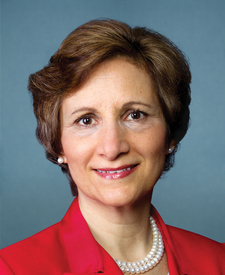
See how Suzanne Bonamici actually votes — against your values.
DeepSyte scores Suzanne Bonamici's record on the issues you care about — not party, not press releases. Take the 2-minute values quiz to see your personal alignment.
Sign in and take the values quiz to see how Suzanne Bonamici's votes line up with your views.
Prediction track record
How often we called Suzanne Bonamici's passage votes correctly, from their stated positions on each bill's tagged topics. Excludes “unclear” calls and abstentions.
To prohibit the disclosure of records by the Secretary of Housing and Urban Development of individuals for the purposes of immigration enforcement, and for other purposes.
No paired statements and votes yet for Suzanne Bonamici
We haven't yet found statement/vote pairs on the same topic for Suzanne Bonamici. This usually means either the rep hasn't taken public positions on bills that have come to a passage vote, or those bills haven't been tagged yet. The checker runs as new press releases and votes come in.
Pro analysis
AI rep analysis — Pro
Get an AI-narrated read on Suzanne Bonamici's full voting record against your stated values — aligned themes, conflicts, notable votes, and what to watch for.
We haven't extracted campaign positions for Suzanne Bonamici yet. Once their campaign website or position pages are processed, this card will track what they said vs how they voted.
Crossing the aisle
Passage votes where Suzanne Bonamici broke ranks with ≥75% of Democrats. Threshold catches substantively partisan splits; unanimous-ish or close votes are excluded.
Thompson, Bonamici Introduce Bill to Create Skill Savings Accounts
Position: Representatives Thompson and Bonamici introduced bipartisan legislation to establish skill savings accounts that allow tax-free contributions from multiple sources to fund workforce development, apprenticeships, credentials, and continuing education throughout workers' careers.
WASHINGTON, D.C. – Today, U.S. Representative Glenn “GT” Thompson (R-PA), and Suzanne Bonamici (D-OR), co-chairs of the Congressional Career and Technical Education (CTE) Caucus, introduced the bipartisan Skill Savings Account Act.
This bill creates skill savings accounts for workers of all ages to use for education expenses including workforce development and nontraditional learning opportunities. Skill savings accounts can be utilized for a wide variety of workforce development opportunities including apprenticeships, online courses, credentials, short or long-term community college and university courses, bootcamps, certificates, skill accelerators, and more to give workers the opportunity to reskill and upskill throughout their careers.
Skill savings accounts allow for tax-free contributions from employers, workers, community investment organizations, family and friends, government agencies, and tax authorities to contribute to an individual’s skill savings account, which are portable and follow the individual worker throughout their working life.
“A skilled workforce drives our economic growth and it’s important that every American knows there is more than one path to a successful future,” Rep. Thompson said. “I am proud to lead the Skill Savings Account Act, this commonsense, bipartisan legislation will create a tool for workers to reskill and upskill, ensuring that everyone can climb the ladder of opportunity.”
“Investing in workforce development is investing in America’s economic future,” Rep. Bonamici said. “Skill savings accounts will allow more Oregonians to access continuing education, workforce training, and reemployment services to help workers and businesses thrive.”
“The U.S. Chamber of Commerce commends Reps. Thompson and Bonamici for introducing the Skill Savings Account Act,” said Rodney Davis, Head of Government Affairs of the U.S. Chamber of Commerce. “This bill offers workers and employers a practical, flexible tool to invest in skills development and training, helping address worker shortages and keep America’s workforce competitive.”
"The Skill Savings Account Act creates a portable, tax-advantaged tool that empowers learners and workers to invest in their own upskilling and reskilling, reflecting how today's careers and related pathways actually unfold," said Kate Kreamer, Executive Director of Advance CTE. "Career Technical Education (CTE) has long delivered the high-quality programs and pathways that learners need to cultivate in-demand skills, and Skill Savings Accounts can help complement this existing infrastructure with a worker-centered, demand-side investment. Advance CTE commends Representatives Thompson and Bonamici for their leadership on this issue and is pleased to endorse the Skill Savings Account Act."
“By creating tax-advantaged accounts for education and training, this legislation expands access to high-quality learning opportunities, supports lifelong learning and strengthens the connection between education and workforce needs, helping more individuals gain the skills necessary to succeed in today’s economy," said LeAnne Curry, Executive Director of ACTE. "ACTE appreciates Congressman Thompson for his continued support of career and technical education and for introducing this legislation."
Specifically, this legislation would:
Create tax-free skill savings accounts for the purpose of paying the qualified education expenses of the account beneficiary, a portable account that follows a worker throughout their working life.
Workers can contribute to their own skill savings accounts and/or receive contributions from employers, family and friends, government agencies, tax authorities, and community investment organizations.
The total amount contributed by the employer shall not exceed $5,250 and the total amount contributed by an employee shall not exceed $10,000 in any calendar year.
A skill savings account balance may not exceed $50,000
Read the full text here.
Issues:EducationJobs and Economy
Position: The release opposes a Department of Education rule that caps federal student loans and restricts loan eligibility for professional degrees, arguing the rule makes higher education less affordable and accessible for students pursuing careers in nursing, teaching, social work, and other public service professions.
WASHINGTON, DC [5/7/26] – Today Rep. Suzanne Bonamici (D-OR), Sen. Jeff Merkley (D-OR), Rep. John Mannion (D-NY), Rep. Lauren Underwood (D-IL), and Sen. Angela Alsobrooks (D-MD) announced they will introduce a Congressional Review Act (CRA) resolution to repeal the Department of Education’s finalized rule that caps federal student loans and overhauls the student loan system.
The final rule unnecessarily limits the definition of a professional degree for the purpose of establishing federal loan caps, which will force future nurses, social workers, teachers, firefighters, physical and occupational therapists, and many others to turn to often predatory, high-interest private lenders to complete their degrees. It also officially eliminates the Grad PLUS program and creates new, less affordable loan repayment options for all borrowers. The CRA will be introduced as soon as the rule is officially received by Congress.
“I’ve spoken with nurses, teachers, firefighters, and many others who are concerned about how the Trump administration is making it even harder and more expensive for students to enter these critical public service jobs,” said Congresswoman Suzanne Bonamici. “It is also absurd to take away more affordable student loan repayment plans at a time when families are struggling to cover costs as prices skyrocket for gas and other basic needs as a direct result of Trump’s reckless economic policy. These changes to the federal loan system are unacceptable and I will do everything I can to oppose them.”
“Trump and Congressional Republicans’ ‘Big, Ugly Betrayal’ law is a direct attack on public service jobs across the nation, making it more difficult for hardworking Americans to access higher education,” said Senator Jeff Merkley. “By failing to classify nurses, teachers, firefighters, social workers, accountants, architects, and others as pursuing ‘professional’ degrees for student loans, the Trump Administration is undermining the future of critical professions. At the same time, this is driving up the cost of student loans for all professions by establishing costlier student loan repayment plans. We’re fighting like hell to roll back dangerous changes to federal student loans, so folks can continue to access the affordable loans they need to pursue their dreams.”
"The Trump Administration is making it harder for people to become nurses, social workers, counselors, and other essential professionals at the exact moment our communities need them most,” said Representative John W. Mannion. “This rule is arbitrary, short-sighted, and harmful to low- and middle-income students who do not have the luxury of paying out of pocket for an advanced degree, which is why I’m working with my colleagues on this legislation to repeal this shortsighted rule. We should be expanding access to educational opportunity, not creating new barriers to the workforce.”
“While working families struggle to buy groceries and put gas in their cars, the Trump Administration is sending a clear message to aspiring nurses, health care providers, social workers, teachers, and firefighters: If you can’t afford a high interest loan, then you can’t serve your community,” said Rep. Lauren Underwood. “This rule will undermine public health, and it’s a slap in the face to the millions of professionals who are doing critically important work to support the health and well-being of our families. It should be thrown out, and I’m proud to join my colleagues on this Congressional Review Act resolution to get it overturned.”
“The Trump Administration is once again actively targeting the public servants who make up the bedrock of our communities – nurses, teachers, and social workers – by taking away their opportunities to access affordable student loans and forcing them into the clutches of private lenders,” said Senator Alsobrooks. “This new rule creates a deep inequity that will exacerbate nursing and educator shortages and is an insult to the hard working professionals that sacrifice every day to serve others.”
The final rule establishes an arbitrary list of 11 fields that are eligible for an aggregate borrowing limit of $200,000. Borrowers in programs excluded from the definition of “professional” – including nurses, social workers, teachers, firefighters, physical and occupational therapists, and more – will have a $20,500 annual borrowing limit and a $100,000 aggregate borrowing limit. This will worsen healthcare workforce shortages and disincentivize students from entering high-need fields where they might not be able to pay back the high costs of private loans.
Millions of borrowers with outstanding student loans will also see their required monthly payment amounts increase by hundreds of dollars, dramatically exacerbating the affordability crisis. Changes to student loan repayment include significantly higher monthly loan payments and a mandated $50 minimum monthly payment under the Tiered Standard Repayment Plan, rather than allowing for lower amounts when the lender and borrower agree. Together, these changes will disproportionately affect low- and middle-income students and families.
The text of the CRA can be read here. It is supported by: AASA, The School Superintendents Association; American Association of Colleges of Nursing (AACN); American Association of Nurse Anesthesiology (AANA); American Association of Nurse Practitioners (AANP); American College of Nurse-Midwives (ACNM); American Nurses Association (ANA); National Association of Pediatric Nurse Practitioners (NAPNP); National Association of Secondary School Principals (NASSP); National Association of Social Workers (NASW); National Education Association (NEA); the National League for Nursing (NLN); the PA Education Association; National Rural Health Association; and American Academy of Physician Associates.
"It's ironic that we find ourselves here at the start of National Nurses Week, a time when we are meant to celebrate and honor the very people who keep our health system running. And yet, the Department of Education has chosen to make it harder for nurses to advance their education and their careers,” said Jennifer Mensik Kennedy, PhD, MBA, RN, NEA-BC, FAAN, President of the American Nurses Association. “I want to thank Rep. Bonamici, Rep. Mannion, and Rep. Underwood for introducing a Congressional Review Act resolution to repeal the Department of Education’s final rule. As nurses, we are used to using every tool we have to treat our patients, and we need to use every tool at our disposal to repeal this rule. Otherwise, the effects of this rule will be felt in communities across the country, especially in rural areas where nurse practitioners, midwives, and nurse anesthetists are often the only providers of core healthcare services.”
“AACN applauds Rep. Suzanne Bonamici, Rep. John Mannion, Rep. Lauren Underwood, and Congressional leaders for pushing back on the Department of Education’s final rule and taking decisive action to champion our nation’s nursing professionals,” saidDr. Deborah Trautman, President and CEO of the American Association of Colleges of Nursing. “This joint resolution effectively suspends restrictive student loan caps for master’s and doctoral nursing students and keeps all options on the table to ensure federal support for meeting the nation’s nursing workforce needs.”
“The National Association of Social Workers (NASW) is thrilled to endorse Congresswoman Bonamici’s Congressional Review Act in response to the Department of Education’s RISE Committee Final Rule. After receiving over 80,000 comments to their proposed rule, including NASW comments with a petition signed by nearly 30,000 social workers, the Trump Administration did not make any substantive changes to the designation of a professional degree. By instituting lower federal student loan limits for social work students, the Trump Administration cut off the access that makes it possible to educate and prepare social workers who are the largest providers of mental health services in the nation. Social work is a profession. It requires a graduate degree, supervised clinical hours, and state licensure. NASW, along with our Congressional champions, will continue to fight for the recognition social workers deserve and ensure that the cost of an education doesn't prevent a dedicated professional from saving lives," said Anthony Estreet, PhD, MBA, LCSW-C, CEO, NASW.
Additional statements of support can be found here.
In the House, the CRA is cosponsored by Representatives Nanette Barragan (D-CA), Nikki Budzinski (D-IL), Janelle Bynum (D-OR), André Carson (D-IN), Troy Carter (D-LA), Joe Courtney (D-CT), Angie Craig (D-MN), Madeline Dean (D-PA), Rosa DeLauro (D-CT), Chris Deluzio (D-PA), Mark DeSaulnier (D-CA), Maxine Dexter (D-OR), Adriano Espaillat (D-NY), Dwight Evans (D-PA), Laura Friedman (D-CA), John Garamendi (D-CA), Adelita Grijalva (D-AZ), Jahana Hayes (D-CT), Jonathan Jackson (D-IL), Pramila Jayapal (D-WA), Rick Larsen (D-WA), John Larson (D-CT), Jennifer McClellan (D-VA), Betty McCollum (D-MN), Eleanor Holmes Norton (D-D.C.), Chris Pappas (D-N.H.), Chellie Pingree (D-ME), Deborah Ross (D-N.C.), Andrea Salinas (D-OR), Jan Schakowsky (D-IL), Lateefah Simon (D-CA), Mark Takano (D-CA), Dina Titus (D-NV), Rashida Tlaib (D-MI), Paul Tonko (D-NY), Frederica Wilson (D-FL), and Becca Balint (D-VT).
###
Issues:Education
Merkley, Bonamici, Oregon Delegation: FEMA Must Approve Waivers for Two Critical Disaster Mitigation Projects in Oregon
Position: Oregon's congressional delegation urges FEMA to approve waivers and fully fund two disaster mitigation projects in Oregon that were forced to begin construction due to program suspension, and to promptly award funding for 19 additional selected projects.
Washington, D.C. – Today, Oregon’s U.S. Senator Jeff Merkley and Congresswoman Suzanne Bonamici (OR-01) led a letter with their Democratic colleagues in the Oregon congressional delegation—Senator Ron Wyden, Representatives Val Hoyle (OR-04), Andrea Salinas (OR-06), Maxine Dexter (OR-03), and Janelle Bynum (OR-05)—urging the U.S. Department of Homeland Security (DHS) and Federal Emergency Management Agency (FEMA) to approve waivers for and to fully fund two projects in Oregon that were funded under the Building Resilient Infrastructure and Communities (BRIC) program.
“Amidst the suspension of the BRIC program, these projects were forced to proceed to construction because recipients could not afford further delays without severely increasing project costs or jeopardizing the overall success of the project. The delay in funding has created substantial stress on these rural communities,” wrote the Oregon delegation to DHS Secretary Markwayne Mullin.
The BRIC program—which the Trump Administration attempted to end last year—provides grants for hazard mitigation planning and projects that reduce risks posed by natural hazards to communities.
The two projects in Oregon were forced to break ground pre-award and now require a waiver to access their funding. More details about these projects can be found below:
Clatsop County Columbia Memorial Hospital: FEMA selected Clatsop County and Columbia Memorial Hospital to receive $14 million in BRIC funding to build a tsunami-resilient hospital expansion in Astoria, featuring a vertical evacuation structure for 1,900 people. The recipients had begun spending down the funds when the BRIC program was suspended. The construction portion of the project was forced to begin in early 2026 due to the short construction window available.
Grants Pass Water Treatment Plant Relocation: The City of Grants Pass was selected to receive $50 million in BRIC funding to relocate their Water Treatment Plant outside their Special Flood Hazard Area to prevent system failure during a flooding event in Grants Pass. The project broke ground in July 2025 and is about 20 percent complete.
The lawmakers directed, “Communities across Oregon have relied on BRIC funding to ensure their resiliency in the face of future natural disasters. These, mostly rural, communities that FEMA selected for BRIC funding in prior years all have significant need for the assistance. We urge you to ensure the swift completion of applicable waivers, reviews, and release of funds, in accordance with previous commitments.”
The lawmakers also urged FEMA to promptly award funding for 19 additional projects in Oregon that were selected for funding in Fiscal Year 2022 and Fiscal Year 2023.
Previously, Merkley, Wyden, and Bonamici led the charge to save the BRIC Program. They joined over 80 of their Senate and House colleagues in a bipartisan effort to demand that former DHS Secretary Kristi Noem reinstate BRIC program funding. Merkley also led his Democratic colleagues in the Oregon delegation to denounce the cancellation of awards under the BRIC program to communities across the state.
Full text of the letter can be found by clicking here.
Issues:Transportation and Infrastructure
Oregon Airports to Receive More Than $3 Million in Federal Investment
Washington, D.C. – U.S. Senators Ron Wyden and Jeff Merkley as well as U.S. Reps. Suzanne Bonamici, Andrea Salinas, Val Hoyle, Janelle Bynum and Maxine Dexter today announced that 10 Oregon airports will receive a combined federal investment of more than $3.1 million to improve their infrastructure.
“Small airports throughout our state need and deserve federal investments so Oregonians can count on them for small business support, emergency response, secure travel and more,” Wyden said. “These federal resources advance those key objectives statewide, and I’ll keep battling for similar infrastructure investments to make all airports in Oregon better and safer.”
“Investing in critical airport improvements such as taxiways, helipads, hangars, and more increases safety and strengthens infrastructure across our state,” said Merkley. “Our regional airports are vital hubs for Oregonians, supporting local businesses and providing essential lifelines during natural disasters. I’ll keep fighting to secure critical federal funds to improve the efficiency and reliability of Oregon’s airports, benefitting the folks who rely on them for business, travel, and so much more.”
“Regional airports are critical to keeping Oregon connected,” said Rep. Bonamici. “In rural communities like Tillamook, investments in transportation infrastructure give small businesses access to markets and make communities more resilient in the event of a disaster. I'm grateful that this funding will support work at the Port of Tillamook Bay.”
"Small airports are vital for rural Oregonians,” said Rep. Salinas. “They support local businesses and enable emergency responses when our communities need them most. This $1 million investment in McMinnville Municipal Airport will replace aging infrastructure and improve safety for everyone who uses it. I'm proud to help deliver these federal dollars to the airports that keep Oregon connected, and I'll keep pushing to make sure rural communities keep getting the federal investment they deserve.”
"These infrastructure investments across our regional airports in Corvallis, Florence, Gold Beach and Newport are a win for the economic growth of our rural and coastal communities,” said Rep. Hoyle. “We rely on these federal dollars to build up our airports' resilience in the face of worsening wildfire seasons."
“Making it easier to get where you need to go keeps our economy strong and makes everyday life more convenient,” said Rep. Bynum. “Regional airports connect our communities, small businesses, and ensure Oregonians don’t have to drive hours just to access reliable transportation. I am proud to work with my colleagues to secure this critical funding for Oregon.”
“Investments in small airports are invaluable and will pay dividends for Oregonians in the years to come,” said Rep. Dexter. “This funding will support critical improvements to the Troutdale Airport, a key hub for the Port of Portland and our regional economy. I will keep working to bring federal dollars into high-value projects in our community.”
The awards totaling $3.14 million from the federal Department of Transportation for the Oregon airports are as follows:
$1 million to the city of McMinnville for McMinnville Municipal Airport to acquire and install a new wind cone to help pilots; to build 12,500 feet of perimeter fencing and 10 gates.
$417,996 to the city of Burns for Burns Municipal Airport to build a new 1,600-square-foot snow removal equipment building
$400,338 to the city of Florence for the Florence Municipal Airport to acquire and install a new wind cone and segmented circle navigational aid for pilots
$289,000 to the Port of Portland for Troutdale Airport to reseal 13,000 feet of existing taxiways and joints
$274,708 to the city of Ontario for Ontario Municipal Airport to build a new helipad
$245,950 to the city of Corvallis for Corvallis Municipal Airport to build a new 1,300-foot north taxi lane to provide airfield access to a non-exclusive hangar development area
$160,332 to Morrow County for the Lexington Airport to replace the precision approach path indicator for a runway; to replace and relocate the existing precision approach path indicator for another runway
$137,000 to the city of Newport for the Newport Airport to build a new 5,250-square-foot non-exclusive use hangar for aircraft storage
$137,000 to the Port of Tillamook Bay for the Tillamook Airport to build a new fuel farm by adding two fuel tanks and two self-service pumps and associated apron pavement for a new fuel type
$78,063 to the Port of Gold Beach for Gold Beach Municipal Airport to reseal 3,200 feet of runway pavement; to reseal 3,200 feet of taxiway pavement
“The City of McMinnville greatly appreciates the continued federal financial support of safety and security improvements at the McMinnville Municipal Airport,” said airport manager John Paskell. “This important project provides for a significant security upgrade by adding nearly three miles of perimeter security fencing and adds an additional level of safety for pilots by installing a supplement wind cone on the Runway 4 end of the airport’s primary runway. As a developing regional general aviation airport, and as a significant economic asset and job creator in the community, continued federal infrastructure investment in airports is critical in ensuring their viability well into the future, particularly for airports in smaller communities like McMinnville. Those airport improvement dollars go a long way and help protect and preserve the airport’s financial self-sufficiency while also improving the facility.”
“This federal investment is crucial as it ensures our airport infrastructure remains fully functional year-round, which is vital for emergency response and general aviation access in Eastern Oregon,” said Burns City Manager Brenda Engebretson.
“The City of Florence is excited to receive this FAA funding to support the Beacon & Wind Cone Replacement Project at the Florence Municipal Airport,” the city said in a statement. “This project will help to improve essential airport safety infrastructure, as well as support safe and reliable aviation facilities that serve local and regional users. The Florence Municipal Airport is an economic driver for our area that provides a valuable space for commerce, emergency response, and recreational uses. The City of Florence is grateful for the continued support of this regional asset. “
“Ensuring safe and efficient operations is the Port’s top priority, and this federal investment will help to maintain taxiways at Troutdale Airport,” said Curtis Robinhold, Executive Director of the Port of Portland. “We are grateful for the Oregon delegation’s continued support for our projects to meet the diverse transportation needs of our region.”
"The recent FAA award for the Lexington Airport to upgrade our precision approach path indicators (PAPIs), is a major win for a small regional airport like ours,” said Morrow County Commissioner Gus Peterson. “This system will allow us to continue to serve our users with improved safety and efficiency as well as allow us to be able to potentially expand in the future. Morrow County is grateful for the opportunity to continue to improve our small but important regional airport."
“Securing funding for a new hangar is significant investment in the future of Newport Municipal Airport,” said Lance Vanderbeck, Newport Municipal Airport Director. “This project will enhance our ability to serve pilots, aircrafts, and improve overall efficiency and safety. Through this funding, we’re better positioned to meet demand and ensure the airport remains a reliable asset for our community."
"As Mayor of Gold Beach, I know the port is critical for emergency services and is an economic development engine,” said Gold Beach Mayor Tamie Kaufman. “This work helps make sure the port can continue being an asset to our community,”
Issues:Transportation and Infrastructure
Bonamici, DeLauro Introduce Legislation to Rein in For-Profit Charter Schools
Position: The release advocates for legislation that would prohibit federal education funding from being awarded to charter schools that contract with for-profit entities to operate or manage the school, arguing that for-profit involvement diverts resources from student education to corporate profits.
WASHINGTON, DC – Today, Congresswomen Rosa DeLauro, Suzanne Bonamici, and Adelita Grijalva introduced the Championing Honest and Responsible Transparency in Education Reform (CHARTER) Act, legislation that would amend the Elementary and Secondary Education Act (ESEA) and the Individuals with Disabilities Education Act (IDEA) to ensure funds made available under these Acts are not awarded to charter schools that enter into contracts with a for-profit entity for operating, overseeing, or managing the charter school.
“For-profit companies are disguising themselves as schools, trading in taxpayer funds for boosted profits at the expense of our children’s learning,” said Congresswoman DeLauro. "For-profits, unlike non-profit organizations, are responsible for maximizing profit for their owners and investors, and that creates tension between what is best for students and what is best for profiteers. The CHARTER Act would reaffirm federal law and ensure that for-profit education management organizations can no longer exploit loopholes that have given them access to funding intended for non-profit entities. Education empowers the American Dream, and every child deserves access to a quality education that puts them first— not profits for owners and investors.”
“Profit should never be a driving force in public education, and charter schools should not be exploited to siphon federal funding into for-profit schemes,” said Congresswoman Suzanne Bonamici. “I’m grateful to be leading this initiative with Rep. DeLauro to keep student funding in public schools where it belongs.”
“For too long, for-profit companies in Arizona and across the country have exploited loopholes to cash in on our public education system — putting profits ahead of students and operating with little accountability,” said Congresswoman Adelita Grijalva. "That’s unacceptable. Every dollar meant for our kids should be going into classrooms, teachers, and resources — not into corporate pockets. I'm grateful to join Congresswoman DeLauro in introducing the CHARTER Act so that we can make clear that our children are not a business model to be profited off of."
In 2006, the United States Court of Appeals Ninth Circuit Court in Arizona State Board v. United States Department of Education found that the terms ‘‘elementary school’’ and ‘‘secondary school’’ in the Elementary and Secondary Education Act (ESEA) of 1965 and the Individuals with Disabilities Education Act (IDEA) were limited to nonprofit entities, holding that for-profit charter schools were ineligible for Federal funds under the ESEA and the IDEA. In response to the decision, many for-profit charter schools reorganized as for-profit operators of nonprofit organizations, enabling them to continue to receive federal funds under the ESEA and the IDEA. Using this loophole, charter schools run by for-profit education management organizations (EMOs) or other charter school “operators” receive federal funds only to have their schools run by low-quality, for-profit companies determined to extract taxpayer dollars with no little to no public transparency.
Issues:EducationFiscal Responsibility
Gillibrand, Fetterman, Bonamici, Salinas Introduce Bill to Fight Senior Hunger
Position: The legislators introduce legislation to expand SNAP benefits for seniors by increasing minimum monthly benefits, simplifying application processes, supporting outreach efforts, and providing grants for local food access.
WASHINGTON, D.C. – Today, U.S. Senator Kirsten Gillibrand (D-NY), the top Democrat on the Senate Aging Committee, Senator John Fetterman (D-PA), and Representatives Suzanne Bonamici (D-OR-1) and Andrea Salinas (D-OR-6) introduced the bicameral Senior Hunger Prevention Act to expand Supplemental Nutrition Assistance Program (SNAP) benefits for older Americans.
Despite facing high rates of food insecurity, less than one-third of eligible older adults are enrolled in SNAP. The Senior Hunger Prevention Act would eliminate unnecessary administrative hurdles to make it easier for seniors to receive SNAP benefits.
"Skyrocketing grocery prices in President Trump’s America have left too many seniors struggling to put food on the table," said Senator Gillibrand. “Unfortunately, the complexity of the current application process for SNAP benefits deters many older adults from using this critical resource. My legislation would simplify the SNAP application process for seniors and increase the monthly benefit available to all SNAP participants. As the top Democrat on the Senate Aging Committee, I am committed to getting this bill across the finish line so that every senior can access the resources they need for healthy aging."
“It is unacceptable that in our wealthy nation, more than 12 million seniors don't have enough to eat,” said Representative Bonamici. “Federal nutrition programs like SNAP are intended to end hunger, but too many older adults and people with disabilities can’t easily access them. This bill will make it easier for older adults and adults with disabilities to benefit from nutrition assistance and will raise the value of SNAP benefits so older Americans can age with dignity.”
“Across Oregon, too many seniors are struggling to afford groceries while also keeping up with the rising cost of rent, utilities, and health care,” said Representative Salinas. “Older adults and caregivers face unnecessary administrative barriers to accessing the nutrition support they qualify for. The Senior Hunger Prevention Act will help cut through that red tape, expand access to healthy, local food, and ensure Oregonians can age with dignity and security. I’m proud to help lead this effort so that no senior in our state has to worry about where their next meal is coming from.”
Specifically, the Senior Hunger Prevention Act would:
Increase the minimum monthly SNAP benefit for all participants;
Simplify application and certification processes for eligible individuals in nutrition programs, including SNAP, and ensure they can stay enrolled in programs for longer periods of time;
Support outreach efforts to enroll more older adults, caregivers, and adults with disabilities in nutrition programs;
Enable adults with disabilities to participate in additional nutrition assistance programs;
Provide grants to non-profits, local aging and disability service providers, and related organizations to bring fresh, local food to accessible locations;
Expand SNAP food delivery options through public-private partnerships and strengthen retail delivery options for older adults and people with disabilities.
In addition to Gillibrand and Fetterman, the Senate bill is cosponsored by Senators Chris Murphy (D-CT), Peter Welch (D-VT), Richard Blumenthal (D-CT), Jeff Merkley (D-OR), Ron Wyden (D-OR), Cory Booker (D-NJ), Elizabeth Warren (D-MA), Sheldon Whitehouse (D-RI), Bernie Sanders (I-VT), Ed Markey (D-MA), Martin Heinrich (D-NM), Adam Schiff (D-CA), Angela Alsobrooks (D-MD), and Andy Kim (D-NJ).
The Senior Hunger Prevention Act is endorsed by: ADvancing States; Alliance to End Hunger; Center for Science in the Public Interest; Defeat Malnutrition Today; Feeding New York State; Feeding Pennsylvania; Feeding Westchester; Generations United; Hunger Free America; Hunger Solutions New York; Justice in Aging; Long Island Cares, Inc. — The Harry Chapin Food Bank; MAZON; Meals on Wheels America; Meals on Wheels Association of Georgia; Meals on Wheels Association of New York State; Meals on Wheels California; Philabundance; Share Our Strength; The Gerontological Society of America; The National Association of Nutrition and Aging Services Programs; The National Council on Aging; and USAging. A list of quotes from endorsing organizations can be found here.
The full text of the legislation can be found here.
Issues:Seniors
Neal, Bonamici Continue to Fight for Seniors and People with Disabilities by Reintroducing Elder Justice Bill to Increase Funding and Strengthen Community-Based Programs
Position: Representatives Neal and Bonamici support reauthorizing and expanding the Elder Justice Act with increased dedicated funding for programs addressing abuse, neglect, and isolation of seniors and people with disabilities, including investments in long-term care workforce and nursing home safety.
WASHINGTON, DC— At a time when Republicans and the Trump Administration are threatening health programs and protections for seniors and people with disabilities, Ways & Means Committee Ranking Member Richard E. Neal (D-MA) and Co-Chair of the House Elder Justice Caucus Congresswoman Suzanne Bonamici (D-OR) reintroduced legislation to fight back. With advocates calling this the most comprehensive bill in Congress on the topic, the Elder Justice Reauthorization & Modernization Act of 2026 will build on Democrats’ progress and will protect seniors and people with disabilities from abuse, neglect, and isolation.
The Elder Justice Reauthorization & Modernization Act of 2026 reauthorizes the Elder Justice Act (EJA) and commits dedicated funding to vital programs that address the prevention, detection, and treatment of abuse against seniors and people with disabilities. This legislation builds on the first-ever authorization of mandatory funding for Adult Protective Services in December 2020. As part of the reauthorization, the bill creates new investments in the post-acute and long-term care workforce, funds programs to address social isolation, and supports medical-legal partnerships.
“We have a responsibility to strengthen programs that prevent the abuse, neglect, and exploitation of seniors and people with disabilities, as our citizenry ages and as Republicans continue to wage war against the health care system at-large,” said Ranking Member Neal. “This reauthorization builds on our progress by strengthening Elder Justice programs, investing in nursing home safety, and ensuring every American can age with security and dignity. As Republicans continue to cut health care and financial security for seniors and vulnerable Americans, we are focused on creating real solutions through expanding protections, strengthening care, and ensuring bad actors are held accountable.”
“Elder abuse, neglect, and exploitation continue to rise at alarming rates,” said Congresswoman Suzanne Bonamici. “This legislation will provide needed funding to address the physical, emotional, and financial abuse that too many older Americans experience. This bill is an important step forward in the fight to protect one of our most vulnerable populations.”
The legislation directly appropriates substantial funding for EJA programs and activities. The Trump Administration has set its sights on this funding, making significant attacks, and causing additional investments to be necessary to meet the growing needs of seniors and people with disabilities.
A summary of the bill can be found HERE.
The legislative text of the bill can be found HERE.
WHAT THEY’RE SAYING:
“The bipartisan 3,000 member Elder Justice Coalition today commended the introduction of H.R 8060 the Elder Justice Reauthorization and Modernization Act of 2026,” said Bob Blancato, National Coordinator, Elder Justice Coalition. “We view this as the most comprehensive bill in Congress to address the continuing national scandal of elder abuse neglect and exploitation. We must never waver in our commitment to protect older adults from the ravages of abuse whether it is from a scammer or other human perpetrators. We are grateful for the leadership of Representatives Richard Neal and Suzanne Bonamici not only for the introduction of this bill but their years as stalwart champions of preventing elder abuse.”
“The Elder Justice Reauthorization and Modernization Act of 2026 includes critical support that older adults and their caregivers need to avoid and prevent financial exploitation, physical and psychological abuse and other unacceptable forms of elder abuse. We are especially gratified that the legislation recognizes the important role of aging service care workers by providing funding through FY2030 for state grants to enhance education, training, career advancement, and wages for direct care workers, as well as providing for critical staff supports like child care. These grants that will help to sustain staff and attract new employees to the sector, which is critical for our mission-driven, nonprofit members,” said Katie Smith Sloan, president and CEO, LeadingAge, the association of nonprofit and mission-driven providers of aging services. “Without staff, there is no care. We applaud Ranking Member Neal and Congresswoman Bonamici for their leadership on this bill, which will get us one step closer to an America that values older adults and those who serve them.”
“NAPSA appreciates the leadership of Representative Neal and Representative Bonamici for their commitment to states’ Adult Protective Services (APS) programs,” said Jennifer Spoeri, Executive Director, National Adult Protective Services Association (NAPSA). “We strongly endorse the reauthorization of the Elder Justice Act which is essential for APS programs to protect and prevent abuse, neglect, and exploitation of older adults and adults with disabilities.”
###
Salinas, Merkley, Hoyle-Led Letter Forces ICE to Confirm: No Plans to Expand or Build ICE Detention Facilities in Oregon
Position: The representatives oppose expansion or construction of ICE detention facilities in Oregon and criticize ICE's conduct and transparency, while welcoming the agency's confirmation of no current plans for such expansion in the state.
Washington, D.C. – Today, in response to an inquiry led by U.S. Congresswomen Andrea Salinas (OR-06) and Val Hoyle (OR-04) and Senator Jeff Merkley and signed by Senator Wyden and U.S. Congresswomen Bonamici, Dexter, and Bynum, U.S. Immigration and Customs Enforcement (ICE) Acting Director Todd Lyons confirmed that, “ICE is not currently planning to expand current detention facilities or open any new long or short-term detention facilities in Oregon.”
“Oregonians never wanted an ICE detention facility in our state, especially as ICE and DHS have repeatedly abused their power and terrorized our communities,” said Salinas. “I am glad that the Administration confirmed they currently have no plans to build or expand any ICE detention facility in Oregon. I have consistently demanded full transparency and accountability from ICE and the Trump Administration for their misconduct, and I will keep using every avenue available to call out ICE’s overreach and keep our communities safe.”
“Again and again, ICE has been caught lying to the American people, so we should be skeptical of anything they tell us,” said Merkley. “Trump is hellbent on deploying his secret police across Oregon, and we won’t stand for it. I say HELL NO to any plans to expand ICE facilities or operations in Oregon, whether it’s office space, detention centers, or anything else the Trump Administration cooks up.”
“The President has taken us into war, gas and grocery prices are skyrocketing and people can’t afford health care,” said Rep. Val Hoyle. “We need leadership that actually puts the needs of Americans first instead of spending taxpayer dollars to militarize our streets. We don’t need more money wasted on having a larger ICE presence here to harass, intimidate and detain hardworking Oregonians based on the color of their skin. Thanks, but no thanks.”
On February 12, 2026, Congresswoman Salinas and Senator Merkley led their democratic Oregon delegation colleagues and ten additional House Members in a letter opposing any plans to open or expand ICE detention facilities in Oregon, including a potential facility in Newport. They also demanded details about the safety and standards of “soft-sided” facilities.
On March 26, 2026, Acting Director Lyons responded to confirm that ICE currently does not have plans to build or expand any ICE facility in Oregon. The response indicates that ICE does not plan to move forward with a soft-sided detention facility in Newport, as had previously been reported. The response also provided details about the conditions of their soft-sided facilities. It claims that detainees are provided with three nutritious meals a day, that facilities are subject to inspections and audits conducted by the DHS Office of Inspector General, and that detainees are provided with sufficient clean clothing. These claims are contrary to many reports from detainees inside ICE facilities, and the Members will continue pushing for the truth about conditions in ICE facilities.
“Oregonians do not want or need ICE in our state,” said Congresswoman Suzanne Bonamici. “ICE has confirmed that they do not plan to open any additional detention facilities in Oregon, and we will hold them to that while we work to make our communities safer by getting masked, armed ICE agents off our streets.”
“ICE should be defunded and dismantled—and it should not be allowed to build new detention facilities anywhere. I’m grateful that in our home state of Oregon, ICE has said there are no plans to expand or build any new detention facilities. Oregonians are united in rejecting the cruelty this agency brings to our communities,” said Dexter.
“ICE has already caused so much damage in our community. From tear-gassing kids to tearing families apart, this agency is out of line and has no place in our cities," Rep. Bynum said. “I'm glad that ICE confirmed that they do not have any plans right now to add detention facilities in Oregon. I'll continue to work with my colleagues to keep them out of our city and our state.”
Click here or see below for the full letter response from Acting Director Todd Lyons:
Thank you for your February 13, 2026 letter to the Department of Homeland Security(DHS). I am responding on behalf of the Department.
U.S. Immigration and Customs Enforcement (ICE) is committed to safe, secure, and humane environments for all of those in its custody. ICE continues to evaluate bedspace requirements and availability and is committed to strategically using existing detention beds in a fiscally responsible manner. As part of its detention operations, aliens in ICE custody are housed at a variety of facilities across the United States, including ICE owned and operated facilities; federal, state, county, or local facilities contracted through intergovernmental service agreements; and contractor owned and operated facilities. ICE constantly evaluates its detention needs and contract structures based on changes in immigration patterns, the operational needs of the agency, and the availability of resources.
ICE's enhanced enforcement operations have resulted in a significant number of arrests of criminal aliens, requiring greater detention capacity. As part of these efforts, ICE is exploring various options to increase bedspace capacity nationwide working in collaboration with federal partners such as the U.S. Marshals Service, the Department of War, and the Bureau of Prisons.ICE will continue to prioritize its resources and work closely with its network of federal, state, local, and private sector partners to ensure the agency can acquire sufficient bedspace to fully achieve its mission.
Regarding potential detention facilities in Oregon, ICE is not currently planning to expand current detention facilities or open any new long or short-term detention facilities in Oregon. As for detention expansion outside of Oregon, ICE issued a solicitation under the U.S. Naval Supply Systems Command's Worldwide Expeditionary Multiple Award Contract vehicle to identify vendors to provide comprehensive detention operations and wraparound services including facility, grounds maintenance, and operations services at all newly acquired facilities. ICE anticipates making awards under this solicitation in the coming months and plans to onboard facilities by the end of Fiscal Year 2026. All detention facilities are acquired, constructed, and operated in accordance with federal regulations, court orders, and national detention standards. Unfortunately, ICE cannot provide additional details due to law enforcement sensitivity and operational security maintenance.
Additionally, you request information regarding the capacities of ICE's soft-sided facilities. Camp East Montana, located in El Paso, Texas, is an over 72-hour facility with an average length of stay of 10 days. The Krome North Service Processing Center, which includes a soft-sided facility, in Miami, Florida, is an over 72-hour facility with an average length of stay of 23 days.
All of ICE's detention facilities, including soft-sided facilities, are contractually obligated to operate in accordance with one of several sets of detention standards. The detention standards describe a facility's immigration detention responsibilities, explain what detainee services a facility must provide, and identify what a facility must do to ensure a safe and secure detention environment for staff and detainees.
Specifically, soft-sided facilities operate in accordance with National Detention Standards 2025. To ensure compliance with each contract's terms and conditions and the applicable detention standards, DHS and ICE employ a robust, multilevel oversight and compliance program. At the agency level, Detention Service Managers and Detention Standards Compliance Officers monitor detention conditions through daily on-site compliance reviews to identify deficiencies, areas of concern, contract and facility issues, and to facilitate corrective actions. Additionally, facilities are subject to inspections and audits conducted by the DHS Office of Inspector General, the DHS Office for Civil Rights and Civil Liberties, the DHS Office of the Immigration Detention Ombudsman, and the ICE Office of Detention Oversight within ICE's Office of Professional Responsibility.
During their immigration proceedings, detainees are afforded numerous procedural protections that ensure they are provided with notice and an opportunity to be heard. In removal proceedings, these protections include, but are not limited to, the right to be represented by an attorney, to contest any charges of removal, to present evidence, and generally to examine evidence against them. While the government does not provide attorneys at the government's expense, all those arrested by ICE and placed into removal proceedings are provided with a list of free legal services and aid resources, including pro bono providers.
Additionally, ICE facilities continue to provide detainees with opportunities to meet privately with their current or prospective legal representatives, legal assistants, interpreters, and consular officials. While in-person contact visits remain available at the request of legal representatives, non-contact legal visitation (e.g., video teleconference) is available, wherever possible. This offers an alternative for attorneys to communicate with detained clients in a timely and efficient manner, especially when in-person visitation is not possible or practical.
While in detention, detainees reside in temperature-controlled environments at all times. Furthermore, detainees are provided with three nutritious meals a day and meals that support specialized diets, including religious diets and more than a dozen therapeutic diets, as well as cultural preferences. Menus are reviewed and approved on a regular basis by a registered dietitian to ensure appropriate nutrition is provided. Additionally, detainees are provided with clean bedding and "sufficient clean clothing" during their time in detention.
Currently, the Office of Professional Responsibility does not inspect state-owned and operated facilities such as the soft-sided facility in Miami, Florida. The Office of Detention Oversight conducts congressionally mandated compliance inspections of ICE detention facilities that house ICE detainees pursuant to contractual obligations. Camp East Montana is currently the only soft-sided facility subject to Office of Detention Oversight inspection. The Office of Detention Oversight inspected Camp East Montana, which is contractually obligated to the National Detention Standards 2025 inspection standard, from February 10 to 12, 2026. The report is currently being drafted. ICE will publish the final report by April 13, 2026, 60 days after the inspection.
In your letter, you request "a detailed list of every detention standard that has been waived for a soft-sided facility in CY 2025." As previously mentioned, all of ICE's detention facilities operate in accordance with national detention standards. ICE has not approved any waivers of detention standards for any of the soft-sided facilities.
Thank you again for your letter.
Issues:Civil Rights
Source: GDELT 2.0 GKG, filtered to a curated list of national outlets. Inclusion is not endorsement; opinion pieces and reported news are mixed.
Recent stock activity
Periodic transaction reports filed under the STOCK Act — disclosed by the rep, sourced from public filings.
No disclosed trades on record.
Source: open-data mirrors of the Senate eFD and House Clerk financial-disclosure systems. Disclosure within 30 days of trade is required by law (45 for spouse/dependent trades).
Top PAC donors · 2026 cycle
Political action committees that gave the most to this rep's principal campaign committee this cycle. PAC giving is direct organizational support — industry, ideological, or leadership.
1.EMILY'S LIST FEDERAL FUND5 contributions$37,379
2.SEIU C.O.P.E.Labor7 contributionsTrade-union PAC for the Service Employees International Union — backs candidates supporting union organizing, collective bargaining, and worker protections.AI$35,000
3.AFT COPE FUND5 contributions$25,000
4.IBEW - VOLUNTARY FUNDLabor5 contributionsTrade-union PAC for the International Brotherhood of Electrical Workers — supports candidates backing union organizing, prevailing-wage standards, and infrastructure investment.AI$25,000
5.THE NEA FUND FOR CHILDREN & PUBLIC EDUCATIONLabor5 contributionsPAC of the National Education Association, the largest U.S. teachers' union. Backs candidates supporting public education funding, teacher compensation, and collective bargaining rights.AI$25,000
6.REALTORS PACReal Estate4 contributionsReal-estate industry PAC — backs candidates supporting property-owner interests, mortgage lending, and residential and commercial real-estate development.AI$20,000
7.DRIVE COMMITTEELeadership4 contributionsLeadership or member-affiliated PAC — specific positions and affiliated member not inferable from the name alone.AI · low$20,000
8.JSTREET PAC3 contributions$19,518
9.THE COMMITTEE FOR A LIVABLE FUTURE3 contributions$15,000
10.AMERICAN ASSOCIATION FOR JUSTICE POLITICAL AC3 contributions$15,000
Source: OpenFEC (api.open.fec.gov) Schedule A receipts where contributor type is “committee.” Aggregated by contributing committee. Self-transfers from joint-fundraising / victory committees are excluded.
Top individual contributors · 2026 cycle
Itemized individual contributions over $200 to this rep's campaign committee, aggregated by donor employer. PAC giving is shown above; this section is people, not organizations.
1.SELF$16,550
2.VERNIER SCIENCE EDUCATION$11,000
3.METRO WEST AMBULA$7,000
4.DIGITAL VISION INC$5,849
5.ESCAPE LODGING$5,500
6.CFM STRATEGIC COMMUNICATIONS$5,000
7.CASSIDY & ASSOCIATES$5,000
8.SCHAEFFER MFG.$5,000
9.METRO WEST$5,000
10.BREWSTER & MAYNE PC$4,052
Source: OpenFEC Schedule A receipts where contributor type is “individual,” aggregated by the donor's self-reported employer. This is a geographic / industry correlation, not a corporate endorsement.