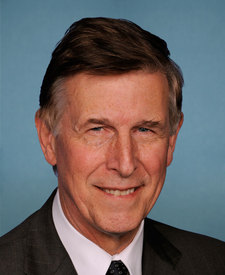
See how Donald S. Beyer's votes line up with your values.
DeepSyte scores Donald S. Beyer's record on the issues you care about — not party, not press releases. Take the 2-minute values quiz to see your personal alignment.
Sign in and take the values quiz to see how Donald S. Beyer's votes line up with your views.
Prediction track record
How often we called Donald S. Beyer's passage votes correctly, from their stated positions on each bill's tagged topics. Excludes “unclear” calls and abstentions.
A joint resolution to direct the removal of United States Armed Forces from hostilities within or against the Islamic Republic of Iran that have not been authorized by Congress.
To prohibit the disclosure of records by the Secretary of Housing and Urban Development of individuals for the purposes of immigration enforcement, and for other purposes.
A joint resolution to direct the removal of United States Armed Forces from hostilities within or against the Islamic Republic of Iran that have not been authorized by Congress.
Based on 2 data points across public statements and recorded votes · AI analysis of public records
119-hr-845·Consistent
Pet and Livestock Protection Act
85/100
What they said
Apr 30, 2026
The statement opposes the Republican Farm Bill (H.R. 7567), arguing it fails to address farmers' challenges from rising input costs and extreme weather, cuts conservation and renewable energy support, and provides giveaways to chemical corporations instead of protecting environmental standards and affordability.
The statement opposes the Republican Farm Bill for cutting environmental protections and conservation support, and criticizes giveaways to corporate interests at the expense of public health and wildlife. The Pet and Livestock Protection Act removes endangered species protections for gray wolves, which aligns with the statement's concern about Republicans undermining 'bedrock environmental protections that safeguard our health and America's wildlife.' The no vote on wolf delisting is consistent with the stated opposition to weakening environmental standards.
Rep. Beyer criticizes the President's waiver of sanctions on Russia under the Sanctioning Russia Act, argues it contradicts congressional intent and harms Ukraine, and calls on Congress to amend the law to prevent further waivers and limit presidential trade authority.
Rep. Beyer's statement criticizes the President's waiver of Russia sanctions and argues that Congress should defend Ukraine and keep sanctions effective, which aligns with the Ukraine Support Act's sanctions, aid, and anti-Russia provisions that he voted yes on. However, the statement focuses on the Sanctioning Russia Act and presidential waiver authority, which the Ukraine Support Act does not directly address, so the specific question is only partly overlapping.
Pairs with ambiguous language and high uncertainty are withheld until more data is available. Procedural, cloture, and amendment votes are excluded — they don't cleanly signal substantive support or opposition.
Pro analysis
AI rep analysis — Pro
Get an AI-narrated read on Donald S. Beyer's full voting record against your stated values — aligned themes, conflicts, notable votes, and what to watch for.
We haven't extracted campaign positions for Donald S. Beyer yet. Once their campaign website or position pages are processed, this card will track what they said vs how they voted.
Crossing the aisle
Passage votes where Donald S. Beyer broke ranks with ≥75% of Democrats. Threshold catches substantively partisan splits; unanimous-ish or close votes are excluded.
Reps. Takano, Beyer, Casten, Foster, and Obernolte Lead Bipartisan Coalition to Create the Congressional Office of Technology
Position: Introduces the Congressional Office of Technology Improvement and Enhancement Act to re-establish a nonpartisan congressional office providing expert assessment of emerging science and technology issues, which was defunded in 1995.
Today, Reps. Mark Takano (CA-39), Don Beyer (VA-8), Sean Casten (IL-6), Bill Foster (IL-11), and Jay Obernolte (CA-23) introduced the Congressional Office of Technology Improvement and Enhancement Act to restore Congress’ capacity to confront emerging issues in science and technology.
For more than twenty years, Congress had the Office of Technology Assessment, an independent, bipartisan agency set up to provide information on technology and its potential impacts. However, in 1995 the agency was defunded, stripping Congress of the ability to access unbiased scientific and technological expertise as we entered the digital age.
As emerging technologies—from artificial intelligence to fusion energy and biotechnology—rapidly reshape everyday American life, we are witnessing the consequences of defunding a vital source of scientific and technical expertise for Congress.
The need for expert advice and analysis will only continue to grow as Congress works to anticipate the effects of scientific breakthroughs and cutting-edge technology. As Congress considers drafting legislation on emerging technology, Members of Congress require access to unbiased assessments of what is on the horizon.
“Congress cannot continue flying blind into the future. We must have an office of independent experts as we face important decisions to guide emerging technology,” said Congressman Mark Takano. “Establishing the Congressional Office of Technology will enable Members of Congress to work with experts across disciplines, receive informed and unbiased feedback on legislation, and gain detailed understandings of the issues that will impact our nation. I am proud to lead this bipartisan legislation alongside my colleagues who share my commitment to independent scientific expertise.”
"Today Congress is confronted by complex issues ranging from cybersecurity to AI to energy and climate, and so much more — and reconstituting the Office of Technology Assessment would provide the Legislative Branch with a crucial internal source of expertise and counsel,” said Congressman Don Beyer. “Our bill would restore and update this key resource and bolster Congress' independence and knowledge in a key area for years to come."
"Each of us who serve in Congress brings a unique perspective and expertise which informs how we serve our constituents. I am confident in my ability to evaluate energy technologies and their impact on our economy and environment, but I cannot claim the same level of expertise on cybersecurity or gene-drive technologies. How many technologies with truly revolutionary potential have we failed to fund in favor of less useful dead ends? Congressional Office of Technology Improvement and Enhancement Act will ensure we're prepared to tackle the technological challenges of the future," said Congressman Sean Casten.
"For years, Congress has not been adequately prepared to engage with complex technical issues that are increasingly important to the legislation we consider. As AI-driven technology rapidly reshapes our future, it has never been more important for Members of Congress to have access to forward-looking, non-partisan technical expertise and advice. That's why I'm proud to lead the effort to revive the OTA and bring Congress into the 21st century,” said Congressman Bill Foster.
“Effective policymaking requires a thorough understanding of the science and technology behind the issues Congress is tasked with addressing,” said Congressman Jay Obernolte. “The Congressional Office of Technology will strengthen Congress’s ability to evaluate emerging technologies by providing independent analysis, timely technical assistance, and long-term assessments of technological developments. Modernizing these resources is critical to ensuring Congress can make informed policy decisions and develop thoughtful, evidence-based legislation that addresses complex challenges without unnecessarily hindering innovation.”
“More than ever, Congress needs robust, independent science and technology policy advice it can trust,” said Daniel Schuman, Executive Director of the American Governance Institute. “Rep. Takano has long championed restoring that capability through the Office of Technology Assessment, and we agree the time has come for Congress to regain this essential expertise.”
“There is no better time than the present to reboot the mission of the OTA with the proposed Congressional Office of Technology. Artificial intelligence is reshaping the assumptions on which policymaking rests faster than policymakers can build their own expertise,” said Daniel Correa, Chief Executive Officer of Federation of American Scientists. “We applaud this bipartisan effort and their leadership decision, which will assist policymakers in making transparent, evidence-based decisions that are as forward-looking as possible.”
“As the pace of scientific and technological innovation continues to accelerate, it is more important than ever that our legislators are well equipped with the knowledge and expertise required to tackle the policy challenges of today and tomorrow,” said Luke Hogg, Executive Vice President at the Foundation for American Innovation Action. “Reviving Congress’ long dormant capacity for technical assessment is the first step towards a better equipped legislature. We are elated by the introduction of the Congressional Office of Technology Improvement and Enhancement Act and look forward to working with Representatives Takano, Obernolte, Beyer, Foster, and Casten and their colleagues to build up technical capacity within Congress.”
Text of the Congressional Office of Technology Improvement and Enhancement Act can be found here.
SEEC Blasts Trump Action to Gut Cost-Saving, Common-Sense Methane Standards
Position: The release opposes the Trump Administration's proposal to roll back EPA's 2024 Methane Rule and Methane Super Emitter Program, arguing the rule saves money, protects public health, and reduces climate-warming methane emissions.
The leaders of the House Sustainable Energy and Environment Coalition (SEEC), including Co-Chairs Reps. Doris Matsui, Mike Quigley, and Paul Tonko and Vice Chairs Reps. Don Beyer, Suzanne Bonamici, Sean Casten, Mike Levin, and Chellie Pingree, released the following statement in response to the Trump Administration’s proposal to roll back the Environmental Protection Agency’s (EPA) 2024 Methane Rule that cuts methane pollution and other harmful air pollutants from the oil and gas sector.
“While energy prices keep rising and everyday life continues to be unaffordable here in America, the Trump Administration decided that today would be a good day to roll back our federal methane standards and let the oil and gas industry continue to waste billions of dollars-worth of extremely potent methane.
“EPA’s common-sense 2024 Methane Rule is designed to save money, protect the health of our families and communities, eliminate unnecessary methane waste, and mitigate the superpollutant’s impact to our climate. Instead of strengthening these necessary protections, the Trump Administration chose to create huge loopholes for low-producing, high-polluting well sites and even rescind EPA’s Methane Super Emitter Program that holds the worst polluters accountable. The numbers already show what happens when we let oil and gas companies release harmful methane pollution into the air. Since EPA stopped enforcing oil and gas methane regulations under the Trump Administration, the fossil fuel industry leaked, vented, and flared more than $7 billion-worth of planet-warming natural gas, and counting.
“No matter where we live or who we voted for, we all want the same things: clean air to breathe, affordable energy, a stable climate, and a safe and prosperous future for our children. Rolling back our methane pollution protections pushes us in the wrong direction on every one of those metrics.”
Position: Rep. Beyer opposes the Trump Administration's plan to redevelop East Potomac Park into a golf course, arguing it would eliminate recreational paths and roads used by local residents and that the project is costly and improperly managed.
Rep. Don Beyer (D-VA), who represents a Northern Virginia district in the U.S. House across the Potomac River from Washington D.C., today blasted President Trump’s announcement that he would destroy East Potomac Park to build an expensive new golf course.
Beyer recently led a site tour at East Potomac with cyclists, runners, and other local residents to raise awareness of the Trump Administration’s malfeasance there, and subsequently joined a congressional investigation of the Administration’s secretive activities at the site. Days later, a federal judge eviscerated Trump officials for their sudden demolition of hundreds of trees at the park on hours’ notice.
“The Trump Administration was clearly lying about the reasons for their mass felling of trees in East Potomac last weekend. They were lying to conceal from the American people that, at a time when our country is at war and everyone is worried about the economy and high prices, the President simply doesn’t care. Trump is focused on building an upscale golf course within walking distance of the White House, on his fancy ballroom, and on his memorial arch to himself.
“The design Trump is pursuing would block off or eliminate roads and paths used by large numbers of local residents for cycling and walking, no doubt to make the area another exclusive hangout for his rich and powerful friends. He is almost certainly doing all of this at great expense on taxpayers’ dime, and if recent history is a guide, with corrupt contracting practices. What a disgrace.”
Trump Capitulates To Putin On Sanctions, As Predicted
Position: Rep. Beyer criticizes the President's waiver of sanctions on Russia under the Sanctioning Russia Act, argues it contradicts congressional intent and harms Ukraine, and calls on Congress to amend the law to prevent further waivers and limit presidential trade authority.
Rep. Don Beyer (D-VA), the Senior House Democrat on Congress’ Joint Economic Committee, member of the House Ways and Means Subcommittee on Trade, and a leading critic of the Lindsey Graham Sanctioning Russia Act prior to its passage last month, issued the following statement today after President Trump waived all sanctions on Russia under the law:
“President Trump just waived all of the sanctions on Russia provided for in the Lindsey Graham Sanctioning Russia Act, just as I and others warned he would. Trump’s latest surrender to Putin again betrays our Ukrainian partners and defies clear congressional intent of legislation designed to punish Russia for its illegal war of aggression. Trump has proven he will twist this law and abuse the powers it conferred on him, and while he has let the tariff powers lie for the moment, the law as written also empowers Trump to weaponize new trade authorities against our allies and trading partners. Congress must fix this flawed law to stop Trump from capitulating to Putin and ensure it truly supports Ukraine.”
Rep. Don Beyer, a former U.S. Ambassador, serves as Senior House Democrat on the Joint Economic Committee, chairs the New Democrat Coalition’s Trade Task Force, and serves on the House Ways and Means Trade Subcommittee.
Position: Rep. Beyer opposes construction of President Trump's proposed triumphal arch near Arlington National Cemetery, citing legal process violations, traffic and air safety concerns, and cost. He supports Arlington County's lawsuit and has authored the Arlington National Cemetery Viewshed Protection Act to prohibit the arch.
Staunch opposition to Donald Trump’s proposed vanity arch grew sharpy in early October, as veterans, residents, and workers expressed hostility to the project, and the Northern Virginia county that surrounds the site filed suit against it.
On October 1st, as NPR reported: “Veterans, retirees and lawmakers spoke out — against its scale, its cost, its lack of Congressional approval, its gaudiness, its intrusion on nearby Arlington National Cemetery and more.”
On October 7th, per the Associated Press: “The union representing thousands of flight attendants said Wednesday it has safety concerns about President Donald Trump’s proposed triumphal arch that will be on final approach to Ronald Reagan Washington National Airport.”
On October 8th, the Washington Post reported: “Arlington County’s local elected body sued to block construction of President Donald Trump’s planned triumphal arch on Thursday, arguing that administration officials bypassed a key review process in their push to begin work on the structure.”
Rep. Don Beyer (D-VA), who represents a Northern Virginia district in the U.S. House that includes Arlington County, Arlington National Cemetery, and Ronald Reagan National Airport (DCA), today issued the following statement:
“The Administration’s pursuit of Donald Trump’s deeply disrespectful arch has broken the law repeatedly, and now people from many backgrounds are banding together to fight it. I applaud Arlington County’s legal challenge, which rightly confronts the Administration’s illegal attempts to bypass legally required processes to assess the project’s impacts on the local community. Trump wants to avoid these assessments because everyone knows what an honest study would say: this arch is a costly boondoggle that would increase traffic and decrease air safety for the local community. The latter point has also been echoed by workers on the planes that fly in and out of DCA, and the safety concerns would be multiplied many times over if the structure were used as a base for military drones. The bottom line is that Trump’s arch is morally repugnant, and as his pursuit of it gets more corrupt the opposition will continue to grow.”
Rep. Don Beyer is leading congressional efforts to block construction of Trump’s arch. His Northern Virginia district includes the Arlington National Cemetery, where his parents, grandparents, and sister are buried. He is the author of the Arlington National Cemetery Viewshed Protection Act, which would explicitly prohibit construction of the arch. He previously raised concerns about the projects impacts on traffic in the region, which the Trump Administration has yet to address. The arch has been a consistent source of anger and concern to Beyer’s constituents, who like much of the country, vociferously oppose the project.
The National Park Service’s “Assessment of Effect” on President Trump’s proposed 250-foot “triumphal arch” found that the arch would “adversely affect” dozens of nearby historic sites and monuments, including Arlington National Cemetery, Arlington Memorial Bridge, the Lincoln Memorial, the Washington Monument, the National Cathedral, George Washington Memorial Parkway, and many others. The proposal currently faces legal challenges, which allege that it violates the National Historic Preservation Act.
Beyer Joins Call with McClain Delaney, Ocasio-Cortez, Mfume, Subramanyam, and Elfreth to Pause FAA’s AI Tool at Washington-Area Airports
Position: The release calls on the FAA to pause the rollout of the SMART AI air traffic tool at Washington-area airports until safety testing is published, air traffic controllers are consulted, and independent verification is completed.
The letter to Transportation Secretary Sean Duffy and FAA Administrator Bryan Bedford raises concerns about the September 21 deployment of the Strategic Management of Airspace, Routes, and Trajectories (SMART) tool at Ronald Reagan Washington National Airport, Washington Dulles International Airport, and Baltimore/Washington International Thurgood Marshall Airport.
The FAA’s rush to deploy a system that could affect the lives of millions of Americans is especially concerning for residents of this region, who are still grappling with questions about air safety following last year’s fatal crash at DCA. Before deploying its AI-enabled SMART air traffic control tool, the FAA must demonstrate, through air traffic controller feedback and independently verified testing, that this technology is safe and reliable, and it must clearly communicate those findings to the public,” said Congressman Don Beyer.
“When Maryland families board a plane, they deserve to know that every system guiding their flight has been thoroughly tested and that the people keeping them safe have the training they need,” said Congresswoman McClain Delaney. “After the devastating crash over DCA that took 67 lives, the FAA owes this region answers. I support modernizing our aviation systems, but passenger safety must come first. I’m calling on the FAA to pause this rollout, show us the safety testing, and explain who is accountable when something goes wrong.”
“Last month, the Federal Aviation Administration surprisingly launched an AI tool to help control air traffic over three major National Capital Region Airports, with plans to expand nationwide in the following 90 days. They did so without publishing a safety evaluation or sufficiently consulting air traffic controllers and safety experts. We are urging Transportation Secretary Duffy and FAA Administrator Bedford to stop the rollout until we have answers. This administration may treat Big Tech companies with impunity, but air traffic control leaves zero margin for error,” said Congresswoman Alexandria Ocasio-Cortez.
"Families across Baltimore count on BWI to get them where they’re going safely. Yet the Trump Administration recklessly rolled out an untested AI air traffic tool there without publishing a safety evaluation or adequately consulting the air traffic controllers who keep us safe. There is no room for error in our skies. I am proud to co-lead this letter calling for public transparency and answers from Secretary Duffy and Administrator Bedford on how this system was tested, who was consulted, and how it will be evaluated. Until they provide answers that ensure that this technology is safe, the FAA must pause its use," said Congressman Kweisi Mfume.
“The airspace in the DC region is incredibly complicated and demands the highest standard of safety and reliability from Air Traffic Control. We need to be extremely cautious about implementing AI tools into the systems responsible for the safety of our skies. I urge the FAA to prove that the system does not pose a risk to the public before allowing its use," said Congressman Suhas Subramanyam.
“Every day, our airports and their staff ensure tens of thousands of worldwide travelers are safe and secure – including here at the Baltimore/Washington International Thurgood Marshall Airport in Maryland’s Third District. While we fully recognize the need to modernize our air traffic control systems, we cannot pursue modernization at the expense of public safety, especially when it comes to implementing new technologies like AI,” said Congresswoman Elfreth. “As AI safety concerns are top of mind for our neighbors, this is another instance where we cannot afford to miss the moment on regulating this technology. I also am determined to continue to work with my colleagues to ensure our hardworking air traffic controllers have every resource they need to do their jobs and ensure the safety of our passengers.”
At a time when AI safety concerns are sky high, the lawmakers warn that the FAA has not provided sufficient transparency around its decision-making process prior to deployment, nor the functioning of SMART’s underlying AI systems. Congress, and the public, deserve to know how AI systems were tested and how they will influence decisions before being deployed in safety critical systems.
The letter also raises concerns about reports that frontline aviation safety workers received only days of notice, or no notice at all, before deployment. With air traffic controllers already facing staffing pressures, the lawmakers stress that new technology must be introduced with adequate training and clear procedures for human oversight.
The lawmakers request answers in three areas:
The letter calls for a pause until lawmakers can better understand the FAA’s decision-making, rollout process, and evaluation plan. The co-leads emphasize that modernizing air traffic control must prioritize safety, transparency, and the expertise of the people responsible for keeping our skies safe.
Beyer, DeGette, Matsui Statement on Illegal Impoundment of Health Research Funds
Position: The representatives state that the administration illegally impounded $78 million in FY2025 funding for the Agency for Healthcare Research and Quality, in violation of Congress's constitutional power of the purse, and call on Republicans to join in upholding the Constitution.
Representatives Don Beyer (VA-08), Diana DeGette (CO-01), and Doris Matsui (CA-07) released the following statement after the Government Accountability Office (GAO) issued a legal determination confirming the administration illegally impounded $78 million in Fiscal Year 2025 funding for the Agency for Healthcare Research and Quality (AHRQ). The decision comes more than a year after Reps. Beyer, DeGette, and Matsui sent the initial request for a nonpartisan legal opinion on the matter.
“The GAO’s decision today confirms what we have known for over a year: Donald Trump is stealing taxpayers’ dollars that Congress set aside to improve Americans’ health. The administration’s unilateral dismantling of the Agency for Healthcare Research and Quality’s grantmaking operations is an illegal impoundment of Congressionally appropriated funds.
“Under Article I of the Constitution, the power of the purse rests strictly with Congress, not the executive branch. Trump’s administration cannot simply refuse to spend the resources we authorized for lifesaving health care research. Republicans must join Democrats in demanding that the Constitution is upheld.”
The Trump administration’s massive cuts at the Department of Health and Human Services beginning April 1, 2025, disrupted grant funding for health care research across the country, including in Colorado. AHRQ suffered particularly devastating impacts to its grants supporting more efficient, effective, and safe health care. Grantmaking at AHRQ halted: from April 1 to September 5, 2025, AHRQ did not issue a single grant. The agency would typically issue up to 73 grants during a comparable time period.
In September 2025, Representatives Beyer, DeGette, and Matsui sent a request to GAO for their legal opinion on whether disruptions of AHRQ’s grantmaking process represented illegal withholding of funds in violation of the Impoundment Control Act, which regulates the president’s ability to delay or withhold Congressionally appropriated spending. The GAO is often called the “Congressional watchdog” for its role in investigating federal government spending and performance.
Today, after a lengthy nonpartisan investigation, the GAO announced its findings that the Trump administration did illegally withhold—or impound—$78 million Congress directed to support healthcare research.
Egypt Human Rights Caucus Co-Chairs Urge Immediate Release of Detained Egyptian Journalists
Position: The co-chairs urge Egyptian authorities to immediately and unconditionally release six journalists affiliated with Matsadaash, and state that U.S. military aid to Egypt should remain conditioned on demonstrable human rights reforms.
“As co-chairs of the Egypt Human Rights Caucus, we call on Egyptian authorities to immediately and unconditionally release the six journalists affiliated with the independent investigative journalism platform Matsadaash. The arrest of the outlet’s entire newsroom is a clear escalation in the government’s campaign to stifle press freedom in the country.
“Even prior to these arrests, Egypt has consistently ranked as one of the world’s most repressive regimes and has a long history of unfairly targeting independent media outlets and drastically limiting freedom of expression. Egyptian authorities regularly claim, without sufficient evidence or due process, that critics of the government are members of the Muslim Brotherhood. The recent arrests are the latest and most alarming case of this tactic on display.
“We have tried to engage constructively with the Egyptian government on our concerns about the country’s human rights situation, including its arbitrary detention of journalists and targeting of media outlets. These arrests demonstrate why Congress must strengthen its resolve, demand better from its partner, and continue to condition U.S. military aid to Egypt on demonstrable rights reforms.”
Beyer, Mfume, Landsman, Van Hollen Lead 75 Colleagues in Pressing Trump Administration to Withdraw Proposal that Would Gut Civil Rights Protections for Federal Employees
Position: Lawmakers urge the EEOC to rescind a proposed rule they say would make it harder for federal employees to challenge workplace discrimination and weaken safeguards in the federal-sector EEO complaint process, while supporting improvements to that process.
Today, Representatives Don Beyer (D-Va.), Kweisi Mfume (D-Md.), and Greg Landsman (D-Ohio) and U.S. Senator Chris Van Hollen (D-Md.) along with 75 of their colleagues, called on Equal Employment Opportunity Commission (EEOC) Chair Andrea Lucas to rescind their proposed rule to eliminate protections and strip federal employees of critical civil rights in discrimination complaints. While the lawmakers expressed support for implementing improvements to the existing federal-sector Equal Employment Opportunity (EEO) process, they stressed that this proposed rule would make it more difficult for federal workers to challenge workplace discrimination and would weaken essential safeguards for their claims.
The lawmakers were joined in sending this letter by Senators Angela Alsobrooks (D-Md.), Tim Kaine (D-Va.), Jeff Merkley (D-Ore.), Patty Murray (D-Wash.), Gary Peters (D-Mich.), Bernie Sanders (I-Vt.), Adam Schiff (D-Calif.), Mark Warner (D-Va.), and Elizabeth Warren (D-Mass.), and by Representatives Gabe Amo (D-R.I.-01), Yassamin Ansari (D-Ariz.-03), Nanette Barragán (D-Calif.-44), Wesley Bell (D-Mo.-01), Sanford Bishop (D-Ga.-02), Brendan Boyle (D-Pa.-02), Shontel Brown (D-Ohio-11), Julia Brownley (D-Calif.-26), Nikki Budzinski (D-Ill.-13), Troy Carter (D-La.-02), Ed Case (D-Hawaii-01), Judy Chu (D-Calif.-28), Gil Cisneros (D-Calif.-31), Yvette Clarke (D-N.Y.-09), Jasmine Crockett (D-Texas-30), Madeleine Dean (D-Pa.-04), Mark DeSaulnier (D-Calif.-10), Maxine Dexter (D-Ore.-03), Debbie Dingell (D-Mich.-06), Sarah Elfreth (D-Md.-03), Laura Friedman (D-Calif.-30), John Garamendi (D-Calif.-08), Robert Garcia (D-Calif.-42), Sylvia Garcia (D-Texas-29), Al Green (D-Texas-09), Adelita Grijalva (D-Ariz.-07), Val Hoyle (D-Ore.-04), Glenn Ivey (D-Md.-04), Jonathan Jackson (D-Ill.-01), Pramila Jayapal (D-Wash.-07), Hank Johnson (D-Ga.-04), Marcy Kaptur (D-Ohio-09), Robin Kelly (D-Ill.-02), Ro Khanna (D-Calif.-17), Raja Krishnamoorthi (D-Ill.-08), John Larson (D-Conn.-01), Summer Lee (D-Pa.-12), Stephen Lynch (D-Mass.-08), John Mannion (D-N.Y.-22), Lucy McBath (D-Ga.-06), April McClain Delaney (D-Md.-06), Jennifer McClellan (D-Va.-04), LaMonica McIver (D-N.J.-10), Christian Menefee (D-Texas-18), Grace Meng (D-N.Y.-06), Kevin Mullin (D-Calif.-15), Jerrold Nadler (D-N.Y.-12), Joe Neguse (D-Colo.-02), Donald Norcross (D-N.J.-01), Eleanor Holmes Norton (D-D.C.-At Large), Alexandria Ocasio-Cortez (D-N.Y.-14), Nancy Pelosi (D-Calif.-11), Brittany Pettersen (D-Colo.-07), Chellie Pingree (D-Maine-01), Mark Pocan (D-Wis.-02), Delia Ramirez (D-Ill.-03), Andrea Salinas (D-Ore.-06), Mary Gay Scanlon (D-Pa.-05), Hillary Scholten (D-Mich.-03), Lateefah Simon (D-Calif.-12), Adam Smith (D-Wash.-09), Greg Stanton (D-Ariz.-04), Suhas Subramanyam (D-Va.-10), Mark Takano (D-Calif.-39), Dina Titus (D-Nev.-01), Rashida Tlaib (D-Mich.-12), Paul Tonko (D-N.Y.-20), Juan Vargas (D-Calif.-52), James Walkinshaw (D-Va.-11), and Maxine Waters (D-Calif.-43).
The lawmakers begin, “We strongly oppose the Equal Employment Opportunity Commission’s (EEOC) proposed rule, which would revise the federal-sector equal employment opportunity complaint process. As Members representing hundreds of thousands of federal employees who serve our country every day, we are deeply concerned that this proposal would make it more difficult for those workers to challenge workplace discrimination and would weaken safeguards intended to ensure impartial review of their claims. As such, we urge the Commission to withdraw this proposal and pursue reforms that make the federal-sector EEO process both faster and fairer.”
“We agree that the existing federal-sector Equal Employment Opportunity (EEO) process needs improvement. The current process is slow and understaffed, agencies often miss deadlines, and the structure requires an employing agency to investigate allegations against itself. Reforming the process should correct these shortcomings. However, unlike the proposed rule, the reforms should not eliminate protections and shift more power to the agency accused of discrimination,” they continue.
“We urge the Commission to withdraw the NPRM and engage Congress in developing a revised proposal. While speed and efficiency matter, this proposed rule could have the effect of making EEO claims slower on top of stripping federal employees of key rights. The federal government should be a model employer free of discrimination, and its civil-rights process should reflect that obligation,” the lawmakers conclude.
The full text of the letter is available here and below.
We strongly oppose the Equal Employment Opportunity Commission’s (EEOC) proposed rule, which would revise the federal-sector equal employment opportunity complaint process. As Members representing hundreds of thousands of federal employees who serve our country every day, we are deeply concerned that this proposal would make it more difficult for those workers to challenge workplace discrimination and would weaken safeguards intended to ensure impartial review of their claims. As such, we urge the Commission to withdraw this proposal and pursue reforms that make the federal-sector EEO process both faster and fairer.
We agree that the existing federal-sector Equal Employment Opportunity (EEO) process needs improvement. The current process is slow and understaffed, agencies often miss deadlines, and the structure requires an employing agency to investigate allegations against itself. Reforming the process should correct these shortcomings. However, unlike the proposed rule, the reforms should not eliminate protections and shift more power to the agency accused of discrimination.
First, the proposal would replace mandatory pre-complaint counseling with direct filing and a substantially more demanding threshold. Under the current framework, a worker generally has 45 days to contact an EEO counselor, who confidentially explains the process and could possibly facilitate early resolution. Under the proposed rule, the worker instead would have 60 days to file a formal complaint to their agency that “must contain sufficient factual matter, accepted as true, to state a claim for relief that is plausible on its face.” This not only removes the process for employees to speak with an expert about the process, but it also increases the standard for which federal employees can seek relief and notifies the agency directly of the complaint. Many federal employees are unrepresented and lack access to evidence, such as internal communications, personnel records, or other information that is controlled by the agency. A plausibility screen at the outset therefore risks dismissal of potentially meritorious claims precisely because the agency holds the facts needed to prove them. In fact, EEOC’s own analysis shows that complaints can be erroneously dismissed, as shown by a 30% to 45% annual reversal rate for agency procedural dismissals from 2008-2012. These dismissals occurred even with the lower standard for seeking relief.
The 60 days to file is also shorter than the 180 days granted to legislative branch employees and the 300 days granted to most private sector employees, thus creating a system that disadvantages federal employees compared to other workers.
Second, the proposal would eliminate a federal employee's right to elect an impartial administrative judge proceeding after the agency investigation or after 180 days. Instead, the agency's final decision would become the ordinary adjudication mechanism, and an administrative judge would become available only if the EEOC’s Office of Federal Sector determines that referral is “necessary or efficient” during an appeal.
Administrative judges provide an essential independent check for federal employees concerned about conflict of interest. They take sworn testimony, resolve disputed facts and credibility issues, and assist in developing a complete evidentiary record. Under the proposal, however, an agency would investigate the complaint, decide whether the agency engaged in discrimination, and potentially conduct its own internal hearing. Concentrating these functions in the agency whose conduct is being challenged raises serious concerns about independence, investigatory bias, and conflicts of interest.
Not only is the criteria for determining whether a hearing is “necessary or efficient” vague and burdensome for employees, the proposal significantly underestimates the amount of time required to review an appeal and determine whether it should be referred to the administrative judge. Agency reports of investigations are typically several hundred to thousands of pages; however, the proposal estimate review of these reports will take one-half hour. This timeline is wholly inadequate for the Commission to comprehend that much material and make a complete, unbiased decision on whether a hearing is warranted. This appellate review of a written record is not a replacement for access to an independent hearing and investigation.
Additionally, the proposed rule places the burden on the employee to request such proceedings and explain why they are warranted. The proposal would penalize workers who do not know to request those proceedings by allowing them to be waived if the worker fails to make the proper request. Given that an employee would no longer go through pre-complaint counseling, it could be difficult for the employee to know that they need to ask for a hearing.
The plan would also shift substantial new adjudicatory and administrative responsibilities onto federal agencies at the very moment many lack the personnel and infrastructure to carry them out. The proposal would make the final agency decision the ordinary disposition for every accepted complaint, while requiring agencies to revise procedures; retrain EEO, human resources, and legal staff; update case-management systems; and satisfy expanded tracking obligations. The NPRM does not explain how agencies will absorb these demands, especially amid the Administration’s reductions in force and buyouts that have hollowed out the workforce responsible for implementation. We have already seen the strain agencies’ HR departments are under trying to keep up with routine employee requests and paperwork. In discrimination cases, administrative delays are not harmless inconveniences, but rather significant barriers that postpone meaningful review and, for employees with meritorious claims, relief and accountability. These delays are unacceptable and should not be made worse.
Additionally, the proposed elimination of administrative class complaints would severely weaken the ability of federal workers to challenge systemic discrimination. The proposed rule would permit a worker to assert a putative class claim only for exhaustion purposes and would allow related individual complaints to be processed jointly, but it would prohibit class certification, class notice, class-wide findings, and relief for absent class members. Joint processing is not a substitute for a class mechanism. Administrative class complaints can spread litigation costs, resolve common questions consistently, and provide relief where individual recoveries are too small to make separate cases realistic. Illustratively, in fiscal years 2023 and 2024, $175 million for federal workers was secured through class settlements. Abolishing the process would shift systemic disputes into more expensive federal litigation, increase burdens on the courts, and leave many workers without a practical remedy.
The rule also purportedly seeks to implement the Elijah E. Cummings Federal Employee Antidiscrimination Act of 2020; however, it does so selectively and does not address all of the law’s provisions. For example, the rule does not ensure EEO programs avoid conflicts of interest by being separated from the agency’s HR or General Counsel offices. It also does not address referrals to the Office of Special Counsel (OSC) for disciplinary actions—a critical tool given OSC’s ability to act against those who perpetrate discrimination.
The Commission’s proposed changes are counter to Congressional intent. Congress has found that “[f]ederal agencies cannot be run effectively if those agencies practice or tolerate discrimination.” The Commission’s proposed changes will make it more difficult for federal employees to challenge discrimination and easier for agencies to evade accountability. While Section 717 of Title VII contemplates that federal agencies shall receive discrimination complaints, it also charges the EEOC with effective enforcement of anti-discrimination requirements, including by issuing rules that carry out its responsibility. The current rules, while imperfect, better effectuate these responsibilities by accounting for potential conflicts of interest that may arise from agencies adjudicating complaints. Indeed, by providing federal employees with the right to an impartial hearing before the EEOC, where complainants may have access to discovery and a third-party adjudicator, the current process enables federal employees to have recourse in cases where federal agencies are delaying investigations or appear to be biased in their handling of complaints.
Moreover, Congress established the federal sector administrative process to provide federal employees with a more informal and less-costly mechanism to vindicate their rights. Unfortunately, under the guise of simplification, the NPRM needlessly imposes federal court standards on complaints and eliminates employees’ ability to challenge systemic discrimination, burdening federal courts.
Further, the proposed rule would also make it more difficult for federal employees to obtain legal representation by reducing attorney’s fee awards. The proposal disfavors the use of standard fee matrices, asserts that employment discrimination cases are not complex litigation, restricts compensation for work on unsuccessful claims, and generally allows fees only for services performed after a written complaint is filed. For attorneys who must rely on fee recovery, lower or less predictable awards may make it economically impracticable to accept federal-sector EEO matters. The likely consequence is that more employees will be required to navigate an increasingly technical process without counsel.
Finally, the 30-day public comment period is insufficient for review of such complex changes and is contrary to the Commission’s purported interest in substantive feedback. Notably, the docket shows that the NPRM was withdrawn twice on August 28 before being re-posted on August 31. These technical issues likely caused confusion for stakeholders who sought to submit comments during that time period and ultimately gives stakeholders fewer than 30 days to comment.
We urge the Commission to withdraw the NPRM and engage Congress in developing a revised proposal. While speed and efficiency matter, this proposed rule could have the effect of making EEO claims slower on top of stripping federal employees of key rights. The federal government should be a model employer free of discrimination, and its civil-rights process should reflect that obligation.
Bipartisan Claiming Age Clarity Act Heads to President’s Desk
Position: The release supports the Claiming Age Clarity Act, which would replace existing Social Security Administration terminology with clearer language explaining how claiming age affects monthly benefits, and states that the bill is headed to the President's desk.
“Passage of this bill is a victory for seniors and older workers, who will now be able to make more informed decisions about their retirement benefits,” said Rep. Don Beyer. “The need for clarity on these issues gets more salient every year as Americans live longer and financial choices become more complex. I thank Rep. Smucker for his leadership on this legislation, and all those who supported the Claiming Age Clarity Act.”
“Americans who have worked their entire lives and earned Social Security benefits deserve clear, straightforward information as they make important decisions about their retirement,” said Rep. Lloyd Smucker. “The Claiming Age Clarity Act replaces confusing government terminology with language that better explains how the age at which someone claims Social Security affects their monthly benefit. I’m grateful that Republicans and Democrats came together to advance this commonsense reform, and I look forward to seeing it signed into law.”
The Claiming Age Clarity Act would modernize terminology used by the Social Security Administration to better reflect how claiming age affects an individual’s monthly benefit:
The bipartisan legislation is supported by AARP, Bipartisan Policy Center Action, and AMAC Action.
Sens. Bill Cassidy (R-LA), Chris Coons (D-DE), Susan Collins (R-ME), and Tim Kaine (D-VA) introduced companion legislation in the Senate.
Source: open-data mirrors of the Senate eFD and House Clerk financial-disclosure systems. Disclosure within 30 days of trade is required by law (45 for spouse/dependent trades).
Top PAC donors · 2026 cycle
Political action committees that gave the most to this rep's principal campaign committee this cycle. PAC giving is direct organizational support — industry, ideological, or leadership.
2.NATIONAL ASSOCIATION OF ENROLLED AGENTS POLITICAL ACTION COMMITTEE2 contributions$10,000
3.DIRECT SUPPLY, INC. PARTNERS PAC (DSI PARTNERS PAC)2 contributions$10,000
4.AMERICAN FEDERATION OF TEACHERS, AFL-CIO COMMITTEE ON POLITICAL EDUCATIONLabor2 contributionsTrade-union PAC for teachers — backs candidates supporting public education funding, collective bargaining rights, and worker protections.AI$10,000
5.INTERNATIONAL BROTHERHOOD OF ELECTRICAL WORKERS POLITICAL ACTION COMMITTEELabor2 contributionsTrade-union PAC for the International Brotherhood of Electrical Workers (IBEW). Backs candidates supporting prevailing-wage standards, infrastructure investment, apprenticeship programs, and union organizing rights.AI$10,000
6.FORWARD TOGETHER PACIdeological2 contributionsProgressive-aligned PAC — backs candidates and causes aligned with Democratic and progressive priorities, though specific policy focus is not clear from the name alone.AI · low$10,000
7.NATIONAL AUTOMOBILE DEALERS ASSOCIATION POLITICAL ACTION COMMITTEEBusiness2 contributionsTrade association PAC for new-car dealers — backs candidates supporting dealer franchise protections, vehicle sales regulations, and automotive retail interests.AI$10,000
8.DELOITTE PAC2 contributions$10,000
9.AMERICAN FEDERATION OF STATE COUNTY & MUNICIPAL EMPLOYEES4 contributions$10,000
10.ERNST & YOUNG POLITICAL ACTION COMMITTEEFinance4 contributionsAccounting and professional-services PAC — supports candidates aligned with business-friendly tax policy, regulatory efficiency, and professional-services industry interests.AI$10,000
Source: OpenFEC (api.open.fec.gov) Schedule A receipts where contributor type is “committee.” Aggregated by contributing committee. Self-transfers from joint-fundraising / victory committees are excluded.
Top individual contributors · 2026 cycle
Itemized individual contributions over $200 to this rep's campaign committee, aggregated by donor employer. PAC giving is shown above; this section is people, not organizations.
1.ANTHROPIC$35,000
2.SELF$29,427
3.SHEEHY AUTO STORES$10,500
4.WEINSTEIN PROPERTIES$10,000
5.MACHINE INTELLIGENCE RESEARCH INSTITUT$8,500
6.PSP PARTNERS$7,000
7.VENTURE GLOBAL PARTNERS$7,000
8.ZETTA VENTURE PARTNERS$7,000
9.BROOKINGS$7,000
10.NEWS CORP$7,000
Source: OpenFEC Schedule A receipts where contributor type is “individual,” aggregated by the donor's self-reported employer. This is a geographic / industry correlation, not a corporate endorsement.