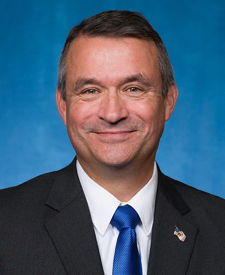
See how Don Bacon actually votes — against your values.
DeepSyte scores Don Bacon's record on the issues you care about — not party, not press releases. Take the 2-minute values quiz to see your personal alignment.
Sign in and take the values quiz to see how Don Bacon's votes line up with your views.
Prediction track record
How often we called Don Bacon's passage votes correctly, from their stated positions on each bill's tagged topics. Excludes “unclear” calls and abstentions.
A joint resolution to direct the removal of United States Armed Forces from hostilities within or against the Islamic Republic of Iran that have not been authorized by Congress.
Based on 3 data points across public statements and recorded votes · AI analysis of public records
118-hr-1669·Notable gap
VET–TEC Authorization Act of 2023
15/100
What they said
Mar 18, 2026
Representatives Bacon and Carbajal support legislation to expand VA benefits for veterans who experienced sexual trauma during service by allowing retroactive disability payments from the date after discharge rather than the claim filing date.
The statement describes legislation to expand retroactive disability benefits for veterans who experienced sexual trauma during service by changing the effective date of claims. The bill voted on (VET-TEC Authorization Act) addresses high-technology education programs and burial/funeral allowances for veterans—entirely different benefit categories with no provisions addressing sexual trauma survivors or retroactive disability payment dates. The rep's yes vote on a bill unrelated to the stated policy position creates a fundamental mismatch.
Military Construction, Veterans Affairs, and Related Agencies Appropriations Act, 2025
25/100
What they said
Mar 18, 2026
Representatives Bacon and Carbajal support legislation to expand VA benefits for veterans who experienced sexual trauma during service by allowing retroactive disability payments from the date after discharge rather than the claim filing date.
Rep. Bacon's statement explicitly supports legislation that would change the effective date for veteran sexual assault survivor disability benefits to allow retroactive payments from the date after discharge. However, the bill voted on is a broad FY2025 appropriations measure for military construction and VA agencies. While the appropriations bill funds the VA generally, it does not contain the specific policy change (retroactive benefit dating) that the statement advocates for. Voting yes on a general appropriations bill does not demonstrate support for the particular legislative change described in the statement.
Senator Elizabeth Dole 21st Century Veterans Healthcare and Benefits Improvement Act
75/100
What they said
Mar 18, 2026
Representatives Bacon and Carbajal support legislation to expand VA benefits for veterans who experienced sexual trauma during service by allowing retroactive disability payments from the date after discharge rather than the claim filing date.
Rep. Bacon voted yes on passage of a comprehensive veterans benefits bill that addresses multiple VA programs and services. The statement indicates support for legislation specifically expanding retroactive disability benefits for sexual trauma survivors. While the bill summary does not explicitly detail provisions on retroactive disability payments for sexual assault survivors, the bill's broad scope addressing VA disability and benefits administration is directionally consistent with the stated goal of expanding benefits for this population. The vote aligns with the stated position, though the bill appears to bundle many provisions beyond the specific retroactive payment mechanism highlighted in the statement.
Pairs with ambiguous language and high uncertainty are withheld until more data is available. Procedural, cloture, and amendment votes are excluded — they don't cleanly signal substantive support or opposition.
Pro analysis
AI rep analysis — Pro
Get an AI-narrated read on Don Bacon's full voting record against your stated values — aligned themes, conflicts, notable votes, and what to watch for.
Positions Don Bacon took during their campaign, scored against their subsequent record — public statements cross-checked with related votes. “Kept” means 80%+ of those statement-vs-vote pairs aligned; “Broken” means 30% or fewer.
0 kept0 broken2 mixed4 no action yet
MixedSupports
Reducing the national debt should be a higher priority than new spending.
“Supporting the Fiscal Responsibility Act of 2023, the largest reduction of our national debt in American history ($2.13 trillion)”
The U.S. should do more to enforce immigration laws and secure the border.
“Supporting HR 2 – the Secure the Border Act of 2023 – to resume construction of the border wall, reinstate the Remain in Mexico Policy, hire more border patrol agents”
Passage votes where Don Bacon broke ranks with ≥75% of Republicans. Threshold catches substantively partisan splits; unanimous-ish or close votes are excluded.
10
Cross-aisle votes
119-hres-1140·Jun 9, 2026·96% of R voted NO
Providing for consideration of the bill (H.R. 5408) to accelerate workplace time-to-contract under the National Labor Relations Act.
During National Police Week, Bacon and Gottheimer Introduce Bipartisan “Stop the Doxx Act” to Protect Law Enforcement Officers and their Families
Position: The release introduces bipartisan legislation to make doxxing of law enforcement officers, prosecutors, judges, and their families a federal crime with strengthened penalties, intended to protect these individuals from threats, intimidation, and violence.
| U.S. Representative Don Bacon
Skip to Content
Javascript must be enabled for the correct page display
U.S. Congressman
DonBacon
Representing Nebraska's 2nd District
Menu
Search
Search
Search
facebook-page
twitter-page
instagram-page
youtube-page
Parlor page
-->
Home
About
Meet Don
The District
Committees and Caucuses
Legislation
Sponsored Bills
Co-Sponsored Bills
Issues
Agriculture
Jobs & Economy
Budget
Veterans
Energy & Environment
Seniors
Health Care
Transportation & Infrastructure
Immigration
National Defense
Newsroom
Press Releases
In the News
Photos
eNewsletters
-->
Press Office
Services
Help with a Federal Agency
Tours & Tickets
Internships
Academy Nominations
Art Competition
Nebraska Breakfast
Veterans History Project
Flag Request
Congressional Youth Advisory Academy
Inauguration Tickets
-->
Resources
Grant Assistance
Veterans
Gold Star Survey
Students
Military Personnel
Parents
Senior Citizens
Small Businesses
Community Funding Projects
Connect
news
Press Releases
During National Police Week, Bacon and Gottheimer Introduce Bipartisan “Stop the Doxx Act” to Protect Law Enforcement Officers and their Families
Share on Facebook
Share on X
Print this Page
Share by Email
Washington,
May 13, 2026
During National Police Week, Bacon and Gottheimer Introduce Bipartisan “Stop the Doxx Act” to Protect Law Enforcement Officers and their Families
Highlights Critical Importance of Investing in Law Enforcement
WASHINGTON, D.C. – To mark National Police Week, U.S. Representative Don Bacon (NE-02) alongside Representatives Josh Gottheimer (NJ-05) and Congresswoman Elise Stefanik (NY-21) introduced a bipartisan federal bill to protect law enforcement officers and their families from doxxing — the publishing of personal information online to threaten, intimidate, or facilitate violence — and the Police Athletic/Activities League (PAL) Reauthorization Act.
The Stop the Doxx Act will:
Make it a federal crime — with strengthened penalties — to knowingly publish the personal information of a federal, state, or local law enforcement officer, prosecutor, judge, or immediate family member with the intent to threaten, intimidate, or facilitate violence.
The legislation sets penalties of prison time, not just fines, which increases if the conduct results in bodily injury or death.
The bill also creates a national training program to help officers and public servants better protect their personal information online and understand their rights when their data is leaked.
“Those who protect our communities and uphold the rule of law deserve protection from threats, intimidation, and violence,” said Rep. Bacon. “The Stop the Doxx Act makes clear that weaponizing personal information against law enforcement, prosecutors, judges, or their families is unacceptable and must carry real consequences. With threats and intimidation against these public servants continuing to rise, this legislation is needed now. I look forward to working with Rep. Gottheimer to get this bipartisan legislation signed into law.”
“You can’t protect our communities if you can’t protect the people who sacrifice so much for us,” said Rep. Gottheimer. “Doxxing isn’t harmless online behavior. It is targeted intimidation against the people who keep our families safe, and the law has simply not kept up with the threat. We must always get the backs of those who risk their lives every day to protect us, and that means making sure they and their families are safe both on the job and at home.”
Targeted doxxing campaigns have surged, with more than 11.7 million American adults having been doxxed overall, with officers’ home addresses, photos of their spouses and children, and direct threats spreading across social media. Only nineteen states currently have any anti-doxxing protections for public officials; thirty-one have none on the books at all.
###
-->
stay connected
SUBSCRIBE
Bacon, Raskin and Dexter Introduce Bipartisan Legislation to Protect Pension Payments for NOAA Corps, U.S. Public Health Service Commissioned Corps
Position: Representatives Bacon, Raskin, and Dexter introduced bipartisan legislation to ensure that retired NOAA Corps and U.S. Public Health Service Commissioned Corps officers receive pension payments during government shutdowns, closing a loophole that caused payment delays during the previous shutdown.
| U.S. Representative Don Bacon
Skip to Content
Javascript must be enabled for the correct page display
U.S. Congressman
DonBacon
Representing Nebraska's 2nd District
Menu
Search
Search
Search
facebook-page
twitter-page
instagram-page
youtube-page
Parlor page
-->
Home
About
Meet Don
The District
Committees and Caucuses
Legislation
Sponsored Bills
Co-Sponsored Bills
Issues
Agriculture
Jobs & Economy
Budget
Veterans
Energy & Environment
Seniors
Health Care
Transportation & Infrastructure
Immigration
National Defense
Newsroom
Press Releases
In the News
Photos
eNewsletters
-->
Press Office
Services
Help with a Federal Agency
Tours & Tickets
Internships
Academy Nominations
Art Competition
Nebraska Breakfast
Veterans History Project
Flag Request
Congressional Youth Advisory Academy
Inauguration Tickets
-->
Resources
Grant Assistance
Veterans
Gold Star Survey
Students
Military Personnel
Parents
Senior Citizens
Small Businesses
Community Funding Projects
Connect
news
Press Releases
Bacon, Raskin and Dexter Introduce Bipartisan Legislation to Protect Pension Payments for NOAA Corps, U.S. Public Health Service Commissioned Corps
Share on Facebook
Share on X
Print this Page
Share by Email
Washington,
May 12, 2026
Bacon, Raskin and Dexter Introduce Bipartisan Legislation to Protect Pension Payments for NOAA Corps, U.S. Public Health Service Commissioned Corps
Legislation would close a loophole that caused retired uniformed service members to miss pension payments during last year’s government shutdown
WASHINGTON, D.C. – Today, Representative Don Bacon (NE-02), alongside his colleagues Representatives Jamie Raskin (MD-08) and Maxine Dexter (OR-03), introduced bipartisan legislation that safeguards the pensions of an estimated 8,000 retired uniformed servicemembers. The Pensions for Retired Uniformed Servicemembers Act would secure parity between retired members of the National Oceanic and Atmospheric Administration (NOAA) Commissioned Officer Corps and the U.S. Public Health Service (USPHS) Commissioned Corps and all other federal retirees, ensuring they continue receiving pension payments during a government shutdown.
“NOAA Corps and U.S. Public Health Service Commissioned Corps officers serve our nation in moments of crisis, from hurricane response and environmental disasters to disease outbreaks at home and overseas,” said Rep. Bacon. “These uniformed officers have answered the call in national emergencies and times of war, and they deserve a retirement structure that recognizes that service. I’m pleased to co-lead the bipartisan Pensions for Uniformed Services Retirees Act with Rep. Raskin to ensure all members of the uniformed services are treated fairly.”
“NOAA Corps officers and USPHS Commissioned Corps officers have made immeasurable sacrifices for the health and safety of our people over decades of public service,” said Rep. Raskin. “Our bipartisan legislation will mean these patriots will get the pensions they earned so they don’t go hungry or struggle to pay their rent or mortgage during a government shutdown.”
“The Commissioned Officers Association is pleased to endorse this important legislation, which would provide a stable and reliable financial foundation for retirement pay for members of the U.S. Public Health Service Commissioned Corps and the NOAA Commissioned Officer Corps,” said CAPT. Jacqueline Rychnovsky, USN (Ret.), Executive Director of the Commissioned Officers Association of the United States Public Health Service. “Transitioning from annual discretionary appropriations to the Department of Defense Military Retirement Fund — which currently supports retirement pay for the other six uniformed services — would help ensure that USPHS and NOAA Corps retirees are never again at risk of missing a paycheck during a government shutdown.”
“All who serve our nation in uniform have earned their benefits, to include consistent and reliable retirement payments," said Lt. Gen. Brian Kelly, USAF (Ret.), President and CEO of the Military Officers Association of America. "MOAA strongly supports this legislation, which takes an important step toward ensuring parity across all uniformed services by aligning retirement funding for the USPHS and NOAA commissioned officer retirees with the existing Military Retirement Fund.”
Established upon the outbreak of World War I, NOAA Corps Officers command ships and aircraft and support emergency response efforts, including hurricane response and oil spill mitigation. They lead a fleet of vessels and aircraft used for everything from deep ocean research to flying into hurricanes, and they can be brought into the armed services whenever the President requires their expertise.
The U.S. Public Health Service Commissioned Corps was established in 1889 to root out smallpox and yellow fever and is now the largest public health program in the world. Driven by a passion for public service, the Commissioned Corps officers respond to public health crises and national emergencies such as natural disasters, disease outbreaks, and terrorist attacks, both at home and overseas.
The Pensions for Retired Uniformed Servicemembers Act is endorsed by the Military Officers Association of America and the Commissioned Officers Association.
Read the full legislation here.
-->
stay connected
SUBSCRIBE
Bacon, Nunn, Moore Introduce Bipartisan Package to Keep Foster Siblings Together
Position: Representatives Bacon, Nunn, and Moore introduced legislation to establish a federal pilot grant program providing $10 million over five years to support specialized foster care models designed to keep sibling groups together, and a resolution designating April as National Foster Sibling Connections Month.
Bacon, Nunn, Moore Introduce Bipartisan Package to Keep Foster Siblings Together
Washington, D.C. – U.S. Representatives Don Bacon (NE-02), Zach Nunn (IA-03), and Gwen Moore (WI-04), Co-Chairs of the Congressional Caucus on Foster Youth, today introduced the Protecting Sibling Relationships in Foster Care Act and a resolution recognizing April as National Foster Sibling Connections Month, a bipartisan package to help keep foster siblings together.
The Protecting Sibling Relationships in Foster Care Act would authorize $10 million in federal appropriations over a five-year period and direct the Department of Health and Human Services (HHS) to establish a competitive pilot grant program supporting specialized foster care models designed for large sibling groups, siblings with wide age ranges, or those with complex needs. Eligible state, tribal, local, faith-based, and nonprofit entities could receive one of up to five grants to develop or expand models that increase the likelihood that siblings are placed together and remain together while in care. Grantees would collect and report placement data and outcomes to inform federal and state child welfare practice.
The bipartisan resolution recognizes April as National Foster Sibling Connections Month and highlights the importance of sibling bonds for youth in foster care. By calling on federal, state, tribal, and local agencies to prioritize joint placements and improve data collection, the resolution seeks to reduce trauma and ensure emotional stability for youth both during and after their time in care.
“Keeping siblings together in the foster care system significantly increases their chance of having positive life outcomes,” said Rep. Bacon, Congressional Caucus on Foster Youth Co-Chair. “As a foster-to-adoptive parent of a sibling group, this bipartisan foster care package helps address the unique challenges faced by families caring for sibling groups with large numbers, wide age ranges, and complex needs. We have a responsibility to support children in foster care with stable, loving homes that keep families connected.”
“When brothers and sisters enter foster care, staying together can be the difference between stability and a traumatic disruption in a young life. Kelly and I experienced this personally, adopting two daughters, two siblings, who had each other as they made a very difficult transition,” said Rep. Nunn, Congressional Caucus on Foster Youth Co-Chair. “I've worked with families navigating this system — and the biggest barrier to keeping siblings together isn't willingness, it's capacity. This bill funds the foster care models that can actually keep siblings together, and our resolution makes clear that Congress sees this as a priority.”
“The sibling bond is so important, and the foster care system must work to maintain it. But when siblings become separated in the foster care system, it can create more distress and pain for children and families,” said Rep. Moore, Congressional Caucus on Foster Youth Co-Chair. “Our bipartisan legislation would help develop better tools to successfully keep siblings together, especially in complex situations. I am proud to join my fellow Congressional Caucus on Foster Youth (CCFY) co-chairs in introducing this bipartisan legislation.”
The federal foster care system strives to place siblings together whenever possible, yet many children in care are separated from one or more of their brothers or sisters due to logistical challenges, varying ages, behavioral health needs, or limited placement capacity. Strong sibling relationships are widely recognized as a critical source of emotional support and stability for children navigating the trauma of family separation, but current federal law’s “reasonable efforts” requirement does not ensure specialized infrastructure or funding to support placement of large sibling groups, siblings with wide age ranges, or those with complex needs.
According to the Government Accountability Office (GAO), states face significant barriers to placing siblings together, particularly when sibling groups are large, span wide age ranges, or require specialized care. Some reports estimate that as many as 75% of foster children are placed apart from one or more of their siblings.
This foster care package aims to help address those gaps by supporting foster care models better equipped to serve sibling groups.
The full text of the Protecting Sibling Relationships in Foster Care Act is available here, and the resolution recognizing April as National Foster Sibling Connections Month is available here.
Bacon Joins Bipartisan, Bicameral Legislation to Combat Russia’s Attack on Religious Freedom
Position: The release expresses support for legislation requiring the State and Defense Departments to document Russian persecution of religious communities in Ukraine and Russian-occupied territories, and directs the President to impose sanctions on individuals responsible for these abuses.
Bacon Joins Bipartisan, Bicameral Legislation to Combat Russia’s Attack on Religious Freedom
Washington, D.C. – U.S. Representative Don Bacon (R-NE) joined Helsinki Commission Chairman Representative Joe Wilson (R-SC), Helsinki Commission Ranking Member Representative Steve Cohen (D-TN), and Representatives Brian Fitzpatrick (R-PA), Marcy Kaptur (D-OH), and Mike Quigley (D-IL) to introduce Countering Russia’s War On Faith Act.
Companion legislation was introduced in the Senate by Senators John Kennedy (R-LA) and Sheldon Whitehouse, Ranking Member of the U.S. Helsinki Commission (D-RI).
This bipartisan legislation requires the Secretaries of State and Defense to jointly report on Russian efforts to persecute, suppress, and violate the religious freedoms of faith communities in Ukraine and Russian-occupied territories. It also directs the President to impose sanctions on foreign individuals found to have engaged in these actions.
“Putin’s brutal invasion of Ukraine is not only an attack on a country that seeks democracy, free markets, and alignment with the West, but also includes a deliberate campaign to suppress and persecute religious communities,” said Rep. Bacon. “The Countering Russia’s War on Faith Act will ensure we fully document these abuses and hold those responsible accountable through sanctions. I’m pleased to join Rep. Wilson and my colleagues in this bipartisan effort to stand up for religious liberty and the Ukrainian people.”
“Russia targets and kills persons of faith as a matter of policy wherever it invades. War criminal Putin seeks to prevent free worship of all believers and crushes any faith not subservient to its state-run church and corrupt former KGB agent Patriarch Kirill or otherwise submit itself to repressive state control,” said Rep. Wilson, Co-Chair of the Congressional Ukraine Caucus. “Believers in the temporarily occupied territories of Ukraine are targeted with particular ferocity. It is critical that we counter Russia’s War on Faith.”
“Putin is a war criminal conducting genocide in Ukraine. He is also attempting to erase expressions of Ukrainian identity, including religious freedoms. This legislation makes plain that these human rights violations will be a focus of our foreign policy and that the United States will always defend religious liberty,” said Rep. Cohen.
“Russia’s war in Ukraine is not only an assault on sovereignty—it is a calculated, systemic assault on religious freedom. For Americans, the freedom to worship is among our most fundamental liberties, and we do not stand by when it is crushed by force. This legislation ensures these crimes are documented, perpetrators are identified, and real consequences follow. Peace through strength requires accountability, and the persecution of people of faith cannot be met with silence,” said Rep. Fitzpatrick.
“Russia's widespread religious persecution in Ukraine dates back centuries, and is a horrific reminder that this new war of occupation was never just about land, but about forcible Russification and the erasure of Ukraine's pluralistic and free way of life," said Rep. Kaptur, Co-Founder and Co-Chair of the Congressional Ukraine Caucus. “This important legislation calls out the abuses committed by the Russian state and its agents against Ukrainian Christians, Jews, Muslims, and other faiths. Russia perversely portrays Ukraine as a persecutor of Christians, when it is Moscow that has destroyed over 600 churches, synagogues, mosques, and places of worship in Ukraine throughout this war. These new attacks are a shameful reminder of Russian pogroms and attacks on religious communities dating back centuries. The United States must hold these war criminals accountable and defend religious freedom and the right of all Ukrainians to worship as they choose.”
“Vladimir Putin's brutal war on Ukraine is not just about violating its sovereignty, but erasing the democratic values Ukraine has embraced. He seeks to erase freedom of religion in Ukraine by disproportionately targeting places of worship and practitioners of any religion other than his own," said Rep. Quigley. "I am proud to cosponsor Rep. Wilson's Countering Russia’s War on Faith Act to make it clear that those who burn churches, persecute religious communities, and try to erase religious diversity will be held accountable. The United States must lead with moral clarity by defending religious freedom and confronting Putin’s abuses.”
“Religious liberty is not a suggestion in America – it’s one of our founding promises protected by the Constitution and lived out every day by generations of freedom-loving Americans. Anyone with a brain larger than a single cell organism knows that Vladimir Putin does not respect nor share that view. The Countering Russia’s War on Faith Act shines a bright light on Putin’s religious persecution and responds with real consequences,” said Sen. Kennedy.
“Putin’s murderous regime has repeatedly bombed places of worship, murdered clergy members, and persecuted Ukrainian communities not aligned with the Putin-allied Russian Orthodox Church. It’s time for the U.S. to take a stand for religious freedom and explore sanctions against individuals engaging in these brutal human rights abuses in Ukraine,” said Sen. Whitehouse.
Since Russia’s full-scale invasion in 2022, over 600 churches, synagogues, mosques, and other religious sites have been damaged or destroyed, and more than 50 Ukrainian clergy have been killed. Protestant, Catholic, Crimean Tatar, and Orthodox Christian communities not aligned with the Russian Orthodox Church have faced raids, forced re-registration, and criminal prosecution. The Russian Orthodox Church, led by Patriarch Kirill of Moscow, has publicly described the invasion as a “holy war,” providing ideological justification for systematic religious suppression in occupied territories.
The full text of HR-8433 (S-4379) is available here.
Bacon, Tran Celebrate Bipartisan Small Business Legislation Signed into Law
Bacon, Tran Celebrate Bipartisan Small Business Legislation Signed into Law
Washington – U.S. Representatives Don Bacon (NE-02) and Derek Tran (CA-45) are celebrating their bipartisan legislation to continue intellectual property protections for small businesses being signed into law. The Small Business Innovation Research (SBIR) Foreign Interference Safeguard Act will extend small businesses' due diligence programs that identify and mitigate the risk of intellectual property theft by foreign entities like the Chinese Communist Party (CCP). It was signed into law on April 13 as part of the Small Business Innovation and Economic Security Act.
The SBIR Foreign Interference Safeguard Act will reauthorize the Small Business Innovation Research (SBIR) and Small Business Technology Transfer (STTR) Due Diligence programs for five years. This extension gives agencies more time to strengthen their programs, assess risks, and collect additional data for Congress to determine the best security strategies for small businesses.
“Protecting American innovation from foreign adversaries such as the Chinese Communist Party remains one of our most critical national security challenges,” said Rep. Bacon. “After the CCP hacked into my own email accounts, I know firsthand how aggressive these operations can be. That’s why I’m pleased to see our SBIR Foreign Interference Safeguard Act signed into law. This legislation strengthens due diligence programs and helps prevent adversaries from exploiting SBIR-funded technologies. I’m grateful to work with Rep. Tran on this bipartisan effort.”
“Small businesses are at the forefront of American innovation. Congress must ensure that these groundbreaking technologies are protected and best positioned to benefit American consumers,” said Rep. Tran. “I’m so proud to have passed this common-sense, bipartisan legislation to extend the SBIR Due Diligence Program and give our agencies the resources they need to safeguard American technologies from malign actors like the Chinese Communist Party. This legislation will strengthen our national security, ensuring that Orange County’s small businesses can continue driving innovation for generations to come.”
The SBIR program provides funding to small businesses developing innovative technologies, fast-tracking these life-changing technologies so that they can reach consumers more quickly. Because of the sensitivity of many of these innovations, foreign malign actors like the CCP exploit cybersecurity gaps and other vulnerabilities to steal technology and slow the progress of American innovation. The Due Diligence Program helps small businesses guard against such exploitation.
The Due Diligence Program was established in the SBIR/STTR Extension Act of 2022 to require agencies to assess security risks for all small businesses applying for SBIR or STTR grants – specifically risks regarding cybersecurity, intellectual property, and foreign ownership. Agencies set up these systems throughout 2023, and they have only been in full effect for one solicitation cycle thus far. By extending the program, small businesses can continue to receive critical support for innovative technologies while mitigating the risk of intellectual property theft.
Bacon and Kaptur Introduce Bipartisan BLOCK PUTIN Act to Hold Hungarian Government Enablers of Russia Accountable
Position: The release introduces legislation to impose sanctions and accountability measures on Hungarian government officials who obstruct European assistance to Ukraine or deepen Hungary's reliance on Russian energy.
| U.S. Representative Don Bacon
Skip to Content
Javascript must be enabled for the correct page display
U.S. Congressman
DonBacon
Representing Nebraska's 2nd District
Menu
Search
Search
Search
facebook-page
twitter-page
instagram-page
youtube-page
Parlor page
-->
Home
About
Meet Don
The District
Committees and Caucuses
Legislation
Sponsored Bills
Co-Sponsored Bills
Issues
Agriculture
Jobs & Economy
Budget
Veterans
Energy & Environment
Seniors
Health Care
Transportation & Infrastructure
Immigration
National Defense
Newsroom
Press Releases
In the News
Photos
eNewsletters
-->
Press Office
Services
Help with a Federal Agency
Tours & Tickets
Internships
Academy Nominations
Art Competition
Nebraska Breakfast
Veterans History Project
Flag Request
Congressional Youth Advisory Academy
Inauguration Tickets
-->
Resources
Grant Assistance
Veterans
Gold Star Survey
Students
Military Personnel
Parents
Senior Citizens
Small Businesses
Community Funding Projects
Connect
news
Press Releases
Bacon and Kaptur Introduce Bipartisan BLOCK PUTIN Act to Hold Hungarian Government Enablers of Russia Accountable
Share on Facebook
Share on X
Print this Page
Share by Email
Washington,
April 10, 2026
Tags:
Foreign Affairs
Bacon and Kaptur Introduce Bipartisan BLOCK PUTIN Act to Hold Hungarian Government Enablers of Russia Accountable
Washington – On Thursday, April 9, Congressman Don Bacon (NE-02), member of the Congressional Hungarian Caucus, and Congresswoman Marcy Kaptur (OH-09), Co-Chair of the Bipartisan Congressional Hungarian Caucus, introduced H.R. 8219, the bipartisan Barring Leverage and Obstruction that Contributes to Kremlin Profits Undermining Transatlantic Interests and NATO Act or the BLOCK PUTIN Act, which will hold senior Hungarian government officials accountable if they continue to block European assistance to Ukraine or deepen Hungary’s dangerous reliance on Russian energy.
This legislation is the House companion to S.4275, the BLOCK PUTIN Act, introduced by Senators Jeanne Shaheen (D-NH) and Thom Tillis (R-NC).
This legislation comes amid troubling news that top officials in the Hungarian government, including Hungarian Foreign Minister Péter Szijjártó, have coordinated with the Russian government to obstruct European support for Ukraine, protect Russian oligarchs from sanctions, and create a significant vulnerability for Hungary by deepening its dependence on Russian energy. Concerningly, it has also been reported that Hungarian officials signed a secret pact with the Kremlin to deepen Hungary’s reliance on Russia and drift farther from its transatlantic allies.
"As someone with Hungarian roots, I have deep respect for Hungary’s history as a freedom-loving nation that stood up to Soviet oppression in 1956. But today, under Prime Minister Orbán, Hungary has become the most unreliable country in NATO and undermined Ukraine and our allies from within,” said Congressman Don Bacon (NE-02), member of the Congressional Hungarian Caucus. “The BLOCK PUTIN Act makes clear there will be consequences for blocking support to Ukraine, deepening reliance on Russian energy, and reinforces our commitment to our allies. I’m pleased to co-lead this bipartisan effort with Rep. Kaptur and grateful to Sens. Tillis and Shaheen for their leadership in the Senate."
“As Co-Chair of the Congressional Hungarian Caucus and a strong advocate for Ohio’s national guard partnership with the nation of Hungary, I share the commitment of the Hungarian and American people who bled for the cause of Democracy and Liberty,” said Congresswoman Marcy Kaptur (OH-09), Co-Chair of the Congressional Hungarian Caucus. “When Moscow sent tanks to crush the people of Hungary in their Revolution of 1956, the world again saw the cruelty of the Kremlin’s dictatorship. When we listen to these phone calls between top Russian and Hungarian officials, we hear a shocking betrayal of Hungary’s independence and democracy in support of Dictator Vladimir Putin’s ambition to dominate Europe. My colleagues including myself and Congressman Bacon in our Hungarian Caucus affirm the right of the Hungarian people for their hard-fought freedom. Hungarians should know they will always have friends here in America ready to help them combat Putin’s schemes to control their country and extinguish their Liberty.”
###
Related News
Bacon Announces Nebraska Priorities and National Security Investments Included in Bipartisan FY26 Defense Appropriations
January 24, 2026 | Posted in Press Releases
Bacon, Gallego, Murkowski, and Khanna Introduce Sense of Congress Affirming the United States' Partnership with Denmark and Greenland
January 15, 2026 | Posted in Press Releases
Bacon, Colleagues Introduce Bipartisan Legislation Prohibiting a U.S. Invasion of a NATO Member State
January 13, 2026 | Posted in Press Releases
VENEZUELA: Don Bacon concerned about 'overemphasis' on oil, wants congressional oversight
January 9, 2026 | Posted in In the News
-->
stay connected
SUBSCRIBE
Bacon, Panetta Introduce the Bipartisan Stop Global Tariffs Act
Position: Representatives Bacon and Panetta introduce legislation to repeal President Trump's 10% global tariffs imposed under Section 122 of the Trade Act of 1974, arguing that the tariffs lack legal justification, harm American consumers and businesses, and represent an improper exercise of executive authority that should be reclaimed by Congress.
Bacon, Panetta Introduce the Bipartisan Stop Global Tariffs Act
“Article One, Section Eight, Clause One of the Constitution gives Congress authority over tariffs and trade, and it’s time Congress stands on its own two feet and does its job,” said Rep. Bacon. “I’m pleased to co-lead the Stopping Global Tariffs Act as a step toward restoring Congress’s role, providing relief to American businesses and consumers, and preventing the misuse of outdated authorities to impose sweeping tariffs. Across-the-board tariffs like these raise costs for families and create unnecessary economic uncertainty.”
“American consumers and businesses have shouldered the consequences of President Trump’s illegal and incoherent tariff policy,” said Rep. Panetta. “My legislation would lift the most recent across-the-board tariffs under Section 122 and make whole those who have been harmed. Although Congress abdicated its Constitutional obligations for trade policy over the past few decades, it’s past time for us to reclaim our authority from the executive branch not just with lawsuits, but with legislation.”
“President Trump’s new 10% global tariffs are a clear attempt to sidestep Congress and reimpose his failed tariffs after the Supreme Court struck them down,” said Rep. Sánchez. “I am proud to co-lead the Stopping Global Tariffs Act to strike down these new tariffs and give needed relief to the American families who have suffered from higher prices as a result of Trump’s tariff regime.”
President Trump’s most recent tariffs were improperly imposed under Section 122 of the Trade Act of 1974. Section 122 allows for the President to impose a 15 percent tariff for balance of payments, which was created when the U.S. dollar was on the gold standard. Following the Supreme court’s ruling in February negating his use of the International Emergency Economic Powers Act (IEEPA) to levy tariffs, the Trump Administration has imposed a 10 percent tariff on all imports to address “balance of payments.” Since the U.S. no longer operates on the Gold Standard, there is no legal justification for using this authority.
The Stop Global Tariffs Act is cosponsored by: Representatives Don Beyer (VA-08), Brendan Boyle (PA-02), Suzan DelBene (WA-01), Steven Horsford (NV-04), Brad Schneider (IL-10), Terri Sewell (AL-07), and Tom Suozzi (NY-03).
Full text of the bill is available here.
Planetary Science Caucus Co-Chairs Bacon & Chu Issue Statement on White House’s Proposed Budget Cuts to NASA Science
Position: The representatives oppose the White House's proposed 23% cut to NASA's overall budget and 47% cut to NASA's Science Mission Directorate, arguing that NASA science supports jobs and is essential to U.S. national security and space exploration leadership.
| U.S. Representative Don Bacon
Skip to Content
Javascript must be enabled for the correct page display
U.S. Congressman
DonBacon
Representing Nebraska's 2nd District
Menu
Search
Search
Search
facebook-page
twitter-page
instagram-page
youtube-page
Parlor page
-->
Home
About
Meet Don
The District
Committees and Caucuses
Legislation
Sponsored Bills
Co-Sponsored Bills
Issues
Agriculture
Jobs & Economy
Budget
Veterans
Energy & Environment
Seniors
Health Care
Transportation & Infrastructure
Immigration
National Defense
Newsroom
Press Releases
In the News
Photos
eNewsletters
-->
Press Office
Services
Help with a Federal Agency
Tours & Tickets
Internships
Academy Nominations
Art Competition
Nebraska Breakfast
Veterans History Project
Flag Request
Congressional Youth Advisory Academy
Inauguration Tickets
-->
Resources
Grant Assistance
Veterans
Gold Star Survey
Students
Military Personnel
Parents
Senior Citizens
Small Businesses
Community Funding Projects
Connect
news
Press Releases
Planetary Science Caucus Co-Chairs Bacon & Chu Issue Statement on White House’s Proposed Budget Cuts to NASA Science
Share on Facebook
Share on X
Print this Page
Share by Email
Washington,
April 9, 2026
Planetary Science Caucus Co-Chairs Bacon & Chu Issue Statement on White House’s Proposed Budget Cuts to NASA Science
WASHINGTON – Last week, President Trump’s Office of Management and Budget (OMB) released the Administration’s Fiscal Year 2027 (FY27) budget request, which proposes to cut NASA’s overall budget by 23% and cut NASA’s Science Mission Directorate (SMD) by 47%. This request would also terminate more than 40 space missions, including the Mars Sample Return mission led by Jet Propulsion Laboratory (JPL), a first-of-its-kind mission to return samples from Mars to Earth and unlock groundbreaking insights into the planet’s history and the potential for past life.
Reps. Don Bacon (NE-02) and Judy Chu (CA-28), who co-Chair the bipartisan Congressional Planetary Science Caucus, released the following joint statement in response:
“We are deeply alarmed that the Administration is once again proposing significant budget cuts to NASA and its science programs. NASA Science supports thousands of jobs and is essential to U.S. national security and leadership in space exploration, scientific discovery, and technological innovation. These drastic cuts would create enormous chaos and uncertainty for critical missions, the scientific workforce, and long-term research planning. At the same time, current funding for NASA Science has not kept pace with inflation, underscoring the need for more investment, not less. That is why, just weeks ago, we led over 100 bipartisan House Members in a letter to appropriators urging increased funding for NASA Science, and we will continue working on a bipartisan basis to ensure NASA receives the full, sustained funding it needs to lead the world in discovery and exploration.”
###
-->
stay connected
SUBSCRIBE
Bacon, Pappas Introduce Bipartisan Legislation to Combat Predatory Practices Used by Claim Sharks
Position: Representatives Bacon and Pappas introduced bipartisan legislation to prohibit auto-dialers from calling federal department and agency telephone lines, specifically targeting predatory practices by claim sharks exploiting veterans' benefits information.
Bacon, Pappas Introduce Bipartisan Legislation to Combat Predatory Practices Used by Claim Sharks
Legislation follows NPR reporting on claim sharks using auto-dialers to spam a VA hotline meant for vets
WASHINGTON - Representatives Don Bacon (NE-02) and Chris Pappas (NH-01), Ranking Member of the Economic Opportunity Subcommittee of the House Veterans’ Affairs Committee, and Congressman Don Bacon (NE-02), introduced the Veterans Benefits Information Protection Act, bipartisan legislation to combat predatory practices used by claim sharks to spam government lines with auto-dialers to collect information about veterans’ benefits.
Consumer protection laws already prohibit the use of auto-dialers from making calls to certain numbers, such as 911 and other emergency lines as well as rooms in hospitals and elderly living facilities. The Veterans Benefits Information Protection Act would amend current law by prohibiting auto-dialers from making calls to a telephone number assigned to a federal department or agency.
“Our veterans should never be targeted by bad actors trying to profit off their hard-earned benefits – many at great cost to veterans and their families,” said Rep. Bacon. “The Veterans Benefits Information Protection Act takes a commonsense approach to crack down on predatory practices and protect veterans from exploitation. I’m pleased to join Rep. Pappas in introducing this important bipartisan legislation to safeguard the benefits our veterans have earned.”
“Unaccredited, for-profit companies are using robocallers and veterans’ personal information to spam VA hotlines about their benefits, identify any increases, and immediately send them a bill for thousands of dollars. It’s outrageous and must be put to a stop,” said Rep. Pappas. “My legislation would prohibit the use of robocallers to spam government lines to shield veterans from this predatory practice. For years I have led the fight against claim sharks breaking the law and exploiting legal loopholes to defraud veterans, and I won’t stop. I will continue to combat these predatory practices, reign in claim sharks, and safeguard the benefits our veterans have earned.”
This bipartisan legislation is supported by Veterans of Foreign Wars (VFW), New Hampshire Veterans of Foreign Wars, Military Officers Association of America (MOAA), The American Legion, National Association of County Veteran Service Officers (NACVSO), and National Organization of Veterans’ Advocates (NOVA).
“The Veterans of Foreign Wars (VFW) applauds the bipartisan Veterans Benefits Information Protection Act for closing a critical loophole that currently permits predatory actors to use automated ‘robo’ calls to exploit veterans and overwhelm federal benefit hotlines,” said VFW National Legislative Service Associate Director Joe Grassi. “This commonsense legislation aligns with our unwavering interest in safeguarding veterans’ personal information, protecting VA claims support, and ensuring veterans remain in control of their earned benefits.”
"As we leverage new technology on behalf of veterans, we must also protect them from bad actors looking to use these same advances to exploit those seeking the benefits they've earned through service," said Lt Gen Brian Kelly, president and CEO of the Military Officers Association of America. "The Veterans Benefits Information Protection Act is a strong step forward, one that will make a real difference in the wider fight against claim sharks."
Unaccredited claims representatives, or claim sharks, are not subject to VA standards. They strategically advertise their services to avoid regulatory oversight and as a result, may engage in predatory and unethical practices that target veterans and rob them of their VA benefits. Federal laws and regulations prohibit anyone from assisting a veteran in the preparation, presentation, or prosecution of a VA benefit claim, or charging a fee for this assistance, without accreditation from VA. However, VA and other federal agencies are limited in their ability to enforce existing law because explicit criminal penalties were stripped from statute nearly two decades ago. This has contributed to the proliferation of unaccredited claims representatives in recent years, a troubling development especially as more veterans receive the benefits they’re owed thanks to the Honoring Our PACT Act.
Bacon, Raskin Introduce Bipartisan Legislation to Tackle America’s Mental Health Crisis
Position: Representatives Bacon and Raskin introduced bipartisan legislation to expand federal funding for mental health stabilization services, particularly for individuals experiencing suicidal thoughts, through a new grant program at SAMHSA.
Bacon, Raskin Introduce Bipartisan Legislation to Tackle America’s Mental Health Crisis
Washington – Representatives Don Bacon (NE-02) and Jamie Raskin (MD-08) today introduced bipartisan legislation to invest in critically needed initiatives that help Americans experiencing mental health crises. As a rising number of Americans struggle with their mental health, the Stabilization to Prevent (STOP) Suicide Act would provide federal funding to organizations in our communities that are already working to support people in crisis and in recovery.
“People experiencing serious thoughts of suicide often find themselves without support and timely treatment,” said Rep. Bacon. “The STOP Suicide Act will provide an important tool that will help create needed programs to deliver outpatient or telehealth stabilization services. I’m pleased to join Rep. Raskin on this legislation that will help community health centers, rural health clinics, and others create and manage these programs.”
“Tens of millions of Americans have either suffered a mental health crisis or know a close loved one who has,” said Rep. Raskin. “For too many, seeking help can feel frightening or out of reach. Our bipartisan bills will help mental health care providers do their jobs and expand access to care for the many Americans who need it.”
The STOP Suicide Act expands access to evidence-based stabilization care for individuals with serious thoughts of suicide. Stabilization services can help patients reduce or eliminate imminent suicide risk and manage dangerous impulses, keeping them safe while relieving pressure on law enforcement and emergency rooms. This legislation will create a new grant program at the Substance Abuse and Mental Health Services Administration (SAMHSA) to expand access to effective and timely outpatient and virtual stabilization care and treatment.
“In 2023, 49,316 people died by suicide and 12.8 million adults experienced serious thoughts of suicide in the United States. Research shows that even brief evidence-based suicide interventions can help people manage suicidal thoughts and increase connection to follow-up care,” said Laurel Stine, J.D., M.A., Executive Vice President and Chief Policy Officer at the American Foundation for Suicide Prevention. “AFSP is proud to support the Stabilization to Prevent (STOP) Suicide Act, which supports suicide-specific stabilization services for individuals experiencing serious thoughts of suicide, helping people access interventions in the least restrictive setting possible, while relieving pressure on emergency departments and law enforcement. AFSP thanks Representative Raskin and Representative Bacon for their bipartisan leadership in advancing this important legislation.
This legislation is endorsed by the American Foundation for Suicide Prevention, National Alliance on Mental Illness, and the American Psychological Association.
If you need immediate mental-health support at any time of day, dial 988 to be connected to the National Suicide & Crisis Lifeline. Counselors can also be reached by text message or online chat. You may also dial 911 or go to your nearest emergency room.
Read the full text of the Stop Suicide Act here.
Source: GDELT 2.0 GKG, filtered to a curated list of national outlets. Inclusion is not endorsement; opinion pieces and reported news are mixed.
Recent stock activity
Periodic transaction reports filed under the STOCK Act — disclosed by the rep, sourced from public filings.
No disclosed trades on record.
Source: open-data mirrors of the Senate eFD and House Clerk financial-disclosure systems. Disclosure within 30 days of trade is required by law (45 for spouse/dependent trades).
Top PAC donors · 2026 cycle
Political action committees that gave the most to this rep's principal campaign committee this cycle. PAC giving is direct organizational support — industry, ideological, or leadership.
1.GROW THE MAJORITYLeadership5 contributionsMember-of-Congress leadership PAC — supports allied candidates and party-building efforts to expand legislative majorities.AI$40,084
2.TAKE BACK THE HOUSE 2022Leadership2 contributionsMember-of-Congress leadership PAC — supports Republican candidates aligned with the party's House agenda.AI$25,262
3.AMERICAN PATRIOTS FUND2 contributions$24,149
4.PROTECT THE HOUSE 2024Leadership2 contributionsMember-of-Congress leadership PAC — supports Democratic House candidates and coordinates party fundraising efforts.AI$23,859
5.EMMER MAJORITY BUILDERSLeadership2 contributionsMember-of-Congress leadership PAC affiliated with Rep. Tom Emmer — directs contributions to allied Republican candidates and party priorities.AI$22,993
6.GT FARM TEAM2 contributions$20,981
7.SCALISE LEADERSHIP FUND 2024Leadership2 contributionsMember-of-Congress leadership PAC affiliated with Steve Scalise — directs contributions to allied Republican candidates and causes.AI$18,173
8.FRESHMAN AGRICULTURE REPUBLICAN MEMBERS TRUST (FARM TRUST)2 contributions$16,886
9.PROBLEM SOLVER REPUBLICANS1 contribution$14,504
10.PATRIOT DAY 1 2020Ideological1 contributionSingle-issue or ideological PAC — specific positions not clearly inferable from the name.AI · low$13,356
Source: OpenFEC (api.open.fec.gov) Schedule A receipts where contributor type is “committee.” Aggregated by contributing committee. Self-transfers from joint-fundraising / victory committees are excluded.
Top individual contributors · 2026 cycle
Itemized individual contributions over $200 to this rep's campaign committee, aggregated by donor employer. PAC giving is shown above; this section is people, not organizations.
1.SANDHILLS PUBLISHING$21,000
2.SELF$9,211
3.TEXAS CRUDE ENERGY, LLC$8,500
4.ENERGY TRANSFER PARTNERS$8,457
5.CONTINENTAL INVESTORS$8,410
6.CHAIRMAN$7,030
7.ELLIOTT INVESTMENT MANAGEMENT$7,000
8.AUDAX GROUP$7,000
9.FRANKLIN MOUNTAIN MANAGEMENT$7,000
10.EDISON CHOUEST OFFSHORE$7,000
Source: OpenFEC Schedule A receipts where contributor type is “individual,” aggregated by the donor's self-reported employer. This is a geographic / industry correlation, not a corporate endorsement.