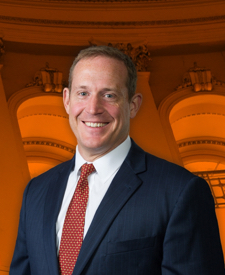
See how Ted Budd actually votes — against your values.
DeepSyte scores Ted Budd's record on the issues you care about — not party, not press releases. Take the 2-minute values quiz to see your personal alignment.
Sign in and take the values quiz to see how Ted Budd's votes line up with your views.
Prediction track record
How often we called Ted Budd's passage votes correctly, from their stated positions on each bill's tagged topics. Excludes “unclear” calls and abstentions.
3 predictions on record · none have been resolved by a passage vote yet. Check back as bills move.
We haven't yet found statement/vote pairs on the same topic for Ted Budd. This usually means either the rep hasn't taken public positions on bills that have come to a passage vote, or those bills haven't been tagged yet. The checker runs as new press releases and votes come in.
Pro analysis
AI rep analysis — Pro
Get an AI-narrated read on Ted Budd's full voting record against your stated values — aligned themes, conflicts, notable votes, and what to watch for.
We haven't extracted campaign positions for Ted Budd yet. Once their campaign website or position pages are processed, this card will track what they said vs how they voted.
Crossing the aisle
No party-break passage votes recorded for Ted Budd. Either they've voted with Republicans on every substantive passage vote in the corpus, or their tenure overlaps few high-threshold party-line votes so far.
Budd Joins Peters, Colleagues to Reintroduce Bipartisan Bill to Strengthen Critical Drug Supply Chains & Mitigate Shortages - U.S. Senator Ted Budd
Position: Senator Budd supports the bipartisan RAPID Reserve Act, which would direct the federal government to award contracts to domestic and OECD-based manufacturers to maintain reserves of critical generic drugs and build surge production capacity, reducing reliance on foreign supply chains and mitigating drug shortages.
Newsletter Signup! Stay up-to-date by signing up to receive my newsletter. Click Here
Newsletter Signup! Stay up-to-date by signing up to receive my newsletter. Click Here
Washington, D.C. — U.S. Senator Ted Budd (R-N.C) joined Senators Gary Peters (D-Mich.), Marsha Blackburn (R-Tenn.), and Tim Kaine (D-Va.) in reintroducing the bipartisan Rolling Active Pharmaceutical Ingredient and Drug (RAPID) Reserve Act to help increase supply chain resiliency for critical generic drugs and their key ingredients by bolstering supply reserves and domestic production capacity through federal contracts. The RAPID Reserve Act would help reduce drug shortages, enhance preparedness, and mitigate national security threats from U.S. overreliance on China for critical medications and their key ingredients.
“For far too long, America has faced a drug shortage that not only threatens patients’ health but poses a national security risk by forcing us to rely on Communist China’s supply chains for essential medications. I am proud to join my colleagues in introducing the bipartisan RAPID Reserve Act to bring drug manufacturing back to the U.S., prioritize sufficient medication reserves, and support increased production in emergencies to reliably meet patient demand,” said Senator Budd.
“Every American should be able to get the medicine they need when they need it. Increasing domestic and reliable manufacturing capacity for our critical, lifesaving medications is essential to addressing drug shortages that can compromise patient care. This bipartisan bill will help ensure Americans receive the essential medications they need while strengthening our ability to respond to future public health crises,” said Senator Peters.
The RAPID Reserve Act would direct the Department of Health and Human Services (HHS) to award contracts to quality manufacturers of critical generic drug products who are based in the United States or in a country that is a member of the Organization for Economic Cooperation and Development (OECD) in order to maintain reserves of critical medications and their key ingredients while building the capacity to surge production when needed. Through these contracts, which would prioritize domestic manufacturers, the RAPID Reserve Act would help strengthen vulnerable supply chains by ensuring that when there is a disruption in supply, manufacturers can draw on reserves and surge production to meet demand.
Senators Budd, Peters, Blackburn, and Kaine have also sent a letter to the Government Accountability Office (GAO) requesting the agency examine underutilized domestic manufacturing capacity and federal efforts to invest in advanced manufacturing capabilities.
The RAPID Reserve Act is supported by the Association for Clinical Oncology (ASCO), the American Society of Health-System Pharmacists (ASHP), the Healthcare Distribution Alliance (HDA), and Phlow.
Washington, D.C. — U.S. Senator Ted Budd (R-N.C.) released the following statement...
Washington, D.C. — U.S. Senator Ted Budd (R-N.C.) sent a letter to the National Cyber Director, Sean...
Washington, D.C. — U.S. Senator Ted Budd (R-N.C.) led a coalition of bipartisan Senators in sending a letter to...
Budd Joins Letter Demanding Answers for Shipping Policies Targeting Second Amendment Rights - U.S. Senator Ted Budd
Position: Senator Budd opposes shipping companies' policies that restrict or ban the transport of firearms and ammunition, characterizing such restrictions as discriminatory against Second Amendment rights and lawful commerce in firearms.
Newsletter Signup! Stay up-to-date by signing up to receive my newsletter. Click Here
Newsletter Signup! Stay up-to-date by signing up to receive my newsletter. Click Here
Washington, D.C. — Senator Ted Budd (R-NC) has joined a letter to major shipping companies regarding their policies discriminating against legal firearms and ammunition.
Recently, several large freight and shipping companies have implemented policies that discriminate against the firearm and ammunition industries, including prohibitions on shipments containing certain firearm parts to total bans on firearms and ammunition.
The letter was led by Senator Mike Crapo (R-ID) and co-signed by a total of 14 Senators.
“[DHL/XPO Logistics/Saia’s] policy is an affront to the Second Amendment and discriminates against the millions of law-abiding citizens, including many of our constituents, who utilize and value their constitutional right to keep and bear arms. Your policy also discriminates against businesses engaged in the lawful commerce in firearms, ammunition and related products, including federal firearm licensees, who utilize your services to ship their products.”
“When . . . freight carriers engage in policy making from the boardroom and implement discriminatory practices, they are interfering in the lawful commerce of firearms, limiting distribution and market access, resulting in fewer options and higher costs for businesses and consumers. But even more importantly, they are infringing on the constitutional right of law-abiding citizens to keep and bear arms enshrined in the Second Amendment.”
A copy of the full letter to DHL can be found HERE, XPO Logistics HERE and Saia HERE.
Washington, D.C. — The Wall Street Journal published an op-ed co-authored by U.S. Senators Ted Budd (R-N.C.) and...
Washington, D.C. — U.S. Senators Ted Budd (R-N.C.) and Jeanne Shaheen (D-N.H.) today reintroduced their...
Washington, D.C. — U.S. Senator Ted Budd (R-N.C.) today announced that Secretary of Homeland Security...
Senator Budd Applauds Trump Administration for Postponing Closure of Blue Ridge Parkway to Prioritize WNC Recovery - U.S. Senator Ted Budd
Newsletter Signup! Stay up-to-date by signing up to receive my newsletter. Click Here
Newsletter Signup! Stay up-to-date by signing up to receive my newsletter. Click Here
Washington, D.C. — U.S. Senator Ted Budd (R-N.C.) released the following statement after the U.S. Department of the Interior (DOI) announced postponing full closures on the Blue Ridge Parkway, between Blowing Rock and Beacon Heights, until 2026 to accommodate for community recovery efforts in Western North Carolina following Hurricane Helene.
“Communities in Western North Carolina were hit hard by Hurricane Helene, and as we begin to rebuild, closing the Blue Ridge Parkway at this juncture would only set us back. The Parkway serves as a lifeline to small businesses and recreation access across the Appalachian Region — bringing tourists, supporting local businesses, and keeping our economy moving. I’m grateful the Trump administration recognized our state’s needs following a letter I sent last month. This is the right decision to prioritize the near-term recovery of our region while still ensuring the resurfacing project is completed in the future,” said Senator Budd.
Read the full text of the letter from the Trump administration HERE.
In April 2025, Senator Budd was joined by Senator Thom Tillis (R-N.C.) in sending a letter to the Secretary of the Interior, Doug Burgum, requesting DOI to consider options to delay the resurfacing of the Blue Ridge Parkway until after the peak 2025 recreation season. Read the full text of the letter HERE.
Washington, D.C. — The Wall Street Journal published an op-ed co-authored by U.S. Senators Ted Budd (R-N.C.) and...
Washington, D.C. — U.S. Senators Ted Budd (R-N.C.) and Jeanne Shaheen (D-N.H.) today reintroduced their...
Washington, D.C. — U.S. Senator Ted Budd (R-N.C.) today announced that Secretary of Homeland Security...
Budd Joins Letter Sounding Alarm on Mexican Cartel Exploitation of Illegal Tobacco Amid New Biden Regulations - U.S. Senator Ted Budd
Position: Senator Budd joined a letter expressing concern that FDA regulations restricting menthol cigarettes and setting maximum nicotine levels could create black market opportunities for Mexican cartels to exploit, and calling on the FDA to take steps to mitigate this risk.
Newsletter Signup! Stay up-to-date by signing up to receive my newsletter. Click Here
Newsletter Signup! Stay up-to-date by signing up to receive my newsletter. Click Here
Washington, D.C. — Senator Ted Budd (R-NC) has joined a letter to the Food and Drug Administration (FDA) raising concerns over the Biden administration’s plans to restrict tobacco products for Americans, potentially creating opportunities for Mexican cartels to profit from illegal tobacco on the black market.
The letter was led by Senator Bill Cassidy, M.D. (R-LA) and co-signed by Senators Marco Rubio (R-FL) and Bill Hagerty (R-TN).
We write to express our concern about the impact of future rulemaking by the Food and Drug Administration (FDA) on black market sales of tobacco products. FDA is planning new rules to prohibit the sale of menthol cigarettes and institute a maximum nicotine level on tobacco products. We are concerned that Mexican transnational criminal organizations (TCOs), and other criminal elements, could seek to exploit black market opportunities that such policies could create. If FDA moves forward with such policies, it must take steps to mitigate this risk.
Mexican TCOs pose a grave threat to American national security and public health. The Drug Enforcement Administration (DEA) labeled these organizations “the greatest criminal drug threat the United States has ever faced.” TCOs control most of the U.S. drug market, and are responsible for trafficking the illegal drugs, including marijuana, heroin and fentanyl, that drove the record number of drug overdose deaths in the U.S. in 2022.
While the primary threat from Mexican TCOs come from trafficking in illicit drugs, these
organizations have diversified their activities in response to changing conditions. As it has become easier to sell marijuana products in the U.S., Mexican TCOs have prioritized trafficking fentanyl and other synthetic drugs that are cheaper to manufacture, easier to transport, and generate more profit. But Mexican TCOs are also using other activities, both legal and illegal, to fund their lethal operations. These organizations have engaged in extensive human trafficking with an estimated 70% of trafficking victims in the United States coming from Mexico. Human trafficking is estimated to provide $13 billion a year in revenue to TCOs. TCOs are also leveraging agriculture for additional revenue streams. For example, in February 2022, the U.S. Department of Agriculture (USDA) temporarily suspended Mexican imports of avocados into the United States due to threats against American safety inspectors in Mexico. Similarly, the price of limes increased 90% between December 2020-2021 due in part to expanded cartel activity in lime production.
More specifically, these TCOs have expanded their operations to include the production and distribution of cigarettes. Last month, we sent a letter to the Department of the Treasury requesting they take action against Tobacco International Holdings (TIH), a Switzerland-based business with alleged ties to the Cártel de Jalisco Nueva Generación (CJNG), a major Mexican TCO. TIH has taken advantage of a growing illegal cigarette market in Mexico, where approximately 19% of cigarettes are illegally produced. TIH has also been accused of using violence and coercion to sell their products to merchants. TCOs more generally have taken advantage of drug smuggling routes to import illegal cigarettes into the U.S., contributing to the significant use of smuggled cigarettes.
We are concerned that potential FDA actions to prohibit the sale of popular tobacco products may expand black market opportunities for TCOs, from Mexico or otherwise, to sell illegal tobacco products in the U.S. In May 2022, FDA published a proposed rule that would prohibit menthol in cigarettes. FDA has also announced plans to implement a maximum nicotine level on all tobacco products and is expected to publish a proposed rule for such ceiling later this year. This letter takes no position on those specific rules – ensuring that tobacco products are safely regulated is a public health priority for all stakeholders.
However, FDA must examine the potential effect of such actions to empower Mexican TCOs and other criminal elements to exploit black markets for tobacco products. Law enforcement officials have raised concerns that FDA’s actions could inadvertently expand black market tobacco sales. For example, a coalition of approximately 700,000 law enforcement officers said the following about a ban on menthol in cigarettes: “It will increase multiple categories of crimes in our communities. The data is clear that illicit tobacco attracts gangs and organized crime.” Indeed, black market tobacco sales expanded in the United Kingdom after the government implemented a maximum nicotine level on tobacco products in 2017. Black market tobacco products also pose a higher health risk to consumers, as they are not subject to any regulation or inspection to ensure they meet quality standards.
Before finalizing any tobacco prohibitions and limitations, FDA should consult with agencies that fight Mexican TCOs on a daily basis. These agencies include the DEA, the Department of State, Federal Bureau of Investigation (FBI), Bureau of Alcohol, Tobacco, Firearms and Explosives (ATF), Customs and Border Protection (CBP), and Department of Homeland Security (DHS). There is significant risk that in the absence of a regulated market, Mexican TCOs will combine their existing tobacco operations with their extensive distribution networks to traffic into the United States the very products that FDA could deem illegal. These agencies possess deep understanding of TCO activities that FDA lacks, and their perspective is critical to ensure that these proposals do not create an exploding black market for tobacco products.
FDA should also outline how it plans to use its own enforcement tools to deter the sale of illegal products. While FDA has extensive authority under the Tobacco Control Act (TCA) to act against illicit products, enforcement action has been inconsistent. The Independent Expert Panel convened by the Reagan-Udall Foundation recognized that FDA “has failed to clear the market of illegal products,” and has not been transparent about “whether its policy preference is to do so.” Implementing a robust enforcement framework to deter illegal products is an important step to improve public health.
We encourage FDA to address concerns with its current enforcement approach, including in conjunction with issuing any future rules, and to work closely with other federal agencies who have a thorough understanding of TCOs when enacting and implementing policies related to tobacco products.
We thank you for your attention to this letter.
Washington, D.C. — U.S. Senator Ted Budd (R-N.C.) released the following statement...
Washington, D.C. — U.S. Senator Ted Budd (R-N.C.) sent a letter to the National Cyber Director, Sean...
Washington, D.C. — U.S. Senator Ted Budd (R-N.C.) led a coalition of bipartisan Senators in sending a letter to...
Senator Budd Wall Street Journal Op-Ed: Say No to Julie Su at Labor - U.S. Senator Ted Budd
Position: Senator Budd opposes the confirmation of Julie Su as Secretary of Labor, arguing that her California labor policies—including AB5's reclassification of independent contractors and the FAST Recovery Act—represent failed command-and-control economics that would harm American workers and businesses if implemented nationwide.
Newsletter Signup! Stay up-to-date by signing up to receive my newsletter. Click Here
Newsletter Signup! Stay up-to-date by signing up to receive my newsletter. Click Here
Washington, D.C. — Senator Ted Budd (R-NC) and Americans for Prosperity North Carolina State Director Tyler Voigt wrote an opinion piece in the Wall Street Journal contending that Julie Su “would take California’s failed policies nationwide” if she became Secretary of Labor.
Read the full op-ed here or below:
Confirming her as secretary would take California’s failed policies nationwide.
The past few years have been tough on American workers: the sudden loss of jobs and income during the pandemic, inflation and the overall sense of economic uncertainty have all taken a toll. The White House might feel good about rebranding America’s lackluster economy under the laughable banner of “Bidenomics,” but for Americans struggling to make ends meet, President Biden’s economic policies only signal more pain to come.
Look no further than acting Labor Secretary Julie Su, whose permanent nomination to the post the Senate is considering. Before joining Mr. Biden’s Labor Department, Ms. Su served as secretary of the California Labor and Workforce Development Agency under Gov. Gavin Newsom.
Ms. Su oversaw the disastrous rollout of California’s AB5, which reclassified tens of thousands of independent contractors as employees as a favor to Big Labor. It was so unpopular and unworkable that the California Legislature enacted a second law creating a laundry list of exempted industries and professions. California voters approved a ballot initiative to protect drivers for Uber, Lyft and other apps from being labeled employees.
Ms. Su also championed the FAST Recovery Act, which created an unaccountable bureaucracy to control wages and working conditions at fast-food restaurants. This anticompetitive bargaining tactic undermines the autonomy of independent businesses while forcing partisan union priorities onto workers. Though Mr. Newsom signed it into law last year, Californians succeeded in gathering enough signatures to put the measure on the ballot in the hopes of stopping its implementation.
If these case studies in Ms. Su’s command-and-control labor economics aren’t concerning enough, consider how Americans have been voting—with their feet.
The most recent census data show that liberal states like New York and California are no longer the economic powerhouses they once were. The fastest-growing region in the U.S. is the South—and it’s growing in direct opposition to the liberal consensus. A recent report found for the first time in U.S. history, the economic output of six states in the South—Florida, Texas, Georgia, North Carolina, South Carolina, and Tennessee—is outpacing the Northeast corridor.
Besides better scenery and milder winters, these new economic centers have a few important things in common: They are right-to-work states with lower average costs of living and, consequently, higher quality of life.
The first advantage would be immediately gutted by the Biden-Su agenda. Both have advocated for the passage of the Protecting the Right to Organize Act. This coercive bill would strip workers of their right to decline to join a union, which more than half of states protect.
The PRO Act would forcibly unionize millions of American workers. It would also tip the scales for union organizers by doing away with secret-ballot votes and automatically turning over personal contact information to make it easier for organizers to harass workers into union membership. We don’t even have to imagine what Ms. Su’s implementation would look like. The PRO Act contains some of the same tests and standards included in AB5. She also established a Criminal Investigation Unit, consisting of a specialized labor police force that would be deputized against businesses.
The 50 states offer us real-time tests on policy outcomes. The South isn’t only booming, it’s also luring people away from states that have higher taxes, forced unionization and ever-increasing costs of living. In this new American migration, the Northeast and California are bleeding talent and capital, most of which find its way to places like our home state of North Carolina, where businesses can more easily build and where workers already want to be.
Unless we want to strangle this economic progress, we can’t afford for Ms. Su to take the top job at the Labor Department. We can either pursue the trajectory set by the booming South, or we can allow Mr. Biden’s bureaucrats to kneecap the nation’s economic future.
Washington, D.C. — U.S. Senator Ted Budd (R-N.C.) released the following statement...
Washington, D.C. — U.S. Senator Ted Budd (R-N.C.) sent a letter to the National Cyber Director, Sean...
Washington, D.C. — U.S. Senator Ted Budd (R-N.C.) led a coalition of bipartisan Senators in sending a letter to...
Budd Introduces Bill to Expand Pell Grant Eligibility - U.S. Senator Ted Budd
Position: Senator Budd introduced legislation to expand Pell Grant eligibility to include high-quality short-term job training programs, positioning this as an alternative to traditional four-year university degrees.
Newsletter Signup! Stay up-to-date by signing up to receive my newsletter. Click Here
Newsletter Signup! Stay up-to-date by signing up to receive my newsletter. Click Here
Washington, D.C. — Today, Senator Ted Budd (R-NC) introduced the Promoting Employment and Lifelong Learning (PELL) Act. He was joined by Sen. Rick Scott (R-FL).
The bill creates a Workforce Pell Grant to expand Pell Grant eligibility to high-quality, short-term job training programs.
The House companion, H.R. 496, was led by Republican Conference Chair Elise Stefanik (R-NY), Education and the Workforce Committee Chairwoman Virginia Foxx (R-NC), Rep. Jim Banks (R-IN), Rep. Ashley Hinson (R-IA), and Agriculture Committee Chair "GT" Thompson (R-PA).
The full text of the bill is HERE
The Promoting Employment and Lifelong Learning (PELL) Act:
Senator Budd said in a statement:
“Instead of saddling students with more debt and taxpayers with more risk, this bill expands Pell Grants to provide more opportunity for students to gain skills and enter the workforce in high-demand industries. This bill will also help mid-career professionals gain industry-recognized education to further their career development. Not every worker needs an expensive four-year university degree. That’s why Congress should be creating new educational options that equip folks with the skills necessary to become productive members of the workforce.
Washington, D.C. — U.S. Senator Ted Budd (R-N.C.) released the following statement...
Washington, D.C. — U.S. Senator Ted Budd (R-N.C.) sent a letter to the National Cyber Director, Sean...
Washington, D.C. — U.S. Senator Ted Budd (R-N.C.) led a coalition of bipartisan Senators in sending a letter to...
Budd Calls Out DOJ, Navy Over Camp Lejeune Justice Act Delays - U.S. Senator Ted Budd
Position: Senator Budd calls on the Department of Justice and U.S. Navy to immediately process claims under the Camp Lejeune Justice Act, which was signed into law but has not yet resulted in any processed claims nearly a year later. He expresses that the delays are unacceptable and that veterans deserve timely action and care.
Newsletter Signup! Stay up-to-date by signing up to receive my newsletter. Click Here
Newsletter Signup! Stay up-to-date by signing up to receive my newsletter. Click Here
Washington, D.C. — Today, Senator Ted Budd (R-NC) spoke on the Senate floor and called out the Department of Justice and the U.S. Navy for delays in processing veterans claims related to toxic water exposure at Camp Lejeune.
“It is unacceptable that the Navy and the DOJ have failed to process any of these claims and have failed to deliver a plan or strategy to do so.”
“The Navy and the DOJ have a responsibility to act, and I’m calling on these departments to do so now.”
“I will continue to advocate for those who served at Camp Lejeune until they receive the care and respect they deserve.”
Full Transcript of Senator Budd’s Speech:
As my colleagues know so well, as federal officials, one of the primary duties of our offices is to serve millions of constituents when they interface with the federal government.
As for North Carolina, my constituents include one of our country’s largest populations of active duty military members and veterans, including those who served at Camp Lejeune.
As we know, between 1953 and 1987, veterans who served at Camp Lejeune were exposed to toxic water.
These men and women are now experiencing various health challenges ranging from deadly cancers to Parkinson's Disease.
In order to help, I was proud to support the PACT Act, which included the Camp Lejeune Justice Act.
This bill was signed into law last year and allows veterans who are suffering to receive damages and become eligible for VA care.
However, after nearly a year, not a single claim has been processed.
On May 3, one struggling veteran wrote me this hand-written letter. He is a retired U.S. Marine in New Bern, North Carolina – my mother’s childhood hometown.
In his letter, he describes the toll these delays are taking on older veterans who are nearing the end of their lives.
“I'm certain, obituaries posted in local newspapers across the country [now include] marines or family members who lived on Camp Lejeune, drank its water, bathed and cooked using it, who have died from its use.”
This man is one of the over 70,000 veterans in North Carolina and across the country who are waiting for action.
It is unacceptable that the Navy and the DOJ have failed to process any of these claims and have failed to deliver a plan or strategy to do so.
That’s why several of my Senate and House colleagues and I demanded an explanation from the Secretary of the Navy and Department of Justice.
The Navy’s response to our letter was wholly inadequate.
It failed to answer critical questions, and also failed to provide a timeline for responding to veteran claims.
Each and every one of our veterans deserve to be treated with the dignity and respect befitting their service to our nation.
When they face health challenges related to their service at facilities like Camp Lejeune, their claims must be dealt with promptly and completely.
The Navy and the DOJ have a responsibility to act, and I’m calling on these departments to do so now.
I will continue to advocate for those who served at Camp Lejeune until they receive the care and respect they deserve.
Washington, D.C. — U.S. Senator Ted Budd (R-N.C.) released the following statement...
Washington, D.C. — U.S. Senator Ted Budd (R-N.C.) sent a letter to the National Cyber Director, Sean...
Washington, D.C. — U.S. Senator Ted Budd (R-N.C.) led a coalition of bipartisan Senators in sending a letter to...
Budd, Markey Introduce Bipartisan Bills to Prepare for AI Threats - U.S. Senator Ted Budd
Position: Senators Budd and Markey introduced bipartisan legislation requiring federal health and preparedness officials to develop strategies and conduct risk assessments to address potential catastrophic threats from artificial intelligence misuse, particularly regarding biological and chemical weapons development.
Newsletter Signup! Stay up-to-date by signing up to receive my newsletter. Click Here
Newsletter Signup! Stay up-to-date by signing up to receive my newsletter. Click Here
Washington, D.C. — Today, Senators Ted Budd (R-NC) and Edward J. Markey (D-MA) introduced a pair of bills to direct federal officials to prepare for and respond to potential catastrophic threats related to the possible misuse of artificial intelligence (AI).
The Strategy for Public Health Preparedness and Response to Artificial Intelligence Threats Act would require the Secretary of Health and Human Services to develop a strategy for public health preparedness and response to address the risks of misuse of artificial intelligence threats, particularly with regard to biological or chemical weapons.
The Artificial Intelligence and Biosecurity Risk Assessment Act would direct the Assistant Secretary for Preparedness and Response to conduct comprehensive risk assessments of advances in AI that could pose emergent risks, and report to Congress.
Senator Budd said in a statement:
“As AI grows in power and influence, we may face the real prospect of AI-generated threats like biological or chemical weapons. The federal government must not be caught flat-footed on these threats and should begin to prepare now. I’m glad to join with Senator Markey to lead the Senate to face potential AI threats head on.”
Senator Markey said in a statement:
“The federal government has fallen behind before in addressing the grave risks posed by emerging technologies. We can’t make the same mistake with the technologies of our future. Either we prevent the risks now, or Americans will be left dealing with the consequences for decades to come. It is vital for us not only to understand the impacts of artificial intelligence on our health, but to act with the urgency that this moment requires. Protection of the nation’s health security isn’t a Democrat or Republican issue. It is an issue of national security. Senator Budd and I are working together to ensure the federal government responds to these risks before it’s too late.”
Artificial intelligence (AI) is a rapidly developing technology with the potential to revolutionize many aspects of our lives. However, AI poses potential threats to public health.
For example, a 2019 study published in the journal Nature Machine Intelligence explored how AI could be used to design new chemical weapons. The paper’s authors found that AI could be used to quickly and efficiently design new compounds that were highly toxic.
Another study, conducted by students at the Massachusetts Institute of Technology, found Large Language Models (LLMs) in chatbot platforms can help people without laboratory training to develop viruses highlighted as pandemic threats.
These research papers suggest that there is a potential for AI to be used to develop chemical and biological weapons.
Washington, D.C. — U.S. Senator Ted Budd (R-N.C.) released the following statement...
Washington, D.C. — U.S. Senator Ted Budd (R-N.C.) sent a letter to the National Cyber Director, Sean...
Washington, D.C. — U.S. Senator Ted Budd (R-N.C.) led a coalition of bipartisan Senators in sending a letter to...
Budd Helps Introduce Bill to Reverse Unfair Biden Mortgage Rule - U.S. Senator Ted Budd
Position: Senator Budd opposes the Biden administration's May 2023 changes to mortgage loan-level price adjustments, arguing that the policy unfairly raises rates for borrowers with good credit to subsidize those with poor credit. He supports legislation to reverse these changes and restore the previous LLPA framework.
Newsletter Signup! Stay up-to-date by signing up to receive my newsletter. Click Here
Newsletter Signup! Stay up-to-date by signing up to receive my newsletter. Click Here
Washington, D.C. — Today, Senator Ted Budd (R-NC) helped introduce the Middle Class Borrower Protection Act.
The legislation would reverse a harmful Biden administration provision that increases mortgage rates for many middle class Americans.
In May, the Biden Administration implemented changes to the Loan-Level Price Adjustment (LLPA) that punishes responsible home buyers with good credit to subsidize those with bad credit. This bill would restore the LLPA to its former state and ensure that the irresponsible decision-making that led to this change will not be repeated.
The bill was led by Senators Mike Braun (R-IN) and Roger Marshall (R-KS).
Senator Budd said in a statement:
“The Biden administration continues to double-down on misguided policies that only make life more difficult for the majority of hard-working Americans. We should not be punishing fiscally responsible home buyers in order to bail out those with poor credit. This rule is fundamentally unfair and must be overturned.”
“The average American has a credit score over 716. The Biden administration is making home ownership more difficult for everyday Americans by raising rates for most people with a credit score over 680 to subsidize riskier borrowers. I urge my colleagues in the Senate to quickly vote to overturn this unfair rule that penalizes fiscal responsibility.”
“It is ludicrous to punish fiscally responsible buyers by charging them a higher fee in order to give risky borrowers loan-level price adjustments. Our bill will reverse this misguided choice and require the FHFA to follow the established rules and administrative procedures when making changes like this. This is unfair to every American who has worked hard and managed their finances responsibly – they shouldn’t have to pay more and be penalized for the choices of others.”
On May 1, 2023, the Federal Housing Finance Agency (FHFA) implemented misguided changes to the Loan Level Pricing Adjustments (LLPA), which are one-time, upfront fees charged to lenders when Fannie Mae and Freddie Mac (GSE’s) purchase their loans. These fees get passed to the borrowers in the form of higher interest rates. The change to the LLPA effectively raises rates for those with credit scores above 680 to subsidize relatively lower rates for those with credit scores below that threshold.
Washington, D.C. — U.S. Senator Ted Budd (R-N.C.) released the following statement...
Washington, D.C. — U.S. Senator Ted Budd (R-N.C.) sent a letter to the National Cyber Director, Sean...
Washington, D.C. — U.S. Senator Ted Budd (R-N.C.) led a coalition of bipartisan Senators in sending a letter to...
Budd Helps Introduce Bill to Protect Main Street Investors from ESG - U.S. Senator Ted Budd
Position: Senator Budd supports legislation requiring investment advisors and retirement plan sponsors to prioritize financial returns and risk minimization over environmental, social, and governance (ESG) factors unless clients explicitly request otherwise.
Newsletter Signup! Stay up-to-date by signing up to receive my newsletter. Click Here
Newsletter Signup! Stay up-to-date by signing up to receive my newsletter. Click Here
Washington, D.C. — Today, Senator Ted Budd (R-NC) helped introduce the Ensuring Sound Guidance (ESG) Act.
The legislation would require investment advisors and retirement plan sponsors to consider principally financial factors like maximizing returns and minimizing risk unless a client gives them explicit permission to consider partisan ESG factors.
The bill was led by Senator Tom Cotton (R-AR).
Senator Budd said in a statement:
“Americans’ hard-earned dollars should be invested in a way that maximizes financial returns, instead of advancing a radical woke agenda. Thank you to Senator Cotton for leading a bill that protects investors and gets politics out of retirement accounts.”
Senator Cotton said in a statement:
“Investment funds like Blackrock that millions of Americans’ trust with their hard-earned savings should prioritize investments that result in the highest returns—not fund ESG scams. My bill will make sure investment fund managers are making the best financial decisions on behalf of their clients.”
Washington, D.C. — U.S. Senator Ted Budd (R-N.C.) released the following statement...
Washington, D.C. — U.S. Senator Ted Budd (R-N.C.) sent a letter to the National Cyber Director, Sean...
Washington, D.C. — U.S. Senator Ted Budd (R-N.C.) led a coalition of bipartisan Senators in sending a letter to...
Source: GDELT 2.0 GKG, filtered to a curated list of national outlets. Inclusion is not endorsement; opinion pieces and reported news are mixed.
Recent stock activity
Periodic transaction reports filed under the STOCK Act — disclosed by the rep, sourced from public filings.
No disclosed trades on record.
Source: open-data mirrors of the Senate eFD and House Clerk financial-disclosure systems. Disclosure within 30 days of trade is required by law (45 for spouse/dependent trades).
Top PAC donors · 2026 cycle
Political action committees that gave the most to this rep's principal campaign committee this cycle. PAC giving is direct organizational support — industry, ideological, or leadership.
1.2022 FOUNDERS COMMITTEE3 contributions$28,869
2.TAKE BACK THE HOUSE 2020Leadership3 contributionsMember-of-Congress leadership PAC — supports candidates aligned with Republican efforts to gain House seats.AI$19,428
3.RECLAIM THE SENATE 2022 (RTS 2022)2 contributions$17,821
4.HOUSE FREEDOM FUNDLeadership3 contributionsMember-of-Congress leadership PAC — supports conservative House candidates and Republican priorities aligned with fiscal and social conservative principles.AI$17,025
5.SENATE CONSERVATIVES FUNDLeadership3 contributionsMember-of-Congress leadership PAC — supports conservative Senate candidates and coordinates funding aligned with fiscal and social conservative priorities.AI$16,832
6.TAKE BACK THE SENATE2 contributions$14,942
7.WIN THE SENATE 20221 contribution$14,147
8.VISA INC. POLITICAL ACTION COMMITTEE2 contributions$10,000
9.PELICAN PAC2 contributions$10,000
10.2023 SENATORS CLASSIC COMMITTEELeadership1 contributionMember-of-Congress leadership PAC — likely affiliated with a senator or senatorial caucus, directs contributions to allied candidates.AI$7,700
Source: OpenFEC (api.open.fec.gov) Schedule A receipts where contributor type is “committee.” Aggregated by contributing committee. Self-transfers from joint-fundraising / victory committees are excluded.
Top individual contributors · 2026 cycle
Itemized individual contributions over $200 to this rep's campaign committee, aggregated by donor employer. PAC giving is shown above; this section is people, not organizations.
1.TL3 CAPITAL PARTNERS$14,000
2.GOOGLE$12,644
3.CORVID TECHNOLOGIES$10,000
4.INMAR INTELLIGENCE$9,500
5.INMAR$9,500
6.RH BARRINGER DISTRIBUTING$8,500
7.C2 STRATEGIES$8,000
8.INMAR, INC.$7,500
9.QUINN RESIDENCES$7,287
10.ZOOM$7,000
Source: OpenFEC Schedule A receipts where contributor type is “individual,” aggregated by the donor's self-reported employer. This is a geographic / industry correlation, not a corporate endorsement.