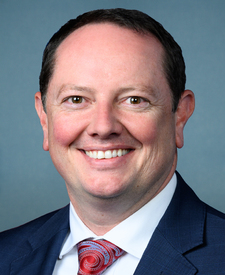
See how Eric Burlison's votes line up with your values.
DeepSyte scores Eric Burlison's record on the issues you care about — not party, not press releases. Take the 2-minute values quiz to see your personal alignment.
Sign in and take the values quiz to see how Eric Burlison's votes line up with your views.
Prediction track record
How often we called Eric Burlison's passage votes correctly, from their stated positions on each bill's tagged topics. Excludes “unclear” calls and abstentions.
A bill to provide for appropriate cost-sharing for insulin products covered under private health plans, and to establish a program to support health care providers and pharmacies in providing discounted insulin products to uninsured individuals.
No paired statements and votes yet for Eric Burlison
We haven't yet found statement/vote pairs on the same topic for Eric Burlison. This usually means either the rep hasn't taken public positions on bills that have come to a passage vote, or those bills haven't been tagged yet. The checker runs as new press releases and votes come in.
Pro analysis
AI rep analysis — Pro
Get an AI-narrated read on Eric Burlison's full voting record against your stated values — aligned themes, conflicts, notable votes, and what to watch for.
We haven't extracted campaign positions for Eric Burlison yet. Once their campaign website or position pages are processed, this card will track what they said vs how they voted.
Crossing the aisle
Passage votes where Eric Burlison broke ranks with ≥75% of Republicans. Threshold catches substantively partisan splits; unanimous-ish or close votes are excluded.
Providing for consideration of the bill (H.R. 8800) to authorize appropriations for fiscal year 2027 for military activities of the Department of Defense, for military construction, and for defense activities of the Department of Energy, to prescribe military personnel strengths for such fiscal year, and for other purposes; providing for consideration of the bill (H.R. 8595) making appropriations for national security, Department of State, and related programs for the fiscal year ending September 30, 2027, and for other purposes; providing for consideration of the bill (H.R. 8884) to amend title II of the Social Security Act to reauthorize demonstration authority for the disability insurance program; providing for consideration of the resolution (H. Res. 1383) commemorating the one-year anniversary of the enactment of the Working Families Tax Cuts; and for other purposes.
To amend the FISA Amendments Act of 2008 to extend the authorities of title VII of the Foreign Intelligence Surveillance Act of 1978, and for other purposes.
Position: Congressman Burlison requested preservation, digitization, and review of a 1952 Air Force UAP recording for inclusion in the National Archives' UAP Records Collection, and states the recording shows credible historical reports of unexplained phenomena that the public should be able to review.
WASHINGTON, D.C. — A previously unavailable 1952 recording sought by Congressman Eric Burlison (MO-07) was released today as part of the Trump administration’s ongoing effort to declassify and release government records related to unidentified anomalous phenomena (UAP).
In May, Burlison wrote to MIT Lincoln Laboratory seeking the preservation and review of a reel-to-reel recording identified as “AF-ATIC-FILM, 03/52” and labeled “flying saucer talk,” which featured a presentation by Air Force officer Edward J. Ruppelt discussing the Air Force’s knowledge of UAP at the time. Burlison requested that the recording be located, preserved, digitized, and reviewed for inclusion in the National Archives’ UAP Records Collection.
The recording and an accompanying transcript were released today through the Department of War’s Presidential Unsealing and Reporting System for UAP Encounters (PURSUE).
“This is exactly why we have continued pushing to find, preserve, and release these historical records. More than 70 years ago, the Air Force was investigating reports of UAP around some of our nation’s most sensitive facilities and radar returns indicating extraordinary speeds of travel,” said Congressman Burlison. “This tape presents a juxtaposition to the framing that UAP interest in our nation’s nuclear sites is new and can be explained as adversarial drones from foreign countries. While not conclusive, it shows that as far back as 1952, our military was receiving credible reports of unexplained technologies in our airspace, and the American people deserve to hear this historical discussion for themselves.”
During the March 1952 presentation, Ruppelt said approximately 20 percent of roughly 800 reports reviewed by the Air Force could not be explained, including reports from military personnel, airline pilots, scientists, engineers, and other technically trained observers.
Ruppelt also identified concentrations of reports around Los Alamos, Albuquerque, White Sands, and Oak Ridge. He later discussed unexplained Air Defense Command radar returns indicating speeds between 1,000 and approximately 3,500 miles per hour but noted investigators had not ruled out radar malfunctions or atmospheric phenomena.
Throughout the presentation, Ruppelt emphasized that the Air Force had not determined the nature or origin of the phenomena and needed better collection of physical data to evaluate the reports.
Listen to the recording and read the transcript.
Read Burlison’s May letter to MIT Lincoln Laboratory.
Comer, Burlison Launch Investigation into Bloomberg Philanthropies’ Funding of Anti-American Energy Lawfare
Position: The release states that Bloomberg Philanthropies' funding of environmental litigation groups has delayed and blocked U.S. energy projects and that its support for China-linked entities undermines economic and energy security. The lawmakers announce an oversight investigation and document requests.
WASHINGTON—House Committee on Oversight and Government Reform Chairman James Comer (R-Ky.) and Subcommittee on Economic Growth, Energy Policy, and Regulatory Affairs Chairman Eric Burlison (R-Mo.) are investigating Bloomberg Philanthropies’ funding of environmental activist organizations waging lawfare against American energy producers and critical economic development projects. In a letter to Bloomberg Philanthropies Chief Executive Officer Patricia E. Harris, the lawmakers raise concerns that the organization’s financial support for radical anti-fossil fuel campaigns and China-linked entities is undermining America’s economic and energy security. They request documents and communications concerning Bloomberg Philanthropies’ funding and grantmaking activities and its ties to environmental organizations operating in the United States and China.
“The Committee on Oversight and Government Reform is investigating environmental lawfare by activist organizations, including those funded by Bloomberg Philanthropies. Since 2019, Michael Bloomberg, a progressive New York billionaire, and his nonprofit Bloomberg Philanthropies have spent more than $1 billion through their Beyond Carbon and Beyond Petrochemicals philanthropies to litigate against or otherwise challenge American energy production. By funding these efforts, Bloomberg Philanthropies has delayed and blocked American energy development projects across the U.S., particularly in the Gulf of America region. This has inhibited economic development and the creation of good paying American jobs. The Committee is concerned that Bloomberg Philanthropies is also actively undermining U.S. economic and energy security through its support of Chinese entities which fund anti-fossil fuel efforts in the U.S. The Committee therefore requests documents and communications from Bloomberg Philanthropies,” wrote the lawmakers.
Bloomberg Philanthropies has funded radical organizations such as Earthjustice, a national environmental litigation group that conducts organized campaigns against American energy investments. In February 2026, Earthjustice opposed the development of a liquefied natural gas facility in the Gulf of America region, which was projected to create approximately 3,000 jobs and generate more than $4 billion in local property tax revenue. Bloomberg Philanthropies has also partnered with other activist organizations in the Gulf of America region to obstruct energy production and economic development. In addition, Bloomberg Philanthropies provides financial support to Energy Foundation China (EFC), an organization whose senior executives have reportedly held high-level positions within the Chinese government and China’s state-run research institutions. EFC spends millions of dollars funding U.S.-based nonprofits and universities and supports the climate and energy ambitions of the Chinese Communist Party (CCP). Chairman Comer previously investigated Bloomberg Philanthropies for partisan activism with state attorneys general to file activist lawsuits and lobby for burdensome regulations.
“In December 2025, 26 U.S. state attorneys general wrote to the Department of Justice asserting EFC had unlawfully failed to register under the Foreign Agents Registration Act despite its close ties to China and the CCP. The Committee has identified at least $11,970,000 in grants payments made to EFC since 2015 directly from the Bloomberg Family Foundation, which is part of Bloomberg Philanthropies. Additional reports have found that EFC has donated millions of dollars to left-wing climate groups in the U.S. that seek to phase out fossil fuels entirely and implement green energy alternatives. Such an intricate web of financial ties between a climate-focused entity in China and numerous American anti-U.S. energy nonprofits, both supported by Bloomberg Philanthropies, demands not only a careful review of national and energy security implications, but also an investigation of those ties themselves, such as whether American climate activists may be knowingly or unknowingly acting as agents of the CCP,” concluded the lawmakers.
Read the letter to Bloomberg Philanthropies here.
Reps. Massie, Burlison Introduce Legislation to Defund Surveillance State Cameras
Position: The release describes legislation that would prohibit federal funds from being used to purchase, install, maintain, operate, or upgrade automated license plate readers and biometric surveillance cameras, and would withhold federal program funds from recipients that violate the prohibition. The sponsors state that such surveillance infringes on Fourth Amendment privacy protections.
WASHINGTON, D.C. — Congressman Eric Burlison (R-MO-07) today joined Rep. Thomas Massie (R-KY) in introducing legislation that would prohibit the use of federal funds to purchase, install, maintain, operate, or upgrade automated license plate readers (ALPRs) and biometric surveillance cameras.
“Technology may change, but our constitutional rights do not,” said Congressman Eric Burlison. “The Fourth Amendment protects Americans from unreasonable searches, and advances in surveillance technology should not come at the expense of our privacy and liberty. The federal government should not use taxpayer dollars to build a surveillance state that tracks law-abiding Americans. Our rights are unalienable, and Congress has a responsibility to protect them.”
“The federal government shouldn’t provide ‘security’ grants to cities and police departments that have gone beyond the pale and turned their communities into a version of 1984,” said Congressman Thomas Massie. “The Flock-Off Act withholds federal money from municipalities and police departments that deploy Flock cameras to surveil law-abiding citizens. Federal taxpayers should not be forced to fund the surveillance state.”
The legislation would:
Cuts off federal funding for Flock-style surveillance by prohibiting federal funds from being used to purchase, install, maintain, operate, or upgrade automated license plate readers and biometric surveillance cameras.
Requires federal agencies to remove federally funded systems and requires state and local recipients to stop operating them within 180 days as a condition of continued funding under the relevant federal program.
Withholds federal program funds from recipients until violations of the spending prohibitions are repaid to the United States Treasury.
Prohibits federal funds from paying for contracts, subscriptions, cloud services, databases, or data-sharing arrangements connected to covered camera systems.
Covers AI-augmented automated license plate readers and biometric cameras.
Defines biometric data to include facial recognition, voiceprints, iris and retinal scans, fingerprints, and gait recognition.
Provides an exception allowing continued federal funding for cameras located within 1 mile of the Northern and Southern borders that are used for the detection and interdiction of unlawful entry, human trafficking, and drug smuggling.
Allows the continued use of federal funds for ALPRs used solely to collect, administer, or enforce tolls.
Original cosponsors of H.R. 10221 include Reps. Lauren Boebert (R-CO), Paul Gosar (R-AZ), Ro Khanna (D-CA), Chip Roy (R-TX), and Victoria Spartz (R-IN).
The text of the bill is available here.
Burlison Opens Hearing on State and Local Natural Gas Bans Increasing Energy Costs
Position: Chairman Burlison argues that state and local bans on natural gas raise energy costs and limit household appliance choice, and that federal rollbacks of Biden-era energy regulations and the Inflation Reduction Act's electrification incentives should continue.
WASHINGTON—Subcommittee on Economic Growth, Energy Policy, and Regulatory Affairs Chairman Eric Burlison (R-Mo.) delivered opening remarks at today’s hearing titled “No Flame, More Pain: How State and Local Bans on Natural Gas Increase Costs.” In his statement, Subcommittee Chairman Burlison highlighted how natural gas has remained an affordable and reliable form of energy for American households despite the skyrocketing prices of electricity and other green energy sources, and that bans on natural gas by blue states and cities has made it more difficult for Americans to pay their monthly energy bills and use their appliances of choice. He also underscored that the Trump Administration has worked hard to scale back the burdensome regulations imposed by the Biden Administration that make any aspects of everyday life more expensive and urged the Congress to take action.
WATCH THE REMARKS
Below are Subcommittee Chairman Burlison’s opening remarks as prepared for delivery:
Good morning.
I want to welcome everyone to this hearing hosted by the Subcommittee on Economic Growth, Energy Policy, and Regulatory Affairs.
Today, the Subcommittee will examine energy choice, focusing on the consequences of bans and restrictions on the use of natural gas and other fossil fuels.
These are policies long championed by Congressional Democrats that are being pursued by blue states and localities.
High electricity costs are one of the top affordability concerns Americans have today.
Since 2020, electricity prices have skyrocketed, straining the budgets of everyday Americans.
Meanwhile, natural gas has remained an affordable and reliable form of energy for American households.
Americans across our country rely on and prefer natural gas to heat their homes, cook their meals, and often to operate their small businesses.
Natural gas is also a key component of our electrical power generation.
Over the last several years, the Biden Administration and Congressional Democrats sought to force Americans away from natural gas and other fossil fuels and towards electrification.
The Biden Administration finalized sweeping environmental regulations which pressured utilities to retire fossil fuel electric power generation capacity, straining our electric grid.
The Biden Administration also adopted a slew of burdensome regulations that aimed to ban many gas home appliances.
Additionally, the wasteful Inflation Reduction Act, championed by Congressional Democrats and the Biden Administration, poured billions of dollars into incentivizing electrification.
At the Subcommittee’s previous proceeding, we discussed how such policies play into the strengths of our foreign adversaries and fail to benefit working Americans.
Congressional Republicans have successfully repealed a number of these regulations and repealed the IRA’s wasteful spending.
The Trump Administration is likewise rolling back appliance-killing standards and regulations that aim to eliminate fossil fuel fired power generation.
And courts have overturned the Biden Administration’s natural gas-powered appliance bans, calling them attempts to make home appliances “more expensive and less useful.”
However, to help achieve their nationwide aims, Democrat-led states and localities, spurred on by radical climate activists, are implementing their own bans on natural gas in many types of buildings.
For example, the city government of Washington, D.C., our nation’s capital, plans on implementing at the end of the year a ban on natural gas in new commercial buildings, certain newly constructed residential buildings, and large renovations.
This is highly concerning, and I hope that this Committee can do something about it.
Our federalist system of course gives states the authority to make laws—including bad laws—governing intrastate energy.
In fact, when I was a Missouri state senator, I led and passed legislation to ensure Missourians were not subject to natural gas bans or other limitations to energy choice.
However, these sorts of bans have broader effects beyond just those states.
These bans are being litigated in the courts, with the Ninth Circuit ruling that federal law pre-empts states’ building code restrictions on energy sources.
These bans are projected to massively increase electricity demand, shifting the entire energy demand burden for heating and cooking during the winter months to an already stretched power grid.
Such bans will not only raise energy prices in the states in which they are enacted, but they also will increase demand for electricity from neighboring grids and regional transmission organizations, raising already-high prices in other states.
Importantly, these bans will hurt families, particularly poor families, who are struggling with their energy bills.
Additionally, natural gas bans will limit appliance choice for many American families, increasing costs and altering the broader appliance marketplace.
They will also make housing construction more expensive, exacerbating the existing home affordability crisis which is well documented to spill over from one state into other states.
According to analysis from the National Association of Home Builders, in colder climates, full electrification adds $15,000 to the cost of constructing a new home.
During this past winter, nationwide, households with electric heating saw average seasonal bills of more than $1,220 to keep their homes warm, compared to just over $700 for homes heated with natural gas.
Additionally, the American Gas Association estimates that households save more than $66 per month when using gas versus electric appliances.
Republicans believe in energy choice, appliance freedom, and energy affordability.
Democrats are trying to ban reliable and affordable energy sources like natural gas and force green energy mandates upon Americans to satisfy radical climate activists.
While these various blue state policies may seem isolated, these mandates are really a coordinated nationwide effort to work around Democrats’ failures to impose such mandates at the federal level.
Simply put—a national workaround dressed in local clothing.
At a time of sky-high electricity prices and increasing threats to the reliability and security of America’s electric grids, the last thing the American people need is a wave of natural gas bans.
Burlison Announces Hearing on State and Local Natural Gas Bans
Position: The release announces a hearing on state and local bans on natural gas and states that such bans increase household and utility costs and strain electric grids. The subcommittee chairman argues that Congress should act to lower energy costs for Americans.
WASHINGTON—Subcommittee on Economic Growth, Energy Policy, and Regulatory Affairs Chairman Eric Burlison (R-Mo.) today announced a hearing titled “No Flame, More Pain: How State and Local Bans on Natural Gas Increase Costs.” During the hearing, members will highlight the advantage the United States holds over the rest of the world due to our abundance of natural gas, how the Biden Administration and Congressional Democrats pursued policies to ban natural gas appliances and force electrification, and examine how blue cities and states have enacted laws which aim to eliminate the use of natural gas and other fossil fuels. Members will examine how those bans make life less affordable for households, small businesses and communities, including by causing utility prices to skyrocket and straining U.S. electric grids.
“Natural gas is an efficient, cost-effective fuel source for homeowners and businesses all across America. The bans imposed by state and local governments increase energy costs while limiting cheaper options, making household and utility costs much more expensive. These bans also have broader ramifications beyond just those states. Democratic politicians who push for natural gas bans while claiming outrage over the increased cost of daily life have shown that they put the interests of climate zealots above Americans who rely on affordable energy to maintain their livelihoods. I look forward to hearing from witnesses on the efficacy of natural gas in powering our homes and lowering our energy bills, and what Congress can do to make everyday life cheaper for Americans,” said Subcommittee Chairman Burlison.
WHAT: “No Flame, More Pain: How State and Local Bans on Natural Gas Increase Costs”
DATE: Wednesday, September 2, 2026
TIME: 9:00a.m. CT
LOCATION: 2247 Rayburn House Office Building
WITNESSES:
Michael Fazio, Executive Director, New York State Builders Association
Patrick McCormick, Former Chief Counsel, U.S. Senate Committee on Energy and Natural Resources
James Conde, Partner, Boyden Gray PLLC
Additional witnesses may be announced
WATCH: This hearing is open to the public and will be livestreamed here.
Burlison Unveils Trillion-Dollar Pay-For in Great American Healthcare Act
Position: The release supports the Great American Healthcare Act, which would expand health savings accounts, raise HSA contribution limits, strengthen price transparency, and improve prescription drug access, and proposes repealing the Federal Reserve's broad authority to pay interest on reserve balances to offset its cost.
WASHINGTON, D.C. — Congressman Eric Burlison (MO-07) today unveiled the pay-for included in his Great American Healthcare Act: a provision targeting a Federal Reserve payment stream that outside research projects will exceed $1 trillion over the next decade. The Foundation for Government Accountability produced the projection, which was subsequently incorporated into the Heritage Foundation’s 2026 American Opportunity Agenda.
The legislation would repeal the Federal Reserve’s broad authority to pay interest on reserve balances while preserving a narrower earnings mechanism for supplemental reserves. The projected savings would offset reforms designed to put patients back in control of their healthcare dollars.
“Every healthcare proposal eventually runs into the same question: How do you pay for it?” Burlison said. “My bill answers that question. By reforming the Federal Reserve’s authority to pay interest on reserve balances, we can use the savings to help offset the cost of putting patients back in charge of their health care.”
The Great American Healthcare Act would allow every American to have a health savings account (HSA), raise the annual contribution limit to the same level as a 401(k), expand qualified HSA expenses, create new healthcare options, strengthen price transparency and improve access to prescription drugs. The bill would also allow families to transfer up to $5,000 tax-free from an HSA into a Trump Account, helping the next generation begin building long-term savings.
“Americans already spend enough on health care,” Burlison continued. “The problem is that patients rarely control the money. This bill changes that dynamic—and includes a real pay-for to make it possible.”
Read the Bill Text.
Rep. Burlison Releases Administration Memorandum on President Trump's UAP NDA Directive
Position: The release distributes preliminary administration guidance implementing a presidential directive that waives nondisclosure agreements for government personnel and contractors with information about unidentified anomalous phenomena, and welcomes the guidance as a step toward transparency.
WASHINGTON, D.C. — Congressman Eric Burlison (MO-07) today released preliminary implementation guidance shared by the Trump administration regarding President Trump's directive concerning nondisclosure agreements (NDAs) for current and former government employees and contractors with information related to unidentified anomalous phenomena (UAP). The administration authorized Congressman Burlison's office to publicly distribute the memorandum.
On Wednesday, July 21, 2026, Congressman Burlison released a statement encouraging individuals who believe the President's directive applies to them to contact his office for assistance navigating the process. Congressman Burlison thanked President Trump for directing the implementation of the UAP NDA waiver and welcomed the administration's preliminary guidance as an important step toward increasing transparency.
The attached memorandum provides preliminary implementation guidance. Congressman Burlison continues to encourage anyone with questions about the directive, or who believes it may apply to them, to contact his office or another Member of Congress if they need assistance navigating the process.
Read the Memorandum:
Document
memorandum_2026.pdf
(519.21 KB)
Rep. Eric Burlison Releases Statement on President Trump's UAP NDA Directive
Position: Rep. Burlison supports the president's directive waiving prior nondisclosure agreements for individuals with information about unidentified anomalous phenomena, has offered his office's assistance to those seeking to come forward, and calls on ODNI to issue its implementing guidance publicly.
WASHINGTON, D.C. — Congressman Eric Burlison (MO-07) today released the following statement regarding President Trump's directive waiving certain nondisclosure agreements for individuals with information related to unidentified anomalous phenomena (UAP):
In light of President Trump directing the Department of War and the intelligence community to waive prior nondisclosure agreements (NDAs) signed by individuals who have relevant information regarding unidentified anomalous phenomena (UAP), if you are a current or former government employee or contractor interested in taking advantage of this directive, I am offering my office’s assistance in contacting and getting your information to any agency.
Principal Deputy Director of National Intelligence Aaron Lukas has stated that the Office of the Director of National Intelligence (ODNI) will soon issue guidance to ensure that the intelligence community implements the president’s directive. My office has requested to see the directive to understand how this process will work and to assist in facilitating whistleblowers’ participation in a manner and at a pace that is comfortable for them.
Independent congressional oversight is a critical part of UAP disclosure, and we are uncertain whether the abrogation of NDAs will apply to testimony received by Congress before referral to the executive branch. Therefore, at this time, if you are thinking of speaking to the executive branch pursuant to this directive, I strongly recommend that, in addition to an attorney, you request that either I or another member of Congress be present with you.
Waiving UAP-related NDAs is something I have been calling for the administration to do, and I hope to understand the procedures established by the president’s directive soon and am calling on ODNI to issue its guidance publicly. In the meantime, my office will serve as a resource to begin shepherding qualified individuals through the process.
Nation's Leading Small Business Advocacy Organization Endorses Rep. Burlison's Great American Healthcare Plan
Position: Rep. Burlison endorses the Great American Healthcare Plan (H.R. 8324), which expands Health Savings Accounts and gives small businesses more flexibility to offer healthcare coverage, and which the NFIB has also endorsed.
WASHINGTON, D.C. — The National Federation of Independent Business (NFIB), the nation's leading small-business-advocacy organization, has endorsed Rep. Eric Burlison's (MO-07) Great American Healthcare Plan (H.R. 8324).
"Healthcare costs continue to strain families and small businesses," Rep. Burlison said. "I'm grateful for NFIB's support of the Great American Healthcare Plan. It's time to put Americans back in charge of their healthcare dollars."
In its endorsement, NFIB Principal of Federal Government Relations Tyler Dever said the legislation "represents an important step toward more affordable healthcare coverage" and praised the bill for expanding Health Savings Accounts and giving small businesses greater flexibility to offer affordable healthcare coverage.
NFIB also noted that rising health-insurance costs have been the top concern of small-business owners for decades and said the legislation would expand choice, increase flexibility, and put patients in charge of their own healthcare decisions.
Read the NFIB letter of support:
Document
nfib-letter-of-support.pdf
(169.5 KB)
House Adopts Burlison Amendment Establishing UAP Disclosure Framework
Position: Congressman Burlison's UAP Disclosure Act, adopted as an amendment to the FY2027 NDAA, would establish a statutory framework for preserving and publicly disclosing UAP records, including a National Archives collection, an independent review board, and disclosure requirements for covered contractors.
WASHINGTON, D.C. – The House today adopted Congressman Eric Burlison's (MO-07) Unidentified Anomalous Phenomena Disclosure Act as an amendment to the Fiscal Year 2027 National Defense Authorization Act.
If enacted, the amendment would establish a statutory framework for preserving, reviewing, and publicly disclosing unidentified anomalous phenomena (UAP) records. It would create a permanent UAP Records Collection at the National Archives, establish an independent UAP Records Review Board, and extend disclosure requirements to covered government contractors. By bolstering in law authorities for carrying out disclosure, it would support President Trump’s Presidential Unsealing and Reporting System for UAP Encounters (PURSUE).
"The government belongs to the American people," Burlison said. "For too long, UAP records have remained scattered across agencies and outside meaningful oversight. This amendment would create an independent review process to preserve those records, review them, and make them available to the public pursuant to law."
The amendment would require federal agencies to identify, organize, preserve, and transmit covered UAP records to the National Archives under a statutory timeline. It would also establish an independent, Senate-confirmed UAP Records Review Board with subpoena authority to review records, hear testimony, and determine whether information should remain protected under standards established by law.
The Fiscal Year 2027 National Defense Authorization Act now moves to the Senate for consideration.
Source: GDELT 2.0 GKG, filtered to a curated list of national outlets. Inclusion is not endorsement; opinion pieces and reported news are mixed.
Recent stock activity
Periodic transaction reports filed under the STOCK Act — disclosed by the rep, sourced from public filings.
No disclosed trades on record.
Source: open-data mirrors of the Senate eFD and House Clerk financial-disclosure systems. Disclosure within 30 days of trade is required by law (45 for spouse/dependent trades).
Top PAC donors · 2026 cycle
Political action committees that gave the most to this rep's principal campaign committee this cycle. PAC giving is direct organizational support — industry, ideological, or leadership.
1.AMERICAN CRYSTAL SUGAR COMPANY POLOTOCAL ACTION COMMITTEEAgriculture2 contributionsPAC of American Crystal Sugar, a farmer-owned sugar cooperative. Backs policies supporting domestic sugar production, tariffs, and agricultural subsidies.AI$10,000
2.ENTERPRISE HOLDINGS INC. POLITICAL ACTION COMMITTEE5 contributions$9,000
3.HOUSE FREEDOM FUNDLeadership2 contributionsMember-of-Congress leadership PAC — supports conservative House candidates and Republican priorities aligned with fiscal and social conservative principles.AI$8,505
4.ELEVANCE HEALTH PAC4 contributions$8,500
5.AMEREN FED PAC6 contributions$8,000
6.THE CIGNA GROUP EMPLOYEE PACHealth2 contributionsHealth-insurance company employee PAC — backs candidates supporting policies aligned with Cigna's business interests in health coverage and insurance regulation.AI$7,500
7.LETS GET TO WORK PACLeadership2 contributionsLeadership or member-affiliated PAC — specific positions not clearly inferable from the name alone.AI · low$7,000
8.SPACE EXPLORATION TECHNOLOGIES CORP PACDefense2 contributionsAerospace and defense contractor PAC — SpaceX backs candidates supporting federal space contracts, national security priorities, and commercial space development.AI$6,500
9.NATIONAL BEER WHOLESALERS ASSOCIATION POLITICAL ACTION COMMITTEE (NRWA PAC)3 contributions$6,000
10.BUCKEYE LIBERTY PAC1 contribution$5,000
Source: OpenFEC (api.open.fec.gov) Schedule A receipts where contributor type is “committee.” Aggregated by contributing committee. Self-transfers from joint-fundraising / victory committees are excluded.
Top individual contributors · 2026 cycle
Itemized individual contributions over $200 to this rep's campaign committee, aggregated by donor employer. PAC giving is shown above; this section is people, not organizations.
1.SELF$19,066
2.CIGNA$13,250
3.THE CIGNA GROUP$12,000
4.NA$7,345
5.FITBRAZIL$7,000
6.MINISTRY PRESBYTERIAN CHURCH$7,000
7.MA TRADERS$7,000
8.HUTCHENS CONSTRUCTION CO.$7,000
9.HUNTER ENGINEERING$7,000
10.KEMMERER MANAGEMENT CORP$7,000
Source: OpenFEC Schedule A receipts where contributor type is “individual,” aggregated by the donor's self-reported employer. This is a geographic / industry correlation, not a corporate endorsement.