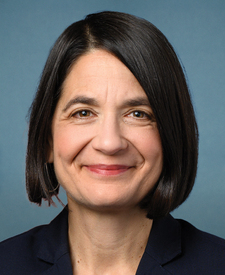
See how Becca Balint's votes line up with your values.
DeepSyte scores Becca Balint's record on the issues you care about — not party, not press releases. Take the 2-minute values quiz to see your personal alignment.
Sign in and take the values quiz to see how Becca Balint's votes line up with your views.
Prediction track record
How often we called Becca Balint's passage votes correctly, from their stated positions on each bill's tagged topics. Excludes “unclear” calls and abstentions.
100%
Accuracy
1
Correct
0
Incorrect
119
Pending
Right119-hconres-68
To direct the removal of United States Armed Forces from Venezuela that have not been authorized by Congress.
A joint resolution to direct the removal of United States Armed Forces from hostilities within or against the Islamic Republic of Iran that have not been authorized by Congress.
Based on 1 data point across public statements and recorded votes · AI analysis of public records
118-hjres-39·Mixed signal
Disapproving the rule submitted by the Department of Commerce relating to "Procedures Covering Suspension of Liquidation, Duties and Estimated Duties in Accord With Presidential Proclamation 10414".
45/100
What they said
Feb 20, 2026
Rep. Balint supports the Supreme Court's ruling blocking President Trump's broad tariffs under emergency authority, arguing that while targeted tariffs can be appropriate, Trump's tariff regime was chaotic and harmful to Vermont's economy and small businesses.
Voted Nay on Disapproving the rule submitted by the Department of Commerce relating to "Procedures Covering Suspension of Liquidation, Duties and Estimated Duties in Accord With Presidential Proclamation 10414".
The statement opposes Trump's broad, chaotic tariff regime and supports the Supreme Court's ruling blocking it, while expressing openness to targeted, strategic tariffs. The bill nullifies a specific tariff suspension rule related to solar panels from Southeast Asia. Rep. Balint's NO vote on this disapproval resolution is inconsistent with her stated position: she voted to preserve the tariff suspension (by opposing its nullification), which maintains Trump's tariff framework on solar imports—the opposite of her stated opposition to Trump's tariff regime. However, the bill addresses a narrow, technical tariff provision rather than the broad emergency-authority tariffs the statement criticizes, creating ambiguity about whether the vote reflects opposition to this specific solar tariff policy or reflects other considerations.
Pairs with ambiguous language and high uncertainty are withheld until more data is available. Procedural, cloture, and amendment votes are excluded — they don't cleanly signal substantive support or opposition.
Pro analysis
AI rep analysis — Pro
Get an AI-narrated read on Becca Balint's full voting record against your stated values — aligned themes, conflicts, notable votes, and what to watch for.
Positions Becca Balint took during their campaign, scored against their subsequent record — public statements cross-checked with related votes. “Kept” means 80%+ of those statement-vs-vote pairs aligned; “Broken” means 30% or fewer.
0 kept0 broken0 mixed0 no action yet
Becca Balint has 13 tracked positions but no scored statement-vs-vote pairs touching them yet. Verdicts will appear here as related statements and votes accumulate.
No action yetSupports
All gun sales — including private ones — should require a background check.
“advocate for gun safety measures including expanding background checks”
The government should spend more building affordable housing.
“This comprehensive legislation invests over 500 billion dollars in affordable housing, renter protections, down payment assistance, and new construction.”
Passage votes where Becca Balint broke ranks with ≥75% of Democrats. Threshold catches substantively partisan splits; unanimous-ish or close votes are excluded.
Balint, Warren, Colleagues Demand Answers from McDonald’s on Whether AI Pricing Tools are Raising Prices and Facilitating Collusion
Position: Lawmakers request information from McDonald's on its AI-driven pricing tools, expressing concern that the tools may raise consumer prices and facilitate collusion among franchisees.
Washington, D.C. — Representative Becca Balint (VT-AL), a member of the House Subcommittee on the Administrative State, Regulatory Reform, and Antitrust and U.S. Senator Elizabeth Warren (D-Mass.) demanded answers from McDonald’s President and CEO Chris Kempczinski about how the company generates AI-driven pricing recommendations, whether McDonald’s pressures franchisees to follow them, and how the company assesses the technology’s potential harm to consumers and competition. The letter came after reports that the company is using artificial intelligence (AI) to determine the “optimal price” for individual menu items at each of its locations and pushing franchisees to adopt these AI-based prices.
“We are concerned that McDonald’s may be using AI to squeeze consumers into paying higher prices, and that its AI pricing tools may facilitate collusion between franchisees who should be operating as competitors,” wrote the lawmakers.
U.S. Representatives Greg Casar (D-Texas), Jesús “Chuy” García (D-Ill.), and Mary Gay Scanlon (D-Pa.) also signed the letter.
According to recent reports, McDonald’s has developed an AI-based pricing tool that it may be using to recommend specific prices for each individual store, building off the massive trove of consumer data that Amazon has collected through its loyalty program and mobile app. For example, two McDonald’s-operated restaurants just two miles apart in Fresno, California reportedly charged prices that differed by as much as 21 percent for the same menu items. The lawmakers raised particular concerns about McDonald’s use of AI-based pricing at a time when food prices are rising nationwide and particularly at McDonald’s. One report found that certain McDonald’s menu prices doubled between 2014 and 2024, rising more than three times as fast as overall inflation and driving away customers who previously relied on McDonald’s for an affordable meal.
“We are concerned that McDonald’s is using its extensive consumer data and algorithmic pricing tools to unfairly raise prices on consumers who are already struggling with high food and dining costs,” wrote the lawmakers.
The lawmakers also questioned McDonald’s for reportedly putting pressure on franchisees to adopt its pricing recommendations, including through new business standards and potential consequences for franchise renewals. They warned that encouraging competing franchisees to rely on a shared pricing tool informed by nonpublic data could undermine independent pricing decisions and raise antitrust concerns.
“While McDonald’s asserts that using data and analytics to inform pricing is a standard business practice, pressuring competing franchisees to use a shared AI pricing tool built on nonpublic data is not a standard business practice, but rather a potential antitrust issue,” continued the lawmakers.
The lawmakers requested answers by November 16, 2026, on the data and algorithms used to generate pricing recommendations, the extent to which franchisees adopt those recommendations, the pressure McDonald’s places on franchisees to comply, and the company’s assessment of potential antitrust risks.
Balint Urges FTC to Block $29.1 Billion Sysco-Restaurant Depot Merger
Position: Urges the Federal Trade Commission to reject Sysco Corporation's proposed $29.1 billion acquisition of Jetro Restaurant Depot, arguing the merger would reduce competition and increase costs for independent restaurants.
BRATTLEBORO, VT – Representative Becca Balint (VT-AL) joined Congressman Tim Kennedy (NY-26) and other colleagues in sending a letter to the Federal Trade Commission (FTC) urging rejection of Sysco Corporation’s proposed $29.1 billion acquisition of Jetro Restaurant Depot. Members warned that the merger would reduce competition, drive up costs for independent restaurants, and threaten small businesses that anchor local economies across the nation.
Across the country, independent restaurants are already facing mounting financial pressure, with food costs up 38 percent nationwide since 2019 and nearly half of restaurant operators reporting that their businesses were unprofitable in 2025. Sysco’s acquisition of Restaurant Depot would eliminate a critical source of price competition, leaving independent restaurant owners with fewer options to control costs and putting additional pressure on businesses already struggling to keep prices affordable for their customers.
“Independent restaurants are already struggling because of rising food costs,” said Rep. Becca Balint. “By buying Restaurant Depot, Sysco would eliminate a key source of competition that independent restaurants rely on to get a fair price on food and supplies. That means higher costs for local restaurants and more expensive meals for working families. We need regulators to be serious about pushing back against this wave of corporate consolidation so that people can afford to live their lives and so our small, local businesses can have a fair shot.”
“Independent restaurants are part of the fabric of Western New York. They employ our neighbors, support local suppliers, and give our communities places to come together. These small businesses are already being squeezed by rising food prices and operating costs, and they cannot afford another hit,” said Rep. Kennedy. “This merger would put even more power in the hands of a major distributor while taking away one of the few tools independent restaurants have to keep their costs down. When competition disappears, small businesses pay the price and those costs ultimately reach the families sitting down at the table. The FTC must stand up for independent businesses, protect competition, and reject this deal.”
“Independent restaurants are operating on razor-thin margins, and Restaurant Depot is one of the few tools they have to check broadline prices and keep their costs in line. We are grateful to Congressman Tim Kennedy for his leadership urging the FTC to reject Sysco's proposed acquisition of Restaurant Depot. When competition disappears from the supply chain, the consequences reach well beyond a restaurant’s doors putting farmers, local artisans and the economic stability of communities at risk.” Erika Polmar, Executive Director, Independent Restaurant Coalition
Lawmakers underscored the importance of protecting competition as families and small businesses continue to face affordability challenges. Allowing further consolidation in the foodservice supply chain would leave independent restaurants with fewer choices and less leverage to manage costs, threatening the local businesses and jobs that communities depend on.
Restaurant Depot operates 167 warehouse locations across 35 states, serving more than 725,000 independent restaurants and foodservice operators. Its cash-and-carry model allows restaurant owners to compare prices directly with traditional wholesale distributors like Sysco and negotiate more competitive terms. This proposed acquisition would place both distribution channels under the same corporate ownership, eliminating an important check on pricing in the foodservice supply chain. Independent restaurants employ approximately 11 million workers nationwide and support more than five million additional jobs across supply chains that include farms, fisheries, dairies, equipment suppliers, and specialty food producers. By hiring locally, purchasing from local suppliers, and banking with local financial institutions, these businesses help sustain the communities they serve. The FTC has previously recognized the competitive risks of consolidation in foodservice distribution: in 2015, the Commission opposed Sysco’s proposed acquisition of US Foods, arguing that the merger would substantially reduce competition and likely increase prices for restaurants. After a federal district court granted the FTC’s request for a preliminary injunction, the companies abandoned the deal.
Full text of the letter can be found here.
NEW REPORT: WEAK TRUMP ANTITRUST ENFORCEMENT AND BACKROOM DEALS ARE DRIVING UP COSTS FOR AMERICAN FAMILIES
Position: The release presents a report criticizing the Trump Administration's antitrust enforcement as weak, citing settlements, dismissed cases, and approved mergers, and alleging a pay-to-play dynamic driving up consumer costs. It calls for stronger accountability in antitrust enforcement.
WASHINGTON, D.C. — U.S. Representative Becca Balint (VT-AL) and Senator Elizabeth Warren (D-Mass.) released a new report, Settling For Less: How Trump’s weak antitrust enforcement and backroom deals are driving up costs, a comprehensive review of the second Trump Administration’s record of toothless antitrust settlements, dismissed enforcement actions, and widespread approval of massive corporate mergers, apparently creating a pay-to-play system that drives up costs and hurts consumers.
Senators Mazie Hirono (D-Hawaii) and Richard Blumenthal (D-Conn.) and Representatives Pramila Jayapal (D-Wash.) and Jerry Nadler (D-N.Y.) joined in releasing the report.
During his campaign, President Trump promised to “Make America Competitive Again” and lower costs “on day one.” Instead, the Trump Administration has repeatedly sided with giant corporations, in some cases after the corporations made contributions to Trump’s vanity projects, rather than standing up for working families.
The new report highlights how the Trump Department of Justice (DOJ) Antitrust Division and the Federal Trade Commission (FTC) have approved major mergers with little scrutiny, overridden enforcement recommendations from career staff, and pursued weak settlements favoring large corporations, often based on the influence of Trump-connected corporate lobbyists. The report also raises concerns about potential pay-to-play arrangements, revealing that many of the corporations benefitting from President Trump’s lax antitrust enforcement policies have contributed millions to President Trump’s political committees and Trump-affiliated projects. Specific topline findings of this investigation include:
The Trump Administration routinely settles or dismisses antitrust enforcement actions without meaningful remedies. The Administration has allowed giant corporations facing antitrust lawsuits to settle with relatively small fines, narrow behavioral promises, no admissions of wrongdoing, and little or no restitution for the working families and small businesses harmed by the alleged anticompetitive conduct. In some cases, the Administration has simply walked away from a lawsuit, allowing alleged anticompetitive conduct to continue unchallenged.
The Trump Administration’s weak antitrust enforcement appears to be driven by influence-peddling and is surrounded by a cloud of corruption. Corporations facing antitrust scrutiny have repeatedly hired lobbyists with ties to President Trump and senior Administration officials, made substantial contributions to President Trump’s political committees or vanity projects, and promised changes to their business models that are aligned with President Trump’s agenda in exchange for favorable enforcement decisions—mergers cleared, investigations dropped, or cases resolved through weak settlements. Combined, this recurring pattern suggests a pay-to-play system.
Paramount hired Ballard Partners—a Trump-connected lobbying firm—while competing to acquire Warner Bros. Larry Ellison, the father of Paramount controlling owner David Ellison, donated $45 million to a political group supporting President Trump’s 2024 election efforts. The Ellisons appeared to have cultivated what has been described as a “cozy alliance of mutual back-scratching” with President Trump as they sought approval for the Paramount/Warner Bros. merger. Paramount ultimately won the bid, and the merger received DOJ approval.
“The evidence of the Administration’s antitrust failures is woven directly into the daily budget of American households. Average monthly grocery bills have climbed to an all-time high, with some sources estimating the bill for a family of four at $1,430 a month. Average monthly rent hit a record high during this Administration at $1,910/month. The monthly price of health insurance has surged over 25 percent from 2025 to 2026 alone. And total U.S. credit card debt has soared to an all-time high of $1.28 trillion, while a February 2026 survey found that 53 percent of Americans do not have sufficient savings to cover a $1,000 emergency expense,” the lawmakers wrote.
“Meanwhile, the corporations benefiting from the Administration’s weak antitrust enforcement are enjoying an unprecedented windfall… The verdict on the Administration’s antitrust record is clear: in a complete betrayal of President Trump’s campaign promise to lower costs “on day one,” federal enforcers have surrendered market oversight to corporate giants in industry after industry, leaving American families to pay the price,” concluded the lawmakers.
Vermont Delegation Announces More Than $60 Million in New Federal Funding to Complete Vermont’s Western Corridor Rail Line
Position: The release announces $60.3 million in federal funding through the DOT CRISI program to rehabilitate and complete about 60 miles of the Vermont Western Corridor rail line, citing safety, reliability, and rural economic benefits.
BURLINGTON, VT – U.S. Representative Becca Balint (VT-AL), U.S. Senator Bernie Sanders (I-Vt.), and U.S. Senator Peter Welch (D-Vt.) today announced the delivery of $60.3 million in new federal funding, administered by the Department of Transportation (DOT) to the Vermont Agency of Transportation (VTrans) to rehabilitate and complete approximately 60 miles of railway on Vermont’s Western Corridor rail line.
“Repairing and upgrading our transportation infrastructure is a win-win for Vermont’s rural communities. This federal funding will help improve safety and reliability on the Vermont Railway, and support the development of rural towns up and down the Western Corridor,” said the Vermont Delegation. “With this $60 million investment from the Bipartisan Infrastructure Law, the Western Corridor will be complete, and western Vermont will finally be connected to the New York Penn Station line.”
“This grant will support Vermont businesses who rely on rail to get their products to market regionally and nationally,” said Vermont Transportation Secretary Joe Flynn. “For bulk commodities, shipping by rail is often the most cost-effective, and upgrades to the Vermont Railway in western Vermont will enable our businesses to efficiently tap into the nation's major Class I railroads.”
This new funding will help replace rail, realign track, and upgrade ties, ballast, turnouts, and 22 at-grade crossings to enhance safety, improve system and service performance, and increase reliability of rail service in Vermont. The funding is made possible through DOT’s Consolidated Rail Infrastructure and Safety Improvements (CRISI) Program.
Balint, McGovern Meet with Vermont and Massachusetts Businesses on U.S.-Canada Trade Tensions
Position: Representatives Balint and McGovern state that tariffs and unpredictable trade policy with Canada are harming New England businesses and workers, and call for a stable, predictable trade relationship with Canada. McGovern says he will work to overturn the tariffs.
BRATTLEBORO, VT — Yesterday, U.S. Representatives Becca Balint (VT-AL) and Jim McGovern (MA-02) met with Vermont and Massachusetts business owners to discuss the economic consequences of Trump’s ongoing trade tensions with Canada. The roundtable, held in Brattleboro, included Canadian Consul General Bernadette Jordan and the Director of Economic Affairs from the Quebec Government Office in Boston, and gave business owners an opportunity to share how tariffs and unpredictable trade policy are negatively affecting their costs, customers, employees, and ability to plan for the future.
The meeting also underscored the importance of maintaining strong relationships between communities on both sides of the border. Business owners and regional stakeholders emphasized that cross-border commerce supports jobs, sustains rural industries, and connects families and communities throughout Vermont, Massachusetts, and the New England region.
“Vermont and Canada have been neighbors, partners, and friends for generations,” said Congresswoman Becca Balint. “As a part of this conversation, we heard directly from business owners who are paying the price for this administration’s reckless trade war. They are facing higher costs, losing customers, and putting plans for growth on hold because they can’t count on the rules staying the same. That uncertainty hurts workers, families, farmers, and small businesses across Vermont and broader New England. I’m grateful to Rep. McGovern for joining us in standing up for our regional economy. We need a stable, predictable trade relationship with Canada, and I’ll keep working with him and our partners across the region to push for a trade policy that reflects our shared economic interests and gives our businesses the stability they need to succeed.”
“Trump’s trade war with Canada is destroying American businesses and livelihoods,” said Congressman Jim McGovern. “It was heartbreaking to hear from small business owners in Massachusetts and Vermont about how these tariffs are devastating their businesses. Let’s be clear: Canada isn’t paying Trump’s tariff tax. American workers, families, and small businesses are. Trump’s tariffs are wrecking our economy, killing jobs, driving businesses to the brink, and damaging our relationship with one of our closest trading partners. Congresswoman Balint and I will keep fighting to overturn these illegal tariffs, protect our small businesses, and put working people first.”
New England’s regional economy is deeply connected to Canada through agriculture, forestry, manufacturing, tourism, and cross-border supply chains. Businesses participating in the discussion described additional costs ranging from hundreds of thousands to millions of dollars, lost Canadian customers, delayed investments, and difficult decisions about staffing and production.
For many businesses, the uncertainty surrounding trade policy is compounding the financial strain. Companies are being forced to reconsider suppliers, absorb additional expenses, raise prices, delay investments and equipment upgrades, and devote significant staff time to navigating changing rules and pursuing tariff relief.
Representatives Balint and McGovern are committed to bringing the concerns raised during the discussion back to Washington and continuing to work toward a more stable U.S.-Canada trade relationship that supports New England’s workers and businesses.
Vermont Congressional Delegation Announces Over $33.2 Million in Long-Awaited FEMA Funding to Support Flood Buyouts, Hazard Mitigation Across Vermont
Position: The delegation announces delivery of federal FEMA funding for flood-prone home buyouts and hazard mitigation in Vermont, and argues that Vermonters should not have to wait years for disaster recovery assistance and that communities need greater resilience against future flooding.
BURLINGTON, VT – The Vermont Congressional Delegation, U.S. Representative Becca Balint (VT-AL), U.S. Senator Bernie Sanders (I-Vt.), and U.S. Senator Peter Welch (D-Vt.), today announced the delivery of over $33.2 million in new federal funding, administered by the Federal Emergency Management Agency (FEMA), to support flood recovery and resiliency in Vermont.
This funding includes more than $27.6 million to support the buyout of at least 90 homes across Vermont that are located within a floodplain, at risk of landslide, or sustained irreparable damage from flooding in 2023 and 2024. Families who applied for buyouts will receive compensation for their property from the state of Vermont. The state will then demolish the structure and maintain the land as open green space in perpetuity. The additional $5.6 million in funding will support costs associated with the administration of Vermont’s Emergency Management and future hazard mitigation plans.
“Over the last several years, our office has worked with Vermonters who were uprooted from their homes and left to navigate the complicated FEMA grant-making process while waiting far too long for a path forward,” said Rep. Balint. “For many families, this funding will bring welcome—though bittersweet—closure after years of uncertainty. It will also provide real economic relief and give communities much needed resources to become more resilient to future flooding. I’m grateful to everyone who kept pushing to get these dollars out the door, and I’ll keep fighting to make sure Vermont gets the federal support it needs to recover and rebuild.”
“For too many Vermonters, our state’s recent floods are painful memories of homes washed away, livelihoods destroyed, roads and bridges decimated, and sadly, lives lost. There is no good reason that Vermonters should have to wait years to receive the help they need to recover and rebuild when disasters strike. Volunteers, town work crews, rescue teams, state and local employees and fellow Vermonters have done extraordinary work over the past three years to keep our communities safe, and this long-overdue federal funding will help make Vermont more resilient against the future floods and other climate impacts we unfortunately know are coming,” said Senator Sanders.
“To say that these buyouts are long-overdue is a massive understatement. We have Vermonters whose lives and livelihoods were in limbo for over three years as they waited for FEMA to act. These buyouts are a major step in the right direction, but our work helping folks recover from these floods isn’t over—not by a long shot,” said Senator Welch. “I’ll continue working with federal, state, and local partners to ensure flood-impacted Vermonters gets the support they need and deserve to rebuild their homes and lives.”
Rep. Balint Introduces Bill to Strengthen Coordination Between 988 and 911 Call Centers
Position: The release announces introduction of a bill to establish a federal panel, convened by HHS and DOJ, to recommend ways to integrate 988 crisis line and 911 emergency services, with membership spanning behavioral health, law enforcement, and crisis response professionals and recommendations updated every five years.
WASHINGTON, D.C. — U.S. Representatives Becca Balint (VT-AL), a member of Congress’s bipartisan Mental Health Caucus, and Doris Matsui (CA-7), a member of the House Energy & Commerce Committee, today introduced the 988 and 911 Integration Act. This bill, which is part of the larger, bipartisan 988 Implementation Act being introduced today by Reps. Doris Matsui (CA-7) and Brian Fitzpatrick (PA-1) would establish a panel, jointly convened by the Department of Health and Human Services and Department of Justice, to make recommendations on integrating 988 and 911 services. The panel would include representatives from each segment of the crisis care response network including behavioral health professionals, law enforcement officers, and crisis response professionals, and would update its recommendations every five years.
In addition to Reps. Balint and Matsui, the 988 and 911 Integration Act is cosponsored by Reps. Lori Trahan (MA-3), Adam Smith (WA-9), Jennifer McClellan (VA-4), Nanette Barragán (CA-44), and Eleanor Holmes Norton (DC-AL).
The panel established by the 988 and 911 Integration Act would:
Rep. Balint Introduces Legislation to Protect Kids from Addictive AI Chatbots
Position: The release supports legislation that would ban AI chatbot companies from providing minors with chatbots containing design features linked to addiction and unhealthy emotional attachment, and would fund research, a federal task force, and parent outreach on the mental health risks of youth AI chatbot use.
Bill Text (PDF) | Section-by-Section Summary (PDF)
WASHINGTON, D.C. — U.S. Representative Becca Balint (VT-AL) today introduced the Addictive Design Act, legislation to protect young people from the mental health risks posed by AI chatbots designed to foster emotional attachment, compulsive use, and ultimately, addiction.
As AI chatbots become increasingly common in the lives of young people, a growing number of teenagers are turning to them for mental health support—even though most chatbots are not designed to respond safely to a youth experiencing a mental health crisis. At the same time, many AI chatbots use design features intended to keep users engaged and encourage them to form emotional relationships with the technology.
“Technology companies have spent years learning how to capture our attention and keep us engaged for as long as possible. They should not be allowed to apply those same tactics to vulnerable kids who may be turning to an AI chatbot during a mental health crisis,” said Rep. Balint. “As a parent to two teenagers, I have already seen the devastating consequences of a tech and social media industry that puts engagement and profit ahead of people’s well-being. We can't make the same mistake with AI. We need clear rules, research, and accountability before more families are forced to suffer the consequences.”
The Addictive Design Act would:
Ban AI chatbot companies from letting youth access an AI chatbot with design features known to increase addiction, unhealthy emotional attachment, and compulsive use;
Establish an interagency task force to make recommendations for addressing the mental health risks associated with AI chatbot use in youth, including unhealthy emotional attachment and addiction
Authorize $3 million to increase scientific research on the mental health risks associated with AI chatbot use in youth;
Authorize $5 million for parent and educator outreach programs around identifying mental health warning signs associated with AI chatbot use in youth;
Require covered entities to provide necessary data to grant-funded researchers studying the mental health impacts of AI chatbots, with penalties of up to $10 million for refusing to provide required data;
Authorize civil penalties of up to $5,000 per youth impacted for companies that make AI chatbots with addictive design features available to minors; and
Require companies that use age verification to minimize the data they collect and delete that data within 24 hours.
The bill defines addictive design features to include elements such as typing bubbles, avatars, storing and using personal information from previous conversations, requiring additional engagement or payment to continue conversations, maintaining conversations lasting longer than two hours, and impersonating a real person.
This legislation is cosponsored by Representatives Chris Deluzio (PA-17), Tom Suozzi (NY-3), and Bonnie Watson Coleman (NJ-12).
The Addictive Design Act is endorsed by the American Foundation for Suicide Prevention, the American Psychiatric Association, the Center for Health and Democracy, the Clinical Social Work Association, the National Association of Social Workers, and Public Citizen.
"Children deserve technology that serves them, but too often Big Tech is engineering AI companions to keep children emotionally dependent,” said J.B. Branch, Director of Federal AI Governance and Technology Policy at Public Citizen. “The Addictive Design Act recognizes a simple principle: when companies intentionally design AI to maximize attachment, they must also be accountable for the predictable harms that follow. This legislation is an important step toward putting children's well-being ahead AI engagement metrics."
"AI chatbots should never be designed to keep young people emotionally dependent or endlessly engaged at the expense of their mental health,” said Rachel Madley, PhD, Executive Director at the Center for Health and Democracy. “The Addictive Design Act takes an important step toward protecting children by prohibiting addictive AI design features, investing in research, and giving parents, educators, and policymakers the tools they need to address these emerging mental health risks before more families are harmed. Congress should pass it without delay."
“As artificial intelligence and virtual chatbots become increasingly prevalent in the lives of youth and young adults, it is critical that we better understand how these technologies, including design features intended to increase engagement and emotional connection may affect young people’s mental health and well-being,” said Laurel Stine, J.D., M.A. Executive Vice President and Chief Policy & Advocacy Officer at the American Foundation for Suicide Prevention. “The Addictive Design Act is an important step toward strengthening youth suicide prevention by supporting research, strengthening understanding of emerging risks, and equipping parents, caregivers, and educators with the information and resources to have meaningful conversations that support young people’s mental health and safety.”
"AI is moving faster than we can regulate it,” says Heidi McIntosh, MSW, NASW Chief Operating Officer. “That means young people, who are still reeling from the isolation of the COVID-19 pandemic, search for resources to help them navigate their lives; they are bombarded with therapy chatbots. Without regulation, these programs will prey on young people's desire for emotional connection. The Addictive Design Act takes a stand by banning chatbot companies from letting minors access an AI chatbot with addictive features and creates scientific research opportunities and parent and educator outreach programs to continue to grow community competency on AI chatbots and their impact on youth mental health. The National Association of Social Workers is proud to endorse this bill as a major step toward protecting young people and their mental health.”
“AI has the potential to improve mental health care, but innovation must be grounded in evidence and designed to protect patients – especially children and adolescents,” said Dr. Marketa M. Wills, CEO and Medical Director of the American Psychiatric Association. “AI chatbots should never replace the physician-patient relationship, which remains essential to safe, evidence-based, patient-centered care. By investing in research, convening experts to develop recommendations, and prohibiting addictive design features in chatbots available to youth, this bill takes an important step toward understanding AI’s effects and protecting young people.”
Reps. Balint, Velázquez Introduce Online Sellers Bill of Rights to Protect Small Businesses from Corporate Gatekeepers
Position: The release announces introduction of the Online Sellers Bill of Rights, which would establish due process and transparency requirements for independent online sellers facing suspensions, inventory freezes, or search demotion by dominant online marketplaces. The sponsors argue such protections are needed to address arbitrary and opaque platform enforcement against small businesses.
WASHINGTON, D.C. — U.S. Representatives Becca Balint (VT-AL), Chair of the Congressional Progressive Caucus Ending Corporate Greed Task Force, and Nydia Velázquez (NY-7), Ranking Member of the House Committee on Small Business, today introduced the Online Sellers Bill of Rights, legislation to protect independent online sellers from arbitrary and opaque actions by dominant online marketplaces, like Amazon and Walmart.
Millions of Americans rely on platforms like Amazon and Walmart to reach customers, but those same platforms can suspend sellers, freeze inventory, withhold earnings, or bury products in search results with little warning, explanation, or opportunity to appeal. The Online Sellers Bill of Rights establishes basic due process and transparency requirements to help level the playing field between independent businesses and the dominant corporations that control online commerce.
"No corporation should have the power to destroy someone's livelihood with the click of a button," said Rep. Balint. "Right now, a handful of massive online retailers can suspend sellers, freeze their inventory, and cut off their income with little explanation and virtually no accountability. I'm proud to partner with Ranking Member Velázquez to introduce the Online Sellers Bill of Rights to give small businesses in Vermont and across the country the transparency, due process, and fair chance to compete that they deserve."
“For too long, small businesses have suffered as large e-commerce platforms block or limit their products with little to no explanation,” said Rep. Velázquez. “Years of work to establish a small business should not be lost because of arbitrary algorithm changes or unfounded product investigations while online platforms like Amazon face no consequences.”
“The Online Sellers Bill of Rights works to stop these injustices by demanding greater transparency and giving merchants a meaningful opportunity to address potential issues, rather than leaving them blindsided,” Rep. Velázquez continued. “As Ranking Member of the Small Business Committee, I have consistently fought for small businesses across the nation to have a fair and equal footing. This piece of legislation is the latest step in that ongoing effort, ensuring that even the smallest vendors have a real chance of making their businesses succeed.”
About 255 million Americans shop on Amazon annually, and roughly 40 percent of all online transactions occur through its marketplace. Meanwhile, more than 50 percent of the e-commerce market is dominated by just four companies, giving dominant platforms enormous power over the small businesses that depend on them to reach customers.
For many sellers operating on razor-thin margins, an erroneous suspension can be financially devastating. Businesses have been removed from online marketplaces after platforms like Amazon incorrectly determined they violated its constantly changing seller policies. Instead of receiving timely explanations or meaningful reviews, many sellers are met with automated, generic and vague responses while losing sales, paying storage fees on inaccessible inventory, and struggling to keep their businesses afloat.
To address these issues, the Online Sellers Bill of Rights would:
Give sellers adequate notice of any policy changes that affect a seller’s business.
Require that platforms demonstrate proof of a violation of a rule or law before suspending or deactivating a third-party seller.
Provide prompt notice to sellers about inventory or funds due to suspicion of unlawful conduct and release that inventory or those funds after 30 days if no proof of illegal conduct is found.
Require platforms return seller's inventory within a reasonable timeframe if there is no proof of violation.
Provide sellers with actionable information and transparency regarding any investigation that risks account deactivation or listing suspension.
The Online Sellers Bill of Rights is cosponsored by Reps. André Carson (IN-7), Valerie Foushee (NC-4), Jesús “Chuy” García (IL-4), Pramila Jayapal (WA-7), Hank Johnson (GA-4), Summer Lee (PA-12), and Lateefah Simon (CA-12).
The Online Sellers Bill of Rights is endorsed by the Responsible Online Commerce Coalition (ROCC), Open Markets Institute, Tech Oversight Project, Main Street Alliance, Public Citizen, American Economic Liberties Project (AELP), Strategic Organizing Center (SOC), Institute for Local Self Reliance (ILSR), and Small Business Majority.
“Independent, third-party sellers are the backbone of a vibrant and competitive online marketplace,” said Joe Van Wye, Policy Director for the Responsible Online Commerce Coalition. "However, just a handful of dominant platforms abuse their market power to set up and then manipulate a system of vague, unpredictable, and ever-changing rules in ways that undermine these hardworking businesses’ ability to survive and grow, stifling innovation and entrepreneurship in this critical sector. We commend Reps. Balint and Velázquez for their leadership on this issue, and hope this commonsense legislation is quickly enacted.”
"For too long, Amazon has acted as judge, jury, and executioner for the hundreds of thousands of independent businesses that rely on its marketplace to survive,” Barry Lynn, Executive Director of the Open Markets Institute. “A single unexplained algorithm change or frozen payment can wipe out years of hard work. The Online Sellers Bill of Rights establishes a simple and fair proposition: if Amazon and other dominant online marketplaces have become essential infrastructure for commerce, they cannot operate by arbitrary decree. This legislation is about restoring the rule of law to online commerce and ensuring that America's entrepreneurs answer to customers—not unchecked gatekeepers."
“For too long, dominant online marketplaces have abused and exploited the small, independent businesses that depend on them,” said Morgan Harper, Director of Policy and Advocacy at the American Economic Liberties Project. “When a platform can suspend a seller, freeze their inventory, or cut off their income overnight without explanation or meaningful recourse, that’s not a free market; that’s unchecked gatekeeper power. This bill restores basic fairness and ensures independent businesses get a real chance to compete.”
“Consumers and independent sellers both understand that platforms must police counterfeit products and other kinds of misconduct,” said John Bergmayer, Legal Director at Public Knowledge. “However, these platforms should not be able to deprive sellers of their livelihoods and access to their funds through unexplained, opaque decisions. By requiring greater transparency, a fair process, and meaningful opportunities to challenge platform decisions, the Online Sellers’ Bill of Rights Act promotes confidence in online commerce for buyers and sellers alike.”
“Right now, Amazon can destroy a small business overnight – no warning, no explanation, no straight answers,” said Sacha Haworth, executive director of The Tech Oversight Project. “That's what monopoly power looks like. Sellers are locked in, and Amazon knows it – so it suspends businesses without proof, freezes their money, and even collects fees on inventory they can't touch. Rep. Balint’s Online Sellers Bill of Rights levels the playing field with common sense rules: prove violations, release funds, and give sellers straight answers about their own business. When small businesses can compete, our economy is stronger and consumers win.”
"Small businesses increasingly rely on large online platforms to sell their products, making small firms especially vulnerable when those platforms engage in harmful practices that disrupt small business sales,” said Alexis D'Amato Falvey, Senior Director of Federal Government Affairs at Small Business Majority. “Legislation that would require large online platforms to be more transparent about their policies and ensure they are equipping sellers with timely information regarding changes to a platform's policies would go a long way toward minimizing disruption for small businesses that depend on certain online retailers for the bulk of their sales."
"The Online Sellers Bill of Rights is a critical step toward ensuring that small businesses can compete fairly in today's digital economy,” Lauren Bealore, National Director of Policy & Programs at Main Street Alliance. “Too often, entrepreneurs who rely on online marketplaces face sudden freezes of their funds or inventory with little transparency or recourse, putting their livelihoods at risk. This legislation would provide much-needed protections and accountability, helping Main Street businesses grow, create jobs, and serve their communities with greater confidence."
“Public Citizen is proud to endorse the Online Sellers Bill of Rights," Elizabeth Skerry, Regulatory Policy Associate for Public Citizen. "The bill will help small and independent businesses compete in the online marketplace by empowering the FTC to write regulations that are fair to and protective of third-party sellers who use large platforms such as Amazon and Walmart to sell their products. These large platforms should not be acting like tyrannical overlords when doing business with smaller sellers. The Online Sellers Bill of Rights is sound policy that is in alignment with Public Citizen’s commitment to fighting corporate power.”
A one pager on the bill can be found here. A section-by-section summary can be found here. The full bill text can be found here.
Balint, Warren, Banks, and Cline File Bipartisan, Bicameral Resolution Directing the FTC to Investigate Corporate Roll-ups of Firetruck Manufacturers
Position: The release supports a bipartisan, bicameral joint resolution directing the FTC to investigate serial acquisitions and anticompetitive practices in the fire truck manufacturing industry, and to report recommendations to Congress within one year.
Resolution (PDF) | One Pager (PDF)
WASHINGTON, D.C. – Today, U.S. Representatives Becca Balint (D-Vt.) and Ben Cline (R-Va.), along with Senators Elizabeth Warren (D-Mass.) and Jim Banks (R-Ind.), filed a bipartisan, bicameral resolution directing the FTC to investigate serial acquisitions of firetruck manufacturers.
Following two decades of consolidation by private equity firms and larger manufacturers, a vast majority of the fire truck manufacturing industry is now controlled by just three companies. Since then:
Prices have skyrocketed. Fire truck prices have doubled over the last decade, far outpacing inflation for heavy-duty truck manufacturing over that time period. Manufacturers have also exploited their market power to implement “floating” prices, increasing the final price of a fire truck after it goes into production.
Manufacturing plants have shuttered. Dominant fire truck manufacturers have restricted supply by closing their own manufacturing facilities, even though demand for fire trucks has increased in recent years.
Delivery backlogs are growing. Since 2019, the lead times for fire truck delivery have nearly tripled, and fire departments are now facing delivery delays of up to five years.
Working conditions are unsafe. Higher prices and longer delivery times for fire trucks have prevented fire departments from replacing aging trucks, depriving fire fighters of the essential equipment required to work safely and effectively.
Rampant consolidation in the fire truck manufacturing industry is undermining public safety, squeezing fire departments’ budgets, and forcing taxpayers to bear the consequences.
The Federal Trade Commission Act authorizes Congress, through a joint resolution passed by the Senate and House of Representatives, to direct the Federal Trade Commission (FTC) to investigate and report the facts relating to any alleged violations of antitrust law. However, Congress has not used this authority to order an FTC investigation since the Great Depression era.
This bipartisan joint resolution would revive that authority and direct the FTC to report to Congress within one year on:
The extent of anticompetitive practices and violations of antitrust law in the fire truck manufacturing industry, including price fixing, price gouging, serial acquisitions, and monopolization;
The monetary and other harms of anticompetitive practices and violations of antitrust law in the fire truck manufacturing industry on fire fighters, fire departments, states, municipalities, and small businesses; and
Recommendations for legislation or other remedial actions.
“Every community deserves to have the fire trucks it needs to keep people safe. But corporate consolidation has driven up prices considerably and left communities waiting years for this essential, lifesaving equipment,” said Representative Balint. “This is yet another example of why we need strong antitrust enforcement: a handful of powerful companies shouldn't be able to use their power to get richer by making it harder for communities to protect themselves.”
“When giant corporations and Wall Street investors buy up all the fire truck manufacturers, it’s a threat to public safety,” said Senator Warren. “There’s a growing, bipartisan consensus that Congress must stop a handful of corporations from dominating fire truck manufacturing and making it harder and tremendously more expensive to get fire trucks.”
“Anticompetitive practices are strong-arming our cities, wasting taxpayer dollars, and leaving firefighters without life-saving equipment. I’m proud to join this bipartisan investigation as we fight to put hardworking Indiana taxpayers first,” said Senator Banks.
“Too often, growing delivery backlogs in the fire truck manufacturing industry are leaving fire departments across the Commonwealth and our Nation without the necessary equipment first responders need to do their jobs safely and effectively. This bipartisan resolution takes an important first step to restore competition, strengthen domestic manufacturing, and ensure taxpayers and local fire departments receive fair value,” said Representative Cline.
This follows a bipartisan investigation led by Senators Warren and Banks into the harms of private equity roll-ups of fire truck manufacturers that they launched in April 2025.
Senator Warren also sounded the alarm on private equity’s consolidation of the fire truck manufacturing industry at a September 2025 hearing of the Senate Homeland Security and Governmental Affairs Subcommittee on Disaster Management, District of Columbia, and Census.
The International Association of Fire Fighters (IAFF) and the American Economic Liberties Project (AELP) have endorsed the resolution.
Source: GDELT 2.0 GKG, filtered to a curated list of national outlets. Inclusion is not endorsement; opinion pieces and reported news are mixed.
Recent stock activity
Periodic transaction reports filed under the STOCK Act — disclosed by the rep, sourced from public filings.
No disclosed trades on record.
Source: open-data mirrors of the Senate eFD and House Clerk financial-disclosure systems. Disclosure within 30 days of trade is required by law (45 for spouse/dependent trades).
Top PAC donors · 2026 cycle
Political action committees that gave the most to this rep's principal campaign committee this cycle. PAC giving is direct organizational support — industry, ideological, or leadership.
1.LABORERS' INT'L UNION OF N. AMERICA (LIUNA) PAC3 contributions$10,000
2.INT'L SHEET METAL AIR RAIL TRANSPORTATION PACLabor2 contributionsTrade-union PAC for sheet metal workers and air/rail transportation workers — backs prevailing-wage standards, infrastructure investment, and worker organizing rights.AI$10,000
3.AMERICAN FED. OF STATE COUNTY & MUNICIPAL EMPLOYEES PEOPLE4 contributions$10,000
4.NACS PAC2 contributions$7,500
5.EQUALITY PACIdeological2 contributionsIdeological PAC — supports candidates and causes aligned with progressive values and social equality advocacy.AI$7,500
6.INT'L ASSN. OF BRIDGE, STRUCTURAL, ORNAMENTAL AND REINFORCING IRON WORKERS (IPAL)3 contributions$7,500
7.HUMAN RIGHTS CAMPAIGN PAC3 contributions$7,050
8.THE COUNCIL OF INSURANCE AGENTS & BROKERS PAC2 contributions$6,000
9.AMERICAN ASSOCIATION FOR JUSTICE PAC (AAJ PAC)4 contributions$6,000
10.MACHINISTS NON-PARTISAN POLITICAL LEAGUELabor1 contributionTrade-union PAC of the International Association of Machinists and Aerospace Workers — backs candidates supporting union organizing, prevailing wages, and aerospace/manufacturing jobs.AI$5,000
Source: OpenFEC (api.open.fec.gov) Schedule A receipts where contributor type is “committee.” Aggregated by contributing committee. Self-transfers from joint-fundraising / victory committees are excluded.
Top individual contributors · 2026 cycle
Itemized individual contributions over $200 to this rep's campaign committee, aggregated by donor employer. PAC giving is shown above; this section is people, not organizations.
1.MBB CAPITAL$5,035
2.PUTNEY STUDENT TRAVEL$5,000
3.BRATTLEBORO RETREAT$3,679
4.FACEBOOK$3,500
5.STACKLOK, INC.$3,500
6.TREMONT STRATEGIES GROUP, LLC$3,300
7.ALSOP LOUIE PARTNERS$3,300
8.MONUMENT ADVOCACY$3,300
9.NVG, LLC$3,071
10.ONLOGIC$3,000
Source: OpenFEC Schedule A receipts where contributor type is “individual,” aggregated by the donor's self-reported employer. This is a geographic / industry correlation, not a corporate endorsement.