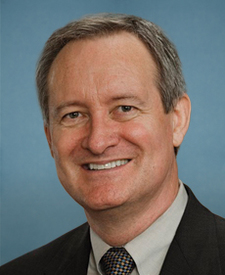
See how Mike Crapo actually votes — against your values.
DeepSyte scores Mike Crapo's record on the issues you care about — not party, not press releases. Take the 2-minute values quiz to see your personal alignment.
Sign in and take the values quiz to see how Mike Crapo's votes line up with your views.
Prediction track record
We haven't made any vote predictions for Mike Crapo yet. Predictions are generated for bills with tagged effects; they show up here as soon as the predict-votes job covers this rep's upcoming docket.
Consistency insights
No paired statements and votes yet for Mike Crapo
We haven't yet found statement/vote pairs on the same topic for Mike Crapo. This usually means either the rep hasn't taken public positions on bills that have come to a passage vote, or those bills haven't been tagged yet. The checker runs as new press releases and votes come in.
Pro analysis
AI rep analysis — Pro
Get an AI-narrated read on Mike Crapo's full voting record against your stated values — aligned themes, conflicts, notable votes, and what to watch for.
We haven't extracted campaign positions for Mike Crapo yet. Once their campaign website or position pages are processed, this card will track what they said vs how they voted.
Crossing the aisle
No party-break passage votes recorded for Mike Crapo. Either they've voted with Republicans on every substantive passage vote in the corpus, or their tenure overlaps few high-threshold party-line votes so far.
Crapo Joins Britt in Introducing Legislation to Close Immigration Detention Loophole | U.S. Senator Mike Crapo of Idaho
Position: Senator Crapo supports legislation to expand the authority of the Department of Homeland Security to detain immigrants with criminal records beyond the current six-month legal limit established by the Zadvydas v. Davis Supreme Court ruling, arguing that dangerous individuals should not be released into communities when deportation cannot be completed within that timeframe.
Washington, D.C. –U.S. Senator Mike Crapo (R-Idaho) joined Senator Katie Britt (R-Alabama) in introducing legislation to close a legal loophole that generally requires the release of illegal aliens, including those with criminal records, from immigration detention into American communities after six months if no country has accepted them for deportation.
The Keep Our Communities Safe Act addresses the six-month legal loophole created by the U.S. Supreme Court’s 2001 Zadvydas v. Davis ruling. The legislation would amend Section 236 of the Immigration and Nationality Act (INA) to expand the authority of the U.S. Department of Homeland Security (DHS) to detain criminal aliens.
“Dangerous individuals should not be released into communities simply because their removal cannot be completed within an arbitrary timeframe,” said Crapo. “The Keep Our Communities Safe Act would close this legal loophole and ensure DHS has the tools needed to continue detaining individuals who pose a threat to public safety, national security or public health. This commonsense legislation will help protect Idaho families and communities.”
By amending Section 236 of the INA, which governs the apprehension and detention of aliens, the Keep Our Communities Safe Act would give DHS greater authority to detain criminal aliens, deny bond to criminal aliens and generally limit the availability of bond unless the detainee can establish by clear and convincing evidence that they are not a flight risk or a risk to another person or the community.
The bill would also amend Section 241 of the law, which governs the removal of aliens, to allow for extended detention in a number of circumstances, including when an illegal alien poses a threat to national security or has committed an aggravated felony or crime of violence.
In addition to Crapo and Britt, bill co-sponsors include Senators Jim Risch (R-Idaho), Tom Cotton (R-Arkansas), Tommy Tuberville (R-Alabama), Kevin Cramer (R-North Dakota), Ted Cruz (R-Texas), Deb Fischer (R-Nebraska), Roger Marshall (R-Kansas) and Mike Rounds (R-South Dakota).
Background and a section-by-section summary of the bill are available here.
The Working Families Tax Cuts in Americans’ Own Words | U.S. Senator Mike Crapo of Idaho
Position: Senator Crapo celebrates the Working Families Tax Cuts legislation, highlighting provisions including no tax on tips, small business deductions, and estate tax exemptions, and argues these measures have increased take-home pay for workers, boosted business investment, and supported economic growth.
Washington, D.C.—The Working Families Tax Cuts are putting more money in Americans’ pockets and spurring economic growth, as reflected in tax filing season data, business surveys and economic indicators. But the law’s impact goes beyond the numbers. It is reflected in entrepreneurs boosting employee pay, businesses investing in new products and parents saving for their children’s future.
“Republicans’ landmark tax legislation has been a phenomenal boost for working Americans,” said U.S. Senate Finance Committee Chairman Mike Crapo (R-Idaho). “From ‘no tax on tips’ to the permanent small business deduction and beyond, I often hear from Idahoans and people across the country about how the Working Families Tax Cuts are creating new opportunities and allowing them to keep more of what they earn.”
Parents, small business owners, farmers and other hardworking Americans are benefiting from the Working Families Tax Cuts. Here is how:
“The year before the Working Families Tax Cuts, I actually had to write a check when I filed my taxes. This year, instead of owing money, we received an incredible refund of more than $10,000. That’s money I earned through hard work, often through long overtime hours, and for the first time, it felt like the system recognized that effort instead of punishing us for it.” – Jason Alexander, millwright
“Last year, we advocated for the renewal of critical tax provisions for our farm and ranch businesses. Without these provisions, farm families could have seen an increase of nine to 20 percent on their tax bills. We also saw a big win with the estate tax that exempts most farm families. This will help us pass our farms on to the next generation.” – Zippy Duvall, farmer and President of the American Farm Bureau Federation
“The 20 percent small business tax deduction has truly assisted our business in a multitude of ways… Because of it, we've been able to create a retirement program for our employees. We've been able to raise their wages, and we've also been able to do enhancements on our property to enhance the customer experience.” – Michael Ervin, Co-founder, Coal River Coffee Company
“The Rural Health Transformation Program… provide[s] a rare opportunity to make meaningful progress on issues that communities, providers and patients have identified for years.” – Heidi Hedberg, Commissioner of the Alaska Department of Health
“Over the past year, the new tax plan has had a real impact on my business. I employ about 400 tipped employees, primarily in salons, and the ‘no tax on tips’ policy has put directly into their paychecks more money—people feel it every single pay period. On the ownership side, the FICA tip credit creates meaningful savings for us. That’s growth capital. It’s enough to support building a new salon each year, and every one of those that we create, there’s about 10 full-time jobs with employees earning $65,000 or more a year.” – Jesse Keyser, small business owner
“After the 2017 tax reforms, we increased annual capital spending from about $5 million to nearly $15 million annually, expanded our facilities and added more than 200 quality jobs. Looking ahead, maintaining these policies will help us keep investing in automation, facility upgrades and workforce development, supporting strong wages, benefits and child care for our employees.” – Tom Mangan, President and CEO, Sukup Manufacturing Co.
“We had 35 employees in 2025, and I just wanted to take a minute and thank you for making permanent the 20 percent small business tax deduction. It's allowed us to update our equipment, which has led to better employee retention, which has led to a safer crew out on the road... Also, we were able to start a profit-sharing program that is obviously a huge benefit to our employees.” – Averre Marquis, owner, Asphalt Preservation Company
“I feel the effects with a growing boy who, I feel, every single day I have to buy new-sized diapers, new-sized shoes, and more food. He eats more than the FIU football team, it feels like. Those costs grow as they get older… with more money in my pocket, I’m able to do what I can for my son and my growing family. But it’s not just that portion also; it’s the expansion of 529 and the standard deduction. All of those are really felt as a new mom.” – Adriana McLamb, marketing director and mother
“The ‘no tax on tips’ provision has made a real difference for many of our employees. One employee shared with me that the additional refund she received allowed her to finally pay off more than $4,000 in high-interest medical debt that she had struggled with for over a year. Another employee told me this was the first year in a long time she did not have to worry about how she would pay an unexpected tax bill while still caring for her children.” – Darcy Michalek, owner, Michalek Properties
“The idea of giving children a financial stake in their future from birth is enticing. Plus, it's a way for parents and educators to teach basic financial literacy concepts early in life… As for me, my two kids are nearly 8 and 3, so they won't qualify for the free $1,000. Even so, I plan to open a Trump Account for each of them…” – Steve Russolillo, news editor and father
“The Adoption Tax Credit does not make adoption inexpensive, and it does not remove the emotional weight of the process. But it provides meaningful relief after families have made one of the largest financial commitments of their lives. It tells families like ours that the country recognizes the value of adoption and understands that cost should not be the barrier that prevents a child from joining a permanent, loving family.” – Clark Saunders, high school teacher and father
“The expansion of section 529 plans to include skilled trade schools is another big win for the industry. [Associated Builders and Contractors] recently estimated that the construction industry needs to attract 349,000 net new workers in 2026 to meet demand for construction services. Allowing 529 funds to be used for these programs helps the next generation access the education and hands-on training needed to enter the workforce.” – Eric Seidman, Partner, Wouch Maloney & Co.
“The new senior citizen deduction is a tremendous relief and has given us peace of mind—and the freedom to truly enjoy the retirement years we worked so hard for.” – Steve, senior citizen
“Much of what we do involves creating new formulas and new processes for our customers, U.S. manufacturers, to become more efficient. In the past, complex R&D tax rules made that investment more difficult, and now we're more certain about investing in research and development. Second, the immediate expensing provision is giving us momentum. It's encouraged us to expand our manufacturing capacity and we're seeing the same from our customers.” – Dan Sweetwood, President, Allied PhotoChemical
“Building semi-trailers is a massive operation, and we currently have 38 acres and more than 200,000 square feet of building space, with more than 20 acres planned for future expansions in Fruitland, Idaho. Immediate expensing of both equipment and production facilities lowers the costs of those investments, supporting our ability to continue to invest and create jobs in the community we’ve operated in for more than 50 years.” – Clint Whitehead, President, Western Trailers
Click HERE to learn more about the Finance Committee provisions in the Working Families Tax Cuts.
Crapo Joins Colleagues in Introducing Bill to Permanently Restore Biological Sex Standard | U.S. Senator Mike Crapo of Idaho
Position: Senator Crapo supports legislation that would clarify Title IX to define sex based on biological status rather than sexual orientation or gender identity, arguing this preserves the law's original intent to protect women's educational and athletic opportunities.
Washington, D.C.--U.S. Senator Mike Crapo (R-Idaho) joined 10 of his Senate Republican colleagues to introduce the Title IX Clarification Act, which would ensure Title IX anti-discrimination requirements tied to federal education funding are based on biological sex and not “sexual orientation or gender identity.”
“The original intent of Title IX was to protect women’s educational and athletic opportunities,” said Crapo. “In a recent decision on Idaho’s first-in-the-nation law to ensure these opportunities do not go to biological males, the Supreme Court of the United States correctly ruled Title IX allows states to apply a biology-based understanding of maintaining separate sports categories. The Title IX Clarification Act preserves the existing framework of the law while making clear its protections are based on the biological definition of sex.”
The bill is co-sponsored by Senators Jim Risch (R-Idaho), Marsha Blackburn (R-Tennessee), Katie Britt (R-Alabama), Jim Justice (R-West Virginia), Ted Budd (R-North Carolina), Cynthia Lummis (R-Wyoming), Rick Scott (R-Florida), Pete Ricketts (R-Nebraska), Steve Daines (R-Montana) and Tim Sheehy (R-Montana).
House Budget Chairman Jodey Arrington (R-Texas) led introduction of companion legislation in the House of Representatives.
For more than 50 years, Title IX has protected equal educational opportunities by prohibiting discrimination on the basis of sex. In recent years, however, ideologically driven efforts have sought to redefine the law beyond Congress’s original intent, creating uncertainty for schools and undermining protections for women and girls.
At the beginning of his second term, President Trump revoked a Biden-era Executive Order that directed the U.S. Secretary of Education to interpret Title IX anti-discrimination language “on the basis of sex” to cover “discrimination on the basis of sexual orientation or gender identity.”
Title IX Clarification Act of 2026
The Title IX Clarification Act would make clear that the term “sex” refers only to an individual's biologically determined status as male or female where Title IX prohibits discrimination based on sex in education programs or activities receiving federal financial assistance.
Specifically, this legislation would:
This legislation is supported by the Family Research Council (FRC), Alliance Defending Freedom (ADF), American Principles Project (APP), Family Policy Alliance (FPA), Concerned Women for America Legislative Action Committee (CWALAC) and Heritage Action.
Crapo, Risch Applaud Move to Return Grizzly Bear Management to States | U.S. Senator Mike Crapo of Idaho
Position: Senators Crapo and Risch support the Department of the Interior's proposal to transfer grizzly bear management authority from federal to state control, arguing that grizzly populations have met or exceeded recovery goals and that state wildlife agencies are better positioned to manage the species.
Washington, D.C.--U.S. Senators Mike Crapo and Jim Risch (both R-Idaho) applauded the U.S. Department of the Interior proposal to provide new flexibility for western states in managing grizzly bears.
“The recovery of the grizzly bear in the West is a conservation success story made possible by decades of work from state, tribal, federal and local conservation partners,” said Crapo. “For years, I have advocated for returning grizzly bear management to the states as recovery objectives and benchmarks have been achieved. Secretary Burgum’s announcement moves us one step closer to allowing Idaho wildlife professionals to manage a recovered grizzly population in a way that protects both the species and Idaho communities.”
“It’s abundantly clear Idaho’s grizzly bear populations have widely exceeded recovery goals,” said Risch. “Increasing state authority to manage grizzly bears ensures our own local wildlife agencies, who understand Idaho’s environment best, can follow the science and make commonsense conservation decisions without bureaucratic inefficiencies.”
The announcement, made by Secretary of the Interior Doug Burgum and U.S. Fish and Wildlife Service Director Brian Nesvik, proposes a revised rule to increase management flexibility for grizzly bears in areas where the species has met, and in many cases exceeded, federal recovery benchmarks. The updated proposal ensures the Endangered Species Act is being used as Congress intended while continuing to support the species' long-term conservation.
Crapo, Risch Statement on the Detention of Stephen Hubbard, 2026 Hostage Week | U.S. Senator Mike Crapo of Idaho
Washington, D.C.--U.S. Senators Mike Crapo (R-Idaho) and Jim Risch (R-Idaho), Chairman of the Senate Foreign Relations Committee, today released the statement below commemorating 2026 Hostage Week and the urgent need to free Stephen Hubbard, a man with Idaho ties detained in Russia.
“This Hostage Week, Americans across the country come together to send a unified message to those who are wrongfully detained around the world: we have not forgotten you and we never will.
“In particular, we think this week of Stephen Hubbard, who is being detained without cause in a Russian prison. Stephen is 74, in declining health, and has a family who loves him back in Idaho. We will do everything in our power to ensure his release, including working alongside the Administration to punish Russia and other bad actors who take Americans hostage. Through penalties under the Countering Wrongful Detention Act, we will show these nations that Americans aren’t to be messed with abroad, used for hostage diplomacy, or any other evil cause. This practice must end.
“We thank all hostage and wrongful detention advocates who took the time to visit Washington this week to advocate for their loved ones’ release. We stand with you. We look forward to shaking the hands of Mr. Hubbard and other wrongful detainees on that happy future day when they are released, but until then we will continue our work.”
Crapo Joins Cassidy and Risch to Introduce Legislation Protecting American Workers from Harmful Biden Heat Standards | U.S. Senator Mike Crapo of Idaho
Position: The senators oppose the Biden Administration's proposed federal heat safety rule for workers, arguing it is overly prescriptive, creates compliance burdens for small businesses, and should be replaced with existing federal law that allows state and local flexibility.
Washington, D.C. – U.S. Senators Mike Crapo (R-Idaho), Jim Risch (R-Idaho) and Bill Cassidy, M.D. (R-Louisiana) introduced the Heat Workforce Standards Act to protect American workers from dangerous Biden-era heat standards that threaten jobs and create new safety risks. The bill comes on the heels of a letter sent by Crapo and 15 Republican Senators raising concerns about the proposed rule.
“The Biden Administration’s proposed heat rule is overly prescriptive and lacks consideration for differences among industries and varying climates,” said Crapo. “Federal law already requires businesses to implement safety measures to protect workers from heat hazards. If implemented, this rule will only result in compliance hardships for small business and could increase risks to worker safety.”
“One-size-fits-all federal heating standards prevent small businesses and farmers from appropriately protecting the people they employ,” said Risch. “The Heat Workforce Standards Act will stop the implementation of a disastrous rule that ignores vastly different workplace and regional conditions, and returns the ability to set heat standards back to state and local leaders.”
“Protecting Louisiana workers is my top priority. The Democrats’ proposal puts workers at risk and threatens their livelihoods,” said Dr. Cassidy. “Any effort on worker safety should provide needed clarity and flexibility to ensure Louisianans can earn a paycheck in a safe working environment.”
U.S. Senators Tommy Tuberville (R-Alabama), Ted Budd (R-North Carolina), Steve Daines (R-Montana), Tim Sheehy (R-Montana) and John Cornyn (R-Texas) are co-sponsors of the bill.
In 2024, the Biden Administration proposed a new rule requiring all employers, including small businesses, to comply with burdensome mandates on staffing, recordkeeping and mandatory breaks tied to heat thresholds. These one-size-fits-all requirements create new safety risks on job sites that extend beyond heat-related injuries while making compliance nearly impossible for employers and workers. The rule would raise costs for small businesses, forcing them to eliminate jobs for hardworking Idahoans and Americans.
Specifically, the Heat Workforce Standards Act of 2026 would prohibit the finalization, implementation or enforcement of the Biden-era proposed heat rule. The Republican legislation reflects current federal law that protects workers while giving clarity to workers and employers.
This bill is supported by Idaho Farm Bureau Federation, The Independent Packaging Association, Alliance for Chemical Distribution (ACD), American Bakers Association, American Building Materials Alliance, American Craft Spirits Association, American Lighting Association, American Pipeline Contractors Association, American Short Line and Regional Railroad Association (ASLRRA), American Supply Association, Americans for Prosperity, Associated Equipment Distributors, Associated Industries of Florida, Brick Industry Association, Distribution Contractors Association, Family Business Coalition , Florida Attractions Association, Florida Farm Bureau Federation, Foodservice Equipment Distributors Association, Gases and Welding Distributors Association, Heating, Air-conditioning, & Refrigeration Distributors International, Independent Electrical Contractors, Indiana Farm Bureau, International Franchise Association, Mason Contractors Association of America, National Apartment Association, National Association of Convenience Stores, National Association of Manufacturers, National Electrical Contractors Association, National Energy & Fuels Institute, National Federation of Independent Business, National Lumber & Building Material Dealers Association, National Marine Manufacturers Association (NMMA), National Ready Mixed Concrete Association, National Restaurant Association, National RV Dealers Association (RVDA), North American Association of Food Equipment Manufacturers (NAFEM), Pennsylvania Utility Contractors Association, Petroleum Equipment Institute (PEI), Plastics Industry Association (PLASTICS), Plastics Pipe Institute, Pool & Hot Tub Alliance (PHTA), Power & Communication Contractors Association, PRINTING United Alliance, Small Business & Entrepreneurship Council, Spray Polyurethane Foam Alliance, Steel Tank Institute/Steel Plate Fabricators Association (STI/SPFA), Treated Wood Council, the and the Window and Door Manufacturers Association.
Working Families Tax Cuts Spur Investment and Innovation | U.S. Senator Mike Crapo of Idaho
Washington, D.C.—By preventing the largest tax hike in American history and providing stability in the tax code, the Working Families Tax Cuts crafted by U.S. Senate Finance Committee Chairman Mike Crapo (R-Idaho) are helping businesses innovate and invest with confidence. Among other pro-growth tax policies, the law permanently restores full expensing for domestic research and development, empowering business owners to make investments that benefit workers and consumers alike.
“Since the enactment of the Working Families Tax Cuts, private sector R&D investment has increased, business investment in equipment and facilities has accelerated and wages have risen,” said Crapo. “Restoring and making permanent these pro-growth tax policies will fuel American innovation and investment for years to come.”
“Based on what I am seeing in my own company, and what I'm hearing from my peers on the Chamber's Small Business Council, these reforms are translating into real, practical growth. What matters most to small business owners is certainty and the ability to invest, and the consistent message I hear is that permanency and immediate expensing reduce risk and unlock investment.” – U.S. Chamber of Commerce Small Business Council member Traci Tapani
“The tax and investment incentives in [the Working Families Tax Cuts] amount to the most significant economic transformation in the history of our industry, serving as rocket fuel for manufacturers. Manufacturers’ optimism is on the rise, and they are ready to keep building, investing and leading…” – National Association of Manufacturers President and CEO Jay Timmons
Click HERE to learn more about how the Working Families Tax Cuts encourage cutting-edge research and development.
Click HERE to learn more about the Finance Committee provisions in the Working Families Tax Cuts.
Source: GDELT 2.0 GKG, filtered to a curated list of national outlets. Inclusion is not endorsement; opinion pieces and reported news are mixed.
Recent stock activity
Periodic transaction reports filed under the STOCK Act — disclosed by the rep, sourced from public filings.
No disclosed trades on record.
Source: open-data mirrors of the Senate eFD and House Clerk financial-disclosure systems. Disclosure within 30 days of trade is required by law (45 for spouse/dependent trades).
Top PAC donors · 2026 cycle
Political action committees that gave the most to this rep's principal campaign committee this cycle. PAC giving is direct organizational support — industry, ideological, or leadership.
1.TAKE BACK THE SENATE3 contributions$23,237
2.2021 SENATORS CLASSIC COMMITTEELeadership1 contributionMember-of-Congress leadership PAC — likely affiliated with a Senate Republican or Democrat who organizes an annual fundraising event or caucus.AI$14,500
3.TEAM MCCONNELL2 contributions$14,260
4.2022 SENATORS CLASSIC COMMITTEELeadership1 contributionMember-of-Congress leadership PAC — likely affiliated with a senator or senatorial group, though the specific sponsor is not clear from the name alone.AI · low$6,105
Source: OpenFEC (api.open.fec.gov) Schedule A receipts where contributor type is “committee.” Aggregated by contributing committee. Self-transfers from joint-fundraising / victory committees are excluded.
Top individual contributors · 2026 cycle
Itemized individual contributions over $200 to this rep's campaign committee, aggregated by donor employer. PAC giving is shown above; this section is people, not organizations.
1.AES$14,000
2.WEBB CREEK$12,000
3.ENERGY TRANSFER$10,500
4.ALLIANTGROUP LP$10,500
5.THE SINCLAIR COMPANIES$8,500
6.WINGED KEEL GROUP$8,500
7.KKR$8,000
8.SENIOR STAR$7,400
9.BLACKSTONE$7,100
10.CROW HOLDINGS$7,000
Source: OpenFEC Schedule A receipts where contributor type is “individual,” aggregated by the donor's self-reported employer. This is a geographic / industry correlation, not a corporate endorsement.