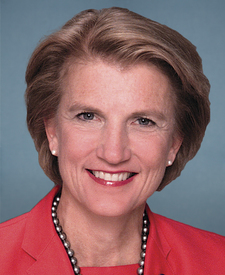
See how Shelley Moore Capito actually votes — against your values.
DeepSyte scores Shelley Moore Capito's record on the issues you care about — not party, not press releases. Take the 2-minute values quiz to see your personal alignment.
Sign in and take the values quiz to see how Shelley Moore Capito's votes line up with your views.
Prediction track record
How often we called Shelley Moore Capito's passage votes correctly, from their stated positions on each bill's tagged topics. Excludes “unclear” calls and abstentions.
25 predictions on record · none have been resolved by a passage vote yet. Check back as bills move.
Pending vote119-hr-5123
Indoor Air Quality and Healthy Schools Act of 2025
To amend the Research and Development, Competition, and Innovation Act to require each institution of higher education to certify as part of an application for a research and development award that such institution does not operate certain branch campuses, and for other purposes.
No paired statements and votes yet for Shelley Moore Capito
We haven't yet found statement/vote pairs on the same topic for Shelley Moore Capito. This usually means either the rep hasn't taken public positions on bills that have come to a passage vote, or those bills haven't been tagged yet. The checker runs as new press releases and votes come in.
Pro analysis
AI rep analysis — Pro
Get an AI-narrated read on Shelley Moore Capito's full voting record against your stated values — aligned themes, conflicts, notable votes, and what to watch for.
We haven't extracted campaign positions for Shelley Moore Capito yet. Once their campaign website or position pages are processed, this card will track what they said vs how they voted.
Crossing the aisle
No party-break passage votes recorded for Shelley Moore Capito. Either they've voted with Republicans on every substantive passage vote in the corpus, or their tenure overlaps few high-threshold party-line votes so far.
PHOTOS: Capito Hosts NIH NIA Director at WVU Rockefeller Neuroscience Institute | U.S. Senator Shelley Moore Capito of West Virginia
CHARLESTON, W.Va. – Today, U.S. Senator Shelley Moore Capito (R-W.Va.), the Chairman of the Senate Appropriations Subcommittee on Labor, Health and Human Services, Education, and Related Agencies (Labor-HHS), visited West Virginia University’s (WVU) Rockefeller Neuroscience Institute (RNI) in Morgantown, W.Va. with Dr. Richard Hodes, Director of the NIH National Institute on Aging (NIH NIA). During the visit, Senator Capito and Dr. Hodes receives updates from medical leaders like RNI Director Dr. Ali Rezai on key research related to Alzheimer’s and Alzheimer’s-related dementias as well as a tour of the facility.
“I appreciated the opportunity to host Dr. Hodes today at the Rockefeller Neuroscience Institute in Morgantown and hear directly from leaders like Dr. Rezai and others about their groundbreaking work on Alzheimer’s disease and related dementias,” Senator Capito said. “The progress being made here in West Virginia is both encouraging and impactful, and it’s clear this research has the potential to improve lives across our state and beyond.”
“Addressing Alzheimer’s disease and related dementias requires bold, multidisciplinary approaches that span fundamental biology, early detection, and innovative interventions. The work underway in West Virginia at the Rockefeller Neuroscience Institute reflects this integrated strategy, advancing areas such as neuromodulation and blood-brain barrier technologies to accelerate progress against complex neurodegenerative diseases. NIH, including the National Institute on Aging, supports research that deepens our understanding of these conditions and moves us toward more effective strategies for dementia prevention and treatment,” Dr. Hodes said.
“We are grateful for the leadership of Senator Shelley Moore Capito and Dr. Richard Hodes ,” Dr.Rezai, executive chair of the WVU Rockefeller Neuroscience Institute, said. “This kind of collaboration is what drives meaningful change, accelerating research breakthroughs into care for patients facing neurological diseases such as Alzheimer’s, Parkinson’s, and others.”
As Chairman of the Senate Appropriations Labor-HHS Subcommittee, Senator Capito has been a long-time supporter of efforts to advance medical innovation and improve health outcomes for West Virginians, including through RNI, which is a national leader in the study and treatment of neurological and psychiatric conditions, combining cutting-edge research with patient-centered care.
Senator Capito has worked alongside federal, state, and local partners to help strengthen resources for groundbreaking initiatives at RNI, with a focus on addressing critical challenges such as addiction, Alzheimer’s disease, and other complex brain disorders. In February of 2026, Senator Capito secured a $11.9 million CDS allocation to support construction of the Center for Neuromodulation and Brain Therapeutics. Additionally, Senator Capito reintroduced bipartisan legislation in March of 2026 that bolsters training for primary care providers so they can better diagnose Alzheimer’s and other dementia and deliver high-quality, person-centered care in community-based settings.
Senator Capito’s efforts reflect a broad commitment to fostering collaboration, supporting scientific discovery, and ensuring that West Virginia remains at the forefront of transformative health care solutions.
In August 2022, Senator Capito and Dr. Rezai joined Hoppy Kercheval, former host of MetroNews Talkline, for a special interview on Alzheimer’s disease and dementia. During the interview, Senator Capito shared her personal experience as a caretaker for her parents who struggled with Alzheimer’s disease, as well as her continued efforts to assist families in West Virginia going through similar circumstances. Click here to watch the interview.
Photos from today’s event are included below:
U.S. Senator Shelley Moore Capito (R-W.Va.) tours WVU Rockefeller Neuroscience Institute in Morgantown, W.Va. on Friday, May 1, 2026.
U.S. Senator Shelley Moore Capito (R-W.Va.) tours WVU Rockefeller Neuroscience Institute in Morgantown, W.Va. on Friday, May 1, 2026.
U.S. Senator Shelley Moore Capito (R-W.Va.) tours WVU Rockefeller Neuroscience Institute in Morgantown, W.Va. on Friday, May 1, 2026.
Capito, Justice Celebrate Senate Passage of NPS-CBP Land Swap at Harpers Ferry | U.S. Senator Shelley Moore Capito of West Virginia
WASHINGTON, D.C. – Today, U.S. Senators Shelley Moore Capito (R-W.Va.) and Jim Justice (R-W.Va.) released the following statements after the Senate unanimously passed the National Park Service (NPS) – U.S. Customs and Border Protection (CBP) land swap at Harpers Ferry National Historic Park in West Virginia.
“The passage of this bill is welcome news as it will benefit not only West Virginia, but our nation’s security as well. By allowing the U.S. Customs and Border Protection Advanced Training Center in Harpers Ferry to expand, we are ensuring our hardworking Border Patrol agents and federal law enforcement officers have access to the world-class training facilities they need to do their jobs safely and effectively and continues my long-standing support for this world class facility. I’m also glad this land swap will allow us to preserve a historic battlefield, honoring the rich heritage of our state,” Senator Capito said.
“This is a major win for West Virginia and a perfect example of common sense in action. By bringing this historic land into the Harpers Ferry National Historical Park, we are ensuring that our state’s incredible heritage is preserved. At the same time, providing the CBP Advanced Training Center with the space they need to grow ensures that the brave men and women who protect our borders have the best possible facilities. I am proud to see the Senate act unanimously to support our National Parks and our national security in one fell swoop,” Senator Justice said.
Chairman Capito Asks Administrator Zeldin About Trump EPA Wins and Priorities | U.S. Senator Shelley Moore Capito of West Virginia
Position: Senator Capito supports EPA efforts to repeal the Biden Administration's power sector regulations, including Clean Power Plan 2.0, and advocates for streamlined environmental permitting that prioritizes energy production and state authority over federal environmental rules.
WASHINGTON, D.C. – Today, U.S. Senator Shelley Moore Capito (R-W.Va.), Chairman of the Senate Environment and Public Works (EPW) Committee, led a hearing examining the U.S. Environmental Protection Agency’s (EPA) proposed budget for fiscal year 2027.
During the hearing, Chairman Capito asked EPA Administrator Lee Zeldin about the Agency’s efforts to repeal the Biden Administration’s power sector strategy and promote more affordable and reliable electricity. She also asked about EPA’s role in regulating cleanup of per- and polyfluoroalkyl substances (PFAS). Finally, Chairman Capito sought commitment from Administrator Zeldin that the EPA would return congressionally rescinded Greenhouse Gas Reduction Fund (GGRF) dollars to the US Treasury and support the implementation of State Revolving Funds (SRFs) to provide clean drinking water in rural communities.
“All the comments thus far have talked about the urgent need to generate more electricity. The past administration’s power sector strategy was to shut down baseload energy availabilities, and our nation is facing an energy scarcity. People talk about it all the time and know that it is a reality. This strategy consisted of a half-dozen rules at EPA, including the Clean Power Plan 2.0, that went beyond the Agency’s regulatory authority, which you’ve addressed. Will you discuss your efforts to repeal the Biden EPA power sector strategy and how that will lead to more affordable, reliable electricity while continuing to protect public health and welfare?”
“Thank you, chairman. What we saw, especially toward the end of the Biden Administration, was an attack with many rules seeking to strangulate coal out of existence, telling your coal miners that they should just learn to code. We understand how important coal is to your state and many other states up here on this dais. The 2024 Mercury and Air Toxics Standards have been repealed. We still have the strict 2012 standards that were working and have significantly reduced mercury and other emissions. We are working to repeal Clean Power Plan 2.0, efforts with regard to steam electric [Effluent Limitation Guidelines (ELG)], coal combustion residuals (CCR), giving primacy to states on the handling of CCR. As I mentioned, with our new Waters of the United States rule, with our new Water Reuse Action Plan 2.0 and more, we are rolling back that attack that we saw on coal and other sources of power.”
“…I think it’s important to emphasize, at this point, that the Clean Air Act and Clean Water Act, written by Congress, all of what you’re doing here falls within the boundaries of what we have directed you to do. Is that correct?”
“In the Working Families Tax Cut we signed into law, we repealed Section 134 of the Clean Air Act to eliminate the Greenhouse Gas Reduction Fund (GGRF). I think it was $17 billion. It is in litigation right now. […] We supported the grant cancellations through the passage of the Working Families Tax Cuts—total waste of money. These are unobligated. While I understand that there is legislation pending, if the courts affirm that Congress has rescinded the $17 billion, do you commit to quickly returning these funds to the US Treasury?”
“I want to talk about PFAS. You and I have talked about this before. You know it’s a concern I have. It’s a concern around the country. And we haven’t been able to really reach a congressional point at which we can agree here as to how we might be helpful. Under [the Comprehensive Environmental Response, Compensation, and Liability Act (CERCLA)]’s strict guidance and their retroactive liability structure, we’re not sure that the “passive receivers”—that would be small water companies, it could be [agriculture] people, it could be anybody else who’s sharing water resources—there is a concern that they may be on the hook to pay for any kind of cleanup. While we work for a solution, can you tell me what EPA has done—I know you have several authorities and existing settlement and allocation tools under CERCLA—are you using those authorities? How are you using them? And how successful have they been?”
“We believe strongly that the polluter should pay and that the rate payers shouldn’t be on the hook for cleaning up PFAS contamination of their own water supply. We had a choice as to whether or not to pursue CERCLA or [the Resource Conservation and Recovery Act (RCRA)]. Neither of these two laws were written with PFAS in mind. And, unfortunately, the cost of cleanup is passed down from that water system. There are thousands across this country who would be giving it to their rate payers. So, we look forward to being able to work with Congress to be able to address this issue with regards to CERCLA. We have been in contact with stakeholders. There isn’t a liability settlement that I’m here to report on, and a Congressional solution would certainly be ideal to address the passive receiver status.”
“The other thing we’re working on is safe drinking water, which involves the State Revolving Funds (SRFs). All of our states, particularly those of us that have still small and remaining rural communities that don’t have satisfactory service, they’re limited in their financing options. It’s very difficult. This is a critical program for them. Will you commit to working with states to implement all funding that Congress provides from the SRFs in future authorizations and appropriations?”
Click HERE to view Chairman Capito’s questions.
Chairman Capito Opening Statement at Hearing to Examine Proposed EPA FY2027 Budget | U.S. Senator Shelley Moore Capito of West Virginia
Position: Chairman Capito supports the EPA's deregulatory actions under Administrator Zeldin, including the repeal of the Clean Power Plan 2.0 and other Biden-era environmental rules, citing benefits to energy production, economic growth, and grid reliability.
WASHINGTON, D.C. – Today, U.S. Senator Shelley Moore Capito (R-W.Va.), Chairman of the Senate Environment and Public Works (EPW) Committee, led a hearing examining the U.S. Environmental Protection Agency’s (EPA) proposed budget for fiscal year 2027.
In her opening remarks, Chairman Capito addressed the critical deregulatory actions that the EPA has taken under Administrator Zeldin’s leadership and their benefits to West Virginia and the entire country. She also highlighted key priorities for the EPA to address, including continuing funding for programs that approve new, innovative chemicals and clean up brownfield sites.
Below is the opening statement of Chairman Shelley Moore Capito (R-W.Va.) as delivered.
“I want to gavel in, and I want to say good afternoon to the Administrator. Administrator Zeldin, I would have come down to shake your hand, but we’re running a little behind. And in consideration of time, I’ll just wave to you and thank you for being here. I appreciate your time and your willingness to appear before the Committee, as always.
“Over the last year, we have seen a clear change in the direction of EPA. One that is grounded in EPA’s authorizing statutes and recognizes the importance of reliable, affordable energy.
“That change matters, no matter where you live, in what state, and [that is] certainly no different in my state of West Virginia. In November, thank you very much, during your visit to West Virginia, you heard firsthand about the real economic benefits that are resulting from the regulatory relief efforts in Congress and with the Trump Administration.
“Administrator Zeldin, thank you. Thank you for taking the time to talk to my constituents and understand how the policies and actions that occur here in Washington directly impact the livelihoods of those in the Mountain State.
“For too long, EPA policies imposed unnecessary and costly burdens on American workers, farmers, manufacturers, energy producers and communities. We saw rules that drove power plants and coal mines toward closure, raised costs for families and ignored the plain realities of our electric grid.
“The EPA buried the economy in red tape and killed economic growth. So that’s changing. The EPA is now working hard to undo, point by point, the Biden Administration’s War on Coal and other matters.
“The EPA proposed to repeal the Biden Administration’s Clean Power Plan 2.0 rule, an unworkable and unlawful rule that would have forced the shutdown of coal plants and prohibited new gas plants. It would have devastated electric reliability by causing major electricity generation shortages. I encourage the EPA to finalize that rule’s repeal.
“The Agency also extended compliance deadlines for the Effluent Limitations Guidelines and repealed the Biden-era MATS rule. These were unnecessary Biden rules with unrealistic timelines that would have forced power plants to shut down rather than continue to operate efficiently and in compliance with our environmental laws.
“This year, EPA rescinded the 2009 Endangerment Finding. That finding was wrongfully used to justify sweeping rules that Congress never authorized and that imposed hundreds of billions of dollars of costs on our economy. Rescinding it is a momentous milestone in returning the EPA to adhering to its statutory role.
“The costly regulatory regime that the Endangerment Finding supported was inconsistent with the requirement of clear congressional authority that the Supreme Court found was necessary for such actions in the decision in West Virginia v. EPA.
“The EPA’s work is not limited just to the power sector. After Administrator Zeldin sent the Biden-era California Waiver to Congress, we repealed the Democrats’ attempt to enact a nationwide Electric Vehicle mandate without a vote in Congress. With that vote, Congress preserved consumer choice and protected our constituents from government-mandated higher vehicle costs.
“Finally, Administrator Zeldin is bringing real accountability for how our taxpayers’ dollars are being spent. The Inflation Reduction Act created a bunch of wasteful programs at EPA that funded “climate” spending with little actual environmental benefit, such as for activists’ pet projects and even funded activists to more easily sue the government to stop permits and projects.
“Two programs were of particular concern: $30 billion that went to the so-called “Green Bank” and Environmental Justice Block Grant programs. Billions of dollars went out the door with limited transparency and questionable oversight. The EPA’s action to cancel roughly $17 billion of those grants was an important first step for Congress to build upon, which we did in the Working Family Tax Cuts bill.
“The EPW Committee’s title of that bill took the final step to repeal the Green Bank and rescind those cancelled grant funds, as well as millions of dollars from other IRA programs, clawing them back to the US Treasury on behalf of the American taxpayers.
“The EPA, under Administrator Zeldin’s leadership, is delivering real results to benefit West Virginians and the American people.
“But there is still much work to be done. We need to ensure that the EPA’s bipartisan foundational programs, like the Drinking Water and Clean Water State Revolving Funds, are adequately funded. These programs are how communities, especially small and rural communities, replace aging pipes, update treatment systems and ensure safe, reliable service.
“We also need to ensure that programs and processes are well-established to strengthen economic competitiveness by approving new innovative chemicals and cleaning up environmental brownfield sites.
“Administrator Zeldin, I appreciate the steps your Agency has taken so far. I look forward to hearing how you plan to build on this progress, how you are prioritizing EPA’s core responsibilities and how we can continue working together to support American energy and American jobs.”
VIDEO: Capito Delivers Opening Statement at Labor-HHS Hearing with Education Secretary | U.S. Senator Shelley Moore Capito of West Virginia
Position: Senator Capito expresses support for decentralized education policy that prioritizes local control and flexibility, emphasizing that federal education spending should be tailored to support states and local schools rather than relying on increased federal intervention. She supports maintaining formula grant programs like Title I and IDEA, as well as the Charter Schools Program.
To watch Chairman Capito’s opening remarks click here or the image above.
WASHINGTON, D.C. – Today, U.S. Senator Shelley Moore Capito (R-W.Va.), Chairman of the Senate Appropriations Subcommittee on Labor, Health and Human Services, Education, and Related Agencies (Labor-HHS), chaired a hearing with U.S. Department of Education Secretary Linda McMahon to consider President Trump’s Fiscal Year 2027 budget request, as well as the many priorities of the agency.
Below is Chairman Capito’s opening statement as prepared for delivery:
“Good morning. Secretary McMahon, thank you for being here today to discuss the president’s fiscal year 2027 budget request and your priorities for the Department of Education.
“I am pleased to be joined this morning by my friend and ranking member Senator Baldwin—it is our fourth year atop this subcommittee together. I also welcome our full committee chair, Senator Collins, and vice chair, Senator Murray.
“Secretary McMahon, you are entering your second year at the helm of the Department of Education. Much like the last time we all gathered in this room, we stand at a crossroads. Do we stay the course with our education system as it is, hoping that more money or federal intervention will solve our problems? Or do we, as you have suggested, ask difficult questions, and consider innovative solutions that will actually turn the tide?
“Madam Secretary, I think we both believe that all Americans – from our earliest learners to our postsecondary students – should have the opportunity to access a high-quality education, and it is our responsibility to help make that possible.
“But, our nation’s students are struggling. We know from last year’s National Assessment of Educational Progress that students are still scoring below pre-pandemic levels in all tested grades and subjects. 33% – one third – of our nation’s 8th graders are not reading at the NAEP Basic level. This is a greater percentage than ever before.
“We must remain focused on improving outcomes for students. That means ensuring kids can read at grade level, are prepared for college or careers, and have opportunities to succeed in a rapidly changing economy.
“It is time for the United States to stand on the global stage as a leader in education and reverse the troubling trends that we have seen for far too long.
“So, where do we begin? Your leadership has shown that perhaps we need to start by turning to those who know our students best: our local schools, teachers, and parents.
“Federal education spending should be tailored to support states and policies that are responsive to the needs of each student. I am pleased to see your budget supports formula grant programs like Title I and IDeA that bring crucial investments to each of our states. These programs provide the much-needed flexibility for local communities to meet the individual needs of their students.
“Similarly, I am pleased to see your budget maintains support for the Charter Schools Program. West Virginia is fairly new to offering charter school education, yet we are already seeing exciting results in the expanded school choice opportunities for public school students. I know that the department’s continued investment in the Charter School Program will benefit many more students across the nation, much like we have seen in my home state.
“I would also like to touch on postsecondary education. I’ll note that I began my professional career as a college counselor and advisor, and in this role I saw firsthand how education provides students with life-changing opportunities. So I was glad to see that your budget requests funding to address the Pell shortfall and maintain the Pell Grant maximum award. Pell is critical to help provide financial access to postsecondary education for our students in West Virginia and across the nation who need it the most.
“I am also encouraged by the steps the department has taken to return student loan borrowers to repayment and remind them of the responsibility they take on when taking out a loan. However, after years of borrowers not being required to pay their loans by the prior administration, there is more work to be done. Currently, more than one out of every four student loan borrowers are delinquent or in default.
“I look forward to the work your department will do to clearly and efficiently correct the unprecedented confusion our nation’s student loan borrowers have faced for years. And, importantly, put borrowers back on a thoughtful track to repayment.
“As we move through the fiscal year 2027 appropriations process, I look forward to continued partnership with your department to find a responsible balance between our limited taxpayer resources and supporting the best opportunities for a high-quality education.
“I anticipate the road ahead will be challenging, but we must forge ahead to deliver for our students, who are the future of our great nation.
“Thank you again for being here today and I look forward to your testimony.”
VIDEO: Capito Chairs Labor-H Subcommittee Hearing on Department of Education Budget | U.S. Senator Shelley Moore Capito of West Virginia
To watch Chairman Capito’s opening remarks click here or the image above.
WASHINGTON, D.C. – Today, U.S. Senator Shelley Moore Capito (R-W.Va.), Chairman of the Senate Appropriations Subcommittee on Labor, Health and Human Services, Education, and Related Agencies (Labor-HHS), chaired a hearing with U.S. Department of Education Secretary Linda McMahon to consider President Trump’s Fiscal Year 2027 (FY27) budget request, as well as the many priorities of the agency.
ON DEPARTMENT OF LABOR AND DEPARTMENT OF EDUCATION MERGER: “You mentioned how many states have been seeking or gotten their money through the Department of Labor, and what are the metrics that you're using to determine whether this is a successful merger? Is it how many students are more self-aware when they come out of school? Do they want to go into apprenticeship? Do they want to go into a skilled skill? Do they want to go to higher ed? Because I think there's obviously, we have so many workforce programs throughout the whole government and all different aspects of it that I do think consolidating these and matching it with education is a natural, is a natural fit.”
“A lot of student loan borrowers were put into the SAVE program, which was deemed illegal by a federal appeals court and lots of legal disputes. So, I mean, total confusion from student borrowers as to, do they owe, do they have to pay what? So, I, you know, many borrowers are currently enrolled in a forbearance plan, but they're getting, they're going to get instructed that they need to get into a legal repayment plan. How is that going? Is it eliminating the confusion? And I’m wondering, that’s a big thing to tackle, what is it, $1 trillion or something, that is owed on this plan?”
“It is a huge portfolio. $1.7 trillion in outstanding debt and only about 40% of those payers are now trying any kind of repayment at all and who can blame them?... So what happened under… the Working Families Tax Cuts Act is the consolidation now of loans, so that there would be 2 repayment plans put in place.”
VIDEO: Capito Discusses West Virginia National Parks, Permitting Reform at Interior Subcommittee Hearing | U.S. Senator Shelley Moore Capito of West Virginia
Position: Senator Capito advocates for streamlining federal environmental permitting processes to reduce delays and capital constraints, citing a McKinsey study showing $1.2 trillion in waiting investment. She emphasizes the need to reform NEPA, judicial review, and substantive environmental laws while maintaining environmental protections.
To watch Senator Capito’s questions, click here or the image above.
WASHINGTON, D.C. –This week, U.S. Senator Shelley Moore Capito (R-W.Va.), a leader on the Senate Appropriations Subcommittee, participated in an Interior, Environment, and Related Agencies Appropriations Subcommittee hearing with Interior Secretary Doug Burgum. The purpose of the hearing was to consider President Trump’s Fiscal Year (FY) 2027 budget request for the U.S. Department of Interior and other priorities of the agency.
ON NATIONAL PARK FEES AND THE NEW RIVER GORGE NATIONAL PARK
“In 2020, President Trump, signed into law, the New River Gorge National Park and Preserve. It has far exceeded the economic benefits of that region. People from all over the world are visiting and we're really excited about that. In order to make these destinations as desirable as they are, I would advise against raising visitor fees for the New River Gorge or any other parks. I did read that you were going to raise fees. Where are you on that?”
“We did not raise fees for Americans, but we did put in place an international visitor fee increases to come in line with what international flagship parks around the world charge Americans when they are visiting other locations. It is in effect specifically in some of our flagship parks, I don't know specifically if it applies to New River Gorge.”
ON MOSS RUDLEY AS THE NEW PARK SUPERINTENDINT FOR NEW RIVER GORGE
“It was just announced, a new superintendent, one of our own West Virginians is coming home, which we're very excited about, Moss Rudley. There's been a history that the superintendent has shared responsibilities with another park. I'd like your assurance that that Mr. Rudley is going to be there as a superintendent solely dedicated to that facility.”
“You can have our commitment on that and we're excited about Ross taking that role. Glad, you got a West Virginian coming back and the park has exceeded the expectations, beautiful spot. I had a chance to float it before it was a national park and it’s really spectacular.”
ON THE IMPORTANCE OF PERMITTING
“A recent McKinsey study found that 1.2 trillion in capital is waiting on the sidelines because of outdated federal permitting policies. They could be invested in projects across the board. […] In your role, as chair of the dominance council, you see this yourself. We need to learn from the existing systems failures and craft solutions that align what the American people want and need. As Chair of the EPW committee, […] I think this is our best opportunity here to make lasting improvements to NEPA, the judicial review process, substantive environmental laws like clean water act, the clean air act, and endangered species. Improving this will have vast legacy building for all of us who are participating in this. How would you discuss permitting reform in terms of affordability and economic growth?”
“I see it as essential. I see it as one of one of the core factors that's reducing American competitiveness worldwide, is that we can't get anything permitted. Capital wants to be spent here. You mentioned the 1.2 trillion number. I think that number's low, but boards of directors, small businesses, schools, cities, states, have said, we want to spend this money and then they're all waiting for a permit. If they spend their money, that means jobs. That means better infrastructure and safer communities. It is absolutely essential. This is the moment, if there's anything we can do to help Congress get the permitting bill over the line. Happy to do it. Internally, we're doing a number of things with, to make sure that NEPA and ESA get back in within their original law of what that was intended, as opposed to becoming just weapons to use to stop development in America.”
“We see the president with his deregulation, which I welcome and his executive orders, which I welcome, but we fully know that the previous administration had different executive orders and had different regulation. How does the permanence of permitting reform in your mind bring about that lasting effect of predictability that's so critical?”
“It adds durability and then it allows projects to stand on their own merits as opposed to being weaponized so that every project, no matter what it is, you know, a bridge, a road, a building, you know, it doesn't have to even be an energy project. Everything becomes politicized and weaponized in this country. If we're a nation that can't build great things, and build them safely and quickly, we're going to lose on the world stage. This is, it's absolutely essential that this permitting bill goes forward.”
Click HERE to watch Senator Capito’s full round of questioning.
Capito Applauds Investment at Nucor Steel Facility | U.S. Senator Shelley Moore Capito of West Virginia
WASHINGTON, D.C. – Today, U.S. Senator Shelley Moore Capito (R-W.Va.), Chairman of the Senate Environment and Public Works (EPW) Committee, announced that the West Virginia Department of Transportation (WVDOT) has received $23 million in funding from the U.S. Maritime Administration (MARAD) to support the construction of an all-weather barge handling dock at the Nucor Steel West Virginia steel plant in Apple Grove, West Virginia. This funding was awarded through the Maritime Administration’s Port Infrastructure Development Program (PIDP), which supports projects that improve the safety, efficiency and reliability of America’s ports.
“As our country faces ongoing supply chain disruptions and unfair international trade practices, investing in domestic manufacturing is more important than ever,” Senator Capito said. “This investment will strengthen our supply chain, support infrastructure with American-made steel, and create high-paying jobs for West Virginians. I was proud to support this investment and look forward to the positive impact it will have on Nucor and the region as a whole.”
In September of 2025, Senator Capito was joined by U.S. Senator Jim Justice (R-W.Va.) in writing a letter of support to Sang H. Yi, Acting Administrator of the Maritime Administration, urging him to support the West Virginia Department of Transportation’s application for the project. Additionally, Senator Capito attended the groundbreaking ceremony of the Nucor Steel Plant in Mason County in October of 2023.
Investment details listed below:
VIDEO: Capito Honors WV National Guard Members During Defense Budget Hearing | U.S. Senator Shelley Moore Capito of West Virginia
To watch Senator Capito’s questions, click here or the image above.
WASHINGTON, D.C. – Yesterday, U.S. Senator Shelley Moore Capito (R-W.Va.), a member of the Senate Appropriations Subcommittee on Defense, participated in a hearing to review the president’s fiscal year (FY) 2027 budget request for the National Guard and Reserve Forces.
ON SPC. BECKSTROM AND STAFF SGT. WOLFE: “Two of our West Virginia National Guard were attacked here in Washington, D.C. while volunteering to make our streets safe. We lost Sarah (Beckstrom) on Thanksgiving Day, and we continue to send prayers to her family in West Virginia. I'm proud to report that Andy (Wolfe) has made a miraculous recovery, not full, but miraculous so far, and he threw out the first pitch at the WVU baseball game recently. […] It’s a testament to the service and sacrifice of our National Guard members. I want you all to keep them in your thoughts, and their families in your thoughts and prayers. General Nordhaus, thank you for everything that you've done.”
ON HOW WEST VIRGINIA MANUFACTURING SUPPORTS NAVY OPERATIONS
“Admiral Lofgren, it’s great to see you again. Thank you for coming to visit West Virginia to see the Lockheed Martin facility that makes significant portions of not just the Navy's KC-130J, but also the C-130 variants across all the other services. Now, we've already covered ground here on the KC-130J, but I just wanted to give you an opportunity to talk about the significance of that aircraft for the Navy Reserve.”
Rear Admiral Lofgren, Acting Chief of Navy Reserve:
“It's not just another aircraft for the Navy. It's the connective tissue for maritime operations, moving people, fuel, and equipment across these vast domains and distances, and being able to support the combatant commanders. In a fight defined by distance, the logistics really is combat power. The KC-130J delivers on that. It brings critical refueling capabilities. We're seeing that right now in theater, right at the mouth of the Strait of Hormuz, that's refueling the air wing. It's the first time that the Navy Reserve has refueled an aircraft in a combat zone, and helped evacuate nearly 3,000 family members and personnel. It’s a real-world example of that speed, capability, and capacity under pressure. But it also highlights the real challenge that we've got right now. That KC-130 fleet, the tangos right now that we're flying, they're aging. They're 35 years old, the reliability, the survivability, and really the long-term sustainment, are problems […] and growing concerns. That’s exactly why we need to recapitalize and replace those right now with a more survivable platform.
I'll tell you what stood out to me on our, during my time in West Virginia […] We met somebody that was working on that assembly line, second generation of his family to work on those aircraft. He said something that really has stuck with me, that every single American C-130 that's flying right now has been touched by West Virginians. What we really felt was that expertise, that pride, and the precision that's built into every single tail that we rely on. For us […] the bottom line for the KC-130, is closing that credibility gap and that capability gap that we need right now. So, the support from you and the rest of the committee is critically important as we think about replacing those tails.”
“General Nordhaus, thank you for your visit and our exchange in my office recently. There's been a lot of talk about drone warfare and the Admiral (Lofgren) talked a little about […] all of you did, about the innovation that comes from the warfighter, the ones that are in the theater. There's a lot of soldier-inspired innovation that goes on that they bring from their own jobs that they have outside of the reserves. I would say the Ridge Runner Irregular Warfare Exercise laboratory, which is hosted by our West Virginia National Guard, provides some of that. How is the National Guard harnessing that innovation from citizen soldiers to address the new age of warfare?”
General Steven Nordhaus, Chief of the National Guard Bureau:
“As we look at Ridge Runner […] and innovation, our guardsmen work out in industry and they bring all that innovation and technology. On the cyber side, they bring those skill sets. As we look at innovation at the Air National Guard and the Air Force Reserve Test Center, they take innovation and the dollars we get, and are getting 80 percent of the capabilities at 20 percent of the cost, because they're innovating those tools and systems in as we go across. I do appreciate the discussion on the UAS’s, and one of the things that we continue to do is innovate with how we can protect and defend our bases. On the Air National Guard and the Army National Guard side, we're often operating in a Title 32 status, which doesn't have the same protection and benefits as Title 10. We look forward to working with Congress on those authorities so that when we're operating for counter UAS within our defenses also that we have the right authorities.”
Click HERE to watch Senator Capito’s full round of questioning.
Capito, Justice, Colleagues Introduce Hot Rotisserie Chicken Act | U.S. Senator Shelley Moore Capito of West Virginia
Position: The senators support modifying SNAP rules to allow participants to purchase hot rotisserie chicken, citing convenience, dignity, and practical nutrition needs for seniors, working families, and those without reliable cooking access.
WASHINGTON, D.C. – Recently, U.S. Senators Shelley Moore Capito (R-W.Va.), Jim Justice (R-W.Va.), John Fetterman (D-Pa.), and Michael Bennet (D-Colo.) introduced the Hot Rotisserie Chicken Act to allow Supplemental Nutrition Assistance Program (SNAP) participants to purchase hot rotisserie chicken with their benefits.
“Allowing SNAP recipients to purchase hot rotisserie chicken is a simple, practical step to make the program work better for the people it serves. For seniors, working families, and those without reliable access to cooking equipment, this is about convenience and dignity. With multiple states—including West Virginia—already requesting flexibility in this area, this bill brings SNAP in line with real-world needs while making smart, efficient use of taxpayer dollars,” Senator Capito said.
“Allowing folks on SNAP to buy hot rotisserie chickens is truly just commonsense. It’s as basic as you can get to help busy parents or grandparents put something as simple as this on the table to feed their families. We have to give people the option to put a healthy, protein-dense choice on the table that actually tastes good and doesn’t take an hour and a half to cook,” Senator Justice said.
“America’s best (and delicious) affordability play is Costco’s $4.99 rotisserie chicken. It’s one of my family’s favorites and I’m proud to join this bill with Senator Justice for all to try. SNAP funds would be well spent to feed our nation’s families who need it,” Senator Fetterman said.
“Congress should be making it easier, not harder, for families to put food on the table. This bill fixes an unnecessary barrier and helps Colorado families get a quick, nutritious meal when they need it,” Senator Bennet said.
Source: GDELT 2.0 GKG, filtered to a curated list of national outlets. Inclusion is not endorsement; opinion pieces and reported news are mixed.
Recent stock activity
Periodic transaction reports filed under the STOCK Act — disclosed by the rep, sourced from public filings.
No disclosed trades on record.
Source: open-data mirrors of the Senate eFD and House Clerk financial-disclosure systems. Disclosure within 30 days of trade is required by law (45 for spouse/dependent trades).
Top PAC donors · 2026 cycle
Political action committees that gave the most to this rep's principal campaign committee this cycle. PAC giving is direct organizational support — industry, ideological, or leadership.
1.AMERICAN ISRAEL PUBLIC AFFAIRS COMMITTEE PAC CONDUIT11 contributions$84,345
2.ONE TEAM SENATE MAJORITY4 contributions$47,646
3.GOP WINNING WOMEN 2026Leadership4 contributionsRepublican party-aligned PAC focused on supporting female GOP candidates and women's engagement in Republican politics.AI$30,657
4.2024 SENATORS CLASSIC COMMITTEELeadership2 contributionsMember-of-Congress leadership PAC — likely affiliated with a Senate Republican or Democratic leader or caucus, directing contributions to allied candidates.AI$25,100
5.2025 SENATORS CLASSIC COMMITTEELeadership2 contributionsMember-of-Congress leadership PAC — likely affiliated with a Senate Republican or Democratic leader or caucus, directs contributions to allied candidates.AI$21,783
7.2019 SENATORS CLASSIC COMMITTEELeadership1 contributionMember-of-Congress leadership PAC — likely affiliated with a senator or senatorial group. Backs allied candidates and party priorities.AI$9,012
8.AMERICAN COUNCIL OF ENGINEERING COMPANIES CONDUIT1 contribution$6,750
9.DEFEND THE SENATELeadership1 contributionMember-of-Congress leadership PAC — supports Democratic Senate candidates and coordinates party support in federal races.AI$5,867
10.USAA EMPLOYEE PAC1 contribution$5,000
Source: OpenFEC (api.open.fec.gov) Schedule A receipts where contributor type is “committee.” Aggregated by contributing committee. Self-transfers from joint-fundraising / victory committees are excluded.
Top individual contributors · 2026 cycle
Itemized individual contributions over $200 to this rep's campaign committee, aggregated by donor employer. PAC giving is shown above; this section is people, not organizations.
1.SELF$74,058
2.ANTHROPIC$47,000
3.ANTERO RESOURCES$26,500
4.BLACKSTONE$25,700
5.JANE STREET CAPITAL$21,000
6.CHARTER COMMUNICATIONS$20,500
7.LEIDOS$17,850
8.WCAS$16,776
9.GENERAL MOTORS$15,500
10.NECESSITY VENTURES$14,000
Source: OpenFEC Schedule A receipts where contributor type is “individual,” aggregated by the donor's self-reported employer. This is a geographic / industry correlation, not a corporate endorsement.