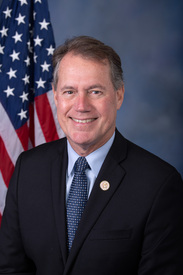
See how Ed Case actually votes — against your values.
DeepSyte scores Ed Case's record on the issues you care about — not party, not press releases. Take the 2-minute values quiz to see your personal alignment.
Sign in and take the values quiz to see how Ed Case's votes line up with your views.
Prediction track record
How often we called Ed Case's passage votes correctly, from their stated positions on each bill's tagged topics. Excludes “unclear” calls and abstentions.
A joint resolution to direct the removal of United States Armed Forces from hostilities within or against the Islamic Republic of Iran that have not been authorized by Congress.
To prohibit the disclosure of records by the Secretary of Housing and Urban Development of individuals for the purposes of immigration enforcement, and for other purposes.
A joint resolution to direct the removal of United States Armed Forces from hostilities within or against the Islamic Republic of Iran that have not been authorized by Congress.
Based on 4 data points across public statements and recorded votes · AI analysis of public records
118-hr-5717·Notable gap
No Bailout for Sanctuary Cities Act
25/100
What they said
Jun 11, 2026
Representative Case opposes the FY 2027 Homeland Security appropriations measure because it cuts funding for key security agencies (CISA and TSA) and provides additional funding to ICE and CBP without comprehensive immigration enforcement reforms, oversight, and accountability measures.
Representative Case's statement opposes additional ICE and CBP funding without comprehensive immigration enforcement reforms and accountability measures. The bill he voted for penalizes sanctuary jurisdictions by withholding federal funds, effectively pressuring stricter immigration enforcement cooperation—a policy that advances ICE/CBP authority without the reforms Case explicitly demanded. Case's stated position and his yes vote point in opposite directions on the specific question of whether to expand immigration enforcement tools without accompanying oversight and reform.
Representative Case supports funding most Department of Homeland Security agencies while withholding appropriations from ICE and CBP pending immigration enforcement reforms, and advocates for ICE and CBP reforms that balance law enforcement with adherence to constitutional values.
Representative Case's statement advocates for ICE and CBP reforms that 'balance law enforcement with adherence to constitutional values' and explicitly states 'we cannot do so by surrendering our values.' The Stop Illegal Entry Act establishes mandatory minimum sentences (5-10 years) and allows life sentences for immigration-related offenses, representing a hardline enforcement approach without the constitutional safeguards or reform provisions Case advocated for. Case's NO vote on this amendment aligns with his stated position opposing enforcement measures that lack constitutional protections.
Representative Case opposes the FY 2027 Homeland Security appropriations measure because it cuts funding for key security agencies (CISA and TSA) and provides additional funding to ICE and CBP without comprehensive immigration enforcement reforms, oversight, and accountability measures.
Representative Case's statement opposes additional CBP funding without comprehensive immigration enforcement reforms and accountability measures. The bill he voted for establishes new criminal penalties for fleeing Border Patrol agents and creates deportability grounds, which expands CBP enforcement authority without the reforms Case demanded. The vote directly contradicts his stated position that additional funding to CBP should not proceed absent meaningful reform.
Representative Case opposes the FY 2027 Homeland Security appropriations measure because it cuts funding for key security agencies (CISA and TSA) and provides additional funding to ICE and CBP without comprehensive immigration enforcement reforms, oversight, and accountability measures.
Representative Case's statement opposes additional ICE and CBP funding without comprehensive immigration enforcement reforms and accountability measures. However, he voted YES on the POLICE Act, which expands deportation authority for assaults on law enforcement without addressing the oversight, reform, or accountability conditions Case explicitly required. The statement and vote address the same specific question—conditions for expanding immigration enforcement—and point in opposite directions.
Pairs with ambiguous language and high uncertainty are withheld until more data is available. Procedural, cloture, and amendment votes are excluded — they don't cleanly signal substantive support or opposition.
Pro analysis
AI rep analysis — Pro
Get an AI-narrated read on Ed Case's full voting record against your stated values — aligned themes, conflicts, notable votes, and what to watch for.
We haven't extracted campaign positions for Ed Case yet. Once their campaign website or position pages are processed, this card will track what they said vs how they voted.
Crossing the aisle
Passage votes where Ed Case broke ranks with ≥75% of Democrats. Threshold catches substantively partisan splits; unanimous-ish or close votes are excluded.
9
Cross-aisle votes
119-s-1318·Apr 29, 2026·80% of D voted NO
Fallen Servicemembers Religious Heritage Restoration Act
Providing for congressional disapproval under chapter 8 of title 5, United States Code, of the rule submitted by the National Labor Relations Board relating to "Standard for Determining Joint Employer Status".
Case Opposes Homeland Security Funding Measure That Weakens Key National Security Components And Ignores Immigration Enforcement Reform
Position: Representative Case opposes the FY 2027 Homeland Security appropriations measure because it cuts funding for key security agencies (CISA and TSA) and provides additional funding to ICE and CBP without comprehensive immigration enforcement reforms, oversight, and accountability measures.
(Washington, DC) – U.S. Representative Ed Case (HI-01) reported that his House Appropriations Committee early this morning approved its proposed Fiscal Year (FY) 2027 Homeland Security Appropriations measure over his no vote.
The Homeland Security measure is the 11th of 12 measures taken up by Appropriations to collectively fund the federal government for FY 2027 (commencing October 1, 2026).
The measure proposes a total $99.5 billion for the Department of Homeland Security (DHS), which includes FEMA, U.S. Customs and Border Protection (CBP), Immigration and Customs Enforcement (ICE), U.S. Citizenship and Immigration Services, Cybersecurity and Infrastructure Security Agency (CISA), Transportation Security Administration (TSA), U.S. Coast Guard, Secret Service and more.
Case is in his 8th year on Appropriations and his 4th year on the Appropriations Homeland Security Subcommittee which develops this measure. He has focused on ensuring FEMA’s continued support for Hawai‘i, investing in the Coast Guard’s presence in the Pacific and enhancing the security of Hawai‘i through significant investments in physical, cyber and infrastructure security.
“Despite the strong support this bill provides for emergency management and our Coast Guard, I could not accept the overall result, which would make Americans less safe through deep cuts to key elements of homeland security including CISA and TSA,” said Case. “I also cannot support additional funding to ICE or CBP’s Border Patrol without comprehensive, meaningful immigration enforcement reforms.”
He cited the following examples from the measure, which significantly cut or eliminated key programs including:
The FY 2026 appropriations process for this Subcommittee was particularly consequential and difficult.
Earlier this year, DHS experienced a record government shutdown following the tragic deaths of two Americans in encounters involving ICE and CBP agents in January 2026. Case has maintained throughout that any additional funding for immigration enforcement agencies must be paired with meaningful oversight, transparency measures and reforms to ensure accountability, protect civil liberties and restore public trust.
Congress was unable to reach a deal on reforms and funding for ICE and CBP’s Border Patrol in FY 2026, and instead it passed an annual appropriations bill funding the other non-controversial agencies in DHS. The President recently signed into law a separate reconciliation bill to fund those activities through 2029, which Congress approved solely on a partisan basis over Case’s no vote.
However, some common-sense reforms and positive additions advocated for by Case were included in the FY 2027 draft bill:
Additionally, through his assignment on the Committee, Case secured $1.6 million in Member-designated Community Project Funding projects that specifically focus on local needs in Hawai‘i:
· $581,533 for the Hawai‘i Emergency Management Agency’s (HIEMA) Kapolei Warehouse Emergency Operations Center (EOC) Renovation. This project would fund the construction of a satellite EOC on the west side of O‘ahu in a multi-use Department of Hawaiian Home Lands (DHHL) warehouse.
The House’s Community Project Funding rules require that each project must have demonstrated community support, be fully disclosed by the requesting Member and subject to audit by the independent Government Accountability Office. Case’s disclosures are here: https://case.house.gov/services/funding-disclosures.htm.
Case also secured a number of key programs and provisions for Hawai‘i and the broader Pacific, including:
The measure also includes the following priorities requested by Case:
A summary of the DHS Appropriations bill is available here. The bill now moves on to the full House of Representatives for its consideration.
Case Opposes Funding Measure That Slashes Legacy Support For Federal Education And Health Care
Position: Representative Case opposes the FY 2027 Labor-HHS appropriations bill because it cuts over $19 billion (9%) from FY 2026 enacted levels for federal health, education, and workforce programs, though he secured targeted funding for Hawaii-specific initiatives and community projects.
(Washington, DC) – U.S. Representative Ed Case (HI-01) reported that his House Appropriations Committee HAS approved its Fiscal Year (FY) 2027 Labor, Health and Human Services (Labor-HHS) Appropriations bill.
The FY 2027 Labor-HHS funding measure is the 10th of the twelve bills taken up by House Appropriations to collectively fund the federal government for FY 2027 (commencing October 1, 2026). The bill proposes a total of $201.8 billion for the U.S. Departments of Labor, Health and Human Services and Education along with several other related agencies. This is a cut of over $19 billion (9%) from the FY 2026 enacted levels.
“I could not accept the overall result that slashes longtime key federal health, education and workforce programs that address top priorities for our country and Hawai‘i,” said Case.
He warned that, among other flaws, the bill:
“However, I did succeed in incorporating many of my requests directed at Hawai‘i-specific needs, starting with Native Hawaiians and other programs that assist our nation’s indigenous peoples,” said Case. The bill specifically includes:
Through his assignment on the Committee, Case also secured $3.5 million in Member-designated Community Project Funding projects that specifically focus on local needs in Hawai‘i. The bill includes:
This project will allow WCCHC to increase access to health care and social services and open a new Health and Wellness Learning Center in Waipahu to support the WCCHC’s nurse practitioner and dental residency programs to meet crucial health workforce needs.
The House’s Community Project Funding rules require that each project must have demonstrated community support, be fully disclosed by the requesting Member and subject to audit by the independent Government Accountability Office. Case’s disclosures are here: https://case.house.gov/services/funding-disclosures.htm.
The Appropriations Committee also included Case’s requests for funding for federal programs and services especially important for the State of Hawai‘i, including those supporting local families through workforce development, education and community health care. Some of the programs requested and secured by Case include:
The Labor-HHS Appropriations bill was approved by the Committee and now moves on to the full House of Representatives for its consideration. A summary of the measure is available here .
Case Opposes Funding Measures That Cripple Efforts To Combat High Housing Cost And Weaken Core Environmental Programs
Position: Representative Case opposes the FY 2027 T-HUD and Interior/Environment appropriations bills as currently drafted because they reduce funding for affordable housing programs, environmental protection, and cultural preservation, though he secured increases for Native Hawaiian housing initiatives.
(Washington, DC) – U.S. Representative Ed Case (HI-01) reported that his Appropriations Committee approved two more of its twelve Fiscal Year (FY) 2027 appropriations bills: the Transportation, Housing and Urban Development (T-HUD) and the Interior/Environment funding measures.
The FY 2027 T-HUD funding bill proposes a total $92.2 billion for the U.S. Department of Housing and Urban Development, the United States Interagency Council on Homelessness and the U.S. Department of Transportation, including the Federal Aviation Administration (FAA), a reduction of 8% from current Fiscal Year 2026.
The Interior/Environment bill proposes a total $39 billion for the U.S. Department of the Interior, including the National Park Service, U.S. Fish and Wildlife Service, U.S. Geological Survey, Environmental Protection Agency, and U.S. Forest Service, and various independent agencies including the National Endowments on Arts and the Humanities, a further reduction of 2% off a steep reduction in FY26.
“In both cases, I could not accept the overall result which is to walk away from key federal programs to assist with top priorities for our country and Hawai’i in affordable housing, transportation, environmental protection and historical and cultural preservation,” said Case. He cited the following examples from the T-HUD measure, which significantly cut or eliminated key programs including:
· The HOME Investment Partnerships Program, the only federal program dedicated to developing affordable housing.
· The Housing Counseling Assistance Program, which helps families obtain, sustain and retain their homes.
· The Continuum of Care Program, which supports local service providers in community-based approaches to rehouse individuals and families and build pathways towards greater self-sufficiency.
· National Endowment for the Humanities and the National Endowment for the Arts.
· The Asian Pacific American Center, which documents and shares the contributions of Asian and Pacific Islanders to the nation’s history.
· The Clean Water and Drinking Water State Revolving Funds, which help to finance local water infrastructure projects.
“However, I did succeed in incorporating many of my requests that are directed at Hawai’i-specific needs, starting with Native Hawaiian-focused housing programs”, said Case. Specifically:
The bill provides $15 million for the Native Hawaiian Housing Block Grant and $28 million for the Native Hawaiian Housing Loan Guarantee Fund. The funding represents a significant victory for Native Hawaiian housing programs, which have faced heightened scrutiny and proposed cuts this year, including the President’s proposal to eliminate both programs entirely. By rejecting those cuts, the bill preserves critical federal investments that expand housing opportunities and support Native Hawaiian communities across Hawaiʻi.
The bill also included Case’s request to continue funding for the National Transportation Safety Board (NTSB), which plays a crucial role in enhancing the safety of the helicopter and small aircraft industry through accident investigation, analysis and recommendations to prevent future incidents, including several fatal accidents throughout Hawai‘i. The $175 million provided to the NTSB will help make Hawai‘i safer in response to the many aviation tragedies and accidents endured by the state in recent years.
The bill further includes the following funding requested by Case for programs to improve access to affordable housing in Hawai‘i and nationwide:
· $5 million for core housing research partnerships with Native Hawaiian serving institutions among other minority serving institutions.
· $38.8 billion for the Tenant Based Rental Assistance Program, Section 8.
· $3.3 billion for the Community Development Block Grant formula program, which support state and local government efforts to increase access to affordable housing, community assistance services and jobs.
· $290 million for Emergency Solutions Grants, which support emergency shelters, rapid rehousing programs and homeless prevention.
Other transportation and infrastructure programs requested and secured by Case include:
· $372 million for the Maritime Security Program.
· $123 million for the Port Infrastructure Development Program.
· $105 million for assistance to small shipyards like Kalaeloa/Barbers Point.
· $21.7 billion for the Federal Aviation Administration (FAA), including $1 million to assess the capabilities of using transponder landing systems in space and weather constrained airports such as those in Hawai‘i.
Finally, through his assignment on the Committee, Case also secured two Member-designated Community Project Funding projects that specifically focus on local needs in Hawai‘i:
· $1.8 million for the City and County’s Chinatown Affordable Housing Project. These funds would help to preserve much-needed housing by upgrading mechanical systems, making roof and waterproofing improvements and installing accessibility enhancements.
· $250,000 for the Hawai‘i State Department of Education’s Safer Hawai‘i Schools Pilot Program. These funds would enhance the security infrastructure for Ruth Keli‘ikōlani Middle School by helping to build a new security camera system.
The House’s Community Project Funding rules require that each project must have demonstrated community support, be fully disclosed by the requesting Member and subject to audit by the independent Government Accountability Office. Case’s disclosures are here: https://case.house.gov/services/funding-disclosures.htm.
The bill includes the following requests by Case:
· $5 million for U.S. Fish and Wildlife Service’s State of the Birds Activities to respond to the urgent needs of critically endangered birds that now face possible extinction. These funds are helping to save numerous endemic birds in Hawai‘i that have been devastated by climate change and avian malaria.
· $4.6 million for Japanese Confinement Site Grants and funding for the Amache National Historic Site, which was one of ten incarceration sites established by the War Relocation Authority during World War II to detain Japanese Americans who were forcibly removed from their communities on the West Coast.
· $80 million for State Fire Assistance, which provides financial and technical support directly to states to enhance firefighting capacity, support community-based hazard mitigation and expand outreach and education to homeowners and communities concerning fire prevention.
· $65 million for the U.S. Geological Survey’s Climate Adaptation Science Centers, which includes the Pacific Islands Climate Adaptation Science Center based out of the University of Hawai‘i-Mānoa. These centers provide regionally relevant scientific information, tools and techniques to resource managers and communities in Hawai‘i in response to our changing climate.
· $62 million for State Historic Preservation Offices which help preserve Hawaii’s treasured historic properties.
· $29 million for the U.S. Geological Survey’s Cooperative Research Units Program, which includes the Hawai‘i Cooperative Fishery Research Unit.
These two measures are the 8th and 9th of the twelve bills taken up by the House Appropriations Committee to collectively fund the federal government for FY 2027 (commencing October 1, 2026). Both bills now move on to the full House of Representatives for its consideration.
A summary of the THUD Appropriations bill is available here.
A summary of the Interior Appropriations bill is available here.
Position: The release supports provisions in transit-oriented development legislation that provide additional tax credit basis for affordable housing projects in Hawaii, Alaska, and U.S. territories to account for higher development costs in non-contiguous areas.
The legislation also recognizes the unique circumstances facing Hawaiʻi, Alaska and the United States territories by providing a modest additional basis boost for developments in those jurisdictions. This adjustment reflects the higher costs and unique constraints associated with affordable housing development in non-contiguous areas while helping ensure that the Low-Income Housing Tax Credit can more effectively serve the communities it was designed to assist.
Case, Tokuda Introduce Measure To Crack Down On Interstate Trafficking Of Illegal Fireworks
Position: Representatives Case and Tokuda introduced legislation to increase federal penalties for interstate trafficking of illegal fireworks by allowing money laundering charges and raising maximum prison sentences from one year to twenty years, while preserving state authority to designate which fireworks are illegal.
(Washington, DC) – U.S. Representatives Ed Case (Hawaiʻi-01) and Jill Tokuda (Hawaiʻi-02) today introduced in the U.S. House of Representatives proposed legislation to crack down on illegal fireworks by allowing prosecutors to pursue money laundering charges against criminals moving illegal fireworks across state lines.
“Our legislation addresses the source dealers in illegal fireworks who engage in large-scale national criminal enterprise that threatens public safety, fuels illicit financial activity and has devastated communities in Hawai‘i and across the country,” said Case.
Current federal law carries a maximum prison time of only one year for those convicted of transporting illegal fireworks across state lines, which Case called a completely insufficient consequence which does not deter this source criminal activity when compared to profits realized. He said their proposed “Fireworks Trafficking and Money Laundering Prevention Act” would increase the maximum prison time for such activity to twenty years, a far more consequential sentence for highly harmful activity.
“Illegal fireworks trafficking is far more than a minor regulatory violation. It is a sophisticated interstate operation involving the unlawful transportation, distribution and sale of explosive materials in violation of federal and state law,” said Case. “These highly profitable black-market networks often operate for years, moving illegal fireworks across state lines and generating substantial criminal proceeds.”
“For too long, the punishment for trafficking illegal fireworks has not matched the danger these criminal operations pose to our communities. These sophisticated enterprises exploit our borders and ports, fueling preventable tragedies that have already cost Hawaiʻi families far too much,” said Rep. Tokuda. “This bill sends a clear message: illegal fireworks trafficking that harm our communities will not be tolerated. I’m proud to co-lead this measure with Representative Case to give law enforcement the federal tools they need to stop these shipments, crack down on illicit profits, and hold those responsible fully accountable.”
Case said: “Our legislation would strengthen law enforcement’s ability to combat these criminal networks by designating illegal interstate fireworks trafficking as a specified unlawful activity under federal money laundering statutes. Doing so would provide investigators and prosecutors with stronger tools to follow illicit proceeds, dismantle trafficking operations and hold offenders accountable with penalties that better reflect the seriousness of these crimes.”
Case emphasized that their proposal does not determine whether specific fireworks manufacture and use are illegal, as that is left to the individual states, but only that if specific fireworks are designated as illegal, a state can adequately regulate and enforce its laws.
“For our Hawai‘i, it is widely known that many if not most fireworks that we have designated as illegal and which have maimed and killed our fellow residents are either manufactured and distributed on the continent, or imported from foreign countries to the continent, and then transshipped to Hawai‘i for distribution. If we can disrupt the source distribution of illegal fireworks, then we can better enforce whatever laws we choose to enact on what is and is not permissible in our balancing of cultural traditions and public safety.”
The introduction of the measure comes after Case last week secured funding in his House Appropriations Committee of a project to better screen for illegal fireworks at Honolulu’s ports of entry. The Committee approved his request for $772,000 for the Enhancing Hawai‘i Cargo Security through Advanced High-Energy Cargo Screening Systems Project which would support the efforts of the Hawai‘i State Department of Law Enforcement to develop advanced high-energy cargo screening systems for Honolulu's ports.
“This targeted investment will enhance the state's ability to interdict illegal fireworks, weapons, narcotics and other contraband, while also strengthening Hawaii's first line of defense against invasive species and other biosecurity threats entering through commercial freight pathways,” said Case.
A copy of Case’s remarks in Congress on introduction of their measure is here.
The fireworks measure is here.
Case Opposes Fiscal Year 2027 Energy And Water Funding Bill That Hikes Energy Costs, Risks Natural Disaster Cleanup Efforts And Cuts Research Projects
Position: Representative Case opposes the FY 2027 Energy and Water funding bill, arguing that its significant cuts to renewable energy research programs would undermine clean energy goals and result in higher energy costs, despite securing some funding wins for Hawaii including clean energy and disaster resilience initiatives.
(Washington, DC) – U.S. Representative Ed Case (HI-01) reported that his Appropriations Committee today approved two Fiscal Year (FY) 2027 bills: the Legislative Branch and the Energy and Water funding measures.
The Energy and Water measure would provide $27.2 billion for nondefense programs, a $1.8 billion decrease from the current year, for the Department of Energy (DOE), the U.S. Army Corps of Engineers’ (USACE) civil works programs, the Bureau of Reclamation and agencies focused on nuclear energy.
The bill contains numerous wins for Hawai‘i requested by Case, including preserving funding critical to Hawaii’s clean energy transition. The State Energy Program, which provides technical and financial assistance to advance energy efficiency and state-led clean energy initiatives, received level funding. Also receiving level funding is the Weatherization Assistance Program, which provides low-income households with assistance in energy-saving home improvements.
Additionally, the bill includes $10 million to study avenues of protection for public infrastructure on small beaches from erosion and damage caused by storms and natural wave currents; $5 million for regional sediment management, construction, operations and regulatory functions in the coastal zone; and $37.5 million for programs which manage aquatic weeds in public waters.
However, Representative Case opposed the overall bill, warning that its sweeping funding cuts “would weaken programs central to our inevitable clean energy goals that have only been amplified by Iran war-related energy disruptions and result in skyrocketing gas and other energy costs.”
Programs significantly cut or eliminated include:
· The Solar Energy Technologies Account, which supports research and development to harness America's abundant solar resources for secure, affordable, and reliable solar energy.
· The Water Power Technologies Office, which enables research, development and testing of emerging marine energy technologies, hydropower and pumped storage systems.
· Geothermal Demonstration Projects, which conducts work on next-generation geothermal power production demonstration projects, including demonstrations of enhanced, deep closed-loop and supercritical geothermal systems.
Despite these cuts, the bill still includes funding for other programs and provisions requested and secured by Case:
· $10 million for a USACE program that aids in the planning, designing and construction of small projects for commercial navigation purposes such as channels, breakwaters and jetties. This funding will assist in statewide harbor modifications.
· $10 million for the USACE’s beach erosion and hurricane and storm damage reduction activities.
· $40 million for flood control and coastal emergency efforts.
· $12 million for the USACE’s Coastal Ocean Data System, high-resolution observations and models of coastal ocean waves and shoreline change in states, island territories and the Freely Associated States on a recurring basis to ensure safe and efficient navigation for military, commercial and recreational maritime traffic.
· $38 million for the USACE’s Aquatic Plant Control Program, which conducts research and development of biological, chemical, cultural and ecological capabilities for controlling invasive aquatic plants.
· Language modifying a clean energy program under DOE that has been widely beneficial for Hawai‘i. The Energy Technology Innovation Office, previously known as the Energy Transitions Initiative, supports island and remote communities by providing personalized technical and financial assistance. Case previously introduced legislation to make this program permanent. (See here for more details.)
· Language studying workforce development investments in the Indo-Pacific to reduce labor costs and counter efforts by the People’s Republic of China to secure workers.
The Legislative Branch Appropriations bill, which funds Congress as a separate, independent, co-equal branch of government, provides $5.4 billion, a decrease of $125 million or 2 percent below the FY 2026 enacted level. This total excludes the Senate items, which are added later in the legislative process.
The bill supports the U.S. House of Representatives and Congress’ critical associated agencies such as, the Congressional Budget Office (CBO), the Government Accountability Office (GAO), the Library of Congress, the Architect of the Capitol, the Government Publishing Office (GPO) and the Capitol Police.
Many of these dedicated support agencies assist in Congressional analytical analysis and operations. They protect the ability of Congress to serve its vital constitutional role. Without them, Congress would have to depend on the executive branch for the data and analysis needed to govern, which would tip the balance of power to the President.
Case warned: “We as an institution must strengthen and protect Congress and its ability to function as a separate, independent and co-equal branch of our government.”
“As it stands, the executive branch already has a level of authority in Congress over the leadership appointment of the GAO, GPO, Library of Congress and the Architect of the Capitol – one that it should not have. This erosion of internal authority undermines Congress’s independence and weakens our ability to provide the necessary oversight over the executive branch.”
The GAO was founded in 1921 after Congress identified the need to control the growing government expenditures and debt after World War I. Since then, the GAO has grown parallel to the federal government’s responsibilities and programs, with its main responsibility to be Congress’s watchdog. It ensures that government spending is used efficiently, investigates potential waste or mismanagement, and provides nonpartisan recommendations to improve accountability and effectiveness.
The President currently has the power to nominate candidates to lead the GAO, along with the Library of Congress, GPO and the Architect of the Capitol. Case has introduced legislation to remove the President from appointing and removing the leaders of three organizations mentioned here.
Provisions in the bill weakening the GAO include:
· Providing only $612 million, a decrease of $200 million or 25 percent below FY 2026 and $248 million less than the FY 2027 request. The decrease in funding will result in over 1,000 layoffs.
· Prohibiting the GAO from bringing civil actions against any department, agency, officer, or employee of the United States for failing to comply with the Congressional Budget and Impoundment Control Act of 1974 without Congressional approval. The GAO, acting per its statutory direction from Congress, currently has nearly forty open investigations into whether the executive branch is illegally withholding (impounding) money Case’s Appropriations Committee previously appropriated.
Case spoke extensively in Committee against the attacks on these critical agencies associated with Congress here and here.
Despite these fatal flaws in the bill, Case secured various funding and provisions he requested and supported, including:
· $20.6 million in funding to help pay for interns in House Member Offices.
· $1.8 million for the Office of Congressional Accessibility Services which helps coordinate services for individuals with disabilities including Members of Congress, staff and visitors to the Capitol.
· $7 million for the Green and Gold Congressional Aide Program that provides two-year employment opportunities for veterans, Gold Star family members and active-duty spouses to work for the House of Representatives.
These two measures are the 6th and 7th of the twelve bills to be taken up by the House Appropriations Committee that will collectively fund the federal government for FY 2027 (commencing October 1, 2026).
Despite Case’s opposition, both bills now move on to the full House of Representatives for its consideration.
A summary of the Energy and Water Appropriations bill is available here.
A summary of the Legislative Branch Appropriations bill is available here.
Fireworks Trafficking and Money Laundering Prevention Act
Position: The release advocates for legislation that would designate illegal interstate fireworks trafficking as a specified unlawful activity under federal money laundering statutes, increasing penalties and providing law enforcement with stronger investigative tools to combat trafficking networks and related financial crimes.
I rise today in support of my Fireworks Trafficking and Money Laundering Prevention Act, co-introduced with my colleague from Hawai‘i, Representative Jill Tokuda.
Our legislation addresses a growing criminal enterprise that threatens public safety, fuels illicit financial activity and has devastated communities in Hawai‘i and across the country. Illegal fireworks trafficking is far more than a minor regulatory violation. It is a sophisticated interstate operation involving the unlawful transportation, distribution and sale of explosive materials in violation of federal and state law. These highly profitable black-market networks often operate for years, moving illegal fireworks across state lines and generating substantial criminal proceeds.
Investigations have repeatedly shown that traffickers frequently engage in related financial crimes, including money laundering, to conceal profits and evade law enforcement. Yet despite the serious risks involved, the current maximum federal penalty for unlawful interstate fireworks trafficking is only one year of imprisonment, an insufficient deterrent when compared to the enormous financial incentives these criminal enterprises enjoy.
The consequences are severe. Illegal fireworks have caused catastrophic explosions, serious injuries, mass casualty incidents and fatalities nationwide. These incidents place enormous strain on firefighters, emergency responders and hospitals, while endangering families and neighborhoods. Because illegal fireworks are often manufactured, transported and stored without proper safety standards, they carry a heightened risk of fires and deadly explosions.
These dangers are especially acute in Hawai‘i, where illegal aerial fireworks are regularly smuggled into our islands through shipping containers and underground distribution networks. Communities across our state have experienced tragic losses, significant property damage and serious injuries tied to illegal fireworks. In densely populated neighborhoods, a single explosion can threaten entire communities and overwhelm emergency response systems.
This legislation would strengthen law enforcement’s ability to combat these criminal networks by designating illegal interstate fireworks trafficking as a specified unlawful activity under federal money laundering statutes. Doing so would provide investigators and prosecutors with stronger tools to follow illicit proceeds, dismantle trafficking operations and hold offenders accountable with penalties that better reflect the seriousness of these crimes.
I urge my colleagues to support this commonsense measure to strengthen public safety, combat organized criminal activity and help prevent future tragedies in Hawai‘i and across the nation.
Position: The representative opposed an amendment to eliminate the Filipino Veterans Equity Compensation Fund and calls for continued support of the program to ensure eligible Filipino World War II veterans receive promised compensation.
During the consideration of the Fiscal Year 2027 Military Construction and Veterans Affairs Appropriations bill, the House was scheduled to vote on an amendment to eliminate the Filipino Veterans Equity Compensation Fund. I opposed the proposal, and even through it was ultimately not offered, we must oppose any similar effort to do so in the future.
In 1941, more than 250,000 Filipino soldiers responded to President Roosevelt’s call-to-arms in the Philippines and elsewhere and fought bravely for the U.S. and our allies during World War II. They endured the horrors of the Bataan Death March and wartime prison camps. They waged a relentless guerrilla campaign and eventually rejoined American forces that eventually returned to the Philippines. Filipino soldiers ultimately paved the way for the liberation of the Pacific and the end of the Second World War.
After sacrificing for our country, many returned home from the war only to be denied the benefits promised for their service. Because of the Rescission Acts of 1946, most Filipino World War II Veterans did not receive compensation on par with United States veterans for their service.
To help right this wrong, in 2019 Congress passed and the President signed into law legislation that created the Filipino Veterans Equity Compensation Fund. It set up one-time payments to eligible Filipino veterans who aided American troops during World War II. Filipino veterans who were United States citizens were eligible for a one-time payment of $15,000, and veterans who are non-citizens were eligible for a one-time payment of $9,000.
Despite efforts to make a payment to every possible beneficiary, many Filipinos struggled to obtain the documentation needed to prove their eligibility given the many decades that passed since World War II. The federal government has held onto these funds to allow these veterans who fought for our nation every chance possible to prove their service and receive a payment in the final years of their lives to ease any hardships they may have and to pay off a small part of the debt owed to them for the benefits they earned yet were taken away from them.
Rather than close this program, we should redouble our efforts to help those who struggled to obtain the document to prove their service. We must help and not again abandon these Filipino veterans, most of whom are now in their late 90s or over 100 years old.
I strongly urge all my colleagues to vote against this misguided effort.
Case Opposes Fiscal Year 2027 Funding Bill That Slashes Billions For Scientific Research, Technology Development And STEM Education
Position: Rep. Case opposes the FY 2027 Commerce, Justice, Science appropriations bill, arguing that its $1.2 billion funding decrease would harm environmental protection, public safety, civil rights enforcement, STEM education, and support for vulnerable populations.
(Washington, DC) – U.S. Representative Ed Case (HI-01) reported that his House Appropriations Committee today approved its Fiscal Year (FY) 2027 Commerce, Justice, Science (CJS) and Related Agencies funding measure.
The measure would provide $80 billion, a $1.2 billion decrease from the current year, for the U.S. Department of Commerce (including the International Trade Administration, the National Oceanic and Atmospheric Administration (NOAA) and the National Institute of Standards and Technology), the U.S. Department of Justice, the National Aeronautics and Space Administration (NASA), the National Science Foundation (NSF) and more.
Rep. Case opposed the overall bill, warning that its sweeping funding cuts “would weaken programs central to Hawaii’s environmental protection, public safety, civil rights enforcement and economic opportunity.”
Now in his eighth year on the House Appropriations Committee, Case said the legislation would also scale back critical federal support for conservation efforts, community services, STEM education and assistance for vulnerable populations across Hawai‘i and the nation. Programs significantly cut or eliminated include:
· Marine Mammals and Sea Turtles Protection, which safeguards our Hawaiian monk seals, dolphins, false killer whales and green sea turtles.
· Habitat Conservation and Restoration, which helps to restore and maintain crucial ecosystems and watersheds across Hawai‘i .
· Marine Debris Program surveys and cleans up derelict fishing nets and ocean plastics from the reef and habitats at Hawaii’s shores.
· Marine Mammal Commission, which provide science-based oversight of domestic and international policies and actions of federal agencies with mandates to address human impacts on marine mammals, such as the Hawaiian monk seal and the humpback whale.
· Byrne Justice Assistance Grants, the leading federal source of criminal justice funding to state and local jurisdictions, which assists a range of initiatives including law enforcement, prosecution and court, prevention and education, corrections and community corrections, drug treatment and enforcement, planning, evaluation and technology improvement, and crime victim and assistance.
· Community Relations Service, which offers assistance to communities where disputes, disagreements, or difficulties regarding discriminatory practices based on race, color, or national origin threaten peaceful relations among citizens.
· Legal Services Corporation, which provides civil legal aid for low-income Americans.
· Equal Employment Opportunity Commission, which enforces federal laws that make it illegal to discriminate against a job applicant or an employee because of the person's race, color, religion, sex, national origin, age, disability or genetic information.
· Minority University Research Education Project, which focuses on STEM training for Native Hawaiian and Pacific Islander students at our local universities and colleges.
· Minority Business Development Agency, which assists with the growth and global competitiveness of minority business enterprises.
Despite these deficiencies, Case secured ten of his Community Project Funding (CPF) requests that specifically focus on local needs in Hawai‘i, with funding for these projects totaling $7.25 million. His successful CPFs are:
· $772,000 for Loko I’a Restoration in Pu’uloa by the University of Hawai‘i. The Pu’uloa estuary (today commonly referred to as Pearl Harbor) once supported 35 highly productive fishponds. After years of watershed degradation, elevated levels of contaminants have led to unsafe seafood consumption and diminished ecosystem function. This project would support a coordinated effort to restore fishponds in Pu’uloa through remediation planning, restoration of fishpond infrastructure and invasive species management.
· $772,000 for the Enhancing Hawai‘i Cargo Security through Advanced High-Energy Cargo Screening Systems Project at the Hawai‘i State Department of Law Enforcement. With these funds, the Hawai‘i State Department of Law Enforcement would develop advanced high-energy cargo screening systems for Honolulu's ports.
This targeted investment will enhance the state's ability to interdict illegal fireworks, weapons, narcotics and other contraband, while also strengthening Hawaii's first line of defense against invasive species and other biosecurity threats entering through commercial freight pathways.
· $772,000 for the Food Analysis Research and Extension Lab at the University of Hawai‘i College of Tropical Agriculture and Human Resilience. This funding would establish the Food Analysis Research and Extension (FARE) Lab, which will serve as a hub for standardized data necessary to support local farmers and food innovators. The FARE Lab will use national standards to document differences across local species and cultivars that serve as staple foods in the diets of people living in Hawai‘i and the broader Pacific.
· $772,000 for the Marine Finfish Hatchery for Stock Enhancement Project at the Hawai‘i State Department for Land and Natural Resources, Division of Aquatic Resources. This project would establish the first state-operated marine finfish hatchery on Oahu at the Division of Aquatic Resources Anuenue Fisheries Research Center to support the protection, restoration and sustainable management of reef fish populations.
· $772,000 for the Drone as First Responder (DFR) Project at the Honolulu Police Department. This project will use automated drones and intelligent surveillance cameras to improve emergency response. The system will include drone launch stations, secure storage, maintenance areas, and real-time video streaming so drones can arrive at incidents within minutes.
· $772,000 for the Waikiki Flood Watch Test Project at the University of Hawai‘i. This project would develop a cyberphysical testbed that would transform how Hawaii predicts and responds to flooding. Unlike traditional systems that rely on rainfall alone, this platform captures the full picture of compound flooding, including sensors, computer models, digital twins and AI alerts to provide faster and sharper predictions of floods in Waikiki. By providing earlier and more actionable guidance to city and state emergency managers, the project strengthens preparedness, reduces risk to businesses and residents and helps safeguard one of Hawaii's most vital coastal communities, while demonstrating best practices for similarly situated communities nationally.
· $772,000 for a Critical Incident Response Apparatus for the Honolulu Police Department. This apparatus is a vital asset that enhances the Honolulu Police Department's rescue and recovery capabilities across the island of Oahu. Designed as a shield and barricade tool for rapid deployment, CIRA provides critical protection for the public and first responders during emergencies, including natural and man-made disasters, hazardous material incidents, terrorist attacks and other large-scale critical events.
· $772,000 for the Hawai‘i Port Resilience and Coastal Erosion Study at the Hawai‘i Department of Transportation. This study would address vulnerabilities from coastal erosion and changing sea conditions impacting Hawaii's commercial ports by enhancing a digital twin model with wave modeling, vulnerability assessments, drone-based pier inspections and bathymetric surveys to advance resilience planning for Hawaii's maritime system.
· $772,000 for the Applied Artificial Intelligence Cybersecurity Research Laboratory at the Hawai‘i Pacific University. This project would establish a laboratory to conduct hands-on, applied research focused on securing AI systems, strengthening AI-enabled cyber defense and defending against AI-driven cyberattacks, while developing practical tools, testing environments and implementation guidance tailored to Hawaii's defense contractors and critical infrastructure operators.
· $300,000 for the Security Water Quantity and Quality in the Ala Wai Watershed Project at the Hawai‘i State Department of Land and Natural Resources, Division of Forestry and Wildlife. The Ala Wai watershed is currently heavily invaded by Miconia, an invasive plant that increases the propensity for erosion and landslides by limiting understory growth, destabilizing soil and decreasing water absorption. With these funds, the Division of Forestry and Wildlife will manage the invasive plant throughout the Ala Wai watershed by establishing field crews to remove the invasive plant, data management staff and coordinator positions.
The House’s CPF rules require that each project must have demonstrated community support, must be fully disclosed by the requesting Member and must be subject to audit by the independent Government Accountability Office. Case’s disclosures are here.
Other provisions which Case requested and were included in the measure to fund the Department of Justice include:
· $762.5 million for Community Oriented Policing Services (COPS). The COPS program provides funding directly to law enforcement agencies to hire and/or rehire additional career law enforcement officers to increase their community policing capacity and crime prevention efforts.
· $148 million for grants to reduce the sexual assault kit backlog.
· $48 million for the Anti-Methamphetamine and Anti-Heroin Task Forces.
“Rising crime, both related and unrelated to gun violence, is of great concern to us all, and must be combatted at all levels of government,” said Case. “State and local law enforcement need increased assistance from our federal government to address crime at the state and local level.”
“The funding I secured in the bill will help local and state law enforcement to not only investigate and prosecute crime but will also go to prevention and education programs to stop crime before it happens.”
Case also won support to fund various science initiatives, including:
· $26 million for the Established Program to Stimulate Competitive Research, which enhances the research competitiveness of Hawai‘i by strengthening STEM capacity and capability.
· $92.5 million for the Climate Laboratories and Cooperative Institutes program to support the maintenance and needed repairs at the Atmospheric Baseline Observatories, including the Mauna Loa Observatory where the famous Keeling Curve proving rapid climate change was developed.
· $33.5 million for the Coral Reef Conservation Program.
· $6 million for Sanctuaries and Marine Protected Areas, which supports Papahānaumokuākea and our Hawaiian Islands Humpback Whale sanctuaries.
· $56 million for the Integrated Ocean Observing System (IOOS), which supports our Hawaii’s Pacific Island (Pac) IOOS. PacIOOS provides easily accessible coastal and ocean observing and forecasting to increase ocean safety and protect public and environmental health.
· $20 million for the Regional Integrated Sciences and Assessments program, which provides vital research that allows communities to prepare for and respond to long-term shifts in weather patterns, resource availability and coastal conditions.
· $34 million for the National Estuarine Research Reserve System, which includes support for education and restoration of coastal and marine habitats in He‘eia.
· $80 million for the Sea Grant Program, which supports the Hawaiʻi Sea Grant Program at the University of Hawaiʻi that promotes healthy coastal ecosystems, sustainable fisheries and aquaculture, resilient communities and economies and environmental literacy and workforce development.
Provisions which Case secured to promote commerce in Hawaiʻi include:
· $175 million for the Manufacturing Extension Partnership Program. This public-private partnership has centers in all 50 states, including Hawaiʻi, dedicated to serving small and medium-sized manufacturers.
· $1 million for the Minority Business Development Agency specifically for the Native American Business Development Program that awards grants to American Indian, Alaska Native and Native Hawaiian entities qualified to provide business, financing and technical assistance.
· $3.5 million for the Assistant Secretary of Travel and Tourism position, which Case worked to establish in the Visit America Act to drive a cohesive federal response to the challenges facing the industry.
This measure is the fifth of the twelve bills to be taken up by the House Appropriations Committee that will collectively fund the federal government for FY 2027 (commencing October 1, 2026).
Despite Case’s opposition, the bill now moves on to the full House of Representatives for its consideration.
A summary of the CJS and Related Agencies Appropriations bill is available here.
I rise today to express my steadfast support for the Peace Corps as we celebrate the 65th anniversary of its founding this month.
On March 1st, we marked 65 years since President John F. Kennedy issued his historic call to service at the University of Michigan. That call inspired a generation of Americans to serve beyond our shores. From its first group of volunteers in 1961, the Peace Corps has grown into a global network of more than 240,000 Americans who have served in over 140 countries. For six and a half decades, it has remained a singular instrument of American people-to-people diplomacy, advancing world peace and friendship through service.
Today, the Peace Corps continues to connect American volunteers to opportunity internationally, providing technical assistance and fostering social and economic development abroad. Its services span various fields, including agriculture, economic development, education, environment, health and youth development.
As a Member of Congress from Hawaiʻi, representing our Pacific Island communities and the deep ties that bind us across Oceania, I am especially proud of the Peace Corps’ enduring legacy in the Indo-Pcific. The Peace Corps first established its presence in the Pacific Islands in 1966. It partnered with what are now the Freely Associated States - the Federated States of Micronesia, the Republic of Palau and the Republic of the Marshall Islands. Since then, more than 13,000 volunteers have served in 12 Pacific Island nations. They have taught in classrooms, strengthened public health systems, supported youth leadership and worked alongside communities to build climate resilience and promote sustainable development.
Service flourished in the region until 2020 when the COVID-19 pandemic forced the evacuation of thousands of volunteers. This marked the first global suspension of Peace Corps operations in its history. Bt today, we celebrate not only an anniversary, but a new beginning.
Peace Corps volunteers have returned to Samoa, Fiji, Tonga and Vanuatu. Plans are underway to resume service in Palau, and Congressional support exists to expand to the Marshall Islands and the Federated States of Micronesia. In January 2023, Samoa became the first Pacific Island nation to welcome volunteers back after the pandemic. Americans are once again serving as educators, librarians, health partners and community development advisors. They are working on disaster preparedness, environmental education and youth empowerment.
Public support for the Peace Corps remains strong. The ratio of annual applications to available volunteer positions exceeds 4 to 1. Thousands of Americans are ready and eager to serve. Retired General Stanley McChrystal described the gap between applicants and available opportunities as “democratic energy wasted and a generation of patriotism needlessly squandered.” With sufficient funding, the agency can expand into strategically important regions, including additional Pacific Island nations that are eager to welcome volunteers.
Today, I continue to see the impact of the Peace Corps in my own district. I see it in the enthusiastic students at the University of Hawaiʻi at Mānoa who are preparing to become the next generation of Peace Corps volunteers. I also see it in the Returned Peace Corps Volunteers of Hawaiʻi, more than 300 members strong, including many elders (kupuna) and veterans, who after completing their service chose to carry forward the Peace Corps mission here at home and across our nation.
At a time when the world faces complex geopolitical, economic, humanitarian, public health and climate challenges, this is not the moment to reduce our commitment. As a member of the Appropriations Committee, I strongly support the Peace Corps and its mission. I will continue working to protect and strengthen its funding so it can meet the growing demand for service.
On this 65th anniversary, let us reflect on President Kennedy’s vision. He recognized that the talents cultivated across our nation could serve the common good. He understood that national security and compassionate diplomacy are linked. That vision lives on through the work of thousands of volunteers today. It is our responsibility to carry that legacy forward.
To our Peace Corps family (ʻohana) around the world, past, present and future, please know that your steadfast commitment to service is deeply appreciated and profoundly valued. Especially in challenging times, your dedication to a broader purpose reflects the very best of our nation.
Source: open-data mirrors of the Senate eFD and House Clerk financial-disclosure systems. Disclosure within 30 days of trade is required by law (45 for spouse/dependent trades).
Top PAC donors · 2026 cycle
Political action committees that gave the most to this rep's principal campaign committee this cycle. PAC giving is direct organizational support — industry, ideological, or leadership.
1.AMERICAN CRYSTAL SUGAR COMPANY POLITICAL ACTION COMMITTEEAgriculture8 contributionsAgricultural processing PAC for American Crystal Sugar — backs candidates supporting farm subsidies, sugar price supports, and agricultural trade policies.AI$40,000
2.WINE AND SPIRITS WHOLESALERS OF AMERICA, INC. POLITICAL ACTION COMMITTEEBusiness6 contributionsTrade association PAC for wine and spirits wholesalers — backs candidates and policies supporting alcohol distribution, retail licensing, and industry regulatory interests.AI$30,000
3.CHUGACH ALASKA CORPORATION PAC (CAC PAC)Business5 contributionsAlaska-based corporate PAC — likely backs candidates and policies supporting business operations and economic development in Alaska.AI · low$25,000
4.INTERNATIONAL BROTHERHOOD OF ELECTRICAL WORKERS POLITICAL ACTION COMMITTEELabor5 contributionsTrade-union PAC for the International Brotherhood of Electrical Workers (IBEW). Backs candidates supporting prevailing-wage standards, infrastructure investment, apprenticeship programs, and union organizing rights.AI$25,000
5.AMERICAN FEDERATION OF TEACHERS, AFL-CIO COMMITTEE ON POLITICAL EDUCATIONLabor5 contributionsTrade-union PAC for teachers — backs candidates supporting public education funding, collective bargaining rights, and worker protections.AI$25,000
6.INT'L ASSOCIATION OF BRIDGE, STRUCTURAL, ORNAMENTAL AND REINFORCING IRON WORKERS (IPAL)Labor4 contributionsTrade-union PAC for ironworkers — backs prevailing-wage protections, infrastructure funding, and project labor agreements.AI$20,000
7.SHEET METAL WORKER'S INTERNATIONAL ASSOCIATION POLITICAL ACTION LEAGUE PALLabor3 contributionsTrade-union PAC for sheet metal workers — backs prevailing-wage protections, apprenticeship programs, and federal infrastructure investment.AI$15,000
8.HOME DEPOT INC. PAC3 contributions$15,000
9.AMERICAN ISRAEL PUBLIC AFFAIRS COMMITTEE PACIdeological3 contributionsFederal PAC arm of AIPAC, established 2021. Backs candidates from both parties who support U.S.-Israel security and economic ties.AI$14,000
10.MACHINISTS NON PARTISAN POLITICAL LEAGUE OF THE INTERNATIONAL ASSOCIATION OF MACHINISTS &Labor2 contributionsTrade-union PAC for the International Association of Machinists & Aerospace Workers — backs candidates supporting union organizing, prevailing wages, and aerospace manufacturing jobs.AI$10,000
Source: OpenFEC (api.open.fec.gov) Schedule A receipts where contributor type is “committee.” Aggregated by contributing committee. Self-transfers from joint-fundraising / victory committees are excluded.
Top individual contributors · 2026 cycle
Itemized individual contributions over $200 to this rep's campaign committee, aggregated by donor employer. PAC giving is shown above; this section is people, not organizations.
1.SELF$22,600
2.WASHINGTON HARBOUR PARTNERS$17,500
3.ANDURIL INDUSTRIES$10,500
4.MORAN GLOBAL STRATEGIES$8,000
5.TEXAS CRUDE ENERGY LLC$7,500
6.RAFT$7,250
7.CAPE$7,000
8.BESSEMER VENTURE CAPITAL$7,000
9.HUNT COMPANIES, INC.$7,000
10.SILBEY STRATEGIES$7,000
Source: OpenFEC Schedule A receipts where contributor type is “individual,” aggregated by the donor's self-reported employer. This is a geographic / industry correlation, not a corporate endorsement.