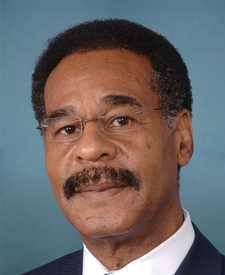
See how Emanuel Cleaver actually votes — against your values.
DeepSyte scores Emanuel Cleaver's record on the issues you care about — not party, not press releases. Take the 2-minute values quiz to see your personal alignment.
Sign in and take the values quiz to see how Emanuel Cleaver's votes line up with your views.
Prediction track record
How often we called Emanuel Cleaver's passage votes correctly, from their stated positions on each bill's tagged topics. Excludes “unclear” calls and abstentions.
No paired statements and votes yet for Emanuel Cleaver
We haven't yet found statement/vote pairs on the same topic for Emanuel Cleaver. This usually means either the rep hasn't taken public positions on bills that have come to a passage vote, or those bills haven't been tagged yet. The checker runs as new press releases and votes come in.
Pro analysis
AI rep analysis — Pro
Get an AI-narrated read on Emanuel Cleaver's full voting record against your stated values — aligned themes, conflicts, notable votes, and what to watch for.
We haven't extracted campaign positions for Emanuel Cleaver yet. Once their campaign website or position pages are processed, this card will track what they said vs how they voted.
Crossing the aisle
No party-break passage votes recorded for Emanuel Cleaver. Either they've voted with Democrats on every substantive passage vote in the corpus, or their tenure overlaps few high-threshold party-line votes so far.
Reps. Cleaver, Wasserman Schultz, Miller, Bacon Introduce Legislation to Accelerate Cures for Polycystic Kidney Disease
Position: The representatives support legislation to expand polycystic kidney disease research at the National Institutes of Health, develop a comprehensive research roadmap, enhance public-private collaboration, and integrate innovative technologies such as precision medicine and artificial intelligence into PKD research and care.
(Washington, D.C.) – Today, U.S. Reps. Emanuel Cleaver, II (D-MO), Debbie Wasserman Schultz (D-FL), Carol Miller (R-WV), and Don Bacon (R-NE) announced the introduction of the PKD Cures Act to expand polycystic kidney disease (PKD) research at the National Institutes of Health and develop a comprehensive roadmap to identify research gaps and priorities, enhance collaboration between the public and private sectors, and develop a plan for integrating innovative technologies such as precision medicine and artificial intelligence into PKD research and care.
Between 500,000 and 600,000 Americans live with PKD, a condition that often leads to end-stage renal disease and kidney failure, necessitating dialysis and transplantation for many patients. It is estimated that cystic kidney diseases, including PKD, cost Medicare approximately $3 billion annually. The PKD Cures Act ensures NIH is dedicating the resources necessary to develop the next generation of cures for individuals living with PKD.
“Despite roughly 600,000 Americans living with Polycystic Kidney Disease across the country, it is a condition that too often gets overlooked, both in terms of public awareness and medical research,” said Cleaver. “There are steps Congress can take to bolster research efforts that will lead to better outcomes and desperately needed relief for Americans facing this chronic disease. I’m proud to introduce the bipartisan PKD Cures Act with Reps. Wasserman Schultz, Bacon, and Miller to begin that process immediately, providing the pathway to an eventual cure.”
“PKD impacts more than half a million Americans, but doesn’t get nearly enough attention. We must pass this legislation to invest in research, improve treatment, and work towards a cure,” said Wasserman Schultz. “I’m proud to introduce this bipartisan bill to support Americans with polycystic kidney disease and their families.”
“Kidney disease remains one of the most underrepresented and underfunded chronic diseases in our nation, despite the profound impact it has on hundreds of thousands of families. Polycystic kidney disease demands greater attention and sustained research efforts. This legislation is a critical step toward expanding research and delivering real hope to the more than half a million Americans living with PKD. By advancing this work, we are ensuring these patients are not overlooked and that they have a clearer path toward effective treatments, and ultimately a cure,” said Miller.
“Polycystic kidney disease affects thousands of families and currently has no cure,” said Bacon. “The PKD Cures Act will expand federal research into the areas experts have identified as the highest priorities and direct NIH to develop a comprehensive roadmap for PKD research and innovation. I’m grateful to work with Rep. Wasserman Schultz on this bipartisan effort to accelerate progress toward better treatments and, ultimately, a cure.”
“The introduction of the PKD Cures Act is a landmark moment for the PKD community. Polycystic kidney disease is one of the most common life-threatening genetic diseases and can impact multiple generations within a single family. Yet until now, Congress has never introduced PKD-specific legislation," said Susan Bushnell, President and CEO of the PKD Foundation. “This bill directs the NIH to invest additional energy and resources into the avenues of research that the country's leading PKD scientists have identified as most promising and establishes a working group to chart a comprehensive roadmap for the future of PKD research and innovation. We are deeply grateful to Representative Wasserman Schultz and her bipartisan colleagues for their leadership and their commitment to the more than 500,000 Americans living with this disease. The PKD Cures Act brings us meaningfully closer to the better treatments, and the cure, that our community has long fought for.”
“The majority of those diagnosed with PKD will face kidney failure — not because we lack the scientific tools to fight back, but because we have never had the coordinated federal investment to apply them,” said Dr. Jesse Roach, Senior Vice President of Government Relations at the National Kidney Foundation. “The PKD Cures Act gives the research community what it has needed for decades: a mandate, a structure, and accountability for results. NKF is proud to stand alongside our friends at PKD Foundation and ask Congress to pass this bill.”
“The American Kidney Fund is proud to support the PKD Cures Act. Polycystic kidney disease is one of the most common genetic disorders and creates very significant challenges for individuals and families; it affects about 500,000 people in the United States and is the fourth leading cause of kidney failure,” said LaVarne Burton, President and CEO of the American Kidney Fund. "Expanding NIH research and developing a comprehensive roadmap will accelerate much-needed breakthroughs in the understanding and treatment of this devastating disease.”
"The American Society of Nephrology (ASN) applauds the introduction of the PKD Cures Act and commends Representative Wasserman Schultz (D-FL), Representative Miller (R-WV), Representative Cleaver (D-MO), and Representative Bacon (R-NE) for their bipartisan leadership to improve the nation's kidney health. This legislation has the potential to accelerate the development of new therapies and ultimately improve the lives of the 600,000 Americans living with PKD," said ASN President Samir M. Parikh, MD, FASN. "It strongly aligns with priorities identified in the kidney community's recent Transforming Kidney Health Research report, and ASN looks forward to working with Congress, the NIH, people living with PKD, and other stakeholders to advance this important legislation and bring us closer to a future free from the burden of PKD.”
The PKD Cures Act is endorsed by the PKD Foundation, the National Kidney Foundation, the American Kidney Fund, and the American Society of Nephrology.
Official text of the PKD Cures Act is available here.
Emanuel Cleaver, II is the U.S. Representative for Missouri's Fifth Congressional District, which includes Kansas City, Independence, Lee's Summit, Raytown, Grandview, Sugar Creek, Greenwood, Blue Springs, North Kansas City, Gladstone, and Claycomo. He is a member of the exclusive House Financial Services Committee and Ranking Member of the House Subcommittee on Housing and Insurance.
Reps. Cleaver, Mejia Demand Trump Administration Automatically Refund Illegal Tariffs Collected from U.S. Small Businesses and Provide Refunds to American Consumers
Position: Representatives Cleaver and Mejia call on the Trump administration to implement an automatic refund system for tariffs they characterize as illegal, prioritizing compensation for small businesses and consumers over the current claims-based process that they argue favors large corporations.
(Washington, D.C.) – Today, U.S. Representatives Emanuel Cleaver, II (D-MO) and Analilia Mejia (D-NJ) led dozens of lawmakers in demanding the Trump administration make consumers eligible for tariff refunds and implement an automatic refund system to pay back small businesses that were harmed by the president’s illegal tariffs. In a letter to Treasury Secretary Scott Bessent, Trade Representative Jamieson Greer, Small Business Administration Administrator Kelly Loeffler, and Customs and Border Protection Commissioner Rodney Scott, the lawmakers called on the administration to forgo the current claims-based refund process that overwhelmingly benefits giant corporations, and instead implement an automatic refund system focused on compensating small businesses while also making consumers eligible for reimbursement.
“While American families and mom-and-pop businesses faced the brunt of the damage caused by the president’s illegal tariff scheme, the administration’s current refund system prioritizes relief for giant corporations without any consideration for those who suffered the most,” said Congressman Cleaver. “We believe it is the American consumers that were forced to pay higher prices and the small businesses weighed down by higher costs that should receive immediate compensation. Unfortunately, that’s not what we’re seeing on the ground under the current system, and it is important that the administration make necessary changes before more damage is done to local economies across the country.”
"Working people and small businesses paid the price for Donald Trump’s illegal tariffs. Families saw higher prices at the grocery store, higher costs for everyday goods, and small businesses were forced to absorb costs they could not afford. Now that the courts have made clear these tariffs were unlawful, the administration cannot leave relief up to a cumbersome claims process that favors large corporations with teams of lawyers and staff. Every small business that was harmed should receive an automatic refund, and American consumers deserve compensation too. We must work to get small businesses and consumers the help they need immediately," said Congresswoman Mejia.
On February 20, 2026, the United States Supreme Court in Learning Resources v. United States found that President Trump exceeded the authority granted to the president under the International Emergency Economic Powers Act (IEEPA) when he implemented wide-ranging tariffs on American businesses nationwide. Before the Court weighed in, the federal government had already collected upwards of $166 billion in duties under IEEPA.
Although the administration established a process for American importers to apply for reimbursement, research shows that roughly 90 percent of tariff costs were passed on to consumers, who have been given no opportunity for relief.
Moreover, the Consolidated Administration and Processing of Entries (CAPE) portal created by U.S. Customs and Border Protection (CBP) has proven to be unreliable, unfair, and unnecessarily burdensome for businesses it is meant to reimburse. While giant corporations have legal departments and administrative teams dedicated to these sorting through these issues, smaller businesses often do not have the resources and staff needed to operate the current system.
In addition to calling on immediate relief for consumers and small businesses, the lawmakers requested responses to the following questions:
What steps are your agencies taking to ensure that small business owners are given adequate resources to obtain refunds and better understand the process, including those who were not designated as the importer of record?
What steps are the administration taking to compensate or support small businesses and workers who may not be eligible for refunds, but nevertheless took on debt, lost revenue, or risk closing as a result of these tariffs?
Why has CBP not made consumers eligible for reimbursement, given that research shows the majority of tariff costs were passed on to everyday Americans, and are there any plans to provide direct relief to American consumers?
Why did CBP elect to pursue an importer-initiated claims process rather than issuing automatic refunds for unliquidated entries, and what actions are being taken to remediate technical failures in the CAPE portal and ensure timely processing of all claims?
Does the administration have a timeline for the processing of all IEEPA refund claims?
The letter was co-signed by Reps. Balint (D-VT), Barragán (D-CA), Bonamici (D-OR), Castro (D-TX), Cisneros (D-CA), Craig (D-MN), Crockett (D-TX), DeGette (D-CO), DeLauro (D-CT), DeSaulnier (D-CA), Escobar (D-TX), Fletcher (D-TX), Garcia (D-TX), Grijalva (D-AZ), Hayes (D-CT), Hoyle (D-OR), Huffman (D-CA), McBride (D-DE), McCollum (D-MN), McIver (D-NJ), Moulton (D-MA), Holmes Norton (D-DC), Pallone (D-NJ), Pettersen (D-CO), Pingree (D-ME), Quigley (D-IL), Ryan (D-NY), Salinas (D-OR), Simon (D-CA), Titus (D-NV), Tonko (D-NY), Wasserman Schultz (D-FL), Watson Coleman (D-NJ), Williams (D-GA).
The official letter from lawmakers is available here.
Emanuel Cleaver, II is the U.S. Representative for Missouri's Fifth Congressional District, which includes Kansas City, Independence, Lee's Summit, Raytown, Grandview, Sugar Creek, Greenwood, Blue Springs, North Kansas City, Gladstone, and Claycomo. He is a member of the exclusive House Financial Services Committee and Ranking Member of the House Subcommittee on Housing and Insurance.
Cleaver, McCollum Introduce Celiac Safety Act to Protect Americans with Celiac Disease
Position: Representatives Cleaver and McCollum introduced legislation requiring the FDA to mandate that food manufacturers label all gluten-containing grains as a major food allergen, strengthening food safety protections for Americans with celiac disease.
(Washington, D.C.) – Today, during Celiac Disease Awareness Month, U.S. Representatives Emanuel Cleaver, II (D-MO) and Betty McCollum (D-MN) introduced the Celiac Safety Act to strengthen food labeling law and protect the roughly 3 million Americans with Celiac Disease. The legislation is the first proposal in Congress to require the Food and Drug Administration (FDA) to mandate the inclusion of “gluten-containing grains” as a major food allergen, ensuring manufacturers label the inclusion of all gluten-containing ingredients in products made available to the public.
“More than three million Americans are impacted by Celiac Disease in the United States, forcing them to maintain a careful diet or face serious health challenges that come with the disease,” said Congressman Cleaver. “Current food labeling law does not account for all gluten-containing ingredients, like barley and rye, making the tedious task of avoiding these ingredients in public products extremely and unnecessarily challenging for many of our neighbors. By taking the simple step of requiring the FDA to include all gluten-containing grains as a major food allergen, we can help prevent unnecessary health struggles for millions across the country.”
“All of us know someone with Celiac disease, and all of us have seen the suffering that can come with it. As co-chair of the Celiac Disease Caucus, I’m glad to co-lead the Celiac Safety Act with Congressman Cleaver. The United States is one of the only developed nations that doesn't require food manufacturers to list gluten as a major allergen. Our bill would change that, helping the nearly three million Americans with the disease to avoid gluten exposure and make informed choices about the food they consume,” said Congresswoman McCollum.
"Gluten-containing grains trigger a serious autoimmune response in celiac disease patients, yet current labeling laws fail to recognize that risk with the same clarity afforded to other ingredients listed as major allergens. Recategorizing gluten-containing grains as a major food allergen would strengthen transparency, reduce preventable medical harm, and help millions of Americans make safe food choices with confidence. The Celiac Disease Foundation applauds Representatives Cleaver and McCollum for introducing the Celiac Safety Act, and we urge members of Congress to pass this important legislation," said Marilyn G. Geller, CEO of Celiac Disease Foundation.
Celiac Disease is an autoimmune disease that causes the immune system to attack the lining of the small intestine when individuals consume the protein gluten, which can be found in wheat, barley, and rye. There is no cure, and the only treatment is adherence to a strict gluten-free diet.
While Australia, New Zealand, Canada, the United Kingdom, and all 27 member states of the European Union require manufacturers to list gluten as a major allergen, the United States only requires manufacturers to list wheat as a major allergen, which does not account for other gluten-containing grains like barley and rye. This makes it difficult for individuals with Celiac Disease to assess the risk of individual food products while managing their condition.
The Celiac Safety Act will protect individuals with Celiac Disease by:
Requiring any product containing wheat, barley, or rye to list “gluten-containing grains” as a major allergen.
Provide an 18-month implementation window for the FDA and manufacturers.
The Celiac Safety Act is endorsed by the Celiac Disease Foundation, American Gastroenterological Association, and Society for the Study of Celiac Disease.
A one-pager for the Celiac Safety Act is available here.
Official text of the Celiac Safety Act is available here.
Emanuel Cleaver, II is the U.S. Representative for Missouri's Fifth Congressional District, which includes Kansas City, Independence, Lee's Summit, Raytown, Grandview, Sugar Creek, Greenwood, Blue Springs, North Kansas City, Gladstone, and Claycomo. He is a member of the exclusive House Financial Services Committee and Ranking Member of the House Subcommittee on Housing and Insurance.
Rep. Cleaver Convenes Manufacturing Roundtable to Strengthen Workforce, Supply Chains, and Regional Competitiveness
Position: Rep. Cleaver convened a manufacturing roundtable to discuss regional economic competitiveness and called for federal investment in domestic manufacturing, infrastructure modernization, and workforce development programs, while criticizing tariff policies that have disrupted supply chains and contributed to manufacturing job losses.
(Kansas City, MO) – Today, U.S. Representative Emanuel Cleaver (D-MO) joined Kansas City-area business leaders and industry stakeholders for a manufacturing roundtable to discuss the challenges and opportunities facing Missouri companies and identify strategies to strengthen the region’s economic competitiveness. This discussion comes amid continued instability in the nation’s manufacturing sector following the implementation of illegal tariff policies that have increased costs for small businesses, disrupted supply chains, and contributed to the loss of roughly 100,000 manufacturing jobs nationwide over the past year. Ongoing economic uncertainty and dysfunction emanating from the White House has made it increasingly difficult for manufacturers in Missouri and across the country to confidently plan and grow.
Hosted in partnership with Missouri Enterprise, the discussion brought together manufacturing leaders to examine workforce shortages, supply chain resilience, infrastructure investment, utility costs, automation and artificial intelligence adoption, and the long-term future of advanced manufacturing in the Kansas City region.
“Manufacturing built the middle class in communities like Kansas City, and it remains essential to our region’s economic future,” said Congressman Cleaver. “Today’s conversation made clear that if we want American manufacturing to continue growing and competing globally, we must invest in workers, modern infrastructure, workforce pipelines, and domestic supply chains. Those investments don’t just impact factory floors, they directly affect farmers, producers, and surrounding rural communities that rely on strong manufacturing and transportation networks to move products, control costs, and stay competitive. We cannot afford to leave small and mid-sized manufacturers behind as technology and global competition continue to evolve.”
During the discussion, participants highlighted ongoing labor shortages, rising utility and operating costs, and the need for stronger public-private partnerships to support workforce development and industrial growth. Participants also discussed the importance of maintaining reliable infrastructure and ensuring manufacturers already operating in the region are not disadvantaged by growing demands on energy and water resources.
Rep. Cleaver emphasized the importance of continued federal investment in domestic manufacturing, infrastructure modernization, and workforce development programs that create pathways to good-paying jobs without requiring a traditional four-year degree.
“The people building, welding, designing, transporting, and producing goods in our communities deserve policies that match the realities of today’s economy. That means listening directly to employers and workers, supporting innovation, and making sure federal policy helps create opportunity right here at home,” said Congressman Cleaver.
Photos from today’s event can be found here.
Emanuel Cleaver, II is the U.S. Representative for Missouri's Fifth Congressional District, which includes Kansas City, Independence, Lee's Summit, Raytown, Grandview, Sugar Creek, Greenwood, Blue Springs, North Kansas City, Gladstone, and Claycomo. He is a member of the exclusive House Financial Services Committee and Ranking Member of the House Subcommittee on Housing and Insurance.
Issues:Economy and Jobs
Cleaver, Davids Demand Answers on Halted Pediatric Brain Cancer Research
Position: Representatives Cleaver and Davids oppose the cessation of federal funding for the Pediatric Brain Tumor Consortium and call for continued or increased federal investment in pediatric cancer research.
(Washington, D.C.) – Today, U.S. Representatives Emanuel Cleaver, II (D-MO) and Sharice Davids (D-KS) have called on the National Institutes of Health (NIH) to provide information into the recent decision to cease federal funding for the Pediatric Brain Tumor Consortium (PBTC), which is the oldest pediatric cancer research network in the U.S. and consists of 15 hospitals and research centers nationwide. The PBTC oversees early-stage clinical trials and plays a critical role in the nation’s work to treat and cure pediatric brain cancer. Following an announcement last year, the administration officially ceased federal funding for the PBTC in March.
“Brain cancer is the deadliest type of cancer among American children,” said Congressman Cleaver. “Rather than ending federal investments into essential studies and clinical trials that could provide the pathway to better treatments and an eventual cure, we should be increasing funding for pediatric cancer research. Even in today’s polarizing political climate, curing childhood cancer should have universal support. If the administration disagrees, I think the American people deserve to know why.”
“Families facing pediatric brain cancer are already dealing with the unimaginable — they should not also have to worry about whether critical research and clinical trials will disappear. Cutting that research threatens to stall lifesaving progress and leaves patients, families, and researchers with an incredible amount of uncertainty. Representative Cleaver and I are demanding answers and fighting to make sure this work continues so more children have a chance to survive and thrive,” said Rep. Sharice Davids.
“The Head for the Cure Foundation strongly supports the continued Federal funding of the Pediatric Brain Tumor Consortium (PBTC), which plays a critical role in advancing innovative research and clinical trials for children diagnosed with brain tumors. Pediatric brain tumors remain the leading cause of cancer-related death among children, underscoring the urgent need for sustained investment in research that can lead to safer treatments, improved outcomes, and ultimately cures,” said Maggie Haynes, Executive Director, Head for the Cure Foundation.
The official letter from Reps. Cleaver and Davids is available here.
Emanuel Cleaver, II is the U.S. Representative for Missouri's Fifth Congressional District, which includes Kansas City, Independence, Lee's Summit, Raytown, Grandview, Sugar Creek, Greenwood, Blue Springs, North Kansas City, Gladstone, and Claycomo. He is a member of the exclusive House Financial Services Committee and Ranking Member of the House Subcommittee on Housing and Insurance.
House of Representatives Passes Bipartisan Housing Package with Numerous Bills Co-Authored by Congressman Cleaver
Position: Congressman Cleaver supports passage of the bipartisan 21st Century ROAD to Housing Act, which includes seven bills he co-authored. The legislation aims to reduce housing costs through regulatory reform and increased affordable housing development.
(Washington, D.C.) – Today, the House of Representatives passed a bipartisan amendment the 21st Century ROAD to Housing Act, a legislative vehicle that was negotiated by, and includes seven bipartisan bills sponsored by, U.S. Representative Emanuel Cleaver, II, Ranking Member of the Subcommittee on Housing & Insurance. Ranking Member Cleaver spoke in support and voted in favor of the amendment, which will now move to the U.S. Senate for consideration.
“While the American people are drowning under the rising cost-of-living crisis, Congress has an opportunity to provide a desperately needed lifeline by passing comprehensive, bipartisan housing reforms that will lower costs for families nationwide,” said Ranking Member Cleaver. “For over a year, I have worked with Chairman Hill, Ranking Member Waters and Chairman Flood to craft legislation that will cut through unnecessary regulations and boost the development of affordable housing. I’m pleased that work has paid off with today’s legislation, which was passed with overwhelming bipartisan support. Now, I look forward to working with our Senate colleagues to get this legislation across the finish line and deliver relief to the American people.”
Provisions included in the bipartisan amendment sponsored by Congressman Cleaver include:
Innovation Fund: The innovation fund is a section first proposed in the American Housing and Economic Mobility Act, introduced by Ranking Member Cleaver, Senator Elizabeth Warren (D-MA), Senator Raphael Warnock (D-GA) and Representative Ayanna Pressley (D-MA). This section authorizes a seven-year $200 million annual competitive grant program for jurisdictions pursuing innovative policies, interventions, or programs for increasing housing supply.
HOME Reform Act: Introduced by Ranking Member Cleaver and Chairman Flood (R-NE), the legislation is the most significant reform to the HOME Investment Partnerships Program since authorization in 1990. The legislation includes provisions introduced by Representative Joyce Beatty (D-OH) and would modernize and update the federal government’s largest block grant program dedicated exclusively to creating and preserving affordable housing for low-income households.
Rural Housing Service Program Improvements: The legislation includes sections of the Rural Housing Service Reform Act, introduced by Ranking Member Cleaver and Representative Zach Nunn (R-IA), representing the most significant US Department of Agriculture Rural Housing Service reforms in decades. The included sections would allow for greater use of the Rural Housing Service Section 504 Home Repair Program, ensure continued rental assistance for tenants in properties with expiring protections, and make it easier for nonprofits to buy and preserve housing.
Choice in Affordable Housing Act: The legislation includes sections of the Choice in Affordable Housing Act, introduced by Ranking Member Cleaver and Representative Mike Lawler (R-NY), representing a major reform to HUD’s Section 8 program. The included sections would streamline inspections, increase access to housing for voucher holders, and encourage private landlord participation.
Manufactured Housing Innovations: The legislation includes the Housing Supply Expansion Act of 2025, introduced by Rep. Cleaver and Rep. Rose (R-TN), which would update the federal definition of manufactured housing and allow for more efficient and cost-effective designs. Additionally, the housing package includes legislation introduced by Chairman Flood (R-NE) and Ranking Member Cleaver that would streamline energy efficiency and safety standards for manufactured housing.
HUD Accountability Act: Introduced by Ranking Member Cleaver and Rep. Lawler (R-NY), the HUD Accountability Act requires the Secretary of HUD to testify on an annual basis before Congress.
Official text of the bipartisan amendment is available here.
A section-by-section of the bipartisan amendment is available here.
Emanuel Cleaver, II is the U.S. Representative for Missouri's Fifth Congressional District, which includes Kansas City, Independence, Lee's Summit, Raytown, Grandview, Sugar Creek, Greenwood, Blue Springs, North Kansas City, Gladstone, and Claycomo. He is a member of the exclusive House Financial Services Committee and Ranking Member of the House Subcommittee on Housing and Insurance.
Congressman Cleaver Joins Bipartisan Push to Create Stronger Oversight of Missouri River Management
Position: Congressman Cleaver supports the creation of an Inland Navigation Construction Organization (INCO) within the Army Corps of Engineers to improve oversight, transparency, and coordination of federal inland waterway infrastructure projects.
(Washington, D.C.) – Today, U.S. Representative Emanuel Cleaver, II (D-MO) announced that he has joined a bipartisan call for stronger oversight of Missouri River Management. In a letter to the Army Corps of Engineers delivered last week, Congressman Cleaver joined Reps. Bob Onder (R-MO) and Chris Deluzio (D-PA), along with 34 other lawmakers, in calling for the creation of an Inland Navigation Construction Organization (INCO) within the Army Corps of Engineers (USACE) Headquarters to coordinate inland waterway infrastructure projects at the federal level.
The proposed INCO would strengthen transparency, establish clear accountability across all levels of project management, and improve the coordination of planning, strategy, and execution for critical inland waterway infrastructure projects. By creating a centralized system of oversight, and checks and balances, the INCO would help ensure federal investments are managed more efficiently and effectively.
“Proper coordination is critical to efficient and effective management of taxpayer dollars,” said Congressman Cleaver. “By establishing an organization within the Army Corps of Engineers with the sole responsibility of overseeing federal investments dedicated to our nation’s inland waterway system, we can ensure projects move forward in a timely manner and without wasteful spending. I am proud to join colleagues in this bipartisan push to establish the Inland Navigation Construction Organization, which will benefit communities across the Show Me State.”
“America’s inland waterways are one of our greatest natural advantages over our competitors, and they’re currently managed through a patchwork of disconnected regional structures, with limited centralized oversight and little long-term strategic coordination. Actions taken upstream on the Mississippi and Missouri Rivers have significant downstream consequences for communities in Missouri’s Third District, yet no single entity is responsible for evaluating inland navigation projects as a whole or ensuring that these federal projects are being run effectively,” said Congressman Onder. “Establishing INCO would strengthen accountability and help ensure taxpayer dollars are invested efficiently to support the long-term reliability, competitiveness, and resilience of America’s inland waterways.”
“Western Pennsylvania’s inland waterways helped power the Industrial Revolution and remain critical to our regional economy today, supporting manufacturing, energy, and good-paying jobs across our Commonwealth,” said Congressman Deluzio. “That’s why I support establishing an Inland Navigation Construction Organization within the U.S. Army Corps of Engineers to strengthen oversight of federal infrastructure investments and ensure America’s inland waterway system remains competitive for generations to come.”
"In the St. Louis region, our river is a huge deal– serving as an opportunity for regional growth," said Congressman Wesley Bell (D-MO). "Only three major inland navigation projects have been finished over the past almost three decades. We can do better. I’m proud to support this bipartisan letter because Missouri’s First District, and all of the other areas impacted, deserve to have more accountability and resources put into the management and development of inland waterways. By fixing the Army Corps of Engineers’ project delivery model, we can expand work opportunities in the region and promote economic development."
“Missouri’s inland waterways are vital to our economy, but delays and fragmented management have slowed critical improvements for too long. I support creating an Inland Navigation Construction Organization within the U.S. Army Corps of Engineers to improve coordination, accountability, and deliver these projects more efficiently,” said Congressman Mark Alford (R-MO).
The inland waterway system is a cornerstone of the American economy, moving hundreds of millions of tons of commerce annually and supporting agriculture, energy production, manufacturing, and exports across the country. However, aging locks and dams continue to create bottlenecks that increase transportation costs, disrupt supply chains, and weaken America’s global competitiveness. Modernizing this infrastructure is capital-intensive, spans multiple states and decades, and requires consistent, long-term oversight from a structure that does not currently exist in adequate form.
Despite years of sustained policy changes and congressional appropriations, the inland waterway modernization program has produced troubling results. Only three major inland navigation projects have been completed in the past 28 years, while numerous ongoing projects have experienced significant cost overruns and schedule delays, in some cases extending a decade or more beyond original projections.
Inland waterways are national infrastructure assets that require national-level coordination. The time has come to treat the inland waterway modernization program as what it is: a single, interconnected national program that demands unified leadership and strategic oversight.
Importantly, the INCO would not remove project delivery authority from USACE Districts or Divisions, limit Congress’s authority over appropriations, or require new statutory authority for USACE implementation. Instead, it would reorganize and strengthen coordination of existing responsibilities to improve accountability, efficiency, and long-term program management.
The official letter from lawmakers is available here.
Emanuel Cleaver, II is the U.S. Representative for Missouri's Fifth Congressional District, which includes Kansas City, Independence, Lee's Summit, Raytown, Grandview, Sugar Creek, Greenwood, Blue Springs, North Kansas City, Gladstone, and Claycomo. He is a member of the exclusive House Financial Services Committee and Ranking Member of the House Subcommittee on Housing and Insurance.
Position: Rep. Cleaver opposes the Farm Bill as passed, citing historically large cuts to SNAP that harm 40 million Americans and inadequate support for family farmers facing tariff-driven hardship, though he notes his successful amendment to fund tree-planting for utility cost reduction.
(Washington, D.C.) – Today, U.S. Representative Emanuel Cleaver, II (D-MO) released the following statement after voting against the Farm Bill, which was passed by the House of Representatives without traditional broad bipartisan support.
“Historically, the Farm Bill has been broadly bipartisan legislation that marries food and farm priorities to the benefit of Americans in every community across the country. Regretfully, after making the largest cut to SNAP in history and slashing food assistance for 40 million Americans, my colleagues across the aisle drafted a partisan Farm Bill that locks those cuts into place as grocery prices soar and families go hungry.
“Meanwhile, despite farm bankruptcies continuing to skyrocket due to the president’s reckless tariffs and disastrous war driving up prices, today’s Farm Bill fails to provide any additional aid that was promised to family farmers who need it most.
“While I am proud I was able to improve the bill by includingmy legislation to lower utility costs by establishing a program that would provide $50 million per year to plant millions of trees in communities nationwide, I do not believe the final bill meets this moment.
“As currently drafted, today’s legislation fails farmers and families alike. I believe Congress can do better, and it is my hope that the Senate will work together to craft a truly bipartisan and comprehensive Farm Bill that provides meaningful relief to Americans who desperately need it. When that occurs, I look forward to supporting the final package.”
###
Emanuel Cleaver, II is the U.S. Representative for Missouri's Fifth Congressional District, which includes Kansas City, Independence, Lee's Summit, Raytown, Grandview, Sugar Creek, Greenwood, Blue Springs, North Kansas City, Gladstone, and Claycomo. He is a member of the exclusive House Financial Services Committee and Ranking Member of the House Subcommittee on Housing and Insurance.
Congressman Cleaver’s Statement on the Supreme Court’s Decision to Gut the Voting Rights Act
Position: Rep. Cleaver opposes the Supreme Court's decision to weaken the Voting Rights Act and calls for Congress to enact legislation protecting voting rights and preventing racial gerrymandering.
(Washington, D.C.) – Today, U.S. Representative Emanuel Cleaver, II (D-MO) released the following statement after the Supreme Court released their decision in Louisiana v. Callais, effectively gutting the Voting Rights Act of 1965.
“For over sixty years, the Voting Rights Act has been a vital pillar of American democracy, ensuring fair representation and the protection of voting rights that are entitled to every citizen across this great nation. Passage of this landmark legislation, along with the Civil Rights Act, was the seminal moment of the Civil Rights Movement and another step in America’s march toward becoming a true multi-racial democracy, helping to fulfill the promise of our nation’s founding.
“Today’s appalling decision by the Supreme Court to unilaterally gut this historic law is not only wrong—it is deeply disrespectful of the generations of African Americans and civil rights advocates who gave their freedom, their blood, and even their lives to make it possible. With one fell swoop, this increasingly partisan and unaccountable court has turned the clock back decades to a time when state legislatures were legally allowed to silence the voices of entire communities based on the color of their skin.
“This decision reiterates that the current Supreme Court is out of step with the American people. And it was not done in a vacuum; state legislatures have already acted to redraw congressional maps in Missouri and Texas to disenfranchise voters, and this decision will only accelerate those efforts nationally.
“Now more than ever, it is incumbent on lawmakers who genuinely believe in the principles of American democracy to reject the court’s invitation to racially gerrymander our fellow citizens out of representation in the halls of power. Congress can, and must immediately, enact legislation that puts an end to these undemocratic practices and protects the voices and voting rights of all Americans. Failure to do so would be an everlasting stain on this chapter of American history.”
###
Emanuel Cleaver, II is the U.S. Representative for Missouri's Fifth Congressional District, which includes Kansas City, Independence, Lee's Summit, Raytown, Grandview, Sugar Creek, Greenwood, Blue Springs, North Kansas City, Gladstone, and Claycomo. He is a member of the exclusive House Financial Services Committee and Ranking Member of the House Subcommittee on Housing and Insurance.
Congressman Cleaver Reintroduces Legislation to Strengthen Civics Education in Schools
Position: Rep. Cleaver reintroduced legislation to increase federal funding for civics education in schools by $70 million through grants supporting innovative programs, K-12 instruction, and high-need communities.
(Washington, D.C.) – Today U.S. Representative Emanuel Cleaver, II (D-MO) reintroduced legislation to strengthen civics education in schools across the country. The Civics Learning Act would reaffirm Congress’ commitment to protecting American democracy by ensuring schools have the resources needed to provide a proper, robust education in civics and our constitutional system of government to students in every community.
“To guarantee our democratic ideals live on for generations to come, we must ensure the youth of America are well-versed in the legal framework and concepts of our constitutional republic, as well as their responsibilities as citizens to uphold it,” said Congressman Cleaver. “Unfortunately, with civics scores declining for the first time in the history of the National Assessment of Education Progress Civics Exam in 2022, it’s clear that we have work to do. My Civics Learning Act will reverse this troubling trend by equipping schools with the resources necessary to give students a thorough and well-rounded education in modern civics.”
For the first time in the history of the National Assessment of Education Progress Civics Exam, civics scores declined in 2022, with less than one quarter of eighth graders performing at or above a proficient level on the exam, demonstrating a need to bolster civics education in schools. While there are numerous reasons that contribute to America’s decline in civic understanding, a 2018 report from the Brown Center on Education Policy found that social studies teachers are some of the least supported teachers in schools.
Rep. Cleaver’s Civics Learning Act would help to bolster civics education in Missouri and across the country by amending the Elementary and Secondary Education Act of 1965 to increase funding by $70 million for civics education and awarding grants that:
Support investments in innovative and evidence-based civics learning and teaching programs.
Fund elementary, middle, and high school programs to ensure a lasting foundation of civic knowledge accumulated through years of education.
Prioritize funding for high-need schools, underserved populations, and low-access areas such as rural and inner-city communities, where civics education scores are lower than average.
The Civics Learning Act is cosponsored by Reps. André Carson (D-IN), Sean Casten (D-IL), Mark DeSaulnier (D-CA), Dwight Evans (D-PA), Josh Gottheimer (D-NJ), Bill Keating (D-MA), Robin Kelly (D-IL), Stephen Lynch (D-MA), Betty McCollum (D-MN), Gwen Moore (D-WI), Kevin Mullin (D-CA), Jerry Nadler (D-NY), Eleanor Holmes Norton (D-DC), Deborah Ross (D-NC), Linda Sánchez (D-CA), Mary Gay Scanlon (D-PA), Jan Schakowsky (D-IL), Dina Titus (D-NV), Jill Tokuda (D-HI), Nydia Velázquez (D-NY), and Frederica Wilson (D-FL).
Official text of the Civics Learning Act is available here.
Emanuel Cleaver, II is the U.S. Representative for Missouri's Fifth Congressional District, which includes Kansas City, Independence, Lee's Summit, Raytown, Grandview, Sugar Creek, Greenwood, Blue Springs, North Kansas City, Gladstone, and Claycomo. He is a member of the exclusive House Financial Services Committee and Ranking Member of the House Subcommittee on Housing and Insurance.
Source: GDELT 2.0 GKG, filtered to a curated list of national outlets. Inclusion is not endorsement; opinion pieces and reported news are mixed.
Recent stock activity
Periodic transaction reports filed under the STOCK Act — disclosed by the rep, sourced from public filings.
No disclosed trades on record.
Source: open-data mirrors of the Senate eFD and House Clerk financial-disclosure systems. Disclosure within 30 days of trade is required by law (45 for spouse/dependent trades).
Top PAC donors · 2026 cycle
Political action committees that gave the most to this rep's principal campaign committee this cycle. PAC giving is direct organizational support — industry, ideological, or leadership.
1.VOTESANE PACIdeological31 contributionsSingle-issue advocacy PAC — supports candidates based on positions related to mental health, healthcare policy, or rational governance approaches.AI · low$299,200
2.UNITED STEELWORKERS OF AMERICA POLITICAL4 contributions$20,000
3.UAW - V - CAP (UAW VOLUNTARY COMMUNITY ALabor2 contributionsTrade-union PAC of the United Auto Workers (UAW) — backs candidates supporting collective bargaining, worker protections, and auto-industry jobs.AI$10,000
4.UNITED ASSOCIATION POLITICAL EDUCATION CLabor2 contributionsTrade-union PAC for plumbers, pipefitters, and mechanical workers — backs prevailing-wage protections, infrastructure investment, and project labor agreements.AI$10,000
5.INTERNATIONAL BROTHERHOOD OF ELECTRICALLabor2 contributionsTrade-union PAC for the International Brotherhood of Electrical Workers (IBEW) — backs prevailing-wage protections, infrastructure investment, and pro-union labor policies.AI$10,000
6.WSIA (FKA NAPSLO)2 contributions$10,000
7.MANUFACTURED HOUSING INSTITUTE PAC2 contributions$10,000
9.NEW YORK LIFE INSURANCE PAC2 contributions$10,000
10.AMERICAN COUNCIL OF LIFE INSURERS PAC2 contributions$10,000
Source: OpenFEC (api.open.fec.gov) Schedule A receipts where contributor type is “committee.” Aggregated by contributing committee. Self-transfers from joint-fundraising / victory committees are excluded.
Top individual contributors · 2026 cycle
Itemized individual contributions over $200 to this rep's campaign committee, aggregated by donor employer. PAC giving is shown above; this section is people, not organizations.
1.SELF$31,938
2.COMMUNITY VOLUNTEER$9,126
3.RETIRED.$7,576
4.HPI$7,000
5.KIT BOND STRATEGIES, LLP.$6,250
6.THEGROUP$6,000
7.NORHLANE CAPITAL PARTNERS$5,750
8.DEARBORN PARTNERS$5,000
9.PELOFSKY CONSULTING$4,500
10.GATES BAR-B-QUE$4,000
Source: OpenFEC Schedule A receipts where contributor type is “individual,” aggregated by the donor's self-reported employer. This is a geographic / industry correlation, not a corporate endorsement.