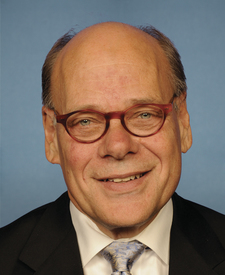
See how Steve Cohen's votes line up with your values.
DeepSyte scores Steve Cohen's record on the issues you care about — not party, not press releases. Take the 2-minute values quiz to see your personal alignment.
Sign in and take the values quiz to see how Steve Cohen's votes line up with your views.
Prediction track record
How often we called Steve Cohen's passage votes correctly, from their stated positions on each bill's tagged topics. Excludes “unclear” calls and abstentions.
4 predictions on record · none have been resolved by a passage vote yet. Check back as bills move.
Pending vote119-hjres-152
Proposing an amendment to the Constitution of the United States to ensure that only citizens are eligible to vote in Federal elections.
No paired statements and votes yet for Steve Cohen
We haven't yet found statement/vote pairs on the same topic for Steve Cohen. This usually means either the rep hasn't taken public positions on bills that have come to a passage vote, or those bills haven't been tagged yet. The checker runs as new press releases and votes come in.
Pro analysis
AI rep analysis — Pro
Get an AI-narrated read on Steve Cohen's full voting record against your stated values — aligned themes, conflicts, notable votes, and what to watch for.
We haven't extracted campaign positions for Steve Cohen yet. Once their campaign website or position pages are processed, this card will track what they said vs how they voted.
Crossing the aisle
Passage votes where Steve Cohen broke ranks with ≥75% of Democrats. Threshold catches substantively partisan splits; unanimous-ish or close votes are excluded.
Congressman Cohen Calls on Professional and College Football Programs to Protect Against Brain Injuries
Position: Calls on professional and college football programs to better protect players from traumatic brain injuries, including increased penalties for head hits, and urges the Judiciary Committee to hold a follow-up hearing and the next Congress to create a select committee on the issue.
WASHINGTON – Congressman Steve Cohen (TN-9), a co-chairman of the Congressional Collegiate Sports Caucus long concerned about traumatic brain injuries in football, released the following statement after recent high-profile injuries:
“Both professional and college football have known for decades about the risks of traumatic brain injuries. There should be increased penalties for players who hit others in the head as happened to Dante Moore with his season-ending concussion. The situation needs to be remedied, not just talked about. I called upon NFL Commissioner Roger Goodell to take the issue more seriously at a hearing on the subject at the Judiciary Committee in 2009. These injuries reflect a cultural insensitivity that must be addressed.
“Yesterday’s article in The New York Times demonstrates how much more work needs to be done. We cannot let this fall off the radar. I urge the Judiciary Committee to convene a follow-up hearing when we return after the elections, and I urge the next Congress to create a select committee to investigate this issue.”
Congressman Cohen, a senior member of the Judiciary Committee, questioned Commissioner Godell at a hearing entitled “Legal Issues Relating to Football Head Injuries” called by its then-Chairman John Conyers of Michigan in October of 2009, and later participated in a field hearing in Detroit on the same subject. He has been a staunch advocate of safety measures in sports for his entire career.
# # #
Issues:
Health Care
Shelby County
Tennessee
Congressman Cohen Announces DOT Grants to University of Memphis and Shelby County Government
Position: Announces federal DOT grants to the University of Memphis and Shelby County Government for post-crash care planning and highway-rail crossing safety evaluation, and states that these traffic safety investments will save lives.
WASHINGTON – Congressman Steve Cohen (TN-9) today announced that the University of Memphis will receive a federal Department of Transportation (DOT) grant of $3,113,175 to develop a Post-Crash Care Safety Action Plan and conduct demonstration activities at its Millington campus evaluating trauma care, dispatch, traffic accident management and incident command performance. Shelby County Government will receive a DOT grant of $640,000 to review and evaluate alternatives for three high-priority highway-rail crossings and look at the safety of 23 others.
Congressman Cohen made the following statement:
“These investments in traffic safety will ultimately save lives. Better handling of traffic accidents and the use of best practices will pay dividends well into the future. An evaluation of our many road-railroad crossings should result in fewer dangerous situations.”
Issues:
9th District
Environment
Memphis
Millington
Shelby County
Tennessee
Transportation
Remembering those unjustly deprived of their freedom
Position: The statement calls for remembrance of individuals imprisoned for their opinions or identity, asserting that political imprisonment in Russia, Belarus, Georgia, Azerbaijan, and Türkiye is unjust and that freedom of political prisoners is inseparable from broader security and peaceful coexistence.
On the occasion of the International Day of Political Prisoners (30 October), PACE’s General Rapporteur on Political Prisoners, Azadeh Rojhan (Sweden, SOC), and the OSCE Parliamentary Assembly’s Special Representative on Political Prisoners, Steve Cohen (United States of America), made the following statement:
“On 30 October 1974 political prisoners across the Soviet Union staged a one-day hunger strike to protest against their treatment and to draw the world’s attention to their plight. The protest gave rise to a day of remembrance that remains deeply relevant today.
More than five decades later, Russian prisons and penal colonies are again holding innocent people whose only ‘crime’ is to peacefully oppose tyranny and aggression, defend human rights or stand up for the truth.
Political prisoners’ freedom is inseparable from our own. Vladimir Kara-Murza, a former political prisoner, has described internal oppression and external aggression as two sides of the same coin. When fear is imposed on society and independent voices are silenced, the foundations of peaceful coexistence begin to crumble. Russia’s war of aggression against Ukraine has made it painfully clear that unchecked authoritarianism does not stop at a country’s border.
Remembering those who are unjustly imprisoned helps ensure that their courage and suffering are not hidden, their names are not forgotten, and that those responsible cannot count on the world’s indifference. Today, we remember some of those unjustly deprived of their freedom for their opinions or simply because of who they are:
Yuri Dmitriev in Russia, a historian whose work documenting the truth about Soviet terror and repression made him a target of persecution; and Zarema Musaeva, whose arbitrary detention in Chechnya, in retaliation for her exiled sons’ opposition to the Chechen authorities, was confirmed by the European Court of Human Rights;
Vadym Golda, Maxim Petrov, and Dmytro Shabanov, former OSCE officials arbitrarily convicted by Russian-controlled courts in occupied Ukraine, as well as the thousands of other Ukrainian civilians arbitrarily imprisoned in Russia and the occupied territories of Ukraine because of their nationality;
Dmitri Laevski in Belarus, a lawyer removed from the Bar for defending opponents of the regime and recently sentenced to three years’ imprisonment on politically motivated charges;
Mzia Amaglobeli in Georgia, an independent journalist imprisoned amid anti-government protests and a broader crackdown on media freedom;
“Anar Mammadli and Ali Karimli in Azerbaijan, whose cases, alongside that of Ulvi Hasanli, Farid Mehralizada and Ulviyya Ali, reflect the level of suppression of freedom of expression and independent civic and political activity;”
Osman Kavala in Türkiye, who remains behind bars despite three judgments of the European Court of Human Rights ordering his immediate release.
Every release is welcome. But arbitrary detention must not become a means of extracting political or economic concessions; it brings shame on the authorities and individuals responsible. The release of those unjustly detained is an obligation, not a bargaining chip that rewards the very practices that made their imprisonment possible.
On this International Day of Political Prisoners, we pledge to continue advocating for the release of all those imprisoned for exercising their fundamental rights. Their names must be kept on the international agenda until they can return home, free to live without fear of persecution for what they peacefully stand for.”
# # #
Issues:
9th District
Foreign Affairs
Memphis
Shelby County
Tennessee
Congressman Cohen Introduces Comprehensive Reform of Controlled Substances Act
Position: The release describes Congressman Cohen's introduction of the Public Health and Research Reforms in Controlled Substances Act, which would revise the 1970 Controlled Substances Act by eliminating weight-based drug mandatory minimums, applying retroactive sentencing changes, reviewing drug scheduling, and shifting certain scheduling and research-registration authority from the Attorney General and DEA to the HHS Secretary.
WASHINGTON – Congressman Steve Cohen (TN-9), a senior member of the Judiciary Committee and a co-chairman of the Congressional Biomedical Research Caucus, has introduced the Public Health and Research Reforms in Controlled Substances Act (CSA). The comprehensive measure revises major portions of the 1970 CSA, updating the federal drug-regulation framework to align with public health, equal justice, and scientific accuracy goals.
Its six titles address nearly all aspects of federal drug control, from declaring its purpose and aligning scheduling parameters with modern science and public health priorities, to adjusting the assessment of harm, eliminating weight-based drug mandatory minimum penalties, directing the Sentencing Commission to account for these changes and provide for retroactivity in sentencing, while maintaining sufficient enforcement tools for law enforcement to go after major narcotic traffickers. The new Schedules would provide for review of all controlled substances to evaluate their new schedule, with about 30 substances, including fentanyl, morphine, methamphetamine, psilocybin, and ibogaine, set as the first compounds to be evaluated. None of these would be descheduled, but rather more precisely tailored to the schedule, balancing harms with their benefits.
The measure substantially expands upon the Congressman’s Controlled Substances Act Clarification in Science Act introduced in June . The Public Health and Research Reforms in Controlled Substances Act is the most comprehensive package of reforms to the CSA since the law was enacted in 1970. The bill makes changes to nearly every section of the CSA, and is Congressman Cohen’s 500th sponsored piece of legislation since he entered Congress.
The bill presents a flexible framework to ensure enhanced transparency in scheduling action and goals, so that government agencies can more robustly track and coordinate strategies on emerging drug trends or chemicals, strengthen and streamline scientific research, and focus agency actions on their strengths – where the Department of Health and Human Services (HHS) can focus on science and medicine, and the Drug Enforcement Administration (DEA) on preventing diversion and illicit use of controlled substances.
Notably, the bill does the following:
New schedules that allow for greater granularity and eliminate internal inconsistencies.
New statutory factor analysis for drug scheduling, adding an external advisory committee that scores and weighs each factor to improve transparency.
Altered some delegations of authority from the Attorney General (delegated to DEA) to the Secretary of HHS;
In setting production quotas for drugs, transferred authorities to the HHS Secretary from the AG.
Researchers will now obtain their registration from HHS and the HHS Secretary will now schedule substances rather than the AG.
Strengthened scientific research language in 2025’s HALT Fentanyl Act.
Created blanket Controlled Substances research licenses.
Corrected the definition of the term “controlled substance analogue”.
Enhanced White House Office of National Drug Control Policy (ONDCP) coordination efforts for emerging drug trends initially authorized in SUPPORT Act.
Updated “emergency scheduling” of drugs or substances.
Eliminated mandatory minimum drug penalties while preserving the ability for judges to issue sentences.
Remove marijuana from the CSA.
Congressman Cohen made the following statement:
“Most Americans believe the ‘war on drugs’ has been a failure at cross purposes with good public policy and aimed largely at minorities with draconian mandatory minimum sentences for minor offenses that most now believe aren’t really offenses at all. This bill would set comprehensive policies on all aspects of drug regulation while also defining the purpose of federal involvement. A thoughtful review of national drug policy is long overdue. This measure would start the process of aligning the law with coherent public policy.”
The measure assigns sensible jurisdictional guidelines with the Department of Health and Human Services focusing on science and medicine and the Drug Enforcement Administration (DEA) targeting diversion and illicit use of controlled substances.
To see the bill text, click here.
To see the section-by-section analysis, click here.
Congressman Cohen has also written a substantial document that explains the ideas behind the changes to the law. It was drafted to serve as a reference to future Congresses on the intent, rationale, and the ideas which went into shaping the bill. To see this document, click here.
The bill was endorsed by the Multidisciplinary Association for Psychedelic Studies (MAPS), Students for Sensible Drug Policy (SSDP), the Drug Policy Alliance and the National Organization for the Reform of Marijuana Laws (NORML)
Sia Henry, J.D., Associate Director of Policy and Advocacy, Multidisciplinary Association for the Advancement of Psychedelic Studies (MAPS):
“This proposed CSA rewrite offers an important opportunity to begin reimagining drug policy by grounding it in scientific evidence, public health, and a more honest assessment of both the risks and therapeutic benefits of controlled substances. For decades, the War on Drugs has devastated Black and brown communities, criminalizing people who use and sell drugs while fueling mass incarceration, family separation, intergenerational trauma, and profound racial and socioeconomic inequity. I’m especially encouraged by the bill’s removal of mandatory minimum sentences and its provision of retroactive application, which offers a first step toward addressing the harms experienced by people already caught in the War on Drugs; its clear instructions for the US Sentencing Commission to revise its guidelines for drug-related offenses; and its dual-track scheduling framework. Together, these changes challenge the assumption that we can criminalize and punish our way out of public health challenges and begin to move us toward a future that confronts the human costs of prohibition rather than perpetuating them”
Kat Murti, Executive Director, Students for Sensible Drug Policy (SSDP):
“For decades, the War on Drugs has punished people for using substances while punishing scientists for trying to understand them. Mandatory minimum sentences have stolen decades from families, while outdated drug scheduling has blocked research that could save lives. Congressman Cohen understands these are two sides of the same failed policy, and this legislation takes on both.
“I’ll never forget Congressman Cohen standing in the rain outside the Capitol this past April 20, shoulder to shoulder with men who had been sentenced to life in prison for cannabis and had already lost decades of their lives behind bars. While much of the country celebrates the cannabis industry on 4/20, SSDP and our allies were there to remind Congress that legalization means little to those still imprisoned for it. Congressman Cohen didn’t just join us for the press conference. He also sponsored our congressional briefing that brought the voices of people directly harmed by prohibition into the halls of power, where their stories too often go unheard. That's the kind of leader Steve Cohen has always been: someone who doesn't just talk about justice, but shows up for the people who have been denied it.
“Research harm is one of the most overlooked consequences of the War on Drugs. For decades, the federal government has made it extraordinarily difficult for scientists to study certain substances, then used the lack of research to justify keeping them prohibited. It's a vicious cycle that has held back scientific discovery, delayed promising treatments, and prevented us from developing a better understanding of both the benefits and risks of these substances.
“Congressman Cohen’s legislation recognizes that drug scheduling should follow science, not stand in its way. By reevaluating outdated classifications, distinguishing a substance's potential risks from its therapeutic value, and reducing unnecessary barriers to research, this bill would help give scientists the freedom to ask important questions and pursue answers that could save lives.
“We cannot make sensible drug policy without good science, and we cannot have good science when our drug policies make that research unnecessarily difficult. Congressman Cohen understands that ending the War on Drugs means ending the harm it does to scientific progress, too.
“It’s fitting that his 500th and final bill takes aim at the very foundations of the War on Drugs. Congressman Cohen has spent his career fighting for drug policies grounded in science, compassion, and human rights. This legislation is a powerful reflection of that legacy, and a challenge to Congress to finish the work.”
Morgan Fox, Political Director, NORML:
“For more than half a century, America's failed drug policies have been built on the shaky and unscientific foundation of the scheduling system defined in the Controlled Substances Act. This system has never accurately categorized psychoactive substances based on rigorous analysis of their real-world uses and impacts, most clearly evidenced by the placement of cannabis in the most restrictive and dangerous class. The end result has been unfathomable human suffering around the globe. We commend Rep. Cohen for introducing this comprehensive and long overdue legislation to fix the problem at its source and take the first big step toward rational, evidence-based drug policy in the future.”
Eric E. Sterling, former Counsel to the House Judiciary Committee (1979-1989):
“Rep. Steve Cohen has, once again, made a major legislative contribution in drafting the ‘Public Health and Research Reforms in Controlled Substances Act of 2026.’ I worked on drug legislation for my entire service with the Congress. The need to modernize the Controlled Substances Act of 1970 has long been apparent. In more than a half century since its enactment this major federal law, which has sent more men and women to federal prison than any other federal law, has not been thoughtfully considered by Congress. This bill will reform many of the defective provisions that I helped enact in the haste and fear of the Reagan-era ‘war on drugs’. I hope the next Congress quickly takes up Rep. Cohen’s reforms. This bill would enable the just prosecution and punishment of drug offenders and clarify many ambiguities and inconsistencies that have been introduced into the law over the years.”
# # #
Issues:
9th District
Civil Rights
Crime and Criminal Justice Reform
Judiciary
Memphis
Shelby County
Representatives Cohen, Kamlager-Dove and Scott Introduce the Death in Custody Reporting Reform Act
Position: The release supports legislation to reform federal reporting of deaths in law enforcement custody, including clearer reporting definitions, expanded facility coverage, and a death-certificate checkbox. It also calls for a National Institute of Justice study with policy recommendations.
WASHINGTON – Representatives Steve Cohen (TN-9), Sydney Kamlager-Dove (CA-37) and Bobby Scott (VA-3) have introduced the Death in Custody Reporting Reform Act (DCRRA) to correct deficient and incomplete reporting of deaths on law enforcement custody despite prior efforts to assure accurate reporting in the Death in Custody Reporting acts of 2000 and 2013. The bill eliminates the vagueness of what law enforcement agencies are required to report deaths in custody, including deaths in healthcare settings, temporary detention centers and immigration detention centers, shifts data collection back to a statistical agency, requires the addition of a checkbox to death certificates to indicate a death in custody, and directs the National Institute of Justice to study aggregate deaths in custody and recommend policy improvements.
Congressman Cohen made the following statement:
“The United States houses nearly 25 percent of the world’s prison population yet the U.S. government does not know how many people die in law enforcement custody despite previous efforts to correct this deficiency. Our bill will finally make clear who and how law enforcement agencies report these deaths, including of those in Immigration and Customs Enforcement (ICE) custody. These reforms will help inform policy on how to reduce and hopefully eliminate all deaths in custody. These changes are long overdue and will assure proper accountability.”
Congresswoman Kamlager-Dove made the following statement:
“It is shameful that our systems still fail to provide families with critical information when a loved one dies in custody. This legislation tackles long‑standing gaps in death‑in‑custody reporting by setting clear definitions, expanding which facilities must report deaths, and strengthening accountability for federal and immigration enforcement agencies. We have a responsibility to improve safety within the system and end the uncertainty and inconsistency that has kept families in the dark when a loved one dies in custody.”
Congressman Scott made the following statement:
“Accurate and timely information on deaths of individuals detained or arrested by law enforcement is critical to determining how we can reduce avoidable deaths in our criminal justice system. When I helped enact the Death in Custody Reporting Act, the goal was to collect reliable data to better understand and prevent these deaths, and gathering data was only intended to be the first step. Frustratingly, multiple Administrations have failed to fully implement the law. This legislation strengthens the law with additional reporting requirements to ensure Congress receives an accurate picture of who is dying in custody.”
Endorsing organization statements:
“Behind every death in custody is a person, a family, and a community burdened with unanswered questions. For too long, failures in our reporting systems have allowed deaths to go uncounted and unexplained. This bill would bring the transparency and accountability necessary to understand why and how people are dying while in custody, hold states and local governments accountable, and prevent future tragedies.” -- Aiden Cotter, director of federal advocacy, the Vera Institute of Justice
“If people were inexplicably dying in your community, the obvious first questions would be: Why? How many? How can we protect others? This bill is a critical step to begin answering those questions so that we can reduce needless deaths in custody and support both patients and correctional staff.” -- William Weber, MD, MPH, Medical Director of the Medical Justice Alliance
Specifically, DCRRA will provide:
Definitional additions eliminate ambiguity about what entities need to report, and what details are necessary.
Expanding death reporting to include healthcare settings, temporary law enforcement detention centers, and immigration detention centers.
Ensuring all deaths at immigration facilities, both privately and government-run, are reported.
Shifting data collection responsibility back to the Bureau of Justice Statistics from the Bureau of Justice Assistance
Requiring the Director of the Bureau of Justice Statistics to submit demographic and cause and manner of death data on deaths in custody to Congress annually, as well as to publish this data on a publicly accessible website.
Establishing a 6-member review panel of experts to assess barriers to compliance and accurate reporting.
Directs the National Institute of Justice to study reported death in custody data and recommend policy improvements.
Requires the Director of the National Center for Health Statistics to add a checkbox to the United States standard certificate of death to indicate the death occurred in custody.
Authorizing $6 million to be appropriated every fiscal year until FY 2037 for data collection, report drafting, and database publishing purposes, up from $0.
Altering the Byrne JAG penalty to allow for more targeted compliance prior to penalty enforcement.
Original cosponsors of the measure are Representatives Bonnie Watson Coleman (NJ-12), Danny K. Davis (IL-07), Lateefah Simon (CA-12), Shri Thanedar (MI-13), Jonathan Jackson (IL-01), and Summer Lee (PA-12)
# # #
Issues:
9th District
Crime and Criminal Justice Reform
Judiciary
Memphis
Shelby County
Tennessee
Congressman Cohen Introduces the Mobile Stroke Units Improve Health Outcomes Act
Position: Introduces legislation to authorize Medicare reimbursement for mobile stroke units under the Hospital Outpatient Prospective Payment System and to create incentives for deploying such units. Statements argue that faster on-scene stroke treatment improves outcomes, particularly in rural areas.
WASHINGTON – Congressman Steve Cohen (TN-9), Congressman Andrew Garbarino (NY-2) and Congresswoman Joyce Beatty (OH-3) today introduced the Mobile Stroke Units Improve Health Outcomes Act, legislation creating incentives for deploying mobile stroke units and providing Medicare reimbursement for their services.
Congressman Cohen made the following statement:
“Every 40 seconds, someone in the United States has a stroke. Research is clear: access to timely treatment is critical for recovery, and mobile stroke units can provide it, bringing medical expertise to the patient and treating them on the way to the hospital. Particularly in rural areas where the nearest specialist can be an hour or farther away, the time saved between the stroke and treatment because of the availability of a mobile stroke unit can make a tremendous difference.”
Congressman Andrew R. Garbarino (NY-02) made the following statement:
“When someone suffers a stroke, every minute matters. Stony Brook Medicine’s mobile stroke units are already helping save lives on Long Island, including in communities throughout my district. These units bring critical care directly to patients when they need it most. I’m proud to co-lead this bipartisan legislation to ensure Medicare reimbursement policies support these lifesaving services and help more patients get treatment as quickly as possible.”
Congresswoman Joyce Beatty (OH-3) made the following statement:
“As a stroke survivor, I know firsthand that when it comes to a stroke, every second matters. The difference between getting treatment in minutes instead of hours can mean the difference between a full recovery and a lifetime of disability. I’m proud to introduce legislation that will help ensure these units can receive Medicare reimbursement, expand access to faster treatment, and give more Americans a fighting chance at recovery. No one's chance of surviving a stroke should depend on whether lifesaving care can reach them in time.”
M. Shazam Hussain, M.D., the immediate past president of PRE-Hospital Stroke Treatment Organization (PRESTO), made the following statement:
“More than 795,000 Americans experience a stroke each year—about one every 40 seconds. Reducing time-to-treatment is key to improve patient outcomes. Mobile Stroke Units (MSUs) provide critical care that can make a difference for patients by providing a stroke diagnosis and initiating treatment en route to the hospital. The Mobile Stroke Units Improve Health Outcomes Act will make MSUs more financially feasible for hospitals to operate, deliver specialized stroke care, and improve health outcomes for Americans.”
Currently, mobile stroke units (MSUs) are expensive to operate and are not appropriately reimbursed for services under Medicare.
The Mobile Stroke Units Improve Health Outcomes Act would authorize Medicare to reimburse MSUs for care and treatment of acute stroke under the Hospital Outpatient Prospective Payment System (HOPPS). It also provides an incentive for an MSU to serve rural communities through a rendezvous model, matching the incentive available under the ambulance fee schedule.
# # #
Issues:
9th District
Economy and Jobs
Health Care
Memphis
Science and Technology
Shelby County
Tennessee
Congressman Cohen Reintroduces the Police Training and Independent Review Act
Position: The release supports reintroduced federal legislation that would create financial incentives for states to require fair and impartial policing training and would encourage independent prosecutors to investigate law enforcement use of deadly force.
WASHINGTON – Congressman Steve Cohen (TN-9), a senior member of the Judiciary Committee, today reintroduced the Police Training and Independent Review Act, legislation that would help restore trust between law enforcement officials and the communities they serve by helping prevent police-involved deaths and encouraging independent, impartial investigations into law enforcement officials’ use of deadly force.
Senator Tammy Duckworth of Illinois introduced a companion measure in the Senate last week.
Congressman Cohen made the following statement:
“Too many police encounters on our streets turn deadly. In my community, the death of Tyre Nichols at the hands of the Memphis police prompted protests and prosecutions. The names of Sonya Massey and Tyre Nichols have been added to the list of victims Philando Castille, Eric Garner, Michael Brown, Sandra Bland, Tamir Rice and Alton Sterling: all individuals who were killed during interactions with law enforcement. And those are just the cases that made national news. Further, we know a disproportionate number of those killed are African Americans. To regain the trust of the people, we must ensure that our law enforcement officers have the proper training and the justice system treats all fairly and equally.”
The Police Training and Independent Review Act would create financial incentives for states to require training for law enforcement officials on fair and impartial policing and best practices for working with members of the community who are disabled and have mental illnesses. Additionally, it would encourage communities to use independent prosecutors to investigate law enforcement officials’ use of deadly force. When implemented, the legislation would authorize the U.S. Attorney General to award grants to states that require an independent investigation and, if warranted, prosecution in cases where one or more of the alleged offenses result in death or serious bodily harm.
Senator Duckworth released the following statement:
“From Chicago to Louisville or anywhere in America, we cannot allow ourselves to accept that Black teenagers, men and women are still being unjustly executed at the hands of law enforcement without judge or jury. Laquan McDonald’s death was preventable, and Congress still has yet to do enough to ensure tragedies like his never happen again. In honor of Laquan's 29th heavenly birthday, I’m proud to lead Senate Democrats in reintroducing this overdue legislation that would help save lives and restore trust between law enforcement and local communities by increasing resources for training to help prevent such incidents, while promoting objective and independent investigations of police-involved uses of deadly force. Families like Laquan McDonald’s that have experienced heartbreak are no less deserving of justice than any other family. It’s time our country acts to ensure accountability within our law enforcement agencies and provide justice to those who have lost loved ones.”
Police in the United States kill more than 1,000 people each year, yet fewer than 3 percent of those killings result in an officer being charged with a crime. In much of the country, the officer's own department investigates a police killing while a local prosecutor—who works alongside that department every day—decides whether to bring charges, an inherent conflict of interest this legislation is designed to eliminate.
The types of independent investigation and prosecution of law enforcement that would be eligible for financial incentives under the Police Training and Independent Review Act include:
The use of an independent agency, civilian review board or outside law enforcement department, such as the State Police, responsible for independently investigating and prosecuting all officer use of force allegations.
The appointment of the State Attorney General, or a special prosecutor overseen by the State Attorney General, responsible for conducting the criminal investigation and prosecution.
The use of an independent prosecutor, who does not reside or work in the same county as the county where the officer’s use of force was committed.
# # #
Issues:
9th District
Crime and Criminal Justice Reform
Education
Government Reform
Judiciary
Memphis
Shelby County
Tennessee
Congressman Cohen Announces $1.6 Million in FEMA Grants to Shelby County, the University of Memphis and Covington
Position: The release announces FEMA grants to Shelby County, the University of Memphis, and Covington for warning systems, bridge repair, liquefaction assistance, and culvert repair, and states that FEMA is anticipating future climate-related disaster damage.
WASHINGTON – Congressman Steve Cohen (TN-9) today announced four grants totaling $1,642,481, for Shelby County, the University of Memphis and Covington from the Federal Emergency Management Agency (FEMA).
Shelby Couty will receive two grants. One for $760,859, is for Warning and Alert Systems. A second, for $119,267, will fund rip rap, and other repair or replacement projects at bridges.
The University of Memphis will receive a grant of $390,355 for Liquefaction Advance Assistance.
The City of Covington will receive a grant of $372,000 to fund box culvert and other related components repair or replacement.
All four grants are precautionary responses to previously declared FEMA disasters.
Congressman Cohen made the following statement:
“I am pleased to see FEMA reaching out to anticipate future damage from inevitable disasters caused by climate change. This funding will permit these local entities to prepare for what is coming and mitigate the impact of these storms.”
# # #
Issues:
9th District
Economy and Jobs
Environment
Homeland Security
Memphis
Shelby County
Tennessee
Congressman Cohen Introduces Comprehensive Articles of Impeachment Against President Donald Trump
Position: Rep. Steve Cohen introduced 26 Articles of Impeachment against President Donald Trump, citing alleged abuses of power, violations of the oath of office, misuse of the pardon power, and emoluments clause violations, and states that the President's continued presence in office is a danger to democracy.
WASHINGTON – Congressman Steve Cohen (TN-9), a senior member of the Judiciary Committee and an authority on the U.S. Constitution’s impeachment provisions, today introduced 26 Articles of Impeachment against President Donald Trump. The articles cite multiple abuses of power, violations of his oath of office, the corrupt use of the pardon power, and emoluments clause violations, among other misconduct and unlawful acts. (See listing below.)
Congressman Cohen, while serving as the Ranking Member of the Subcommittee on the Constitution and Civil Justice, introduced five articles of impeachment against Trump in November of 2017.
Congressman Cohen made the following statement:
“Trump is clearly the most impeachable President our country has ever endured. His continued presence in office is a danger to our democracy. That the sycophantic Republican majority in Congress is derelict in its duty does not mean that I must abandon my responsibilities. I took an independent oath to support and defend the Constitution. That commitment compels me to introduce this resolution today. When historians write about this period, and our constituents ask who stood up to President Trump’s lawlessness, this resolution is the answer.
“I sincerely believe that the 120th Congress will better live up to its duties as co-equal branch of government and a check on the executive. I hope this resolution paves the way to accountability. We cannot tolerate this kind lawlessness and corruption.”
The 26 Articles:
ARTICLE I: UNDERMINING DEMOCRACY—SOWING DOUBT IN ELECTIONS
ARTICLE II: ABUSE OF POWER—WAGING WAR ON IRAN WITHOUT CONGRESSIONAL APPROVAL
ARTICLE III: ABUSE OF POWER—EXTRAJUDICIAL KILLINGS IN INTERNATIONAL WATERS OF VENEZUELA
ARTICLE IV: ABUSE OF POWER—DEPLOYING MILITARY FORCES AGAINST UNITED STATES CITIES
ARTICLE V: VIOLATION OF OATH—THE BIRTHRIGHT CITIZENSHIP EXECUTIVE ORDER
ARTICLE VI: ABUSE OF POWER—CANCELING FEDERAL GRANTS TO PUNISH STATES FOR THEIR VOTES
ARTICLE VII: ABUSE OF POWER—IMPOSING LOYALTY TESTS ON THE FEDERAL WORKFORCE
ARTICLE VIII: DISREGARD OF COURTS—THE ALIEN ENEMIES ACT AND THE CASE OF KILMAR ABREGO GARCIA
ARTICLE IX: VIOLATION OF OATH—CRUEL AND UNUSUAL PUNISHMENT AT CECOT
ARTICLE X: VIOLATION OF OATH—UNLAWFUL WITHHOLDING OF APPROPRIATED FUNDS AND DISMANTLING OF CONGRESSIONALLY ESTABLISHED PROGRAMS
ARTICLE XI: ABUSE OF POWER—OBSTRUCTING THE LAWFUL APPOINTMENT OF UNITED STATES ATTORNEYS
ARTICLE XII: ABUSE OF POWER—DEFYING COURT ORDERS IN IMMIGRATION ENFORCEMENT
ARTICLE XIII: ABOLISHING A CONGRESSIONALLY MANDATED AGENCY—THE DEPARTMENT OF EDUCATION
ARTICLE XIV: VIOLATION OF OATH—UNLAWFUL MASS TERMINATION OF INSPECTORS GENERAL WITHOUT STATUTORY NOTICE TO CONGRESS
ARTICLE XV: UNLAWFULLY AND UNILATERALLY TAXING UNITED STATES CITIZENS THROUGH EMERGENCY POWERS TARIFFS
ARTICLE XVI: ABUSE OF POWER—POLITICAL PROSECUTIONS OF COMEY, JAMES, AND SCHIFF
ARTICLE XVII: ABUSE OF POWER—THE IRS SETTLEMENT AND THE CORRUPTION OF THE JUDGMENT FUND
ARTICLE XVIII: ABUSE OF POWER—THE CORRUPT USE OF THE PARDON POWER
ARTICLE XIX: ATTACKS ON A FREE PRESS—BANISHING REPORTERS FROM THE WHITE HOUSE FOR DISFAVORED COVERAGE
ARTICLE XX: ATTACKS ON A FREE PRESS—COERCING CBS AND ABC TO CHANGE EDITORIAL CONTENT
ARTICLE XXI: VIOLATION OF OATH—FREE SPEECH AND RETALIATORY EXECUTIVE ORDERS AGAINST LAW FIRMS
ARTICLE XXII: VIOLATION OF OATH—FREE SPEECH AND COERCING UNIVERSITIES THROUGH WITHHELD FEDERAL FUNDS
ARTICLE XXIII: ABUSE OF POWER—DEMOLISHING THE WHITE HOUSE EAST WING WITHOUT CONGRESSIONAL APPROVAL
ARTICLE XXIV: VIOLATION OF OATH—THE ILLEGAL IMPOUNDMENT OF APPROPRIATED FUNDS
ARTICLE XXV: ABUSE OF POWER—SELF-AGGRANDIZEMENT THROUGH THE RENAMING OF PUBLIC INSTITUTIONS, SEIZURE OF CULTURAL AND CIVIC PROPERTY, AND PERSONAL APPROPRIATION OF NATIONAL CURRENCY
ARTICLE XXVI: EMOLUMENTS VIOLATIONS—PROFITING PERSONALLY AND DIRECTLY FROM THE PRESIDENCY
# # #
Issues:
9th District
Education
Government Reform
Memphis
Shelby County
Tennessee
Congressman Cohen Condemns Plan to Further Politicize NIH Grant Decisions
Position: Opposes a White House plan for OMB and NIH leadership to co-chair a committee that would review and potentially veto NIH grants on ideological grounds, arguing that NIH internal review panels should decide funding based on scientific merit.
WASHINGTON – Congressman Steve Cohen (TN-9), co-chair of the Biomedical Research Caucus, and whose district includes St. Jude Children’s Research Hospital, the University of Tennessee Health Science Center (UTHSC), and other internationally recognized scientific research institutions, made the following statement after learning of White House plans to further politicize National Institutes of Health (NIH) grant funding decisions. The plan calls for Office of Management and Budget (OMB) Director Russell Vought and NIH Director Jay Bhattacharya to co-chair a committee to review and potentially veto projects deemed too “woke” by the White House.
Congressman Cohen’s statement:
“The NIH is highly respected and highly effective at finding cures and treatments that are needed for the well-being of families, the American public and the world. In other words, the NIH is the ‘National Institutes of Hope.’ Early in Trump’s second term, the scientific and medical research communities were thrown into chaos when National Institutes of Health funding already approved was withheld over concerns that projects could advance diversity, equity and inclusion (DEI) efforts by the grantee institutions. This new plan would make official the explicit politization of grant making. The OMB has no expertise to review scientific grants; that is what the NIH internal review panels are for. This is bad for science, bad for public health, and bad for America’s role as the undisputed leader in scientific research. A depoliticized NIH is why the USA has led the world in discovering medicines to cure and treat diseases, and in being awarded Nobel Prizes. I will work with scientific and medical research institutions to make sure this plan is scuttled and that science alone guides decisions on federal funding for scientific research for the betterment of mankind.”
# # #
Issues:
9th District
Children and Families
Economy and Jobs
Education
Health Care
Homeland Security
Memphis
Science and Technology
Shelby County
Tennessee
Source: open-data mirrors of the Senate eFD and House Clerk financial-disclosure systems. Disclosure within 30 days of trade is required by law (45 for spouse/dependent trades).
Top PAC donors · 2026 cycle
Political action committees that gave the most to this rep's principal campaign committee this cycle. PAC giving is direct organizational support — industry, ideological, or leadership.
1.FEDEX CORPORATION POLITICAL ACTION COMMITTEETransport2 contributionsShipping and logistics company PAC — supports candidates and policies favoring business-friendly regulation, tax policy, and infrastructure investment.AI$10,000
2.ALLIED PILOTS ASSOCIATION POLITICAL ACTION COMMITT2 contributions$10,000
3.SMART TD PAC5 contributions$10,000
4.SOUTHWEST AIRLINES PILOTS' ASSOCIATION POLITICAL A2 contributions$7,500
5.AMERICAN FEDERATION OF STATE, COUNTY AND MUNICIPAL3 contributions$7,500
6.HONEYWELL INTERNATIONAL POLITICAL ACTION COMMITTEE2 contributions$7,000
7.ENTERPRISE HOLDINGS, INC. POLITICAL ACTION COMMITT3 contributions$6,000
8.EMPLOYEES OF RTX CORPORATION PAC3 contributions$6,000
9.TURKISH AMERICAN COALITION PAC2 contributions$5,500
Source: OpenFEC (api.open.fec.gov) Schedule A receipts where contributor type is “committee.” Aggregated by contributing committee. Self-transfers from joint-fundraising / victory committees are excluded.
Top individual contributors · 2026 cycle
Itemized individual contributions over $200 to this rep's campaign committee, aggregated by donor employer. PAC giving is shown above; this section is people, not organizations.
1.WEST CLINIC$17,500
2.SELF$11,450
3.TOWER VENTURES$10,500
4.GLOBAL CROP DIVERSITY TRUST$7,000
5.LIPMAN BROTHERS, INC.$7,000
6.LEWIS THOMASON$7,000
7.REID D. EVENSKY PC$7,000
8.WEST CANCER CENTER$7,000
9.SOL GOLDMAN INVESTMENTS$7,000
10.MARGARET WEST COMPREHENSIVE BREAST CEN$7,000
Source: OpenFEC Schedule A receipts where contributor type is “individual,” aggregated by the donor's self-reported employer. This is a geographic / industry correlation, not a corporate endorsement.