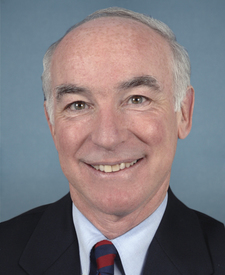
See how Joe Courtney actually votes — against your values.
DeepSyte scores Joe Courtney's record on the issues you care about — not party, not press releases. Take the 2-minute values quiz to see your personal alignment.
Sign in and take the values quiz to see how Joe Courtney's votes line up with your views.
Prediction track record
How often we called Joe Courtney's passage votes correctly, from their stated positions on each bill's tagged topics. Excludes “unclear” calls and abstentions.
A joint resolution to direct the removal of United States Armed Forces from hostilities within or against the Islamic Republic of Iran that have not been authorized by Congress.
A joint resolution to direct the removal of United States Armed Forces from hostilities within or against the Islamic Republic of Iran that have not been authorized by Congress.
Based on 15 data points across public statements and recorded votes · AI analysis of public records
119-hr-2913·Consistent
Ukraine Support Act
95/100
What they said
Jun 4, 2026
Congressman Courtney voted to pass the Ukraine Support Act, which provides military and reconstruction financing to Ukraine and imposes sanctions on Russia. He states that supporting Ukraine strengthens U.S. security and demonstrates commitment to NATO allies.
Congressman Courtney's statement explicitly supports the Ukraine Support Act, emphasizing that passage strengthens U.S. security and demonstrates commitment to NATO allies. His yes vote on passage directly aligns with this stated position. The bill's provisions—military financing, reconstruction support, sanctions on Russia, and NATO reaffirmation—match the policy objectives he articulated in his statement.
To direct the Secretary of State to submit to Congress a report on implementation of the advanced capabilities pillar of the trilateral security partnership between Australia, the United Kingdom, and the United States.
92/100
What they said
Apr 28, 2026
Congressman Courtney affirms support for the AUKUS security agreement between the United States, United Kingdom, and Australia, characterizing it as a continuation of the U.S.-UK special relationship and a significant commitment to regional security.
Voted Yea on To direct the Secretary of State to submit to Congress a report on implementation of the advanced capabilities pillar of the trilateral security partnership between Australia, the United Kingdom, and the United States.
Congressman Courtney's statement explicitly affirms strong support for AUKUS as a security agreement and characterizes it as a significant commitment to regional security and the U.S.-UK special relationship. His yes vote on H.R. 1093, which directs the State Department to report on implementation of AUKUS's advanced capabilities pillar, is directly aligned with this position. The bill operationalizes support for AUKUS by requiring oversight and streamlining of the defense technology-sharing mechanisms central to the partnership, which is consistent with Courtney's stated endorsement.
The release opposes the Trump Administration's restrictions on Public Service Loan Forgiveness (PSLF) program eligibility, arguing that the administration is improperly narrowing the program beyond its statutory scope and politicizing it contrary to Congressional intent.
The statement opposes restrictions on PSLF eligibility and defends the program's statutory scope. The Limit, Save, Grow Act explicitly nullifies regulations for federal student loan debt cancellation, which directly contradicts the position expressed in the statement. Rep. Courtney voted against passage of this bill, which is consistent with his stated opposition to narrowing PSLF and protecting loan forgiveness programs.
Congressman Courtney voted to pass the Ukraine Support Act, which provides military and reconstruction financing to Ukraine and imposes sanctions on Russia. He states that supporting Ukraine strengthens U.S. security and demonstrates commitment to NATO allies.
Congressman Courtney's statement expresses strong support for Ukraine aid, military support, and sanctions on Russia to strengthen U.S. security and NATO commitments. His yes vote on the Ukraine Security Supplemental Appropriations Act, which provides military financing, defense articles, and economic support to Ukraine, directly aligns with that stated position. The bill's provisions for DOD support, military financing, and Ukraine assistance match the policy direction he publicly endorsed.
Ukraine Security Assistance and Oversight Supplemental Appropriations Act, 2024
85/100
What they said
Jun 4, 2026
Congressman Courtney voted to pass the Ukraine Support Act, which provides military and reconstruction financing to Ukraine and imposes sanctions on Russia. He states that supporting Ukraine strengthens U.S. security and demonstrates commitment to NATO allies.
Congressman Courtney's statement expresses strong support for Ukraine assistance, military support, and sanctions on Russia to strengthen U.S. security and NATO commitments. The bill provides supplemental appropriations for Ukraine military assistance and establishes oversight mechanisms. His YES vote on passage aligns with his stated position. The minor gap is that his statement emphasizes reconstruction financing and sanctions, while the bill focuses primarily on military assistance appropriations and inspector general oversight; however, both are consistent with the underlying commitment to support Ukraine against Russian aggression.
Congressman Courtney opposes the Department of Education's rule that excludes nursing from the definition of professional graduate-level degrees, which caps federal student loans available to nursing students at half the level of other professional degrees. He argues the rule will increase education costs for nurses and contradicts data showing significant percentages of nursing students exceed the new loan caps.
Congressman Courtney's statement opposes the Department of Education's rule capping nursing student loans, which he attributes to the Big Ugly Bill (H.R. 1). The Limit, Save, Grow Act (H.R. 2811) is a related but distinct fiscal bill from 2023 that also addresses spending and education policy. Courtney voted NO on H.R. 2811's passage, which is directionally consistent with his opposition to education policies that harm nursing students. However, H.R. 2811 is a broad omnibus spending bill addressing debt limits, discretionary spending caps, energy tax credits, and SNAP work requirements—not a bill specifically targeting the nursing loan cap rule. The nursing loan cap issue appears to stem from implementation of H.R. 1 (the Big Ugly Bill), not H.R. 2811. Courtney's NO vote on the broader fiscal bill is generally aligned with his stated concern about education costs for nurses, but the bills are distinct legislative vehicles.
Congressman Courtney affirms support for the AUKUS security agreement between the United States, United Kingdom, and Australia, characterizing it as a continuation of the U.S.-UK special relationship and a significant commitment to regional security.
Congressman Courtney's statement affirms strong support for AUKUS and the U.S.-UK-Australia security partnership. The bill provides supplemental appropriations for Indo-Pacific defense and State Department activities, including support for U.S. allies in the region and improvements to the submarine industrial base—a core component of AUKUS implementation. His yes vote on passage aligns with his stated commitment to the security agreement and regional security cooperation.
Congressman Courtney voted to pass the Ukraine Support Act, which provides military and reconstruction financing to Ukraine and imposes sanctions on Russia. He states that supporting Ukraine strengthens U.S. security and demonstrates commitment to NATO allies.
The statement describes Congressman Courtney voting to pass the Ukraine Support Act, which provides military and reconstruction financing to Ukraine and imposes sanctions on Russia. The bill voted on (21st Century Peace through Strength Act) includes authorization to seize and transfer Russian sovereign assets to fund Ukrainian reconstruction, along with broader foreign policy sanctions provisions. Courtney's YES vote on a bill that includes Ukraine reconstruction funding and Russian sanctions aligns with his stated support for strengthening Ukraine and imposing consequences on Russia. However, the bill bundles multiple foreign policy provisions (Iran sanctions, TikTok restrictions, fentanyl trafficking sanctions, etc.) beyond the Ukraine-specific measures Courtney emphasized in his statement, creating some ambiguity about which provisions drove his vote.
National Defense Authorization Act for Fiscal Year 2024
75/100
What they said
Apr 28, 2026
Congressman Courtney affirms support for the AUKUS security agreement between the United States, United Kingdom, and Australia, characterizing it as a continuation of the U.S.-UK special relationship and a significant commitment to regional security.
The statement expresses strong support for AUKUS as a security agreement involving nuclear technology sharing with Australia and the UK. The bill is a broad FY2024 National Defense Authorization Act that funds military procurement and sets defense policy. The rep's YES vote on the NDAA is generally consistent with supporting defense commitments and security agreements, but the bill does not specifically address AUKUS provisions or nuclear technology sharing. The statement and bill share a defense/security policy category but address different specific questions—one focuses on a particular trilateral security agreement, the other on annual defense authorization and procurement across multiple programs.
Congressman Courtney affirms support for the AUKUS security agreement between the United States, United Kingdom, and Australia, characterizing it as a continuation of the U.S.-UK special relationship and a significant commitment to regional security.
Congressman Courtney's statement affirms strong support for AUKUS and the U.S.-UK-Australia security partnership. The bill is a broad FY2024 omnibus appropriations measure that funds the Department of Defense and State Department, among other agencies—both of which support AUKUS operations and diplomacy. His YES vote on passage is generally consistent with his public support for AUKUS, as the bill provides funding for the defense and foreign policy infrastructure underlying the agreement. However, the bill bundles multiple appropriations across many departments and agencies; his vote reflects support for the overall package rather than a specific endorsement of AUKUS provisions.
National Defense Authorization Act for Fiscal Year 2024
75/100
What they said
Apr 28, 2026
Congressman Courtney affirms support for the AUKUS security agreement between the United States, United Kingdom, and Australia, characterizing it as a continuation of the U.S.-UK special relationship and a significant commitment to regional security.
Congressman Courtney's statement affirms strong support for AUKUS as a security agreement advancing U.S.-UK-Australia cooperation and nuclear technology sharing. His YES vote on the FY2024 National Defense Authorization Act, which authorizes defense procurement and military programs, is generally consistent with that position—NDAA passage funds the defense infrastructure and capabilities that underpin AUKUS commitments. However, the statement addresses AUKUS specifically while the bill is a broad defense authorization covering multiple procurement programs and policy matters unrelated to AUKUS. The vote reflects support for defense spending broadly rather than a direct endorsement of AUKUS itself.
Congressman Courtney opposes the Trump Administration's health care policies, including the failure to extend ACA enhanced tax credits (resulting in 1.2 million uninsured Americans) and the proposal to devolve Medicaid and Medicare to states. He argues the ACA successfully reduced the uninsured rate and criticizes the Administration's departure from universal health care principles.
Congressman Courtney's statement opposes Trump Administration health care policies that reduce coverage and devolve federal programs to states. The CHOICE Arrangement Act expands alternative health insurance options (AHPs and ICHRAs) that shift coverage away from traditional employer-sponsored and government programs toward decentralized, market-based arrangements. His NO vote on passage aligns with his stated opposition to policies that fragment the health care system and reduce coverage protections, though the bill does not directly address the ACA tax credits or Medicaid/Medicare devolution he specifically criticized.
Congressman Courtney affirms support for the AUKUS security agreement between the United States, United Kingdom, and Australia, characterizing it as a continuation of the U.S.-UK special relationship and a significant commitment to regional security.
Congressman Courtney's statement expresses strong support for AUKUS and the U.S.-UK security partnership, which aligns with voting yes on a DOD appropriations bill that funds military activities and defense operations. However, the vote is procedural rather than on final passage, and the DOD appropriations bill is a broad omnibus measure covering many defense programs beyond AUKUS-specific funding, limiting the directness of the connection between the stated position and this particular vote.
Congressman Courtney affirms support for the AUKUS security agreement between the United States, United Kingdom, and Australia, characterizing it as a continuation of the U.S.-UK special relationship and a significant commitment to regional security.
Congressman Courtney's statement expresses strong support for AUKUS and the U.S.-UK security partnership, framing it as a continuation of shared defense commitments. His yes vote on the 21st Century Peace through Strength Act, which addresses multiple foreign policy matters including sanctions on adversaries and support for allied nations, is directionally consistent with his stated commitment to regional security and strengthening U.S. alliances. However, the bill covers numerous provisions beyond AUKUS (Iran sanctions, TikTok restrictions, fentanyl trafficking, etc.), so the vote does not specifically endorse AUKUS itself but rather a broader foreign policy package that includes measures aligned with his stated security priorities.
Department of State, Foreign Operations, and Related Programs Appropriations Act, 2025
35/100
What they said
Apr 28, 2026
Congressman Courtney affirms support for the AUKUS security agreement between the United States, United Kingdom, and Australia, characterizing it as a continuation of the U.S.-UK special relationship and a significant commitment to regional security.
Congressman Courtney's statement strongly affirms support for AUKUS and the U.S.-UK-Australia security partnership, emphasizing its importance for regional security. However, he voted against passage of the FY2025 State Department and Foreign Operations Appropriations Act. While the bill funds State Department operations and international programs that could support AUKUS-related diplomatic and security initiatives, a no vote on a broad appropriations measure does not necessarily indicate opposition to AUKUS itself—it may reflect objections to other provisions within the bill. The disconnect between his explicit AUKUS support and his appropriations vote creates ambiguity about whether the vote reflects disagreement with the bill's overall funding levels, specific programs included, or other budgetary concerns unrelated to AUKUS.
Pairs with ambiguous language and high uncertainty are withheld until more data is available. Procedural, cloture, and amendment votes are excluded — they don't cleanly signal substantive support or opposition.
Pro analysis
AI rep analysis — Pro
Get an AI-narrated read on Joe Courtney's full voting record against your stated values — aligned themes, conflicts, notable votes, and what to watch for.
We haven't extracted campaign positions for Joe Courtney yet. Once their campaign website or position pages are processed, this card will track what they said vs how they voted.
Crossing the aisle
Passage votes where Joe Courtney broke ranks with ≥75% of Democrats. Threshold catches substantively partisan splits; unanimous-ish or close votes are excluded.
Position: Congressman Courtney opposes the GOP budget bill, arguing it provides $70 billion in unpaid-for funding for immigration enforcement without addressing cost-of-living concerns, and adds to the federal deficit.
WASHINGTON, DC – Today, Congressman Joe Courtney (CT-02) released the following statement after voting “no” on the GOP majority’s partisan budget bill, which gives a $70 billion unpaid-for blank check to fuel President Trump’s out-of-control immigration enforcement policies through 2029.
“At a time when Americans are crying out for help with the cost of living, whether it’s paying for groceries, gas prices, or a trip to the doctor, the House Republican leadership has paralyzed proceedings for months, including a shutdown, to jam through this reconciliation bill which does nothing to address the affordability crisis,” Courtney said. “Instead, this bill gives another blank check to ICE with no guardrails and no restrictions, and it’s not paid for, meaning it adds $70 billion to the deficit. These are not the priorities that the American people are looking for. That’s why I voted ‘no’ against this bill.”
###
Courtney Votes to Advance Bipartisan FY27 NDAA Out of House Armed Services Committee
Position: Rep. Courtney voted to advance the bipartisan FY27 NDAA and secured funding for Virginia-class and Columbia-class submarines, workforce investments, and an amendment to constrain the battleship program. He opposes premature funding for the Trump Administration's battleship initiative, arguing it diverts resources from more effective naval platforms.
WASHINGTON, DC – Tonight, Congressman Joe Courtney (CT-02), Ranking Member of the Seapower and Projection Forces Subcommittee, voted to advance the bipartisan Fiscal Year 2027 National Defense Authorization Act out of the House Armed Services Committee.
The committee-passed bill authorizes Courtney’s request for full funding for two Virginia-class submarines and one Columbia-class submarine, continued wage improvement funding for submarine shipyard workers, a Courtney-led amendment to put guardrails on President Trump’s battleship program that will encroach on previous industrial base capacity, among other priorities secured by Rep. Courtney as Ranking Member of the Seapower Subcommittee.
“Once again, the House Armed Services Committee and the Seapower and Projection Forces Subcommittee worked over the last five months in a bipartisan fashion to craft a national defense bill that delivers for our military and shipbuilders,” Courtney said. “At a time of historic growth in submarine production, the FY27 NDAA delivers a critical demand signal and investments in workforce to keep momentum strong. On AUKUS, following the exciting announcements of collaboration between the three nations on undersea unmanned vessels and that UK and U.S. sub rotations in Western Australia remain on track for 2027, this bill makes the needed investments in the Virginia program to deliver on the U.S. commitment to sell Australia three Virginia-class submarines in the 2030s.”
“As always, there was not perfect unanimity in this bill. The unvetted, premature funding in this bill for the Trump Administration’s new battleship program violates every lesson we’ve learned on shipbuilding. The program has gone from an AI-generated poster board in Mar-A-Lago in December to an expensive, premature acquisition of steel for a ship that still does not have a design yet,” Courtney continued. “I voted for an amendment which would strike that funding, and I had an amendment successfully adopted which aims to prevent the battleships from interfering with existing nuclear-powered shipbuilding plans. In a world with hypersonic missiles that can cover thousands of miles, our Navy does not need lumbering, vulnerable battleships. Battleship funding would be much better served on other agile Navy and Marine Corps platforms, both manned and unmanned, to build a much more effective fleet in today’s contested maritime arena. I will continue working to put much need guardrails on the battleship program.”
For a fact sheet on Courtney priorities included in the committee-passed FY27 National Defense Authorization Act, click here.
###
Issues:
Defense & National Security
Seapower and Projection Forces Subcommittee
Position: Congressman Courtney voted to pass the Ukraine Support Act, which provides military and reconstruction financing to Ukraine and imposes sanctions on Russia. He states that supporting Ukraine strengthens U.S. security and demonstrates commitment to NATO allies.
WASHINGTON, DC – Today, Congressman Joe Courtney (CT-02), Ranking Member of the Seapower and Projection Forces Subcommittee, released the following statement after voting to pass the Ukraine Support Act, a bill which would provide additional reconstruction and military financing authorization for Ukraine and impose economic sanctions on Russia for its egregious war of aggression on Ukraine and brazen attacks on NATO nations. The bill passed the House by a vote of 226-195.
“Passage of the Ukraine Support Act sends a clear message to our European partners and allies that Congress remains committed to upholding our shared values and security,” Courtney said. “Over four years since Russia launched its brutal invasion, Putin is further escalating his war by launching new attacks on civilians in Ukraine and, recently, a drone strike on an apartment building in our NATO ally Romania. The brave people of Ukraine are defending their homeland and freedom. Supporting them strengthens our own security. I urge the Senate to pass the Ukraine Support Act immediately.”
###
Issues:
Defense & National Security
Courtney at NDAA Markup: The Trump Battleship Is the Exact Opposite of Every Lesson We’ve Learned
Position: Congressman Courtney opposes $1 billion in funding for a new battleship program in the FY 2027 NDAA, arguing the program violates established shipbuilding best practices by ordering long-lead items and beginning detailed design before a design concept exists, and is strategically obsolete given modern maritime threats.
WASHINGTON, DC – Today, during the House Armed Services Committee markup of the FY 2027 National Defense Authorization Act (NDAA), Congressman Joe Courtney (CT-02), Ranking Member of the Seapower and Projection Forces Subcommittee, spoke in support of an amendment to the FY27 NDAA which would strike all funding ($1 billion) for the battleship program. The amendment will be voted on later today during markup of the FY27 NDAA.
“[The battleship program] is the exact opposite of every lesson that we've learned in terms of failures of shipbuilding and ship construction,” Courtney said.
FULL REMARKS AS DELIVERED
Thank you, Mr. Chairman. It is true, this is a concept that's been around for quite a while. The last time we built a battleship was in 1944, the Iowa-class battleships, that was the USS Missouri.
The concept of the battleship was announced last December, down in Mar-a-Lago, where, again, we didn't have any designs, we didn't have any studies in terms of analysis that normally go into starting a new class of any ship.
What we did have was an AI-generated, picture on a poster board that showed lots of kind of bombs going off and, you know, pretty images that really almost look like a cartoon.
So we have now in this mark before us, $1 billion, which, again, if you read the language, it's $390 million to go to detailed design, again, I want to emphasize the point, there is no design that exists, and that's what some of this money was allocated for, and $610 million that actually goes for long lead items. So they're ordering, actually, you know, fabricated parts and steel for a ship that does not even exist in terms of a design concept.
It is the exact opposite of every lesson that we've learned in terms of failures of shipbuilding and ship construction, whether it's the Zumwalt-class, which, again, construction started before design was complete, Littoral Combat Ship, same thing. And the in the cruiser CG(X) program, which also collapsed.
So again, from a just purely shipbuilding sequential, you know, intelligent approach, this proposal before us, again, is way premature and unvetted. And if you look at the future year defense plan, the FYDP (future year defense program) in Year 2, which would be in 2028, they're requesting $16.8 billion. So it's going from $1 billion to $16 billion really in about 18 months period of time for a platform that has no design.
I want to quickly just end by saying, in April of 2022, the Russian, flagship, the Moskva, was sunk by two missiles fired by the Ukraine's Neptune system, has a 200-mile range. And again, that was the flagship of the Russian Navy in the Black Sea. That demonstrates really what kind of contested maritime environment we have.
The Neptunes are like pea shooters compared to what China has in terms of DF missiles, DF-21, missiles that can cover thousands of miles, the advances that are taking place in drones, anything on the surface of the sea right now, again, is in a much different world than certainly it was in 1944 and even in 2014.
The world is changing fast. We need that distributed lethality that Mr. Smith – we don't need a lumbering, vulnerable battleship. Mr. Chair, I had asked to enter into the record “Trump's Big Battleship is a Sitting Duck” from Admiral James Stavridis, a four-star Navy officer who was the head of European Command.
I yield back.
Issues:
Defense & National Security
Seapower and Projection Forces Subcommittee
Courtney Statement (as Delivered) at FY27 NDAA Full Committee Markup
Position: Congressman Courtney supports the FY27 NDAA shipbuilding provisions, including multi-year procurement for destroyers, oilers, and aircraft, Columbia-class submarine production, and Virginia-class submarine funding. He opposes the Administration's request for funding a new battleship class, arguing it is premature and misaligned with modern naval warfare doctrine.
WASHINGTON, DC – Today, Congressman Joe Courtney (CT-02), Ranking Member of the Seapower and Projection Forces Subcommittee, delivered the following remarks at the Full Committee Markup of the FY27 National Defense Authorization Act.
FULL REMARKS AS DELIVERED
Thank you, Chairman Rogers, and I'm pleased to join my good friend, Chairman Kelly, to present our Subcommittee mark for FY 2027. The Subcommittee stayed true to its bipartisan tradition, incorporating input from Members on both sides of the aisle to ensure that we positioned our sea services and Air Force to achieve success.
Building off a strong shipbuilding budget request of 60 billion in the discretionary account, our mark authorizes 21 new vessels with authorities that will foster efficiency and cost effectiveness, specifically adopting multi-year procurement with fixed price contracts that will deliver savings for the government and the taxpayer, and certainty to our industrial base and workforce.
This year's mark provides multi-year procurement for up to 15 Arleigh Burke destroyers and for multiple John Lewis-class oilers, and for the E-2D advanced Hawkeye aircraft.
The Subcommittee also provided authority to use incremental funding for long lead items for the Virginia-class program, which will provide stability to the supply chain to offset the ever-present threat of CRs and shutdowns.
The bill initiates serial production of the Columbia-class ballistic submarine program, the number one priority of the Navy, authorizing $10 billion for procurement and $5 [billion] for advanced purchase of long lead items.
The bill also allocates $8 billion for procurement and $4 billion for advanced procurement of two Virginia-class submarines, including full funding for shipyard wage improvement that over the last three years have had a massive positive impact on labor contracts, shipyard recruitment and retention.
Since last year's markup, the Department released its AUKUS review for endorsing the agreement, and AUKUS got a boost coming out of last weekend's Shangri-La Dialogue, where the three defense ministers of the three countries announced joint development of payloads for undersea unmanned vessels. They also confirmed operation of UK and U.S. sub rotations in Western Australia remaining on track for 2027, which will provide all three navies with persistent, enhanced presence in the South Pacific. The agreement's progress in 2025 and 2026 reinforces the need to support the mark's investment in the Virginia program in order to deliver on our Pillar I commitments.
I would note there is not perfect unanimity in this in this mark, as we will hear later today, concerning the Administration's unvetted, premature request for funding of a new class of battleships, which is a vessel that our nation stopped building in 1944.
As retired four-star Admiral James Stavridis recently wrote, in today's battlespace of long-range missiles and advanced drones in the air and at sea, investing tens of billions of dollars in vulnerable large surface combatants with thousands of sailors on board, makes no sense. These funds would be far better spent on other agile Navy and Marine Corps platforms, both man and unmanned, that disperse and distribute lethality, a much more effective fleet in today's contested maritime arena.
I would also note the base text does not include the Marine Corps request for six Medium Landing Ships because of OMB’s disruptive and ridiculous insistence on stranding this program to a reconciliation bill that may or may not ever materialize. The Marine Corps has testified time and time again to the need to build up our amphibious fleet, yet OMB made the decision to split DoD budget for the second year in a row, which usurps Congress' constitutional role over spending and creates chaos and uncertainty for the service branches and the industrial base who have been screaming out for procurement stability.
Mr. Chairman, I'm thankful for the diligent work of Chairman Kelly and the Subcommittee Members to reach this broadly bipartisan product. I want to give special thanks to our talented subcommittee staff, Jeanine Womble, Kyle Noyes, Kelly Goggin, and Abby Snyder, for their work in crafting this product that achieves the mission of the Seapower Subcommittee.
Thank you, and I yield back.
###
Issues:
Defense & National Security
Seapower and Projection Forces Subcommittee
Courtney Statement After House Passes Bipartisan Iran War Powers Resolution
Position: Congressman Courtney supports passage of a War Powers Resolution requiring President Trump to obtain Congressional authorization before continuing military operations against Iran, arguing the war was launched without proper constitutional authority or clear objectives.
WASHINGTON, DC – Today, Congressman Joe Courtney (CT-02), Ranking Member of the Seapower and Projection Forces Subcommittee, released the following statement after voting to pass the bipartisan Iran War Powers Resolution (H. Con. Res. 86), which passed the House by a vote of 215-208.
After three prior attempts, today’s War Powers Resolution was the first to successfully pass since President Trump launched his unauthorized war on Iran on February 28th. The War Powers Resolution would require President Trump to suspend hostilities against Iran until he receives Congressional authorization, as required by Article I, Section 8 of the U.S. Constitution.
“President Trump launched this unauthorized war of choice with no explanation to the American people of what ‘imminent threat’ Iran posed and no clear goals or objectives to define victory. Since the start of the war, fourteen U.S. servicemembers have been killed, hundreds have been injured, and hundreds of innocent civilians – the very victims of Iran’s brutal regime – have been killed. The war triggered an international energy crisis and the American people are being hit with skyrocketing energy costs, driving up inflation. When asked whether he thinks about the war’s impact on American’s financial situation, President Trump says he doesn’t think about Americans’ financial situation, ‘not even a little bit.’ When he was asked a second time, he said his first answer ‘was perfect.’ Passage of this War Powers Resolution is a long-overdue action that shows this Congress is willing to fulfill its duty as a co-equal branch of government, and rein in the reckless, unilateral actions of this President and are dangerously weakening and isolating our country.”
This is the fourth time that Congressman Courtney has voted to pass a War Powers Resolution to end President Trump’s unilateral war in Iran.
Issues:
Defense & National Security
Courtney Introduces Bipartisan Bill to Grow the Defense Industrial Base Workforce
Position: Congressman Courtney supports legislation to expand Job Corps training programs and align them with defense industrial base workforce needs, including extending eligibility for shipbuilding incentives and enabling grants to increase training opportunities.
WASHINGTON, DC – This week, Congressman Joe Courtney (CT-02), Ranking Member of the House Seapower and Projection Forces Subcommittee and a senior Member of the House Education and Workforce Committee, led bipartisan introduction of the Job Corps and Skilled Defense Workforce Act. The bill is co-sponsored by 14 House Members.
“We’re at a pivotal moment for the revitalization of our defense and maritime industrial bases,” Courtney said. “Connecticut’s Second District is the role model for how investments from Congress and the private sector can grow a skilled workforce to meet shipbuilding demand. The bipartisan Job Corps and Skilled Defense Workforce Act takes an all-of-the-above approach to expand that success across the nation, enabling a new generation of Americans to enter good careers in the defense industrial base.”
The bipartisan Job Corps and Skilled Defense Workforce Act would:
Promote greater alignment between the Armed Services, defense industrial base, and Job Corps in order to prepare young workers to contribute to our national defense.
Extend eligibility for the Shipbuilding Workforce Development Special Incentive to Job Corps.
Enable Job Corps to receive grants, in addition to existing authorities to accept charitable donations, to increase opportunities to fund training curriculum.
Require the Secretary of Defense to ensure military recruits who are ineligible for enlistment be made aware of opportunities to enroll in the Job Corps program to prepare them for enlistment or learn skills that are in high demand in the defense industrial base.
Streamline Job Corps enrollment for interested servicemembers in pre-separation counseling.
Provide agility to Job Corps Centers to make staffing and professional development decisions, enter into agreements with local partners, and engage stakeholders, while acting within existing budgets.
###
Issues:
Defense & National Security
Economy & Jobs
Courtney Cosponsors Bill to Block Trump’s $1.8B Taxpayer-Funded Slush Fund
Position: Congressman Courtney opposes the Trump v. IRS settlement and supports legislation to block the $1.8 billion fund, arguing it constitutes misuse of taxpayer dollars to benefit political allies.
WASHINGTON, DC – This week, Congressman Joe Courtney (CT-02) cosponsored the No Taxpayer-Funded Slush Funds Act (H.R. 8914), a bill which would prohibit the use of federal funds to create or finance the $1.8 billion slush fund established under the settlement in Trump v. IRS and impose new restrictions to prevent taxpayer dollars from being steered to Trump allies and January 6th defendants.
“Our country was founded on the principle that no one person is above the law. Once again, President Trump is attempting to use executive power far beyond the legal limits to benefit his political allies,” Courtney said. “Under the agreement between the President and his own Department of Justice, a panel hand-picked by the President would choose who is awarded settlements and how much they are awarded funded by $1.8 billion in taxpayer dollars. My office has been flooded with calls and emails from constituents who are rightly outraged by this horrible deal. Their voices are being heard in Washington, and I am joining the growing bipartisan resistance to ensure this slush fund never sees the light of day.”
###
Courtney Questions Proposed Navy Battleship Program
Position: Congressman Courtney questions the feasibility and timeline of the Navy's proposed nuclear-powered battleship program, citing concerns about design maturity, production readiness, and limited nuclear-certified shipyard capacity.
WASHINGTON, DC – Today, in a Seapower and Projection Forces Subcommittee hearing, Ranking Member Congressman Joe Courtney (CT-02) questioned the timeline of the Navy’s proposed battleship program.
“This new battleship proposal which came forward… it was a posterboard in December, we now get a budget document in front of us, there really is no design plans that have materialized yet at this point, yet it’s talking about going into production in FY28,” Courtney said. “I just think the most optimistic hopes in terms of moving at that pace, given the size of this platform, the fact that it's now going to be a nuclear-powered vessel, and we only have two nuclear-certified yards – one that is not big enough to accommodate that large of a vessel up in Groton and the other is pretty chockablock in terms of, you know, carrier construction that's going on there.”
“I want to just sort of raise those issues… There’s a lot of discussions that are going to go into this issue I know in the coming weeks,” Courtney continued.
###
Issues:
Defense & National Security
Seapower and Projection Forces Subcommittee
Position: Congressman Courtney voted in favor of the 21st Century ROAD to Housing Act, a bipartisan bill designed to increase housing supply, expand affordable rental housing, prevent homelessness, and improve homeownership access.
WASHINGTON, DC – Today, Congressman Joe Courtney (CT-02) voted to pass the 21st Century ROAD to Housing Act, a bipartisan package of bills to clear pathways to build more housing nationwide. The bill passed the House by a vote of 396-13.
“Passage of H.R. 6644 is a rare bipartisan breakthrough to address America’s housing shortage,” Courtney said. “Eastern Connecticut communities need more housing supply to meet demand and bring down costs. The 21st Century ROAD to Housing Act is a pragmatic package of federal reforms to generate new housing construction, expand affordable rental housing, prevent homelessness, and bring homeownership within reach for Americans. There is more work ahead for Congress to deliver robust investment into housing that capitalizes on the reforms made in this bill.”
H.R. 6644 was first passed by the House in February 2026. Following Senate changes to the bill, the House passed its own amended version of H.R. 6644 today. The bill now heads back to the Senate.
For a full summary of the House-passed 21st Century ROAD to Housing Act (H.R. 6644), click here.
###
Source: GDELT 2.0 GKG, filtered to a curated list of national outlets. Inclusion is not endorsement; opinion pieces and reported news are mixed.
Recent stock activity
Periodic transaction reports filed under the STOCK Act — disclosed by the rep, sourced from public filings.
No disclosed trades on record.
Source: open-data mirrors of the Senate eFD and House Clerk financial-disclosure systems. Disclosure within 30 days of trade is required by law (45 for spouse/dependent trades).
Top PAC donors · 2026 cycle
Political action committees that gave the most to this rep's principal campaign committee this cycle. PAC giving is direct organizational support — industry, ideological, or leadership.
1.MACHINISTS NON-PARTISAN POLITICAL LEAGUE MULTI-CANLabor7 contributionsTrade-union PAC for the International Association of Machinists and Aerospace Workers — backs candidates supporting union organizing, prevailing wages, and aerospace/manufacturing jobs.AI$35,000
2.UNITE HERE TIP CAMPAIGN COMMITTEELabor5 contributionsTrade-union PAC for hospitality and food-service workers — backs candidates supporting union organizing, workplace standards, and worker protections in the service industry.AI$25,000
3.NATIONAL ASSOCIATION OF REALTORS PACReal Estate5 contributionsReal-estate industry PAC — backs candidates supporting property-rights protections, mortgage-lending access, and tax incentives for homeownership.AI$25,000
4.NEA FUND FOR CHILDREN AND PULIC EDUCATIONLabor5 contributionsTrade-union PAC of the National Education Association — backs candidates supporting public education funding, teacher compensation, and collective-bargaining protections.AI$25,000
5.CARPENTERS LEGISLATIVE IMPROVEMENT COMMITTEE PACLabor4 contributionsTrade-union PAC for the United Brotherhood of Carpenters and Joiners of America. Backs prevailing-wage protections, federal infrastructure funding, project labor agreements, and worker organizing rights.AI$20,000
6.HUSKY PAC3 contributions$15,000
7.AMERICAN ASSOCIATION FOR JUSTICE PAC3 contributions$15,000
8.LABORERS' POLITICAL LEAGUE3 contributions$15,000
9.JOBS, EDUCATION, & FAMILIES FIRST JEFF PAC3 contributions$15,000
10.STAND UP FOR DEMOCRACY JFAIdeological1 contributionIdeological PAC — supports candidates and causes aligned with democratic governance and civic participation values.AI$14,750
Source: OpenFEC (api.open.fec.gov) Schedule A receipts where contributor type is “committee.” Aggregated by contributing committee. Self-transfers from joint-fundraising / victory committees are excluded.
Top individual contributors · 2026 cycle
Itemized individual contributions over $200 to this rep's campaign committee, aggregated by donor employer. PAC giving is shown above; this section is people, not organizations.
1.ELECTRIC BOAT$17,500
2.SELF$10,250
3.PMR$7,000
4.CEDAR ISLAND MARINA$6,800
5.GENERAL DYNAMICS ELECTRIC BOAT$6,250
6.RMM CONSULTING LLC$5,500
7.ACTUM LLC$5,000
8.ANDURIL INDUSTRIES$3,500
9.LEVENTHAL & PUGA PC$3,300
10.BELL LEGAL GROUP$3,000
Source: OpenFEC Schedule A receipts where contributor type is “individual,” aggregated by the donor's self-reported employer. This is a geographic / industry correlation, not a corporate endorsement.