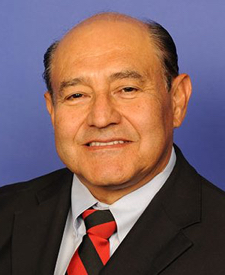
See how J. Luis Correa's votes line up with your values.
DeepSyte scores J. Luis Correa's record on the issues you care about — not party, not press releases. Take the 2-minute values quiz to see your personal alignment.
Sign in and take the values quiz to see how J. Luis Correa's votes line up with your views.
Prediction track record
How often we called J. Luis Correa's passage votes correctly, from their stated positions on each bill's tagged topics. Excludes “unclear” calls and abstentions.
To prohibit the disclosure of records by the Secretary of Housing and Urban Development of individuals for the purposes of immigration enforcement, and for other purposes.
A joint resolution to direct the removal of United States Armed Forces from hostilities within or against the Islamic Republic of Iran that have not been authorized by Congress.
Based on 9 data points across public statements and recorded votes · AI analysis of public records
118-hr-2·Consistent
Secure the Border Act of 2023
92/100
What they said
Apr 30, 2026
The representatives support legislation that would prohibit the deportation of Vietnamese refugees who arrived in the United States before July 12, 1995, and would codify protections previously established in a 2008 Memorandum of Understanding between the U.S. and Vietnam.
Rep. Correa's statement supports protecting Vietnamese refugees from deportation and codifying prior protections. The Secure the Border Act of 2023 focuses on border wall construction, asylum eligibility limits, and employment verification—provisions that align with restrictive immigration enforcement. Correa's NO vote on this bill is consistent with his stated position opposing deportations of vulnerable refugee populations and supporting protections for pre-1995 Vietnamese arrivals.
The representatives support legislation that would prohibit the deportation of Vietnamese refugees who arrived in the United States before July 12, 1995, and would codify protections previously established in a 2008 Memorandum of Understanding between the U.S. and Vietnam.
Rep. Correa's statement supports protecting Vietnamese refugees from deportation, with narrow exceptions for those who pose security threats or have committed serious crimes. The POLICE Act makes assault on law enforcement a deportable offense. Correa's NO vote is consistent with his stated position: he opposes broad deportation policies while supporting exceptions only for genuine security threats or serious criminal conduct. The POLICE Act expands deportability for a specific crime category, which aligns with Correa's framework of protecting refugees except in narrow criminal circumstances.
Detain and Deport Illegal Aliens Who Assault Cops Act
85/100
What they said
Apr 30, 2026
The representatives support legislation that would prohibit the deportation of Vietnamese refugees who arrived in the United States before July 12, 1995, and would codify protections previously established in a 2008 Memorandum of Understanding between the U.S. and Vietnam.
Rep. Correa's statement supports protecting Vietnamese refugees from deportation, with narrow exceptions for those who pose security threats or have committed serious crimes. The bill he voted against mandates detention and deportation of non-U.S. nationals arrested for assaulting law enforcement. His NO vote is consistent with his stated position: he opposes broad deportation policies while acknowledging that criminal conduct (including assault) can justify removal. The bill's focus on a specific criminal category does not contradict his support for refugee protections with criminal exceptions.
The representatives support legislation that would prohibit the deportation of Vietnamese refugees who arrived in the United States before July 12, 1995, and would codify protections previously established in a 2008 Memorandum of Understanding between the U.S. and Vietnam.
Rep. Correa's statement supports protecting Vietnamese refugees from deportation and codifying prior protections. The Laken Riley Act mandates detention of non-U.S. nationals arrested for property crimes (burglary, theft, larceny, shoplifting) and expands state authority to sue over immigration enforcement decisions. Correa's NO vote aligns with his stated opposition to restrictive immigration enforcement that would increase deportations; the bill's mandatory detention and enforcement-expansion provisions conflict with his position that vulnerable refugees should be protected from removal. The vote is consistent with his advocacy for refugee protections.
The representatives support legislation that would prohibit the deportation of Vietnamese refugees who arrived in the United States before July 12, 1995, and would codify protections previously established in a 2008 Memorandum of Understanding between the U.S. and Vietnam.
Rep. Correa's statement supports protecting Vietnamese refugees from deportation and codifying prior protections. The bill he voted against creates new grounds for deportation based on Social Security and identity document fraud. While both touch immigration enforcement, they address different specific questions: the statement concerns deportation protections for a defined refugee population; the bill concerns deportation grounds for fraud offenses. A NO vote on fraud-based deportation grounds is generally consistent with a pro-refugee-protection stance, though the bill's fraud-specific focus means the vote does not directly address the statement's core question about Vietnamese refugee protections.
Continuing Appropriations and Border Security Enhancement Act, 2024
85/100
What they said
Apr 30, 2026
The representatives support legislation that would prohibit the deportation of Vietnamese refugees who arrived in the United States before July 12, 1995, and would codify protections previously established in a 2008 Memorandum of Understanding between the U.S. and Vietnam.
Rep. Correa's statement supports protecting Vietnamese refugees from deportation and codifying the 2008 MOU protections. The bill is a continuing appropriations measure that includes immigration provisions limiting asylum eligibility and restricting DHS use of funds for certain immigration purposes. While the bill's immigration provisions move in a restrictive direction contrary to Correa's stated pro-refugee protection stance, his NO vote on passage is consistent with opposing legislation that tightens immigration enforcement. However, the bill is primarily a funding measure, and the immigration provisions are secondary; Correa's opposition may reflect the overall restrictive immigration posture rather than a direct statement on the specific Vietnamese refugee question.
Rep. Correa opposes the Senate reconciliation bill's $140 billion funding increase for ICE and CBP, arguing the agencies lack adequate oversight mechanisms and have documented records of misconduct against U.S. citizens, and that ICE has not fully spent previous appropriations.
Rep. Correa's statement opposes increased DHS/ICE funding due to lack of oversight, documented misconduct, and wasteful spending. The bill restricts federal funds to sanctuary jurisdictions that don't cooperate with immigration enforcement. Correa's NO vote aligns with his stated skepticism of expanding immigration enforcement capacity without safeguards—voting against a bill that would penalize jurisdictions for limiting ICE cooperation is consistent with his position that ICE lacks adequate oversight and has a misconduct record. The vote reflects opposition to strengthening ICE's enforcement leverage.
Department of Homeland Security Appropriations Act, 2024
85/100
What they said
Apr 23, 2026
Rep. Correa opposes the Senate reconciliation bill's $140 billion funding increase for ICE and CBP, arguing the agencies lack adequate oversight mechanisms and have documented records of misconduct against U.S. citizens, and that ICE has not fully spent previous appropriations.
Rep. Correa's statement opposes increased DHS funding for ICE and CBP due to lack of oversight mechanisms and documented misconduct, arguing the agencies have unspent appropriations. His NO vote on the FY2024 DHS appropriations bill, which funds ICE and CBP among other agencies, is directionally consistent with that opposition. However, the appropriations bill funds the entire DHS portfolio (FEMA, TSA, Coast Guard, USCIS, etc.), not solely ICE/CBP increases, and the statement specifically criticizes a Senate reconciliation bill's $140 billion increase rather than baseline appropriations. The vote reflects opposition to DHS funding broadly, but the specific dollar amounts and legislative vehicle differ between statement and bill.
Rep. Correa opposes the Senate reconciliation bill's $140 billion funding increase for ICE and CBP, arguing the agencies lack adequate oversight mechanisms and have documented records of misconduct against U.S. citizens, and that ICE has not fully spent previous appropriations.
Rep. Correa's statement opposes increased DHS/ICE funding due to lack of oversight and documented misconduct, while the Secure the Border Act focuses on border wall construction and employment verification systems rather than ICE/CBP funding levels or agency oversight mechanisms. The statement and bill address different specific questions within immigration policy—one concerns funding and internal agency accountability, the other concerns border infrastructure and employment verification. The NO vote is consistent with Correa's broader skepticism of DHS enforcement expansion, though the bill does not directly propose the $140 billion ICE/CBP funding increase he criticizes.
Pairs with ambiguous language and high uncertainty are withheld until more data is available. Procedural, cloture, and amendment votes are excluded — they don't cleanly signal substantive support or opposition.
Pro analysis
AI rep analysis — Pro
Get an AI-narrated read on J. Luis Correa's full voting record against your stated values — aligned themes, conflicts, notable votes, and what to watch for.
We haven't extracted campaign positions for J. Luis Correa yet. Once their campaign website or position pages are processed, this card will track what they said vs how they voted.
Crossing the aisle
Passage votes where J. Luis Correa broke ranks with ≥75% of Democrats. Threshold catches substantively partisan splits; unanimous-ish or close votes are excluded.
CORREA CONVENES ORANGE COUNTY HEALTH LEADERS ON H.R. 1'S TOLL, ONE YEAR LATER | U.S. Congressman Lou Correa of California
Position: The release opposes H.R. 1 and its reductions to Medi-Cal, arguing they will shift costs to county governments, emergency rooms, and families and leave more residents uninsured. It calls for reversing these cuts.
"One year ago, I voted no on H.R. 1 because I knew who would get hurt," said Correa. "Today I heard it directly from the people on the front lines. Clinics, hospitals, and county workers are being asked to do more with less, and Orange County families are paying the price."
Over 900,000 Orange County residents rely on Medi-Cal. Because of Republican cuts to Medi-Cal in the Big Ugly Law, approximately 74,000 Orange County residents could lose Medi-Cal coverage.
The County estimates H.R. 1 will cost it about $396 million, including roughly $380 million in indigent care and $16 million in new administrative costs. The need for care doesn't go away when coverage does. The county is still legally required to treat people who can't pay. Providers at the roundtable expect more emergency room visits, more uncompensated care, and more strain on county clinics, behavioral health services, and public health programs.
“H.R. 1, the One Big Beautiful Bill, will not make health care less expensive,” Correa said. "It just moves the bill to the county government, the emergency room, and the family. Kids need food, seniors need care, and working families need a doctor they can afford. I will keep fighting to reverse these cuts."
"It has been over a year since the passage of H.R. 1, and our Community Health Centers (CHCs) continue to navigate significant federal and state policy changes while being asked to do far more with far less. As the backbone of our healthcare safety net, CHCs provide high-quality, comprehensive care to our most vulnerable neighbors, regardless of their ability to pay. Federal cuts, California’s response, and changes to Medicaid eligibility have placed immense pressure on CHCs as they work to ensure Orange County’s 340,000 patients can continue to access the care they deserve. Six counties account for 80.4% of California’s high-risk members. Los Angeles County has the largest number of medium- and high-risk members facing significant continuity-of-care risks, including active dialysis, placement in facilities not yet ready to support the transition, and reliance on providers who cannot bill FFS for withdrawal-risk medications. Orange County ranks second in the number of high-risk members, underscoring the urgent need for proactive care coordination and transition planning to prevent disruptions in care," Isabel Becerra, President and Chief Executive Officer of Coalition of Orange County Community Health Centers, said.
"As we navigate these changes, protecting and investing in CHCs is essential to maintaining equitable access to care, preserving continuity of services, and ensuring no one falls through the cracks. This means helping patients maintain coverage, providing preventive care and chronic disease management, and ensuring our highest-risk patients receive timely, appropriate care. Strong community-based care also helps prevent avoidable emergency department visits and hospitalizations, reducing further strain on our hospitals, emergency departments, and emergency medical services (EMS)," Becerra said, "We are grateful to Congressman Lou Correa for bringing us together last year to discuss the anticipated impacts and for convening us again to continue the conversation and identify solutions. Together with our CHCs, partners, and elected leaders, we remain committed to protecting our communities, minimizing harm, and ensuring CHCs can continue to fulfill their mission."
CORREA INTRODUCES VETS AND PETS ACT TO IMPROVE VETERANS’ MENTAL AND PHYSICAL HEALTH | U.S. Congressman Lou Correa of California
Position: The release announces the introduction of the Vets and Pets Act, which aims to improve veterans' mental and physical health. The full text provided does not include the bill's specific provisions, so the stated position is limited to support for improving veterans' health outcomes.
Skip to content
Close
Home
About
Biography
About the District
Committees & Caucuses
Issues
Federal Funding
CA-46 Resource Map
Contact
Email Me
Newsletter Sign-Up
News
Press Releases
In the News
Press Kit
Grants Newsletter
Services
Art Contest
Congressional Commendation
DACA
Flag Request
Grants
Help with a Federal Agency
Seniors
Veterans
Passports & Immigration
Tours & Tickets
Newsletter Sign-Up
Special Projects
Students
Share Your Story
Español
Close
SEARCH
Congressman Lou Correa
About
Biography
About the District
Committees & Caucuses
Issues
Federal Funding
CA-46 Resource Map
Contact
Email Me
Newsletter Sign-Up
News
Press Releases
In the News
Press Kit
Grants Newsletter
Services
Art Contest
Congressional Commendation
DACA
Flag Request
Grants
Help with a Federal Agency
Seniors
Veterans
Passports & Immigration
Tours & Tickets
Newsletter Sign-Up
Special Projects
Students
Share Your Story
Modal Search Button
Mobile Site Search
Submit Search
MENU
Español
Home
News
Press Releases
October 22, 2026
CORREA INTRODUCES VETS AND PETS ACT TO IMPROVE VETERANS’ MENTAL AND PHYSICAL HEALTH
Bill would create a VA grant program for nonprofits to provide dogs and cats as companion pets for eligible Veterans.
WASHINGTON, D.C. — Today, U.S. Representative Lou Correa (CA-46) introduced the Vets and Pets Act, legislation that would establish a grant program at the U.S. Department of Veterans Affairs (VA) for nonprofit organizations that provide dogs and cats as companion pets for eligible Veterans. The bill aims to improve Veterans’ mental and physical health by making it easier and more affordable to welcome a pet into their lives.
“Our Veterans put their lives on the line to defend our democracy and our freedom, and too many came home carrying wounds we can’t always see,” said Rep. Correa. “They deserve peace, not a life of anxiety and depression. A dog or a cat can be a friend on the hardest days. This bill is a simple, practical way to give our Veterans that companionship and improve their quality of life.”
The VA’s National Center for PTSD found that 23 percent of Veterans using VA care have had post-traumatic stress disorder (PTSD) at some point in their lives, and that Veterans experience higher rates of PTSD than non-Veterans. PTSD is associated with anxiety and depression, and can lead to social withdrawal.
Research shows that animal companionship improves both the physical and mental health of Veterans. The Vets and Pets Act would help more Veterans experience those benefits by removing the cost barriers that keep many from having a pet.
The Vets and Pets Act would:
Provide grant funding to nonprofits that place dogs and cats with Veterans
Cover initial supplies, including a collar, leash, bedding, and one month of food
Cover the cost of spaying or neutering the pet
Cover all initial medications and vaccinations
View the bill text here.
Print
Email
Share
Tweet
Previous Article
Next Article
CORREA, 39 COLLEAGUES DEMAND ANSWERS ON THE DETENTIONS OF U.S. CITIZENS BY IMMIGRATION ENFORCEMENT | U.S. Congressman Lou Correa of California
Position: Representative Correa and 39 colleagues request that DHS explain the detention of U.S. citizens during immigration enforcement operations, disclose the number of citizens detained, and clarify what documentation proves citizenship. The letter states concern that these detentions violate constitutional rights to due process, equal protection, and freedom from unreasonable search and seizure.
WASHINGTON, DC — Today, U.S. Representative Lou Correa (CA-46), a senior member of the U.S. House Committee on Homeland Security, led 39 colleagues in a letter to U.S. Department of Homeland Security (DHS) Secretary Markwayne Mullin demanding answers on the detentions and constitutional violations of U.S. citizens by DHS federal agents during immigration enforcement operations.
The letter is in response to reporting that federal immigration agents have detained more than 500 American citizens during President Trump’s second term. These arrests are the explicit outcome of President Trump’s immigration crackdown, where rogue federal agents have continuously violated Americans’ constitutional rights to due process, equal protection, and freedom from unreasonable search and seizure. The use of immigration enforcement tactics against U.S. citizens has raised questions about what documentation is needed to prove U.S. citizenship or legal residency, resulting in conflicting answers from DHS officials.
“We write to express concerns over the continued detention of U.S. citizens by Department of Homeland Security (DHS) personnel during immigration enforcement operations and to request clarity regarding documentation necessary to prove citizenship or legal authorization to be present in the United States. Recent reporting has found that over 500 U.S. citizens have been detained by federal immigration authorities since the beginning of this Administration in January 2025, including more than 100 who were questioned about their citizenship. We remain concerned that the Department’s actions are violating American citizens’ constitutional rights to due process, equal protection, and freedom from unreasonable search and seizure, and request transparency regarding the Department’s actions,” the lawmakers write.
“While public reporting has shed light on these three encounters, the Department has failed to provide information on the number of U.S. citizens who have been detained or arrested as a result of immigration enforcement operations—despite repeated requests from Members of Congress. The U.S. Government Accountability Office issued a report in July 2021 finding that ICE did not know the extent to which its officers were taking enforcement actions against individuals who could be U.S. citizens, recommending the agency improve its data documentation on encounters with potential citizens. In February 2025, ICE clarified its process to collect data on encounters with potential U.S. citizens and issued a broadcast message to field officials to make sure data is accurate. Despite supposedly instituting improvements to its data collection, ICE has not released information on the number of U.S. citizens encountered during immigration enforcement operations,” the lawmakers continue. “In addition to denying repeated requests for transparency, the Department has failed to provide consistent information to the public regarding what constitutes proof of U.S. citizenship during an encounter with DHS personnel. In a letter dated April 21, 2026, former Acting Director Lyons wrote that ICE officers “may ask individuals to provide documentation of U.S. citizenship, foreign citizenship, or legal authorization to be present in the United States,” but DHS has yet to provide clear guidance on what documentation is considered sufficient”.
“All Americans are entitled to due process, equal protection under the law, and freedom from illegal search and seizure. We respectfully request your assistance in ensuring these rights are not denied by providing the aforementioned information,” the lawmakers concluded.
Specifically, the lawmakers requested answers to the following questions:
How many U.S. citizens have been detained, which includes investigative stops, by DHS since January 20, 2025?
Are your agents documenting all detentions of U.S. citizens, to include investigative stops? Where is this information being recorded?
How many U.S. citizens have been arrested by DHS since January 20, 2025?
What documentation does DHS consider sufficient to verify citizenship status?
What training do DHS officers and agents receive regarding how to determine whether an individual is a U.S. citizen?
This letter was signed by Representatives Nanette Barragán, Salud Carbajal, Joaquin Castro, Yvette Clarke, Judy Chu, Joe Courtney, Jim Costa, Jasmine Crockett, Mark DeSaulnier, Diana DeGette, Veronica Escobar, Adriano Espaillat, Sylvia R. Garcia, Vicente Gonzalez, Al Green, Dan Goldman, Pablo Jose Hernandez, Hank Johnson, Julie Johnson, Sydney Kamlager-Dove, Timothy Kennedy, Raja Krishnamoorthi, Teresa Leger Fernandez, Stephen Lynch, Seth Magaziner, Dave Min, Jerrold Nadler, Richard Neal, Joe Neguse, Scott Peters, Brittany Pettersen, Mary Gay Scanlon, Mark Takano, Bennie Thompson, Dina Titus, Norma Torres, Bonnie Watson Coleman, Debbie Wasserman Schultz, and Maxine Waters.
View the full text of the letter here.
CORREA, SMITH INTRODUCE BIPARTISAN BRIGHT BEGINNINGS ACT TO EXPAND CHILDCARE FOR CHILDREN WITH DEVELOPMENTAL DISABILITIES | U.S. Congressman Lou Correa of California
Position: The release announces the introduction of the bipartisan Bright Beginnings Act, which would expand childcare access for children with developmental disabilities.
Skip to content
Close
Home
About
Biography
About the District
Committees & Caucuses
Issues
Federal Funding
CA-46 Resource Map
Contact
Email Me
Newsletter Sign-Up
News
Press Releases
In the News
Press Kit
Grants Newsletter
Services
Art Contest
Congressional Commendation
DACA
Flag Request
Grants
Help with a Federal Agency
Seniors
Veterans
Passports & Immigration
Tours & Tickets
Newsletter Sign-Up
Special Projects
Students
Share Your Story
Español
Close
SEARCH
Congressman Lou Correa
About
Biography
About the District
Committees & Caucuses
Issues
Federal Funding
CA-46 Resource Map
Contact
Email Me
Newsletter Sign-Up
News
Press Releases
In the News
Press Kit
Grants Newsletter
Services
Art Contest
Congressional Commendation
DACA
Flag Request
Grants
Help with a Federal Agency
Seniors
Veterans
Passports & Immigration
Tours & Tickets
Newsletter Sign-Up
Special Projects
Students
Share Your Story
Modal Search Button
Mobile Site Search
Submit Search
MENU
Español
Home
News
Press Releases
October 15, 2026
CORREA, SMITH INTRODUCE BIPARTISAN BRIGHT BEGINNINGS ACT TO EXPAND CHILDCARE FOR CHILDREN WITH DEVELOPMENTAL DISABILITIES
Bill would create a tax credit of up to $10,000 for childcare providers to purchase specialized equipment; Correa to host "Together on the Spectrum" community event Saturday in Santa Ana
WASHINGTON, D.C. – Today, Representatives Lou Correa (D-CA) and Chris Smith (R-NJ) introduced the Bright Beginnings Act, bipartisan legislation that would establish a federal tax credit of up to $10,000 per year for childcare centers and providers to purchase the equipment needed to serve children with developmental disabilities.
“Every child deserves a safe, supportive place to learn and grow, and every parent deserves peace of mind while they work. The Bright Beginnings Act helps childcare providers get the tools they need to welcome children with developmental disabilities, and helps families stay in the workforce without sacrificing their child's care,” said Rep. Correa.
Approximately 1 in 5 children in the United States, or 14.5 million, have special healthcare needs, and 1 in 12 children diagnosed with a developmental disability require specialized support and accommodations. Yet 27 percent of parents of children with disabilities report difficulty finding adequate childcare. Delayed or absent services limit children's development and often force families to cut work hours or leave their jobs entirely, deepening financial strain.
“Parents of children with disabilities go above and beyond to provide for their children, while often shouldering additional economic burdens associated with costs of care. Too often these families are forced between taking care of a loved one and earning a paycheck. The Bright Beginnings tax credit would assist eligible childcare centers and enable them to meet the costs of providing safe and appropriate services for children with disabilities, and peace of mind for their parents who need to work to support them,” said Rep. Smith.
The Bright Beginnings Act encourages childcare centers to invest in specialized equipment and create environments where children can grow and engage in the ways that best suit them. Specifically, the bill:
Establishes a federal tax credit of up to $10,000 per year for eligible providers
Covers qualifying expenditures for equipment that accommodates children with developmental disabilities
Expands access to specialized care for families who are struggling to find it
“Access to high-quality, inclusive child care can make a meaningful difference in the lives of children with autism and their families, yet too many providers lack the resources needed to create fully accessible and supportive environments where every child can thrive,” said Keith Wargo, President and CEO of Autism Speaks. “We are grateful for Representative Correa's leadership in introducing the Bright Beginnings Act and recognizing the importance of ensuring child care settings are equipped to serve children with autism and other developmental disabilities. By promoting access and innovation in child care settings, this legislation would help providers strengthen their ability to support children with autism - expanding their opportunities to learn, develop and thrive alongside their peers from the very start.”
“Every child deserves the opportunity to learn, play, and thrive in a supportive childcare environment. Tax credits that help providers invest in accommodations for Autistic children and children with developmental disabilities can reduce financial barriers and expand access to inclusive care. The Autism Society of America applauds this legislation and its commitment to helping more children participate, connect, and reach their full potential,” said Joseph Joyce, President and CEO of the Autism Society of America.
The bill is endorsed by Access Ready Inc., Autism Speaks, Autism Society of America, Easterseals, TDI for Access, and The Learning Disabilities Association for America.
View the bill text here.
Together on the Spectrum
In conjunction with the bill's introduction, Rep. Correa will host Together on the Spectrum this Saturday in Santa Ana. The event grew out of Rep. Correa's desire to create a space to bring children and families together. The free community event is open to neurodivergent youth ages 5–18 and their families, and will feature activities and information on autism and neurodiversity, Regional Center services, family support and advocacy, therapy and developmental services, and safety and emergency preparedness. Federal resources will also be available. Participating organizations include Corazones Especiales, Regional Center of Orange County, Santa Ana PD, TACA (The Autism Community in Action), United Across Borders Foundation, Easterseals, and the Orange County Children's Therapeutic Arts Center, among others.
Press interested in attending should RSVP to krislyn.tatum@mail.house.gov.
Print
Email
Share
Tweet
Previous Article
Next Article
CORREA INTRODUCES BILL TO PREVENT AND TREAT SILICOSIS, PROTECT WORKERS IN ORANGE COUNTY | U.S. Congressman Lou Correa of California
Position: Congressman Correa introduced a bill to prevent and treat silicosis and protect workers in Orange County, which is presented as advancing worker health and safety protections.
Skip to content
Close
Home
About
Biography
About the District
Committees & Caucuses
Issues
Federal Funding
CA-46 Resource Map
Contact
Email Me
Newsletter Sign-Up
News
Press Releases
In the News
Press Kit
Grants Newsletter
Services
Art Contest
Congressional Commendation
DACA
Flag Request
Grants
Help with a Federal Agency
Seniors
Veterans
Passports & Immigration
Tours & Tickets
Newsletter Sign-Up
Special Projects
Students
Share Your Story
Español
Close
SEARCH
Congressman Lou Correa
About
Biography
About the District
Committees & Caucuses
Issues
Federal Funding
CA-46 Resource Map
Contact
Email Me
Newsletter Sign-Up
News
Press Releases
In the News
Press Kit
Grants Newsletter
Services
Art Contest
Congressional Commendation
DACA
Flag Request
Grants
Help with a Federal Agency
Seniors
Veterans
Passports & Immigration
Tours & Tickets
Newsletter Sign-Up
Special Projects
Students
Share Your Story
Modal Search Button
Mobile Site Search
Submit Search
MENU
Español
Home
News
Press Releases
October 14, 2026
CORREA INTRODUCES BILL TO PREVENT AND TREAT SILICOSIS, PROTECT WORKERS IN ORANGE COUNTY
Silicosis Prevention and Treatment Act would fund education, screening, and care for workers exposed to silica
ANAHEIM, Calif. – Representatives Lou Correa (CA-46) and Maxine Dexter (OR-3) introduced the Silicosis Prevention and Treatment Act, which would create a federal grant program to help healthcare facilities educate the public about silicosis and provide prevention and treatment measures for those affected.
Silicosis is entirely preventable by stopping silica dust from entering the lungs. Because there is no cure or way to reverse the lung damage it causes, prevention is vital.
"No worker should lose their ability to breathe because of the job they do to support their family," said Congressman Lou Correa. "In Anaheim's Tile Mile, workers who cut manufactured stone countertops are being diagnosed with silicosis at alarming rates. Silicosis is preventable, and early detection can save lives. This bill puts resources into the hands of the clinics and hospitals that treat these workers, so they get the care they need before it's too late."
"A paycheck should never come at the cost of your ability to breathe,” said Congresswoman Maxine Dexter, M.D. “As a pulmonologist, I know the devastating impacts of lung disease. As cases rapidly increase, it is critical that we are educating those that are most at risk for this irreversible disease. The Silicosis Prevention and Treatment Act will create funding for healthcare facilities to disseminate information and raise awareness about this progressive lung disease. We must protect the people whose hard work builds our communities."
The Silicosis Prevention and Treatment Act creates a grant program to award healthcare providers with federal funding to:
Conduct outreach and education to increase awareness of silicosis
Provide screening, diagnosis, and treatment of silicosis
Education programs for patients, family members, and workers in industries heavily impacted by silicosis
Pulmonary rehabilitation and other patient care and coordination
Read the bill text here.
Background
Silica is a common mineral found in sand, quartz, and other types of rock. Exposure can cause silicosis, a disease that scars the lungs, makes breathing difficult, and can lead to irreversible complications. Approximately 2.3 million people are exposed to silica on the job, including in construction and mining.
Correa's district is home to the Tile Mile in Anaheim, where many workers cut and fabricate manufactured stone countertops, a process that releases silica dust. Orange County alone accounts for 135+ of California’s 662+ confirmed silicosis cases.
There is no cure for silicosis, but awareness and early treatment can help people identify symptoms sooner and prevent or manage lung damage.
Print
Email
Share
Tweet
Previous Article
Next Article
CORREA INTRODUCES BIPARTISAN BILL TO FREE INNOCENT PARTNERS FROM DEBT THEY DIDN'T CREATE | U.S. Congressman Lou Correa of California
Position: The release announces that Rep. Lou Correa has introduced a bipartisan bill intended to relieve individuals of debt they did not create, and advocates for that relief.
Skip to content
Close
Home
About
Biography
About the District
Committees & Caucuses
Issues
Federal Funding
CA-46 Resource Map
Contact
Email Me
Newsletter Sign-Up
News
Press Releases
In the News
Press Kit
Grants Newsletter
Services
Art Contest
Congressional Commendation
DACA
Flag Request
Grants
Help with a Federal Agency
Seniors
Veterans
Passports & Immigration
Tours & Tickets
Newsletter Sign-Up
Special Projects
Students
Share Your Story
Español
Close
SEARCH
Congressman Lou Correa
About
Biography
About the District
Committees & Caucuses
Issues
Federal Funding
CA-46 Resource Map
Contact
Email Me
Newsletter Sign-Up
News
Press Releases
In the News
Press Kit
Grants Newsletter
Services
Art Contest
Congressional Commendation
DACA
Flag Request
Grants
Help with a Federal Agency
Seniors
Veterans
Passports & Immigration
Tours & Tickets
Newsletter Sign-Up
Special Projects
Students
Share Your Story
Modal Search Button
Mobile Site Search
Submit Search
MENU
Español
Home
News
Press Releases
October 13, 2026
CORREA INTRODUCES BIPARTISAN BILL TO FREE INNOCENT PARTNERS FROM DEBT THEY DIDN'T CREATE
WASHINGTON, D.C. – Congressman Lou Correa (D-CA), alongside Congresswoman Laurel Lee (R-FL), introduced the bipartisan Bankruptcy Relief for Innocent Partners Act, which would ensure that people are not stuck with debt from fraud their partner committed alone, and that survivors of domestic and financial abuse are not forced to stay in dangerous relationships for financial reasons.
"If you didn't commit the fraud, you shouldn't carry the debt for the rest of your life," said Correa. "For a survivor of abuse, that debt can be a chain. Abusers use debt to control their partners and keep them from leaving. This bill removes one more chain."
“No one should be left responsible for debt caused by a partner’s fraud they neither knew about nor participated in,” said Laurel Lee. “For victims of domestic or financial abuse, being forced to bear the financial consequences of a partner’s wrongdoing can compound an already devastating situation. The Bankruptcy Relief for Innocent Partners Act is a matter of fundamental fairness. It provides meaningful relief for innocent individuals while ensuring our bankruptcy laws hold those who commit fraud accountable.”
The bill amends the Bankruptcy Code so that only the person who committed fraud is barred from discharging the resulting debt. Innocent partners would get the same fresh start as any other honest filer. The bill also protects survivors of domestic and financial abuse from being forced to stay in a relationship for financial reasons.
"NACBA strongly endorses this legislation because a person can be held legally responsible for someone else’s fraud without having committed fraud themselves. Bartenwerfer blurred that critical distinction in bankruptcy, allowing an innocent debtor to be saddled for life with a debt arising from misconduct they neither knew about nor could prevent. This bill would restore a simple rule: the extraordinary consequence of nondischargeability for fraud should follow the person who committed the fraud. It does not excuse wrongdoing or eliminate anyone’s underlying liability—it ensures that an honest debtor is not denied a fresh start because of someone else’s misconduct. We're grateful to Representative Correa and his colleagues on both sides of the aisle for taking it up," said Richard Nemeth, President, National Association of Consumer Bankruptcy Attorneys (NACBA).
“Ninety-nine percent of domestic violence survivors experience economic abuse and half experience coerced debt. Beyond the hard costs, coerced debt creates an economic ripple effect by damaging credit, and preventing a survivor from accessing housing, employment and the basic resources needed to be safe. The Bankruptcy Relief for Innocent Partners Act would provide critical relief to domestic violence survivors who are burdened with debt through no fault of their own. By naming the fraud, this legislation will remove a substantial barrier to bankruptcy relief, offering a pathway to economic security and safety for domestic violence survivors across the nation,” said Erika Sussman, Founder & Executive Director, Center for Survivor Agency and Justice.
View the bill text here.
Background
In Bartenwerfer v. Buckley, a couple ran a house-flipping business together, and one partner committed fraud without the other's knowledge. After the couple filed for bankruptcy, the Supreme Court ruled that current law did not allow the innocent partner to discharge the fraud-related debt.
The issue is especially serious in abusive relationships. Half of domestic abuse survivors report experiencing "coerced debt," where abusers use debt to maintain control and limit their partners' economic resources.
Print
Email
Share
Tweet
Previous Article
Next Article
CORREA, TLAIB REINTRODUCE RESOLUTION HONORING ALEX ODEH | U.S. Congressman Lou Correa of California
Position: The release reintroduces a resolution honoring Alex Odeh and calls for pursuing justice for those responsible for his 1985 killing, which it describes as anti-Arab and anti-Palestinian violence.
WASHINGTON, D.C. – U.S. Representatives Lou Correa (CA-46) and Rashida Tlaib (MI-12) today reintroduced a resolution remembering and honoring the life and legacy of Alex Odeh. The resolution acknowledges Alex's impact on his community and the country, and reaffirms the importance of pursuing justice against those responsible for his death.
“Alex Odeh was a teacher, a poet, and a man of peace, and he was murdered in our community simply for speaking up for civil and human rights,” said Correa. “He was a voice for peace and dignity in Orange County. Remembering him is the least we can do, and pursuing justice for his family is our obligation.”
Rep. Correa represents the district where Alex and his family lived and where the attack took place.
“Alex Odeh dedicated his life to achieving true equality and equity for all. For daring to push for a better tomorrow, Alex was assassinated by members of the Jewish Defense League, and his killers have yet to be brought to justice,” said Tlaib. "This horrific act of anti-Arab and anti-Palestinian violence was, and is not, new. But this violence will never silence us. Those who continue to fear-monger and incite hate against us will not win. Arab and Palestinian Americans are still here, loud and proud, carrying on Alex’s legacy.”
Alex was born in Jifna, Palestine, and lived in Orange County, California, for most of his adult life, including Santa Ana. He was a peace activist who worked to promote civil liberties for Arab-Americans in the United States. Alex Odeh was the Southern California Regional Director of the American-Arab Anti-Discrimination Committee (ADC).
On October 11, 1985, Alex was killed when a pipe bomb exploded as he entered the ADC regional office in Santa Ana, California. Although the primary suspects have long been known, no one has been brought to justice. The investigation remains open.
CORREA, BERGMAN INTRODUCE BILL TO FIND ALTERNATIVES FOR DANGEROUS OPIOIDS HARMING VETERAN COMMUNITIES | U.S. Congressman Lou Correa of California
Position: The release supports introducing the VA Medicinal Cannabis Research Act to study whether medicinal cannabis can safely and effectively treat veterans with PTSD and chronic pain.
“Veterans struggling with PTSD and chronic pain deserve access to treatments backed by sound science and rigorous research. The VA Medicinal Cannabis Research Act will help us better understand whether medicinal cannabis can provide safe and effective relief while ensuring Veterans’ health and safety remain the top priority. We owe it to our Veterans to explore every responsible avenue that could improve their quality of life,” said Bergman.
Congressional PATH Caucus Releases Report Outlining Recommendations for Safe Integration of Psychedelic-Assisted Therapy | U.S. Congressman Lou Correa of California
Position: The release announces a congressional caucus report offering recommendations for the safe integration of psychedelic-assisted therapy. The full text provided is primarily website navigation, so the specific recommendations are not stated.
Skip to content
Close
Home
About
Biography
About the District
Committees & Caucuses
Issues
Federal Funding
CA-46 Resource Map
Contact
Email Me
Newsletter Sign-Up
News
Press Releases
In the News
Press Kit
Grants Newsletter
Services
Art Contest
Congressional Commendation
DACA
Flag Request
Grants
Help with a Federal Agency
Seniors
Veterans
Passports & Immigration
Tours & Tickets
Newsletter Sign-Up
Special Projects
Students
Share Your Story
Español
Close
SEARCH
Congressman Lou Correa
About
Biography
About the District
Committees & Caucuses
Issues
Federal Funding
CA-46 Resource Map
Contact
Email Me
Newsletter Sign-Up
News
Press Releases
In the News
Press Kit
Grants Newsletter
Services
Art Contest
Congressional Commendation
DACA
Flag Request
Grants
Help with a Federal Agency
Seniors
Veterans
Passports & Immigration
Tours & Tickets
Newsletter Sign-Up
Special Projects
Students
Share Your Story
Modal Search Button
Mobile Site Search
Submit Search
MENU
Español
Home
News
Press Releases
October 01, 2026
Congressional PATH Caucus Releases Report Outlining Recommendations for Safe Integration of Psychedelic-Assisted Therapy
Report Responds to Congressional Request for Information on Regulatory, Ethical, and Cultural Considerations for Integrating Prescription Psychedelic Medicine into the United States
Washington, DC — The Congressional Psychedelics Advancing Therapies (PATH) Caucus released a report capturing responses to a 2024 Request for Information into how psychedelic-assisted therapy (PAT) could be safely and ethically integrated into the United States health care system.
The report found broad consensus among clinicians, researchers, veteran advocates, Tribal leaders, payors, regulators, and patients that PAT could offer safe, equitable, and evidence-based treatment for a wide array of treatment-resistant conditions – including generalized anxiety disorder, depression, PTSD, and substance use disorder. It also offered several federal policy recommendations for the U.S. Food and Drug Administration (FDA) and Congress to consider as they aim to improve health outcomes for patients across the country.
“Every day, more than 130 Americans die by suicide, including over 20 veterans,” said Congressman Lou Correa (D-CA-46). “Psychedelic-assisted therapy has shown promising results for treatment, but we need more information. This report is a serious step toward bringing it into our health care system safely and ethically, so that all Americans, especially those who served our country, can get care that works for them.”
“This report is exactly the kind of resource Congress needs to legislate responsibly,” ?said?Congressman Jack Bergman (R-MI-01).?“Our Veterans have waited long enough for successful treatments and breakthrough therapies to help mitigate PTSD and other service-related conditions. It’s time to advance real, actionable policies that meet the unmet mental and physical health needs of Americans in every community.”?
Key Findings
Respondents agree that the U.S. faces a severe mental and behavioral health crisis – including treatment-resistant depression, PTSD, suicidality, substance use disorder, and high unmet needs among veterans, terminally ill patients, minorities, low-income families, seniors, and rural communities – requiring novel and efficacious treatments.
Respondents highlight clinical trial evidence suggesting that PAT can produce meaningful and sometimes transformative improvements in PTSD, depression, end-of-life distress, addiction, and overall functioning and quality of life, though it is not considered a single solution and is seen as appropriate only in structured, supervised medical settings.
Respondents encourage national guidance and credential verification systems to be developed before the first FDA approvals of prescription psychedelic medicines.
Respondents highlight the need for evidence-based, standardized adverse event monitoring and robust ethical guidelines to protect patients and ensure trust.
Respondents recommend federal guidance that supports multidisciplinary, culturally competent care teams.
Policy Recommendations
The report suggests that federal agencies – including the FDA, U.S. National Institutes of Health, Substance Abuse and Mental Health Services Administration, Department of Homeland Security, Department of Veterans Affairs, Department of Defense, Drug Enforcement Administration, and Office of National Drug Control Policy –
should work with state regulators and Tribal Nations/Territories to develop national guidelines for safe and ethical delivery of prescription psychedelic medicines
The report recommends that federal agencies establish flexible, tiered credentialing pathways to balance safety with accessibility, and to standardize consent and screening protocols nationally.
The report proposes a hybrid policy framework to guide Congress, federal agencies, Tribal Nations/Territories, states, and communities in a balanced, pragmatic rollout of PAT, supported by coordinated leadership, flexible regulation, investment in workforce and infrastructure, and robust long-term data systems.
See here for the full report.
About the Congressional PATH Caucus
The bipartisan Congressional Psychedelics Advancing Therapies (PATH) Caucus, co-chaired by Representatives Jack Bergman (R-MI) and Lou Correa (D-CA), aims to address the nation’s mental health crisis by promoting rigorous, FDA-aligned clinical research into the therapeutic potential of psychedelic-assisted treatments for mental health disorders and integrating these promising treatments into the U.S. health care system for millions of patients with unmet needs.
Print
Email
Share
Tweet
Previous Article
Next Article
CORREA, 56 COLLEAGUES DEMAND ANSWERS ABOUT THE QUALITY OF REPRESENTATION FOR CHILDREN FACING DEPORTATION ALONE | U.S. Congressman Lou Correa of California
Position: Rep. Lou Correa and 56 colleagues are demanding answers from federal agencies about the quality of legal representation provided to unaccompanied children facing deportation proceedings.
Skip to content
Close
Home
About
Biography
About the District
Committees & Caucuses
Issues
Federal Funding
CA-46 Resource Map
Contact
Email Me
Newsletter Sign-Up
News
Press Releases
In the News
Press Kit
Grants Newsletter
Services
Art Contest
Congressional Commendation
DACA
Flag Request
Grants
Help with a Federal Agency
Seniors
Veterans
Passports & Immigration
Tours & Tickets
Newsletter Sign-Up
Special Projects
Students
Share Your Story
Español
Close
SEARCH
Congressman Lou Correa
About
Biography
About the District
Committees & Caucuses
Issues
Federal Funding
CA-46 Resource Map
Contact
Email Me
Newsletter Sign-Up
News
Press Releases
In the News
Press Kit
Grants Newsletter
Services
Art Contest
Congressional Commendation
DACA
Flag Request
Grants
Help with a Federal Agency
Seniors
Veterans
Passports & Immigration
Tours & Tickets
Newsletter Sign-Up
Special Projects
Students
Share Your Story
Modal Search Button
Mobile Site Search
Submit Search
MENU
Español
Home
News
Press Releases
September 30, 2026
CORREA, 56 COLLEAGUES DEMAND ANSWERS ABOUT THE QUALITY OF REPRESENTATION FOR CHILDREN FACING DEPORTATION ALONE
WASHINGTON, D.C. – U.S. Representative Lou Correa (CA-46) today led 56 colleagues in demanding the Trump Administration guarantee quality legal services and humane treatment for unaccompanied immigrant children in a letter to Health and Human Services Secretary Robert F. Kennedy, Jr., and Attorney General Todd Blanche.
The letter follows reports of children as young as two years old showing up in immigration courts nationwide for fast-tracked hearings, many without an attorney. This change has been part of the Trump Administration’s cruel efforts to target immigrant children for removal and deny them legal immigration pathways.
“We write to demand answers regarding the fairness of the legal process and the quality of representation being provided to unaccompanied children under the new legal services contracts for Our Rescue and the U.S. Committee for Refugees and Immigrants (USCRI). Congress has shown clear intent through bipartisan passage of the Trafficking Victims Protection Reauthorization that children deserve representation in legal proceedings. However, we have received reports that unaccompanied children are being provided with inadequate representation and that their cases are being moved into expedited judicial proceedings meant to limit the strength of their legal defense and increase deportations. We urge you to follow the law and give children the fair day in court they deserve by ensuring legal service providers do not just collect a paycheck, but vigorously represent those they are paid taxpayer dollars to serve, and that courts give adequate consideration to each child’s case,” the lawmakers write.
“Unaccompanied immigrant children are receiving substandard legal services at a time when the Trump Administration is already trying to prevent a fair hearing of their cases. The Department of Justice (DOJ) Executive Office for Immigration Review (EOIR) has reportedly directed immigration judges to limit the length of continuances from months to three weeks, reducing the time children have to find an attorney and prepare for their case. In some jurisdictions, children are given only days of notice to appear in immigration court, which directly violates EOIR policy,” the lawmakers continued. “Judges who attempt to give more time in proceedings are reportedly at risk of being punished. While children are being given less time to prepare for proceedings, the Administration is training immigration judges to deny asylum claims, further stacking the odds against these kids, some of whom have been abused or abandoned and are survivors of violent crime.”
“Reports of inadequate representation and EOIR’s efforts to prevent children from having their case fully considered are unacceptable. We urge you to end the prolonged detention of children, give them adequate time to prepare their cases, stop pressuring judges to deny claims, and conduct oversight to ensure new legal services providers effectively represent their clients in exchange for our tax dollars,” the lawmakers concluded.
Specifically, the lawmakers requested answers to the following questions:
Has the Department of Health and Human Services (HHS) or DOJ conducted oversight into the legal services that USCRI is providing for unaccompanied children? If so, has HHS or DOJ found any instances where legal representatives represented children virtually with cameras off or failed to speak during proceedings?
For each month of 2026, how many times have unaccompanied children appeared in immigration court without legal counsel?
Do Our Rescue and the USCRI have sufficient lawyers on staff who are barred in all states and can make filings for all unaccompanied children to whom they will be responsible for providing legal services?
In 2026, how many times has EOIR summoned a child to immigration court without giving the 10 days of notice required for immigration court appearances?
Have immigration judges been given any guidance since January 20, 2025, directing them to deny or change the way they review any type of petition, application, motion, or other filing or request for unaccompanied children? If so, please provide a record of this instruction.
Is there any policy, formal or informal, requiring or encouraging the conclusion of unaccompanied children's immigration proceedings by a certain date or timeframe? If so, please provide a copy of said policy.
In 2026, have any judges within EOIR been reprimanded, warned, or faced a consequence or warning of consequences for allotting children additional time in their legal proceedings?
This letter was signed by Representatives Yassamin Ansari, Becca Balint, Nanette Barragán, Suzanne Bonamici, Janelle Bynum, André Carson, Greg Casar, Joaquin Castro, Judy Chu, Gilbert Cisneros, Yvette Clarke, Jim Costa, Jasmine Crockett, Jason Crow, Madeleine Dean, Diana DeGette, Mark DeSaulnier, Maxine Dexter, Veronica Escobar, Lizzie Fletcher, Maxwell Frost, Robert Garcia, Sylvia Garcia, Daniel Goldman, Adelita Grijalva, Steven Horsford, Jonathan Jackson, Henry Johnson, Raja Krishnamoorthi, George Latimer, Zoe Lofgren, Stephen Lynch, Jennifer McClellan, Gwen Moore, Jerrold Nadler, Joe Neguse, Eleanor Norton, Alexandria Ocasio-Cortez, Brittany Pettersen, Mark Pocan, Mike Quigley, Delia Ramirez, Emily Randall, Luz Rivas, Andrea Salinas, Mary Gay Scanlon, Janice Schakowsky, Lateefah Simon, Melanie Stansbury, Greg Stanton, Mark Takano, Rashida Tlaib, Norma Torres, Juan Vargas, Debbie Wasserman Schultz, and Frederica Wilson.
View the full text of the letter here.
Print
Email
Share
Tweet
Previous Article
Next Article
Articles from a curated list of national outlets that mention J. Luis Correa.
No recent news mentions yet.
Source: GDELT 2.0 GKG, filtered to a curated list of national outlets. Inclusion is not endorsement; opinion pieces and reported news are mixed.
Recent stock activity
Periodic transaction reports filed under the STOCK Act — disclosed by the rep, sourced from public filings.
No disclosed trades on record.
Source: open-data mirrors of the Senate eFD and House Clerk financial-disclosure systems. Disclosure within 30 days of trade is required by law (45 for spouse/dependent trades).
Top PAC donors · 2026 cycle
Political action committees that gave the most to this rep's principal campaign committee this cycle. PAC giving is direct organizational support — industry, ideological, or leadership.
8.MANUFACTURED HOUSING INSTITUTE PAC2 contributions$10,000
9.CALIFORNIANS FOR FREEDOM PAC4 contributions$10,000
10.NATIONAL ROOFING CONTRACTORS ASSOCIATION POLITICAL ACTION COMMITTEE6 contributions$10,000
Source: OpenFEC (api.open.fec.gov) Schedule A receipts where contributor type is “committee.” Aggregated by contributing committee. Self-transfers from joint-fundraising / victory committees are excluded.
Top individual contributors · 2026 cycle
Itemized individual contributions over $200 to this rep's campaign committee, aggregated by donor employer. PAC giving is shown above; this section is people, not organizations.
1.KKR & CO INC$19,834
2.SA RECYCLING$7,000
3.IRVING CHASE$7,000
4.ACT$7,000
5.PISCES, INC.$6,800
6.MANZANITA CAPITAL$6,800
7.GUARANTY CHEVROLET$5,000
8.SANDERSON J RAY DEVELOPMENT$5,000
9.FLEXTRONICS$5,000
10.CARGO SOLUTIONS$5,000
Source: OpenFEC Schedule A receipts where contributor type is “individual,” aggregated by the donor's self-reported employer. This is a geographic / industry correlation, not a corporate endorsement.