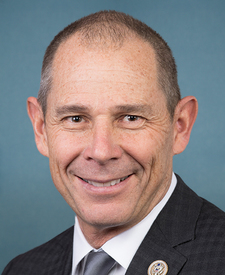
See how John R. Curtis actually votes — against your values.
DeepSyte scores John R. Curtis's record on the issues you care about — not party, not press releases. Take the 2-minute values quiz to see your personal alignment.
Sign in and take the values quiz to see how John R. Curtis's votes line up with your views.
Prediction track record
We haven't made any vote predictions for John R. Curtis yet. Predictions are generated for bills with tagged effects; they show up here as soon as the predict-votes job covers this rep's upcoming docket.
Consistency insights
John R. Curtis · statement ↔ vote record
25
Consistency score
Based on 1 data point across public statements and recorded votes · AI analysis of public records
118-hr-2·Notable gap
Secure the Border Act of 2023
25/100
What they said
Aug 3, 2026
Senators Curtis and Kelly propose legislation to create a state-sponsored visa pilot program that allows states to address workforce shortages by sponsoring temporary visa holders, while maintaining federal oversight of security screening and immigration enforcement.
The statement proposes a state-sponsored visa pilot program to address workforce shortages through temporary visa sponsorship with federal oversight. The bill (Secure the Border Act of 2023) focuses on border wall construction, asylum restrictions, and employment verification requirements—provisions that restrict immigration pathways rather than create new ones. Senator Curtis voted yes on a bill whose core provisions (expanded border barriers, asylum limits) are in direct tension with the stated goal of expanding visa access to fill labor gaps.
Pairs with ambiguous language and high uncertainty are withheld until more data is available. Procedural, cloture, and amendment votes are excluded — they don't cleanly signal substantive support or opposition.
Pro analysis
AI rep analysis — Pro
Get an AI-narrated read on John R. Curtis's full voting record against your stated values — aligned themes, conflicts, notable votes, and what to watch for.
We haven't extracted campaign positions for John R. Curtis yet. Once their campaign website or position pages are processed, this card will track what they said vs how they voted.
Crossing the aisle
Passage votes where John R. Curtis broke ranks with ≥75% of Republicans. Threshold catches substantively partisan splits; unanimous-ish or close votes are excluded.
Curtis Promotes Policy to Address Utah’s Growth, Affordable Housing with Utah Transportation Leaders
Position: Senator Curtis advocates for federal investment in transit infrastructure and policies that expand affordable housing near transit hubs to address Utah's rapid growth and affordability challenges.
U.S. Senator John Curtis (R-UT), member of the Commerce and Environment and Public Works Committees, today joined leaders from the Wasatch Front Regional Council (WFRC), Utah Transit Authority (UTA), Salt Lake City, Mountainland Association of Governments (MAG), and others to discuss policy developments that would strengthen Utah’s transportation network, expand affordable housing opportunities near transit hubs, and prepare the state’s infrastructure for continued growth and upcoming high-traffic events like the Salt Lake Temple open house in 2027 and the 2034 Winter Olympic and Paralympic Games.
“Like Americans across the country, Utahns are facing affordability pressures. But we are also facing uniquely rapid growth, which is good for our economy but can worsen traffic and lead to overcrowding,” said Senator Curtis following the event. “Today’s event brought together transit officials, local leaders, and the private sector to discuss real solutions that will serve Utahns and address these problems. Whether it’s securing investments in FrontRunner, ensuring transportation investments proactively address our population growth, or creating more housing near transit, we have an opportunity to maintain a strong quality of life for Utahns well into the future.”
Photos of the event are available here.
The group met at WFRC’s offices before visiting the North Temple FrontRunner station, where participants discussed the FrontRunner 2X project and Senator Curtis’ bipartisan Promoting Advancement Through Transit and Housing (PATH) Act and Build Housing, Unlock Benefits and Services (Build HUBS) Act.
Curtis also highlighted the recent advancement of the FrontRunner 2X project into the Engineering phase of the Federal Transit Administration’s Capital Investment Grants program, an important step toward securing nearly $1.3 billion in federal funding for improvements to FrontRunner.
Read more about the PATH Act here, the Build HUBS Act here, and the FrontRunner 2X project here.
SH-502 Hart Senate Office Building
Washington, DC 20510
202-224-5251
3601 N University Ave
Suite 250
Provo, UT 84604
801-841-2665
125 S. State Street
Suite 8402
Salt Lake City, Utah 84138
801-524-4380
Curtis, Daines Introduce Bill to Strengthen American Critical Mineral Production
Position: Senators Curtis and Daines introduced legislation to expand tax credits for domestic critical mineral extraction and processing, arguing that strengthening domestic supply chains reduces reliance on foreign adversaries and supports national security and economic competitiveness.
Critical Mineral and Extraction Tax Parity Act would expand incentives for domestic mining, processing, and production
WASHINGTON—U.S. Senators John Curtis (R-UT) and Steve Daines (R-MT) introduced the Critical Mineral and Extraction Tax Parity Act, legislation to strengthen America’s domestic critical mineral supply chains by expanding and improving the Advanced Manufacturing Production Tax Credit under Section 45X of the Internal Revenue Code.
“The United States should not have to depend on foreign adversaries for the minerals that power our economy, support our national defense, and underpin modern technology,” said Senator Curtis. “Utah and states across the West have the resources, workers, and expertise to produce more of these materials here at home. Our bill makes sure the tax code recognizes the full cost of American mineral production and gives domestic producers a fair opportunity to compete with heavily subsidized, artificially propped-up foreign supply chains.”
“There is no reason the United States should rely on other foreign nations for critical minerals that can be found right here at home, including in Montana. I’m proud to work with Senator Curtis to expand our critical mineral supply chain and ensure fairness in the tax code for American producers and businesses. It’s time to unleash America's natural resources to power our economy and strengthen our national security,” said Senator Daines.
Critical minerals are essential inputs for energy infrastructure, advanced manufacturing, defense systems, agriculture, electronics, and other sectors of the U.S. economy. The Critical Mineral and Extraction Tax Parity Act updates Section 45X to better reflect the economics of domestically producing those minerals, including the extraction activities necessary before refining can occur. The legislation would add several strategically important minerals to the Section 45X credit, recognize qualifying costs associated with extracting ore, and eliminate the reduced credit rate currently applied to metallurgical coal.
The legislation would strengthen and expand the Advanced Manufacturing Production Tax Credit by:
Section 45X is intended to encourage domestic production of critical components and materials essential to American manufacturing. By recognizing additional critical minerals and the costs required to extract the raw materials used to produce them, the bill would strengthen incentives to build more complete mineral supply chains in the United States and reduce reliance on foreign sources.
The full text of the bill is available here.
“To meet the nation’s surging energy demand, electric utilities need a domestic supply of energy infrastructure and equipment,” said Mike Squires, UAMPS Managing Director of Government Affairs (UAMPS). “Much of this equipment contains critical minerals like copper that Utah produces. UAMPS is grateful for Senator Curtis’ leadership on advancing legislation that would increase critical mining and processing capacity in the United States.”
“Adding phosphate to the list of eligible minerals under section 45X of the Internal Revenue Code will greatly help domestic phosphate producers like the Simplot Company and will incentivize future investment in phosphate mining and processing,” said Garrett Lofto, President and CEO, the Simplot Company. “We very much appreciate Senator John Curtis’ leadership on this legislation and his support of strengthening the domestic supply chain for critical minerals such as phosphate.”
“The Critical Mineral and Extraction Tax Parity Act brings federal tax policy in line with today’s mineral needs by reflecting the latest U.S. Geological Survey critical minerals list and recognizing the importance of domestic extraction and production,” said Lyndsey Wright, Women’s Mining Coalition Executive Director. “This commonsense legislation strengthens America’s mineral supply chains, supports a competitive domestic mining industry, and helps reduce our dependence on foreign sources for the resources our economy and national security rely on.”
“We applaud the introduction of the Critical Mineral and Extraction Tax Parity Act, an important step to strengthen America’s mineral security and competitiveness," Said Rich Nolan, President and CEO, National Mining Association. "Extending the Advanced Manufacturing Tax Credit to include the Department of the Interior’s updated list of critical minerals, provides investors with meaningful incentives to expand domestic mining and production across the country. All of these minerals are indispensable to America’s manufacturing base, energy systems, economy and national defense, yet the United States remains dangerously dependent on foreign sources for far too many of them. America has the resources. What we need are policies that allow us to produce them and directly address the alarming gaps in our minerals supply chains.”
"The Uranium Producers of America (UPA) applauds Senator Curtis [and Senator Daines] for introducing the Senate companion of the Critical Mineral and Extraction Tax Parity Act" said Scott Melbye, President, UPA and Executive Vice President, Uranium Energy Corp. "This important legislation will strengthen domestic critical mineral production, including uranium. It will further reduce U.S. dependence on foreign adversaries for uranium supply chains. Including uranium and other critical minerals within the Section 45X Advanced Manufacturing Tax Credit will spur further investment in America uranium production, ensuring American energy security and national security as the world increasingly looks to nuclear energy to meet growing power demand. This legislation complements previous efforts by Congress and the Trump Administration to ensure a robust and reliable domestic nuclear fuel supply chain that UPA and its member companies are actively working to expand."
“Minerals are crucial to the future of American energy dominance," said Andrew Sandstrom, Executive Director of Unleash Utah. "By incentivizing domestic extraction, we are shifting production away from adversarial regimes with abysmal environmental and labor records. This will unlock jobs for our rural communities, secure our supply chains, and help lower costs. It’s time we stop importing our energy future from China and start building it ourselves."
"America should lead the world in critical minerals production," said Jeremy Harrell, CEO, ClearPath Action. "The Critical Mineral and Extraction Tax Parity Act will incentivize domestic production for all minerals on the USGS critical minerals list, strengthen supply chains and ensure America, not foreign adversaries, controls our energy and economic future."
“As demand for critical minerals continues to grow, copper remains fundamental to America’s energy, manufacturing, infrastructure, and defense priorities," said Nate Foster, Managing Director, Kennecott Utah Copper. "Recognizing copper processing under the 45X tax credit would encourage investment in domestic production, reinforce U.S. supply chains, support American workers, and enhance the refining and smelting capacity necessary for long-term competitiveness. At Rio Tinto Kennecott, we are proud to help provide the copper and other essential materials that underpin the nation’s economy and security."
SH-502 Hart Senate Office Building
Washington, DC 20510
202-224-5251
3601 N University Ave
Suite 250
Provo, UT 84604
801-841-2665
125 S. State Street
Suite 8402
Salt Lake City, Utah 84138
801-524-4380
Curtis, Van Hollen Introduce Legislation to Combat Affordable Housing Crisis, Strengthen USPS
Position: Senators Curtis and Van Hollen introduced legislation allowing the U.S. Postal Service to lease underutilized properties for affordable housing construction, which would generate revenue for USPS while expanding the affordable housing supply.
WASHINGTON—U.S. Senators John Curtis (R-UT) and Chris Van Hollen (D-MD) introduced the Delivering Americans Affordable Homes Act, bipartisan legislation to address the shortage of affordable housing and funding shortfalls at the United States Postal Service (USPS). Amid record-breaking housing costs, the Senators’ new bill would allow local communities to lease Postal Service propertyrights for new affordable housing construction. At the same time, this legislation protects against the sale of Postal Service assets, supports the rehabilitation and new construction of Postal facilities, and eases the Postal Service’s critical financial constraints.
“Utah desperately needs more housing, and the Postal Service needs new sources of revenue; this commonsense legislation helps accomplish both,” said Senator Curtis. “By giving USPS the authority to lease underutilized property for housing development, we can put unused land to work, expand the housing supply, and strengthen an institution that millions of Americans rely on every day.”
“Far too many working Americans are faced with housing costs they simply cannot afford. At the same time, the Postal Service faces financial struggles that, if left unaddressed, will result in USPS running out of money to operate. With this legislation, we’re not only bringing new, affordable homes to communities across the country, we’re also working to shore up the Postal Service so that it can continue serving Americans for generations to come. It’s a win-win,” said Senator Van Hollen.
Currently, USPS owns about 8,500 properties around the United States, many of which are located in places suitable for housing construction and in areas with high housing demand. According to a recent analysis from Brookings, housing construction on postal property could build over 200,000 new homes and bring hundreds of millions of dollars to the Postal Service each year.
The Delivering Americans Affordable Homes Act would set guardrails on housing construction by USPS by allowing for the lease, but prohibiting the sale, of Postal Service property for housing construction and ensuring USPS maintains discretion over its real estate assets. The bill also requires housing units constructed on Postal Service property to include tenant affordability restrictions on at least 20% of units, among other provisions.
A one-page summary of this bill is available here, and the full text of the legislation is available here.
The legislation is supported by the Bipartisan Policy Center Action, Chamber of Progress, and Inclusive Abundance Action, among others.
“I applaud Senators Van Hollen and Curtis for their leadership in crafting this win-win legislation,” said Aaron Shroyer, Nonresident Senior Fellow, Brookings Metro. “This bill would enable the United States Postal Service to tap an underutilized asset—its land—to create a durable revenue source, while also adding much-needed housing to main streets and downtowns across the country.”
“USPS-owned sites could offer meaningful opportunities to add homes in communities where housing is badly needed,” said Ben Metcalf, Managing Director, Terner Center for Housing Innovation. “Terner Center research has identified hundreds of USPS-owned sites that warrant closer evaluation for housing. While not every site will be feasible, underutilized postal properties could offer one solution to policymakers who are looking for ways to increase their affordable housing stock.”
“The Postal Service owns 8,500 properties, many of them on prime, well-located land that cities and states need for housing,” said Colin Higgins, Executive Director of the National Housing Crisis Task Force. “In our Federal Housing Policy Agenda, the National Housing Crisis Task Force called for putting federal land to work this way, and it's good to see a bipartisan bill take up the idea. The hope is that cities and states can chart a path to build homes on underused public land while the Postal Service keeps its footprint and earns revenue.”
“The Postal Service is sitting on excess land that could be used for more than 200,000 new homes,” said Adam Kovacevich, Founder and CEO of Chamber of Progress. “Sen. Van Hollen and Sen. Curtis’s legislation will turn underused postal sites and parking lots into housing in the places people want to live, and provide much needed revenue back to the Postal Service.”
SH-502 Hart Senate Office Building
Washington, DC 20510
202-224-5251
3601 N University Ave
Suite 250
Provo, UT 84604
801-841-2665
125 S. State Street
Suite 8402
Salt Lake City, Utah 84138
801-524-4380
Curtis Highlights Need to Reduce Regulatory Burdens, Preserve Family Farms
Position: Senator Curtis advocates for reducing regulatory burdens on family farms and small businesses, and supports greater access to capital and simplified regulations to help family operations remain competitive and resist consolidation.
WASHINGTON—During a Small Business and Entrepreneurship Committee hearing attended by Utah Farm Bureau Federation President ValJay Rigby, U.S. Senator John Curtis (R-UT) highlighted the challenges facing family farms and small businesses, emphasizing the need for commonsense tax policy, regulatory reform, and greater access to capital.
During opening remarks, Senator Curtis introduced Mr. Rigby as a hearing witness. During questioning, Curtis focused on the growing regulatory burden facing farmers and ranchers, asking how federal regulations contribute to consolidation in agriculture and what Congress can do to help family operations remain competitive. Mr. Rigby explained that simplifying regulations, expanding access to capital, and supporting value-added agriculture are critical to helping producers manage rising costs and continue operating.
Video of the Senator’s introduction and questioning can be found here, and a transcript is below.
Senator Curtis: Thank you, Chair Young. It's my privilege to introduce today's witness from the great state of Utah. Mr. ValJay Rigby, thank you for being here today.
Mr. Rigby serves as president of the Utah Farm Bureau Federation, our state's largest general agriculture organization, representing more than 3,700 members and their families. ValJay is a fifth-generation farmer from Newton, Utah, where his family continues to farm land that was part of its original 1869 homestead.
Today, he farms alongside his brothers and his children, raising beef cattle and growing approximately 1,500 acres of alfalfa and small grains. Mr. Rigby holds a bachelor's degree in finance and a master's degree in information systems from Utah State University. He has also served as president of the Cache County Farm Bureau, on local planning and zoning and water boards, and as a volunteer firefighter.
Thank you, Mr. Rigby, for making the trip from Utah to join us today. I'm sure they're missing you back on the farm, but thank you for being here, and I look forward to hearing your testimony.
Curtis: Mr. Rigby, two things you said in your testimony: one I have a comment on; the other, I have a question. You talked about how you were developing character in youth, and I will just tell you, as a previous small business owner myself, if anybody ever walked in my door and said they grew up on a farm in Utah or Idaho, we hired them, no questions asked. They're hard workers, they're disciplined, and they're problem-solvers. I would totally agree with you.
You also alluded to the fact that you don't have a room full of lawyers and attorneys to help navigate these regulations, and I want to focus on that for just a minute, particularly as it relates to the move toward consolidation in farms and ranches. If you think about the high costs that my colleague from Colorado alluded to, and the regulatory burden, what role is that playing in this consolidation? And how do we here in Washington help you push back on that?
ValJay Rigby: I appreciate the question. Any time that we can reduce the regulatory burden on farmers and producers and simplify those programs, it is a tremendous help because, as a farmer, I wear lots of hats every day. I'm a business owner. I manage my finances. I'm constantly thinking about my cash flow. I may have lots of assets, but I have no cash in the bank. Just ask my banker.
Any time we can provide opportunities to incentivize adding value to the crops that I grow on my farm, that increases the revenue that comes into my farm. Any of those programs are a benefit. When we can incentivize lower interest rates, that's one of the challenges in agriculture: access to capital and credit. A beginning farmer who's just starting out faces the challenge that we've talked about. They don't have decades of experience or a balance sheet to show the bank that they're a good risk. Any of those programs are a tremendous help to our producers.
You mentioned the diesel fuel, and I suspect that's an investment you've made that doesn't pay off the next week, or the next month. You're making investments that literally don't pay off for years. I'm curious, as we reflect on tax policy here and the way it impacts small businesses, given your limited cash flow and margins, talk to us about tax policy—what we do here—and how it influences you, both good and bad.
Rigby: We appreciate last summer's Working Families Tax Cut Act. It's helpful for production agriculture. Having that certainty to know, as a producer, that I have that permanent $15 million per individual exemption from the estate tax is really important, so I can plan and have some certainty. The biggest asset that I have as a producer is the land, and I need that certainty as I plan.
Some of the other provisions are also a help to us. Any little bit that helps reduce some of that tax burden and incentivizes reinvestment in my farm is a great help.
Curtis: Just to state the obvious: if, upon your death, your heirs had to pay taxes before they could continue operating that farm, it would not make it to a sixth generation. Is that a fair statement?
Rigby: That is a fair statement. There's no way they could do that. I was lucky enough to farm with my grandfather and my father. My father passed away a few years ago, and if he had died a few years earlier, we would have had a difficult time maintaining our farm if we had been caught in that window.
Curtis: Thank you. I've got just a moment left. I'd like to ask all of you to give me a quick answer and give me a sense of how our tax policy and our regulatory policies impact your hiring and financing decisions. Ms. High, we'll start with you.
Nikki High: Thank you for that question. So much is dependent on our ability to have cash flow, similar to Mr. Rigby. Any break that we get from a tax perspective helps offset our built-in costs, including credit card servicing fees and other fees. Having a tax policy that benefits us allows us to continue hiring in the community and to do more outreach and advocacy programs.
Curtis: Thank you. Mr. Malshe.
Dr. Ajay Malshe: Thank you, Mr. Curtis, for asking that question. I think the two areas where it would help immensely: any dollars that go toward deep-tech product development or deep-tech research. If there can be a policy where those are not taxed, or taxed at a low rate, that would help because research converts money into knowledge, and if you tax the knowledge, you tax how you make the product. So I think research credits for small deep-tech businesses would be very helpful. Second, investment tax credits. If investments made in small businesses receive tax credits, that will increase investment in deep-tech businesses.
Lorena Cantarovici: I think we need to see everything globally, right? I'm not an expert in taxes—thank God. I take care of my [profit and loss statements] and pay attention to all the numbers. But I think as everything evolves, taxes should evolve too, and that we make sure the proportions are equal to what we're paying. As a small business owner, I want to pay taxes. That means I'm alive. I want to create jobs, and I want to pay employment taxes as well—that's part of doing business. I think it's very important that we make sure everything grows in the same way. If I'm able to sell and the economy is good, we all want to pay the right taxes. If the economy isn't good, we need help—but we need to survive. I don't want to be in survival mode. I want to be in growth mode.
Curtis: Thank you. I'll simply end by saying I wish all members of the Senate could have been small business owners. I think we would make a lot better decisions. Thank you all for your hard work and your commitment. Thank you.
SH-502 Hart Senate Office Building
Washington, DC 20510
202-224-5251
3601 N University Ave
Suite 250
Provo, UT 84604
801-841-2665
125 S. State Street
Suite 8402
Salt Lake City, Utah 84138
801-524-4380
Committee Advances Curtis Priorities to Strengthen Online Safety for Children
Position: Senator Curtis supports the advancement of bipartisan legislation to strengthen online child safety, including the CHATBOT Act, Kids Online Safety Act, and Youth AI Privacy Act, which establish transparency requirements, parental controls, and platform accountability measures.
WASHINGTON—U.S. Senator John Curtis (R-UT) today praised the U.S. Senate Commerce Committee's bipartisan advancement of several online child safety bills, including the Children’s Health, Advancement, Trust, Boundaries, and Oversight in Technology (CHATBOT) Act, co-led by Senator Curtis. In delivered remarks, Curtis called the Committee's action an important step toward giving families the tools they need to better protect children in an increasingly complex digital world.
Video of the Senator’s Committee remarks can be found here, and a transcript is below.
As we all know, the digital world is changing faster than parents can keep up with it. And our kids are growing up in an online environment that barely existed a few years ago.
My wife and I raised six children, and we thought it was complicated when we raised them. And now I am expecting my 19th grandchild in a couple of weeks, and I can't fathom what they have to navigate to get through this environment.
The bills we advanced today are an important step toward giving families the tools and transparency they need to keep their kids safe.
I want to thank the Chairman, Ranking Member Cantwell, and everyone who worked together in good faith to get us here.
I'm especially proud to be a lead cosponsor of the CHATBOT Act with Chairman Cruz and Senators Schatz and Schiff.
Chairman Cruz was collaborative throughout this process and incorporated several ideas Senator Schiff and I advanced in our SAFE KIDS Act.
I'm also proud to partner with Senator Lee on the SCREEN Act and commit to work with him and my other colleagues to advance that to the Senate floor.
That means protecting children without stifling innovation, empowering parents without leaving them on their own, and writing laws that will still make sense years from now.
But our work isn't finished today.
I’m continuing to push to advance bipartisan bills from my colleagues and me to hold platforms accountable for the harm their products create, help users distinguish authentic content from AI slop, and close loopholes that allow youth to access content they shouldn't see.
Parents shouldn't have to carry this burden alone.
Platforms have a responsibility, Congress has a responsibility, and we should keep working together to build a safer digital world for our kids.
Today's votes are meaningful progress, but they're not the finish line.
The Committee passed the Kids Online Safety Act; Youth AI Privacy Act; CHATBOT Act; and Children’s Artificial Intelligence Toy Safety Act of 2026. Included in the CHATBOT Act were several key provisions from Curtis’ bipartisan SAFE KIDS Act, introduced with Senator Adam Schiff (D-CA).
The provisions adopted from the SAFE KIDS Act include:
In addition, several other priorities championed by Senator Curtis in the SAFE KIDS Act were advanced through Senator Ed Markey (D-MA)'s Youth AI Privacy Act, including:
Together, these provisions represent significant bipartisan progress toward establishing stronger safeguards for children online, increasing transparency around AI systems, strengthening parental awareness, and protecting young users from harmful or exploitative practices.
SH-502 Hart Senate Office Building
Washington, DC 20510
202-224-5251
3601 N University Ave
Suite 250
Provo, UT 84604
801-841-2665
125 S. State Street
Suite 8402
Salt Lake City, Utah 84138
801-524-4380
Curtis, Merkley Introduce Legislation to Ban Asbestos
Position: Senators Curtis and Merkley introduced bipartisan legislation to establish a comprehensive federal ban on all commercial and industrial uses of asbestos, citing its documented carcinogenic properties and the need to protect workers, first responders, and consumers from exposure.
WASHINGTON—U.S. Senators John Curtis (R-UT) and Jeff Merkley (D-OR)—Chair and Ranking Member, respectively, of the Environment and Public Works (EPW) Subcommittee on Chemical Safety, Waste Management, Environmental Justice, and Regulatory Oversight—introduced the Alan Reinstein Ban Asbestos Now (ARBAN) Act of 2026, bipartisan legislation to end all commercial and industrial uses of asbestos.
“For decades, we have known the dangers of commercial asbestos, yet it has continued to be used,” said Senator Curtis. “This bipartisan legislation finally brings certainty by ending the manufacture and use of commercial asbestos while providing a responsible, time-limited transition for the limited uses that remain.”
“American families and workers deserve to have a future free of exposure to asbestos—a known killer,” said Senator Merkley. “This deadly carcinogen has been banned in more than 50 countries, while the United States is playing catch-up on tackling this public health nightmare. Our bipartisan bill is necessary to phase out all dangerous asbestos fibers and provide stronger protections for consumers across the United States.”
Asbestos is a known carcinogen linked to mesothelioma, lung cancer, and other serious diseases, and exposure continues to pose risks to workers, first responders, consumers, and communities across the country. While federal actions have restricted certain uses of asbestos, the United States has not enacted a comprehensive statutory ban covering all commercial uses of the substance. The legislation would establish a clear, nationwide prohibition and provide durable protections against future asbestos exposure, including provisions that:
The bill is supported by the Asbestos Disease Awareness Organization (ADAO), American Public Health Association (APHA), Center for Environmental Health (CEH), Collegium Ramazzini, Environmental Information Association (EIA), Environmental Working Group (EWG), and Federal Fire Fighters Joint Council, International Association of Fire Fighters (IAFF).
The full text of the bill is available here.
“There is overwhelming consensus in the scientific community that there is no safe level of asbestos exposure. APHA continues to support legislation like the Senate’s ARBAN Act to protect the public’s health by eliminating all asbestos imports and use,” said Georges C. Benjamin, MD, Chief Executive Officer, APHA.
"CEH applauds Senators Merkley and Curtis for reintroducing the Alan Reinstein Ban Asbestos Now Act, a standalone, bipartisan bill that will ban asbestos in all of its forms in the United States. Banning asbestos, one of the most toxic substances that has caused so much harm, is long overdue," said Thomas R. Fox, Senior Legislative Counsel, CEH.
“The Collegium Ramazzini, an international scientific society, supports the Senate’s ARBAN Act which calls for an immediate ban on all mining and the use of asbestos in all its forms in order to eliminate the continuing burden of disease and death. We urge the immediate passage of this legislation which will save countless lives in our country and globally,” said Dr. Melissa McDairmid, on behalf of the Fellows of the Collegium Ramazzini.
“On behalf of the EIA, a non-profit membership organization of persons involved in the asbestos abatement industry, I write to express EIA’s strong support for the Senate’s ARBAN Act of 2026. We greatly appreciate your continuing commitment to ban commercial asbestos that has continued for many years. With the passage of the ARBAN Act, the United States will finally join nearly 70 countries that have banned asbestos,” said J. Brent Kynoch, Managing Director of the EIA.
“EWG commends Senators Jeff Merkley and John Curtis for their introduction of the ARBAN Act to ban this deadly carcinogen. Asbestos-related diseases have claimed countless lives and continue to leave families grieving across the nation. By passing the bipartisan ARBAN Act, Congress can make it unmistakably clear that public health must come before industry profits. This legislation reflects the longstanding dedication of Linda Reinstein and the ADAO, whose tireless advocacy over more than two decades has helped keep the devastating human toll of asbestos in the public eye and sustained momentum for congressional action,” said Ken Cook, President, EWG.
"The Federal Fire Fighters Joint Council wholeheartedly endorses the ARBAN Act and its critical effort to ban the importation, commercial sale, and use of all asbestos fibers. Exposure to toxic asbestos during emergency response duties continues to cause devastating illnesses and deaths among dedicated federal fire fighters protecting federal facilities and the American public. Enacting a comprehensive ban is a vital and long-overdue step toward safeguarding the health and lives of our nation's valiant firefighters” said Michael Jackson, President of the Federal Fire Fighters Council, IAFF.
“Today’s bipartisan Senate reintroduction of the ARBAN Act marks a historic breakthrough in the fight to end the use of asbestos in the United States. On behalf of the Asbestos Disease Awareness Organization, we are deeply grateful to Senator Jeff Merkley for his steadfast leadership on this issue and to Senator John Curtis for becoming the first Senate Republican to co-sponsor ARBAN. More than 40,000 Americans die each year from preventable asbestos-caused diseases and Congress a responsibility to act. Together, Senators Merkley and Curtis are doing just that by advancing the comprehensive, durable solution needed to eliminate all six recognized asbestos fibers and Libby Amphibole asbestos from commerce. Their bill will protect workers, first responders, consumers, children, and communities across the nation from asbestos and save lives for decades to come,” said Linda Reinstein, President and Cofounder of the ADAO.
SH-502 Hart Senate Office Building
Washington, DC 20510
202-224-5251
3601 N University Ave
Suite 250
Provo, UT 84604
801-841-2665
125 S. State Street
Suite 8402
Salt Lake City, Utah 84138
801-524-4380
Curtis, Kelly Propose State-Sponsored Visa Pilot Program
Position: Senators Curtis and Kelly propose legislation to create a state-sponsored visa pilot program that allows states to address workforce shortages by sponsoring temporary visa holders, while maintaining federal oversight of security screening and immigration enforcement.
Bipartisan legislation would empower states and address growing workforce demands in Utah
WASHINGTON—U.S. Senators John Curtis (R-UT) and Mark Kelly (D-AZ) introduced the State Sponsored Visa Pilot Program Act of 2026, bipartisan legislation to create a new temporary visa program that allows states to address their unique workforce and economic development needs while maintaining strong federal oversight and immigration enforcement.
“I’ve heard time and again from small business owners, farmers, and ranchers across Utah how difficult it has become to hire enough workers to meet growing market demands,” said Senator Curtis. “Our legislation would help fill the gap by creating a pilot program allowing states to sponsor visas tailored to their unique economies, without sacrificing rigorous federal vetting or accountability.”
“States understand their own economic needs best, but federal rules currently determine who can live and work here,” said Senator Kelly. “Our bipartisan bill would let Arizona and other states choose the visas they need to fill labor gaps and strengthen their local economies.”
Despite having one of the strongest economies in the country, Utah faces a significant workforce shortage—particularly in agriculture, construction, and hospitality. A report published by the Sutherland Institute found that Utah “is experiencing one of the more severe workforce shortages among the states,” and “had a Worker Shortage Index of 0.72, meaning that there are 72 available workers for every 100 open jobs.”
Under the legislation, states could voluntarily establish state-sponsored visa programs tailored to their labor market demands, subject to approval by the Department of Homeland Security. Participating states would determine which workers or investors they sponsor while remaining responsible for monitoring compliance with program requirements. The federal government would retain authority over security screening, visa issuance, and immigration enforcement. Every applicant would be required to pass comprehensive federal background and security checks before receiving a visa.
To ensure accountability, the legislation requires participating states to:
The bill also includes strong safeguards to protect taxpayers and uphold immigration laws. State-sponsored visa holders would be ineligible for federal means-tested benefits, would be subject to all applicable federal, state, and local labor and tax laws, and could lose their status if they violate program requirements or leave the sponsoring state without authorization.
The full text of the bill is available here.
SH-502 Hart Senate Office Building
Washington, DC 20510
202-224-5251
3601 N University Ave
Suite 250
Provo, UT 84604
801-841-2665
125 S. State Street
Suite 8402
Salt Lake City, Utah 84138
801-524-4380
Position: Senator Curtis opposes eliminating or altering the Senate filibuster, arguing it protects minority rights, ensures durable legislation, and encourages consensus-building across party lines.
It protects the rights of the minority in the Senate—even when it’s a minority of one
WASHINGTON—U.S. Senator John Curtis (R-UT) authored an opinion piece in The Wall Street Journal reaffirming his commitment to preserving the Senate filibuster, arguing that it ensures consistent, long-term policy making; protects the rights of the minority; and encourages consensus building rather than top-down rule.
“…[The] question isn’t simply whether more legislation would pass. It is whether prudence would still be required in lawmaking, whether legislation passed in one Congress would remain law in the next,” Senator Curtis writes. “Under no circumstance will I support any effort to end or alter the filibuster, as any party that does so wouldn’t be guaranteed survival. Their agenda would be guaranteed death come the next majority.”
In the piece, Senator Curtis explains that the filibuster is not merely a procedural rule, but a defining feature of the Senate's role as a deliberative body. He argues that while the filibuster has evolved over time, its central purpose remains the same: ensuring legislation is durable, broadly supported, and the product of negotiation rather than fleeting political majorities.
Senator Curtis is a cosponsor of the SAVE America Act and has previously voted in support of the legislation. His views on the filibuster are longstanding and are not tied to the passage of any specific legislation.
SH-502 Hart Senate Office Building
Washington, DC 20510
202-224-5251
3601 N University Ave
Suite 250
Provo, UT 84604
801-841-2665
125 S. State Street
Suite 8402
Salt Lake City, Utah 84138
801-524-4380
Curtis, Rosen Introduce Bipartisan Bill to Help Protect Drinking Water Infrastructure During Extreme Heat
Position: Senators Curtis and Rosen introduced bipartisan legislation to expand EPA drinking water infrastructure resilience funding to include extreme temperature events and reauthorize the program through 2032.
WASHINGTON—U.S. Senators John Curtis (R-UT) and Jacky Rosen (D-NV) introduced legislation to help protect drinking water infrastructure when faced with extreme heat or cold. The bipartisan Protecting America’s Drinking Water from Extreme Temperatures Act would make extreme temperatures, like extreme heat, an eligible condition for public water systems to apply for the Environmental Protection Agency’s Midsize and Large Drinking Water Infrastructure Resilience and Sustainability Program. This program is currently only available to bolster water infrastructure against extreme weather, natural disasters, and cybersecurity attacks. The bill would also reauthorize the program—which is set to expire this year—through 2032. The legislation is cosponsored by Senator Lisa Blunt Rochester (D-DE).
“From prolonged heat to freezing winter conditions, extreme temperatures can threaten access to safe, reliable drinking water for communities across Utah and the West,” said Senator Curtis. “This bipartisan bill gives local water systems greater flexibility to strengthen infrastructure before emergencies happen and helps ensure families can continue to count on clean water no matter the weather.”
“Nevada has seen some of the hottest summers ever recorded over the past few years—putting at risk our ability to access clean drinking water when we need it the most,” said Senator Rosen. “Extreme temperatures pose as much of a threat to our infrastructure as other weather events. That’s why I’m glad to introduce this bipartisan bill to ensure our communities can qualify for federal resources to strengthen public water systems.”
“Americans count on their government to ensure they have access to clean water, especially during extreme heat and extreme cold,” said Senator Blunt Rochester. “We must properly invest in the resiliency of the infrastructure that makes it happen. I am proud to stand with Senators Rosen and Curtis to introduce the bipartisan Protecting Midsize and Large Drinking Water Systems from Extreme Temperature Act.”
The full text of the bill can be found here.
Communities facing extreme temperatures are especially vulnerable to drinking water contamination and interruptions. Rapid temperature changes can weaken underground drinking water pipes, and extreme heat can warm drinking water enough to grow toxic microorganisms and expose the water to plastic or metal pollutants from overheated pipes. In the case of extreme cold, pipes can burst and leave many homes without running water.
SH-502 Hart Senate Office Building
Washington, DC 20510
202-224-5251
3601 N University Ave
Suite 250
Provo, UT 84604
801-841-2665
125 S. State Street
Suite 8402
Salt Lake City, Utah 84138
801-524-4380
Curtis, Bennet Lead Bipartisan Letter Affirming U.S. Commitments to Taiwan
Position: The senators affirm congressional support for the Taiwan Relations Act and assert that there should be no unilateral changes to U.S. policy on Taiwan, emphasizing the importance of maintaining defense commitments to Taiwan and regional stability.
WASHINGTON—Ahead of President Donald Trump’s summit with China’s President Xi Jinping, U.S. Senators John Curtis (R-UT), member of the Senate Foreign Relations Committee, and Michael Bennet (D-CO), member of the Senate Select Committee on Intelligence, led 10 colleagues on a letter to U.S. Secretary of State Marco Rubio affirming congressional support for the Taiwan Relations Act (TRA) and asserting there should be no unilateral changes to this policy nor any new U.S. declaratory policy on Taiwan.
In addition to Curtis and Bennet, the letter was signed by Senators Chris Coons (D-DE), Mitch McConnell (R-KY), Tammy Duckworth (D-IL), Thom Tillis (R-NC), Tim Kaine (D-VA), Andy Kim (D-NJ), Jeff Merkley (D-OR), Brian Schatz (D-HI), Elissa Slotkin (D-MI), and Chris Van Hollen (D-MD).
“For nearly five decades, the TRA has been the cornerstone of U.S.-Taiwan ties, enabling a strong and mutually beneficial relationship. This bipartisan law requires the United States to provide Taiwan—a critical economic and technological partner, and a thriving democracy—defense articles and services necessary to maintain the island’s self-defense capability. The TRA further states that the United States would consider any attempt to determine Taiwan’s future by non-peaceful means to be ‘a threat to the peace and security of the Western Pacific,’ and of ‘grave concern,’” wrote the senators.
“Our commitment to this legislation has long helped ensure peace and stability across the Taiwan Strait—which is essential to U.S. interests there and across the Indo-Pacific. Maintaining this commitment is necessary to ensure the credibility of U.S. security commitments to allies and partners in the region and beyond,” continued the senators.
“In the spirit of longstanding bipartisan support for the U.S.-Taiwan relationship, we stand ready to work with your administration to further strengthen this partnership,” concluded the senators.
The text of the letter is available here and below.
We write to reaffirm congressional support for the 1979 Taiwan Relations Act (TRA) and our firm belief that there should be no unilateral changes to this policy nor any new declaratory policy on Taiwan, consistent with longstanding U.S. commitments including the Six Assurances President Reagan articulated.
For nearly five decades, the TRA has been the cornerstone of U.S.-Taiwan ties, enabling a strong and mutually beneficial relationship. This bipartisan law requires the United States to provide Taiwan—a critical economic and technological partner, and a thriving democracy—defense articles and services necessary to maintain the island’s self-defense capability. The TRA further states that the United States would consider any attempt to determine Taiwan’s future by non-peaceful means to be “a threat to the peace and security of the Western Pacific,” and of “grave concern.”
Our commitment to this legislation has long helped ensure peace and stability across the Taiwan Strait—which is essential to U.S. interests there and across the Indo-Pacific. Maintaining this commitment is necessary to ensure the credibility of U.S. security commitments to allies and partners in the region and beyond.
During your tenure in the U.S. Senate, you consistently demonstrated strong support for U.S.-Taiwan relations and for the TRA. In 2017, you joined a bipartisan letter to President Trump stating that the “One China policy, based on the [Taiwan Relations] Act, the Three Joint Communiques and the Six Assurances […] provides the basis for our enduring relationship with Taiwan.” You further emphasized the “bipartisan commitment that we must not waver in providing necessary support for Taiwan to defend itself in the face of China’s ongoing military aggression and the cross-Strait military imbalance."
These principles remain true and necessary today. In the spirit of longstanding bipartisan support for the U.S.-Taiwan relationship, we stand ready to work with your administration to further strengthen this partnership.
SH-502 Hart Senate Office Building
Washington, DC 20510
202-224-5251
3601 N University Ave
Suite 250
Provo, UT 84604
801-841-2665
125 S. State Street
Suite 8402
Salt Lake City, Utah 84138
801-524-4380
Source: GDELT 2.0 GKG, filtered to a curated list of national outlets. Inclusion is not endorsement; opinion pieces and reported news are mixed.
Recent stock activity
Periodic transaction reports filed under the STOCK Act — disclosed by the rep, sourced from public filings.
No disclosed trades on record.
Source: open-data mirrors of the Senate eFD and House Clerk financial-disclosure systems. Disclosure within 30 days of trade is required by law (45 for spouse/dependent trades).
Top PAC donors · 2026 cycle
Political action committees that gave the most to this rep's principal campaign committee this cycle. PAC giving is direct organizational support — industry, ideological, or leadership.
1.AMERICAN ISRAEL PUBLIC AFFAIRS COMMITTEE POLITICAL ACTION COMMITTEE (AIPAC)Ideological30 contributionsPAC arm of the American Israel Public Affairs Committee, federalized in 2021. Backs candidates of both parties who support U.S.-Israel security and economic ties.AI$215,580
2.NO LABELS PROBLEM SOLVERS PACIdeological7 contributionsCentrist advocacy PAC — supports candidates focused on bipartisan problem-solving and pragmatic governance across party lines.AI$52,200
3.UNITED POSTMASTERS AND MANAGERS OF AMERICA POLITICAL FUND2 contributions$10,000
4.AMERICAN CRYSTAL SUGAR COMPANY PACAgriculture2 contributionsAgricultural company PAC for a major sugar producer — backs candidates supporting farm subsidies, tariff protections, and agricultural trade policies.AI$10,000
5.TUESDAY GROUP POLITICAL ACTION COMMITTEE2 contributions$10,000
6.MAJORITY COMMITTEE PAC--MC PACLeadership2 contributionsLeadership PAC — likely affiliated with a member of Congress or caucus group; backs allied candidates and party priorities.AI · low$10,000
7.RECLAIM THE MAJORITYLeadership1 contributionMember-of-Congress leadership PAC — supports Democratic candidates and party priorities aligned with reclaiming House or Senate control.AI$5,067
8.HALLIBURTON COMPANY PAC1 contribution$5,000
9.AMERICAN SUGAR CANE LEAGUE PAC1 contribution$5,000
10.BUILD POLITICAL ACTION COMMITTEE OF THE NATIONAL ASSOCIATION OF HOME BUILDERS (BUILDPAC)Real Estate1 contributionHomebuilding-industry PAC — supports candidates backing residential construction, favorable zoning and permitting policies, and housing-affordability initiatives.AI$5,000
Source: OpenFEC (api.open.fec.gov) Schedule A receipts where contributor type is “committee.” Aggregated by contributing committee. Self-transfers from joint-fundraising / victory committees are excluded.
Top individual contributors · 2026 cycle
Itemized individual contributions over $200 to this rep's campaign committee, aggregated by donor employer. PAC giving is shown above; this section is people, not organizations.
1.SUMMIT RIDGE ENERGY$16,000
2.ADVANTAGE CAPITAL$13,500
3.NEXTRACKER$10,500
4.JANE STREET CAPITAL$10,500
5.GOODLEAP$10,000
6.ECA SOLAR$9,000
7.MISSION STRATEGIES$8,000
8.ARNOLD VENTURES$7,000
9.SOROBAN CAPITAL PARTNERS LP$7,000
10.ANROK$7,000
Source: OpenFEC Schedule A receipts where contributor type is “individual,” aggregated by the donor's self-reported employer. This is a geographic / industry correlation, not a corporate endorsement.