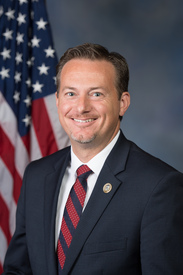
See how Michael Cloud actually votes — against your values.
DeepSyte scores Michael Cloud's record on the issues you care about — not party, not press releases. Take the 2-minute values quiz to see your personal alignment.
Sign in and take the values quiz to see how Michael Cloud's votes line up with your views.
Prediction track record
We haven't made any vote predictions for Michael Cloud yet. Predictions are generated for bills with tagged effects; they show up here as soon as the predict-votes job covers this rep's upcoming docket.
Consistency insights
Michael Cloud · statement ↔ vote record
45
Consistency score
Based on 1 data point across public statements and recorded votes · AI analysis of public records
119-hr-1919·Mixed signal
Anti-CBDC Surveillance State Act
45/100
What they said
Jun 4, 2026
The Freedom Caucus opposes federal mandates requiring automakers to install anti-drunk driving technology that can detect impairment and limit vehicle operation, characterizing such systems as government surveillance and a threat to constitutional liberties and privacy.
Both the statement and bill address government surveillance and digital control concerns, but they target different specific technologies and mechanisms. The statement opposes mandatory anti-drunk driving technology in vehicles as surveillance; the bill prohibits Federal Reserve direct issuance of central bank digital currency. The rep's yes vote on the CBDC amendment aligns with the stated opposition to government surveillance and control, but the technologies and policy questions are distinct. The amendment vote (rather than passage vote) adds procedural ambiguity about the rep's substantive intent on the broader bill.
Pairs with ambiguous language and high uncertainty are withheld until more data is available. Procedural, cloture, and amendment votes are excluded — they don't cleanly signal substantive support or opposition.
Pro analysis
AI rep analysis — Pro
Get an AI-narrated read on Michael Cloud's full voting record against your stated values — aligned themes, conflicts, notable votes, and what to watch for.
We haven't extracted campaign positions for Michael Cloud yet. Once their campaign website or position pages are processed, this card will track what they said vs how they voted.
Crossing the aisle
Passage votes where Michael Cloud broke ranks with ≥75% of Republicans. Threshold catches substantively partisan splits; unanimous-ish or close votes are excluded.
To amend the FISA Amendments Act of 2008 to extend the authorities of title VII of the Foreign Intelligence Surveillance Act of 1978, and for other purposes.
Position: The Trump Administration and Port of Corpus Christi are partnering to explore the integration of small modular reactor (SMR) technology into maritime operations to reduce shipping costs, enhance port resilience, and advance U.S. maritime competitiveness.
Nuclear Engineering International
Anew US partnership focused on small modular reactor (SMR) technology for maritime applications has been launched by US Secretary of Transportation Sean P Duffy with the Port of Corpus Christi in Texas. Duffy, Maritime Administrator (MARAD) Stephen M Carmel, US Representative Michael Cloud and Port leaders kicked off the initiative which aims to revitalise US shipbuilding, cut fuel costs, and restore US maritime dominance.
It is the second agreement the Department has signed since Secretary Duffy launched the SMR initiative in May. The first agreement was signed by MARAD, the Department of Energy (DOE) and the Nuclear Regulatory Commission (NRC) in June with the Port of Long Beach in California. That agreement directly complemented a separate lease at the port with BlueCore Energy, a nuclear startup developing floating, barge-mounted SMRs.
The Port of Corpus Christi is the largest US port for petroleum exports and a national leader in liquefied natural gas (LNG) shipments. In the first half of 2026, energy-related cargo movements at the port included 11.5 m tonnes of LNG, a 36.3% increase year-over-year, 17.1m tonnes of refined products, 8.2m tonnes of bulk liquids, 914,606 tonnes of natural gas liquids, and 66m tonnes of crude oil. In June, the port handled 110.3m tonnes of cargoes making the first half of 2026 the best first half of the year in the port’s history.
Through a memorandum of cooperation (MOC), MARAD and the Port of Corpus Christi agreed to work together to explore opportunities to advance maritime energy systems, including through the potential integration of SMR technologies, resilient port microgrids, shoreside power architecture, infrastructure capable of supporting emerging vessel propulsion concepts, and related workforce development opportunities.
“Small modular reactors have the potential to reshape America’s maritime sector, lower shipping costs, and bolster our supply chains,” said Duffy. “I’m thrilled that the Port of Corpus Christi is embracing this exciting partnership with the Trump Administration to ensure the United States leads the way in innovation. Maritime dominance starts with rebuilding America’s fleet with this state-of-the-art technology.”
Maritime Administrator Carmel noted: “This agreement with the Port of Corpus Christi demonstrates that the leading energy port in the nation understands the significance of this technology. SMR integration has the potential to drive down costs and guarantee that our critical Gulf Coast maritime supply chains remain resilient against any contingency, from extreme weather to power grid disruptions, while training the next generation of high-skilled American mariners.”
The four pillars of MOC expand into concrete operational goals: SMR technology integration; resilient port microgrids; shoreside power architecture; and advanced vessel propulsion infrastructure.
SMR technology integration – the primary objective is to evaluate how SMRs can be physically and legally safely housed within a major commercial hub. The port signed a complementary study with UK ship-based nuclear company Core Power to evaluate the feasibility of hosting floating nuclear barges. Power generated from SMRs will support both port operations and the surrounding industrial complex, which is heavily reliant on petroleum and LNG production. Initial phases will map out safety perimeters, emergency handling, and legal compliance required for commercial nuclear facilities.
Resilient port microgrids – major Gulf Coast ports face severe vulnerabilities from weather anomalies and external energy blackouts. The integration of SMRs intends to sever the port’s dependence on the main Texas electrical grid. The targeted microgrid architecture will isolate port power, ensuring critical supply chain operations remain active during hurricanes or regional grid collapses. The baseload power provided by SMRs will ensure steady energy supply required for massive industrial operations.
Shoreside power architecture – “cold ironing” or plugging ships into the port electrical grid while docked, requires vast amounts of clean electricity. The research outlines shore-based support infrastructure needed to service nuclear-powered commercial ships when they call on the port. SMR power grids will connect directly to docks, enabling ships to shut down diesel auxiliary engines and transition to zero-emission shore power smoothly.
Advanced vessel propulsion infrastructure – the ultimate long-term horizon for the Department of Transportation is transforming commercial shipping logistics. The study will examine what a port needs to refuel, service, and maintain civilian vessels propelled by onboard marine SMRs. Rather than immediate deployment, this groundwork maps the future supply chain requirements for a new, modernised domestic merchant fleet. The agreement explicitly outlines joint technical training programmes to educate the next generation of American mariners and port technicians in nuclear maritime tech.
Earlier in August, Core Power issued its response to Marad’s original SMR request for information outlining the company’s Project Pathfinder programme for designing, building, and placing into service a US-flagged nuclear-powered commercial vessel. The Port of Corpus Christi has now signed a memorandum of collaboration with Core Power to study opportunities for firm, reliable power from floating nuclear power plants (FNPPs) and readiness for future calls by nuclear-powered commercial ships.
The study evaluates how a major energy gateway prepares for two distinct scenarios: hosting a FNPP to supply power to the port and region and serving as a safe harbour/gateway for nuclear-powered commercial ships. Core Power will use the busy Texas petroleum and LNG export hub to map out practical requirements such as grid connections, customer needs, predictable transit routes, and berthing arrangements. The initiative aligns with Core Power’s broader Liberty programme, which targets bringing commercial floating nuclear power to the US market by the mid-2030s.
“Port Corpus Christi, as the preeminent energy gateway in North America, is committed to remaining a leader in the global energy marketplace, even as that marketplace expands and evolves, said Jeff Pollack, Chief Strategy & Innovation Officer of the Port of Corpus Christi Authority. This collaboration will help us understand what would be required technically, environmentally, operationally and commercially for floating nuclear power plants and future calls by nuclear-powered commercial ships to be considered in the real-world context of the Port. It is about gathering evidence and keeping our region competitive for future investment, industry, and high-value jobs.”
Core Power CEO Mikal Bøe noted: “Ports are where energy systems and global trade meet. For floating nuclear power plants, we need to understand sites, grids, customers, operating models and long-term service arrangements. For nuclear-powered commercial ships, we need safe and predictable pathways for transit, berthing and routine port operations. Port Corpus Christi gives us a real operating environment in which to assess both pathways separately, but as parts of the complete industrial and regulatory system needed to make maritime nuclear commercially deployable. This is how we move from promising technology to products and infrastructure capable of supporting US energy and maritime competitiveness.”
Core Power said the proposed work covers two related but distinct product pathways. Under the Energy track, the parties intend to assess the site-specific technical, environmental, regulatory, operational and commercial requirements for the potential deployment of an FNPP. The work is expected to consider marine and site conditions, water use and discharge, grid connection, potential customer and offtake requirements, candidate locations and mooring, safety and security, permitting, operations, maintenance and long-term service support.
Under the Propulsion track, the parties intend to examine what would be required for the Port to receive nuclear-powered commercial ships safely and routinely in the future. The work is expected to consider a reference vessel and power-system envelope, transit and berthing, port-stay safety and security, cargo interfaces, emergency preparedness, liability, classification and the roles of U.S. and international maritime and nuclear authorities.
UK-based Core Power formally entered the US market in November 2021 when it established its US subsidiary, Core Power (US) and opened its first American office in Washington DC. This move was specifically designed to begin direct engagement with US maritime and nuclear regulators, such as NRC. Around the same time, Core Power teamed up with major American energy players Southern Company and TerraPower on a Molten Chloride Fast Reactor project, which secured cost-share funding from DOE.
In February 2025 Core Power drastically upscaled its US footprint. At a summit in Houston, Texas Bøe announced a “US-anchored” maritime civil nuclear programme under which the company committed to building its primary manufacturing yard for Floating Nuclear Power Plants (FNPPs) inside the US.
Freedom 250 Mobile Museum coming to Victoria Crossroads Today Don Brubaker | August 25th, 2026 Freedom 250, is bringing one of its traveling Mobile Museums, known as “Freedom Trucks,” to Victoria, offering visitors a unique opportunity to explore the nation’s history through an interactive exhibit designed for all ages. The Freedom Truck is coming to […]
– Countering China Aggression
– National Defense Briefing at the Pentagon
– RIMPAC Trip to Solidify Texas's Role in America's Pacific Defense
– South Korea
– Japan
– Taiwan
– UPCOMING: New World Screwworm Event August 19th
Victoria Advocate marks 180 years of journalism with congressional recognition The Victoria Advocate Jakob Gurley | August 12th, 2026 The Victoria Advocate is marking 180 years of serving the Crossroads, a milestone recognized by Congressman Michael Cloud with an entry in the Congressional Record honoring the newspaper’s history and contributions to South Texas. Cloud visited […]
RELEASE: Congressman Michael Cloud and Senator Cornyn Introduce Two Companion Bills: The DEPOTS Act and Depot Data Transparency Act
Position: Representatives Cloud and Gonzalez, along with Senator Cornyn, introduce legislation to improve financial management and transparency at Department of War depots and arsenals, specifically addressing accounting issues from mission changes and requiring depot-level reporting of maintenance work allocation.
WASHINGTON, D.C. – Congressman Michael Cloud (TX-27) introduced two House companion bills to improve oversight and financial management of Department of War (DoW) depots and arsenals: The Defense Expenditure Planning for Optimizing Throughput and Sustainment (DEPOTS) Act and the Depot Data Transparency Act.
The DEPOTS Act aims to clear the outdated internal accounting charges tied to depots and arsenals, which were affected by mission changes. The Department of War (DoW) runs depots and arsenals using revolving funds, but when facilities receive mission changes from the government, some of the old equipment or capital investments stop generating revenue.
Key provisions of the DEPOTS Act include:
"The DEPOTS Act is a commonsense flexibility for a real problem. Depots shouldn't face the adverse effects alone due to mission changes by the Department of War and Congress,” said Rep. Cloud. “Corpus Christi Army Depot does critical work keeping our service members' aircraft safe and reliable, and this practical reform keeps our Army’s and the nation's rotary aircraft operational and, in the fight,” concluded Rep. Cloud.
“Texas’ two extraordinary Organic Industrial Base sites, the Corpus Christi and Red River Army Depots, make immeasurable, ongoing contributions to our nation’s defense readiness," said Sen. Cornyn. "I’m proud to introduce the DEPOTS Act, which would allow the Department of War to provide surpluses to depots whose labor rates have been negatively impacted by government-directed mission changes, and the Depot Data Transparency Act, which would improve transparency into how depot-level maintenance funds are allocated and allow Congressional oversight at each depot,” concluded Sen. Cornyn.
The Depot Data Transparency Act, co-led with Congressman Vicente Gonzalez, requires DoW’s depot maintenance to apply to all individual depots rather than being averaged across an agency, thus strengthening the visibility of where taxpayer dollars are going.
For years, the DoW reported the percentage of work done at its Army Depots under each Defense Agency, rather than at each depot individually. This gap has allowed work contracts to shift away from certain depots, including Corpus Christi Army Depot. The bill thus fixes a loophole in our current law that requires at least half of depot maintenance work to stay with government-run facilities to protect our national security and industrial base.
“Over the past decade, Corpus Christi Army Depot’s highly trained civilian workforce has dropped by thousands due to the Army’s increasing reliance on private companies for helicopter repair work. This is a federal issue hurting depots across the country and requires a federal solution; it starts with bringing greater transparency to the Army’s maintenance and overhaul schedule. Our bill builds on bipartisan language we secured in the House-passed National Defense Authorization Act and would ensure we protect South Texas’s military competitiveness and the thousands of workers it employs,” said Rep. Gonzalez.
The DEPOTS Act and Depot Data Transparency Act work together to keep depots competitive for mission and platform changes, promote public transparency, and strengthen our organic industrial bases.
Read the bill text for the DEPOTS Act here.
Read the bill text for the Depot Data Transparency Act here.
Texas port looks to SMRs Nuclear Engineering International August 25th, 2026 Anew US partnership focused on small modular reactor (SMR) technology for maritime applications has been launched by US Secretary of Transportation Sean P Duffy with the Port of Corpus Christi in Texas. Duffy, Maritime Administrator (MARAD) Stephen M Carmel, US Representative Michael Cloud and […]
Freedom 250 Mobile Museum coming to Victoria Crossroads Today Don Brubaker | August 25th, 2026 Freedom 250, is bringing one of its traveling Mobile Museums, known as “Freedom Trucks,” to Victoria, offering visitors a unique opportunity to explore the nation’s history through an interactive exhibit designed for all ages. The Freedom Truck is coming to […]
– Countering China Aggression
– National Defense Briefing at the Pentagon
– RIMPAC Trip to Solidify Texas's Role in America's Pacific Defense
– South Korea
– Japan
– Taiwan
– UPCOMING: New World Screwworm Event August 19th
RELEASE: Congressman Cloud Introduces the Permanent CBDC Ban Act
Position: Congressman Cloud introduced legislation to permanently prohibit the Federal Reserve from issuing a Central Bank Digital Currency, arguing that a CBDC would enable unconstitutional financial surveillance and grant the Federal Reserve unchecked power over individual finances.
WASHINGTON, D.C. — Congressman Michael Cloud (TX-27) introduced the Permanent CBDC Ban Act, legislation that would permanently prohibit the Federal Reserve from issuing or creating a Central Bank Digital Currency. A CBDC would expose Americans to unconstitutional financial surveillance and give the Federal Reserve unchecked power over individual finances.
The Permanent CBDC Ban Act is a direct response to a critical shortcoming in the 21st Century Road to Housing Act. That legislation restricted the Federal Reserve from issuing a CBDC but only temporarily, with the restrictions set to expire on December 31, 2030. The Permanent CBDC Ban Act would strike that expiration date and permanently prohibit the Federal Reserve from issuing a CBDC.
“A Central Bank Digital Currency is the ultimate tool of surveillance and control. It is antithetical to the values of liberty and financial freedom that define this nation,” said Rep. Cloud. “The Federal Reserve should never have the power to monitor, restrict, or expire a single American's money. A CBDC would hand them exactly that power. Congress must make sure that never happens," concluded Rep. Cloud.
Original Cosponsors: Representatives Don Bacon, Sheri Biggs, Lauren Boebert, Eric Burlison, Buddy Carter, Ben Cline, Andrew Clyde, Eli Crane, Warren Davidson, Byron Donalds, Paul Gosar, Harriet Hageman, Pat Harrigan, Diana Harshbarger, Clay Higgins, Nancy Mace, Rich McCormick, Addison McDowell, Mark Messmer, Barry Moore, Riley Moore, Andy Ogles, Scott Perry, Chip Roy, Keith Self, Greg Steube, Marlin Stutzman, Dave Taylor, Matt Van Epps, Derrick Van Orden.
View more information on the bill here.
Congressman Keith Self: "I’m proud to join Congressman Michael Cloud as an original cosponsor of the Permanent CBDC Ban Act. A Central Bank Digital Currency is the ultimate threat to financial privacy, the final tool for total government surveillance and control. It would give the unelected Federal Reserve unprecedented power to track every transaction, restrict what you can buy, freeze your accounts, and even expire your money at will. The temporary ban that sunsets in 2030 is not enough. This one-sentence bill makes the ban permanent, as it should be. BAN CBDC—FOREVER!"
Congressman Byron Donalds: "Central Bank Digital Currency would give unelected bureaucrats in our federal government absolute control over your money. This is not just wrong; this is a dangerous and direct threat to our freedom and sovereignty. I’m proud to join this effort and defend liberty for all Americans."
Congressman Chip Roy: "Unelected bureaucrats should never have the power to track, monitor, or control Americans’ private financial transactions under the guise of a government-run digital currency. We must protect financial privacy, preserve the freedom to use cash, and ensure that government never erodes our constitutional liberties. That is why I am proud to co-sponsor Rep. Cloud’s legislation to permanently ban a central bank digital currency and keep government out of Americans’ wallets."
Congressman Eric Burlison: "A central bank digital currency would give the government the power to make someone disappear from economic life without ever convicting them of a crime. Turn off their money, and the rest takes care of itself. We have already seen what debanking can do; a CBDC would put that power directly in Washington’s hands. America must never build an economic kill switch."
Congressman Barry Moore: "The federal government has proven time and again that it cannot be trusted with more power. Central Bank Digital Currency would create the infrastructure for financial surveillance and government control unlike anything we’ve ever seen. We must stop it before it starts. That’s why I’m proud to support Rep. Cloud’s Permanent CBDC Ban Act and ensure Americans, not Washington bureaucrats, remain in control of their own money.”
Congressman Buddy Carter: "Americans shouldn’t have to worry that the federal government could track or control how they spend their hard-earned money. That's why I'm proud to support the Permanent CBDC Ban Act to safeguard financial privacy and ensure a government-issued digital dollar never becomes a reality."
Congressman Clay Higgins: "I support personal freedoms and liberty, including every American’s right to financial privacy. The Permanent CBDC Ban Act would prohibit the Federal Reserve from issuing a central bank digital currency that could be used to track every monetary transaction a citizen makes."
Congressman Eli Crane: "A Central Bank Digital Currency threatens personal privacy and opens the door to totalitarian control over our finances. Americans overwhelmingly reject this idea, yet under current law, the Federal Reserve could still implement one as early as 2031. Thankfully, Rep. Cloud has introduced legislation to permanently prohibit its creation. I’m grateful to be an original cosponsor and will keep fighting to block this dystopian system."
Congressman Paul Gosar: "Americans don’t want a government-controlled digital dollar that can be used to monitor purchases, restrict transactions, or punish political dissent. A CBDC is incompatible with a free society. This bill permanently closes the door on that dangerous idea and protects Americans’ financial freedom from future abuse."
Congressman Addison McDowell: "A central bank digital currency (CBDC) directly undermines the civil liberties and financial freedom of Americans. The United States does not need to follow in the footsteps of Communist China and implement unconstitutional financial surveillance. We do not need the federal government putting its nose into how hardworking Americans spend their money."
Congressman Warren Davidson: "A temporary CBDC ban is like building the Death Star and promising not to turn it on until 2030. The infrastructure for unprecedented financial surveillance is being built right now and will be waiting for someone to flip the switch when the current ban expires. I am proud to support this legislation to permanently prohibit the Federal Reserve from creating a government-controlled digital currency."
Congresswoman Diana Harshbarger: "Americans' financial freedom should never be at the mercy of an unelected Federal Reserve. A Central Bank Digital Currency would open the door to unprecedented government surveillance of Americans’ financial transactions and give Washington far too much control over how people spend their own money. That’s a line our country should never cross. I'm proud to join Congressman Cloud in introducing the Permanent CBDC Ban Act to ensure this prohibition never expires and to permanently protect Americans’ privacy, financial freedom, and constitutional liberties."
Congressman Pat Harrigan: "The federal government has no business creating a tool that could be used to monitor, influence, or restrict how Americans spend their own money. Once that authority exists, it will never stay limited for long. I'm proud to be an original cosponsor of the Permanent CBDC Ban Act because protecting individual liberty means stopping dangerous ideas before they become permanent institutions. The Federal Reserve should focus on maintaining a sound monetary system, not building the infrastructure for financial surveillance."
Congressman Ben Cline: "A Central Bank Digital Currency would give the Federal Reserve an alarming surge of unchecked power to violate the Fourth Amendment rights guaranteed in our Constitution. Under federal control, CBDCs become a dangerous tool for unelected bureaucrats to spy on and potentially restrict how Americans spend their hard-earned dollars. I am proud to cosponsor Congressman Cloud’s legislation to make the ban on CBDCs, passed in the 21st Century ROAD to Housing Act, permanent."
Congressman Matt Van Epps: "A central bank digital currency runs counter to American principles and the dynamic financial system they support. It would invite government surveillance, potential confiscation, and excessive state control. A permanent CBDC ban preserves our financial freedom."
Texas port looks to SMRs Nuclear Engineering International August 25th, 2026 Anew US partnership focused on small modular reactor (SMR) technology for maritime applications has been launched by US Secretary of Transportation Sean P Duffy with the Port of Corpus Christi in Texas. Duffy, Maritime Administrator (MARAD) Stephen M Carmel, US Representative Michael Cloud and […]
Freedom 250 Mobile Museum coming to Victoria Crossroads Today Don Brubaker | August 25th, 2026 Freedom 250, is bringing one of its traveling Mobile Museums, known as “Freedom Trucks,” to Victoria, offering visitors a unique opportunity to explore the nation’s history through an interactive exhibit designed for all ages. The Freedom Truck is coming to […]
– Countering China Aggression
– National Defense Briefing at the Pentagon
– RIMPAC Trip to Solidify Texas's Role in America's Pacific Defense
– South Korea
– Japan
– Taiwan
– UPCOMING: New World Screwworm Event August 19th
Freedom Caucus Cheers Committee Passage of Provision to End Biden-Era Auto ‘Kill Switch’
Position: The Freedom Caucus opposes federal mandates requiring automakers to install anti-drunk driving technology that can detect impairment and limit vehicle operation, characterizing such systems as government surveillance and a threat to constitutional liberties and privacy.
Freedom Caucus Cheers Committee Passage of Provision to End Biden-Era Auto ‘Kill Switch'
“Taxpayer dollars should not fund a surveillance system that treats every law abiding American driver as a suspect. As we work to address very real problems, we cannot allow our Constitutional liberties to be shredded or create a world where every American driver becomes a node for data gathering,” Rep. Michael Cloud (R-TX) told Breitbart News in a written statement.
When Congress passed the so-called Infrastructure Investment and Jobs Act during the Biden administration in 2021, it contained the HALT Drunk Driving Act.
The legislation requires the National Highway Safety Administration (NHTSA) to write new rules that would require automakers to install anti-drunk driving technology within five years. The law orders the agency to require a “passive system” in cars that would monitor a driver’s performance, detect their blood alcohol level (BAC) equal to and exceeding .08, which is the legal limit, and prevent or limit vehicle operation whenever it detects driver impairment.
The law enflamed controversy that the government was planning to mandate a government “kill switch” on all vehicles.
Some auto systems already monitor driver’s eyes and others use accelerators to detect stable inputs to steering. As part of the legislative mandate, NHTSA could mandate such systems.
Mothers Against Drunk Driving (MADD) has claimed that the technology could save “more than 10,000 lives each year.”
On Wednesday, Cloud, along with Reps. Celeste Maloy (R-UT) and Marie Glusenkamp Perez (D-WA), offered an amendment to end funding the implementation of the so-called “kill switch.” The committee adopted the amendment 33 to 26.
House Freedom Caucus Chairman Andy Harris (R-MD), also a member of the Appropriations Committee, told Breitbart News in a written statement, “The federal government controlling your car in the name of safety is straight-up dystopian. Americans want freedom — not Big Brother riding shotgun.”
He added, “Congress must kill the kill switch until we can be assured our rights are safeguarded — and so we should scrap Biden’s radical mandate now. Rep. Cloud’s amendment is the right move towards tapping the brakes on this not ready for prime time policy.”
MADD CEO Stacey D. Stewart said in a statement about the amendment:
"Let’s be clear. This was a vote to defund the law. It was a victory for years of inaccurate claims about a law designed to prevent drunk driving and save lives. The vote turns a bipartisan requirement for an auto safety regulation into the possibility of a study, sending a troubling message to victims and survivors who were promised meaningful action to address a crime that continues to kill 32 Americans every day."
Rep. Andrew Clyde (R-GA) said in a statement to Breitbart News, “The government should never have the authority to take control of Americans’ cars. Kill Switch technology is a dystopian nightmare that we must forcefully reject and defeat at every turn. I’m incredibly pleased that an amendment to kill the Kill Switch was adopted with my support, and I look forward to continuing to fight with my conservative colleagues to ensure this Biden-era, Big Brother mandate never takes effect.”
WASHINGTON, D.C. — The House Armed Services Committee released text for the Fiscal Year 2027 National Defense Authorization Act (NDAA) containing several key victories that support national defense efforts and military infrastructure in the Coastal Bend, specifically at the Corpus Christi Army Depot. Congressman Cloud worked with the House Armed Services Committee to secure key […]
‘Don't Spy on Me': Freedom Caucus Launches Video Highlighting Need to Protect Americans' Privacy Sean Moran | Breitbart The Freedom Caucus launched a video, “Don’t Spy On Me,” highlighting many conservatives’ concerns with surveillance. “I don’t know any Americans that want Big Brother controlling our cars, tracking our money, or really just surveilling us from […]
Water, Politics, and Pressure: The future of Corpus Christi's water supply Bill Churchwell | 3News As Corpus Christi and the Coastal Bend face a growing water crisis, the conversation is no longer just about finding more water, it’s about who should be responsible for solving the problem. Should local leaders remain in control? Or is […]
‘Don’t Spy on Me’: Freedom Caucus Launches Video Highlighting Need to Protect Americans’ Privacy
Position: The Freedom Caucus opposes warrantless surveillance of Americans under Section 702 of the Foreign Intelligence Surveillance Act and calls for requiring law enforcement and intelligence agencies to obtain warrants before surveilling U.S. citizens or purchasing their private communications from data brokers.
‘Don't Spy on Me': Freedom Caucus Launches Video Highlighting Need to Protect Americans' Privacy
The Freedom Caucus launched a video, “Don’t Spy On Me,” highlighting many conservatives’ concerns with surveillance.
“I don’t know any Americans that want Big Brother controlling our cars, tracking our money, or really just surveilling us from every corner that we turn,” Rep. Mark Harris (R-NC) said.
Rep. Michael Cloud (R-TX) said, “But too often, the American people are left wondering, what’s the government doing trying to get in all their business?”
Cloud was referring to how automobiles and banks surveil more Americans than ever. Sen. Mike Lee (R-UT) and Rep. Eric Burlison (R-MO) have proposed legislation that would give drivers more control over their personal data collected by auto manufacturers without drivers’ consent.
“Our privacy is not negotiable,” Rep. Andrew Clyde (R-GA) said.
Rep. Ralph Norman (R-SC) said, “This is America, not some surveillance state. If they can spy on a member of Congress, they can spy on you.”
“Look, under the Biden administration, there were nearly 3 million warrantless searches of American citizens. That’s unacceptable,” Rep. Keith Self (R-TX) explained.
“Under the Foreign Intelligence Surveillance Act (FISA) authorization, if you’re an American, you shouldn’t be spied on as a foreigner, but they did it anyhow,” Rep. Scott Perry (R-PA), said.
Section 702 is a surveillance authority meant to be used to spy on foreign adversaries; however, Americans’ private communications incidentally get surveilled without a warrant — contrary to the Fourth Amendment protections against warrantless surveillance. The surveillance authority will expire on June 12 if Congress does not pass a bill reauthorizing the legislation.
Conservatives have continued to press for reforms as Congress seeks to reauthorize Section 702 ahead of that deadline.
“We want our intelligence community, our federal law enforcement community, that when they are going to surveil an American, they have to get a warrant,” Rep. Eli Crane (R-AZ) said. Many conservatives want to enact reforms that would bar intelligence agencies, federal law enforcement, and others from purchasing Americans’ private communications through third-party data brokers without a warrant.
“It’s important that as we come to this June 12th end of FISA that we understand the importance of getting a warrant as we move forward,” Harris said. Congress has yet to find a framework that would reauthorize and reform Section 702 of FISA that could pass through both chambers of the legislative branch.
“Don’t spy on me,” Norman concluded.
WASHINGTON, D.C. — The House Armed Services Committee released text for the Fiscal Year 2027 National Defense Authorization Act (NDAA) containing several key victories that support national defense efforts and military infrastructure in the Coastal Bend, specifically at the Corpus Christi Army Depot. Congressman Cloud worked with the House Armed Services Committee to secure key […]
Water, Politics, and Pressure: The future of Corpus Christi's water supply Bill Churchwell | 3News As Corpus Christi and the Coastal Bend face a growing water crisis, the conversation is no longer just about finding more water, it’s about who should be responsible for solving the problem. Should local leaders remain in control? Or is […]
WASHINGTON, D.C. – The House Appropriations Committee passed the FY27 Energy and Water Appropriations Bill this week, which contains critical funding supporting work on the Matagorda Ship Channel Improvement Project (MSCIP). This pivotal project being led by the Army Corps of Engineers will help increase port efficiencies, reduce costs, and risk erosion to local infrastructure. […]
GOP Congress Goes After the ‘Ethnic Scam’ Crippling America
Position: Republicans are investigating welfare fraud and abuse, particularly cases involving immigrants and foreign nationals, and are calling for policy changes and fraud prosecutions to address what they characterize as systemic waste in federal benefit programs.
GOP Congress Goes After the ‘Ethnic Scam’ Crippling America
Virginia Grace McKinnon | The Daily Signal
Republicans are discovering billions of taxpayers’ dollars going to waste, being spent fraudulently, and abused by American bureaucracy systems, specifically the welfare state. Rep. Brandon Gill, R-Texas, is leading the fraud investigations, rooted in immigration policy issues, in Congress.
“A lot of this is being done by foreigners,” Gill said at a Republican Study Committee roundtable on Thursday.
“We’ve got two different issues here, an immigration issue, and the welfare state issue. We’re focusing on the latter here on waste, fraud, and abuse. But when you bring in infinity Third Worlders into American society, from low-trust countries, you kind of expect low-trust behavior,” Gill continued.
Gill’s task force was initiated by the massive amounts of fraud uncovered since President Donald Trump’s return to office, beginning with the fraud and waste revealed by the Department of Government Efficiency, Somali childcare fraud in Minnesota discovered by citizen journalist Nick Shirley, and the foreign Medicare fraud in Ohio recently uncovered by Daily Wire investigative reporter Luke Rosiak.
“It’s just unbelievable, and the only piece we needed to see how corrupt this was, was to see who was getting paid by Medicaid,” Rosiak said at the RSC.
Rosiak continued, describing the fraud he saw as an “ethnic scam.”
“It’s in Ohio with almost entirely the Somalians and the Bhutanese, people from Bhutan, and they operate within those ethnic communities where a lot of people live in intergenerational houses and they don’t speak English, and they’re all on Medicaid.”
“There’s kickback schemes and all kinds of corrupt stuff, criminals. But at the core of it is a lot of Somalis and Bhutanese, who aren’t that sick, on this government program, which is very, very expensive, which was intended for Americans who are very seriously ill. So, this is going to take a combination of fraud prosecutions, but also significant policy changes,” Rosiak continued.
Gill and Rosiak were joined by some of the “strongest” fraud-concerned members of the Republican conference: Reps. Ben Cline of Virginia, Michael Cloud of Texas, Tim Burchett of Tennessee, Ralph Norman of South Carolina, Laurel Lee of Florida, Abe Hamadeh of Arizona, and Mike Kennedy of Utah.
Cloud claimed that a “system of false incentives” has led politicians in Washington to facilitate the fraud.
“Politicians in Washington have gotten away with measuring our self-worth and personal value by how much of other people’s money we give away,” he said. “Because of this, we measure effectiveness too often by how much money goes out the door, as opposed to is it going to where it was intended.”
“We need action, and I just hope we got the guts to do it,” Burchett said, claiming the real answer is the Department of Justice. “We can pass tough laws, but I don’t have the ability to put anybody in handcuffs.”
“We don’t have the ability to prosecute anybody,” Gill reiterated. But he said their task force does have the power to investigate.
“We can go through committees like the Judiciary Committee, put them under oath,” he continued. “We can request subpoena documents and information, which we’re doing right now, we can issue criminal referrals, so we can do all of the work that sort of builds a case for DOJ or somebody to take up, and that’s work that we should be doing.”
WASHINGTON, D.C. – The House Appropriations Committee passed the FY27 Energy and Water Appropriations Bill this week, which contains critical funding supporting work on the Matagorda Ship Channel Improvement Project (MSCIP). This pivotal project being led by the Army Corps of Engineers will help increase port efficiencies, reduce costs, and risk erosion to local infrastructure. […]
– One Step Closer to Water for Corpus Christi
– ATF Director
– 4th Amendment Not for Sale
– Oversight Taskforce
CBDCs: Government’s tool to control what you buy and own The Washington Times | Rep, Michael Cloud and Rep. Keith Self The currency would be the ultimate surveillance tool A Central Bank Digital Currency would be the ultimate tool of surveillance and control and is antithetical to the values of liberty and financial freedom. With […]
EXCLUSIVE Op-ED: CBDCs: Government’s tool to control what you buy and own
Position: The representatives oppose the development and implementation of a central bank digital currency (CBDC), arguing it would enable government surveillance, financial control, and undermine privacy and financial independence.
CBDCs: Government’s tool to control what you buy and own
The Washington Times | Rep, Michael Cloud and Rep. Keith Self
The currency would be the ultimate surveillance tool
A Central Bank Digital Currency would be the ultimate tool of surveillance and control and is antithetical to the values of liberty and financial freedom.
With a CBDC, the government could track every purchase you make: the gun store you visit, the church or political cause you donate to, the books you buy, the medication you need and the out-of-state travel you undertake.
No more private transactions. No more anonymous charity. No more financial independence from Washington’s gaze.
Cash and decentralized cryptocurrency preserve the American people’s financial choice; a CBDC destroys it.
That is why Congress must permanently ban a CBDC. Don’t believe the advocates selling this as a harmless technological upgrade. CBDC is, in reality, a powerful tool for government surveillance and control over every American’s financial life.
A CBDC is not “digital cash.” Unlike decentralized cryptocurrencies or even today’s bank deposits, a CBDC would be a direct liability of the central bank. Every transaction could be instantly visible to the government and subject to real-time rules set by unelected bureaucrats.
This is not innovation; it is the infrastructure for financial authoritarianism.
Even worse is the programmability feature. Central bankers and academics openly discuss “programmable money” that could expire, be restricted to certain merchants or be blocked from purchasing disfavored goods.
For example, China’s digital yuan is already being used for social control experiments. America should not import that same kind of Orwellian model.
Proponents claim a CBDC is needed to compete with China or combat crime. These arguments collapse under scrutiny.
Criminals already exploit every new technology, and the U.S. dollar’s dominance stems from the rule of law, deep markets and limited government interference — not from giving the deep state more surveillance tools. Replacing cash with traceable CBDC would mainly burden law-abiding citizens while sophisticated actors shift to privacy coins, stablecoins or offshore systems.
The financial stability risks are equally severe. A retail CBDC would allow Americans to pull deposits directly from banks into Fed accounts with a click of a button.
In times of stress, this creates perfect conditions for digital bank runs far faster than anything we have seen. Smaller community banks would be crippled. The Federal Reserve would become the dominant allocator of credit, concentrating enormous power in Washington.
We already possess efficient, diversified digital payment systems: Venmo, Zelle, credit cards and more. What a CBDC uniquely offers is government control at the base layer of money itself.
Federal agencies are already buying commercial data on Americans. A CBDC would hand them perfect, real-time transaction data on a silver platter. Combine that with artificial intelligence analysis, and the emerging surveillance apparatus becomes total.
The solution is simple. Congress should pass legislation to ban CBDCs permanently and encourage competition in payments without creating a government monopoly on digital dollars. House Republicans unanimously passed anti-CBDC legislation last summer. The Senate must take up such measures immediately.
The Founders designed a constitutional republic with checks on centralized power precisely to prevent tyranny. A CBDC represents one of the greatest concentrations of economic power ever contemplated in American history. It must be rejected outright before the quiet march toward digital control becomes irreversible.
Rep. Michael Cloud, who represents Texas’ 27th Congressional District, and Rep. Keith Self, who represents Texas’ 3rd Congressional District, are both members of the House Freedom Caucus.
WASHINGTON, D.C. – The House Appropriations Committee passed the FY27 Energy and Water Appropriations Bill this week, which contains critical funding supporting work on the Matagorda Ship Channel Improvement Project (MSCIP). This pivotal project being led by the Army Corps of Engineers will help increase port efficiencies, reduce costs, and risk erosion to local infrastructure. […]
GOP Congress Goes After the ‘Ethnic Scam’ Crippling America Virginia Grace McKinnon | The Daily Signal Republicans are discovering billions of taxpayers’ dollars going to waste, being spent fraudulently, and abused by American bureaucracy systems, specifically the welfare state. Rep. Brandon Gill, R-Texas, is leading the fraud investigations, rooted in immigration policy issues, in Congress. […]
– One Step Closer to Water for Corpus Christi
– ATF Director
– 4th Amendment Not for Sale
– Oversight Taskforce
Krishnamoorthi and Cloud Lead Bipartisan Push to Ban Congressional Stock Trading and Prediction Market Trading
Position: Members of Congress, their families, and congressional staff should be prohibited from trading individual stocks and participating in prediction markets through new House rules to prevent conflicts of interest and restore public trust.
Krishnamoorthi and Cloud Lead Bipartisan Push to Ban Congressional Stock Trading and Prediction Market Trading
Representative Krishnamoorthi Press Release | May 12, 2026
Lawmakers urge House leadership to adopt ethics reforms through House rules package to restore public trust and prevent conflicts of interest.
WASHINGTON — Congressman Raja Krishnamoorthi (D-IL) and Congressman Michael Cloud (R-TX) led a bipartisan group of House lawmakers on Monday in calling on Speaker Mike Johnson and Democratic Leader Hakeem Jeffries to adopt new House rules prohibiting Members of Congress, their families, and congressional staff from trading individual stocks and participating in prediction markets. Additional signers of the letter included Representatives Seth Magaziner (D-RI), Tom Barrett (R-MI), Gabe Vasquez (D-NM), Elijah Crane (R-AZ), Dina Titus (D-NV), Mike Quigley (D-IL), Jen Kiggans (R-VA), Greg Landsman (D-OH), Shri Thanedar (D-MI), Seth Moulton (D-MA), Jason Crow (D-CO), Josh Riley (D-NY), Adelita Grijalva (D-AZ), Chip Roy (R-TX), Yassamin Ansari (D-AZ), Johnny Olszewski (D-MD), and Ritchie Torres (D-NY).
In a letter to House leadership, the Members urged immediate action to strengthen congressional ethics rules and address growing public concerns about lawmakers using privileged information for personal financial gain. The lawmakers argued that Congress should move quickly to adopt clear and enforceable standards through the House rules process.
“We are writing to urge immediate changes to the rules package for the 119th Congress to include a clear, enforceable ban on Members, their families, and staff trading in individual stocks and in prediction markets,” the Members wrote. “If such changes are not adopted in the current Congress, we urge that these provisions be included in the rules package for the 120th Congress.”
The letter points to bipartisan efforts already underway to restrict congressional stock trading and notes that the Senate recently updated its own rules to prohibit Senators and Senate staff from participating in prediction markets. The lawmakers warned that the House should not fall behind in addressing clear ethical concerns and restoring public confidence in Congress.
“Members of Congress are privy to information the average hard-working American is not, so we should end both the appearance and reality of conflicts of interest and special privileges for elected officials,” the lawmakers continued. “The House of Representatives should not lag behind the Senate in closing obvious avenues for conflicts of interest and the appearance of corruption.”
The Members emphasized that the reforms are about protecting the integrity of Congress and ensuring Americans can trust that lawmakers are serving the public interest rather than their own financial portfolios.
“These reforms are not partisan; they are about restoring trust in Congress as an institution,” the lawmakers wrote. “Members from across the political spectrum have heard the same message from our constituents: they want clear rules that prevent lawmakers from personally profiting from nonpublic information or from the outcomes of the very processes we oversee.”
WASHINGTON, D.C. – The House Appropriations Committee passed the FY27 Energy and Water Appropriations Bill this week, which contains critical funding supporting work on the Matagorda Ship Channel Improvement Project (MSCIP). This pivotal project being led by the Army Corps of Engineers will help increase port efficiencies, reduce costs, and risk erosion to local infrastructure. […]
GOP Congress Goes After the ‘Ethnic Scam’ Crippling America Virginia Grace McKinnon | The Daily Signal Republicans are discovering billions of taxpayers’ dollars going to waste, being spent fraudulently, and abused by American bureaucracy systems, specifically the welfare state. Rep. Brandon Gill, R-Texas, is leading the fraud investigations, rooted in immigration policy issues, in Congress. […]
– One Step Closer to Water for Corpus Christi
– ATF Director
– 4th Amendment Not for Sale
– Oversight Taskforce
Articles from a curated list of national outlets that mention Michael Cloud.
No recent news mentions yet.
Source: GDELT 2.0 GKG, filtered to a curated list of national outlets. Inclusion is not endorsement; opinion pieces and reported news are mixed.
Recent stock activity
Periodic transaction reports filed under the STOCK Act — disclosed by the rep, sourced from public filings.
No disclosed trades on record.
Source: open-data mirrors of the Senate eFD and House Clerk financial-disclosure systems. Disclosure within 30 days of trade is required by law (45 for spouse/dependent trades).
Top PAC donors · 2026 cycle
Political action committees that gave the most to this rep's principal campaign committee this cycle. PAC giving is direct organizational support — industry, ideological, or leadership.
1.HOUSE FREEDOM FUNDLeadership16 contributionsMember-of-Congress leadership PAC — supports conservative House candidates and Republican priorities aligned with fiscal and social conservative principles.AI$87,535
2.CLUB FOR GROWTH PACIdeological11 contributionsFiscal-conservative PAC focused on free-market economics and limited government. Backs candidates supporting lower taxes, reduced spending, and deregulation across both parties.AI$78,648
3.AMERICAN CRYSTAL SUGAR COMPANY POLITICAL ACTION COMMITTEEAgriculture6 contributionsAgricultural processing PAC for American Crystal Sugar — backs candidates supporting farm subsidies, sugar price supports, and agricultural trade policies.AI$30,000
4.KOCH INDUSTRIES, INC. POLITICAL ACTION COMMITTEE (KOCHPAC)Business6 contributionsCorporate PAC of Koch Industries, a diversified conglomerate with operations in energy, chemicals, manufacturing, and consumer products. Backs candidates supporting business-friendly regulatory and tax policy.AI$29,000
5.MAJORITY COMMITTEE PAC--MC PACLeadership5 contributionsLeadership PAC — likely affiliated with a member of Congress or caucus group; backs allied candidates and party priorities.AI · low$25,000
6.TEXAS FARM BUREAU AGFUNDAgriculture5 contributionsAgricultural advocacy PAC affiliated with the Texas Farm Bureau — supports candidates backing farm-friendly policies, commodity protections, and rural economic interests.AI$24,000
7.NATIONAL ASSOCIATION OF REALTORS POLITICAL ACTION COMMITTEEReal Estate4 contributionsTrade association PAC for U.S. real estate agents and brokers — backs candidates supporting property-rights protections, mortgage-lending access, and tax incentives for homeownership.AI$17,000
8.HUCK PACLeadership3 contributionsMember-of-Congress leadership PAC — directs contributions to allied candidates, likely associated with a member using the nickname or surname Huck.AI$15,000
9.AMERICAN ISRAEL PUBLIC AFFAIRS COMMITTEE PACIdeological3 contributionsFederal PAC arm of AIPAC, established 2021. Backs candidates from both parties who support U.S.-Israel security and economic ties.AI$15,000
10.FRESHMAN AGRICULTURAL REPUBLICAN MEMBERS TRUST AKA FARM TRUSTLeadership1 contributionLeadership PAC affiliated with freshman Republican members of Congress with agricultural interests. Directs contributions to allied Republican candidates and party priorities.AI$13,071
Source: OpenFEC (api.open.fec.gov) Schedule A receipts where contributor type is “committee.” Aggregated by contributing committee. Self-transfers from joint-fundraising / victory committees are excluded.
Top individual contributors · 2026 cycle
Itemized individual contributions over $200 to this rep's campaign committee, aggregated by donor employer. PAC giving is shown above; this section is people, not organizations.
1.VICTORIA COLLEGE$16,904
2.MAGIC INDUSTRIES INC$13,200
3.HHA HOSPITAL MEDICINE$12,000
4.MERCER CONSTRUCTION COMPANY$9,000
5.RAMIREZ ARCHITECTS$7,000
6.PORT LAVACA FORD$7,000
7.CL THOMAS INC.$7,000
8.CITIZENS MEDICAL CENTER$6,800
9.SELF$6,434
10.XR LLC$5,000
Source: OpenFEC Schedule A receipts where contributor type is “individual,” aggregated by the donor's self-reported employer. This is a geographic / industry correlation, not a corporate endorsement.