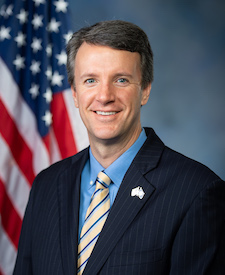
See how Ben Cline actually votes — against your values.
DeepSyte scores Ben Cline's record on the issues you care about — not party, not press releases. Take the 2-minute values quiz to see your personal alignment.
Sign in and take the values quiz to see how Ben Cline's votes line up with your views.
Prediction track record
How often we called Ben Cline's passage votes correctly, from their stated positions on each bill's tagged topics. Excludes “unclear” calls and abstentions.
A joint resolution to direct the removal of United States Armed Forces from hostilities within or against the Islamic Republic of Iran that have not been authorized by Congress.
We haven't yet found statement/vote pairs on the same topic for Ben Cline. This usually means either the rep hasn't taken public positions on bills that have come to a passage vote, or those bills haven't been tagged yet. The checker runs as new press releases and votes come in.
Pro analysis
AI rep analysis — Pro
Get an AI-narrated read on Ben Cline's full voting record against your stated values — aligned themes, conflicts, notable votes, and what to watch for.
We haven't extracted campaign positions for Ben Cline yet. Once their campaign website or position pages are processed, this card will track what they said vs how they voted.
Crossing the aisle
Passage votes where Ben Cline broke ranks with ≥75% of Republicans. Threshold catches substantively partisan splits; unanimous-ish or close votes are excluded.
17
Cross-aisle votes
119-hr-2860·Jun 3, 2026·76% of R voted YES
Northwest Straits Marine Conservation Initiative Reauthorization Act of 2025
ICYMI: Rep. Cline Introduced Legislation to Counter CCP Infiltration of Federal Agencies
Position: Rep. Cline introduced legislation to prohibit the Department of Defense from contracting with retailers using point-of-sale technology owned or operated by foreign adversaries, including China, Russia, Iran, and North Korea, effective January 1, 2027, to protect sensitive servicemember data.
| U.S. Representative Ben Cline
Javascript must be enabled for the correct page display
Skip to Content
Menu
home
about
Meet Ben
Our District
Committees and Caucuses
Contact
Email Me
Request A Meeting – In District
-->
Request A Meeting
Office Locations
Issues
Economy
Energy
Veterans
Healthcare
Reforming Congress
Media
Press Releases
In The News
Op-Eds
Weekly Newsletter
Live
Events
“Coffee with Your Congressman” Town Hall
Event
Mobile Office Hours
Services
Congressional Art Competition
Congressional App Challenge
Commendations and Greetings
Flag Requests
Grant Applicants
Help With A Federal Agency
Internships
Military Academy Nominations
Presidential Greeting
Tours And Tickets
Community Project Funding
Additional Services
Government Shutdown
-->
Open search form
Open search form
search
Submit
twitter
facebook
youtube
instagram
Press Releases
ICYMI: Rep. Cline Introduced Legislation to Counter CCP Infiltration of Federal Agencies
Share on Facebook
Share on X
Print this Page
Share by Email
Washington,
May 13, 2026
WASHINGTON, D.C. – In case you missed it, today, Congressman Cline (R-VA) introduced the Servicemember Payment Data Privacy and Security Act to ensure federal facilities are not using any Chinese hardware in point-of-sale technology, limiting the exposure and infiltration by foreign adversaries like the Chinese Communist Party.
House GOP’s Cline Moves to Ban Use of Foreign Point-of-Sale Tech
Bloomberg Government
By: Rachel Schilke
The Defense Department would be barred from using point-of-sale technology owned and operated by companies connected to “foreign adversaries” under a bill Rep. Ben Cline is introducing Wednesday.
The measure would “prohibit the Secretary of Defense from contracting with retailers who use covered payment processing equipment, systems, or services” beginning Jan. 1, 2027 that are operated by a “country of concern,” including China, Russia, Iran, and North Korea.
Allowing Chinese-owned and operated point-of-sale technology in Defense Department facilities increases the “risk of exposing sensitive data to our foreign adversaries,” Cline (R-Va.), who serves on the House Intelligence Committee, said in a statement.
“I introduced the Servicemember Payment Data Privacy and Security Act to protect important information from CCP operatives who aim to exploit, undermine, and harm our Nation,” Cline said.
The Treasury Department found in 2021 that point-of-sale devices by PAX Technologies, a Chinese-based manufacturer, were transmitting encrypted data to unknown third parties in China. In 2025, NCIS said in a letter in response to questions from Cline that it identified concerns with the company and “briefed the Secretary of the Navy and various Department of War components in 2021/2022 to have the devices removed.”
Cline’s office discovered last year PAX-made devices were in use in the House Rayburn and Longworth office building cafeterias. The devices are similar to tap-to-pay kiosks. While current law prohibits the existence of PAX devices, the kiosks in Rayburn and Longworth were able to evade scrutiny because the primary contractor was for a separate service, according to Cline’s office.
After Cline raised concerns with the House Administration Committee, the devices were removed from the cafeterias on March 30.
###
Rep. Cline Introduces Bills to Reform the Congressional Budget Office’s Baseline Projections and Cost Estimates
Position: Rep. Cline advocates for legislative reforms to the Congressional Budget Office's baseline projection methodology, arguing that current baselines create a bias toward higher federal spending and that Congress should have greater transparency and control over budget deliberations.
| U.S. Representative Ben Cline
Javascript must be enabled for the correct page display
Skip to Content
Menu
home
about
Meet Ben
Our District
Committees and Caucuses
Contact
Email Me
Request A Meeting – In District
-->
Request A Meeting
Office Locations
Issues
Economy
Energy
Veterans
Healthcare
Reforming Congress
Media
Press Releases
In The News
Op-Eds
Weekly Newsletter
Live
Events
“Coffee with Your Congressman” Town Hall
Event
Mobile Office Hours
Services
Congressional Art Competition
Congressional App Challenge
Commendations and Greetings
Flag Requests
Grant Applicants
Help With A Federal Agency
Internships
Military Academy Nominations
Presidential Greeting
Tours And Tickets
Community Project Funding
Additional Services
Government Shutdown
-->
Open search form
Open search form
search
Submit
twitter
facebook
youtube
instagram
Press Releases
Rep. Cline Introduces Bills to Reform the Congressional Budget Office’s Baseline Projections and Cost Estimates
Share on Facebook
Share on X
Print this Page
Share by Email
Washington,
April 29, 2026
WASHINGTON, D.C. – Today, Congressman Ben Cline (R-VA) introduced the Cost Estimate Clarity Act and reintroduced the No Bias in the Baseline Act. Both pieces of legislation aim to empower Congress with the tools needed to make informed financial decisions and to eliminate the baseline bias in the budget process that favors higher spending. The Cost Estimate Clarity Act would require Congressional Budget Office (CBO) to disclose baseline distortions whenever they arise in its cost estimates. The No Bias in the Baseline Act—previously introduced in the 118th Congress—would revise the fiscal distortions embedded in the Congressional Budget Office's (CBO) baseline projections.
“Members of Congress should be equipped with all the necessary resources to make informed financial decisions,” said Rep. Cline. “As faithful stewards of American’s tax dollars, the federal government should be supporting policies that ensure excessive spending isn’t left on autopilot. This legislation is critical to ensuring Congress has the ability and transparency needed to make budget deliberations with a commitment to prioritizing the needs of the American people.”
If enacted, these bills would:
Return Decision Making Back to Congress: Because these assumptions are baked into the baseline by law, CBO currently operates under the conclusion that Congress will continue increasing discretionary spending to match the Biden Administration’s inflationary agenda. That, along with the statutory presumptions that Congress will automatically continue any program over $50 million, use debt to bail out insolvent trust funds, and renew excise taxes at their current clip.
The responsibility to make these financial decisions is ultimately that of Congress, and CBO should be giving Members resources that help them to make informed decisions rather than having their primary product assume they choose the most expensive option as a starting point.
Remove Spending Biases from the Baseline: Budget negotiations can be a game of ranges. These bills would restore the baseline to reflect current law, so that future negotiations won’t begin at an already inflated starting point.
Realistically Score Legislation: Since the Current Law Baseline is used for scoring, it is important that there are no distortions that automatically price in expensive programs beyond their expiration date.
Background: CBO incorporates assumptions required by statute into its baseline in a way that deviates from what projections should be under current law. In fact, about 25 percent of spending in the baseline is just assumed:
Discretionary: $19 trillion in outlays for discretionary appropriations that have not yet been enacted;
Trust Fund Programs: Assumes $1.8 trillion in outlays for programs funded by trust funds that will be exhausted;
Mandatory Programs that Expire: $2.7 trillion in outlays for mandatory spending programs that expire under current law;
Expiring Trust Fund Taxes: Assumes $546 billion in revenues that expire under current law; and
Net Interest: $4 trillion in resulting interest costs from the aforementioned assumptions.
Read the full text of the Cost Estimate Clarity Act here.
Read the full text of the No Bias in the Baseline Act here.
These bills were drafted with the technical support and expertise of the Economic Policy Innovation Center.
Congressman Ben Cline represents the Sixth Congressional District of Virginia. He previously was an attorney in private practice and served both as an assistant prosecutor and a Member of the Virginia House of Delegates. Cline and his wife, Elizabeth, live in Botetourt County with their two children.
###
Rep. Cline Introduces Bill to Reverse Governor Spanberger’s New Sanctuary Policies and Strengthen Federal-State-Local Immigration Enforcement
Position: Rep. Cline introduced legislation requiring state and local law enforcement agencies to enter into 287(g) agreements with ICE as a condition of receiving federal COPS grants, positioning this as necessary to strengthen immigration enforcement partnerships and public safety.
Today, Rep. Ben Cline (VA-06) introduced the 287(g) Cooperation Act of 2026, legislation to strengthen federal-local immigration enforcement partnerships by requiring state and local law enforcement agencies to enter into a 287(g) memorandum of agreement with U.S. Immigration and Customs Enforcement (ICE) as a condition of receiving Community Oriented Policing Services (COPS) grants.
“The federal government should be working hand-in-hand with state and local law enforcement to enforce our immigration laws. The 287(g) Cooperation Act ensures that communities receiving federal policing funds are also partnering with ICE to keep dangerous individuals off our streets. By strengthening these proven partnerships, we can enhance public safety, uphold the rule of law, and better protect American communities,” said Rep. Cline.
"The 287(g) program is an essential tool that has local law enforcement partner with federal law enforcement to deport dangerous criminal illegal aliens. Unfortunately, some states like Virginia are not allowing their law enforcement to turn over illegal aliens who have committed crimes to the Department of Homeland Security – this policy is not only bad, but also unfortunately deadly for too many law-abiding citizens. We applaud Rep. Cline for the introduction of the ‘‘287(g) Cooperation Act of 2026" and his steadfast commitment to improving public safety,” said Michael Hough, Co-President, NumbersUSA.
"It is unconscionable that sanctuary jurisdictions that protect illegal aliens and inhibit the enforcement of our immigration laws are nevertheless able to take advantage of Federal law enforcement grants. We thank Congressman Cline for introducing the 287(g) Cooperation Act of 2026, which ensures COPS grants are strictly limited to jurisdictions that work with ICE, not against it," said Grant Newman, Director of Government Relations, Immigration Accountability Project.
“Under the Biden administration, record numbers of criminals and national security threats flooded into our country. The 287(g) Cooperation Act is a decisive step for empowering law enforcement agencies to remove these dangerous aliens, help restore law and order, and keep communities across America safe. FAIR commends Congressman Cline for introducing this bill and looks forward to its swift passage,” said Joe Chatham, Director of Government Relations, Federation for American Immigration Reform.
Congressman Ben Cline represents the Sixth Congressional District of Virginia. He previously was an attorney in private practice and served both as an assistant prosecutor and a Member of the Virginia House of Delegates. Cline and his wife, Elizabeth, live in Botetourt County with their two children.
Celebrating Virginia’s Agricultural Strength During National Agriculture Month
Agriculture defines Virginia’s Sixth District. It shapes our communities, drives our economy, and reflects the character of the people who call the Shenandoah Valley and surrounding regions home.
Across rural Virginia, hard work is not a slogan, it is a way of life. Families rise before dawn, steward their land, care for livestock, and ensure their farms can be passed down to the next generation. That commitment is why the Sixth District remains one of the most productive agricultural regions in the Commonwealth.
Growing up in Rockbridge County, I was involved in 4-H, where I learned firsthand the importance of leadership, responsibility, and hard work. Those lessons stayed with me. They continue to guide my work in Congress and remind me that the values learned on farms and in rural communities, discipline, integrity, and perseverance, are the same values that keep our country strong.
Agriculture is the backbone of Virginia’s economy. Today, it generates more than $82 billion in annual economic activity and supports over 381,000 jobs statewide.
Virginia is home to approximately 39,000 farms covering 7.3 million acres, and about 95 percent of them are family-owned operations. These farms produce everything from poultry and beef to apples, dairy, grains, and specialty crops, feeding families across the nation while strengthening local economies here at home.
Here in Virginia’s Sixth District, agriculture remains a cornerstone of our regional economy. Local farmers generate more than $1.4 billion in agricultural output each year and support hundreds of millions of dollars in wages for hardworking Virginians. These are not just numbers on a spreadsheet. They represent families who invest their lives in feeding our nation and preserving the rural way of life that defines our region.
National Agriculture Month gives us an opportunity to recognize the men and women behind that success. Farmers, ranchers, producers, and young agricultural leaders work tirelessly to sustain our food supply, strengthen our economy, and protect our rural heritage. Their work is essential not only to Virginia, but also to our nation’s economic strength and food security.
In Congress, I remain committed to advancing policies that support our agricultural community. That includes reducing unnecessary regulatory burdens, expanding market opportunities for American producers, strengthening crop insurance programs, and ensuring that family farms remain viable for generations to come. I am also proud to support organizations that invest in the next generation of agricultural leaders, including the Future Farmers of America.
Virginia’s farmers do more than grow crops and raise livestock. They sustain communities, preserve our land, and uphold the values that built this country.
This National Agriculture Month, we recognize an industry that feeds our families, powers our economy, and anchors the future of Virginia’s Sixth District. Just as importantly, we renew our commitment to stand with the farmers and families who keep America strong.
Rep. Cline, Sens. Warner, Kaine Urge Secretary Rubio to Secure the Swift Release of Chuck Zimmerman
Position: The lawmakers urge the State Department to prioritize securing the release of American citizen Chuck Zimmerman, who they characterize as wrongfully detained by Russia, and call for his formal designation as wrongfully detained and expedited diplomatic efforts.
In a bipartisan letter to Secretary Marco Rubio, Rep. Ben Cline (R-VA), Sen. Mark Warner (D-VA), and Sen. Tim Kaine (D-VA) urged the State Department to prioritize the case of American citizen Charles “Chuck” Zimmerman and called for a formal designation as “wrongfully detained” by the Russian government. The lawmakers also pressed for timely diplomatic efforts to secure his release after more than 250 days in Russian custody.
“We write to elevate the plight and wrongful detention of American Charles “Chuck” Zimmerman. A father of two, Navy veteran, master electrician, and sailor, Zimmerman has been held for more than 250 days at the time of this writing under what can only be described as politically retributive pretenses,” the lawmakers wrote. “We therefore ask that this case be made a priority for the Office of the Special Presidential Envoy for Hostage Affairs so that the U.S. Government can work expeditiously towards his release.”
Read the full letter here or below:
We write to elevate the plight and wrongful detention of American Charles “Chuck” Zimmerman. A father of two, Navy veteran, master electrician, and sailor, Zimmerman has been held for more than 250 days at the time of this writing under what can only be described as politically retributive pretenses.
Zimmerman’s passion for sailing and travel extended well past his time in the Navy, and he decided it was time to realize his dream of sailing the world in a 35’ sailboat with a course set for New Zealand. On his journey, he had made it all the way to the Mediterranean and decided to explore the Black Sea before sailing through the Suez Canal.
However, almost immediately upon entering the Black Sea via the Bosphorus Strait, the Russian Navy intercepted his boat in international waters. Upon arrival, Zimmerman voluntarily declared and surrendered a firearm onboard his boat meant for self-protection, a common practice among sailors.
Following the search and seizure of the vessel that would have yielded no material threat, the Russian government arrested Zimmerman, brought what can only be seen as political charges related to arms smuggling, and imposed a retributive five-year prison sentence.
Chief among our concerns is the denial of consular services, visits, or calls that could substantiate Zimmerman’s health and wellbeing. It is our understanding that no American official has seen him in over seven months. These concerns are elevated due to our understanding that he is currently imprisoned in penal colony IK-9, with a diet that supplements gruel with only one nutritionally dense meal of protein and vegetables per week, and without any confirmed allowance for exercise.
We therefore ask that this case be made a priority for the Office of the Special Presidential Envoy for Hostage Affairs so that the U.S. Government can work expeditiously towards his release. Additionally, we ask that your department designate Zimmerman as ‘wrongfully detained’ by the Russian government and continue to consider his case in the ongoing negotiations with the Russian government.
Congressman Ben Cline represents the Sixth Congressional District of Virginia. He previously was an attorney in private practice and served both as an assistant prosecutor and a Member of the Virginia House of Delegates. Cline and his wife, Elizabeth, live in Botetourt County with their two children.
Rep. Cline Introduces the Protecting Access to American Products Act
Position: Rep. Cline supports streamlining maritime regulations and waiver processes to allow American-made products, particularly domestic energy, to move more freely between U.S. ports without unnecessary regulatory barriers.
Today, Rep. Ben Cline (R-VA) introduced the Protecting Access to American Products Act, legislation aimed at streamlining the U.S. trade shipping process during times of supply chain strain and uncertainty. The bill amends current maritime law to ensure that products made in America are not prevented from reaching American markets. Further, it is designed to allow for administrative flexibility in circumstances where supply chain continuity is questionable. This is especially important for American energy producers, who at times face transportation barriers moving domestically produced oil and petroleum products between U.S. ports when no qualified vessel is available, potentially forcing reliance on foreign imports despite strong American production. Senator Mike Lee (R-UT) introduced companion legislation in the Senate.
“Excessive red tape and outdated regulations are slowing the delivery of essential goods and making it harder for Americans to access products made right here at home. The Protecting Access to American Products Act offers a commonsense, practical solution by streamlining the waiver process and helping ensure that American-made goods, including American energy products, can move across the country more easily. This legislation supports domestic manufacturing, strengthens American energy supply chains, and keeps U.S. products competitive with foreign imports while still protecting American maritime jobs. I’m proud to work alongside Senator Lee to deliver reforms that protect our domestic interests while putting American families and businesses first,” said Rep. Cline.
“Outdated regulations are forcing Americans to buy gas and other products from despotic regimes instead of our own producers,” said Senator Mike Lee. “America produces liquefied natural gas (LNG), but we can’t ship it to other American ports due to hundred-year-old red tape. States in need of LNG are forced to rely on Russia for their energy supply – a national security risk and lost opportunity for America’s economy. This bill will prioritize American manufacturing and energy dominance by allowing waivers for industries like LNG for whom the restrictions don’t make sense."
Congressman Ben Cline represents the Sixth Congressional District of Virginia. He previously was an attorney in private practice and served both as an assistant prosecutor and a Member of the Virginia House of Delegates. Cline and his wife, Elizabeth, live in Botetourt County with their two children.
Sixth District Perspectives with Congressman Ben Cline
Position: The congressman opposes the Senate Democrats' blocking of DHS funding and criticizes state-level decisions to limit immigration enforcement cooperation, arguing these actions compromise national security and public safety.
DHS Shutdown Drags Into Third Week as Democrats Block Funding Bill
At a time when we most need to ensure the security of our Nation, the Department of Homeland Security (DHS) remains partially shut down because of Democrats’ political antics. House Republicans passed a bipartisan negotiated bill to fund DHS and sent it to the Senate for the second time. Instead of acting, Senate Democrats chose to pander to their far-left base and shut down the very department responsible for protecting the United States from threats, including counterterrorism operations, cybersecurity, border security, and emergency response.
Democrats claim they are blocking DHS funding to protest ICE and Border Patrol, but Democrats know that both ICE and Border Patrol are already partially funded thanks to H.R. 1. Their attempted leverage did nothing previously when they deliberately decided to keep our government hostage. Their refusal to fund the Department of Homeland Security leaves critical agencies like the TSA, FEMA, the Coast Guard, and the S
ecret Service without full funding. At a time when global tensions are rising, and with one of the most dangerous nations operating in cyberspace, Democrats are blocking funding for the very department responsible for defending our homeland.
Under the previous administration, more than 10 million illegal immigrants entered the United States, including over 400 individuals on the Terrorist Watch List who were encountered at the border. We know that bad actors crossed the border undetected, and counterterrorism officials are monitoring suspected dangerous individuals within the United States. I was discouraged to see nearly every House Democrat vote AGAINST funding the Department of Homeland Security. I hope they reconsider their position and recognize the damage their shutdown is inflicting on our country.
Fighting Against Soft-on-Crime Policies in our Commonwealth
Recent events in both Strasburg and Fairfax County have raised serious concerns about public safety in Virginia. One of the first actions Abigail Spanberger took after arriving in Richmond was to dismantle the 287(g) agreement, a proven partnership that allowed state and local law enforcement to work hand in hand with ICE to remove dangerous criminal illegal aliens from our Commonwealth. Her decision shows a disregard for the safety of Virginians and a willingness to put politics ahead of public safety. Through this cooperation, authorities were able to capture one of the top MS-13 gang leaders in the country right in Northern Virginia. But in just the past month, Spanberger’s actions have weakened this critical cooperation, leaving law-abiding Virginians exposed to unnecessary risk. Unfortunately, the consequences of these policy changes are becoming painfully clear. In one recent case, an alleged MS-13 gang member who had been deported twice was arrested in connection with serious crimes, including assaulting law enforcement and felony drug distribution. Last week, national attention turned to Virginia after a horrific tragedy in Fairfax County. An illegal alien took the life of a young mother, Stephanie Minter, at a bus stop.
The suspect, Abdul Jalloh, was a known criminal with 30 prior arrests and an extensive record that included malicious wounding, assault, drug possession, identity theft, trespassing, larceny, firing a weapon, contributing to the delinquency of a minor, and pickpocketing. ICE had previously lodged a detainer against Jalloh in 2020, and a judge issued a final order of removal allowing him to be deported to any country other than Sierra Leone. Abigail Spanberger’s decision to weaken enforcement and cooperation risks allowing individuals like Abdul Jalloh to remain in our communities, with deadly consequences. I joined Newsmax with Todd Starnes to highlight the urgency of this issue and call on Spanberger to reverse course before more lives are lost. In response, the Judiciary Committee marked up the Shutdown Sanctuary Cities Act, which aims to penalize jurisdictions that restrict cooperation with federal immigration authorities.
The tragic death of Stephanie Minter underscores the consequences of dismantling programs like 287(g), which empower local law enforcement to work directly with ICE to remove dangerous individuals like Abdul Jalloh from our communities. Governor Youngkin implemented this common sense program to strengthen public safety in Virginia, and it was already proving successful. Instead of weakening these partnerships, we should be strengthening them rather than yielding to the far-left base. I have called on Spanberger to reconsider her reckless decision and restore this critical cooperation between federal and local law enforcement. For Virginians, this should not be a partisan issue. It is about public safety. It is about protecting our communities and ensuring that career criminals who entered our country illegally and continued to break our laws are removed before more innocent lives are lost.
My Fiscal Contingency Preparedness Act Builds Bipartisan Momentum
Last week, my Fiscal Contingency Preparedness Act was endorsed by the bipartisan Problem Solvers Caucus, a group made up of an equal number of Republicans and Democrats. That support speaks volumes about the need for this legislation. Just as American families must financially prepare for emergencies, the federal government has a responsibility to do the same. My bill holds Washington accountable by requiring the federal government to assess, stress test, and publicly report on its ability to respond to major national emergencies. Whether the challenge is a natural disaster, an economic crisis, or a national security threat, the government must clearly understand its financial readiness to respond effectively.
For far too long, Washington has failed to seriously evaluate its capacity to weather major crises, even as families across Virginia save, plan, and prepare for uncertainty in their own lives. It is only reasonable that the government entrusted with safeguarding the nation apply the same level of responsibility and foresight. My bill promotes transparency and better decision making by identifying risks ahead of time, strengthening emergency response, and protecting taxpayers from avoidable failures when it matters most. Preparedness should never be a partisan issue, and the bipartisan support for this bill reflects that shared understanding. I hope we can build on this momentum so that this bill can move forward and reach the House floor, where it can be considered for a vote.
It was an honor to meet with the team from Elbit Systems of America in Roanoke, which is innovating mission-critical technologies that support capabilities ranging from precision targeting to night vision systems. Their work helps our military operate with greater effectiveness.
It was a pleasure to meet with members of the Virginia Association of Broadcasters who were visiting Washington, DC, to discuss the importance of maintaining access to AM radio in rural communities and keeping local radio accessible to Virginians.
I was pleased to meet with Katherine Rowe, President of the College of William & Mary, and Derek Aday, director of the Virginia Institute of Marine Science, to discuss college affordability for young Virginians and how we can work together to better support students as they decide where to pursue higher education.
Reps. Cline, Correa, Lee, and Neguse Introduce the Bankruptcy Threshold Adjustment Act of 2026
Position: The representatives support permanently raising the Chapter 11 small business reorganization threshold to $7.5 million to provide small businesses with more accessible and cost-effective bankruptcy restructuring options while maintaining the self-supporting nature of the bankruptcy system.
Rep. Ben Cline (VA-06), alongside Reps. Lou Correa (CA-46), Laurel Lee (FL-15), and Joe Neguse (CO-02), introduced the bipartisan Bankruptcy Threshold Adjustment Act of 2026. The legislation would permanently raise the small business reorganization threshold for Chapter 11 to $7.5 million, allowing more small businesses to access a faster, more cost-effective bankruptcy process while negotiating with creditors, keeping their doors open, employees on payroll, and suppliers paid. The bill also ensures the bankruptcy system remains self-supporting and that its costs are fairly borne by those who use it.
“The Bankruptcy Threshold Adjustment Act will give small businesses the certainty they need to reorganize, restructure, and keep operating when challenges arise,” said Rep. Cline. “By permanently raising the eligibility threshold, we’re ensuring more job creators can access a streamlined and affordable bankruptcy process that helps them stay open, protect paychecks, and meet their obligations. Just as importantly, this bipartisan bill maintains the integrity of our bankruptcy system by keeping it self-supporting and fair for all who rely on it.”
“Bankruptcy is a painful last result for struggling businesses, impacting the people and communities that rely on their services. This legislation would make a streamlined and more cost-effective process accessible to more businesses, enabling them to settle their debts and continue serving their customers,” said Rep. Correa. “With the heavy burdens that Main Street already faces in this economy, we need to give them opportunities to not only survive but thrive.”
“When small businesses face financial distress, they should have a practical path to reorganize and continue operating. This legislation permanently restores the $7.5 million debt threshold so more small and family-owned businesses can access a streamlined restructuring process, preserve jobs, and continue serving their communities. I’m pleased to support this bipartisan effort to provide greater certainty for small businesses,” said Rep. Lee.
“When we enacted the Bankruptcy Threshold Adjustment Act in 2022, we responded to the economic and financial strain Americans faced in the wake of the Coronavirus pandemic. Since then, this legislation has protected our local entrepreneurs, small business owners, and family-owned shops,” said Rep. Neguse. “By making this change permanent, we can protect those in our communities confronting the ongoing cost-of-living crisis and continue to ensure sufficient support for our main street economies.”
BACKGROUND: This bill builds on Rep. Cline’s previous work on this issue. As a freshman in the 2019 class, he became the first member of his class to have legislation signed into law with the Small Business Reorganization Act, which established the Subchapter V reorganization process.
Congressman Ben Cline represents the Sixth Congressional District of Virginia. He previously was an attorney in private practice and served both as an assistant prosecutor and a Member of the Virginia House of Delegates. Cline and his wife, Elizabeth, live in Botetourt County with their two children.
Sixth District Perspectives with Congressman Ben Cline
Position: The release expresses support for the Trump administration's policies on energy production, border enforcement, military spending, and election integrity measures, while criticizing Iran's nuclear ambitions and state sponsorship of terrorism.
President Trump’s Historic State of the Union Address
Last week, President Trump delivered a historic State of the Union address, highlighting not only how far our country has come but also the strength of the nation under leadership focused on the America First agenda. During his address, the President outlined efforts by House Republicans to deliver meaningful results on affordability for hardworking families. Weekly earnings are now growing faster than prices, and private sector workers have seen real wage gains totaling approximately $1,400 over the past year. President Trump also emphasized a renewed focus on domestic energy production, which recently reached a milestone with exports surpassing 100 million metric tons of liquefied natural gas (LNG). Lower energy costs can ripple throughout the economy, reducing the price of groceries, transportation, and everyday goods. This reflects the benefits of relying on America’s own resources rather than foreign competitors.
The President also highlighted improvements in public safety. Crime rates have declined in major cities across the country as law enforcement officers are empowered to do their jobs and enforce existing laws. After years of record illegal crossings and significant pressure along the southern border, the Trump Administration worked with Congress on measures intended to restore the rule of law. For nine consecutive months, no illegal immigrants were released into the interior of the United States. In addition, President Trump signed the largest military budget in history, investing billions in rebuilding our armed forces and strengthening national defense, including funding for the proposed Golden Dome missile defense system. These investments are intended to help ensure America remains prepared to meet growing global threats.
In addition, the President made clear that the Senate should pass the SAVE America Act. I was proud to cosponsor this important legislation aimed at safeguarding free and fair elections, and I joined Newsmax to discuss why its swift passage is critical to protecting the integrity of our democratic process. The evening of the State of the Union was also a powerful celebration of American pride and unity. A special appearance by the U.S. men’s national hockey team brought energy and patriotism to the chamber, and I had the honor of meeting Jack Hughes, who scored the winning goal for the United States. Republicans will continue building on this momentum as we continue Making America Great Again.
Watch highlights from my interview with Newsmax to recap the State of the Union here.
Operation Epic Fury: America's Strength in Action
Iran’s pursuit of nuclear weapons and its longstanding state sponsorship of terror have posed threats to U.S. interests and allies for decades. The regime in Tehran has brutalized its own people, fueled instability across the Middle East, and openly called for harm against Americans. These concerns continue to shape U.S. foreign policy toward Iran. President Trump did what others refused to do: he confronted Ayatollah Khamenei’s ruthless rule and put America First by defending our citizens and restoring American strength on the world stage. Peace is preserved through strength, and clarity deters chaos.
With VMI Alumni General Dan “Razin” Caine and Ambassador Michael Waltz playing key roles in national security policy, the Administration signaled that Iran would face firm diplomatic and strategic responses rather than symbolic measures. President Trump selected leaders with extensive military and national security experience to serve the American people. At the Virginia Military Institute, character and leadership are central to the institution’s training. These Keydets, as they are known, are taught the importance of discipline, duty, and resolve in confronting global challenges. Administration officials have emphasized that U.S. policy toward Iran will focus on clarity and decisiveness rather than hesitation. Today, President Trump continues to strengthen deterrence, stand with our allies, and make it clear that America will not tolerate threats to our citizens or our national security. Under his leadership, the era of appeasement is over, and American strength is restored.
Nixing the Unfair Federal Tax on Eminent Domain Takings
After a constituent contacted my office about being hit with a federal tax following an eminent domain taking, a transaction they did not enter into voluntarily, I knew something had to change. It’s frustrating to see hardworking Americans entangled in burdensome and often confusing bureaucratic procedures, especially after already losing their property. When property is involuntarily taken through eminent domain, owners should not face an additional federal tax burden. For years, I have worked to advocate for Americans who are forced to navigate this bureaucratic process. Last week, I was proud to introduce the No Tax on Takings Act, legislation that would eliminate unfair federal taxes on compensation paid to property owners when their land is seized through eminent domain.
Protecting Homebuyers from Price-Driving Mandates
Homeownership remains a key path to stability in America, yet it has become unattainable for many families under current policies supported by Democrats. Rising material costs and excessive regulations have increased prices and reduced incentives to build new homes. Last week, I voted in favor of the Homeowner Energy Freedom Act, which repeals certain provisions of the Inflation Reduction Act that allocated over $5 billion in taxpayer funds to promote electric appliances and stricter federal building codes. These policies encouraged builders to move away from gas appliances such as stoves and water heaters and toward more expensive electric alternatives, while also encouraging states to adopt costly new construction standards.
These mandates have significantly increased the cost of building a new home, adding up to $31,000 in some cases. With affordability already a challenge for many households, the federal government should not add to this burden. Improving housing affordability requires reducing costs and increasing supply, not imposing additional regulations. This bill moves a practical measure forward to lower housing prices and eliminate federal barriers that can distort the housing market. I’m glad this bill passed the House, and I hope the Senate will take up this legislation immediately.
A constituent reached out to one of my district offices after noticing that something did not add up with their federal retirement annuity through the Office of Personnel Management (OPM). After years of service, they depend on that monthly check to cover everyday expenses. But following a prior adjustment, their benefits appeared to be miscalculated, reducing the income they rely on.
My team immediately contacted OPM to get answers. After reviewing the case, the agency confirmed that the constituent’s gross annuity had indeed been processed incorrectly. Once the error was identified, OPM corrected the calculation, increasing the monthly payment by more than $500. In addition, the agency issued a one-time corrective payment of nearly $3,000 to compensate the constituent for underpayment. If you are facing roadblocks with a federal agency, I encourage you to reach out to my district office nearest to you.
Washington Highlight of the Week
I honored the enduring legacy of George Washington on the House Floor as we celebrated his birthday with a bipartisan reading of Washington’s Farewell Address. This longstanding tradition reminds us of the principles that shaped our Republic.
Rep. Cline Introduces Bill to Protect Taxpayers From Eminent Domain Taxes
Position: Rep. Cline introduced legislation to amend the Internal Revenue Code to exempt property owners from federal income taxes on compensation received when their property is taken through eminent domain.
Today, Rep. Ben Cline (VA-06), introduced the No Tax on Takings Act, a bill to amend the Internal Revenue Code to spare unsuspecting property owners from paying harsh federal taxes on a sale the government compelled them to make.
“Families should never be hit with a federal tax bill after the government forces them to sell their own property,” said Rep. Cline. “When eminent domain is used, property owners are already navigating a difficult process through no fault of their own. The federal government should not increase that burden by taxing a transaction into which they did not voluntarily enter. My bill delivers a simple, commonsense fix to the tax code to ensure Americans are treated fairly and protected from punitive tax consequences when their property is taken.”
"When governments force the sale of private property through eminent domain, taxpayers may be subject to a tax liability through no fault of their own. That’s not fair, and the No Tax on Takings Act rightly corrects this problem by amending the Internal Revenue Code to shield unsuspecting property owners from paying punitive federal taxes on a transaction they did not choose. NTU commends Congressman Cline for protecting taxpayers and we look forward to working to see this commonsense legislation signed into law,” said Thomas Aiello, Senior Director of Government Affairs at National Taxpayers Union.
“The No Tax on Takings Act aligns with Conservatives for Property Rights’ eminent domain principles. Taxing the compensation paid to a landowner reduces the amount of ‘just compensation’ received. The government compels property owners to sell land they may have had no intention of selling. So, Rep. Cline’s legislation is consistent with the Takings Clause, and CPR supports it,” said James Edwards, Founder and Executive Director at Conservatives for Property Rights.
Currently, citizens who are compelled to give up their home, business, or land face a “double whammy” since they are:
Congressman Ben Cline represents the Sixth Congressional District of Virginia. He previously was an attorney in private practice and served both as an assistant prosecutor and a Member of the Virginia House of Delegates. Cline and his wife, Elizabeth, live in Botetourt County with their two children.
Source: GDELT 2.0 GKG, filtered to a curated list of national outlets. Inclusion is not endorsement; opinion pieces and reported news are mixed.
Recent stock activity
Periodic transaction reports filed under the STOCK Act — disclosed by the rep, sourced from public filings.
No disclosed trades on record.
Source: open-data mirrors of the Senate eFD and House Clerk financial-disclosure systems. Disclosure within 30 days of trade is required by law (45 for spouse/dependent trades).
Top PAC donors · 2026 cycle
Political action committees that gave the most to this rep's principal campaign committee this cycle. PAC giving is direct organizational support — industry, ideological, or leadership.
1.HOUSE FREEDOM FUNDLeadership7 contributionsMember-of-Congress leadership PAC — supports conservative House candidates and Republican priorities aligned with fiscal and social conservative principles.AI$42,050
2.NATIONAL AUTOMOBILE DEALERS ASSOCIATION POLITICAL ACTION COMMITTEEBusiness8 contributionsTrade association PAC for new-car dealers — backs candidates supporting dealer franchise protections, vehicle sales regulations, and automotive retail interests.AI$40,000
3.NATIONAL CATTLEMEN'S BEEF ASSOCIATION POLITICAL ACTION COMMITTEE (NCBA-PAC)Agriculture7 contributionsAgribusiness PAC representing U.S. cattle ranchers and beef producers — backs policies supporting livestock production, trade, and agricultural infrastructure.AI$35,000
4.MAJORITY COMMITTEE PAC--MC PACLeadership6 contributionsLeadership PAC — likely affiliated with a member of Congress or caucus group; backs allied candidates and party priorities.AI · low$30,000
5.AMERICAN ISRAEL PUBLIC AFFAIRS COMMITTEE POLITICAL ACTION COMMITTEEIdeological4 contributionsPAC arm of the American Israel Public Affairs Committee, federalized in 2021. Backs candidates of both parties who support U.S.-Israel security and economic ties.AI$20,429
6.SPACE EXPLORATION TECHNOLOGIES CORP. PACDefense4 contributionsAerospace and defense contractor PAC — supports candidates backing federal space contracts, national security priorities, and commercial space development.AI$20,000
7.COX ENTERPRISES PAC (COXPAC) INC.Business4 contributionsCorporate PAC for Cox Enterprises — backs candidates supporting business-friendly policies on regulation, tax, and infrastructure.AI$20,000
8.THE EYE OF THE TIGER POLITICAL ACTION COMMITTEEOther4 contributionsPAC with a motivational slogan name — specific policy positions and affiliations not inferable from the name alone.AI · low$20,000
9.ALTRIA GROUP, INC. POLITICAL ACTION COMMITTEE (ALTRIAPAC)3 contributions$15,000
10.BUCKEYE LIBERTY POLITICAL ACTION COMMITTEE3 contributions$15,000
Source: OpenFEC (api.open.fec.gov) Schedule A receipts where contributor type is “committee.” Aggregated by contributing committee. Self-transfers from joint-fundraising / victory committees are excluded.
Top individual contributors · 2026 cycle
Itemized individual contributions over $200 to this rep's campaign committee, aggregated by donor employer. PAC giving is shown above; this section is people, not organizations.
1.GLOBAL TECHNICAL SYSTEMS$8,000
2.ALTRIA$8,000
3.KALSHI$7,116
4.ULINE$7,000
5.A MORTON THOMAS & ASSOCIATES$7,000
6.PARTNERS IN FINANCIAL PLANNING LLC$7,000
7.GENWORTH FINANCIAL$7,000
8.MCGUIRE WOODS LLP$7,000
9.CHARTWELL STRATEGIES$7,000
10.REDCELL PARTNERS$7,000
Source: OpenFEC Schedule A receipts where contributor type is “individual,” aggregated by the donor's self-reported employer. This is a geographic / industry correlation, not a corporate endorsement.