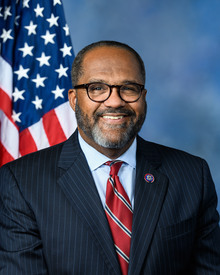
See how Troy A. Carter actually votes — against your values.
DeepSyte scores Troy A. Carter's record on the issues you care about — not party, not press releases. Take the 2-minute values quiz to see your personal alignment.
Sign in and take the values quiz to see how Troy A. Carter's votes line up with your views.
Prediction track record
How often we called Troy A. Carter's passage votes correctly, from their stated positions on each bill's tagged topics. Excludes “unclear” calls and abstentions.
13 predictions on record · none have been resolved by a passage vote yet. Check back as bills move.
Providing for congressional disapproval under chapter 8 of title 5, United States Code, of the rule submitted by the Bureau of Consumer Financial Protection relating to the withdrawal of the rule relating to "Truth in Lending (Regulation Z); Consumer Protections for Home Sales Financed Under Contracts for Deed".
No paired statements and votes yet for Troy A. Carter
We haven't yet found statement/vote pairs on the same topic for Troy A. Carter. This usually means either the rep hasn't taken public positions on bills that have come to a passage vote, or those bills haven't been tagged yet. The checker runs as new press releases and votes come in.
Pro analysis
AI rep analysis — Pro
Get an AI-narrated read on Troy A. Carter's full voting record against your stated values — aligned themes, conflicts, notable votes, and what to watch for.
We haven't extracted campaign positions for Troy A. Carter yet. Once their campaign website or position pages are processed, this card will track what they said vs how they voted.
Crossing the aisle
Passage votes where Troy A. Carter broke ranks with ≥75% of Democrats. Threshold catches substantively partisan splits; unanimous-ish or close votes are excluded.
Congressman Carter Statement on Aftermath of Louisiana v. Callais
NEW ORLEANS, LA —Today, Congressman Troy A. Carter, Sr. (D-LA) released the following statement:
“I have been adamant that Louisianians deserve fair representation that reflects our state – which is comprised of 1/3 Black residents. That means, according to the math, there should be two seats where Black voters get a say in who represents them in Congress.
“While multiple maps have been discussed, no one knows what a new congressional map will look like. I’m focused on ending the suspension of an ongoing election and the active voter disenfranchisement taking place in our state.”
###
NEW ORLEANS, LA —Today, Congressman Troy A. Carter, Sr. (D-LA) released the following statement:
“Justice seems to have prevailed.
“Thank you to U.S. District Judge John deGravelles for upholding the Constitution and protecting the will of the voters. Clerk-elect Calvin Duncan can now move forward, and SB 256 has been rightly blocked.
“The people spoke. The law matters. Democracy must stand.”
###
Congressman Carter Statement on Louisiana v. Callais
Position: Congressman Carter opposes the Supreme Court's Louisiana v. Callais decision, arguing it undermines the Voting Rights Act and threatens Black representation in Louisiana and nationwide. He calls for congressional action to restore Voting Rights Act protections.
WASHINGTON, D.C. – Today, Congressman Troy A. Carter, Sr. (D-LA) released the following statement as the Supreme Court issued its ruling in Louisiana v. Callais:
“Today’s decision by the Supreme Court is a devastating blow to the promise of equal representation in our democracy. This ruling is about far more than lines on a map — it’s about whether Black Louisianians will have a meaningful opportunity to make their voices heard.
“For decades, the Court’s majority has steadily chipped away at the Voting Rights Act of 1965.The consequences of this decision are immediate and severe: the hard-fought progress that led to the creation of two majority-Black congressional districts in Louisiana is now in jeopardy.
“Let’s be clear: this is not about so-called ‘colorblind’ principles. History has shown us time and again that policies claiming neutrality, from literacy tests to poll taxes, have been used to silence Black voices. Louisiana knows this history all too well. Without the protections of the Voting Rights Act, there is no evidence to suggest that Black voters in our state will be able to elect candidates of their choice.
“Approximately one-third of Louisiana’s population is Black, yet only a handful of Black citizens have ever represented our state in Congress. That stark reality underscores the continued need for protections that ensure fair and equal representation. When Black communities lose representation, their concerns are too often ignored, and their voices diminished.
“This decision will embolden efforts to dismantle majority-Black districts and fracture communities that have finally begun to see themselves reflected in their government. This isn’t just about federal representation. This decision will also impact state and local governments, impacting Black representation in state capitols and city council chambers across the country. It sends a dangerous signal that the progress we have made can be undone under the guise of legal theory.
“The Voting Rights Act is not a relic. It is a living promise, a commitment that our democracy belongs to everyone. It was enacted to correct nearly 200 years of exclusion and injustice, and its protections remain just as necessary today as they were 60 years ago.
“America stands at a crossroads. We can move forward and ensure that every community has a voice, or we can slide backward into a past where representation is reserved for a few. Today’s decision moves us in the wrong direction.
“But this fight is not over. We will continue to work in Congress and with our communities to restore the protections of the Voting Rights Act and defend the fundamental right to vote.
“We must not allow the erosion of this promise — not now, not in Louisiana, not anywhere, and not on our watch.”
###
Congressman Carter Introduces Bipartisan Offshore Parity Act to Create Equal Offshore Gulf State Boundaries
Position: The release advocates for legislation that would extend offshore jurisdiction boundaries for Louisiana, Mississippi, and Alabama from three to nine nautical miles, aligning them with Texas and Florida, to increase state control over energy resources, fisheries, and revenue generation.
WASHINGTON, D.C. – Today, Congressman Troy A. Carter, Sr. (D-LA), and U.S. Representatives Mike Ezell (R-MS), Clay Higgins (R-LA), and Shomari Figures (D-AL) introduced the bipartisan Offshore Parity Act, legislation to establish equal offshore boundaries for Louisiana, Mississippi, and Alabama—bringing them in line with Texas and Florida.
“This is a critical step toward equality, ensuring that Louisiana, Mississippi, and Alabama have the same authority over their waters as Texas and Florida,” said Rep. Carter. “This bill will empower us to manage our energy resources, protect our coastal communities, and strengthen our fisheries—securing economic benefits for our states.”
Under current law, Mississippi, Louisiana, and Alabama have jurisdiction over three nautical miles offshore, while Texas and Florida maintain nine nautical miles. The Offshore Parity Act would extend the boundaries of Louisiana, Mississippi, and Alabama to nine nautical miles, generating greater revenue for the states from energy and marine resources.
“For too long, Mississippi and our Gulf Coast neighbors have operated under an outdated and unequal system,” said Rep. Ezell. “This bill is about fairness. Expanding our offshore boundaries will strengthen our economy, support energy production, and give our state the same opportunities already afforded to Texas and Florida.”
“There's no reason Alabama should have less access and control of our shores than Texas and Florida have over theirs," said Rep. Figures. “This bipartisan bill levels the playing field by making a commonsense update that ensures all gulf states have equal offshore boundaries.”
“This bill ensures that states are on equal footing regarding offshore boundaries,” said Rep. Higgins. “The expansion from three to nine miles of state waters would provide Louisiana with greater control and economic benefit from its offshore resources. My office will continue to advocate for our coastal communities and industries.”
Background:
The Offshore Parity Act proposes amendments to the Outer Continental Shelf Lands Act and the Magnuson-Stevens Fishery Conservation and Management Act to reflect the expanded boundaries and align fisheries and resource management accordingly.
This legislation builds on prior efforts introduced in the 118th Congress and continues longstanding advocacy from Gulf Coast states seeking equal treatment under federal law. The current disparity dates to the Submerged Lands Act of 1953, which granted Texas and Florida expanded offshore boundaries while limiting Mississippi, Louisiana, and Alabama to three nautical miles. The State of Louisiana challenged this restriction before the United States Supreme Court in 1969, which ruled in United States v. Louisiana that Louisiana could not prove it had jurisdiction over waters extending nine nautical miles from its coastline before it entered the Union, and therefore its state waters would remain at three nautical miles. The Offshore Parity Act fixes this disparity. By establishing parity, the bill is expected to enhance economic development, increase state revenues, and provide greater local control over coastal resources.
Full text of the bill can be found here.
###
Congressman Carter Speaks Out Against Criminalizing Homelessness
Position: Congressman Carter opposes HB 211, which would criminalize homelessness, arguing that homelessness is a condition resulting from systemic failures in housing, mental health care, and economic opportunity rather than a crime. He contends that criminalization is ineffective, fiscally wasteful, and counterproductive, and calls instead for investment in affordable housing, mental health services, and workforce support.
BATON ROUGE, LA – Today, Congressman Troy A. Carter, Sr. (D-LA) released the following statement:
“Let us be clear about what we are discussing. Homelessness is not a crime. It is a condition. It is the visible evidence of systems that have failed too many of our people. Failed access to affordable housing. Failed mental health care. Failed substance abuse treatment. Failed economic opportunity. And, at times, a failure of compassion.
“We should not criminalize the consequences of those failures.
“HB 211 does not solve homelessness. It relocates it. It hides it. It pushes people from one block to the next, from one parish to another, from one jail cell to the next. That is not policy. That is avoidance.
“You cannot arrest your way out of poverty. You cannot cite your way out of mental illness. You cannot fine someone into stability when they have nothing to begin with.
“What this bill risks doing is deepening the very crisis it claims to address. A criminal record makes it harder to get a job. Harder to find housing. Harder to access services. In other words, harder to ever get back on your feet.
“And let us not ignore the fiscal reality. It is far more expensive to process, detain, and cycle individuals through the criminal justice system than it is to invest in housing, treatment, and prevention. If we are serious about being responsible stewards of taxpayer dollars, this is the wrong direction.
“But beyond dollars and data, there is a deeper question before us. Who are we?
“Are we a state that turns its back on the most vulnerable, or one that leans in with solutions rooted in dignity and common sense?
“Because the truth is, homelessness can happen to anyone. A lost job. A medical emergency. A family crisis. A veteran returning home without support. A young person aging out of foster care. These are not criminals. These are our neighbors.
“If we truly want to address homelessness, then let us do the hard work. Invest in affordable housing. Expand mental health services. Strengthen workforce pathways. Support local partnerships that are already doing the work on the ground.
“That is how you solve a problem.
“Not by handcuffs. Not by citations. Not by pretending that punishment is a substitute for policy.
“I urge this committee to reject House Bill 211.
“Let us choose solutions over symbolism. Compassion over criminalization. And leadership over neglect.”
###
Source: GDELT 2.0 GKG, filtered to a curated list of national outlets. Inclusion is not endorsement; opinion pieces and reported news are mixed.
Recent stock activity
Periodic transaction reports filed under the STOCK Act — disclosed by the rep, sourced from public filings.
No disclosed trades on record.
Source: open-data mirrors of the Senate eFD and House Clerk financial-disclosure systems. Disclosure within 30 days of trade is required by law (45 for spouse/dependent trades).
Top PAC donors · 2026 cycle
Political action committees that gave the most to this rep's principal campaign committee this cycle. PAC giving is direct organizational support — industry, ideological, or leadership.
1.AMERICAN SUGAR CANE LEAGUE PAC6 contributions$30,000
2.UA UNION PLUMBERS & PIPEFITTERS VOTE! PAC (UNITED ASSOCIATION OF JOURNEYMEN AND APPRENTICES OF THE PLUMBING & PIPEFITTING INDUSTRY OF THE UNITED STATES AND CANADA)Labor4 contributionsTrade-union PAC for United Association plumbers and pipefitters — backs prevailing-wage protections, federal infrastructure funding, project labor agreements, and apprenticeship programs.AI$20,000
3.INTERNATIONAL ASSOCIATION OF SHEET METAL, AIR, RAIL AND TRANSPORTATION WORKERS POLITICAL ACTION LEAG3 contributions$15,000
4.THE HOME DEPOT INC. POLITICAL ACTION COMMITTEEBusiness3 contributionsRetail corporation PAC — supports candidates aligned with business-friendly policies on tax, labor, and regulatory matters.AI$15,000
5.SWISHER INTERNATIONAL INC PAC FUND3 contributions$15,000
6.CARPENTERS LEGISLATIVE IMPROVEMENT COMMITTEELabor3 contributionsTrade-union PAC for the United Brotherhood of Carpenters and Joiners of America. Backs prevailing-wage protections, federal infrastructure funding, project labor agreements, and worker organizing rights.AI$15,000
7.MACHINISTS NON PARTISAN POLITICAL LEAGUE OF THE INTERNATIONAL ASSOCIATION OF MACHINISTS & AEROSPACE WORKERSLabor3 contributionsTrade-union PAC of the International Association of Machinists & Aerospace Workers — backs candidates supporting union organizing, prevailing wages, and aerospace manufacturing jobs.AI$15,000
8.JONES WALKER LLP PAC3 contributions$15,000
9.NATIONAL ASSOCIATION OF LETTER CARRIERS OF U.S.A. POLITICAL FUND (LETTER CARRIER POLITICAL FUND)Public Sector3 contributionsPublic-sector union PAC representing U.S. Postal Service letter carriers — backs candidates supporting postal worker wages, benefits, job security, and USPS funding.AI$15,000
10.SMOKE BEND ASSOCIATES LLC FEDERAL POLITICAL ACTION COMMITTEE3 contributions$15,000
Source: OpenFEC (api.open.fec.gov) Schedule A receipts where contributor type is “committee.” Aggregated by contributing committee. Self-transfers from joint-fundraising / victory committees are excluded.
Top individual contributors · 2026 cycle
Itemized individual contributions over $200 to this rep's campaign committee, aggregated by donor employer. PAC giving is shown above; this section is people, not organizations.
1.SELF$14,500
2.OCHSNER HEALTH$13,200
3.ENTERGY$11,500
4.CHARTER BROKERAGE LLC$9,500
5.ENTERGY CORPORATION$7,500
6.LILETTE ADVISORS$7,000
7.CRANE STRATEGIES LLC$7,000
8.RAINWATER CONSULTING LLC$7,000
9.THE PICARD GROUP$6,800
10.KING AND SPALDING$6,500
Source: OpenFEC Schedule A receipts where contributor type is “individual,” aggregated by the donor's self-reported employer. This is a geographic / industry correlation, not a corporate endorsement.