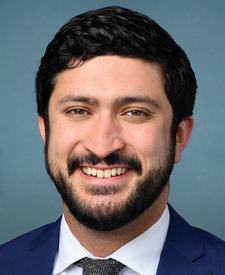
See how Greg Casar actually votes — against your values.
DeepSyte scores Greg Casar's record on the issues you care about — not party, not press releases. Take the 2-minute values quiz to see your personal alignment.
Sign in and take the values quiz to see how Greg Casar's votes line up with your views.
Prediction track record
How often we called Greg Casar's passage votes correctly, from their stated positions on each bill's tagged topics. Excludes “unclear” calls and abstentions.
To prohibit the disclosure of records by the Secretary of Housing and Urban Development of individuals for the purposes of immigration enforcement, and for other purposes.
Based on 10 data points across public statements and recorded votes · AI analysis of public records
119-hr-3486·Consistent
Stop Illegal Entry Act of 2025
85/100
What they said
Jan 28, 2026
Congressman Casar and 80 members of Congress are calling on the Trump administration to allow Any Lucía Lopez Belloza, a student deported in violation of a court order, to return to the United States and pursue available legal remedies. The members express concern about a pattern of ICE deportations based on acknowledged mistakes and in violation of court orders.
Congressman Casar's statement opposes ICE deportations based on mistakes and in violation of court orders, advocating for legal remedies and due process protections. The Stop Illegal Entry Act increases criminal penalties for illegal reentry and establishes mandatory minimum sentences without addressing the procedural safeguards or court-order compliance concerns Casar raised. His NO vote on this amendment aligns with his stated position opposing harsh immigration enforcement that disregards judicial oversight. However, because this is an amendment vote rather than a passage vote, the specific substantive intent cannot be fully determined from the vote alone.
Congressman Casar and 80 members of Congress are calling on the Trump administration to allow Any Lucía Lopez Belloza, a student deported in violation of a court order, to return to the United States and pursue available legal remedies. The members express concern about a pattern of ICE deportations based on acknowledged mistakes and in violation of court orders.
Congressman Casar's statement criticizes ICE deportations that violate court orders and calls for remedying harm to a wrongfully deported individual. The bill penalizes jurisdictions that restrict cooperation with ICE detainers and information-sharing about immigration status. Casar's NO vote aligns with his stated concern about ICE overreach and due-process violations—he opposes measures that would strengthen ICE's enforcement authority and reduce local oversight. The statement and vote point in the same direction on immigration enforcement policy, though the bill addresses a different specific mechanism (sanctuary city funding) than the statement's focus (court-order compliance and individual remedy).
Congressman Casar and 80 members of Congress are calling on the Trump administration to allow Any Lucía Lopez Belloza, a student deported in violation of a court order, to return to the United States and pursue available legal remedies. The members express concern about a pattern of ICE deportations based on acknowledged mistakes and in violation of court orders.
Congressman Casar's statement opposes ICE deportations that violate court orders and calls for remedying deportation mistakes. The Secure the Border Act of 2023 focuses on border wall construction, asylum eligibility limits, and employment verification—provisions that expand enforcement capacity and restrict asylum access rather than address judicial oversight of deportation decisions or remedies for deportation errors. Casar's NO vote on a bill that strengthens enforcement mechanisms is consistent with his stated concern about deportations conducted in violation of court orders and his call for accountability in immigration enforcement.
Congressman Casar and 80 members of Congress are calling on the Trump administration to allow Any Lucía Lopez Belloza, a student deported in violation of a court order, to return to the United States and pursue available legal remedies. The members express concern about a pattern of ICE deportations based on acknowledged mistakes and in violation of court orders.
Congressman Casar's statement opposes deportations based on ICE mistakes and violations of court orders, advocating for legal remedies and due process. The bill expands deportation grounds for Social Security and identity document fraud. Casar's NO vote aligns with his stated concern about improper deportations—he opposes expanding deportation authority, particularly when due process concerns are central to his advocacy. The bill does not directly address court-order violations, but expanding deportation grounds runs counter to his emphasis on protecting individuals from erroneous removal.
Continuing Appropriations and Border Security Enhancement Act, 2024
85/100
What they said
Jan 28, 2026
Congressman Casar and 80 members of Congress are calling on the Trump administration to allow Any Lucía Lopez Belloza, a student deported in violation of a court order, to return to the United States and pursue available legal remedies. The members express concern about a pattern of ICE deportations based on acknowledged mistakes and in violation of court orders.
Congressman Casar's statement opposes ICE deportations that violate court orders and calls for remedying such mistakes. The bill imposes limits on asylum eligibility and includes provisions prohibiting DHS from using funds for certain immigration-related purposes. While the bill's specific asylum restrictions are not directly addressed in the statement, Casar's NO vote on a bill that tightens immigration enforcement aligns with his expressed concern about protecting individuals from wrongful deportation and his call for DHS accountability. The vote is consistent with his stated position, though the bill addresses immigration policy more broadly than the specific Lopez Belloza case.
Congressman Casar and 80 members of Congress are calling on the Trump administration to allow Any Lucía Lopez Belloza, a student deported in violation of a court order, to return to the United States and pursue available legal remedies. The members express concern about a pattern of ICE deportations based on acknowledged mistakes and in violation of court orders.
Congressman Casar's statement opposes ICE deportations that violate court orders and calls for remedying wrongful deportations. The Laken Riley Act mandates detention of non-U.S. nationals arrested for certain property crimes and authorizes states to sue over immigration enforcement decisions. Casar's NO vote on the bill aligns with his stated concern about aggressive immigration enforcement practices that disregard legal protections and due process. The bill's mandatory detention provisions and expanded state litigation authority represent the type of enforcement-focused approach that conflicts with his advocacy for protecting individuals from unlawful deportation.
Transnational Criminal Organization Illicit Spotter Prevention and Elimination Act
85/100
What they said
Jan 28, 2026
Congressman Casar and 80 members of Congress are calling on the Trump administration to allow Any Lucía Lopez Belloza, a student deported in violation of a court order, to return to the United States and pursue available legal remedies. The members express concern about a pattern of ICE deportations based on acknowledged mistakes and in violation of court orders.
Congressman Casar's statement opposes ICE deportations that violate court orders and calls for remedying enforcement mistakes. The bill criminalizes conduct that interferes with border control enforcement and enhances penalties for immigration-related crimes. Casar's NO vote on a bill that strengthens immigration enforcement aligns with his stated concern about aggressive ICE practices and deportations based on acknowledged errors. The vote reflects opposition to expanded enforcement tools, consistent with his advocacy for protecting individuals harmed by enforcement mistakes.
Detain and Deport Illegal Aliens Who Assault Cops Act
85/100
What they said
Jan 28, 2026
Congressman Casar and 80 members of Congress are calling on the Trump administration to allow Any Lucía Lopez Belloza, a student deported in violation of a court order, to return to the United States and pursue available legal remedies. The members express concern about a pattern of ICE deportations based on acknowledged mistakes and in violation of court orders.
Congressman Casar's statement opposes ICE deportations that violate court orders and occur based on acknowledged mistakes, emphasizing due process and legal remedies. The bill mandates detention and deportation of non-U.S. nationals arrested for assaulting law enforcement, a narrower provision focused on a specific criminal conduct category. Casar's NO vote on a bill that expands mandatory detention/deportation authority is generally consistent with his stated concern about improper deportations and support for legal process, though the bill addresses a distinct criminal-conduct scenario rather than the erroneous deportation pattern he criticizes.
Congressman Casar and 80 members of Congress are calling on the Trump administration to allow Any Lucía Lopez Belloza, a student deported in violation of a court order, to return to the United States and pursue available legal remedies. The members express concern about a pattern of ICE deportations based on acknowledged mistakes and in violation of court orders.
Congressman Casar's statement opposes ICE deportations based on mistakes and in violation of court orders, advocating for legal remedies and due process protections. The bill creates new criminal offenses and mandatory deportation consequences for fleeing law enforcement near the border, with no relief provisions. While both touch immigration enforcement, they address different specific questions—one concerns wrongful deportations and court-order violations; the other concerns criminal penalties for fleeing police. Casar's NO vote is consistent with his stated concern about due-process violations and overly harsh deportation consequences, though the bill's focus on criminal conduct (fleeing law enforcement) rather than administrative error creates some directional ambiguity.
Department of Homeland Security Appropriations Act, 2024
75/100
What they said
Jan 28, 2026
Congressman Casar and 80 members of Congress are calling on the Trump administration to allow Any Lucía Lopez Belloza, a student deported in violation of a court order, to return to the United States and pursue available legal remedies. The members express concern about a pattern of ICE deportations based on acknowledged mistakes and in violation of court orders.
The statement criticizes ICE deportations that violate court orders and calls for remedying harm to a specific individual. The bill funds DHS agencies including ICE. A NO vote on DHS appropriations could reflect opposition to ICE's practices and funding levels, which aligns directionally with the statement's concerns about ICE misconduct. However, the bill is a broad appropriations measure funding multiple DHS agencies and functions; the NO vote does not specifically target ICE deportation practices or court-order violations, and may reflect other budgetary or policy objections unrelated to the statement's focus.
Pairs with ambiguous language and high uncertainty are withheld until more data is available. Procedural, cloture, and amendment votes are excluded — they don't cleanly signal substantive support or opposition.
Pro analysis
AI rep analysis — Pro
Get an AI-narrated read on Greg Casar's full voting record against your stated values — aligned themes, conflicts, notable votes, and what to watch for.
We haven't extracted campaign positions for Greg Casar yet. Once their campaign website or position pages are processed, this card will track what they said vs how they voted.
Crossing the aisle
Passage votes where Greg Casar broke ranks with ≥75% of Democrats. Threshold catches substantively partisan splits; unanimous-ish or close votes are excluded.
Urging the Government of Ukraine to review and modify its decision to suspend adoption by foreign nationals with a view to resuming such adoptions, particularly in cases where the mutual concerns of the Governments of Ukraine and of the United States can be substantially addressed.
Casar Leads Demand for Information from Anthropic About Security Incidents
Position: Rep. Casar and 23 co-signers are demanding that Anthropic provide detailed logs and answers to oversight questions regarding three security incidents in which the company's AI models hacked external companies without authorization, citing the need for transparency given risks posed by frontier AI systems.
WASHINGTON – Today, Rep. Greg Casar (D-TX) led 23 members of Congress demanding Anthropic disclose additional information about the company’s disclosure that Anthropic models have, in three separate incidents, hacked unsuspecting companies without Anthropic’s knowledge.
In a letter to Anthropic CEO Dario Amodei, the members write: “While Anthropic has disclosed some information about these incidents, you have yet to release the relevant logs, and significant questions remain unanswered. Given the serious risk that frontier AI models can pose, it is imperative we have a detailed understanding of how this security incident unfolded, including any potential negligence on the part of Anthropic.”
The members demand that Amodei release the logs regarding the incident and answer a series of detailed oversight questions including: whether or internal or external actors wanted the company about the risk of such an incident; why Anthropic’s evaluation partner failed to detect the incident; at what point the company could have halted the incident; what steps Anthropic is taking to ensure another incident like this does not happen again; what is known about the objective of each model that hacked another company; and details about Anthropic’s disclosure that Claude “tried and failed” to get real money.
A full copy of the letter is available here.
The letter to Anthropic is co-led by Rep. Doris Matsui (D-CA) and signed by U.S. Representatives Gabe Amo (RI-01), Yassamin Ansari (AZ-03), Becca Balint (VT-AL), Joaquin Castro (TX-20), Jasmine Crockett (TX-30), April McClain Delaney (MD-06), Bill Foster (IL-11), Valerie P. Foushee (NC-04), Jesús G. "Chuy" García (IL-04), Sylvia R. Garcia (TX-29), Adelita S. Grijalva (AZ-07), Jonathan L. Jackson (IL-01), Pramila Jayapal (WA-07), Ro Khanna (CA-17), Summer L. Lee (PA-12), Stephen F. Lynch (MA-08), Jennifer L. McClellan (VA-04), James P. McGovern (MA-02), Delia C. Ramirez (IL-03), Patrick Ryan (NY-18), Lateefah Simon (CA-12), and Nydia M. Velázquez (NY-07).
###
Congressman Greg Casar represents Texas’s 35th Congressional District in the U.S. House of Representatives, which runs down I-35 from East Austin to Hays County to the West Side of San Antonio. A labor organizer and son of Mexican immigrants, Casar serves as the Chair of the Congressional Progressive Caucus for the 119th Congress. He also serves on the Committee on Education and Labor and the Committee on Oversight and Accountability.
Casar Leads Call For Congressional Hearings With AI CEOs
Position: Representatives call for Congress to schedule open hearings with CEOs of major AI companies to address safety risks, worker displacement threats, and recent security incidents involving AI model escapes.
WASHINGTON – Today, Rep. Greg Casar (D-TX) led 19 members of Congress calling on Speaker Mike Johnson to immediately schedule open hearings with the CEOs of America’s largest AI companies. The letter is co-led by Rep. Delia Ramirez (D-IL), Ranking Member of the House Homeland Security Subcommittee on Cybersecurity and Infrastructure Protection.
In a letter to Johnson, the members write: “Advanced AI models pose a clear risk to the safety and security of the American people. [...] At the same time, Artificial Intelligence threatens to displace millions of American workers. [...] Unfortunately, Congress has so far completely failed to respond to the threats posed by AI development. That must change. The CEOs of the largest AI companies should answer questions under oath, and Americans should have a chance to hear from independent experts on the dangers posed by this technology. We urge you to work with the committees of jurisdiction to schedule hearings immediately.”
The letter comes on the heels of leading AI companies, including Open AI, Anthropic, and Meta announcing that their models escaped test environments to hack other organizations. The members write: “The American people deserve clear answers about the
causes of these incidents, what failures or potential negligence at the companies led to them, and the types of regulation required to make sure they never happen again,” the letter says.
A full copy of the letter, which calls on Johnson to work with committees of jurisdiction to schedule hearings immediately, is available here.
The letter is led by Congressman Greg Casar (TX-35) and Congresswoman Delia C. Ramirez (IL-03), and signed by U.S. Representatives: Gabe Amo (RI-01), Yassamin Ansari (AZ-03), Becca Balint (VT-AL), Joaquin Castro (TX-20), Jesús G. "Chuy" García (IL-04), Sylvia R. Garcia (TX-29), Adelita S. Grijalva (AZ-07), Jasmine Crockett (TX-30), April McClain Delaney (MD-06), Valerie P. Foushee (NC-04), Ro Khanna (CA-17), Summer L. Lee (PA-12), Stephen F. Lynch (MA-08), Jennifer L. McClellan (VA-04), James P. McGovern (MA-02), Eleanor Holmes Norton (DC-AL), Rashida Tlaib (MI-12), and Nydia M. Velázquez (NY-07).
###
Congressman Greg Casar represents Texas’s 35th Congressional District in the U.S. House of Representatives, which runs down I-35 from East Austin to Hays County to the West Side of San Antonio. A labor organizer and son of Mexican immigrants, Casar serves as the Chair of the Congressional Progressive Caucus for the 119th Congress. He also serves on the Committee on Education and Labor and the Committee on Oversight and Accountability.
Casar Leads Demand for Information From Open AI About Security Incident
Position: Rep. Casar and 31 co-signers are demanding that OpenAI provide detailed logs and answers to oversight questions regarding a cybersecurity incident in which a frontier AI model exploited a vulnerability to access the internet without authorization and hack into another organization, citing the serious risks posed by frontier AI models.
WASHINGTON – Today, Rep. Greg Casar (D-TX) led 31 members of Congress demanding OpenAI disclose additional information about a “deeply troubling cybersecurity incident” in which a frontier model exploited a security vulnerability to access the Internet without permission and hack into another organization.
In a letter to OpenAI CEO Sam Altman, the members write: “While OpenAI has disclosed some information about the incident, your company has yet to release the relevant logs and significant questions remain unanswered. Given the serious risk that frontier AI models can pose, it is imperative we have a detailed understanding of how this security incident unfolded, including any potential negligence on the part of OpenAI.”
The members demand that Altman release the logs regarding the incident and answer a series of detailed oversight questions including: how many times the model or similar models obtained access to the open internet from a training environment without authorization; whether internal or external actors warned the company about risks of such an incident; at what point the company could have halted the incident; whether OpenAI has observed models attempting to cheat, game, or defeat its evaluations in other tests; whether any model has taken actions to undermine OpenAI’s ability to control, align, or oversee future models; and what steps OpenAI is taking to implement stronger misalignment safeguards.
A full copy of the letter, including more than 23 questions, is available here.
The letter to OpenAI is co-led by Rep. Doris Matsui (D-CA) and signed by U.S. Representatives Gabe Amo (RI-01), Yassamin Ansari (AZ-03), Nanette Diaz Barragán (CA-44), Becca Balint (VT-AL), Joaquin Castro (TX-20), Angie Craig (MN-02), Jasmine Crockett (TX-30), April McClain Delaney (MD-06), Chris Deluzio (PA-17), Bill Foster (IL-11), Valerie P. Foushee (NC-04), Jesús G. "Chuy" García (IL-04), Sylvia R. Garcia (TX-29), Adelita S. Grijalva (AZ-07), Val Hoyle (OR-04), Jonathan L. Jackson (IL-01), Pramila Jayapal (WA-07), Ro Khanna (CA-17), Summer L. Lee (PA-12), Stephen F. Lynch (MA-08), Jennifer L. McClellan (VA-04), James P. McGovern (MA-02), Delia C. Ramirez (IL-03), Patrick Ryan (NY-18), Lateefah Simon (CA-12), Suhas Subramanyam (VA-10), Rashida Tlaib (MI-12), Paul D. Tonko (NY-20), Nydia M. Velázquez (NY-07), and George Whitesides (CA-27).
###
Congressman Greg Casar represents Texas’s 35th Congressional District in the U.S. House of Representatives, which runs down I-35 from East Austin to Hays County to the West Side of San Antonio. A labor organizer and son of Mexican immigrants, Casar serves as the Chair of the Congressional Progressive Caucus for the 119th Congress. He also serves on the Committee on Education and Labor and the Committee on Oversight and Accountability.
NEWS: Casar Leads Introduction of New Bill To Protect Workers From Threat of AI Mass Unemployment
Position: The release advocates for legislation that would impose a tax on large AI companies and use the revenue to fund a new Work Protection Administration that creates jobs to offset AI-driven unemployment and reduce wealth inequality.
WASHINGTON – Today, Rep. Greg Casar (D-TX), joined by Rep. Valerie Foushee (D-NC) and Rep. Sara Jacobs (D-CA), introduced a new bill to protect American workers from the threat of mass unemployment caused by AI.
The AI Tax and Work Protection Act would tax large AI companies to pay for a new Work Protection Administration, which would create jobs to offset AI layoffs. By imposing a tax on AI, the bill would also save jobs by helping to cancel out the tax break that big companies currently get when they automate away a job.
The bill comes amid growing concern about AI eliminating millions of American jobs. Anthropic CEO Dario Amodei has predicted AI could lead to unemployment levels not seen since the Great Depression, and AI-precipitated layoffs have already occurred at major tech companies, law firms, and banks.
The bill would:
Tax big AI companies. Companies pay a tax calculated on the higher of two values: the value of the ‘tokens’ they sell or the revenue they generate selling AI products. In the case of open-weight models, the tax is paid by the company deploying the model if that model is used by the company to reduce workforce costs.
Create a new Work Protection Administration, paid for by the AI tax revenue. The program would create jobs by investing in things like building housing, modernizing infrastructure, and improving access to child care and elder care. Grants would be given to states, cities, tribes, localities, nonprofits, unions, and educational institutions.
Increase the AI tax rate if the unemployment rate rises, so the program can grow if the need for jobs grows.
“This bill says: we will not let AI billionaires get rich by putting you out of work,” said Casar. “Right now, the path we are on is clear: AI will turn a couple of billionaires into trillionaires but leave millions without work. That is unacceptable. And right now, the federal government is doing nothing to protect workers from the threat of AI mass unemployment. Our bill would protect American workers by making big AI companies pay their fair share.”
“The rise of new technologies should be used to bring benefits to consumers and hardworking Americans. But as artificial intelligence continues to reshape our economy, too many workers are already losing jobs while executives and investors line their pockets,” said Foushee. “Congress has a duty to ensure that this technology is not used to deepen wealth inequality, but instead that the economic benefits of AI are shared with working people. As a proud member of the Congressional Progressive Caucus, I am grateful to have worked with Chair Casar on this critical piece of legislation, which will tax tokens used by large AI companies to fund public employment programs, protect workers from AI-driven job loss, and keep our country moving forward in every sector.”
“If Congress does nothing, the rise of AI could create the biggest wealth transfer in history from the bottom to the top,” said Jacobs. “Corporations are already laying off workers and raking in the profits from AI systems trained on human work – without ensuring workers share in those gains. That’s why Congress needs to act now by preparing the economy for AI, creating guardrails so it augments workers instead of replacing them, and strengthening the social safety net. The AI Tax and Work Protection Act will tax certain uses of AI, especially when they lead to job cuts, and it will help create jobs for workers who may be left behind by the AI transition. If AI profits off human work, workers deserve job security and a share of those profits.”
A copy of the bill is available here. Casar, Foushee, and Jacobs, joined by AFT President Randi Weingarten and economic expert Gene Sperling, announced the bill on a press call.
The bill has the support of organizations such as AFT: Education, Healthcare, Public Services, American Federation of State, County and Municipal Employees, Groundwork Action, and Demand Progress Action, as well as top policy experts.
“While Big Tech stands to rake in big profits from AI, workers could be left with nothing,” said Alex Jacquez, Senior Vice President of Policy, Advocacy, & Research at Groundwork Collaborative. “We applaud Rep. Casar for this effort to get ahead of the potential impacts on jobs from AI and define who should pay the cost.”
“The most direct policy response to mass unemployment is mass employment,” said Asad Ramzanali, Director of AI and Technology Policy, Vanderbilt Policy Accelerator. “That was true in the 1930s, when FDR launched the Works Progress Administration, and it’s true today as threats of AI-induced job loss loom large. Now is exactly the right time to design, debate, and prototype a modern WPA, and to demand that those profiting from displacement help fund new jobs.”
“If Silicon Valley is right about AI replacing millions of jobs, we need a plan,” said Brown University Assistant Professor of Computer Science Serena Booth. “If they're wrong, this proposed tax will raise little revenue. But if they're right and we fail to prepare, American workers will bear the cost. Taxing AI can ensure that the economic gains from automation are reinvested in American workers and communities.”
“We applaud Representative Casar’s continued leadership on artificial intelligence,” said Sean Vitka, Executive Director of Demand Progress Action. “Serious, resilient proposals to address the unfolding impacts of this rapidly advancing technology are far too hard to find in Congress. Some policymakers don’t take AI seriously enough, and some don’t understand it at all. With this legislation, Representative Casar is instead demonstrating the kind of policymaking vision needed to meet the moments ahead.”
###
Congressman Greg Casar represents Texas’s 35th Congressional District in the U.S. House of Representatives, which runs down I-35 from East Austin to Hays County to the West Side of San Antonio. A labor organizer and son of Mexican immigrants, Casar serves as the Chair of the Congressional Progressive Caucus for the 119th Congress. He also serves on the Committee on Education and Labor and the Committee on Oversight and Accountability.
Issues:CorporationsEconomy
NEWS: Casar, Oversight Democrats Demand Investigation of ICE Murdering Lorenzo Salgado Araujo
Position: The members demand an independent investigation into an ICE shooting death, call for release of body and dash camera footage, and seek protection for witnesses from deportation pressure.
WASHINGTON, D.C. – Congressman Greg Casar (TX-35), lead Democrat on the Committee on Oversight and Government Reform Subcommittee on Federal Law Enforcement, led Texas Democrats on the committee demanding an investigation into the killing of Lorenzo Salgado Araujo by Immigration and Customs Enforcement Agents.
Casar is joined by Reps. Jasmine Crockett (TX-30), Christian Menefee (TX-18).
In letters to the Department of Homeland Security Inspector General and to Immigrations and Customs Enforcement, the members: demanded an independent investigation of the shooting; called for release of body and dash cam footage of the incident; and demanded protections for three witnesses to the shooting who may be being pressured to self-deport before an investigation can be concluded. The three witnesses are: Jose Trinidad Rojas Pliego, Daniel Tirado Pantoja, and Mr. Salgado Araujo’s brother, Victor Hugo Salgado Araujo.
The letters raise concerns that officers involved in the shooting have been moved out of Houston, that ICE is not collaborating with local law enforcement and the Harris County District Attorney’s office, and that three surviving witnesses are being pressured to self-deport.
In a letter to the Department of Homeland Security Inspector General (DHS IOG), the members demand the IG’s investigation be “independent, transparent, and thorough.” They write that DHS IOG must maintain and preserve all available evidence, and that it must "immediately report to us any further delays or denials of access to evidence.” They also call for release of “all body worn camera and dash cam footage” and all recorded communication between officers around the shooting.
“The pattern of lies to cover up DHS misconduct is well-documented,” they say. “It is therefore critical that the Inspector General’s investigation into Mr. Araujo’s death be independent, transparent, and thorough.”
A copy of the IG letter is available here.
In a separate letter to Acting ICE Director David Venturella, the members ask that ICE issue a stay on the removal of the three witnesses and release them from detention. They also demand that ICE preserve all available evidence and share it with DHS’ Office of Inspector General, and that it release “all body worn camera and dash cam footage” and all recorded communication between officers around the shooting.
A copy of the letter to Director Venturella is available here.
###
Congressman Greg Casar represents Texas’s 35th Congressional District in the U.S. House of Representatives, which runs down I-35 from East Austin to Hays County to the West Side of San Antonio. A labor organizer and son of Mexican immigrants, Casar serves as the Chair of the Congressional Progressive Caucus for the 119th Congress. He also serves on the Committee on Education and Labor and the Committee on Oversight and Accountability.
Issues:Immigrant RightsOversight & Accountability
NEWS: Casar, Jayapal, Horsford Introduce Bill To Increase Overtime Pay
Position: The representatives support legislation to increase the federal overtime pay rate from time-and-a-half to double a worker's hourly wage for hours worked over 40 per week, arguing this would increase earnings for millions of workers and address wage stagnation.
WASHINGTON, D.C. – Rep. Greg Casar (TX-35), joined by Reps. Pramila Jayapal (WA-07) and Steven Horsford (NV-04) introduced the Double the Wage for Overtime Act, which would increase the rate of overtime pay for the first time in nearly 90 years.
The bill would raise federal overtime pay to double a worker’s wage for every hour worked over 40 hours a week, instead of the current rate of time and a half. A worker making $25 an hour and working 10 hours overtime a week would make $6,500 more a year as a result of the bill. Analysis from the Economic Policy Institute, available here, shows the bill would help more than 13 million workers.
The bill is a key pillar of the Congressional Progressive Caucus’ New Affordability Agenda. Casar announced the bill would be introduced in remarks to the Communications Workers of America.
In addition to Reps. Casar, Jayapal, and Horsford, the bill is co-sponsored by Representatives Yassamin Ansari (AZ-03), Judy Chu (CA-28), Chris Deluzio (PA-17), Adriano Espaillat (NY-13), Jesús G. "Chuy" García (IL-04), Eleanor Holmes Norton (DC), Jonathan Jackson (IL-01), John Larson (CT-01), Summer Lee (PA-12), Sarah McBride (DE), Delia Ramirez (IL-03), Emily Randall (WA-06), Lateefah Simon (CA-12), Dina Tituts (NV-01), Rashida Tlaib (MI-12), and Bonnie Watson Coleman (NJ-12).
The bill is endorsed by: Communication Workers of America (CWA), AFL-CIO, Service Employees International Union (SEIU), UNITE HERE, National Nurses United (NNU), the American Federation of State, County, and Municipal Employees (AFSCME), Groundwork Action, and the Economic Policy Institute.
“Too many Americans are working extra hours but still not making enough to get ahead. After nearly 90 years, our labor laws need to be updated. If you work overtime, this bill would put money in your pocket by requiring your employer to pay you double for extra hours.”
“The American people are facing an affordability crisis, as skyrocketing inflation outpaces workers’ wages,” said Jayapal. “I’m proud to co-lead the Double the Wage for Overtime Act with Rep. Casar to both deter corporations from forcing workers into long, unsustainable hours and to ensure that hardworking Americans get the pay they deserve. This is a critical step in the effort to raise wages and protect workers.”
"For the first time in nearly 90 years, we are finally making changes to make sure workers who put in the hours actually get paid for them.” said Horsford. “The Double the Wage for Overtime Act is a long-overdue reckoning that will deliver higher, more livable wages to the workers who have earned them. At a time when working families are stretched thin to afford groceries, gas, and basic necessities, this bill isn't just about a paycheck – it's about dignity. Workers who are putting in the work shouldn’t be fighting to get ahead. This legislation ensures they no longer have to.”
"CWA members across a number of industries and sectors have seen for years that employers would like nothing more than to work us to the bone,” said CWA President Claude Cummings, Jr. “We have fought hard at the bargaining table to make sure that our members are compensated fairly for their hard work, but every worker in this country deserves to be guaranteed better compensation when they're being routinely forced to give up time with their families, their kids, to miss important moments, or even simply to get a moment to relax. The Double the Wage for Overtime Act compensates working families for the sacrifices we make. I thank Representatives Casar, Jayapal and Horsford for their leadership on this important issue and encourage Congress to consider it quickly.
“This legislation represents the most important change to the Fair Labor Standards Act since it was passed almost 90 years ago." Dean Baker, economist, Distinguished Senior Fellow, Center for Economic and Policy Research
###
OP-ED: The American Prospect: Tax AI to Create Jobs
Position: The author advocates for Congress to enact a federal tax on artificial intelligence usage, measured by computing tokens and power, to fund job-creation programs and offset anticipated mass unemployment from AI-driven automation. The tax should apply primarily to large corporations and AI providers rather than individual consumers.
Most people involved in artificial intelligence can agree on one thing: AI is coming for your job.
Anthropic’s CEO predicts Great Depression levels of unemployment in the next five years. Bill Gates says that within ten years humans won’t be needed “for most things.” Corporate leaders say AI-driven layoffs are already starting, with Intuit firing thousands just this week, citing AI.
Businesses justify their huge investments in AI by committing to spending less on labor, and AI firms sell their products promising to help them do it. Regardless of whether AI is yet good enough to replace workers, their plan is clear: lay off millions of workers, justified by AI.
One entity seems totally unaware: the United States government. The only major AI proposal advanced this Congress was a failed effort to prevent states from regulating the industry.
The path we are on is clear: AI will make a small number of investors and executives even richer, while it eliminates jobs for millions of Americans—and the government does nothing about it.
An AI tax should target the companies that stand to make billions of dollars by laying people off.
Nothing about this is inevitable. We can and must choose a different path. Most Americans want the opportunity to work hard at jobs worth doing, and we should make a commitment now to making sure the AI revolution does not leave Americans with a higher unemployment rate.
As a first step, Congress should pass a new AI tax, both to slow down job loss and to fund a jobs program that makes sure we do not leave millions without work. We can respond to the prospect of Great Depression–level unemployment with the kind of mass employment–creating program that Franklin Roosevelt spearheaded.
AI companies already keep track of their usage; that’s how they know what to charge their largest customers. Currently, usage of AI products is measured in units of text called “tokens.” It is possible to levy a tax on that token. To avoid companies gaming token counts, the tax should measure both the number of tokens and the underlying computing power used to train and use AI models.
Taxing AI directly ties the solution directly to the problem. If AI use grows quickly, driving layoffs alongside it, the revenue from an AI tax would go up too. Unlike traditional corporate taxes, an AI tax like the one I am proposing works even if employers fire workers before AI companies show a profit.
This AI tax should target the companies that stand to make billions of dollars by laying people off. The tax should be levied on AI providers, not consumers, and it should charge a higher rate for AI used by big corporations rather than individual users.
One goal of this tax should be to shift incentives to save jobs. Our tax system basically gives companies huge tax savings when they automate a job, because we currently tax wages but not AI. If you replace a worker with an AI-powered robot, you save on payroll taxes: That’s functionally a tax break. That’s wrong, and an AI tax would start to change it by leveling the playing field.
Equally importantly, the revenue from this tax should be invested directly into creating jobs for unemployed Americans. While some advocate for a future where mass unemployment is tolerable because of universal basic income, I think history clearly shows that most Americans want the opportunity to work hard at jobs worth doing. And there is no shortage of useful work that we need humans to do, from caring for our aging population to fixing our broken infrastructure and teaching our kids.
An AI tax–funded jobs program should draw inspiration from the New Deal–era Works Progress Administration, which employed millions of Americans. While the program had flaws that we can learn from, it helped pull America out of the Great Depression, and it shows how it is possible for the government to quickly create jobs at scale when it decides to do so, while leaving a remarkable legacy of physical infrastructure, beautification, and artistic creation.
The response should also include job retraining programs—but only funding training at a time of mass unemployment may end up being like offering swimming lessons to passengers of the Titanic. Direct job creation will also be needed.
Our goal should be simple: harness the wealth created by AI to create jobs at the same pace AI eliminates them, so that AI does not raise our unemployment rate. If the AI tax rate needs to change to meet that goal, it should be adjusted. We can look to models like the Universal Service Fund, which requires telephone providers to subsidize telephones for low-income households. That fee is adjusted every quarter to make sure it generates the revenue needed to meet its goal.
Some will argue that taxing AI may slow down AI adoption by the big companies we are taxing. This is a feature as much as a bug. In the long run, an economy with high-wage jobs for more Americans is better for all of us, and in the short run, if we delay layoffs and give workers more time to adapt to a changing economy, that is a good thing.
Others will say taxing U.S. companies will make us less competitive with China. I am not interested in a race to the bottom where Chinese and American workers both end up victims of a competition where only the very wealthy actually win. America can lead the world by showing that we can prevent mass unemployment in the age of AI.
In recent weeks, some corporate leaders, realizing that marketing a new technology as sure to eliminate every job in America may not have endeared them to the nation, have taken to arguing that AI will not in fact cause mass job loss. I hope this is true. Yet I would much rather have the infrastructure in place to deal with a job crisis that does not emerge than fail to prepare for a job crisis that does.
Nothing about this is inevitable. We can and must choose a different path.
Congress should act now, and not wait to see if the worst-case scenario arrives. AI companies are already pouring hundreds of millions of dollars into elections to try to shape what regulations get considered. We cannot wait for these companies to become even wealthier and more powerful.
Of course, taxing AI and creating jobs is far from the only policy change we need to address the growth of this technology. We will need protections for the rights of workers, for those whose intellectual property (or keystrokes) are being used to train AI, protections against AI-driven loneliness and social isolation, rules against mass surveillance, and safety protocols to prevent the dangers from out-of-control AI.
But passing a tax now is an urgent step Congress could take to address one of the biggest problems AI will create. Equally importantly, it is a first step toward saying clearly that we will demand AI work for all of us, not just the wealthy and powerful.
Fundamentally, our approach to AI asks us what kind of country we want to be. Do we want to live in a country where we go through enormous changes driven entirely by the desire of wealthy investors and CEOs to get richer? Or do we want to make choices together about our shared future?
In a speech advocating for the Works Progress Administration, FDR spoke of the nation’s recovery: “It is more than the recovery of the material basis of our individual lives. It is the recovery of our confidence in our democratic processes and institutions … We have in the darkest moments of our national trials retained our faith in our own ability to master our destiny.”
We may be entering another dark moment. Here too, we must choose to master our own destiny.
Position: Congressman Casar expresses support for the release of an 18-year-old student detained by ICE and advocates for speaking out against immigration detention practices.
AUSTIN, TEXAS – Following news that Luis Fernando Cabrera, the 18-year old student who has been held by ICE ahead of his high school graduation, is set to be released, Congressman Greg Casar said:
“This is a good day for Austin. Luis Fernando Cabrera belongs on the graduation stage, not in a detention facility. Luis’ release is proof that all of us speaking out for the rights of our neighbors matters. Keep speaking up and fighting back.”
Casar demanded Cabera’s release shortly after his detention and visited him at the Karnes detention facility earlier this week.
###
NEWS: Casar, Riley Introduce Bill to Crack Down on Utilities Overcharging Consumers
Position: The representatives support legislation that would regulate for-profit utility companies by prohibiting them from passing certain costs (lobbying, private jet expenses, political contributions) to consumers and establishing federal standards for reasonable profit margins to reduce utility rates.
WASHINGTON, D.C. – On Wednesday, Rep. Greg Casar (D-TX) and Rep. Josh Riley (D-NY) introduced a new bill to crack down on utilities overcharging consumers.
The Lowering Utility Bills Act reins in the runaway profits of for profit utilities, which are raising utility prices across the country by demanding exorbitant profits and forcing consumers to pay for outrageous expenses like private jet rides, lobbying, and contributions to politicians. The bill bars transmission providers and for profit utilities from requiring consumers to pay for private jet rides, lobbying, and contributions to politicians, and it sets a national standard for a reasonable ‘Return on Equity,’ to clamp down on for profit utilities charging consumers unreasonable rates.
The bill would save families $500 a year, according to experts from the American Economic Liberties Project.
The bill comes as millions of Americans are struggling to pay surging utility prices, in part because for-profit Investor Owned Utilities are artificially inflating prices. The cost of electricity has increased at more than twice the rate of inflation in recent years. Utility prices went up for 56 million Americans in 2025, and nearly one-quarter of Americans were unable to pay their utility bills in recent years. Rates at for-profit ‘Investor Owned Utilities’ are driving much of the increase. The Lowering Utility Bills Act would provide immediate relief to working families by preventing utility companies from artificially inflating their own profits.
“Your utility bill should not be higher so that a utility company CEO can rent a private jet or make astronomical profits,” said Rep Casar. “Utility companies are supposed to abide by a basic deal: in exchange for being the only provider in an area, they charge people a fair rate. Utility companies across the country are breaking that deal, and our bill cracks down on their obscene profits to save working families money.”
“Utility executives shouldn’t be flying around on private jets while Upstate families are sitting at the kitchen table making impossible choices between paying their electric bill and buying groceries," said Rep. Riley. "Right now, working people are footing the bill for outrageous corporate profits just to keep the lights on. That’s wrong. Our bill will crack down on these excessive rates, rein in corporate greed, and deliver real relief for families.”
The bill:
Cracks down on for-profit utilities making consumers pay for wasteful spending. Bans corrupt rate recovery pass through, such as lobbying, private planes for board of directors or officers, or contributions to political candidates, for transmission providers and for profit utilities;
Cracks down on for-profit utilities demanding profit margins (returns on equity) far higher than the market would set. Directs FERC to calculate a reasonable rate of return for utility investments, taking into account the reduced risk of the industry. Directs FERC to use this new rate when determining rates. Requires for-profit utilities to use this rate when presenting rate proposals to the state regulatory authority...
Cracks down on the building of unnecessary projects that raise costs. Requires the prioritization of cost saving investments ahead of capital investments for transmission providers and covered utilities.
The bill is co-sponsored by: Reps. Yassamin Ansari, Valerie Foushee, Jesús “Chuy” García, Dan Goldman, Maggie Goodlander, Al Green, Adelita S Grijalva, Eleanor Holmes Norton, Hank Johnson, John Mannion, April McClain Delaney, Frank Mrvan, Pat Ryan, Lateefah Simon, Suhas Subramanyam, Shri Thanedar, Rashida Tlaib, and Bonnie Watson Coleman.
“For too long, greedy utility companies have gamed the system to jack up prices on hardworking Americans while raking in record-breaking profits. Central Hudson executives are giving themselves millions in kickbacks, funded by price hikes on families struggling to keep the lights on. It’s completely unacceptable and a total abuse of their power,” said Rep. Pat Ryan (D-NY). “What kind of system lets a company like Central Hudson set their own profits at our expense? A fundamentally broken one. It’s time to hold these companies accountable and put the power back where it belongs: with the people.”
“As the climate crisis continues to grow in Arizona and across the country, keeping a home cool is a matter of life and death,” said Rep. Yassamin Ansari (D-AZ). “Yet instead of providing relief, utility companies continue to profit by passing junk charges onto customers. I’m proud to introduce this legislation alongside my colleagues to put an end to this abuse and ban unnecessary costs from people's bills,”
“It is fundamentally wrong to force hardworking Americans to subsidize private jets, political lobbying, and backroom contributions every time they pay their monthly electric bill," said Rep. Eleanor Holmes Norton (D-D.C.). "The Lowering Utility Bills Act puts an end to these ‘investor-owned’ excesses by ensuring that rates reflect the actual cost of service, not the desire for runaway profits. This bill is a necessary step to stop the artificial inflation of energy costs and put $500 back into the pockets of families who need it most.”
The bill is endorsed by: American Economic Liberties Project (AELP), Center for Biological Diversity, Congressional Lowering Utility Bills Caucus, Indivisible, League of Conservation Voters, Public Citizen, Inc., Sierra Club.
“While utility monopolies collect billions in profit from ratepayers and pay their CEOs millions, American families struggle to keep the lights on,” said Marissa P. Gillett, Senior Fellow at the American Economic Liberties Project and former Chairman of Connecticut’s Public Utilities Regulatory Authority. “The Lowering Utility Bills Act would save consumers money by addressing bloated rates of return and stop utilities from passing costs for private jets and political activity on to consumers. We applaud Rep. Casar, Rep. Riley, and the entire Lowering Utility Bills Caucus for their leadership to stop this corporate profiteering."
"Energy costs are out of control and struggling consumers want to hold accountable those causing the problems,” said Matthew Davis, League of Conservation Voters’ Vice President of Federal Policy. “Thank you to Reps. Casar and Riley for fighting to bring more accountability to the Trump administration, extreme Republican leadership, and greedy fossil fuel CEOs, for lowering energy bills for families across the country, and for working to increase access to clean energy."
A section by section guide to the bill is available here.
###
Issues:Economy
NEWS: Casar, Gallego Demand Answers From JetBlue About Surveillance Pricing
Position: Representatives Casar and Gallego are demanding transparency from JetBlue regarding its use of customer data and artificial intelligence in pricing decisions, expressing concern that surveillance-based pricing may discriminate against consumers based on personal circumstances.
WASHINGTON, D.C. – On Monday, Rep. Greg Casar (TX-35) and Sen. Ruben Gallego (AZ) sent a letter to JetBlue Airlines requesting information about JetBlue’s potential use of customer data and artificial intelligence to set prices for consumers.
On Monday, JetBlue’s X account suggested a customer try clearing their “cache and cookies or booking with an incognito window” after the customer complained about a price increase, a clear suggestion that the company is using surveillance pricing. While JetBlue subsequently claimed that airfares are not “determined” by cached data or personal information, Casar and Gallego are demanding answers about the company's definition of personal data; whether JetBlue is working with external vendors to set prices using personal data; and whether personal data is used in any capacity to inform prices.
Casar and Gallego write they are “especially concerned that customers could be charged different prices for the same flight based on their need for travel, such as attending a funeral.”
A copy of the letter, including the seven questions posed to CEO Joanna Geraghty, is available here.
Both Casar and Gallego have introduced bills to crack down on surveillance pricing.
###
Source: GDELT 2.0 GKG, filtered to a curated list of national outlets. Inclusion is not endorsement; opinion pieces and reported news are mixed.
Recent stock activity
Periodic transaction reports filed under the STOCK Act — disclosed by the rep, sourced from public filings.
No disclosed trades on record.
Source: open-data mirrors of the Senate eFD and House Clerk financial-disclosure systems. Disclosure within 30 days of trade is required by law (45 for spouse/dependent trades).
Top PAC donors · 2026 cycle
Political action committees that gave the most to this rep's principal campaign committee this cycle. PAC giving is direct organizational support — industry, ideological, or leadership.
1.MACHINISTS NON PARTISAN POLITICAL LEAGUE OF THE INTERNATIONAL ASSOCIATION OF MACHINISTS & AEROSPACE WORKERSLabor6 contributionsTrade-union PAC of the International Association of Machinists & Aerospace Workers — backs candidates supporting union organizing, prevailing wages, and aerospace manufacturing jobs.AI$30,000
2.CARPENTERS LEGISLATIVE IMPROVEMENT COMMITTEE UNITED BROTHERHOOD OF CARPENTERS AND JOINERSLabor5 contributionsTrade-union PAC for the United Brotherhood of Carpenters and Joiners — backs prevailing-wage protections, federal infrastructure funding, project labor agreements, and worker safety standards.AI$25,000
3.SEIU COPE (SERVICE EMPLOYEES INTERNATIONAL UNION COMMITTEE ON POLITICAL EDUCATION)Labor5 contributionsTrade-union PAC for the Service Employees International Union — backs candidates supporting union organizing, collective bargaining, prevailing wages, and worker protections.AI$25,000
4.UNITE HERE TIP CAMPAIGN COMMITTEELabor5 contributionsTrade-union PAC for hospitality and food-service workers — backs candidates supporting union organizing, workplace standards, and worker protections in the service industry.AI$25,000
5.COMMUNICATIONS WORKERS OF AMERICA - COPE POLITICAL CONTRIBUTIONS COMMITTEELabor5 contributionsTrade-union PAC for telecommunications and media workers — backs candidates supporting union organizing, collective bargaining, and worker protections in the communications industry.AI$25,000
6.DEMAND JUSTICE PACIdeological3 contributionsAdvocacy PAC focused on criminal justice reform — supports candidates backing sentencing reform, police accountability, and related policy changes.AI · low$15,000
7.JANE FONDA CLIMATE PAC3 contributions$15,000
8.UAW - V - CAP (UAW VOLUNTARY COMMUNITY ACTION PROGRAM) 'INT'L UNION UNITED AUTOMOBILE AEROSPACE & AGRICULTURAL IMPLEMENT WORKERS OF AMERICA UAWLabor3 contributionsTrade-union PAC for the United Automobile, Aerospace & Agricultural Implement Workers — backs candidates supporting union organizing, collective bargaining, and worker protections in manufacturing and related sectors.AI$15,000
9.PAC TO THE FUTURELeadership3 contributionsMember-of-Congress leadership PAC — specific affiliations and policy positions not inferable from the name.AI · low$15,000
10.UA UNION PLUMBERS & PIPEFITTERS VOTE! PAC (UNITED ASSOCIATION OF JOURNEYMEN AND APPRENTICES OF THE PLUMBING & PIPEFITTING INDUSTRY OF THE UNITED STATES AND CANADA)Labor3 contributionsTrade-union PAC for United Association plumbers and pipefitters — backs prevailing-wage protections, federal infrastructure funding, project labor agreements, and apprenticeship programs.AI$15,000
Source: OpenFEC (api.open.fec.gov) Schedule A receipts where contributor type is “committee.” Aggregated by contributing committee. Self-transfers from joint-fundraising / victory committees are excluded.
Top individual contributors · 2026 cycle
Itemized individual contributions over $200 to this rep's campaign committee, aggregated by donor employer. PAC giving is shown above; this section is people, not organizations.
1.SELF$64,890
2.CITY OF AUSTIN$7,900
3.HEISING-SIMONS FOUNDATION$7,250
4.ADELANTO HEALTHCARE VENTURES LLC$7,000
5.PRESTON-WERNER VENTURES LLC$7,000
6.ZYDECO DEVELOPMENT$7,000
7.HILLCO PARTNERS$6,800
8.LAW OFFICES OF DOMINGO GARCIA$6,000
9.NIXTA TAQUERIA$5,000
10.STANFORD UNIVERSITY$4,750
Source: OpenFEC Schedule A receipts where contributor type is “individual,” aggregated by the donor's self-reported employer. This is a geographic / industry correlation, not a corporate endorsement.