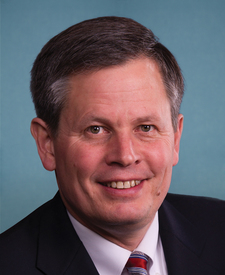
See how Steve Daines actually votes — against your values.
DeepSyte scores Steve Daines's record on the issues you care about — not party, not press releases. Take the 2-minute values quiz to see your personal alignment.
Sign in and take the values quiz to see how Steve Daines's votes line up with your views.
Prediction track record
How often we called Steve Daines's passage votes correctly, from their stated positions on each bill's tagged topics. Excludes “unclear” calls and abstentions.
25 predictions on record · none have been resolved by a passage vote yet. Check back as bills move.
Pending vote119-hr-5123
Indoor Air Quality and Healthy Schools Act of 2025
To amend the Internal Revenue Code of 1986 to temporarily suspend certain fuel excise taxes for fuel separated during periods in which the national average price of gasoline exceeds $3.99 per gallon, and to prohibit certain credits or deductions for oil and gas companies during such periods.
No paired statements and votes yet for Steve Daines
We haven't yet found statement/vote pairs on the same topic for Steve Daines. This usually means either the rep hasn't taken public positions on bills that have come to a passage vote, or those bills haven't been tagged yet. The checker runs as new press releases and votes come in.
Pro analysis
AI rep analysis — Pro
Get an AI-narrated read on Steve Daines's full voting record against your stated values — aligned themes, conflicts, notable votes, and what to watch for.
We haven't extracted campaign positions for Steve Daines yet. Once their campaign website or position pages are processed, this card will track what they said vs how they voted.
Crossing the aisle
No party-break passage votes recorded for Steve Daines. Either they've voted with Republicans on every substantive passage vote in the corpus, or their tenure overlaps few high-threshold party-line votes so far.
Daines Urges Colleagues to Support Clean Water Infrastructure in Montana - Senator Steve Daines
Position: Senator Daines advocates for passage of two bills: the Dry Redwater Regional Water Authorization Act to fund clean drinking water infrastructure in eastern Montana and North Dakota, and the Hydropower Licensing and Affordability Act to streamline federal hydropower licensing by limiting mandatory conditioning requirements on dam operators.
“These samples aren’t from third-world countries. They’re coming out of faucets in Montana”
WASHINGTON, D.C. – U.S. Senator Steve Daines today spoke in a Senate Energy and Natural Resources Committee hearing where he discussed his bill to bring clean drinking water to eastern Montana and reform the hydropower licensing process.
Daines on the “Dry Redwater Regional Water Authorization Act:”
The “Dry Red Water Regional Water Authorization Act” will authorize the construction of critical water systems in eastern Montana. In fact, back in 2020, Congress passed my bill for the Bureau of Reclamation to complete a feasibility study to bring clean drinking water to Dawson, Garfield, McCone, Prairie, and Richland counties in Montana, as well as McKenzie County in North Dakota. After five years, Reclamation finished their study, and in response, the Montana delegation drafted and introduced Senate Bill 4489, which will federally authorize this water system and add it to the rural water program. I want to show my colleagues why this bill is so important and why I have been working on rural water issues in this committee since day one. I brought some water samples today from Montanans in McCone County. Now, I'm not bringing these samples from a third-world country. This is literally water coming out of some faucets in McCone County in Montana. You can't see this one quite as well. But if you look at it as closely as I can see it, you never want to think about pouring that out of your faucet and taking a sip of water from it. Obviously, this is water that families in Montana should not be drinking. My bill will finally authorize the Dry Red Water Regional Water Authority system and bring clean drinking water to over 30,000 Montanans in towns like Glendive, Circle, Richey, Jordan, and Sidney. I look forward to working with the Bureau of Reclamation and this community to get this bill to the President's desk and be in construction of this important project.
Daines on the “Hydropower Licensing and Affordability Act:”
Senate Bill 5048, the Hydropower Licensing and Affordability Act would make very targeted changes to Sections 4(e) and 18 of the Federal Power Act to ensure that federal agencies focus on the direct effects of a project when they're licensing or relicensing a hydropower dam. Federal agencies have weaponized what's called mandatory conditioning where they can require a hydropower operator to do specific actions before granting a license. We've seen this weaponization repeatedly in Montana and across the West and it has resulted in massive project costs and risk the continuation of solid hydropower projects. For example, in Montana, the Thompson Falls Dam is currently going through relicensing, and we're fighting back against unnecessary and unrelated conditions from agencies. This bill would remove the abuse without weakening environmental or endangered species protections or limiting tribal and state consultation. Senate Bill 5048 simply adds one line to the existing sections of the law, ensuring that mandatory conditions are limited to those that, quote, “reasonably mitigate the direct adverse effect of the applicable project,” end quote. This is straightforward and should not be a controversial proposal. I look forward to working with the Chairman to include this in the permitting package or a future markup.
Daines on Fox Business: “We Cannot Slow Down in the Race Against China” - Senator Steve Daines
Position: Senator Daines argues that the U.S. must maintain its lead in AI innovation over China and opposes regulatory approaches that could slow American AI development. He also criticizes prior administrations' energy policies and supports continued development of North American energy supplies.
WASHINGTON, D.C. – U.S. Senator Steve Daines today joined Stuart Varney on Fox Business to discuss the latest on diesel prices and race in AI against China.
We are farm and ranch country in Montana. We pride ourselves on that rich heritage. Look, the farmers and ranchers, they feel the pain at the pump. They feel pain right now with low wheat prices, barley prices, corn prices, soybean prices. But I tell you what, the farmers and ranchers, they're not into politics. They're pragmatic patriots. And they look at alternatives in terms of what's on the ballot. They recognize what's going on right now is a temporary disruption in supply and demand. Secretary Wright talked about the hit on that Saudi pipeline. The Russians have stopped any diesel exports at the moment and that creates more pressure, upwards pressure, on diesel prices. But let's not forget the last administration brought into this crazy climate insanity. They wanted to ban combustion engines, they wanted to ban fossil fuels. Our farmers and ranchers know that the alternative to going backwards to the Biden years and that kind of ideology is dangerous for our country. They see that this is a short-term spike in prices, but they know that President Trump and Republicans want to continue to build out North American and American energy supply. That's a sound strategy for the future. This crazy Green New Deal of the Left is something that will set us back a generation. So I’m confident we'll have a good showing here in 2026.
The regime in Iran, they like to see a weak president. They’d love to go back to the days of Obama and Joe Biden, weak presidents that did not have clarity in terms of foreign policy and making America safer. So, of course, they want to undermine President Trump and Republicans who believe in America first and making sure that America is strong. So, it's not surprising. I think the Iranians, the Iranian regime, not the people, but the Iranian regime want to undermine everything President Trump is doing between now and election day in November.
Daines on the AI race against China:
I spent some time in Hangzhou, which is a city that's larger than New York, that many have never heard of, but it's the epicenter of a lot of the tech innovation in China. Very impressive. It's important to understand what the competition is out there. We're ahead as it relates to the frontier models in AI, thankfully, and we'll continue to keep that lead as long as we don't put policies in place that will somehow slow us down. This is a race, Stuart. It's important that America wins that race. We are not as strong in adoption on AI. The Chinese are second in the world. We're ranked 24th by Stanford. But in terms of innovation, we're in the lead today. It's very important to win this. And this is why we've got this big debate in Washington on AI. What is the right plan going forward? I'm just concerned that D.C. is not capable of effectively regulating something it doesn't understand. We need to make sure we have strong input here, certainly from our best and brightest in this space in America.
…Slow down is a mistake. When you're running a race, last time I checked, Stuart, a winning strategy is not to slow down.
Daines on Fox News: “We Need to Be Gold Medalists in the AI Race” - Senator Steve Daines
Position: Senator Daines argues that the United States should prioritize rapid AI development and innovation to compete with China, and that the federal government should avoid regulatory constraints that could slow U.S. advancement in AI technology.
“The complexity of AI far exceeds the capacity of the government to understand and regulate it”
WASHINGTON, D.C. – U.S. Senator Steve Daines today joined Harris Faulkner on Fox News to discuss the latest on artificial intelligence policy and the race against China.
Daines on the AI race versus China:
Well, I just returned from China a couple of weeks ago. I was in Hangzhou, the city larger than New York City. It's the home of many of the high-tech companies that are some of the best and brightest of China, including DeepSeek, an AI company. Let's remember we're in a global race. It's imperative the United States wins this race. And for those who assert that we should somehow slow down is nonsense. This is about continuing to move as quickly as possible because we are in a race. The bronze or silver medal is not good enough. We need to be the gold medalists in this race in AI. If you look at China at the moment, they're doing a much better job of adopting AI. They're ranked second in the world in adoption by Stanford. The United States is ranked 24th. So we've got some superiorities related to the innovation ecosystem we're building in terms of our frontier models and AI. But think about China. They graduate five to ten times more engineers every year in the United States. So the scale and quality of the innovation ecosystem in China, including AI, is now some of the best. We have a peer competitor, and we've got to be very thoughtful as we go forward to make sure that the federal government doesn't get in the way of ensuring that we beat China in this race.
…There's this thing called a midterm election, Harris, last time I checked coming up. Early voting is starting here in a couple of weeks. And so this is probably a poor time to be having discourse about this issue. We should probably wait until after the election. It reminds me a bit, Harris, remember the days of the climate change hysteria coming from the left about the world was going to end, the polar ice caps were going to be gone and so forth. All these predictions never came true. I hear a little bit of that right now from some of my colleagues on the left side of the aisle who are creating hysteria and want to create this to be a political issue versus thoughtfulness here in Washington about what is the best path going forward here for the United States.
This is the same kind of rhetoric we heard from the left about banning all fossil fuels years ago. Imagine the mess we'd be in had they had their way and how that would have put China in an amazing competitive advantage over the United States if we would have disarmed relates to fossil fuels. Thank God we were the leading oil and gas producer in the world. But I think there's a similar argument here. I was thinking about AI. There is so much good that can be done. Think about what we can do to collaborate in terms of cures for cancer. There's some wonderful work going on that truly could deal with one of the, I lost my father to cancer in April. I mean, can you imagine if we had cures for cancer? So that's something that the power and the good that AI can bring. But we should not be blind to the fact there are some downside risks, you know, bio-terrorism, other things that we need to be very concerned about. And that's why thoughtful conversation, appropriate guardrails. But any time the government tries to jump in and regulate something, it does not understand. The complexity of AI far exceeds the capacity of government to understand and regulate it. That's one of the dilemmas we face at this moment. And that's why it's going to be very important that some of our best thought leaders, smartest people coming from the private sector with some blend with those in public service come together and work on this issue. But we have no business as a bunch of bureaucrats here in Washington as elected leaders who most don't even use AI on a daily basis. Why would you want to have those elected leaders being the ones regulating it?
…That’s the right track is bring in our best and brightest. We've got some of the best
and brightest, thank God, here in the United States on AI. Those are the folks who will be helping shape the path going forward. I worked in a cloud computing startup. I took the company public. I was an executive for 12 years. There's a fiduciary responsibility that you have as a tech leader because your name, your brand is on the line every day. Can you imagine if there's a New York Times, Wall Street Journal article about how your company destroyed part of this economy or humanity because of your technology. Believe me, there's self-corrective measures in terms of fiduciary accountability to shareholders to make sure that there is some self-governance and self-policing within the private sector. Now, I'm not suggesting it's the Wild West and laissez-faire, but let's strike the right balance here of the thought leaders here with appropriate guardrails. Let's tap it light right now. We cannot go down the left's call to stop or put a moratorium in AI. That hands this race right to China.
Daines to FDA: Protect Women’s Health, Release Safety Review of Abortion Pill - Senator Steve Daines
Position: Senator Daines expresses concern about the safety profile of mifepristone (the abortion pill), citing data showing higher adverse event rates than the FDA's original estimates, and urges the FDA to complete its safety review and release findings by year-end.
WASHINGTON, D.C. – U.S. Senator Steve Daines today spoke in a Senate Finance Committee hearing with Chris Klomp, nominee to be Deputy Secretary of Health and Human Services. They discussed the FDA’s ongoing safety review of mifepristone as well as Most-Favored Nation drug pricing policies.
Daines on the dangers of the abortion pill:
Daines: We want to make sure we let the data speak as it relates to mifepristone. What does the data tellus? There was analysis done of 865,000 mifepristone prescriptions compiled from insurance claims. That's a large data set. They found that nearly 11 percent of women experienced a serious adverse event. And let me define the serious adverse event.In most cases that meant going to the emergency room for some serious condition within 45 days oftaking mifepristone. That's 22 times higher than the FDA's long-standing estimate,which is less than 0.5 percent. So a big gap between what we're seeing in insurance claims andwhat the FDA said when they originally released it. During the Biden administration,I believe they had some reckless COVID-era policies that removed, as you mentioned,the in-person dispensing requirement. And serious questions remain whether onlineprescribers can adequately assess gestational age, rule out an atopic pregnancy,or identify situations involving coercion or abuse without a direct in-person evaluation.Secretary Kennedy has stated the FDA is conducting its own comprehensive study ofmifepristone. I'm encouraged by this and continue to urge the agency to complete its review.in a timely manner. Let the data speak, not politics here up on Capitol Hill.
Klomp: Senator, we strongly agree on this point. We have an obligation always to follow the evidence.
Daines: The hope here is that we take the temperature down on the politics of this sensitive issue and let the data speak, frankly, let the women speak, who are seeing a 22-time higher adverse effect from the use of this drug than what the FDA claimed. Specifically, Mr. Klomp, given that the FDA is legally required to file an official update on the status detailing the progress of the safety review by October 7th of this year that's coming up do you believe the agency will be able to release the full review before the calendar year ends?
Klomp: I checked in on this with the agency just a couple of days ago. I do believe that we are on target to file that interim update and I do believe that we are on target as a department to produce the finished study and results before the end of the year.
Daines on Most-Favored Nation drug pricing concerns:
Daines: I'd like to turn to the issue of most favored nation drug pricing and the GLOBE and GUARD models under review by the Office of Management and Budget. We greatly appreciate the administration's efforts to lower drug costs for Americans. I know the folks back home in Montana will be standing on their chairs cheering for that ambition. And I do believe President Trump has done more to achieve this goal than any of his predecessors. With this said, I do have some serious concerns having just come from back from China two weeks ago, looking at the innovation ecosystem going on right now in the biosciences and biotech space. The impact these models could have on the American biotech industry, especially at this moment when China is rapidly closing the innovation gap and seeking to overtake the United States as a global leader in biotech. I've heard from a lot of smaller and midsize companies about how these models could have a negative outsized impact on their ability to engage in R&D, attract investment, and pursue complex or uncertain therapies. These are companies who are responsible for more than half of FDA-approved medicines and involve nearly 75 percent of American clinical trials. It truly is the lifeblood of biotech innovation. Mr. Klomp, was the risk to the U.S. innovation base a consideration before GLOBE and GUARD were advanced?
Klomp: Senator, thank you for that question. The president was unequivocal in a joint mandate that he gave our team. Lower prices for Americans at the pharmacy counter by getting other wealthy countries to pay their fair share so that we don't pay three times what they do for the same drug, same box, same manufacturer. And number two, do not harm American leadership and biotechnology. And so we have worked to do just that.
Daines: The latest I just saw, you talked about the large molecules crossing the 50% threshold first time ever coming out of China. They can do a phase one clinical trial now in half the time at 20 percent of the cost. And so it's game on, and what we need to do is be able to go faster and be more efficient.
ICYMI: Daines Op-Ed in The Washington Examiner: National parks are a gold mine. Congress has a chance to save them from crumbling. - Senator Steve Daines
Position: Senator Daines advocates for passage of the America the Beautiful Act to extend federal funding for national park and public lands repairs, citing economic benefits and broad bipartisan support.
WASHINGTON, D.C. – U.S. Senator Steve Daines penned an op-ed in the Washington Examiner with Marcia Argust of the Pew Charitable Trusts about his bill the “America the Beautiful Act”—read it in the Washington Examiner HERE.
National parks are a gold mine. Congress has a chance to save them from crumbling.
Senator Steve Daines, Marcia Argust
Millions of Americans are flocking to national parks this summer, enriching their lives and fueling local economies. In 2024 alone, national parks welcomed 332 million visits, and visitor spending in nearby communities generated $56.3 billion in economic output and supported more than 340,000 jobs nationwide.
But national parks and other public lands will suffer unless Congress passes the America the Beautiful Act before the end of this year.
… Thanks to public pressure around the centennial of the National Park Service — including broad public support for investing in park repairs and advocacy from thousands of organizations — Congress passed the bipartisan Great American Outdoors Act, and President Donald Trump signed it into law in 2020. The statute established the National Parks and Public Lands Legacy Restoration Fund, directing more than $9 billion in nontaxpayer funds over five years to address priority repairs within parks and other public lands.
… The legislation to extend the LRF has strong bipartisan support. One of us, Sen. Steve Daines (R-MT), is leading the effort in the Senate, working alongside Sens. Angus King (I-ME), Kevin Cramer (R-ND), and Mark Warner (D-VA). The America the Beautiful Act, with nearly three-quarters of the Senate as cosponsors, recently cleared the Senate Energy and Natural Resources Committee with support from Chairman Mike Lee (R-UT) and ranking member Martin Heinrich (D-NM).
Read the full op-ed in the Washington Examiner HERE.
Contact: Matt Lloyd, Gabby Wiggins
Daines, Clyde Lead Letter Urging DOJ to Protect Second Amendment Rights, Apply Ruling Nationwide - Senator Steve Daines
Position: Daines and Clyde urge the Department of Justice to accept a federal court ruling striking down National Firearm Act registration requirements for suppressors and short-barreled firearms, and to apply the decision nationwide without appeal.
WASHINGTON, D.C. – U.S. Senator Steve Daines (R-Mont.) and Representative Andrew Clyde (GA-09) today sent a letter to Attorney General Todd Blanche following a decision by the U.S. District Court for the Northern District of Texas that struck down the National Firearm Act’s (NFA) registration requirements for suppressors, short-barreled shotguns (SBSs), and short-barreled rifles (SBRs). The letter urges the Department of Justice to accept the court’s ruling and eliminate the remaining unconstitutional NFA requirements for all gun owners.
“The court's opinion tracks precisely the position this Congress articulated when we passed Section 70436 of the One Big Beautiful Bill Act.3 The court correctly recognized that the NFA's registration, application, and reporting requirements for short-barreled rifles, short-barreled shotguns, silencers, and AOWs have rested only on the taxing power, and that a tax set to zero can no longer support the regulatory machinery built to collect it. The court likewise rejected, correctly in our view, the Department's arguments that these requirements could be repurposed to support the special occupational tax or salvaged under the Necessary and Proper Clause or the Commerce Clause – powers Congress never invoked in 1934 and has never since invoked for these provisions.
… We ask the DOJ to decline any appeal of the court's decision; to immediately apply the court's ruling nationwide to all persons, regardless of whether they are formally covered by the court's injunction; and to promptly initiate rulemaking to rescind or amend the challenged NFA regulations as to untaxed firearms, so that this outcome is made permanent. Administering a split enforcement regime based on party status is neither workable nor a sound use of the Department's resources, and the DOJ should not wait for the rulemaking process to conclude before bringing its practice into conformity with the court's ruling,” they wrote in the letter.
Senators John Barrasso (R-Wyo.), John Cornyn (R-Tex.), Mike Crapo (R-Idaho), Mike Lee (R-Utah), Cynthia Lummis (R-Wyo.), and Roger Marshall (R-Kan.) joined Daines and Clyde in sending the letter.
Representatives Brian Babin (TX-36), Sheri Biggs (SC-03), Andy Biggs (AZ-05), Lauren Boebert (CO-04), Josh Brecheen (OK-02), Eric Burlison (MO-07), Tim Burchett (TN-02), Kat Cammack (FL-03), Earl Carter (GA-11), Ben Cline (VA-06), Mike Collins (GA-10), Michael Cloud (TX-27), Warren Davidson (OH-08), Scott DesJarlais (TN-04), Eli Crane (AZ-01), Richard Hudson (NC-09), Clay Higgins (LA-03), Wesley Hunt (TX-38), Morgan Griffith (VA-09), Morgan Luttrell (TX-08), Mary Miller (IL-15), Riley Moore (WV-02), Ralph Norman (SC 05), Jimmy Patronis (FL-01), Scott Perry (PA-10), Derek Schmidt (KS-02), Keith Self (TX-03), Austin Scott (GA-08), Pete Sessions (TX-17), Victoria Spartz (IN-05), Claudia Tenney (NY-24), Derrick Van Orden (WI-03), Randy Weber (TX-14), and Bruce Westerman (AR-04) also joined in sending the letter.
“Gun Owners of America worked with Congress and President Trump to eliminate the National Firearms Act tax on suppressors and short barrels—teeing up our constitutional challenge. The court just confirmed what everyone already knew: $0 taxes are invalid and the NFA is unconstitutional! GOA is grateful to Representative Clyde, Senator Daines, and all the Congressmen and Senators who are urging the Department of Justice to restore the Second Amendment by codifying GOA’s legal victory against the NFA into ATF regulations,” said Aidan Johnston, Director of Federal Affairs, Gun Owners of America
Daines lauded the U.S. District Court for the Northern District of Texas ruling that struck down the National Firearm Act’s registration requirements for suppressors, SBSs, and SBRs- read the release HERE.
Daines has been leading efforts to eliminate the NFA’s $200 excise tax since 2024- read the release HERE. In December 2025 Daines led a letter with Representative Clyde to the U.S. Department of Justice urging them to end their defense of the NFA registration requirements in court- read it HERE.
Daines led the charge to include this provision in the Working Families Tax Cuts Act, which was signed into law by President Trump in July 2025. Following the bill’s passage, Second Amendment groups sued the Bureau of Alcohol, Tobacco, Firearms and Explosives (ATF), arguing that the federal government lost its constitutional justification for maintaining the NFA registration requirements for suppressors, SBRs, and SBSs after Congress passed Daines’ provision zeroing out the $200 NFA excise tax on those items.
The court decision held that the NFA registration scheme for suppressors, SBSs, and SBRs is unconstitutional as applied to firearms Congress no longer taxes.
Contact: Matt Lloyd, Gabby Wiggins
Daines Applauds Court Ruling to Protect Second Amendment Rights, Eliminate Unconstitutional Firearm Registration Requirement - Senator Steve Daines
Position: Senator Daines supports the elimination of National Firearm Act registration requirements and excise taxes on suppressors, short-barreled rifles, and short-barreled shotguns, which he characterizes as unconstitutional restrictions on Second Amendment rights.
WASHINGTON, D.C. – U.S. Senator Steve Daines today applauded a decision by the U.S. District Court for the Northern District of Texas that struck down the National Firearm Act’s registration requirements for suppressors, short-barreled shotguns (SBSs), and short-barreled rifles (SBRs).
“Today’s decision is a victory for the Second Amendment. Eliminating the NFA excise tax on suppressors, short-barreled rifles, and short-barreled shotguns was one of my biggest priorities in the Working Families Tax Cuts that President Trump signed into law last year. I’m glad to see the courts strike down the remaining unconstitutional registration requirements and recognize Congress’ intent to fully eliminate these NFA provisions,” said Daines.
Daines has been leading efforts to eliminate the NFA’s $200 excise tax since 2024- read the release HERE. In December 2025 Daines led a letter with Representative Andrew Clyde (GA-09) to the U.S. Department of Justice urging them to end their defense of the NFA registration requirements in court- read it HERE.
Daines led the charge to include this provision in the Working Families Tax Cuts Act, which was signed into law by President Trump in July 2025. Following the bill’s passage, Second Amendment groups sued the Bureau of Alcohol, Tobacco, Firearms and Explosives (ATF), arguing that federal government lost its constitutional justification for maintaining the NFA registration requirements for suppressors, SBRs, and SBSs after Congress passed Daines’ provision zeroing out the $200 NFA excise tax on those items.
Today’s court decision held that the NFA registration scheme for suppressors, SBSs, and SBRs is unconstitutional as applied to firearms Congress no longer taxes.
Contact: Matt Lloyd, Gabby Wiggins
Daines, Sheehy Bill to Support Crow Tribe and Montana Miners Passes Senate Indian Affairs Committee - Senator Steve Daines
Position: Senators Daines and Sheehy support the Crow Revenue Act, which would provide revenue to the Crow Tribe, sustain the Bull Mountains Mine, resolve land ownership issues on the Crow Reservation, and expand public land access.
WASHINGTON, D.C. – U.S. Senators Steve Daines and Tim Sheehy today announced their bill, the “Crow Revenue Act,” passed the Senate Indian Affairs Committee. The bill would provide new revenue to the Crow Tribe, ensure the longevity of the Bull Mountains Mine, help fix long-standing inholdings on the Crow Reservation, and increase access to public lands in the Bull Mountains.
“The Crow Revenue Act is a huge win for the Crow Tribe, Roundup and the surrounding communities. This bill helps the Tribe receive new revenue, supports our miners, and keeps the Roundup community’s economy thriving. I’m thrilled to see that it passed committee and is one step closer to becoming law,” said Daines.
“By resolving long-standing mineral ownership issues, the Crow Revenue Act creates a new stable source of revenue for the Crow Tribe, preserves Montana mining jobs, and expands public access to public lands. This legislation is the kind of practical, commonsense approach we need to support local communities, jobs, our economy, and our state's energy future, and I’m glad to see it move through committee,” said Sheehy.
Daines first introduced the “Crow Revenue Act” in May 2024- read the release HERE and a one-pager on the bill HERE.
Contact: Matt Lloyd, Gabby Wiggins
Daines Emphasizes Need for Crypto Tax Framework in Senate Finance Committee hearing - Senator Steve Daines
Position: Senator Daines advocates for a comprehensive federal tax framework for digital assets and cryptocurrency that reduces complexity while maintaining traditional tax safeguards and anti-abuse protections, positioning such a framework as necessary for U.S. competitiveness and compliance.
WASHINGTON, D.C. – U.S. Senator Steve Daines today spoke with Francis Brooke, nominee to be Deputy Secretary of the Treasury, and Sriprakash Kothari, nominee to be Assistant Secretary of the Treasury in a Senate Finance committee hearing. They discussed the need for federal regulatory framework for digital assets.
Watch Daines’ full remarks HERE.
Daines discussed the need for crypto tax framework:
Daines: Congratulations to each of the nominees here today, and thank you for the willingness to jump back in the arena and serve. In partnership with the administration, this Congress has taken historic steps to advance American leadership in digital assets. In fact, we've established the first federal regulatory framework for payment stablecoins through the Genius Act, and I remain hopeful that Congress will finish the work we started on digital asset market structure legislation. There’s a very important piece of the framework that is unfinished, and that's the tax code. The current tax code forces taxpayers to apply rules written decades before blockchain technology even existed. Taxpayers deserve rules they can understand. The IRS deserves rules they can administer. And the American entrepreneurs deserve certainty that allows them to build their businesses here rather than overseas. My comprehensive digital asset tax framework that I've been developing over the past year would accomplish those goals. It is built around some commonsense principles. Reduce unnecessary complexity, increase compliance, protect the tax base, and keep digital asset jobs and the innovation here in the United States. This is not about giving digital assets special treatment. Where digital assets function like securities or commodities, my proposal applies familiar tax principles, including wash sale rules, constructive sale rules, and elective mark-to-market regime. Where blockchain technology creates genuinely different transactions, the proposal provides tailored rules for stablecoin payments, network fees, staking, lending, investment trusts, passive validation activity, and charitable contributions. Importantly, it pairs this commonsense relief with strong guardrails to prevent abuse. The administration has made clear that America should lead the digital asset economy. We need now, here in Congress, to finish the tax side of that ledger, of course, the jurisdiction here in the Finance Committee. Mr. Brooke, could you explain how a comprehensive framework that would reduce needless complexity apply traditional tax safeguards where appropriate and include strong anti-abuse rules could improve compliance while at the same time protecting the tax base?
Brooke: We need to make sure that the United States is the leader, that we're the ones setting the standards.
Daines: Dr. Kothari, you've spent your career studying how government rules affect markets, affect capital formation, affect economic behavior. Could you tell us what the consequences might be for American competitiveness if Congress continues to leave digital asset taxpayers in businesses without clear and administrable tax rules?
Kothari: If the U.S. has to have maintained a leadership position in digital assets, digital currency, then we need a regime that is clear in terms of rules of engagement and also we have to enforce those laws.
Contact: Matt Lloyd, Gabby Wiggins
Daines, Hassan, Goodlander, Miller Introduce Bill to Bolster Made-In-America Hydropower - Senator Steve Daines
Position: The release advocates for legislation that standardizes the hydropower licensing process at Army Corps of Engineers dams to streamline permitting, reduce timelines, and enable faster deployment of hydropower generation at existing dams.
Standardizes Review Procedures for Hydropower Licenses
WASHINGTON, D.C. – U.S. Senators Steve Daines (R-Mont.) and Maggie Hassan (D-N.H.), as well as Representatives Maggie Goodlander (D-N.H.-2) and Carol Miller (R-W.V.-01) today introduced bipartisan legislation to standardize the process for hydropower licenses at Army Corps of Engineers dams under Section 408 to ensure a uniform and consistent application and review process across districts.
“Hydropower is an increasingly important source of electricity in the U.S., and provides Montana’s second-largest source of electricity generation. As we prepare to meet the expected surge in demand for energy in the coming decades, we need to ensure the licensing process is fair and efficient. I’m proud to work with my bipartisan colleagues to increase Made-In-America hydropower and enact much-needed reforms,” said Daines.
“As electricity demand continues to grow, we need to make it easier to bring more affordable, reliable energy online. This bipartisan legislation will help create a more consistent and efficient process for adding hydropower generation at existing dams, support American energy production, and lower costs for families and businesses. I urge my colleagues to support this commonsense bill,” said Hassan.
“The people of New Hampshire are paying some of the highest energy costs in the country, and hydropower is at the heart of lowering energy costs and making America the world’s clean energy superpower. Our bipartisan bill is simple: it cuts red tape and makes the rules of the road clear so that we can get reliable hydropower solutions built faster and bring prices down. From day one, I have worked across the aisle to cut energy costs, and I will keep leading the fight to build the affordable, reliable, and clean energy future New Hampshire families deserve,” said Goodlander.
“I have long advocated for an all-of-the-above approach to energy production. To ensure the United States remains the leading energy producer and we have the ability to meet rising demands, it is essential that our existing infrastructure and federal processes are streamlined and efficient. I am happy to join my colleagues in introducing this common-sense legislation to benefit the Army Corps of Engineers and our hydropower industry,” said Miller.
The Section 408 licensing process for Army Corps of Engineers dams can vary from district to district with different standards and timelines for producers. Standardizing the process and timeline will ensure that much-needed generation will be added to existing non-powered dams. According to a recent Army Corps assessment, approximately three gigawatts of power could be produced at existing Army Corps non-powered dams.
“Thank you Senators Daines and Hassan for this legislation that will help create much-needed clarity on an important aspect of permitting hydropower facilities – Clean Water Act reviews. With bipartisan support, this legislation is an important showcase that clean, affordable, and reliable hydropower should be a nonpartisan issue. Hydropower makes up nearly 23 percent of our generation portfolio at NorthWestern Energy, allowing our company to meet customer demand with affordable, reliable, and carbon-free power. Legislation like these will help ensure our hydro assets can remain a significant part of our portfolio for years to come.” – Brian Bird, President and Chief Executive Officer, NorthWestern Energy
“Section 408 reform is essential to unlocking more reliable, affordable, American hydropower. For too long, developers seeking to add clean generation to existing U.S. Army Corps infrastructure have faced an unpredictable and duplicative review process that slows projects when we need all the new generation we can get. By bringing greater clarity, consistency, and accountability to Section 408 reviews, this bill will help move responsible hydropower development forward while preserving the Corps’ core mission. NHA thanks the bill’s sponsors, Sen. Steve Daines (R-MT), Sen. Maggie Hassan (D-NH), Rep. Maggie Goodlander (D-NH) and Rep. Carol Miller (R-WV) for advancing this commonsense fix and recognizing the role existing federal infrastructure can play in meeting America’s growing energy needs.” – Matthew Allen, Director of Legislative Affairs, National Hydropower Association
Contact: Matt Lloyd, Gabby Wiggins
Source: GDELT 2.0 GKG, filtered to a curated list of national outlets. Inclusion is not endorsement; opinion pieces and reported news are mixed.
Recent stock activity
Periodic transaction reports filed under the STOCK Act — disclosed by the rep, sourced from public filings.
No disclosed trades on record.
Source: open-data mirrors of the Senate eFD and House Clerk financial-disclosure systems. Disclosure within 30 days of trade is required by law (45 for spouse/dependent trades).
Top PAC donors · 2026 cycle
Political action committees that gave the most to this rep's principal campaign committee this cycle. PAC giving is direct organizational support — industry, ideological, or leadership.
1.CLUB FOR GROWTHIdeological30 contributionsFiscal-conservative advocacy PAC — backs candidates supporting lower taxes, reduced government spending, and free-market economic policies.AI$404,904
2.NORPACIdeological13 contributionsBipartisan pro-Israel PAC based in northern New Jersey, founded 1992. Bundles individual donations to candidates from both parties who support U.S.-Israel security and economic ties.AI$166,138
3.HOLD THE SENATE1 contribution$14,613
4.ONE TEAM SENATE MAJORITY1 contribution$13,610
Source: OpenFEC (api.open.fec.gov) Schedule A receipts where contributor type is “committee.” Aggregated by contributing committee. Self-transfers from joint-fundraising / victory committees are excluded.
Top individual contributors · 2026 cycle
Itemized individual contributions over $200 to this rep's campaign committee, aggregated by donor employer. PAC giving is shown above; this section is people, not organizations.
1.SELF$105,865
2.INFORMATION REQUESTED PER BEST EFFORTS$74,481
3.BLACKSTONE$57,000
4.YELLOWSTONE BANK$35,000
5.DELTA AIR LINES$26,002
6.REYES HOLDINGS$21,000
7.KKR$18,500
8.TOWN PUMP INC$17,500
9.ADVANTAGE CAPITAL$16,500
10.MOFI$14,000
Source: OpenFEC Schedule A receipts where contributor type is “individual,” aggregated by the donor's self-reported employer. This is a geographic / industry correlation, not a corporate endorsement.