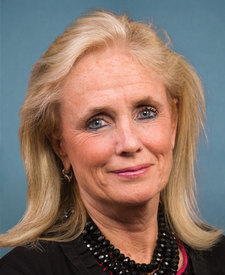
See how Debbie Dingell actually votes — against your values.
DeepSyte scores Debbie Dingell's record on the issues you care about — not party, not press releases. Take the 2-minute values quiz to see your personal alignment.
Sign in and take the values quiz to see how Debbie Dingell's votes line up with your views.
Prediction track record
How often we called Debbie Dingell's passage votes correctly, from their stated positions on each bill's tagged topics. Excludes “unclear” calls and abstentions.
To prohibit the disclosure of records by the Secretary of Housing and Urban Development of individuals for the purposes of immigration enforcement, and for other purposes.
A bill to provide for appropriate cost-sharing for insulin products covered under private health plans, and to establish a program to support health care providers and pharmacies in providing discounted insulin products to uninsured individuals.
Based on 8 data points across public statements and recorded votes · AI analysis of public records
118-hr-9668·Notable gap
SHIELD Against CCP Act
15/100
What they said
Apr 27, 2026
Michigan House Democrats express concern about reported conditions at a large ICE detention facility, including allegations of a hunger strike, inadequate medical care, and limited legal access for detainees, and call for the Trump Administration to address these concerns.
The statement addresses detention facility conditions, medical care, and legal access for ICE detainees—concerns about immigration enforcement practices and detainee treatment. The SHIELD Against CCP Act establishes a DHS working group focused on Chinese Communist Party security threats, cybersecurity, border security, and transportation security, with no provisions addressing detention facility conditions, medical care, or legal access for detainees. The rep's yes vote on this bill is inconsistent with the stated concern about ICE detention practices.
Detain and Deport Illegal Aliens Who Assault Cops Act
15/100
What they said
Apr 27, 2026
Michigan House Democrats express concern about reported conditions at a large ICE detention facility, including allegations of a hunger strike, inadequate medical care, and limited legal access for detainees, and call for the Trump Administration to address these concerns.
The statement expresses concern about detention facility conditions and calls for addressing detainee welfare issues. The bill mandates detention and deportation of non-U.S. nationals arrested for assaulting law enforcement. The rep voted no on the bill while simultaneously raising alarms about conditions at ICE facilities and detainee treatment. This suggests opposition to expanded detention authority, which is directionally consistent with concern about facility conditions and detainee welfare.
Michigan House Democrats express concern about reported conditions at a large ICE detention facility, including allegations of a hunger strike, inadequate medical care, and limited legal access for detainees, and call for the Trump Administration to address these concerns.
The statement expresses concern about detainee conditions and treatment at an ICE facility, calling for humane oversight of immigration enforcement operations. The bill creates new grounds for deportation based on Social Security and identity document fraud. While both touch immigration policy, they address distinct questions: the statement focuses on detention facility conditions and due process protections for those in custody, while the bill concerns deportability grounds for specific fraud offenses. The rep's NO vote on a bill that expands deportation grounds is generally consistent with a position emphasizing detainee protections and due process, though the bill does not directly address facility conditions. The alignment is directional rather than on the identical specific question.
Michigan House Democrats express concern about reported conditions at a large ICE detention facility, including allegations of a hunger strike, inadequate medical care, and limited legal access for detainees, and call for the Trump Administration to address these concerns.
The statement expresses concern about conditions and treatment of detainees at an ICE facility, calling for accountability and improved conditions. The Secure the Border Act focuses on border wall construction and asylum restrictions—enforcement-oriented immigration policies that do not directly address detention facility conditions, medical care, or legal access for detainees. The rep's NO vote on a bill emphasizing border enforcement and asylum limits is generally consistent with a position prioritizing detainee welfare and humane treatment, though the bill and statement address different specific aspects of immigration policy.
Protecting Health Care for All Patients Act of 2023
15/100
What they said
Apr 16, 2026
The release advocates for legislation that would expand Medicare coverage for remote patient monitoring services provided by nephrologists to patients with end-stage renal disease receiving home dialysis, by allowing such services to be reimbursed outside the ESRD capitated payment bundle.
The statement advocates for expanding Medicare reimbursement for remote patient monitoring services in home dialysis care by carving RPM out of the ESRD capitated payment bundle. The bill addresses quality-adjusted life year pricing in federal health programs and reduces Prevention and Public Health Fund funding—substantively unrelated to RPM reimbursement policy. Dingell's no vote on this bill is inconsistent with her stated position on home dialysis modernization, as the bill does not advance the RPM coverage expansion she championed.
Michigan House Democrats express concern about reported conditions at a large ICE detention facility, including allegations of a hunger strike, inadequate medical care, and limited legal access for detainees, and call for the Trump Administration to address these concerns.
The statement expresses concern about conditions and treatment of detainees at an ICE facility, focusing on humanitarian issues like medical care and legal access. The bill establishes criminal penalties for illegal entry and reentry. The representative's 'no' vote on this amendment is consistent with the stated position: opposing measures that would increase criminal penalties for immigration violations aligns with concern for the welfare and legal protections of detained immigrants. However, this is an amendment vote rather than passage, and the statement does not explicitly address criminal penalties, creating some interpretive distance.
Continuing Appropriations and Border Security Enhancement Act, 2024
75/100
What they said
Apr 27, 2026
Michigan House Democrats express concern about reported conditions at a large ICE detention facility, including allegations of a hunger strike, inadequate medical care, and limited legal access for detainees, and call for the Trump Administration to address these concerns.
Rep. Dingell's statement expresses concern about conditions at an ICE detention facility and calls on the Trump Administration to address inadequate medical care and limited legal access for detainees. The bill includes continuing appropriations for federal agencies (including DHS) and contains provisions prohibiting DHS from using funds for certain immigration-related purposes. Dingell voted no on passage. The no vote is generally consistent with the statement's critical stance toward immigration enforcement operations, though the bill's primary purpose is a continuing resolution to prevent government shutdown, and the statement does not explicitly address the appropriations mechanism or the specific DHS funding restrictions in the bill.
Michigan House Democrats express concern about reported conditions at a large ICE detention facility, including allegations of a hunger strike, inadequate medical care, and limited legal access for detainees, and call for the Trump Administration to address these concerns.
The statement expresses concern about conditions at an ICE detention facility and calls for the Trump Administration to address detainee welfare issues. The bill is a broad FY2024 appropriations measure that funds the Department of Homeland Security (which oversees ICE) among six departments. The rep's YES vote on DHS appropriations is generally consistent with supporting oversight and funding for agencies responsible for detention facilities, though the bill does not specifically address the detainee conditions or hunger strike allegations mentioned in the statement. The vote reflects support for DHS funding broadly rather than a direct endorsement of the specific facility concerns raised.
Pairs with ambiguous language and high uncertainty are withheld until more data is available. Procedural, cloture, and amendment votes are excluded — they don't cleanly signal substantive support or opposition.
Pro analysis
AI rep analysis — Pro
Get an AI-narrated read on Debbie Dingell's full voting record against your stated values — aligned themes, conflicts, notable votes, and what to watch for.
We haven't extracted campaign positions for Debbie Dingell yet. Once their campaign website or position pages are processed, this card will track what they said vs how they voted.
Crossing the aisle
No party-break passage votes recorded for Debbie Dingell. Either they've voted with Democrats on every substantive passage vote in the corpus, or their tenure overlaps few high-threshold party-line votes so far.
Dingell, Colleagues Slam Administration for Funding Cuts to Home Care for Seniors
Position: The representatives oppose administration actions to restrict Medicaid home and community-based services (HCBS) for seniors and people with disabilities, arguing that such cuts would harm vulnerable populations and that growth in HCBS demand reflects genuine care needs rather than fraud.
U.S. Representative Debbie Dingell (D-MI-06) and five of her House Democratic colleagues called out the Trump Administration for threatening to restrict Medicaid home and community-based services (HCBS) that provide support to older Americans and people with disabilities, providing a less expensive option for both families and the federal government. In a letter to Mehmet Oz, the Administrator for the Centers for Medicare & Medicaid Services (CMS), the lawmakers stressed that millions of Americans rely on HCBS, and that cuts to these services would threaten access to necessary care.
“More than 8.4 million people with disabilities and older adults rely on HCBS to live and age independently in their homes and communities, and they — along with their families and workers that make care possible — cannot afford cuts, reductions, or frozen funding to these life-saving services,” the lawmakers said.
Congresswoman Dingell and the lawmakers rejected any implication that increased demand for HCBS constituted evidence of fraud. They also underscored how recent CMS actions to withhold and defer billions of dollars in Medicaid to fund tax cuts for big corporations is straining state budgets.
“Growth in Medicaid spending reflects the needs of a rapidly growing population that requires care, and decades of progress to ensure people can live, age, and work with dignity in their homes and communities,” they said. “Cuts to Medicaid harm people with disabilities, older adults, family caregivers, and workers which Medicaid is intended to support.”
In addition to Congresswoman Dingell, the effort is supported by U.S. Representatives Kim Schrier (D-WA-08), Adelita Grijalva (D-AZ-07), Lateefah Simon (D-CA-12), Troy Carter (D-LA-02), Nanette Barragan (D-CA-44)
A copy of the letter can be found HERE and text is below:
This letter is regarding the actions being taken by this Administration that threaten to restrict Medicaid home and community-based services (HCBS), which will ultimately harm people with disabilities and older adults. More than 8.4 million people with disabilities and older adults rely on HCBS to live and age independently in their homes and communities, and they — along with their families and workers that make care possible — cannot afford cuts, reductions, or frozen funding to these life-saving services.
We are concerned by continued attacks on Medicaid, including actions by the Centers for Medicare & Medicaid Services (CMS) that undermine HCBS. We reject the implication that increased demand for HCBS, including behavioral health services and other integral services for people with disabilities, or the growth in the number of direct care workers is evidence of fraud.
HCBS are essential supports that help older adults and people with disabilities with day-to-day activities such as bathing, dressing, managing medication, and participation in employment. More than one in four people in the U.S. have disabilities, and across the country, more than one in five adults receive ongoing support with everyday functional needs for aging and disability care. Family caregivers and direct care workers are also supported through Medicaid to provide life-saving, essential care. Growth in Medicaid spending reflects the needs of a rapidly growing population that requires care, and decades of progress to ensure people can live, age, and work with dignity in their homes and communities- which they often prefer- rather than costly institutional settings, often saving the government money.
Cuts to Medicaid harm people with disabilities, older adults, family caregivers, and workers which Medicaid is intended to support. States are already facing difficult decisions as they face more than $1 trillion in cuts to Medicaid, SNAP, and other public services to pay for tax cuts for the wealthiest and big corporations. At least 10 states — including Idaho, Utah, Colorado, Missouri, and Washington — have proposed eliminating or reducing some HCBS funding as they grapple with increasingly constrained budgets. Recent CMS actions to withhold and defer billions of dollars in Medicaid funds from Minnesota, including HCBS, further strain state budgets and threaten access to care.
Thank you for your attention to this important matter.
Position: The representatives support federal investment in research and development of clean vehicle technologies to improve fuel efficiency, reduce oil dependence, strengthen domestic supply chains, and support American auto manufacturers.
U.S. Representatives Debbie Dingell (D-MI-06) and Haley Stevens (D-MI-11) introduced the Vehicle Innovation Act of 2026 to promote investments in research and development of clean vehicle technologies to increase fuel efficiency, reduce our nation’s dependence on foreign oil, strengthen our supply chains, and support American auto manufacturers and supplies.
“Innovation has always defined the American auto industry, and that must remain the case as we confront the climate crisis. The Vehicle Innovation Act invests in the research and development needed to improve vehicle efficiency, strengthen domestic supply chains, and produce cutting-edge clean vehicle technology. This legislation empowers American workers, companies, and inventors, and will help ensure that Michigan and the United States continue to lead the world in automotive innovation,” said Congresswoman Dingell.
“Michigan researchers and manufacturers are leading the charge to make our vehicles and our roads safer. I am proud to join Congresswoman Dingell in introducing our Vehicle Innovation Act, which will invest in critical research and development, strengthen American supply chains, and create good-paying jobs right here in Michigan,” said Congresswoman Stevens.
“Auto Innovators thanks Reps. Dingell and Stevens for their leadership in introducing the Vehicle Innovation Act,” said John Bozzella, President & CEO, Alliance for Automotive Innovation. “Automakers are committed to a cleaner, safer, smarter transportation future, including major investments that have improved vehicle efficiency and advanced new safety technologies. This important legislation will support critical research and development programs needed to advance those goals while ensuring the United States remains a global leader in automotive innovation.”
The Vehicle Innovation Act reauthorizes the Department of Energy’s Vehicle Technologies Office, which works with manufacturers and suppliers to research, develop and deploy advanced vehicle technologies that improve energy efficiency. The bill also provides the Department of Energy with clear direction to build on successful research programs and encourages the development of a wide array of technologies that have the potential to improve fuel efficiency and reduce traffic congestion.
Examples of potential fuel-saving technologies include vehicle-to-vehicle and vehicle-to-infrastructure (V2X) communications, mild hybrid, engine down speeding, power pack modeling and testing, advanced boosting systems, new vehicle sensing and communication, hydrogen and natural gas refueling and electric vehicle charging technology.
A copy of the legislation can be found HERE.
Dingell, Colleagues Introduce Bills to Strengthen Home Care Access
Position: Representatives Dingell and Schakowsky introduced legislation to expand Medicaid coverage for home and community-based services, increase investment in the direct care workforce, and reduce reliance on institutional long-term care settings. The bill aims to address waitlists for home care and improve wages for care workers.
Today, U.S. Representative Debbie Dingell introduced the Home and Community-Based Services (HCBS) Access Act and the Long-Term Care Workforce Support Act, two separate pieces of legislation to strengthen home care access and the caregiving workforce.
Home and Community-Based Services (HCBS) Access Act
In addition to Congresswoman Dingell, the HCBS Access Act is co-led by U.S. Representative Jan Schakowsky (D-IL-09).
“We know that the majority of individuals who require long-term care would prefer to receive it in their own homes and communities. No one should have to wait years to get the care they deserve, and no care worker should have to live below the poverty line to give this care,” said Congresswoman Dingell.“Medicaid is the single largest payer of long-term care in our country. At a time when Medicaid is facing unprecedented, historic cuts, it’s more important than ever that we prioritize home and community-based services. This is the less expensive option for both families and the federal government, but the people who don’t want us to improve the system are the corporations profiting while Americans struggle. This legislation will provide much-needed investment in our care workforce, making it easier for those who need care to get it, and supporting the caregivers doing this crucial work.”
“Older adults and people with disabilities deserve to live with dignity and age in place. Yet the United States still lacks a comprehensive long-term care policy that meets the needs of our most vulnerable communities. Medicaid Home- and Community-Based Services help fill this gap, ensuring millions of Americans can remain independent in their homes and communities,” said Congresswoman Jan Schakowsky. “I am proud to join my colleague Congresswoman Dingell in introducing this legislation to strengthen our nation’s care infrastructure by expanding access to Medicaid home care, investing in the direct care workforce, and supporting family caregivers. It’s time to move beyond discussion and deliver real national solutions to the caregiving crisis.”
The problem
Many older adults and people with disabilities who need help with daily activities such as eating, dressing, traveling to work or school, and managing finances, are eligible for Medicaid long-term services and supports (LTSS) to support their everyday needs. These beneficiaries have immediate access to nursing homes or other institutional settings. But if they want to remain in their homes with the help of Medicaid Home and Community-Based Services (HCBS), they are often put on a waiting list and can wait years or even decades for services and support. Medicaid policy has always paid for nursing home and other institutional care for those eligible for LTSS but will not pay for home and community-based services unless a waiver has been granted. This bill would put both options on equal footing and give families an equal choice between home and community care or institutional care.
This current system fails to meet the needs of millions of older adults and people with disabilities. While many people want to live in their own homes and communities, they may be forced to live in an institutional setting just to access the services they need. As the 1999 Supreme Court Olmstead decision stated, everyone—no matter their disability—has the right to receive services in their community and to live in their own home.
The solution
The HCBS Access Act is designed to ensure eligible older adults and people with disabilities have a real choice of care and support options between home care and institutional care. The bill would, over time, eliminate HCBS waiting lists and the need for states to repeatedly apply for HCBS waivers. Specifically, the bill would:
Increase Medicaid funding for home and community-based services;
Increase the federal match for state funding to expand their capacity to meet the needs of people who prefer HCBS;
Make steps to improve the stability, availability, and quality of direct care providers to help address the decades-long workforce shortage crisis;
Provide states with resources so that caregiving workers—who are disproportionately women of color—have stable, quality jobs and a living wage;
Provide training and support for family caregivers; and
Create better evaluation measures to assess the quality of HCBS being provided.
The legislation is endorsed by the American Federation of State, County and Municipal Employees (ASFCME), Justice in Aging, the National Health Law Program (NHeLP), the Service Employees International Union (SEIU), Little Lobbyists, Partnership for Inclusive Disaster Strategies, Partnership for Inclusive Disaster Strategies, American Network of Community Options and Resources (ANCOR), ADAPT, and PHI.
Long-Term Care Workforce Support Act
In addition to Congresswoman Dingell, the Long-Term Care Workforce Support Act is co-led by U.S. Representative Doris Matsui (D-CA-07).
“Caregiving is the foundation of our economy. It allows for all other work to be possible. No care worker should have to live below the poverty line to do this work that millions of Americans depend on. As many know, this is deeply personal for me – I was lucky to have my husband John receive care at home, but many others do not have the same opportunity,” said Congresswoman Dingell. “This legislation will make much needed investments in our care infrastructure and workforce, including family caregivers, to ensure they have the support they need, are paid a living wage, and are able to continue doing their critical jobs.”
“Every day, caregivers show up with compassion, skill, and devotion for the people and families who depend on them,” said Congresswoman Matsui.“Yet too many of these essential workers do not receive the pay or support they deserve. I have always believed caregivers should be treated with the dignity and respect they give to others, and the Long-Term Care Workforce Support Act moves us closer to that goal. By investing in this workforce, we can also strengthen care for older adults and people with disabilities, support families, and build a stronger, more stable economy for everyone.”
The problem
As the number of older adults and people with disabilities continue to increase in the country, the number of direct care professionals – including personal care aides, home health aides, direct support professionals, and many others – will also need to increase. The five million direct care professionals currently employed provide services to people living in their homes, in group homes, assisted living facilities, nursing homes, intermediate care facilities and other long-term care settings. Studies also estimate that, by 2031, 9.3 million direct care professionals will be required to meet the caregiving demands of older adults and people with disabilities.
Ninety-two percent of nursing home respondents and nearly 70 percent of assisted living facilities surveyed report significant or severe workforce shortages. In 2022, a survey of nursing homes showed more than 50% of the facilities were limiting the number of new admissions due to staffing vacancies or shortages. Another recent survey of home and community-based services (HCBS) providers showed all 50 states experiencing home care worker shortages, and 43 states reported that some HCBS providers have closed due to worker shortages.
In 2022, the median hourly wage for all direct care professionals was $15.43, with home care aides earning $14.51. One in eight direct care professionals live in poverty, 75% earn less than the average living wage in their state, and 46% rely on public assistance, such as Medicaid, food assistance, or supplemental benefits. In addition to low wages, these workers report high levels of burnout and professional fatigue due to the daily physical and emotional demands of their jobs, lack of respect for the care that they provide, and health and emotional effects from battling the COVID-19 pandemic. Most direct care professionals are women, immigrants, and people of color, further perpetuating racial, gender, and economic inequalities.
The solution
Stabilizing, growing, and supporting the direct care professional workforce is essential to ensuring a strong, qualified pipeline of workers to provide needed services to older adults and people with disabilities. Ensuring that direct care professionals are fairly compensated and protected will also benefit them, their families, and their communities.
Specifically, the Long-Term Care Workforce Support Act will:
Increase the number of direct care professionals, including in rural communities;
Provide pathways to enter and be supported in the workforce for women, people of color, and people with disabilities;
Improve compensation for direct care professionals to reduce vacancies and turnover;
Ensure that the direct care professionals are treated with respect, provided with a safe working environment, protected from exploitation, and provided fair compensation;
Improve access and quality of long-term care for families;
Document the need for long-term care, identify effective recruitment and training strategies, and promote practices that help retain direct care professionals.
Strengthen the direct care professional workforce in order to support the 53,000,000 unpaid family caregivers who are providing complex services to their loved ones in the home and across long-term care settings.
Dingell, Colleagues Urge President Trump to Block Chinese Automakers from Entering U.S. Market
Position: The lawmakers urge President Trump to block Chinese automakers from entering the U.S. market, maintain and strengthen tariffs on Chinese automobiles, prevent Chinese-owned vehicle production in North America from accessing U.S. markets, and restrict Chinese-connected vehicle technologies.
Today, U.S. Representative Debbie Dingell (D-MI-06) and 73 of her House Democratic colleagues urged President Trump to block Chinese automakers from accessing the United States market. The lawmakers are raising concerns over threats to American workers and business, manufacturing, and national security.
The effort comes ahead of President Trump’s planned meeting with Chinese Xi Jinping in mid-May in Beijing, and it follows reports of Chinese automakers targeting the North American market, including the United States.
“As you prepare for your upcoming summit with the President of the People’s Republic of China, any effort to lower barriers for Chinese automobiles or otherwise facilitate their entry into the U.S. market would pose a direct threat to American manufacturing, workers, and national security. This must remain a firm and non-negotiable priority,” the lawmakers said.
The lawmakers emphasized that the U.S. auto industry is a cornerstone of the American economy, supporting approximately 10 million jobs. They warned that Chinese automakers benefit from heavy state subsidies and exploitative labor conditions that distort global competition and disadvantage American companies and workers.
The letter to President Trump also raises concerns about China’s efforts to circumvent U.S. trade protections by routing vehicles through Canada and Mexico under the United States-Mexico-Canada Agreement (USMCA).
“Chinese-owned or controlled vehicles, regardless of where they are assembled, must not be permitted to enter our market through USMCA or any other mechanism. Allowing such circumvention would undermine existing tariffs, weaken trade enforcement, and erode policies designed to support domestic manufacturing,” the lawmakers said.
To address the concerns outlined in the letter, Congresswoman Dingell and the lawmakers called on President Trump to:
Maintain and strengthen existing tariffs and trade enforcement measures on Chinese automakers and automobiles;
Ensure that Chinese automakers cannot establish manufacturing operations in the United States or use North American production as a backdoor into the U.S. market;
Explicitly prohibit vehicles produced by Chinese-owned or controlled entities in Canada or Mexico from qualifying for USMCA benefits or entering the United States;
Accelerate and expand restrictions on Chinese-connected vehicle technologies across all vehicle classes; and
Work with allies to counter China’s coordinated effort to dominate the global auto industry through non-market practices.
In addition to Congresswoman Dingell, Members of Congress who signed this letter include Gabe Amo (D-RI-01), Joyce Beatty (D-OH-03), Wesley Bell (D-MO-01), Brendan Boyle (D-PA-02), Shontel Brown (D-OH-11), Nikki Budzinski (D-IL-13), Janelle Bynum (D-OR-05), Salud Carbajal (D-CA-24), André Carson (D-IN-07), Troy Carter (D-LA-02), Gilbert Cisneros (D-CA-31), Yvette Clarke (D-NY-09), Steve Cohen (D-TN-09), Lou Correa (D-CA-46), Jasmine Crockett (D-TX-30), Sharice Davids (D-KS-03), Donald Davis (D-NC-01), Rosa DeLauro (D-CT-03), Christopher DeLuzio (D-PA-17), Sarah Elfreth (D-MD-03), Veronica Escobar (D-TX-16), Lizzie Fletcher (D-TX-07), John Garamendi (D-CA-08), Laura Gillen (D-NY-04), Jimmy Gomez (D-CA-34), Steven Horsford (D-NV-04), Chrissy Houlahan (D-PA-06), Val Hoyle (D-OR-04), Jonathan Jackson (D-IL-01), Julie Johnson (D-TX-32), Marcy Kaptur (D-OH-09), Robin Kelly (D-IL-02), Timothy Kennedy (D-NY-26), Ro Khanna (D-CA-17), Greg Landsman (D-OH-01), John Larson (D-CT-01), George Latimer (D-NY-16), Susie Lee (D-NV-03), Stephen Lynch (D-MA-08), John Mannion (D-NY-22), Jennifer McClellan (D-VA-04), Kristen McDonald Rivet (D-MI-08), Morgan McGarvey (D-KY-03), Robert Menendez (D-NJ-08), Joseph Morelle (D-NY-25), Jared Moskowitz (D-FL-23), Frank Mrvan (D-IN-01), Donald Norcross (D-NJ-01), Scott Peters (D-CA-50), Mark Pocan (D-WI-02), Nellie Pou (D-NJ-09), Emily Randall (D-WA-06), Jamie Raskin (D-MD-08), Josh Riley (D-NY-19), Raul Ruiz (D-CA-25), Andrea Salinas (D-OR-06), Janice Schakowsky (D-IL-09), Hillary Scholten (D-MI-03), Terri Sewell (D-AL-07), Eric Sorensen (D-IL-17), Darren Soto (D-FL-09), Greg Stanton (D-AZ-04), Haley Stevens (D-MI-11), Marilyn Strickland (D-WA-10), Thomas Suozzi (D-NY-03), Emilia Sykes (D-OH-13), Shri Thanedar (D-MI-13), Bennie Thompson (D-MS-02), Paul Tonko (D-NY-20), Ritchie Torres (D-NY-15), Derek Tran (D-CA-45), Marc Veasey (D-TX-33), and Debbie Wasserman Schultz (D-FL-25).
The letter can be found HERE and text is below:
Dear Mr. President:
This letter expresses our significant concern with your remarks about allowing Chinese automakers access to the United States market. We urge your administration to take any and all decisive action necessary to prevent such entry.
As you prepare for your upcoming summit with the President of the People’s Republic of China, any effort to lower barriers for Chinese automobiles or otherwise facilitate their entry into the U.S. market would pose a direct threat to American manufacturing, workers, and national security. This must remain a firm and non-negotiable priority.
The U.S. auto industry is the backbone of American manufacturing. It supports approximately 10 million jobs and accounts for 5 percent of our gross domestic product (GDP). It sustains a vast and interconnected manufacturing base — from steel and semiconductors to parts suppliers and advanced technologies — that supports economic growth and middle-class jobs in communities across our country.
The Chinese auto industry does not compete on a level playing field. It is driven by a state-directed strategy to dominate global markets through government subsidies, below-market financing, and non-market behavior across the supply chain. These advantages are compounded by exploitative labor practices, including suppressed wages, lack of worker protections, and credible reports of forced labor, creating structural advantages that no American company operating under fair labor standards can match.
These practices have already reshaped the global auto market. In 2025, China exported more than 8 million vehicles. Chinese brands now account for roughly 62 percent of the global electric vehicle market. Their vehicles, which are heavily subsidized and often priced far below market rates, are rapidly expanding across South America, the Middle East, Europe, and other emerging markets, capturing market share and reshaping the global auto industry.
China is actively positioning itself to bypass U.S. trade protections by expanding its presence in North America. In Mexico, Chinese vehicle imports have surged from 2021 to 2025. In Canada, recent policy changes have significantly lowered tariffs on Chinese electric vehicles, allowing tens of thousands of vehicles into the Canadian market annually under a quota system, potentially reaching 70,000 vehicles per year by 2030. These developments raise serious concerns that Chinese automobiles could establish a foothold in Canada and seek to move into the United States market, and these trends create a clear and urgent risk that Chinese automakers are looking to use Canada and Mexico as a backdoor into the United States under the United States-Mexico-Canada Agreement (USMCA).
Chinese-owned or controlled vehicles, regardless of where they are assembled, must not be permitted to enter our market through USMCA or any other mechanism. Allowing such circumvention would undermine existing tariffs, weaken trade enforcement, and erode policies designed to support domestic manufacturing.
There are real national security implications, as today’s vehicles are increasingly connected, capable of collecting and transmitting sensitive data about drivers, infrastructure, and surrounding environments. The U.S. Department of Commerce has already recognized the risks posed by Chinese-connected vehicle technologies, including the potential for surveillance, data exploitation, and remote interference. These risks are inherent and cannot be mitigated once embedded in our transportation network.
We have consistently worked to confront these threats by supporting strong trade enforcement, pushing for restrictions on Chinese-connected vehicle technologies, and advocating for policies that protect American workers and domestic manufacturing. This is a bipartisan issue that is about protecting our industrial base, our workforce, and our national security, and we urge your administration to:
Maintain and strengthen existing tariffs and trade enforcement measures on Chinese automakers and automobiles;
Ensure that Chinese automakers cannot establish manufacturing operations in the United States or use North American production as a backdoor into the U.S. market;
Explicitly prohibit vehicles produced by Chinese-owned or controlled entities in Canada or Mexico from qualifying for USMCA benefits or entering the United States;
Accelerate and expand restrictions on Chinese-connected vehicle technologies across all vehicle classes; and
Work with allies to counter China’s coordinated effort to dominate the global auto industry through non-market practices.
We must not cede the American auto industry to a strategic competitor intent on global dominance. The consequences for American workers, our supply chains, our national security, and our communities would be profound and irreversible. Therefore, we urge you to take clear and decisive action to ensure that Chinese automakers are not permitted to enter the United States market in any capacity.
Thank you for your attention to this matter.
Michigan Democrats Raise Alarm Over Reports of Hunger Strike at Largest ICE Facility in Midwest
Position: Michigan House Democrats express concern about reported conditions at a large ICE detention facility, including allegations of a hunger strike, inadequate medical care, and limited legal access for detainees, and call for the Trump Administration to address these concerns.
Today, U.S. Representative Debbie Dingell (D-MI-06), alongside all U.S. House Democrats in Michigan’s congressional delegation, raised alarms over reports of an alleged ongoing hunger strike at the North Lake Processing Center (NLPC) in Baldwin, Michigan. The center is the largest ICE facility in the Midwest; nearly 1,400 people are currently being held here. In a letter to the Trump Administration, the Michigan Democrats uplifted the concerns over facility conditions following a plethora of reports of dangerous conditions, poor medical care, and limited opportunities for legal recourse for detainees.
Thank you for your attention to this issue. We look forward to your response.
Dingell, Brownley, Markey Introduce Legislation to Strengthen Climate Education
Position: The representatives support establishing a federal Climate Change Education Program within NOAA to provide grants and technical assistance to schools, universities, and youth organizations to improve climate literacy and prepare students for climate-related challenges.
U.S. Representatives Debbie Dingell (D-MI-06) and Julia Brownley (D-CA-26), alongside U.S. Senator Ed Markey (D-MA), introduced the bicameral Climate Change Education Act, which would establish a Climate Change Education Program within the National Oceanic and Atmospheric Administration (NOAA) to provide grants and technical assistance to state and local education agencies, institutions of higher learning, professional associations and academic societies, and youth corps organizations. The legislation would help ensure that graduating students are trained to live, work, and lead in a world increasingly impacted by climate change.
“We cannot fully confront the existential threat of climate change without a thorough understanding of the impact it will have on our lives and the steps we must take to combat it. Students learning these lessons today will be on the frontlines of the fight to save our planet. With this legislation, we will ensure our students and teachers are equipped with the knowledge and support they need to help us address this challenge today and in the future,” said Congresswoman Dingell.
“The climate crisis has left no corner of the globe unscathed, especially not my home state of California,” said Congresswoman Julia Brownley (CA-26). “From longer wildfire seasons to rising sea levels to increasingly frequent and deadly natural disasters, climate change is already wreaking havoc on our communities, ecosystems, infrastructure, and economy. As this crisis worsens, younger and upcoming generations stand to suffer the most. That is why we must invest in education opportunities that will equip students with a thorough understanding of climate change and the skills needed to curb its effects, safeguard public health, and secure a competitive clean energy economy. Climate literacy is a critical solution to a problem that will disproportionately impact today's youth, and it is our moral imperative to help them build a climate-resilient future for generations to come."
“Young people today are inheriting a hotter and more dangerous planet, and they deserve to have the knowledge and technical skills necessary to solve and survive the climate crisis,” said Senator Markey. “The Climate Change Education Act is an investment in students, teachers, and a sustainable future. As extreme weather, rising seas, and climate-fueled health risks are increasingly obvious in our day-to-day lives, this bill would empower students with information and support the next generation of scientific champions. I thank Congresswomen Dingell and Brownley for this partnership on legislation that builds power and a better future.”
The Climate Change Education Act would support climate literacy by authorizing $50 million per year between fiscal years 2027 and 2032 for grants and cooperative agreements between NOAA and education entities. The bill stipulates that 40 percent of the funds for higher education institutions and youth corps organizations would be directed to environmental justice communities.
Dingell, Simon, Pettersen Introduce Resolution Marking Care Workers Recognition Month
Today, the Democratic Women's Caucus Caregiving Task Force co-chairs Debbie Dingell (D-MI-06), Lateefah Simon (D-CA-12), and Brittany Pettersen (D-CO-07) introduced a resolution establishing April as Care Workers Recognition Month to honor the roles and contributions of care workers.
“Caregiving is a core part of our economy,” said Congresswoman Dingell. “But we have a caregiving crisis in this country with millions on waiting lists to get the care they need, and an increasing number of people unable to afford it. And those who work as caregivers are not being paid fairly for their critical role. That is why it is important to recognize and honor care workers and the crucial work they do, because caregiving makes all other work is possible. When your loved ones are cared for, you can focus on the job that has to be done.”
"Care workers are the backbone of our nation, our economy, and our future. For FAR too long, they have been under recognized, undervalued, underpaid, underappreciated — the list goes on. That's why my fellow Democratic Women's Caucus Caregiving Task Force Co-Chairs and I are joining together to introduce a Congressional resolution that recognizes April as Care Worker Month," said Congresswoman Simon. "This is just a first step towards recognizing the importance of care workers and building a new world that properly values, gives dignity to, and adequately supports and protects care workers."
“Our caregivers do some of the most important but underappreciated work in our country – everything from cooking meals, to providing early childhood enrichment programs, administering medications, paying bills, and driving loved ones to frequent medical appointments. But that care can take a toll. That is why I am joining my colleagues to introduce this resolution recognizing Care Worker Month, because recognition is a small first step we can take to make sure they get the appreciation they deserve. Recognition alone doesn’t pay the bills or lower costs — we have to keep working to ensure every caregiver can access the resources and the real support they need,” said Congresswoman Pettersen.
In December, Dingell, Simon, and Petterson launched the Democratic Women’s Caucus Caregiving Task Force to address problems in the caregiving economy and protect and strengthen America’s care economy by advancing policies that uplift caregivers, those they care for, and their families.
Dingell has long been a leader in Congress on expanding access to care for the elderly and the disability community, supporting the caregiving workforce, and investing in the care economy. She introduced the Better Care Better Jobs Act and HCBS Access Act to enhance federal funding for home care, strengthen the caregiving workforce, improve quality of life for patients, provide respite for family caregivers, and create good-paying jobs.
View the full text of the Care Worker Recognition Month resolution HERE.
Dingell, Obernolte Introduce Bipartisan Legislation to Improve ICU Capacity and Patient Outcomes
Position: The legislation requires hospitals to report ICU bed availability in real time and establishes regional data-sharing systems to improve patient transfers and reduce care delays, particularly in rural areas.
U.S. Representatives Debbie Dingell (D-MI-06) and Jay Obernolte (R-CA-23) introduced bipartisan legislation to reduce delays in care, improve patient outcomes, and strengthen coordination between hospitals by requiring real-time reporting of intensive care unit (ICU) bed availability.
The Improving Care Utilization Through Bed Exchange and Data Sharing Act of 2026, or ICU Bed Act of 2026 modernizes how hospitals share critical capacity data and coordinate patient care across regions, ensuring that no available ICU bed goes unseen when a patient is in need.
"Better communication leads to better care, and that is why I am proud to champion this bipartisan legislation to improve patient outcomes," said Congresswoman Dingell. "If you need to go to the ICU, you want to know if there will be a bed waiting for you when life and death can be a matter of minutes or miles. Every person has a role to play in supporting their own health, but this legislation ensures hospitals are playing their part by strengthening communications regarding their ICU capacity."
“Patients shouldn’t face delays in critical care because hospitals can’t see available ICU beds just miles away,” said Congressman. Obernolte. “We saw during COVID what happens when hospitals are operating in the dark. In rural communities especially, where hospitals are often many miles apart, coordination can mean the difference between life and death. This bill improves transparency, strengthens coordination, and helps ensure every patient gets timely, life-saving care.”
At the height of the pandemic, hospitals across the country were pushed to their limits. In many cases, families and doctors were left calling hospital after hospital, searching for an available ICU bed while precious time slipped away. In some regions, facilities were completely overwhelmed, while others just miles away still had capacity but no reliable way to share that information in real time.
Hospitals continue to face challenges managing ICU capacity during periods of high demand, whether from public health emergencies or seasonal surges. Without real-time visibility into available beds, critically ill patients can experience life threatening delays, and hospitals are left relying on outdated or manual processes to coordinate transfers.
Specifically, the legislation requires the Department of Health & Human Services to build a platform that:
Requires hospitals participating in Medicare to report ICU bed availability in real time
Establishes regional data sharing systems so hospitals can view capacity across nearby facilities
Requires hospitals to develop coordinated strategies to facilitate timely patient transfers when facilities approach or reach capacity
This issue is especially urgent in rural communities, where long distances and limited resources can make access to care even more difficult. By improving coordination and transparency, this legislation helps ensure that patients, no matter where they live, can access the critical care they need when they need it most.
Dingell Co-Leads Bipartisan Bill to Ensure Communication and Video Technologies Are Accessible to People with Disabilities
Position: The release advocates for updating federal accessibility laws to ensure people with disabilities have equal access to modern communication and video technologies, including strengthened closed captioning and audio description standards.
Today, U.S. Representative Debbie Dingell (D-MI-06) and U.S. Representative Brian Fitzpatrick (R-PA-01), alongside U.S. Senators Ed Markey (D-MA.) and Ben Ray Luján (D-NM), introduced the bipartisan, bicameral Communications, Video, and Technology Accessibility (CVTA) Act. This bill would update and strengthen the Twenty-First Century Communications and Video Accessibility Act to ensure that people with disabilities have access to innovative communication and video technologies to ensure they can participate equally in employment, education, and other social and civic activities.
“This legislation is about making sure our laws finally catch up with how people actually live and work today. As technology evolves, accessibility cannot be treated as an afterthought, and every American deserves equal access to the tools that power our economy, education, and everyday life. I am grateful for Senator Markey’s partnership in this effort to close critical gaps so people with disabilities are not left behind in our increasingly digital world,” said Congresswoman Dingell.
“Innovation and accessibility can and must move together. As communications technology evolves, our responsibility is to ensure those advances expand opportunity rather than create new barriers. This legislation brings our accessibility laws into the modern era across the digital platforms and services Americans now depend on every day—with clearer standards, stronger accountability, and a forward-looking framework that ensures access is built in from the start, not treated as an afterthought,” said Congressman Fitzpatrick.
“In a world of ever-changing technologies, too often, people with disabilities have been left behind,” said Senator Markey. “If you cannot join the video conferencing meeting, follow the streaming show, or communicate with 9-1-1 emergency services, you are being shut out of modern American life. The Communications, Video, and Technology Accessibility Act would modernize our digital accessibility rules to ensure that the technologies Americans use to work, learn, get health care, and stay safe are equally accessible to everyone. I’m proud to partner with Representatives Dingell and Fitzpatrick and Senator Luján on this important legislation.”
“As technology evolves and more of our lives move online, we must ensure people with disabilities have equal access to the tools and services it provides. Technology has advanced rapidly, but accessibility standards have not kept pace, leaving too many folks behind,” said Senator Luján. “That is why I am joining Senator Markey in introducing the Communications, Video, and Accessibility Technology Act. This legislation will update accessibility standards to help all Americans access the technologies they need to succeed.”
Improve and expand closed captioning and audio description standards for television and online video streaming programming to ensure people with disabilities have equitable access to the wide range of programming available to the general public;
Update current requirements to ensure viewers can easily activate and select preferred settings for closed captions and audio description on their video programming devices, such as televisions, smartphones, laptops, and tablets;
Improve access to video conferencing platforms for people with disabilities;
Ensure people with disabilities have equitable access to 9-1-1 emergency services; and
Empower the Federal Communications Commission (FCC) to ensure accessibility regulations keep pace with emerging technologies, including artificial intelligence and virtual reality platforms.
“Just as technology has advanced over the fifteen years since the CVAA first passed in 2010, it’s important that our accessibility laws keep up with the pace of change—especially in broadcast and streaming media. There has been incredible progress in making audio description more widely available, giving viewers who are blind or have low vision access to critical information that allows them to fully enjoy and understand video content, and the reintroduction of the CVTA will guarantee expanded access to program content and video technology. Perkins applauds Senator Markey for his long-standing leadership in sponsoring legislation that ensures people with disabilities can access critical communication products and services that are necessary for them to participate equally in professional, educational, and recreational pursuits,” said David Barth, President and CEO of Perkins School for the Blind.
“The American Foundation for the Blind applauds Senators Markey and Luján and Representatives Dingell and Fitzpatrick for reintroducing the Communications, Video, and Technology Accessibility Act (CVTA). Even though there has been incredible progress in technology accessibility, transformative new communications technologies continue to lack a full range of accessible features, and blind people continue to be unable to enjoy entertainment that most Americans can watch without any extra effort. We are pleased that the CVTA promises to bring media and communications accessibility law into the present moment while laying the foundation for the accessibility of emerging technologies,” said Eric Bridges, President and CEO of American Foundation for the Blind (AFB).
Congresswoman Dingell serves as the co-chair of the Bipartisan Disabilities Caucus alongside Congressman Fitzpatrick.
Dingell Presses Administration for Answers on Mail Service Disruptions for Michiganders
U.S. Representative Debbie Dingell (D-MI-06) is pressing the Trump Administration for answers for Michiganders following a series of United States Postal Service (USPS) delivery disruptions in Southeast Michigan. In a letter to Postmaster General David Steiner, Congresswoman Dingell demanded an explanation for the mail delays and disruptions affecting delivery of time-sensitive bills, medications, payments, legal documents, and other urgent communications. The Congresswoman noted it is especially important Michiganders can trust the timeliness of mail services ahead of the upcoming elections for voters choosing to vote by mail.
“These deliveries are not only essential for security, but they are also vital for the well-being, health, and livelihood of those who depend on USPS services. With tax season underway and elections approaching, timely and accurate mail delivery is more important than ever. My constituents deserve confidence that USPS services are reliable and operating on schedule,” Congresswoman Dingell said.
Congresswoman Dingell ended the letter with a series of questions for the administration, including a request for explanations of the actions USPS has taken to address disruptions, the factors contributing to those disruptions, and what actions it requires from Congress to achieve long-term financial and operational stability.
“USPS’s role of providing for the American people is more important than ever,” said Congresswoman Dingell. “It is essential that USPS operates transparently, meets delivery standards, and remains accessible to all communities."
A copy of the letter can be found HERE and text is below:
Dear Postmaster General Steiner:
This letter is regarding the ongoing mail service disruptions in Southeast Michigan. My office has heard from hundreds of constituents about persistent delivery issues, and recently, I have received an increase of outreach related to substantial delays and complete disruptions in mail service. Reliable mail delivery is essential, and the United States Postal Service (USPS) plays a critical role in ensuring connectivity, access, and inclusion for all communities.
Constituents have raised particular concerns surrounding the disruptions to time-sensitive and essential mail, including bills, medications, payments, legal documents, and urgent communications. These deliveries are not only essential for security, but they are also vital for the well-being, health, and livelihood of those who depend on USPS services. With tax season underway and elections approaching, timely and accurate mail delivery is more important than ever. My constituents deserve confidence that USPS services are reliable and operating on schedule.
I request clarity regarding USPS operations in Southeast Michigan and would like written responses to the following questions:
USPS’s role of providing for the American people is more important than ever. USPS provides mail and package delivery services that allow Americans to pay their bills, receive medication, and facilitate participation in our democratic process. It is essential that USPS operates transparently, meets delivery standards, and remains accessible to all communities.
Thank you for your attention to this important matter, and I look forward to your prompt responses.
Source: open-data mirrors of the Senate eFD and House Clerk financial-disclosure systems. Disclosure within 30 days of trade is required by law (45 for spouse/dependent trades).
Top PAC donors · 2026 cycle
Political action committees that gave the most to this rep's principal campaign committee this cycle. PAC giving is direct organizational support — industry, ideological, or leadership.
1.NATIONAL BEER WHOLESALERS ASSOCIATION POLITICAL ACTION COMMITTEEBusiness6 contributionsTrade association PAC for beer wholesalers — backs candidates supporting alcohol distribution regulations, tax policy, and industry supply-chain interests.AI$30,000
2.MACHINISTS NON-PARTISAN POLITICAL LEAGUELabor6 contributionsTrade-union PAC of the International Association of Machinists and Aerospace Workers — backs candidates supporting union organizing, prevailing wages, and aerospace/manufacturing jobs.AI$30,000
3.SEIU COPE (SERVICE EMPLOYEES INTERNATIONAL UNION COMMITTEE ON POLITICAL EDUCATION)Labor4 contributionsTrade-union PAC for the Service Employees International Union — backs candidates supporting union organizing, collective bargaining, prevailing wages, and worker protections.AI$20,000
4.NATIONAL AUTOMOBILE DEALERS ASSOCIATION POLITICAL ACTION COMMITTEEBusiness3 contributionsTrade association PAC for new-car dealers — backs candidates supporting dealer franchise protections, vehicle sales regulations, and automotive retail interests.AI$15,000
5.AMERICAN FEDERATION OF TEACHERS, AFL-CIO COMMITTEE ON POLITICAL EDUCATIONLabor3 contributionsTrade-union PAC for teachers — backs candidates supporting public education funding, collective bargaining rights, and worker protections.AI$15,000
6.UNITED FOOD & COMMERCIAL WORKERS INTERNATIONAL UNION ACTIVE BALLOT CLUB3 contributions$15,000
7.CARPENTERS LEGISLATIVE IMPROVEMENT COMMITTEE UNITED BROTHERHOOD OF CARPENTERS AND JOINERSLabor3 contributionsTrade-union PAC for the United Brotherhood of Carpenters and Joiners — backs prevailing-wage protections, federal infrastructure funding, project labor agreements, and worker safety standards.AI$15,000
8.LABORERS' INTERNATIONAL UNION OF NORTH AMERICA (LIUNA) PACLabor3 contributionsTrade-union PAC for construction laborers — backs prevailing-wage standards, infrastructure investment, apprenticeship programs, and project labor agreements.AI$15,000
9.AMERIPAC: THE FUND FOR A GREATER AMERICAIdeological3 contributionsIdeological PAC with a nationalist or patriotic framing — specific policy positions not clearly signaled by the name.AI · low$15,000
10.AMERICAN CRYSTAL SUGAR COMPANY POLITICAL ACTION COMMITTEEAgriculture2 contributionsAgricultural processing PAC for American Crystal Sugar — backs candidates supporting farm subsidies, sugar price supports, and agricultural trade policies.AI$10,000
Source: OpenFEC (api.open.fec.gov) Schedule A receipts where contributor type is “committee.” Aggregated by contributing committee. Self-transfers from joint-fundraising / victory committees are excluded.
Top individual contributors · 2026 cycle
Itemized individual contributions over $200 to this rep's campaign committee, aggregated by donor employer. PAC giving is shown above; this section is people, not organizations.
1.UNIVERSITY OF MICHIGAN$18,380
2.DTE ENERGY$10,350
3.SELF$10,217
4.ANN ARBOR EDUCATIONAL FOUNDATION$7,000
5.GHAFARI ASSOCIATES, LLC$5,175
6.OXFORD COMPANIES$5,000
7.WALKER MILLER ENERGY SERVICES$5,000
8.ROBERTI GLOBAL LLC$5,000
9.MICHIGAN HEALTH & HOSPITAL ASSOCIATION$4,750
10.BLUE CROSS BLUE SHIELD OF MICHIGAN$4,500
Source: OpenFEC Schedule A receipts where contributor type is “individual,” aggregated by the donor's self-reported employer. This is a geographic / industry correlation, not a corporate endorsement.