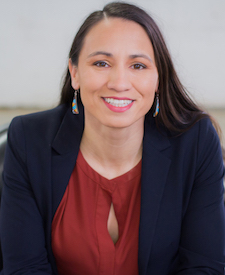
See how Sharice Davids actually votes — against your values.
DeepSyte scores Sharice Davids's record on the issues you care about — not party, not press releases. Take the 2-minute values quiz to see your personal alignment.
Sign in and take the values quiz to see how Sharice Davids's votes line up with your views.
Prediction track record
How often we called Sharice Davids's passage votes correctly, from their stated positions on each bill's tagged topics. Excludes “unclear” calls and abstentions.
5 predictions on record · none have been resolved by a passage vote yet. Check back as bills move.
Pending vote119-hr-8662
To provide assisted living assistance through Medicaid and low-income housing tax credit.
Based on 6 data points across public statements and recorded votes · AI analysis of public records
118-hr-5717·Notable gap
No Bailout for Sanctuary Cities Act
15/100
What they said
May 12, 2026
The release advocates for legislation requiring Department of Homeland Security personnel to receive standardized training on recognizing tribal identification documents and respecting tribal sovereignty during immigration enforcement, to prevent wrongful detention of Native Americans.
The statement advocates for DHS training to recognize tribal IDs and respect tribal sovereignty during immigration enforcement, preventing wrongful detention of Native Americans. The bill penalizes jurisdictions that restrict cooperation with immigration detainers and information-sharing on immigration status. These bills address opposing sides of immigration enforcement: the statement seeks to protect Native Americans from improper detention through officer training and tribal sovereignty respect; the bill seeks to compel jurisdictions to cooperate with federal immigration enforcement and share immigration status information. The rep's NO vote on the No Bailout for Sanctuary Cities Act aligns with the statement's protective stance toward Native Americans and skepticism of aggressive immigration enforcement mechanisms.
The release advocates for legislation requiring Department of Homeland Security personnel to receive standardized training on recognizing tribal identification documents and respecting tribal sovereignty during immigration enforcement, to prevent wrongful detention of Native Americans.
The statement advocates for DHS training to respect tribal sovereignty and prevent wrongful detention of Native Americans during immigration enforcement. The Schools Not Shelters Act prohibits using school facilities to shelter undocumented immigrants. These bills address fundamentally different questions—one concerns proper recognition of tribal citizenship and respectful treatment during enforcement; the other restricts where shelter can be provided. The rep's NO vote on a bill that restricts immigrant shelter access is consistent with the statement's focus on protecting Native Americans from wrongful detention and respecting their rights, as both reflect concern for vulnerable populations in immigration enforcement contexts.
The release advocates for legislation requiring Department of Homeland Security personnel to receive standardized training on recognizing tribal identification documents and respecting tribal sovereignty during immigration enforcement, to prevent wrongful detention of Native Americans.
The statement advocates for DHS training on tribal identification and sovereignty respect during immigration enforcement. The Secure the Border Act focuses on physical border barriers, asylum restrictions, and employment verification—substantively different immigration enforcement mechanisms. The rep's NO vote on a bill emphasizing border wall construction and asylum limits is generally consistent with a position prioritizing procedural fairness and tribal sovereignty protections over enforcement-first approaches, though the bill does not directly address the tribal ID training question the statement raises.
The release advocates for legislation requiring Department of Homeland Security personnel to receive standardized training on recognizing tribal identification documents and respecting tribal sovereignty during immigration enforcement, to prevent wrongful detention of Native Americans.
The statement advocates for DHS training to recognize tribal IDs and prevent wrongful detention of Native Americans during immigration enforcement. The bill makes Social Security and identification document fraud grounds for deportation. These address opposite sides of the same enforcement context: the statement seeks to protect Native Americans from erroneous detention by improving officer training on valid tribal documentation; the bill expands deportation grounds for document fraud. A yes vote on legislation that broadens deportation authority for document-related offenses is inconsistent with a statement focused on preventing wrongful detention and protecting tribal sovereignty in immigration enforcement.
The release advocates for legislation requiring Department of Homeland Security personnel to receive standardized training on recognizing tribal identification documents and respecting tribal sovereignty during immigration enforcement, to prevent wrongful detention of Native Americans.
The statement advocates for DHS training on tribal identification and respect for tribal sovereignty to prevent wrongful detention of Native Americans. The Laken Riley Act mandates detention of non-U.S. nationals arrested for certain property crimes and authorizes state lawsuits against the federal government over immigration enforcement decisions. These bills address opposite directions on immigration enforcement: the statement supports safeguards and training to prevent improper detention; the Laken Riley Act expands mandatory detention and reduces federal discretion. The rep's yes vote on the Laken Riley Act directly contradicts the position articulated in the statement about preventing wrongful detention and respecting tribal sovereignty.
Transnational Criminal Organization Illicit Spotter Prevention and Elimination Act
25/100
What they said
May 12, 2026
The release advocates for legislation requiring Department of Homeland Security personnel to receive standardized training on recognizing tribal identification documents and respecting tribal sovereignty during immigration enforcement, to prevent wrongful detention of Native Americans.
The statement advocates for DHS training on tribal identification and respect for tribal sovereignty during immigration enforcement to prevent wrongful detention of Native Americans. The bill criminalizes conduct that interferes with border control enforcement, including transmitting law enforcement location information and damaging border devices, with no provisions addressing tribal identification, tribal sovereignty, or protections against wrongful detention. The rep voted no on a bill that strengthens immigration enforcement penalties while supporting legislation focused on protecting Native Americans from enforcement overreach—a direct contradiction on the underlying approach to immigration enforcement.
Pairs with ambiguous language and high uncertainty are withheld until more data is available. Procedural, cloture, and amendment votes are excluded — they don't cleanly signal substantive support or opposition.
Pro analysis
AI rep analysis — Pro
Get an AI-narrated read on Sharice Davids's full voting record against your stated values — aligned themes, conflicts, notable votes, and what to watch for.
We haven't extracted campaign positions for Sharice Davids yet. Once their campaign website or position pages are processed, this card will track what they said vs how they voted.
Crossing the aisle
Passage votes where Sharice Davids broke ranks with ≥75% of Democrats. Threshold catches substantively partisan splits; unanimous-ish or close votes are excluded.
WATCH: Davids Urges Colleagues to Join Bipartisan Movement to Lower Gas Prices, Support Farmers
Position: Representative Davids advocates for year-round sales of E15 ethanol fuel to reduce gas prices, support farmers, and decrease reliance on foreign oil. She criticizes the House leadership's decision to create a task force instead of passing bipartisan legislation and continues to push for inclusion of year-round E15 sales in the Farm Bill.
Today, on the House floor, Representative Sharice Davids urged her colleagues to support year-round sales of E15 to help lower gas prices and strengthen American agriculture. E15 is a lower-cost fuel made from domestically grown crops that can help reduce what families pay at the pump, support Kansas farmers with a more stable market, and strengthen U.S. energy security by reducing reliance on foreign oil.
WATCH: Davids urges the passage of year-round E15 during a speech on the U.S. House floor
Earlier this year, House leadership failed to pass a Davids-supported bipartisan effort to allow year-round sales of E15. In its place, they created a federal task force to study the issue, which many farm groups and biofuel advocates found inadequate. Davids agreed and continues to push for year-round sales, which would be accomplished through this bill expected to be included in the Farm Bill.
Rising fuel costs underscore the urgency of expanding access to lower-cost alternatives like E15. Since the outbreak of the Iran conflict, global oil prices have surged sharply, exceeding $100 per barrel. U.S. gasoline prices have followed, jumping from under $3.00 per gallon before the conflict to mor than $4.00 in recent weeks, with analysts warning prices could climb even higher if instability continues.
Previously, Davids has taken multiple actions to lower gas prices for Kansans by:
Securing an emergency waiver to allow the sale of E15 during the past four summers and 2026.
Voting for the Year-Round Fuel Choice Act, which allows retailers the ability to sell higher ethanol-blended fuels year-round.
Visiting East Kansas Agri-Energy (EKAE), a Garnett-based renewable ethanol producer, as part of her Farm Bill listening tour.
EKAE has around 40 full-time employees and relies heavily on Kansas corn producers to supply the crops needed to make the biofuel.
Helping to pass legislation that promotes sustainable aviation fuel, a liquid fuel that achieves significant emissions reductions compared to fossil-based jet fuel.
Supporting legislation that expands biofuels infrastructure, opening up new market opportunities for sustainable fuel sources and lowering energy costs for Kansas families.
Pushing the President to suspend the federal gas tax, providing immediate relief to Kansans at the gas pump.
Read Davids’ full speech here.
Issues:AgricultureEnergy & EnvironmentJobs, Economy & Small Businesses
Davids, Bacon, Leger Fernández, Luján Lead Bipartisan Bill to Prevent Wrongful Detention of Native Americans During ICE Enforcement
Position: The release advocates for legislation requiring Department of Homeland Security personnel to receive standardized training on recognizing tribal identification documents and respecting tribal sovereignty during immigration enforcement, to prevent wrongful detention of Native Americans.
Today, Representatives Sharice Davids (D-KS-03), Don Bacon (R-NE-02), and Teresa Leger Fernández (D-NM-03) and Senator Ben Ray Luján (D-NM) introduced the bipartisanRespect Tribal IDs Act to improve how Department of Homeland Security (DHS) personnel recognize and interact with tribal identification documents during immigration enforcement. The legislation comes amid growing reports of Native Americans being questioned, delayed, or detained after federal officers failed to recognize valid tribal IDs and documentation as proof of citizenship.
“Tribal sovereignty is a legal and constitutional recognition of Tribal Nations and their citizens, and the federal government has a responsibility to respect that,” said Davids. “But lately, we’ve seen troubling reports of Native Americans being questioned or detained because federal officers lacked the training needed to recognize tribal documentation or understand Tribal Nation citizenship. This bipartisan bill is about preventing those failures, improving training and accountability, and making sure all people are treated with the dignity and respect they deserve.”
The Respect Tribal IDs Act would require DHS, in coordination with the Bureau of Indian Affairs and Tribal Nations, to develop standardized training for officers and employees involved in immigration enforcement. The training would include how to identify tribal documents, when tribal IDs qualify as proof of U.S. citizenship, proper protocols for interacting with enrolled tribal members, and the federal government’s trust responsibility to Tribal Nations.
The bill also requires DHS to create region-specific guidance and reference materials for officers, including examples of tribal IDs used by federally recognized tribes in areas where agents operate. Officers would be required to complete the training annually and whenever they are reassigned to a new region.
“The Respect Tribal IDs Act is a commonsense bill to ensure DHS personnel are properly trained to recognize Tribal IDs and work respectfully with Tribal communities,” said Representative Don Bacon (R-NE-02). “Federal agencies have a responsibility to protect and support Tribal citizens, and this legislation helps ensure they do that.”
“We’ve seen Trump’s Department of Homeland Security violate the rights of the first Americans countless times. Indigenous people in New Mexico and across the country have been unfairly questioned, harassed, and detained. This bill will require that DHS officers be trained to recognize Tribal IDs and prevent wrongful detentions,” said Representative Teresa Leger Fernández (D-NM-03), Ranking Member of the Subcommittee on Indian and Insular Affairs. “All law enforcement officials must respect tribal governments and the documents they provide their citizens. ICE and CBP agents must follow the law and respect tribal sovereignty.”
“In New Mexico and across the country, our Tribal brothers and sisters deserve to be treated with dignity and respect,” said Senator Ben Ray Luján (D-NM), member of the Senate Committee on Indian Affairs. “Under the Trump Administration, we’ve seen disturbing incidents where Tribal members were stopped, questioned, and harassed by ICE officers simply because of their appearance or because officers failed to recognize their Tribal IDs. That is unacceptable and deeply wrong. To address these failures, my legislation would establish clear standards and ensure DHS officers are properly trained to recognize and accept Tribal IDs. No one should have to fear being harassed because of a failure in training or accountability.”
The legislation follows multiple high-profile incidents and reports involving Native Americans whose tribal documentation was reportedly rejected or questioned during federal enforcement encounters. Tribal leaders and advocates have raised concerns that inconsistent training and lack of familiarity with tribal IDs have contributed to wrongful stops and confusion involving U.S. citizens, particularly in border states and regions with large Native populations. The legislation seeks to establish clearer standards and prevent future incidents by ensuring federal personnel are properly trained before conducting enforcement activities.
“The National Congress of American Indians supports this legislation to ensure that federal agents within the U.S. Department of Homeland Security are properly trained to recognize and respect Tribal identification documents,” said Larry Wright, Executive Director, National Congress of American Indians (NCAI). “Too often, the lack of consistent training has led to confusion, delays, and the improper treatment of Tribal citizens. By requiring comprehensive training on Tribal IDs, this bill affirms the validity of Tribal governments and strengthens the federal trust responsibility. NCAI urges its passage to promote respectful interactions, enhance security, and uphold the rights of Tribal citizens.”
“We’ve seen federal immigration agents reject valid Tribal IDs and question the citizenship of Native people — something that should never happen,” said John E. Echohawk, Executive Director, Native American Rights Fund. “Tribal IDs are official documents issued by sovereign Tribal Nations and must be recognized as such. The Respect Tribal IDs Act provides a common-sense, bipartisan fix by ensuring agents are properly trained to identify and accept these documents and understand the federal trust responsibility. We strongly support Sharice Davids’ leadership on this issue, alongside the National Congress of American Indians. This bill will help prevent unlawful detentions and protect Native citizens.”
Davids is a member of the Ho-Chunk Nation of Wisconsin and one of the first two Native women ever elected to Congress. As co-chair of the Congressional Native American Caucus, she is dedicated to strengthening Tribal sovereignty, improving the federal government’s relationship with Tribal Nations, and advancing policies that support Native communities across the country.
Davids Celebrates Major Expansion of Aviation Communication Systems Manufacturing in Kansas, Supporting 200 Jobs
OLATHE, KS — Today, Representative Sharice Davids participated in a “Sharice’s Shift” at Indra Group USA’s new manufacturing hub in Olathe, where she helped assemble one of their first NextComm radios, communication systems used between pilots and air traffic controllers. She was joined by Kansas Deputy Secretary of Business Development Joshua Jefferson as they highlighted the company’s expanded investment in Kansas manufacturing, innovation, and workforce.
“Kansas has always been a leader in aerospace and advanced manufacturing, and that legacy comes with real responsibility,” said Davids. “After the recent plane collision that took Kansans’ lives, it’s impossible to ignore what happens when communication systems fail in the air. Pilots and controllers need tools they can rely on every second to keep people safe while in the sky. I’m immensely proud to see those systems being built right here in Kansas, creating good-paying jobs while making aviation safer where it matters most.”
Indra Group USA’s new 118,000-square-foot facility at the Great Plains Commerce Center represents a $50 million investment in Kansas for advanced manufacturing of aviation communication, navigation, and surveillance systems. The expansion is expected to create more than 200 high-quality jobs over the next three years, tripling the company’s local workforce and complementing its existing 40,000-square-foot facility in Overland Park.
The Olathe hub will produce next-generation air traffic surveillance radars for the Federal Aviation Administration, along with more than 20,000 NextComm radios and portable Tactical Air Navigation (MP-TACAN) systems for the U.S. Air Force, supporting both aviation safety and national security. The NextComm radios enable clear, secure communication between pilots and air traffic controllers to help guide aircraft safely in the air and on the ground.
In January 2025, Flight 5342 departed Wichita, KS, bound for Washington, D.C. As the flight approached its destination, it collided midair with a military training helicopter, tragically killing the two pilots, two flight attendants, and 60 passengers on the airplane, along with all three crew members aboard the helicopter. Aviation safety experts found that communication missteps played a role in this tragedy.
"Our new Center of Excellence is a massive economic driver for the region, anchored by a $50 million investment,” said Bill Colligan, CEO, Indra Air Traffic. “In the upcoming years we will triple our local workforce by creating more than 200 new, high-quality jobs right here in Kansas. Rep. Davids' unwavering support of the NEXCOM radio replacement program has been instrumental in ensuring that a significant portion of the $12.5 B in funds allocated by Congress towards the Brand New Air Traffic Control System are deployed to create jobs in the third district. We are relying on this exceptional local talent to operate advanced manufacturing processes, build critical communication, navigation, and surveillance systems, and ultimately modernize U.S. airspace infrastructure."
“Kansas has long been a leader in aviation, and Indra’s expansion in Olathe further strengthens our position as a hub for aerospace innovation and advanced manufacturing," said Joshua Jefferson, Deputy Secretary of Business Development, Kansas Department of Commerce. "This investment means high-quality jobs for Kansans, but it also means Kansas workers will help modernize critical air traffic infrastructure that supports the safety and efficiency of America’s skies. We’re proud Indra chose Kansas for its next chapter.”
In April 2026, Indra was also awarded a $75.9 million contract by the Washington Metropolitan Area Transit Authority (WMATA) for its Fare Vending Machine Replacement Project, with machines to be built in Kansas. Davids wrote a letter of support for the company’s application, underscoring her commitment to expanding local manufacturing and good-paying jobs at home.
Davids’ office has also provided direct casework support to Indra, helping expedite critical document authentication through the U.S. Department of State. That assistance enabled the company to secure payment tied to a $1.8 million international project after delays and processing issues within the Office of Authentications.
Indra’s new expansion also represents a broader long-term commitment in Kansas, with a potential contract value of up to $244.3 million and plans to manufacture as many as 46,000 radio units if all options are exercised, supported by a 10-year warranty that underscores confidence in both the technology and the Kansas workforce. The NextComm radios are based on Indra’s globally used Park Air technology and now being produced in Kansas through this facility’s production line.
Issues:Jobs, Economy & Small BusinessesTransportation & Infrastructure
Davids Announces Funding to Improve Healthcare Access in Kansas’ Third District
Position: Representative Davids supports expanding Medicaid in Kansas and opposes recent Medicaid cuts. She advocates for protecting and expanding Medicaid to make healthcare more affordable for Kansas families.
Today, Representative Sharice Davids announced that the U.S. Department of Health and Human Services (HHS) has awarded $2.6 million to Health Partnership Clinic to expand access to primary care, dental care, and behavioral health services in the greater Kansas City area. The clinic, whose leaders warned about the impact of recent Medicaid cuts, will use the grant to keep locations staffed, sustain patient services, and maintain affordable care for underserved families in Kansas’ Third District.
“Everyone should have access to quality and affordable healthcare, but many Kansans struggle to get the care they need due to skyrocketing costs, especially after last year’s extreme cuts to Medicaid ripped healthcare away from thousands of Kansans,” said Davids. “Health centers like this play a vital role in providing healthcare services to Kansans, no matter their income level or background. I’ll continue supporting all health centers in our community and working not just to protect, but also expand Medicaid to make healthcare more affordable for Kansas families.”
“We are grateful for the continuation of our funding,” said Amy Falk, CEO, Health Partnership Clinic. “This is instrumental in allowing us to continue our mission of providing access to quality care to the over 11,000 individuals we care for in Johnson, Miami, and Franklin counties.”
In 2024, Davids visited Health Partnership Clinic with Kansas Governor Laura Kelly to urge Medicaid expansion in Kansas. Last year, the clinic’s leadership also warned of the partisan Medicaid cuts, saying “these are not easy decisions.” That law, which includes the largest cuts to Medicaid in American history, will strip coverage from 92,937 Kansans, put six rural hospitals across Kansas at risk of closure, restrict reproductive health care, and increase Affordable Care Act premiums by $708 per year for Third District families.
Since coming to Congress, Davids has worked to make healthcare more affordable and accessible to all Kansans. She helped pass legislation that, for the first time ever, empowers Medicare to begin negotiating for lower prescription drug prices. The law also caps the cost of insulin at $35 for Medicare beneficiaries, and following Davids’ support for an extension of this cap to all insulin users, the top three insulin producers, who make up about 90 percent of the insulin market in the U.S., announced they'll cut or cap the price of insulin.
Health Partnership Clinic operates five clinics in the Kansas Third District, including in Olathe, Shawnee Mission, Merriam, Ottawa, and Paola, and has expanded its telemedicine program to reach wider audiences. They offer primary care, dental, and behavioral and mental health services, and have partnered with the Olathe and Shawnee Mission school districts to identify students who do not have a regular medical or dental provider.
Issues:Health Care
Davids Helps Pass Bipartisan Farm Bill to Deliver Stability for Kansas Farmers, Lower Costs for Families
Position: Representative Davids voted to pass a bipartisan Farm Bill to provide stability for Kansas farmers and lower costs for families. She supported an amendment to reverse SNAP cuts but it was not accepted.
WASHINGTON, D.C. — Today, Representative Sharice Davids voted to pass the Farm Bill, emphasizing the need to provide certainty for Kansas farmers and address rising costs for families after years of delayed action in Congress.
“Kansas farmers and families have been hit over and over again this past year — from unstable markets to rising input costs and the ripple effects of reckless tariffs,” said Davids. “What they need most right now is stability, not uncertainty. This bipartisan Farm Bill moves us toward more predictability for producers, lower costs for everyone, and a system that actually works for the people feeding and fueling this country. We still have work to do to ensure no family goes hungry, but this is a step toward giving farmers and families the certainty they deserve.”
Today’s Farm Bill:
Supports farmers’ bottom line: Expands access to farm loans, strengthens crop research, and invests in rural development
Cuts red tape and boosts innovation: Increases federal support for precision agriculture tools and modern farming practices
Protects food security: Adds cybersecurity safeguards for the agriculture and food supply chain
Grows rural economies: Supports new markets for American-grown renewable fuels
Lowers grocery prices: Strengthens the agricultural supply chain so farmers can produce food more efficiently, helping bring down grocery costs
Davids-Led Provisions:
Supports Kansas wheat farmers: Requires USDA study on winter wheat as a cover crop to reduce regulatory confusion and improve soil health
Fixes Tribal parity gap: Ensures Tribes can access USDA agricultural credit and support programs under the same terms as states
Last year’s partisan budget, which Davids voted against, took food off Kansans’ tables by cutting the Supplemental Nutrition Assistance Program (SNAP) to pay for tax breaks for billionaires. In Kansas’ Third District alone, 8,000 households could lose access to food assistance, and up to 27,000 grocery stores nationwide could close due to lost revenue. These cuts are also reducing farm income by more than $30 billion and threatening good-paying jobs. Davids supported an amendment to today’s Farm Bill that would reverse these reckless cuts, but it was not accepted by the Republican majority.
Davids previously went on a Farm Bill listening tour, where she visited a poultry and livestock operation in Anderson County, a co-op in Franklin County, a goat farm in Miami County, an organic vegetable farm in Johnson County, and an educational community farm in Wyandotte County. Davids also toured a Garnett-based renewable ethanol producer, participated in FFA activities at Spring Hill High School, served a school lunch at Black Bob Elementary in Olathe, spoke with industry leaders on financial support programs for farmers, toured a dairy farm in Garnett, and more.
Kansas families and farmers are feeling the impact of President Trump’s trade policies. The Budget Lab at Yale estimates the average American household will pay about $2,400 more per year due to tariffs. Davids raised these concerns during a U.S. House Agriculture Committee hearing on trade disruptions — concerns echoed by Kansas Farm Bureau President Joe Newland.
Last year, Davids also wrote to the President noting that while short-term support may be necessary, Kansas producers consistently prefer “trade, not aid.” Following continued pressure on farm economies, the President later announced a relief package for farmers affected by tariff-related economic hardship.
Issues:Agriculture
Reps. Davids, Goldman Introduce Bill to Protect Native American Culture Amid Administration’s Removal of Historical Content at National Parks
Position: Representatives Davids and Goldman introduced legislation to prevent the removal or alteration of historically accurate interpretive materials at National Park Service sites, particularly those related to Native American history, and to require consultation with Tribal Nations before changes to exhibits.
WASHINGTON, D.C. — Today, Representative Sharice Davids (KS-03), one of the first two Native American women ever elected to Congress, and Representative Dan Goldman (NY-10) introduced the Truth in National Parks Act, legislation aimed at stopping the Trump Administration’s ongoing efforts to erase and rewrite parts of Native American history at National Park Service (NPS) sites.
“Growing up, I learned from my family and my community how important it is to tell the truth about our ancestors — even when it’s hard,” said Davids. “What we’re seeing right now is a deliberate attempt to erase the experiences of Native communities and other marginalized groups from places that are supposed to educate and inform the public. That’s unacceptable. Our national parks should reflect the full story of who we are as a country, not a version edited to fit a political agenda. This bill is about protecting the integrity of those stories, honoring Tribal voices, and making sure future generations learn the truth.”
Recent actions at NPS sites across the country have raised concerns about the removal or alteration of interpretive materials related to Native American history, including exhibits addressing forced removal and the federal Indian boarding school system. In some cases, historically accurate displays have been taken down or edited without meaningful consultation with Tribal Nations, undermining longstanding government-to-government relationships and the NPS’s mission to preserve and interpret history for public benefit.
“The Trump Administration’s relentless whitewashing and rewriting of American history is a disgrace to this nation’s fundamental values. Each national park site represents the rich cultural and historic roots that shaped America,” said Representative Dan Goldman (NY-10). “This legislation will safeguard sites in NY-10, such as the African Burial Ground, the Stonewall National Monument, and Ellis Island, and reverse any attempts to erase history at National Park sites — including the recent effort to take down the Pride flag and erase Trans and Queer history at Stonewall. I refuse to allow any sitting president to have unilateral authority in dictating how these stories are told.”
The Truth in National Parks Act would:
Require that NPS interpretive and educational materials are historically and culturally accurate;
Prohibit the removal or alteration of accurate materials unless necessary to incorporate new, credible information;
Restore historically accurate materials removed or altered since January 20, 2025;
Require consultation with Tribal Nations and other relevant stakeholders before making changes to exhibits;
Direct a report on co-stewardship agreements between Indigenous communities and federal agencies to strengthen Tribal partnerships.
"Under these unprecedented times, when factual history and science in our parks are being called into question, we're grateful for Representative Davids' leadership that protects the integrity of the truthful and inclusive stories told within the National Park System," said Terrius Harris, Midwest Senior Program Manager, National Parks Conservation Association (NPCA). "This bill ensures that our Tribal partners, along with others, are consulted effectively and share the collective power of owning our American story. Our national parks are living classrooms where our shared history comes to life, helps inform our future, and inspires us to find the beauty in our country and each other."
"The National Congress of American Indians supports this legislation to ensure that National Park Service educational and interpretive materials are historically and culturally accurate and protected from inappropriate removal or alteration," said Larry Wright, Executive Director, National Congress of American Indians (NCAI). "The bill’s consultation requirements and focus on co-stewardship agreements reflect an important commitment to Tribal sovereignty and the inclusion of Indigenous perspectives. NCAI urges its swift passage to promote truth, accountability, and respectful representation across our national parks."
Earlier this month, Davids and her colleagues also questioned Department of the Interior leadership about the removal of culturally accurate information at NPS sites. The letter cited reports of edits and removals at parks in multiple states, including the removal of a Grand Canyon display detailing the forced removal of Native Americans and changes to exhibits at Little Bighorn Battlefield National Monument addressing the history of Indian boarding schools. The Members requested detailed information on how many exhibits have been altered, whether Tribal consultation occurred, and how these actions have impacted co-stewardship agreements.
Issues:Rights & Freedoms
Davids Delivers New Grant for Kansas Manufacturing After Administration Tried to Slash Support
Position: Representative Davids secured federal funding for Kansas manufacturing support and opposed the Trump Administration's attempt to cut the Manufacturing Extension Partnership program, voting to restore and protect MEP funding.
Today, Representative Sharice Davids announced that Kansas will receive a major boost in its manufacturing sector, with the U.S. Department of Commerce awarding Kansas Manufacturing Solutions (KMS) $2.2 million in renewed funding through the Manufacturing Extension Partnership (MEP) program. The new investment follows Davids’ vote to guarantee MEP funding after the Trump Administration attempted to cut it last year.
“Manufacturing is a cornerstone of Kansas’ economy, and strengthening it starts with supporting the workers and small businesses who make it possible,” said Davids. “Kansas Manufacturing Solutions has been a critical partner in helping local manufacturers modernize, expand, and stay competitive while creating good-paying jobs. That’s why I fought for this investment, which ensures KMS can keep helping Kansas manufacturing grow, strengthening our supply chains, and supporting American-made production right here at home.”
“On behalf of Kansas Manufacturing Solutions, we are grateful to Representative Sharice Davids for her continued support and for being a strong ally for Kansas manufacturers in Congress, as well as Senator Jerry Moran for his ongoing support of the Manufacturing Extension Partnership and the manufacturers who drive our state’s economy,” said Tiffany Stovall, CEO, KMS. “This funding ensures we can continue delivering the resources, expertise, and workforce initiatives Kansas manufacturers need to grow, compete, and strengthen our communities.”
Last year, the Trump Administration cut off MEP funding, forcing KMS to lay off nearly half its staff and putting local jobs and economic growth at risk. In response, Davids introduced the Defend American Manufacturing Act, legislation to restore and protect critical funding for MEP programs like KMS. Following Davids’ advocacy and bipartisan pressure from Congress, the National Institute of Standards and Technology (NIST) temporarily restored funding to the MEP program.
KMS has made a tremendous impact on the state’s economy, where 86 percent of yearly exports are manufactured goods. In 2024, KMS created or retained 2,339 jobs, spurred $122 million in new investment, saved local businesses $14.3 million, and generated $328 million in sales. In Kansas’ Third District alone, KMS assisted 552 manufacturers and more than 30,000 manufacturing employees in 2024.
For nearly 40 years, the MEP program has helped small and mid-sized manufacturers improve efficiency, strengthen supply chains, and expand into new markets. Through 51 public-private centers operating in every state and Puerto Rico, MEPs provide services such as workforce training, cybersecurity assistance, and market expansion support. In 2024 alone, the program helped create or save more than 108,000 manufacturing jobs nationwide, generated $15 billion in sales, and saved businesses $2.6 billion.
Federal funding for this grant was secured through an FY2026 appropriations package, which Davids voted for earlier this year. The law also incorporates exact language from her Defend American Manufacturing Act, ensuring continued funding for the MEP program in the coming year.
Issues:Jobs, Economy & Small Businesses
After Kansas Tornadoes, Davids Demands Answers on Weather Service Failures Impacting Public Safety
Today, Representative Sharice Davids demanded answers from the National Weather Service (NWS) following tornadoes that struck Kansas’ Third District. Davids raised serious concerns about potential breakdowns in forecasting and warning systems that may have put Kansans at risk during last week’s storms. Despite no reported fatalities, she emphasized that gaps in preparedness and response could lead to devastating consequences in the future.
“The fact that Kansans avoided catastrophic loss in this instance does not excuse these breakdowns — it underscores how close we came, and what could happen if these failures continue,” wrote Davids. “These irresponsible decisions at the NWS have direct, real-world consequences for the safety of communities across Kansas and the country. Kansans should not have to wonder whether the systems designed to protect them are fully operational when severe weather strikes.”
Davids’ demand follows reporting that multiple NWS offices in the region may not have conducted standard morning weather balloon launches on the day of the storms — a key tool used to assess atmospheric conditions and inform severe weather forecasts. Additionally, the Storm Prediction Center did not identify a tornado threat in a timely manner, and tornado watches were issued later than is typical.
Davids underscored that missing data and staffing shortages can directly impact forecasting accuracy, reducing warning times and increasing risk to communities in the path of severe weather.
This is not the first time Davids has raised concerns about staffing and operational capacity at the NWS. Last year, she pressed the administration for answers on workforce shortages and the agency’s ability to maintain around-the-clock operations. After receiving no response for nearly ten months, Davids is now renewing her call for accountability following the recent storms.
In her letter, Davids requested a detailed response within 30 days on:
Whether weather balloon launches were missing and why.
Whether any missed data contributed to delays in issuing tornado watches.
Current staffing vacancies across key NWS offices in the region.
Overall staffing levels and hiring needs across the National Weather Service.
And more.
A full copy of Davids’ letter can be found here or below:
Dear Secretary Lutnick, Administrator Jacobs, and Director Graham,
I write following recent severe weather and EF-2 tornadoes with peak winds of 125 miles per hour that hit my home community, Kansas’ Third District. While I am grateful there were no fatalities, that outcome should not obscure a more serious reality: Kansans were put at risk by failures in forecasting and warning systems that are meant to protect them.
In a state like Kansas, timely and accurate weather data is not optional — it is lifesaving.
Nearly a year ago, I raised concerns about staffing shortages and operational disruptions at the National Weather Service (NWS) following actions taken by this administration. I asked how you would maintain 24/7 operations, ensure consistent weather balloon launches, and preserve forecasting accuracy. After ten months, my office has received no response. Now, we are seeing the consequences.
Reporting indicates that on the morning of these storms, multiple NWS offices in the region did not conduct standard 7:00 a.m. weather balloon launches — a critical input for forecasting severe weather. Just hours before tornadoes touched down, the Storm Prediction Center identified no tornado threat in northeast Kansas. And the tornado watch for impacted areas was issued far later than normal — within an hour of touchdown.
Weather balloon data is essential to understanding atmospheric conditions in real time. When that data is missing — whether due to staffing shortages or operational decisions — forecasting accuracy suffers. When forecasting accuracy suffers, warning times shrink. And when warning times shrink, families are put in danger.
The fact that Kansans avoided catastrophic loss in this instance does not excuse these breakdowns — it underscores how close we came, and what could happen if these failures continue.
These irresponsible decisions at the NWS have direct, real-world consequences for the safety of communities across Kansas and the country. Kansans should not have to wonder whether the systems designed to protect them are fully operational when severe weather strikes.
My constituents deserve clear answers and immediate action to ensure this does not happen again. Therefore, I respectfully ask you to provide answers to the following questions within 30 days of receipt:
Did stations in and around Kansas not launch morning weather balloons on April 13, 2026? If so, what was the reason for these missing launches?
Did this lack of weather balloon launches contribute to a delayed tornado watch in northeast Kansas? If not, what do you attribute this delay to?
Is the NWS implementing permanent changes to twice-a-day weather balloon launches? If so, how are you justifying this change in schedule?
How often does the NWS launch supplemental midday weather balloons? Does the NWS have the resources and partnerships with relevant university programs to increase these supplemental launches?
What current staff vacancies exist at the following NWS Weather Forecast Offices: Pleasant Hill, Topeka, Wichita, Springfield, Dodge City, Goodland, and Hastings?
What is the current staffing level of the overall NWS? How many meteorology and forecasting positions is the Service looking to fill? How does the number of meteorologists and forecasters at the NWS compare today to April 20, 2024?
Kansans rely on the National Weather Service to provide timely, accurate warnings that save lives. The gaps we saw in this storm cannot become the new normal. I look forward to your prompt response.
Sincerely,
Davids, Sorensen Introduce Bipartisan Homegrown Fertilizer Act to Lower Costs for Farmers
Position: The representatives support legislation to expand domestic fertilizer production and storage through USDA grants and low-interest loans, aiming to lower input costs for farmers and reduce reliance on global supply chains.
WASHINGTON, DC – Rep. Sharice Davids (KS-03), along with Reps. Eric Sorensen (IL-17), Ashley Hinson (IA-02), Ranking Member Angie Craig (MN-02), Tracy Mann (KS-01), Nikki Budzinski (IL-13), and Mike Bost (IL-12) introduced the bipartisan Homegrown Fertilizer Act to boost domestic fertilizer production and storage, lower costs for farmers, and reduce reliance on unstable global supply chains.
The bill would provide grants and low-interest loans through the U.S. Department of Agriculture (USDA) to expand fertilizer production and improve storage capacity here at home—helping make sure farmers have reliable, affordable access to the inputs they need.
This legislation is led in the Senate by U.S. Senators Amy Klobuchar (D-MN) and Roger Marshall (R-KS).
“Farmers in Kansas and across the country are getting squeezed by high input costs, and fertilizer is a big part of that. This new bill invests in more domestic manufacturing and storage, so producers aren’t at the mercy of supply disruptions caused by chaotic policy decisions. By boosting competition and supporting innovative, lower-cost alternatives, we can bring down fertilizer prices, help farmers keep their operations running strong, and ultimately lower grocery costs for families at the checkout line,” said Representative Davids.
“Our farmers are already dealing with tight margins and unpredictable markets—and global conflicts are only making things worse,” said Congressman Eric Sorensen. “When fuel and fertilizer prices spike, it hits our farmers first. This bill is about cutting through those challenges by investing in American production, lowering costs, and giving farmers more certainty so they can keep doing what they do best.”
“American farmers are struggling, and we should be using every option available to increase competition and grow our domestic supply of inputs like fertilizer. That’s why I’ve helped introduce this bipartisan bill that will help lower costs, shore up our supply chains, and break the stranglehold a handful of companies have over the fertilizer market. I will not stop fighting until Iowa farmers get the relief and transparency they deserve,” said Congresswoman Ashley Hinson.
“Trump’s war with Iran has thrown fertilizer markets and supply chains into disarray at a time when farmers are already paying higher prices due to inflationary tariffs. I am proud to support the Homegrown Fertilizer Act to support a steady, reliable supply of the fertilizer American farmers need to feed our communities and the world,” said Congresswoman Angie Craig.
"Right now, farmers in Illinois are waking up wondering how they’ll keep up with rapidly rising fertilizer costs. It’s time to put control back where it belongs — in their hands and here at home. This legislation will strengthen domestic fertilizer production, bring down costs, and ensure our farmers’ success isn’t tied to forces beyond our borders," said Congresswoman Nikki Budzinski.
"I’m proud to co-lead the Homegrown Fertilizer Act, which cuts red tape for small and mid-sized fertilizer producers and expands USDA access to loans and grants to grow domestic production and storage. This means more competition, more supply, and more fertilizer made here in the United States for our farmers," said Congressman Mike Bost.
Issues:Agriculture
Reps. Davids, Smucker Introduce Bipartisan Bill to Strengthen Nutrition-Based Disease Prevention
Position: Representatives Davids and Smucker introduced bipartisan legislation directing the Center for Medicare and Medicaid Innovation to test a bundled payment model integrating nutrition-based interventions and produce prescriptions into chronic disease care, with the goal of improving health outcomes and reducing healthcare costs.
Representatives Sharice Davids (D-KS-03) and Lloyd Smucker (R-PA-11) introduced the bipartisan Accountable Produce is Medicine Act, legislation aimed at modernizing the U.S. health care system by incorporating proven nutrition-based interventions to prevent and manage chronic disease.
“Kansas families know that good health doesn’t start in a doctor’s office — it starts at home, with what’s on the table,” said Davids.“In too many rural and underserved communities, people are managing serious conditions like diabetes and heart disease without reliable access to healthy food. This bipartisan bill I'm leading with Representative Lloyd Smucker helps change that by bringing together doctors, care teams, and local food systems so patients can get the nutrition they need to stay healthier and out of the hospital.”
This legislation would direct the Center for Medicare and Medicaid Innovation (CMMI) to test a new bundled payment model that integrates “produce prescriptions” interventions into care for patients with chronic diseases. Through this “food is medicine” approach, eligible individuals would gain access to nutrition-focused support, including healthy foods, care coordination, and monitoring services, with the goal of improving health outcomes and reducing overall health care costs.
More than 75 percent of adults in the United States live with at least one chronic disease, many of which are diet-related. Research shows that preventive, nutrition-based interventions can play a critical role in addressing this growing epidemic.
“Diet-related chronic disease is one of our nation’s most pressing health challenges and a main driver of rising health care costs,” said Representative Lloyd Smucker (R-PA-11). “Our system can and must do more to prevent disease—not just treat it. I’m grateful for Rep. Davids’ partnership to advance preventive health measures that will improve the lives of Americans, including proven food is medicine interventions, and I look forward to working closely with Secretary Kennedy to make it possible.”
Image
Source: GDELT 2.0 GKG, filtered to a curated list of national outlets. Inclusion is not endorsement; opinion pieces and reported news are mixed.
Recent stock activity
Periodic transaction reports filed under the STOCK Act — disclosed by the rep, sourced from public filings.
No disclosed trades on record.
Source: open-data mirrors of the Senate eFD and House Clerk financial-disclosure systems. Disclosure within 30 days of trade is required by law (45 for spouse/dependent trades).
Top PAC donors · 2026 cycle
Political action committees that gave the most to this rep's principal campaign committee this cycle. PAC giving is direct organizational support — industry, ideological, or leadership.
1.ELECT DEMOCRATIC WOMEN 2022 - UNITEMIZEDIdeological2 contributionsDemocratic women's advocacy PAC — supports female Democratic candidates and causes aligned with women's representation and rights.AI$26,061
2.AMERICAN CRYSTAL SUGAR COMPANY POLITICAL ACTION COMMITTEEAgriculture4 contributionsAgricultural processing PAC for American Crystal Sugar — backs candidates supporting farm subsidies, sugar price supports, and agricultural trade policies.AI$20,000
3.UNITED STEELWORKERS POLITICAL ACTION FUNDLabor3 contributionsTrade-union PAC for the United Steelworkers — backs candidates supporting union organizing, prevailing wages, workplace safety, and manufacturing job protection.AI$15,000
4.STAND UP FOR DEMOCRACY JFAIdeological1 contributionIdeological PAC — supports candidates and causes aligned with democratic governance and civic participation values.AI$14,750
5.NEWDEM ACTION FUND FOR THE FUTURE1 contribution$11,900
6.EDW HOLD THE HOUSE FUND - UNITEMIZEDLeadership2 contributionsMember-of-Congress leadership PAC — directs contributions to allied candidates, likely focused on House races.AI$11,344
8.PAC TO THE FUTURELeadership2 contributionsMember-of-Congress leadership PAC — specific affiliations and policy positions not inferable from the name.AI · low$10,000
9.NEA FUND FOR CHILDREN AND PUBLIC EDUCATIONLabor2 contributionsPAC of the National Education Association, the largest U.S. teachers' union. Backs candidates supporting public education funding, teacher compensation, and collective bargaining rights.AI$10,000
10.NATIONAL ASSOCIATION OF REALTORS POLITICAL ACTION COMMITTEEReal Estate2 contributionsTrade association PAC for U.S. real estate agents and brokers — backs candidates supporting property-rights protections, mortgage-lending access, and tax incentives for homeownership.AI$10,000
Source: OpenFEC (api.open.fec.gov) Schedule A receipts where contributor type is “committee.” Aggregated by contributing committee. Self-transfers from joint-fundraising / victory committees are excluded.
Top individual contributors · 2026 cycle
Itemized individual contributions over $200 to this rep's campaign committee, aggregated by donor employer. PAC giving is shown above; this section is people, not organizations.
1.ARNOLD VENTURES LLC$7,000
2.THE RING GROUP$7,000
3.SEAN N. PARKER FOUNDATION$7,000
4.DE SHAW & CO LP$7,000
5.Q PRIME INC$7,000
6.PIVOTAL VENTURES LLC$7,000
7.MASS GENERAL HOSPITAL$7,000
8.CROSS LAW FIRM LLC$7,000
9.YMCA OF GREATER KANSAS CITY$7,000
10.GEORGE K BAUM HOLDINGS INC$7,000
Source: OpenFEC Schedule A receipts where contributor type is “individual,” aggregated by the donor's self-reported employer. This is a geographic / industry correlation, not a corporate endorsement.