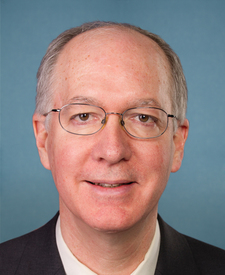
See how Bill Foster actually votes — against your values.
DeepSyte scores Bill Foster's record on the issues you care about — not party, not press releases. Take the 2-minute values quiz to see your personal alignment.
Sign in and take the values quiz to see how Bill Foster's votes line up with your views.
Prediction track record
How often we called Bill Foster's passage votes correctly, from their stated positions on each bill's tagged topics. Excludes “unclear” calls and abstentions.
A joint resolution to direct the removal of United States Armed Forces from hostilities within or against the Islamic Republic of Iran that have not been authorized by Congress.
To prohibit the disclosure of records by the Secretary of Housing and Urban Development of individuals for the purposes of immigration enforcement, and for other purposes.
A joint resolution to direct the removal of United States Armed Forces from hostilities within or against the Islamic Republic of Iran that have not been authorized by Congress.
Based on 10 data points across public statements and recorded votes · AI analysis of public records
118-hr-4367·Consistent
Department of Homeland Security Appropriations Act, 2024
92/100
What they said
Mar 5, 2026
Congressman Foster opposes DHS funding that does not include ICE reforms and supports Congressional authorization requirements for military action, arguing that the President lacks constitutional authority to conduct sustained military operations in Iran without explicit Congressional approval.
Congressman Foster's statement explicitly opposes DHS funding that lacks ICE reforms, and he voted against passage of the DHS Appropriations Act. His stated position—that he will not support DHS funding without serious ICE reforms—directly aligns with his no vote on this bill, which provides appropriations for ICE without the reforms he demanded. The consistency is strong on the primary substantive question of conditioning DHS/ICE funding on reform requirements.
Department of Homeland Security Appropriations Act, 2025
92/100
What they said
Mar 5, 2026
Congressman Foster opposes DHS funding that does not include ICE reforms and supports Congressional authorization requirements for military action, arguing that the President lacks constitutional authority to conduct sustained military operations in Iran without explicit Congressional approval.
Congressman Foster's statement explicitly opposes DHS funding that lacks ICE reforms, stating he 'voted against this funding bill, and will continue to oppose any legislation that funds ICE without including serious reforms.' His recorded 'no' vote on passage of the DHS Appropriations Act is directly consistent with this stated position. The bill provides appropriations for ICE without the reforms Foster demanded, making his opposition vote align clearly with his public statement.
Congressman Foster opposes DHS funding that does not include ICE reforms and supports Congressional authorization requirements for military action, arguing that the President lacks constitutional authority to conduct sustained military operations in Iran without explicit Congressional approval.
Foster's statement opposes DHS funding without ICE reforms and emphasizes Congressional authority over military action. The Secure the Border Act focuses on border wall construction and asylum restrictions without addressing ICE accountability measures Foster demanded. His NO vote aligns with his stated opposition to DHS funding that lacks ICE reforms, though the bill's primary focus (border barriers, asylum limits) differs from the specific ICE reform provisions he highlighted. The consistency is strong on the directional question—opposing DHS legislation without his preferred reforms—but the bill's actual content (border construction, not ICE operations) creates some granularity mismatch.
Congressman Foster opposes DHS funding that does not include ICE reforms and supports Congressional authorization requirements for military action, arguing that the President lacks constitutional authority to conduct sustained military operations in Iran without explicit Congressional approval.
Foster's statement opposes DHS funding without ICE reforms and emphasizes accountability for immigration enforcement practices. The bill penalizes sanctuary jurisdictions by restricting federal funds, effectively pressuring cooperation with ICE detainers and information-sharing—a hardline immigration enforcement approach. Foster's NO vote aligns with his stated opposition to DHS funding that lacks ICE reform safeguards; he would likely view this bill as strengthening ICE's hand without the 'commonsense guardrails' and accountability measures he advocates. The statement and vote point in the same direction on immigration enforcement policy, though the bill addresses a specific mechanism (sanctuary city funding restrictions) rather than the internal ICE reforms Foster emphasizes.
Detain and Deport Illegal Aliens Who Assault Cops Act
78/100
What they said
Mar 5, 2026
Congressman Foster opposes DHS funding that does not include ICE reforms and supports Congressional authorization requirements for military action, arguing that the President lacks constitutional authority to conduct sustained military operations in Iran without explicit Congressional approval.
Foster's statement opposes DHS funding without ICE reforms and emphasizes the need for accountability and guardrails in immigration enforcement. The bill mandates DHS custody and deportation for non-citizens who assault law enforcement—a narrow, enforcement-focused provision that does not address the broader ICE reform standards Foster advocated for (described as 'commonsense guardrails' and 'standards most law enforcement already follow'). His no vote is consistent with his stated opposition to DHS-related legislation lacking the reforms he prioritizes, though the bill's specific focus on assault-related deportations represents a different enforcement mechanism than the systemic ICE reforms his statement emphasizes.
Congressman Foster opposes DHS funding that does not include ICE reforms and supports Congressional authorization requirements for military action, arguing that the President lacks constitutional authority to conduct sustained military operations in Iran without explicit Congressional approval.
Foster's statement opposes DHS funding without ICE reforms and emphasizes accountability for immigration enforcement practices. The bill he voted yes on is a procedural vote on the No Bailout for Sanctuary Cities Act, which restricts federal funds to jurisdictions that limit cooperation with immigration enforcement and detainers—a measure that would expand ICE's enforcement authority rather than reform it. His stated position against funding ICE without reforms is directionally opposite to supporting a procedural motion on a bill that penalizes jurisdictions for limiting ICE cooperation. The procedural nature of the vote introduces some ambiguity about his intent, but the substantive direction is inconsistent with his stated opposition to unfettered ICE funding.
Continuing Appropriations and Border Security Enhancement Act, 2024
75/100
What they said
Mar 5, 2026
Congressman Foster opposes DHS funding that does not include ICE reforms and supports Congressional authorization requirements for military action, arguing that the President lacks constitutional authority to conduct sustained military operations in Iran without explicit Congressional approval.
Foster's statement opposes DHS funding without ICE reforms and supports Congressional war powers constraints. The bill is a continuing resolution that funds DHS and includes immigration-related provisions, though the summary does not specify whether it contains the ICE reforms Foster demands. Foster voted no on passage, consistent with his stated opposition to DHS funding lacking ICE reforms. However, the bill's specific immigration provisions and whether they constitute meaningful reform are unclear from the summary, creating some ambiguity about whether his no vote reflects opposition to the bill's immigration content or other factors (e.g., the CR's across-the-board funding reductions). The war powers statement is separate from this appropriations bill and does not directly bear on the vote.
Congress must authorize any sustained military conflict with Iran through a War Powers resolution. Military strikes alone cannot address Iran's nuclear threat; the administration must pursue verified international nuclear inspections, accounting of enriched uranium stockpiles, and sustained diplomacy to prevent escalation.
Foster's statement emphasizes the need for Congressional authorization via War Powers resolution before sustained military conflict with Iran, and calls for diplomacy and international nuclear inspections rather than military strikes alone. His yes vote on the 21st Century Peace through Strength Act is generally consistent with this position insofar as the bill imposes sanctions on Iranian missile programs and petroleum exports—economic and diplomatic tools aligned with his stated preference for non-military pressure. However, the bill does not explicitly address Congressional war authorization or nuclear inspections, and Foster's statement focuses on preventing escalation into broader conflict, while the sanctions provisions represent a hardline approach that could be seen as escalatory. The consistency is directional but incomplete.
Congressman Foster opposes DHS funding that does not include ICE reforms and supports Congressional authorization requirements for military action, arguing that the President lacks constitutional authority to conduct sustained military operations in Iran without explicit Congressional approval.
Both the statement and bill address immigration enforcement policy, but they target different specific questions. The statement opposes DHS/ICE funding absent comprehensive ICE reforms addressing accountability and standards. The POLICE Act creates a new deportability ground for assaulting law enforcement—a narrower enforcement mechanism that does not directly address the systemic ICE reforms Foster advocates for. Foster's NO vote is consistent with his stated opposition to immigration enforcement measures that lack broader accountability reforms, but the bill does not substantively engage the reform framework he describes. The direction of opposition aligns, but the bills address different policy levers within immigration enforcement.
Congressman Foster opposes DHS funding that does not include ICE reforms and supports Congressional authorization requirements for military action, arguing that the President lacks constitutional authority to conduct sustained military operations in Iran without explicit Congressional approval.
The statement and bill both touch immigration enforcement but address different specific questions. The statement opposes DHS/ICE funding absent reforms to ICE practices and accountability; the bill creates new criminal penalties for fleeing law enforcement near the border. The rep's NO vote is consistent with opposition to immigration enforcement measures, but the bill does not directly fund ICE or address the ICE reform standards the statement emphasizes. The vote direction aligns with the rep's stated skepticism of enforcement-focused immigration policy, but the bill's specific provision (criminal penalties for fleeing) is not the same question as ICE institutional reform.
Pairs with ambiguous language and high uncertainty are withheld until more data is available. Procedural, cloture, and amendment votes are excluded — they don't cleanly signal substantive support or opposition.
Pro analysis
AI rep analysis — Pro
Get an AI-narrated read on Bill Foster's full voting record against your stated values — aligned themes, conflicts, notable votes, and what to watch for.
We haven't extracted campaign positions for Bill Foster yet. Once their campaign website or position pages are processed, this card will track what they said vs how they voted.
Crossing the aisle
Passage votes where Bill Foster broke ranks with ≥75% of Democrats. Threshold catches substantively partisan splits; unanimous-ish or close votes are excluded.
Foster Introduces Legislation to Simplify Tax Filing
Position: Congressman Foster introduced legislation to create a voluntary IRS tax filing program that would allow taxpayers to download pre-populated tax forms using information already collected by the federal government, supporting simplified and lower-cost tax filing.
Washington, DC – Today, Congressman Bill Foster (D-IL) introduced the Autofill Act. This legislation would create a voluntary tax filing program that allows individuals to use a secure IRS website to download a tax form automatically populated with information the IRS already collects from employers, the Social Security Administration, and financial institutions. The information from the populated tax forms would be available as both a printable document and a computer-readable file compatible with existing tax preparation software. This service would be available at all income levels.
The Autofill Act supports progress made by the free Direct File system piloted by the Biden Administration. The U.S. Government Accountability Office found Direct File to be a successful, no-cost alternative for taxpayers. Despite this, the program was canceled by the Trump Administration within its first year back in office.
"It's long past time to make the tax filing process more efficient and less expensive for the American people," said Foster. "There's no reason why we can't make it easier for taxpayers to access the information the IRS already has on file. This is a commonsense solution that will save people time and money, and help bring our tax filing process into the 21st century."
A copy of the legislation is available here.
###
Issues:Economic Security and Financial Services
Foster Introduces Resolution to Promote Nuclear Security and the Work of the International Atomic Energy Agency
Position: The resolution supports strengthening U.S. commitment to the International Atomic Energy Agency's role in nuclear non-proliferation verification and monitoring, particularly regarding Iran's nuclear program and future agreements.
Washington, DC – Today, Congressman Bill Foster (D-IL) introduced a resolution in support of the International Atomic Energy Agency's (IAEA) role in the promotion of nuclear security. The resolution reasserts the agency's position as an essential partner in ensuring international nuclear safety, and it encourages the United States to play an active role to prevent the spread of nuclear weapons.
"As the only Ph.D. physicist in Congress, I am proud to introduce this resolution to reaffirm the US’s commitment to preventing nuclear proliferation," Foster said. "The IAEA played an integral role in the success of the U.S.-brokered Joint Comprehensive Plan of Action (JCPOA) by monitoring Iran’s uranium enrichment program and verifying their stockpile. Now that Trump has withdrawn the U.S. from that agreement and the IAEA is not able to conduct verification in Iran, the world is in a more dangerous position than before. If at some point Trump does succeed at reaching a new nuclear agreement with Iran, the IAEA will be essential for monitoring that agreement. Congress must therefore recommit to supporting the IAEA’s work to reduce the spread of nuclear weapons and materials.”
Founded in 1957, the IAEA is the organization tasked with verifying that countries comply with their commitments under the Nuclear Non-Proliferation Treaty and other non-proliferation agreements.
The House resolution is cosponsored by Reps. Don Beyer (D-VA), Joaquin Castro (D-TX), Jim McGovern (D-MA), Seth Moulton (D-MA), Eleanor Holmes Norton (D-DC), Ro Khanna (D-CA), Raja Krishnamoorthi (D-IL), Rick Larsen (D-WA), Jan Schakowsky (D-IL), and Dina Titus (D-NV).
A copy of the resolution can be found here.
###
Position: Congressman Foster opposes the President's threatening rhetoric toward Iran and calls for Congress to assert its constitutional war-declaration authority to prevent military escalation.
Washington, DC — Today, Congressman Bill Foster (D-IL) issued the following statement:
"The President of the United States openly threatening to wipe out an entire civilization is nauseating and un-American. A president's words carry real consequences, and they should be used to de-escalate conflict, not push us closer to the brink. This is precisely why our Founding Fathers gave Congress the authority to declare war, rather than any single power-crazed individual.
"Now is the time for Republicans to do what they know is right: speak out and join Democrats to take action to stop this administration before this war of choice spirals further out of control."
##
Issues:Foreign Affairs and National Security
Position: Congressman Foster will vote against any DHS funding that does not include reforms to ICE, citing poor training and lack of accountability following recent incidents. He criticizes Republican dysfunction in failing to pass a bipartisan Senate deal and criticizes the administration's use of emergency funds as a workaround.
Washington, DC – Today, Congressman Bill Foster (D-IL) issued the following statement:
“As I have said throughout this DHS shutdown, I will vote NO on any funding for ICE that does not include serious reforms.
“After Operation Midway Blitz and the killing of two Americans in Minneapolis, it is clear that ICE is poorly trained and unaccountable. Republicans have had every opportunity to govern rationally by funding DHS while reining in ICE agents' unchecked power.
“Meanwhile, there are hours-long lines at airports and gaps in our national security because Republicans in the House and Senate can't agree on what they want to do. The Republican-controlled Senate unanimously passed a deal that would have funded TSA while allowing negotiations to continue to reform ICE and Customs and Border Protection—but House Republicans rejected their own party’s bill and skipped town without doing their jobs. Now everything is back to square one.
“Finally, when faced with this embarrassing Republican infighting, Trump decided to tap into one of the multi-billion-dollar slush funds from his Big Beautiful Bill to at least get TSA agents paid—something that he could have done weeks ago and spared everybody this pain. But inflicting unnecessary pain, it seems, has always been the point of his immigration policies.”
###
Issues:Foreign Affairs and National SecurityImmigration
Foster Statement on DHS Funding, War Powers Resolution Votes
Position: Congressman Foster opposes DHS funding that does not include ICE reforms and supports Congressional authorization requirements for military action, arguing that the President lacks constitutional authority to conduct sustained military operations in Iran without explicit Congressional approval.
Washington, DC – Today, Congressman Bill Foster issued a statement following his votes against funding for the Department of Homeland Security (DHS), including Immigration and Customs Enforcement (ICE), and in favor of the War Powers Resolution:
“House Republicans are attempting to use Trump’s war in Iran as a pretext to fund DHS without implementing reforms to ICE. Escalating conflict abroad cannot be used as leverage to avoid accountability at home. Democrats proposed commonsense guardrails for ICE—standards most law enforcement already follow. I voted against this funding bill, and will continue to oppose any legislation that funds ICE without including serious reforms.
“Additionally, the Constitution is clear: the President does not have the authority to take the United States into sustained military conflict without Congressional authorization. To date, the Administration has not made a compelling case to Congress to justify Trump’s actions in Iran, and has failed to detail a plan to address Iran’s stockpile of weapons-usable 60 percent enriched uranium. That is unacceptable. Decisions that could draw our nation into another prolonged conflict and risk the lives of U.S. servicemembers demand transparency, deliberation, and Congressional approval.”
###
Foster Introduces Medical Records Access Fairness Act
Position: Rep. Foster introduced legislation requiring health care providers to furnish patients with access to their medical records at no cost at least once annually, citing the financial burden that record-access fees impose on patients with chronic and complex medical conditions.
Washington, DC – Today, Congressman Bill Foster (D-IL) introduced the Medical Records Access Fairness Act, which would require health care providers to give patients access to their medical records at no cost at least once per year.
Medical records fees that doctor's offices charge patients can often be a financial burden. If a patient is unable to pay for copies of their own medical records, it can delay or prevent care. According to a 2018 study from the nonpartisan Government Accountability Office, patients who have long medical histories can incur costs of thousands of dollars on medical record copies, which are often charged per page and per recipient. The study also describes a situation in which one patient was charged over $100 for an electronic copy.
"Quality health care hinges on doctors having all of the necessary information about their patient's case, but costly medical records can make this impossible," said Rep. Foster. "Too often, the fees charged to access these records amount to thousands of dollars, which is especially burdensome for patients with chronic diseases and complex medical histories. This bill would give patients easier access to their medical records, removing an unreasonable financial burden and improving the health and well-being of many Americans."
The Medical Records Access Fairness Act is cosponsored by Representative Joyce Beatty (D-OH) and is endorsed by the National Multiple Sclerosis Society and the American Cancer Society Cancer Action Network.
A copy of the bill can be found here.
###
Foster Statement on Iran Strikes, Escalating Nuclear Risk
Position: Congress must authorize any sustained military conflict with Iran through a War Powers resolution. Military strikes alone cannot address Iran's nuclear threat; the administration must pursue verified international nuclear inspections, accounting of enriched uranium stockpiles, and sustained diplomacy to prevent escalation.
Washington, DC – Today, Congressman Bill Foster (D-IL) issued the following statement regarding U.S. and Israeli military strikes on Iran.
“The Constitution is clear: the President does not have the authority to take the United States into sustained military conflict without Congressional authorization. If these strikes risk escalation into a broader war, Congress must be consulted and fulfill its responsibility. I will vote for the bipartisan War Powers resolution in the House next week to reassert that authority.
“As Congress’ only Ph.D. physicist, I am particularly concerned about the nuclear implications. Last June, the Administration declared that prior strikes had ‘obliterated’ Iran’s nuclear program. That was not a technically credible assessment then, and the fact that further strikes are now being justified on nuclear grounds makes that clear. Military strikes on facilities are not the same as eliminating fissile material.
“The central question is whether Iran’s stockpile of 60 percent highly enriched uranium has been fully accounted for. That material is weapons-usable. Without continuous monitoring, transparency, and verified accounting of that stockpile, claims that the nuclear threat has been neutralized are not technically credible.
“The Iranian regime is brutal, repressive, and openly hostile to democratic values. There is no question that a nuclear-armed Iran would pose a grave threat to regional and global security. But military force against political targets cannot solve this problem. We need restored international nuclear inspections, a full accounting or destruction of enriched uranium stocks, and sustained diplomacy to prevent further escalation and mitigate the threat of nuclear catastrophe.”
###
Issues:Foreign Affairs and National Security
Position: Rep. Foster opposes recent healthcare cuts enacted by the Trump administration and Republicans, arguing they have increased uninsured rates and costs. He advocates for expanding affordable, high-quality healthcare access.
Washington, DC – Today, Congressman Bill Foster (D-IL) announced that Suzanne Hoban, Founder and Executive Director of the Family Health Partnership Clinic, will be his guest for this year’s State of the Union address. The Family Health Partnership Clinic provides health care to uninsured adults in McHenry County, Illinois.
“I am proud to welcome Suzanne Hoban as my guest to this year's State of the Union address,” said Rep. Foster. “Last year, Donald Trump and Republicans in Congress enacted the largest cuts to health care in American history, sending costs skyrocketing and increasing the number of uninsured people in Illinois by an estimated 528,000 by 2034. In the face of these cuts, the Family Health Partnership Clinic’s work is more important than ever. We must lift up leaders like Suzanne who ensure our communities have access to the affordable, high-quality health care they deserve when Washington falls short.”
“I’m honored to join Congressman Foster at this year’s State of the Union address,” said Suzanne Hoban. “At the Family Health Partnership Clinic, our mission is rooted in the belief that we have a responsibility to care for one another. Recent cuts to health care have already had a devastating impact on our community, and we will continue working every day to provide our uninsured neighbors with the health services they need. Congressman Foster has been a strong advocate for expanding affordable care, and I look forward to joining him to highlight the urgent need for lower costs and better access to care for families nationwide.”
The State of the Union is on Tuesday, February 24, 2026.
###
Source: GDELT 2.0 GKG, filtered to a curated list of national outlets. Inclusion is not endorsement; opinion pieces and reported news are mixed.
Recent stock activity
Periodic transaction reports filed under the STOCK Act — disclosed by the rep, sourced from public filings.
No disclosed trades on record.
Source: open-data mirrors of the Senate eFD and House Clerk financial-disclosure systems. Disclosure within 30 days of trade is required by law (45 for spouse/dependent trades).
Top PAC donors · 2026 cycle
Political action committees that gave the most to this rep's principal campaign committee this cycle. PAC giving is direct organizational support — industry, ideological, or leadership.
1.PRICEWATERHOUSECOOPERS POLITICAL ACTION COMMITTEEFinance3 contributionsAccounting and professional-services PAC — supports candidates aligned with business-friendly tax policy, financial regulation, and professional-services industry interests.AI$15,000
2.NATIONAL ASSOCIATION OF REALTORS POLITICAL ACTIONReal Estate3 contributionsPAC of the National Association of Realtors — backs candidates supporting property-rights protections, mortgage-interest deductions, and real-estate market policies.AI$15,000
3.INTERNATIONAL BROTHERHOOD OF ELECTRICAL WORKERSLabor3 contributionsTrade-union PAC for electrical workers — backs prevailing-wage protections, apprenticeship programs, infrastructure investment, and project labor agreements.AI$15,000
4.UA UNION PLUMBERS & PIPEFITTERS VOTE! PAC (UNITED ASSOCIATION OF JOURNEYMEN AND APPRENTICELabor3 contributionsTrade-union PAC for the United Association of Plumbers and Pipefitters — backs prevailing-wage protections, infrastructure funding, and project labor agreements.AI$15,000
5.MACHINISTS3 contributions$15,000
6.STAND UP FOR DEMOCRACY JFAIdeological1 contributionIdeological PAC — supports candidates and causes aligned with democratic governance and civic participation values.AI$13,500
7.COUNCIL OF INSURANCE AGENTS & BROKERS2 contributions$10,000
8.NEW DEMOCRAT COALITION POLITICAL ACTION COMMITTEELeadership2 contributionsMember-of-Congress leadership PAC affiliated with the New Democrat Coalition caucus — directs contributions to allied moderate and centrist Democrats.AI$10,000
9.LABORERS' POLITICAL LEAGUE-LABORERS' INTERNATIONAL2 contributions$10,000
10.AMERICAN FEDERATION OF TEACHERS PACLabor2 contributionsTrade-union PAC for the American Federation of Teachers — backs candidates supporting public education funding, teacher compensation, collective bargaining rights, and workplace protections.AI$10,000
Source: OpenFEC (api.open.fec.gov) Schedule A receipts where contributor type is “committee.” Aggregated by contributing committee. Self-transfers from joint-fundraising / victory committees are excluded.
Top individual contributors · 2026 cycle
Itemized individual contributions over $200 to this rep's campaign committee, aggregated by donor employer. PAC giving is shown above; this section is people, not organizations.
1.CALTECH$18,350
2.BOSTON UNIVERSITY$16,000
3.HARVARD UNIVERSITY$11,600
4.BLACKSTONE$10,500
5.ANTHROPIC PBC$10,500
6.ARGONNE NATIONAL LABORATORY$9,100
7.FERMILAB$8,030
8.UNIVERSITY OF CHICAGO$8,025
9.NORTHWESTERN UNIVERSITY$7,780
10.ETC INC.$7,000
Source: OpenFEC Schedule A receipts where contributor type is “individual,” aggregated by the donor's self-reported employer. This is a geographic / industry correlation, not a corporate endorsement.