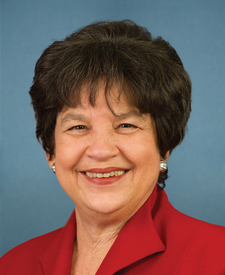
See how Lois Frankel actually votes — against your values.
DeepSyte scores Lois Frankel's record on the issues you care about — not party, not press releases. Take the 2-minute values quiz to see your personal alignment.
Sign in and take the values quiz to see how Lois Frankel's votes line up with your views.
Prediction track record
How often we called Lois Frankel's passage votes correctly, from their stated positions on each bill's tagged topics. Excludes “unclear” calls and abstentions.
A joint resolution to direct the removal of United States Armed Forces from hostilities within or against the Islamic Republic of Iran that have not been authorized by Congress.
To prohibit the disclosure of records by the Secretary of Housing and Urban Development of individuals for the purposes of immigration enforcement, and for other purposes.
A joint resolution to direct the removal of United States Armed Forces from hostilities within or against the Islamic Republic of Iran that have not been authorized by Congress.
Based on 1 data point across public statements and recorded votes · AI analysis of public records
118-hr-3033·Notable gap
Solidify Iran Sanctions Act of 2023
25/100
What they said
Apr 28, 2026
Rep. Frankel opposes the Republican FY2027 National Security and State Department appropriations bill, arguing that it inadequately funds diplomacy, development, and humanitarian aid relative to military spending and that it continues a pattern of cuts that undermines American national security strategy.
Rep. Frankel's statement opposes a 2027 appropriations bill that cuts funding for diplomacy, development, and humanitarian aid, arguing for a balanced national security approach. However, she voted yes on the Iran Sanctions Act, which permanently strengthens economic sanctions on Iran—a unilateral enforcement mechanism rather than the diplomatic engagement her statement emphasizes. While both relate to national security and Iran policy, the statement advocates for diplomatic solutions and development aid, whereas the sanctions bill represents a hardline enforcement approach that contradicts the diplomatic emphasis in her public position.
Pairs with ambiguous language and high uncertainty are withheld until more data is available. Procedural, cloture, and amendment votes are excluded — they don't cleanly signal substantive support or opposition.
Pro analysis
AI rep analysis — Pro
Get an AI-narrated read on Lois Frankel's full voting record against your stated values — aligned themes, conflicts, notable votes, and what to watch for.
We haven't extracted campaign positions for Lois Frankel yet. Once their campaign website or position pages are processed, this card will track what they said vs how they voted.
Crossing the aisle
Passage votes where Lois Frankel broke ranks with ≥75% of Democrats. Threshold catches substantively partisan splits; unanimous-ish or close votes are excluded.
Frankel: Airport Naming Decisions Should Be Made Locally
Subscribe to receive the latest news, insights,
and updates directly to your inbox.
West Palm Beach, FL — Today, Congresswoman Lois Frankel (FL-22) released the following statement ahead of the Palm Beach County Commission’s meeting to approve a trademark agreement with the Trump Organization in a step toward renaming Palm Beach International Airport.
“Airports named after presidents have traditionally been designated once they leave office and through decisions made by local communities and local authorities—not imposed from above,” said Rep. Frankel.
“While the County has to comply with State law, what we are seeing is a clear overreach by the State Legislature that forced through this change without meaningful input from the people who actually live here, work here, and rely on Palm Beach International Airport every day.
Naming a major public asset should reflect community consensus and respect local voices. That is not happening here.”
Frankel Pushes Back Against Republican National Security, Department of State Appropriations Bill, Urges Congress to Meet the Moment
Position: Rep. Frankel opposes the Republican FY2027 National Security and State Department appropriations bill, arguing that it inadequately funds diplomacy, development, and humanitarian aid relative to military spending and that it continues a pattern of cuts that undermines American national security strategy.
Subscribe to receive the latest news, insights,
and updates directly to your inbox.
Today, Rep. Lois Frankel (FL-22), Ranking Member of the House Appropriations Subcommittee on National Security, Department of State, and Related Programs (NSRP), led Democratic opposition to the Fiscal Year 2027 NSRP funding bill.
“This is a moment for American leadership—and we must rise to meet it,” said Ranking Member Frankel. “Lasting national security is about more than bombs, bullying, or tariffs. It demands smart diplomacy, strong development, and lifesaving humanitarian aid that prevent threats from developing before they ever reach our shores. This funding bill fails that test.
I look forward to coming together to deliver a bill that reflects the very best of American leadership and truly protects the American people.”
After four years of cuts totaling $14.4 billion, Republicans’ proposed bill cuts $2.7 billion, or six percent, from Fiscal Year 2026 funding levels.
Specifically, this legislation:
For Ranking Member Frankel’s full opening remarks in front of the Committee, click here.
ICYMI: Frankel Speaks Against Devastating Cuts to National Security and Humanitarian Programs in Appropriations Debate
Position: Ranking Member Frankel opposes the House Republicans' proposed FY2027 National Security and Related Programs appropriations bill, arguing that its $2.7 billion in cuts to diplomatic, development, and humanitarian programs undermines U.S. national security and soft power. She contends that diplomacy and global engagement are essential complements to military strength for preventing conflict and addressing root causes of extremism and migration.
Subscribe to receive the latest news, insights,
and updates directly to your inbox.
During yesterday’s National Security, Department of State, and Related Programs (NSRP) Appropriations Subcommittee markup, Ranking Member Lois Frankel (FL-22) spoke against House Republicans’ proposed Fiscal Year 2027 (FY27) NSRP bill, which would cut critical funding that strengthens America’s soft power, prevents the spread of conflict and disease, and protects our national security.
“This is a bill that is supposed to project American leadership—through diplomacy, development, and humanitarian aid—but instead, it’s pulling back at exactly the wrong time,” said Ranking Member Frankel.
“After four years of cuts totaling $14.4 billion—a staggering 23 percent—this bill cuts another $2.7 billion. At the same time, President Trump is requesting hundreds of billions of dollars more for war. My son served in the Marines and was deployed to two wars. I know it's important for the military to remain strong. But bombs and drones respond to threats—they do not prevent them. Soft power does.”
“Diplomacy prevents costly, deadly war. Global health programs stop outbreaks before they reach our shores. Food aid and development programs reduce desperation that fuels extremism and migration. Alliances ensure we do not face threats alone,” Frankel continued. “This bill walks away from that strategy.”
“Security at home is only possible with effective, robust engagement abroad,” she said. “If we want a safer America and a more stable world, we need both: We need the strength of our military—and the power of our leadership. This bill fails that test.”
For Ranking Member Frankel’s full remarks, click here.
Frankel Fights for Federal Workers’ Access to Reproductive Health Care in Appropriations Debate
Position: Rep. Frankel opposes appropriations riders that restrict federal employees' access to abortion care and prevent the District of Columbia from using local funds to provide abortion services to Medicaid enrollees, characterizing these provisions as federal overreach and punishment.
Subscribe to receive the latest news, insights,
and updates directly to your inbox.
WASHINGTON, D.C. — During this week’s Financial Services and General Government (FSGG) Appropriations Subcommittee markup, Rep. Lois Frankel (FL-22) introduced an amendment to strike measures in the FY27 bill that restrict federal employees’ access to abortion care and block the District of Columbia from using its own local funds to provide abortion services to Medicaid enrollees.
“These riders are not policy—they are punishment,” said Rep. Frankel. “Punishment for federal employees who simply want the freedom to make their own private health care decisions. Punishment for low-income women in the District of Columbia who are denied care—even when D.C. is willing to pay for it with its own dollars.”
Frankel emphasized that the provisions go beyond federal funding restrictions, calling them a clear example of federal overreach into local governance.
“We are not just restricting federal funds—we are reaching into D.C.’s own budget and saying, ‘you don’t get to decide,’” Frankel said. “That is federal overreach at its worst.”
“These riders hit hardest on the women living paycheck to paycheck—those who can’t travel and are forced into impossible choices about their health, their families, and their futures,” she said.
Addressing the female staffers in attendance, Frankel added: “We trust you with so many decisions every day, we should trust you with your health care decisions, too.”
The amendment was ultimately defeated by a vote of 33-26.
For Rep. Frankel’s full remarks, click here.
Frankel Statement on Pending House Department of Homeland Security Bill
Position: Rep. Frankel opposes the House Republican bill on DHS funding and supports the bipartisan Senate-passed bill that would reopen most of DHS and pay essential workers. She calls for negotiations focused on reining in ICE immigration enforcement.
Subscribe to receive the latest news, insights,
and updates directly to your inbox.
Today, Rep. Lois Frankel released the following statement after Republican House leadership refused to take up a bipartisan Senate-passed bill to reopen the majority of the Department of Homeland Security.
“I am appalled that Republican House leadership is refusing to take up the bipartisan Senate-passed bill, which would reopen most of the Department of Homeland Security and ensure TSA officers and other essential workers are paid,” said Rep. Frankel. “For more than six weeks, these hardworking Americans have gone without a paycheck while continuing to keep us safe. Instead, House Republicans are bringing up a bill that the Senate has already declared dead on arrival, which is nothing more than political theater. It won’t reopen the government, it won’t pay workers, and it won’t move us toward a real solution. Congress should act now to pay these workers and get back to serious negotiations on reining in ICE immigration enforcement.”
Frankel, Colleagues Introduce Measure Recognizing Equal Pay Day, Call for Action to Close Gender Wage Gap
Position: Representatives introduce a resolution recognizing Equal Pay Day and call for congressional action to close the gender wage gap through legislation such as the Paycheck Fairness Act, wage transparency requirements, and paid leave policies.
Subscribe to receive the latest news, insights,
and updates directly to your inbox.
Today, Representative Lois Frankel (FL-22), alongside Representatives Rosa DeLauro (CT-3), Teresa Leger Fernández (NM-3), and Nikema Williams (GA-5), introduced a House resolution recognizing March 26, 2026, as Equal Pay Day—the date marking how far into the new year women must work to earn what men earned in 2025 alone.
The resolution raises awareness of the persistent gender wage gap and its impact on women and families, while reaffirming Congress’s commitment to equal pay for equal work.
“Equal pay is not just about fairness—it’s about economic security and opportunity,” said Rep. Frankel. “For generations, women have been paid less for the same work, concentrated in lower-paying jobs, and pushed out of the workforce by a lack of affordable child care. And for the second year in a row, the pay gap for full-time, year-round women workers has widened. This disparity limits women’s ability to save for retirement and reduces their Social Security and pension benefits, contributing to higher rates of poverty among older women. It’s long past time for Congress to take meaningful action to support equal pay and narrowing the gender wage gap.”
"Equal Pay Day marks how far into the current year a woman must work to catch up to what her male counterpart earned in the previous year,” said Rep. DeLauro. “Six decades after passage of the Equal Pay Act of 1963, women working full-time or part-time still earn 76 cents for every dollar earned by men. In the midst of a cost-of-living crisis, this is unacceptable. While Americans are living paycheck to paycheck, the wage gap is costing nearly $1.7 trillion annually. Equal pay for equal work is a simple concept – men and women in the same job deserve the same pay. It is time we make it real for the millions of American women who are being unfairly undervalued in the workplace. Let’s enact the Paycheck Fairness Act and empower working women by giving them the tools to ensure their contributions to the workplace are properly respected and reflected in their pay.”
“It’s been 62 years since we passed the Equal Pay Act. And we still don’t have equal pay?! It keeps getting worse because there isn’t a mechanism to fight this discrimination. Every member of the DWC is a proud cosponsor of Rep. DeLauro’s Paycheck Fairness Act so women can challenge pay discrimination and hold employers accountable,” said Rep. Leger Fernández. “We are fighting for legislation to guarantee wage transparency so women know when they’re being paid less for the same work. We are fighting for paid leave for all so that no woman has to choose between their paycheck and caring for their loved ones. This is not just a matter of fairness—it’s a matter of dignity. We believe in a world where you can balance your work and your family without losing the job that sustains you.”
“For the second year in a row, the gender pay gap has widened, hitting Black women and women of color the hardest. Equal pay is more than a women’s issue; it is a matter of economic justice and racial justice,” said Rep. Williams. “When women are paid less for the same work, families suffer, communities struggle, and our economy falls short. I’m proud to co-lead this resolution to reaffirm our commitment to closing the gender wage gap and fully realizing the promise of the Equal Pay Act of 1963.”
The resolution was introduced with 140 original cosponsors. It is supported by many advocacy groups, including the National Partnership for Women & Families, National Organization for Women, MomsRising, National Women's Law Center Action Fund, Equal Pay Today Coalition, Equal Rights Advocates, Institute for Women’s Policy Research (IWPR), Justice for Migrant Women, Labor Council for Latin American Advancement (LCLAA), National Asian Pacific American Women’s Forum (NAPAWF), National Network to End Domestic Violence (NNEDV), American Association of University Women (AAUW), A Better Balance, Golden State Opportunity, PowHer New York, and Women Employed.
For the full text of the resolution, click here.
Frankel: U.S. Leadership at the UN Is Essential to Global Stability and American Interests
Position: Representative Frankel advocates for sustained U.S. leadership and engagement at the United Nations, arguing that strong American participation is essential to advancing U.S. interests and global stability, and warns against funding cuts and reduced participation that could undermine U.S. credibility.
Subscribe to receive the latest news, insights,
and updates directly to your inbox.
Today, Representative Lois Frankel (FL-22), Ranking Member of the House National Security, Department of State, and Related Programs Appropriations Subcommittee, participated in a visit to the United Nations and a field hearing at the United States Mission to the United Nations, hosted by U.S. Ambassador Mike Waltz.
At the hearing, Frankel emphasized that strong, consistent U.S. leadership at the United Nations is critical to advancing American interests and promoting global stability.
“The United Nations remains one of the few forums where countries from every region come together to confront shared challenges,” said Ranking Member Frankel. “The United States is most effective when we lead—not when we retreat.”
Frankel underscored that while reform and accountability are necessary, sustained U.S. engagement is essential—particularly as conflicts, public health threats, displacement, and humanitarian crises continue to rise worldwide. She also commended Ambassador Waltz’s efforts to combat antisemitism as an example of the importance of remaining engaged and at the table.
Alongside her Democratic colleagues, Frankel raised concerns about recent cuts to U.S. funding and participation in UN institutions, warning that inconsistent engagement risks undermining U.S. credibility and creating openings for adversaries. She added that reform must go beyond budget cuts and be measured by results, like more children vaccinated, fewer going hungry, more in school, greater empowerment of women and girls, and fewer conflicts that require U.S. military intervention.
To watch Rep. Frankel’s full remarks, click here. To watch her questions to Ambassador Waltz, click here.
Frankel Resolution Pushes Back on Florida Fluoride Ban
Position: Representative Frankel and Florida's Democratic delegation introduced a resolution affirming the importance of maintaining scientifically recommended fluoride levels in public drinking water and urging states to continue this public health practice, in response to Florida's recent prohibition on water fluoridation.
Subscribe to receive the latest news, insights,
and updates directly to your inbox.
Led by Representative Lois Frankel (FL-22), Florida’s Democratic congressional delegation introduced a resolution affirming the importance of maintaining scientifically recommended fluoride levels in public drinking water and urging states to continue this proven public health practice. Last year, Florida became one of only two states to prohibit adding fluoride to public water systems—threatening to reverse decades of progress in preventing tooth decay and protecting public health.
“Fluoride is safe, effective, and backed by decades of science,” said Rep. Frankel. “Ignoring the experts puts children and families at risk. This resolution is about protecting public health and standing firmly on the side of science.”
"Every day, dental hygienists educate patients about the important role fluoride has in preventing disease,” said ADHA president Lancette VanGuilder, BS, RDH, PHEDH, CAES, FADHA. “Community water fluoridation delivers that protection to entire populations in the United States, including those who don't have regular access to dental care. The American Dental Hygienists' Association thanks Representative Frankel for introducing a resolution that reinforces what evidence has shown for more than 75 years: fluoridated water prevents tooth decay and strengthens American public health."
"As pediatric dentists and child health advocates, we see firsthand the transformative impact that community water fluoridation has on a child’s smile and their overall well-being. This legislation is a vital step forward,” said Thomas G. Ison, DMD, President of the American Academy of Pediatric Dentistry (AAPD). “It recognizes water fluoridation for what it truly is: a safe, effective, and foundational public health intervention that levels the playing field for oral health. It proactively encourages states and local communities to maintain optimal, recommended levels of fluoride in water, ensuring our collective efforts are backed by science. A child's oral health isn't just about what happens in dental chairs — what happens throughout the day at home and school to prevent disease is critically important. We applaud the introduction of this legislation during National Children's Dental Health Month, and we look forward to continued partnership with lawmakers at the national, state, and local levels to move closer to a future where preventable tooth decay is a thing of the past for every child."
“AADOCR strongly supports community water fluoridation as a safe, effective, and evidence-based public health measure that prevents tooth decay and improves oral health across the lifespan,” said the American Association for Dental, Oral, and Craniofacial Research (AADOCR). “Decades of rigorous research confirm its safety and its vital role in reducing oral health disparities. We commend Representative Frankel for introducing this resolution and for her leadership in reaffirming this cornerstone of public health.”
“Community water fluoridation remains one of the most studied and successful public health initiatives in our nation’s history,” said the American Association of Public Health Dentistry (AAPHD). “The science is clear—it is safe, effective, and one of the most cost-efficient ways to prevent tooth decay across the lifespan. At AAPHD, we are committed to advancing evidence-based policies that promote health equity. Community water fluoridation does exactly that—it reaches everyone, regardless of age, income, or access to dental care. It is a smart investment in prevention and a cornerstone of a healthier future for all.”
Community water fluoridation reduces tooth decay by about 25 percent and has been recognized by the CDC as one of the greatest public health achievements of the last century. Tooth decay remains one of the most common chronic diseases—especially affecting children and families with limited access to dental care.
The resolution recognizes fluoridation as a safe and cost-effective public health measure, encourages states and local communities to maintain recommended fluoride levels, and supports continued education and investment in oral health.
Rep. Frankel was joined by 11 original cosponsors: Reps. Nanette Barragán (CA-44), Kathy Castor (FL-14), Sheila Cherfilus-McCormick (FL-20), Maxwell Frost (FL-10), Hank Johnson (GA-04), Betty McCollum (MN-04), Kelly Morrison (MN-03), Jared Moskowitz (FL-23), Darren Soto (FL-09), Debbie Wasserman Schultz (FL-25), and Frederica Wilson (FL-24).
The resolution is supported by leading dental and public health organizations nationwide, including American Dental Hygienists’ Association (ADHA), the American Academy of Pediatric Dentistry (AAPD), the American Association for Dental, Oral, and Craniofacial Research (AADOCR), and the American Association of Public Health Dentistry (AAPHD)
For full text of the resolution, click here.
Frankel: Higher Costs and ICE Brutality Mark the Real State of the Union
Position: Rep. Frankel criticizes the Trump administration's immigration enforcement policies as brutal and expresses concern about rising costs affecting constituents.
Subscribe to receive the latest news, insights,
and updates directly to your inbox.
Tonight, Rep. Lois Frankel (FL-22) released the following statement after President Trump delivered his State of the Union address.
Palm Beach County Deserves a Voice Before Any Airport Renaming
Subscribe to receive the latest news, insights,
and updates directly to your inbox.
West Palm Beach, FL — Today, Rep. Lois Frankel (FL-22) released the following statement in response to the Florida State Senate’s passage of a bill to rename Palm Beach International Airport (PBI) as President Donald J. Trump International Airport.
“It’s misguided and unfair that the Republican-controlled Florida Legislature ignored the voices of Palm Beach County by pushing forward a bill to rename Palm Beach International Airport without giving County residents a real opportunity for input,” said Rep. Frankel. “Decisions about naming major infrastructure should wait until after an honoree’s service has concluded—and should include meaningful input from the local residents and communities most directly affected.”
Source: GDELT 2.0 GKG, filtered to a curated list of national outlets. Inclusion is not endorsement; opinion pieces and reported news are mixed.
Recent stock activity
Periodic transaction reports filed under the STOCK Act — disclosed by the rep, sourced from public filings.
No disclosed trades on record.
Source: open-data mirrors of the Senate eFD and House Clerk financial-disclosure systems. Disclosure within 30 days of trade is required by law (45 for spouse/dependent trades).
Top PAC donors · 2026 cycle
Political action committees that gave the most to this rep's principal campaign committee this cycle. PAC giving is direct organizational support — industry, ideological, or leadership.
1.UAW - V - CAP (UAW VOLUNTARY COMMUNITY ACTION PROGRAM)Labor6 contributionsTrade-union PAC of the United Auto Workers — backs candidates supporting collective bargaining, worker protections, and auto-industry jobs.AI$30,000
2.MACHINISTS NON-PARTISAN POLITICAL LEAGUE OF THE INTERNATIONAL ASSOCIATION OF MACHINISTSLabor6 contributionsTrade-union PAC of the International Association of Machinists and Aerospace Workers — backs candidates supporting union organizing, prevailing wages, and aerospace and manufacturing industry jobs.AI$30,000
3.UA UNION PLUMBERS & PIPEFITTERS VOTE! PACLabor6 contributionsTrade-union PAC for United Association plumbers and pipefitters — backs prevailing-wage protections, infrastructure funding, project labor agreements, and pro-union labor policies.AI$30,000
4.CARPENTERS' LEGISLATIVE IMPROVEMENT COMMITTEELabor5 contributionsTrade-union PAC for the United Brotherhood of Carpenters — backs prevailing-wage protections, infrastructure funding, and project labor agreements.AI$25,000
5.LABORERS' INTERNATIONAL UNION OF NORTH AMERICA (LIUNA) PACLabor4 contributionsTrade-union PAC for construction laborers — backs prevailing-wage standards, infrastructure investment, apprenticeship programs, and project labor agreements.AI$20,000
6.AMERICAN CRYSTAL SUGAR COMPANY POLITICAL ACTION COMMITTEEAgriculture3 contributionsAgricultural processing PAC for American Crystal Sugar — backs candidates supporting farm subsidies, sugar price supports, and agricultural trade policies.AI$15,000
7.PAC TO THE FUTURELeadership3 contributionsMember-of-Congress leadership PAC — specific affiliations and policy positions not inferable from the name.AI · low$15,000
8.INTERNATIONAL BROTHERHOOD OF ELECTRICAL WORKERS POLITICAL ACTION COMMITTEELabor3 contributionsTrade-union PAC for the International Brotherhood of Electrical Workers (IBEW). Backs candidates supporting prevailing-wage standards, infrastructure investment, apprenticeship programs, and union organizing rights.AI$15,000
10.NATIONAL ASSOCIATION OF REALTORS POLITICAL ACTION COMMITTEEReal Estate3 contributionsTrade association PAC for U.S. real estate agents and brokers — backs candidates supporting property-rights protections, mortgage-lending access, and tax incentives for homeownership.AI$15,000
Source: OpenFEC (api.open.fec.gov) Schedule A receipts where contributor type is “committee.” Aggregated by contributing committee. Self-transfers from joint-fundraising / victory committees are excluded.
Top individual contributors · 2026 cycle
Itemized individual contributions over $200 to this rep's campaign committee, aggregated by donor employer. PAC giving is shown above; this section is people, not organizations.
1.SELF$94,592
2.FLORIDA CRYSTALS CORPORATION$21,000
3.TATE DEVELOPMENT CORPORATION$14,000
4.PACHULSKI, STANG, ZIEHL & JONES$14,000
5.TRIPLE C RANCH$10,000
6.SEARCY DENNEY SCAROLA BARNHART & SHIPL$7,500
7.SOUTHOCEAN CAPITAL PARTNERS$7,000
8.PROSPECT HOTEL ADVISORS$7,000
9.RUTGERS LAW SCHOOL$7,000
10.MAIN STREET CONNECT$7,000
Source: OpenFEC Schedule A receipts where contributor type is “individual,” aggregated by the donor's self-reported employer. This is a geographic / industry correlation, not a corporate endorsement.