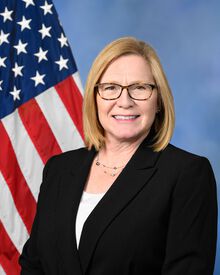
See how Michelle Fischbach's votes line up with your values.
DeepSyte scores Michelle Fischbach's record on the issues you care about — not party, not press releases. Take the 2-minute values quiz to see your personal alignment.
Sign in and take the values quiz to see how Michelle Fischbach's votes line up with your views.
Prediction track record
How often we called Michelle Fischbach's passage votes correctly, from their stated positions on each bill's tagged topics. Excludes “unclear” calls and abstentions.
82 predictions on record · none have been resolved by a passage vote yet. Check back as bills move.
Pending vote119-hr-5340
To prohibit the disclosure of records by the Secretary of Housing and Urban Development of individuals for the purposes of immigration enforcement, and for other purposes.
To amend the Internal Revenue Code of 1986 to temporarily suspend certain fuel excise taxes for fuel separated during periods in which the national average price of gasoline exceeds $3.99 per gallon, and to prohibit certain credits or deductions for oil and gas companies during such periods.
No paired statements and votes yet for Michelle Fischbach
We haven't yet found statement/vote pairs on the same topic for Michelle Fischbach. This usually means either the rep hasn't taken public positions on bills that have come to a passage vote, or those bills haven't been tagged yet. The checker runs as new press releases and votes come in.
Pro analysis
AI rep analysis — Pro
Get an AI-narrated read on Michelle Fischbach's full voting record against your stated values — aligned themes, conflicts, notable votes, and what to watch for.
Positions Michelle Fischbach took during their campaign, scored against their subsequent record — public statements cross-checked with related votes. “Kept” means 80%+ of those statement-vs-vote pairs aligned; “Broken” means 30% or fewer.
0 kept0 broken0 mixed0 no action yet
Michelle Fischbach has 10 tracked positions but no scored statement-vs-vote pairs touching them yet. Verdicts will appear here as related statements and votes accumulate.
No action yetSupports
Tax dollars should not pay for abortions.
“stop federal funding for abortion and support protections for the most vulnerable”
Passage votes where Michelle Fischbach broke ranks with ≥75% of Republicans. Threshold catches substantively partisan splits; unanimous-ish or close votes are excluded.
6
Cross-aisle votes
118-s-4077·Dec 17, 2024·82% of R voted YES
A bill to designate the facility of the United States Postal Service located at 180 Steuart Street in San Francisco, California, as the "Dianne Feinstein Post Office".
Congresswoman Fischbach Earns A+ Scorecard Rating from Concerned Women for America
Position: The release reports that Congresswoman Fischbach received an A+ rating from Concerned Women for America, a group that advocates for conservative policy positions, and implies support for the positions reflected in that scorecard.
Position: The release calls for passage of the SAVE America Act and urges Minnesota state officials to increase election security and voter integrity measures in response to federal indictments of noncitizens for voter fraud.
Washington, DC - Congresswoman Michelle Fischbach (MN-07) joined Minnesota's Republican congressional delegation in sending a letter to Governor Tim Walz and Minnesota Secretary of State Steve Simon regarding the recent indictments of noncitizens voting in Minnesota's elections and demanding election security.
"Only American citizens should vote in American elections, and these indictments prove why we need the SAVE America Act signed into law," said Rep. Fischbach. "I have pushed for voter integrity and voter transparency. Now Walz, Simon, and Minnesota Democrats must do the same."
On September 30, 2026, the U.S. Department of Justice (DOJ) announced that a federal grand jury indicted ten individuals for voter fraud, charging them with falsely claiming citizenship to vote in Minnesota's elections, including the 2022 and 2024 general elections and the 2026 primary election. All of this follows over a year of requests from the DOJ for information on Minnesota's voter lists and compliance with federal election guidelines.
Minnesota's election laws have created an ideal environment for voter fraud. Over the last several years, Congresswoman Fischbach and Minnesota Republicans took the following actions to sound the alarm on Minnesota's election security weaknesses:
You can read the most recent letter sent to Governor Walz and Secretary Simon here.
Permalink: https://fischbach.house.gov/2026/10/rep-fischbach-joins-minnesota-republican-delegation-to-demand-increased-election-security
Fischbach, MN GOP Delegation Slam Walz for Rejecting Federal Fuel Relief and Leaving Minnesota Farmers and Families to Pay the Price
Position: The release criticizes Governor Walz for declining to align Minnesota with a federal executive order authorizing highway use of untaxed red dye diesel, and argues that state enforcement and fuel testing should be addressed to lower diesel costs for farmers and truckers.
WASHINGTON, DC - Congresswoman Fischbach (MN-07) led Minnesota's Republican Congressional Delegation in sending a letter to Governor Tim Walz following his refusal to align Minnesota with President Trump's Executive Order authorizing highway use of red dye diesel. The letter calls on Walz to rethink his decision and follow suit to help lower diesel costs for Minnesota's truckers, farmers, and drivers.
President Trump's order opens access to untaxed, lower-cost red dye diesel, cutting per-fill costs by roughly $60 for a standard tank. By addressing state-level enforcement and fuel testing, Minnesota could have unlocked meaningful savings for farmers and haulers. While neighboring North Dakota took proactive steps to provide relief to its producers, Governor Walz flatly rejected any effort to lower costs, leaving Minnesota's agricultural producers and truckers at a disadvantage during peak harvest season.
"Governor Walz and Democrats have made their priorities crystal clear: they would rather choose petty political opposition than give relief to struggling Minnesota families and farmers," said Rep. Fischbach. "President Trump provided a way to slash diesel costs, and Governor Walz chose partisan obstruction over lower costs. Our farmers are in the field working around the clock to feed and fuel our country. Instead of helping them, the Walz administration is threatening them with penalties for using lower-cost fuel. It is an insult to our rural communities, and it proves once again that Minnesota Democrats would rather watch fuel prices skyrocket to save their egos than give hardworking Minnesotans a break at the pump."
The letter also points out that North Dakota announced it will not enforce fuel checks or penalize drivers using red dye diesel on highways. Governor Walz's refusal to follow Trump or North Dakota directly hurts Minnesotans. By forcing local haulers to buy higher-priced clear diesel, Minnesota is bottlenecking cross-state harvest commerce and driving up transportation costs that will be passed on to everyday consumers at the grocery store.
Congresswoman Fischbach vowed to continue fighting for energy affordability measures and called out state leadership for continually turning its back on Minnesota's rural economy.
Permalink: https://fischbach.house.gov/2026/10/fischbach-mn-gop-delegation-slam-walz-for-rejecting-federal-fuel-relief-and-leaving-minnesota-farmers-and-families-to-pay-the-price
Rep. Fischbach Meets with Ag Leaders, Discusses Next-Gen Biofuels in Crookston
Position: The release states support for the House-passed Farm Bill and cosponsorship of the Securing Agriculture's Workforce Act to modernize the H-2A agricultural labor program, and expresses commitment to clear 45Z guidelines for next-generation biofuels.
Willmar, MN - Congresswoman Michelle Fischbach was in Crookston meeting with her Agriculture Advisory Committee and with the leadership team at 4H2. At the roundtable, members of the agriculture industry discussed pressing priorities, including rising input costs, the critical need for the Senate to pass the House-passed Farm Bill, and agricultural labor shortages. Rep. Fischbach shared that she recently joined Chairman GT Thompson as an original cosponsor of the Securing Agriculture's Workforce Act, a producer-backed bill designed to cut federal red tape and modernize the H-2A program by providing labor flexibility and financial predictability for local operations. Producers also discussed how severe state-level overregulation by the governor and attorney general has put Minnesota deer farmers under assault, placing local operations at a competitive disadvantage compared to those in surrounding states. Additionally, growers expressed gratitude for her leadership on a Section 301 investigation letter concerning the sugarbeet industry.
The Congresswoman also visited 4H2 to view their cutting-edge direct ethanol fuel cell technology, which generates electricity without combustion, unlocking new markets for the ethanol industry across the transportation, portable power, and defense sectors. Rep. Fischbach reaffirmed her commitment to next-generation biofuel tech, highlighting her ongoing push for clear 45Z guidelines.
Permalink: https://fischbach.house.gov/2026/10/rep-fischbach-meets-with-ag-leaders-discusses-next-gen-biofuels-in-crookston
Reps. Fischbach, Finstad Introduce Legislation to Target Fraud in Nonprofit Immigrant Assistance Programs
Position: The representatives support legislation requiring tax-exempt organizations to disclose information about their facilitation of resettlement and welfare assistance for non-citizens, citing concerns about fraud and taxpayer accountability.
WASHINGTON, D.C. — Congresswoman Michelle Fischbach (MN-07) and Congressman Finstad (MN-01) introduced the Immigrant Resettlement & Welfare Abuse Prevention Act to increase transparency into the activities of tax-exempt organizations. The bill would require nonprofits to disclose information about their facilitation of resettlement and welfare assistance for non-citizens in the United States.
Under the provisions of this Act, tax-exempt organizations would be required to report each year the total number of non-citizens assisted with resettlement or relocation activities, and how many of those non-citizens they assisted in accessing US welfare benefits.
"Hardworking Minnesotans have seen firsthand the devastating consequences of unchecked spending and the lack of oversight that invited massive fraud into our state," said Rep. Fischbach. "There is growing concern that nonprofits are putting taxpayers on the hook. This bill is about putting American taxpayers first and ensuring that any organization assisting in the resettlement and welfare of non-citizens provides transparency. We will not allow the exploitation of our system to be subsidized by the American taxpayer."
"In Minnesota, the seemingly endless fraud we've seen under Democrat leadership has put a spotlight on poor policies and failed oversight that have allowed bad actors to exploit our federally funded programs," said Rep. Finstad. "Rep. Fischbach and I are leading the Immigrant Resettlement & Welfare Abuse Prevention Act to help prevent further abuse of our taxpayer-funded programs by establishing clear reporting rules that will increase transparency regarding nonprofits that help resettle non-citizens and their role in enrolling them in federally funded assistance."
By standardizing these reporting requirements, the Immigrant Resettlement & Welfare Abuse Prevention Act will provide the American public with a clearer understanding of how nonprofits influence the nation's immigration and welfare landscape. To ensure accountability, the bill requires the Secretary of the Treasury to submit a comprehensive annual report to Congress that will show the scale of these resettlement efforts and their impact on welfare benefits.
Permalink: https://fischbach.house.gov/2026/4/reps-fischbach-finstad-introduce-legislation-to-target-fraud-in-nonprofit-immigrant-assistance-programs
Reps. Fischbach, Stauber Introduce Legislation to Prioritize American Taxpayer Funds, Restrict Foreign Remittances
Position: The representatives introduced legislation to restrict noncitizens receiving federal benefits from sending more than $1,000 annually to foreign countries, revoking welfare eligibility for those who exceed this threshold, citing fraud and national security concerns.
WASHINGTON, D.C. — Congresswoman Fischbach (MN-07) and Congressman Stauber (MN-08) introduced the Preventing the Repatriation of American Benefits Act in response to the fraud and national security threats exposed across Minnesota's social service programs.
This legislation is designed to ensure that federal assistance remains within the United States by restricting the amount of money noncitizens receiving federal benefits can send abroad. The bill revokes welfare eligibility for non-citizens who send more than $1,000 back to their country annually.
This comes in the wake of reports that at least $9 billion of American taxpayer dollars were siphoned off through fraud schemes in Minnesota. Investigations have revealed that millions of these defrauded dollars were sent overseas, including to the Al-Qaeda linked terrorist organization Al-Shabaab.
"We are done watching our hard-earned money be sent overseas while the programs meant for our own citizens are gutted by fraud," said Rep. Fischbach. "This bill puts a stop to the flow of American dollars out of our country. It is time we prioritize our own communities and ensure money meant for American assistance stays right here at home."
"It was deeply disturbing to learn that millions in stolen Minnesota welfare dollars were sent back to Somalia and landed in the hands of the terrorist group Al-Shabaab," said Rep. Stauber. "Hard-earned Minnesota taxpayer dollars must help our own citizens, not foreign criminals. I'm proud to co-author this legislation with Rep. Fischbach to put an end to the madness and ensure every dollar intended for American families stays in America."
By closing the loopholes that allowed fraud to flourish, this legislation ensures that federal assistance supports vulnerable individuals and families within the United States, rather than funding criminals abroad.
Permalink: https://fischbach.house.gov/2026/4/reps-fischbach-stauber-introduce-legislation-to-prioritize-american-taxpayer-funds-restrict-foreign-remittances
Reps. Fischbach, Budzinski Introduce Legislation to Bolster American Biobased Manufacturing and Support Rural Economies
Position: The representatives support tax incentives for companies that use American-grown biomass to produce biobased chemicals and materials, aiming to strengthen domestic manufacturing, reduce petroleum dependence, and support rural economies.
WASHINGTON, D.C. -- Congresswoman Michelle Fischbach (MN-07) and Congresswoman Nikki Budzinski (IL-13) introduced the Biobased Materials Investment and Production Act to strengthen the domestic supply chain and create new markets for American farmers by incentivizing the production of biobased chemicals and materials.
While the United States has made significant strides in biofuels, many other everyday products, from plastics to industrial chemicals, remain dependent on foreign petroleum. The legislation aims to bridge that gap by providing tax incentives for companies that use American-grown biomass to create renewable materials.
"This legislation is a crucial step in supporting our farmers and manufacturers," said Rep. Fischbach. "By providing tax incentives, we can drive investment into rural communities, reduce our reliance on petroleum-based products, and strengthen our national supply chain using American-grown resources."
"From innovative materials to lifesaving therapies, the biomanufacturing industry is making breakthroughs every day," said Congresswoman Budzinski. "As the representative of America's 'Silicorn Valley' in Central and Southern Illinois, I know how important it is to grow our country's leadership in this expanding field. I'm proud to be leading a bipartisan effort alongside Congresswoman Fischbach to drive investments in biomanufacturing that will have wide-reaching benefits for farmers, rural economies, consumers, and the environment."
The Biobased Materials Investment and Production Act allows taxpayers to choose the incentive that best fits their business model:
This legislation ensures that American businesses have the support they need to lead the world in renewable material production.
This legislation has significant support from outside groups:
"America's farmers and innovators are uniquely positioned to lead the next generation of renewable materials and domestic manufacturing. This legislation helps unlock that potential by supporting investment in U.S. biomanufacturing facilities producing plant-based products from a range of agricultural commodities. These products reduce reliance on fossil resources, strengthen critical supply chains, and support vibrant rural economies," said Plant Based Products Council Executive Director James Glueck. "By making it easier to scale biobased manufacturing here at home, Congress can ensure the United States leads the globe while making renewable materials, chemicals, and products more accessible and affordable for American consumers."
"The U.S. corn refining industry plays a critical role in transforming American-grown crops into the ingredients and biobased materials that support food, agriculture, and a growing bioeconomy. This legislation recognizes the importance of domestic manufacturing and provides the certainty needed to invest in new technologies and facilities that expand the production of renewable chemicals and materials," said Corn Refiners Association President and CEO John Bode. "By strengthening U.S. supply chains and supporting innovation, Congress can help ensure America remains a global leader in biobased manufacturing while delivering economic benefits for farmers, workers, and communities across the country."
"Illinois corn farmers are ready to lead in the next generation of American manufacturing, and this legislation from Congresswomen Budzinski and Fischbach is a critical step forward," said Illinois farmer and IL Corn Growers Association President, Mark Bunselmeyer. "By investing in biobased products and expanding access to biorefinery funding, we're creating new markets for corn and strengthening rural economies. At a time of global instability, this effort also helps reduce reliance on petroleum-based products and strengthens our domestic energy and supply chain security. This is about more than fuel—it's about turning homegrown corn into innovative products that drive jobs, sustainability, and long-term demand for agriculture."
Jed Bower - President, National Corn Growers Association
"Corn growers are very appreciative of Representatives Fischbach and Budzinski for introducing this legislation that will diversify demand for our farmers, strengthen rural economies and support domestic manufacturing. Boosting market opportunities for bioproducts made from agricultural feedstocks creates new revenue streams for growers of many different crops."
"This legislation offers an important opportunity to ensure American innovation leads to American economic development," said Ag Bioeconomy Coalition Spokesperson Danielle Beck. "Providing robust ag bioeconomy infrastructure in the U.S. will create new jobs in rural communities, support farm income, and protect American national security. American agriculture leads the world in productivity and sustainability; it's time we also lead the world in bioeconomy investment and innovation. We are grateful to Representatives Fischbach and Budzinski for their bipartisan leadership on behalf of rural America."
Permalink: https://fischbach.house.gov/2026/3/reps-fischbach-budzinski-introduce-legislation-to-bolster-american-biobased-manufacturing-and-support-rural-economies
Rep. Fischbach Honored as "Small Business Deduction Champion" by NFIB
Position: Rep. Fischbach supported making the 20% Small Business Deduction permanent, which she characterizes as preventing a tax increase on small business owners and supporting rural economic growth.
WASHINGTON, D.C. – Representative Michelle Fischbach (MN-07) has been officially recognized as a Small Business Deduction Champion by the National Federation of Independent Business (NFIB), the nation's leading small business advocacy organization.
The award recognizes Members of Congress who were instrumental in securing the permanent 20% Small Business Deduction. This critical tax provision prevents a significant tax hike on over 33 million small business owners nationwide, providing the long-term certainty needed for local economies to thrive.
"Making the 20% Small Business Deduction permanent was a landmark victory for America's small business owners, and a culmination of numerous years of hard work," said NFIB President Brad Close. "We are proud to recognize the lawmakers who paved the way for small business owners to keep more of their hard-earned money and continue creating jobs, growing their operations, and investing in their communities."
"Small businesses are the backbone of rural communities," said Rep. Fischbach. "Ensuring that our business owners can keep more of what they earn empowers our Main Streets to grow, hire, and invest back into our neighborhoods. I am honored to receive this recognition and will continue to be a voice for our small business community."
Permalink: https://fischbach.house.gov/2026/3/rep-fischbach-honored-as-small-business-deduction-champion-by-nfib
Source: GDELT 2.0 GKG, filtered to a curated list of national outlets. Inclusion is not endorsement; opinion pieces and reported news are mixed.
Recent stock activity
Periodic transaction reports filed under the STOCK Act — disclosed by the rep, sourced from public filings.
No disclosed trades on record.
Source: open-data mirrors of the Senate eFD and House Clerk financial-disclosure systems. Disclosure within 30 days of trade is required by law (45 for spouse/dependent trades).
Top PAC donors · 2026 cycle
Political action committees that gave the most to this rep's principal campaign committee this cycle. PAC giving is direct organizational support — industry, ideological, or leadership.
1.POET PACAgriculture2 contributionsAgribusiness PAC affiliated with the Renewable Fuels Association — backs ethanol production, renewable fuel mandates, and agricultural commodity support.AI$10,000
2.MR. SOUTHERN MISSOURIAN IN THE HOUSE PACLeadership2 contributionsMember-of-Congress leadership PAC — supports allied candidates and Democratic causes, likely affiliated with a House member representing southern Missouri.AI$10,000
3.FIELD OF DREAMS PAC2 contributions$10,000
4.AMERICAN REVIVAL PACIdeological2 contributionsSingle-issue or ideological PAC — specific positions not clearly inferable from the name alone.AI · low$10,000
5.NATIONAL PORK PRODUCERS COUNCIL PORK PAC2 contributions$10,000
6.AMERICAN CRYSTAL SUGAR COMPANY PACAgriculture3 contributionsAgricultural company PAC for a major sugar producer — backs candidates supporting farm subsidies, tariff protections, and agricultural trade policies.AI$10,000
7.AMERICAN INSTITUTE OF CERTIFIED PUBLIC ACCOUNTANTS PACFinance3 contributionsProfessional accounting association PAC — supports candidates and policies favoring tax simplification, accounting standards, and financial regulation aligned with CPA interests.AI$10,000
8.AMERICAN HOSPITAL ASSOCIATION PAC2 contributions$10,000
9.THRIVENT FINANCIAL FOR LUTHERANS PAC2 contributions$10,000
Source: OpenFEC (api.open.fec.gov) Schedule A receipts where contributor type is “committee.” Aggregated by contributing committee. Self-transfers from joint-fundraising / victory committees are excluded.
Top individual contributors · 2026 cycle
Itemized individual contributions over $200 to this rep's campaign committee, aggregated by donor employer. PAC giving is shown above; this section is people, not organizations.
1.MARQUIS MANAGEMENT INC.$27,500
2.KING CAPITAL$7,287
3.ULINE$7,000
4.ROSEN'S DIVERSIFIED INC.$7,000
5.CAMBRIA COMPANY$7,000
6.FELTL CO$7,000
7.ATS$7,000
8.STARKEY HEARING TECHNOLOGIES$7,000
9.PAYROLL & INSURANCE GROUP$7,000
10.WINTHROP & WEINSTINE$7,000
Source: OpenFEC Schedule A receipts where contributor type is “individual,” aggregated by the donor's self-reported employer. This is a geographic / industry correlation, not a corporate endorsement.