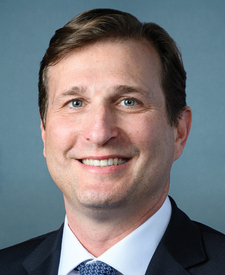
See how Daniel S. Goldman's votes line up with your values.
DeepSyte scores Daniel S. Goldman's record on the issues you care about — not party, not press releases. Take the 2-minute values quiz to see your personal alignment.
Sign in and take the values quiz to see how Daniel S. Goldman's votes line up with your views.
Prediction track record
How often we called Daniel S. Goldman's passage votes correctly, from their stated positions on each bill's tagged topics. Excludes “unclear” calls and abstentions.
To prohibit the disclosure of records by the Secretary of Housing and Urban Development of individuals for the purposes of immigration enforcement, and for other purposes.
Based on 8 data points across public statements and recorded votes · AI analysis of public records
118-hr-1·Consistent
Lower Energy Costs Act
92/100
What they said
Apr 17, 2026
Representative Goldman opposes federal legislation that would preempt New York's Climate Change Superfund Act, arguing that the oil and gas industry should be held financially accountable for pollution cleanup rather than shifting costs to taxpayers.
Representative Goldman explicitly opposed federal preemption of New York's Climate Change Superfund Act and stated he would "forcefully oppose any attempts to preempt" it. The Lower Energy Costs Act, while primarily focused on energy production and infrastructure, includes provisions that would preempt state authority over oil and gas regulation (particularly regarding hydraulic fracturing oversight). Goldman's no vote on passage is consistent with his stated opposition to legislation that would limit state environmental accountability measures and shield the oil and gas industry from cleanup costs.
Detain and Deport Illegal Aliens Who Assault Cops Act
92/100
What they said
Mar 31, 2026
Rep. Goldman opposes the Trump Administration's use of ICE enforcement at immigration court facilities and calls for accountability for improper arrests. He advocates for legislation prohibiting DHS arrests at immigration courts and demands disciplinary action against responsible officials.
Rep. Goldman's statement opposes improper ICE enforcement actions and calls for accountability and legal constraints on DHS arrest authority at immigration courts. The bill mandates DHS detention and deportation of non-U.S. nationals arrested for assaulting law enforcement. These address opposite policy directions: Goldman advocates restricting DHS enforcement discretion and preventing courthouse arrests; the bill expands DHS detention authority and mandates deportation for a specific class of offenders. His NO vote aligns with his stated opposition to expansive immigration enforcement policies.
Representative Goldman opposes federal legislation that would preempt New York's Climate Change Superfund Act, arguing that the oil and gas industry should be held financially accountable for pollution cleanup rather than shifting costs to taxpayers.
Representative Goldman's statement opposes federal legislation that preempts state environmental protections and holds the oil and gas industry financially accountable for pollution. His NO vote on Alaska's Right to Produce Act—which expands oil and gas leasing in a sensitive federal refuge and limits presidential authority to restrict future leases—is directionally consistent with that position. Both the statement and vote reflect opposition to policies that benefit the oil and gas industry at the expense of environmental protection. The statement does not address ANWR specifically, but the shared principle (opposing federal action that favors oil/gas development over environmental accountability) aligns with the voting direction.
Representative Goldman opposes federal legislation that would preempt New York's Climate Change Superfund Act, arguing that the oil and gas industry should be held financially accountable for pollution cleanup rather than shifting costs to taxpayers.
Representative Goldman's statement opposes federal preemption of New York's Climate Change Superfund Act and criticizes efforts to shield the oil and gas industry from pollution cleanup costs. The Limit, Save, Grow Act is a broad fiscal bill that increases the debt limit and cuts spending across multiple areas; it does not explicitly address state-level climate superfund legislation or preemption. However, the bill's general thrust—reducing federal spending and regulatory burdens—is directionally opposed to Goldman's stated position favoring industry accountability and environmental protection. His NO vote aligns with opposition to a bill that embodies fiscal conservatism and deregulation, consistent with his defense of state-level environmental enforcement.
Transnational Criminal Organization Illicit Spotter Prevention and Elimination Act
85/100
What they said
Mar 31, 2026
Rep. Goldman opposes the Trump Administration's use of ICE enforcement at immigration court facilities and calls for accountability for improper arrests. He advocates for legislation prohibiting DHS arrests at immigration courts and demands disciplinary action against responsible officials.
Rep. Goldman's statement opposes improper ICE enforcement actions and calls for accountability and legal protections against courthouse arrests. The bill criminalizes conduct that interferes with border control and enhances penalties for immigration-related crimes. While both address immigration enforcement, they approach it from opposite directions: Goldman advocates restraint on enforcement and protection from improper arrests, while the bill expands criminal penalties and enforcement tools. His NO vote aligns with his stated opposition to aggressive immigration enforcement policies.
Rep. Goldman opposes the Trump Administration's use of ICE enforcement at immigration court facilities and calls for accountability for improper arrests. He advocates for legislation prohibiting DHS arrests at immigration courts and demands disciplinary action against responsible officials.
Rep. Goldman's statement opposes improper government enforcement actions against immigrants and calls for accountability and protection of due process. The bill expands grounds for deportation based on Social Security and identity document fraud convictions. While both touch immigration enforcement, they address different specific questions: Goldman's statement focuses on procedural violations and unlawful arrests at courthouses, while the bill concerns substantive deportability grounds for fraud offenses. His NO vote is consistent with a broader protective stance toward immigrants, though the bill's specific provisions (fraud-based deportability) are not directly addressed in the statement.
Rep. Goldman opposes the Trump Administration's use of ICE enforcement at immigration court facilities and calls for accountability for improper arrests. He advocates for legislation prohibiting DHS arrests at immigration courts and demands disciplinary action against responsible officials.
Rep. Goldman's statement opposes improper ICE enforcement actions and calls for accountability and restraint in immigration enforcement. The bill creates new criminal penalties for fleeing law enforcement near the border and makes non-citizens convicted of such offenses ineligible for immigration relief. While both touch immigration enforcement, they address different specific questions: Goldman's statement focuses on ICE overreach at courthouses and procedural accountability, while the bill addresses criminal penalties for fleeing law enforcement. A NO vote on a bill that expands enforcement tools and restricts immigration relief is directionally consistent with Goldman's stated concern about aggressive immigration enforcement, though the bill's specific focus on border-area vehicle flight differs from the courthouse arrest issue. The vote reflects opposition to expanded enforcement mechanisms, aligning with his advocacy for restraint.
Continuing Appropriations and Border Security Enhancement Act, 2024
75/100
What they said
Mar 31, 2026
Rep. Goldman opposes the Trump Administration's use of ICE enforcement at immigration court facilities and calls for accountability for improper arrests. He advocates for legislation prohibiting DHS arrests at immigration courts and demands disciplinary action against responsible officials.
Rep. Goldman's statement opposes improper ICE enforcement at immigration courts and calls for accountability and legislative protections. The bill includes provisions prohibiting DHS from using funds for certain immigration-related purposes, which aligns with his stated opposition to improper immigration enforcement. However, the bill is a broad continuing appropriations measure addressing multiple agencies and programs; Goldman's NO vote may reflect objections to other provisions (funding levels, border security enhancements, asylum restrictions mentioned in the summary) rather than disagreement with the DHS restrictions on immigration court arrests. The specific legislative remedy he demands—a prohibition on DHS arrests at immigration courts—is not clearly detailed in the bill summary provided.
Pairs with ambiguous language and high uncertainty are withheld until more data is available. Procedural, cloture, and amendment votes are excluded — they don't cleanly signal substantive support or opposition.
Pro analysis
AI rep analysis — Pro
Get an AI-narrated read on Daniel S. Goldman's full voting record against your stated values — aligned themes, conflicts, notable votes, and what to watch for.
We haven't extracted campaign positions for Daniel S. Goldman yet. Once their campaign website or position pages are processed, this card will track what they said vs how they voted.
Crossing the aisle
No party-break passage votes recorded for Daniel S. Goldman. Either they've voted with Democrats on every substantive passage vote in the corpus, or their tenure overlaps few high-threshold party-line votes so far.
Congressman Dan Goldman Joins Congresswoman Doris Matsui (CA-07) in Reintroducing the 988 Implementation Act
Position: The release supports reintroducing the 988 Implementation Act to give states federal resources for crisis response infrastructure, and specifically supports clarifying that Medicaid's inpatient payment prohibition does not apply to short-term crisis receiving and stabilization facilities run by community-based programs.
WASHINGTON, D.C. – Congressman Dan Goldman (NY-10), Congresswoman Doris Matsui (CA-07) and Congressman Brian Fitzpatrick (PA-01) reintroduced the 988 Implementation Act with Congressmembers Nanette Barragán (CA-44), Troy Carter (LA-02), Lori Trahan (MA-03), Seth Moulton (MA-06), Jamie Raskin (MD-08), Don Beyer (VA-08), Jennifer McClellan (VA-04), Becca Balint (VT-AL), and Kim Schrier (WA-08). The comprehensive legislative package will provide states with federal resources to strengthen the crisis response infrastructure behind the 988 Suicide & Crisis Lifeline.
The bill includes Rep. Goldman's Supporting 988 Crisis Stabilization Act to ensure that individuals in need of trauma-informed, clinically appropriate, and patient-centered care are not hindered by Medicaid, specifically when seeking short-term crisis receiving and stabilization services. These services can reduce psychiatric hospitalization, ensure referrals to community-based treatment, and avert arrest and incarceration for individuals experiencing a mental health crisis.
Specifically, the bill would clarify that Medicaid's longstanding payment prohibition on long term inpatient care does not apply to short-term crisis receiving and stabilization facilities run by community-based programs. The bill institutes guardrails to protect patients and requires the Center for Medicare and Medicaid Services to issue guidance and collect data on crisis stabilization programs, including length of stay, facility size, diversion from law enforcement and incarceration, and other relevant categories.
Since its launch in 2022, the 988 Lifeline has received more than 26 million calls, texts, chats, and ASL videophone contacts from people seeking help across America.
“Too many Americans in crisis are left without safe access to care,” said Congressman Goldman. “The 988 Lifeline is a proven system for getting people the help they need when they need it most. That's why I'm proud to join in introducing the 988 Implementation Act to give states better resources to bolster their crisis response infrastructure and develop a full continuum of care that prioritizes safety and dignity for all communities.”
“When someone reaches out for help in a moment of crisis, we have a responsibility to make sure help is there,” said Congresswoman Matsui. “988 has become a lifesaving resource for millions of Americans, but answering the call cannot be where our responsibility ends. We built a national front door to crisis care with 988. Now we need to strengthen what comes next by expanding mobile crisis response, increasing access to immediate community-based care, and connecting people to the treatment and support they need.”
“Everyday, millions of Americans face mental challenges and are unsure where to go for help,” said Congressman Fitzpatrick, Co-Chair of the Bipartisan Mental Health and Substance Use Disorder Taskforce. “The 988 hotline streamlines resources for those in need, as part of a network of over 200 local crisis centers, yet only thirteen-percent of adults are aware of this critical resource. I am proud to join a bipartisan group of colleagues in introducing the 988 Implementation Act to build upon the critical progress we have made, and further ensure that our communities are properly equipped with crisis-response services.”
“Americans deserve compassionate care when they are experiencing a mental health or substance use crisis,” said Congresswoman Barragán. “That is why I am joining Representatives Matsui and Fitzpatrick in introducing the 988 Implementation Act, bipartisan legislation to strengthen the 988 Crisis Lifeline. It includes the 988 Community Infrastructure Act, a bill I introduced to help communities build or expand the facilities they need, so people in crisis can get timely care in a more welcoming and appropriate setting—not an emergency room or with law enforcement. By investing in the critical 988 lifeline, we can improve access to trained mental health specialists and ensure that no one falls through the cracks when they need help most.”
“Our nation is facing an unprecedented mental health crisis, and all too often people who are struggling don’t know where to turn to for help,” said Congressman Carter. “The 988 Crisis Line is a lifeline for so many people in our country. It connects them to care, to treatment, and to hope. I’m proud to support this important legislation that prioritizes the mental health and wellbeing of American citizens by investing in community-based crisis response, breaking down barriers to accessing mental healthcare treatment, and ensuring everyone knows where to turn to in moments of crisis.”
“Calling 988 takes courage, and answering takes patience and care. Our job is to support both,” said Congresswoman Trahan, Co-Chair of the Bipartisan Mental Health and Substance Use Disorder Task Force. “We all know someone who has struggled with mental health or substance use and wished there was more help within reach. This bill delivers it, with a faster response, a real place to turn, and trained professionals ready to pick up the phone.”
“I’m extraordinarily proud of the success of the 988 lifeline since its implementation. The high volume of calls and messages to 988 shows that Americans are still in dire need of improved mental health resources,” said Congressman Moulton. “It is critical that we continue advocating for more funding and expanded 988 services. The suite of bills contained within the 988 Implementation Act will provide federal support for states to enact 988 and crisis services, improve 988 implementation at the local level, expand access to critical services, and broaden awareness of available resources.”
“America’s mental health epidemic leaves millions of our neighbors without access to the care they desperately need,” said Congressman Raskin. “I’m proud to join my colleagues to introduce this critical bipartisan legislation that will greatly expand access to mental health crisis response teams, an expert presence beside our people during the darkest moments.”
“Since its launch, the 988 Lifeline has connected more than 26 million Americans with the support they need in moments of crisis,” said Congressman Beyer. “That’s an extraordinary achievement, and we must build on that success to save more lives and ensure no one falls through the cracks. Our 988 Implementation Act would further strengthen our crisis response system by ensuring trained professionals are available around the clock, crisis teams are equipped to respond in communities, and those in need can access care and services without facing financial barriers.”
“Every year, 988 call centers respond to hundreds of thousands of calls and work around the clock to provide callers with the mental health and crisis management care they need. The 988 Implementation Act will increase access to care with greater support, workforce development opportunities and more,” said Congresswoman McClellan. “I applaud Reps. Matsui and Fitzpatrick for their leadership on this critical issue, and I’m grateful that they incorporated my legislation to provide and expand coverage for behavioral health crisis response services into the bill. Together, we can improve mental health nationwide and ensure 988 continues to help those in our communities who need it most.”
“Especially during Suicide Prevention Awareness Month, I’m incredibly proud to be introducing the 988 and 911 Integration Act,” said Congresswoman Balint. “One of my top priorities in Congress is reducing stigma and taking real action to improve access to mental healthcare. We know that mental health affects not just individuals, but also their families and communities, too. This bill, alongside the broader 988 Implementation Act, would help local communities strengthen and better utilize 988 resources–a lifeline for those experiencing a behavioral health crisis–and bridge gaps in care in communities all over the country.”
“As a pediatrician, I have seen firsthand how severe our youth and adult mental health crisis has become,” said Congresswoman Schrier, M.D. “It is so important that when our family members, loved ones, and neighbors are in crisis, they can get immediate help. The 988 Crisis Line saves lives and strengthens our communities. We need to make sure that 988 teams are always available for every American as a reliable resource when our community members need help.”
As America’s mental health crisis worsens, 988 has spent the past four years demonstrating the lifesaving power of connecting people in crisis with the right help at the right time. A study published this year by the Journal of American Medical Association (JAMA) found that suicide deaths among children and young adults fell 11% below projected levels following the launch of 988, the largest declines were seen in states where 988 use increased most.
But answering the call is only the first step. Someone experiencing a mental health or substance use crisis may also need a trained professional to respond in person, a safe place to receive immediate care, or assistance with continued treatment. Today, access to those services still vary significantly depending on where someone lives.
The 988 Implementation Act will help address those gaps in access to care by:
Strengthening federal funding for 988 regional and local call centers to deliver timely, 24/7 response to callers
Expanding community-based and mobile crisis response so trained behavioral health professionals can reach someone who needs in-person support
Improving access and affordability by requiring health insurance plans to cover crisis services
Growing crisis workforce development with more funding for training and scholarship opportunities
Increasing awareness of 988 through a national suicide prevention and crisis services campaign
The legislation is supported by more than 35 organizations including mental health advocates, clinical and medical professionals, state and local government officials, civil rights advocates, veterans, and more.
“The 988 Suicide & Crisis Lifeline has transformed how people can access support during mental health, substance use and suicide crises,” said Hannah Wesolowski, Chief Advocacy Officer at the National Alliance on Mental Illness (NAMI). “We must continue building this progress by ensuring 988 has the resources, infrastructure and workforce needed to meet the needs of people in crisis. NAMI is grateful to Rep. Matsui for the introduction of the 988 Implementation Act, which will help strengthen the Lifeline and ensure communities can deliver the compassionate, timely mental health response that people deserve.”
The 988 Implementation Act is endorsed by the following organizations: American Association for Psychoanalysis in Clinical Social Work, American Association of Psychiatric Pharmacists (AAPP), American Association on Health and Disability, American Group Psychotherapy Association, Anxiety and Depression Association of America, Association for Ambulatory Behavioral Healthcare (AABH), American Foundation for Suicide Prevention, Children and Adults with Attention Deficit/Hyperactivity Disorder (CHADD), Connections Health Solutions, Crisis Text Line, Depression and Bipolar Support Alliance (DBSA), Easterseals, Inc., Global Alliance for Behavioral Health and Social Justice, Huntington's Disease Society of America, International Society for Psychiatric-Mental Health Nurses, Lakeshore Foundation, Legal Action Center, NAMI, National Association of Pediatric Nurse Practitioners, National Association of Social Workers, National Association of State Directors of Developmental Disabilities Services, National Association of State Mental Health Program Directors, National League for Nursing, Overdose Prevention Initiative at the Global Health Advocacy Incubator Psychotherapy Action Network (PsiAN), SMART Recovery, Steinberg Institute, Sycamores, The American Counseling Association, The Miles Hall Foundation, The National Alliance to Advance Adolescent Health, The National Federation of Families, The Paramedic Foundation/American College of Paramedics/American Paramedic Association, The Trevor Project, Tourette Association of America, and Treatment Advocacy Center (TAC).
Bill text for the Supporting 988 Crisis Stabilization Act can be found here and full bill text for the 988 Implementation Act can be found here.
###
Issues:Health
Congressmen Goldman and Bentz Introduce the IMD CARE Act for Patients Suffering from Serious Mental Illnesses
Position: Introduces legislation to amend the Social Security Act to let Medicaid fund psychiatric facilities (IMDs) with more than 16 beds through a State Plan Amendment, replacing temporary waivers, for patients with serious mental illness.
Washington, D.C. – Today, Congressman Dan Goldman (D-NY) and Congressman Cliff Bentz (R-OR) introduced the IMD CARE Act, legislation which would expand Medicaid eligibility to include psychiatric care facility beds in excess of the current 16 bed limit for patients suffering from severe mental illness.
When the Social Security Act was enacted in 1965, it limited Medicaid funding to psychiatric facilities that had no more than 16 beds, resulting in a shortage of beds when the need for inpatient mental health care has grown.
The IMD CARE Act would amend the Social Security Act to establish a State Plan Amendment, allowing Institutions of Mental Diseases (IMDs) with more than 16 beds to receive Medicaid funding for all mental health patients.
Under current law, States that wish to receive federal Medicaid funding for IMDs with over 16 beds must submit a request for a waiver allowing them to receive Medicaid reimbursement for individuals needing psychiatric care.
These waivers are temporary, unstable, and require complex renewal negotiations.
The State Plan Amendment option included in the IMD CARE Act would provide predictable reimbursement structures, durable financing mechanisms, and greater continuity for patients and providers. States would be required to ensure a robust continuum of care including providing outpatient and community-based mental health care and wrap-around services. States would also be required to follow evidence-based clinical criteria for admitting and transitioning patients from institutional care.
The bill is endorsed by the National Association of State Mental Health Program Directors, National Association for Behavioral Health, Treatment Advocacy Center, National Shattering Silence Coalition, and Meadows Mental Health Policy Institute.
“Outdated Medicaid restrictions on long-term mental health care have left too many Americans in crisis without access to treatment,” Congressman Goldman said. “By allowing states more authority to expand their mental health services, we can reach more Americans who are stuck in a never-ending cycle of hospitals, jail, and the streets. This legislation is a critical step towards ensuring that everyone, regardless of income, can get the help they need with dignity.”
Said Congressman Bentz: “Studies show that a significant portion of the homeless and prison population suffer from severe mental illness. These people would benefit from the availability of proper treatment in our existing mental healthcare facilities. This bill would result in an increased number of beds and treatment available for mentally ill people. Without this improvement in how we deliver mental health services, those who need such treatment will continue to cost communities more in law enforcement and healthcare expenses. The circular progression of the mentally ill from the street to the hospital to the prison and back to the street must stop.”
“When someone on Medicaid is experiencing a mental health crisis, the program often won’t cover a psychiatric hospital bed. That’s because of a rule written in 1965,” said Scott Dziengelski, President and CEO of the National Association for Behavioral Healthcare. “A 60-year-old rule shouldn’t keep people from getting the care they need today. The IMD CARE Act takes an important step toward fixing that.”
Congressman Dan Goldman is committed to alleviating the mental health crisis in America. In 2025, he introduced the ‘Michelle Alyssa Go Act’ to increase the number of federal Medicaid-eligible in-patient psychiatric beds for individuals who are seeking treatment for both mental health and substance use disorders.
Full bill text here.
###
Issues:Social Security and MedicareHealth
Goldman, Nadler Introduce New Legislation to Provide Previously Denied Compensation for 9/11 Families
Position: Introduces legislation to amend the USVSST Act so that otherwise eligible 9/11 victims' families who missed prior application deadlines can receive a lump-sum catch-up compensation payment from the fund.
Legislation Would Newly Make 150 9/11 Families Eligible For Compensation
Families May Be Eligible to Receive An Average Of $295,000
WASHINGTON, D.C. - U.S. Representatives Dan Goldman (NY-10) and Jerry Nadler (NY-12) introduced the No 9/11 Family Left Behind Act, legislation that would ensure that 9/11 victims’ families who were previously prevented from receiving financial compensation can finally get it. Specifically, the bill would amend the Justice for United States Victims of State Sponsored Terrorism (USVSST) Act to ensure that otherwise eligible 9/11 victims’ families who missed certain arbitrary deadlines and were therefore excluded from past distributions receive a lump-sum catch-up payment from the program.
“As we approach the 25th anniversary of the horrific September 11th attacks, our obligation to the victims and their families has not diminished,” said Rep. Goldman. “The No 9/11 Family Left Behind Act would ensure that every family who lost a loved one that day remains eligible for compensation, including those excluded in recent years due to missed deadlines. These families, who suffered so much on that tragic day, deserve our unwavering support and I'm proud to introduce this act to show they will always have it.”
“Congress has an enduring obligation to support the victims of the September 11th attacks and their families. We should not let bureaucratic hurdles stand in the way of justice. Although nothing can make up for twenty-five years of missed birthdays, anniversaries, and memories for those who lost loved ones on 9/11, we must do all we can for the people whose lives were changed forever that day,” said Rep Nadler.
The United States Victims of State Sponsored Terrorism Fund (USVSST Fund) is a federal program administered by the Department of Justice (DOJ). The program compensates Americans who are victims of state sponsored terrorism by distributing funds from criminal and civil penalties imposed on sanctioned countries and entities to victims and their families. When victims or their families win lawsuits against foreign governments but cannot realistically collect the money, the U.S. government steps in to provide compensation that is funded by penalties and fines against certain sanctioned countries or forfeited assets.
While the USVSST Fund is meant to provide critical relief to victims, arbitrary deadlines have inadvertently locked out certain otherwise eligible claimants – including victims of the 2001 9/11 attacks and their families. For instance, initially, 9/11 victims’ estates, spouses, and dependents were excluded from compensation via the Fund until Congress expanded eligibility in 2019, allowing them to receive payments for the first time in a third round of distributions.
However, that expansion of eligibility was administered with the fixed application deadline of February 19, 2020, and subsequent legislation relied on that same deadline when determining eligibility for additional lump-sum catch-up payments. This created an immediate conflict among otherwise eligible claimants because those who missed the 2020 deadline due to lack of notice, hardship, or any other sort of delay were no longer eligible for compensation – despite meeting the eligible criteria to qualify for payment. It is estimated that approximately 150 9/11 families, or about 400-500 claimants, including spouses and dependents, would be eligible for compensation if the Fund were to be authorized for additional catch-up payments.
Specifically, the No 9/11 Family Left Behind Act of 2026:
Creates a new category of catch-up payment eligibility
Directs the USVSST Special Master to provide additional payments to claimants who:
Have a qualifying terrorism judgment
Meet the statutory eligibility criteria for compensation
Did not receive the earlier catch-up payment because they missed the prior deadline.
Requires that within 90 days of enactment, the Special Master notify people who qualify and explain how they can submit their claim
Payments must be made within 90 days after eligibility is confirmed
“When Congress passed the Fairness for 9/11 Families Act, I believed it would finally correct years of unequal treatment among 9/11 families. Instead, the law created a new harsh inequity among 9/11 widows and children since its very inception. As originally enacted, the law’s eligibility provisions excluded some 9/11 spouses and children, whose court judgments were entered after February 2020, thereby leaving some of us without access to substantial benefits that others who suffered the same exact loss on 9/11/01 were able to receive. Unlike the vast majority of 9/11 widows, the loss of my husband and child’s father was deemed worthless by a law curiously beginning with the word Fairness,” said Patricia Kavanagh Edwards, whose late husband Dennis Michael Edwards was killed in the World Trade Center attacks. Thanks to the dedication and persistence of Congressman Goldman, and support of Congressman Nadler, the “No 9/11 Family Left Behind Act of 2026” will ensure that those 9/11 families wrongly excluded are treated fairly, equally and that the law better reflects its intended purpose of supporting ALL those who continue to bear the lasting consequences of the September 11 attacks. Their efforts offer renewed hope to many 9/11 families who have spent years seeking equal treatment under the law.
"My siblings and I were not eligible for the earlier catch up payment. That exclusion felt arbitrary and hurtful, as though our loss was not significant enough to receive the same recognition that others received. This act would validate our loss and our struggles, and provide life-changing support that could begin to fill the financial gap that we experience because of 9/11," said Capt. Jordan Giordano, US Army Medical Corps, whose father John Giordano died on 9/11.
“My father, William Minardi was killed in the 9/11 attacks. Through no fault of our own, my family and I were cut out of the “Fairness” for 9/11 Families Act, because we did not apply to the program by February 2020, even though the Fairness Act wasn’t passed until three years later, said Robert Mindardi. "We have been asking Congress for years to fix this inequity. It has been difficult to be treated as “lesser” than other families whose loved ones were killed in the 9/11 attacks. Words cannot express my gratitude to House Member Daniel Goldman for leading this effort to make sure that no child or spouse of a 9/11 victim is left behind but this will have to do for now!”
My father died on 9/11. I was 11 at the time and the loss changed everything for our family. I am now 36, a single mother running my own small business while trying to raise my son," said Jessica Giordano, whose father John Giordano died on 9/11. "The No 9/11 Family Left Behind Act of 2026 would finally correct a painful unfairness. Those of us who missed a filing deadline through no fault of our own have lived with the consequences of that technicality for far too long. A catch‑up payment would provide essential relief that could help my business grow, reduce the financial strain on my family, and let me plan instead of just surviving."
###
Goldman, Ansari Introduce New Legislation to Guard Against Federal Election Interference
Position: Representatives Goldman and Ansari introduced the Voting Systems Protection Act to bar federal seizure of election infrastructure, create state oversight of election equipment and records, and add criminal penalties for tampering with election systems.
Today, U.S. Representatives Dan Goldman (NY-10) and Yassamin Ansari (AZ-03) introduced the Voting Systems Protection Act, new legislation to guard against election interference by the federal government. The legislation comes in response to the Trump administration’s repeated attempts to seize election infrastructure in several states over the last year as part of an ongoing effort to rig and cast doubt on the upcoming midterms.
“This administration has spent the last year launching an unprecedented attack on the integrity of our voting systems and laying the groundwork to undermine our upcoming midterm elections,” said Rep. Goldman. “Congress must act now to rein in an out-of-control White House and to ensure that our elections remain free, fair, and secure. I am introducing the Voting Systems Protection Act with Rep. Ansari to enact additional guardrails around our elections and protect the future of our democracy.”
“In Arizona, we’re all too familiar with Donald Trump trying to interfere in our elections. The Constitution makes it clear that the administration of elections belongs to the states, not any president — particularly one seeking to illegally expand his corrupt overreach in furtherance of the same conspiracy theories and lies about the 2020 election that led to the January 6 insurrection. Arizona voters and all Americans should be able to trust that their voting systems are protected from political interference. Our Voting Systems Protection Act establishes clear safeguards to keep election administration in the hands of qualified state officials and the voters they serve,” said Rep Ansari.
The Trump Administration has repeatedly sought to seize election infrastructure and undermine the integrity of our elections. In early January 2026, President Trump expressed regret over not having directed the Department of Homeland Security (DHS) and the Department of Defense (DOD) to seize voting machines in the wake of the 2020 Presidential election. Days later, the Federal Bureau of Investigation (FBI) conducted a raid on a Fulton County election center in Georgia based on widely debunked claims. In February, the Washington Post reported the circulation of a 17-page draft executive order among Trump allies and the White House that would declare a national emergency and, in part, direct the Secretary of Homeland Security to coordinate with the Attorney General and Director of National Intelligence in the seizure of election systems, equipment and materials. President Trump has suggested that Republicans should “take over” elections and “nationalize the voting” in the United States.
Specifically, the Voting Systems Protection Act would:
Create a state oversight mechanism to oversee the handling of equipment (ballots, machines, voter rolls) in the event that the federal government seizes such election infrastructure.
Establish further criminal penalties for tampering with, damaging, or destroying such election infrastructure.
Mandate a 48-hour notification requirement in which federal officials must notify a state's chief election official and the chairs and ranking members of four congressional committees - the House Administration Committee, the House Judiciary Committee, the Senate Rules Committee, and the Senate Judiciary Committee - prior to a seizure with a written explanation of the exigency.
Impose a blackout period prohibiting federal seizure of election materials during a "restricted period" — 120 days before through 120 days after any federal election.
Reps. Raja Krishnamoorthi (IL-08), Eleanor Holmes Norton (D-AL), Hank Johnson (GA-04), Seth Moulton (MA-06), Chris Deluzio (PA-17), and Josh Gottheimer (NJ-05) cosponsor the bill.
The legislation is endorsed by Stand Up America, Citizens for Responsibility and Ethics in Washington (CREW), Common Cause, and Public Citizen.
"The Trump administration’s recent encroachment on states’ election administration is alarming. State and local authorities have the constitutional responsibility to administer elections," said Debra Perlin, Vice President for Policy at Citizens for Responsibility and Ethics in Washington (CREW). "CREW is proud to endorse Rep. Goldman's Voting Systems Protection Act, which would help safeguard states’ ability to protect voters and voting processes."
"In America, the voters decide. Federal law enforcement seized election materials from 2020 in pursuit of an illusion to soothe the President's fragile ego. These seizures are more than that, they are a test of how far Americans will let MAGA trod on our freedoms; freedoms that come from all voters - not just the wealthy few - deciding who holds power. Representatives Goldman and Ansari are working to protect voting systems and public records to safeguard the people's will. Public Citizen agrees this is a top priority," said Aquene Freechild, Co-Director, Democracy Campaign, Public Citizen.
“The Voter Systems Protection Act is an important safeguard against any administration that tries to seize election materials, intimidate voters, and undermine confidence in our democracy,” said Common Cause’s Senior Policy Director for Voting and Fair Representation Dan Vicuña. “Common Cause’s one million members are ready to mobilize and ensure Congress passes this important legislation so our elections remain free from the manipulation of any authoritarian power grab.”
“Fair and free elections depend on keeping election administration in the hands of trusted state and local officials. At a time when Donald Trump and his allies have shown a willingness to weaponize federal power to attack the institutions that make our democracy work, the Voting Systems Protection Act takes meaningful steps to prevent federal interference in our elections.
These commonsense safeguards should have broad, bipartisan support. We are grateful to Representatives Goldman and Ansari for their leadership and urge their congressional colleagues to advance this bill without delay,” said Brett Edkins, Managing Director of Policy & Political Affairs at Stand Up America.
Issues:Democracy and Voting Rights
Goldman Introduces New Legislation To Protect Users Of Buy Now, Pay Later
Position: Rep. Goldman introduced the Buy Now, Pay Later Consumer Protection Act to extend credit-card-style protections, including fee disclosures, periodic statements, grace periods, and dispute rights, to Buy Now, Pay Later users.
U.S. Representative Dan Goldman (NY-10) introduced new legislation to protect users of Buy Now, Pay Later (BNPL). The Buy NowPay Later Consumer Protection Act would provide the same key legal protections to BNPL users that apply to conventional credit cards.
“In Trump’s nosediving economy, Americans are increasingly being forced to use Buy Now, Pay Later to cover basic expenses,” said Rep. Goldman. “But because BNPL lacks the same protections as credit cards, including clear disclosures of fees, dispute rights, and refunds for cancelled services, BNPL usage can be catastrophic for users’ personal finances and credit scores. I am introducing this legislation to protect buyers, crack down on BNPL ripoffs, and help keep money in Americans’ pockets.”
Buy Now, Pay Later (BNPL) loans are short-term loans that allow consumers to make a purchase and pay it off in multiple interest-free payments. If the consumer misses or is late on a payment, they can be charged late fees, bounce payment fees, and other hidden fees, which can add up to the equivalent of a high annual percentage rate (APR). Often the consumer is required to authorize autopay to cover their payments. BNPL loans do not contribute positively to credit scores, but missed payments can negatively affect credit scores.
In 2024, the Consumer Financial Protection Bureau under the Biden Administration issued a ruling to regulate BNPL loans as credit cards; that ruling has been overturned by the Trump Administration and BNPL users have been left with no federal protections.
Specifically, the BuyNow Pay Later Consumer Protection Act wouldrequire BNPL companies to:
Provide clear disclosures about fees and pricing.
Provide periodic statements showing charges made, fees, payments and credits applied, amounts due, and due dates, as well as where to send billing disputes.
Provide time after a statement is delivered to the consumer to pay before late fees or negative credit reporting
Provide dispute rights such as the right to get a refund for returned items, right to challenge billing errors or improper charges, and the right to not be held liable for unauthorized uses.
The legislation is endorsed by the National Consumers League.
Full text of the legislation is available here.
Issues:Economy
Goldman, Lawler Introduce Bipartisan Legislation to Strengthen Federal Efforts to Combat Antisemitism
Position: Representatives Goldman and Lawler introduced the bipartisan Jewish American Security Act (H.R. 9211) to strengthen federal efforts against antisemitism and protect Jewish Americans and Jewish institutions, including through enhanced Nonprofit Security Grant Program funding, stronger Title VI enforcement on college campuses, online platform transparency requirements, and threat assessments.
Washington, D.C. - U.S. Representatives Dan Goldman (NY-10) and Mike Lawler (NY-17) led a bipartisan group of 28 members to introduce the Jewish American Security Act (H.R. 9211), which would strengthen federal efforts to counter antisemitism in the United States and protect the Jewish community. In the wake of several high profile antisemitic attacks across the country, including the fire bombing in Colorado, the shooting of two staffers in Washington, D.C, and the arson in Pennsylvania, there is a clear need to address the scourge of antisemitism. This legislation uses a Six-Point Security Plan to protect Jewish-Americans and Jewish institutions. Senators Jacky Rosen (D-NV) and James Lankford (R-OK) lead companion legislation in the Senate.
“The shocking and continuing rise of antisemitism in the last few years requires immediate and decisive action,” said Rep. Dan Goldman (NY-10). “I am proud to introduce the bipartisan, bicameral Jewish American Security Act, which puts into motion a course of action that will greatly improve the safety of Jewish Americans and Jewish institutions. I will continue to lead the fight for Jewish Americans' right to attend school, worship together, and go online without facing hate and violence.”
“Freedom of religion is a fundamental constitutional right in the United States. Americans should feel safe practicing their religion, but unfortunately there have been a number of attacks at our nation's synagogues. My legislation with Rep. Goldman tackles this issue by enhancing funding for the Nonprofit Security Grant Program (NSGP). This bill also delivers critical protections for Jewish students on college campuses through stronger Title VI enforcement, requires greater transparency from online platforms on antisemitic content, and establishes key threat assessments. We must act decisively so Jewish Americans can feel safe in their schools, synagogues, and online,” said Rep. Mike Lawler (NY-17).
The legislation is endorsed by American Jewish Committee, ADL, American Zionist Movement, Jewish Council for Public Affairs, Union of Orthodox Jewish Congregations of America (“Orthodox Union”), Jewish Federations of North America, Conference of Presidents of Major Jewish Organizations, Secure Community Network, The Rabbinical Assembly, Hadassah, The Women’s Zionist Organization of America, Jewish Women International, Religious Action Center of Reform Judaism, the United Synagogue of Conservative Judaism (USCJ), the Blue Square Alliance Against Hate, JCC Association of North America, the Nexus Project, Union for Reform Judaism, the Central Conference of American Rabbis, Agudath Israel of America, the Jewish Democratic Council of America, the Republican Jewish Coalition, B’nai B’rith International, and the Institute for the Study of Global Antisemitism and Policy.
Specifically, the Jewish American Security Act would:
Reauthorize the FEMA’S National Security Grant Program (NGSP) at $1 billion through 2031.
Authorize $9 billion annually for the Department of Justice (DOJ) from fiscal years 2027 through 2031 to:
Bolster state and local law enforcement efforts at religious institutions;
Respond to the growing rise in religiously motivated hate crimes
Enhance coordination between state and local law enforcement agencies and the DOJ.
Call on the FBI, Department of Homeland Security (DHS), and the National Counterterrorism Center to produce a joint annual domestic threat assessment that reports on antisemitic violent extremism for a 10-year period and outline the following:
An overview of violent extremist ideologies that include antisemitic components
The extent to which individuals in the U.S. have engaged in violent conduct to advance these ideologies
The origins of online platforming of antisemitic domestic violent extremist ideologies, including the involvement of foreign state and non-state actors
The threat that antisemitic domestic violent extremism poses to the U.S. homeland
Direct the Department of Education to appoint an Antisemitism Coordinator
Direct large online platforms with at least 50 million monthly U.S. users to submit recurring transparency reports to the Federal Trade Commission (FTC) and publish those reports detailing how they identify, moderate, remove, demonetize, deprioritize, and limit the spread of antisemitic content on their platforms.
Full text of the bill is available here.
“Every American deserves to practice their faith freely, which is why the tidal wave of antisemitism facing Jewish communities in Queens, around the country, and around the world cannot go unanswered,” said Congresswoman Grace Meng (NY-06). “That’s why the Jewish American Security Act, which will increase security grant funding, protect students on campus, and counter online antisemitism, is a vital effort. Addressing antisemitism is a national security imperative and must never be a partisan issue. I am proud to work with colleagues on both sides of the aisle to support this legislation, which includes policies I’ve championed to improve hate crime reporting on college campuses and strengthen local law enforcement funding to support houses of worship. I will continue fighting to protect our Jewish community and stand up to antisemitism and all forms of hate each time we are confronted with it.”
"The rise of antisemitism across the nation is deeply troubling. Jewish Americans deserve to feel safe in their houses of worship, on college campuses, and in their communities. The Jewish American Security Act takes real, meaningful steps to protect them, and I'm proud to join this bipartisan effort,” said Rep. Rudy Yakym (IN-02).
“Antisemitism is a growing threat to Jewish Americans and an attack on the values of our nation. As incidents of antisemitic harassment, violence, and intimidation continue to rise, Congress must take meaningful action to protect Jewish students, strengthen security for Jewish institutions, and ensure that hate is confronted wherever it occurs. The Jewish American Security Act takes important steps to improve enforcement, enhance security, and hold institutions accountable. I am proud to support this legislation and stand with New York’s Jewish community and Jewish Americans across the country,” said. Rep. Malliotakis (NY-11).
"The surge of antisemitism in New York and across the country is shocking and heartbreaking. As a member of the Bipartisan Task Force to Combat Antisemitism, I’m working across the aisle to confront this scourge of hate and protect the safety of the Jewish community. That is why I’m proud to help introduce the bipartisan Jewish American Security Act. This comprehensive bill will strengthen efforts to combat antisemitism on college campuses, provide record-level security funding for Jewish institutions, and prevent the spread of antisemitic content online. I urge my colleagues to act immediately to guarantee Jewish Americans can live without the threat of religious violence," said Rep. Laura Gillen.
“My father was a bombardier in World War II, fighting every day to end the scourge of antisemitism, and we must carry the mantle today to ensure history does not repeat itself. While Americans are free to express political disagreements, hate speech and violence have no place in our nation. With antisemitic incidents tragically on the rise, I am proud to stand up for the safety and wellbeing of Jewish students and all Jewish Americans,” said Rep. Michael McCaul (TX-10).
“Jewish Women International applauds Representatives Goldman and Lawler for introducing the Jewish American Security Act, which addresses the rising antisemitic violence, vandalism and threats American Jewish communities have faced over the last few years,” said Meredith Jacobs, CEO of Jewish Women International. “While no one should have to fear being targeted because they’re Jewish, at JWI, we’re particularly aware of how young Jewish women are experiencing this moment and the threats they feel both in person and online. This bill would strengthen protections in schools, expand security support for communal institutions, and require greater transparency around antisemitism on major online platforms. We’re proud to endorse it.”
“The Secure Community Network is proud to endorse the Jewish American Security Act. We commend Representatives Goldman and Lawler, as well as Senators Rosen and Lankford, for their bipartisan leadership. Recent threats targeting schools and synagogues, alongside overseas plots, are part of the increasing pattern of violence against the Jewish community. Confronting this threat landscape requires a robust, long-term, federal commitment and partnerships,” said Michael Masters, National Director & CEO of Secure Community Network (SCN). “From significantly boosting and expanding crucial NSGP funding to introducing much-needed transparency in online spaces, this bill delivers on core priorities SCN has long advocated for before Congress and alongside law enforcement. We are deeply appreciative of this unified, bipartisan and bicameral effort to ensure that faith-based life across our country can thrive safely and openly.”
“At a moment of rising, increasingly-violent antisemitism, it's vital that we invest in whole-of-government and whole-of-society approaches that will keep Jewish and all communities safe. The Jewish American Security Act takes important steps forward, like strengthening the Education Department, supporting equal and unbiased Title VI enforcement, helping protect Nonprofit Security Grants from political interference, countering online extremism and hate, and recognizing the inextricable link between Jewish safety and our democracy,” said Amy Spitalnick, CEO of the Jewish Council for Public Affairs. “Make no mistake: there is no truly inclusive, pluralistic democracy unless antisemitism is addressed and Jews are safe. So too does Jewish safety require protecting the democratic norms and values that have long protected us — and we will continue to reject the false choice we're too often offered between countering antisemitism and protecting our democracy and our rights.”
“No American should need a security perimeter to pray. No American should be afraid to leave their home or visit a cultural center of their choosing. Yet, that is exactly what Jews in this country are experiencing every day,” said American Jewish Committee (AJC) CEO Ted Deutch. “We are at an inflection point. Surging antisemitism is not just a threat to the Jewish community; it is a crisis for our democracy and the values we cherish as Americans – pluralism, religious freedom, and the promise of equal protection. We thank Representatives Goldman and Lawler for their leadership and demonstrating that confronting this hatred is not a political issue, but a moral obligation.”
"For decades, ISGAP has examined how antisemitism has evolved into a dangerous ideology that has infiltrated intellectual discourse and campus politics, infecting the mind of many young minds with hate, and anti-democratic and anti-American principles and values. Antisemitism is an ideology increasingly embedded within educational, political, and digital ecosystems. The result is a climate in which harassment, exclusion, and intimidation is normalized impacting on social cohesion, stability, and security for our society as a whole. The Jewish American Security Act is a timely and necessary response to this crisis. It recognizes that combating antisemitism requires more than condemnation after the fact. It requires meaningful action, resources, and accountability. We commend Congressmen Goldman and Lawler for acting with the urgency this moment demands," said Dr. Charles Asher Small, Founding Director and President of ISGAP.
"The American Zionist Movement proudly endorses the Jewish American Security Act (JASA) and commends the bipartisan, bicameral leadership behind this critical legislation. At a time when antisemitism is surging across college campuses, online platforms, and within communities throughout the United States, JASA provides a comprehensive and urgently needed federal response. As the umbrella organization representing the broad spectrum of Zionist organizations in America, AZM believes that ensuring the safety and security of Jewish communities is a national responsibility. We urge Congress to advance the Jewish American Security Act and demonstrate a clear commitment to confronting antisemitism wherever it appears. Once it is passed, we stand ready to support community leaders and partner organizations in the implementation of this important legislation,” said the American Zionist Movement (AZM).
"Jewish students should not have to navigate intimidation, harassment, and fear simply to get an education. Synagogues cannot open their doors without guards standing watch. Social media companies continue to profit while online hate fuels real world threats. American Jews should not have to live this way,” said Daniel Rosen, President of the American Jewish Congress. The Jewish American Security Act ends the excuses by putting real obligations on institutions that have failed Jewish Americans and giving our communities the tools to protect ourselves. We thank Representatives Dan Goldman and Mike Lawler, alongside Senators Jacky Rosen and James Lankford, for their bipartisan leadership on this vital issue. The American Jewish Congress is proud to support this critical legislation and strongly urges every member of Congress to do the same."
“Antisemitism has reached crisis proportions in the US, demanding a whole-of-government and whole-of-society approach,” said Carol Ann Schwartz, National President ofHadassah, The Women’s Zionist Organization of America. “Hadassah is proud to support the Jewish American Security Act, critical legislation that would fund the Nonprofit Security Grant Program, strengthen civil rights protections for Jewish students and study the correlation between online antisemitism and violence against Jews. We thank Senators Rosen and Lankford and Representatives Goldman and Lawler for their bipartisan leadership and urge Congress to act swiftly to safeguard Jewish communities across the country."
"At a time of heightened antisemitism and multi-level threats to the Jewish community, we applaud Representatives Goldman and Lawler for introducing the vital Jewish American Security Act in the House, along with Senators Rosen and Lankford for launching the Senate companion bill," said Rabbi Eric Fusfield, Director of Legislative Affairs at B'nai B'rith International. "The American Jewish community needs this crucial bipartisan legislation to counter the spike in hate incidents and online vitriol that have left us fearful for our everyday safety. We are never stronger than when leaders from both parties come together with civil society and other opinion shapers to promote such valuable tools as security grants, social media transparency, and civil rights protections on campuses. We urge lawmakers of both parties, in both chambers, to give the Jewish American Security Act their full support."
"The Union of Orthodox Jewish Congregations of America strongly supports the Jewish American Security Act (“JASA”). Sadly, the American Jewish community is facing an unprecedented wave of antisemitism and that demands an unprecedented response by our government. The JASA is part of such a response and Congress ought to pass it as soon as possible. It will authorize essential funding for NSGP grants to Jewish synagogues and schools, direct the Justice Department to allocate funds to local police to better protect our communities and provide long-overdue, but sensible, protections for Jewish students on college campuses by demanding that their rights under Title VI of the Civil Rights Act are protected as much as the rights of other students. We thank Representatives Dan Goldman and Mike Lawler for their leadership and partnership on this legislation and look forward to working with them and other allies to have it enacted into law,” saidNathan Diament - Executive Director - Union of Orthodox Jewish Congregations of America.
“The data is unambiguous: Jewish Americans are under threat in their communities, on their campuses and online, and the federal government must act,” said ADL CEO Jonathan Greenblatt. “ADL’s Audit of Antisemitic Incidents recorded 6,274 incidents in 2025 alone, including 203 physical assaults, the most we have ever recorded, and three murders. The Jewish American Security Act meets this moment with the seriousness it demands. By strengthening the Nonprofit Security Grant Program, bolstering protections for Jewish students, and increasing accountability for online platforms, this bill equips law enforcement, educators, and communities with the tools they need to respond. We commend Representatives Goldman and Lawler for their bipartisan commitment to combating antisemitism and standing up for Jewish Americans, and we urge Congress to pass this legislation without delay.”
“No American should need a security perimeter to pray. No American should be afraid to leave their home or visit a cultural center of their choosing. Yet, that is exactly what Jews in this country are experiencing every day,” said American Jewish Committee (AJC) CEO Ted Deutch. “We are at an inflection point. Surging antisemitism is not just a threat to the Jewish community; it is a crisis for our democracy and the values we cherish as Americans – pluralism, religious freedom, and the promise of equal protection. We thank Representatives Goldman and Lawler for their leadership and demonstrating that confronting this hatred is not a political issue, but a moral obligation.”
“Jewish communities across the United States are facing a real and growing security crisis, and the federal government has a responsibility to ensure that all Americans can gather, worship, and live openly and safely as who they are. Jewish Federations of North America and the communities we represent are deeply grateful to Representatives Goldman and Lawler for co-leading and introducing this landmark security package at a moment when threats, fear, and violence have become part of daily life for far too many Jewish families and institutions. This legislation represents one of the strongest congressional responses we have seen to the alarming rise in antisemitism and targeted violence against the Jewish community. It sends a clear and unmistakable message: protecting Jewish Americans is not optional — it is an urgent national priority. We are proud to support this effort and urge Congress to act swiftly, because no American should have to live in fear simply for being Jewish,” said Hon. Eric D. Fingerhut, President and CEO of Jewish Federations of North America.
The bill is cosponsored by Reps. Debbie Wasserman Schultz (FL-25), Brian K. Fitzpatrick (PA-01), Jared Moskowitz (FL-23), Maria Elvira Salazar (FL-27), Grace Meng (NY-06), Rudy Yakym III (IN-02), Josh Gottheimer (NJ-05), Don Bacon (NE-02), Marc A. Veasey (TX-33), Michael T. McCaul (TX-10), Haley M. Stevens (MI-11), Nicole Malliotakis (NY-11), Laura Gillen (NY-04), Jefferson Van Drew (NJ-02), Jake Auchincloss (MA-04), Daniel Meuser (PA-09), Ted Lieu (CA-36), Tom Barrett (MI-07), Bradley Scott Schneider (IL-10), Jennifer A. Kiggans (VA-02), Greg Landsman (OH-01), David Kustoff (TN-08), Lois Frankel (FL-22), Juan Ciscomani (AZ-06), Thomas R. Suozzi (NY-03), Randy K. Weber Sr. (TX-14), Kristen McDonald Rivet (MI-08), and John R. Moolenaar (MI-02).
###
Issues:Civil Rights, LGBTQIA+ Rights, and Combating HateCongress
Rep. Goldman Rallies With Immigration Advocates Against Palantir’s Mass Surveillance Practices
Position: Rep. Goldman opposes the use of Palantir surveillance technology by Immigration and Customs Enforcement in immigration enforcement operations, arguing it enables mass deportations and violates privacy rights of American citizens and immigrants.
Follows Rep. Goldman demanding answers from Department of Homeland Security about use of Palantir software for Immigration and Customs Enforcement operations
Assets HERE
New York, N.Y. - Today, U.S. Representative Dan Goldman led a rally outside Palantir’s New York City office to protest the surveillance company’s role in President Trump’s immigration crackdown. He was joined by leading immigration groups and advocates — including New York Immigration Coalition, New Sanctuary Coalition, Make the Road New York, New York Legal Assistance Group (NYLAG), and UnLocal.
The rally follows Rep. Goldman demanding that the U.S. Department of Homeland Security provide answers about its use of Palantir-developed software in its Immigration and Customs Enforcement operations, including any usage of facial recognition tools during immigration enforcement operations and any data being collected about individuals peacefully observing, documenting, or protesting immigration enforcement.
“Over the past year, the Trump administration has weaponized Palantir’s surveillance technologies to not only carry out its inhumane mass deportation dragnet but also to spy on American citizens,” said Rep. Goldman. “Despite my direct requests, DHS and ICE have refused to provide transparency about how they are using these tools and what information they are collecting about American citizens. But I won’t stop demanding answers until we get them from big corporations like Palantir that are profiting off of Trump’s cruel mass deportation agenda.”
"New Yorkers and all Americans deserve to know whether their sensitive information is being captured by a mass surveillance apparatus and how it’s being used by their own government amid a widespread immigration crackdown,” said Speaker Julie Menin. “I applaud the critical work of Rep. Goldman, Rep. Velázquez and dozens of their colleagues in demanding answers and exposing the Department of Homeland Security’s potential deception of the American people."
“At Unlocal, we represent immigrants fighting for their rights and their dignity. Palantir’s surveillance technology is a weapon against the very people we serve. When ICE has real-time access to aggregated data across government systems, it doesn’t just enable deportations, it destroys the trust our clients need to come forward, to seek legal help, to live without fear. We cannot build a just legal system on a foundation of mass surveillance,” said Tania Mattos, Executive Director, UnLocal.
“Palantir’s tech helps ICE track, kidnap and deport immigrant New Yorkers. As ICE tears apart families across New York State and the country, it is unclear exactly how the Trump administration is using this technology. Across the country, everyday people responding to ICE violence are being surveilled and intimidated – sending a chilling message to people exercising their First Amendment rights and looking out for their neighbors. Public institutions in New York like NYC Health + Hospitals have reportedly entered into contracts with Palantir. As Palantir fuels these bad actions, it is imperative that all levels of government provide full transparency of how it is using this technology,” said Lovelie Tejada, Chief of Staff, New York Immigration Coalition.
"As civil legal advocates and New Yorkers, we should all be concerned that the federal government is weaponizing Palantir against immigrant New Yorkers and increasing the surveillance state to target everyone, citizens too," said Benjamin Remy, Coordinating Senior Attorney in the Immigrant Protection Unit at New York Legal Assistance Group (NYLAG). "Palantir's shadow tech is deeply unaccountable to oversight and should concern everyone who believes in a right to privacy, but moreover, the federal government using this tech to hunt people and deport them erodes trust in due process and signals huge government overreach."
###
Issues:CongressImmigration
Goldman Introduces New Legislation to Invest $10 Billion Annually in Afterschool Learning Programs
Position: Rep. Goldman introduces legislation to provide $10 billion annually in federal funding for afterschool and summer learning programs, funded by a 1% increase in the corporate income tax rate.
Programming Would Be Fully Paid For By A 1% Increase In The Corporate Tax Rate
Legislation Would Ensure That More than 10 Million K-12 Students Can Access Afterschool Programs
Washington, D.C. - Today, U.S. Representatives Dan Goldman (NY-10) and Jimmy Gomez (CA-34), founding members of the Congressional Dads Caucus, introduced the Afterschool for All Act, new legislation that would provide $10 billion in federal funding annually for 10 years after school and summer learning programming. The programming would be fully paid for by a 1% increase in the corporate income tax rate.
“Afterschool and summer learning programs are a lifeline for working parents and an invaluable source of enrichment for kids,” said Rep. Goldman. “But too often, the low-income families who need these programs the most are the ones who don’t have access to them. I am proud to be introducing this legislation to provide $10 billion a year to dramatically expand the availability of afterschool programs in communities nationwide and help make sure all of our kids are safe and supported, our parents can pursue their careers, and our economy can grow.”
"I’m introducing this bill because families need real support between the end of the school day and the end of the workday, and right now too many parents are left scrambling to cover this gap in care. I launched the Dads Caucus because I’ve seen firsthand how hard parents work to balance their jobs, the high cost of living, and being there for their kids. This bill will invest in afterschool programs to give children a safe place to learn and grow while helping parents get through the day with one less thing hanging over their heads," said Dads Caucus Chair Jimmy Gomez.
"Afterschool programs are vital to keeping kids safe, supervised, and supported after school, delivering crucial academic enrichment and allowing parents to make a living," said David Garza, President & CEO of Henry Street Settlement, which operates eight after school programs on Manhattan's Lower East Side. "High-quality afterschool is a particularly urgent need for children of low-income parents like those Henry Street serves, who struggle with inconsistent hours, frequent layoffs, and neighborhood safety issues. A positive afterschool experience is a launching pad that lasts a lifetime, and we applaud Reps. Dan Goldman and Jimmy Gomez’s Afterschool for All Act, which will extend these benefits to children throughout the United States who live in poverty."
The Afterschool for All Act reauthorizes the Nita M. Lowey 21st Century Community Learning Centers program and provides a tenfold increase in funding. This program, which expired in 2023, is the only federal funding source for afterschool and summer learning programming. The program enables state educational agencies to provide grants to schools and community organizations to offer afterschool activities focused on STEM, physical fitness and wellness, academic enrichment, nutrition and health education, service learning, financial literacy, apprenticeships, and other career readiness opportunities. Research consistently shows that high-quality afterschool programs improve grades, boost attendance, strengthen long-term earnings, and reduce juvenile crime.
The need for these programs remains substantial. Millions of working parents face a persistent care gap between 3 p.m. and 6 p.m., the hours when juvenile crime and risky behaviors peak and when many families cannot secure safe, affordable supervision. Without these programs, parents can be forced to cut hours or leave jobs, and local businesses lose the stable workforce they depend on. In the 2022–2023 school year, Community Learning Centers served more than a million pre-K–12 students, but demand for afterschool programs far exceeds available funding.
The Afterschool for All Act would ensure that all students have access to afterschool opportunities by reauthorizing the Nita M. Lowey Community Learning Centers program and increasing its funding to $10 billion annually for the next decade. This tenfold expansion in funding would ensure that every low-income K-12 student - more than 10 million students nationwide - can access afterschool and summer learning programs, thereby giving them the same opportunities and support as their peers.
The bill is endorsed by RaisingHealth Partners, Chinese-American Planning Council (CPC), Henry Street Settlement, Center for Family Life In Sunset Park, and Grand Street Settlement
Representatives Tim Kennedy (NY-26), George Latimer (NY-16), Seth Moulton (MA-06), Steve Cohen (TN-09), Joyce Beatty (OH-03), Eleanor Holmes Norton (DC-AL), Andre Carson (IN-07), Gil Cisneros (CA-31), and Cleo Fields (LA-06) cosponsor the legislation.
Full text of the legislation is available here.
###
Goldman Introduces Legislation to Require Food Delivery Apps to Disclose All Fees, Ban Surveillance Pricing
Position: Representative Goldman introduced legislation requiring food delivery apps to disclose all fees before checkout and prohibiting surveillance pricing practices that use personal data to set individualized prices.
Studies Find That Americans Pay Nearly 80% More When Using Delivery Apps Compared to Picking Orders up From Restaurants Themselves
Washington, D.C. - U.S. Representative Dan Goldman (NY-10) introduced the Promoting Real-time Information on Cost Expenditure (PRICE) Act, legislation to mandate that food delivery apps disclose all fees and service charges prior to checkout and to ban these apps from engaging in exploitative surveillance pricing. These practices harm consumers by making it virtually impossible to comparison shop and by hindering competitive markets.
“As anyone who has ordered food or grocery delivery lately knows – too often delivery apps surprise us with junk fees at checkout that inflate the total cost. Americans deserve to know what they’re paying for and shouldn’t be surprised by hidden fees. The PRICE Act would ensure that delivery apps disclose all costs up front and explain any fees so that consumers can shop confidently without unexpected charges at checkout,” said Representative Goldman.
The PRICE Act requires delivery apps to show consumers the total running “all-in” price of their order as items are added to their carts. It also requires that the apps include, prior to checkout, a clear breakdown that prominently displays the ongoing total purchase amount, along with an explanation of each fee. The bill additionally bans food delivery apps from engaging in surveillance pricing, an exploitative pricing strategy where companies use personal data, including location, browsing history, device type, and shopping habits, to set individualized prices. This unfair practice can lead to higher prices for older adults, individuals with disabilities, and other people who are unable to pick up their orders themselves. Senator Ben Ray Luján leads companion legislation in the Senate.
The PRICE Act is supported by the National Consumers League.
Full text of the bill is available here.
###
Issues:CongressSupporting Working FamiliesEconomy
Goldman, Hill Introduce Legislation to Protect Public Servants From Violence, Doxxing
WASHINGTON, D.C. – Rep. Dan Goldman (NY-10) and Rep. French Hill (AR-02) introduced the Providing Resources and Oversight to Ensure Confidentiality of Those who serve (PROTECT) Act to strengthen data security and to prevent targeted threats against public officials. The bill directs the Department of Homeland Security (DHS) to develop and disseminate best practices for protecting the personally identifiable information of public servants across all levels of government.
“In a time of rising political violence, bad actors are taking advantage of the wealth of online information to attack public figures,” said Rep. Goldman. “The bipartisan PROTECT Act will direct the DHS to provide guidance to public servants across government agencies with the best practices to protect themselves. Public servants should be able to serve those whom they represent while feeling safe and secure.”
“Public servants sign up to better their country and communities. Unfortunately, more and more are becoming the targets of threats and harassment, and some have already been hurt, like my friend Majority Leader Steve Scalise,” said Rep Hill. “Others have been killed, as we saw in Minnesota with the horrific assassination of State Representative Melissa Hortman and her husband Mark. This past weekend, a would-be assassin targeted the president and administration officials. Yet while violence targeting politicians gets the most attention, this threat impacts public servants at every level, from local police officers and Border Patrol agents to county judges and game wardens. The PROTECT Act will give agencies at the state, local, and federal level the guidance they need to better protect the people who serve our communities.”
Over the last ten years, public servants at every level of government have been increasingly targeted with violence, doxxing, and harassment enabled by the exposure of personal data, often in their own homes and communities. In 2017, House Majority Whip Steve Scalise and several colleagues were shot during a targeted attack at a congressional baseball practice in Alexandria, Virginia. In 2020, a gunman went to the home of federal Judge Esther Salas and killed her son, Daniel Anderl, who answered the door.
In 2022, an armed man traveled to Justice Brett Kavanaugh's home intending to kill him after locating his address through public records. That same year, an intruder broke into the home of Speaker Nancy Pelosi and violently assaulted her husband. In 2025, an arsonist firebombed the official residence of Pennsylvania Governor Josh Shapiro while he and his family slept inside. Also in 2025, Minnesota State Representative Melissa Hortman and her husband were assassinated in their home, and State Senator John Hoffman and his wife were shot by the same assailant the same night. In each case, the attacker knew where to find them.
However, there is currently no standardized, government-wide approach to protecting this information. By leveraging DHS expertise, this bill ensures that federal agencies and state and local governments across the country have access to clear, actionable guidance to better safeguard sensitive data and protect the individuals who serve their communities.
Specifically, the PROTECT Act:
Requires DHS to develop and share guidance on best practices for handling personally identifiable information of government personnel.
Recommends actions that officers, officials, employees, and contractors can take to protect themselves and their personal information.
Disseminates guidance to federal, state, local, territorial, and tribal governments.
###
Issues:Congress
Source: GDELT 2.0 GKG, filtered to a curated list of national outlets. Inclusion is not endorsement; opinion pieces and reported news are mixed.
Recent stock activity
Periodic transaction reports filed under the STOCK Act — disclosed by the rep, sourced from public filings.
No disclosed trades on record.
Source: open-data mirrors of the Senate eFD and House Clerk financial-disclosure systems. Disclosure within 30 days of trade is required by law (45 for spouse/dependent trades).
Top PAC donors · 2026 cycle
Political action committees that gave the most to this rep's principal campaign committee this cycle. PAC giving is direct organizational support — industry, ideological, or leadership.
1.JOINT ACTION COMMITTEE FOR POLITICAL AFFAIRS4 contributions$10,000
2.AMERIPAC2 contributions$10,000
3.PAC TO THE FUTURELeadership2 contributionsMember-of-Congress leadership PAC — specific affiliations and policy positions not inferable from the name.AI · low$10,000
4.AMERICAN FEDERATION OF STATE COUNTY & MUNICIPAL EMPLOYEES P E O P L E4 contributions$10,000
5.GRAND CANYON STATE CAUCUS3 contributions$9,000
6.AMERICAN ASSOCIATION FOR JUSTICE PAC3 contributions$8,500
7.REVIVING AMERICAN JOBS AGAIN PAC2 contributions$7,501
8.THE COUNCIL OF INSURANCE AGENTS & BROKERS POLITICAL ACTION COMMITTEEFinance2 contributionsInsurance-industry PAC representing agents and brokers — backs candidates supporting favorable regulatory and tax treatment of insurance distribution and sales.AI$7,500
9.FORWARD TOGETHER PACIdeological2 contributionsProgressive-aligned PAC — backs candidates and causes aligned with Democratic and progressive priorities, though specific policy focus is not clear from the name alone.AI · low$7,500
10.TRI-STATE MAXED-OUT WOMEN3 contributions$7,500
Source: OpenFEC (api.open.fec.gov) Schedule A receipts where contributor type is “committee.” Aggregated by contributing committee. Self-transfers from joint-fundraising / victory committees are excluded.
Top individual contributors · 2026 cycle
Itemized individual contributions over $200 to this rep's campaign committee, aggregated by donor employer. PAC giving is shown above; this section is people, not organizations.
1.BLACKSTONE$50,000
2.GOLDMAN SACHS$28,000
3.CITIGROUP$21,500
4.OBERLIN COLLEGE$21,000
5.APOLLO GLOBAL MANAGEMENT$19,000
6.PAUL WEISS$16,800
7.HUESTON HENNIGAN LLP$16,500
8.MIDNIGHT THEATRICALS$14,000
9.SPRUCE HOUSE$14,000
10.HUESTON HENNIGAN$14,000
Source: OpenFEC Schedule A receipts where contributor type is “individual,” aggregated by the donor's self-reported employer. This is a geographic / industry correlation, not a corporate endorsement.