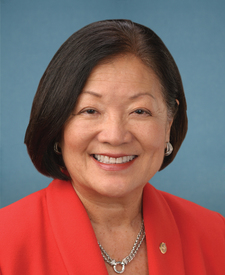
See how Mazie K. Hirono actually votes — against your values.
DeepSyte scores Mazie K. Hirono's record on the issues you care about — not party, not press releases. Take the 2-minute values quiz to see your personal alignment.
Sign in and take the values quiz to see how Mazie K. Hirono's votes line up with your views.
Prediction track record
How often we called Mazie K. Hirono's passage votes correctly, from their stated positions on each bill's tagged topics. Excludes “unclear” calls and abstentions.
0%
Accuracy
0
Correct
1
Incorrect
51
Pending
Wrong119-sjres-184
A joint resolution to direct the removal of United States Armed Forces from hostilities within or against the Islamic Republic of Iran that have not been authorized by Congress.
A joint resolution to direct the removal of United States Armed Forces from hostilities within or against the Islamic Republic of Iran that have not been authorized by Congress.
Based on 3 data points across public statements and recorded votes · AI analysis of public records
119-sjres-184·Consistent
A joint resolution to direct the removal of United States Armed Forces from hostilities within or against the Islamic Republic of Iran that have not been authorized by Congress.
95/100
What they said
Apr 30, 2026
Senator Hirono opposes the ongoing military conflict in Iran, characterizing it as illegal and costly, and expresses concern that the Secretary of Defense may be laying groundwork to reverse the policy allowing women to serve in combat roles.
Voted Yea on A joint resolution to direct the removal of United States Armed Forces from hostilities within or against the Islamic Republic of Iran that have not been authorized by Congress.
Senator Hirono's statement explicitly characterizes the Iran conflict as an 'illegal war' lacking congressional authorization and calls for clarity on its rationale and exit strategy. Her yes vote on S.J.Res. 184, which directs removal of U.S. Armed Forces from unauthorized hostilities in Iran, directly aligns with this stated position. Both the statement and vote address the same core issue—the legality and necessity of ongoing military operations in Iran without congressional approval.
A joint resolution providing for congressional disapproval under chapter 8 of title 5, United States Code, of the rule submitted by the Department of Veterans Affairs relating to "Reproductive Health Services".
85/100
What they said
Mar 10, 2026
The resolution honors abortion providers and clinic staff, affirms their essential role in providing reproductive care, and expresses commitment to protecting their safety and securing reproductive rights against restrictions and political interference.
Voted Nay on A joint resolution providing for congressional disapproval under chapter 8 of title 5, United States Code, of the rule submitted by the Department of Veterans Affairs relating to "Reproductive Health Services".
Senator Hirono's statement strongly supports abortion providers and reproductive rights access, opposing restrictions and political interference. Her no vote on S.J.Res. 10 is consistent with this position: the resolution would have nullified a VA rule that expanded abortion-related care access for veterans. Voting no blocked the disapproval, thereby preserving the rule that enables abortion care provision. The vote aligns with her stated commitment to protecting reproductive rights and access to abortion services.
Providing for congressional disapproval under chapter 8 of title 5, United States Code, of the rule submitted by the Bureau of Alcohol, Tobacco, Firearms, and Explosives relating to "Factoring Criteria for Firearms with Attached 'Stabilizing Braces'".
75/100
What they said
Jun 25, 2026
Senator Hirono opposes the Supreme Court's Wolford v. Lopez decision, which she characterizes as expanding firearm access on private property. She argues that Hawaii's strong gun safety laws have contributed to the state's low gun death rate and expresses concern that the ruling undermines public safety.
Voted Nay on Providing for congressional disapproval under chapter 8 of title 5, United States Code, of the rule submitted by the Bureau of Alcohol, Tobacco, Firearms, and Explosives relating to "Factoring Criteria for Firearms with Attached 'Stabilizing Braces'".
Senator Hirono's statement opposes expanding firearm access and supports strong gun safety laws. Her NO vote on the joint resolution is consistent with this position: the resolution would nullify an ATF rule that regulates stabilizing braces (devices that convert pistols into short-barreled rifles subject to NFA oversight). By voting NO, she opposed the nullification and thus supported the ATF's regulatory restriction on firearm modifications. However, the statement addresses a specific Hawaii state law issue (Wolford v. Lopez and private property access) while the bill addresses a distinct federal regulatory question (stabilizing brace classification). The votes align directionally on gun safety, but the specific policy questions differ.
Pairs with ambiguous language and high uncertainty are withheld until more data is available. Procedural, cloture, and amendment votes are excluded — they don't cleanly signal substantive support or opposition.
Pro analysis
AI rep analysis — Pro
Get an AI-narrated read on Mazie K. Hirono's full voting record against your stated values — aligned themes, conflicts, notable votes, and what to watch for.
We haven't extracted campaign positions for Mazie K. Hirono yet. Once their campaign website or position pages are processed, this card will track what they said vs how they voted.
Crossing the aisle
Passage votes where Mazie K. Hirono broke ranks with ≥75% of Democrats. Threshold catches substantively partisan splits; unanimous-ish or close votes are excluded.
1
Cross-aisle vote
119-hr-5334·Jul 29, 2026·77% of D voted YES
Lindsey O. Graham Sanctioning Russia and Iran Act of 2026
Hirono, Johnson Introduce Legislation to Increase Judiciary Transparency | Mazie K. Hirono - A Voice for Hawai'i in the U.S. Senate
Position: Senators Hirono and Representative Johnson introduced the Open Meetings Act to require Judicial Conference meetings to be open to the public by default, with livestreamed audio and published agendas, while permitting closure of sensitive portions with explanation.
WASHINGTON, D.C. – U.S. Senator Mazie K. Hirono (D-HI), a senior member on the Senate Committee on the Judiciary, and U.S. Representative Hank Johnson (D-GA), Ranking Member of the House Judiciary Subcommittee over Federal Courts, introduced the Open Meetings Act, legislation to require Judicial Conference meetings to be more open and accessible to the American people. The Judicial Conference is the policymaking and administrative governing body for the federal court system. By granting public access to these meetings by default, this bill will increase transparency in the Judiciary.
“The federal judiciary is a key pillar of our constitutional system of government,” said Senator Hirono. “Americans need to have confidence that the judiciary is beholden only to the law and not to any ideological agendas or special interests. By requiring meetings of the judiciary’s policymaking and administrative arm to be open to the public by default, this commonsense bill will help increase transparency and support that confidence.”
Currently, the policies that govern much of the administration of the federal judicial system are discussed and implemented during semiannual Judicial Conference meetings—all behind closed doors. While the Conference publishes an official report and press release summarizing the meeting activities after the meetings have concluded, there is no advance notice of the topics to be discussed, and no transcripts are made available.
The Open Meetings Act would make Judicial Conference meetings accessible to the public through livestreamed audio recordings and published meeting agendas. The Judicial Conference would still be permitted to close certain sensitive portions of its meetings as long as it provided an explanation for doing so. By lifting the curtain that stands between the Judicial Conference and the American people, this legislation would help ensure that the governance of the federal Judiciary remains apolitical and transparent to the public.
Led by Representative Hank Johnson, companion legislation was co-sponsored in the U.S. House of Representatives by Steve Cohen (D-TN), Chris Deluzio (D-PA), Raja Krishnamoorthi (D-IL), Eleanor Holmes Norton (D-DC), Delia Ramirez (D-IL), and Shri Thanedar (D-MI).
Hirono, Ossoff Introduce Right to Vote Act | Mazie K. Hirono - A Voice for Hawai'i in the U.S. Senate
Position: Senators Hirono and Ossoff introduced the Right to Vote Act to establish a federal statutory right to vote in federal elections, allowing citizens to challenge policies that restrict ballot access and requiring states to meet a high bar to justify voting restrictions.
WASHINGTON, D.C. – U.S. Senators Mazie K. Hirono (D-HI) and Jon Ossoff (D-GA) introduced the Right to Vote Act, legislation to create the first-ever affirmative federal voting rights guarantee for all eligible citizens. As the Trump Administration continues to threaten the voting rights of millions of Americans nationwide, this legislation would enshrine the fundamental right to vote into law.
“Nothing is more fundamental to our democracy than ensuring that all citizens can exercise their fundamental right to vote. Donald Trump and Congressional Republicans know their agenda is deeply unpopular, but instead of delivering for the American people, they are working overtime to disenfranchise millions of voters who have the constitutional right to vote them out of office,” said Senator Hirono. “By empowering voters to fight back against restrictions on their voting rights, this legislation will help ensure that every voice can be heard on Election Day.”
The Right to Vote Act would protect American citizens’ fundamental right to vote by establishing a first-ever statutory right to vote in federal elections — protecting U.S. citizens from laws that make it harder to cast a ballot. This legislation would allow Americans to enforce that right by challenging in court any policy that unduly restricts ballot access. States attempting to restrict voting access would have to meet a high bar to justify any policy that makes it harder for U.S. citizens to participate in federal elections.
Senator Hirono has long fought to ensure all American voters can cast their ballots. On the 60th anniversary of the Voting Rights Act of 1965, Senator Hirono introduced the Time Off to Vote Act, legislation that would require employers to provide at least two consecutive hours of paid leave in order to vote in federal elections. Last Congress, she joined her colleagues on National Voter Registration Day in introducing a resolution recognizing September as “National Voting Rights Month.” Additionally, Senator Hirono has previously cosponsored the Election Worker Protection Act and the Youth Voting Rights Act, legislation that would also help increase election safeguards and voting access.
Senator Hirono has also consistently fought back against repeated attempts to disenfranchise millions of voters. Following the Supreme Court’s Callais decision, which effectively gutted Section 2 of the Voting Rights Act of 1965, Senator Hirono raised alarms about the dangerous ideological agenda promoted by the Supreme Court majority that would dilute the voting power of minorities, influencing elections for years to come. In March, on the Senate Floor, Senator Hirono opposed the Safeguard American Voter Eligibility (SAVE) America Act which, unlike its name suggests, would make it significantly harder for Americans to exercise their right to vote. In her speech, she highlighted how the proposed legislation would prevent millions of American citizens—including servicemembers and their families, married women, and those without a passport— from being able to vote.
In addition to Senators Hirono and Ossoff, the Right to Vote Act is co-sponsored by Senators Reverend Raphael Warnock (D-GA), Jeff Merkley (D-OR), John Hickenlooper (D-CO), Adam Schiff (D-CA), Amy Klobuchar (D-MN), Angus King (I-ME), Richard Blumenthal (D-CT), Maria Cantwell (D-WA), and Alex Padilla (D-CA).
Hirono Statement on Wolford v. Lopez Supreme Court Decision | Mazie K. Hirono - A Voice for Hawai'i in the U.S. Senate
Position: Senator Hirono opposes the Supreme Court's Wolford v. Lopez decision, which she characterizes as expanding firearm access on private property. She argues that Hawaii's strong gun safety laws have contributed to the state's low gun death rate and expresses concern that the ruling undermines public safety.
WASHINGTON, D.C. – Today, U.S. Senator Mazie K. Hirono (D-HI), a senior member of the Senate Committee on the Judiciary, released the following statement after the Supreme Court ruled to change longstanding Hawaii gun regulation and make it easier for people to bring guns onto private property in its Wolford v. Lopez decision:
“Hawaii has the lowest rate of gun deaths in the country, largely because of our historically strong gun safety laws. Once again, this out-of-control Supreme Court majority is placing political ideology above protecting lives, making our state and our country less safe by expanding the presence of firearms. As this Court exacerbates our nation’s gun violence crisis, I remain committed to working towards the common-sense gun safety policies our country desperately needs.”
Hirono, Murray, Reed, Whitehouse, Pocan, Scott Introduce Bill to Make College More Affordable, Double Pell Grant | Mazie K. Hirono - A Voice for Hawai'i in the U.S. Senate
Position: The legislators support legislation to nearly double the maximum Pell Grant award, index it for inflation, and protect the program from budget cuts to make higher education more affordable for working and middle-class students.
WASHINGTON, D.C. – Today, U.S. Senators Mazie K. Hirono (D-HI), Patty Murray (D-WA), Jack Reed (D-RI) and Sheldon Whitehouse (D-RI) and U.S. Representatives Mark Pocan (D-WI) and Robert C. “Bobby” Scott (D-VA) introduced bicameral legislation to make higher education more affordable for millions of working and middle-class students across the country. The Pell Grant Preservation and Expansion Act of 2026 would nearly double the Pell Grant maximum award, index the maximum award for inflation, and make other changes to expand the award for working students, while also protecting the program from budget shortfalls and eligibility changes.
“For thousands of students in Hawaii and millions of students across the country, Pell Grants have helped to make higher education more affordable. But as costs continue to rise, it is becoming increasingly more difficult for students to pursue the college and career opportunities that will allow them to succeed in the future,” said Senator Hirono. “By increasing the Pell Grant maximum award, indexing the maximum award for inflation, and protecting the program from future cuts, this legislation will allow students across the country to reach their full potential.”
“While Trump is driving up the cost of just about everything, including college—Democrats are instead putting forward reasonable proposals to make sure everyone who is willing to work hard can pursue a higher education,” said Senator Patty Murray. “There is absolutely no reason students should be saddled with mountains of debt if they want to get a college degree. Government should be helping to open doors for American students, not slamming them shut like Trump is doing. Every year, I fight to protect and expand the Pell Grant—this bill would increase Pell Grants for millions of students to help them afford a postsecondary education and further their careers while helping ensure the Pell Grant is there to support students for generations to come.”
“For decades, Pell grants have been the cornerstone of our federal financial aid programs. Today, with the costs of higher education continuing to increase, these grants cover a shrinking percentage of the actual cost of college. Students should not have to rack up mountains of debt just to continue their education and earn their degree,” said Senator Reed. “It is past time we double the power of Pell grants and ensure this essential financial aid keeps up with inflation. This legislation would help expand access to Pell grants, lower student debt, strengthen our economy and workforce, and help deserving students reach their full potential.”
“Pell Grants, one of Senator Claiborne Pell’s enduring legacies, have helped generations of Rhode Islanders get a high-quality education while taking on less debt,” said Senator Whitehouse. “Our bill would increase the purchasing power of a Pell Grant and inflation-proof the awards to bring us closer to realizing Senator Pell’s vision of affordable higher education for all.”
“No one should be denied a chance at a higher education if they are smart and capable enough but are unable to afford it. As a recipient of the Pell Grant myself, I know just how instrumental of a tool it is to make college accessible for all,” Congressman Pocan said. “Unfortunately, skyrocketing tuition costs and perpetual underfunding continue to undermine this critical program. The Pell Grant Preservation and Expansion Act would not only double the maximum Pell Grant, it would protect the program from future cuts, expand eligibility to include DREAMers, and ensure that postsecondary education is attainable for every student, regardless of their socioeconomic status.”
“The Pell Grant is the most important tool we have to help students afford college. Unfortunately, due to Republicans' attacks on federal student aid — including slashing loans in annual appropriations and refusal to fully fund the Pell Grant program in the 'Big Ugly Bill' — students now face a significant Pell Grant shortfall, made worse by the rising cost of college. Simply put, Pell Grants' purchasing power has severely eroded, making it even more difficult for students to afford higher education,” said House Committee on Education and Workforce Ranking Member Robert C. "Bobby" Scott. “By doubling the maximum Pell Grant award and moving the program to mandatory funding, the Pell Grant Preservation and Expansion Act directly addresses this shortfall and begins to restore purchasing power to help millions of students earn a quality degree without being forced to take on excessive debt.”
The federal Pell Grant program, which currently serves more than 7 million students nationwide, has been the cornerstone of federal student aid for more than 50 years. But with rising costs, the purchasing power of the Pell Grant maximum award has significantly declined over the years—from covering more than three-quarters of the cost of attendance at a four-year, public institution when the program was first created, to now covering less than one-third of the cost of attendance today. At the same time, the Pell Grant program faces a substantial shortfall, putting it at severe risk of future cuts.
In response, the Pell Grant Preservation and Expansion Act of 2026 would double the Pell Grant maximum award—from $7,395, to $15,000—over six years, index the maximum award for inflation to maintain its purchasing power, and make the program fully mandatory funding to protect it from future cuts. In addition, the bill would also expand the program to include DREAMers and restore lifetime eligibility to 18 semesters—among other important changes that will benefit students.
“The Pell Grant program is our nation’s foundational investment in college affordability, but the award has not kept pace with rising costs, and the program’s funding structure puts it at ongoing risk of cuts. We strongly support the Pell Grant Preservation and Expansion Act, which not only increases the maximum Pell award to make college far more affordable for millions of students, but expands, protects, and strengthens the program for years to come,” said Michele Zampini, Associate Vice President, Federal Policy & Advocacy at The Institute for College Access & Success (TICAS).
“The Pell Grant is the cornerstone of federal financial aid, but its funding is perpetually one shortfall away from cuts and the maximum award now covers less than a quarter of the cost of attending an in-state public four-year college. Students cannot meet their most basic needs—food, housing, child care—on a grant that no longer keeps pace with what college actually costs,” said Bryce McKibben, Senior Director of Policy and Advocacy at The Hope Center for Student Basic Needs at Temple University. “The Hope Center for Student Basic Needs strongly supports the Pell Grant Preservation and Expansion Act as a transformative proposal that will dramatically cut the cost of higher education borne by students. By funding Pell as a permanent program, this legislation finally frees the program from the annual budget brinkmanship that leaves millions uncertain whether their financial aid will be there next year. It also overhauls outdated red tape, administrative burdens, and eligibility restrictions that prevent millions of deserving students from getting aid when they need it most. This bill is a clear statement that a low-income student's path to a degree is worth protecting, for this generation and the ones to come.”
“EdTrust is proud to support the Pell Grant Preservation and Expansion Act, a comprehensive package of reforms that will strengthen the Pell Grant for millions of students from low-income backgrounds and students of color. By doubling the maximum Pell award and making the program fully mandatory, among other important improvements, this bill addresses financial barriers that make it harder for college students to earn a degree and ensures the program will not face budget shortfalls like the current one. This bill is a tremendous step toward ensuring that higher education remains accessible for millions of students who otherwise would not have the ability to pursue their dreams and gain valuable skills. We salute U.S. Senators Mazie Hirono, Patty Murray, Jack Reed , and Sheldon Whitehouse and Representatives Mark Pocan and Bobby Scott for their leadership on behalf of students from low-income backgrounds and students of color and urge Congress to pass the bicameral Pell Grant Preservation and Expansion Act,” said Denise Forte, President and CEO at EdTrust.
In addition to Senators Hirono, Murray, Reed, and Whitehouse, the Pell Grant Preservation and Expansion Act of 2026 is co-sponsored Tim Kaine (D-VA), Alex Padilla (D-CA), Jeanne Shaheen (D-NH), Michael Bennet (D-CO), Richard Blumenthal (D-CT), Ed Markey (D-MA), Tammy Duckworth (D-IL), Martin Heinrich (D-NM), Raphael Warnock (D-GA), Elizabeth Warren (D-MA), Kirsten Gillibrand (D-NY), Tina Smith (D-MN), Chris Van Hollen (D-MD), Chris Murphy (D-CT), Cory Booker (D-NJ), Ron Wyden (D-OR), Amy Klobuchar (D-MN), Dick Durbin (D-IL), Angus King (I-ME), Jeff Merkley (D-OR), John Fetterman (D-PA), Jon Ossoff (D-GA), and Adam Schiff (D-CA).
In addition to Representatives Scott and Pocan, companion legislation in the U.S. House of Representatives was co-sponsored by Nanette Barragán (D-CA), Joyce Beatty (D-OH), Suzanne Bonamici (D-OH), Danny Davis (D-IL), Suzan DelBene (D-MI), Mark DeSaulnier (D-CA), Debbie Dingell (D-MI), Dwight Evans (D-PA), Shomari Figures (D-AL), John Garamendi (D-CA), Jesus “Chuy” Garcia (D-IL), Adelita Grijalva (D-AZ), Pablo Hernandez (D-PR), Jonathan Jackson (D-IL), Tim Kennedy (D-NY), Summer Lee (D-PA), Seth Magaziner (D-RI), John Mannion (D-NY), Doris Matsui (D-CA), Lucy McBath (D-GA), Gwen Moore (D-WI), Seth Moulton (D-MA), Frank J. Mrvan (D-IN), Donald Norcross (D-NJ), Eleanor Holmes Norton (D-DC), Chellie Pingree (D-ME), Mike Quigley (D-IL), Deborah Ross (D-NC), Linda Sánchez (D-CA), Jan Schakowsky (D-IL), Simon, Bennie Thompson (D-MS), Rashida Tlaib (D-MI), Juan Vargas (D-CA), and Frederica Wilson (D-FL).
The bill is endorsed by The Institute for College Access and Success (TICAS), The Hope Center for Student Basic Needs (Hope Center), The Education Trust (EdTrust), Association of Community College Trustees (ACCT), American Association of Colleges for Teacher Education (AACTE), National Association for College Admission Counseling (NACAC), United States Student Association (USSA), National College Attainment Network (NCAN), Southern California College Attainment Network (SoCal CAN), HawaiiKidsCAN, Institute for Higher Education Policy (IHEP), The Center for Law and Social Policy (CLASP), Coalition on Human Needs (CHN), New America Higher Education Program, Legal Defense Fund (LDF), Third Way, College Possible, FuturesNW, Denver Scholarship Foundation, Capital Area College Access Network (CAPCAN), OHIO YAB (Overcoming Hurdles in Ohio Youth Advisory Board), ACTION Ohio (Alumni of Care Together Improving Outcomes Now Ohio), Vickery Meadow Youth Development Foundation, American Federation of State, County and Municipal Employees (AFSCME), NASPA--Student Affairs Administrators in Higher Education, and LeadMN.
The full text of the bill is available here. A fact sheet is available here.
Hirono Statement on Committee Passage of FY27 National Defense Authorization Act | Mazie K. Hirono - A Voice for Hawai'i in the U.S. Senate
Position: Senator Hirono opposed the FY27 NDAA as drafted due to concerns about a 40% year-over-year increase in defense spending during a time of domestic economic hardship, while supporting specific provisions within the bill that invest in military readiness, Hawaii infrastructure, servicemembers' families, and Indo-Pacific defense capabilities.
WASHINGTON, D.C. – Today, U.S. Senator Mazie K. Hirono (D-HI), a senior member of the Senate Armed Services Committee (SASC) and Ranking Member of the Readiness and Management Support Subcommittee, released the following statement after the Committee passed its draft of the Fiscal Year (FY) 2027 National Defense Authorization Act (NDAA) earlier this week:
“I’m proud to have secured numerous provisions in the Senate’s FY27 NDAA that invest in military readiness, Hawaii, the Indo-Pacific Region, and our servicemembers and their families, while also holding the Army accountable on the military training land lease negotiations. However, I could not in good conscience vote to advance a bill that paves the way for an up to 40% increase in year-over-year Department of Defense spending, especially as this administration wages an illegal war in Iran with no plan or end in sight.
“Our nation’s strength depends not only on our military power, but also on the economic well-being of our people. At a time when families across the country are struggling with skyrocketing costs, the Trump Administration is asking Congress to authorize a massive increase in defense spending just months after slashing programs like SNAP and Medicaid upon which millions of Americans rely. Equally concerning, this bill comes amid Pentagon leadership’s racist and sexist war on diversity, equity, and inclusion, including the firing and withheld promotion of dozens of officers, most of whom are women or persons of color. While I’m proud of many of the provisions in this bill that support our servicemembers and our national security, I voted against authorizing a massive increase in military spending for this regime. I remain committed to working toward a final version of the bill that balances the importance of our national security with the domestic needs of the American people.”
Despite her opposition to the bill, Senator Hirono secured and supported several key provisions in the FY 2027 NDAA. Specifically, the bill includes provisions introduced by Senator Hirono that:
Invest in Critical Infrastructure:
Invests over $2.2 billion for 17 military construction projects in Hawaii:
Support Servicemembers, Veterans, and their Families:
Strengthen Our Ability to Protect the Indo-Pacific Region:
$15 million and relieves the area cost factor adjustments for Alaska, Hawaii, and other
islands in the Indo-Pacific for a period of 5 years.
Prioritize Sustainability and the Environment:
Hold this Administration Accountable:
Hirono, Jayapal Introduce Legislation to Ensure AANHPI Students are Accounted for in Schools | Mazie K. Hirono - A Voice for Hawai'i in the U.S. Senate
Position: The release introduces legislation requiring schools to disaggregate student data by specific Asian American, Native Hawaiian, and Pacific Islander subgroups rather than broad racial categories, to better identify and address disparities in educational outcomes and support for these students.
WASHINGTON, D.C. – Today, U.S. Senator Mazie K. Hirono (D-HI) and U.S. Representative Pramila Jayapal (D-WA) introduced the All Students Count Act, legislation that would require more comprehensive and equitable disaggregation of Asian American, Native Hawaiian, and Pacific Islander (AANHPI) student data in K-12 schools. Disaggregating student data would help ensure AANHPI student groups are better accounted for by states and school districts and supported by schools across the country.
“In Hawaii, we celebrate our diverse communities and recognize the differences in their backgrounds, experiences, and challenges faced. By disaggregating AANHPI student data, this legislation helps schools better understand and address students’ individual needs,” said Senator Hirono. “As this regime continues its attacks on diversity, I will continue fighting to ensure all students feel recognized and supported in the classroom.”
“As someone who came to this country alone at 16 with nothing in my pockets, I deeply understand the unique challenges in the US education system that immigrant communities face. Our students deserve visibility at all levels. By ensuring that student data collections capture the diverse experiences of Asian American, Native Hawaiian, and Pacific Islander children, we can work to close the education gap in our communities,” said Representative Jayapal.
Around the country, states and school districts have made significant progress in disaggregating data on K-12 student achievement for major racial and ethnic groups, including for “Asian American” and “Native Hawaiian and Pacific Islander” students. However, these two categories condense dozens of distinct racial and ethnic subgroups, each with unique histories and varying access to social and economic opportunities, making it difficult to identify and address disparities between these subgroups.
“Protecting Southeast Asian American and other AANHPI students’ right to be seen is more important than ever, especially during AANHPI Heritage Month when we are called to reflect on the strength and diversity of our communities,” said Quyen Dinh, Executive Director at the Southeast Asia Resource Action Center (SEARAC). “Our students have navigated overlapping crises, from COVID-19, to rising anti-Asian hate and targeting by ICE, and the impacts are still felt in classrooms today. In order to address our communities’ needs, their lived experiences must be seen in federal data. SEARAC thanks Sen. Hirono and Rep. Jayapal for their continued leadership in championing the All Students Count Act.”
“We applaud Senator Hirono and Representative Jayapal for continuing to champion the importance of disaggregating data by race and ethnicity to ensure that the diverse experiences and needs of Asian American, Native Hawaiian and Pacific Islander (AANHPI) students are accurately represented. Without such critical data, AANHPI students’ needs will remain invisible in education system,” said Jo Ann Paaio, National Council of Asian Pacific Americans (NCAPA) Policy Director.
The All Students Count Act of 2026 would support equitable access to education by ensuring that student data collections capture the diverse experiences of AANHPI children. Specifically, the bill would:
In addition to Senator Hirono, this legislation was also cosponsored by Senators Alex Padilla (D-CA), Kirsten Gillibrand (D-NY), Cory Booker (D-NJ), Elizabeth Warren (D-MA), Ed Markey (D-MA), Jeff Merkley (D-OR), and Dick Durbin (D-IL).
In addition to Representative Jayapal, companion legislation in the House of Representatives was cosponsored by Representatives Ed Case (D-HI), Sharice Davids (D-KS) Suzan DelBene (D-WA), Jesús “Chuy” García (D-IL), Jimmy Gomez (D-CA), Ro Khanna (D-CA), Grace Meng (D-NY), Eleanor Holmes Norton (D-DC), and Jan Schakowsky (D-IL).
The All Students Count Act is endorsed by the AAPI Equity Alliance, American Association of University Women (AAUW), APAPA (Asian Pacific American Public Affairs), APIA Scholars, Asian Americans Advancing Justice-AAJC, Asian Pacific Americans in Higher Education (APAHE), Cambodian Association of Greater Philadelphia, Chinese for Affirmative Action, Clearinghouse on Women's Issues, Feminist Majority, Japanese American Citizens League, Khmer Anti-deportation Advocacy Group (KhAAG), National Asian Pacific American Women's Forum, National Asian/Pacific Islander American Chamber of Commerce and Entrepreneurship (National ACE), National Center for Youth Law, National Education Association, National Federation of Filipino American Associations (NaFFAA), National Korean American Service and Education Consortium, National Queer Asian Pacific Islander Alliance, NBJC, OCA Sacramento Chapter, OCA-Asian Pacific American Advocates, OCA-NY, PFLAG National, PIVOT, The Progressive Vietnamese American Organization, South Asian Public Health Association, Southeast Asia Resource Action Center (SEARAC), Stop AAPI Hate, The Cambodian Family, The Sikh Coalition, and the United Territories of Pacific Islanders Alliance.
Senator Hirono has long advocated on behalf of AANHPI communities—especially students— in Hawaii, the U.S., and Pacific Island nations and territories. Earlier this month, Senator Hirono’s resolution recognizing May as AANHPI Heritage Month passed the Senate by unanimous consent. Last month, Senator Hirono held a bicameral press conference, highlighting the Administration’s all-out attacks on minority students. For the past year, Senator Hirono has been fighting back against the Trump Administration’s anti-diversity agenda for public schools across the country. Last May, she introduced a bill to promote the teaching of Asian Pacific American history for high school students and teachers who enroll in the U.S. Department of Education’s American History and Civics Academies programs.
Hirono Urges U.S. Forest Service to Provide Hawaii National Forest Report, IPIF Analysis | Mazie K. Hirono - A Voice for Hawai'i in the U.S. Senate
Position: Senator Hirono opposes the Trump Administration's decision to close the Institute of Pacific Island Forestry and criticizes the Administration's refusal to provide Congress with the legally required Hawaii National Forest Study Report, arguing the withholding violates congressional authority and the law.
“You told me during the hearing that you fight for the Forest Service every day. Your actions tell a very different story”
WASHINGTON, D.C. – U.S. Senator Mazie K. Hirono (D-HI), a member of the Senate Committee on Energy and Natural Resources (ENR), pressed U.S Forest Service Chief Tom Schultz on the Administration’s refusal to provide Congress with the Hawaii National Forest Study Report, as required by law. Last week, during a full ENR committee hearing, Senator Hirono asked Chief Schultz to provide her with the study report and details informing the Administration’s decision to close the Institute of Pacific Island Forestry (IPIF) headquarters in Hilo, Hawaii. After not receiving the Forest Study report, Senator Hirono sent a letter Chief Schultz demanding the Administration immediately provide her with the information as well as clarification on factors influencing the IPIF decision.
“When I questioned you about the report before the Committee, you said that you had the report ready and you were willing to provide it on the spot. Yet I have been told by your staff that they are unable to transmit the report. … This is profoundly unacceptable and is a disturbing example of this administration’s disrespect for Congress and the law,” wrote Senator Hirono.
In December 2022, Congress passed legislation requiring the U.S. Department of Agriculture (USDA) to conduct a study determining the feasibility and suitability of establishing a National Forest System in Hawaii. Instead of the results of this three-year study, on May 8—five days before the ENR Forest Budget hearing—Members of Congress received a letter from USDA Secretary Brooke Rollins with the recommendation stating: “the U.S. Department of Agriculture does not recommend establishing a unit of the National Forest System in the study area. The Trump Administration recognizes that those closest to lands and the people who use them - State and local governments that understand and respect the needs and desires of their communities - are in the best position to manage lands to meet those needs.” The letter to Congress failed to provide data from the eight separate areas the Hawaii National Forestry Study was legally required to measure, nor did it include any details or findings supporting its conclusion. Despite Chief Schultz committing to providing this report, Senator Hirono has still not received it.
Senator Hirono also raised alarms about the proposed closure of IPIF, highlighting the research institute’s unique location, capabilities, and importance in the region. Earlier this year, the Trump Administration announced a plan to close the majority of the U.S. Forest Service research facilities, including IPIF, claiming the closures were a “a business” decision. After learning the costs of relocating IPIF far exceeded the costs of deferred maintenance for the existing facility, Senator Hirono demanded information about the other factors that went into the closure decision.
“You told me during the hearing that you fight for the Forest Service every day. Your actions tell a very different story. Your dismissive attitude towards Congress, the law, and the impact that closing IPIF would have on our Forest Service employees and forests throughout the Pacific region is unacceptable. So that I understand your decisions, provide me the National Forest Study Report and complete analysis on IPIF immediately,” concluded Senator Hirono.
Senator Hirono has long championed forest conservation and research initiatives in Hawaii and across the nation. Last month, she urged Senate Appropriations Subcommittee on Interior, Environment, and Related Agencies leadership to include funding for the U.S. Forest Service and Rangeland Research and Development Programs (Forest Service R&D) in the upcoming fiscal year (FY2027) funding bill, which the Trump administration zeroed out. In February 2026, Senator Hirono introduced a bill establishing a minimum staffing level and ensuring adequate resources be provided for the Institute of Pacific Islands Forestry and Institute of Tropical Forestry in Puerto Rico. In October 2025, Senator Hirono urged U.S. Department of the Interior Secretary Doug Burgum to reconsider the Trump Administration’s decision to eliminate funding for the U.S. Geological Survey’s (USGS) Ecosystems Mission Area (EMA), which supports critical research that helps our country in facilitating conservation management, as well as understanding and responding to environmental threats. In September 2025, she introduced the Tropical Plant Health Initiative Act to expand research and grant funding opportunities to help combat pests and diseases affecting tropical plants including coffee plants, macadamia trees, and other iconic Hawaii staples. Senator Hirono has also introduced the Continued Rapid Ohia Death Response Act, in each Congress since 2022. This legislation would help restore native forests in Hawaii by enabling federal agencies – including the U.S. Geological Survey (USGS), U.S. Fish and Wildlife Service (FWS), and U.S. Forest Service (USFS) – to more closely coordinate with the State of Hawaii to prevent the spread of Rapid Ohia Death.
To watch the full exchange between Senator Hirono and Chief Schultz, click here.
The full text of the letter is available here and below:
During Wednesday’s Senate Energy and Natural Resources Committee hearing, you made assurances before the committee that you would provide me with a copy of the Hawaii National Forest Study report. I still do not have a copy. Your failure to provide Congress the report, as required by the Consolidated Appropriations Act, 2023 (P.L. 117-328), Division DD Title II, Section 202, is unacceptable.
This law requires the United States Department of Agriculture’s (USDA) Forest Service to report on the results of a 3-year study to determine the suitability and feasibility of establishing a unit of the National Forest System in Hawaii. This study was to be comprised of eight separate components, which include the following:
Instead of providing Congress with a report containing detailed results and analyses covering the aforementioned areas, as required by law, USDA Secretary Rollins transmitted a letter to Congress last week with the recommendation that “the U.S. Department of Agriculture does not recommend establishing a unit of the National Forest System in the study area. The Trump Administration recognizes that those closest to lands and the people who use them - State and local governments that understand and respect the needs and desires of their communities - are in the best position to manage lands to meet those needs.”
When I questioned you about the report before the Committee, you said that you had the report ready and you were willing to provide it on the spot. Yet I have been told by your staff that they are unable to transmit the report as it is currently held up in clearance. This is profoundly unacceptable and is a disturbing example of this administration’s disrespect for Congress and the law.
Additionally, during our exchange on the Forest Service’s evaluation to close the Institute of Pacific Islands Forestry (IPIF), I asked you to provide details on the $17 million deferred maintenance needs that your Associate Chief, Chris French, had quoted to my staff six weeks ago. My staff received information late yesterday afternoon clarifying that Mr. French had the wrong information and the $17 million figure was the replacement cost for IPIF, not the deferred maintenance cost. In other words, it would cost the Forest Service $17 million to purchase a similar facility, which would be a valid argument for keeping IPIF open.
During Mr. French’s briefing with my staff, he reiterated that evaluating IPIF for closure was strictly a business decision. Based on the information that the Forest Service has provided me and my staff to date, the costs incurred by IPIF are as follows:
When confirming these expenses with your staff, we were told that these costs “will be factored in among other factors as a decision is being made.” This is concerning, as Mr. French explicitly stated that whether to close IPIF would be strictly a business decision. It now seems like the decision will be political, if not solely based on facility costs. As such, please provide a list of factors, other than these costs, that will inform the decision on whether to close IPIF.
You told me during the hearing that you fight for the Forest Service every day. Your actions tell a very different story. Your dismissive attitude towards Congress, the law, and the impact that closing IPIF would have on our Forest Service employees and forests throughout the Pacific region is unacceptable. So that I understand your decisions, provide me the National Forest Study Report and complete analysis on IPIF immediately.
Hirono Presses Hegseth on Illegal War in Iran, Women in Combat | Mazie K. Hirono - A Voice for Hawai'i in the U.S. Senate
Position: Senator Hirono opposes the ongoing military conflict in Iran, characterizing it as illegal and costly, and expresses concern that the Secretary of Defense may be laying groundwork to reverse the policy allowing women to serve in combat roles.
~Watch Senator Hirono’s Questions Here~
WASHINGTON, D.C. Today, U.S. Senator Mazie K. Hirono (D-HI), a senior member of the Senate Armed Services Committee (SASC) and Ranking Member of the Subcommittee on Readiness and Management Support, raised concerns about the true costs of Trump’s illegal war in Iran and pressed U.S. Department of Defense (DOD) Secretary Pete Hegseth on the implications of a Pentagon review Hegseth ordered examining “the effectiveness of women in combat jobs.”
“Since the start of the war, 13 brave U.S. Service members have been killed, more than 400 have been wounded. We burned through over $25 billion in taxpayer money. […] The closure of the Strait of Hormuz, which somehow caught the president by surprise, even though he had to have been warned, is directly contributing to the unaffordable prices that Americans are facing,” said Senator Hirono. “This illegal war is driving up costs, undermining readiness, and alienating our allies with neither a clear rationale for starting this war, nor an exit strategy.
Senator Hirono has consistently expressed concerns about how the ongoing war in Iran could affect overall readiness. Earlier this month, she questioned Admiral Samuel J. Paparo, Jr., Commander of the United States Indo-Pacific Command (INDOPACOM) on how munitions expenditures in the Iran War are impacting readiness in the Indo-Pacific. In March, Senator Hirono also pressed the vice chiefs of all five military services on the impact of the ongoing war in Iran on each of their respective forces’ readiness.
Senator Hirono also confronted Secretary Hegseth on his changing position towards women serving in combat roles, citing a Pentagon study he recently directed to review the “effectiveness of women in combat jobs."
“I am concerned you are laying the groundwork to reverse the policy allowing women to serve in these units,” said Senator Hirono. “Did you order the review to support a potential decision to overturn the policy of having women in combat roles?”
At the hearing, Secretary Hegseth refused to answer Senator Hiono’s straightforward question.
Since 2016, women who meet the genderless standards for combat fitness have been allowed to serve in combat roles. Senator Hirono has previously asked senior military leadership if they believed the fact of women being present in combat units lowers standards. Each member of leadership, when questioned by Senator Hirono, confirmed that there was no evidence of this.
Hirono Presses Burgum on Efforts to Erase U.S. History, Staffing Cuts, Demands Accountability | Mazie K. Hirono - A Voice for Hawai'i in the U.S. Senate
Position: Senator Hirono opposes the Trump Administration's removal of historical content about slavery, climate change, and Native American history from national park materials, and criticizes significant staffing cuts at the Department of the Interior without transparent accounting.
~ Watch Senator Hirono’s Questions Here~
WASHINGTON, D.C. – Today, U.S. Senator Mazie K. Hirono (D-HI), a member of the Senate Committee on Energy and Natural Resources (ENR), questioned U.S. Department of the Interior (DOI) Secretary Doug Burgum on the Department’s efforts to remove mentions of key aspects of U.S. History, including slavery, in national parks across the country. In the full Committee hearing, Hirono also raised alarms about staff vacancies across DOI and the Secretary’s failure to account for how many jobs have been cut following multiple rounds of firings and early retirements.
“Mr. Secretary, is slavery a partisan ideology?” asked Senator Hirono.
Earlier this year, Senator Hirono joined her Democratic colleagues in the Senate in sending a letter to Secretary Burgum demanding answers from the National Park Service (NPS) following reports that NPS staff across the country are removing signage from national parks about slavery, Tribal history, and climate change. Secretary Burgum failed to address the questions posed, instead stating that “NPS […] must ensure park interpreted materials accurately reflect American history and not partisan ideology.”
At the hearing, Secretary Burgum refused to answer Senator Hirono’s straightforward question.
According to reports, Trump Administration officials have ordered national parks to remove dozens of signs and displays related to slavery, climate change, environmental protection, and settlers’ mistreatment of Native Americans in a renewed push to implement President Donald Trump’s executive order on “restoring truth and sanity to American history.”
Senator Hirono also pressed Secretary Burgum on staffing cuts across DOI after his failure to account for how many employees had been fired or forced into early retirement.
“Where are we in terms of how many employees you have?” asked Senator Hirono.
DOI is made up of 11 bureaus including the National Park Service, U.S. Geological Survey, Bureau of Land Management, and Bureau of Indian Affairs—all of which have faced significant staff cuts in the past year according to reports. Prior to President Trump’s 2025 inauguration, DOI employed approximately 70,000 staff. The Department has yet to provide updated numbers of how many DOI employees remain.
Today, Secretary Burgum was once again unable to provide an accurate assessment.
“I find it totally unacceptable that you don’t know what’s going on in your own department,” said Senator Hirono.
Since the beginning of President Trump’s second term, Senator Hirono has been raising alarms about the Trump Administration’s attacks on the federal workforce and funding at DOI. In March 2025, Senator Hirono took to the Senate Floor to highlight the impacts of these mass firings on the interdiction of brown tree snakes, a highly invasive species. Following the administration’s attacks, Senator Hirono urged Secretary Burgum to reinstate the DOI’s Fish and Wildlife Services probationary employees in Hawaii who were hastily fired by the Trump Administration, emphasizing the important roles they serve in preserving Hawaii’s environment and natural resources. In February 2025, Senator Hirono urged Secretary Burgum to resolve staffing shortages at NPS, following President Trump’s hiring freeze and buyout offers.
Hirono Statement on Supreme Court Further Gutting Voting Rights Act | Mazie K. Hirono - A Voice for Hawai'i in the U.S. Senate
Position: Senator Hirono opposes the Supreme Court's decision in Louisiana v. Callais, which she argues has gutted Section 2 of the Voting Rights Act. She calls for Congress to pass the John Lewis Voting Rights Advancement Act to restore voting rights protections.
WASHINGTON, D.C. – Today, U.S. Senator Mazie Hirono (D-HI), a senior member of the Senate Committee on the Judiciary, released the following statement after the Supreme Court effectively gutted Section 2 of the Voting Rights Act of 1965 in its Louisiana v. Callais decision:
“In functionally overturning the last enforceable section of the Voting Rights Act, the Supreme Court has once again put the interests of Republicans and their billionaire buddies before the voting rights of millions of Americans. This is a Supreme Court majority with an ideological agenda. From an unlawful war to illegal tariffs and a cost-of-living crisis, Donald Trump and Republicans know their agenda is deeply unpopular with the American people, so their allies on the Court are making it easier for Republicans to dilute the voting power of minorities to tip the scales in their favor, not just in this year’s election, but for years to come. The passage of the Voting Rights Act of 1965 was a major turning point in our country that finally gave many previously excluded people of color real access to the polls. With Republicans and their allies on the Court hell bent on rolling back that progress, it is more urgent than ever that Congress pass the John Lewis Voting Rights Advancement Act.”
Source: GDELT 2.0 GKG, filtered to a curated list of national outlets. Inclusion is not endorsement; opinion pieces and reported news are mixed.
Recent stock activity
Periodic transaction reports filed under the STOCK Act — disclosed by the rep, sourced from public filings.
No disclosed trades on record.
Source: open-data mirrors of the Senate eFD and House Clerk financial-disclosure systems. Disclosure within 30 days of trade is required by law (45 for spouse/dependent trades).
Top PAC donors · 2026 cycle
Political action committees that gave the most to this rep's principal campaign committee this cycle. PAC giving is direct organizational support — industry, ideological, or leadership.
1.WOMEN SENATORS MAKING HISTORY - UNITEMIZED2 contributions$23,944
2.MACHINISTS NON-PARTISAN POLITICAL LEAGUELabor3 contributionsTrade-union PAC of the International Association of Machinists and Aerospace Workers — backs candidates supporting union organizing, prevailing wages, and aerospace/manufacturing jobs.AI$15,000
3.NATIONAL ASSOCIATION OF REALTORS POLITICAL ACTION COMMITTEEReal Estate2 contributionsTrade association PAC for U.S. real estate agents and brokers — backs candidates supporting property-rights protections, mortgage-lending access, and tax incentives for homeownership.AI$10,000
5.NEA FUND FOR CHILDREN AND PUBLIC EDUCATIONLabor2 contributionsPAC of the National Education Association, the largest U.S. teachers' union. Backs candidates supporting public education funding, teacher compensation, and collective bargaining rights.AI$10,000
6.INTELLECTUAL VENTURES DCP, INC. PAC (INTELLECTUAL VENTURES PAC)2 contributions$10,000
7.QUALCOMM INCORPORATED POLITICAL ACTION COMMITTEE (QPAC)2 contributions$10,000
8.NUTMEG PAC2 contributions$10,000
9.NATIONAL AUTOMOBILE DEALERS ASSOCIATION POLITICAL ACTION COMMITTEEBusiness2 contributionsTrade association PAC for new-car dealers — backs candidates supporting dealer franchise protections, vehicle sales regulations, and automotive retail interests.AI$10,000
10.DELOITTE POLITICAL ACTION COMMITTEE2 contributions$10,000
Source: OpenFEC (api.open.fec.gov) Schedule A receipts where contributor type is “committee.” Aggregated by contributing committee. Self-transfers from joint-fundraising / victory committees are excluded.
Top individual contributors · 2026 cycle
Itemized individual contributions over $200 to this rep's campaign committee, aggregated by donor employer. PAC giving is shown above; this section is people, not organizations.
1.PACIFIC BIODIESEL TECHNOLOGIES$10,000
2.NAN, INC.$10,000
3.KOBAYASHI SUGITA & GODA, LLP$6,000
4.WORK NOW HAWAII$5,000
5.DENTONS US, LLP$4,500
6.HEI$4,050
7.HAWAIIAN ELECTRIC COMPANY$3,750
8.MNS LTD$3,500
9.GREEN POINT NURSERIES$3,500
10.FIRST HAWAIIAN BANK$3,500
Source: OpenFEC Schedule A receipts where contributor type is “individual,” aggregated by the donor's self-reported employer. This is a geographic / industry correlation, not a corporate endorsement.