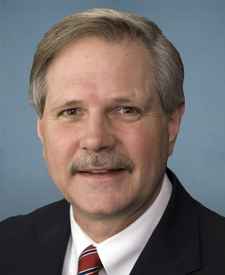
See how John Hoeven actually votes — against your values.
DeepSyte scores John Hoeven's record on the issues you care about — not party, not press releases. Take the 2-minute values quiz to see your personal alignment.
Sign in and take the values quiz to see how John Hoeven's votes line up with your views.
Prediction track record
How often we called John Hoeven's passage votes correctly, from their stated positions on each bill's tagged topics. Excludes “unclear” calls and abstentions.
1 prediction on record · none have been resolved by a passage vote yet. Check back as bills move.
Pending vote119-sjres-123
A joint resolution to direct the removal of United States Armed Forces from hostilities within or against the Islamic Republic of Iran that have not been authorized by Congress.
Based on 6 data points across public statements and recorded votes · AI analysis of public records
119-s-5271·Consistent
A bill to amend the Help America Vote Act of 2002 to require voters to provide photo identification.
85/100
What they said
Aug 8, 2026
Senator Hoeven supports federal legislation requiring photo identification to vote, citing election integrity and noting successful implementation of similar measures in North Dakota.
Senator Hoeven's statement explicitly supports federal photo ID requirements for voting, citing election integrity and North Dakota's successful implementation. His yes vote on the cloture motion to proceed on S. 5271, which would require photo identification under the Help America Vote Act, is directionally consistent with that stated position. However, because the vote was procedural (cloture) rather than on passage, it reflects intent to advance debate rather than a direct substantive endorsement, warranting a score in the generally-consistent rather than strongly-consistent range.
Senator Hoeven supports increased federal funding and resources for law enforcement agencies, including staffing, training, technology, infrastructure, and equipment, and backs judicial nominees with records of supporting law enforcement.
Senator Hoeven's statement emphasizes support for federal funding and resources for law enforcement, including staffing, training, technology, and infrastructure. The Further Consolidated Appropriations Act, 2024 is a broad omnibus bill funding multiple departments and agencies, including the Department of Homeland Security, which oversees border security and federal law enforcement operations. Hoeven's YES vote on the passage of this appropriations bill is generally consistent with his stated commitment to providing federal resources to law enforcement. However, the bill bundles funding across many departments and agencies unrelated to law enforcement (education, health, state operations), so the vote does not directly address the specific law enforcement support priorities outlined in the statement.
Senator Hoeven is advancing several legislative priorities for North Dakota, including securing provisions in the Farm Bill to support family farms and agriculture research, pursuing energy dominance through coal and oil development via his Crack the Code 2.0 initiative, and securing federal funding for the ENDAWS water project.
Senator Hoeven's statement emphasizes support for Farm Bill provisions benefiting North Dakota agriculture, energy development (coal/oil), and the ENDAWS water infrastructure project. The Consolidated Appropriations Act, 2024 includes the Agriculture appropriations bill and Energy and Water Development appropriations, both of which fund priorities aligned with his stated agenda. His yes vote on passage is generally consistent with advancing these priorities, though the omnibus nature of the appropriations act means the vote reflects support for a broad bundle of provisions rather than the specific Farm Bill 2.0 or Crack the Code 2.0 initiatives mentioned in the statement.
Making emergency supplemental appropriations for the fiscal year ending September 30, 2024, and for other purposes.
45/100
What they said
Aug 12, 2026
Senator Hoeven supports increased federal funding and resources for law enforcement agencies, including staffing, training, technology, infrastructure, and equipment, and backs judicial nominees with records of supporting law enforcement.
The statement emphasizes federal support for domestic law enforcement agencies—staffing, training, technology, infrastructure, and equipment. The bill is a FY2024 supplemental appropriations act focused primarily on foreign military aid to Israel and U.S. allies, with a small DHS title. While the bill does include some domestic law enforcement-adjacent funding (DHS/FEMA), the bulk of the measure addresses foreign policy and military assistance, not the domestic law enforcement support Hoeven's statement highlights. The amendment vote type also limits clarity on Hoeven's substantive intent regarding the overall bill's direction.
Senator Hoeven supports increased federal funding and resources for law enforcement agencies, including staffing, training, technology, infrastructure, and equipment, and backs judicial nominees with records of supporting law enforcement.
The statement emphasizes support for law enforcement funding, training, and resources. The bill is a broad omnibus appropriations measure that funds multiple departments including the Department of Homeland Security, which includes law enforcement agencies. However, the vote is procedural rather than on final passage, and the bill bundles six separate appropriations bills covering defense, state, labor, education, and other agencies. The rep's procedural yes vote is generally consistent with supporting law enforcement funding, but the omnibus nature and procedural vote type prevent confirmation that the vote was driven by law enforcement provisions specifically rather than other bundled priorities.
Senator Hoeven is advancing several legislative priorities for North Dakota, including securing provisions in the Farm Bill to support family farms and agriculture research, pursuing energy dominance through coal and oil development via his Crack the Code 2.0 initiative, and securing federal funding for the ENDAWS water project.
The statement outlines Hoeven's priorities for North Dakota agriculture, energy development, and water infrastructure. The bill is a broad FY2024 omnibus appropriations measure covering multiple agencies including Agriculture and Energy & Water Development. Hoeven's YES cloture vote is consistent with advancing these priorities through appropriations funding, but a cloture vote on an omnibus bill does not directly confirm support for specific provisions—it reflects a procedural decision to end debate and move to passage. The statement and bill share relevant categories (agriculture funding, energy/water development) but the cloture vote does not reveal whether Hoeven supported or opposed specific provisions within the omnibus package.
Pairs with ambiguous language and high uncertainty are withheld until more data is available. Procedural, cloture, and amendment votes are excluded — they don't cleanly signal substantive support or opposition.
Pro analysis
AI rep analysis — Pro
Get an AI-narrated read on John Hoeven's full voting record against your stated values — aligned themes, conflicts, notable votes, and what to watch for.
We haven't extracted campaign positions for John Hoeven yet. Once their campaign website or position pages are processed, this card will track what they said vs how they voted.
Crossing the aisle
No party-break passage votes recorded for John Hoeven. Either they've voted with Republicans on every substantive passage vote in the corpus, or their tenure overlaps few high-threshold party-line votes so far.
Hoeven: USDA Advances Effort to Rescind Roadless Rule
Position: Senator Hoeven supports the USDA's proposed rescission of the 2001 Roadless Rule, arguing that returning land-management decisions to local forest managers will provide greater certainty for ranchers and energy producers while enabling responsible multiple-use management of grasslands.
WASHINGTON – Senator John Hoeven, Chairman of the Senate Agriculture Appropriations Committee and a senior member of the Senate Agriculture Committee, today issued the following statement after the U.S. Department of Agriculture’s (USDA) U.S. Forest Service filed a proposed rule to rescind in its entirety the 2001 Roadless Rule, which impacts the Little Missouri National Grassland. Last year, USDA announced its intent to repeal the rule and opened a public comment period as part of the rulemaking process. Hoeven has been working with USDA Secretary Brooke Rollins and other senior USDA officials to ensure North Dakotans, including ranchers and energy producers, have better access to lands managed by USDA.
The proposed rule would remove the national designation of roadless areas and return decisions regarding these lands to local forest managers. The rescission removes national designation of roadless areas but does not mandate timber cutting or road construction. USDA is accepting public comments on the proposed rule and draft environmental impact statement through September 21.
“We appreciate Secretary Rollins and USDA continuing to move forward with efforts to roll back the Roadless Rule. This proposed rule will help provide greater certainty for our ranchers, energy producers and other stakeholders while ensuring the grasslands can be responsibly managed for multiple use. Rescinding the Roadless Rule will return decision making authority to local land managers who are best positioned to address the needs of our communities,” said Hoeven. “At the same time, we continue working to ensure section line rights-of-way are respected in the Little Missouri National Grasslands.”
Hoeven continues working with USDA on grassland management issues, including:
Hoeven Outlines Efforts to Secure Future of Coal Industry in North Dakota
Position: Senator Hoeven advocates for maintaining coal-fired baseload power as essential to U.S. energy security and affordability, supports the Crack the Code 2.0 initiative to pair coal with enhanced oil recovery using CO2, and backs regulatory rollbacks of Biden-era environmental standards including MATS regulations and the Public Lands Rule.
BISMARCK, N.D. – At the Basin Electric Power Cooperative’s annual meeting today, Senator John Hoeven discussed the important role that reliable, coal-fired baseload power plays in making the U.S. energy secure and outlined his efforts to ensure the future of this critical industry.
“Demand for electricity is up, and it’s going to keep increasing. We need baseload power sources like coal to maintain the reliability and affordability of the grid now and into the future. That’s an essential part of making the U.S. energy dominant, and it’s exactly what Crack the Code 2.0 will help accomplish,” said Hoeven. “By partnering our coal and oil industries and using CO2 for enhanced oil recovery, we are creating an additional revenue stream to help keep our coal-fired power plants online. We’ve now secured a total of $157 million for the initiative’s first phase, which will develop large-scale pilot projects to prove that it works and is commercially viable. At the same time, we’ve worked closely with the Trump administration to reduce the regulatory burden for our energy producers, including our coal industry. By rolling back unworkable Biden-era mandates, we are bringing down the cost of energy and ensuring we can make the best use of our abundant energy resources.”
Hoeven’s efforts on Crack the Code 2.0 complement the regulatory relief that he has worked to provide for coal producers. In particular, Hoeven advanced efforts to roll back the following burdensome, overreaching Biden-era regulations:
The Mercury and Air Toxics Standards (MATS) Regulations
Hoeven, along with then-Congressman Kelly Armstrong, previously led bicameral legislation to block the EPA from implementing its new MATS rule. When first advanced in 2012 by the Obama administration, this rule contributed to the closure of numerous power plants before being blocked by the Supreme Court in 2015. The Biden administration then revived the MATS rule utilizing the same unreasonable cost justification that was rejected by the Supreme Court.
The regulations would have replaced the existing cost-effective standards, which have already been found to protect human health and safety. Hoeven worked with the Trump administration to issue a rule, which was finalized earlier this year, rescinding the Biden-era MATS regulations.
The Public Lands Rule would have overhauled the management of more than 245 million acres of taxpayer-owned lands and establish “conservation leases” to lock away federal lands and minerals. Hoeven previously led his colleagues in pushing for the Bureau of Land Management (BLM) to withdraw the rule when it was proposed in 2023 and introduced legislation with Senator John Barrasso (R-Wyo.) to block its implementation. Last year, the Trump administration released a proposal to rescind the Public Lands Rule.
The Resource Management Plan (RMP) for North Dakota
The RMP for North Dakota would have closed off leasing to 45 percent of potential federal oil and gas acreage and nearly 99 percent of federal coal acreage in the state. Accordingly, Hoeven, along with the North Dakota delegation, introduced and worked to pass a Congressional Review Act (CRA) resolution of disapproval to rescind the RMP and help ensure access to taxpayer-owned energy resources in North Dakota.
Hoeven Recognizes Vital Work of North Dakota Police Officers, Working to Advance Policies & Programs Supporting Law Enforcement
Position: Senator Hoeven supports increased federal funding and resources for law enforcement agencies, including staffing, training, technology, infrastructure, and equipment, and backs judicial nominees with records of supporting law enforcement.
MINOT, N.D. – Senator John Hoeven today addressed the North Dakota Peace Officers Association, where he recognized the dedication of the state’s law enforcement officers and outlined efforts to ensure they receive the support they need to be safe in the important work they do. To this end, Hoeven has:
“We ask a great deal from our law enforcement, which can often be a demanding and dangerous career. We appreciate everything they do to protect our communities. They have our gratitude, and they deserve our support,” said Hoeven. “That’s why we have been prioritizing federal programs and policies that better empower law enforcement to keep our communities safe and bring offenders to justice. From the border all the way to local law enforcement agencies, we are providing resources to improve staffing, training, technology, infrastructure and equipment. Doing so will support their long-term success and improve public safety across the nation, while better keeping officers safe on the job.”
Hoeven also stressed the importance of advancing nominees at the U.S. Department of Justice (DOJ) and in the federal judiciary who have a record of supporting law enforcement and upholding the nation’s laws. In particular, Hoeven highlighted the recent confirmation of:
Hoeven Advancing Priorities Critical to North Dakota’s Economy
Position: Senator Hoeven is advancing several legislative priorities for North Dakota, including securing provisions in the Farm Bill to support family farms and agriculture research, pursuing energy dominance through coal and oil development via his Crack the Code 2.0 initiative, and securing federal funding for the ENDAWS water project.
WEST FARGO, N.D. – At a roundtable with members of the Fargo Moorhead West Fargo Chamber of Commerce today, Senator John Hoeven outlined his efforts to advance key priorities for North Dakota. Among other efforts, Hoeven is working to:
“In recent months, we’ve made tremendous headway on issues important to our state. Agriculture is a great example. The policies we’ve secured in the Senate’s Farm Bill will help maintain our nation’s network of small, family-based farms, which is critical to our food security. This legislation contains more than 100 bipartisan bills, including provisions I authored that will make a real difference for North Dakota producers, which come in addition to the $12 billion in agriculture assistance we’re working to pass through reconciliation,” said Hoeven. “We also continue moving forward on my Crack the Code 2.0 initiative, part of our efforts to realize the potential of our abundant coal and oil reserves and make the U.S. truly energy dominant. At the same time, we’ve provided $158 million for ENDAWS, and I’m advancing legislation to ensure we have the federal support needed to bring this project to completion. In these and other ways, we are advancing policies important to our state’s economy across the board.”
Securing North Dakota Priorities in Farm Bill 2.0
As a senior member of the Senate Agriculture Committee, Hoeven is working to secure committee approval of the Senate’s Farm Bill 2.0. The legislation further strengthens the farm safety net, while investing in agriculture research, expanding support for specialty crops and authorizing the year-round sale of E15. The farm bill also includes the following Hoeven-authored provisions important to North Dakota producers:
Hoeven Votes for Legislation Requiring Photo ID to Vote
Position: Senator Hoeven supports federal legislation requiring photo identification to vote, citing election integrity and noting successful implementation of similar measures in North Dakota.
WASHINGTON – Senator John Hoeven issued the following statement after voting for legislation that would require photo identification to vote. Hoeven, a cosponsor of the SAVE America Act, has been working with President Trump and his colleagues in the U.S. Senate to find a path forward for the legislation to ensure the integrity of the elections. The legislation was blocked by Senate Democrats.
“In North Dakota, we have successfully implemented a voter ID law that both protects our elections and includes measures ensuring those who are eligible can vote,” said Hoeven. “This is common sense legislation that simply requires an individual show a photo ID in order to vote. While Democrats continue to oppose this legislation, we are working with the White House and our colleagues to find a path forward for the SAVE America Act, so the American people have trust in the integrity of our elections.”
Hoeven: Senate Passes Legislation to Hold Purchasers of Russian Oil Accountable
Position: Senator Hoeven supports legislation imposing primary and secondary sanctions against Russia and actors supporting Russia's war in Ukraine, including tariffs on countries that purchase Russian oil and gas, to reduce resources funding Russian aggression and advance peace.
WASHINGTON — Senator John Hoeven issued the following statement after the Senate passed the Lindsey O. Graham Sanctioning Russia and Iran Act of 2026, legislation that was negotiated by U.S. Senator Lindsey Graham (R-S.C.) and the White House to hold major purchasers of Russian oil and gas accountable for supporting Russia’s war in Ukraine. Hoeven joined Senator Richard Blumenthal (D-Conn.), Senator Darline Graham (R-S.C.) and a bipartisan group of their Senate colleagues in introducing the legislation earlier this month.
Senator Lindsey Graham met with Ukrainian President Volodymyr Zelenskyy to discuss the effort and secured an agreement with the White House on July 10, just before his death. Blumenthal and Lindsey Graham first introduced legislation to bring primary and secondary sanctions against Russia and actors supporting Russia’s aggression in Ukraine in April 2025 and have spent the last year building support for the effort in Congress and with the Trump administration.
“Russia relies on oil and gas revenue to fund its war against Ukraine, and those enabling this aggression should be held accountable,” said Hoeven. “This bipartisan legislation will strengthen sanctions to increase pressure on Russia, reduce the resources fueling Putin’s aggression, and help advance peace. Lindsey dedicated tremendous effort to moving this legislation forward, and its passage in the Senate is a fitting tribute to his legacy.”
The Lindsey O. Graham Sanctioning Russia and Iran Act of 2026 imposes primary and secondary sanctions against Russia and actors supporting Russia’s war in Ukraine. These sanctions target Russian officials, oligarchs, their family members, foreign persons, Russian banks and financial institutions and the Russian Shadow Fleet. The legislation also directs the President to impose up to 100 percent tariffs on imported goods from countries that buy most of the Russian oil and gas, and enable Russian sanctions evasion. This bill limits these tariffs to the five largest importers of Russian crude oil and gas.
Full text of the legislation can be found here.
Position: Senator Hoeven supports the Agricultural Act of 2026 (Farm Bill 2.0), which he describes as providing long-term certainty for agriculture producers through enhancements to the farm safety net, increased credit access, and year-round E15 sales authorization.
WASHINGTON – Senator John Hoeven today issued the following statement after the Senate Agriculture Committee’s markup of the Agricultural Act of 2026 or Farm Bill 2.0, legislation to support and provide long-term certainty for the nation’s agriculture producers. The legislation includes over 100 bipartisan bills, as well as a compromise proposal offered by Chairman John Boozman to authorize the year-round sale of E15. Despite the bipartisan nature of the bill, Senate Democrats voted against committee passage of the bill.
“Farm Bill 2.0 is focused on supporting family farms and ranches and providing the tools and resources they need to succeed. The legislation improves the farm safety net, advances ag research and develops better market access for producers,” said Senator Hoeven. “Given the challenges in farm country, our producers need long-term certainty, and this legislation includes more than 100 bipartisan proposals to address real issues facing U.S. producers, including enhancements to the farm safety net, increased access to credit, year-round sale of E15, and many others. We’ll continue working with our colleagues to find a path forward for the Farm Bill.”
Additionally, the farm bill includes Hoeven-authored provisions including:
Hoeven Introduces Legislation to Expand Geothermal Energy Development
Position: Senator Hoeven supports streamlining federal permitting for geothermal energy development on non-federal lands by eliminating duplicative federal oversight when states have already reviewed and permitted operations.
WASHINGTON – Senator John Hoeven this week introduced the Harnessing Energy At Thermal Sources (HEATS) Act, bicameral legislation to support the expanded development of geothermal energy. The bill, which follows the model of Hoeven’s Bureau of Land Management (BLM) Mineral Spacing Act, would eliminate duplicative federal permitting and ensure majority holders of a geothermal estate located on non-federal lands can exercise their property rights in developing these resources. Specifically, Hoeven’s legislation would remove the federal permitting requirement for geothermal operations in instances when:
“Burdensome, duplicative federal regulations create roadblocks to developing the energy our nation needs. Even when there are no federal surface acres and the federal government owns a small share of a subsurface estate, geothermal operations reviewed and permitted by states are subject to a redundant federal permitting regime. This approach, which affects oil and gas production as well, severely hampers U.S. energy development,” said Hoeven “Just like my BLM Mineral Spacing Act, the HEATS Act would correct this overreach by the federal government, enabling us to produce more geothermal energy on non-federal lands and strengthening the property rights of mineral and land owners.”
The HEATS Act is co-sponsored by Senator Steve Daines (R-Mont.). A companion to the bill has been introduced in the House by Representative Young Kim (R-Calif.). The full text of the legislation can be found here.
Hoeven Joins Congressional Delegation Trip to United Kingdom to Strengthen Economic & Military Partnerships
Position: Senator Hoeven advocates for increased military investment by the United Kingdom and NATO allies to strengthen defense capabilities and counter adversaries, while emphasizing the importance of the U.S.-U.K. strategic partnership and pursuing mutually beneficial trade opportunities.
LONDON, U.K. – Senator John Hoeven (R-N.D.) participated in a congressional delegation trip to the United Kingdom. Hoeven and the delegation met with:
The purpose of the trip was to reinforce the economic and military partnership between the U.S. and U.K., while calling on Great Britain to increase investment in its military so the two nations can more effectively counter adversaries and protect their interests around the globe.
“Great Britain is a key strategic partner that hosts a range of U.S. missions, providing a forward deployment point to support our security interests in Europe and the Middle East,” said Hoeven. “This visit was an opportunity to strengthen our ties with the U.K. and ensure our warfighters are receiving the support they need. The B-52s from Minot were recently stationed at RAF Fairford, and the B-1s from Ellsworth, which were assigned to Grand Forks over the last year, are currently deployed to the U.K. as well. Importantly, we pressed for Britain and all of the NATO members to increase their military investment. We need our allies to step up to the plate, especially in the conflict with Iran, and work with us to protect our shared interests. We also discussed our shared economic interests, in addition to our strategic partnership, and met with industry leaders to help advance mutually beneficial trade opportunities.”
Hoeven Reviews Minot Missions with Air Force Secretary, Working to Keep Nuclear Modernization on Track
Position: Senator Hoeven supports securing federal funding for nuclear modernization at Minot Air Force Base, including construction projects and weapons system development (Sentinel, B-52, LRSO, MH-139 programs), and backs the Department of War's supplemental appropriations request to maintain military readiness and replenish arms stockpiles.
MINOT, N.D. – Senator John Hoeven today joined U.S. Air Force Secretary Troy Meink and General Dale White, who oversees the Sentinel program for the U.S. Department of War (DoW), in Minot to review the operations of the Minot Air Force Base and continue advancing the modernization of the base’s dual nuclear missions. Hoeven discussed his efforts as a member of the Senate Defense Appropriations Committee to secure the administration’s budget request for nuclear modernization in the Fiscal Year (FY) 2027 funding legislation. The funding is required to keep the modernization initiatives on track and ensure the Minot Air Force Base is ready to field the new systems as soon as they are developed. Accordingly, Hoeven is working to secure:
“We’re reaching a critical stage in our efforts to modernize the nation’s nuclear forces, and our funding priorities reflect that. These systems are set to start coming online in the early 2030s, so it’s key that we get Minot’s facilities ready now and make sure the base can effectively field the new deterrents as soon as they are fully developed. That’s why we are working on funding the first two major Sentinel construction projects in Minot, including security and vehicle maintenance facilities, while providing the resources needed to keep the Sentinel, B-52, LRSO and MH-139 programs on track,” said Hoeven. “While we work on these future missions, the DoW’s supplemental request is also critically needed to maintain our warfighters’ readiness right now. We’re working to advance this funding so we have the munitions and operational capabilities required to counter our adversaries and keep the maximum amount of pressure on rogue regimes like Iran.”
In addition, Hoeven outlined the importance of the administration’s supplemental appropriations request for the DoW. The senator stressed the supplemental is needed to replenish the nation’s arms stockpile following Operation Epic Fury and ensure the readiness of U.S. warfighters. To this end, the $67 billion DoW request includes:
Source: GDELT 2.0 GKG, filtered to a curated list of national outlets. Inclusion is not endorsement; opinion pieces and reported news are mixed.
Recent stock activity
Periodic transaction reports filed under the STOCK Act — disclosed by the rep, sourced from public filings.
No disclosed trades on record.
Source: open-data mirrors of the Senate eFD and House Clerk financial-disclosure systems. Disclosure within 30 days of trade is required by law (45 for spouse/dependent trades).
Top PAC donors · 2026 cycle
Political action committees that gave the most to this rep's principal campaign committee this cycle. PAC giving is direct organizational support — industry, ideological, or leadership.
1.AMERICAN ISRAEL PUBLIC AFFAIRS COMMITTEE POLITICAL ACTION COIdeological7 contributionsPAC arm of the American Israel Public Affairs Committee, federalized in 2021. Backs candidates of both parties who support U.S.-Israel security and economic ties.AI$64,580
2.TAKE BACK THE SENATE4 contributions$28,536
3.TEAM MCCONNELL3 contributions$19,310
4.2024 SENATORS CLASSIC COMMITTEELeadership2 contributionsMember-of-Congress leadership PAC — likely affiliated with a Senate Republican or Democratic leader or caucus, directing contributions to allied candidates.AI$16,400
5.2025 SENATORS CLASSIC COMMITTEELeadership2 contributionsMember-of-Congress leadership PAC — likely affiliated with a Senate Republican or Democratic leader or caucus, directs contributions to allied candidates.AI$16,170
6.NATIONAL RURAL WATER ASSOCIATION PAC3 contributions$15,000
10.NATIONAL MULTI FAMILY HOUSING PAC2 contributions$10,000
Source: OpenFEC (api.open.fec.gov) Schedule A receipts where contributor type is “committee.” Aggregated by contributing committee. Self-transfers from joint-fundraising / victory committees are excluded.
Top individual contributors · 2026 cycle
Itemized individual contributions over $200 to this rep's campaign committee, aggregated by donor employer. PAC giving is shown above; this section is people, not organizations.
1.GENERAL ATOMICS$21,000
2.ARNOLD VENTURES$7,000
3.ICEBREAKER STRATEGIES$6,500
4.AMERICAN BEVERAGE ASSOCIATION$5,300
5.LOCKHEED MARTIN$5,000
6.VALLEY CROP INSURANCE$5,000
7.CORN REFINERS ASSOCIATION$3,750
8.JIM NORTON TOYOTA$3,500
9.O'BRIEN AUTOMOTIVE TEAM$3,500
10.INVARIANT$3,300
Source: OpenFEC Schedule A receipts where contributor type is “individual,” aggregated by the donor's self-reported employer. This is a geographic / industry correlation, not a corporate endorsement.