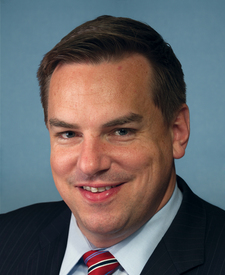
See how Richard Hudson's votes line up with your values.
DeepSyte scores Richard Hudson's record on the issues you care about — not party, not press releases. Take the 2-minute values quiz to see your personal alignment.
Sign in and take the values quiz to see how Richard Hudson's votes line up with your views.
Prediction track record
How often we called Richard Hudson's passage votes correctly, from their stated positions on each bill's tagged topics. Excludes “unclear” calls and abstentions.
No paired statements and votes yet for Richard Hudson
We haven't yet found statement/vote pairs on the same topic for Richard Hudson. This usually means either the rep hasn't taken public positions on bills that have come to a passage vote, or those bills haven't been tagged yet. The checker runs as new press releases and votes come in.
Pro analysis
AI rep analysis — Pro
Get an AI-narrated read on Richard Hudson's full voting record against your stated values — aligned themes, conflicts, notable votes, and what to watch for.
We haven't extracted campaign positions for Richard Hudson yet. Once their campaign website or position pages are processed, this card will track what they said vs how they voted.
Crossing the aisle
No party-break passage votes recorded for Richard Hudson. Either they've voted with Republicans on every substantive passage vote in the corpus, or their tenure overlaps few high-threshold party-line votes so far.
Hudson Highlights Innovation, School Safety Technology at UNC Greensboro
Position: Rep. Hudson expresses support for the Second Amendment and for providing law enforcement with AI-based firearm detection tools, such as ZeroEyes, to help prevent school and campus violence. He also praises UNC Greensboro's work in defense, energy, and workforce development.
GREENSBORO, N.C. – Yesterday, U.S. Representative Richard Hudson (NC-09) visited UNC Greensboro, where he met with Chancellor Franklin D. Gilliam Jr. to discuss the university’s work in defense, energy, and workforce development, including its iCOMMAND Project and BRIGHT Institute.
“Lives are being changed every day at UNC Greensboro. They are also doing some exciting work that can make a real difference for our country,” said Rep. Hudson. “From supporting our servicemembers and veterans to developing new energy technology, there is a lot happening at UNCG. I appreciated Chancellor Gilliam taking the time to bring me up to speed on the work they’re doing.”
Following the meeting, Hudson visited the UNCG Police Department for a demonstration of ZeroEyes, an artificial intelligence and human-verified security system founded by former Navy SEALs designed to detect visible firearms and quickly alert authorities. ZeroEyes does not use facial recognition technology and is designed to protect public safety without targeting law-abiding gun owners.
“As one of the strongest supporters of the Second Amendment in Congress and someone who has worked to make our schools safer, I believe we can protect our rights and give law enforcement better tools to stop violence before it happens,” said Rep. Hudson. “I appreciated getting to see this technology and learning how ZeroEyes is working to keep people safe without using facial recognition or targeting law-abiding gun owners.”
“We’re grateful to Rep. Hudson for joining us and to the UNCG Police Department for hosting today’s demonstration. Their officers take protecting this campus seriously, and we’re proud to work alongside them,” said Mike Lahiff, CEO and co-founder of ZeroEyes. “We created ZeroEyes to give police an earlier warning and a chance to act before someone gets hurt. That’s why we do this, and it’s what keeps our team working around the clock.”
Background
UNCG serves roughly 19,000 students and offers more than 150 undergraduate and over 200 master’s and doctoral programs.
Hudson previously visited UNCG in November 2025 to learn more about the university’s iCOMMAND Project and BRIGHT Institute.
The iCOMMAND Project conducts research and develops technology to protect, train, and support military personnel, veterans, and their families. Its work includes advanced manufacturing, health and physical resilience, bio-industrial manufacturing, and efforts connecting academic research with the DEVCOM Soldier Center and helping servicemembers transition into civilian careers.
The BRIGHT Institute focuses on helping make North Carolina a leader in next-generation energy and battery technology by bringing together research, industry, and workforce development.
ZeroEyes was founded by former Navy SEALs and uses artificial intelligence with human verification to detect visible firearms through existing security cameras. The technology does not use facial recognition, does not identify people based on clothing, skin tone, or other personal characteristics, and is designed to detect illegally brandished firearms rather than target lawful gun owners. When a potential weapon is flagged, a trained specialist reviews the image before an alert is sent to first responders and local officials.
Hudson has supported efforts to strengthen school safety, including the STOP School Violence Act, which was signed into law in 2018 and provides resources for school security, violence-prevention training, and other measures to protect students and teachers.
Issues:Improving Gun and School Safety
Hudson Hosts FCC Chairman Carr in Moore County to Highlight American Drone Dominance, Next Generation 911
Position: Rep. Hudson and FCC Chairman Carr promoted domestic drone manufacturing and the development of an American drone industry, and highlighted Next Generation 911 technology as a modernization priority for emergency communications. Hudson is leading the Next Generation 9-1-1 Act, which would create a federal grant program to help states and local 911 centers upgrade systems.
ABERDEEN, N.C. – Today, U.S. Representative Richard Hudson (NC-09), Chairman of the Energy and Commerce Subcommittee on Telecommunications, hosted Federal Communications Commission Chairman Brendan Carr in Moore County for visits highlighting American drone manufacturing and modern emergency communications.
Hudson and Carr toured Dracoe’s manufacturing facility in Aberdeen before visiting the Moore County 911 Center, where they met with local first responders and saw Next Generation 911 technology in action.
“From building American-made drones right here near Fort Bragg to giving our first responders the latest technology when somebody calls 911, Moore County is doing some incredible work,” said Rep. Hudson. “I was proud to bring Chairman Carr here to what we like to call the Silicon Valley of American Drone Dominance to see firsthand what the FCC can do to facilitate the development of an American drone industry.”
“It was great to join Chairman Hudson in Moore County today, to visit with some of North Carolina’s dedicated defense manufacturers and 911 dispatchers. Thanks to Chairman Hudson’s strong leadership in Congress, the cutting edge of U.S. drone technology is being unleashed right in the heart of central North Carolina, which means more jobs and opportunity for so many hardworking Tar Heels,” said Chairman Carr.
At Dracoe, Hudson and Carr toured the veteran-owned company’s manufacturing operation and met with employees to discuss the growing domestic drone industry and the FCC’s role in emerging drone technology.
Hudson and Carr then visited the Moore County 911 Center, where they met with Sheriff Ronnie Fields, public safety officials, dispatchers, and county leaders to see how Moore County is using Next Generation 911 technology.
Background
Dracoe designs and manufactures small drones and components used for defense and counter-drone training. The U.S. Army evaluated a Dracoe target-management capability during a counter-drone exercise earlier this year.
The visit also comes as the FCC takes steps affecting the domestic drone market. In December, the Commission added foreign-produced drones and critical components to its Covered List, generally preventing new covered models from receiving the equipment authorization required for import and sale in the United States. Previously authorized drones are not affected.
NG911 replaces aging 911 infrastructure with modern, internet-based technology capable of supporting better location information, text and multimedia, stronger cybersecurity, and improved communication between emergency call centers and first responders.
Hudson is leading the bipartisan Next Generation 9-1-1 Act with Rep. Troy Carter (LA-02). The legislation would establish a federal grant program to help states, tribes, and local 911 centers upgrade outdated systems and support deployment, maintenance, cybersecurity, training, and public education.
The visits also come as the FCC considers a broader review of the nation’s 911 framework and how federal policy should evolve as emergency communications technology advances.
Moore County has operated on North Carolina’s Next Generation 911 network since 2021 and also offers Text-to-911 for people who cannot safely make a voice call.
Hudson Hosts FCC Chairman Carr at Guilford, Alamance 911 Centers to Highlight Next Generation 911
Position: Representative Hudson states that modern Next Generation 911 technology should be available to first responders everywhere and that communities relying on outdated 911 systems need upgrades. The release describes Hudson's leadership on the bipartisan Next Generation 9-1-1 Act, which would establish a federal grant program to help states, tribes, and local 911 centers upgrade their systems.
GREENSBORO, N.C. – Today, U.S. Representative Richard Hudson (NC-09), Chairman of the Energy and Commerce Subcommittee on Telecommunications, hosted Federal Communications Commission Chairman Brendan Carr at 911 centers in Guilford and Alamance Counties to highlight how Next Generation 911 (NG911) technology can help first responders get people the help they need faster.
Hudson and Carr toured Guilford Metro 911 in Greensboro and Alamance County Central Communications in Graham, where they met with local telecommunicators and saw firsthand how communities in North Carolina are using modern 911 technology, ahead of the curve of many other states.
“When somebody calls 911, every second matters,” said Rep. Hudson. “Guilford and Alamance Counties are showing what modern 911 service can look like, but too many communities across the country are still relying on outdated systems. I was glad to bring Chairman Carr here to see this technology firsthand as we continue working to make sure first responders everywhere have the tools and information they need to save lives.”
“It was great to join Chairman Hudson in Guildford and Alamance counties today, to visit with some of North Carolina’s incredible 911 dispatchers & public safety heroes. I applaud Chairman Hudson’s strong leadership in Congress to support the work these special men and women do every day to provide essential, life-saving services for their communities,” said Chairman Carr.
At Guilford Metro 911, Hudson and Carr met with Director Melanie Jones and staff to see a center already operating on North Carolina’s Next Generation 911 network. The center serves Greensboro and all of Guilford County and handled hundreds of thousands of calls and dispatches last year.
“I’d like to thank Chairman Carr and Congressman Hudson for taking the time to visit Guilford Metro 9-1-1 and see firsthand the important work being done by our team. Their visit reflects a strong commitment to ensuring North Carolina’s 9-1-1 system has the technology, resources, and support needed to meet the evolving needs of our communities. I appreciate their interest in the work of our 9-1-1 professionals, and their continued focus on strengthening public safety in North Carolina,” said Ms. Jones.
The pair then visited Alamance County Central Communications, which dispatches law enforcement, fire, EMS, and rescue services across much of the county. Alamance County became the 100th public safety answering point connected to North Carolina’s NG911 network in 2021.
Background
NG911 replaces aging 911 infrastructure with modern, internet-based technology capable of supporting better location information, text and multimedia, stronger cybersecurity, and improved communication between emergency call centers and first responders.
Hudson is leading the bipartisan Next Generation 9-1-1 Act with Rep. Troy Carter (LA-02). The legislation would establish a federal grant program to help states, tribes, and local 911 centers upgrade outdated systems and support deployment, maintenance, cybersecurity, training, and public education. Hudson and Carter introduced the legislation in December 2025.
The visits also come as the FCC considers a broader review of the nation’s 911 framework. In September, the Commission released a draft Notice of Inquiry examining how federal 911 policies should adapt as emergency communications technology continues to advance.
Hudson, Knott Veterans Home Bill Clears Senate, Heads to President’s Desk
Position: The release supports legislation transferring 20 acres of Fort Bragg land to North Carolina to enable construction of a new state veterans home, and states that the bill has passed both chambers and awaits the President's signature.
WASHINGTON, D.C. – Yesterday, the U.S. Senate unanimously passed legislation led by U.S. Representatives Richard Hudson (NC-09), Fort Bragg’s Congressman, and Brad Knott (NC-13) to clear the way for construction of a new state veterans home near Fort Bragg. The bill now heads to the President’s desk for signature.
“Our veterans kept their promise to serve, and we have a responsibility to keep our promise to take care of them,” said Rep. Hudson. “With today’s unanimous Senate passage, we are one step away from getting this bill signed into law and moving forward with a new veterans home near Fort Bragg. I want to thank Senator Budd, Chairman Wicker, and the Senate Armed Services Committee for working quickly to move our bill through the Senate and help us deliver for North Carolina’s veterans.”
"Serving our veterans is incumbent on all of us,” said Rep. Knott. “It was my privilege to work with Congressman Hudson and take this important step in serving some of North Carolina’s finest. Today, the Senate moved swiftly to pass our bill aiming to facilitate the construction of a new veterans' home in Harnett County. North Carolina's 13th District is home to tens of thousands of veterans who have earned care worthy of their service. Once President Trump signs this into law, this new facility will finally deliver the long-term care our veterans have earned and deserve.”
U.S. Senator Ted Budd (R-NC) supported the legislation in the Senate and worked with the Senate Armed Services Committee to help advance it quickly toward final passage.
“North Carolina is the proud home of more than 620,000 veterans, and we have a responsibility to provide them with the quality of care that they have earned. After the Fayetteville State Veterans Home closed in 2024, our state lost critical capacity to care for our veterans. Building a new veterans home near Fort Bragg will help fill that gap and ensure that our nation’s heroes receive the quality care they deserve. I am grateful to Representative Richard Hudson for leading this effort in the House and working with me to get this bill passed in the Senate,” said Sen. Budd.
The legislation transfers 20 acres off installation at Fort Bragg to the State of North Carolina, allowing the state to move forward with the permitting and construction process for the new veterans home.
The former Fayetteville State Veterans Home closed in 2024, displacing 85 veterans, including many with dementia and other disabilities. Hudson has worked with members of the North Carolina congressional delegation and the North Carolina Department of Military and Veterans Affairs to advance plans for a replacement facility, and the legislation is a necessary step in that effort.
The House unanimously passed the legislation earlier this month. Following unanimous Senate passage, the bill will now be sent to the President for his signature.
Hudson and Knott were joined by Reps. David Rouzer (NC-07), Don Davis (NC-01), Deborah Ross (NC-02), Greg Murphy (NC-03), Valerie Foushee (NC-04), Virginia Foxx (NC-05), Addison McDowell (NC-06), Mark Harris (NC-08), Pat Harrigan (NC-10), Chuck Edwards (NC-11), Alma Adams (NC-12), and Tim Moore (NC-14) in cosponsoring the legislation.
Issues:Veterans
Hudson-Backed Bill to Keep AM Radio in New Vehicles Passes House
Position: The release supports legislation directing the Department of Transportation to require AM radio access as standard equipment in new passenger vehicles at no additional consumer fee, citing emergency communications value. The release describes House passage of the bill and the representative's prior cosponsorship and advocacy.
WASHINGTON, D.C. – Today, U.S. Representative Richard Hudson (NC-09), Chairman of the Energy and Commerce Subcommittee on Communications and Technology, applauded House passage of bipartisan legislation he championed to keep free AM radio available in new vehicles.
“AM radio is about more than what you listen to on the drive home. For millions of Americans, especially folks in rural communities, it is a trusted source for local news, weather, and critical information during emergencies,” said Rep. Hudson. “I’ve pushed hard to keep AM radio available in our cars, and I’m glad the House has finally passed this bipartisan bill.”
Background
The legislation directs the Department of Transportation to require AM radio access as standard equipment in new passenger vehicles. Consumers would not be charged an additional fee to access AM radio.
AM radio continues to play an important role in emergency communications, particularly in rural areas and during hurricanes, tornadoes, wildfires, and other disasters when cellular and internet service can be disrupted. Firefighters, law enforcement officers, sheriffs, emergency medical organizations, and farmers have backed keeping AM radio available in vehicles because of its role in delivering emergency information.
As Chairman of the Energy and Commerce Subcommittee on Communications and Technology, Hudson has continued working with local broadcasters and public safety leaders to preserve access to AM radio for drivers across the country.
Hudson was one of the earliest cosponsors of the legislation and has pushed for its passage throughout the 119th Congress.
House Passes Hudson, Knott Bill to Clear Way for New Veterans Home Near Fort Bragg
Position: Supports legislation transferring 20 acres off the Fort Bragg installation to the State of North Carolina to enable construction of a replacement state veterans home near Fort Bragg.
WASHINGTON, D.C. – Today, the U.S. House of Representatives passed legislation led by U.S. Representatives Richard Hudson (NC-09), Fort Bragg’s Congressman, and Brad Knott (NC-13) to clear the way for construction of a new state veterans home near Fort Bragg.
“Our veterans sacrificed to take care of us, and we have a responsibility to take care of them,” said Rep. Hudson. “After the Fayetteville State Veterans Home closed, 85 veterans were forced to leave their home and relocate across the state, many far away from their families. Today’s passage brings us one step closer to building a new home near Fort Bragg and bringing that care back to our community.”
"Tens of thousands of veterans call North Carolina’s 13th District home, and they’ve earned care worthy of their service,” said Rep. Knott. "Since the Fayetteville veterans' home closed in 2024, our state's heroes in central North Carolina have been without a home built for their care. I am proud to work with Congressman Hudson on this bill to advance a new veterans' home in Harnett County, which will provide quality, long-term care for those who served our country.”
The legislation transfers 20 acres off installation at Fort Bragg to the State of North Carolina, allowing the state to move forward with the permitting and construction process for the new veterans home.
The former Fayetteville State Veterans Home closed in 2024, displacing 85 veterans, including many with dementia and other disabilities. Hudson has worked with members of the North Carolina congressional delegation and the North Carolina Department of Military and Veterans Affairs to advance plans for a replacement facility, and the legislation is a necessary step in that effort.
Hudson spokeon the House floor ahead of passage, urging his colleagues to support the legislation and highlighting the need to restore a veterans home to the Fayetteville and Fort Bragg community.
Hudson and Knott were joined by Reps. David Rouzer (NC-07), Don Davis (NC-01), Deborah Ross (NC-02), Greg Murphy (NC-03), Valerie Foushee (NC-04), Virginia Foxx (NC-05), Addison McDowell (NC-06), Mark Harris (NC-08), Pat Harrigan (NC-10), Chuck Edwards (NC-11), Alma Adams (NC-12), and Tim Moore (NC-14) in cosponsoring the legislation.
Issues:Veterans
Position: The release advocates for permanent tax cuts including elimination of overtime and tip taxation, increased child tax credits, and small business deductions. It also supports streamlining environmental permitting to reduce project delays and opposes EPA duplicative reviews.
Over the past week, I’ve been on the House floor advancing commonsense legislation, while also meeting with leaders from across our state and country who are working to grow our economy, strengthen our communities, and keep America safe.
Here’s a look at what’s been going on in Congress
More Money in Your Pocket This Tax Season
Tax season usually means sending more of your paycheck to Washington. This year, I’m hearing something very different from folks across North Carolina.
Families are seeing bigger refunds, better deductions, and more money staying in their pockets. The average refund is up nearly 11 percent, now topping $3,500. And as people adjust their withholding under the lower rates we made permanent, millions are already seeing more in their take-home pay.
That didn’t happen by accident. It’s the result of President Trump’s Working Families Tax Cuts, which House Republicans passed and every Democrat voted against.
At the core of these reforms is a simple principle: if you work more, you should keep more.
That’s why we eliminated taxes on overtime. More than 23 million Americans have already benefited. Whether it’s a police officer picking up an extra shift, a firefighter working overtime, or a construction worker putting in long hours, that paycheck now goes further.
We took the same approach with tips. Nearly six million Americans are already benefiting from No Tax on Tips, putting real money back into the pockets of servers, drivers, and hospitality workers who earned it.
Families are seeing relief as well. We increased the Child Tax Credit to $2,200 per child, helping parents keep more of their hard-earned income. And more than four million children now have Trump Accounts, giving them a financial foundation and a chance to benefit from long-term growth.
Small businesses are seeing the impact. Nearly 12 million small business owners are receiving tax relief, averaging about $7,000. We made the 20 percent small business deduction permanent, giving entrepreneurs the certainty they need to hire, invest, and grow.
And in rural communities, these policies are helping protect family farms, lower borrowing costs, and encourage investment in small towns across our state.
Cutting Red Tape and Standing Up for American Workers
This week, House Republicans passed two commonsense bills to rein in Washington overreach and stand up for American workers.
First, we passed the RED Tape Act, which eliminates duplicative EPA reviews that slow down projects, delay investment, and hold back job creation. If a project has already gone through the proper environmental review, Washington shouldn’t force businesses to jump through the same hoop twice. This is about cutting unnecessary bureaucracy so we can build faster, grow our economy, and unleash American industry.
We also passed the FENCES Act, which ensures North Carolina communities and manufacturers aren’t penalized for pollution coming from foreign countries like China. For too long, the EPA has held American states accountable for emissions they didn’t create, while foreign polluters face no consequences.
Meeting with North Carolina Leaders
Back in Washington, I’ve been meeting with leaders across key industries that directly impact North Carolina jobs, families, and communities.
I welcomed members of the North Carolina Pork Council to discuss the challenges facing our farmers, including burdensome regulations like California’s Proposition 12 and the importance of strong and fair trade agreements. I’ll continue working to protect our producers and ensure they can compete and grow.
I also met with textile manufacturers from across our state to talk about strengthening American manufacturing, enforcing fair trade, and expanding the use of American-made products. North Carolina’s textile industry remains critical to both our economy and our national security.
I sat down with biotech leaders whose companies are driving innovation, research, and job creation across the country, starting right here in North Carolina. As a member of the Energy and Commerce committee, I’m committed to protecting the robust industry that brings the best medical access and innovation to our state.
I met with leaders from the firearms and outdoor recreation industry to discuss protecting the rights of law-abiding citizens and ensuring businesses are treated fairly. We’re focused on commonsense policies that support safety, privacy, and the Second Amendment.
With the NFL I met with leadership from the Carolina Panthers to discuss our student athletes and future professional talent in our state. Protecting athletes who bring so much pride and energy to our state is a priority to me.
Supporting Our Service Members
I had the opportunity to meet with a group of Army Special Forces soldiers visiting from Fort Bragg for professional development.
These are some of the best our country has to offer. They carry out some of the most demanding missions in the world, and I’ll always fight to ensure they have the support, training, and resources they need to succeed.
This weekend, I attended a faith retreat, taking time to reflect and stay grounded in the values that guide both my life and my work in Congress.
Ahead of National Prayer day, I am grateful to learn more about our God and give thanks for my family, our country, our military and all of you who remind me of the important issues to fight for you and your families up in Washington.
We’re making progress, but there’s more work to do. I’ll keep fighting every day to cut red tape, unleash American energy, protect your rights, and ensure our state continues to lead in values, innovation, and numerous industries.
Delivering for North Carolina: From First Responders to Farmers
Spring is here in North Carolina, and there’s a lot to report. I’ve spent the past two weeks on the House floor advancing legislation and back home meeting with the people and businesses that make this district great. Here’s a look at what we’ve been working on.
A Big Win for First Responders
The House just passed my bill, H.R. 2196, to complete the National EMS Memorial in Washington, D.C.
Every single day, more than 850,000 EMS professionals answer the call. They show up in moments of crisis, often without recognition.
This memorial ensures their service and sacrifice are honored permanently in our nation’s capital, and it does so at no cost to taxpayers.
Supporting North Carolina Jobs and American Manufacturing
I had the opportunity to visit several incredible North Carolina companies doing critical work right here in our district.
At Kraken Kinetics in West End, I saw how local innovators are supporting our warfighters and strengthening America’s defense industrial base.
At OA Defense, I toured their manufacturing facility and met with the team driving growth in Moore County. These are high-skilled, high-impact jobs solidifying North Carolina’s role as a leader in American manufacturing.
I also met with Honda’s North Carolina team to discuss strengthening U.S. manufacturing and ensuring we continue to support American workers and supply chains.
Working with Local Leaders to Strengthen Our Region
I also met with Moore County Airport leaders to discuss expanding air service and improving connectivity for families and businesses across the region. Reliable infrastructure is key to economic growth, especially in rural communities.
I also had productive conversations with the North Carolina State Fire Marshal about FEMA coordination and ensuring our firefighters have the resources they need.
I continue working with local officials, including Fayetteville leaders and regional partners like the RDU Airport Authority, to make sure our district and state is positioned for long-term success.
Honoring a North Carolina Leader
On what would’ve been his 95th birthday, I gathered our delegation to honor the late Congressman Howard Coble.
Howard was a tireless conservative, a dedicated public servant, and someone who never forgot the people he represented. He served with integrity, humor, and a deep commitment to his constituents.
It’s hard to believe it’s been 10 years since his passing. There will never be another like him, but his example continues to guide those of us carrying on the work.
House Republicans are continuing to advance commonsense legislation that protects law-abiding citizens and restores accountability.
We passed measures to ensure criminal aliens who defraud taxpayers are deported, protect law enforcement animals that secure our borders and communities, and defend access for hunters and anglers who fund conservation across the country.
On the Energy and Commerce Subcommittee on telecommunications, I’ve been leading efforts to strengthen American leadership in communications technology. I recently sent a letter with some bipartisan colleagues to Secretary Rubio, urging stronger U.S. engagement to counter China’s growing influence in global telecom networks and standards bodies. I reinforced that message in a hearing examining how decisions on 5G, 6G, and spectrum policy will shape our economic competitiveness and national security for decades. If we don’t lead, others will, and that puts Americans at a disadvantage.
Standing with Farmers and Rural America
As someone who represents rural communities, I know how critical it is that our farmers and ranchers have policies that work for them, not against them.
Under President Trump’s leadership, we’ve delivered real relief to rural America:
• Permanent Death Tax relief to protect family farms
• 100% immediate expensing for equipment and infrastructure
• A permanent small business deduction used by 98% of farms
• Expanded opportunity zones to drive investment into rural communities
These are commonsense solutions that help farmers grow, invest, and pass their operations on to the next generation.
The President has also made it clear: getting a strong Farm Bill done is a priority. I agree.
But I also know many of you are facing real challenges right now. If you have concerns about the Farm Bill or how current policies are impacting your operation, I want to hear directly from you.
Your input will help ensure we get this right for North Carolina.
Until next time,
Richard Hudson
Spring is around the corner, and it’s been a busy stretch on Capitol Hill. From joining together to support military families and engaging with our Special Operations community to advancing commonsense solutions in the Energy and Commerce Committee, our focus remains simple: delivering results for the people of North Carolina.
With tax season now underway, many Americans are also beginning to see the impact of President Trump’s Working Families Tax Cuts. I was proud to support this legislation. We will see directly how it rewards hard work, strengthens families, and helps North Carolinians keep more of what they earn.
Here’s a look at what I’ve been working on.
Standing with Gold Star Families
Last week, I joined the Tragedy Assistance Program for Survivors, TAPS, on Capitol Hill to highlight the Love Lives On Act.
For more than 30 years, TAPS has supported the families of our fallen servicemembers in the hardest moments of their lives. Their work is extraordinary, and it was an honor to stand beside them and the families they serve.
Right now, federal law forces many surviving spouses into an impossible and unfair choice. If they remarry before age 55, they lose key survivor benefits earned through their loved one’s service. That means a young widow or widower may feel forced to choose between rebuilding a life and protecting financial stability for their children.
The Love Lives On Act fixes this by allowing surviving spouses to remarry at any age without losing their benefits. The bill also restores benefits if a later marriage ends, so families remain protected.
More than 50 veterans and military service organizations support this legislation, and nearly 30,000 surviving spouses stand to benefit. I am proud to lead this effort in the House with colleagues from both parties because honoring the sacrifice of military families should never be partisan.
Supporting America’s Special Operations Forces
As co-chair of the bipartisan Special Operations Forces Caucus, I also had the opportunity to host leaders from across the Special Operations community.
As Fort Bragg’s Congressman, it’s the honor of my life to represent the home of the U.S. Army Special Operations Command and Joint Special Operations Command.
During the event, we heard from Admiral Frank “Mitch” Bradley, Commander of U.S. Special Operations Command, and Assistant Secretary of Defense Derrick Anderson, who provided important updates on the challenges facing our Special Operations community.
These men and women carry out some of the most complex missions in the world, often quietly and without recognition. Congress has a responsibility to make sure they have the resources, facilities, and support they need to succeed.
That also means protecting their safety here at home. I recently introduced the Special Operator Protection Act, which creates criminal penalties for those who attempt to dox members of the Special Operations community and expose their families to danger. Our operators should never have to worry about the safety of their loved ones while they are protecting our nation.
Advancing Commonsense Solutions in Committee
I also joined my colleagues on the Energy & Commerce Committee to advance legislation to strengthen the security and resilience of America’s energy infrastructure.
Protecting our critical infrastructure is not a partisan issue. It is a national security priority.
After the 2022 Moore County substation attack left more than 45,000 residents without power during a winter cold spell, we saw firsthand how vulnerable parts of our electric grid can be. So I got to work visiting the site, hosting briefings on finding the offenders, bringing my colleagues to Moore County for hearings, and working on legislation to ensure it doesn't happen again. Communities like Moore County and Fort Bragg deserve the confidence that their power will remain reliable and secure.
The legislation we moved focuses on strengthening cybersecurity protections for utilities, improving coordination between government and private-sector energy providers, and enhancing our ability to identify emerging threats to the grid.
Tax Season and President Trump’s Working Families Tax Cuts
Finally, as families begin filing their taxes, we will see how all of you will get some real financial relief.
These reforms represent the largest tax cut for middle- and working-class Americans in history. They reward hard work and help families keep more of their paychecks.
Here are just a few of the benefits:
• No taxes on tips, allowing workers to keep more of what they earn.
• No taxes on overtime pay, putting more money back in workers’ pockets.
• An increased Child Tax Credit, helping more than 40 million families.
• Made-in-America auto tax breaks for vehicles built in the United States.
• Lower taxes across every county in America, with the average taxpayer seeing nearly $4,000 in relief.
• 15% average tax cut for Americans earning $15,000–$80,000.
• Permanent small business tax relief, helping local businesses grow and hire workers.
• Stronger protections for family farms, raising the estate tax exemption to help farms stay in the family.
These policies are designed to reward work, strengthen families, and unleash American economic growth.
Every single Democrat in Congress voted against this relief, but House Republicans and President Trump delivered on our promise to put working families first.
I’d love to hear from you about how these changes are improving your everyday life, so please write in on my website to tell me your tax season story.
Until next time,
Richard Hudson
Source: GDELT 2.0 GKG, filtered to a curated list of national outlets. Inclusion is not endorsement; opinion pieces and reported news are mixed.
Recent stock activity
Periodic transaction reports filed under the STOCK Act — disclosed by the rep, sourced from public filings.
No disclosed trades on record.
Source: open-data mirrors of the Senate eFD and House Clerk financial-disclosure systems. Disclosure within 30 days of trade is required by law (45 for spouse/dependent trades).
Top PAC donors · 2026 cycle
Political action committees that gave the most to this rep's principal campaign committee this cycle. PAC giving is direct organizational support — industry, ideological, or leadership.
1.UNITED PARCEL SERVICE INC. PAC2 contributions$10,000
2.SWEDISH MATCH NORTH AMERICA LLC PAC2 contributions$10,000
3.NCTA - THE INTERNET & TELEVISION ASSOCIATION PAC (NCTAPAC)2 contributions$10,000
4.NATIONAL ASSOCIATION OF LETTER CARRIERS OF U.S.A. POLITICAL FUND (LETTER CARRIER POLITICAL FUND)Public Sector2 contributionsPublic-sector union PAC representing U.S. Postal Service letter carriers — backs candidates supporting postal worker wages, benefits, job security, and USPS funding.AI$10,000
5.NATIONAL ASSOCIATION OF EMS PHYSICIANS PAC2 contributions$10,000
6.DUKE ENERGY CORPORATION PAC2 contributions$10,000
7.CHARTER COMMUNICATIONS INC. PACTech2 contributionsTelecom and media PAC — backs candidates supporting broadband infrastructure investment, regulatory policies favorable to cable and internet service providers, and telecommunications competition.AI$10,000
8.ALTRIA GROUP, INC. POLITICAL ACTION COMMITTEE (ALTRIAPAC)2 contributions$10,000
9.VERIZON COMMUNICATIONS INC./VERIZON WIRELESS GOOD GOVERNMENT CLUB2 contributions$10,000
10.NATIONAL TELECOMMUNICATIONS COOPERATIVE ASSOCIATION RURAL BROADBAND PAC2 contributions$10,000
Source: OpenFEC (api.open.fec.gov) Schedule A receipts where contributor type is “committee.” Aggregated by contributing committee. Self-transfers from joint-fundraising / victory committees are excluded.
Top individual contributors · 2026 cycle
Itemized individual contributions over $200 to this rep's campaign committee, aggregated by donor employer. PAC giving is shown above; this section is people, not organizations.
1.AT&T$52,400
2.ACN$28,000
3.COMCAST$25,000
4.CHARTER COMMUNICATIONS$20,500
5.ENTRAVISION$17,200
6.HENDRICK MOTORSPORTS$15,000
7.VETERANS GUARDIAN VA CLAIM CONSULTING$14,000
8.OGLETREE DEAKINS$13,800
9.BARNHILL CONTRACTING COMPANY$10,000
10.SELF$8,500
Source: OpenFEC Schedule A receipts where contributor type is “individual,” aggregated by the donor's self-reported employer. This is a geographic / industry correlation, not a corporate endorsement.