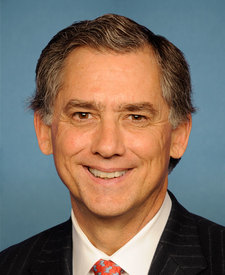
See how J. French Hill's votes line up with your values.
DeepSyte scores J. French Hill's record on the issues you care about — not party, not press releases. Take the 2-minute values quiz to see your personal alignment.
Sign in and take the values quiz to see how J. French Hill's votes line up with your views.
Prediction track record
How often we called J. French Hill's passage votes correctly, from their stated positions on each bill's tagged topics. Excludes “unclear” calls and abstentions.
A joint resolution to direct the removal of United States Armed Forces from hostilities within or against the Islamic Republic of Iran that have not been authorized by Congress.
A joint resolution to direct the removal of United States Armed Forces from hostilities within or against the Islamic Republic of Iran that have not been authorized by Congress.
A joint resolution to direct the removal of United States Armed Forces from hostilities within or against the Islamic Republic of Iran that have not been authorized by Congress.
A joint resolution to direct the removal of United States Armed Forces from hostilities within or against the Islamic Republic of Iran that have not been authorized by Congress.
No paired statements and votes yet for J. French Hill
We haven't yet found statement/vote pairs on the same topic for J. French Hill. This usually means either the rep hasn't taken public positions on bills that have come to a passage vote, or those bills haven't been tagged yet. The checker runs as new press releases and votes come in.
Pro analysis
AI rep analysis — Pro
Get an AI-narrated read on J. French Hill's full voting record against your stated values — aligned themes, conflicts, notable votes, and what to watch for.
Positions J. French Hill took during their campaign, scored against their subsequent record — public statements cross-checked with related votes. “Kept” means 80%+ of those statement-vs-vote pairs aligned; “Broken” means 30% or fewer.
0 kept0 broken0 mixed0 no action yet
J. French Hill has 9 tracked positions but no scored statement-vs-vote pairs touching them yet. Verdicts will appear here as related statements and votes accumulate.
No action yetSupports
The U.S. should do more to enforce immigration laws and secure the border.
“French backed the Secure the Border Act and the No Sanctuary for Criminals Act.”
Reducing the national debt should be a higher priority than new spending.
“French has sponsored two balanced budget amendments to the U.S. Constitution, believing that the federal government needs to live within its means like Arkansas families do.”
Federal support for veterans exposed to burn pits and other toxic environments should be expanded.
“Co-sponsored the Shari Briley and Eric Edmundson Veterans Benefits Expansion to increase VA compensation tax-free benefits for catastrophically disabled veterans and surviving family members*”
Cryptocurrency exchanges and tokens should be regulated under a dedicated digital-asset framework rather than existing securities law (CLARITY Act-style).
“French's bill, the Clarity Act, passed the U.S. House with 76 Democratic votes. This regulatory framework will increase jobs and capital investment in the U.S”
Federal regulation of stablecoin issuers (GENIUS Act-style oversight) should be strengthened.
“He helped establish the first federal framework for stablecoin regulation, expanding opportunities in the digital economy while protecting consumers.”
No party-break passage votes recorded for J. French Hill. Either they've voted with Republicans on every substantive passage vote in the corpus, or their tenure overlaps few high-threshold party-line votes so far.
RELEASE: HILL, BERA, VAN DREW, SHERMAN INTRODUCE BIPARTISAN RESOLUTION RECOGNIZING 80TH ANNIVERSARY OF FULBRIGHT PROGRAM
Position: The release introduces a bipartisan resolution recognizing the 80th anniversary of the Fulbright Program and expresses support for the program and related educational and cultural exchanges.
Rep. French Hill said, “The Fulbright Program is one of Arkansas’s great contributions to the world. For 80 years, Senator J. William Fulbright’s vision has brought students, scholars, and professionals from around the globe together to learn from one another, strengthen international partnerships, and build greater understanding between nations. I'm proud to recognize this important milestone, celebrate the program’s enduring contribution to American leadership around the world, and reaffirm Congress’s support for its important work.”
Rep. Ami Bera said, “The Fulbright Program represents the very best of American leadership by giving our nation’s best and brightest the opportunity to experience other cultures, pursue world-class academic opportunities, and build lasting relationships abroad. I’m proud to join my colleagues in recognizing this historic anniversary and reaffirming bipartisan support for the Fulbright Program and other educational and cultural exchanges that advance American interests abroad.”
Rep. Jeff Van Drew said, “South Jersey is home to incredible students and educators who understand that some of the best learning happens when you get outside of your comfort zone and experience the world firsthand. For 80 years, the Fulbright Program has given Americans that opportunity while allowing us to share our values with people around the world. I am proud to recognize this milestone and the generations of Americans who have represented our country through this program.”
Rep. Brad Sherman said, “If Senator J. William Fulbright were with us today, he would be proud of the international scholarship and friendships that the Fulbright Program has made possible since he established it in 1946. Today, the Fulbright Program’s modest investments in educational exchanges continue to yield incalculable goodwill towards the United States around the world. I am proud to help recognize 80 years of this important program.”
Background on Fulbright Program:
On Aug. 1, 1946, President Harry Truman signed former Arkansas Senator J. William Fulbright’s legislation into law. That legislation created the Fulbright Program, which is an international exchange program designed to increase mutual understanding between the people of the U.S. and other countries. The Fulbright Program has educated more than 370,000 students from 165 countries, including 54 Nobel Laureates and 33 heads of state.
In 2016, Rep. French Hill led the House effort to recognize the 70th anniversary of the Fulbright Program, introducing a resolution commemorating the milestone and encouraging continued support for the program. Hill also sponsored the planting of an American elm on the U.S. Capitol Grounds in honor of the anniversary, joining members of the Arkansas congressional delegation, Fulbright scholars, and Harriet Fulbright for the dedication ceremony. The tree was planted in view of Senator Fulbright’s former office in the Russell Senate Office Building.
Hill’s resolution complemented a Senate effort led by fellow Arkansan Sen. John Boozman, whose resolution passed the Senate in July 2016.
Please sign up below to receive my weekly newsletter and get the latest news and updates directly to your inbox.
Please sign up below to receive my weekly newsletter and get the latest news and updates directly to your inbox.
RELEASE: REP. HILL AWARDS USPS HIS GOLDEN FLEECE AWARD FOR FAILING TO STOP FRAUDULENT POSTAGE
Position: Rep. Hill awards the USPS his Golden Fleece Award, criticizing the agency for failing to detect and stop fraudulent postage, which he says costs an estimated $1.7 billion yearly. He urges USPS to adopt the Inspector General's recommendations and rigorously follow through, using authorities it already has.
Today, Rep. French Hill (AR-02) announced the United States Postal Service (USPS) is the latest recipient of his Golden Fleece Award for failing to properly identify and stop fraudulent postage.
The United States Postal Service Inspector General found that the USPS struggled to intercept packages and letters going through its sorting and shipping process that had invalid or fraudulent postage. This puts the USPS and the services it provides at risk as over $1.7 billion is estimated to be lost yearly to fraudulent stamps or postage. This is revenue that the USPS could be using to reduce its $9 billion loss posted in 2025.
Rep. Hill said, “The USPS no doubt provides important services, especially for rural central Arkansans who rely on it to deliver everything from letters to medicine. But at a time when the USPS is posting yearly losses and the package transportation industry is becoming more dynamic, the USPS must adapt. Commonsense steps can be taken to stop the bleeding, and USPS already has statutory authorities to do so. While I am encouraged to see USPS agree with the recommendations the Inspector General has made, they must go further and rigorously follow through.”
In his letter to Postmaster General David Steiner, Rep. Hill writes:
Dear Postmaster General Steiner
I am writing today to inform you that the United States Postal Service (USPS) is this month’s recipient of my Golden Fleece Award. I am awarding this to USPS because of its inability to detect and properly stop counterfeit postage.
USPS is an important facilitator of connection and commerce for the United States. A secure and effective USPS benefits all Americans. That is why I am troubled by reports that the USPS has insufficient controls in place to detect and stop counterfeit postage from being used. This includes postage for small envelopes and larger packages.
Reports from the Inspector General of the USPS estimate that $1.7 billion could be lost due to counterfeit stamps. It may be that the USPS Advanced Facer Canceller Systems (AFCS), which is used to read stamps and labels, is not adequate by itself to detect and intercept fraudulent postage. In fact, during an audit conducted by the Inspector General of the USPS, the AFCS did not catch a single piece of fraudulent postage when running in its low-revenue protection mode. This mode improves mail processing speed, but it checks only one of two possible tests and is clearly not effective.
Other alerts by the Inspector General of the USPS have indicated that the USPS also struggles to detect counterfeit labels and postage for larger packages. These findings are especially troubling since criminals could exploit this loophole to ship illegal or illicit materials at no cost and courtesy of the USPS. From 2024 to 2025, package and shipping revenue made up roughly $9 billion of the $22 billion USPS generated in revenue, the largest single line of service by revenue. If the USPS cannot adequately capture revenue from this service, it will be increasingly difficult to maintain its viability, and commerce will suffer as a result.
Despite technical limitations like the AFCS, the USPS also appears to struggle with prosecuting the creators of fraudulent postage. I am pleased that USPS will be improving its fraudulent postage enforcement activities under existing legal authorities like the Lanham Act. Under this authority, the USPS has prosecuted individuals who used USPS logos without authorization. To tackle this challenge, the USPS will need to use all of its statutory authorities.
The challenges faced by the USPS are existential. In 2025, the USPS reported a $9 billion net loss and a $2.7 billion controllable net loss. While this is an improvement over 2024 financial results, this is not sustainable, and the USPS must do everything it can to ensure its long-term viability.
While I recognize some of the Inspector General of the USPS’ recommendations to tackle fraudulent postage will cost money, implementing them would improve the USPS’ ability to capture revenue and offset some of this loss. That said, I urge the USPS to seriously heed the Inspector General's concerns and implement their recommendations immediately.
While the USPS is funded by its sales and operations, it should be a better steward of its resources to ensure those funds are not wasted. Should you require additional authority from Congress, I ask that you notify me. I look forward to working with you.
French Hill
Member of Congress
CC: Inspector Gary Barksdale, Chief Postal Inspector; Inspector General Tammy Hull, Inspector General of the United States Postal Service
Please sign up below to receive my weekly newsletter and get the latest news and updates directly to your inbox.
Please sign up below to receive my weekly newsletter and get the latest news and updates directly to your inbox.
RELEASE: REP. HILL AWARDS GOLDEN FLEECE TO FAA AND TSA FOR GAPS IN CYBERSECURITY
Position: The release states that the FAA and TSA have shortcomings in their oversight of aviation cybersecurity risks and urges them to define responsibilities and implement effective risk management practices.
Rep. French Hill (AR-02) today announced that the Federal Aviation Administration (FAA) and the Transportation Security Administration (TSA) are the latest recipients of his Golden Fleece Award for recently identified shortcomings in their oversight of aviation cybersecurity risks.According to GAO, nearly 44,000 flights carrying 3 million passengers fly the skies of the United States every day. As aviation systems become increasingly connected, protecting avionics and ground systems from cyber threats is essential to maintaining the safety and reliability of America’s aerospace.
Rep. Hill said, "Air travel is an essential part of American life and critical to the economic health of our nation. It's imperative that passengers, as well as pilots and flight attendants, have confidence that we’re doing everything in our power to make sure they take off and land safely. Guarding the cyber systems that keep our nation's aviation infrastructure protected is a major part of that effort. While the FAA and TSA have taken steps to address cybersecurity challenges, gaps remain that require continued attention. Federal agencies responsible for keeping our planes flying must ensure they have defined responsibilities and effective risk management practices in place."
In his letter to Federal Aviation Administration Chief Information Security Officer Gina Fisk, Rep. Hill writes:
I write to inform you that the Federal Aviation Administration (FAA) and the Transportation Security Administration (TSA) are the latest recipients of my Golden Fleece Award for shortcomings in their cybersecurity strategies. Nearly 44,000 flights and 3 million passengers travel through the National Airspace System (NAS) each day, underscoring the need for robust cybersecurity as avionics and ground systems become increasingly interconnected.
Between 2020 and 2025, the aerospace sector reported nearly 2,000 cybersecurity incidents to the Cybersecurity and Infrastructure Security Agency (CISA). These incidents highlighted vulnerabilities such as inadequate software patching, internet-accessible operational technology, outdated software, vulnerable remote services that could enable unauthorized access to avionics, and ground systems or manipulation of critical information.
The Departments of Transportation (DOT) and Homeland Security (DHS) share responsibility for overseeing cybersecurity risk across America's transportation sector. Their authorities are established through federal statutes, including Federal Information Security Modernization Act (FISMA), the FAA Extension, Safety, and Security Act of 2016, and the FAA Reauthorization Act of 2024. The National Institute of Standards and Technology's (NIST) Cybersecurity Framework (CSF) 2.0 further provides guidance for managing cybersecurity risk and transitioning to a Zero Trust architecture.
While the FAA's cybersecurity strategy clearly defines agency roles and responsibilities, comparable TSA planning documents do not. For example, the TSA Strategy for 2018–2026 does not explicitly establish cybersecurity-specific goals or objectives to support aviation security. Moreover, it is no longer fully aligned with DHS's broader cybersecurity strategy. Other planning documents, including Administrator's Intent 3.0 and the 2018 TSA Cybersecurity Roadmap, similarly lack clear objectives and fail to define TSA's roles and responsibilities for overseeing airport and aircraft cybersecurity programs.
These documents also do not clearly identify the offices responsible for implementing their stated goals and objectives. Although Administrator's Intent 3.0 directed TSA to update its cybersecurity roadmap between 2018 and 2026, the agency has yet to do so.
The absence of clearly defined cybersecurity roles has contributed to confusion among manufacturers, airlines, and other aviation stakeholders regarding TSA's cybersecurity responsibilities. Although FAA has defined its role, greater interagency clarity would strengthen coordination across the aviation sector.
The Office of Management and Budget (OMB) requires agencies to report cybersecurity expenditures through the Cyber Budget Data Request process to inform the President's budget. However, FAA did not report complete information on its Information Security/Cybersecurity Program because it was not required to report all cybersecurity spending. Consequently, the Administration and Congress could lack a complete understanding of the agency's cybersecurity investments, including research and development activities.
While the FAA's Cybersecurity Strategy aligns with several federal Zero Trust practices, it does not fully align with NIST's Zero Trust Architecture guidance. The strategy fully aligns with only three of seven identified practices, and partially addresses the remaining four. Full implementation is necessary to effectively manage cybersecurity risks.
I appreciate the FAA's efforts to implement federal and industry best practices to mitigate cybersecurity vulnerabilities affecting avionics and ground systems. The FAA must continue implementing its cybersecurity posture to ensure the safety, security, and resilience of the National Airspace System.
If additional statutory authority is necessary to address these concerns, I encourage you to notify me promptly. I also welcome any technical assistance the FAA can provide to assist Congress in addressing these issues. Thank you for your attention to this matter.
French Hill
Member of Congress
Please sign up below to receive my weekly newsletter and get the latest news and updates directly to your inbox.
Please sign up below to receive my weekly newsletter and get the latest news and updates directly to your inbox.
RELEASE: HILL VOTES TO STRENGTHEN AMERICA'S MILITARY READINESS
Position: The release supports passage of H.R. 8800, the FY2027 National Defense Authorization Act, which authorizes $1.15 trillion in defense spending, restocks munitions, expands defense industrial capacity, and raises servicemember pay by 5 to 7 percent. It also states that the representative secured priorities supporting Guardsmen in central Arkansas.
Rep. Hill said, “It is critical that Beijing, Moscow, and Tehran have no doubt about the lethality of the United States military or our ability to project power anywhere in the world. This NDAA advances peace through strength by restocking critical munitions, strengthening defense supply chains, and accelerating weapons production. It also raises pay for the men and women who wear the uniform and invests in the technologies that will define tomorrow's battlefield. It redirects billions from lower-priority spending to our warfighting mission and eliminates distractions that have nothing to do with winning wars. This bill ensures our military has what it needs to deter our adversaries and defend American interests around the globe.
“I am also proud that several of my priorities were included in this year’s NDAA to support our Guardsmen in central Arkansas.”
H.R. 8800, the National Defense Authorization Act for Fiscal Year 2027, authorizes $1.15 trillion in national defense discretionary spending. The bill revitalizes the defense industrial base, revives the organic industrial base, provides the certainty industry needs to expand capacity, and grows and develops the defense industrial workforce. It advances small business participation in the defense industrial base, secures our supply chains, furthers acquisition reform, and improves collaboration on data rights. The legislation also raises pay for all servicemembers by 5 to 7 percent and improves housing, education, and childcare access for military families.
Rep. Hill’s Amendments and Priorities:
Please sign up below to receive my weekly newsletter and get the latest news and updates directly to your inbox.
Please sign up below to receive my weekly newsletter and get the latest news and updates directly to your inbox.
RELEASE: HOUSE PASSES HILL'S MAIN STREET CAPITAL ACCESS ACT
Position: The release supports H.R. 6955, the Main Street Capital Access Act, which would reduce federal regulatory burdens on community banks to encourage new bank formation, local lending, and competition. It states the bill passed the House 270-155-1.
The U.S. House of Representatives yesterday passed H.R. 6955, Rep. French Hill's (AR-02) Main Street Capital Access Act, by a vote of 270-155-1. As Chairman of the House Financial Services Committee, Rep. Hill led the effort to pass the bill alongside Financial Institutions Subcommittee Chairman Andy Barr (KY-06). The bipartisan bill revitalizes local bank formation and ensures community lenders can focus on serving families, small businesses, and local economies, making life more affordable for Americans and empowering Main Street.
Rep. Hill said, “As a former community banker in central Arkansas, I know how important our Main Street banks are to our local economy. From growing cities like Conway to our smallest rural towns, community banks drive economic growth. Whether a young couple wants to open a coffee shop in downtown Little Rock, a local manufacturer is looking to expand in Jacksonville, or a farmer in White County needs a loan for a new combine, it's our local banks that step up.
“Yet for decades, Washington has forced these local banks to operate under rules written for the nation's largest institutions, stifling local lending, accelerating industry consolidation, and making big banks even bigger. This bill fixes that. It right-sizes regulations for our community banks, freeing them up to lend so entrepreneurs can invest, businesses can grow, and families can build wealth. It will spur new bank formation, increase competition, remove barriers to lending, and benefit communities from coast to coast."
Watch Chairman Hill's floor remarks here.
Click here for bill text.
Click here for a section-by-section.
Click here for a one-pager.
Please sign up below to receive my weekly newsletter and get the latest news and updates directly to your inbox.
Please sign up below to receive my weekly newsletter and get the latest news and updates directly to your inbox.
RELEASE: HILL VOTES TO STRENGTHEN AMERICAN DIPLOMACY AND ACCOUNTABILITY ABROAD
Position: The release supports H.R. 8595, the FY2027 National Security, Department of State, and Related Programs Appropriations Act, which sets a $47.32 billion discretionary allocation, cuts funding 6 percent below FY26 levels, defunds DEI, climate, and gender ideology programs, and funds the Countering PRC Influence Fund at $400 million.
Rep. Hill said, “House Republicans are bringing sanity back to foreign spending and making sure every dollar we send abroad serves America's national security. Arkansans never asked for their hard-earned tax dollars to be spent pushing 'woke' fads like DEI programs and gender ideology experiments on our strategic partners and allies. I voted for this bill to fund the things that actually advance our best interests, our diplomatic and intelligence operations, security assistance for real allies, and programs that reflect American values like religious freedom, the fight against human trafficking, and the Fulbright Exchange program. We're also cutting off the regimes that work against America and demanding more accountability from those receiving our money. This bill respects taxpayers, advances our actual interests, and delivers the foreign policy Americans have been asking for.”
H.R. 8595, the National Security, Department of State, and Related Programs Appropriations Act, 2027, provides a total discretionary allocation of $47.32 billion, which is $2.69 billion, or 6 percent, below the FY26 enacted level. The bill champions a foreign policy agenda that supports our allies, counters our adversaries, and eliminates contributions to organizations that are wasteful and contradictory to American values. It codifies President Trump's executive orders to completely defund DEI programs, climate change mandates, and radical gender ideology programs, and maintains all long-standing pro-life provisions. It also counters the malign influence of the Chinese Communist Party by fully funding the Countering PRC Influence Fund at $400 million, denying the CCP access to U.S.-backed resources, and prohibiting countries from using U.S. aid to repay debts owed to Communist China.
Please sign up below to receive my weekly newsletter and get the latest news and updates directly to your inbox.
Please sign up below to receive my weekly newsletter and get the latest news and updates directly to your inbox.
RELEASE: REP. HILL’S LANDMARK HOUSING BILL BECOMES LAW
Position: The release celebrates the enactment of the 21st Century ROAD to Housing Act, which it describes as reducing regulatory barriers to home construction, expanding community bank lending for housing, modernizing building codes, and restricting large institutional investors from competing with individual homebuyers.
Today, Rep. French Hill (AR-02), Chairman of the House Financial Services Committee, held a press conference to celebrate his bill, the 21st Century ROAD to Housing Act, becoming law. The bipartisan, bicameral bill is the first major housing legislation in decades. It cuts red tape, increases housing supply, and makes homeownership more attainable for families across Arkansas and the nation. The bill passed the Senate 85-14 and the House 358-32.
Rep Hill said, "When I first ran for Congress, I set out to author and pass legislation that improves the lives of central Arkansans and prove that Washington could still work for the American people. Having this historic housing bill become law today is the realization of those goals, that by working together, debating in good faith, and putting the interests of Americans ahead of politics, good policy can become law.
"This legislation strengthens community banks, modernizes building codes, and cuts red tape. More houses will be built, more families will enter the market, and homes across the country will be more affordable. The bill also delivers on one of the President’s goals by restricting institutional investors from outcompeting American families for homes. After years of work and months of negotiations with the Senate, this bicameral, bipartisan bill is a win for families from Arkansas to every corner of this country, and I am pleased to have successfully collaborated on this priority with the Financial Services Ranking Member Maxine Waters (D-CA)."
Working in partnership with Chairman Tim Scott (R-SC), the 21st Century ROAD to Housing Act includes more than 45 provisions to reduce unnecessary regulatory barriers to new home construction and modernize HUD programs, nine community banking bills to expand local lending for housing construction and mortgages, and measures to prevent large institutional investors from unfairly competing with individual homebuyers for homes.
Community banks are the backbone of Arkansas's economy, and the bill provides targeted relief to strengthen their ability to lend in local housing markets. The legislation also modernizes building codes, makes local zoning rules more competitive, and increases congressional oversight of HUD. This gives Arkansas communities greater flexibility to address their own housing needs.
Click here to watch the press conference.
Click here for the text of the bill.
Click here for a one-pager.
Click here for a section-by-section.
Please sign up below to receive my weekly newsletter and get the latest news and updates directly to your inbox.
Please sign up below to receive my weekly newsletter and get the latest news and updates directly to your inbox.
Position: The release criticizes the USDA for failing to prevent electronic theft and fraud against SNAP benefits and urges the department to stop such fraud before it occurs. It cites GAO findings that states replaced over $320 million in stolen benefits from October 2022 to December 2024.
WASHINGTON, D.C. — Today, Rep. French Hill (AR-02) announced the U.S. Department of Agriculture (USDA) as the latest recipient of his Golden Fleece Award for failing to stop the rampant theft of SNAP benefits from vulnerable families.
The Government Accountability Office (GAO) found that states replaced more than $320 million in stolen SNAP benefits between October 2022 and December 2024. Criminals used scams like card skimming, card cloning, and phishing to steal SNAP EBT card information and drain SNAP benefits before families could use them to buy groceries. In Arkansas, more than 1,100 families had their SNAP benefits stolen using card skimmers in 2024, totaling more than $550,000. USDA should stop this fraud before criminals can drain benefits from vulnerable Americans.
Rep. Hill said, "SNAP dollars should go to hungry families, not fraudsters. Every dollar stolen is a dollar taken from someone who needs help buying groceries. I appreciate the Trump Administration's work to go after criminals stealing SNAP benefits, and I urge the USDA to bring that same urgency to stopping electronic theft before it happens, not just chasing it after the fact. Families who rely on SNAP need to know the money will be there, and taxpayers in Arkansas and across America deserve to know their hard-earned tax dollars are being protected."
In his letter to U.S. Department of Agriculture Secretary Brooke Rollins, Rep. Hill writes:
I write today to inform you that the U.S. Department of Agriculture’s (USDA) Food and Nutrition Administration is this month’s recipient of my Golden Fleece Award. I am awarding this to USDA because of its failure to properly protect Supplemental Nutrition Assistance Program (SNAP) benefits from electronic theft and fraud.
SNAP is intended to help low-income families, seniors, individuals with disabilities, and children put food on the table. That mission matters. In Fiscal Year 2025, SNAP was expected to provide approximately $96 billion in benefits to about 43 million people nationwide. In Arkansas alone, about 240,400 people received SNAP benefits each month in Fiscal Year 2025, representing 7.7 percent of the state’s population.
This is how serious the problem is: the Government Accountability Office (GAO) found that states replaced more than $320 million in stolen SNAP benefits between October 2022 and December 2024. Criminals used scams like card skimming, card cloning, and phishing to steal SNAP EBT card information and drain SNAP benefits before families could use them to buy groceries.
Arkansas families have been hit by SNAP fraud. According to the Arkansas Department of Human Services, more than 1,100 Arkansas families had their SNAP benefits stolen using card skimmers in 2024, totaling more than $550,000. Arkansas Attorney General Tim Griffin has warned that scammers are accessing EBT card funds without the recipient’s knowledge and then immediately spending that money outside Arkansas, leaving vulnerable Arkansans without the funds they need to purchase groceries. In addition, USDA has acknowledged that criminals are using electronic schemes such as skimming, cloning, phishing, and other methods to steal SNAP benefits before recipients can use them. This is especially concerning because these stolen benefits are intended for low-income families, seniors, individuals with disabilities, and children, not criminals exploiting weaknesses in outdated EBT security systems.
Every dollar stolen from SNAP is a dollar taken from a person who needs help buying groceries. It is also a dollar taken from taxpayers who expect the SNAP program to serve the vulnerable. Protecting SNAP from fraud is how we preserve SNAP for Americans who truly need it. That is exactly why fraud in this program is so unacceptable.
I appreciate that the Trump Administration has made SNAP program integrity a priority and that USDA has already taken steps to target criminals stealing SNAP benefits. USDA has stated that fraud will not be tolerated by the Trump Administration, and USDA’s Special Investigations Unit has worked with federal law enforcement partners to target criminals engaged in stealing SNAP benefits. USDA has also stated that the SNAP Fraud Framework supports state efforts to improve and expand fraud prevention, detection, and investigation. That work is welcome. Now USDA should bring that same urgency to stopping electronic SNAP theft before criminals can drain benefits from vulnerable Americans.
Taxpayers deserve to know that USDA is safeguarding their dollars. Families who depend on SNAP deserve to know their benefits will not be stolen before they can buy groceries. I urge USDA to provide Congress with clear, state-by-state data on SNAP theft, including the number of households affected, the dollar amount stolen, and the steps being taken to protect recipients going forward. Should you require additional authority from Congress to accomplish this task and protect SNAP beneficiaries from electronic theft, I ask that you notify me. I look forward to working with you on this important matter.
French Hill
Member of Congress
CC: Acting Administrator of the USDA Food and Nutrition Administration, Shiela Corley
Please sign up below to receive my weekly newsletter and get the latest news and updates directly to your inbox.
Please sign up below to receive my weekly newsletter and get the latest news and updates directly to your inbox.
RELEASE: HILL, VEASEY, WILLIAMS, DELBENE, SCHWEIKERT, AND BEYER RELAUNCH BIPARTISAN ENTREPRENEURSHIP CAUCUS
Position: The release announces the relaunch of the bipartisan House Entrepreneurship Caucus and states its aim to address declining new business formation through policy discussion, stakeholder engagement, and targeted legislation.
WASHINGTON, D.C. — Rep. French Hill (R-AR-02) this week relaunched the bipartisan House Entrepreneurship Caucus alongside Co-Chairs Rep. Marc Veasey (D-TX-33), Rep. Roger Williams (R-TX-25), Rep. Suzan DelBene (D-WA-01), Rep. David Schweikert (R-AZ-01), and Rep. Don Beyer (D-VA-08).
First established in 2019, the House Entrepreneurship Caucus brings Republicans and Democrats together to address the steady, decades-long decline in new business formation. Too many would-be entrepreneurs never get off the ground, often held back by limited access to capital, regulatory complexity, and a startup environment that has grown increasingly difficult to enter, particularly in communities that have never fully shared in the innovation economy.
The relaunch of the House Entrepreneurship Caucus marks a renewed commitment to change that. Through policy discussions, stakeholder engagement, and targeted legislation, the caucus will work to build an environment where American entrepreneurs, startups, and small business owners can thrive.
Rep. Hill said, “The 'startup slump' is a real concern and something I have been working to tackle throughout my time in Congress. Entrepreneurship is the engine that drives our economy forward, and as an entrepreneur myself, I know how difficult it can be to get a business off the ground. It's critical that the policies coming out of Washington encourage innovation and risk-taking. Supporting startups and small business owners is not a partisan issue, and I'm looking forward to working with my colleagues on both sides of the aisle as Co-Chair, all of whom have either started or ran a business, to promote strategies and policies that create an environment where entrepreneurs can thrive.”
Rep. Veasey said, “I am proud to join the Congressional Entrepreneurship Caucus and support efforts to strengthen innovation, support small businesses, and empower entrepreneurs who drive economic growth and opportunity across the nation. I look forward to working with my colleagues to advance initiatives that help current and future entrepreneurs succeed.”
“As a second-generation small business owner, I know firsthand that every successful business starts with someone willing to take a risk,” said Rep. Williams. “As Chairman of the House Small Business Committee, I have spoken with entrepreneurs across the country and seen both the opportunities they create and the challenges they face. Today, I am proud to rejoin the Entrepreneurship Caucus and work alongside my colleagues to support the next generation of innovators. Together, we can ensure the next generation of entrepreneurs has every opportunity to achieve the American Dream.”
Rep. DelBene said, “As a former entrepreneur, I know firsthand the challenges of starting and growing a new business. This bipartisan caucus will help Congress better understand the needs of entrepreneurs and ensure we craft smart, effective policies informed by small business and startup leaders. When innovators bring new ideas, products, and services to our communities, they strengthen our economy. I look forward to leading this bipartisan group and advocating for the entrepreneurs driving growth and innovation across the country.”
“Entrepreneurs in Arizona are critical job creators who help build economic growth,” said Rep. Schweikert. “I am pleased to Co-Chair the Entrepreneurship Caucus again this Congress to work with my colleagues on bipartisan policies that support innovators across the nation. No startup should face impossible barriers while working to improve our communities and drive the local economy. Through this caucus, we will keep pushing for a more competitive tax and regulatory environment that allows entrepreneurs to take risks, create jobs, and build the next generation of American businesses.”
“It is all too easy for policymakers to excessively focus on the concerns of large, established firms and ignore the needs of the small businesses and startups who drive so much of our economic activity and innovation,” said Rep. Beyer. “This caucus will be an important forum for legislators to learn about the unique challenges faced by smaller companies and build support for commonsense, bipartisan solutions.”
Please sign up below to receive my weekly newsletter and get the latest news and updates directly to your inbox.
Please sign up below to receive my weekly newsletter and get the latest news and updates directly to your inbox.
RELEASE: HILL AND JACKSON RELAUNCH BIPARTISAN CAUCUS TO CHAMPION CAREER TRAINING AND WORKFORCE DEVELOPMENT
Position: The release announces the relaunch of a bipartisan congressional caucus to coordinate federal policy on skilled workforce training, career and technical education, and apprenticeships, and states that skilled trades deserve equal congressional attention to four-year degrees.
Today, Congressman French Hill (R-AR-02) and Congressman Jonathan Jackson (D-IL-01) announce the relaunch of the bipartisan Congressional Skilled Workforce Caucus to champion skilled workforce development and inform Members of Congress on issues facing American workers and employers who depend on a trained, capable workforce. Hill and Jackson will serve as Co-Chairs of the caucus for the 119th Congress.The Skilled Workforce Caucus will serve as a forum for Members to coordinate on federal policy priorities related to skilled workforce training, career and technical education, apprenticeships, and the pipeline of workers needed across healthcare, aviation, technology, and the sectors that build and power our nation.
The need is urgent. The construction industry alone is projected to need 349,000 additional workers in 2026, with roughly 41% of the current construction workforce expected to retire by 2031. The healthcare sector faces a parallel crisis, with more than 189,100 registered nurse job openings projected annually through 2034. Across aviation, technology, and energy, the story is the same as demand continues to outpace the pipeline. If left unaddressed, the skilled labor shortage could cost the U.S. economy billions of dollars in lost economic output.
Rep. French Hill said, “For decades, we pushed young people toward four-year degrees, which had the unintended consequence of making trade schools and skilled labor look like a second-rate career path. The fact is, our skilled workers are the backbone of our economy, integral to everything that makes this nation great, from our healthcare and technology industries to the workers who build our homes and maintain our infrastructure. While we continue to applaud those who attend our great colleges and universities, this caucus will make sure Congress pays equal attention to the skilled workers who make modern American life possible. I am proud to work with Congressman Jonathan Jackson to ensure their voices are heard in Washington.”
“Our nation needs a skilled workforce prepared to meet the challenges and opportunities of the 21st-century economy,” said Rep. Jonathan Jackson. “I am honored to join Rep. Hill in relaunching the Skilled Workforce Caucus to bring Members of Congress together around a shared commitment to strengthening workforce development and expanding opportunity for working families. By investing in career and technical education, apprenticeships, and workforce training, we can create more pathways to family-sustaining careers, close skills gaps across critical industries, and build an economy where prosperity reaches every community.”
Additional caucus members will be announced in the coming weeks.
Please sign up below to receive my weekly newsletter and get the latest news and updates directly to your inbox.
Please sign up below to receive my weekly newsletter and get the latest news and updates directly to your inbox.
Articles from a curated list of national outlets that mention J. French Hill.
No recent news mentions yet.
Source: GDELT 2.0 GKG, filtered to a curated list of national outlets. Inclusion is not endorsement; opinion pieces and reported news are mixed.
Recent stock activity
Periodic transaction reports filed under the STOCK Act — disclosed by the rep, sourced from public filings.
No disclosed trades on record.
Source: open-data mirrors of the Senate eFD and House Clerk financial-disclosure systems. Disclosure within 30 days of trade is required by law (45 for spouse/dependent trades).
Top PAC donors · 2026 cycle
Political action committees that gave the most to this rep's principal campaign committee this cycle. PAC giving is direct organizational support — industry, ideological, or leadership.
1.INVESTMENT COMPANY INSTITUTE PAC2 contributions$10,000
2.AUTOMOTIVE FREE INTERNATIONAL TRADE PAC (AFIT-PAC)2 contributions$10,000
4.NATIONAL MULTIFAMILY HOUSING COUNCIL PACReal Estate2 contributionsReal-estate industry PAC representing apartment and multifamily housing operators — backs policies on housing development, property tax treatment, and rental regulations.AI$10,000
5.NATIONAL ASSOCIATION OF MUTUAL INSURANCE COMPANIES PAC3 contributions$10,000
6.LSTA INC. PAC2 contributions$10,000
7.FAIR ISAAC CORPORATION POLITICAL ACTION COMMITTEE (FICO PAC)2 contributions$10,000
8.BANK OF AMERICA CORPORATION FEDERAL PAC2 contributions$10,000
9.AMERICAN SENIORS HOUSING ASSOCIATION (SENIORS HOUSING PAC)3 contributions$10,000
10.AMERICAN INSTITUTE OF CERTIFIED PUBLIC ACCOUNTANTS POLITICAL2 contributions$10,000
Source: OpenFEC (api.open.fec.gov) Schedule A receipts where contributor type is “committee.” Aggregated by contributing committee. Self-transfers from joint-fundraising / victory committees are excluded.
Top individual contributors · 2026 cycle
Itemized individual contributions over $200 to this rep's campaign committee, aggregated by donor employer. PAC giving is shown above; this section is people, not organizations.
1.COINBASE$44,500
2.CLIFFWATER$42,000
3.STEPHENS INC.$40,500
4.METLIFE$37,700
5.VIRTU FINANCIAL$33,500
6.FICO$28,000
7.APOLLO GLOBAL MANAGEMENT$26,100
8.ROBINHOOD$25,000
9.COINFLIP$21,000
10.CLIFFWATER LLC$21,000
Source: OpenFEC Schedule A receipts where contributor type is “individual,” aggregated by the donor's self-reported employer. This is a geographic / industry correlation, not a corporate endorsement.