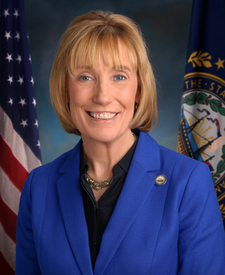
See how Margaret Wood Hassan's votes line up with your values.
DeepSyte scores Margaret Wood Hassan's record on the issues you care about — not party, not press releases. Take the 2-minute values quiz to see your personal alignment.
Sign in and take the values quiz to see how Margaret Wood Hassan's votes line up with your views.
Prediction track record
How often we called Margaret Wood Hassan's passage votes correctly, from their stated positions on each bill's tagged topics. Excludes “unclear” calls and abstentions.
180 predictions on record · none have been resolved by a passage vote yet. Check back as bills move.
To prohibit the disclosure of records by the Secretary of Housing and Urban Development of individuals for the purposes of immigration enforcement, and for other purposes.
Based on 2 data points across public statements and recorded votes · AI analysis of public records
118-hr-2882·Consistent
Further Consolidated Appropriations Act, 2024
85/100
What they said
Mar 27, 2026
Senator Hassan supports funding for TSA, FEMA, and DHS agencies and calls for reforms to ICE operations, citing concerns about conduct by federal immigration agents and the need for ICE to meet standards comparable to local law enforcement.
Senator Hassan's statement supports funding for TSA, FEMA, and DHS agencies while calling for ICE reforms. The bill is a broad FY2024 appropriations measure that includes the Department of Homeland Security Appropriations Act, 2024, which funds these agencies. Her YES vote on passage aligns with her stated support for funding these agencies. However, the bill is an omnibus appropriations package covering multiple departments and agencies beyond DHS, and the statement does not address her position on the other five appropriations bills bundled within it (Defense, Financial Services, Labor/HHS/Education, Legislative Branch, State/Foreign Operations), creating some ambiguity about whether her vote reflects support for the entire package or primarily the DHS component.
Senator Hassan criticizes ICE's diversion of personnel and resources away from counter-fentanyl and counter-cartel efforts under the Trump Administration, which has resulted in a 39 percent decrease in fentanyl seizures and reduced investigative hours, and calls for ICE to provide detailed information and accelerate corrective action.
Senator Hassan's statement criticizes ICE's diversion of resources away from counter-fentanyl efforts under the Trump Administration, citing a 39 percent decrease in fentanyl seizures. Her YES vote on the Further Consolidated Appropriations Act, 2024 (which includes DHS appropriations) is generally consistent with supporting robust funding for law enforcement agencies tasked with drug interdiction. However, the bill is a broad omnibus appropriations measure covering multiple departments and agencies; it does not specifically address the resource allocation or prioritization issues Hassan raised regarding ICE's counter-fentanyl mission. The vote reflects support for DHS funding overall, but the bill text does not clarify whether it contains provisions that would correct or prevent the resource diversion Hassan criticized.
Pairs with ambiguous language and high uncertainty are withheld until more data is available. Procedural, cloture, and amendment votes are excluded — they don't cleanly signal substantive support or opposition.
Pro analysis
AI rep analysis — Pro
Get an AI-narrated read on Margaret Wood Hassan's full voting record against your stated values — aligned themes, conflicts, notable votes, and what to watch for.
We haven't extracted campaign positions for Margaret Wood Hassan yet. Once their campaign website or position pages are processed, this card will track what they said vs how they voted.
Crossing the aisle
Passage votes where Margaret Wood Hassan broke ranks with ≥75% of Democrats. Threshold catches substantively partisan splits; unanimous-ish or close votes are excluded.
1
Cross-aisle vote
119-hr-5334·Jul 29, 2026·77% of D voted YES
Lindsey O. Graham Sanctioning Russia and Iran Act of 2026
Hassan, Colleagues Question Meta’s Use of Billions... | U.S. Senator Maggie Hassan of New Hampshire
Position: The senators question whether Meta's claimed use of federal research and development tax credits for AI data center buildout is a misapplication of the credit, which they state is intended for experimental research, and call on Meta to justify the claims and urge further investigation.
WASHINGTON – U.S. Senator Maggie Hassan joined colleagues from the Senate Finance Committee in calling on Meta to justify its use of billions in federal research and development tax credits to fund its rapid buildout of AI data centers, in a letter to Meta CEO Mark Zuckerberg today.
According to recent reporting, Meta claimed its AI data centers are experimental “pilot models”, and therefore eligible for federal research and development tax credits. That is a potential misuse of that credit, which is intended to incentivize experimental research, not to scale up established computing infrastructure. As Meta spends tens of billions of dollars on AI data centers, its research and development tax credits have grown from $700 million in 2023, to $4 billion in 2025.
“The federal research credit can be a useful and necessary tool to support our nation’s innovation economy and cutting-edge research,” Senator Hassan and her colleagues wrote in their request to Meta. “Subsidizing your A.I. data center build is not close to meeting this standard.”
If the reporting is accurate, Meta’s federal research and development tax credit claims would represent more than 10 percent of all research tax credits claimed in the U.S., based on Joint Committee on Taxation figures.
“Any effort by Meta to use A.I. data center expansion as eligible for research credits is potentially a significant misapplication of federal tax law that merits further investigation,” the senators continued.
Read the full text of Senator Hassan and her colleagues’ request to Meta here or below.
We write regarding reports that Meta Platforms, Inc. (“Meta” or “the company”) may be abusing the federal research and development tax credit (“research credit”) to avoid billions of dollars in taxes. According to public reports, Meta has claimed to the Internal Revenue Service (“IRS”) on federal tax filings that the company’s artificial intelligence data centers are experimental “pilot models” that qualify for the research credit. This strategy – in violation of the spirit and, potentially, the letter of the tax law – supposedly saved Meta billions of dollars on its A.I. data center buildout, including on the purchase of advanced microchips and computing equipment.
As you are aware, Meta has indicated on federal regulatory filings that it has used the federal research credit to reduce its federal income tax liability by $6.6 billion between 2023 – 2025. Meta claimed $700 million in research credits in 2023, more than doubled it in 2024 to $2 billion, and doubled it again in 2025 to nearly $4 billion. Meta is a prolific user of the federal research credit and represents a disproportionately large share of the federal tax revenue loss that is attributable to the credit. According to the estimates of the Joint Committee on Taxation, the federal research credit cost the government $32 billion in 2025. By this measure, Meta alone would be responsible for more than 10% of all research credits claimed in the U.S.
While it remains unclear exactly how Meta was able to reduce its federal tax liability by over $6.6 billion in the last three years using federal research credits, it appears from published reports that a substantial share is by claiming the research credit related to its massive A.I. data center build out. Under section 41 of the Internal Revenue Code, companies may claim the research credit for costs related to domestic research or experimental expenditures.5 The research credit is intended to help offset the cost of experimental efforts with a high risk of technical uncertainty; it is not intended for standard business operations or commercially available technologies already in use. For these reasons, acquisition of hardware used in data centers, which is widespread and relies on proven technology, would not normally be considered eligible for the federal research credit.
It appears that Meta was aware of the risks associated with claiming billions in tax breaks on A.I. data centers but decided to move forward with this questionable strategy anyway. According to public reports, Meta is treating its A.I. data centers and standard data centers differently for tax purposes, claiming that its A.I. data centers are part of a giant research experiment. Meta apparently employed this questionable theory in order to use research credits to cut billions of dollars of the costs incurred from purchasing costly hardware needed to operate its data centers, such as advanced microchips acquired from companies like Nvidia.
Meta in its disclosures to investors indicated that this tax strategy may not withstand scrutiny from the IRS. In its most recent annual report, Meta indicated that its “uncertain tax positions” were related to “uncertainties with our research and development tax credits that are based on an assessment of whether our available documentation corroborating the nature of our activities supporting the tax credits will be sufficient.” Any effort by Meta to use A.I. data center expansion as eligible for research credits is potentially a significant misapplication of federal tax law that merits further investigation.
This is unfortunately not the first time Meta has claimed federal research credits for questionable purposes. In 2013, Meta claimed that $4.1 billion you received when you exercised stock options should be eligible for research credits. The IRS is challenging this position that billions of dollars in CEO compensation you received is eligible for the research credit and seeking $355 million in back taxes from Meta. The federal research credit can be a useful and necessary tool to support our nation’s innovation economy and cutting-edge research. Subsidizing your A.I. data center build is not close to meeting this standard. In order to ensure the research credit is administered responsibly to protect the American taxpayer, and to better understand Meta’s use of federal research credits to subsidize its A.I. data center build out, please provide answers to the following questions no later than October 31, 2026:
Has Meta claimed tax credits under Section 41 of the Internal Revenue Code for tax years 2023 through 2025, related to the buildout and operation of its A.I. data centers? If yes, please describe the legal justification for claiming these federal research credits, the types of research and experimentation expenditures Meta claimed were eligible for the federal research credit, and the total dollar amount of federal research credits Meta claimed for expenses related to A.I. data centers.
Has Meta claimed to the IRS on federal tax filings that its A.I. data centers are “pilot models” in order to qualify for the federal research credit under Sections 41?
Has Meta taken the position that expenses related to A.I. data centers are eligible for the federal research credit while expenses related to non A.I. data centers are not? If yes, please provide a legal analysis explaining why Meta believes that expenses related to its A.I. data centers are eligible for federal research credits while data centers unrelated to A.I. are not.
Did Meta consult with experts from EY or any other professional accounting firms prior to making the decision to claim federal research credits for expenses related to A.I. data centers? If yes, please describe these interactions and whether EY or any other professional service firms advised Meta that expenses related to A.I. data centers qualified for the federal research credit.
Did EY or any other professional accounting firm or law firm provide an opinion or opinions on whether expenses related to A.I. data centers were eligible to be claimed for the research credit? If so, please provide copies of such opinions.
In 2023, Meta disclosed that it claimed $700 million in federal research and development tax credits. How much of those tax credits was related to the construction or operation of A.I. data centers? Please specify how much of the federal research credits Meta claimed that year was for the purchase of microchips, computing equipment and other materials necessary to build or operate A.I. data centers.
In 2024, Meta disclosed that it claimed approximately $2 billion in federal research and development tax credits. How much of those tax credits was related to the construction or operation of A.I. data centers? Please specify how much of the federal research credits Meta claimed that year was for the purchase of microchips, computing equipment and other materials necessary to build or operate A.I. data centers.
In 2025, Meta disclosed that it claimed approximately $3.9 billion in federal research and development tax credits. How much of those tax credits was related to the construction or operation of A.I. data centers? Please specify how much of the federal research credits Meta claimed that year was for the purchase of microchips, computing equipment and other materials necessary to build or operate A.I. data centers.
Why did Meta claim that $4.1 billion in stock-based compensation for Mark Zuckerberg between 2008 – 2010 was a “qualified research expense”? Please provide a detailed justification as to why the CEO compensation for Mr. Zuckerberg serves a research or experimental purpose.
Does Meta intend to continue challenging the $355 million in back taxes the IRS is seeking related to treating Mr. Zuckerberg’s stock-based compensation as a qualified research expense? If yes, why?
Senator Hassan Highlights Efforts to Support Grani... | U.S. Senator Maggie Hassan of New Hampshire
Position: Senator Hassan highlights support for recovery housing for women with substance use disorder and expansion of the Low-Income Housing Tax Credit to fund affordable housing.
NEW HAMPSHIRE – U.S. Senator Maggie Hassan toured new housing developments in Manchester and Rochester to highlight efforts to lower housing costs and support Granite Staters in recovery.
In Manchester, Senator Hassan joined Revive Recovery for a ribbon-cutting ceremony celebrating the opening of The Hive, a new recovery residence and resource center for women overcoming addiction. The Hive’s programming will include daily structure to aid in routine building, connections to outside supports like outpatient treatment or meetings, and a focus on rebuilding stability through housing, employment, emotional regulation and other skills.
“When you are in recovery, when you are making critical transitions, it is so important to have a safe place to call home,”Senator Hassan said. "Particularly for women who are stereotyped and stigmatized if they have substance use disorder, having a safe place that is also a beautiful place that recognizes their inherent worth and the dignity of every single person in recovery is critically important, and that's what this beautiful space really reflects.”
In Rochester, Senator Hassan toured The Rapids on Cocheco, a new working-class housing development made possible in part by the Low-Income Housing Tax Credit, which Senator Hassan pushed to expand.
Senator Hassan tours The Rapids on Cocheco
Senator Hassan Visits Canterbury Shaker Village, H... | U.S. Senator Maggie Hassan of New Hampshire
Position: Senator Hassan supports federal funding for preservation of historic sites such as Canterbury Shaker Village and backs bipartisan legislation authorizing a feasibility study for designating the Village as a National Heritage Area.
CANTERBURY – U.S. Senator Maggie Hassan visited Canterbury Shaker Village and heard from staff about their work to preserve the historic site and educate visitors about New Hampshire’s history. During the visit, Senator Hassan discussed federal funding that she helped secure to support preservation efforts, as well as her bipartisan legislation to help designate Canterbury Shaker Village as a National Heritage Area.
“Canterbury Shaker Village is an important part of New Hampshire’s history and gives visitors an opportunity to learn about the Shakers and their unique way of life,” said Senator Hassan. “It was great to be back at the Village to hear about the staff’s work to preserve this history for future generations. I will keep advocating to bring federal grant dollars back to New Hampshire to support historic sites like Canterbury Shaker Village.”
Established in 1792, Canterbury Shaker Village is among the oldest and most preserved Shaker communities in the country. Today, the Village gives visitors an opportunity to learn about more than 200 years of Shaker history through its historic buildings, exhibits, and educational programs.
Senator Hassan has supported efforts to help preserve the Village’s historic infirmary, improve the care and management of its collections, and develop new exhibits highlighting the Shakers’ economic history and innovations.
Senator Hassan also introduced bipartisan legislation to authorize a study of the feasibility of designating Canterbury Shaker Village as a National Heritage Area, the first step toward securing the designation and making the Village eligible for additional federal support. The legislation advanced out of the Senate Energy and Natural Resources Committee earlier this year.
Senator Hassan tours Canterbury Shaker Village
SIGNED INTO LAW: Hassan-Ernst Bill to Expose Gover... | U.S. Senator Maggie Hassan of New Hampshire
Position: Announces that bipartisan legislation requiring disclosure of government projects that are $1 billion over budget or five years behind schedule has been signed into law, and describes the sponsor's support for government transparency and taxpayer accountability.
WASHINGTON – Bipartisan legislation led by U.S. Senators Maggie Hassan and Joni Ernst (R-IA) to increase government transparency was recently signed into law. The Billion Dollar Boondoggle Act requires disclosure of any government project that is $1 billion over budget or five years behind schedule.
“Granite Staters deserve to know that their hard-earned tax-dollars are being spent responsibly,” said Senator Hassan. “This commonsense, bipartisan bill will give the public greater visibility into how their tax dollars are being used and it will help Congress identify wasteful spending. I am pleased to see this bill signed into law and I will continue working with my colleagues of both parties to protect taxpayer dollars and increase government transparency.”
This legislation is part of Senator Hassan’s ongoing efforts to save taxpayer dollars and cut waste, fraud, and abuse in the federal government. Her bipartisan bill, the Stop Secret Spending Act, which would require billions of dollars in previously undisclosed federal spending to be made public on USAspending.gov., was recently signed into law.
In her role as Ranking Member of the Joint Economic Committee, Senator Hassan has led several bipartisan hearings focused on ways to improve government efficiency. Earlier this year, Senator Hassan helped pass into law a bipartisan bill that helps prevent payments from being unintentionally sent to individuals who have died. Last year, the Senator’s Government Service Delivery Improvement Act – which improves the ways in which federal agencies deliver services, including health benefits and student loan programs, to the public – passed into law. Senator Hassan also helped pass into law the Grant Transparency Act to bring more transparency into federal agencies' competitive grant selection process.
Hassan, Grassley Take Action to Improve Access to ... | U.S. Senator Maggie Hassan of New Hampshire
Position: The release announces introduction of the bipartisan SCREENS Act, which would establish a national data and technology framework to make federal cancer screening recommendations publicly available in machine-readable format and help providers identify patients overdue for screenings.
WASHINGTON – U.S. Senators Maggie Hassan, Ranking Member of the Senate Finance Subcommittee on Health Care, and Chuck Grassley (R-IA) introduced the Standardizing Cancer Recommendations for Earlier Evaluation and Navigation of Screenings (SCREENS) Act to make cancer screening recommendations more accessible, transparent, and user friendly for patients and health care providers.
“Cancer screenings can identify cancers during the early stages when they are easiest to treat, but patients often do not know when they are due for potentially life-saving screenings,” said Senator Hassan. “This bipartisan bill will help make sure that patients and doctors are informed about federal cancer screening recommendations so that they can catch cancer earlier and get people the treatment that they need. I’m glad to introduce this bill, and I will continue working across the aisle to strengthen preventative care for Granite Staters.”
“Detecting cancer early can save lives. I know that based on the personal experience of my wife, Barbara, a nearly 40-year breast cancer survivor. Unfortunately, patients and providers are navigating a complex and confusing maze just to keep up with cancer screening recommendations. By making these recommendations more accessible through technology, our SCREENS Act would strengthen cancer care and help save lives. For my home state, this bill would proactively support Iowans by helping providers identify patients who could be overdue for a screening,” said Senator Grassley.
Cancer is the second-leading cause of death in the United States. Cancer screenings can increase the chance of earlier treatment and reduce mortality, but screening recommendations are often complex, fragmented and difficult to interpret and navigate.
The bipartisan SCREENS Act would simplify and improve the process by establishing a national data and technology framework for cancer screening recommendations, to make these recommendations more accessible, interoperable and effective for providers and patients.
In 2022, the Presidential Cancer Panel recommended the federal government develop a digitally accessible version of the cancer screening and risk assessment guidelines. The SCREENS Act would enact this recommendation. Under the legislation, the national data and technology framework would be publicly available in machine-readable format for use by health information technologies, interoperability tools and patient-facing applications. The legislation would also help providers identify which patients are at risk and overdue for screenings.
Click here for a section-by-section of the bill.
Click here to see text of the bill.
The SCREENS Act builds on Senator Hassan’s record of expanding access to preventive care and cancer screenings. She has repeatedly fought to protect Title X funding that helps patients access cancer screenings and other preventive care. In 2022, Senator Hassan helped pass into law the bipartisan SERVICE Act to expand access to mammograms for veterans exposed to burn pits and other toxic substances.
Senator Hassan Presses RFK Jr to Reinstate Critica... | U.S. Senator Maggie Hassan of New Hampshire
Position: Senator Hassan calls on HHS Secretary Kennedy to reinstate the Pregnancy Risk Assessment Monitoring System (PRAMS), a federal data-collection program shut down in January 2025, arguing it is essential for tracking maternal and infant health outcomes and informing public health policy.
WASHINGTON – U.S. Senator Maggie Hassan (D-NH), Ranking Member of the Senate Finance Subcommittee on Health Care, is pressing Health and Human Services Secretary Robert F. Kennedy Jr. to reinstate the Pregnancy Risk Assessment Monitoring System (PRAMS), which is the only nationwide system that tracks the experiences of women and their infants before, during, and after birth. As the United States faces a maternal health crisis, the Department of Health and Human Services chose to shut down PRAMS at the start of the Trump Administration in January 2025. PRAMS helped lawmakers and public health officials across the country develop and strengthen programs to protect maternal and infant health by providing a nationwide snapshot of the challenges that women face during prenatal and postpartum care, their mental and physical health, and the health of their babies.
“Before January 2025, the federal Pregnancy Risk Assessment Monitoring System, or ‘PRAMS,’ was the only nationwide system that helped us understand whether the programs that are intended to reduce maternal and infant deaths are working. Each month, states asked women who have recently given birth about their health and experiences before, during, and after pregnancy,” Senator Hassan wrote in a request to Secretary Kennedy to restore the program. “For decades, this information had been collected, anonymized, and posted in the PRAMS system by the Centers for Disease Control and Prevention, providing a nationwide snapshot of the challenges that women face during prenatal and postpartum care, their mental and physical health, and the health of their babies.”
The Senator continued, “Researchers and policymakers have used information from PRAMS to design programs that stop preventable maternal and infant deaths. For example, the system helped health workers in New Hampshire more effectively screen for and treat substance use in pregnant women... I am deeply concerned that disruptions to PRAMS have left permanent gaps in our understanding of maternal and infant health.”
Hassan is pressing Secretary Kennedy and his department to restore the PRAMS program, reinstate the staff working on it, and make all data on material and infant health that has been collected in the last year and half publicly available. Hassan’s push to restore PRAMS is supported by several organizations including the March of Dimes and the American College of Obstetricians and Gynecologists.
“It cannot be overstated how important PRAMS is to the collective effort to improve U.S. maternal and infant health outcomes,”said Camille A. Clare, MD, MPH, CPE, FACOG, President of the American College of Obstetricians and Gynecologists. “For nearly 40 years, PRAMS has been the only tool we have that captures detailed, self-reported, state-specific information on topics such as prenatal and postpartum care, mental health, breastfeeding, housing, and income. This information gives ob-gyns important insights into maternal behaviors and experiences that help improve care delivery. Yet, for more than a year, PRAMS has been unable to function optimally without the necessary staff to provide states with analysis and technical assistance. It is imperative that PRAMS staff be reinstated so that we can stay abreast of emerging issues and continue monitoring changes in maternal and infant health that will ultimately help save lives.”
Senator Hassan has led a number of efforts to ensure that new and expecting mothers have access to high-quality health care. Last year, Hassan led her colleagues in introducing the bipartisan Rural Obstetrics Readiness Act to support rural health care facilities in providing urgent obstetric care. The bill advanced from committee in July. Senator Hassan and the New Hampshire Congressional delegation also had previously fought to secure nearly $1 million in federal funding for Dartmouth-Hitchcock Medical Center to strengthen maternal health care in the North Country. She introduced the Keep Obstetrics Local Act (KOLA), to help keep labor and delivery units in rural and underserved communities stay open, and the bipartisan Healthy Moms and Babies Act to strengthen health care for women before, after, and during childbirth. In 2023, thanks to Senator Hassan’sbipartisan legislation to improve mental health for new mothers, the Department of Health and Human Services launched theTask Force on Maternal Mental Health.
Read the full text of Senator Hassan’s request to Secretary Kennedy here or below.
The United States faces a maternal health crisis. A larger share of American women and infants die from preventable causes than women and infants in peer nations. Despite this crisis, the U.S. Department of Health and Human Services chose in January 2025 to shut down the only nationwide system that helps the public track the performance of federal programs that are intended to keep mothers and babies from dying preventable deaths. We urge you to immediately reinstate access to this centralized system and publicly release unpublished data from the past year and a half.
Before January 2025, the federal Pregnancy Risk Assessment Monitoring System, or “PRAMS,” was the only nationwide system that helped us understand whether the programs that are intended to reduce maternal and infant deaths are working. Each month, states asked women who have recently given birth about their health and experiences before, during, and after pregnancy. For decades, this information had been collected, anonymized, and posted in the PRAMS system by the Centers for Disease Control and Prevention (CDC), providing a nationwide snapshot of the challenges that women face during prenatal and postpartum care, their mental and physical health, and the health of their babies.
Researchers and policymakers have used information from PRAMS to design programs that stop preventable maternal and infant deaths. For example, the system helped health workers in New Hampshire more effectively screen for and treat substance use in pregnant women. In West Virginia, the state used PRAMS to identify high rates of unintended pregnancies among women battling addiction and used that information to target resources and reduce the number of babies born with opioid withdrawal syndrome. Through PRAMS, the State of Maine found that pregnant women in that state used tobacco at a high rate, and in response, Maine created a new program to support smoking cessation among pregnant and postpartum women.
In January 2025, the administration shut down the PRAMS software that states use to collect maternal health data and the portal that the public used to access it. This forced many states to stop collecting responses for an average of three months, and in some cases for as long as eight months. You fired the CDC staff responsible for managing the program and have yet to restore the system that researchers used to study national PRAMS data.
I am deeply concerned that disruptions to PRAMS have left permanent gaps in our understanding of maternal and infant health. I urge you to reinstate the CDC staff working on PRAMS, restore public access to the portal for studying national PRAMS data, and release PRAMS data that has not been made publicly available for the past year and a half.
SIGNED INTO LAW: Hassan-Grassley Legislation to Su... | U.S. Senator Maggie Hassan of New Hampshire
Position: The release announces that the Improving Social Security's Service to Victims of Identity Theft Act, authored by Senators Hassan and Grassley, was signed into law, and describes its provision of a single point of contact at the Social Security Administration for identity theft victims. The senators express support for the legislation and for continued efforts to address fraud and scams.
WASHINGTON – The Improving Social Security’s Service to Victims of Identity Theft Act authored by Senators Maggie Hassan and Chuck Grassley (R-IA) was signed into law yesterday. The bipartisan legislation makes it easier for identity theft victims to get help from the Social Security Administration.
“Too often, victims of identity theft are forced to navigate a long, confusing process to get support from the Social Security Administration. This process is frustrating to victims and unnecessarily drains the agency’s resources,” said Senator Hassan. “My bipartisan bill will help streamline support from SSA so that victims of identity theft can get the help that they need more quickly. I worked with colleagues across the aisle to pass this commonsense legislation, and I am glad to see it signed into law. I will continue pushing to make the government work more efficiently for victims of theft, fraud, and scams.”
“Millions of Americans suffer from identity theft each year, and Social Security numbers are a top target. Unfortunately, when an identity theft victim calls up the Social Security Administration, they can be jerked around from one contact to another, having to reexplain the situation each time. By providing victims a single point of contact at the agency, our bill will help ease this frustrating and stressful process and make life easier for Iowans who may find themselves in this unfortunate situation. I want to thank my colleagues for their overwhelming support to get this legislation over the finish line,” said Senator Grassley.
The Improving Social Security’s Service to Victims of Identity Theft Act provides a single point of contact at the Social Security Administration to more efficiently and quickly resolve and identity-theft victim’s issues.
The legislation was endorsed by numerous groups, including AARP, Social Security Works, the National Committee to Preserve Social Security and Medicare (NCPSSM), Justice in Aging, and the National Organization of Social Security Claimants' Representatives (NOSSCR).
Read the full text of the bill here.
This bill builds on Senator Hassan’s longstanding efforts to protect taxpayers, prevent waste and fraud, and help government work more effectively for the American people. Earlier this year, she introduced the bipartisan ReportScams.gov Act to establish a centralized portal where Americans can report scams and get help. She also introduced the bipartisan No Aid for Ghost Students Act to prevent fraudsters from using stolen identities to steal federal student aid. As Ranking Member of the Joint Economic Committee, Senator Hassan is leading a comprehensive investigation into combating scams, and as part of that, she led a Committee hearing earlier this year during which she secured commitments from the FBI and Department of Justice to improve coordination and strengthen the federal response to scams.
Senator Hassan Visits Child Care Center in Nashua | U.S. Senator Maggie Hassan of New Hampshire
Position: Senator Hassan supports expanding access to affordable child care through multiple legislative mechanisms, including tax incentives for businesses, support for nontraditional-hours care, and capping child care costs at 7 percent of family income while increasing early childhood worker wages.
NASHUA – U.S. Senator Maggie Hassan visited KinderCare at Rivier University in Nashua, where she read to Pre-K students and spoke with staff about their work to support children and families.
Senator Hassan reads to a Pre-K class
“It was great to see firsthand the work that the staff members at KinderCare are doing to help young Granite Staters learn and grow,” said Senator Hassan. “I valued the opportunity to hear about the challenges that they face when it comes to hiring and retaining qualified teachers, even as demand for child care remains incredibly high. The workforce shortage is a main driver in the gap between supply and demand and is key to making and quality child care more accessible and affordable so that parents can enter and stay in the workforce and our businesses can recruit the workers that they need.”
Senator Hassan meets with staff at KinderCare at Rivier University
Senator Hassan leads several bipartisan efforts to help more families access and afford child care. Her bipartisan Child Care Tax Benefit Outreach and Assistance Act, which would help more businesses take advantage of existing federal child care tax incentives, recently passed the Senate. Senator Hassan also co-leads the bipartisan After Hours Child Care Act, which would improve access to affordable child care for parents working nontraditional hours. Senator Hassan also helped introduce theChild Care for Working Families Act, which would cap child care costs at 7 percent of a family’s income, make high-quality preschool universally accessible for all 3-and 4-year olds, and increase wages for early childhood workers.
PASSED THE SENATE: Hassan Bill to Help More Busine... | U.S. Senator Maggie Hassan of New Hampshire
Position: Senator Hassan supports legislation to increase awareness and utilization of existing federal child care tax incentives by creating an IRS liaison to help businesses access these underutilized credits, which she characterizes as a commonsense bipartisan measure to reduce child care costs for working families and support workforce retention.
WASHINGTON – Legislation led by U.S. Senators Maggie Hassan (D-NH) and Dan Sullivan (R-AK) to help more businesses and working families access federal child care tax benefits recently passed the Senate. The Child Care Tax Benefit Outreach and Assistance Act would create a Business Child Care Liaison at the Internal Revenue Service (IRS) to help more businesses take advantage of existing federal child care tax incentives that are underutilized. The bill now heads to the House for consideration.
In June, the U.S. Congress Joint Economic Committee – Minority, of which Senator Hassan serves as the Ranking Member, issued a report that calculated that a sample business could save $820,000 over 5 years using the credits, and a parent working for the company could save nearly $10,000 on child care costs.
“Child care costs are crushing working families across the country and making it harder for businesses to find and retain the workforce that they need. Federal child care tax incentives can help businesses better support working families by lowering the cost of providing child care, but too often, businesses do not know that these incentives are available,” said Senator Hassan. “This commonsense, bipartisan bill will help cut through the confusion around federal child care tax incentives, increase awareness among businesses about these incentives, and make it easier for Granite State businesses and employers across the country to invest in the child care that their employees need to stay in the workforce. I am pleased to see this pass the Senate and urge my House colleagues to support it so that it can be signed into law.”
“Quality child care is not only essential for the well-being of families, it is also key to a thriving economy and a strong workforce,” said Senator Sullivan. “I hear repeatedly from Alaska parents that the lack of affordable child care is one of their top concerns, and the data backs that up. Sixty-one percent of Alaskans are living in communities classified as child care ‘deserts,’ and too many families struggle to find reliable, affordable care close to home. This legislation will help employers, providers, and other nonprofits better utilize federal tools for employees—specifically the significant expansion of federal incentives in the Working Families Tax Cuts Act for child care facilities and the provisions that expand opportunities and support for working families. It was great to see this important legislation pass the Senate, and I look forward to seeing this bipartisan bill advance through the House and signed into law.”
Federal tax incentives designed to help businesses provide child care benefits are underutilized, even as working parents across the country struggle with the cost and availability of child care. Greater utilization of these incentives by businesses could help expand access to child care for many working families – and help more businesses hire and retain workers. The bipartisan Hassan-Sullivan legislation would direct the IRS to appoint a Business Child Care Liaison who would be responsible for building relationships between the child care sector and business community, coordinating with other federal agencies to help employers use child care tax incentives, and identify and recommend to Congress potential legislative and administrative changes to improve the utilization of these incentives.
Senator Hassan leads several bipartisan efforts to help more families access and afford child care. She introduced the bipartisan After Hours Child Care Act to improve access to affordable child care for parents working nontraditional hours. Additionally, Senator Hassan helped introduce the Child Care for Working Families Act, which would cap child care costs at 7 percent of a family’s income, make high-quality preschool universally accessible for all 3-and 4-year olds, and increase wages for early childhood workers.
PASSED THE SENATE: Hassan, Scott Bill to Protect I... | U.S. Senator Maggie Hassan of New Hampshire
Position: Senators Hassan and Scott support legislation allowing courts to consider all relevant evidence when reviewing innocent spouse tax relief claims, which passed the Senate and now heads to the House.
WASHINGTON – Bipartisan legislation led by U.S. Senators Maggie Hassan (D-NH) and Tim Scott (R-SC) to help ensure that taxpayers are not unfairly held responsible for tax debts caused by a spouse’s hidden income, mistakes, or misconduct unanimously passed the Senate. The Tax Relief for Innocent Spouses Act, which was included as part of the Taxpayer Assistance and Service (TAS) Act, now heads to the House for consideration.
“When married couples file taxes jointly, one spouse can sometimes be left facing serious financial consequences because of mistakes that they had no knowledge of or control over,” said Senator Hassan. “This bipartisan bill helps ensure that innocent spouses, including those who may have experienced abuse or lacked access to their finances, will have a fair opportunity to present their case and receive the relief that they deserve. I’m glad to see it pass the Senate, and I’ll keep working across the aisle to get it passed into law.”
“One spouse should not bear the responsibility for another spouse’s hidden income or mistakes, and the Tax Relief for Innocent Spouses Act gives the Tax Court greater authority to review the full scope of evidence in appeal cases,” said Senator Tim Scott. “For spouses who face domestic abuse or who lack access to financial information, this legislation would be life changing. By ensuring innocent Americans are treated fairly under our tax laws, we could provide much-needed relief and opportunities to move forward.”
When married couples file taxes jointly, both spouses are liable for any misstatement of income or underpayment, even if one spouse had no knowledge of the violation. This can be a particularly common issue in abusive relationships when one spouse takes control of the finances or hides additional income. The “innocent spouse” who is unaware of the tax violations may qualify for tax relief and be protected from liability for tax violations they did not know about.
Under current law, courts reviewing innocent spouse claims can only consider evidence that was newly discovered, not evidence that was previously submitted during the IRS administrative review process. This can make it harder for innocent spouses to obtain relief, particularly if they experienced abuse, lacked access to financial information, or did not understand the process.
The Tax Relief for Innocent Spouses Act would allow courts to consider all relevant evidence when reviewing innocent spouse claims, helping give taxpayers a fair opportunity to receive relief from tax liabilities they did not cause.
Articles from a curated list of national outlets that mention Margaret Wood Hassan.
No recent news mentions yet.
Source: GDELT 2.0 GKG, filtered to a curated list of national outlets. Inclusion is not endorsement; opinion pieces and reported news are mixed.
Recent stock activity
Periodic transaction reports filed under the STOCK Act — disclosed by the rep, sourced from public filings.
No disclosed trades on record.
Source: open-data mirrors of the Senate eFD and House Clerk financial-disclosure systems. Disclosure within 30 days of trade is required by law (45 for spouse/dependent trades).
Top PAC donors · 2026 cycle
Political action committees that gave the most to this rep's principal campaign committee this cycle. PAC giving is direct organizational support — industry, ideological, or leadership.
1.AMGEN INC. POLITICAL ACTION COMMITTEE4 contributions$10,000
2.HUMANA INC. POLITICAL ACTION COMMITTEEHealth4 contributionsHealth insurance and managed-care PAC — backs candidates supporting policies favorable to HMO operations, Medicare Advantage expansion, and healthcare industry regulatory positions.AI$10,000
3.DELTA DENTAL PLANS ASSOCIATION PAC3 contributions$9,000
4.QUEST DIAGNOSTICS INCORPORATED POLITICAL ACTION COMMITTEE5 contributions$8,500
5.WHOLESALE & SPECIALTY INSURANCE ASSOCIATION (WSIA) PAC3 contributions$7,500
6.ALLIANCE FOR PHYSICAL THERAPY QUALITY AND INNOVATION PAC2 contributions$7,000
7.BURNS AND MCDONNELL INC. PAC3 contributions$7,000
8.MESSER CONSTRUCTION CO. PAC3 contributions$7,000
Source: OpenFEC (api.open.fec.gov) Schedule A receipts where contributor type is “committee.” Aggregated by contributing committee. Self-transfers from joint-fundraising / victory committees are excluded.
Top individual contributors · 2026 cycle
Itemized individual contributions over $200 to this rep's campaign committee, aggregated by donor employer. PAC giving is shown above; this section is people, not organizations.
1.ANTHROPIC PBC$28,000
2.LIBERTY MUTUAL INSURANCE COMPANY$17,926
3.WINGED KEEL GROUP, INC.$10,500
4.ROSEN PARTNERS LLC$10,000
5.CORNERSTONE GOVERNMENT AFFAIRS INC.$10,000
6.CHISHOLM CHISHOLM & KILPATRICK LTD.$7,144
7.CONSTELLATION BIO$7,000
8.VETERANS UNITED HOME LOANS$7,000
9.140 SUMMER PARTNERS LP$7,000
10.THE BAUPOST GROUP$7,000
Source: OpenFEC Schedule A receipts where contributor type is “individual,” aggregated by the donor's self-reported employer. This is a geographic / industry correlation, not a corporate endorsement.