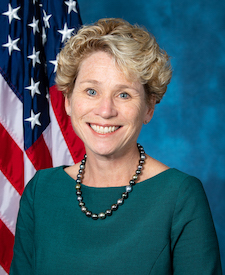
See how Chrissy Houlahan actually votes — against your values.
DeepSyte scores Chrissy Houlahan's record on the issues you care about — not party, not press releases. Take the 2-minute values quiz to see your personal alignment.
Sign in and take the values quiz to see how Chrissy Houlahan's votes line up with your views.
Prediction track record
How often we called Chrissy Houlahan's passage votes correctly, from their stated positions on each bill's tagged topics. Excludes “unclear” calls and abstentions.
To prohibit the disclosure of records by the Secretary of Housing and Urban Development of individuals for the purposes of immigration enforcement, and for other purposes.
No paired statements and votes yet for Chrissy Houlahan
We haven't yet found statement/vote pairs on the same topic for Chrissy Houlahan. This usually means either the rep hasn't taken public positions on bills that have come to a passage vote, or those bills haven't been tagged yet. The checker runs as new press releases and votes come in.
Pro analysis
AI rep analysis — Pro
Get an AI-narrated read on Chrissy Houlahan's full voting record against your stated values — aligned themes, conflicts, notable votes, and what to watch for.
We haven't extracted campaign positions for Chrissy Houlahan yet. Once their campaign website or position pages are processed, this card will track what they said vs how they voted.
Crossing the aisle
Passage votes where Chrissy Houlahan broke ranks with ≥75% of Democrats. Threshold catches substantively partisan splits; unanimous-ish or close votes are excluded.
13
Cross-aisle votes
119-hres-1335·Jun 11, 2026·89% of D voted NO
Condemning actors seeking to defraud the United States Government, and expressing the sense of the House of Representatives that governmentwide fraud and improper payment prevention reforms will meaningfully improve the financial prosperity of the United States, and that Federal program eligibility should be verified before payment.
Houlahan Reintroduces Bill to Expand Donor Breast Milk Access, Support WIC
Position: The representatives support legislation to expand access to donated breast milk for medically vulnerable infants by allowing WIC programs to cover donor milk, clarifying FDA regulations, and supporting nonprofit milk banks.
WASHINGTON, D.C. -- Today, U.S. Representatives Chrissy Houlahan (D-PA-06), Stephanie Bice (R-OK-05) and Maria Salazar (R-FL-27) reintroduced bipartisan legislation to expand access to donated breast milk for medically vulnerable infants at nonprofit milk banks nationwide. The Access to Donor Milk Act would allow state agencies to support donor milk programs with Special Supplemental Nutrition Program for Women, Infants and Children (WIC), enable nonprofit milk banks to ramp up production in critical shortages, promote the benefits of and need for donor milk, and solve wonky regulation issues that impact access for our most vulnerable.
“This legislation started as a conversation with a lactation consultant in my home community at Paoli Hospital. After learning how parents are struggling to access safe donor breast milk for their vulnerable infants, I knew we needed to provide more support,” said Rep. Houlahan. “The Access to Donor Milk Act is the solution. This bill offers parents the safe, reliable nutrition options their babies need to grow and thrive.”
Donor milk is recommended by the American Academy of Pediatrics for high-risk infants when a mother’s own milk is absent or insufficient in quantity. But the FDA has left donor breast milk in a grey regulatory zone, limiting WIC’s ability to cover donor milk for medically vulnerable infants and leaving low-income women and families behind. The lack of official regulation has also caused a lack of awareness about the availability of this life-saving option. Women don’t know that they can donate milk, and many women, families, and medical professionals do not know they can access it when in need.
Through close collaboration with stakeholders, Houlahan championed the Access to Donor Milk Act to address these barriers and ensure no family is left without the food they need to feed their babies. The bill has a history of bipartisan support in both the House and Senate – and Health and Human Services Secretary Robert F. Kennedy Jr. is also advocating for expanded donor milk supply.
“As a parent of two children, I am pleased to help lead this bipartisan initiative that aims to provide vital nutrients for infants and guard against future shortages of infant formula,” said Rep. Bice. “Our community in Oklahoma’s Fifth Congressional District is fortunate to have the Oklahoma Mother’s Milk Bank, which enables mothers to provide safe, pasteurized milk to infants in need. I will continue working to advance efforts that support families throughout the nation and appreciate the support of Rep. Houlahan on this issue.”
“As a mother of two beautiful daughters, I know every baby deserves the healthiest possible start in life,” said Rep. Salazar. “When a mother’s milk is unavailable or supply runs short, safe donor breast milk can be a lifeline for families and be critical to the health and survival of premature and medically vulnerable babies. I am proud to help lead this bipartisan effort to expand access to donor milk, support nonprofit milk banks, and help more families get the nutrition their babies need.”
The Access to Donor Milk Act is supported by a wide-ranging coalition of organizations, including: 1,000 Days, an Initiative of FHI Solutions; 2020 Mom; African American Breastfeeding Network; American Academy of Family Physicians; American Academy of Pediatrics; Association of Maternal & Child Health Programs; Human Milk Banking Association of North America (HMBANA); Institute for the Advancement of Breastfeeding & Lactation Education; March of Dimes; Mom Congress; MomsRising; National Partnership for Women & Families; National WIC Association; National Women’s Health Network; NEC Society; Reaching Our Sisters Everywhere; The Lactation Network; US Breastfeeding Committee; United States Lactation Consultant Association and ZERO TO THREE.
“Donor milk is a safe, evidence-based intervention that protects premature and ill infants. Nonprofit milk banks have a long track record of providing safe, high-quality donor milk to hospitals and families at home,” said Lindsay Groff, Executive Director of HMBANA. “Expanding access ensures more medically vulnerable babies receive the care they need, and we appreciate the sponsors of the Access to Donor Milk Act for prioritizing this.”
“Far too often, infants who could benefit from donor milk – especially those with very low birth weight – lack access to it, which means they can miss out on vital nutrition support when they need it most. The bipartisan Access to Donor Milk Act would provide much-needed funding, resources, and education to help connect families to donor milk,” said Andrew D. Racine, MD, PhD, FAAP, President of American Academy of Pediatrics. “Pediatricians applaud Representatives Chrissy Houlahan (D-Pa.), Maria Salazar (R-Fla.), and Stephanie Bice (R-Okla.) for raising the awareness of infants' nutritional needs through their commitment to this issue and their vision in crafting this important legislation. We urge Congress to pass this important bill.”
The bipartisan Access to Donor Milk Act would:
Empower State Supplemental Nutrition Program for Women, Infant and Children (WIC) Agencies to use excess funds to purchase coolers to collect and store donated milk before it is collected by a donor milk bank;
Provide $3 million in emergency funding to nonprofit donor milk banks to support donor milk demand following an event that causes an urgent spike in demand for donor milk;
Establish a donor milk awareness program at the Health Resources and Services Administration (HRSA) and a develop public awareness campaign at HRSA educate the public on donor milk from donor milk banks registered with the FDA; and
Require FDA to convene a public meeting of stakeholders to examine potential donor milk regulation and then develop guidance on the best practices for donor milk donation, processing, storage and distribution.
Read the full text of the bill here.
Rep. Chrissy Houlahan (@repchrissyhoulahan) • Instagram photos and videos
Rep. Houlahan, Sens. Ossoff, Duckworth Introduce Legislation to Support Servicemembers’ Transition Out of the Armed Forces
Position: The release advocates for legislation that would designate a senior Department of Defense official to oversee servicemember transition programs and improve coordination between DoD, VA, Labor, Education, and other agencies to better support servicemembers transitioning to civilian life.
Washington, D.C. — Today, U.S. Representative Chrissy Houlahan (PA-06) introduced the Servicemember Civilian Transition Support Act to smooth servicemembers’ transition into civilian life, or the reserves, and ensure they get the support they and their families need.
Sens. Ossoff and Tammy Duckworth (D-IL) introduced the companion bill in the U.S. Senate.
The new bill would designate a senior Department of Defense (DoD) official to serve as the principal advisor to the Secretary of Defense overseeing all programs and activities related to transitioning servicemembers. The official would also work in close coordination with the Secretaries of Veterans Affairs (VA), Labor, and Education, as well as state and local governments, and nongovernmental organizations to improve transition programs and support services.
"As our men and women in uniform reenter civilian life and try to secure housing, find work, and get the healthcare they need, we owe them our support. But too often, servicemembers are falling through the gaps," said Rep. Houlahan. "I'm proud to introduce the Servicemember Civilian Transition Support Act to bridge these gaps, making VA transition support services more effective and easier for servicemembers to access."
“Our servicemembers make tremendous sacrifices to keep our families safe. We owe it to them to ensure they are well-equipped and supported as they transition back to civilian life,” said Sen. Ossoff. “My new legislation with Senator Duckworth will help servicemembers access resources they’ve earned and help make their transition smoother for themselves and their families.”
“As our servicemembers hang up their uniform, they deserve comprehensive support in helping them transition back into civilian life,” said Sen. Duckworth. “Too often, DoD’s transition programs fall short of the standard our Veterans deserve before they are handed off to the VA. Our commonsense bill would make necessary improvements and streamline coordination within DoD of these critical services. It’s the least we can do to help our heroes when they return home.”
The Servicemember Civilian Transition Support Act is backed by the Veterans of Foreign Wars, Fleet Reserve Association, Iraq and Afghanistan Veterans of America, Military Officers Association of America, Veterans Education Success, Vietnam Veterans of America, and With Honor Action.
“Each year, approximately 200,000 service members transition to civilian life—a critical juncture that can shape their future success or lead to serious challenges if not properly managed. Transition is the final warfighting mission, and like any successful operation, it demands unity of command and strategic coordination. The VFW strongly supports the Servicemember Civilian Transition Support Act, which would designate a senior DOD official to oversee all transition programs, including the Transition Assistance Program (TAP), and provide essential support to our reserve components. This role is vital to improving TAP attendance accountability, strengthening interagency coordination, and ensuring that transitioning service members and their families receive the support they’ve earned. We thank Senators Ossoff and Duckworth for introducing this important legislation and urge its swift passage,” said Carol Whitmore, Commander-in-Chief of the Veterans of Foreign Wars.
“On behalf of the Fleet Reserve Association, we proudly endorse the Servicemember Civilian Transition Support Act, introduced by Senators Jon Ossoff and Tammy Duckworth, and express our deep gratitude for their leadership in championing this critical legislation. The transition from military to civilian life is a defining moment for servicemembers, often fraught with challenges due to the lack of structure in the civilian world. This bill’s provisions, designating a Senior DoD Official to oversee all military-to-civilian transition programs, including for the reserve component, ensuring centralized accountability for initiatives like TAP and SkillBridge, fostering enhanced coordination with agencies such as the VA, Department of Labor, Education, and SBA, and mandating a congressional briefing within 90 days to detail implementation, provide vital support during the critical early days, weeks, and months of this transition. These measures strengthen the foundation for the Department of Veterans Affairs’ ongoing efforts, ensuring our servicemembers receive the comprehensive assistance they need to succeed in civilian life," said the Fleet Reserve Association.
“IAVA strongly supports the Servicemember Civilian Transition Support Act. This is an essential piece of legislation that will help to ensure a smooth transition from active-duty service into the civilian world. By designating a senior official to oversee and strengthen transition programs, this bill ensures accountability, coordination, and a higher standard of care for those who have served. Too often, servicemembers and their families face unnecessary challenges as they move from military service into civilian life or the reserve force. Our veterans deserve a seamless and well-supported transition, and this legislation is a critical step toward making that a reality," said Dr. Kyleanne Hunter, CEO of the Iraq and Afghanistan Veterans of America.
“Vietnam veterans were forced to navigate a system that was unprepared, fragmented, and at times indifferent to their needs. We learned the hard way what happens when a nation fails to properly receive its warriors. This legislation is about correcting those failures ensuring that today’s and future veterans are met with dignity, structure, and real support. Honoring Vietnam veterans is not just about remembering their service; it is about building a system worthy of every generation that follows. Never again shall one generation of veterans abandon another,” said James L. McCormick II, Captain, USA (Ret.), Executive Director of Government Affairs at Vietnam Veterans of America.
“The transition from military to civilian life is a critical point in a service member’s journey. Centralizing oversight of transition programs and streamlining collaboration between agencies and departments ensures that service members enter their next chapter with the essential tools to succeed. With Honor Action is proud to endorse this legislation that elevates the importance of the military-to-civilian transition and puts our veterans first,” said Rye Barcott, Co-Founder and CEO of With Honor Action.
Click here to read the Servicemember Civilian Transition Support Act.
Rep. Chrissy Houlahan (@repchrissyhoulahan) • Instagram photos and videos
34 Former Military Members Were Put on Deportation Track in the Past Year
Position: The Trump administration has rescinded protections for military members and their relatives from immigration enforcement, resulting in deportation proceedings against 34 former service members and 248 relatives over the past year. Democratic lawmakers and immigration advocates argue this policy does not enhance public safety and disrespects veterans' service.
The Trump administration began deportation proceedings for 34 former members of the military over the past year, according to federal data obtained by The New York Times, after immigration authorities were directed to ignore previous guidance that gave service members and their relatives more deference.
The 34 are among 125 former service members who were arrested over immigration violations over the past year, according to the data. Officials also placed 248 relatives of former military members into deportation proceedings.
The actions represent a break from policies in recent years, including under President Joseph R. Biden Jr.’s administration, which made it less of a priority to detain and deport members of the military who committed crimes. The Biden administration also avoided targeting for immigration enforcement family members of people who had served.
But the Trump administration rescinded that policy last year, arguing that no one should be protected from the law, which says immigrants who are convicted of certain crimes may be deported.
The Department of Homeland Security did not answer questions, including about whether any of the veterans or family members detained over the past year were ultimately deported. It defended its policy and said no one was exempt from the penalties of violating immigration law.
In a high-profile example of the new policy, Sae Joon Park left Hawaii for South Korea in June under the threat of deportation, even though he had not lived there since he was seven years old. Mr. Park, who earned a Purple Heart for his service, joined the military after high school and was deployed to Panama in 1989, returning with a disability and undiagnosed post-traumatic stress disorder.
In the following years, he was convicted of drug possession, served two years and then missed a bail hearing, which sent him back to prison.
While he was serving his second prison stint, a judge ordered that he be deported. When he was released, he fought his deportation orders and was allowed to stay in the country, according to a Hawaii news report, as long as he stayed out of further trouble and regularly checked in with immigration officials.
Last May, however, an immigration officer told him he would be deported if he did not leave on his own.
Lawmakers and immigration advocates have argued that this new policy does little to make the country safer and insults people who put their lives on the line for the nation.
“Donald Trump’s way of thanking our veterans for their service is by targeting and deporting them and their families,” Senator Elizabeth Warren, Democrat of Massachusetts, said in a statement on Monday.
The data was disclosed in a Feb. 18 letter from the Homeland Security Department to Democratic lawmakers, including Ms. Warren. It covered the period between Jan. 20, 2025, and Jan. 26, 2026.
Immigration and Customs Enforcement publishes annual data on arrests and deportations of immigrant military members. In the 2024 fiscal year, the government said it arrested 24 immigrant members of the Armed Forces for immigration violations, but did not say whether that number included active duty, former members or a combination of both. The Trump administration arrested 125 former members of the military for immigration violations during its first year.
Only U.S. citizens and green-card holders can join the military. And doing so can expedite a green-card holder’s path to citizenship. The first Trump administration and the current one issued policies that required a longer wait to be eligible to apply. The number of green-card holders who served in the military and applied for citizenship declined significantly during President Trump’s first term.
According to federal data, as of July 31, 2025, there were 26,708 active duty immigrants and another 20,350 in the Selected Reserve and National Guard. Veterans Affairs did not respond to a question about the current number of immigrant veterans. In 2022, there were 115,000 immigrant veterans, according to a report by the Congressional Research Service.
Military recruiters continue to trumpet the U.S. policy that promises a swift path to citizenship for immigrants who join the armed services as well as temporary protection for their family members. Spouses, children and parents of immigrant veterans and active duty members can apply for temporary permission to stay in the country.
Now some relatives are afraid to apply for the benefit out of fear that doing so will turn them into a target for deportation. The agency does not regularly track military family members placed in deportation proceedings, so it is not clear how the number compares to previous years.
The Trump administration has targeted other groups of immigrants who were previously not considered priorities for enforcement, including undocumented immigrants who have lived in the country for decades and have no criminal records.
Between Jan. 21 and Nov. 19 of last year, the administration deported 86 immigrants who had protections from removal because they were brought to the country illegally as young children, according to a separate set of federal data provided to lawmakers.
Rep. Chrissy Houlahan (@repchrissyhoulahan) • Instagram photos and videos
These Democrats aren’t ready to jettison big business as party stalwarts shift left
Moderate Democrats looking for their party to take back control of the U.S. House in November are offering an alternative to the economic populism message peddled by their more liberal counterparts.
A new blueprint from the center-left New Democrat Coalition, shared exclusively with CNBC, lays out a road map for addressing affordability — top on voters’ minds — without splashy populist promises.
“Buzzy sounds good in a sound bite, but you often end up with unintended consequences or unworkable solutions,” New Democrat Coalition Chair Rep. Brad Schneider, D-Ill., said in an interview. “We’re hearing people saying they are frustrated with the bombast, but also the hollow promises, and they want to see their government coming up with thoughtful solutions.”
The new plan underscores a tug-of-war within the Democratic Party over its economic message ahead of the pivotal November elections, which could return the party to power after President Donald Trump and his Republicans swept the 2024 elections. And with Trump’s polling on the economy plummeting, picking a winning strategy could be the difference between making the president a lame duck and spending two more years in the political wilderness.
The New Democrats argue Americans want a more moderate approach that bridges the gap between big business and the average voter.
“I reject the idea that business is bad,” said Rep. Chrissy Houlahan, D-Pa., one of the plan’s authors. “This is a set of solutions, tangible, practical, doable solutions, and an answer to ‘what are you going to do when you’re in charge?’”
Among the road map’s proposals are lightening the federal permitting process for energy projects with the aim of lowering utility costs, reducing homebuilding regulations with the goal of getting affordable housing built more quickly, and developing a national strategy for data centers to spread out the “benefits and costs” of the facilities and make sure they don’t “overburden” certain areas.
Absent from the proposal are sweeping new taxes on the wealthy, a cap on credit card interest rates and the creation of a single-payer health-care system, which are popular with prominent progressives like Sen. Elizabeth Warren, D-Mass., and Sen. Bernie Sanders, I-Vt.
They, along with state and local officials like new New York City Mayor Zohran Mamdani, are calling for an ambitious, populist agenda that forsakes the wealthy — a movement that’s gained traction as wealth has consolidated at the top and eats into Trump’s own populist base.
“If there are good ideas that will reduce costs for families, sign me up,” Warren said Tuesday in a brief interview at the Capitol when asked about the New Democrats’ dialed-back approach. “But make no mistake, we need big changes, and that’s bringing down the cost of housing and getting universal child care. That’s what makes a big difference in people’s lives.”
Mamdani notably called for universal child care in New York City during his campaign. The New Democrats instead call for “federal pilot programs that explore cost-sharing partnerships among families, employers, and government to lower monthly child care expenses.”
But the New Democrats, who count 115 U.S. representatives as members, insist their road map is not in conflict with their progressive counterparts.
“I think this is an agenda that can and should unite our caucuses across both chambers and across the ideological spectrum,” said Rep. Sarah McBride, D-Del., a member of both the New Democrat Coalition and the House progressive caucus. “The American people don’t discriminate between progressive versus moderate; they’re looking for solutions that are relevant to them.”
There are some areas where the New Democrats’ road map intersects with progressive goals. The New Democrats are endorsing the creation of a universal paid family and medical leave program. They’re also calling for universal pre-K, a longtime progressive darling priority. And most Democrats agree overturning Trump’s tariffs is a top priority.
Also in the report is a call for eliminating “unfair tax breaks for private equity and large investors” in the real estate market, which is similar to recent progressive calls to bar big financial firms from gobbling up housing that Trump has echoed.
Voters appear mostly dissatisfied with how Trump and congressional Republicans have handled the economy, giving Democrats a leg up going into this year’s elections. Only 36% of Americans approved of the job Trump is doing on the economy in a Marist University poll released Feb. 5, while a whopping 59% disapproved.
Underlying voter dissatisfaction is that 54% of Americans believe lowering prices should be the top priority for the Trump administration, according to the Marist poll.
“For us to get to 218, we’re going to need a lot of progressives elected in districts, and we’re going to need New Dems elected in the toughest districts,” Rep. Greg Stanton, D-Ariz., who runs the NewDem Action Fund, the caucus’ campaign arm, said, referring to the number of House seats a party needs to have the majority. “This is going to be the agenda we run on.”
“We can only win this election if independents and moderate Republicans want change ... and that’s where the New Dems come in, we can best appeal to independents and moderate Republicans,” Stanton said.
Whether the strategy works remains to be seen, and Democrats got mixed messages in off-year elections in 2025. In addition to Mamdani winning in New York, Govs. Abigail Spanberger and Mikie Sherrill — both members of the New Democrat Coalition when they were in the House — romped to victories on a more moderate agenda in Virginia and New Jersey. Progressive Analilia Mejia on Tuesday declared victory over more moderate former Rep. Tom Malinowski in a Democratic primary for Sherrill’s old House seat.
What all four had in common was an election message that was focused on affordability.
Democrats also have the unique challenge of trying to win in disparate districts — Rep. Alexandria Ocasio-Cortez’s New York City district is far different than the red district in northern Maine that Rep. Jared Golden has carried for Democrats since 2018 — meaning voters in congressional races may be influenced more by individual candidates than by a sweeping national plan.
Democrats have taken a commanding 5.2-point lead in the generic ballot, according to the RealClearPolitics polling average, a good sign for them as the election approaches.
Pollsters note the debate between progressives and moderates has been a mainstay of election cycles among Democrats. And they are not sure the individual details of plans will ultimately matter to voters when they go to the polls, so long as Democrats offer an alternative to Trump’s Republicans on affordability.
“The extent to which Democrats release any sort of plan, any sort of messaging on affordability, I think that’s going to be helpful to them,” said Matt Taglia, senior director of the Emerson College Polling Center.
“They don’t necessarily have to have one or the other, progressive or moderate, but I do think they need to incorporate elements of both pragmatic policies with a populist message to some degree,” Taglia said.
Rep. Chrissy Houlahan (@repchrissyhoulahan) • Instagram photos and videos
We're Democrats. From food to housing, costs keep rising — here’s a serious fix
Position: Democrats propose an affordability agenda addressing five core cost areas: healthcare, housing, energy, family care, and household goods. The agenda emphasizes supply-side solutions, competition, and opposition to tariffs and recent Republican healthcare legislation that would reduce coverage.
That’s why we’ve worked with our colleagues in the New Democrat Coalition to craft the New Dem Affordability Agenda, which lays out a commonsense roadmap to lower the five core costs that are crushing working Americans: healthcare, housing, energy, family care and everyday household goods like groceries.
The New Democrat Coalition is the largest Democratic ideological caucus in the House of Representatives, with 115 lawmakers focused on breaking through gridlock and getting things done. Our agenda isn’t just another white paper wish list — it’s a workable path forward grounded in competition, expanded supply and policies that put working families first.
Prices at the checkout line remain high, in part because supply chains are fragile and markets are increasingly concentrated. President Trump’s trade policies have made matters worse. Broad tariffs function like a sales tax on everyday goods, and we all pay the price. Recent analyses estimate that tariff-related costs add roughly $1,600 per year to the average household’s expenses. The Affordability Agenda strengthens domestic supply chains, supports family and small farmers, and promotes competition to lower prices.
Healthcare costs continue to rise faster than wages, squeezing families and employers alike. Recent Republican healthcare legislation would make matters worse by shifting costs onto households and small businesses. Independent estimates project that more than 15 million Americans will lose coverage, while premiums double or triple for 22 million more. When coverage disappears or becomes unaffordable, families delay care, and employers face higher costs that limit hiring and wage growth. Our approach protects healthcare coverage, increases transparency, enforces accountability and expands competition so health care is affordable and predictable.
The United States faces a severe housing shortage, estimated at roughly 4 million homes nationwide, and the consequences are playing out in rising rents and fewer paths to homeownership. Years of red tape and outdated regulations have limited new construction. Our agenda cuts those barriers and commits to building at least 4 million new homes over the next decade. More supply will not fix everything overnight, but without it, affordability will continue to slip out of reach.
Household energy bills are rising, driven by underinvestment, permitting delays and uncertainty that slows progress. Families should not be left wondering whether next month’s utility bill will blow their budget. Our plan accelerates responsible energy development and modernizes the electric grid to keep power reliable and affordable.
Childcare and elder care costs are forcing families into impossible choices. Too many parents cut back hours or leave the workforce entirely because care is unavailable or unaffordable. Too many seniors worry about how they will age safely. We’re working to expand access to child and elder care so that families can afford to work, care for loved ones and plan for their future.
Affordability is a core component of the government’s promise to the American people: if you work hard in this country, you should be able to provide a safe and comfortable life for yourself and your family.
We believe everyone should be able to afford the essentials — housing, healthcare, food, childcare, education, a retirement and more — with enough left over to buy that car, take that vacation and save for your future.
That’s what our Affordability Agenda is about: renewing the promise of affordability to every American, not just to get by, but to get ahead.
This is not about ideology. It is about whether Washington is willing to take affordability seriously and act with urgency. Families across the country are asking for relief. The New Dem Affordability Agenda is our answer.
Rep. Chrissy Houlahan (@repchrissyhoulahan) • Instagram photos and videos
Position: The representative opposes the Laken Riley Act because it contains unconstitutional provisions that allow states to sue the federal government over immigration policies, a practice the Supreme Court ruled unconstitutional in 2023. The representative supports the other five GOP immigration bills that include due process protections and require conviction rather than arrest for deportation.
Originally Published in The Philadelphia Inquirer.
On Monday, I was in the Rotunda of the U.S. Capitol as President Trump was sworn in as our 47th President. Many of his first executive orders imposed temporary constraints on those wanting to enter our country, reflecting what many Americans said they wanted when they voted in November.
I agree that our immigration system and borders are broken; they have been for decades, and people are right to be angry and frustrated. I am, too. They are right to blame politicians for inaction. I do, too. We need permanent laws and policies, not executive orders that get reversed with each new administration. One such proposed law before Congress is the Laken Riley Act.
Most of us of a certain age remember “I’m Just a Bill” from many Saturday mornings watching “Schoolhouse Rock!” It was a short and catchy song that provided a basic civics lesson on the complex process of how a bill becomes a law. In short, one chamber of Congress (the House or the Senate) drafts and debates a bill, passes it, and sends it over to the other chamber for debate and amending. Once a bill is amended and each chamber passes the same version of the bill, it goes to the president’s desk for signature and becomes law.
The Laken Riley Act — which deports those here illegally who are accused of committing a crime — was a missed opportunity to see the best of “Schoolhouse Rock!” in action.
The Laken Riley Act is one of six high-priority GOP bills written to address the deportation of those here illegally who have committed crimes. I voted “yes” on the other five, but “no” on this one. The big difference is that the Laken Riley Act, as written, is unconstitutional while the rest are not.
The five are: H.R. 2494, the Police Act; H.R. 5585, the Agent Raul Gonzalez Officer Security Act; H.R. 6678, the Consequences for Social Security Fraud Act; H.R. 6976, the Protect our Communities Act; and H.R. the Violence Against Women by Illegal Aliens Act. These all include due process and require a conviction, not just an arrest, for deportation. The Laken Riley Act alone allows states to sue the federal government over immigration policies they don’t like. The U.S. Supreme Court in 2023 ruled this was unconstitutional.
Removing these two unconstitutional provisions from the Laken Act could have been simple and easy during the “Schoolhouse Rock!” back and forth amendment process. Unfortunately, when the bill was before the House, no amendments were allowed. When it went to the Senate, amendments were allowed, but none were accepted that would fix the fatal flaws.
This week, it came back to the House, where I once again voted “no.” It now goes to President Donald Trump, who is expected to sign it into law.
It won’t be long before this law is challenged in court as unconstitutional, further throwing immigration law into chaos and again delaying the implementation of needed immigration reform.
As a member of the House, who takes an oath every two years to uphold and defend the Constitution, I am obligated to vote against bills that violate that oath.
I understand why the idea of this bill is appealing to so many. But I encourage people to read past the headlines, to read the bill itself, or to read nonpartisan summaries of the bill. We can make real and lasting fixes to secure our border and fix our immigration system without sacrificing our values and needlessly trading away Constitutional protections.
Bills such as the bipartisan H.R. 3599, the Dignity Act, or the Senate’s bipartisan efforts led by Senators James Lankford, Chris Murphy, and Kyrsten Sinema, S. 4361, the Border Act of 2024, were such efforts.
Lastly, although not a reason to vote against the bill, it’s important to note how expensive the Laken bill is — $27 billion in the first year — and how little debate that’s getting. Put in perspective, the entire annual budget for U.S. Immigration and Customs Enforcement (ICE) is approximately $8 billion. If Congress is going to tell state and local governments what to do, we should also provide the money to do it.
Even in this polarized environment, there is room for bipartisan, effective, and pragmatic legislative work. This is what my community — red and blue — sent me to Washington to achieve. I’m not giving up on that now.
Chrissy Houlahan is an Air Force veteran, engineer, entrepreneur, educator, and nonprofit leader. She is serving her fourth consecutive term representing the people of Pennsylvania’s 6th Congressional District, which encompasses Chester County and southern Berks County. Houlahan is the first female veteran named as Ranking Member of the House Armed Services Committee’s Military Personnel Subcommittee, and is a member of the House Permanent Select Committee on Intelligence.
Rep. Chrissy Houlahan (@repchrissyhoulahan) • Instagram photos and videos
Safeguarding Sacrifice: Improving Military Quality of Life
Position: The representatives advocate for improving military quality of life by addressing service member pay, housing, healthcare, childcare, and spouse employment challenges. They argue that military families face financial hardship and that Congress has a responsibility to ensure adequate compensation and living conditions for those in uniform.
Originally published in The Ripon Forum by Representatives Chrissy Houlahan and Don Bacon.
As members of the House Armed Services Committee (HASC), we are committed to improving and advancing our military. Each year, we work to secure passage of the National Defense Authorization Act, annual legislation that sets policy for the operation and oversight of the Department of Defense.
As veterans of the Air Force, we know firsthand the importance of supporting our men and women in uniform. Last year, we joined forces to lead a panel focused on improving military quality of life, the HASC’s bipartisan Military Quality of Life Panel, and we were joined by eleven Committee members. Over a year, the Panel conducted dozens of engagements with service members, military families, senior defense officials, and outside experts to understand the challenges military families face and explore solutions.
The Panel’s work revealed how many service members and military families face challenges such as low pay, substandard housing, access to healthcare and childcare, and spouse employment. Military families make unimaginable sacrifices on behalf of our nation, and it is our responsibility to ensure we provide for their basic needs.
In our candid discussions, we heard firsthand accounts of military families who struggle with putting food on the table in an economy where military pay has lagged behind inflation for many years. At a minimum, no one who volunteers to risk their life defending our country should have to rely on federal, state, or private food assistance to eat.
Another urgent problem that quickly caught the Panel’s attention is the sharp decline in affordable quality housing for military families and single servicemembers who live on base. During testimony at one of our hearings, the Government Accountability Office revealed deplorable living conditions at many of our installations. Making matters worse, the Department of Defense has chosen to reduce housing reimbursements to commercial operators of on-base family housing and for those living off-base on the local economy. Over time, this has forced more and more service members into either unaffordable or substandard living conditions.
We also learned about the employment challenges facing military spouses. Like many Americans, sharp increases in the cost of living have forced military families to have two incomes. However, the frequent moves required by military service often make it very difficult for military spouses to find work. The Panel’s work revealed that military spouse unemployment typically hovers over 20%, making it one of the highest unemployment rates in American society.
Ultimately, the Panel assembled a 48-page report containing 31 recommendations to improve the lives of military families, with a final goal of strengthening America’s fighting forces. We identified five key problem areas and made policy recommendations to address pay, childcare, housing, healthcare, and spousal support.
The title and text of this year’s NDAA, the Servicemember Quality of Life Improvement and National Defense Authorization Act for Fiscal Year 2025, are based on the legislative recommendations of the HASC Military Quality of Life Panel. H.R. 8070 includes all 31 recommendations totaling more than $4.5 billion to combat challenges faced by service members and their families.
Among the most important of these recommendations are a targeted 19.5 percent pay increase for junior enlisted personnel, restoring housing reimbursement rates to 100 percent, requiring the Department to fully fund housing reimbursement, and making professional certifications valid across state lines.
Our national security is weakened when our All-Volunteer Force cannot recruit or retain service members. By implementing the recommendations of the HASC Military Quality of Life Panel, we both strengthen our national security and honor the sacrifices made by our service members and their families. We will continue to ensure that those who defend our freedom receive the support and resources they deserve.
After serving nearly 30 years in the Air Force, retiring as a brigadier general, Don Bacon continued his service to our nation when he was elected in 2016 to represent Nebraska’s 2nd District. He currently serves on the Armed Services Committee, where he chaired the Quality of Life panel and is Chairman of the Cyber, Information Technologies and Innovation Subcommittee. Chrissy Houlahan is an Air Force veteran, an engineer, a serial entrepreneur, an educator, and a nonprofit leader. She represents Pennsylvania’s 6th Congressional District, and serves on the Armed Services Committee and the Permanent Select Committee on Intelligence.
Rep. Chrissy Houlahan (@repchrissyhoulahan) • Instagram photos and videos
Source: GDELT 2.0 GKG, filtered to a curated list of national outlets. Inclusion is not endorsement; opinion pieces and reported news are mixed.
Recent stock activity
Periodic transaction reports filed under the STOCK Act — disclosed by the rep, sourced from public filings.
No disclosed trades on record.
Source: open-data mirrors of the Senate eFD and House Clerk financial-disclosure systems. Disclosure within 30 days of trade is required by law (45 for spouse/dependent trades).
Top PAC donors · 2026 cycle
Political action committees that gave the most to this rep's principal campaign committee this cycle. PAC giving is direct organizational support — industry, ideological, or leadership.
1.ELECT DEMOCRATIC WOMEN 2022 - UNITEMIZEDIdeological5 contributionsDemocratic women's advocacy PAC — supports female Democratic candidates and causes aligned with women's representation and rights.AI$51,927
2.FAB FOUR2 contributions$23,830
3.CHCL FUND2 contributions$21,000
4.TAKE BACK THE HOUSE COMMITTEELeadership2 contributionsMember-of-Congress leadership PAC — supports candidates aligned with Republican efforts to gain House control.AI$14,542
5.CEMG FUND1 contribution$11,992
6.MA FOR A MAJORITYLeadership1 contributionMember-of-Congress leadership PAC — supports Democratic candidates and allied causes aligned with Massachusetts political priorities.AI$10,267
7.VOTEVETS BLUE MOMENTUM WOMEN'S FUND - UNITEMIZED1 contribution$8,105
8.ELECT MORE WOMEN 20201 contribution$6,975
9.WOMEN VETERANS FOR AMERICA1 contribution$6,833
10.HOULAPAC1 contribution$6,250
Source: OpenFEC (api.open.fec.gov) Schedule A receipts where contributor type is “committee.” Aggregated by contributing committee. Self-transfers from joint-fundraising / victory committees are excluded.
Top individual contributors · 2026 cycle
Itemized individual contributions over $200 to this rep's campaign committee, aggregated by donor employer. PAC giving is shown above; this section is people, not organizations.
1.MORGAN LEWIS & BOCKIUS, LLP$14,000
2.BLACKROCK$10,500
3.CHILDREN'S HOSPITAL OF PHILADELPHIA$9,000
4.ARNOLD VENTURES$8,750
5.ALL STAR PEDIATRICS$8,500
6.QUISISANA CORP II$7,000
7.BAIN CAPITAL$7,000
8.PEPSI-COLA$7,000
9.THE CARSON FAMILY CHARITABLE TRUST$7,000
10.MORGAN STANLEY$7,000
Source: OpenFEC Schedule A receipts where contributor type is “individual,” aggregated by the donor's self-reported employer. This is a geographic / industry correlation, not a corporate endorsement.