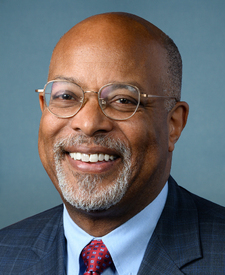
See how Glenn Ivey actually votes — against your values.
DeepSyte scores Glenn Ivey's record on the issues you care about — not party, not press releases. Take the 2-minute values quiz to see your personal alignment.
Sign in and take the values quiz to see how Glenn Ivey's votes line up with your views.
Prediction track record
How often we called Glenn Ivey's passage votes correctly, from their stated positions on each bill's tagged topics. Excludes “unclear” calls and abstentions.
A joint resolution to direct the removal of United States Armed Forces from hostilities within or against the Islamic Republic of Iran that have not been authorized by Congress.
To prohibit the disclosure of records by the Secretary of Housing and Urban Development of individuals for the purposes of immigration enforcement, and for other purposes.
Based on 10 data points across public statements and recorded votes · AI analysis of public records
118-hr-2·Consistent
Secure the Border Act of 2023
85/100
What they said
Dec 11, 2025
Congressman Ivey criticizes the federal government's immigration enforcement priorities, arguing that the detention of Kilmar Abrego Garcia—a non-violent apprentice—contradicts stated commitments to target serious criminals and drug traffickers, while resources are diverted from actual threats to public safety.
Congressman Ivey's statement criticizes immigration enforcement that prioritizes detaining non-violent individuals over targeting serious criminals and drug traffickers, arguing resources are misdirected. The Secure the Border Act focuses on border wall construction, asylum limits, and employment verification—enforcement mechanisms that do not directly address the prosecutorial prioritization or resource allocation concerns Ivey raises. His NO vote on a bill emphasizing physical barriers and broad enforcement tools is generally consistent with his stated preference for enforcement focused on actual threats rather than non-violent workers, though the bill does not explicitly contradict his position on prosecutorial priorities.
Congressman Ivey criticizes the federal government's immigration enforcement priorities, arguing that the detention of Kilmar Abrego Garcia—a non-violent apprentice—contradicts stated commitments to target serious criminals and drug traffickers, while resources are diverted from actual threats to public safety.
Congressman Ivey's statement criticizes the detention of a non-violent individual and argues that immigration enforcement should prioritize serious criminals and drug traffickers over low-level offenders. The Laken Riley Act mandates detention of individuals arrested for property crimes (burglary, theft, larceny, shoplifting) regardless of threat level. Ivey's NO vote aligns with his stated position that enforcement resources should not be diverted to detain non-violent individuals; the bill's mandatory detention scheme for property-crime arrests contradicts his argument that enforcement should focus on actual public safety threats. The statement and vote point in the same direction on the specific question of whether property-crime arrests should trigger mandatory detention.
Detain and Deport Illegal Aliens Who Assault Cops Act
82/100
What they said
Dec 11, 2025
Congressman Ivey criticizes the federal government's immigration enforcement priorities, arguing that the detention of Kilmar Abrego Garcia—a non-violent apprentice—contradicts stated commitments to target serious criminals and drug traffickers, while resources are diverted from actual threats to public safety.
Congressman Ivey's statement criticizes the detention of a non-violent individual and argues that immigration enforcement should prioritize serious criminals and threats to public safety. The bill mandates detention and deportation for non-U.S. nationals who assault law enforcement—a category of serious criminal conduct. Ivey's NO vote aligns with his stated position that enforcement resources should target genuine threats rather than non-violent individuals; the bill's focus on assaults against officers represents a legitimate enforcement priority that does not contradict his criticism of misallocated resources toward non-threatening individuals. The vote reflects his broader principle that enforcement should be proportionate and focused on actual public safety threats.
Congressman Ivey criticizes the federal government's immigration enforcement priorities, arguing that the detention of Kilmar Abrego Garcia—a non-violent apprentice—contradicts stated commitments to target serious criminals and drug traffickers, while resources are diverted from actual threats to public safety.
Congressman Ivey's statement criticizes immigration enforcement that targets non-violent individuals while neglecting serious criminals and drug traffickers. The Stop Illegal Entry Act increases penalties for illegal reentry and entry by individuals with felony convictions or prior removals. Ivey's NO vote on this amendment aligns with his stated concern that enforcement resources should focus on actual threats rather than non-violent cases. However, the amendment vote is procedural rather than a passage vote on the full bill, and the bill's specific provisions (mandatory minimums for felons and repeat offenders) do not directly contradict his position—he objects to misallocation of enforcement priorities, not to penalties for serious criminals. The alignment is directional but not on an identical specific question.
Congressman Ivey criticizes the federal government's immigration enforcement priorities, arguing that the detention of Kilmar Abrego Garcia—a non-violent apprentice—contradicts stated commitments to target serious criminals and drug traffickers, while resources are diverted from actual threats to public safety.
Congressman Ivey's statement criticizes federal immigration enforcement for misallocating resources—detaining non-threatening individuals like Abrego Garcia while neglecting serious criminals and drug traffickers. The No Bailout for Sanctuary Cities Act penalizes jurisdictions that limit cooperation with immigration detainers and information-sharing with DHS. Ivey's NO vote aligns with his stated concern that current enforcement priorities are misdirected; he opposes measures that would compel stricter cooperation with federal immigration enforcement when he believes resources should target actual threats, not working immigrants. However, the statement does not explicitly address sanctuary city policies or federal funding conditions, creating some granularity mismatch between the specific policy mechanism (funding restrictions on non-cooperating jurisdictions) and the rep's stated concern (misallocation of enforcement resources).
Congressman Ivey criticizes the federal government's immigration enforcement priorities, arguing that the detention of Kilmar Abrego Garcia—a non-violent apprentice—contradicts stated commitments to target serious criminals and drug traffickers, while resources are diverted from actual threats to public safety.
Congressman Ivey's statement criticizes immigration enforcement that targets non-violent individuals while neglecting serious criminals and drug traffickers. The bill expands deportation grounds for violent crimes (domestic violence, sex offenses, stalking, child abuse). On the substantive question of prioritizing serious criminal deportations over non-violent cases, the bill's direction aligns with Ivey's stated position. However, the vote was on an amendment (not passage), and without knowing the amendment's specific content, the direction of his NO vote cannot be definitively tied to opposition to the bill's core provisions versus procedural or drafting concerns.
Congressman Ivey criticizes the federal government's immigration enforcement priorities, arguing that the detention of Kilmar Abrego Garcia—a non-violent apprentice—contradicts stated commitments to target serious criminals and drug traffickers, while resources are diverted from actual threats to public safety.
Congressman Ivey's statement criticizes the federal government's immigration enforcement priorities as misaligned—focusing on non-threats like Kilmar Abrego Garcia while neglecting serious criminals and drug traffickers. The Police Our Border Act requires reporting on how Biden's border policies have impacted law enforcement. Ivey's NO vote is consistent with his stated position: he opposes the current enforcement approach as ineffective and misdirected. A bill that documents the impact of those policies without proposing corrective action may not address his core concern—that enforcement priorities need to be reoriented toward actual threats. The vote reflects skepticism of the status quo, aligning with his criticism, though the bill's narrow scope (reporting requirement rather than policy reform) leaves some ambiguity about whether it would advance his stated goals.
Congressman Ivey criticizes the federal government's immigration enforcement priorities, arguing that the detention of Kilmar Abrego Garcia—a non-violent apprentice—contradicts stated commitments to target serious criminals and drug traffickers, while resources are diverted from actual threats to public safety.
Congressman Ivey's statement criticizes immigration enforcement that targets non-violent individuals while neglecting serious criminals and drug traffickers. The bill expands deportation grounds for Social Security and identity document fraud. Ivey's NO vote aligns with his stated concern that enforcement resources should focus on genuine public safety threats rather than non-violent offenses; however, the bill does not directly address the specific case or the broader resource-allocation critique in his statement, creating some granularity mismatch between the narrow bill provision and his broader systemic argument.
Transnational Criminal Organization Illicit Spotter Prevention and Elimination Act
75/100
What they said
Dec 11, 2025
Congressman Ivey criticizes the federal government's immigration enforcement priorities, arguing that the detention of Kilmar Abrego Garcia—a non-violent apprentice—contradicts stated commitments to target serious criminals and drug traffickers, while resources are diverted from actual threats to public safety.
Congressman Ivey's statement criticizes immigration enforcement that targets non-violent individuals while neglecting serious criminals and drug traffickers. The bill criminalizes conduct that aids transnational criminal organizations and drug trafficking (spotting for law enforcement, damaging border devices, assisting inadmissible aliens). Ivey's NO vote aligns with his stated concern that enforcement resources should focus on actual threats rather than peripheral conduct; the bill's broad criminalization of spotting and device damage may capture conduct far removed from serious trafficking, potentially diverting enforcement attention from the violent criminals and major traffickers Ivey emphasizes. However, the bill does target transnational criminal organizations and drug trafficking networks, which Ivey supports targeting, creating some directional tension.
Congressman Ivey criticizes the federal government's immigration enforcement priorities, arguing that the detention of Kilmar Abrego Garcia—a non-violent apprentice—contradicts stated commitments to target serious criminals and drug traffickers, while resources are diverted from actual threats to public safety.
Congressman Ivey's statement criticizes immigration enforcement that targets non-violent individuals while neglecting serious criminals and drug traffickers. The bill creates criminal penalties for fleeing law enforcement near the border, which targets a specific category of conduct rather than distinguishing between violent and non-violent offenders. Ivey's NO vote aligns with his stated concern that enforcement resources should focus on serious threats; a bill that criminalizes border-area vehicle flight could expand enforcement against individuals whose primary offense is evasion rather than violence or trafficking. However, the bill does not directly address the core tension in his statement—whether enforcement priorities properly distinguish serious criminals from non-threatening individuals—making the alignment directional but not precisely targeted.
Pairs with ambiguous language and high uncertainty are withheld until more data is available. Procedural, cloture, and amendment votes are excluded — they don't cleanly signal substantive support or opposition.
Pro analysis
AI rep analysis — Pro
Get an AI-narrated read on Glenn Ivey's full voting record against your stated values — aligned themes, conflicts, notable votes, and what to watch for.
We haven't extracted campaign positions for Glenn Ivey yet. Once their campaign website or position pages are processed, this card will track what they said vs how they voted.
Crossing the aisle
Passage votes where Glenn Ivey broke ranks with ≥75% of Democrats. Threshold catches substantively partisan splits; unanimous-ish or close votes are excluded.
1
Cross-aisle vote
118-hr-340·Nov 1, 2023·77% of D voted YES
Hamas and Other Palestinian Terrorist Groups International Financing Prevention Act
Congressman Glenn Ivey Votes For 3-Year Extension of ACA Tax Credits
Position: Rep. Ivey voted to extend enhanced ACA premium tax credits for three years, arguing that the credits prevent significant premium increases for Maryland residents and provide necessary healthcare cost relief.
WASHINGTON DC - Rep. Glenn Ivey (MD-04) just delivered on a promise to help Prince Georgians and Montgomery County residents on healthcare. His YES vote on the bipartisan ACA enhanced premium tax credit renewal, shields Marylanders from skyrocketing healthcare bills. This triumph came via Democratic Leader Hakeem Jeffries's discharge petition, pushing past Speaker Mike Johnson's blockade on a 2025 House vote.
Ivey's strong voice on ACA health care subsidies helps to prevent nearly 300,000 Marylanders from premium Armageddon—costs set to double or triple without these credits. The Maryland Insurance Administration warns of a brutal 13.4% statewide average hike in 2026, fueled by the credits' expiration, slashing $55 million in potential annual savings. Families could face $57–$258 more monthly, while a Beltsville couple earning $90,000 might swallow over $1,000 extra, pure Republican-fueled chaos after their $1 trillion Medicaid and $500 billion Medicare cuts ravaged Prince George's and Montgomery Counties.
"America's choking on a GOP healthcare catastrophe—kicking folks off coverage, gutting services, and jacking up prices," Congressman Glenn Ivey (MD-04), said. "These restored ACA tax credits slash premiums now, delivering real relief to everyday Marylanders crushed by costs we can't ignore. Locking this into law addresses affordability when families need it most, if the Republican-led Senate does their part by voting YES to renew the Obamacare healthcare credits,” stated Ivey.
Issues:
Congress
Healthcare
Congressman Glenn Ivey's Statement on the Deadly Minneapolis Shooting by ICE Agent
Position: Congressman Ivey calls for independent investigation, transparency, and body-camera footage release following a fatal shooting by an ICE officer, and reiterates support for the George Floyd Justice in Policing Act to establish enforceable standards and oversight of law enforcement use of deadly force.
Washington, DC – “The news out of Minneapolis today is heartbreaking. A woman is dead after being shot by an ICE officer during a federal enforcement operation, and behind every headline is a person: a life cut short, a family now living a nightmare, and a community left searching for answers.
My prayers are with her loved ones tonight. They deserve the truth and transparency from all law enforcement officials- not defamation and disparagement.
Unfortunately, President Trump and Secretary Noem’s public statements portraying this tragic incident as an act of Domestic Terrorism are beyond reckless and irresponsible. These premature comments are dangerous and designed to incite even more violence.
I spent 12 years as a prosecutor and handled many cases involving deadly force. I know accountability starts with transparency especially when law enforcement uses deadly force. All evidence must be preserved. Any and all body-camera or surveillance footage should be reviewed and released as appropriate. And there must be an independent, thorough investigation that follows the facts wherever they lead.
Minneapolis knows, in a uniquely painful way, what happens when systems fail, and accountability comes too late—and how important it is to investigate and prosecute these cases the right way. Tragically, today’s violent incident is yet another reminder of why the George Floyd Justice in Policing Act matters: to set clear, enforceable standards, strengthen oversight, and ensure that no one with a badge and a gun—local, state, or federal—is above the law.
We owe today’s victim nothing less than truth, justice, and real reform,” said Congressman Glenn Ivey, (MD-04).
Issues:
Congress
Immigration
Congressman Glenn Ivey’s Statement on Military Operations in Venezuela
Position: Congressman Ivey opposes U.S. military operations in Venezuela to depose Nicolas Maduro, arguing that deploying American troops for regime change lacks justification, risks costly entanglement, and diverts resources from domestic priorities like healthcare and food costs.
WASHINGTON – Congressman Glenn Ivey released the following statement in response to U.S. military operations to capture and depose Nicolas Maduro in Venezuela.
“I oppose the United States attempting to run another country and I am even more opposed to putting American boots on the ground in Venezuela for oil. The Trump administration has no coherent plan for Venezuela and no credible justification for taking over a sovereign country.
At home, families are already struggling with rising health care costs and higher grocery prices—clear evidence that the Trump administration is doing a bad job running America. Trying to run Venezuela at the same time is a recipe for disaster and risks dragging our country into yet another costly, open-ended quagmire. We should focus on lowering costs for American families and pursuing diplomacy, not repeating the mistakes of the past,” said Congressman Glenn Ivey, (MD-04).
Issues:
Congress
Maryland Congressional Delegation Holds Meeting to Discuss Future of NASA, Maryland’s Role in Space Innovation
Position: Maryland's congressional delegation opposes the Trump Administration's cuts to NASA and federal science agencies, arguing that these cuts undermine American space leadership and harm the scientists and engineers at Maryland-based facilities like NASA Goddard and Johns Hopkins Applied Physics Laboratory.
WASHINGTON – Yesterday, members of Maryland’s Congressional Delegation met with NASA officials and stakeholders to discuss protecting and supporting Maryland-based efforts to advance American leadership in space science and innovation. They received updates on and discussed the importance of NASA Goddard’s workforce and missions, as well as other missions being built, led, and supported across Maryland. Video of the members’ press availability following the meeting is available here.
“From NASA Goddard to the Johns Hopkins Applied Physics Laboratory to nearby Wallops Flight Facility and the many additional science centers and related enterprises across the state, Maryland has been at the center of American space exploration and the forefront of technological advancements that have made our country stronger and safer. The dedicated scientists, engineers, and contractors who power these facilities are central to America’s leadership in space and innovation, but these workers – and the critical work they do – have been under attack from the Trump Administration since day one. For America to continue leading the world in space science, the Administration must start respecting the people who put us in that position. Federal Team Maryland will continue pushing to maintain our leadership in cutting-edge missions while fighting to ensure the workers who drive them have the support they need to carry out these critical missions,” said Senator Chris Van Hollen.
“The work being done every day at Goddard Space Flight Center and Johns Hopkins Applied Physics Laboratory are the reason Maryland – and our nation – is a leader in science, technology, and research. We are exceptional because of the scientists and engineers doing this incredible work - their innovation and talent is unmatched. But this Administration doesn't seem to care. They have ripped apart the federal government including our work at NASA – ceding ground to global competitors. I will continue to stand up to this Administration and keep fighting for investments that keep America at the forefront of scientific discovery,” said Senator Angela Alsobrooks.
“NASA Goddard is vital not only to our local community in Maryland but to the entire country and world. Home to one of the greatest concentrations of scientists in the world, the team at Goddard is deepening our understanding of our planet and what lies beyond. In the course of that pursuit, they are also helping America continue to stay ahead of China and other competitors when it comes to science, technology, innovation, and economic growth. I was pleased our delegation could meet today to discuss how we can best support Goddard in that important mission,” said Congressman Steny H. Hoyer.
"The research that happens at the Goddard Space Flight Center and the Johns Hopkins Applied Physics Laboratory is work that cannot be reduced overnight. Unfortunately, Donald Trump and the Department of Government Evil took a chainsaw to the field of science - threatening research, innovation, and America's competitive edge," said Congressman Mfume. "We hope to have some concrete action as we continue to support our local scientists and engineers across the state of Maryland."
“Maryland remains a cornerstone of America’s scientific community, and NASA’s Goddard has long driven space science research and innovation,” said Congressman Jamie Raskin. “Team Maryland condemns the Trump Administration’s threats to cut funding at Goddard which would be a disaster for all Americans. I am grateful to the hundreds of NASA scientists and staff from the Free State who make Maryland a great home for natural discovery and scientific excellence.”
“At the worst possible moment, the Trump administration’s reckless cuts are hollowing out America’s space leadership. Driving our best scientists out of public service puts us on track for another Sputnik moment; this time with China in the lead. We must invest in NASA and protect the mission-critical work at Goddard and Johns Hopkins APL,” said Congressman Glenn Ivey.
“From working with University Affiliated Research Centers, like the Johns Hopkins Applied Physics Laboratory located in the Third District, to leading our nation in space flight missions, NASA Goddard’s importance to American leadership in space science cannot be overstated,” said Congresswoman Sarah Elfreth (MD-03). “As they look to expand their mission-critical work, the Maryland Delegation will have their back even in the face of closures by the Trump Administration.”
“NASA Goddard is a national jewel with a long and storied legacy of spaceflight and discovery made possible by our state's exceptional workforce and our ability to attract world-class academic and international partnerships. It is imperative that our Congress and Team Maryland continue to push against these reckless cuts that will undermine our research, workforce, innovation, U.S. competitiveness, and national security. As Maryland's only member of the House, Science, Space, and Technology Committee, I am standing with our delegation to demand accountability, restore NASA's public service mission, and ensure Maryland continues to lead in scientific discovery. It is "mission critical" to preserve and protect our role as the world's leader on space innovation and technology policy,” said Congresswoman April McClain Delaney.
“Now more than ever, I believe in the power of evidence, facts, and science — and that we should invest in knowledge. Goddard is home to thousands of the world’s best scientists who are helping us dominate the space race and reap the economic benefits that come with that. I join my Maryland colleagues in urging the Trump Administration to honor our commitments to these civil servants and continue investing in their missions,” said Congressman Johnny Olszewski.
Issues:
Congress
Federal Workers
Congressman Glenn Ivey’s Statement on the Ruling in Greenbelt Federal Court
Position: Congressman Ivey criticizes the federal government's immigration enforcement priorities, arguing that the detention of Kilmar Abrego Garcia—a non-violent apprentice—contradicts stated commitments to target serious criminals and drug traffickers, while resources are diverted from actual threats to public safety.
WASHINGTON – Congressman Glenn Ivey released the following statement in response to the order directing the immediate release of Kilmar Abrego Garcia from ICE custody:
“This administration claims its immigration enforcement priorities are focused on deporting violent drug traffickers and serious criminals. Yet the case of Kilmar Abrego Garcia exposes how hollow that promise truly is.
Kilmar is not a trafficker, not a gang member, and not a threat to public safety. He is a hardworking apprentice trying to learn a trade, support his family, and build a stable life in our community. Still, the federal government chose to dedicate its full enforcement power to detain him—while showing leniency toward a former Honduran president implicated in smuggling hundreds of tons of cocaine into the United States. That contradiction is indefensible.
The prolonged detention of Kilmar Abrego Garcia did nothing to make our communities safer. It only tore apart a family and diverted resources away from the very dangers this administration claims it is targeting.
Today’s decision to release Kilmar is a long-overdue correction. If our system can find mercy or political accommodation for individuals at the top of international drug trafficking networks, it must also be capable of fairness and humanity toward a working man whose only goal is to provide for his family.
Congressman Ivey remains committed to fighting for an immigration system that reflects its stated priorities, uses its power responsibly, and refuses to punish families like Kilmar’s while real threats go unchecked.”
Issues:
Criminal Justice
Immigration
Congressman Ivey Joins Maryland Delegation Members Press Administration for Answers on Reported Changes at NASA Goddard
WASHINGTON – Congressman Glenn Ivey joined U.S. Senators Chris Van Hollen and Angela Alsobrooks and U.S. Representatives Steny Hoyer, Kweisi Mfume, Jamie Raskin, Sarah Elfreth, April McClain Delaney, and Johnny Olszewski (all D-Md.) pressed National Aeronautics and Space Administration (NASA) Acting Administrator Sean Duffy, to provide detailed answers on reported consolidation and reorganization activities at the NASA Goddard Spaceflight Center (GSFC) in Greenbelt, Maryland. In their letter, the delegation members highlighted Goddard’s legacy of groundbreaking achievements over the years – including its leadership in the development of GPS technology as well as the Hubble and James Webb telescopes – and expressed grave concern that recent operational changes will impact its research capabilities, undermine Goddard’s workforce, and threaten to drive top scientists to space programs abroad. The lawmakers requested answers to a series of questions around recently reported changes and urged acting Administrator Duffy to safeguard Goddard’s status as a world-leading space and earth science institution by keeping its workforce stable and sustaining its world-class research capacity.
“The Goddard Space Flight Center (GSFC) in Greenbelt, Maryland is the premiere Space and Earth Science research center in the world. Goddard’s research and innovation has helped us answer questions about our planet, the Sun, the solar system, and the Universe. The dedicated civil servant scientists, engineers, and contractors who work at Goddard’s facilities from Greenbelt, to the Wallops Flight Facility in Wallops, Virginia, to the Columbia Scientific Balloon Facility in Palestine, Texas have pushed scientific boundaries. Decades of pathbreaking work mean that today, the Global Positioning System (GPS) that we all rely on daily for navigation, the satellites that help us map fires for large scale firefighting, and telescopes in outer space are all being operated by the experts at the Goddard Space Flight Center. We urge you to support the patriotic Americans that do this essential work on behalf of our country and the world and ensure that they have the resources they need to lead the United States to new frontiers,” the lawmakers wrote.
“Unfortunately, actions taken during the last nine months threaten the workers at Goddard and their ability to lead the world in this science and exploration. Between unnecessary voluntary separations, deferred resignations, reductions in force, and other pressure, thousands of civil servants and contractors are no longer working at GSFC,” they continued. “Other countries with space programs from our political allies to our adversaries have been recruiting our top scientists and researchers with massive salaries, research budgets, and the promise of stability. Where the US has considered stepping back, China has made clear they are eager to step in. We can and must re-invest in the people and centers that make America the global space leader and that starts with Goddard.
“To that end, we have heard from employees and read reports about activities taking place on the Greenbelt campus that have raised questions among the workforce about the motivations and timing of building consolidations and such moves may affect institutional research capabilities,” the lawmakers wrote, going on to list a series of questions for the acting Administrator’s response regarding the building consolidations, the impact on the Center’s technological capabilities, plans to ensure readiness for future scheduled missions, and the number of employees tasked with carrying out these operational changes during the government shutdown, among others.
The lawmakers’ questions follow:
When did NASA finalize plans to consolidate buildings on Goddard’s Greenbelt campus and what is the justification for the GSFC Greenbelt campus consolidation?
Was a cost/benefit analysis performed before finalizing any plans? If so, please provide any such analysis.
How much is Goddard expecting to save in utility and deferred maintenance costs by the consolidation?
How much will the consolidation cost?
How do the moves align with the 20-year master plan for the GSFC Greenbelt campus?
What facilities changes have taken place at GSFC Greenbelt campus in 2025? Please include a list of affected buildings and explanation of the changes.
What facilities changes have taken place at GSFC since October 1, 2025?
What is the justification for moves occurring since October 1, 2025, during the lapse of appropriations?
Are any further moves planned for 2025?
If so, when are they expected to start?
Have any technological capabilities been impacted by moves at Goddard’s Greenbelt campus?
If yes, what capabilities?
Has any operable equipment been modified, recycled, or destroyed?
What plans does NASA have for the Goddard ElectroMagnetic Anechoic Chamber (GEMAC) that had been housed in Building 19?
Have any capabilities necessary for the completion of the Nancy Grace Roman Space Telescope been impacted, including by the closure of the propulsion laboratory in Building 11?
How is Goddard going to mitigate these losses for design and construction of future missions?
Please provide all analysis performed by NASA to determine what technological capabilities Goddard will require going forward to execute future missions, such as the Habitable Worlds Observatory.
How many civil servants at NASA Goddard have been called back to campus since October 1, 2025, during the lapse of appropriations for the purposes of packing up their offices or laboratories?
Text of the letter can be viewed here and below.
Dear Acting Administrator Duffy:
The Goddard Space Flight Center (GSFC) in Greenbelt, Maryland is the premiere Space and Earth Science research center in the world. Goddard’s research and innovation has helped us answer questions about our planet, the Sun, the solar system, and the Universe. The dedicated civil servant scientists, engineers, and contractors who work at Goddard’s facilities from Greenbelt, to the Wallops Flight Facility in Wallops, Virginia, to the Columbia Scientific Balloon Facility in Palestine, Texas have pushed scientific boundaries. Decades of pathbreaking work mean that today, the Global Positioning System (GPS) that we all rely on daily for navigation, the satellites that help us map fires for large scale firefighting, and telescopes in outer space are all being operated by the experts at the Goddard Space Flight Center. We urge you to support the patriotic Americans that do this essential work on behalf of our country and the world and ensure that they have the resources they need to lead the United States to new frontiers.
The Space program in the United States has always been driven by curiosity and ambition to discover more about ourselves and the galaxy around us. From Project Mercury, our first human spaceflight program, to the Artemis Campaign that seeks to establish a sustained American presence on the Moon, Goddard has been involved at every turn. Scientific instruments developed at GSFC have been sent to every planet in our solar system. The Hubble Space Telescope and the James Webb Space Telescope, two of the most significant technological advancements in space imaging in human history, were developed and continue to be operated out of Goddard. This historic work provides the foundation for upcoming missions like the Nancy Grace Roman Space Telescope and the Habitable Worlds Observatory, which will serve to advance American leadership and global understanding of deep space, dark energy, and the search for planets capable of sustaining life.
Unfortunately, actions taken during the last nine months threaten the workers at Goddard and their ability to lead the world in this science and exploration. Between unnecessary voluntary separations, deferred resignations, reductions in force, and other pressure, thousands of civil servants and contractors are no longer working at GSFC. Other countries with space programs from our political allies to our adversaries have been recruiting our top scientists and researchers with massive salaries, research budgets, and the promise of stability. Where the US has considered stepping back, China has made clear they are eager to step in. We can and must re-invest in the people and centers that make America the global space leader and that starts with Goddard.
To that end, we have heard from employees and read reports about activities taking place on the Greenbelt campus that have raised questions among the workforce about the motivations and timing of building consolidations and such moves may affect institutional research capabilities.
We believe that any consolidation on the Greenbelt campus must sustain the world-class capabilities of Goddard for future science and exploration missions and comply with all applicable laws. Because we lack clarity as to what moves are currently taking place on campus, what technological capabilities are being impacted, and what these changes mean for the workforce, we request you provide answers to the following questions by November 17, 2025.
When did NASA finalize plans to consolidate buildings on Goddard’s Greenbelt campus and what is the justification for the GSFC Greenbelt campus consolidation?
Was a cost/benefit analysis performed before finalizing any plans? If so, please provide any such analysis.
How much is Goddard expecting to save in utility and deferred maintenance costs by the consolidation?
How much will the consolidation cost?
How do the moves align with the 20-year master plan for the GSFC Greenbelt campus?
What facilities changes have taken place at GSFC Greenbelt campus in 2025? Please include a list of affected buildings and explanation of the changes.
What facilities changes have taken place at GSFC since October 1, 2025?
What is the justification for moves occurring since October 1, 2025, during the lapse of appropriations?
Are any further moves planned for 2025?
If so, when are they expected to start?
Have any technological capabilities been impacted by moves at Goddard’s Greenbelt campus?
If yes, what capabilities?
Has any operable equipment been modified, recycled, or destroyed?
What plans does NASA have for the Goddard ElectroMagnetic Anechoic Chamber (GEMAC) that had been housed in Building 19?
Have any capabilities necessary for the completion of the Nancy Grace Roman Space Telescope been impacted, including by the closure of the propulsion laboratory in Building 11?
How is Goddard going to mitigate these losses for design and construction of future missions?
Please provide all analysis performed by NASA to determine what technological capabilities Goddard will require going forward to execute future missions, such as the Habitable Worlds Observatory.
How many civil servants at NASA Goddard have been called back to campus since October 1, 2025, during the lapse of appropriations for the purposes of packing up their offices or laboratories?
###
Issues:
Congress
Congressman Ivey Provides Statement on Senate Vote
Position: Congressman Ivey opposes allowing ACA premium tax credits to expire, arguing that doing so would raise healthcare costs for working families. He advocates for extending the credits as part of government funding negotiations.
WASHINGTON, DC – Congressman Glenn Ivey (MD-04) released the following statement in response to yesterday’s Senate vote:
Throughout this government shutdown, I have been fighting alongside House Democrats for a simple goal—to cancel cuts, lower costs, and save healthcare. Federal workers have continued to keep our government running, even as their paychecks are frozen and their benefits are threatened. The shutdown has already stretched federal workers and their families to the breaking point, and now, countless Americans are being hit again by skyrocketing health care costs.
House Democrats have fought tooth and nail to keep health care affordable for working families. For weeks, we’ve pushed to extend the Affordable Care Act tax credits, the very lifeline that helps millions of Americans, including thousands of my constituents, see a doctor and keep their coverage.
Now, Senate Republicans are ready to walk away and send us a bill that lets those credits expire. That means higher costs, fewer doctor visits, and more families forced to choose between medicine and rent. It’s cruel, it’s reckless, and it’s a crisis entirely of their own making.
Let’s be clear: the cost of living is already too expensive. We will not back a bill that makes health care harder to afford or puts profits over people.
Donald Trump and the Republican Party created this mess, and the American people won’t forget who’s responsible. I will keep fighting with my fellow House Democrats, ready to negotiate a deal that will reopen the government, bring down costs, and make sure every family, and every federal worker, gets the care and security they deserve.
###
Issues:
Congress
Economy
Healthcare
Source: GDELT 2.0 GKG, filtered to a curated list of national outlets. Inclusion is not endorsement; opinion pieces and reported news are mixed.
Recent stock activity
Periodic transaction reports filed under the STOCK Act — disclosed by the rep, sourced from public filings.
No disclosed trades on record.
Source: open-data mirrors of the Senate eFD and House Clerk financial-disclosure systems. Disclosure within 30 days of trade is required by law (45 for spouse/dependent trades).
Top PAC donors · 2026 cycle
Political action committees that gave the most to this rep's principal campaign committee this cycle. PAC giving is direct organizational support — industry, ideological, or leadership.
1.AMERICAN ISRAEL PUBLIC AFFAIRS COMMITTEE POLITICAL ACTION COMMITTEEIdeological17 contributionsPAC arm of the American Israel Public Affairs Committee, federalized in 2021. Backs candidates of both parties who support U.S.-Israel security and economic ties.AI$67,700
2.ACTBLUE TECHNICAL SERVICESIdeological7 contributionsDemocratic fundraising platform PAC — supports Democratic candidates and progressive causes through online donation infrastructure.AI$24,800
3.MACHINISTS NON-PARTISAN POLITICAL LEAGUE OF THE INTERNATIONAL ASSOCIATION OF MACHINISTSLabor4 contributionsTrade-union PAC of the International Association of Machinists and Aerospace Workers — backs candidates supporting union organizing, prevailing wages, and aerospace and manufacturing industry jobs.AI$20,000
4.AMERICAN FEDERATION OF TEACHERS, AFL-CIO COMMITTEE ON POLITICAL EDUCATIONLabor4 contributionsTrade-union PAC for teachers — backs candidates supporting public education funding, collective bargaining rights, and worker protections.AI$20,000
5.SHEET METAL AIR RAIL TRANSPORTATION3 contributions$15,000
6.PAC TO THE FUTURELeadership3 contributionsMember-of-Congress leadership PAC — specific affiliations and policy positions not inferable from the name.AI · low$15,000
7.NATIONAL ASSOCIATION OF REALTORSReal Estate3 contributionsReal-estate industry PAC — backs candidates supporting property-rights protections, mortgage-interest deductions, and policies favorable to home sales and residential transactions.AI$15,000
8.BLUE TO THE FUTURELeadership1 contributionMember-of-Congress leadership PAC — supports Democratic candidates and allied party causes.AI$13,666
9.INTERNATIONAL UNION OF OPERATING ENGINEERS PAC2 contributions$10,000
10.INTERNATIONAL BROTHERHOOD OF ELECTRICAL WORKERS POLITICAL ACTION COMMITTEELabor2 contributionsTrade-union PAC for the International Brotherhood of Electrical Workers (IBEW). Backs candidates supporting prevailing-wage standards, infrastructure investment, apprenticeship programs, and union organizing rights.AI$10,000
Source: OpenFEC (api.open.fec.gov) Schedule A receipts where contributor type is “committee.” Aggregated by contributing committee. Self-transfers from joint-fundraising / victory committees are excluded.
Top individual contributors · 2026 cycle
Itemized individual contributions over $200 to this rep's campaign committee, aggregated by donor employer. PAC giving is shown above; this section is people, not organizations.
1.SELF$8,600
2.CORDISH COMPANIES$7,000
3.ARNOLD VENTURES$7,000
4.THE DASCHLE GROUP$7,000
5.TECHNOLOGY INVESTORS, LLC$7,000
6.ACTUM LLC$6,500
7.K&L GATES$6,500
8.GEORGETOWN$5,000
9.DARCARS$5,000
10.FORETHOUGHT ADVISORS$4,200
Source: OpenFEC Schedule A receipts where contributor type is “individual,” aggregated by the donor's self-reported employer. This is a geographic / industry correlation, not a corporate endorsement.