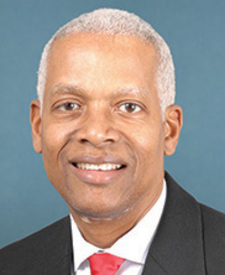
See how Henry C. "Hank" Johnson actually votes — against your values.
DeepSyte scores Henry C. "Hank" Johnson's record on the issues you care about — not party, not press releases. Take the 2-minute values quiz to see your personal alignment.
Sign in and take the values quiz to see how Henry C. "Hank" Johnson's votes line up with your views.
Prediction track record
How often we called Henry C. "Hank" Johnson's passage votes correctly, from their stated positions on each bill's tagged topics. Excludes “unclear” calls and abstentions.
To amend the Internal Revenue Code of 1986 to temporarily suspend certain fuel excise taxes for fuel separated during periods in which the national average price of gasoline exceeds $3.99 per gallon, and to prohibit certain credits or deductions for oil and gas companies during such periods.
Based on 2 data points across public statements and recorded votes · AI analysis of public records
118-hr-5585·Notable gap
Agent Raul Gonzalez Officer Safety Act
8/100
What they said
Mar 3, 2026
Rep. Johnson advocates for restricting the Department of Defense's 1033 Program, which transfers military equipment to law enforcement agencies. He argues that militarization of police increases community harm and proposes legislation to prevent transfers of military weapons and explosives, require equipment accountability, and strengthen tracking mechanisms.
Rep. Johnson's statement advocates for restricting military equipment transfers to law enforcement and reducing police militarization. The bill he voted against establishes criminal penalties for fleeing from Border Patrol agents and creates immigration consequences. These address opposite substantive directions: Johnson's position seeks to limit law enforcement's military capabilities and weapons, while this bill enhances enforcement tools and penalties for border-related offenses. The no vote aligns with his stated opposition to police militarization.
District of Columbia Policing Protection Act of 2025
85/100
What they said
Mar 3, 2026
Rep. Johnson advocates for restricting the Department of Defense's 1033 Program, which transfers military equipment to law enforcement agencies. He argues that militarization of police increases community harm and proposes legislation to prevent transfers of military weapons and explosives, require equipment accountability, and strengthen tracking mechanisms.
Rep. Johnson's statement advocates for restricting police militarization and increasing oversight of equipment transfers to law enforcement. The bill addresses a different aspect of policing—vehicular pursuit rules in DC—rather than military equipment transfers. However, both reflect a concern with police accountability and limiting aggressive police tactics. Johnson's 'no' vote on this amendment to relax vehicular pursuit restrictions is consistent with his stated position that police militarization and aggressive tactics harm communities; voting against loosening pursuit rules aligns with his advocacy for constraining police conduct. The procedural nature of an amendment vote and the distinct policy focus introduce moderate uncertainty.
Pairs with ambiguous language and high uncertainty are withheld until more data is available. Procedural, cloture, and amendment votes are excluded — they don't cleanly signal substantive support or opposition.
Pro analysis
AI rep analysis — Pro
Get an AI-narrated read on Henry C. "Hank" Johnson's full voting record against your stated values — aligned themes, conflicts, notable votes, and what to watch for.
We haven't extracted campaign positions for Henry C. "Hank" Johnson yet. Once their campaign website or position pages are processed, this card will track what they said vs how they voted.
Crossing the aisle
Passage votes where Henry C. "Hank" Johnson broke ranks with ≥75% of Democrats. Threshold catches substantively partisan splits; unanimous-ish or close votes are excluded.
CONGRESSMAN HANK JOHNSON'S STATEMENT ON SUPREME COURT DECISION EVISCERATING THE VOTING RIGHTS ACT
Today, Judiciary Subcommittee on Courts Ranking Member Johnson released the following statement:
WASHINGTON, D.C. – "Today’s 6 to 3 MAGA Supreme Court decision in Louisiana v Callais hurtles the precept of democracy for all backwards, in the same way as the equally egregious 1896 Louisiana case of Plessy v. Ferguson, which legalized Jim Crow racism. Today’s throwback decision legalizes Jim Crow 2.0 and is a devastating blow to the voting rights of Black people, and to American democracy itself. In the words of the immortal John Lewis -- 'we must get out and vote like our lives depended on it.' "
###
Issues:
Justice & Court Reform
Subcommittee Ranking Member Johnson’s Opening Statement at Hearing Highlighting Need to Balance Copyright Protections with Public Access
Position: Ranking Member Johnson advocates for strengthening copyright protections for standards-developing organizations (SDOs) while ensuring public access to codes that have been adopted into law by states and local governments.
Washington, D.C. (April 21, 2026)—Today, Rep. Hank Johnson, Ranking Member of the Subcommittee on Courts, Intellectual Property, Artificial Intelligence, and the Internet, delivered opening remarks at a hearing focused on strengthening copyright protections while ensuring public access to laws and standards.
Below are Ranking Member Johnson’s remarks, as prepared for delivery, at today’s hearing.
WATCH Subcommittee Ranking Member Johnson’s opening statement.
Ranking Member Hank Johnson
Subcommittee on Courts, Intellectual Property, Artificial Intelligence, and the Internet
Hearing on “Protecting U.S. Leadership in Codes Development and Enhancing Public Access”
April 21, 2026
When I get home to Georgia after a long week, I’ll get off the plane, take the airport rail to my car, and pick up my car from the long-term parking garage. Once I get home, I’ll park the car, walk into my house, and turn on the lights. Sometimes I’ll pour myself a glass of water.
And I rarely think about it, but all of these steps from the airport to my house are governed by codes developed by standards developing organizations, or SDOs. Standards governing everything from light rail and parking garages to home fire codes and water piping touch each of us in our everyday lives.
When a contractor works on your house, or a firefighter inspects your workplace for fire safety, they have to consult their respective codes. While most of us know they exist, we rarely consider where these standards come from. The important part to you and me is that the standards work—they keep us safe, keep our lives running, with us none-the-wiser.
SDOs regularly get together and come up with the state-of-the-art guidelines for their trades. These best practices govern everything from consumer safety and household utility installation to home electrical wiring and plumbing planning. SDOs make sure your house won’t catch on fire, your plumbing is up to code, your water boiler is installed correctly, and everything in between. If you live in an area that might be affected by floods or by earthquakes, you want to ensure your house is built to withstand natural disasters. You rely on your local contractor, and your contractor relies on their SDO standards.
Now, so far this sounds like a great hearing for the T&I Committee. But the reason the intellectual property subcommittee cares about standards is because recent circuit court decisions have made it harder for SDOs to assert their copyright when others post their codes online.
States and local governments frequently adopt SDO-developed codes by reference into the law. They do this for a few reasons, but primarily because the government doesn’t have the funds to employ experts to develop a unique building code, and do not update the law often enough to keep up with changes in best practices. So, Georgia, for example, can refer to the National Fire Protection Association’s most up-to-date code in their laws. That way the law is always up to date, and they don’t have to pay experts to develop something new.
This is the point where intellectual property issues arise. Some point to the Supreme Court’s Georgia v. Public.Resource.Org decision and say, “no one can own the law.” If you can’t access the code, you don’t know what the law says. And Americans have a reasonable interest in knowing they can access the laws that govern them.
Others point out that SDOs fund their work by selling their copyrighted material to experts who use it to make the necessary evaluations, repairs, and installations. Without this rigorous development and dedication to constant improvement, they argue, American standards would fall behind.
So, we find ourselves in a dilemma. Once the code is law, it seems only reasonable that Americans should be able to figure out what the law says. On the other hand, SDOs fund their work, which we rely on to keep us safe, through sale of their copyrighted works, and we also have an interest in ensuring these codes always reflect the highest possible standards.
Multiple circuit court decisions have found that publication of codes incorporated by reference is “fair use.” So, if we want to ensure that SDOs retain their copyright, legislation is likely necessary. The question is, what kind of legislation?
Last Congress, I voted in favor of the Pro Codes Act, but at the time I expressed concern that we hadn’t had a fact-finding hearing to listen to all of the different sides to this issue. I understand that there are quite a few different perspectives represented here, and I commend my colleague Chairman Issa, for working with me to put together a panel of witnesses that can speak to the many facets of the copyright problems with incorporation by reference.
I look forward to hearing from the witnesses, and I yield back the remainder of my time.
###
Issues:
Consumer Protection
Justice & Court Reform
Subcommittee Ranking Member Johnson’s Opening Statement at Hearing on Trump’s Politicization of Patent and Trademark Office
Position: Rep. Johnson criticizes the Trump Administration for politicizing the U.S. Patent and Trademark Office, citing workforce morale decline, undermining of collective bargaining rights, exploration of a patent tax, and cancellation of a planned regional office.
Washington, D.C. (March 25, 2026)—Today, Rep. Hank Johnson, Ranking Member of the Subcommittee on Courts, Intellectual Property, Artificial Intelligence, and the Internet, delivered opening remarks a hearing examining the Trump Administration’s effort to politicize the U.S. Patent and Trademark Office (USPTO).
Below are Ranking Member Johnson’s remarks, as prepared for delivery, at today’s hearing.
WATCH Subcommittee Ranking Member Johnson’s opening statement.
Ranking Member Hank Johnson
Subcommittee on Courts, Intellectual Property, Artificial Intelligence, and the Internet
Hearing on “Oversight of the U.S. Patent and Trademark Office”
March 25, 2026
Thank you, Chairman Issa, and thanks to Director Squires for being here today.
Directors of the U.S. Patent and Trademark Office appear before this Subcommittee every two years or so, and I have had the honor of being present for many hearings like this one. You are the sixth Director I have had the opportunity to talk with in a forum like this. Hearings like today’s give us the opportunity not just to provide meaningful oversight but also inform the legislative process, so Member of Congress can make the best decisions when considering legislation.
In the many USPTO Director hearings I have had the opportunity to experience, I have witnessed occasional policy missteps from USPTO Directors, and we’ve discussed administrative failures ranging from modernization growing pains to too-long examination times.
We’ve certainly had our differences. But never have I had reason to doubt that the Director was acting independently from the president. Until today. There was a time when the USPTO was removed from the politics of the day. Now, it has been drawn squarely into it.
I’m going to take this time to go over just a few of the concerns I’ve heard over the past year. Keep in mind: this is not in any way an exhaustive list.
Under the Trump administration, the patent office’s workplace morale has plummeted, likely because of the administration’s layoffs, where were bizarrely characterized as an attempt to save money, even though the USPTO is self-funded. You’ve also stood by as USPTO employees’ collective bargaining rights were undermined by President Trump, destabilizing your already fragile work force. And under your leadership, the USPTO has publicly explored implementing a patent tax that by all accounts would have devastating effects on innovation in the United States.
These are just a few examples of the partisanship inserted into an agency that prides itself on stability. When politics begin to shape a traditionally nonpartisan agency, the result is predictable: You are at the helm of an institution that has lost touch with its mission.
This lost mission is most obvious in the USPTO’s cancellation of its planned Southeast Regional Outreach Office in Atlanta, Georgia. The USPTO chose Atlanta after a long process, as proscribed under the law. Instead of going forward, the Trump Administration cancelled this outreach to the Silicon Valley of the South and instead opened it within the USPTO headquarters in Alexandria, Virginia.
American innovation can thrive only when opportunity to participate is accessible to all. By placing the Southeast Office at USPTO headquarters, your agency has limited its reach and concentrated opportunity among those already best positioned to access it. I encourage you, Director, to reconsider this move. Because while it may not violate the letter of the law, it most certainly violates the spirit of it.
As you can see, I strongly disagree with the Trump Administration. I also believe you want to do right by those who rely on the patent system. Your notice of proposed rulemaking to reform the patent trial and appeals board reflects ideas this Subcommittee examined when I was Subcommittee Chair and has similarities to those proposed in my colleague Congresswoman Ross’s PREVAIL Act legislation. And while these administrative changes are certainly worth discussing, agency action is not the same as legislation.
When the Director changes, so can agency rules. Patents exist to ensure that research and development rests on firm, predictable ground. This kind of inconsistency between presidential administrations undermines the stability that is essential to a functioning patent system. Ultimately, these are questions for Congress to decide, not the agency; they are questions I look forward to addressing if I become Chairman of this subcommittee next Congress.
A healthy USPTO requires clear rules, consistent leadership free from political influence and a steadfast commitment to protecting those who take the risk to create.
It is incumbent upon us to get these questions right because inventors and job creators are not asking for favors, they are asking for a predictable and stable system they can rely on. When policy shifts with the political whims of an administration, it is American innovation that pays the price.
I yield back the balance of my time.
###
Rep. Johnson Aces League of Conservation Voters 2025 National Environmental Report Card
Position: Rep. Johnson supports strong environmental protections and clean energy expansion, and opposes fossil fuel-dependent energy policies.
Congressman Scores 100% – Top in GA Delegation – Highest Lifetime Score of 97%
WASHINGTON, D.C. – Congressman Hank Johnson (GA-04) announced today he earned a perfect 100 percent from The League of Conservation Voters (LCV) on their 2025 National Environmental Scorecard, which tallies the performance of every member of Congress every year on key environmental votes.
Rep. Johnson’s lifetime LCV score is 97 percent, one of the highest in the Georgia delegation. Congressman Johnson, a member of the Safe Climate Caucus, is regularly honored for his environmental voting record and advocacy on part of the National Park System and advocacy for the expansion of clean energy.
“As the Trump administration pursues its disastrous ‘drill-baby-drill’ policies, the American people and the planet suffer,” said Rep. Johnson. “We see what over-reliance on fossil fuels and a myopic energy policy looks like, and it’s not good. Voting to protect our natural resources and the planet from existential climate change isn’t difficult, it’s just common sense. I urge my Republican colleagues to get the heads out of Trump’s ass, find a backbone and a little common sense themselves before it’s too late.”
The average House score was 48 percent.
For more than 50 years, the National Environmental Scorecard issued by LCV has been the nationally accepted yardstick used to rate members of Congress on environmental, public health, and energy issues. For more information, visit http://scorecard.lcv.org.
###
Issues:
Environment
Rep. Hank Johnson, Sen. Warren Lead New Investigation into Whether Amazon’s Melania Documentary Payments Were A Corrupt Pay-To-Play Scheme
Position: Representatives and senators are investigating whether Amazon's $40 million payment to produce and promote a Melania Trump documentary constitutes a corrupt pay-to-play scheme designed to secure favorable regulatory and trade treatment from the Trump administration.
“The fact that Amazon is seeking favorable treatment from the Trump Administration while paying a far-above-market sum to produce and promote the Trump family’s film raises questions about Amazon’s exposure under federal anti-bribery law”
Text of Letter (PDF)
Washington, D.C. — Representative Hank Johnson (D-Ga.) and U.S. Senator Elizabeth Warren (D-Mass.) led a new investigation into whether Amazon’s investment in the Melania documentary was part of a corrupt pay-to-play arrangement with the Trump administration.
Senator Ben Ray Luján (D-N.M.), along with Representatives Dan Goldman (D-N.Y.) and Pramila Jayapal (D-Wash.), also joined the letter.
“[T]he American people deserve assurance that powerful corporations are not using their financial resources to gain political influence or favorable treatment at public expense—and that these corporations are not violating federal bribery laws,” wrote the lawmakers.
Amazon’s $40 million payment to license the film, along with a $35 million marketing budget, made “Melania” one of the most expensive documentaries ever made. The company reportedly beat the next highest bidder by about $26 million, leading industry experts to question the commercial rationale behind the bid. Amazon reportedly does not even expect to break even from its investment, raising questions about whether Amazon’s financial commitment was a bribe.
An estimated 70 percent of the money Amazon paid to acquire the rights—roughly $28 million—will go directly to Melania Trump. In addition to the financial windfall, the deal gave Melania Trump a highly favorable portrayal that has led to the film being called “favorable propaganda,” along with public attention as a “movie star” in the words of President Trump at his State of the Union address.
At the same time, Amazon and owner Jeff Bezos have huge financial stakes in decisions pending before the administration, like:
Several antitrust suits: Amazon recently settled a lawsuit with the Federal Trade Commission over deceptive subscription practices that amounted to a slap on the wrist for the company. Amazon is also facing an FTC suit alleging illegal monopolization of online retail, and Amazon could benefit if the FTC litigates the case less aggressively or declines to pursue substantial monetary penalties or structural relief that could fundamentally reshape Amazon’s business model.
Potential tariff exemptions: In early February, reports indicated that the Trump Administration was considering exempting Amazon from upcoming tariffs on semiconductors.
Foreign trade deals: Amazon has lobbied the administration to use trade negotiations to bully other countries into dropping their regulations of tech companies. Amazon currently faces nearly a billion dollars in fines for potentially violating laws meant to protect consumers, regulate artificial intelligence, and break up monopolies.
Federal Contracts: Since President Trump reentered office, Amazon has won record-breaking cloud services contracts with immigration agencies, and has major cloud-computing contracts with other federal agencies as well. Mr. Bezos is actively seeking new federal contracts and has attempted to curry favor with Defense Secretary Pete Hegseth and President Trump.
Tax Cuts: Amazon lobbies for tax cuts, and President Trump’s corporate tax cuts have “shaved billions off Amazon’s tax bill” to date. In 2025 alone, Amazon’s federal tax bill fell by roughly 87 percent, even as its pretax profits rose by nearly 45 percent.
Since President Trump’s 2024 election, Amazon has also donated $1 million to his inauguration fund, and an unknown sum to the President’s gold-encrusted White House ballroom. Federal bribery law makes it illegal to offer “anything of value,” including business opportunities and financial arrangements, to elected officials or people closely associated with them with the goal of influencing official acts.
“When corporate giants refuse to offer [] assurance [that they are not breaking federal anti-bribery laws] and instead transfer tens of millions of dollars to the family of a sitting President, that not only raises questions about corporate governance but also risks eroding public trust in the fairness of our economic and political systems,” concluded the lawmakers.
The members asked Amazon to explain, by March 30, 2026, its $40 million payment for the documentary, and clarify whether the company discussed its bid with Melania Trump directly or with anyone in the administration.
###
Issues:
Consumer Protection
Congressman Johnson reintroduces critical bill to de-militarize police
Position: Rep. Johnson advocates for restricting the Department of Defense's 1033 Program, which transfers military equipment to law enforcement agencies. He argues that militarization of police increases community harm and proposes legislation to prevent transfers of military weapons and explosives, require equipment accountability, and strengthen tracking mechanisms.
Congressman wants to reform Pentagon’s 1033 Program that gives military-grade weapons to local, state & federal law enforcement departments for free
WASHINGTON, D.C. – Today, Rep. Hank Johnson (GA-04) re-introduced his commonsense Stop Militarizing Law Enforcement Act of 2026 that would place restrictions and transparency measures on the Department of Defense (DOD) Program that transfers excess military equipment to federal, tribal, state and local law enforcement agencies.
“When you see law enforcement in our communities across the country that look more like an occupying force armed to the teeth, masked and carrying weapons of war, something has gone terribly wrong,” said Johnson. “When law enforcement officers, particularly unaccountable federal agents dressed like commandos are dragging American citizens from their homes, their cars and killing American citizens on our streets, it changes the entire dynamic of public safety, even our democracy. The militarization of police -- whether they be local, state or federal agencies – only terrorize our communities and make us less safe.”
Through the Defense Logistics Agency’s Law Enforcement Support Office, or “1033 program”, the Department of Defense has transferred more than $8 billion in surplus military equipment – often from warzones overseas – to our streets, without charge.
Presidential administrations have sought to reform 1033 through executive orders, but these orders can easily be overturned, as we saw when President Trump rescind President Obama's order reining it in in 2017 and Biden's EO curtailing the program when he took office again in 2025. For a longer-term solution, Congress should pass the Stop Militarizing Law Enforcement Act to increase oversight and transparency of the 1033 program.
The Stop Militarizing Law Enforcement Act would:
Prevent transfers of equipment inappropriate for local policing, such as military weapons, long-range acoustic devices, grenade launchers, weaponized drones, armored military vehicles, and grenades or similar explosives.
Require that recipients certify that they can account for all military weapons and equipment. In 2012, the weapons portion of the 1033 program was temporarily suspended after DOD found that a local sheriff gifted out army-surplus Humvees and other supplies. This bill would prohibit re-gifting and require recipients to account for all DOD weapons and equipment.
The bill adds requirements to enforce tracking mechanisms that keep up with and control transfers of the equipment, implement policies ensuring that police agencies can’t surplus the equipment for resale, and defines drones more clearly.
Current Original Cosponsors (19): Andre Carson (IN), Danny K. Davis (IL), Diana DeGette (CO), Lloyd Doggett (TX), Dwight Evans (PA), Maxwell Frost (FL), Sylvia Garcia (TX), Robin Kelly (IL), Ro Khanna (CA), Summer Lee (PA), LaMonica McIver (NJ), Eleanor Holmes Norton (DC), Jan Schakowsky (IL), David Scott (GA), Robert C. “Bobby” Scott (VA), Lateefah Simon (CA), Shri Thanedar (MI), Rashida Tlaib (MI), Frederica Wilson (FL)
Endorsements: American Civil Liberties Union (ACLU), Amnesty International USA, Congregation of Our Lady of Charity of the Good Shepherd, Government Information Watch, Japanese American Citizens League, National Advocacy Center of the Sisters of the Good Shepherd, National Priorities Project at the Institute for Policy Studies, NETWORK Lobby for Catholic Social Justice, ReThinking Foreign Policy, RootsAction, Stand Up America, World BEYOND War
WHAT THEY ARE SAYING:
“The Stop Militarizing Law Enforcement Act is a critical step toward ensuring that policing is grounded in accountability, transparency, and bound by the Constitution. Armored vehicles and battlefield weapons are meant to intimidate and escalate conflict and have no place in American streets and communities.” -- Nina Patel, ACLU Senior Policy Counsel Justice Division or Nina Patel, Senior Policy Counsel ACLU Justice Division
To read the bill, click HERE.
###
Issues:
Justice & Court Reform
National Security and Foreign Policy
STATEMENT FROM CONGRESSMAN JOHNSON ON SCOTUS RULING SHIELDING REPUBLICAN GERRYMANDER
Position: Congressman Johnson criticizes the Supreme Court's decision in Malliotakis v. Williams as inconsistent with its stated principles, arguing the emergency docket process lacks rigor and that the Court has become unpredictable and overly deferential to the executive branch.
House Judiciary Subcommittee on Courts Ranking Member issued the following statement after the Supreme Court sided with Republicans protecting a GOP-held district in NYC
WASHINGTON, D.C. -- “The law is supposed to be predictable and consistent,” said Congressman Hank Johnson (GA-04), Ranking Member of the House Judiciary Committee’s Subcommittee on Courts, Intellectual Property, Artificial Intelligence and the Internet. “Yet the Roberts Court once again has withheld that reliability from the American people. The unprecedented decision to grant extraordinary emergency relief in Malliotakis v. Williams serves only to highlight the inconsistency and unpredictability that has come to define the Court’s emergency docket. Like too many other emergency docket decisions before it, this case was expedited without rigorous briefing and oral argument, yielding a hasty decision that undermines previously stated principles of jurisdiction, federalism and equity. The Supreme Court should be better than a double-standard disguised as principle and Americans deserve a court that acts as more than a rubber stamp for the President.”
###
Issues:
Justice & Court Reform
Congressman Johnson on the Trump Administration, Israel strikes on Iran
Position: Congressman Johnson opposes military strikes on Iran by the Trump administration and Israel, characterizing them as an unconstitutional declaration of war that violates congressional authority and calls on Congress to reassert its constitutional war powers.
ATLANTA – Congressman Hank Johnson (GA-04) released the following statement:
“The regime change attack on Iran is a declaration of war by Trump and Netanyahu. Only Congress has the authority to declare war, so this is also an attack on the U.S. Constitution and the rule of law. I strongly condemn this war of choice, and I call upon Republicans who control Congress to immediately call members back to Washington to exercise our constitutional responsibilities.”
Issues:
Armed Services and Veterans Affairs
National Security and Foreign Policy
Articles from a curated list of national outlets that mention Henry C. "Hank" Johnson.
No recent news mentions yet.
Source: GDELT 2.0 GKG, filtered to a curated list of national outlets. Inclusion is not endorsement; opinion pieces and reported news are mixed.
Recent stock activity
Periodic transaction reports filed under the STOCK Act — disclosed by the rep, sourced from public filings.
No disclosed trades on record.
Source: open-data mirrors of the Senate eFD and House Clerk financial-disclosure systems. Disclosure within 30 days of trade is required by law (45 for spouse/dependent trades).
Top PAC donors · 2026 cycle
Political action committees that gave the most to this rep's principal campaign committee this cycle. PAC giving is direct organizational support — industry, ideological, or leadership.
1.MACHINISTS NON PARTISAN POLITICAL LEAGUE OF THE INTERNATIONAL ASSOCIATION OF MACHINISTS &Labor9 contributionsTrade-union PAC for the International Association of Machinists & Aerospace Workers — backs candidates supporting union organizing, prevailing wages, and aerospace manufacturing jobs.AI$45,000
2.UAW - V - CAP (UAW VOLUNTARY COMMUNITY ACTION PROGRAM)Labor8 contributionsTrade-union PAC of the United Auto Workers — backs candidates supporting collective bargaining, worker protections, and auto-industry jobs.AI$40,000
3.LABORERS' INTERNATIONAL UNION OF NORTH AMERICA (LIUNA) PACLabor4 contributionsTrade-union PAC for construction laborers — backs prevailing-wage standards, infrastructure investment, apprenticeship programs, and project labor agreements.AI$20,000
4.AMERICAN CRYSTAL SUGAR COMPANY POLITICAL ACTION COMMITTEEAgriculture4 contributionsAgricultural processing PAC for American Crystal Sugar — backs candidates supporting farm subsidies, sugar price supports, and agricultural trade policies.AI$20,000
5.INTERNATIONAL BROTHERHOOD OF ELECTRICAL WORKERS POLITICAL ACTION COMMITTEELabor4 contributionsTrade-union PAC for the International Brotherhood of Electrical Workers (IBEW). Backs candidates supporting prevailing-wage standards, infrastructure investment, apprenticeship programs, and union organizing rights.AI$20,000
6.THE HOME DEPOT INC. POLITICAL ACTION COMMITTEEBusiness3 contributionsRetail corporation PAC — supports candidates aligned with business-friendly policies on tax, labor, and regulatory matters.AI$15,000
7.D.R.I.V.E. - DEMOCRAT, REPUBLICAN, INDEPENDENT VOTER EDUCATION (THE PAC OF THE INTERNATIONLabor3 contributionsTrade-union PAC of the International Brotherhood of Teamsters — supports candidates backing union organizing rights, prevailing wages, and worker protections.AI$15,000
8.NATIONAL BEER WHOLESALERS ASSOCIATION POLITICAL ACTION COMMITTEEBusiness3 contributionsTrade association PAC for beer wholesalers — backs candidates supporting alcohol distribution regulations, tax policy, and industry supply-chain interests.AI$15,000
9.NATIONAL ASSOCIATION OF LETTER CARRIERS OF U.S.A. POLITICAL FUND (LETTER CARRIER POLITICAL3 contributions$15,000
10.CULAC THE PAC OF CREDIT UNION NATIONAL ASSOCIATIONFinance3 contributionsCredit union industry PAC — supports candidates and policies favoring credit union regulatory treatment, consumer lending, and financial services competition.AI$15,000
Source: OpenFEC (api.open.fec.gov) Schedule A receipts where contributor type is “committee.” Aggregated by contributing committee. Self-transfers from joint-fundraising / victory committees are excluded.
Top individual contributors · 2026 cycle
Itemized individual contributions over $200 to this rep's campaign committee, aggregated by donor employer. PAC giving is shown above; this section is people, not organizations.
1.BEY & ASSOCIATES$3,500
2.CRAWFORD COMMUNICATIONS, INC.$3,500
3.NEW BIRTH$3,000
4.GREGORY B. LEVETT FUNERAL HOME$2,500
5.SBC$2,000
6.MORGAN & MORGAN$2,000
7.NORTHSTAR ANESTHESIA$2,000
8.TWINLOGIC STRATEGIES$1,750
9.THEGROUP$1,000
10.TYT NETWORK$1,000
Source: OpenFEC Schedule A receipts where contributor type is “individual,” aggregated by the donor's self-reported employer. This is a geographic / industry correlation, not a corporate endorsement.