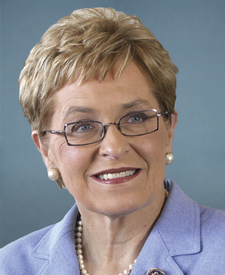
See how Marcy Kaptur actually votes — against your values.
DeepSyte scores Marcy Kaptur's record on the issues you care about — not party, not press releases. Take the 2-minute values quiz to see your personal alignment.
Sign in and take the values quiz to see how Marcy Kaptur's votes line up with your views.
Prediction track record
How often we called Marcy Kaptur's passage votes correctly, from their stated positions on each bill's tagged topics. Excludes “unclear” calls and abstentions.
12 predictions on record · none have been resolved by a passage vote yet. Check back as bills move.
Pending vote119-hr-8656
To require the Department of Justice to procure ballistic-resistant body armor manufactured using domestic ballistic fibers.
Based on 2 data points across public statements and recorded votes · AI analysis of public records
118-hjres-39·Notable gap
Disapproving the rule submitted by the Department of Commerce relating to "Procedures Covering Suspension of Liquidation, Duties and Estimated Duties in Accord With Presidential Proclamation 10414".
25/100
What they said
Apr 28, 2026
The lawmakers urge President Trump to block Chinese automakers from entering the U.S. market, maintain and strengthen tariffs on Chinese vehicles, prevent Chinese-owned manufacturers from establishing U.S. operations or circumventing trade protections through Canada and Mexico, and expand restrictions on Chinese-connected vehicle technologies.
Voted Yea on Disapproving the rule submitted by the Department of Commerce relating to "Procedures Covering Suspension of Liquidation, Duties and Estimated Duties in Accord With Presidential Proclamation 10414".
Kaptur's statement urges blocking Chinese market access and maintaining/strengthening tariffs on Chinese goods to protect American manufacturing and workers. However, she voted yes on a joint resolution that nullifies a Commerce Department rule suspending duties on solar panels with Chinese-origin components. This vote effectively allows those Chinese-connected products to enter the U.S. market with reduced tariff barriers, which directly contradicts her stated position on blocking Chinese goods and maintaining trade protections.
The lawmakers urge President Trump to block Chinese automakers from entering the U.S. market, maintain and strengthen tariffs on Chinese vehicles, prevent Chinese-owned manufacturers from establishing U.S. operations or circumventing trade protections through Canada and Mexico, and expand restrictions on Chinese-connected vehicle technologies.
Kaptur's statement opposes Chinese market access and calls for trade protections against Chinese automakers, while the bill she voted for addresses exchange rate transparency as a tool to constrain China's economic advantages. Both reflect concern about unfair Chinese economic practices, but the bill is narrower and more indirect—it targets currency manipulation rather than direct automotive trade barriers. The vote aligns with the statement's general direction on China policy, though the bill does not directly address the automotive market access concerns emphasized in the statement.
Pairs with ambiguous language and high uncertainty are withheld until more data is available. Procedural, cloture, and amendment votes are excluded — they don't cleanly signal substantive support or opposition.
Pro analysis
AI rep analysis — Pro
Get an AI-narrated read on Marcy Kaptur's full voting record against your stated values — aligned themes, conflicts, notable votes, and what to watch for.
We haven't extracted campaign positions for Marcy Kaptur yet. Once their campaign website or position pages are processed, this card will track what they said vs how they voted.
Crossing the aisle
Passage votes where Marcy Kaptur broke ranks with ≥75% of Democrats. Threshold catches substantively partisan splits; unanimous-ish or close votes are excluded.
Condemning actors seeking to defraud the United States Government, and expressing the sense of the House of Representatives that governmentwide fraud and improper payment prevention reforms will meaningfully improve the financial prosperity of the United States, and that Federal program eligibility should be verified before payment.
Kaptur, McCaul, Colleagues Introduce Guard the Skies Act to Empower National Guard to Counter Drone Threats at Special Events
Toledo, OH — Today, Congresswoman Marcy Kaptur (OH-09) a senior member of the House Appropriations Subcommittee on Defense, and Congressman Michael McCaul (TX-10) — chairman of the House Homeland Security Committee’s Task Force on Securing the Homeland Amidst Special Events — introduced the Guard the Skies Act along with Congressman Josh Gottheimer (NJ-05) and Congressman Eli Crane (AZ-02). The Guard the Skies Act grants the National Guard explicit authority to counter threats from unmanned aerial systems (UAS) — commonly known as drones — while remaining under the direction and control of state governors. Countering drone threats has been a top priority of the task force as our nation prepares to host the FIFA World Cup and celebrate America250. Congresswoman Chrissy Houlahan (PA-06) and Congressman Michael Baumgartner (WA-05) also joined the legislation as original cosponsors.
"Russia and Iran’s attacks on US servicemembers in the Middle East have underscored the urgent threat posed by unmanned systems," said Congresswoman Marcy Kaptur (OH-09). "That is why I am proud to help lead this legislation to expand counter-drone training in the United States. America must learn the lessons of modern warfare by strengthening our defenses against emerging threats. Unmanned systems are transforming the battlefield with major implications for national security. Just as the 180th Fighter Wing of the Air National Guard, which I am proud to represent in Northwest Ohio, protected our northern border and patrolled the skies after the September 11 attacks, we must be prepared to confront today’s challenges. This legislation is an important step toward strengthening our national security and equipping National Guardsmen with critical skills they can use both in service and civilian life."
"From foreign adversaries to transnational criminal organizations, hostile actors have increasingly adopted drone technology to target critical infrastructure and innocent civilians. As the United States prepares to host millions of visitors for the FIFA World Cup, America250 celebrations, and eventually the Olympics, we must be prepared to intercept and neutralize this evolving threat,” said Chairman Michael McCaul (TX-10). “The Guard the Skies Act would leverage the National Guard — a force uniquely positioned for rapid deployment and crisis response — to protect our skies and the large-scale gatherings below. I’m grateful to my colleagues for joining me in this bipartisan effort to ensure these events reflect American excellence in every aspect, including our security posture."
“Law enforcement needs every tool available at their disposal to keep spectators and communities safe at the upcoming World Cup,” said Congressman Josh Gottheimer (NJ-05). “I’m proud to co-lead the Guard the Skies Act to ensure we have the resources necessary to combat drone threats and keep the skies above the World Cup secure."
“As America prepares to host major global events, including the World Cup and the Summer Olympics, we cannot afford any gaps in our deterrence posture,” said Congressman Eli Crane (AZ-02). “I’m honored to co-lead the Guard the Skies Act, which authorizes the National Guard to help protect critical facilities and events from hostile or unauthorized unmanned aircraft. I’m grateful for Chairman McCaul’s leadership in spearheading this effort, as well as the partnership of Reps. Gottheimer and Kaptur in advancing this bipartisan initiative.”
Background:
With the 2026 World Cup approaching, US host cities will face an unprecedented, high-threat security environment. Securing this massive footprint requires a layered defense. The Safer Skies Act, which passed in the Fiscal Year 2026 National Defense Authorization Act, was an essential first step in granting State, Local, Tribal, and Territorial (SLTT) law enforcement the authority to counter rogue drones and localized threats. However, a sophisticated drone operation deployed by a malign actor would present a fundamentally different and more complex threat, requiring capabilities beyond the traditional scope and scale of civilian policing. With its rapid deployability, nationwide scalability, and extensive experience responding to domestic emergencies, the National Guard is uniquely positioned to assist federal and state authorities with C-UAS mitigation and unified coordination for events of this magnitude. The Guard the Skies Act would empower the National Guard to act as a crucial force multiplier, partnering with local authorities to help tackle complex airspace threats and ensure safe skies.
The Guard the Skies Act would provide more permanent and comprehensive authorities available to federal and state governments.
Click here to read full text of the Guard the Skies Act.
# # #
Ukraine Caucus Supports Ukraine Ceasefire, Calls on Russia to Demonstrate Good Faith
Position: The Congressional Ukraine Caucus supports Ukraine's ceasefire proposal and calls on Russia to accept it in good faith, while opposing Russia's continued military aggression and conditional approach to peace negotiations.
Washington, DC – Today, Co-Chairs of the Congressional Ukraine Caucus, Congresswoman Marcy Kaptur (OH-09), Congressman Brian Fitzpatrick (PA-01), Congressman Mike Quigley (IL-05), and Congressman Joe Wilson (SC-02) issued the following statement in response to Ukraine’s ceasefire proposal and Russia’s continued strikes that undermine any credible path to peace:
“Ukraine has extended an olive branch: an immediate, temporary ceasefire grounded in the protection of human life and the pursuit of a just peace. In the face of Russia’s continued aggression, this proposal reflects the moral clarity of a free people: willing to seek peace, unwilling to surrender sovereignty, and determined to defend the dignity of their nation.
“For years, the world has watched Russia strike Ukrainian cities, energy infrastructure, and civilians while claiming to seek peace. Simultaneously, the Kremlin is only advancing a symbolic pause tied to its World War II Victory Day commemorations — an observance Dictator Vladimir Putin has increasingly weaponized as a tool of propaganda and imperial grievance. A ceasefire cannot be selective, conditional, or timed for political convenience. It must be real, verifiable, and honored in good faith.
“Putin should accept and fully respect Ukraine’s ceasefire beginning tonight. The choice before the Kremlin is clear: continue a war that has brought devastation to Ukraine and isolation to Russia, or take a meaningful step toward peace.
“The lesson is not distant history. It is the test before us now. Europe once again faces a war of conquest — an effort to erase Ukraine’s borders, extinguish its identity, and deny a free people the right to determine their own future.
“History has shown where wars of aggression lead when the world looks away. It has also shown how they end: aggression rejected, sovereignty defended, and peace secured through strength.
“We stand united — Democrats and Republicans — in support of Ukraine’s sovereignty, in defense of international law, and in recognition of the immense sacrifices already made by the Ukrainian people. We honor those who have fallen resisting tyranny and fighting for Liberty on the continent of Europe, just as we remember the lives of the 420,000 Americans and countless millions who gave their lives to defeat an ideology based on hatred and domination eight decades ago.
“The path to peace is open. The responsibility to take it rests with the Kremlin. And as one united front, we say clearly: America stands with the people of Ukraine.”
# # #
Kaptur, Colleagues Urge President Trump to Block Chinese Automakers from Entering US Market
Position: The lawmakers urge President Trump to block Chinese automakers from entering the U.S. market, maintain and strengthen tariffs on Chinese vehicles, prevent Chinese-owned manufacturers from establishing U.S. operations or circumventing trade protections through Canada and Mexico, and expand restrictions on Chinese-connected vehicle technologies.
Washington, DC – Today, Congresswoman Marcy Kaptur (OH-09), Co-Chair of the Congressional Auto Caucus joined Congresswoman Debbie Dingell (MI-06), and 72 of their colleagues in urging President Trump to block Chinese automakers from accessing the United States market. The lawmakers raised concerns over threats to American workers and business, manufacturing, and national security. The effort comes ahead of President Trump’s planned meeting with Chinese President Xi Jinping in mid-May in Beijing, and follows reports of Chinese automakers targeting the North American market, including the United States.
“As you prepare for your upcoming summit with the President of the People’s Republic of China, any effort to lower barriers for Chinese automobiles or otherwise facilitate their entry into the US market would pose a direct threat to American manufacturing, workers, and national security. This must remain a firm and non-negotiable priority,” the lawmakers said.
The lawmakers emphasized that the US auto industry is a cornerstone of the American economy, supporting approximately 10 million jobs. They warned that Chinese automakers benefit from heavy state subsidies and exploitative labor conditions that distort global competition and disadvantage American companies and workers.
The letter to President Trump also raises concerns about China’s efforts to circumvent US trade protections by routing vehicles through Canada and Mexico under the United States-Mexico-Canada Agreement (USMCA).
“Chinese-owned or controlled vehicles, regardless of where they are assembled, must not be permitted to enter our market through USMCA or any other mechanism. Allowing such circumvention would undermine existing tariffs, weaken trade enforcement, and erode policies designed to support domestic manufacturing,” the lawmakers continued.
To address the concerns outlined in the letter, Congresswoman Kaptur and the lawmakers called on President Trump to:
Maintain and strengthen existing tariffs and trade enforcement measures on Chinese automakers and automobiles;
Ensure that Chinese automakers cannot establish manufacturing operations in the United States or use North American production as a backdoor into the US market;
Explicitly prohibit vehicles produced by Chinese-owned or controlled entities in Canada or Mexico from qualifying for USMCA benefits or entering the United States;
Accelerate and expand restrictions on Chinese-connected vehicle technologies across all vehicle classes; and
Work with allies to counter China’s coordinated effort to dominate the global auto industry through non-market practices.
In addition to Congresswoman Kaptur and Congresswoman Dingell, Members of Congress who signed this letter include Representatives: Gabe Amo (RI-01), Joyce Beatty (OH-03), Wesley Bell (MO-01), Brendan Boyle (PA-02), Shontel Brown (OH-11), Nikki Budzinski (IL-13), Janelle Bynum (OR-05), Salud Carbajal (CA-24), André Carson (IN-07), Troy Carter (LA-02), Gilbert Cisneros (CA-31), Yvette Clarke (NY-09), Steve Cohen (TN-09), Lou Correa (CA-46), Jasmine Crockett (TX-30), Sharice Davids -KS-03), Donald Davis (NC-01), Rosa DeLauro (CT-03), Christopher DeLuzio (PA-17), Sarah Elfreth (MD-03), Veronica Escobar (TX-16), Lizzie Fletcher (TX-07), John Garamendi (CA-08), Laura Gillen (NY-04), Jimmy Gomez (CA-34), Steven Horsford (NV-04), Chrissy Houlahan (PA-06), Val Hoyle (OR-04), Jonathan Jackson (IL-01), Julie Johnson (TX-32), Robin Kelly (IL-02), Timothy Kennedy (NY-26), Ro Khanna (CA-17), Greg Landsman (OH-01), John Larson (CT-01), George Latimer (NY-16), Susie Lee (NV-03), Stephen Lynch (MA-08), John Mannion (NY-22), Jennifer McClellan (VA-04), Kristen McDonald Rivet (MI-08), Morgan McGarvey (KY-03), Robert Menendez (NJ-08), Joseph Morelle (NY-25), Jared Moskowitz (FL-23), Frank Mrvan (IN-01), Donald Norcross (NJ-01), Scott Peters (CA-50), Mark Pocan (WI-02), Nellie Pou (NJ-09), Emily Randall (WA-06), Jamie Raskin (MD-08), Josh Riley (NY-19), Raul Ruiz (CA-25), Andrea Salinas (OR-06), Janice Schakowsky (IL-09), Hillary Scholten (MI-03), Terri Sewell (AL-07), Eric Sorensen (IL-17), Darren Soto (FL-09), Greg Stanton (AZ-04), Haley Stevens (MI-11), Marilyn Strickland (WA-10), Thomas Suozzi (NY-03), Emilia Sykes (OH-13), Shri Thanedar (MI-13), Bennie Thompson (MS-02), Paul Tonko (NY-20), Ritchie Torres (NY-15), Derek Tran (CA-45), Marc Veasey (TX-33), and Debbie Wasserman Schultz (FL-25).
The full letter can be found by clicking here or reading below:
Dear Mr. President:
This letter expresses our significant concern with your remarks about allowing Chinese automakers access to the United States market. We urge your administration to take any and all decisive action necessary to prevent such entry.
As you prepare for your upcoming summit with the President of the People’s Republic of China, any effort to lower barriers for Chinese automobiles or otherwise facilitate their entry into the US market would pose a direct threat to American manufacturing, workers, and national security. This must remain a firm and non-negotiable priority.
The US auto industry is the backbone of American manufacturing. It supports approximately 10 million jobs and accounts for 5 percent of our gross domestic product (GDP). It sustains a vast and interconnected manufacturing base — from steel and semiconductors to parts suppliers and advanced technologies — that supports economic growth and middle-class jobs in communities across our country.
The Chinese auto industry does not compete on a level playing field. It is driven by a state-directed strategy to dominate global markets through government subsidies, below-market financing, and non-market behavior across the supply chain. These advantages are compounded by exploitative labor practices, including suppressed wages, lack of worker protections, and credible reports of forced labor, creating structural advantages that no American company operating under fair labor standards can match.
These practices have already reshaped the global auto market. In 2025, China exported more than 8 million vehicles. Chinese brands now account for roughly 62 percent of the global electric vehicle market. Their vehicles, which are heavily subsidized and often priced far below market rates, are rapidly expanding across South America, the Middle East, Europe, and other emerging markets, capturing market share and reshaping the global auto industry.
China is actively positioning itself to bypass US trade protections by expanding its presence in North America. In Mexico, Chinese vehicle imports have surged from 2021 to 2025. In Canada, recent policy changes have significantly lowered tariffs on Chinese electric vehicles, allowing tens of thousands of vehicles into the Canadian market annually under a quota system, potentially reaching 70,000 vehicles per year by 2030. These developments raise serious concerns that Chinese automobiles could establish a foothold in Canada and seek to move into the United States market, and these trends create a clear and urgent risk that Chinese automakers are looking to use Canada and Mexico as a backdoor into the United States under the United States-Mexico-Canada Agreement (USMCA).
Chinese-owned or controlled vehicles, regardless of where they are assembled, must not be permitted to enter our market through USMCA or any other mechanism. Allowing such circumvention would undermine existing tariffs, weaken trade enforcement, and erode policies designed to support domestic manufacturing.
There are real national security implications, as today’s vehicles are increasingly connected, capable of collecting and transmitting sensitive data about drivers, infrastructure, and surrounding environments. The US Department of Commerce has already recognized the risks posed by Chinese-connected vehicle technologies, including the potential for surveillance, data exploitation, and remote interference. These risks are inherent and cannot be mitigated once embedded in our transportation network.
We have consistently worked to confront these threats by supporting strong trade enforcement, pushing for restrictions on Chinese-connected vehicle technologies, and advocating for policies that protect American workers and domestic manufacturing. This is a bipartisan issue that is about protecting our industrial base, our workforce, and our national security, and we urge your administration to:
Maintain and strengthen existing tariffs and trade enforcement measures on Chinese automakers and automobiles;
Ensure that Chinese automakers cannot establish manufacturing operations in the United States or use North American production as a backdoor into the US market;
Explicitly prohibit vehicles produced by Chinese-owned or controlled entities in Canada or Mexico from qualifying for USMCA benefits or entering the United States;
Accelerate and expand restrictions on Chinese-connected vehicle technologies across all vehicle classes; and
Work with allies to counter China’s coordinated effort to dominate the global auto industry through non-market practices.
We must not cede the American auto industry to a strategic competitor intent on global dominance. The consequences for American workers, our supply chains, our national security, and our communities would be profound and irreversible. Therefore, we urge you to take clear and decisive action to ensure that Chinese automakers are not permitted to enter the United States market in any capacity.
Thank you for your attention to this matter.
# # #
Kaptur and Bipartisan, Bicameral Coalition Introduce Legislation to Combat Russia’s Attack on Religious Freedom in Ukraine
Position: The release introduces legislation requiring the State and Defense Departments to report on Russian persecution of religious communities in Ukraine and directs the President to impose sanctions on individuals engaged in such persecution.
Washington, DC – Congresswoman Marcy Kaptur (OH-09) Co-Founder and Co-Chair of the Congressional Ukraine Caucus, joined US Helsinki Commission Chairman Congressman Joe Wilson (SC-02), Helsinki Commission Ranking Member Congressman Steve Cohen (TN-09), and Ukraine Caucus Co-Chairs Congressman Mike Quigley (IL-05), and Congressman Brian Fitzpatrick (PA-01), and Ukraine Caucus member Congressman Don Bacon (NE--02) in introducing H.R. 8433 the Countering Russia’s War On Faith Act. Companion legislation was introduced in the Senate by Senator Sheldon Whitehouse (D-RI), Ranking Member of the US Helsinki Commission, and Senator John Kennedy (R-LA). This bipartisan and bicameral legislation requires the Secretaries of State and Defense to jointly report on Russian efforts to persecute, suppress, and violate the religious freedoms of faith communities in Ukraine and Russian-occupied territories. It also directs the President to impose sanctions on foreign individuals found to have engaged in these actions.
“Russia's widespread religious persecution in Ukraine dates back centuries, and is a horrific reminder that this new war of occupation was never just about land, but about forcible Russification and the erasure of Ukraine's pluralistic and free way of life," said Congresswoman Marcy Kaptur (OH-09), Co-Founder and Co-Chair of the Congressional Ukraine Caucus. “This important legislation calls out the abuses committed by the Russian state and its agents against Ukrainian Christians, Jews, Muslims, and other faiths. Russia perversely portrays Ukraine as a persecutor of Christians, when it is Moscow that has destroyed over 600 churches, synagogues, mosques, and places of worship in Ukraine throughout this war. These new attacks are a shameful reminder of Russian pogroms and attacks on religious communities dating back centuries. The United States must hold these war criminals accountable and defend religious freedom and the right of all Ukrainians to worship as they choose.”
“Russia targets and kills persons of faith as a matter of policy wherever it invades. War criminal Putin seeks to prevent free worship of all believers and crushes any faith not subservient to its state-run church and corrupt former KGB agent Patriarch Kirill or otherwise submit itself to repressive state control,” said Congressman Joe Wilson (SC-02), Chairman of the US Helsinki Commission and Co-Chair of the Congressional Ukraine Caucus. “Believers in the temporarily occupied territories of Ukraine are targeted with particular ferocity. It is critical that we counter Russia’s War on Faith.”
“Putin is a war criminal conducting genocide in Ukraine. He is also attempting to erase expressions of Ukrainian identity, including religious freedoms. This legislation makes plain that these human rights violations will be a focus of our foreign policy and that the United States will always defend religious liberty,” said Congressman Steve Cohen (TN-09), Ranking Member of the Helsinki Commission and member of the Congressional Ukraine Caucus.
“Russia’s war in Ukraine is not only an assault on sovereignty—it is a calculated, systemic assault on religious freedom. For Americans, the freedom to worship is among our most fundamental liberties, and we do not stand by when it is crushed by force. This legislation ensures these crimes are documented, perpetrators are identified, and real consequences follow. Peace through strength requires accountability, and the persecution of people of faith cannot be met with silence,” said Congressman Brian Fitzpatrick (PA-01), Co-Chair of the Congressional Ukraine Caucus.
“Vladimir Putin's brutal war on Ukraine is not just about violating its sovereignty, but erasing the democratic values Ukraine has embraced. He seeks to erase freedom of religion in Ukraine by disproportionately targeting places of worship and practitioners of any religion other than his own," said Congressman Mike Quigley (IL-05), Co-Chair of the Congressional Ukraine Caucus. "I am proud to cosponsor Rep. Wilson's Countering Russia’s War on Faith Act to make it clear that those who burn churches, persecute religious communities, and try to erase religious diversity will be held accountable. The United States must lead with moral clarity by defending religious freedom and confronting Putin’s abuses.”
“Putin’s brutal invasion of Ukraine is not only an attack on a country that seeks democracy, free markets, and alignment with the West, but also includes a deliberate campaign to suppress and persecute religious communities,” said Congressman Don Bacon (NE-02), member of the Congressional Ukraine Caucus. “Countering Russia’s War on Faith Act will ensure we fully document these abuses and hold those responsible accountable through sanctions. I’m pleased to join Rep. Wilson and my colleagues in this bipartisan effort to stand up for religious liberty and the Ukrainian people.”
“Putin’s murderous regime has repeatedly bombed places of worship, murdered clergy members, and persecuted Ukrainian communities not aligned with the Putin-allied Russian Orthodox Church. It’s time for the U.S. to take a stand for religious freedom and explore sanctions against individuals engaging in these brutal human rights abuses in Ukraine,” said Senator Sheldon Whitehouse (D-RI), Ranking Member of the Helsinki Commission.
“Religious liberty is not a suggestion in America – it’s one of our founding promises protected by the Constitution and lived out every day by generations of freedom-loving Americans. Anyone with a brain larger than a single cell organism knows that Vladimir Putin does not respect nor share that view. The Countering Russia’s War on Faith Act shines a bright light on Putin’s religious persecution and responds with real consequences,” said Senator John Kennedy (R-LA).
Background
Since Russia's full-scale invasion in 2022, over 600 churches, synagogues, mosques, and other religious sites have been damaged or destroyed, and more than 50 Ukrainian clergy have been killed. Protestant, Catholic, Crimean Tatar, and Orthodox Christian communities not aligned with the Russian Orthodox Church have faced raids, forced re-registration, and criminal prosecution. The Russian Orthodox Church, led by Patriarch Kirill of Moscow, has publicly described the invasion as a "holy war,” providing ideological justification for systematic religious suppression in occupied territories.
The full text of H.R. 8433/S. 4379 is available by clicking here.
# # #
Kaptur, 14 colleagues Demand Swift Investigations into Misconduct by Members of Congress
Washington, DC – Today, Congresswoman Marcy Kaptur (OH-09) joined Congresswoman Susie Lee (NV-03) and 13 of their colleagues in a letter demanding Speaker Mike Johnson and Minority Leader Hakeem Jeffries work in a bipartisan manner to direct the Ethics Committee to expedite their investigations into alleged misconduct by Members of Congress, with a call for prompt action.
“These Members each face their own various ethical or criminal allegations that raise fundamental questions about each Member’s conduct and fitness to serve. We urge you to direct the House Ethics Committee to expedite their investigations into each of these matters with full transparency, including through public hearings,” wrote the Members. “Where investigations have already reached conclusions, we call for prompt action. The full range of accountability measures must remain on the table, up to and including expulsion from the House. As the House returns to session this week, we urge you to take immediate action.”
The Members continued, “Protecting the integrity of the House of Representatives is of paramount importance. Public confidence in Congress is at a historic low, but it can be earned back through public accountability. We must demonstrate that no one is above the law and that serious misconduct will result in serious consequences.”
In addition to Congresswoman Kaptur and Congresswoman Lee, the letter was signed by Representatives Mike Levin (CA-49), April McClain Delaney (MD-06), Eugene Vindman (VA-07), Val Hoyle (OR-04), Steven Horsford (NV-04), Andrea Salinas (OR-06), Kristen McDonald Rivet (MI-08), Nikki Budzinski (IL-13), John Mannion (NY-22), Marie Gluesenkamp Perez (WA-03), Hillary Scholten (MI-03), Derek Tran (CA-45), and Chris Deluzio (PA-17).
The full letter is available by clicking here and reading below:
Dear Speaker Johnson and Leader Jeffries:
We write with deep concern about the urgent need to address serious allegations against multiple House Members from both parties. The American people deserve a Congress that upholds the highest ethical standards and holds its Members accountable when those standards are violated.
These Members each face their own various ethical or criminal allegations that raise fundamental questions about each Members’ conduct and fitness to serve. We urge you to direct the House Ethics Committee to expedite their investigations into each of these matters with full transparency, including through public hearings. Where investigations have already reached conclusions, we call for prompt action. The full range of accountability measures must remain on the table, up to and including expulsion from the House. As the House returns to session this week, we urge you to take immediate action.
Protecting the integrity of the House of Representatives is of paramount importance. Public confidence in Congress is at a historic low, but it can be earned back through public accountability. We must demonstrate that no one is above the law and that serious misconduct will result in serious consequences.
We respectfully request that you work together in a bipartisan manner to ensure these investigations proceed swiftly, that findings are made public, and that action is brought to the floor for a vote.
# # #
Kaptur and Bacon Introduce Bipartisan BLOCK PUTIN Act to hold Hungarian Government Enablers of Russia Accountable
Position: The representatives support legislation to impose sanctions and accountability measures on Hungarian government officials who obstruct European support for Ukraine or deepen Hungary's dependence on Russian energy.
Toledo, OH – Today, Co-Chair of the Bipartisan Congressional Hungarian Caucus Congresswoman Marcy Kaptur (OH-09) and member of the Congressional Hungarian Caucus Congressman Don Bacon (NE-02) introduced H.R. 8219 the bipartisan Barring Leverage and Obstruction that Contributes to Kremlin Profits Undermining Transatlantic Interests and NATO Act or the BLOCK PUTIN Act, which will hold senior Hungarian government officials accountable if they continue to block European assistance to Ukraine or continue to deepen Hungary’s dangerous reliance on Russian energy. This companion legislation to S.4275, the BLOCK PUTIN Act introduced by Senators Jeanne Shaheen (D-NH) and Thom Tillis (R-NC).
This legislation comes amid troubling news that top officials in the Hungarian government, including Hungarian Foreign Minister Péter Szijjártó, have coordinated with the Russian government to obstruct European support for Ukraine, protect Russian oligarchs from sanctions, and to create a significant vulnerability for Hungary by deepening its dependence on Russian energy. Concerningly, it has also been reported that Hungarian officials signed a secret pact with the Kremlin to deepen Hungary’s reliance on Russia and drift farther from its transatlantic allies.
“As Co-Chair of the Congressional Hungarian Caucus and a strong advocate for Ohio’s national guard partnership with the nation of Hungary, I share the commitment of the Hungarian and American people who bled for the cause of Democracy and Liberty,” said Congresswoman Marcy Kaptur (OH-09), Co-Chair of the Congressional Hungarian Caucus. “When Moscow sent tanks to crush the people of Hungary in their Revolution of 1956, the world again saw the cruelty of the Kremlin’s dictatorship. When we listen to these phone calls between top Russian and Hungarian officials, we hear a shocking betrayal of Hungary’s independence and democracy in support of Dictator Vladimir Putin’s ambition to dominate Europe. My colleagues including myself and Congressman Bacon in our Hungarian Caucus affirm the right of the Hungarian people for their hard-fought freedom. Hungarians should know they will always have friends here in America ready to help them combat Putin’s schemes to control their country and extinguish their Liberty.”
"As someone with Hungarian roots, I have deep respect for Hungary’s history as a freedom-loving nation that stood up to Soviet oppression in 1956. But today, under Prime Minister Orbán, Hungary has become the most unreliable country in NATO and undermined Ukraine and our allies from within,” said Congressman Don Bacon (NE-02), member of the Congressional Hungarian Caucus. “The BLOCK PUTIN Act makes clear there will be consequences for blocking support to Ukraine, deepening reliance on Russian energy, and reinforces our commitment to our allies. I’m pleased to co-lead this bipartisan effort with Rep. Kaptur and grateful to Sens. Tillis and Shaheen for their leadership in the Senate."
# # #
Kaptur Delivers $19.2 Million Federal Investment for New Nuclear Training Safety Education Program
Oak Harbor, OH – Today, Congresswoman Marcy Kaptur (OH-09) visited the Davis-Besse Nuclear Power Plant to announce a $19.2 Million federal funding investment from the Department of Energy (DOE) for the new Nuclear Reactor Safety Training and Workforce Development program to be administered at the University of Toledo. Congresswoman Kaptur, who serves as Ranking Member of the House Appropriations Subcommittee on Energy & Water Development, was joined by representatives from the Great Lakes Partnership to Enhance the Nuclear Workforce (GLP) which includes the University of Toledo (UT), University of Michigan (UM), Owens Community College, the International Brotherhood of Electrical Workers (IBEW), and Vistra Corp. The GLP will more than match the award with a $20 Million investment for a total project cost of $39.2 Million over a 5-year period. This major award from DOE is the largest award nationwide as part of this new program initiated by Congresswoman Kaptur. The initial funding round includes $50 Million awarded to 10 university-led projects that will grow nuclear safety training programs and curricula nationwide. Investment in forward thinking training and development for the nation's next generation of power generation was conceived by Congresswoman Kaptur and included as part of the FY2024 Energy & Water Appropriations Bill which she helped author.
"This $19.2 Million award to the University of Toledo is the largest single federal award from the federal government in UToledo history and will reshape how the Federal government views university based nuclear research. UToledo's new ranking as an R1 research university further positions it as a hub for innovation and workforce development. Our Great Lakes region is a powerhouse for innovation and the future of America's energy workforce. Northwest Ohio deserves this kind of forward thinking investment—America betting on the best of this region, not the worst," said Congresswoman Marcy Kaptur (OH-09), Ranking Member of the House Appropriations Subcommittee on Energy & Water Development. "This effort will empower Northwest Ohio to lead the Great Lakes Partnership in training the next generation of highly skilled, safety-focused nuclear workers, with an eye toward the advanced nuclear technologies of tomorrow. Investments like this are essential to support good-paying jobs and ensure safe, reliable energy for Northwest Ohio and the Great Lakes region."
“Thanks to this significant DOE grant, the important work the Great Lakes Partnership to Enhance the Nuclear Workforce will now be able to do expands on Vistra’s efforts across the country to enhance workforce development—creating opportunities that power the economy and directly benefit our communities," said Jim Burke, president & CEO, Vistra Corp. "We are proud to support programs that recognize the path to a good job runs through our labor partners, community colleges, technical schools, and our nation’s top colleges and universities. The jobs of tomorrow are here today. It’s our responsibility to seize this moment, grow our talent pipeline, and ensure safe, reliable power for years to come.”
“The University of Toledo is proud to lead this collaborative effort to enhance, modernize and standardize training pipelines and programs to support the growing energy sector,” said University of Toledo President James Holloway. “UToledo has long been a leader in energy and environment research and education, and through this partnership, we can apply that expertise to strengthen safety and training for people in nuclear energy careers in our region and across the country.”
“Congresswoman Marcy Kaptur has been an inspiration to us labor leaders for so long. She has truly been a mentor for me, and helped to guide me through some very tough times," said Shane Bauman, International Representative, International Brotherhood of Electrical Workers (IBEW). "It’s been just an honor and a privilege to have her, to serve with her, and to be a part of this collaboration.”
Through a focus on the Great Lakes/Midwest region, including companies representing 31.8% of the Nation’s nuclear generating capacity, the GLP will develop workforce training and outreach programs to be scaled to nationally recognized industry safety credentials. The team will work to enhance the existing safety training pipelines for the light water reactor workforce; attract a larger number of qualified entrants into the nuclear workforce; modernize training curricula and address emerging advanced reactor concepts; and establish national industry recognized nuclear reactor safety certifications.
Congresswoman Kaptur was joined for today's announcement by:
Frank Calzonetti Ph.D., Special Assistant to the President for Research Initiatives at The University of Toledo
Gary Leidich, Chair of the Great Lakes Partnership to Enhance the Nuclear Workforce Advisory Board
Todd Allen Ph.D., Associate Dean for Research, College of Engineering, University of Michigan
Shane Bauman, International Representative, International Brotherhood of Electrical Workers
John Dreyfuss, Vice President, Nuclear Support, Vistra
A full list of partners in the Great Lakes Partnership to Enhance the Nuclear Workforce (GLP) includes:
The University of Toledo
The University of Michigan
University of Illinois – Urbana-Champaign
North Dakota State University
Monroe Community College
Lakeland Community College
Owens Community College and the College of DuPage
Excelsior University
Vistra Corporation
Constellation
DTE Energy
Xcel
Idaho National Laboratory
American Nuclear Society
Electric Power Research Institute
Center for Energy Workforce Development
Pittsburgh Technical
Nuclear Talent Scout
The safety training and workforce development program is designed to ensure nuclear power plant workers themselves are protected—in terms of their own safety and health —as well as protect their families when they return home from their workdays and shifts. Additionally, and importantly, the program is meant to broadly protect American communities—like Oak Harbor and the greater Toledo Metropolitan Area—that host nuclear power plants from any leaks of radioactive material or agents, or other serious safety breaches and accidents.
The Nuclear Reactor Safety Training and Workforce Development program was created by Kaptur in the FY2024 Energy & Water Appropriations bill, which set aside $100 Million for the initiative. A second funding opportunity for the remaining $50 Million will follow at a later date. As part of this selection and announcement, in addition to the GLP’s project, North Carolina State University was selected for $18.3 Million for a project and there were 8 additional awards for projects under $2 Million each. Additional information about these awards can be found by clicking here. You can learn more about the Nuclear Reactor Safety Training Program by clicking here.
# # #
Issues:
Jobs and the Economy
Energy
Source: GDELT 2.0 GKG, filtered to a curated list of national outlets. Inclusion is not endorsement; opinion pieces and reported news are mixed.
Recent stock activity
Periodic transaction reports filed under the STOCK Act — disclosed by the rep, sourced from public filings.
No disclosed trades on record.
Source: open-data mirrors of the Senate eFD and House Clerk financial-disclosure systems. Disclosure within 30 days of trade is required by law (45 for spouse/dependent trades).
Top PAC donors · 2026 cycle
Political action committees that gave the most to this rep's principal campaign committee this cycle. PAC giving is direct organizational support — industry, ideological, or leadership.
1.DEMOCRACY SUMMER 2026Ideological4 contributionsProgressive grassroots advocacy PAC — supports voter engagement, democratic participation, and candidates aligned with progressive causes.AI$42,919
2.EDW HOLD THE HOUSE FUND - UNITEMIZEDLeadership4 contributionsMember-of-Congress leadership PAC — directs contributions to allied candidates, likely focused on House races.AI$37,513
3.JEFFRIES BATTLEGROUND PROTECTION FUNDLeadership3 contributionsMember-of-Congress leadership PAC affiliated with Hakeem Jeffries — directs contributions to allied Democratic candidates and causes.AI$31,462
4.MACHINISTS NON-PARTISAN POLITICAL LEAGUELabor5 contributionsTrade-union PAC of the International Association of Machinists and Aerospace Workers — backs candidates supporting union organizing, prevailing wages, and aerospace/manufacturing jobs.AI$25,000
5.INTERNATIONAL LONGSHOREMEN'S ASSOCIATION COMMITTEE ON POLITICAL EDUCATIONLabor3 contributionsTrade-union PAC for International Longshoremen's Association — backs candidates supporting port workers, maritime labor protections, and infrastructure investment.AI$15,000
6.OHIO DEMOCRATIC PARTY1 contribution$13,966
7.STAND UP FOR DEMOCRACY JFAIdeological1 contributionIdeological PAC — supports candidates and causes aligned with democratic governance and civic participation values.AI$13,500
8.AMERIPAC: THE FUND FOR A GREATER AMERICAIdeological1 contributionIdeological PAC with a nationalist or patriotic framing — specific policy positions not clearly signaled by the name.AI · low$10,000
9.ROCK HOLDINGS INC. PAC2 contributions$10,000
10.NEA FUND FOR CHILDREN C000032512 contributions$10,000
Source: OpenFEC (api.open.fec.gov) Schedule A receipts where contributor type is “committee.” Aggregated by contributing committee. Self-transfers from joint-fundraising / victory committees are excluded.
Top individual contributors · 2026 cycle
Itemized individual contributions over $200 to this rep's campaign committee, aggregated by donor employer. PAC giving is shown above; this section is people, not organizations.
1.NO EMPLOYER$139,674
2.SELF$97,272
3.INSIGHT PARTNERS$21,000
4.DE SHAW & CO$14,000
5.BESSEMER VENTURE PARTNERS$14,000
6.CENTERVIEW PARTNERS$14,000
7.SI, LLC$10,500
8.PARKER STEEL COMPANY$8,500
9.UNIVERSITY OF TOLEDO$8,450
10.CMDC$7,500
Source: OpenFEC Schedule A receipts where contributor type is “individual,” aggregated by the donor's self-reported employer. This is a geographic / industry correlation, not a corporate endorsement.