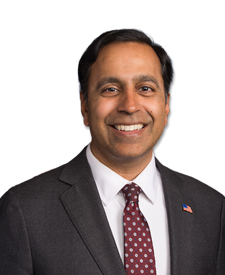
See how Raja Krishnamoorthi actually votes — against your values.
DeepSyte scores Raja Krishnamoorthi's record on the issues you care about — not party, not press releases. Take the 2-minute values quiz to see your personal alignment.
Sign in and take the values quiz to see how Raja Krishnamoorthi's votes line up with your views.
Prediction track record
How often we called Raja Krishnamoorthi's passage votes correctly, from their stated positions on each bill's tagged topics. Excludes “unclear” calls and abstentions.
A joint resolution to direct the removal of United States Armed Forces from hostilities within or against the Islamic Republic of Iran that have not been authorized by Congress.
To prohibit the disclosure of records by the Secretary of Housing and Urban Development of individuals for the purposes of immigration enforcement, and for other purposes.
A joint resolution to direct the removal of United States Armed Forces from hostilities within or against the Islamic Republic of Iran that have not been authorized by Congress.
Based on 27 data points across public statements and recorded votes · AI analysis of public records
118-hr-2·Consistent
Secure the Border Act of 2023
92/100
What they said
May 20, 2026
Opposes a proposed constitutional amendment that would bar naturalized citizens from serving in Congress, the federal judiciary, and Senate-confirmed positions. The statement argues that naturalized citizens have historically strengthened America and that patriotism should be measured by service and character, not birthplace.
Krishnamoorthi's statement opposes restricting naturalized citizens' eligibility for federal office and emphasizes their contributions to America. The Secure the Border Act focuses on border wall construction and asylum restrictions—distinct immigration policy questions that do not directly address naturalized citizen eligibility. His NO vote on a border security bill is consistent with a broader pro-immigration stance reflected in his statement, though the specific policy questions differ. The vote and statement align directionally on immigration values without addressing the same specific provision.
Congressman Krishnamoorthi calls on the Small Business Administration to provide immediate federal support to Illinois small businesses harmed by Operation Midway Blitz immigration enforcement actions, and demands a formal economic impact assessment of the operation's effects on local enterprises.
Krishnamoorthi's statement opposes the economic harm caused by immigration enforcement operations and demands federal support for affected small businesses. His no vote on the Secure the Border Act—which expands border enforcement and immigration restrictions—is consistent with this position, as the bill would likely intensify enforcement activities similar to Operation Midway Blitz that he criticizes for damaging local economies.
Congressman Krishnamoorthi expresses concern about rising Islamophobia and antisemitism in the United States, condemns hate rhetoric from elected officials, and opposes the diversion of FBI counterterrorism resources to support immigration enforcement operations.
Krishnamoorthi's statement opposes diverting FBI counterterrorism resources to immigration enforcement, arguing it makes Americans less safe. The No Bailout for Sanctuary Cities Act penalizes jurisdictions that restrict cooperation with immigration enforcement, which would indirectly pressure law enforcement to prioritize immigration work. His NO vote aligns with his stated concern that immigration enforcement diverts resources from counterterrorism priorities. The statement does not directly address sanctuary city funding, but both the statement and vote reflect opposition to prioritizing immigration enforcement over other law enforcement functions.
Congressman Krishnamoorthi expresses concern about rising Islamophobia and antisemitism in the United States, condemns hate rhetoric from elected officials, and opposes the diversion of FBI counterterrorism resources to support immigration enforcement operations.
Krishnamoorthi's statement opposes diverting FBI counterterrorism resources to immigration enforcement, expressing concern that this makes Americans less safe. The Secure the Border Act is primarily a border security and immigration enforcement bill that would expand DHS activities and potentially increase demand for federal law enforcement resources in immigration contexts. His NO vote on passage is consistent with his stated position that counterterrorism resources should not be diverted to immigration enforcement. The statement does not address border wall construction or asylum limits specifically, but the core concern—resource allocation away from counterterrorism—aligns with opposition to an immigration enforcement expansion bill.
Congressman Krishnamoorthi expresses concern about rising Islamophobia and antisemitism in the United States, condemns hate rhetoric from elected officials, and opposes the diversion of FBI counterterrorism resources to support immigration enforcement operations.
Krishnamoorthi's statement opposes diverting FBI counterterrorism resources to immigration enforcement, expressing concern that this makes Americans less safe. The Laken Riley Act mandates DHS detention of non-U.S. nationals arrested for certain property crimes, which would require coordination with law enforcement and potentially draw resources toward immigration enforcement priorities. His NO vote on passage aligns with his stated opposition to redirecting counterterrorism capacity toward immigration operations. The statement does not address the bill's detention or state-lawsuit provisions directly, but the core concern about resource diversion is substantively aligned with voting against the bill.
Transnational Criminal Organization Illicit Spotter Prevention and Elimination Act
15/100
What they said
Apr 19, 2026
Congressman Krishnamoorthi calls on the Small Business Administration to provide immediate federal support to Illinois small businesses harmed by Operation Midway Blitz immigration enforcement actions, and demands a formal economic impact assessment of the operation's effects on local enterprises.
Krishnamoorthi's statement opposes the economic harm caused by aggressive immigration enforcement (Operation Midway Blitz) and calls for federal support for affected businesses. HR 3602 enhances criminal penalties for interference with border enforcement and strengthens immigration enforcement tools. By voting no on passage, Krishnamoorthi's vote aligns with his stated concern about enforcement operations' economic damage, though the bill addresses enforcement facilitation rather than the SBA relief he demands.
Congressman Krishnamoorthi calls on the Small Business Administration to provide immediate federal support to Illinois small businesses harmed by Operation Midway Blitz immigration enforcement actions, and demands a formal economic impact assessment of the operation's effects on local enterprises.
Krishnamoorthi's statement opposes immigration enforcement actions (Operation Midway Blitz) and demands federal support for businesses harmed by them, characterizing the enforcement as causing severe economic damage. The bill he voted against establishes new criminal penalties for fleeing law enforcement near the border and makes violators deportable and ineligible for asylum. His no vote aligns with his stated opposition to aggressive immigration enforcement, making the vote and statement directionally consistent on the underlying question of whether to expand immigration enforcement authority and penalties.
Congressman Krishnamoorthi calls on the Small Business Administration to provide immediate federal support to Illinois small businesses harmed by Operation Midway Blitz immigration enforcement actions, and demands a formal economic impact assessment of the operation's effects on local enterprises.
Krishnamoorthi's statement demands SBA support for small businesses harmed by immigration enforcement operations and calls for economic impact assessments. The bill he voted against would restrict federal funding to jurisdictions that do not cooperate with immigration enforcement and detainers. His vote against the bill aligns with his stated opposition to enforcement actions that damage local economies, while the bill would penalize jurisdictions for limiting cooperation with such enforcement—a direct contradiction of his position.
Congressman Krishnamoorthi calls on the Small Business Administration to provide immediate federal support to Illinois small businesses harmed by Operation Midway Blitz immigration enforcement actions, and demands a formal economic impact assessment of the operation's effects on local enterprises.
Krishnamoorthi's statement criticizes immigration enforcement operations (Operation Midway Blitz) for causing severe economic harm to small businesses and calls for SBA support and economic assessment. The Laken Riley Act expands DHS detention requirements for immigration violations and authorizes states to sue the federal government over immigration enforcement decisions. Krishnamoorthi voted against passage of the bill, which aligns with his stated concern about the economic damage caused by aggressive immigration enforcement. His opposition to the bill is consistent with his position that such enforcement operations harm local economies and warrant federal support for affected businesses rather than expanded enforcement authority.
Congressman Krishnamoorthi calls on the Small Business Administration to provide immediate federal support to Illinois small businesses harmed by Operation Midway Blitz immigration enforcement actions, and demands a formal economic impact assessment of the operation's effects on local enterprises.
Krishnamoorthi's statement opposes immigration enforcement actions (Operation Midway Blitz) that harmed small businesses and calls for SBA support for affected communities. The Police Our Border Act requires reporting on the impact of Biden's border policies on law enforcement. These address opposite sides of immigration enforcement: the statement criticizes enforcement operations' economic damage and seeks mitigation; the bill supports law enforcement capacity for border enforcement. The NO vote aligns with the statement's implicit opposition to aggressive immigration enforcement.
Congressman Krishnamoorthi calls on the Small Business Administration to provide immediate federal support to Illinois small businesses harmed by Operation Midway Blitz immigration enforcement actions, and demands a formal economic impact assessment of the operation's effects on local enterprises.
Krishnamoorthi's statement opposes the economic harm caused by aggressive immigration enforcement (Operation Midway Blitz) and calls for SBA support for affected businesses. The Stop Illegal Entry Act increases criminal penalties for illegal reentry and entry, which represents a hardline immigration enforcement approach. His NO vote on an amendment to this bill is consistent with his stated concern that strict enforcement operations damage local economies and small businesses. The vote reflects opposition to measures that would intensify immigration enforcement without addressing economic mitigation.
Congressman Krishnamoorthi calls on the Small Business Administration to provide immediate federal support to Illinois small businesses harmed by Operation Midway Blitz immigration enforcement actions, and demands a formal economic impact assessment of the operation's effects on local enterprises.
Krishnamoorthi's statement opposes immigration enforcement actions (Operation Midway Blitz) that he characterizes as causing severe economic harm to small businesses and communities. The POLICE Act expands deportation grounds for assault of law enforcement, which would strengthen immigration enforcement tools. His NO vote on the bill's passage aligns with his stated opposition to aggressive immigration enforcement and concern for its economic impact on vulnerable communities. The vote and statement point in the same direction on the underlying question of immigration enforcement scope.
Congressman Krishnamoorthi opposes Trump's military escalation in Iran, characterizing it as an unauthorized war that has weakened U.S. security and destabilized global markets. He calls for immediate negotiation to end the conflict.
Krishnamoorthi's statement opposes Trump's military escalation in Iran and calls for negotiation rather than continued military action. His no vote on the FY2025 DOD appropriations bill is directionally consistent with this position—voting against a defense budget can reflect opposition to military spending and escalation. However, the bill funds broad DOD operations across multiple categories (personnel, maintenance, procurement, R&D), not specifically Iran operations, so the vote may reflect objections to overall defense spending levels or other provisions rather than solely the Iran policy position stated in the press release.
Transnational Criminal Organization Illicit Spotter Prevention and Elimination Act
75/100
What they said
May 20, 2026
Congressman Krishnamoorthi expresses concern about rising Islamophobia and antisemitism in the United States, condemns hate rhetoric from elected officials, and opposes the diversion of FBI counterterrorism resources to support immigration enforcement operations.
The statement opposes diverting FBI counterterrorism resources to immigration enforcement, arguing it makes Americans less safe. The bill creates criminal penalties for border-control interference and enhances immigration-related offenses. While both touch immigration enforcement, the statement criticizes resource diversion from counterterrorism to immigration work, whereas the bill addresses criminal penalties for specific border-interference conduct—a narrower question about enforcement tools rather than resource allocation priorities. The rep's NO vote aligns with skepticism toward immigration-enforcement expansion, but the bill does not directly address the counterterrorism-resource-diversion concern the statement emphasizes.
Israel Security Supplemental Appropriations Act, 2024
75/100
What they said
Apr 22, 2026
Congressman Krishnamoorthi opposes Trump's military escalation in Iran, characterizing it as an unauthorized war that has weakened U.S. security and destabilized global markets. He calls for immediate negotiation to end the conflict.
Krishnamoorthi's statement opposes military escalation and calls for negotiation rather than continued conflict. His no vote on a bill providing supplemental defense appropriations and expanding presidential authority to transfer defense articles to Israel aligns with that opposition to escalation. However, the bill specifically addresses Israel's defensive needs following attacks, which is a narrower question than the broader Iran conflict Krishnamoorthi criticizes. The vote is consistent with his stated position against escalation, though the bill's focus on Israel's defense systems rather than Iran operations creates some directional ambiguity.
Congressman Krishnamoorthi calls on the Small Business Administration to provide immediate federal support to Illinois small businesses harmed by Operation Midway Blitz immigration enforcement actions, and demands a formal economic impact assessment of the operation's effects on local enterprises.
Krishnamoorthi's statement opposes immigration enforcement actions (Operation Midway Blitz) and demands federal support for businesses harmed by them, expressing concern about the economic damage caused by enforcement. His procedural 'yes' vote on the Schools Not Shelters Act—which restricts use of school facilities to shelter undocumented immigrants—points in the opposite direction by supporting a restrictive immigration policy. The procedural nature of the vote introduces uncertainty about his intent, but the substantive positions on immigration enforcement are directionally opposed.
Congressman Krishnamoorthi calls on the Small Business Administration to provide immediate federal support to Illinois small businesses harmed by Operation Midway Blitz immigration enforcement actions, and demands a formal economic impact assessment of the operation's effects on local enterprises.
Krishnamoorthi's statement opposes the economic harm caused by immigration enforcement operations and demands federal support for affected small businesses. The bill he voted against makes Social Security and ID document fraud grounds for deportation—a measure that would facilitate immigration enforcement. His NO vote aligns with his stated concern that immigration enforcement operations cause severe economic damage to communities and small businesses, suggesting opposition to policies that expand such enforcement authority.
Department of Homeland Security Appropriations Act, 2024
75/100
What they said
Apr 19, 2026
Congressman Krishnamoorthi calls on the Small Business Administration to provide immediate federal support to Illinois small businesses harmed by Operation Midway Blitz immigration enforcement actions, and demands a formal economic impact assessment of the operation's effects on local enterprises.
Krishnamoorthi's statement criticizes the economic harm caused by Operation Midway Blitz immigration enforcement and demands SBA support for affected businesses. His NO vote on the DHS appropriations bill that funds ICE and other enforcement agencies is directionally consistent with opposition to the operation's impacts. However, the bill is a broad appropriations measure funding multiple DHS functions (border security, cybersecurity, FEMA, etc.), not a targeted measure addressing Operation Midway Blitz specifically. The NO vote reflects opposition to the overall DHS funding package, which may bundle provisions the rep supports with enforcement operations he opposes.
Department of Homeland Security Appropriations Act, 2025
75/100
What they said
Apr 19, 2026
Congressman Krishnamoorthi calls on the Small Business Administration to provide immediate federal support to Illinois small businesses harmed by Operation Midway Blitz immigration enforcement actions, and demands a formal economic impact assessment of the operation's effects on local enterprises.
Krishnamoorthi's statement criticizes Operation Midway Blitz immigration enforcement and demands SBA support for affected small businesses. His NO vote on the DHS appropriations bill that funds ICE and immigration enforcement operations is directionally consistent with opposition to aggressive immigration enforcement. However, the bill is a broad appropriations measure funding multiple DHS agencies and functions beyond immigration enforcement alone, so the vote may reflect objections to other provisions or overall budget priorities rather than solely the immigration enforcement question the statement addresses.
Continuing Appropriations and Border Security Enhancement Act, 2024
75/100
What they said
Apr 19, 2026
Congressman Krishnamoorthi calls on the Small Business Administration to provide immediate federal support to Illinois small businesses harmed by Operation Midway Blitz immigration enforcement actions, and demands a formal economic impact assessment of the operation's effects on local enterprises.
Krishnamoorthi's statement criticizes Operation Midway Blitz immigration enforcement and demands SBA support for economically harmed small businesses. The bill he voted against includes both continuing appropriations and immigration law changes (asylum limits). While the bill does not directly address Operation Midway Blitz or SBA relief for affected businesses, it does fund DHS and includes immigration enforcement provisions. A no vote is generally consistent with opposing immigration enforcement actions that harm local economies, though the bill's primary purpose is routine appropriations and the specific relief mechanism Krishnamoorthi demands is not present in the bill text.
Congressman Krishnamoorthi opposes Trump's military escalation in Iran, characterizing it as an unauthorized war that has weakened U.S. security and destabilized global markets. He calls for immediate negotiation to end the conflict.
Krishnamoorthi's statement opposes Trump's military escalation and calls for immediate negotiation to end the conflict with Iran. The MAHSA Act imposes additional sanctions on Iranian officials and entities, which is a form of escalatory pressure rather than negotiation. His YES vote on sanctions legislation directly contradicts his stated position against escalation and his call for diplomatic resolution. This represents a clear inconsistency on the specific question of how to respond to Iran policy.
Congressman Krishnamoorthi opposes Trump's military escalation in Iran, characterizing it as an unauthorized war that has weakened U.S. security and destabilized global markets. He calls for immediate negotiation to end the conflict.
Krishnamoorthi's statement opposes Trump's military escalation against Iran and calls for negotiation to end the conflict. The bill makes Iran sanctions permanent and mandatory, which reinforces a hardline posture toward Iran rather than supporting de-escalation or negotiation. His YES vote on this sanctions bill directly contradicts his stated opposition to escalation and his call for immediate negotiation.
Department of State, Foreign Operations, and Related Programs Appropriations Act, 2025
35/100
What they said
Apr 22, 2026
Congressman Krishnamoorthi opposes Trump's military escalation in Iran, characterizing it as an unauthorized war that has weakened U.S. security and destabilized global markets. He calls for immediate negotiation to end the conflict.
Krishnamoorthi's statement opposes Trump's military escalation in Iran and calls for negotiation to end the conflict. However, he voted against the FY2025 State Department and foreign operations appropriations bill, which funds diplomatic infrastructure, international organizations, and development assistance—tools typically used for negotiation and conflict de-escalation rather than military action. A vote against this bill is inconsistent with his stated position favoring immediate negotiation, as it defunds the diplomatic apparatus needed to pursue that goal.
Congressman Krishnamoorthi opposes Trump's military escalation in Iran, characterizing it as an unauthorized war that has weakened U.S. security and destabilized global markets. He calls for immediate negotiation to end the conflict.
Krishnamoorthi's statement opposes Trump's military escalation in Iran and calls for immediate negotiation to end the conflict. The SHIP Act imposes additional economic sanctions on Iran's petroleum sector, which is a form of escalatory pressure rather than de-escalation or negotiation. His YES vote on sanctions legislation directly contradicts his stated opposition to escalation and his call for negotiated resolution. The vote occurred in 2023, before the April 2026 statement, but reflects a pattern inconsistent with his stated anti-escalation position.
Department of State, Foreign Operations, and Related Programs Appropriations Act, 2025
45/100
What they said
Apr 22, 2026
Congressman Krishnamoorthi opposes Trump's military escalation in Iran, characterizing it as an unauthorized war that has weakened U.S. security and destabilized global markets. He calls for immediate negotiation to end the conflict.
Krishnamoorthi's statement opposes Trump's military escalation in Iran and calls for negotiation rather than continued conflict. However, the bill is a routine FY2025 appropriations measure for State Department and foreign operations funding—not a direct authorization or prohibition of military action in Iran. His procedural 'yes' vote on appropriations funding could reflect support for diplomatic infrastructure and international engagement (consistent with his call for negotiation), but appropriations votes are typically bundled and do not directly address the core dispute about military escalation. The procedural nature of the vote and the bill's broad scope create ambiguity about whether this vote reflects his stated opposition to the Iran conflict.
Transnational Criminal Organization Illicit Spotter Prevention and Elimination Act
45/100
What they said
Apr 19, 2026
Congressman Krishnamoorthi calls on the Small Business Administration to provide immediate federal support to Illinois small businesses harmed by Operation Midway Blitz immigration enforcement actions, and demands a formal economic impact assessment of the operation's effects on local enterprises.
Both the statement and bill address immigration enforcement, but they target opposite aspects. Krishnamoorthi's statement criticizes Operation Midway Blitz enforcement actions for economic harm to small businesses and calls for SBA support and impact assessment. The bill criminalizes interference with border enforcement and enhances penalties for immigration-related crimes. The statement opposes aggressive enforcement; the bill strengthens enforcement tools. However, the vote is procedural (not passage), making substantive intent ambiguous—a procedural 'no' may reflect party-line strategy, objection to specific amendments, or bundled provisions rather than direct opposition to the bill's core criminal penalties.
Detain and Deport Illegal Aliens Who Assault Cops Act
45/100
What they said
Apr 19, 2026
Congressman Krishnamoorthi calls on the Small Business Administration to provide immediate federal support to Illinois small businesses harmed by Operation Midway Blitz immigration enforcement actions, and demands a formal economic impact assessment of the operation's effects on local enterprises.
Both the statement and bill address immigration enforcement, but they target different specific questions. The statement opposes the economic harms of broad immigration enforcement operations (Operation Midway Blitz) and calls for SBA support for affected businesses. The bill mandates detention and deportation of non-U.S. nationals who assault law enforcement—a narrower, crime-specific enforcement measure. Krishnamoorthi's NO vote on this bill is consistent with his general opposition to aggressive immigration enforcement, but the bill does not directly address the economic-impact assessment or small-business relief that the statement demands. The vote and statement align directionally on enforcement skepticism, but the bill's specific provision (mandatory detention for assault of first responders) is not the same question the statement raises.
Pairs with ambiguous language and high uncertainty are withheld until more data is available. Procedural, cloture, and amendment votes are excluded — they don't cleanly signal substantive support or opposition.
Pro analysis
AI rep analysis — Pro
Get an AI-narrated read on Raja Krishnamoorthi's full voting record against your stated values — aligned themes, conflicts, notable votes, and what to watch for.
We haven't extracted campaign positions for Raja Krishnamoorthi yet. Once their campaign website or position pages are processed, this card will track what they said vs how they voted.
Crossing the aisle
Passage votes where Raja Krishnamoorthi broke ranks with ≥75% of Democrats. Threshold catches substantively partisan splits; unanimous-ish or close votes are excluded.
Krishnamoorthi Denounces Proposed Constitutional Amendment to Bar Naturalized Citizens from Congress, the Federal Judiciary, Senate-Confirmed Posts
Position: Opposes a proposed constitutional amendment that would bar naturalized citizens from serving in Congress, the federal judiciary, and Senate-confirmed positions. The statement argues that naturalized citizens have historically strengthened America and that patriotism should be measured by service and character, not birthplace.
WASHINGTON — Congressman Raja Krishnamoorthi, a naturalized citizen who immigrated to the United States as an infant, today released the following statement in response to Representative Nancy Mace’s proposed constitutional amendment to bar naturalized citizens from serving in Congress, the federal judiciary, and Senate-confirmed government positions:
“My parents brought me to this country as an infant because they believed in the American dream of a better life and in a uniquely American promise: that in this country, what matters is not where you came from, the color of your skin, whom you love, or how you worship, but your character, your hard work, and your commitment to American values. Representative Mace’s proposal to bar naturalized citizens from serving in Congress, on the federal bench, and in Senate-confirmed positions is a betrayal of that promise and of a principle that has helped define the American story since our founding. As President Reagan often said, ‘anyone, from any corner of the Earth, can come to live in America and become an American.’ From Alexander Hamilton helping shape our republic to generations of naturalized citizens who strengthened our communities, widened the horizons of what America could become, and answered the call to public service, America has always drawn strength from people who chose this country as their own. In this country, patriotism is measured not by birthplace, but by service.
Generation after generation, naturalized citizens have renewed our nation — and countless have worn the uniform of the United States and, too often, given the last full measure of devotion for the country they chose to make their own. The responsibility of American citizenship is not simply to enjoy the blessings of freedom, but to carry forward the values of this country and leave it better for the next generation. To suggest that Americans who are willing to serve this country, fight for it, and even give their lives for it are somehow not American enough to serve in public office is an affront to one of the most enduring principles of the American story. Long after our nation forgets the electoral ambitions of those who sought power by demonizing naturalized citizens, those very Americans will continue to contribute, to sacrifice, and to carry forth the promise of America.”
Krishnamoorthi Raises Alarm Over Rising Islamophobia at Intelligence Hearing Marking 25 Years Since 9/11
Position: Congressman Krishnamoorthi expresses concern about rising Islamophobia and antisemitism in the United States, condemns hate rhetoric from elected officials, and opposes the diversion of FBI counterterrorism resources to support immigration enforcement operations.
WASHINGTON — Congressman Raja Krishnamoorthi (D-IL), a senior member of the House Permanent Select Committee on Intelligence, today raised alarm over rising Islamophobia and antisemitism during a House Permanent Select Committee on Intelligence hearing marking 25 years since 9/11, days after the killing of three people at a San Diego mosque.
“More than twenty years after 9/11 happened, Islamophobia in the U.S. has not gone away,” Krishnamoorthi said. “Just this weekend, we saw the horrific killing of three people at a San Diego mosque.”
Krishnamoorthi asked witnesses whether they agreed that “Islamophobia and hate have no place in America” — receiving unanimous agreement. Jamil Jaffer, Founder and Executive Director of the National Security Institute at George Mason University’s Antonin Scalia Law School, who identified himself as Muslim, echoed Krishnamoorthi’s concerns and warned that antisemitism and anti-Muslim hate are rising together.
“As a Muslim, I don’t like Islamophobia,” Jaffer said. “We have seen a rise in both these trends — antisemitism and anti-Islamism — here in the United States.”
Jaffer added that “the same people who hate Jewish people hate Muslims just as much,” emphasizing that Americans are “stronger together than at each other’s throats.”
Krishnamoorthi also condemned rhetoric from elected officials equating Muslims with terrorism and explicitly calling for “more Islamophobia.”
“Hate has no place in America and it’s counter to all of our values,” Krishnamoorthi said.
Krishnamoorthi also raised concerns that diverting FBI counterterrorism resources away from preventing threats to the homeland risks making Americans less safe.
“It was a surprise to me that the FBI diverted counterterrorism efforts like the JTTFs to support the president’s immigration agenda,” Krishnamoorthi said. “According to data acquired by Senator Warner of the Senate Intelligence Committee last October, nearly half — 45% — of FBI agents in major U.S. field offices were reassigned from counterterrorism, counterintelligence, and other work to aid ICE in its immigration efforts. And I think that’s just plain wrong. I think it makes us less safe as a country.”
Krishnamoorthi, Gillibrand, Meng, and Velázquez Reintroduce Bicameral Hate Crimes Commission Act
Position: The release advocates for establishing a bipartisan federal commission to investigate hate crimes, improve reporting systems, and identify prevention strategies in response to rising hate-motivated violence.
WASHINGTON — Congressman Raja Krishnamoorthi (D-IL) today reintroduced the Hate Crimes Commission Act alongside U.S. Senator Kirsten Gillibrand (D-NY) and House co-leads Congresswoman Grace Meng (D-NY) and Congresswoman Nydia Velázquez (D-NY), bicameral legislation to strengthen the nation’s response to hate crimes, improve hate crime reporting, and identify strategies to prevent bias-motivated violence. The legislation would establish a bipartisan United States Commission on Hate Crimes to examine the factors driving hate crimes, barriers to accurate reporting, and evidence-based approaches to prevention, while directing the Government Accountability Office (GAO) to audit federal hate crime data collection systems.
“No one should have to live in fear because of who they are, how they worship, whom they love, or where they come from,” said Congressman Raja Krishnamoorthi. “As hate-fueled violence and intimidation continue to threaten communities across our country, we need stronger tools to understand what is driving these attacks, improve reporting, and identify strategies that can help prevent future violence. The Hate Crimes Commission Act will help strengthen our response to hate crimes and better protect communities from acts of hate.”
“Our country was founded on the core principles of liberty, justice, and equality. Every American has the right to live freely and safely, regardless of their race, gender, sexuality, ethnicity, or religion,” said Senator Gillibrand. “The alarming rise in hate crimes over the last few years demands a comprehensive federal response — and that starts with the establishment of a commission to investigate hate crimes. This legislation would help protect communities and gather the data we need to prevent future violence, and I am determined to get it passed.”
According to the FBI, more than 11,000 single-bias hate crime incidents involving nearly 14,000 victims were reported in 2024, targeting Americans on the basis of race, religion, ethnicity, sexual orientation, gender identity, disability, and other protected characteristics. Hate crimes inflict lasting harm not only on individual victims, but on entire communities, undermining public safety and eroding confidence that people can live free from fear and intimidation.
The Hate Crimes Commission Act would establish a bipartisan commission composed of members appointed by congressional leadership and the Attorney General to investigate factors contributing to hate crimes — including the role of social media and technology — assess barriers to complete reporting by local law enforcement agencies, and identify successful prevention and response strategies through partnerships with nonprofits, educators, and government entities. The commission would submit recommendations to Congress and the President to strengthen hate crime prevention efforts and improve participation in the FBI’s National Incident-Based Reporting System. The legislation would also require a GAO audit of federal hate crime data collection practices to improve the accuracy, completeness, and reliability of national hate crime reporting.
The text of the bill is available here.
Krishnamoorthi Warns Trump-Xi Taiwan Arms Discussions Threaten Decades of Bipartisan U.S. Support for Taiwan’s Security
Position: The congressman opposes consulting with China on U.S. arms sales to Taiwan and advocates for codifying a policy that excludes Beijing from decisions regarding Taiwan's security.
WASHINGTON — Congressman Raja Krishnamoorthi (D-IL), a member of the House Select Committee on the Strategic Competition Between the United States and the Chinese Communist Party and sponsor of the bipartisan Six Assurances to Taiwan Act, issued the following statement after President Trump said he discussed U.S. arms sales to Taiwan “in great detail” with Chinese President Xi Jinping during their recent summit:
“For more than four decades, presidents of both parties have upheld a clear bipartisan principle: the United States does not consult Beijing on arms sales to Taiwan. President Trump said he discussed Taiwan arms sales ‘in great detail’ with President Xi, marking a troubling break from that longstanding bipartisan framework and risking the deterrence and stability it has helped preserve in the Taiwan Strait. That is precisely why I introduced the bipartisan Six Assurances to Taiwan Act, which would codify our long-standing policy that decisions regarding Taiwan’s security should not be shaped through consultation with the Chinese government. At a moment of growing aggression and coercion from the Chinese Communist Party, America must project clarity and resolve, stand firmly with democratic partners, and negotiate from a position of strength. Taiwan’s security should never become a bargaining chip in negotiations with Beijing.”
Krishnamoorthi Calls on Congress to Reject Trump Ballroom Spending and Redirect Funds to Community Priorities
Position: Congressman Krishnamoorthi opposes using reconciliation to fund ballroom-related spending tied to President Trump and advocates redirecting those funds toward deficit reduction and community priorities including public safety, food assistance, and infrastructure.
SCHAUMBURG, IL — Congressman Raja Krishnamoorthi issued the following statement in the wake of the Senate Parliamentarian ruling against including funding tied to President Trump’s ballroom project in the reconciliation spending bill:
“Republicans never should have tried to use reconciliation to force through ballroom-related spending tied to President Trump in the first place. At a time when working families are paying more for groceries, gas, and housing, Congress should be focused on lowering costs and investing in priorities that strengthen our communities — not trying to push ballroom-related spending through a partisan budget bill.
In the wake of the Senate Parliamentarian’s ruling, Congress should abandon this proposal entirely. Half of these proposed funds should go toward reducing the deficit, while the remainder should be redirected to community projects that actually improve people’s lives — strengthening public safety, helping food banks feed families, modernizing aging infrastructure, and supporting local projects communities have been fighting to fund for years instead of forcing taxpayers to underwrite ballroom-related spending in Washington.”
Krishnamoorthi Demands Trump Disclose His and His Family’s China-Linked Financial Interests
Position: Congressman Krishnamoorthi calls for President Trump to publicly disclose all China-linked financial interests held by Trump, his family, and senior administration officials, citing national security concerns and the need to ensure U.S.-China policy is not influenced by private financial motivations.
WASHINGTON — Congressman Raja Krishnamoorthi sent a letter to President Donald Trump on Thursday demanding full public disclosure of any People’s Republic of China (PRC)-linked business dealings, investments, trademarks, licensing agreements, or other financial relationships involving Trump, his family, or senior administration officials as Trump meets with General Secretary Xi Jinping in Beijing.
In the letter, Krishnamoorthi warned:
"Given the national security and economic stakes in the U.S.-China relationship, the American people deserve confidence that outcomes of the summit and U.S. policy are being conducted solely in the national interest, not influenced by private financial motivations."
Krishnamoorthi also noted:
"To date, you have not divested from your own multi-billion-dollar business interests or created a blind trust, and though you have reportedly handed daily management of the Trump Organization to your children, you and your family still stand to profit from deals related to your family’s businesses."
Krishnamoorthi additionally warned against concessions or policy shifts that could create “even the appearance of personal benefit,” and noted that he is particularly concerned about concessions related to advanced AI chip exports to Beijing, changes in U.S. declaratory policy toward Taiwan, or discussions involving U.S. arms sales to Taiwan.
The letter cites congressional findings and public reporting showing that during Trump’s first term, entities tied to the PRC government spent more than $5.5 million at Trump-owned properties and that Trump-affiliated businesses received numerous trademarks and approvals from Chinese authorities while Trump was president.
Krishnamoorthi requested that Trump publicly disclose the following information:
Any current or recent business dealings, investments, trademarks, or licensing agreements in China involving you, your family, the Trump Organization, or affiliated entities
Any pending or recently approved trademarks, permits, or regulatory approvals granted by Chinese authorities to Trump-affiliated entities
Any financial interests held by senior administration officials or immediate family members that could present a conflict of interest involving China policy
The letter is available here.
Krishnamoorthi Presses Trump to Support Ban on Federal Officials Trading on Prediction Markets Ahead of China Summit
Position: Congressman Krishnamoorthi urges President Trump to publicly support a ban on federal officials participating in prediction markets or sharing nonpublic information for such purposes, citing concerns about insider trading and misuse of sensitive U.S.-China summit information.
WASHINGTON — Congressman Raja Krishnamoorthi sent a letter to President Donald Trump on Tuesday urging him to publicly support prohibiting federal officials from participating in prediction markets or providing information to associates for use in prediction markets ahead of this week’s summit with Chinese President Xi Jinping.
In the letter, Krishnamoorthi warned that sensitive nonpublic information tied to U.S.-China negotiations, tariffs, export controls, and geopolitical developments could create opportunities for insider trading and abuse of prediction markets.
“Given the enormous market sensitivity surrounding U.S.-China relations, trade negotiations, tariffs, export controls, and geopolitical developments, any nonpublic information concerning the summit could create substantial opportunities for improper financial gain, particularly in predictive markets,” Krishnamoorthi wrote.
Krishnamoorthi also urged Trump to ensure officials, employees, advisors, contractors, and associates involved in the summit understand federal prohibitions on trading using material nonpublic information and the penalties for violating those laws.
The letter cites recent reporting regarding billions of dollars in unusually timed oil market wagers placed shortly before major U.S. policy announcements related to Iran, raising concerns about the misuse of privileged government information.
“I further urge you to publicly support prohibiting federal officials from participating in prediction markets or providing information to associates to participate in prediction markets,” Krishnamoorthi wrote.
Krishnamoorthi also noted that the U.S. Senate recently unanimously passed a rule barring senators and Senate staff from trading on prediction markets.
“Senators unanimously agreed that the executive branch should establish similar restrictions,” Krishnamoorthi wrote.
“The American people must have confidence that U.S. foreign policy is being conducted in the national interest — not used as an opportunity for private financial gain,” Krishnamoorthi wrote.
The letter is available here.
At Hearing with Epstein Survivors, Krishnamoorthi Demands Release of Treasury Records, Rejects Potential Clemency for Maxwell
Position: Congressman Krishnamoorthi demands the immediate release of Treasury Department Suspicious Activity Reports related to Jeffrey Epstein's financial network and opposes any potential clemency or pardon for Ghislaine Maxwell.
WEST PALM BEACH, FL — During a hearing with Epstein survivors and advocates today, Congressman Raja Krishnamoorthi demanded the release of additional Treasury Department records tied to Jeffrey Epstein’s trafficking network and reiterated his opposition to any potential clemency for Ghislaine Maxwell.
During the hearing, “Survivors Fight for Justice: Exposing Epstein’s Crimes in Palm Beach and Across the World,” Krishnamoorthi pressed witnesses on unreleased Suspicious Activity Reports tied to Epstein’s financial activity, additional DOJ evidence that has yet to be publicly disclosed, and accountability for individuals connected to Epstein’s abuse network who have not been charged.
“The Senate Finance Committee has found Epstein made wire transfers that are detailed in these Suspicious Activity Reports — SARs reports — to the tune of $1.5 billion, with a ‘B,’ and include the names of women and girls he may have trafficked, as well as the names of his potential clients,” Krishnamoorthi said.
“If we’re serious about following the money, I believe that these SARs reports must be disclosed by the U.S. Treasury Department now. Immediately. Today.”
Krishnamoorthi also forcefully rejected any potential clemency for Maxwell.
“Maxwell hasn’t shown any guilt, hasn’t shown any remorse, hasn’t shown any ounce of accountability for what she did,” Krishnamoorthi said. “I’ve introduced a House resolution condemning clemency for Ghislaine Maxwell. I hope everyone here will join me because we have to do everything in our power to block a pardon for Ghislaine Maxwell.”
Addressing President Trump directly, Krishnamoorthi added: “Donald Trump, I’m calling on you to listen to survivors, release all of the documents, unredact all these people, prosecute the rest of these people, and investigate the remaining enablers.”
“In addition, Ghislaine Maxwell should never ever ever receive clemency,” Krishnamoorthi continued. “That monster should not be given pardon.”
The hearing featured testimony from Epstein survivors and advocates, including Danielle Bensky, Courtney Wild, Jean-Lisa Jones, Lauren Hersh, and Spencer Kuvin.
Footage of the Congressman’s question line is available here.
Krishnamoorthi and Cloud Lead Bipartisan Push to Ban Congressional Stock Trading and Prediction Market Trading
Position: Members of Congress, their families, and staff should be prohibited from trading individual stocks and participating in prediction markets through updated House rules to address conflicts of interest and restore public confidence in Congress.
WASHINGTON — Congressman Raja Krishnamoorthi (D-IL) and Congressman Michael Cloud (R-TX) led a bipartisan group of House lawmakers on Monday in calling on Speaker Mike Johnson and Democratic Leader Hakeem Jeffries to adopt new House rules prohibiting Members of Congress, their families, and congressional staff from trading individual stocks and participating in prediction markets. Additional signers of the letter included Representatives Seth Magaziner (D-RI), Tom Barrett (R-MI), Gabe Vasquez (D-NM), Elijah Crane (R-AZ), Dina Titus (D-NV), Mike Quigley (D-IL), Jen Kiggans (R-VA), Greg Landsman (D-OH), Shri Thanedar (D-MI), Seth Moulton (D-MA), Jason Crow (D-CO), Josh Riley (D-NY), Adelita Grijalva (D-AZ), Chip Roy (R-TX), Yassamin Ansari (D-AZ), Johnny Olszewski (D-MD), and Ritchie Torres (D-NY).
In a letter to House leadership, the Members urged immediate action to strengthen congressional ethics rules and address growing public concerns about lawmakers using privileged information for personal financial gain. The lawmakers argued that Congress should move quickly to adopt clear and enforceable standards through the House rules process.
“We are writing to urge immediate changes to the rules package for the 119th Congress to include a clear, enforceable ban on Members, their families, and staff trading in individual stocks and in prediction markets,” the Members wrote. “If such changes are not adopted in the current Congress, we urge that these provisions be included in the rules package for the 120th Congress.”
The letter points to bipartisan efforts already underway to restrict congressional stock trading and notes that the Senate recently updated its own rules to prohibit Senators and Senate staff from participating in prediction markets. The lawmakers warned that the House should not fall behind in addressing clear ethical concerns and restoring public confidence in Congress.
“Members of Congress are privy to information the average hard-working American is not, so we should end both the appearance and reality of conflicts of interest and special privileges for elected officials,” the lawmakers continued. “The House of Representatives should not lag behind the Senate in closing obvious avenues for conflicts of interest and the appearance of corruption.”
The Members emphasized that the reforms are about protecting the integrity of Congress and ensuring Americans can trust that lawmakers are serving the public interest rather than their own financial portfolios.
“These reforms are not partisan; they are about restoring trust in Congress as an institution,” the lawmakers wrote. “Members from across the political spectrum have heard the same message from our constituents: they want clear rules that prevent lawmakers from personally profiting from nonpublic information or from the outcomes of the very processes we oversee.”
The letter is available here.
Krishnamoorthi, Grothman Introduce Bipartisan Federal Fraud Prevention Workforce Training Act to Strengthen Accountability and Protect Taxpayer Dollars
WASHINGTON-- Today, Congressman Raja Krishnamoorthi (D-IL), alongside Congressman Glenn Grothman (R-WI), introduced the bipartisan Federal Fraud Prevention Workforce Training Act, legislation to establish a government-wide training program to better equip federal employees to identify fraud risks, implement proven anti-fraud practices, and safeguard taxpayer-funded programs.
The bill directs the U.S. Department of the Treasury, in coordination with the Office of Management and Budget (OMB) and the Office of Personnel Management (OPM), to develop standardized training across agencies and make these resources available to state and local governments that administer federal funds.
“Every dollar lost to fraud is a dollar taken away from the American people,” said Congressman Krishnamoorthi. “Our bipartisan legislation will give federal, state, and local officials the tools they need to detect risks early, strengthen safeguards, and protect taxpayer funds—while ensuring that eligible Americans can access the services and support they’ve earned without unnecessary barriers. I’m proud to partner on this effort to deliver stronger accountability and smarter oversight across government.”
Congressman Grothman added, “Americans work hard for their money, and they expect their government to treat every tax dollar with respect. Unfortunately, fraud in federal programs is far too common—and often preventable. This legislation will help ensure federal employees have the training and tools they need to stop fraud before it happens and better protect taxpayer dollars.”
Background Information
The Federal Fraud Prevention Workforce Training Act requires the U.S. Department of the Treasury, in coordination with OMB and OPM, to establish a standardized, government-wide training program focused on fraud risk identification, implementation of leading anti-fraud practices, and proper use of existing tools such as the Do Not Pay system.
Currently, federal workforce policies lack a consistent, government-wide framework to train program administrators on fraud prevention, creating vulnerabilities in federal assistance and procurement programs. By institutionalizing modern fraud prevention training practices across the federal government—and extending those resources to state and local governments that administer federal funds—the legislation aims to strengthen oversight, reduce waste, and ensure taxpayer dollars are used as intended.
Source: GDELT 2.0 GKG, filtered to a curated list of national outlets. Inclusion is not endorsement; opinion pieces and reported news are mixed.
Recent stock activity
Periodic transaction reports filed under the STOCK Act — disclosed by the rep, sourced from public filings.
No disclosed trades on record.
Source: open-data mirrors of the Senate eFD and House Clerk financial-disclosure systems. Disclosure within 30 days of trade is required by law (45 for spouse/dependent trades).
Top PAC donors · 2026 cycle
Political action committees that gave the most to this rep's principal campaign committee this cycle. PAC giving is direct organizational support — industry, ideological, or leadership.
1.UA UNION PLUMBERS & PIPEFITTERS VOTE! PACLabor6 contributionsTrade-union PAC for United Association plumbers and pipefitters — backs prevailing-wage protections, infrastructure funding, project labor agreements, and pro-union labor policies.AI$30,000
2.AMALGAMATED TRANSIT UNION - COPELabor4 contributionsTrade-union PAC for transit workers — backs candidates supporting public transportation funding, worker protections, and collective bargaining rights.AI$20,000
3.UNITED STEELWORKERS POLITICAL ACTION FUNDLabor4 contributionsTrade-union PAC for the United Steelworkers — backs candidates supporting union organizing, prevailing wages, workplace safety, and manufacturing job protection.AI$20,000
4.HINDU AMERICAN POLITICAL ACTION COMMITTEE4 contributions$20,000
5.THE COUNCIL OF INSURANCE AGENTS & BROKERS POLITICAL ACTION COMMITTEEFinance3 contributionsInsurance-industry PAC representing agents and brokers — backs candidates supporting favorable regulatory and tax treatment of insurance distribution and sales.AI$15,000
6.DEERE & COMPANY PAC (AKA JOHN DEERE PAC)Agriculture2 contributionsAgricultural equipment manufacturer PAC — supports candidates backing farm equipment access, rural infrastructure, and agricultural trade policies.AI$10,000
7.AMERICAN HOTEL AND LODGING ASSOCIATION POLITICAL ACTION COMMITTEE ('HOTELPAC')2 contributions$10,000
8.AMERICAN COLLEGE OF RADIOLOGY ASSOCIATION PAC2 contributions$10,000
9.NEW YORK LIFE INSURANCE COMPANY POLITICAL ACTION COMMITTEE2 contributions$10,000
10.AMERICAN CRYSTAL SUGAR COMPANY POLITICAL ACTION COMMITTEEAgriculture2 contributionsAgricultural processing PAC for American Crystal Sugar — backs candidates supporting farm subsidies, sugar price supports, and agricultural trade policies.AI$10,000
Source: OpenFEC (api.open.fec.gov) Schedule A receipts where contributor type is “committee.” Aggregated by contributing committee. Self-transfers from joint-fundraising / victory committees are excluded.
Top individual contributors · 2026 cycle
Itemized individual contributions over $200 to this rep's campaign committee, aggregated by donor employer. PAC giving is shown above; this section is people, not organizations.
1.KIRKLAND & ELLIS$127,500
2.SELF$47,897
3.KIRKLAND & ELLIS LLP$43,625
4.KIRKLAND$17,500
5.NORTHWESTERN UNIVERSITY$15,500
6.MSI$14,000
7.WEGLARZCO$14,000
8.ARIEL INVESTMENTS$14,000
9.SIDLEY AUSTIN LLP$13,200
10.CIVE INC.$13,200
Source: OpenFEC Schedule A receipts where contributor type is “individual,” aggregated by the donor's self-reported employer. This is a geographic / industry correlation, not a corporate endorsement.