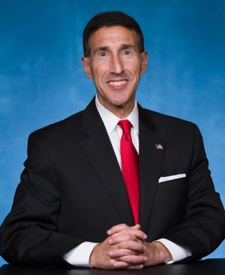
See how David Kustoff actually votes — against your values.
DeepSyte scores David Kustoff's record on the issues you care about — not party, not press releases. Take the 2-minute values quiz to see your personal alignment.
Sign in and take the values quiz to see how David Kustoff's votes line up with your views.
Prediction track record
How often we called David Kustoff's passage votes correctly, from their stated positions on each bill's tagged topics. Excludes “unclear” calls and abstentions.
A joint resolution to direct the removal of United States Armed Forces from hostilities within or against the Islamic Republic of Iran that have not been authorized by Congress.
A joint resolution to direct the removal of United States Armed Forces from hostilities within or against the Islamic Republic of Iran that have not been authorized by Congress.
No paired statements and votes yet for David Kustoff
We haven't yet found statement/vote pairs on the same topic for David Kustoff. This usually means either the rep hasn't taken public positions on bills that have come to a passage vote, or those bills haven't been tagged yet. The checker runs as new press releases and votes come in.
Pro analysis
AI rep analysis — Pro
Get an AI-narrated read on David Kustoff's full voting record against your stated values — aligned themes, conflicts, notable votes, and what to watch for.
We haven't extracted campaign positions for David Kustoff yet. Once their campaign website or position pages are processed, this card will track what they said vs how they voted.
Crossing the aisle
Passage votes where David Kustoff broke ranks with ≥75% of Republicans. Threshold catches substantively partisan splits; unanimous-ish or close votes are excluded.
3
Cross-aisle votes
118-hr-3012·Nov 20, 2024·81% of R voted YES
North Korean Human Rights Reauthorization Act of 2023
Congressman David Kustoff Introduces the Small Business Tax Cut Act to Support Main Street
Position: Congressman Kustoff and cosponsors introduced legislation to expand the Section 199A qualified business income deduction from 20 percent to 23 percent, reducing taxes for small businesses, farmers, and independent professionals.
WASHINGTON – Congressman David Kustoff (TN-08) introduced the Small Business Tax Cut Act (H.R. 8415). This legislation lowers taxes for millions of small businesses, farmers, and independent professionals by expanding the qualified business income deduction, also known as Section 199A. Reps. Greg Steube (FL-17), Claudia Tenney (NY-24), Mike Carey (OH-15), Carol Miller (WV-1), Michelle Fischbach (MN-07), and Blake Moore (UT-01) are original cosponsors.
“The Small Business Tax Cut Act sends a clear signal that Congress is serious about keeping Main Street competitive,” said Congressman David Kustoff. “Small businesses and family farms are central to West Tennessee's economy. By expanding the 199A deduction to 23 percent, we are giving local business owners the flexibility to hire more workers and invest in their operations.”
“I am proud to cosponsor the Small Business Tax Cut Act, which raises the section 199A deduction to 23 percent. By increasing the deduction, this bill directly supports small businesses and family farms in Western Minnesota by helping them secure the funds they need to hire more workers, increase wages, and upgrade their equipment. The Small Business Tax Cut helps keep our rural economies strong, so local employers can put their earnings back into their businesses and communities,” said Congresswoman Michelle Fischbach.
“West Virginia is built on the hard work of small businesses, manufacturers, and independent professionals who form the backbone of our communities. This is why this bill is so important. It keeps the focus on Main Street and ensures that our local job creators are not left behind. By strengthening and modernizing the small business deduction, this legislation gives entrepreneurs greater certainty and the ability to reinvest in their businesses so they can continue to serve their customers” said Congresswoman Carol Miller.
“Small businesses are the backbone of our economy, and the 199A Qualified Business Income Deduction has been one of the most successful tax policies to support them. I’m excited to introduce the Small Business Tax Cut Act to increase the deduction from 20% to 23% to allow Utah’s small businesses, farmers, and manufacturers to reinvest more of their income into their business. This will support new jobs and keep Utah’s economy thriving,” said Congressman Blake Moore.
“Upstate New York’s economy runs through Main Street,” said Congresswoman Claudia Tenney.“The Small Business Tax Cut Act builds on the success of the 199A deduction by allowing small businesses to keep more of what they earn, invest in their workers, and plan for the future with certainty. By strengthening and expanding this deduction, we are giving Main Street businesses, family farms, and local employers the tools they need to grow, compete, and continue driving economic growth across Upstate New York and the nation.”
The Small Business Tax Cut Act includes reforms to enhance the QBI deduction and expand eligibility to more small businesses:
Raises the pass-through deduction rate from 20 to 23 percent so sole proprietors, partnerships, S-corporations, farms, and family-owned businesses can keep more of what they earn to reinvest in operations;
Modernizes the income thresholds and phaseouts to create a smoother, more predictable structure as businesses grow, replacing the sharp “benefit cliff” many face under current law;
Fixes the treatment of “specified service trades or businesses” (SSTBs)—including professions such as doctors, accountants, and consultants—so more local professionals can continue to benefit from the deduction as income rises;
Extends the deduction to qualifying interest dividends from business development companies (BDCs), which specialize in providing growth capital to small and midsize businesses that cannot access public markets or large-bank financing;
Updates the inflation rules, including moving the base year from 2018 to 2025, so the small business deduction keeps pace with today’s costs.
More than 90 percent of U.S. businesses are structured as pass-through entities, making the Section 199A deduction a central component of tax relief for Main Street employers. The bill has earned support from small business and agriculture leaders:
“SBE Council is pleased to endorse the ‘Small Business Tax Cut Act,’” said Karen Kerrigan, President and CEO of the Small Business & Entrepreneurship Council. “Small business owners continue to face various cost and competitive pressures. In SBE Council’s most recent ‘Check Up’ survey, 61% of small business owners reported positive cash-flow effects in 2025 from the ‘Working Families Tax Cuts Act,’ with the 20% small business deduction and lower personal tax rates cited as the most beneficial provisions contributing to improved financial performance. Strengthening the deduction will provide vital capital to help them navigate such pressures, and continue to invest and grow.”
“Since 2017, the Small Business Tax Deduction has been vital for small businesses to remain competitive and grow their businesses,” said Dylan Rosnick, Principal of Federal Government Relations at the National Federation of Independent Business. “Congress saw these benefits and made the 20% Small Business Tax Deduction permanent through the Working Families Tax Cuts. Rep. Kustoff’s Small Business Tax Cut Act builds on this success and would provide 9 in 10 small businesses with tax cuts. The legislation would also expand the Small Business Tax Deduction to small businesses who are prevented from utilizing the deduction.”
“Tennessee Farm Bureau would like to thank Congressman Kustoff for introducing the Small Business Tax Cut Act,” said Kevin Hensley, Director of Public Policy for the Tennessee Farm Bureau Federation. “Increasing the qualified business income (QBI) deduction would allow Tennessee farmers to keep more of their hard-earned income and invest in their operations.”
“On behalf of the S Corporation Association, I write to express our strong support for the Small Business Tax Cut Act,” said Brian Reardon, President of the S Corporation Association. “Pass-through businesses are the backbone of the American economy and S corporations are the backbone of the pass-through community. Raising the deduction to 23 percent would improve competitiveness for Main Street businesses by narrowing the effective tax-rate gap with larger C corporations. It would increase the after-tax cash flow of these businesses, allowing greater reinvestment in hiring, capital improvements, and business expansion.”
“The National Association of Home Builders commends Rep. Kustoff for introducing the Small Business Tax Cuts Act, legislation that would ease the tax burden for small businesses and many home building firms by increasing the Section 199A qualified business income deduction to 23 percent,” said Bill
Owens, Chairman of the National Association of Home Builders. “This measure will help address the nation’s housing affordability crisis by enabling builders to invest more resources into multifamily rental construction, land development, and in building more single-family homes.”
“The Mortgage Bankers Association supports the Small Business Tax Cut Act, legislation that provides meaningful tax relief to America’s small businesses, including independent mortgage lenders, community banks, and mortgage brokers,” said Bill Killmer, SVP of Legislative and Political Affairs at the Mortgage Bankers Association. “By strengthening the Section 199A deduction, this bill helps ensure small businesses continue to invest in their employees, technology, and local communities. At a time when housing affordability and access to credit remain critical challenges, this targeted tax relief will enhance the stability and competitiveness of small and mid-sized mortgage businesses that serve borrowers in every market.”
Rep. Kustoff continues to focus on policies that support small businesses and strengthen domestic production. He will continue working to advance these provisions as Congress moves into the next round of reconciliation.
These provisions were included in the House-passed version of the One Big Beautiful Bill and remain part of ongoing efforts to strengthen the small business deduction.
Read the full bill text here.
###
Congressman David Kustoff Introduces Bipartisan Save Struggling Hospitals Act
Position: Congressman Kustoff and Congresswoman Sewell support legislation to reform Medicare payment formulas to better account for cost pressures in rural and lower-wage hospitals, including permanent restoration of wage index adjustments to help struggling hospitals remain financially viable.
WASHINGTON — Congressman David Kustoff (R-TN) and Congresswoman Terri Sewell (D-AL) introduced the bipartisan Save Struggling Hospitals Act, legislation to fix Medicare payment formulas that do not account for the cost pressures facing hospitals in rural and lower-wage areas. Senator Marsha Blackburn (R-TN) and Senator Mark Warner (D-VA) are leading companion legislation in the Senate.
“Access to health care should not depend on a person’s ZIP code,” said Congressman Kustoff. “Many rural hospitals are held back by outdated payment policies that fail to account for the challenges they face. I am proud to introduce this legislation to support these hospitals so they can keep their doors open and continue serving patients who depend on them every day.”
“Alabama has endured some of the most devastating hospital closures in the nation. Each one leaves families traveling farther for care, mothers delivering babies without nearby maternity units, and seniors losing access to the doctors they’ve trusted for decades,” said Rep. Sewell. “The introduction of the Save Struggling Hospitals Act could not come at a more critical moment. By strengthening the financial foundation of vulnerable hospitals, this bill offers a lifeline to communities that have consistently been asked to do more with less. It will help hospitals keep their doors open so that patients get th e care they need, regardless of their ZIP code.”
Background:
Hospitals in West Tennessee and across the country serve as a critical point of care, but many continue to face challenges due in part to wage index calculations that do not reflect local economic conditions. Recent data shows over 40 percent of rural hospitals are operating at a loss, with more than 400 at risk of closure, underscoring the need for targeted, responsible reforms.
Under current law, Medicare’s payment structure can leave hospitals in certain regions at a disadvantage, undercutting its intent to support access to care across all
communities. From fiscal years 2020 through 2024, Medicare included a policy to help address this imbalance, but it has since been removed, creating renewed uncertainty for hospitals that rely on it. The Save Struggling Hospitals Act permanently restores the wage index adjustment, helping ensure these hospitals are treated more fairly within the system.
Click here to read the full text of the bill.
Issues:Healthcare
Congressman David Kustoff Welcomes President Donald J. Trump to Memphis While Aboard Air Force One
Position: The congressman supports the Memphis Safe Task Force's collaborative approach to reducing violent crime and credits the President's leadership for crime reduction results in the region.
WASHINGTON – Today, Congressman David Kustoff (TN-08) traveled on Air Force One and welcomed President Donald Trump to Memphis. While in Memphis, President Trump met with law enforcement to discuss the Memphis Safe Task Force’s efforts to reduce violent crime in Shelby County. Congressman Kustoff issued the following statement:
“I am proud to welcome President Trump to Memphis as he highlights the results of the Memphis Safe Task Force. Thanks to the President’s leadership, Memphis is seeing a reduction in violent crime,” said Rep. Kustoff. “People in Memphis and Shelby County deserve to feel safe in their neighborhoods, and the Memphis Safe Task Force shows what is possible when federal, state, and local law enforcement work together. I will continue to lead and support efforts with the President to make Memphis safer.”
###
Congressman David Kustoff Statement on Operation Epic Fury in the Middle East
Position: Congressman Kustoff supports military action against Iran in response to the regime's nuclear program and alleged attacks on U.S. personnel and allies, and commends the President for taking defensive action.
WASHINGTON – Today, Congressman David Kustoff released the following statement in response to Operation Epic Fury and the escalating threat posed by the Iranian regime:
"For decades, the Iranian regime has led a sustained campaign of violence against the United States and our allies. It has armed proxy forces that have killed and wounded Americans, targeted our embassies and military installations, and threatened our homeland. As Iran continued to advance its nuclear program while driving conflict across the region, a response became unavoidable.
Operation Epic Fury makes clear that attacks on Americans and our allies will not go unanswered. I thank President Trump for taking decisive action to defend our national security. I stand with our armed forces as they confront a regime whose terrorism and nuclear ambitions endanger the United States and undermine global stability."
###
Congressman David Kustoff Awarded A+ Pro-Life Rating by Susan B. Anthony List Scorecard for Fourth Consecutive Year
Position: Representative Kustoff supports pro-life policies, including defunding Planned Parenthood and opposing federal funding for abortion services.
WASHINGTON – Today, Representative David Kustoff (TN-08) announced he earned an A+ rating from the Susan B. Anthony List National Pro-Life Scorecard for the fourth year in row. The A+ rating reflects Congressman Kustoff’s strong pro-life record, including votes, bill co-sponsorships, letters, and other legislative actions taken to protect unborn life.
“Protecting life, especially the most vulnerable, is one of my most important responsibilities in Congress,”said Rep. David Kustoff. “I have consistently supported pro-life policies, voted to defund Planned Parenthood, and stood with millions of Americans who believe every unborn child deserves protection. I am proud to earn this rating from the Susan B. Anthony List and will continue fighting for a pro-life agenda for West Tennessee.”
"Rep. Kustoff has voted consistently to protect the lives of the unborn and to stop forced taxpayer funding of abortion. This includes delivering the largest pro-life legislative victory in two decades by defunding Big Abortion businesses, like Planned Parenthood, of Medicaid dollars for one year through the reconciliation bill H.R.1. Rep. Kustoff also stood strong against attempts to further subsidize plans that cover elective abortion,"said Jamie Dangers, Director of Federal Affairs, SBA List.
###
Congressman Kustoff Introduces Legislation to Strip Tax-Exempt Status from Terrorist-Supporting Non-Profits
Position: Congressman Kustoff introduced legislation to revoke tax-exempt status from non-profit organizations that provide material support to designated terrorist groups, with due-process protections including notice, opportunity to contest, and judicial review.
WASHINGTON — Today, Congressman David Kustoff introduced legislation to revoke the tax-exempt status of any non-profit organization that provides material support to terrorist groups. Senator John Cornyn (TX) introduced the Senate companion bill.
“Our tax laws should never be used to subsidize or shield organizations that help terrorists,”said Rep. David Kustoff.“There should be zero ambiguity and tolerance for non-profits that fund terrorists. This legislation ensures that groups providing material support to terrorist organizations lose their tax-exempt status and are held accountable. We must use every tool available to cut off support for terrorism and protect our national security.”
“I’m introducing legislation to strip CAIR of its tax-exempt status because no organization who bankrolls terrorists should get a tax break, period,”said Senator Cornyn. “CAIR is a radical group of terrorist sympathizers with a long history of undermining American values and trying to unconstitutionally impose Sharia Law on Texas, which is why I stand behind Governor Abbott’s decision to designate it as a foreign terrorist organization. I also call on President Trump to do so at the federal level to ensure this breeding ground for anti-American hate is starved of funding and forced to close its doors once and for all.”
Background:
This bill amends the Internal Revenue Code to revoke the tax-exempt status of organizations that provide material support to terrorist groups. It defines a terrorist-supporting organization as one that provides more than a de minimis level of support to a designated terrorist organization within a three-year period.
The bill excludes lawful humanitarian aid approved by the Office of Foreign Assets Control or the State Department, with the concurrence of the Attorney General. It establishes a Treasury-led designation process that includes written notice, an opportunity to cure or contest the designation, administrative review through the IRS Independent Office of Appeals, and judicial review in federal district court, ensuring due process while protecting national security.
Read the full bill text here.
###
Issues:Foreign Affairs and Defense
Congressman Kustoff, Panetta Introduces Bill to Strengthen America’s Critical Mineral Supply Chain
Position: The release advocates for legislation establishing a Critical Minerals Security Alliance with allied nations to reduce U.S. dependence on China and Russia for critical minerals through coordinated tariffs, information sharing, and tariff exemptions for alliance members.
WASHINGTON — Today, Congressman David Kustoff (TN-08) and Congressman Jimmy Panetta (CA-19) introduced the Restoring American Mineral Security Act, legislation aimed to reduce U.S. dependence on adversaries like China and Russia for critical minerals. Senators Bill Hagerty (TN) and Catherine Cortez Masto (NV) introduced the companion bill in the Senate.
“The United States cannot afford to depend on foreign adversaries for critical minerals,” said Congressman Kustoff. “This legislation takes an important step to forge a strong partnership with allied countries, stop adversarial manipulation, and strengthen our U.S. national security. A reliable supply of critical minerals is essential for our economy, our military, and our long-term competitiveness.”
“If we don’t want to lose out to the CCP and Russia in the race to control critical minerals, we need to get serious about strengthening our supply chains,” said Congressman Panetta. “The RAMS Act confronts the underhanded tactics of our foreign adversaries head-on by creating a formal alliance to ensure we have a hand on the wheel when it comes to the critical minerals market. This is a commonsense step towards protecting our economic and national security interests.”
Background:
Foreign adversaries have been flooding global markets with artificially cheap, low-quality minerals, undercutting American producers and gaining leverage over critical supply chains. China currently controls much of the world’s mining and processing capacity, leaving the United States vulnerable to unfair trade practices, price manipulation, and strategic pressure.
The Restoring American Mineral Security Act addresses these challenges by establishing the Critical Minerals Security Alliance composed of trusted member nations. Members of the alliance would:
Agree to raise tariffs on minerals from adversaries and enforce fair trade rules.
Share information on mining and processing capacity.
Be exempt from certain U.S. tariffs on critical minerals and related goods.
Reinvest tariff revenue into American and allied mineral projects.
The bill also mandates a five-year review to determine whether the alliance should expand or make other adjustments, with final approval resting with Congress.
Read the full bill text of the Restoring American Mineral Security Act here.
###
Issues:Foreign Affairs and DefenseEnergy
Articles from a curated list of national outlets that mention David Kustoff.
No recent news mentions yet.
Source: GDELT 2.0 GKG, filtered to a curated list of national outlets. Inclusion is not endorsement; opinion pieces and reported news are mixed.
Recent stock activity
Periodic transaction reports filed under the STOCK Act — disclosed by the rep, sourced from public filings.
No disclosed trades on record.
Source: open-data mirrors of the Senate eFD and House Clerk financial-disclosure systems. Disclosure within 30 days of trade is required by law (45 for spouse/dependent trades).
Top PAC donors · 2026 cycle
Political action committees that gave the most to this rep's principal campaign committee this cycle. PAC giving is direct organizational support — industry, ideological, or leadership.
1.MAJORITY COMMITTEE PACLeadership5 contributionsLeadership PAC — likely affiliated with a member of Congress or caucus group; specific positions not inferable from the name.AI · low$30,000
2.REALTORS PACReal Estate5 contributionsReal-estate industry PAC — backs candidates supporting property-owner interests, mortgage lending, and residential and commercial real-estate development.AI$25,000
3.AUTOZONE, INC. COMMITTEE FOR A BETTER GOVERNMENT5 contributions$25,000
5.AMERICAN ISRAEL PUBLIC AFFAIRS COMMITTEE PAC (AIPAC)3 contributions$16,600
6.COTCO-ACSA PAC3 contributions$15,000
7.NATIONAL AUTOMOBILE DEALERS ASSOCIATION PAC (NADA PAC)3 contributions$15,000
8.EYE OF THE TIGER PACLeadership3 contributionsLeadership or single-issue PAC — specific positions and affiliated member of Congress not inferable from the name.AI · low$15,000
10.COUNCIL OF INSURANCE AGENTS & BROKERS PACFinance1 contributionInsurance-industry trade association PAC — backs candidates supporting favorable regulatory treatment and business-friendly insurance policy.AI$10,000
Source: OpenFEC (api.open.fec.gov) Schedule A receipts where contributor type is “committee.” Aggregated by contributing committee. Self-transfers from joint-fundraising / victory committees are excluded.
Top individual contributors · 2026 cycle
Itemized individual contributions over $200 to this rep's campaign committee, aggregated by donor employer. PAC giving is shown above; this section is people, not organizations.
1.BLACKSTONE$28,000
2.APOLLO GLOBAL MANAGEMENT$19,500
3.ADVANCE FINANCIAL$14,000
4.BASKIN TRUCK PARTS, LLC$14,000
5.THE SWAG$14,000
6.APOLLO$11,000
7.TODD STRATEGY GROUP$10,750
8.FOGELMAN MANAGEMENT GROUP$10,000
9.LEWIS THOMASON$9,000
10.ORGILL, INC.$8,000
Source: OpenFEC Schedule A receipts where contributor type is “individual,” aggregated by the donor's self-reported employer. This is a geographic / industry correlation, not a corporate endorsement.