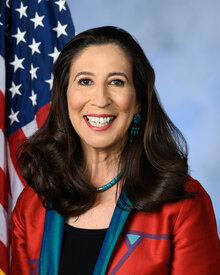
See how Teresa Leger Fernandez's votes line up with your values.
DeepSyte scores Teresa Leger Fernandez's record on the issues you care about — not party, not press releases. Take the 2-minute values quiz to see your personal alignment.
Sign in and take the values quiz to see how Teresa Leger Fernandez's votes line up with your views.
Prediction track record
How often we called Teresa Leger Fernandez's passage votes correctly, from their stated positions on each bill's tagged topics. Excludes “unclear” calls and abstentions.
To prohibit the disclosure of records by the Secretary of Housing and Urban Development of individuals for the purposes of immigration enforcement, and for other purposes.
To amend the Internal Revenue Code of 1986 to temporarily suspend certain fuel excise taxes for fuel separated during periods in which the national average price of gasoline exceeds $3.99 per gallon, and to prohibit certain credits or deductions for oil and gas companies during such periods.
No paired statements and votes yet for Teresa Leger Fernandez
We haven't yet found statement/vote pairs on the same topic for Teresa Leger Fernandez. This usually means either the rep hasn't taken public positions on bills that have come to a passage vote, or those bills haven't been tagged yet. The checker runs as new press releases and votes come in.
Pro analysis
AI rep analysis — Pro
Get an AI-narrated read on Teresa Leger Fernandez's full voting record against your stated values — aligned themes, conflicts, notable votes, and what to watch for.
We haven't extracted campaign positions for Teresa Leger Fernandez yet. Once their campaign website or position pages are processed, this card will track what they said vs how they voted.
Crossing the aisle
Passage votes where Teresa Leger Fernandez broke ranks with ≥75% of Democrats. Threshold catches substantively partisan splits; unanimous-ish or close votes are excluded.
Leger Fernández Introduces Bill to Require Mining Companies to Pay Americans Their Fair Share in Royalties, Prohibit Adversaries Mining Federal Hardrock Minerals, and Invest in Domestic Critical Mineral Processing
Position: Introduces legislation to impose a royalty on federal hardrock mineral extraction, direct revenues to a reinvestment fund and domestic critical mineral processing, and prohibit foreign adversaries from mining federal hardrock minerals.
The legislation was announced with a
video
filmed in a proposed uranium mining site in Canjilon, NM.
SANTA FE, NM — Congresswoman Teresa Leger Fernández (NM-03) introduced the American Minerals Royalty and Investment Act, landmark legislation to require companies extracting publicly owned hardrock minerals to pay a royalty and reinvest those revenues in American communities and domestic critical mineral processing.
The legislation would establish a royalty on covered federal hardrock minerals and create a Hardrock Mineral Reinvestment Fund to distribute the revenues. It would also establish a Department of the Interior financial assistance program to help domestic entities build, expand, or modernize critical mineral processing facilities and equipment in the United States.
For over 150 years, the General Mining Act of 1872 has allowed corporations to mine publicly owned hardrock minerals like gold and silver without paying a royalty. Meanwhile, industries that extract other federal minerals like oil, natural gas, and coal have paid royalties for over 100 years, returning billions of dollars to American communities. Even foreign-owned corporations can set up shell companies to mine critical minerals for free, then ship them to our adversaries overseas. While mining corporations profit from our natural resources, American taxpayers are too often stuck with the cleanup costs. Nearly 90,000 abandoned hardrock mine features on federal lands still pose health or environmental risks.
“Since 1872, mining companies have been taking gold, silver, and other valuable minerals from our public lands without paying Americans a dime in royalties. It’s time the American people got their fair share,” said Congresswoman Leger Fernández. “Even Secretary Burgum agrees with me that foreign adversaries shouldn’t be mining our critical minerals. Why should China or Russia get our minerals—much less for free? My bill would stop adversaries from mining and use royalty revenues to build domestic processing facilities, invest in American workers, and clean up the abandoned mines left behind and invest in American mineral production. We should use America’s mineral wealth to build America’s mineral future. That should be bipartisan.”
Original cosponsors include Jared Huffman, Ranking Member of the House Natural Resources Committee and Representatives Kathy Castor, Melanie Stansbury, Sylvia Garcia, Jasmine Crockett, and Eleanor Holmes Norton.
The American Minerals Royalty and Investment Act would:
Leger Fernández Advances $4.5 Million for Eastern New Mexico Projects, Building on $458 Million Already Secured for the Region
Position: The release announces that $4.5 million in federal Fiscal Year 2027 appropriations for five Eastern New Mexico projects has advanced through the House Appropriations Committee, covering children's mental health care, drinking water infrastructure, public safety, and a community health clinic renovation.
SANTA FE, NM — Congresswoman Teresa Leger Fernández (NM-03) announced that $4,516,436 in federal funding for five critical projects in Eastern New Mexico has passed the House Appropriations Committee as part of the Fiscal Year 2027 appropriations process.
The funding would help expand mental health care for children in Clovis, improve drinking water infrastructure in Hagerman and Texico, strengthen public safety in Hobbs, and renovate a community health clinic in Roswell.
The investments build on more than $458 million in federal funding Leger Fernández has already secured for Eastern New Mexico since taking office, supporting water infrastructure, health care, public safety, broadband expansion, and other critical community needs.
The two projects advancing through the House Appropriations Committee are:
Leger Fernández Introduces Bill to Hold ICE Accountable for Arrests and Detentions of U.S. Citizens
Position: Introduces legislation to allow U.S. citizens wrongfully arrested or detained by immigration enforcement officers to sue officers and the government in federal court, removing qualified and sovereign immunity defenses, with a five-year filing window and minimum damages of $500,000 plus $100,000 per additional day of detention.
WASHINGTON, D.C. — Today, Congresswoman Teresa Leger Fernández (NM-03) introduced the Justice for Citizens Wrongfully Detained by ICE Act to make sure American citizens wrongfully arrested or detained by immigration enforcement officers can fight back in court. Her legislation would prevent individual officers and the government from claiming qualified or sovereign immunity to avoid accountability and give individuals five years to sue. It would also require courts to award successful plaintiffs $500,000, plus $100,000 for each additional day of detention after the first day.
“ICE does not get to trample on your rights and walk away without consequence. They cannot hide behind their masks and act like they have a license to break the Constitution,” said Congresswoman Leger Fernández. “Our government has handcuffed, hauled away, and locked up more than 500 American citizens. Citizens have been deported — including Brian Garcia Morales, who spent four months trying to get home. ICE is proving that nobody is safe from their handcuffs — and that is the purpose, to terrorize our Latino and immigrant communities. My bill is about justice for those Americans and accountability for the officers and a government who violate Americans’ rights.”
A ProPublica investigation documented 506 U.S. citizens detained by immigration agents since the start of the second Trump administration, including children and Americans detained while recording enforcement operations. The reporting underscores the urgent need for a clear path to accountability when officers violate citizens’ rights.
Leger Fernández’s legislation would allow U.S. citizens arrested or detained without a warrant or without probable cause to sue the officers involved and the United States in federal court. It would remove immunity defenses that can shield officers and the government from liability under current law.
Specifically, the legislation would:
Leger Fernández, Scott, Grijalva, Dean Introduce Bill to Lower Cost of Community College
Position: The release announces the introduction of the America's College Promise Act of 2026, which would waive tuition and fees at community colleges and two-year Tribal Colleges and Universities for eligible students, and expands funding for HBCUs, TCUs, MSIs, and trade schools. Sponsors state that the bill would reduce student debt and increase access to postsecondary education.
WASHINGTON, D.C. – Representatives Teresa Leger Fernández (D-NM-03), Robert C. “Bobby” Scott (D-VA-03), Representative Adelita Grijalva (D-AZ-07), Madeleine Dean (D-PA-04), and Senator Tammy Baldwin (D-WI) introduced the America’s College Promise Act of 2026. The bill would make community college and two-year Tribal Colleges and Universities more accessible by waiving tuition fees for eligible students.
“In New Mexico, we know free community college can unlock the doors to a brighter future. The America’s College Promise Act builds on New Mexico’s example by making sure students across the country can attend community college without the burden of tuition and fees,” said Representative Leger Fernández. “Our bill will provide funds for services students need to earn their degrees and reduce the financial burden for low-income students to attend TCUs, HBCUs, and MSIs. From recent high school graduates to experienced workers who want to go back to school — every student deserves the opportunity to keep learning without the fear of drowning in debt.”
“Community colleges play a unique and vital role in providing students access to a quality postsecondary degree. Regrettably, the chronic underfunding of community colleges is jeopardizing their ability to support their students and communities,” said House Education and Workforce Committee Ranking Member Scott (D-VA-03). “The America’s College Promise Act is a major investment in expanding opportunities for students and rebuilding a stronger economy.”
“Students in Southern Arizona and throughout the country should not have to take on tens of thousands of dollars of debt to get a college education,” said Representative Grijalva. “The America’s College Promise Act will provide two years of free in-state tuition and fees for students enrolled in community and technical college programs. Whether they’re just starting out or returning to the classroom later in life, every student deserves the opportunity to learn new skills and pursue higher education. By expanding access to education and workforce training, we’re strengthening the workforce that businesses and local economies depend on.”
“As a professor, it was a privilege to witness students claim their education and seize their futures — yet the real fear and burden of immense student loan debt often deters young adults and returning students from expanding their learning,” said Representative Dean. “The America’s College Promise Act provides tuition-free community college courses and expands funding for HBCUs and trade schools, making the path to higher education and career readiness available to more Americans and future generations.”
“Every Wisconsinite deserves the opportunity to get the education and skills they need to land a good-paying job and build a better life, no matter where they come from or how much money their family makes,” said Senator Baldwin. “But for too many working families, the rising cost of higher education leaves students saddled with debt for years to come, or it is simply out of reach. That’s why I am proud to work with my colleagues to remove barriers and lower the cost of community college, so more Wisconsinites have the opportunity to compete, succeed, and live a good middle-class life.”
The America’s College Promise Act of 2026 will make the skills and credentials necessary to succeed in the workforce more accessible to all students by creating a new federal-state partnership to provide two years of tuition-free community college.
Specifically, the America’s College Promise Act of 2026:
Creates a partnership between the federal government and states to waive tuition and fees for two years of community and technical college programs for eligible students, while promoting key reforms to accelerate student success;
Creates a sliding scale for federal share beginning at 100 percent for the first year and ending at 80 percent for the fifth and subsequent years;
Ensures that programs offer academic credits that are transferable to four-year institutions in their state, or occupational training that leads to recognized credentials;
Maintains and encourages state funding for higher education;
Establishes a student success fund to improve enrollment, retention, transfer, or completion rates and labor market outcomes for underserved student populations, including students of color and low-income and first-generation college students, who attend community and technical colleges at disproportionate rates;
Waives two years of tuition and fees for eligible students at tribal colleges and universities; and
Establishes a new grant program to provide pathways to success at historically black colleges and universities and minority-serving institutions by covering a significant portion of tuition and fees for the first two years of attendance for low-income students.
To read the bill text for the America’s College Promise Act of 2026, click here.
To read the fact sheet for America’s College Promise Act of 2026, click here.
To read the section-by-section for America’s College Promise Act of 2026, click here.
Leger Fernández Calls for Pause on Data Center Development, Unveils “No Blank Checks for Data Centers” Principles
Position: Calls for a moratorium on new data center development in New Mexico until companies meet standards on water use, electricity costs, land, clean energy, local jobs, and community support. Argues Congress should regulate data centers under these principles rather than allow self-regulation.
SANTA FE, NM — Today, Congresswoman Teresa Leger Fernández (NM-03) unveiled her No Blank Checks for Data Centers Principles, a set of clear standards to protect New Mexico families, water, land, and local communities as companies seek to build massive data centers across the state. The Congresswoman called for a moratorium on new data center development in New Mexico until companies meet the principles she laid out.
“The role of government is to protect us from greedy corporations,” said Congresswoman Leger Fernández. "Data centers want our water, our land, and our power. Communities may want the jobs they could bring to New Mexico. But we will not give them a blank check. I will only support data centers that pay their own way, protect our precious water, create good-paying union jobs, use clean energy, and earn the support of the communities where they want to build. Data centers must work for New Mexico, not the other way around. Communities must know how much water and electricity these projects will use, who will pay for them, and what residents will receive in return. If a project cannot answer those questions, it should not move forward. Congress must act to regulate data centers with these principles in mind. We cannot let AI and data centers regulate themselves.”
The Congresswoman’s platform requires data centers to meet six principles:
No Blank Checks for Data Centers Principles
Leger Fernández Tribal Water Settlement Bill Passes House Natural Resources Committee
Position: The release supports H.R. 4598, a technical corrections bill that would authorize additional funding to cover interest that Tribal water settlement funds would have earned, for the Navajo Nation, Taos Pueblo, and several New Mexico Pueblos, and urges House passage.
WATCH HEARING COMMENTS BY REP. LEGER FERNÁNDEZ
WASHINGTON — Today, the House Committee on Natural Resources unanimously advanced Congresswoman Teresa Leger Fernández’s (NM-03) H.R. 4598, Technical Corrections to the Northwestern New Mexico Rural Water Projects Act, Taos Pueblo Indian Water Rights Settlement Act, and Aamodt Litigation Settlement Act.
The amended legislation would authorize additional funding to help the Navajo Nation, Taos Pueblo, and the Pueblos of Nambé, Pojoaque, San Ildefonso, and Tesuque develop, operate, and maintain water infrastructure. The funding covers interest the Tribes’ water settlement funds should have earned when the settlements first became law.
“Agua es vida and water is key to Tribal sovereignty,” said Congresswoman Leger Fernández. “These Tribal nations agreed to settle their senior water rights, and the federal government has a responsibility to keep its word. Today’s bipartisan committee action moves us closer to helping them recover the interest their settlement funds should have earned and use it to build the water infrastructure their communities need. I am grateful to the Tribal leaders and communities who partnered with us on this legislation. The Senate has already acted. Now, let’s pass this bill through the House and send it to the President’s desk.”
Indian water rights settlements commonly allow the Secretary of the Interior to invest trust funds after the funds are appropriated. This provides Tribes with additional resources to support their water infrastructure.
However, some Indian water rights settlements enacted in 2009 and 2010 prohibited the Secretary from investing the trust funds prior to the respective settlement’s enforcement date. That included the Northwestern New Mexico Rural Water Projects Act (Navajo-Gallup Water Supply Project/Navajo Nation Water Rights), the Taos Pueblo Indian Water Rights Settlement Act, and the Aamodt Litigation Settlement Act.
As a result, the affected Tribes lost out on interest that was or could have been earned from investing the trust funds between the date they were appropriated and the settlement enforcement date. This legislation provides a technical fix so that the affected Tribes can receive that interest.
The House Natural Resources Committee considered H.R. 4598 during its September 15 markup. The Senate passed the companion legislation, S. 640, by unanimous consent on December 11, 2025. H.R. 4598 now awaits consideration by the full House.
Leger Fernández Introduces First-Of-Its-Kind Bill to Establish Financial Relief for Epstein Survivors & Survivors of Sexual Violence
Position: The release supports creating a federal restitution fund in the judicial branch for survivors of sexual violence whose Crime Victims' Rights Act protections were violated by the federal government, including survivors of Jeffrey Epstein and Ghislaine Maxwell.
Bill Text | Bill Summary | Press Conference | Photos
WASHINGTON – Today, Congresswomen Teresa Leger Fernández (D-NM), alongside Congresswoman Ayanna Pressley (MA-07), and Deborah Ross (D-NC) introduced the Survivors’ Rights Restitution Act, first-of-its-kind legislation that would create a restitution fund in the judicial branch for survivors of sexual violence whose rights were violated by the federal government, including all survivors of abuse by Jeffrey Epstein and Ghislaine Maxwell. Congresswoman Leger Fernández announced this historic proposal alongside survivors and survivors’ rights advocates at a press conference on Capitol Hill.
The Survivors’ Rights Restitution Act would create a historic investment to support survivors of sexual violence and hold the federal government accountable when it fails to protect survivors’ rights under the Crime Victims’ Rights Act. The estimated lifetime cost of rape is $122,461 per victim. This legislation would address the burden survivors carry, including significant long-term economic and non-economic impacts of sexual violence, from lost income and medical costs to housing instability and enduring trauma.
“Survivors should never have to pay the price when our government fails to protect them,” said Congresswoman Teresa Leger Fernández. “For too long, survivors of Jeffrey Epstein and Ghislaine Maxwell’s horrific abuse were denied justice while powerful people were protected. That failure has real costs: lost wages, medical bills, housing instability, and trauma that can last a lifetime. We cannot undo the harm, but we can make sure survivors are not left to carry the burden alone. The Survivors’ Rights Restitution Act gives survivors that path to restitution.”
“The financial, physical, and emotional trauma that survivors of sexual violence carry is a lifetime sentence,” said Congresswoman Pressley. “By no choice of their own, survivors can incur debilitating costs due to medical needs, lost income, housing instability, and mental health support. Far too often, the federal government has been complicit and failed to meet its moral and legal obligation to fight for accountability and relieve this economic burden—our bill would change that by holding our government, abusers, and their co-conspirators to account and helping our survivors get on a pathway to healing. The ignored burden that survivors carry is a stain in our legal system and must be addressed immediately.”
“Far too often, we have seen our government fail survivors of sexual violence who have risked everything to come forward,” said Congresswoman Deborah Ross. “Trauma is often just one part of the burden survivors carry, and it is often compounded by lost income, housing insecurity, and economic hardship. We have seen this play out in the administration’s treatment of survivors of Jeffrey Epstein and Ghislaine Maxwell’s abuse, who have been dismissed and demonized. Now more than ever, we must ensure all survivors receive the justice they deserve. I am proud to introduce this bill to establish a first-of-its-kind economic relief fund for survivors of sexual violence.”
According to the Bureau of Justice Statistics, there are tens of thousands of rape and sexual assault victimizations annually, amounting to 23 violent victimizations for every 1,000 people in 2024. Despite its prevalence, approximately two out of three sexual assaults go unreported.
When a survivor takes action to report the crime, the Crime Victims’ Rights Act grants them specific protections, including the right to timely and accurate notice of any release of the accused. However, the Jeffrey Epstein sweetheart deal is proof that these rights are not always enforced. Furthermore, there is no relief for survivors when their victims’ rights are violated.
To support survivors of sexual violence and empower survivors who choose to come forward, the Survivors’ Rights Restitution Act would:
Establish the Survivors’ Rights Restitution Program to provide compensation to eligible victims for harm and losses.
Create an independent Office of Special Adjudicators for Survivors Restitution within the U.S. Court of Federal Claims to review petitions and determine awards through a streamlined, non-adversarial, and trauma-informed process.
Establish the Survivors Rights Restitution Fund within the Department of the Treasury to finance awards through federal forfeiture proceeds tied to trafficking and sexual exploitation offenses, voluntary contributions, and authorized appropriations.
The bill is cosponsored by: Reps. Yassamin Ansari, Becca Balint, Joyce Beatty, Wesley Bell, Brendan Boyle, Salud Carbajal, André Carson, Yvette Clarke, Lou Correa, Jim Costa, Madeleine Dean, Maxine Dexter, Debbie Dingell, Maxwell Frost, Robert Garcia, Jesús “Chuy” Garcia, Sylvia Garcia, Adelita Grijalva, Hank Johnson, Sydney Kamlager-Dove, Summer Lee, Stephen Lynch, Sarah McBride, Jennifer McClellan, LaMonica McIver, Christian Menefee, Kweisi Mfume, Gwen Moore, Eleanor Holmes Norton, Chellie Pingree, Mike Quigley, Delia Ramirez, Emily Randall, Andrea Salinas, Lateefah Simon, Melanie Stansbury, Shri Thanedar, Rashida Tlaib, Paul Tonko, James Walkinshaw, Debbie Wasserman Schultz, and Frederica Wilson.
This bill is endorsed by: Democratic Women’s Caucus; World Without Exploitation; me too. International; Women’s HQ; UltraViolet Action; National Alliance to End Sexual Violence; Safe Exit Initiative; RIA, Inc.; National Alliance to End Sexual Violence; Sexual Violence Prevention Association (SVPA); My Life My Choice; National Network to End Domestic Violence; National Women's Law Center Action Fund; Boston Area Rape Crisis Center; Survivor Justice Network; Equal Rights Advocates; Sexual Violence Prevention Association (SVPA); Victim Rights Law Center; Them Apples Music; Justice for Migrant Women; Esperanza United; National Women's Political Caucus; Feminist Majority; Legal Momentum, the Women's Legal Defense & Education Fund; South Asian SOAR.
“Sex trafficking survivors are often asked to take enormous risks to report their abuse and cooperate with the justice system, only to find that the same institutions demanding their trust can fail to protect their rights,” said Becca Zipkin, Vice President of Policy and Programs, World Without Exploitation. “Survivors of Jeffrey Epstein experienced that failure in one of the most public cases imaginable, but they are far from alone. At World Without Exploitation, we work alongside survivors who know that justice must include changing the systems that allow exploitation to flourish and holding institutions accountable when they fail the people they are supposed to protect. The Survivors’ Rights Restitution Act is an important step toward that goal by giving survivors a meaningful path to redress when the federal government violates their rights. It also recognizes something survivors have long told us — economic justice is survivor justice.”
“As a survivor who has worked alongside thousands of survivors I’m clear that the full story of what it actually takes to survive is not often told. Alongside the mental, physical and emotional toll of the violence that we endured is the financial burden of untangling the web that the trauma creates to try and find our way back to ourselves - there is an actual cost to that work and it’s rare that we have support footing that bill. This country and our government has to ask itself what does it owe survivors? Rep. Pressley is doing her part to begin answering that question,” said Tarana Burke, Co-Founder and Chief Vision Officer, Me Too
“Survivors have been paying the price for their assault for far too long,” said Liz Speakman, Executive Director, Boston Area Rape Crisis Center. “We know that money is not what heals trauma but it goes a long way to providing the space, time and resources to make the path a little easier.”
“Survivors should not have to spend decades paying for crimes committed against us. When institutions fail us, that failure becomes generational trauma. We deserve privacy, dignity, and restitution—not someday, but now. Congresswoman Pressley’s bill gives survivors a path forward,” said Dani Bensky, survivor and advocate.
"As a survivor of Jeffrey Epstein's crimes, I am heartened by the introduction of the Survivors’ Rights Restitution Act of 2026. This vital legislation not only acknowledges our trauma but also provides a pathway to justice with meaningful compensation. It's time for Congress to act swiftly, reinforcing that survivors deserve to be heard, believed, and supported in our healing journey,” said Lara Blume McGee, Survivor and CEO of Team Up World.
Text of the bill can be accessed here and a bill summary is available here. Video from the press conference can be accessed here, and photos can be accessed here.
Leger Fernández, N.M. Delegation Call on DOJ Inspector General to Expand Investigation into DEA Fentanyl Practices in New Mexico
Position: The New Mexico congressional delegation calls on the DOJ Office of Inspector General to expand its review of federal fentanyl investigations to include DEA practices before 2024, with a focus on New Mexico, including whether allowing fentanyl shipments to continue unseized contributed to overdose deaths.
NEW MEXICO – Today, U.S. Representatives Teresa Leger Fernández (D-N.M.), Melanie Stansbury (D-N.M.), Gabe Vasquez (D-N.M.), and U.S. Senators Ben Ray Luján (D-N.M.) and Martin Heinrich (D-N.M.) called on the U.S. Department of Justice (DOJ) Office of Inspector General (OIG) to expand its recently announced review of federal fentanyl investigations to examine Drug Enforcement Administration (DEA) practices dating back before 2024, with a specific focus on the DEA’s fentanyl practices in New Mexico.
The Delegation’s request follows whistleblower complaints alleging that DEA agents allowed large quantities of fentanyl to reach New Mexico communities instead of seizing the drugs. On August 17th, the DOJ OIG announced a review of federal fentanyl investigations, including cases where investigators allowed fentanyl shipments to continue rather than seizing them. In the letter, the lawmakers point to whistleblower allegations that raise concerns that DEA’s practice of allowing fentanyl to “walk” may extend further than the OIG’s current two-year review period. Additionally, the lawmakers call on the DOJ OIG to examine whether the DEA’s decisions led to increased overdose deaths throughout New Mexico.
“One of the whistleblowers claims that the DEA surveilled a drug trafficker ‘who made repeated deliveries of fentanyl from Phoenix to Albuquerque between 2022 and 2023.’ There is reason to suspect that the DEA’s policies of allowing fentanyl to ‘walk’ stretches back before 2023. For that reason, we believe the OIG should expand its scope of review.” wrote the lawmakers.
“The people of New Mexico deserve answers as to why the agency charged with seizing drugs instead allowed deadly pills to flood their streets. We ask that the DOJ OIG conduct a full and thorough investigation to bring some measure of accountability to actions carried out by DEA,” continued the lawmakers.
In July, the New Mexico Delegation demanded answers from U.S. Drug Enforcement Administration (DEA) Administrator Terrance Cole on why the DEA allowed large quantities of fentanyl to circulate unseized in New Mexico communities.
The full text of the letter is available here and below:
Dear Inspector General Berthiaume:
We write regarding the Department of Justice’s Office of Inspector General’s (DOJ OIG) August 17, 2026’s announcement that it would review “investigations involving the trafficking of substances containing fentanyl… when federal investigators have knowledge, specific information, or probable cause to believe that fentanyl will be transported or distributed to or from, or stored at, a specified identifiable location.” While we are pleased to see OIG initiate this investigation we ask that the Office expand the scope of its review to investigations before 2023 with a specific focus on investigations undertaken by the Drug Enforcement Agency (DEA) within New Mexico.
As you know, current and former DEA agents filed whistleblower complaints alleging that agents within the Agency allowed drug traffickers to deliver hundreds of thousands of fentanyl pills onto the streets of New Mexico. One of the whistleblowers claims that the DEA surveilled a drug trafficker “who made repeated deliveries of fentanyl from Phoenix to Albuquerque between 2022 and 2023.” There is reason to suspect that the DEA’s policies of allowing fentanyl to “walk” stretches back before 2023. For that reason, we believe the OIG should expand its scope of review.
Sadly, New Mexico remains a hotbed of fentanyl trafficking and overdose deaths. Federal data show that overdose deaths fell throughout the country in 2025, yet, in New Mexico deaths rose by 21 percent. This increase correlates with the time period during which the DEA’s allowed traffickers to flood the streets with deadly fentanyl pills. Thus, we ask that the OIG examine whether the DEA’s decisions led to increased overdose deaths throughout the state.
The people of New Mexico deserve answers as to why the agency charged with seizing drugs instead allowed deadly pills to flood their streets. We ask that the DOJ OIG conduct a full and thorough investigation to bring some measure of accountability to actions carried out by DEA. Thank you in advance for your consideration.
Leger Fernández Leads 18 Members Demanding Answers on Trump Administration’s Rush to Strip Chaco Canyon Protections
Position: The release opposes the Interior Department's proposal to revoke Public Land Order No. 7923, which established a mineral withdrawal around Chaco Canyon, and criticizes the consultation and public-comment process used for the proposal. It requests that the Interior Secretary answer questions about Tribal consultation and the environmental review.
WASHINGTON, DC — Congresswoman Teresa Leger Fernández (NM-03), Ranking Member of the House Natural Resources Subcommittee on Indian and Insular Affairs, and Congressman Jared Huffman (CA-02), Ranking Member of the House Natural Resources Committee led 18 members of Congress in demanding answers from Interior Secretary Doug Burgum about the Trump Administration’s rushed effort to revoke protections for lands surrounding Chaco Culture National Historical Park.
The Department of the Interior is proposing to revoke Public Land Order No. 7923, which established a 10-mile mineral withdrawal surrounding Chaco Canyon. Revoking the order would reopen these culturally significant public lands to oil and gas leasing and mining activities.
“Chaco Canyon is not just a historical site; it’s a living cultural landscape,” the lawmakers wrote. “The Department’s current fast-tracked efforts to overturn the withdrawal area do not respect the historical, cultural, and spiritual value of Chaco Canyon.”
“The Department’s rushed review undermined the Department’s trust responsibility to Tribal nations and the Tribal consultation process under Section 106 of the National Historic Preservation Act,” they continued.
The lawmakers’ letter raises serious concerns that the Department failed to fulfill its trust responsibility to Tribal nations and honor Burgum’s public commitment to meaningful consultation. During a June 2025 House Natural Resources Committee hearing, Burgum committed to Leger Fernández to send an official with decision-making authority to conduct individual, in-person consultations with every Tribe with an interest in Chaco Canyon. However, Interior’s own draft Environmental Assessment indicates that the Department moved forward before completing all requested consultations. Several Tribes received only “informational meetings,” while requests to meet with a decision-maker remained unmet.
The Department also provided only 21 days for public comment and held no public meetings before advancing its proposal. Despite that abbreviated process, the public submitted an estimated 300,000 comments.
By contrast, the existing protections were finalized in 2023 following 150 days of public comment, eight public meetings, and years of advocacy by Tribal nations. An archaeological study identified more than 4,730 cultural sites within the protected area.
The lawmakers are asking Burgum to disclose:
● How many Tribal consultations included an Interior official with decision-making authority;
● Why the Department failed to honor Tribal requests to meet with a decision-maker;
● Why Interior published its draft proposal before completing Tribal consultation;
● Whether all requested consultations will occur before the Department completes its review; and
● Why Interior conducted a limited Environmental Assessment instead of a more comprehensive Environmental Impact Statement.
The lawmakers requested answers by Friday, August 28.
The letter was signed by Representatives Teresa Leger Fernández, Jared Huffman, Melanie Stansbury, Gabe Vasquez, Sharice Davids, Betty McCollum, Eleanor Holmes Norton, Mark DeSaulnier, Val Hoyle, Donald Beyer Jr., Judy Chu, Dina Titus, Jesús “Chuy” García, Sylvia Garcia, Rashida Tlaib, Diana DeGette, Julia Brownley, and Raja Krishnamoorthi.
The full letter is available here.
On Fourth Anniversary of Hermit’s Peak/Calf Canyon Fire Containment, Leger Fernández Demands Answers on Toxic Metals in Fire Retardants
Position: Representative Leger Fernández and colleagues request that the GAO investigate the prevalence and potential effects of toxic metals in fire retardants used by the U.S. Forest Service and Department of the Interior, and call for accountability regarding contamination following the Hermit's Peak/Calf Canyon Fire.
SANTA FE, N.M. — Four years after the Hermit’s Peak/Calf Canyon Fire was finally contained, U.S. Representative Teresa Leger Fernández (D-N.M.) is demanding greater accountability for the federal government’s use of wildfire retardants that may contain toxic metals.
Leger Fernández and House Natural Resources Committee Ranking Member Jared Huffman (D-Calif.) led a letter asking the U.S. Government Accountability Office (GAO) to investigate the prevalence and potential effects of toxic metals in fire retardants used by the U.S. Forest Service and Department of the Interior. The letter was also signed by Representatives Judy Chu, Adelita Grijalva, Raja Krishnamoorthi, Pablo José Hernández, Lateefah Simon and Sara Jacobs.
“Four years ago, the flames finally stopped. But for the families of Mora and San Miguel counties, this disaster did not end when the smoke cleared,” said Congresswoman Leger Fernández. “It lives in contaminated wells, flood-scarred fields, empty foundations and the endless paperwork of survivors still waiting for FEMA to do its job. The federal government started this fire, and the federal government has a responsibility to answer every question about the harm it caused. We do not yet know whether fire retardants contributed to the heavy metals found in northern New Mexico’s groundwater. Our families should not have to wonder whether the water coming from their tap is safe to drink. Accountability means following the evidence, telling the truth and fixing what was broken.”
Federal agencies used 48.6 million gallons of fire retardant in wildfire operations in 2024 alone. One academic study estimated that aerial wildfire retardants released approximately 380,000 kilograms of toxic metals into the environment nationwide between 2009 and 2021.
Following the Hermit’s Peak/Calf Canyon Fire, testing found elevated levels of heavy metals in groundwater in parts of northern New Mexico. The lawmakers’ letter does not draw a conclusion about the source of that contamination. Instead, it asks GAO to determine whether fire retardants could pose risks to communities, watersheds and wildland firefighters.
Specifically, the lawmakers ask GAO to examine:
Source: GDELT 2.0 GKG, filtered to a curated list of national outlets. Inclusion is not endorsement; opinion pieces and reported news are mixed.
Recent stock activity
Periodic transaction reports filed under the STOCK Act — disclosed by the rep, sourced from public filings.
No disclosed trades on record.
Source: open-data mirrors of the Senate eFD and House Clerk financial-disclosure systems. Disclosure within 30 days of trade is required by law (45 for spouse/dependent trades).
Top PAC donors · 2026 cycle
Political action committees that gave the most to this rep's principal campaign committee this cycle. PAC giving is direct organizational support — industry, ideological, or leadership.
1.INTERNATIONAL BROTHERHOOD OF ELECTRICAL WORKERS (IBEW) 1245 POWER PAC2 contributions$10,000
2.AMERICAN CRYSTAL SUGAR COMPANY POLITICAL ACTION COMMITTEEAgriculture2 contributionsAgricultural processing PAC for American Crystal Sugar — backs candidates supporting farm subsidies, sugar price supports, and agricultural trade policies.AI$10,000
3.TURQUOISE PAC2 contributions$10,000
4.CHUGACH ALASKA CORPORATION PAC (CAC PAC)Business3 contributionsAlaska-based corporate PAC — likely backs candidates and policies supporting business operations and economic development in Alaska.AI · low$6,500
5.MACHINISTS NON PARTISAN POLITICAL LEAGUE OF THE INTERNATIONAL ASSOCIATION OF MACHINISTS & AEROSPACE WORKERSLabor1 contributionTrade-union PAC of the International Association of Machinists & Aerospace Workers — backs candidates supporting union organizing, prevailing wages, and aerospace manufacturing jobs.AI$5,000
6.CARPENTERS LEGISLATIVE IMPROVEMENT COMMITTEELabor1 contributionTrade-union PAC for the United Brotherhood of Carpenters and Joiners of America. Backs prevailing-wage protections, federal infrastructure funding, project labor agreements, and worker organizing rights.AI$5,000
7.INTERNATIONAL ASSOCIATION OF SHEET METAL, AIR, RAIL AND TRANSPORTATION WORKERS POLITICAL ACTION LEAGUELabor1 contributionTrade-union PAC for sheet metal, air, rail, and transportation workers — backs candidates supporting union organizing, prevailing wages, and infrastructure investment.AI$5,000
8.PAC TO THE FUTURELeadership1 contributionMember-of-Congress leadership PAC — specific affiliations and policy positions not inferable from the name.AI · low$5,000
9.MEDICARE FOR ALL PACIdeological1 contributionHealthcare advocacy PAC — supports candidates backing universal healthcare coverage and Medicare expansion policies.AI$5,000
10.LA BAMBA PAC1 contribution$5,000
Source: OpenFEC (api.open.fec.gov) Schedule A receipts where contributor type is “committee.” Aggregated by contributing committee. Self-transfers from joint-fundraising / victory committees are excluded.
Top individual contributors · 2026 cycle
Itemized individual contributions over $200 to this rep's campaign committee, aggregated by donor employer. PAC giving is shown above; this section is people, not organizations.
1.SELF$68,932
2.CONRON & WOODS$7,000
3.MASS GENERAL HOSPITAL$7,000
4.THE RING GROUP$7,000
5.ALSOP LOUIE PARTNERS$7,000
6.INTEGER HOLDINGS$7,000
7.THORNBURG INVESTMENT MANAGEMENT$7,000
8.FIVE & DIME GENERAL STORES$7,000
9.FEVRE RIVER PACKET CO$6,635
10.CALCULEX INC.$6,200
Source: OpenFEC Schedule A receipts where contributor type is “individual,” aggregated by the donor's self-reported employer. This is a geographic / industry correlation, not a corporate endorsement.