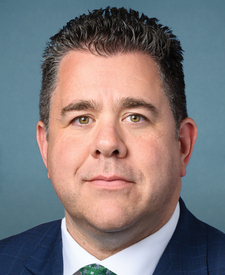
See how Nick LaLota actually votes — against your values.
DeepSyte scores Nick LaLota's record on the issues you care about — not party, not press releases. Take the 2-minute values quiz to see your personal alignment.
Sign in and take the values quiz to see how Nick LaLota's votes line up with your views.
Prediction track record
We haven't made any vote predictions for Nick LaLota yet. Predictions are generated for bills with tagged effects; they show up here as soon as the predict-votes job covers this rep's upcoming docket.
Consistency insights
No paired statements and votes yet for Nick LaLota
We haven't yet found statement/vote pairs on the same topic for Nick LaLota. This usually means either the rep hasn't taken public positions on bills that have come to a passage vote, or those bills haven't been tagged yet. The checker runs as new press releases and votes come in.
Pro analysis
AI rep analysis — Pro
Get an AI-narrated read on Nick LaLota's full voting record against your stated values — aligned themes, conflicts, notable votes, and what to watch for.
We haven't extracted campaign positions for Nick LaLota yet. Once their campaign website or position pages are processed, this card will track what they said vs how they voted.
Crossing the aisle
Passage votes where Nick LaLota broke ranks with ≥75% of Republicans. Threshold catches substantively partisan splits; unanimous-ish or close votes are excluded.
11
Cross-aisle votes
119-hres-1140·Jun 9, 2026·95% of R voted NO
Providing for consideration of the bill (H.R. 5408) to accelerate workplace time-to-contract under the National Labor Relations Act.
House Passes LaLota Co-Sponsored Bipartisan Bill to Protect Long Island Waters
Position: Rep. LaLota supports passage of the American Water Stewardship Act, which reauthorizes and strengthens the Long Island Sound Program and National Estuary Program to protect water quality and coastal restoration.
WASHINGTON, D.C. - Rep. Nick LaLota (R-NY-01), Co-Chair of the Long Island Sound Caucus, released the following statement after the House passed the American Water Stewardship Act, a bipartisan bill he cosponsors to reauthorize and strengthen the Long Island Sound Program and the National Estuary Program, which are key federal water quality and coastal restoration programs that directly impact Long Island.
“Long Island families don’t need more talk about protecting our waters, we need results and the American Water Stewardship Act delivers exactly the results we need by locking in long-term support for the Long Island Sound and our estuaries. I made sure our local priorities were included in this national bill because clean water isn’t just an environmental issue here, it’s economic security, it’s public health, and it’s our way of life,” said Rep. Nick LaLota.
“The Long Island Sound is an ecological treasure and a powerful engine for our region’s economy,” said Rep. Joe Courtney, (CT-02), Co-Chair of the Long Island Sound Caucus. “Reauthorizing the Long Island Sound Program ensures that critical EPA work to preserve and manage the Sound for future generations continues uninterrupted. Congress’ last reauthorization for the EPA’s Long Island Sound Program expired in 2023, and it is urgent that we renew our commitment to these programs. Thank you to Congressman LaLota, fellow Co-Chair of the Long Island Sound Caucus, for his leadership. I urge the Senate to quickly take up this bill.”
“We are grateful to Representative LaLota for cosponsoring this bill and for prioritizing the reauthorization of critical funding of the Long Island Sound Partnership programs that protect and restore the health of Long Island Sound,” said Denise Stranko, executive vice president of programs for Save the Sound.
"The passing of the American Water Stewardship Act is a show of immense support in the efforts to protect our nation's water quality. Reauthorization of the National Estuary Program ensures that programs like the Peconic Estuary Partnership can continue work to protect and restore clean water, habitat, wildlife, and economic drivers in nationally significant estuaries across the United States. Thank you to Congressman LaLota for co-sponsoring this bill and showing steadfast support for the Peconic Estuary Partnership and the National Estuary Program,” said Joyce Novak, PhD, Executive Director, Peconic Estuary Partnership.
To read the full text of the bill, click HERE.
Background:
H.R. 6422, the American Water Stewardship Act, as amended, updates and reauthorizes key H.R. 6422, the American Water Stewardship Act, updates and reauthorizes key provisions of the Federal Water Pollution Control Act to strengthen EPA oversight and improve coordination across several geographic and coastal water programs.
The legislation reauthorizes a suite of federal environmental programs through fiscal years 2026–2031, most significantly for Long Island, the Long Island Sound Program, the National Estuary Program, and coastal recreation water quality monitoring under the BEACH Act.
The Long Island Sound Program traces its roots to the Long Island Sound Study, established by Congress in 1985 to identify and address the Sound's major environmental challenges. The program brings together EPA, New York, Connecticut, nonprofits, and academic institutions to restore and protect the Sound and its watershed, which extends north into New Hampshire, Vermont, and Canada.
The National Estuary Program protects and restores 28 estuaries of national significance, supporting water quality, wildlife habitat, and local economies. Notably, two of those designated estuaries, the Long Island Sound and the Peconic Estuary, are located in Suffolk County, underscoring the region's outsized role in coastal stewardship.
The bill also modernizes BEACH Act grant authorities to strengthen public health protections, including allowing funds to identify contamination sources, expanding the definition of "coastal recreation waters" to cover river mouths and beach-adjacent areas, and directing EPA to incorporate advances in detection and testing technology into its guidance.
Finally, the legislation includes national security provisions barring funds from going to non-federal entities domiciled in, or with agreements with, a foreign country of concern.
###
LaLota Leads Effort to Address Concerns About World Trade Center Health Program Operations
WASHINGTON DC – Today, Rep. Nick LaLota (R-Suffolk County, NY) released a letter he led to Robert F. Kennedy Jr., Secretary of the U.S. Department of Health & Human Services to request a briefing from the Department of Health and Human Services on steps being taken to strengthen the World Trade Center Health Program and address operational issues that may be delaying care for 9/11 responders and survivors. The letter cites staffing shortages, treatment delays, appeals backlogs, and provider reimbursement problems, and asks the administration to explain how it will resolve these challenges while maintaining the program’s long-term stability through 2040.
The letter was co-signed by Members of Congress from New York and New Jersey including Reps. Andrew Garbarino (NY-02), Rep. Thomas Kean (NJ-07), Rep. Mike Lawler (NY-17), Rep. Nick Langworthy (NY-23), Rep. Nicole Malliotakis (NY-11), Rep. Chris Smith (NJ-04), Rep. Elise Stefank (NY-21), and Rep. Claudia Tenney, (NY-24).
“More than two decades after the September 11 attacks, thousands of First Responders and survivors still depend on the World Trade Center Health Program for lifesaving care. Recent reporting about staffing shortages, delays in authorizations, and claims processing issues is deeply concerning and demands answers. After working in a bipartisan way to secure the program’s funding through 2040, our focus now must be on ensuring the program operates effectively and delivers timely care to the men and women who sacrificed so much on that day, ” said Rep. Nick LaLota.
“My New York colleagues and I were proud to have recently secured long-term funding for the World Trade Center Health Program, but funding alone isn’t enough. We need a clear briefing from HHS so Congress can fully understand any issues happening within the program and what steps are being taken to address staffing shortages. 9/11 responders and survivors deserve the best and most efficient program possible; one that delivers timely care without delays or red tape. I’m proud to join Rep. Nick LaLota and my colleagues in pushing for answers and accountability. We have a responsibility to make sure this program delivers the care these heroes were promised,” said Congressman Andrew Garbarino.
“House Republicans recently secured lifetime funding for the World Trade Center Health Program. This was a monumental achievement. Now, a congressional briefing with the Administration is a necessary step to better understand these operational issues, ensure the program is fully equipped to meet growing demand, and reaffirm our commitment to delivering timely, uninterrupted care to our 9/11 heroes," said Congressman Lawler.
"The brave men and women who answered the call of duty in our nation’s darkest hour deserve nothing less than the very best care we can provide. As they continue to live with the long-term health consequences of their service, it’s our responsibility to ensure the WTC Health Program is working efficiently and delivering care without delay. I’m proud to lead this charge with my New York Republican colleagues and look forward to hearing from HHS officials about their plans to address the issues they’ve been facing to ensure this vital program continues to serve our 9/11 heroes with the urgency and excellence they deserve,” said Rep. Nick Langworthy.
"I join my New York colleagues in calling for a congressional briefing on the steps the Trump Administration is taking to ensure the World Trade Center Health Program remains strong, responsive, and fully capable of serving the heroes and survivors it was created to protect. With the passage of this year's Appropriations bill, Congress took decisive action in securing funding for 9/11 first responders healthcare through 2040. Now, we must build on that progress by guaranteeing high quality care is provided in a timely manner to our heroes and survivors,” said Rep. Nicole Malliotakis.
“As a proud New Yorker, I will always stand with our brave first responders and survivors who answered the call on September 11, 2001. Nearly 25 years later, these heroes are still battling with the health effects of toxic exposure at Ground Zero and deserve the same unwavering commitment in return. It is not only imperative but also morally right that the World Trade Center Health Program prioritize their care and address the delayed treatment and denied reimbursements that first responders and survivors continue to face,” said Rep. Elise Stefanik.
“Nearly twenty-five years after the attacks of September 11, our nation continues to stand with the courageous responders and survivors who were exposed to toxic conditions at Ground Zero,” said Congresswoman Tenney. “The World Trade Center Health Program plays a vital role in ensuring these heroes receive the care and monitoring they deserve. As we approach the 25th anniversary of 9/11, continued coordination with the administration and Congress will help ensure the program remains strong and fully equipped to serve those who answered the call on that tragic day,” said Rep. Claudia Tenney.
Benjamin Chevat, Executive Director of Citizens for the Extension of the James Zadroga Act said, “On behalf of the 9/11 responders and survivors who are in the World Trade Center Health Program, Citizens for the Extension of the James Zadroga Act wants to commend Congressman LaLota for taking the lead and Representatives Garbarino, Kean, Lawler, Langworthy, Malliotakis, Smith, Stefanik, and Tenney for cosigning in calling on Secretary Kennedy to make sure that the health program is fully staffed and is fully able to deliver on its mission.”
Andrew Ansbro, President, Uniformed Firefighters Association Of Greater New York Local 94, said, “Nearly twenty-five years after September 11th, firefighters and other first responders are still battling the illnesses caused by the toxic exposure we faced while searching for survivors and recovering our fallen brothers and sisters at the World Trade Center. The World Trade Center Health Program is a lifeline for thousands of responders who continue to suffer from cancers, respiratory illnesses, and other serious conditions connected to that work.
Congressman Nick LaLota understands that ‘Never Forget’ must be more than a slogan—it must be a commitment to care for those who answered the call that day and in the months that followed. His efforts to address the needs of the World Trade Center Health Program and ensure it continues to provide timely care to responders and survivors show real leadership and respect for the sacrifices made by the 9/11 community.
On behalf of New York City Firefighters and the 140,000 people enrolled in the World Trade Center Healthcare Program, we thank Congressman LaLota for standing with the men and women who ran toward danger on September 11th and for helping ensure that our nation keeps its promise to never forget.”
James Brosi, President, Uniformed Fire Officers Association, International Association of Fire Fighters, Local 854, said, “Nearly 25 years later, the firefighters and officers who responded to the World Trade Center are still living with the health consequences of that day. The World Trade Center Health Program must have the staffing and provider network needed to ensure responders receive the care they deserve. We strongly support expanding and retaining qualified providers and continuing to add new diseases linked to 9/11 exposure, so no responder is left behind.”
To read the letter, click HERE.
Background:
The letter draws attention to recent reporting concerning the World Trade Center Health Program (WTCHP) and seeks additional information about how staffing shortages may be affecting care for responders and survivors. The Members also request a congressional briefing to better understand how reported staffing and program management issues are being addressed and how Congress can continue supporting the WTCHP’s ability to deliver timely care.
The WTCHP was established under Title I of the James Zadroga 9/11 Health and Compensation Act, signed into law on January 2, 2011. Administered within the Department of Health and Human Services by the Centers for Disease Control and Prevention’s National Institute for Occupational Safety and Health (CDC/NIOSH), the program provides medical monitoring and treatment for eligible first responders and survivors suffering from health conditions linked to the September 11th terrorist attacks.
Today, the program serves nearly 140,000 responders and survivors nationwide, with participants located in every state and in 434 of 435 congressional districts. As enrollment continues to grow, recent reports indicate that staffing shortfalls may be contributing to delays in authorizations and access to care. In January, Newsday reported that of the 120 WTCHP staff positions authorized by law, only 84 were filled.
Congress recently took bipartisan action to strengthen the program’s long-term stability. In passing H.R. 7148, the Consolidated Appropriations Act of 2026, lawmakers helped address the WTCHP’s projected funding shortfall by updating the program’s funding formula from FY2026 through FY2040. The law increases annual funding for the program by 7 percent and includes adjustments based on changes in total program enrollment. President Trump signed the legislation into law on February 3, 2026.
###
LaLota Secures Big Wins for Suffolk County, Troop Pay Raise in FY26 Funding Law
WASHINGTON, D.C. — Rep. Nick LaLota (R–Suffolk County), a member of the House Appropriations Committee, today released the following statement after the House advanced a bipartisan and bicameral Fiscal Year 2026 funding package that strengthens national security, reins in federal bureaucracy, and delivers targeted investments for Long Island families, workers, and small businesses. The package has since been signed into law by President Trump.
The legislation funds core government functions across Financial Services and General Government, Defense, Labor–Health and Human Services–Education, Transportation and Housing, Department of State, and critical authorizing extensions, while prioritizing fiscal discipline, public safety, and economic growth.
“This package delivers real, tangible results for Suffolk County, includes five Community Project Funding initiatives totaling more than $15.35 million, invests in critical infrastructure like road repaving and transportation safety, and delivers a 3.8 percent pay raise for our servicemembers — a meaningful raise for the many military families who call Long Island home,” said LaLota. ”The legislation makes major investments in our local industrial base, supporting defense manufacturers, advanced research, and good-paying jobs across Long Island. From strengthening missile defense and shipbuilding to funding innovation at companies and universities in our district, these dollars keep Long Island at the center of America’s national security and defense supply chain.”
He added that the health extenders included in the package deliver critical stability for Suffolk County’s healthcare system.
“In addition to these local projects, this package extends key healthcare programs and includes my Save Our Safety Net Hospitals Act, preventing cuts that would have hit safety-net hospitals serving high numbers of Medicaid and uninsured patients across Suffolk County. By preserving these protections, the legislation helps hospitals manage uncompensated care, maintain essential services, and continue providing reliable access to care for Long Island families, without creating new mandatory spending or expanding federal bureaucracy. That’s how you deliver real results back home while governing responsibly.”
BACKGROUND:
On Tuesday, the House of Representatives advanced a comprehensive Fiscal Year 2026 funding package that includes the Financial Services and General Government, Defense, Labor–Health and Human Services–Education, Transportation and Housing, and State Department appropriations bills, as well as related authorizing extensions. Together, these measures deliver significant funding and policy wins for New York’s First Congressional District while strengthening national security, supporting working families, and cutting wasteful federal bureaucracy.
Strengthening Financial Oversight, Public Safety, and Small Business Funding
$26.5 billion in discretionary funding for Financial Services and General Government agencies, while cutting $140 million from non-defense discretionary spending compared to FY25 enacted levels;
$13.063 billion for the Department of the Treasury, including funding for the Office of Terrorism and Financial Intelligence and the Financial Crimes Enforcement Network to counter illicit finance and protect the U.S. financial system;
$21 million for the Committee on Foreign Investment in the United States (CFIUS) to scrutinize foreign investment and protect national security;
$324 million for the Community Development Financial Institutions (CDFI) Fund to expand access to capital and technical assistance in underserved communities;
$1 billion for the Small Business Administration, including entrepreneurial development, loans, and disaster loan programs supporting Long Island small businesses;
$299 million for High Intensity Drug Trafficking Areas (HIDTA) to combat fentanyl and synthetic narcotics impacting Long Island communities; and
$9.69 billion for the Federal Judiciary to support court operations, security enhancements, and cybersecurity.
Historic Investment in National Defense and Support for Servicemembers
$839.2 billion in discretionary funding for the Department of Defense to maintain American military superiority;
A 3.8 percent pay raise for all servicemembers, effective January 1, 2026;
$27.2 billion for shipbuilding, including Columbia-class and Virginia-class submarines critical to deterrence;
$6.4 billion for munitions production to strengthen supply chains and readiness;
$4.5 billion for hypersonic weapons testing and infrastructure;
$13.4 billion for missile defense and space-based protection programs; and
$1.1 billion for counter-drug programs to disrupt international trafficking networks.
Major Defense, Research, and Manufacturing Wins for Long Island
Funding to support Long Island defense manufacturers and research institutions that sustain good-paying jobs and strengthen the defense industrial base, including programs that benefit advanced manufacturing, aerospace, maritime systems, and defense technology development across the region.
More than $35 million for SUNY Stony Brook University to support energy security, advanced drone technologies, and battlefield innovation; and
$17 million for America’s VetDogs to support Veterans and wounded warriors through service dog programs.
Strengthening Healthcare Access and Workforce Readiness
Approximately $221 billion in discretionary funding for Labor, Health and Human Services, and Education programs while reducing federal bureaucracy;
$49 billion for the National Institutes of Health to sustain American leadership in biomedical research;
$1.9 billion for Community Health Centers to expand access to primary care;
$7.4 billion for mental health and substance use treatment, including opioid response and first responder training;
Includes Rep. LaLota’s Save Our Safety Net Hospitals Act, which modernizes the Medicaid Disproportionate Share Hospital (DSH) payment methodology, protecting safety-net hospitals serving low-income and uninsured patient populations from critical DSH payment cuts, while also allowing greater flexibility for states to utilize these funds.
Extension of mandatory funding for Community Health Centers and the National Health Service Corps;
$285 million for apprenticeship expansion and skilled-trades workforce development; and
Maintenance of the maximum Pell Grant at $6,335.
Investments in Transportation Safety and Infrastructure
$102.883 billion in discretionary funding for Transportation and Housing programs focused on safety, mobility, and infrastructure modernization;
$22.209 billion for the Federal Aviation Administration (FAA) to modernize air traffic control infrastructure and hire 2,500 air traffic controllers;
$64.323 billion for the Federal Highway Administration;
$16.523 billion for the Federal Transit Administration;
$1.577 billion for Amtrak’s National Network, including $850 million for the Northeast Corridor;
$700 million for the Gateway Project; and
Targeted FAA investments to modernize aging, outage-prone air traffic control facilities in the New York region.
Direct Community Project Funding Wins for Suffolk County
Five additional Community Project Funding initiatives totaling more than $15.35 million, including:
$5,000,000 for the Town of Smithtown Townwide Road Repaving Project
$5,000,000 for the Harbor Road / Town of Brookhaven Townwide Road Repaving Projects
$3,500,000 for the Town of Huntington Townwide Road Repaving Project
$1,500,000 for the York Hall Historic Preservation Project
$350,000 for Suffolk County’s Riverhead Brownfield Remediation Project
Other Critical Priorities
Fully funds the World Trade Center Health Program, providing billions to ensure continued medical monitoring and treatment for 9/11 responders and survivors, including those living on Long Island and across the country;
Provides funding for the September 11th National Day of Service and Remembrance, honoring the 25th anniversary of 9/11 and recognition of its heroes; and
Extends the National Flood Insurance Program (NFIP) until September 30, 2026, protecting Long Island homeowners and businesses from costly flood risks.
Rep. LaLota serves on the House Appropriations Committee and has consistently fought to ensure Suffolk County receives robust federal investment while advancing policies that strengthen national security, promote American competitiveness, and protect constitutional freedoms. These funding bills represent the culmination of extensive work with local officials, research institutions, and stakeholders across Long Island to identify and secure critical resources for the region.
As the only Republican from the Northeast on the Appropriations Committee, Congressman LaLota worked closely with Committee leadership and bipartisan colleagues to advance federal investments supporting national defense, transportation and housing infrastructure, healthcare and workforce programs, financial services oversight, and international engagement. These efforts maximized support for Long Island’s research institutions, environmental programs, public safety initiatives, and community infrastructure projects. The Congressman’s focus on securing transformational investments in scientific research and critical infrastructure strengthens Long Island’s position as a hub for innovation while delivering tangible benefits to families and communities across Suffolk County.
Issues:Congress
LaLota Joins Bipartisan Effort to Pass ACA Extension to the Senate Under Deadline
Position: Rep. LaLota voted to extend enhanced ACA premium tax credits for three years, acknowledging the program's flaws while supporting the extension to assist constituents and enable Senate negotiations toward reforms that would reinstate income caps and reduce waste.
WASHINGTON, D.C. — Congressman Nick LaLota (NY-01) issued the following statement after voting today for H.R. 1834 and also voting to advance the bill to the Senate. The legislation provides a clean three-year extension of the enhanced Affordable Care Act (ACA) premium tax credits, with no additional reforms or changes to the program. Rep. LaLota is one of 17 Republicans who voted to advance the measure following the December 31, 2025 expiration of the enhanced ACA premium tax credits for the 2025 plan year.
“While the ACA is deeply flawed, I voted to extend the Enhanced Premium Tax Credits for three years to help the nearly 50,000 constituents who rely on them and to give momentum to a bipartisan group of Senators working toward a better solution—one that preserves targeted relief, reinstates income caps, and finally cracks down on waste, fraud, and abuse in the program,” said Rep. LaLota.
Background:
The Affordable Care Act’s premium tax credits were first implemented in 2014 to help individuals and families without employer-sponsored insurance afford coverage purchased through the ACA marketplaces. These credits lower monthly premiums upfront and are calculated based on a consumer's household income and the cost of coverage in their local market. Under the original ACA structure, eligibility for premium assistance was capped at 400 percent of the federal poverty level (FPL), creating a sharp “cliff” where families earning even one dollar above that threshold lost all subsidy support.
In response to rising healthcare costs during the COVID-19 pandemic, Congress temporarily enhanced the premium tax credits through the American Rescue Plan Act of 2021, and later extended those enhancements through the Inflation Reduction Act. These changes increased the size of subsidies for lower- and middle-income enrollees, eliminated the 400 percent FPL cliff, and capped the amount any household would pay for benchmark coverage at roughly 8.5 percent of income, regardless of earnings. As a result, millions of Americans, particularly middle-income families, older workers, and small-business owners in high-cost regions, saw significant reductions in their monthly premiums.
These enhanced premium tax credits expired on December 31, 2025. Allowing them to lapse does not address flaws of the ACA system, nor does it reduce healthcare costs in a sustainable way. Instead, it triggers a return of the 400% FPL cliff, causing abrupt spikes in healthcare premiums for millions of Americans. These patient populations already shoulder some of the highest insurance costs in the country.
Make no mistake, this subsidy structure is inefficient and costly. The Congressional Budget Office estimates a permanent extension of the premium tax credit structure would add $350 billion to the deficit over the next 10 years alone. Additionally, the system relies on funneling federal dollars through insurance companies rather than directly to American families. Reforms are needed, and several bipartisan proposals have been introduced seeking them. However, the fact remains that the expiration of these credits amounts to a sudden tax hike for hard-working Americans. In high-cost regions like Long Island, where incomes often exceed outdated eligibility thresholds but premiums remain unaffordable, inaction would force many families to pay far more for their coverage or lose it altogether. A three-year clean extension prevents immediate harm to families, while giving Congress time to pursue serious, cost-reducing reforms that put patients, not insurers, first.
Issues:Health
Position: Rep. LaLota voted to reopen the government and pass fiscal year 2026 funding bills, stating the measure responsibly funds government operations through January while supporting Long Island priorities including military installations, the VA Medical Center, and research facilities, without accepting what he characterizes as excessive spending demands.
WASHINGTON, D.C. — Rep. Nick LaLota (R–Suffolk County), a member of the House Appropriations Committee released the following statement after voting to reopen the government and pass Fiscal Year 2026 funding bills for Agriculture, Rural Development, FDA, and Related Agencies, Military Construction, Veterans Affairs and Related Agencies, and the Legislative Branch as part of H.R.5371 - Continuing Appropriations, Agriculture, Legislative Branch, Military Construction and Veterans Affairs, and Extensions Act, 2026.
“I just voted to reopen the government — without caving to the Left’s reckless $1.5 trillion in new spending demands, including $200 billion for healthcare for noncitizens. Our bipartisan agreement responsibly funds the government through January while fully supporting Long Island priorities — from the 106th Rescue Wing and our Coast Guard stations, to the Northport VA Medical Center and Brookhaven National Lab — ensuring our servicemembers, Veterans, and researchers have the resources they need to keep our nation strong,” said LaLota
For the full text of H.R. 5371, click HERE.
BACKGROUND:
H.R. 5371 funds the government at current levels through January 30, 2026, for nine of the twelve annual appropriations bills, and provides full-year funding through September 30, 2026, for the remaining three. The measure extends the National Flood Insurance Program; continues authorities for the Virginia-Class Submarine Program; and maintains the Cybersecurity Information Sharing Act throughout the duration of the CR. It also extends Department of Homeland Security authorities to address unmanned aerial system threats, and clarifies that the District of Columbia may spend FY26 funds derived from local tax revenues and other non-Federal sources. In addition, the legislation extends expiring health care programs—including community health centers, rural and underserved area hospital and ambulance payments, and Medicare telehealth flexibilities—as well as expiring VA health care, benefits, and homelessness programs.
This legislation also provides more than $400 billion in total funding—including $133.5 billion in discretionary resources—to fully support Veterans’ medical care and mandatory benefits, as well as critical housing, infrastructure, and facilities for U.S. servicemembers and their families. It includes $115 billion for Veterans’ medical care, which, combined with $52.6 billion from the mandatory Toxic Exposures Fund, gives the Department of Veterans Affairs $167.7 billion to fully fund health care for Veterans. In addition, the bill provides $263.7 billion for mandatory Veterans’ benefits, including disability compensation, education benefits, and vocational rehabilitation and employment training programs.
Issues:Congress
LaLota Cosponsors Bill to Pay Air Traffic Controllers and Protect Air Travel Safety
Position: Congressman LaLota supports the Aviation Funding Stability Act of 2025, which would provide automatic short-term funding for the FAA through the Airport and Airway Trust Fund during government shutdowns to ensure air traffic controllers continue to be paid and aviation safety operations are maintained.
Washington, D.C. — Congressman Nick LaLota (NY-01) reased the following statement after announcing his co-sponsorship of the Aviation Funding Stability Act of 2025, a bill that ensures the Federal Aviation Administration (FAA) continues operating safely and efficiently during a shutdown and that air traffic controllers are paid.
The bill would provide automatic, short-term funding for the FAA through the Airport and Airway Trust Fund whenever Congress has not yet enacted regular appropriations or a continuing resolution, such as during a shutdown.
LaLota also sent a letter to House Speaker Mike Johnson and House Majority Leader Steve Scalise urging them to bring the Aviation Funding Stability Act to a vote once the House reconvenes.
“Air traffic controllers don’t stop working when Washington stops functioning, and their paychecks shouldn’t either,” said Congressman Nick LaLota. “Keeping our skies safe is a 24/7 mission, not a political bargaining chip. That’s why I strongly support this bill to guarantee continued FAA funding and protect the men and women who guide our planes safely through the skies during any lapse in appropriations. Long Islanders expect their government to keep essential services running, and this legislation ensures exactly that. While Congress debates the rest of Washington’s business, we must make sure frontline federal employees can do their jobs safely and without fear of missing a paycheck.”
To read the full text of the bill, click HERE.
To read the letter, click HERE.
Background:
The Aviation Funding Stability Act of 2025 would ensure continued funding for the Federal Aviation Administration (FAA) in the event of a government shutdown by allowing the Airport and Airway Trust Fund to sustain FAA operations. Specifically, the bill would:
Make trust fund resources available to continue FAA programs, projects, and activities—including operations, facilities and equipment, research and development, and grants-in-aid for airports—at the prior year’s funding levels.
Limit operations to the rate of funding provided in the previous fiscal year’s appropriations act, or in the prior year’s continuing resolution if no appropriations act was enacted.
Image
Source: GDELT 2.0 GKG, filtered to a curated list of national outlets. Inclusion is not endorsement; opinion pieces and reported news are mixed.
Recent stock activity
Periodic transaction reports filed under the STOCK Act — disclosed by the rep, sourced from public filings.
No disclosed trades on record.
Source: open-data mirrors of the Senate eFD and House Clerk financial-disclosure systems. Disclosure within 30 days of trade is required by law (45 for spouse/dependent trades).
Top PAC donors · 2026 cycle
Political action committees that gave the most to this rep's principal campaign committee this cycle. PAC giving is direct organizational support — industry, ideological, or leadership.
1.PROTECT THE HOUSE NEW YORK 20245 contributions$53,940
2.EMMER MAJORITY BUILDERSLeadership4 contributionsMember-of-Congress leadership PAC affiliated with Rep. Tom Emmer — directs contributions to allied Republican candidates and party priorities.AI$45,260
3.GROW THE MAJORITYLeadership2 contributionsMember-of-Congress leadership PAC — supports allied candidates and party-building efforts to expand legislative majorities.AI$23,376
4.NEW YORKERS FOR COMMON SENSEIdeological2 contributionsIdeological PAC — specific policy positions not clearly signaled by the name; likely backs candidates aligned with fiscal responsibility or pragmatic governance.AI · low$18,543
5.GROW THE MAJORITY NYLeadership1 contributionNew York-focused Democratic leadership PAC — supports state and federal Democratic candidates and party-building efforts.AI$10,791
6.BUCKEYE LIBERTY PAC1 contribution$10,000
7.NEW YORK REPUBLICAN STATE COMMITTEE1 contribution$10,000
8.SPACE EXPLORATION TECHNOLOGIES CORP. PACDefense1 contributionAerospace and defense contractor PAC — supports candidates backing federal space contracts, national security priorities, and commercial space development.AI$10,000
9.CONQUERING CANCER PAC1 contribution$10,000
10.AMERICAN REVIVAL PACIdeological1 contributionSingle-issue or ideological PAC — specific positions not clearly inferable from the name alone.AI · low$8,000
Source: OpenFEC (api.open.fec.gov) Schedule A receipts where contributor type is “committee.” Aggregated by contributing committee. Self-transfers from joint-fundraising / victory committees are excluded.
Top individual contributors · 2026 cycle
Itemized individual contributions over $200 to this rep's campaign committee, aggregated by donor employer. PAC giving is shown above; this section is people, not organizations.
1.SELF$89,890
2.ATTORNEY$20,250
3.CEO$20,119
4.ENTREPRENEUR$17,619
5.JANE STREET$14,000
6.STARKEY HEARING TECHNOLOGIES$14,000
7.NEW MOUNTAIN CAPITAL$14,000
8.PRESIDENT$13,500
9.BLUFF POINT ASSOCIATES$13,457
10.NYCBS$12,853
Source: OpenFEC Schedule A receipts where contributor type is “individual,” aggregated by the donor's self-reported employer. This is a geographic / industry correlation, not a corporate endorsement.