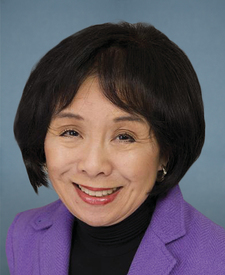
See how Doris O. Matsui actually votes — against your values.
DeepSyte scores Doris O. Matsui's record on the issues you care about — not party, not press releases. Take the 2-minute values quiz to see your personal alignment.
Sign in and take the values quiz to see how Doris O. Matsui's votes line up with your views.
Prediction track record
How often we called Doris O. Matsui's passage votes correctly, from their stated positions on each bill's tagged topics. Excludes “unclear” calls and abstentions.
To prohibit the disclosure of records by the Secretary of Housing and Urban Development of individuals for the purposes of immigration enforcement, and for other purposes.
A bill to provide for appropriate cost-sharing for insulin products covered under private health plans, and to establish a program to support health care providers and pharmacies in providing discounted insulin products to uninsured individuals.
Based on 7 data points across public statements and recorded votes · AI analysis of public records
118-hr-6192·Notable gap
Hands Off Our Home Appliances Act
5/100
What they said
Apr 24, 2026
The release advocates for the Neighborhood Tree Act, which would establish a $2 billion federal grant program through the USDA to fund tree-planting initiatives in underserved communities, with priority given to projects addressing tree equity gaps in low-income and communities of color.
The statement advocates for federal investment in tree-planting programs to address environmental and equity gaps in underserved communities. The bill (HR 6192) restricts the Department of Energy's authority to set energy conservation standards for appliances and makes it easier to revoke or weaken such standards. These address fundamentally different policy mechanisms—one expands federal environmental spending, the other constrains federal environmental regulation—and point in opposite directions on environmental protection priorities. The representative's no vote on the appliance standards bill is consistent with the statement's pro-environmental, pro-federal-action stance.
The release advocates for the Neighborhood Tree Act, which would establish a $2 billion federal grant program through the USDA to fund tree-planting initiatives in underserved communities, with priority given to projects addressing tree equity gaps in low-income and communities of color.
The statement advocates for federal funding to expand tree planting in underserved communities as an environmental and public health measure. The bill restricts EPA authority to grant state waivers for vehicle emission standards and prohibits standards that limit internal combustion engine vehicles. These address fundamentally opposite environmental directions: the statement supports expanded environmental protections and climate adaptation, while the bill constrains state-level emission control authority. The representative's 'no' vote on the bill aligns with the statement's pro-environmental position.
The release advocates for the Neighborhood Tree Act, which would establish a $2 billion federal grant program through the USDA to fund tree-planting initiatives in underserved communities, with priority given to projects addressing tree equity gaps in low-income and communities of color.
The statement advocates for federal investment in tree-planting programs to address environmental and equity concerns in underserved communities. The bill restricts DOE authority to enforce energy conservation standards for appliances, focusing on limiting regulatory burden and consumer costs. These address fundamentally different policy mechanisms and goals—one expands federal environmental spending, the other constrains federal regulatory authority—and the representative's no vote on the bill is inconsistent with the pro-federal-action stance expressed in the statement.
The release advocates for the Neighborhood Tree Act, which would establish a $2 billion federal grant program through the USDA to fund tree-planting initiatives in underserved communities, with priority given to projects addressing tree equity gaps in low-income and communities of color.
The statement advocates for federal funding to expand tree planting in underserved communities to address environmental and equity gaps. The bill (HEATS Act) exempts geothermal drilling activities from federal environmental and historic preservation review requirements. These address opposite environmental policy directions: the statement supports increased federal environmental stewardship and protection in disadvantaged areas, while the bill reduces federal environmental oversight. The no vote aligns with the statement's environmental protection priorities.
The release advocates for the Neighborhood Tree Act, which would establish a $2 billion federal grant program through the USDA to fund tree-planting initiatives in underserved communities, with priority given to projects addressing tree equity gaps in low-income and communities of color.
The statement advocates for federal funding to plant trees in underserved communities to address environmental and equity concerns. The bill authorizes oil and gas leasing in the Arctic National Wildlife Refuge and removes restrictions on fossil fuel development in sensitive ecosystems. These positions point in opposite directions on environmental policy: one prioritizes tree-planting and climate resilience in communities, the other facilitates extraction activities in protected wildlife areas. The representative's no vote on the bill is consistent with the stated environmental and community-focused position.
Opposes increased federal funding for ICE and CBP through the budget resolution, arguing the immigration enforcement system is fundamentally broken and requires replacement with one that prioritizes constitutional rights and due process.
Matsui's statement opposes increased federal funding for ICE and CBP, arguing the immigration enforcement system is fundamentally broken and requires replacement with one prioritizing constitutional rights and due process. The Stop Illegal Entry Act increases criminal penalties for illegal entry and reentry, expanding the enforcement tools available to immigration authorities. Her NO vote on this amendment aligns with her stated opposition to expanding immigration enforcement capacity without systemic reform. However, the vote is on an amendment rather than passage, which introduces some procedural ambiguity about whether the vote reflects opposition to the bill's substance or a procedural position.
The release advocates for the Neighborhood Tree Act, which would establish a $2 billion federal grant program through the USDA to fund tree-planting initiatives in underserved communities, with priority given to projects addressing tree equity gaps in low-income and communities of color.
The statement advocates for a $2 billion federal grant program to fund tree-planting in underserved communities. The Limit, Save, Grow Act is a deficit-reduction bill that decreases discretionary spending, rescinds COVID-relief funds, and repeals energy tax credits. The representative voted against passage of this spending-reduction bill, which is inconsistent with supporting a new $2 billion federal spending program for trees.
Pairs with ambiguous language and high uncertainty are withheld until more data is available. Procedural, cloture, and amendment votes are excluded — they don't cleanly signal substantive support or opposition.
Pro analysis
AI rep analysis — Pro
Get an AI-narrated read on Doris O. Matsui's full voting record against your stated values — aligned themes, conflicts, notable votes, and what to watch for.
We haven't extracted campaign positions for Doris O. Matsui yet. Once their campaign website or position pages are processed, this card will track what they said vs how they voted.
Crossing the aisle
Passage votes where Doris O. Matsui broke ranks with ≥75% of Democrats. Threshold catches substantively partisan splits; unanimous-ish or close votes are excluded.
MATSUI, DINGELL INTRODUCE BILL TO STRENGTHEN HOME CARE ACCESS
Position: The representatives introduce legislation to invest in the direct care workforce through improved wages, working conditions, and career pathways for home care and long-term care workers, while supporting unpaid family caregivers.
WASHINGTON D.C. – Today, Congresswoman Doris Matsui (CA-07) and Debbie Dingell (MI-06) introduced the Long-Term Care Workforce Support Act, legislation that would invest in the direct care workforce by improving wages and working conditions, reducing turnover, and creating stronger career pathways for the workers who care for older adults and people with disabilities. By strengthening this workforce, the bill would improve access to reliable, high-quality long-term care while supporting families and the 53 million unpaid caregivers helping loved ones at home and across care settings.
“Every day, caregivers show up with compassion, skill, and devotion for the people and families who depend on them,” said Congresswoman Matsui. “Yet too many of these essential workers do not receive the pay or support they deserve. I have always believed caregivers should be treated with the dignity and respect they give to others, and the Long-Term Care Workforce Support Act moves us closer to that goal. By investing in this workforce, we can also strengthen care for older adults and people with disabilities, support families, and build a stronger, more stable economy for everyone.”
“Caregiving is the foundation of our economy. It allows for all other work to be possible. No care worker should have to live below the poverty line to do this work that millions of Americans depend on. As many know, this is deeply personal for me – I was lucky to have my husband John receive care at home, but many others do not have the same opportunity,” said Congresswoman Dingell. “This legislation will make much needed investments in our care infrastructure and workforce, including family caregivers, to ensure they have the support they need, are paid a living wage, and are able to continue doing their critical jobs.”
Click HERE to read the full bill text.
Issues:Health Care
MATSUI STATEMENT ON HOUSE REPUBLICANS PASSING BLUEPRINT TO FUND ICE AND CBP
Position: Opposes increased federal funding for ICE and CBP through the budget resolution, arguing the immigration enforcement system is fundamentally broken and requires replacement with one that prioritizes constitutional rights and due process.
WASHINGTON, D.C. – Today, Congresswoman Doris Matsui (CA-07) released the following statement after House Republicans voted to pass S. Con. Res. 33, a budget resolution that will act as the blueprint to fund ICE and CBP through the reconciliation process.
“Today, I voted no on one of the cruelest measures I have seen during my time in Congress. House Republicans passed an outrageous budget resolution that sets the stage to blindly pour billions more into ICE and CBP. No real accountability. No effort to fix the deep injustices in our immigration system,” said Congresswoman Matsui. “ICE has become a rogue, paramilitary force. They have killed innocent people in the streets, detained children, and used recklessly aggressive tactics that tear families apart and inflict lasting harm on our communities. We have to be clear-eyed about what we are confronting. This is a system that is fundamentally broken at its core. We need to tear it down and replace it with one that protects constitutional rights and due process, treats people with dignity, and lives up to our values. Instead, Republicans are choosing to double down on cruelty. I will not stop fighting back. Our country is and should be better than this chaos.”
# # #
Issues:Immigration
MATSUI, SMITH UNVEIL BIPARTISAN BILL TO EXPAND ACCESS TO LIFE-SAVING IVIG TREATMENT
Position: Congresswoman Matsui and Congressman Smith introduced bipartisan legislation to create a dedicated Medicare payment for intravenous immunoglobulin (IVIG) treatments in skilled nursing facilities, expanding access to this treatment for patients with primary immunodeficiencies and reducing treatment delays and hospitalizations.
WASHINGTON D.C. – Today, Congresswoman Doris Matsui (D-CA-07) and Congressman Adrian Smith (R-NE-03) introduced the PI Post Acute Access Act to expand access to life-saving care for individuals with primary immunodeficiencies (PI). This bipartisan legislation would create a dedicated payment within Medicare for Skilled Nursing Facilities (SNF) to provide intravenous immunoglobulin (IVIG) treatments onsite, ultimately preventing dangerous treatment delays, reduce avoidable hospitalizations, and ensure vulnerable patients get the care they need when and where they need it.
“Patients living with primary immunodeficiencies should not have to fight through red tape to get the care they need to stay healthy and safe. For many families, timely access to IVIG treatment can mean the difference between stability and a serious medical crisis,” said Congresswoman Matsui. “I have long worked to protect access to these life-saving therapies, and the PI Post Acute Access Act builds on that commitment by helping ensure Medicare beneficiaries can continue receiving essential treatment in nursing facilities. No one should be left behind simply because of where they are receiving care.”
“Outdated billing measures should not prevent vulnerable patients from receiving lifesaving care when and where they need it,” said Congressman Smith. “I am proud to join Congresswoman Matsui in introducing our bipartisan PI Post Acute Access Act to cut red tape and ensure that PI patients have access to the critical care they need.”
“For Medicare beneficiaries living with primary immunodeficiency, access to life-saving IVIG therapy should never depend on where they receive care,” said Jorey Berry, President & CEO of the Immune Deficiency Foundation. “This bill ensures that patients who need skilled nursing services are not forced to choose between essential care and the medication they need to survive. By creating a targeted payment solution, Congress can protect a vulnerable group and uphold the promise of equitable access for all patients, including those living with a rare condition.”
Click HERE to read the full text of the bill.
Congresswoman Matsui has been a longtime leader in expanding access to IVIG therapies for patients with primary immune deficiency diseases. In 2013, her bill, H.R. 1845, the Medicare IVIG Access Act, was signed into law to help Medicare beneficiaries receive these life-saving treatments in their homes. The PI Post Acute Access Act builds on that work by extending the same principle to SNFs, ensuring patients do not lose access to medically necessary IVIG treatment simply because their care setting changes.
MATSUI, BROWN AND BOOKER UNVEIL BILL TO ACCELERATE TREE PLANTING IN UNDERSERVED COMMUNITIES
Position: The release advocates for the Neighborhood Tree Act, which would establish a $2 billion federal grant program through the USDA to fund tree-planting initiatives in underserved communities, with priority given to projects addressing tree equity gaps in low-income and communities of color.
WASHINGTON, D.C. — As communities across the country mark Earth Day and Arbor Day this week, Congresswoman Doris Matsui (CA-07), Congresswoman Shontel Brown (OH-11), and Senator Cory Booker (D-NJ) announced the Neighborhood Tree Act, legislation that would establish the Neighborhood Tree Fund at the United States Department of Agriculture and authorize $2 billion in federal grants for tree-planting programs nationwide. According to the EPA, trees and vegetation in urban areas can lower energy use, clean the air, limit stormwater runoff and enhance quality of life, and 73% of Americans wish their neighborhood had more trees.
“Sacramento is the City of Trees, and our communities know how much trees can enhance quality of life. They improve air quality, lower temperatures, and make our neighborhoods healthier and more welcoming,” said Congresswoman Matsui. “This is especially important as climate change drives longer and more intense heatwaves, while too many communities are left without vital shade trees. The Neighborhood Tree Act will address this gap by giving local governments the federal support they need to plant and care for trees. It's a simple idea with real impact: when the federal government partners with local communities, we can build healthier neighborhoods and a stronger future for all Americans.”
“In cities like Cleveland, where you live often determines how much tree cover you have, and too many of our neighborhoods are being left behind. Trees do real work: they keep our air clean, lower energy costs, reduce summer heat, and even improve mental well-being. But for too long, people in low-income and Black and Brown neighborhoods haven’t had the same tree cover as the suburbs,” said Congresswoman Brown. “It’s time to take a big swing at this big challenge, and that’s why I’m so excited to introduce the Neighborhood Tree Act with Senator Booker and Congresswoman Matsui. This legislation would create a new grant program to close the tree equity gap and invest in healthier, cooler, and more livable neighborhoods.”
“During my years as Mayor of Newark, I witnessed how trees can change the trajectory of a neighborhood. Trees clean the air families breathe, reduce flooding on streets, lower energy bills, cool overheated blocks, and support the mental well‑being of entire communities,” said Senator Booker. “The Neighborhood Tree Act highlights these benefits shouldn’t be a privilege. They should reach the neighborhoods that have been overlooked for far too long, helping build healthier, stronger, and more resilient urban communities across the country.”
The Neighborhood Tree Act
Establishes the Neighborhood Tree Fund and authorizes $2 billion in federal grants
The Neighborhood Tree Fund will be administered by the USDA.
Eligible grantees are: states, tribal governments, local governments, and local community tree and volunteer organizations
The Secretary of Agriculture is to give priority to entities that propose projects that:
serve low-income areas or communities with a lower tree canopy percentage and higher temperatures than surrounding areas;
projects that support climate mitigation and resilience;
and projects that advance community led urban forestry, tree-based local food production, reduce urban heat, and improve public health and environmental outcomes
The bill also expands the National Urban and Community Forestry Advisory Council from 15 to 16 members and requires one member of the council be a resident of a low-income community.
The bill is endorsed by American Forests, Holden Forests & Gardens, the National Audubon Society, the National Wildlife Federation, the Sierra Club, the Trust for Public Land, and the Western Reserve Land Conservancy.
Congresswoman Matsui has made tree resilience and urban greening a central part of her work to protect public health, address climate change and improve quality of life. The Neighborhood Tree Act builds on that record by helping local governments plant and maintain more trees, expand shade, reduce extreme heat and ensure every neighborhood can benefit from healthier, greener spaces.
MATSUI AND COLLEAGUES REINTRODUCE LEGISLATION TO STRENGTHEN COMMUNITY-BASED MENTAL HEALTH AND ADDICTION CARE
Position: The release advocates for permanent authorization of the Certified Community Behavioral Health Clinic (CCBHC) model and giving states the option to implement this approach to expand access to community-based mental health and addiction services.
WASHINGTON, D.C. — Today, Congresswoman Doris Matsui (D-CA-07) and Representatives August Pfluger (R-TX-11), Angie Craig (D-MN-02), Mark Alford (R-MO-04), Paul Tonko (D-NY-20), Brian Fitzpatrick (R-PA-01), and Craig Goldman (R-TX-12) reintroduced the Ensuring Excellence in Mental Health Act, legislation to permanently authorize the Certified Community Behavioral Health Clinic (CCBHC) model and give every state the option to implement this proven approach into their behavioral health care systems.
Despite increased demands for behavioral health services, too many patients still face long waits, limited providers, and serious gaps in care. CCBHCs help close those gaps by delivering a full range of community-based services including 24/7 crisis care, outpatient mental health and substance use treatments, screening and diagnosis, and coordination with hospitals, law enforcement, and veterans’ organizations.
“Across the country, families are struggling to find timely, affordable mental health and substance use care,” said Congresswoman Matsui. “We cannot keep asking communities to do more with fewer resources while the need for care continues to grow. Certified Community Behavioral Health Clinics have a strong record of expanding access, improving crisis response, and connecting patients to the care they need. This legislation would build on that success by helping more people get treatment no matter where they live.”
“The need for more access to mental health care services is rising, yet for far too many Americans, high-quality, affordable care remains out of reach when they need it most,” said Congressman Pfluger. “We cannot afford to ignore this growing crisis. It is our responsibility to act with urgency and purpose. That’s why I am proud to co-lead the Ensuring Excellence in Mental Health Act, which establishes a durable payment structure for CCBHCs under Medicare and codifies the Medicaid payment system these clinics depend on to keep their doors open for people who need care.”
“Our country is facing a mental health crisis and it’s time Congress did something about it,” said Congresswoman Craig. “I’m proud to join my colleagues in introducing this critical legislation that would provide communities with the comprehensive mental health and substance use resources they desperately need. On behalf of every Minnesotan who has struggled with their mental health, I’ll keep working until we get this bill signed into law.”
"Mental health care shouldn’t be out of reach for any American, especially our seniors,” said Congressman Alford. “This bipartisan bill builds on a model that’s already working in Missouri, expanding access, improving accountability, and delivering real results. I’m proud to cosponsor legislation that puts patients first and strengthens mental health care across the country.”
“Breaking down barriers and expanding access to mental health and addiction services saves lives," said Congressman Tonko. "Certified Community Behavioral Health Centers are a proven part of our healthcare system. I’m proud to join my colleagues to introduce this bipartisan legislation that strengthens behavioral health services and gives our communities the support they need.”
“We do not need to guess what works in mental health and addiction care—we are already seeing it in PA-1 and across the nation,” said Congressman Fitzpatrick. “Certified Community Behavioral Health Clinics have proven that timely, coordinated, community-based care can stabilize individuals in crisis, connect them to treatment, and support long-term recovery. The Ensuring Excellence in Mental Health Act takes that proven model and gives it the durability it deserves by establishing a formal funding structure and allowing Medicare coverage for the services these clinics provide. That means stronger access to care, greater stability for providers, and a more responsive behavioral health system for the individuals and families counting on it.”
“Mental health resources are vital for some of the most vulnerable members of our communities, and in many cases, they prevent larger health crises down the line. The Ensuring Excellence in Mental Health Act invests in a proven program and expands it to deliver more care to Americans in need,” said Congressman Goldman. “I’m proud to co-sponsor this bipartisan effort led by two great Texans, Sen. John Cornyn and Rep. August Pfluger, and Rep. Doris Matsui. I’m grateful to all my colleagues for their work on this important issue.”
The Ensuring Excellence in Mental Health Act would:
Permanently authorize a Medicaid payment system for the CCBHC model.
Establish a definition of services & prospective payment system for CCBHCs under Medicare, ensuring that CCBHCs can also provide behavioral health care for our seniors.
Establish a new accreditation process for CCBHCs and a technical assistance program at HHS to encourage program integrity and quality of care.
Authorize expansion grants for certified or potential CCBHCs to expand the ability of clinics to provide comprehensive care.
Authorize a new data infrastructure system for CCBHC data reporting.
Full text of the bill is available HERE.
Endorsement statements from various health organizations can be found HERE.
Congresswoman Matsui has long led congressional efforts to expand access to community based mental health care. In 2014, she authored and passed the bipartisan Excellence in Mental Health Act, which established the CCBHC Medicaid demonstration and expansion grant program.
In 2022, Congresswoman Matsui’s Excellence in Mental Health and Addiction Treatment Act of 2021 was signed into law as part of the Bipartisan Safer Communities Act, authorizing nationwide expansion of the CCBHC pilot. Most recently, Congresswoman Matsui introduced legislation creating a permanent definition of CCBHC services in Medicaid statute, which was signed into law as part of the Consolidated Appropriations Act, 2024.
# # #
MATSUI, NEGUSE, COHEN, MCCLELLAN LEAD RESOLUTION TO COMMEMORATE EARTH DAY 2026
Position: The resolution commemorates Earth Day 2026 and recognizes recent environmental progress while criticizing the Trump Administration's rollback of environmental protections and clean energy initiatives. The lawmakers express commitment to continued climate action and protection of public lands.
WASHINGTON, D.C. – Today, Congresswoman Doris Matsui (CA-07), co-chair of the House Sustainable Energy and Environment Coalition (SEEC), Assistant Democratic Leader Joe Neguse (CO-02), and Reps. Steve Cohen (TN-09), and Jennifer McClellan (VA-04) led a group of 56 total lawmakers in introducing a resolution that recognizes recent historic environmental actions that have improved the health and well-being of our planet, while reaffirming the work that still needs to be done to secure a livable future for the next generation.
“Earth Day is about people as much as it is about the planet. It is about the air our children breathe, the water families drink, and the future we leave for our children,” said Congresswoman Matsui. “We have made real progress to reduce pollution, expand clean energy, and build healthier communities – and those gains are making a difference in people’s lives. But while the Trump Administration is rolling back environmental protections, we cannot afford to lose ground. This resolution honors how far we have come and renews our responsibility to keep fighting for the next generation.”
“On Earth Day, communities across the country reaffirm their commitment to protecting the environment and our treasured public lands,” said Congressman Neguse. “And for me, as a proud Coloradan, the fight to ensure future generations can enjoy the outdoors the same way we have is deeply personal. Which is why I’m proud to join my colleagues in continuing to charge forward in Congress with efforts that prioritize protecting our planet.”
“Addressing the climate crisis is necessary to save lives and protect generations yet unborn. I am proud to join my colleagues including Representatives Matsui, Neguse, and McClellan to fight the Trump Administration’s attempts to dismantle safeguards, abandon proven conservation practices, cancel clean energy projects, and further entrench dependence on fossil fuels,” said Congressman Cohen. “On this Earth Day, I hope the people of this planet will take a moment to reflect on the image of a blue marble in infinite space that our astronauts on Artemis just gifted us as they flew home from the moon, and renew a commitment to making our world more healthy in both large and small ways.”
“As the climate crisis exacerbates natural disasters, extreme weather events and more, I often think of my children and the world they will inherit long after I am gone,” said Congresswoman McClellan. “We cannot afford to sit back and do nothing as future generations look to us to fight for a healthy, livable planet. While the Trump Administration continues to roll back environmental protections and neglects our duty to invest in clean energy and energy efficiency programs, I join Reps. Matsui, Neguse and Cohen to recommit ourselves to working towards a clean and sustainable future — because there is no Planet B.”
Over the past year, the Trump administration has made repeated attacks to unravel climate action and environmental protections. The Administration has revoked the Endangerment Finding, which found that greenhouse gases are a threat to public safety and is the legal foundation for federal regulation of climate pollution under the Clean Air Act. They have also weakened pollution restrictions, narrowed clean water protections, expedited fossil fuel projects past normal review, and retreated from global climate commitments.
Congresswoman Matsui has pushed back at every turn by leading and joining efforts to oppose these actions, defend public health safeguards, and hold the administration accountable for policies that put communities and the planet at risk.
In Congress, Congresswoman Matsui has long been a champion of strong environmental protections, life-saving pollution regulations, and bold climate action. She has led efforts to strengthen vehicle and power plant pollution standards and supported energy efficiency policies that save American families money. As Co-Chair of the SEEC Lands, Waters, and Nature Task Force, Congresswoman Matsui also coordinates the coalition’s work to preserve the environment, protect public lands and critical habitat, and advance nature-based approaches to addressing climate change.
Read the full resolution HERE.
HOUSE PASSES MATSUI’S BILLS TO STRENGTHEN EMERGENCY COMMUNICATIONS
WASHINGTON, D.C. – The House of Representatives has voted to pass Congresswoman Doris Matsui’s (D-CA-07)Emergency Reporting Act and Kari’s Law Reporting Act. These bills would ensure that Americans can count on strong, effective, and modern 9-1-1 systems when disaster strikes.
“The House just passed two of my bipartisan bills to strengthen our emergency communications systems and improve public safety,” said Congresswoman Matsui. “I am proud to lead this legislation because in an emergency, Americans must be able to trust that a call to 9-1-1 will go through. The Emergency Reporting Act will help us better understand and address communications failures during disasters, while the Kari’s Law Reporting Act will help ensure existing 9-1-1 protections are being followed as intended. Together, these bills mark an important step toward a stronger, more reliable emergency response system that can better protect our communities and save lives.”
Emergency Reporting Act
With wildfire seasons growing longer and more severe in California and across the country, resilient and reliable communication networks are essential to protecting communities, helping families stay connected, and giving first responders the tools they need to act swiftly. The Emergency Reporting Act would strengthen 9-1-1 networks by requiring the Federal Communications Commission (FCC) to issue reports following major natural disasters on the extent to which people were unable to reach 9-1-1, and to develop recommendations to improve outage reporting, resiliency, and coordination with state and local officials. The bill also directs the FCC to review unreported outages and develop recommendations for mobile carriers to better notify 9-1-1 centers of disruptions, ensuring that first responders are not left in the dark during life-threatening events.
Kari’s Law Reporting Act
The Kari’s Law Reporting Act would build on the 2018 Kari’s Law by requiring the FCC to report on the extent to which multi-line telephone system (MLTS) manufacturers and vendors have complied with the requirement that callers be able to reach 9-1-1 directly without dialing additional digits. Kari’s Law was enacted after the tragic murder of Kari Hunt in 2013, when her daughter’s repeated attempts to call 9-1-1 from a hotel phone failed because the system required dialing “9” before any call.
Full text of the Emergency Reporting Act is available HERE.
Full text of the Kari’s Law Reporting Act is available HERE.
Issues:Technology
MATSUI UNVEILS BIPARTISAN BILL TO HELP PREVENT DRUG SHORTAGES
Position: The release advocates for legislation requiring the FDA to mandate increased transparency and reporting on the origins and supply chains of prescription drugs and their active ingredients, with the stated goal of preventing shortages and reducing dependence on foreign suppliers.
WASHINGTON, D.C. – Today, Congresswoman Doris Matsui (D-CA-07) and Representatives Dan Crenshaw (R-TX-02), Ashley Hinson (R-IA-02), and Kim Schrier (D-WA-08) introduced the bipartisan Drug Origin Transparency Act, legislation to give the Food and Drug Administration (FDA), health care providers, and purchasers better visibility into where prescription drugs and their key ingredients are actually made.
As it stands, the public and even FDA do not have a full picture of where a drug originates or where its active ingredients come from. That lack of transparency makes it harder to detect vulnerabilities in the supply chain, respond to disruptions, and prevent shortages before they reach patients in need.
“When a patient cannot get the medicine they need, nothing else matters. Families are left waiting, doctors are left scrambling, and too often no one has a clear answer for why it happened,” said Congresswoman Matsui. “That is unacceptable. This bill gives FDA and the public a clearer picture of where our drugs and their ingredients come from so we can catch risks earlier, respond faster, and better protect patients from life-threatening shortages.”
“We’ve allowed critical parts of our pharmaceutical supply chain to drift overseas — often to countries that don’t share our interests — and we still lack full visibility into the risks it creates. That’s unacceptable," said Congressman Crenshaw. "This bill forces transparency so we know exactly where our drugs and their ingredients are coming from. You can’t fix a supply chain you can’t fully see.”
“For far too long, we’ve relied on China for critical medications Americans depend on every day — that’s a serious national security and public health risk,” said Congresswoman Hinson. “This bipartisan bill brings much-needed transparency to our pharmaceutical supply chain so we know exactly where our medicines are coming from and can start bringing that production back home. I’m proud to help lead this bipartisan effort to strengthen American manufacturing and reduce our dependence on foreign adversaries for critical medications.”
“As a pediatrician, I know how devastating drug shortages can be for patients,” said Congresswoman Schrier. “Our pharmaceutical supply chain is heavily reliant on foreign countries, which presents a threat to national security; and the complicated manufacturing process often leaves everyone from patients to the FDA without the critical information they need. This legislation would provide transparency in every step of the process, help ensure we have redundant or domestic sources for the most important medications, and ultimately ensure Americans have access to safe, effective medications.”
The Drug Origin Transparency Act would strengthen oversight of the pharmaceutical supply chain by:
Allowing FDA to require more detailed reporting on the suppliers of each active pharmaceutical ingredient and intermediate product, including how much of those materials each supplier manufactures.
Requiring the drug label to identify the original manufacturer, the original manufacturer of the active pharmaceutical ingredient, and any other manufacturer, packer or distributor involved in the supply chain.
Current law requires manufacturers to report to FDA the annual amount of drug they produce, but that alone does not show where key ingredients originate or how reliant manufacturers are on specific suppliers. Drug labels only identify the final manufacturer, packer or distributor, even though critical parts of a drug’s supply chain may lie elsewhere.
Full text of the legislation can be found HERE.
The bill is endorsed by the Association for Clinical Oncology, Vizient, and the American Society of Health-System Pharmacists.
MATSUI ANNOUNCES $2 MILLION IN FEDERAL FUNDING FOR TRANSFORMATIVE MOSAIC VILLAGE PROJECT
SACRAMENTO, CA — $2 million in federal funding is heading to Mosaic West Sac for their transformative Mosaic Village project thanks to Community Project Funding secured by Congresswoman Doris Matsui (CA-07). She announced the funding this morning at a press conference alongside Mosaic West Sac Executive Director Don Bosley, Mayor Martha Guerrero, and Mayor Pro Tem Verna Sulpizio Hull.
“Mosaic Village reflects what is possible when a community comes together with purpose and refuses to leave anyone behind,” saidCongresswoman Matsui. “This project is about more than housing and services. It is about connecting people with the community they need to move forward with dignity, stability, and real opportunity. I am grateful to the West Sacramento leaders and community partners whose vision and commitment have helped bring this project to life.”
In remarks at the event, Matsui emphasized that no single challenge exists in isolation and that communities see stronger outcomes when they invest in housing, health care, substance recovery, and economic opportunity together. She also underscored the importance of local partnership in ensuring federal dollars are put to work in ways that reflect community needs.
“For the trauma-impacted, there are few things more powerful than a truly inclusive, restorative community,” said Don Bosley, Executive Director of Mosaic West Sac. “We've been awed to watch that community unfold at the Recovery Cafe in West Sacramento the last four years. And we've been awed to watch Congresswoman Matsui, Mayor Guerrero, Sutter Health and so many other advocates rally to innovative mental-health and recovery models like this one. This is how we replace negative generational cycles with enduring, hopeful ones. Our staff, volunteers and cafe members couldn't be more grateful.”
“West Sacramento’s Recovery Cafe is a vital home for those seeking healing, connection, and hope in our community,” said Mayor Guerrero. “We are deeply grateful for Congresswoman Matsui's leadership for the federal funding to expand this life-changing work. Because of her leadership and commitment, hope is growing stronger in our community.
“What makes Mosaic Village so powerful is that it doesn’t rely on a single approach,” said Mayor Pro Tem Sulpizio Hull. “It brings together the most effective elements of care, community, and support into one intentional model that is designed to meet people where they are and help them build a path forward with dignity.”
Mosaic Village will transform two vacant acres near West Sacramento’s city center into a campus with permanent supportive housing, workforce development programs, emergency food and resource distribution, and case management. The centerpiece of Mosaic Village will be a new Recovery Cafe.
Since 2022, Mosaic West Sac has operated the Recovery Cafe West Sac, part of a nationwide network of safe, inclusive spaces for those impacted by homelessness, substance-use disorders, domestic violence, and other forms of traumas. The federal funding secured by Congresswoman Matsui will go towards the new Recovery Cafe, with additional space, a commercial-grade kitchen, additional meeting rooms, offices, and outdoor seating areas to promote wellness.
This investment builds on Congresswoman Matsui’s longstanding record of delivering federal funding to the West Sacramento community. In 2023, she secured $3.18 million for the City’s Heritage Oaks Park Improvement Project. In 2024, she secured $15 million for the Bryte Park Master Plan Implementation Project.
For more information on Mosaic Village, click HERE.
For information on the Recovery Cafe, click HERE.
# # #
Source: open-data mirrors of the Senate eFD and House Clerk financial-disclosure systems. Disclosure within 30 days of trade is required by law (45 for spouse/dependent trades).
Top PAC donors · 2026 cycle
Political action committees that gave the most to this rep's principal campaign committee this cycle. PAC giving is direct organizational support — industry, ideological, or leadership.
1.THE HOME DEPOT INC. POLITICAL ACTION COMMITTEEBusiness8 contributionsRetail corporation PAC — supports candidates aligned with business-friendly policies on tax, labor, and regulatory matters.AI$40,000
2.NCTA - THE INTERNET AND TELEVISION ASSOCIATION POLITICAL ACTION COMMITTEE (NCTA PAC)Tech5 contributionsTrade association PAC for cable and broadband providers — backs candidates supporting infrastructure investment, net neutrality positions, and regulatory frameworks favoring cable operators.AI$25,000
3.AMERICAN CRYSTAL SUGAR COMPANY POLITICAL ACTION COMMITTEEAgriculture4 contributionsAgricultural processing PAC for American Crystal Sugar — backs candidates supporting farm subsidies, sugar price supports, and agricultural trade policies.AI$20,000
4.NATIONAL ASSOCIATION OF CONVENIENCE STORES POLITICAL ACTION COMMITTEE4 contributions$20,000
5.THE COUNCIL OF INSURANCE AGENTS & BROKERS POLITICAL ACTION COMMITTEEFinance3 contributionsInsurance-industry PAC representing agents and brokers — backs candidates supporting favorable regulatory and tax treatment of insurance distribution and sales.AI$15,000
6.AMERICAN SUGAR CANE LEAGUE OF USA INC POLITICAL ACTION COMMITTEE3 contributions$15,000
7.CARPENTERS' LEGISLATIVE IMPROVEMENT COMMITTEELabor3 contributionsTrade-union PAC for the United Brotherhood of Carpenters — backs prevailing-wage protections, infrastructure funding, and project labor agreements.AI$15,000
8.PLUMBERS & PIPEFITTERS LOCAL 4473 contributions$15,000
9.MACHINISTS NON PARTISAN POLITICAL LEAGUE OF THE INTERNATIONAL ASSOCIATION OF MACHINISTS &Labor3 contributionsTrade-union PAC for the International Association of Machinists & Aerospace Workers — backs candidates supporting union organizing, prevailing wages, and aerospace manufacturing jobs.AI$15,000
10.WRITERS GUILD OF AMERICA WEST, INC. PAC (WGAW PAC)2 contributions$10,000
Source: OpenFEC (api.open.fec.gov) Schedule A receipts where contributor type is “committee.” Aggregated by contributing committee. Self-transfers from joint-fundraising / victory committees are excluded.
Top individual contributors · 2026 cycle
Itemized individual contributions over $200 to this rep's campaign committee, aggregated by donor employer. PAC giving is shown above; this section is people, not organizations.
1.SELF$25,560
2.SUTTER HEALTH$23,000
3.ANTHROPIC$17,000
4.ANTAEUS ENTERPRISES INC.$14,000
5.BGR GROUP$8,750
6.MIT$8,000
7.SUTTER$7,500
8.KORSHAK KRACOFF KONG & SUGANO LLP$7,000
9.BILL WONG LLC$7,000
10.CALAVERAS AI$7,000
Source: OpenFEC Schedule A receipts where contributor type is “individual,” aggregated by the donor's self-reported employer. This is a geographic / industry correlation, not a corporate endorsement.