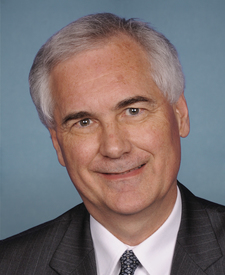
See how Tom McClintock's votes line up with your values.
DeepSyte scores Tom McClintock's record on the issues you care about — not party, not press releases. Take the 2-minute values quiz to see your personal alignment.
Sign in and take the values quiz to see how Tom McClintock's votes line up with your views.
Prediction track record
How often we called Tom McClintock's passage votes correctly, from their stated positions on each bill's tagged topics. Excludes “unclear” calls and abstentions.
A joint resolution to direct the removal of United States Armed Forces from hostilities within or against the Islamic Republic of Iran that have not been authorized by Congress.
To prohibit the disclosure of records by the Secretary of Housing and Urban Development of individuals for the purposes of immigration enforcement, and for other purposes.
No paired statements and votes yet for Tom McClintock
We haven't yet found statement/vote pairs on the same topic for Tom McClintock. This usually means either the rep hasn't taken public positions on bills that have come to a passage vote, or those bills haven't been tagged yet. The checker runs as new press releases and votes come in.
Pro analysis
AI rep analysis — Pro
Get an AI-narrated read on Tom McClintock's full voting record against your stated values — aligned themes, conflicts, notable votes, and what to watch for.
Positions Tom McClintock took during their campaign, scored against their subsequent record — public statements cross-checked with related votes. “Kept” means 80%+ of those statement-vs-vote pairs aligned; “Broken” means 30% or fewer.
0 kept0 broken0 mixed0 no action yet
Tom McClintock has 2 tracked positions but no scored statement-vs-vote pairs touching them yet. Verdicts will appear here as related statements and votes accumulate.
No action yetOpposes
Civilian ownership of AR-15-style rifles should be restricted.
Passage votes where Tom McClintock broke ranks with ≥75% of Republicans. Threshold catches substantively partisan splits; unanimous-ish or close votes are excluded.
34
Cross-aisle votes
119-hr-3276·Sep 14, 2026·76% of R voted YES
Local Communities & Bird Habitat Stewardship Act of 2026
Statement by the Congressional Iran Human Rights and Democracy Caucus on the Planned Attendance of Iranian President Masoud Pezeshkian at the 81st United Nations General Assembly
Position: The release urges the United States and its allies to publicly condemn Iranian human rights abuses, support international accountability efforts, and keep human rights central to engagement with Iran, ahead of Iranian President Pezeshkian's planned attendance at the UN General Assembly.
FOR IMMEDIATE RELEASE
Statement by the Congressional Iran Human Rights and Democracy Caucus
Washington, D.C. As reports indicate that Iranian President Masoud Pezeshkian plans to attend the 81st United Nations General Assembly, the Congressional Iran Human Rights and Democracy Caucus urges the international community not to ignore the regime's worsening human rights record.
While Tehran seeks to present a moderate face at the United Nations, the reality for the Iranian people is continued repression. Human rights organizations report that more than 4,100 executions have been carried out under Pezeshkian's tenure, including political prisoners, protesters, and members of ethnic and religious minorities.
The Iranian regime's principal war is not with foreign adversaries. Its primary war is against its own people. Executions, torture, arbitrary arrests, sham trials, and suppression of free expression remain the regime's tools of control.
As President Pezeshkian addresses world leaders in New York, we call on the United States and its allies to publicly condemn these abuses, support international accountability efforts, and ensure that human rights remain central to all engagement with Iran.
We stand with the Iranian people and the thousands of Iranian Americans from more than 40 states who support a free, secular, democratic, and non-nuclear republic in Iran. The voices of those executed, imprisoned, and silenced must not be forgotten.
Issues:Foreign Affairs - International
The Action Versus No Action Act Passes House Natural Resources Committee
Position: Supports H.R. 184, the Action Versus No Action Act, which would limit environmental review of certain hazardous fuels reduction and forest management projects to the proposed action and a no-action alternative, in order to speed active forest management and reduce wildfire risk.
Washington, D.C. – H.R. 184, the Action Versus No Action Act, has passed the House Natural Resources Committee. The legislation represents a practical step toward restoring active management to federal forests, reducing wildfire risk, and protecting communities increasingly living under constant threat of wildfire.
“The choice before Congress is clear,” said Congressman McClintock. “We can continue down the current path — studying forests until they burn — or we can restore common sense and give land managers the ability to protect forests before more communities are lost to catastrophic wildfire.”
Congressman McClintock delivered remarks at the House Natural Resources Committee in support of the legislation:
H.R. 184
(Video Link)
Action v. No Action
September 15, 2026
Mr. Chairman:
An untended forest is no different than an untended garden. It will grow and grow until it chokes itself to death and then fall victim to disease, pestilence, drought and ultimately catastrophic fire. That’s how nature gardens. She doesn’t care that it takes centuries for a forest to re-grow. Nature has all the time in the world. We mortals do care.
So at the turn of the 20th Century, we set up land management agencies to do the gardening instead. We sent foresters out every year to mark off surplus timber and then auctioned it off to logging companies that paid us to remove it. A quarter of those revenues went to local communities and the rest went back into the forests. The result was healthy, fire-resistant forests, thriving local economies, and a steady stream of revenues.
Then, in the 1970’s we began passing laws that have made active forest management endlessly time consuming and ultimately cost-prohibitive. It now takes an average of five years to complete an environmental review before we can begin to remove excess timber. Timber harvests off the federal lands have fallen 80 percent, the number of mills have plummeted and fire has returned to remove the excess. In the last ten years, we have lost a quarter of our national forests to catastrophic fire.
One of the hallmarks of this bureaucratic paralysis-by-analysis is requiring every conceivable alternative to a routine forest thinning project to be painstakingly evaluated. The result is that projects become trapped in an endless cycle of study, objections, re-study, appeals, and litigation while hazardous conditions worsen year after year.
Doing nothing is not a neutral decision. It is a management decision — and increasingly, it is the most destructive decision possible.
Every year we delay treatment, forests become more overgrown and stressed. Every year of delay means hotter fires, larger fires, more destruction, and higher suppression costs borne by taxpayers.
The bill simply says that for certain hazardous fuels reduction and forest management projects, agencies should focus their environmental review on two alternatives: the proposed action and the no-action alternative.
This legislation does not eliminate environmental review. It does not waive environmental protections. It does not silence public participation. What it does is establish a more efficient and focused review process so agencies can respond to the wildfire emergency before another community burns to the ground.
It applies only to projects located in high-risk wildfire areas or projects developed through collaborative community-based processes. These include projects proposed through resource advisory committees, collaborative partnerships, or community wildfire protection plans.
The opponents of active forest management often argue that streamlining review somehow threatens the environment. But the greatest threat to our forests today is not responsible forest management — but the lack of responsible forest management – and the catastrophic wildfire that results.
For years, we had been trying to complete the Trestle project in the El Dorado National Forest – a forest thinning project on a tract of land that menaced the town of Grizzly Flat. The project had been held up by endless NEPA study and litigation for over a decade. When the Caldor fire reached it in August of 2021, that tract exploded out of control and utterly destroyed the town. I stood in the center of Grizzly Flat the day after the fire – but there was no way to know where the center was. Everything had been levelled in all directions – there was no point of reference.
There is nothing environmentally responsible about allowing millions of acres of forest to incinerate or entire towns to be destroyed because agencies were trapped in procedural delay.
The choice before Congress is clear. We can continue down the current path — studying forests until they burn — or we can restore common sense and give land managers the ability to protect these forests from the inevitable result of morbid overgrowth.
It represents a practical step toward restoring active management to our federal forests, reducing wildfire risk, and protecting communities increasingly living under constant threat.
I urge my colleagues to support this commonsense bill and help restore responsible stewardship to America’s forests before more communities are lost to catastrophic wildfire.
# # #
The Ackerson Meadow Land Interchange Act Approved by House of Representatives
Position: The release supports H.R. 8454, the Ackerson Meadow Land Interchange Act, which would transfer administrative jurisdiction of federal parcels between Yosemite National Park and the Stanislaus National Forest to consolidate land management in Ackerson Meadow.
Washington, D.C. – The Ackerson Meadow Land Interchange Act, H.R. 8454, has passed the House of Representatives by a voice vote. The legislation by Congressman McClintock, H.R. 8454, has companion legislation in the Senate authored by Senator Padilla, S. 288.
The legislation addresses a familiar problem in federal land management in the Sierra Nevada: the checkerboard of boundary lines that makes land management disjointed and inefficient. The legislation consolidates land jurisdictions between the National Park System and the National Forest System and will help to eliminate confusion caused by split jurisdiction.
“Jurisdictional boundaries should not stand in the way of effective land management. H.R. 8454 transfers administrative jurisdiction over federal parcels in Ackerson Meadow, helping establish a more logical and efficient approach to managing and restoring this vital ecosystem,” remarked House Natural Resources Committee Chairman Bruce Westerman. “I commend Rep. McClintock for pursuing a targeted solution that improves government efficiency and advances responsible land management in California.”
Congressman McClintock delivered the following remarks today on the House floor in support of the legislation:
Floor Statement (Video Link)
H.R. 8454
Ackerson Meadow Land Interchange Act
September 14, 2026
Mr. Speaker:
The Ackerson Meadow Land Interchange Act is a simple proposal to transfer administrative jurisdiction over approximately 160 acres of National Forest System land to Yosemite National Park. It would also transfer approximately 170 acres of National Park System land to be a part of the Stanislaus National Forest.
Senator Padilla is carrying identical legislation in the Senate. We don’t agree on much, but we certainly agree on this.
This legislation addresses a familiar problem in federal land management in the Sierra Nevada: the checkerboard of boundary lines that makes land management disjointed and inefficient. This bill simply consolidates land jurisdictions between the National Park System and the National Forest System, without increasing the federal footprint.
At issue is the Ackerson Meadow. This meadow supports livestock grazing operations that have been part of the history and economy of the region. These operations are essential for brush control and fire suppression, maintaining meadow conditions and sustaining the rural economy that depends on the productive use of these lands.
Federal agencies, conservation organizations, and local ranchers have worked together to improve the meadow while maintaining grazing opportunities. Restoration projects have improved wetland conditions, enhanced water storage, improved habitat, and supported continued public uses, including grazing.
The proposed land exchange would make that cooperative approach easier by eliminating the confusion caused by split jurisdiction. Ranchers need to know where their permits apply, where infrastructure can be maintained, and who is responsible for decisions affecting their operations.
The bill also protects existing rights and authorizations. It specifically provides that valid existing rights, including rights-of-way, easements, leases, licenses, and permits, remain protected after the transfer. This ensures that current users, including grazing permit holders, are not unfairly disrupted by a change in administrative jurisdiction.
It also appropriately maintains federal responsibilities for hazardous substance cleanup and other obligations.
This bill reflects a principle that should guide federal land policy, management decisions should be based on the realities of the landscape, not simply the boundaries drawn on a map decades ago.
Our national forests and parks serve many purposes. They preserve wildlife habitat, protect watersheds, provide recreation, and support rural economies. A balanced approach recognizes all of these values.
I urge adoption of this measure and yield back the balance of my time.
# # #
Issues:Natural Resources CommitteeLocal Issues
Strengthening Coordination with Gateway Communities Act
Position: The release supports H.R. 10128, the Strengthening Coordination with Gateway Communities Act, which would codify Secretarial Order 3434 to formalize coordination between the National Park Service and gateway communities in System Unit management.
Washington, D.C. - Congressman Tom McClintock’s legislation, H.R. 10128, the Strengthening Coordination with Gateway Communities Act, was heard in a legislative hearing today in the House Natural Resources Committee.
The legislation, H.R. 10128, will codify into law an order signed by Interior Secretary Doug Burgum in 2025 to enhance coordination between the National Park Service and gateway communities.
The legislation includes recognition of gateway communities as key stakeholders in System Unit management, and it fosters transparent, ongoing communication between the Parks and gateway leadership.
“Our Gateway Communities are comprised of people who have spent their lives in and around the Parks,” said Congressman McClintock. “Yet one of the frustrations they have expressed is that they feel ignored and excluded from decisions that directly affect the Park, its visitors, local communities and economy.”
The full committee remarks delivered by Congressman McClintock at the committee can be found below.
With the signing of Secretarial Order 3434 in 2025, local officials with decades of combined collective experience welcoming visitors, finally had a seat at the table with their local national park on matters that immediately impact their local communities.
Madera County Supervisor Bobby Macaulay testified in support of H.R. 10128 at the House Natural Resources Committee hearing.
A copy of the Secretarial Order 3434 is attached.
Support for H.R. 10128, the Strengthening Coordination with Gateway Communities Act:
“In Yosemite, gateway communities are working collaboratively with Park Service to preserve the park, provide recommendations on priority issues and opportunities, and take on communication challenges. It is essential that those that have chosen to live and work near the park have a voice around the lands they love and often depend on. By codifying Interior Order 3434 we are ensuring this will be standard at each National Park for generations to come.”
Supervisor Bobby Macaulay, Madera County
“Secretarial Order 3434 has helped create meaningful, ongoing communication between the National Park Service and gateway communities, ensuring that our concerns and local knowledge are heard. In Mariposa County, we have seen stronger, more responsive partnerships with both the National Park Service and the Yosemite Conservancy. I am proud to have advocated for this policy alongside my fellow gateway supervisors, and I support Congressman McClintock’s effort to make these protections permanent so future administrations cannot allow that collaboration to disappear.”
Supervisor Jenni Kiser, Mariposa County
"Ensuring ongoing collaboration between the Park Service and local gateway communities becomes permanent standard practice make sense," said Paul McFarland, Mono County Supervisor representing the eastern gateway to Yosemite National Park. "The conversations supported by the Gateway Communities Act help us all realize we're in this together. The health of our local communities depends on the health of Yosemite National Park and vice versa.”
Supervisor Paul McFarland, Mono County
“The renewed energy of gateway communities working alongside Yosemite National Park administrators demonstrates what can be achieved through inclusive collaboration. This partnership has already produced several valuable initiatives, including the development of the Beyond Yosemite Valley map. The project illustrates how coordinated efforts can help shape visitor travel patterns by encouraging exploration throughout the park and reducing concentration in any single area.”
Lisa Mayo, Visit Tuolumne County
“Gateway communities are essential partners in the success of our national parks. We welcome and serve millions of visitors each year, and the decisions made within our parks have a direct impact on our residents, businesses, infrastructure and visitor experience. This legislation recognizes how important it is for gateway communities to have a meaningful voice and a seat at the table. Strengthening communication and collaboration between the Department of the Interior, our national parks and the communities that surround them will help us better serve visitors, protect these treasured places and support the people who call these regions home.”
Rhonda Salisbury, CEO Visit Yosemite | Madera County
"For too long, land managers historically ignored gateway community leaders' knowledge and input on critical park decisions. Secretary's Order 3434 changed that. Making this order permanent guarantees local expertise will always help shape the public lands we share.”
Jonathan Farrington, Yosemite Mariposa County Tourism Bureau
Congressman McClintock’s remarks delivered in support of the legislation at the committee hearing:
Remarks on H.R. 10128
Federal Lands Sub-Committee
House Natural Resources Committee
September 2, 2026
During my time chairing this sub-committee, one of our objectives was to restore the federal government as a good neighbor to the communities impacted by the federal lands. After a decade of frustration and complaints from businesses and representatives surrounding Yosemite National Park, we finally achieved that goal when Secretary Burgum issued his Executive Order 3434, directing national park superintendents to consult with them regularly and meaningfully.
H.R. 10128 codifies that order.
No one has a greater stake in the success of our parks than these gateway communities. They live every day with the consequences of decisions made by federal land managers.
The shopkeepers, tour guides, hoteliers, restauranters, service providers and first responders in these gateway communities are often life-long residents who grew up in and around these parks and know them and their problems intimately.
Yet for far too long, these communities have been ignored by park managers who transfer in and out of the park without ever understanding their problems and challenges. Before Superintendent McPadden, Yosemite’s superintendent lived in the Bay area.
I can testify directly to the frustrations of the Yosemite Gateway Communities, because I spent years listening to their concerns while a succession of incompetent park superintendents simply blew them off.
Ever since the flood of 1997, the number of parking places, campsites and hotel rooms within the park were cut in half and never restored, even though Congress appropriated funds to do so.
Instead of listening to the gateway communities, park bureaucrats imposed increasingly severe restrictions on park visitors, including a hated reservations system that dramatically impacted visitation. They turned away an average of 700 cars a day – filled with families who had driven hours to enjoy a day at Yosemite – while parking lots sat half empty. Hotel reservations fell thousands short and many tourists who booked a room outside the park were refused entry at the gates for want of a coveted reservation. Frustrated would-be visitors reported continuing problems trying to obtain reservations on a glitchy website.
The gateway community businesses proposed dozens of simple reforms to reduce congestion within the park and the hours-long traffic backups at park entrances. They proposed a digitized entry system, entry passes and wi-fi to expedite gate admissions, wider promotion of park attractions beyond the valley to reduce congestion, more efficient traffic patterns and greater parking access and real-time data to relieve crowding in peak periods. Yet on the rare occasion that a park manager even bothered to meet with them, they were treated as non-entities and nuisances.
That all changed with Yosemite’s new park superintendent acting under the Secretarial order issued last year. The Secretary himself attended one such consultation this year and Superintendent Ray McPadden began ably implementing these suggestions.
The proof is all around us today. Visitation is up and crowding is down. And that’s not just an opinion. Washington State University conducted a survey of park visitors from August 7 to 16th. They report that 96 percent of park visitors rated their recreation experience as good or excellent, 91 percent experienced no entry delays or delays of less than 15 minutes. 56 percent said they spent less time looking for parking than they expected. Traffic gridlock used to occur 120 days a year in the Valley. This year has seen just two such days – both over the Memorial Day weekend.
Under the secretarial order we seek to codify, every National Park System unit must conduct at least one quarterly coordination meeting with gateway community leaders. Park officials must document and consider local input when developing management plans, environmental reviews, visitor-use strategies, and fee proposals.
Perhaps most importantly, the Park Service must engage these communities early while developing policies that could affect local access, tourism, or regional economic activity and allow them to shape these policies in the early stages.
The secretarial order also requires every National Park System unit to designate a Gateway Community Coordinator who serves as a direct point of contact for state, tribal, and local officials. That coordinator is responsible for facilitating communication, ensuring that community concerns reach decision-makers, and elevating problems requiring regional or national attention.
Executive orders and secretarial orders can be reversed as quickly as they are issued. Communities making long-term investments and planning decisions need greater certainty than that.
Congress can provide it with the bill before the sub-committee today.
# # #
Video Link to Remarks
Position: The release describes a House Judiciary subcommittee hearing on sanctuary policies and states that the Chairman's Shut Down Sanctuary Policies Act, which has passed committee, would proceed to the House floor. The release characterizes sanctuary policies as placing the interests of criminal aliens ahead of Americans' interests.
Washington, DC - The House Judiciary Subcommittee on Immigration Integrity, Security, and Enforcement held a hearing today on Sanctuary Policies: Victims' Perspectives. The hearing focused on how sanctuary policies, specifically in Illinois and California, endanger communities by putting the interests of criminal aliens ahead of the interests of Americans.
Witnesses included Jessica Gorman, Mother of Sheridan Gorman, Joe Abraham, Father of Katie Abraham, Gary Redman, Sheriff of Amador County, California and Sarah Pierce, Director of Social Policy, Third Way.
Congressman McClintock is the Chairman of the Subcommittee. He delivered the following opening statement, discussing the toll of death and destruction caused by so-called sanctuary policies. The Congressman's legislation, the Shut Down Sanctuary Policies Act, has passed the House Judiciary Committee and next goes to the House floor.
Opening Statement
Sanctuary Policies: Victims’ Perspectives
Tuesday, June 30, 2026
Video Link
Protection of Lawful Commerce in Stone Slab Products Act, HR 5437, Passes House Judiciary Committee
Position: Rep. McClintock supports HR 5437, the Protection of Lawful Commerce in Stone Slab Products Act, arguing that manufacturers of stone slabs that comply with safety laws should not be held liable for silicosis injuries caused by independent fabricators who violate workplace safety rules.
Washington, D.C. - HR 5437, the Protection of Lawful Commerce in Stone Slab Products Act, has passed the House Judiciary Committee.
Congressman McClintock delivered the following remarks at the hearing in support of the legislation:
Opening Statement
HR 5437 (McClintock) - Protection of Lawful Commerce in Stone Slab Products Act
Video Link
June 3, 2026
Mr. Chairman:
This legislation addresses a fundamental question of fairness in our civil justice system: who should be held responsible when workplace safety laws are violated? Who is liable when an otherwise safe product is misused? The party that responsibly, safely and legally manufactured that product or the party that dangerously, recklessly and illegally mis-used that product and injured workers as a result?
The answer should be self-evident to any fair and reasonable person.
Stone slabs are used for kitchen and bathroom countertops in millions of American homes. Stone slab manufacture produces $30 billion a year for our economy, and employs 100,000 American workers who depend upon it to feed their families. When these stone slabs leave the factory, they are entirely safe as long as they are then fabricated according to health and safety laws.
These products are then shipped to fabricators to be cut to fit your kitchen. The manufacturers have no control over the fabricators – fabricators are completely unrelated and independent businesses. Those fabricators are required by law to use safe processes to cut these slabs to assure that harmful silica particles aren’t released into the air. If inhaled, these particles can cause debilitating and permanent lung damage – a condition called silicosis.
OSHA has established detailed standards governing exposure to respirable crystalline silica. Employers are required to implement engineering controls, provide protective equipment, conduct monitoring, and train workers. States such as California have adopted additional requirements.
Most fabricators abide by the law and employ these practices to protect their workers. Unfortunately, there are some sweat shops that ignore health, safety, labor and immigration laws to undercut their competition. Instead of obeying the law and using state of the art equipment to prevent silica dust, they simply have their workers dry-cut these slabs, releasing silica particles that injure their workers.
So who is responsible for these injuries? The manufacturer who obeyed all the laws, who safely manufactured the slab, and had no control over the fabrication process once their product left their factory -- or the fabricator who broke all the applicable safety and labor laws and ordered their workers to expose themselves to injury. According to some unscrupulous trial lawyers, it’s the innocent manufacturer who should be held liable.
We are now seeing crippling lawsuits that ignore the guilty fabricators and instead sue the manufacturers – because that’s where the money is. This doesn’t protect workers – indeed, it imperils a new class of workers – every one of those 100,000 Americans employed in safe manufacture of this product.
And that is because this litigation threatens to shut down American stone slab manufacturers.
Some say, “Good,” or as the socialist mayor of Seattle recently giggled, “Bye.”
One hundred thousand American workers lose their jobs. $30 billion of the American economy vanishes. But at least we protect the workers in the unscrupulous fabrication shops, right? But we don’t of course. Stone slab manufacture will simply shift to foreign suppliers who are beyond the reach of this litigation and the fabricators will remain.
If you truly care about the workers, you would protect the innocent and hold the guilty responsible for violating health and safety laws. That’s what this bill does.
It preserves workers’ rights to seek relief from those who caused their injuries, while preventing abusive litigation against parties who neither created the hazard nor controlled the workplace. It says that manufacturers and sellers of stone slab products cannot be sued for injuries arising from fabrication activities conducted beyond their control by another party. It does not eliminate workplace safety laws. It does not shield employers who violate OSHA requirements. It does not prevent workers from seeking remedies against those responsible for unsafe working conditions. It simply prevents liability from being imposed on parties that neither controlled nor caused the alleged harm.
At its core, this legislation reaffirms a principle that should unite all of us regardless of party: liability should be based on responsibility. Those who cause harm should be held accountable. Those who don’t should not.
# # #
Statement Video Link
Issues:Judiciary Committee
The Deport Alien Gang Members Act, HR 175, Passes Judiciary Committee
Position: The release supports HR 175, the Deport Alien Gang Members Act, which would make aliens who are members of or participate in criminal gangs inadmissible and deportable and ineligible for certain immigration protections such as asylum and temporary protected status.
Washington, D.C. - HR 175, the Deport Alien Gang Members Act, has passed the House Judiciary Committee. The legislation, authored by Congressman McClintock, next goes to the House floor.
The legislation creates clear grounds of inadmissibility and deportability for aliens who are members of criminal gangs or who have promoted, aided, conspired with, or participated in gang activities. It provides immigration authorities with the tools necessary to act before these individuals commit additional crimes on American soil rather than waiting until innocent Americans suffer the consequences.
This legislation also establishes a clear statutory definition of a criminal gang. The offenses covered under that definition are not minor infractions. They include drug trafficking, firearms offenses, crimes of violence, human trafficking, identity theft, money laundering, alien smuggling, and other serious criminal conduct. These are the very activities that fuel organized criminal enterprises and threaten public safety throughout the nation.
The legislation closes loopholes that allow gang members to obtain immigration benefits that were never intended to protect violent criminals. Under this legislation, gang members would be ineligible for asylum, temporary protected status, special immigrant juvenile status, and various other forms of immigration relief. These humanitarian protections were created to assist vulnerable individuals fleeing persecution or hardship; not to provide safe haven for members of organized criminal enterprises.
Congressman McClintock delivered remarks in support of the legislation during the Judiciary Committee hearing. The remarks can be viewed here.
# # #
Statement Video Link
Issues:Illegal Immigration - Border CrisisJudiciary Committee
Position: The representative supports HR 7567 (Farm Bill) primarily because it includes forest management provisions (HR 178 and 179) addressing thinning and fire response on federal lands, while also praising work requirements, immigration enforcement, and fraud prevention measures in SNAP, despite expressing concerns about the program's fraud and agricultural subsidies.
916-786-5560202-225-2511Email Me
HR 7567 – Farm Bill: Yes. There is much to dislike in this Farm Bill, including the fraud-ridden SNAP program and subsidies that ultimately inflate the costs of everything from commodities to insurance (while hiding them for the recipients of these subsidies). However, I consider as a very high priority for the people of the Sierra Nevada to restore sound forest management to our federal lands. This includes two of my bills: HR 178 and 179. HR 178 cuts the red tape that is preventing us from thinning our forests and HR 179 requires Federal Agencies to put out fires immediately -- when they are first spotted.
It also maintains the work requirements for able-bodied adults for food stamps, prevents illegal aliens from accessing this program and requires more frequent eligibility checks. The fraud in this program is off the charts -- and these provisions promise to save about $200 billion over the next ten years.
Position: The representative supports a three-year extension of FISA Section 702 authority, citing recent reforms that limit database queries, increased penalties for abuse, and the program's importance to intelligence operations, while maintaining that warrant requirements for U.S. citizen queries remain a legitimate concern to revisit in the future.
916-786-5560202-225-2511Email Me
FISA Extension: S 1318 – Yes. I have consistently voted against FISA 702 reauthorizations without a warrant requirement for querying information involving U.S. citizens. This issue arises at the fringe of our 4th Amendment protection against unreasonable searches. It involves a situation in which, during surveillance of a foreign target in a foreign country, a communication into the United States is intercepted. All that is known of the party in the United States is a phone number or IP address. This information is then stored in a data base. The question is, can the record of this communication be queried without a warrant? This creates a Catch-22: knowing the individual’s identity is necessary to get a warrant, yet a warrant can’t be obtained until that information is known. In this penumbra, I have always leaned toward requiring a warrant. However, I am informed that these queries are essential in identifying plots against the United States, and that this information alone cannot be used in a criminal prosecution. Further, about 2/3 of the President’s intelligence briefings are derived from these queries. Recent reforms have dramatically reduced the searches that can be made on this database and this bill adds increased penalties for abuses. The reforms and limitations on this process and the importance that the intelligence agencies attach to it have convinced me to grant a three-year extension to this program, after which Congress can again re-visit this issue.
Position: The senator votes yes on the budget resolution while criticizing its misuse over decades, citing emergency funding needs for DHS agencies and conditional support based on assurances that future reconciliation bills will include spending reductions aligned with DOGE and OMB recommendations.
916-786-5560202-225-2511Email Me
S Con Res 33 -- BUDGET RESOLUTION: Yes. The Budget Resolution is the first part of the annual budget process that is supposed to set limits on federal spending and conform our appropriations and mandatory spending programs to these limits. Sadly, it has not been used in the manner established by law in many decades. This resolution continues this abuse, but is necessary because of the dire situation caused by Congressional Democrats who have refused to fund the Department of Homeland Security until we stop enforcing our immigration laws. Under the last reconciliation bill, ICE and CBP sworn officers were funded, but all other operations, including non-sworn employees were not, and all other DHS agencies are completely without funds to continue such vital services as Coast Guard, FEMA, and TSA. Emergency funding for these agencies is almost exhausted. Under any other circumstances, I would oppose this measure. However, I have introduced HR 8380, which would give appropriations bills expedited consideration in the Senate, making it impossible for a Senate minority to hold appropriations hostage in the future. And I have been assured by House Leadership that the reconciliation bill for FY 2026-27 will include the spending reductions recommended by DOGE and the OMB, restoring this process for the purpose it was intended: to bring spending in line with revenues.
Source: GDELT 2.0 GKG, filtered to a curated list of national outlets. Inclusion is not endorsement; opinion pieces and reported news are mixed.
Recent stock activity
Periodic transaction reports filed under the STOCK Act — disclosed by the rep, sourced from public filings.
No disclosed trades on record.
Source: open-data mirrors of the Senate eFD and House Clerk financial-disclosure systems. Disclosure within 30 days of trade is required by law (45 for spouse/dependent trades).
Top PAC donors · 2026 cycle
Political action committees that gave the most to this rep's principal campaign committee this cycle. PAC giving is direct organizational support — industry, ideological, or leadership.
1.EUREKA PAC2 contributions$10,000
2.STEEL PAC, .2 contributions$10,000
3.MAJORITY COMMITTEE PAC MC PAC2 contributions$10,000
4.AICPA PAC3 contributions$7,500
5.RAPTOR PAC3 contributions$6,000
6.AIPAC PACIdeological3 contributionsPAC arm of the American Israel Public Affairs Committee, federalized in 2021. Backs candidates of both parties who support U.S.-Israel security and economic ties.AI$5,001
7.ELECTING MAJORITY MAKING EFFECTIVE REP.(1 contribution$5,000
8.KOCHPACBusiness1 contributionPAC affiliated with Koch Industries, a diversified conglomerate. Backs candidates supporting free-market policies, deregulation, and limited government.AI$5,000
9.BUCKEYE LIBERTY PAC1 contribution$5,000
10.FARMER PAC1 contribution$5,000
Source: OpenFEC (api.open.fec.gov) Schedule A receipts where contributor type is “committee.” Aggregated by contributing committee. Self-transfers from joint-fundraising / victory committees are excluded.
Top individual contributors · 2026 cycle
Itemized individual contributions over $200 to this rep's campaign committee, aggregated by donor employer. PAC giving is shown above; this section is people, not organizations.
1.NOT PROVIDED$11,750
2.SOVEREIGN NATION$11,500
3.PYRAMES INC.$7,000
4.CEN-CAL FIRE SYSTEMS, INC.$7,000
5.SENSORIO$7,000
6.TECHNICAL MAINTENANCE SUPPORT, INC.$7,000
7.CROWN ASSOCIATES REALTY, INC.$7,000
8.AKT DEVELOPMENT$7,000
9.AKT INVESTMENTS INC.$7,000
10.SH SMITH FARMS$7,000
Source: OpenFEC Schedule A receipts where contributor type is “individual,” aggregated by the donor's self-reported employer. This is a geographic / industry correlation, not a corporate endorsement.