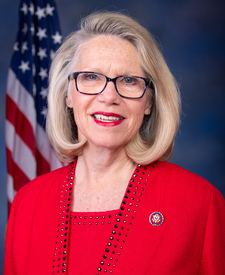
See how Carol D. Miller actually votes — against your values.
DeepSyte scores Carol D. Miller's record on the issues you care about — not party, not press releases. Take the 2-minute values quiz to see your personal alignment.
Sign in and take the values quiz to see how Carol D. Miller's votes line up with your views.
Prediction track record
We haven't made any vote predictions for Carol D. Miller yet. Predictions are generated for bills with tagged effects; they show up here as soon as the predict-votes job covers this rep's upcoming docket.
Consistency insights
No paired statements and votes yet for Carol D. Miller
We haven't yet found statement/vote pairs on the same topic for Carol D. Miller. This usually means either the rep hasn't taken public positions on bills that have come to a passage vote, or those bills haven't been tagged yet. The checker runs as new press releases and votes come in.
Pro analysis
AI rep analysis — Pro
Get an AI-narrated read on Carol D. Miller's full voting record against your stated values — aligned themes, conflicts, notable votes, and what to watch for.
We haven't extracted campaign positions for Carol D. Miller yet. Once their campaign website or position pages are processed, this card will track what they said vs how they voted.
Crossing the aisle
Passage votes where Carol D. Miller broke ranks with ≥75% of Republicans. Threshold catches substantively partisan splits; unanimous-ish or close votes are excluded.
Miller Brings Nearly $60 Million to West Virginia for Clean Water, Law Enforcement, Jobs, and Infrastructure
Washington, D.C. - Since Congress created the Community Project Funding program in Fiscal Year 2022, Congresswoman Miller (R-WV) has secured $59,302,487 for southern West Virginia. Community Project Funding allows Members of Congress to put forward requests for direct funding for projects in their home districts to the Appropriations Committee.
Miller’s nearly $60 million has brought crucial funds to West Virginia’s law enforcement, economic development projects, hospitals, health networks, and water systems in southern West Virginia. Since FY2022, Miller has secured:
$942,208 for Law Enforcement
$12,423,439 for Economic Development
$22,016,000 for Health Projects
$23,920,840 for Water and Sewer Projects
One of Miller’s main focuses has been the water crisis in our southern coalfields. Of the nearly $24 million secured for water and sewer projects since FY2022, $1,200,000 has been appropriated directly to Wyoming County water projects, and $2,995,840 has been appropriated to McDowell County.
Building on this crucial funding, Miller also joined Rep. Riley Moore (R-WV) last July in introducing an amendment to the House Interior Committee's Fiscal Year 2026 Department of the Interior, the Environmental Protection Agency (EPA), and Related Agencies Appropriations Act which successfully passed the House of Representatives. This amendment directed the EPA to provide information on the resources it has available to assist states and counties with a high prevalence of violations of drinking water regulations, such as Wyoming and McDowell Counties in southern West Virginia.
“I am grateful for Community Project Funding and that my role in Congress has allowed me to have an impact on southern West Virginia. I am especially thrilled to have secured nearly $24 million for water and sewer projects in my district. Clean drinking water is a necessity, but tragically, some communities in West Virginia struggle to access this basic need. I am committed to doing everything in my power to help these communities, whether through Community Project Funding or amendments to annual appropriations bills. I will continue working with my colleagues in Congress and the Trump Administration to deliver the support West Virginians need and deserve every day,” said Congresswoman Miller.
For Fiscal Year 2027, Miller has requested $70,430,000 for southern West Virginia projects and the funding is currently under consideration by the Appropriations Committee. Of this over $70 million being requested, $48,689,000 would go directly to water and sewer projects in West Virginia’s First Congressional District.
Background:
In Fiscal Year 2026, Congresswoman Miller requested $750,000 to remove a Combined Sewer Overflow in Welch, WV, allowing for compliance with the Clean Water Act and improving the quality of life for 868 residential and commercial customers in McDowell County.
In Fiscal Year 2025, Congresswoman Miller requested $750,000 to remove a Combined Sewer Overflow in Welch, WV.
In Fiscal Year 2024, Congresswoman Miller secured $750,000 for the town of Pineville's Brenton/Baileysville Waterline Extension Project that will provide water service to approximately 254 customers in Wyoming County.
In Fiscal Year 2024, Congresswoman Miller secured $1,750,000 for the construction of a new sewer system in Davy, WV that will cut pollution going into the Tug Fork River and eliminate health hazards for the community in McDowell County.
In Fiscal Year 2023, Congresswoman Miller secured $450,000 for the Wyoming County Commission to provide efficient, reliable, and safe public water to approximately 215 residents and businesses through the Hanover Waterline Extension Project.
In Fiscal Year 2022, Congresswoman Miller secured $495,840 for the DigDeep Right to Water Project in Welch, WV that will provide sanitary septic and sewage service to 35 households and also provide clean water for the community in McDowell County, WV.
Information for all Community Project Funding and Member Designated Funding requests can be found here.
###
Issues:Congress
Miller Questions Health Systems CEO During Ways and Means Hearing
Position: Congresswoman Miller questions whether health system consolidation serves patients' interests and examines how federal law, regulation, and taxpayer subsidies may create incentives that reward higher costs over health outcomes and competition.
Washington, D.C. – Congresswoman Carol Miller (R-WV) and her colleagues on the Ways and Means Committee held a hearing to investigate health care affordability for all Americans by examining the role of health systems. The hearing featured top executives from four diverse health systems. Members had the opportunity to examine these systems’ evolution from hospitals into consolidated health care conglomerates and inquire whether this reality is in the best interest of patients or whether it contributes to rising costs for families and taxpayers. During the hearing, Congresswoman Miller examined how federal law and regulation, as well as open-ended taxpayer subsidization, have created perverse incentives that reward higher costs at the expense of health outcomes, and market power instead of true competition that delivers value for patients.
A video and transcript of Congresswoman Miller’s questions and the provided responses can be found below.
Image
Miller, Colleagues Celebrate Bipartisan Resolution Declaring April as Second Chance Month
Washington, D.C. - Last week, Congresswoman Miller (R-WV) joined Representatives Bruce Westerman (R-AR) and Danny K. Davis (D-IL), as well as Senators Cramer (R-ND) and Klobuchar (D-MN) in reintroducing the bipartisan, bicameral Second Chance Month Resolution.
“In West Virginia, we know how important it is to provide everyone with opportunities to succeed. Recognizing April as Second Chance Month gives hope to those who are reentering the workforce after serving their time incarcerated. When we invest in our communities and put in place resources and support for people released from prisons and jails, we build stronger and safer communities. This resolution will bring more visibility to Second Chance programs that are instrumental in helping people across the nation get back on the right path as they reenter their communities,” said Congresswoman Miller.
“This is a nation of second chances. Offering incarcerated Americans the opportunity to succeed by reducing barriers preventing them from establishing good-paying jobs and earning sought-after respect is a critical key to reducing recidivism rates. By investing in these individuals who have proven to be committed to rectifying their mistakes, we are investing in the future success and safety of our communities. I am proud to introduce this resolution to recognize April as Second Chance Month. This piece of legislation champions second chances while highlighting the importance of restoring hope to individuals looking to reintegrate back into their communities with dignity,” said Congressman Westerman.
“There are millions of individuals in our country who have civil and criminal records that serve as barriers to obtaining education, technical skills, training, jobs, and government benefits. Second chances - and especially the Second Chance Act – help to reduce and remove these barriers. Therefore, I am proud to join my colleagues in recognizing Second Chance Month. Second Chance Month honors the work of non-profit organizations, faith-based entities, communities, governments, employers, and individuals that help those with records gain the skills, education, and employment needed to thrive, thereby strengthening individuals, rebuilding families, and growing our economy,” said Congressman Davis.
"As Prison Fellowship marks its 50th anniversary, the Second Chance Month resolution reflects our longstanding commitment to justice that restores. We know that when unnecessary barriers to reentry are removed, people are better equipped to succeed, making our neighborhoods safer and stronger for everyone,” said Scott Peyton, Director of Government Affairs for Prison Fellowship.
Read the full resolution text here.
Background:
This resolution recognizes April as Second Chance Month, raising awareness for unlocking opportunities for successful reentry into society following incarceration that ultimately reduces recidivism rates.
Millions of American adults with a criminal record face enormous obstacles to successfully re-enter society upon release. When legal and social barriers prohibit a formerly incarcerated person from finding well-paying jobs, this not only negatively impacts them, but also has lasting negative effects for their families. Beyond that, securing gainful employment and being accepted in society has been proven to reduce the likelihood of these individuals returning to prison in the future, ultimately decreasing crime and improving public safety.
This resolution is supported by Prison Fellowship, American Correctional Association, Brennan Center for Justice, CPAC, Due Process Institute, FAMM, Major County Sheriffs of America, Modern Fortis, National District Attorneys Association, Niskanen Center, Right on Crime, and Unify.US.
###
Miller Questions Secretary Kennedy on Chronic Disease Prevention, Nutrition Therapy, and Kidney Care Innovation
Position: Congresswoman Miller expressed support for expanded access to medical nutrition therapy for chronic disease prevention and emphasized the importance of Medicare policies that support innovation and access to treatments for kidney disease, particularly in rural states.
Washington, D.C. – Congresswoman Carol Miller (R-WV) and her colleagues on the Ways and Means Health Subcommittee were joined by Secretary Robert F. Kennedy Jr. for a hearing to discuss the priorities and policy proposals from the Department of Health and Human Services (DHHS) under the Trump Administration. Congresswoman Miller shared concerns about the disproportionate burden of chronic disease in rural states like West Virginia and emphasized the importance of prevention-focused care, particularly through expanded access to medical nutrition therapy, as well as the need to ensure Medicare policies support innovation and access to life-saving treatments for patients with kidney disease.
Image
Miller Hosts Economic Development Roundtable in Jackson County
Position: Congresswoman Miller supports tax relief for gig economy workers through her Saving Gig Economy Taxpayers Act, which raised the 1099-K reporting threshold from $600 to $20,000, and supports streamlining port-of-entry procedures for small businesses and manufacturers through her Secure Revenue Clearance Channel Act.
Washington, D.C. – On Friday, Congresswoman Carol Miller (R-WV) was joined by West Virginia Senator Eric Tarr, Delegate Happy Joe Parsons, the Jackson County Development Authority, and local community leaders and business owners for a roundtable discussion on recent economic development in the area. While there, Congresswoman Miller discussed the work she is doing in Washington to support working families in West Virginia and deliver meaningful legislative results for critical West Virginia industries.
One of the main topics of discussion was the recent passage of the Working Families Tax Cuts, which included Congresswoman Miller's own Saving Gig Economy Taxpayers Act, which reverted the 1099-K reporting threshold back from the Biden-imposed $600 threshold to the time-tested standard of $20,000 and 200 transactions. This legislation ensures our hairdressers, home bakers, and friends and neighbors selling products online are not harassed by the IRS for taxes they don’t owe. Additionally, Congresswoman Miller discussed her recent Secure Revenue Clearance Channel Act, which addresses the backlogs at our express ports of entry by allowing low-value shipments to move through the system more efficiently so that our small businesses and manufacturers can receive their products quickly.
Image
Source: open-data mirrors of the Senate eFD and House Clerk financial-disclosure systems. Disclosure within 30 days of trade is required by law (45 for spouse/dependent trades).
Top PAC donors · 2026 cycle
Political action committees that gave the most to this rep's principal campaign committee this cycle. PAC giving is direct organizational support — industry, ideological, or leadership.
1.NATIONAL ASSOCIATION OF REALTORS PACReal Estate4 contributionsReal-estate industry PAC — backs candidates supporting property-rights protections, mortgage-lending access, and tax incentives for homeownership.AI$20,000
2.NATIONAL AUTOMOBILE DEALERS ASSOCIATION PACBusiness4 contributionsTrade association PAC for new-car dealers — backs candidates supporting dealer franchise protections, vehicle sales regulations, and automotive retail interests.AI$20,000
3.AUTOMOTIVE FREE INTERNATIONAL TRADE4 contributions$20,000
4.MAJORITY COMMITTEE PAC--MC PACLeadership4 contributionsLeadership PAC — likely affiliated with a member of Congress or caucus group; backs allied candidates and party priorities.AI · low$20,000
5.NATIONAL ELECTRICAL CONTRACTORS ASSOCIATION PAC (NECAPAC)3 contributions$15,000
6.AMERICAN ISRAEL PUBLIC AFFAIRS COMMITTEE PACIdeological3 contributionsFederal PAC arm of AIPAC, established 2021. Backs candidates from both parties who support U.S.-Israel security and economic ties.AI$15,000
7.NATIONAL MULTIFAMILY HOUSING COUNCIL PACReal Estate3 contributionsReal-estate industry PAC representing apartment and multifamily housing operators — backs policies on housing development, property tax treatment, and rental regulations.AI$15,000
8.AMERICAN DENTAL ASSOCIATION PAC2 contributions$10,000
9.BUILD PAC OF THE NATIONAL ASSOCIATION OF HOME BUILDERS (BUILDPAC)2 contributions$10,000
10.AMERICAN BANKERS ASSOCIATION PAC (BANKPAC)Finance2 contributionsBanking-industry trade association PAC — backs candidates supporting deregulation, consumer-credit expansion, and reduced compliance costs for financial institutions.AI$10,000
Source: OpenFEC (api.open.fec.gov) Schedule A receipts where contributor type is “committee.” Aggregated by contributing committee. Self-transfers from joint-fundraising / victory committees are excluded.
Top individual contributors · 2026 cycle
Itemized individual contributions over $200 to this rep's campaign committee, aggregated by donor employer. PAC giving is shown above; this section is people, not organizations.
1.FORM ENERGY$11,300
2.KEYROCK ENERGY$8,000
3.COLE AUTOMOTIVE GROUP$7,500
4.ERGON INC.$7,000
5.CLEAR PATH$7,000
6.LONG HAUL LEASING$7,000
7.HALL STRATEGIES LLC$7,000
8.PAYROLL & INSURANCE GROUP$7,000
9.SERVICE PUMP AND SUPPLY$7,000
10.DUKE ENERGY$7,000
Source: OpenFEC Schedule A receipts where contributor type is “individual,” aggregated by the donor's self-reported employer. This is a geographic / industry correlation, not a corporate endorsement.