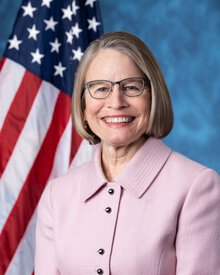
See how Mariannette Miller-Meeks's votes line up with your values.
DeepSyte scores Mariannette Miller-Meeks's record on the issues you care about — not party, not press releases. Take the 2-minute values quiz to see your personal alignment.
Sign in and take the values quiz to see how Mariannette Miller-Meeks's votes line up with your views.
Prediction track record
How often we called Mariannette Miller-Meeks's passage votes correctly, from their stated positions on each bill's tagged topics. Excludes “unclear” calls and abstentions.
139 predictions on record · none have been resolved by a passage vote yet. Check back as bills move.
A bill to provide for appropriate cost-sharing for insulin products covered under private health plans, and to establish a program to support health care providers and pharmacies in providing discounted insulin products to uninsured individuals.
Mariannette Miller-Meeks · statement ↔ vote record
77
Consistency score
Based on 3 data points across public statements and recorded votes · AI analysis of public records
118-s-546·Consistent
Recruit and Retain Act
88/100
What they said
May 11, 2026
Congresswoman Miller-Meeks expresses support for law enforcement officers, emphasizing the importance of National Police Week, adequate resources for police departments, and mental health support for officers.
The statement strongly backs law enforcement and says officers need adequate resources to recruit and retain personnel, which the bill addresses by expanding COPS grants for recruitment and reducing application fees. The representative's yes vote on passage is directionally aligned with that stated support, though the statement does not mention the bill specifically and the bill includes provisions beyond the statement's focus.
Congresswoman Miller-Meeks expresses support for law enforcement officers, emphasizing the importance of National Police Week, adequate resources for police departments, and mental health support for officers.
The statement expresses strong support for law enforcement officers, mental health support for officers, and adequate resources for police departments, without addressing federal retail crime prosecution specifically. The bill expands federal enforcement against organized retail and supply chain crime, which is a law-enforcement-related measure, and the rep voted yes on passage, so the direction is generally aligned, though the statement does not address the bill's specific provisions on money laundering, forfeiture, or gift cards.
Transnational Criminal Organization Illicit Spotter Prevention and Elimination Act
72/100
What they said
May 11, 2026
Congresswoman Miller-Meeks expresses support for law enforcement officers, emphasizing the importance of National Police Week, adequate resources for police departments, and mental health support for officers.
The statement expresses strong support for law enforcement officers, police resources, and officer mental health, and the bill increases criminal penalties for interfering with law enforcement and border control measures, which broadly aligns with backing law enforcement. However, the statement does not address border enforcement, immigration penalties, or the specific conduct the bill criminalizes, so the shared position is inferred from general pro-police values rather than an explicit stance on this bill.
Pairs with ambiguous language and high uncertainty are withheld until more data is available. Procedural, cloture, and amendment votes are excluded — they don't cleanly signal substantive support or opposition.
Pro analysis
AI rep analysis — Pro
Get an AI-narrated read on Mariannette Miller-Meeks's full voting record against your stated values — aligned themes, conflicts, notable votes, and what to watch for.
We haven't extracted campaign positions for Mariannette Miller-Meeks yet. Once their campaign website or position pages are processed, this card will track what they said vs how they voted.
Crossing the aisle
Passage votes where Mariannette Miller-Meeks broke ranks with ≥75% of Republicans. Threshold catches substantively partisan splits; unanimous-ish or close votes are excluded.
3
Cross-aisle votes
119-hconres-93·Sep 16, 2026·94% of R voted NO
Directing the President, pursuant to section 5(c) of the War Powers Resolution, to remove United States Armed Forces from hostilities with Iran.
ICYMI: Grassley, Miller-Meeks Op-Ed: Republicans Are Expanding Access to Primary Care in Iowa
Position: The release supports the Working Families Tax Cuts Act for allowing health savings account and flexible spending account funds to be used for direct primary care memberships, and credits the law with expanding access to primary care in Iowa.
BUTLER COUNTY, IOWA – Rep. Mariannette Miller-Meeks (R-IA) and Sen. Chuck Grassley (R-IA) wrote an op-ed published in The Hawk Eye highlighting how Republicans’ Working Families Tax Cuts Act is expanding access to primary care in communities across Iowa. The lawmakers specifically highlight improved access to a new and growing field of medicine called direct primary care (DPC).
Republicans worked hard to pass the Working Families Tax Cuts Act, preventing the largest tax increase in American history and putting more money back into the pocketbooks of seniors and families. The law also expanded access to primary care in communities across Iowa. As a result, Iowa families have better access to a new and growing field of medicine called direct primary care (DPC).
DPC is a locally delivered, patient-centered model of care that puts patients and their doctors, physician assistants, or nurse practitioners at the center of health care, rather than insurance companies and middlemen.
DPC was enabled under state law in 2018 and further protected in 2026. Now, thanks to the Republican Working Families Tax Cuts Act, Iowa families can use their health savings accounts (HSAs) to improve access to primary care.
DPC is a simpler way to get routine physicals, urgent care, and other primary care services. Patients pay a monthly subscription and get access to a primary care provider of their choice. Through this relationship, patients can communicate directly with their provider and typically get same-day or next-day service instead of waiting days or weeks to get care. Patients establish a relationship with a health care provider and utilize their services as often as they want without paying more.
Thanks to the new tax law, families can use tax-free money, through their HSA or flexible spending account (FSA), to pay for a membership-based model of care that lets them choose a primary care provider of their choice and gain access to a suite of care options under this direct primary care service arrangement.
More health care providers are turning to DPC because it allows them to spend more time with patients and less time dealing with paperwork and insurance company approvals. Across Iowa, direct primary care providers are opening their doors and growing in rural communities and suburban areas.
When patients have access to timely and high-quality primary care, they have better health outcomes and live longer.
Thanks to the Working Families Tax Cuts Act, more Iowa families can access direct primary care and get the timely care they need.
To read the op-ed from Rep. Miller-Meeks and Sen. Grassley Click HERE.
Issues:Health
Miller-Meeks, Energy and Commerce Chairman Guthrie Rally Southeast Iowa to Power the Largest Steel Mill in America
Position: The release advocates building new natural gas infrastructure in Iowa to supply a planned steel mill and associated businesses, and states that America should not outsource its energy needs.
BURLINGTON, IA — Congresswoman Mariannette Miller-Meeks, M.D. (IA-01) hosted House Energy and Commerce Committee Chairman Brett Guthrie and local elected officials and business leaders for an energy roundtable in Burlington on how to power the $15 billion steel mill planned for Lee County, where construction is set to begin next year, and the new businesses and jobs expected to follow it.
Participants discussed the need for new natural gas infrastructure to deliver gas to the mill and surrounding development. Companies have passed on Iowa in the past because the natural gas needed to support their operations wasn't available, and Iowa lost jobs because of it. With a $15 billion mill now coming to Southeast Iowa, the region has the opportunity to close that gap.
"Iowa has watched jobs and businesses go elsewhere because we didn't have the energy to support them. That ends now. With a $15 billion steel mill coming to Lee County, we are going to build the natural gas infrastructure Iowa needs, and we are going to do it here," said Congresswoman Miller-Meeks. "America produces the cleanest energy in the world. There is no reason to outsource our energy needs, and no reason to keep sending Iowa jobs overseas. Powering this mill means more good-paying jobs, more businesses, and more opportunity for hardworking Iowans."
Background
The Mill:
A $15 billion Mesabi Metallics steel mill, one of the largest in American history, is planned for Lee County, Iowa
Construction is set to begin next year, with steel production beginning in 2030
The project is expected to create 1,750 permanent jobs and support up to 6,000 construction jobs
It is projected to add $95 billion to the U.S. economy over the next decade
The mill is expected to produce up to 10 million tons of steel a year
Miller-Meeks' Role:
Congresswoman Miller-Meeks joined President Trump at the White House for the announcement of the project and has played a pivotal role in helping bring this historic steel mill to Iowa
She has led efforts to bring American manufacturing back to Iowa, including the Critical Infrastructure Manufacturing Feasibility Act, signed into law by President Trump
She also voted to pass the Working Families Tax Cuts which helped boost domestic manufacturing across the country
Energy:
About 60% of Iowa's energy comes from wind and about 11% from natural gas
Natural gas is needed to power the mill and the businesses expected to build around it
###
Issues:Energy
Congresswoman Miller-Meeks Visits Muscatine Child Protection Center
Position: The release states support for strengthening protections for children online, including the SPY Kids Act and the Conversational AI Services Act, and describes child abuse prevention and support as a priority.
MUSCATINE, IA — Congresswoman Mariannette Miller-Meeks (IA-01) today visited the Mississippi Valley Child Protection Center in Muscatine to learn more about their important work protecting children and supporting families.
“Every child deserves to grow up feeling safe, loved, and protected. It is heartbreaking that some children experience abuse, and we owe it to these children to stand up for them and make sure they have the support they need to heal", said Congresswoman Miller-Meeks. "I will continue fighting for the safety and well-being of all children. Thank you to the Mississippi Valley Child Protection Center for the important work you do to protect children and for having me."
The Mississippi Valley Child Protection Center works to reduce additional trauma, support effective investigations, provide medical evaluation services, connect families with appropriate community-based resources, including mental health providers, and assist in holding offenders accountable.
Background
During her visit, Congresswoman Miller-Meeks discussed the growing threat of online predators and the need to strengthen online safety for children. She has led legislation to strengthen protections for children online, including:
The SPY Kids Act (Stop Profiling Youth and Kids Act): Would strengthen safeguards against exploitative market research and profiling involving minors, including parental consent requirements for research involving teenagers. The legislation will prohibit online platforms from profiling, tracking, targeting, or running marketing experiments on minors for profit.
The Conversational AI Services Act: Would establish safeguards for children interacting with AI chatbots, including greater transparency, parental controls, and restrictions on manipulative features and harmful interactions. The legislation aims to protect children from exploitation, psychological harm, deceptive AI, and simulated emotional dependence on chatbots.
###
Miller-Meeks Bill to Bring Manufacturing Jobs Back to Iowa Becomes Law
Position: The release supports the enacted Critical Infrastructure Manufacturing Feasibility Act, which directs the Department of Commerce to study domestic manufacturing of high-demand imported products, and argues that reducing reliance on foreign supply chains strengthens economic and national security.
WASHINGTON, D.C. — President Donald Trump has signed into law the Critical Infrastructure Manufacturing Feasibility Act, legislation led by Congresswoman Mariannette Miller-Meeks, M.D. (IA-01) to bring manufacturing back to the United States and create good-paying jobs for Iowans.
"America cannot continue outsourcing the production of critical goods and good-paying manufacturing jobs to foreign adversaries. We must strengthen our domestic manufacturing, secure our supply chains, and ensure America can produce the essential materials our nation depends on," said Congresswoman Miller-Meeks. "This legislation creates a roadmap to bring manufacturing back and create new good paying jobs for Iowans. I’m proud to have led this legislation to put American jobs first, and am grateful it was signed into law."
The new law directs the Department of Commerce to identify high-demand products the U.S. imports because of manufacturing and supply chain constraints, and to assess whether they can be made here at home. It also examines opportunities to expand manufacturing in rural communities and industrial parks, helping identify new investment, jobs, and growth in Iowa and across the country.
By strengthening domestic production and reducing reliance on foreign supply chains, the law will help strengthen America’s economic and national security.
Background
This law builds on Congresswoman Miller-Meeks’ efforts to bring manufacturing jobs and investment back to Iowa. She has worked to advance a $15 billion steel mill in Lee County, the largest in the United States, expected to create 1,750 permanent jobs and up to 6,000 construction jobs, representing a major investment in Southeast Iowa. She also supported the pro-growth tax incentives in the Working Families Tax Cuts to encourage manufacturers to invest in America, bring production back from foreign adversaries like Communist China, and strengthen American supply chains.
Within one year of enactment of H.R. 1721, the Secretary of Commerce must conduct a study to:
Identify products in each critical infrastructure sector that are in high demand and imported because of a manufacturing, material, or supply chain constraint
Analyze the costs and benefits of making those products in the U.S., including effects on jobs, employment, labor conditions, and cost
Identify products that could feasibly be made in the U.S.
Analyze the feasibility of, and any barriers to, manufacturing them in rural areas, industrial parks, and rural industrial parks
###
Issues:Delivering Results
Miller-Meeks, Ernst Billion Dollar Boondoggle Act Signed Into Law
Position: The release announces enactment of the Billion Dollar Boondoggle Act, which requires federal agencies to report to Congress on taxpayer-funded projects that exceed cost estimates or fall significantly behind schedule, and states support for greater transparency and accountability in federal spending.
WASHINGTON, D.C. — President Donald Trump has signed into law bipartisan legislation led by Congresswoman Mariannette Miller-Meeks (IA-01) and Senator Joni Ernst (R-IA) to increase transparency and accountability for taxpayer-funded projects that go over budget and fall behind schedule.
The Billion Dollar Boondoggle Act requires federal agencies to report to Congress on taxpayer-funded projects that exceed their original cost estimates or fall significantly behind schedule, giving Congress and the American people greater visibility into projects that are not meeting expectations.
“Washington has a spending problem, and taxpayers deserve accountability,” said Miller-Meeks. “I’m proud to see the bipartisan Billion Dollar Boondoggle Act I led with Senator Ernst signed into law. This law will bring greater transparency to federal projects that go over budget and fall behind schedule, giving Congress and the American people the information they need to hold Washington accountable. Taxpayers work too hard for their money to see it wasted, and they deserve to know it is being spent responsibly.”
"Washington math doesn't add up, but my Billion Dollar Boondoggle law will restore accountability to its shady accounting. Taxpayers deserve this transparency, and it will protect them from being put on the hook for hundreds of billions of dollars sunk into failed and mismanaged projects plagued by massive cost overruns and never-ending delays," said Sen. Ernst. "While government boondoggles abound, the term is now officially in the law books for the first time. No politician wants their prized pet project to carry that label, but now there's no escaping it."
“Granite Staters deserve to know that their hard-earned, tax-dollars are being spent responsibly,” said Senator Hassan (D-NH). “This commonsense, bipartisan bill will give the public greater visibility into how their tax dollars are being used and it will help Congress identify wasteful spending. I am pleased to see this bill signed into law and I will continue working with my colleagues of both parties to protect taxpayer dollars and increase government transparency.”
Background:
The Billion Dollar Boondoggle Act will require the Office of Management and Budget to compile and submit an annual report to Congress identifying qualifying taxpayer-funded projects and providing information about changes to their scope, cost estimates, and completion dates.
The House originally passed the bill in July 2026. In September it cleared the Senate and was sent to President Trump's desk to become law.
Congresswoman Miller-Meeks has been a leading voice in the fight against government waste, fraud, and abuse. She first introduced the Billion Dollar Boondoggle Act in the 118th Congress and reintroduced it in the 119th Congress alongside Senator Ernst.
To read the full bill text, click HERE.
###
Dr. Miller-Meeks Joins Iowa Delegation in Push for More Rural Health Care Funding
Position: The release urges CMS to support Iowa's latest Rural Health Transformation Program funding request under the Healthy Hometowns initiative, and states that rural health investments are making a difference in Iowa communities.
IOWA – Congresswoman Mariannette Miller-Meeks, M.D. (IA-01) joined the Iowa congressional delegation in urging Centers for Medicare & Medicaid Services (CMS) Administrator Mehmet Oz to support Iowa’s latest funding request through the Rural Health Transformation Program (RHTP), known as Healthy Hometowns. The program, created through the Working Families Tax Cuts law, has already delivered $209 million to strengthen rural health care across Iowa in its first year.
“Iowa’s rural communities deserve access to high-quality health care close to home, and we are already seeing these investments make a difference,” said Dr. Miller-Meeks. “As a doctor and a representative of rural Iowa, I will continue fighting to bring more resources home, strengthen our rural health care workforce, and make sure Iowans can get the care they need without having to travel hours from home.”
In addition to Miller-Meeks, the letter was signed by U.S. Sen. Chuck Grassley (R-IA), U.S. Sen. Joni Ernst (R-IA) and U.S. Reps. Ashley Hinson (IA-02), Zach Nunn (IA-03) and Randy Feenstra (IA-04).
“In January, Iowa became the first state in the nation to award Rural Health Transformation Program funding as part of its Healthy Hometowns initiative, and it has ensured resources are going directly to rural communities, not bureaucrats. In year one of the program, Iowa’s $209 million federal investment is improving cancer prevention and treatment, workforce recruitment and retention, chronic disease care, and maternal and child health,” the members wrote.
“As we each travel throughout Iowa, visiting hospitals, health centers, clinics, and more, we witness firsthand how these investments are making a difference toward the health, well-being, and quality of life in rural communities. During your visit to the University of Iowa in May, you learned how our state is using telehealth and a hub-and-spoke model to increase access to care and improve health outcomes in our rural communities,” the members continued.
The members noted how communities across Iowa are already benefiting from these federal investments, including through the following six projects:
Mahaska Health in Oskaloosa is purchasing a new PET/CT system with cardiac imaging capability and recruiting an OB/GYN and a general surgeon physician assistant.
Washington County Hospital in Washington is purchasing a new CT scanner that is improving diagnostic capabilities and patient outcomes.
Lucas County HealthCenter in Chariton is purchasing its first-ever MRI machine to bring early detection cancer screenings to residents.
North Iowa Medical Center in Mason City is purchasing a new robotic bronchoscopy system that detects lung cancer earlier than previously possible.
Sioux Center Health in Sioux Center is expanding prenatal care through a new regional maternal health coordinator.
Wayne County Hospital in Corydon is standing up a radiation oncology center and will be serving as a combat cancer health hub.
Background
Dr. Miller-Meeks has been a strong advocate for expanding access to health care in rural Iowa. She has held three roundtables focused on the Rural Health Transformation Program, bringing together Iowa health care providers and stakeholders to discuss how the program can strengthen rural health care and expand access.
Miller-Meeks also raised the need for additional rural health resources directly with CMS Administrator Mehmet Oz during his visit to Iowa. Iowa’s timely and proactive implementation of its Rural Health Transformation Program could position the state to receive additional funding if other states do not utilize their available resources.
To read the full letter to CMS, click HERE.
Issues:Health
Miller-Meeks Introduces Bill to Protect Medicaid Whistleblowers from Retaliation
Position: Introduces legislation to prohibit retaliation against state and local Medicaid employees who report fraud, waste, and abuse, and to establish administrative and judicial relief processes including reinstatement, back pay, and damages.
WASHINGTON, D.C. — Congresswoman Mariannette Miller-Meeks, M.D. (IA-01) has introduced the Medicaid Whistleblower Protection Act, legislation to establish clear federal protections for state and local employees who report fraud, waste, and abuse in Medicaid programs. The bill comes after widespread reports of retaliation against whistleblowers in states like Minnesota, where public servants say they were punished for raising early warnings about fraud that later cost taxpayers hundreds of millions of dollars.
The bill amends Title XIX of the Social Security Act to prohibit adverse employment actions against Medicaid workers who make protected disclosures, and it establishes a clear administrative and judicial process for whistleblowers to seek relief, including reinstatement, back pay, and damages.
"No public servant should have to choose between their conscience and their livelihood. Whistleblowers who report fraud, waste, and abuse in Medicaid are protecting taxpayer dollars and the vulnerable people this program is meant to serve, and they deserve real protection, not retaliation," said Dr. Miller-Meeks. "The Medicaid Whistleblower Protection Act gives whistleblowers a clear legal process to report wrongdoing and seek relief if they're punished for speaking up. I will fight to make sure the people willing to tell the truth are protected, not silenced."
The Medicaid Whistleblower Protection Act is one of 14 bills in House Energy and Commerce Republicans' "Continuing the Fight Against Fraud" package, a sweeping program-integrity agenda introduced under Chairman Brett Guthrie (KY-02) to give states better data and technology, stronger enforcement incentives, and clearer accountability to detect and recover improper Medicaid payments.
“The amount of fraud that the Biden-Harris Administration allowed to go unchecked in government health programs is unacceptable. Every dollar stolen by fraudsters or wasted on improper payments is a dollar taken away from supporting families in need who rely on these programs,” said Chairman Guthrie. “While states are on the front lines of confronting this fraud, we must take commonsense steps to ensure that they are able to recoup their costs, providing incentives to do the vital work that is needed, including needed data sharing and new technologies that support enforcement, to ensure the program can continue to work for the Americans it was designed to serve. By using enhanced data analytics to find and eliminate fraud, incentivizing states to crack down on fraud more diligently, and fortifying the integrity of critical health programs, Republicans are leading the charge to restore the long-term vitality of federally funded health systems. Our multi-faceted program integrity package will help to combat the fraud that has plagued our system for far too long, I’m grateful for the consistent focus of our bill sponsors and their tireless effort to protect these programs, and we look forward to continuing the fight ensure Americans have access to the care they need.”
"I am so grateful for the leadership of Congresswoman Miller-Meeks and the House Energy & Commerce Committee for introducing this whistleblower protection bill. Too often, as we have seen in Minnesota, brave whistleblowers are retaliated against by politicians and agency leaders who are more interested in protecting their political base than taxpayers and vulnerable citizens. The federal, state and county workers who run these programs are often the first to see red flags, but, as we have seen time and again in Minnesota, if they dare to point it out, they are called racist, accused of creating a hostile work environment, demoted, reassigned or otherwise harmed personally and professionally," said Kristin Robbins, Minnesota State Representative, House District 37A. "The Whistleblower Protection bill will expand protections for federal, state and county employees so they can do what they do best: serve the public, help vulnerable citizens and protect taxpayers' hard-earned money."
Miller-Meeks is also leading a second bill in the package, the WALZ Act, which requires the HHS Office of Inspector General to review whether a 10 percent increase in a state's Medicaid spending may be attributable to fraud, waste, or abuse, giving Congress and states a data-driven early warning system for the kind of unchecked spending growth whistleblowers say went ignored in Minnesota for years.
Background
The Medicaid Whistleblower Protection Act would:
Prohibit adverse employment actions, including discharge, demotion, suspension, threats, harassment, or other discrimination, against covered individuals who make a protected disclosure related to a State Medicaid program.
Establish an administrative process for whistleblowers to seek relief, with the right to judicial review if they disagree with the outcome.
Provide remedies including reinstatement, two times back pay with interest, compensation for litigation costs and attorneys' fees, and punitive damages in cases of malice or reckless indifference.
Define protected disclosures broadly to include violations of law, fraud, waste, or abuse involving federal or state funds, gross mismanagement, abuse of authority, or a substantial danger to public health or safety.
The legislation follows a letter submitted to the House Committee on Oversight and Government Reform on January 7, 2026, by current and former Minnesota Department of Human Services employees, describing a pattern of retaliation against workers who raised early concerns about fraud in DHS programs. The letter states that employees flagged contracting irregularities, unusual financial transactions, and signs of fraud as far back as 2019, and that those who spoke up faced surveillance, repeated investigations, reassignment, and termination. It was entered into the congressional record and referenced in subsequent testimony before the Oversight Committee.
The bill also follows a Majority Staff Report released by the House Committee on Energy and Commerce, through the work of the Subcommittee on Oversight and Investigations chaired by Congressman John Joyce, M.D. (PA-13), detailing how fraud has continued to undermine the integrity of critical taxpayer-funded health care programs and the disparities in oversight and enforcement across state Medicaid programs. The report outlines 13 investigative findings and 37 recommendations to strengthen program integrity and keep fraudsters out of Medicare and Medicaid. During the investigation, the Committee sent 12 letters, held three Oversight and Investigations hearings, and reviewed more than 100,000 pages of documents. Read the full report here.
"The Oversight and Investigations Subcommittee is focused on rooting out fraud that threatens the future of Medicare and Medicaid. These crimes hurt patients and steal from the American taxpayer," said Chairman Joyce. "We will continue to expose those who exploit the system, hold fraudsters accountable, and advance commonsense recommendations that states can implement. This cannot be solved alone. Protecting the integrity of these programs must be a shared goal, because millions of Americans are counting on us to get it right."
About the "Continuing the Fight Against Fraud" package: Medicaid remains vulnerable to waste, fraud, abuse, and improper payments going undetected. The 14-bill package strengthens program integrity in three ways: better data and technology for states to detect fraud, stronger enforcement tools and incentives to recover improper spending, and clearer accountability requiring states to identify vulnerabilities and take corrective action. In addition to the Medicaid Whistleblower Protection Act and the WALZ Act, the package includes bills from Chairman Guthrie and Committee Republicans, such as Griffith's Medicaid Fraud Fighting and Taxpayer Protection Act, Balderson's SMART Act, Joyce's Medicaid Integrity Improvement Act, and Pfluger's Medicaid Integrity and Fiscal Accountability Act, among others.
###
Issues:Delivering ResultsHealth
Miller-Meeks Introduces Bipartisan Legislation to Protect Children from Human-Like Chatbots
Position: The release supports legislation prohibiting AI chatbots from communicating in a human-like manner with minors by default, including pretending to be human or simulating emotions, to protect children's well-being and relationships.
WASHINGTON D.C. – Congresswoman Mariannette Miller-Meeks (R-IA), Rep. George Whitesides (D-CA), Rep. Mike Kennedy (R-UT), and Rep. Doris Matsui (D-CA) introduced the bipartisan Protecting Kids from Human-Like Chatbots Act, legislation to protect children from AI chatbots designed to imitate human relationships. This bill would prohibit chatbots from communicating by default in a human-like way with minors, including pretending to be human, expressing simulated emotions, or using relationship-building language to keep children engaged.
As artificial intelligence becomes a bigger part of everyday life, parents deserve to know that the technology their children use is safe and designed with their well-being in mind. One of the fastest-growing concerns for parents is AI chatbots designed to act like a child's friend, confidant, or even romantic partner. According to Common Sense Media's 2026 census, 89% of 13- to 15-year-olds now use AI, including 28% who use it every day. One in three teens have used an AI companion to help with social interactions. This legislation takes a commonsense approach by ensuring AI remains a tool for children, rather than becoming a substitute for real human relationships.
“Parents should not have to worry that an AI chatbot is pretending to be their child’s friend or encouraging them to form an emotional attachment to a machine,” said Rep. Miller-Meeks. “The Protecting Kids from Human-Like Chatbots Act puts parents in control and makes sure AI chatbots used by minors are designed to function as tools, without forming fake relationships. This bill is about giving families peace of mind and making sure new technology serves our children without trying to replace real human relationships. Protecting our kids is a priority we should all share.”
“As a father of two teenagers, I’ve seen firsthand how affected our kids already are by this digital age, where corporations are using everything from addictive algorithms to overly-friendly chatbots to keep children hooked on their platforms,” said Rep. Whitesides. “It is critical, as AI continues to be integrated into every part of our lives, that our kids’ safety remains at the forefront of the conversation, and that we attack this problem at its inception. By requiring developers to build safety standards into their models before they start interacting with children, we can ensure that these tools are trained correctly, in a way that does not negatively impact their mental health or personal relationships.”
“As Utah leads the way in protecting our children from the harms of social media and AI, I am working to ensure the federal government is an active partner in those efforts. That is why I am co-leading the Protecting Kids from Human-Like Chatbots Act,” said Rep. Kennedy. “Human-like AI chatbots pose significant emotional, psychological and safety risks by mimicking real human relationships. AI needs to be a tool, not a friend. This bill sets clear boundaries for how chatbots interact with our children and puts parents fully in charge of these features.”
“AI chatbots are becoming more common in children’s lives, and parents deserve to know those systems are not being designed to imitate a friend, express feelings, or build an emotional relationship with their child,” said Rep. Matsui. “The Protecting Kids from Human-Like Chatbots Act would require chatbots used by minors to act like tools, not human companions. It would help protect children and keep parents in control. Congress has a responsibility to put practical safeguards in place as this technology evolves, and protecting children from manipulative design is a common-sense place to start.”
Under the Protecting Kids from Human-Like Chatbots Act:
Chatbots cannot claim to be human, claim to have feelings or consciousness, pretend to have a body or private life, or impersonate credentialed professionals like doctors or counselors.
Chatbots cannot guilt-trip children into staying online, create a false sense of urgency, or encourage purchases by suggesting they are necessary to maintain the relationship.
These protections carry across sessions and cannot be bypassed through prompts or roleplay. Children cannot direct an AI to act as a romantic partner, family member, or therapist.
Chatbots must clearly identify themselves as AI upfront, periodically during long conversations, and whenever a child asks.
Only a parent or guardian can turn off the default protections. Chatbots cannot teach children how to disable them.
NIST will work with industry and academic partners to develop testing standards and examples of compliant behavior, and companies that follow the guidance won't be penalized.
The FTC and state attorneys general can enforce the law, with penalties that scale with the number of children affected.
The Protecting Kids from Human-Like Chatbots Act does not:
Ban any product, feature, or mode for adults.
Require age verification or new data collection.
Restrict what information a chatbot can provide, or limit politeness, natural grammar, or age-appropriate style.
The Protecting Kids from Human-Like Chatbots Act is endorsed by Americans for Responsible Innovation, Young People’s Alliance, the JED Foundation, Dr. Stephen Scheuller, President of Society for Digital Mental Health, Public Citizen, The Anxious Generation, Tech Oversight Project, Transparency Coalition, Innovation for Everyone, Human Line Project, All Girls Allowed, Mothers Against Media Addiction (MAMA), and Parents RISE, a slew of kids’ safety and tech groups.
“Chatbots use human-like features to maximize engagement with users, making kids particularly vulnerable to forming unhealthy attachments,” said Brad Carson, President of Americans for Responsible Innovation. “A non-personified default setting is a targeted guardrail that will shield children from the deceptive personification of chatbots and put parents back in control. As today’s kids grow up with AI, this bill takes a critical step towards ensuring that chatbots don’t interfere with development or replace real relationships.”
“Our communities are at a crossroads as Big Tech attempts to replace kids’ relationships with AI companions,” said Sam Hiner, Executive Director, Young People's Alliance. “I applaud Reps Whitesides, Kennedy, Matsui and Miller-Meeks for putting forward the first federal bill that advances the ideas we’ve been championing with the Human-like AI Coalition. This bill is the strongest federal approach offered yet to ensure AI stays a tool and prevent relationships with AI chatbots from becoming normalized in the coming years.”
“We believe this bill is a strong step towards ensuring that chatbots children can access are designed safely,” said Julianna Arnold, Founding Member of ParentsRISE!. “Products made available to children must not exploit and manipulate their growing brains, and those guardrails need to be built in from the start, not added as an afterthought. We look forward to continue clarifying the age assurance language as federal and state frameworks evolve, and are eager to work with the new Congress on clear, privacy-preserving standards that protect children online and ensure the privacy of every citizen.”
“We are learning that teens are especially susceptible to forming attachments to responsive, always-available technology, sometimes at the expense of real human connection and support,” saidDr. Zainab Okolo, LCMFT, Senior Vice President, Policy, Advocacy & Government Relations, The Jed Foundation (JED). “By requiring chatbots to avoid simulating emotional relationships with minors and prohibiting design tactics that discourage young people from stepping away, this bill addresses some of the features that can deepen unhealthy reliance on these systems. These safeguards can help keep technology in its proper role and encourage young people to turn to trusted adults and qualified professionals when they need meaningful mental health support.”
“As chatbot use is becoming more ubiquitous among teens and kids, the need for oversight of these products grows evermore crucial. If young users have access, we must ensure AI chatbots are designed with their safety in mind before release. The Protecting Kids from Human-Like Chatbots Act protects kids and teens by requiring AI chatbots be non-personified,” saidAlexa Arnold, Cofounder and CEO, The Anxious Generation Movement. “This ensures kids form friendships with other kids - not bots misrepresenting themselves as people. We thank Reps. Whitesides, Miller-Meeks, Mike Kennedy, and Matsui for leadership on this critical issue.”
“How we design chatbots shapes how young people engage with them, what they take with them, and how they are affected by them,” saidStephen Scheuller, President of Society for Digital Mental Health. “We need clear regulations and guidelines to support intentional design choices in ways that promote the wellbeing of children.”
“AI chatbots should not be designed to convince children that they are friends, therapists, or people who genuinely care about them,” saidPublic Citizen. “This bill establishes that commonsense baseline. When children use these products, they should know they are interacting with a machine and companies should not be allowed to manipulate them into believing otherwise.”
“Real advancements in AI must include safety for our children!” said All Girls Allowed.
To read the full bill text, Click HERE.
###
President Trump, Miller-Meeks Announce Historic $15 Billion Steel Plant Coming to Lee County
Position: The release celebrates a $15 billion steel plant investment in Lee County, Iowa, and describes the representative's support for legislation promoting domestic manufacturing and workforce training.
WASHINGTON, D.C. — Congresswoman Mariannette Miller-Meeks (IA-01) joined President Donald Trump in the Oval Office for the announcement of a historic $15 billion investment to build the largest steel plant in American history in Lee County, Iowa. The project is expected to create more than 1,700 permanent jobs paying over $49 an hour, along with 5,000 to 6,000 construction jobs.
Miller-Meeks has long worked help bring the project to fruition and has championed legislation to strengthen American manufacturing and prepare Iowa workers for the jobs it creates.
"For too long, Iowa families have watched their jobs shipped overseas and their communities hollowed out. Not anymore," said Miller-Meeks. "The largest steel plant in America is coming to Lee County with more than 1,700 permanent, good-paying jobs. I'm proud to have helped make this historic investment a reality. There's no better place than Iowa to make things IN America, BY Americans."
This historic investment will deliver:
1,700+ permanent jobs in Lee County.
5,000–6,000 construction jobs during the plant’s development.
$95 billion+ in projected economic activity.
American-made steel, reducing reliance on foreign production.
New opportunities for Iowa families to build their futures in the communities they call home.
The plant is expected to initially produce 7.5 million tons of steel annually, with the capacity to expand to 10 million tons. Iron ore will be transported from Minnesota down the Mississippi River to the Lee County facility.
Background
Miller-Meeks has been a leading advocate for bringing manufacturing back to the United States and ensuring Iowa workers are prepared to fill the jobs that follow.
Her Critical Infrastructure Manufacturing Feasibility Act (H.R. 1721) will identify critical products currently imported and assess the feasibility of manufacturing them domestically, including in rural communities. The bipartisan legislation passed the House and Senate and is headed to President Trump’s desk to be signed into law. It will help identify opportunities to bring critical manufacturing and good-paying jobs back to communities like those in Southeast Iowa.
Miller-Meeks also introduced the Improve Employer-Directed Skills Act (H.R. 2690), which empowers Iowa employers to partner with workforce boards to train and upskill workers for the exact jobs local businesses need. A version of the legislation passed the House with bipartisan support as part of the Stronger Workforce for America Act.
The Working Families Tax Cuts Act, signed into law in 2025, expanded access to workforce training by establishing Workforce Pell Grants. Eligible students can use these grants for short-term programs that prepare them for in-demand careers, helping more Iowans gain the skills needed for good-paying jobs without pursuing a four-year degree.
From identifying opportunities to bring manufacturing home to preparing workers for new careers, Miller-Meeks has championed policies to help Iowa compete, attract investment, and create lasting opportunities for its communities.
###
Issues:Delivering ResultsEconomyJobs and Economy
Position: Congresswoman Miller-Meeks voted to pass H.R. 1346, which permanently authorizes year-round nationwide E15 fuel sales. She supports the legislation as a means to lower fuel prices, strengthen energy independence, support rural communities and Iowa agriculture, and expand consumer fuel choices.
WASHINGTON, D.C. – Congresswoman Mariannette Miller-Meeks (IA-01) voted to pass H.R. 1346, the Nationwide Consumer and Fuel Retailer Choice Act, bipartisan legislation permanently authorizing the nationwide, year-round sale of E15 fuel.
"Tonight, both parties came together to deliver a major win for Iowa Farmers, and a major win for millions of Americans who are seeking relief at the pump," said Congresswoman Miller-Meeks. "Iowa farmers deserve certainty, not more political games and misinformation. Year-round E15 lowers prices at the pump, strengthens American energy independence, supports rural communities, and delivers a major win for Iowa agriculture. I'm proud to have gotten this done."
Congresswoman Miller-Meeks has been one of Congress’s strongest advocates for year-round E15, fighting to strengthen Iowa agriculture, expand consumer fuel choices, and support American energy independence.
“Rep. Miller-Meeks’ dogged determination kept the E15 package moving in the House. Her outreach across the aisle was key to the strong bipartisan support for E15 on final House passage. IRFA members thank Rep. Miller-Meeks for delivering on E15, an issue of great importance to Iowa farmers and to anyone who wants to save money at the pump.” - Monte Shaw, Executive Director, Iowa Renewable Fuels Association
“American families are asking for help, and today Rep. Miller-Meeks delivered. The House’s approval of year-round E15 brings us one step closer to lowering prices at the pump in Iowa and across the U.S.” said Growth Energy CEO Emily Skor. “We’re deeply grateful to biofuel champions like Congresswoman Miller-Meeks for delivering lower gas prices to Iowans and for tirelessly working to secure this critical victory for year-round E15. We urge the Senate to take up this legislation right away—the sooner this bill reaches the President’s desk, the sooner we can deliver more savings to more Americans in every corner of the country.”
Background:
Before the vote, Congresswoman Miller-Meeks spoke on the House Floor and expressed her strong support for H.R. 1346 while dispelling myths being spread about E15.
Current law forces the EPA to issue emergency waivers each summer to allow E15 sales. H.R. 1346 removes those outdated barriers and provides long-overdue certainty for Iowa farmers, biofuels producers, fuel retailers, and consumers.
Nationwide E15 access is projected to save drivers nearly $27 billion annually, lower fuel costs for families, increase corn demand by 2.4 billion bushels, and support more than 128,000 American jobs. The bill also reforms the Renewable Fuel Standards' Small Refinery Exemption program while preserving protections for legitimate small refiners.
E15 can save the average American household more than $200 annually at the pump.
Nationwide E15 adoption is projected to save drivers nearly $27 billion each year.
Expanded E15 access could increase corn demand by 2.4 billion bushels.
H.R. 1346 permanently authorizes nationwide year-round E15 sales.
Additional Resources:
H.R. 1346 – Nationwide Consumer and Fuel Retailer Choice Act
Myth vs. Fact Sheet on E15 and Small Refinery Exemptions
E15: Good for the Budget and Taxpayers
Americans Want E15
###
Issues:Delivering ResultsEconomyEnergy
Source: GDELT 2.0 GKG, filtered to a curated list of national outlets. Inclusion is not endorsement; opinion pieces and reported news are mixed.
Recent stock activity
Periodic transaction reports filed under the STOCK Act — disclosed by the rep, sourced from public filings.
No disclosed trades on record.
Source: open-data mirrors of the Senate eFD and House Clerk financial-disclosure systems. Disclosure within 30 days of trade is required by law (45 for spouse/dependent trades).
Top PAC donors · 2026 cycle
Political action committees that gave the most to this rep's principal campaign committee this cycle. PAC giving is direct organizational support — industry, ideological, or leadership.
1.GOLDFINCH PAC1 contribution$10,000
2.STEEL PAC1 contribution$10,000
3.SEAL PACOther2 contributionsPAC with unclear affiliation — name does not clearly signal industry, ideology, or leadership focus.AI · low$10,000
4.BALL CORPORATION PACBusiness2 contributionsCorporate PAC for Ball Corporation, a major packaging and beverage-container manufacturer — backs candidates supporting business-friendly regulatory and tax policies.AI$10,000
5.ENGINEERS POLITICAL EDUCATION COMMITTEE (EPEC)/INTERNATIONAL UNION OF OPERATING ENGINEERSLabor2 contributionsTrade-union PAC for the International Union of Operating Engineers — backs candidates supporting prevailing-wage standards, infrastructure investment, and project labor agreements.AI$10,000
6.NATIONAL RURAL ELECTRIC COOPERATIVE ASSOCIATION AMERICA'S ELECTRIC COOPERATIVES PAC2 contributions$10,000
7.NATIONAL APARTMENT ASSOCIATION PACReal Estate2 contributionsTrade association PAC for apartment owners and operators — backs candidates supporting property-rights protections, favorable tax treatment of rental housing, and reduced regulatory burdens on multifamily properties.AI$10,000
8.AMERICAN ACADEMY OF OPHTHALMOLOGY INC POLITICAL COMMITTEE (OPHTHPAC)2 contributions$10,000
9.DOMINION ENERGY, INC. PAC - DOMINION PAC2 contributions$10,000
Source: OpenFEC (api.open.fec.gov) Schedule A receipts where contributor type is “committee.” Aggregated by contributing committee. Self-transfers from joint-fundraising / victory committees are excluded.
Top individual contributors · 2026 cycle
Itemized individual contributions over $200 to this rep's campaign committee, aggregated by donor employer. PAC giving is shown above; this section is people, not organizations.
1.SELF$97,588
2.ENTREPRENEUR$23,672
3.ESTES COMPANY$22,000
4.ATTORNEY$17,500
5.VALMORE GP$15,293
6.STARKEY HEARING TECHNOLOGIES$14,000
7.AMBER MOUNTAIN$14,000
8.NEW MOUNTAIN CAPITAL$14,000
9.ULINE$14,000
10.WINKLEVOSS CAPITAL MANAGEMENT$14,000
Source: OpenFEC Schedule A receipts where contributor type is “individual,” aggregated by the donor's self-reported employer. This is a geographic / industry correlation, not a corporate endorsement.