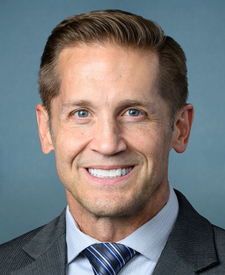
See how Richard McCormick actually votes — against your values.
DeepSyte scores Richard McCormick's record on the issues you care about — not party, not press releases. Take the 2-minute values quiz to see your personal alignment.
Sign in and take the values quiz to see how Richard McCormick's votes line up with your views.
Prediction track record
How often we called Richard McCormick's passage votes correctly, from their stated positions on each bill's tagged topics. Excludes “unclear” calls and abstentions.
No paired statements and votes yet for Richard McCormick
We haven't yet found statement/vote pairs on the same topic for Richard McCormick. This usually means either the rep hasn't taken public positions on bills that have come to a passage vote, or those bills haven't been tagged yet. The checker runs as new press releases and votes come in.
Pro analysis
AI rep analysis — Pro
Get an AI-narrated read on Richard McCormick's full voting record against your stated values — aligned themes, conflicts, notable votes, and what to watch for.
We haven't extracted campaign positions for Richard McCormick yet. Once their campaign website or position pages are processed, this card will track what they said vs how they voted.
Crossing the aisle
Passage votes where Richard McCormick broke ranks with ≥75% of Republicans. Threshold catches substantively partisan splits; unanimous-ish or close votes are excluded.
Congressman McCormick Introduces the Make DC Square Again Act
Position: Rep. McCormick argues that Congress should restore the District of Columbia to its original ten-mile-square boundaries by reversing the 1846 retrocession of Arlington County and Alexandria to Virginia, asserting that the retrocession was unconstitutional and that the current arrangement gives Democrats an unfair electoral advantage.
WASHINGTON - Today, Rep. Rich McCormick (R-GA) introduced the Make DC Square Again Act to undo the unconstitutional 1846 retrocession of Arlington County and the City of Alexandria from the District of Columbia to Virginia. This will restore DC’s original boundaries established by the Residence Act of 1790.
Article I, Section 8, Clause 17 of the U.S. Constitution, commonly referred to as the Enclave Clause, grants Congress authority over a federal district “not exceeding ten miles square” made up of territory ceded by state governments to serve as the seat of government. The Constitution does not enumerate any power to retrocede such territories back to state governments.
This bill follows the narrow passage of a partisan redistricting referendum in Virginia. The newly proposed map would make Democrat candidates favored to win in 10 of Virginia’s 11 congressional districts in a state that, absent the vote of DC bureaucrats, would have a substantial republican majority. The retroceded areas of Arlington and Alexandria alone contribute roughly 250,000 DC votes in Virginia statewide elections, votes that belong to Washington DC.
“The Constitution never authorized Congress to carve pieces out of the federal District and hand them back to a state,” said Congressman McCormick. “Democrats have spent years manipulating maps and boundaries to rig elections. The Make DC Square Again Act restores the original ten-mile-square District and ends the artificial advantage Virginia Democrats have recently gained from all the federal bureaucrats moving into Virginia.”
Key Facts from the Bill:
● The Enclave Clause grants Congress exclusive legislative authority over a District “not exceeding ten miles square.” It contains no authority to retrocede territory back to the states.
● In 1846, Congress unconstitutionally ceded Alexandria County (now Arlington County and the City of Alexandria) to Virginia.
● Senator Benjamin Wade introduced legislation in 1866 to repeal the retrocession, and today’s bill finally corrects this unconstitutional error.
The Make DC Square Act restores the District of Columbia as the Founders envisioned it.
###
SST Leaders Request Information from NASEM on Greenhouse Gas Study and Committee Practices
WASHINGTON, D.C. – Today, House Science, Space, and Technology Committee Chairman Brian Babin, along with Investigations and Oversight Subcommittee Chairman Rich McCormick and Environment Subcommittee Chairman Scott Franklin, sent a letter to Dr. Marcia McNutt, President of the National Academies of Sciences, Engineering, and Medicine (NASEM), requesting information related to NASEM’s report on Anthropogenic Greenhouse Gases and U.S. Climate: Evidence and Impacts.
In the letter, the Chairmen note NASEM’s long history of providing valuable scientific advice to the federal government. They emphasize that NASEM’s credibility is contingent upon its objectivity, stating, “Congress has long relied on NASEM precisely because it is expected to operate free from political influence, financial entanglements, or institutional bias.” The Chairmen add that “when those standards are compromised—or appear to be compromised—the value of NASEM’s advice to policymakers and the public is correspondingly diminished.”
The Chairmen raise concerns about the formation, funding, and expedited timeline of the Greenhouse Gases Committee, which was assembled shortly after the Environmental Protection Agency (EPA) proposed rescinding its 2009 Endangerment Finding. NASEM itself acknowledged that “the impetus for this report was a notice of proposed rulemaking issued in August 2025 by the [EPA],” and the Committee produced a “fast-track[ed]” report within weeks that reaffirmed the Endangerment Finding.
They question whether the Committee’s work was conducted with sufficient transparency, balance, and independence, particularly given its compressed timeline and potential reliance on private funding sources.
The letter also highlights broader structural concerns related to NASEM’s exemption from the Federal Advisory Committee Act (FACA), noting that the exemption allows NASEM to operate outside many of the transparency, balance, and public accountability requirements that apply to other federal advisory committees. This exemption is particularly relevant as special interest groups have challenged other advisory reports related to the Endangerment Finding, citing FACA compliance concerns.
They also cite recent issues involving undisclosed conflicts of interest in NASEM-affiliated work, including the retraction of a climate science chapter in the Federal Judicial Center’s Reference Manual on Scientific Evidence, as further indication of concerns regarding conflict-of-interest safeguards and institutional practices.
The letter requests information on NASEM’s communications with federal agencies, funding sources—including private donations—and its processes for ensuring objectivity, managing conflicts of interest, assembling committees, and initiating studies. It also seeks records related to the Committee’s work and broader data on NASEM’s funding and study practices, and asks that NASEM retain all relevant records and respond by May 1, 2026.
To read the full letter, please click here.
Issues:Science & Technology
Reps. McCormick, Hill, Adams, & Figures Introduce HBCU Research Capacity Act to Expand Access to Federal Research Funding
Position: The representatives support legislation establishing a federal clearinghouse to improve HBCU access to federal research funding and reduce barriers to grant opportunities.
WASHINGTON, D.C. – Today, House Historically Black Colleges and Universities (HBCU) Caucus Co-Chairs Rep. French Hill (AR-02) and Rep. Alma Adams (NC-12), along with Caucus members Rep. Richard McCormick (GA-06) and Rep. Shomari Figures (AL-02), introduced the HBCU Research Capacity Act. The legislation is the House companion to S. 4167, introduced by Sen. Katie Britt (R-Ala.) and Sen. Raphael Warnock (D-Ga.) on March 24, 2026.
HBCUs are cornerstones of American higher education, producing a disproportionately large share of Black STEM graduates and playing an outsized role in building the nation's workforce, yet they receive less than 1% of the roughly $60 billion in federal research and development funding allocated to colleges and universities each year. The HBCU Research Capacity Act fixes that by establishing a federal clearinghouse giving HBCUs a centralized, regularly updated source of federal grant opportunities across agencies, along with best practices for building research capacity and stronger coordination to reduce longstanding barriers to access.
"Historically Black Colleges and Universities, including the four we are blessed to have here in Arkansas, have been a source of opportunity and innovation for generations," said Rep. Hill, Co-Chair of the Congressional Bipartisan House HBCU Caucus. "Despite their outsized contributions, HBCUs receive a fraction of the federal research funding available to them. The HBCU Research Capacity Act takes a practical step toward changing that by ensuring these institutions have the information and tools they need to compete for federal dollars and continue fulfilling their vital mission for generations to come."
"HBCUs have always punched above their weight. HBCUs contribute nearly $16.5 billion to the economy every year despite receiving less than 1% of federal research funding. That gap isn't a reflection of merit, it's a reflection of decades of systemic underfunding,” said Rep. Alma Adams, Founder and Co-Chair of the Congressional Bipartisan HBCU Caucus. “The HBCU Research Capacity Actwill help by giving our institutions a clear path to federal grant opportunities. I'm proud to champion this House companion with Representatives Hill, McCormick, and Figures and alongside Sen. Rev. Warnock and Sen. Britt in the Senate to ensure HBCUs receive the funding they have earned."
“The time to act is now if we want to keep America leading in the world of STEM. Our nation’s HBCUs are producing some of the brightest minds in science and technology, even as they face real funding challenges,” said Congressman Richard McCormick. “I’m proud to co-sponsor the HBCU Research Capacity Act that ensures these students can stay ahead in the global technology race, which starts with investing in our own talent.”
"HBCUs have a long-standing track record of making significant contributions to our nation’s economy and workforce despite being consistently underfunded,” said Rep. Shomari C. Figures. “With Alabama being home to the most HBCUs in the nation, this bill is a game-changer for the institutions in my state at the forefront of research and development because it creates a one-stop shop for all federal research funding opportunities. I'm proud to join my colleagues in introducing this bipartisan legislation, and I will continue fighting for HBCUs to receive the resources they need to continue training and educating the next generation of leaders, researchers, and scholars.”
Background
The HBCU Research Capacity Act would:
Establish a federal clearinghouse to provide a centralized source of information on federal grant opportunities available to HBCUs.
Ensure HBCUs receive consistent and timely updates on research and development funding opportunities across federal agencies.
Provide best practices and guidance to help institutions strengthen research capacity and improve competitiveness for federal grants.
Encourage coordination across key federal agencies to better align funding opportunities and reduce barriers to access.
Promote transparency and accountability through regular reporting to Congress and participating institutions.
Direct agencies to review grant programs and identify gaps in support for HBCU participation.
Congressmen McCormick and Ivey Launch Sickle Cell Disease Caucus in the 119th Congress
WASHINGTON – Today, Congressman Rich McCormick. (R-GA), Co-Chair of the Sickle Cell Disease Caucus announced the relaunch of the Congressional Sickle Cell Disease Caucus in the 119th Congress, alongside Congressman Glenn Ivey (D-MD). The caucus is a bipartisan platform dedicated to advancing policies that improve the lives of individuals and families affected by sickle cell disease (SCD).
"I am proud to serve as a co-chair for the relaunch of the Congressional Sickle Cell Disease Caucus alongside Congressman Glenn Ivey. As an ER Physician and former Morehouse School of Medicine Student Body President, I have seen firsthand the importance of expanding access to address health outcomes. This caucus will serve as a critical forum to ensure that those who suffer from Sickle Cell Disorder maintain access to the critical care that they deserve,”said Congressman Rich McCormick (GA-07).
“The reconstitution of the Sickle Cell Disease Caucus is a critical step toward addressing a disease that has disproportionately impacted the Black community for far too long while remaining underfunded and overlooked. We have a responsibility to drive meaningful investments in research, expand access to care, and accelerate the search for lasting treatments and cures for those living with sickle cell disease. I look forward to working with members from both parties to address this issue,”said Congressman Glenn Ivey (MD-04).
The Sickle Cell Disease Caucus will help elevate awareness of SCD, support research and innovation, strengthen access to high-quality care, and build support for legislation and federal funding that address the needs of the sickle cell community.
###
Issues:Healthcare
Chairman McCormick Delivers Opening Remarks at Investigations and Oversight Subcommittee Hearing on Scientific Publishing
WASHINGTON, D.C — Today, at the House Science, Space, and Technology Committee's Investigations and Oversight Subcommittee hearing, The State of Scientific Publishing: Assessing Trends, Emerging Issues, and Policy Considerations, Chairman Rich McCormick delivered opening remarks examining the rapid evolution of scientific publishing and the challenges it presents for research integrity and public trust.
"The scientific publishing ecosystem has changed dramatically,"said Chairman McCormick. "What was once a straightforward process of peer review and dissemination has become a complex, commercialized marketplace with misaligned incentives and bad actors willing to exploit them."
His full remarks are available HERE and below.
Good morning. Thank you all for being here today.
We are addressing a challenge that sits at the heart of American scientific leadership—a challenge that demands honest scrutiny of the systems we rely on to produce and validate knowledge.
Science advances through trust. Everything we do rests on the assumption that the underlying work is real, rigorous, and honestly reported.
I know the importance of this firsthand. From my time at med school to practicing in the emergency room, my career has been based on published research and its credibility.
Our actions are based on trust — be it when a policymaker acts on published evidence, or when a federal agency directs billions in funding to specific research.
That foundation is under threat, and it is the job of this Committee to understand why.
The scientific publishing ecosystem has changed dramatically.
What was once a straightforward process of peer review and dissemination has become a complex, commercialized marketplace with misaligned incentives and bad actors willing to exploit them.
Now consider the scale of the problem. Estimates suggest that over 400,000 published studies worldwide may originate from so-called paper mills—operations that produce fabricated or manipulated manuscripts for a fee.
In 2023 alone, Wiley, a prominent American publisher, retracted over 8,000 fraudulent papers from a single subsidiary.
That is not an anomaly— it’s a symptom. The incentive structures driving this are well understood, but under-addressed.
Academic careers are built on publication counts. Institutions compete on research output.
The result is a "publish or perish" culture that rewards quantity over quality—and creates a ready market for shortcuts.
When speed and quantity displace rigor and reproducibility, it is not just individual researchers who are harmed. It is the integrity of the scientific record itself.
Federal taxpayer dollars support the research that feeds this system.
If fraudulent publications are being cited in grant applications that shape the direction of federal policy, American taxpayers will end up subsidizing the corruption of the very science they are paying to advance.
Meanwhile, the Chinese Communist Party has built an academic incentive structures that has generated an industrial-scale paper mill problem.
Chinese universities have reportedly paid authors substantial cash rewards for publications in prestigious journals.
A survey of medical residents at hospitals in southwest China found that nearly half admitted to buying papers, selling papers, or hiring ghostwriters to meet publication requirements.
Critically, this fabricated research does not stay in China—it enters Western journals, shapes citations, and contaminates the global scientific literature on which researchers depend on.
The rise of artificial intelligence intensifies all of this.
AI lowers the cost and technical barrier to generating plausible-looking scientific content at scale.
The same tools that can accelerate legitimate research can be weaponized to fabricate data, manufacture citations, and flood the publication pipeline with content that appears credible but is not.
As these capabilities grow, the gap between what looks like science and what is science will only widen—unless institutions, publishers, and federal agencies act deliberately to close it.
Open access mandates, which this Committee has engaged with extensively, add another layer of complexity.
The movement to make federally funded research freely available is a worthy goal, but the article processing charge model used to make this financially feasible creates its own distortions.
This model incentivizes publishers to prioritize quantity over quality, disadvantaging smaller institutions, and enabling predatory journals that collect fees while providing no meaningful peer review.
The agencies under this Committee's jurisdiction have begun responding.
Following letters sent by this Committee earlier this year, agencies are developing award conditions that can lead to suspension or termination of funding when integrity requirements are not met.
That is a positive development, and we want to understand how those efforts are progressing.
But agency action has limits, and the structural pressures faced by this industry require a more comprehensive response.
This Committee's responsibility is to ensure that federal investments in science are protected, that the research enterprise maintains the credibility it requires to function, and that American institutions are not disadvantaged by competitors who treat scientific integrity as optional.
That is the purpose of today's hearing. Our witnesses can help us understand both the depth of the problem and what meaningful solutions look like.
I look forward to a serious and substantive discussion.
###
Issues:Science & Technology
Representatives Mccormick & McBride Introduce Legislation to Expand Biotechnology Education
WASHINGTON, D.C — Today, Rep. Rich McCormick (R-Ga.) and Rep. Sarah McBride (D-Del.), members of the House Science, Space, and Technology Committee, introduced the bipartisan Biotechnology for All High School Students Act. The legislation aims to increase access to hands-on biotechnology education, helping to strengthen the future of health care, agriculture, the environment, and other critical industries. This is the seventh bill that Rep. McBride has introduced this Congress, all of which have been bipartisan. Full text of the bill can be found here.
"America's leadership in biotechnology starts in the classroom. As competitors like China rapidly invest in biotech, we cannot afford to fall behind. This bill expands access and ensures our students can be part of America's innovation economy. By investing in hands-on learning and expanding access to cutting-edge resources, we are building the workforce that will drive innovation and keep the United States competitive on the global stage,"said Rep. McCormick.
Biotechnology is the applied science of harnessing living organisms to advance scientific discovery in areas such as health care, food production, energy and the environment, and manufacturing. As a leading hub for biotech innovation, Delaware is home to several key companies conducting cutting-edge research in biotechnology and bioscience and thousands of jobs in the life sciences.
The Biotechnology for All High School Students Act would establish the National Biotechnology Education Consortium, bringing together the federal government, state and local partners, and biotechnology stakeholders to provide recommendations on how best to expand biotechnology education in high schools in Delaware and across the country. Priority would be given to schools with limited access to biotechnology resources.
“Biotechnology is helping shape the future of health care, agriculture, and our economy, but we must do more to prepare the next generation to lead in this critical field,”said Rep. McBride. “The bipartisan Biotechnology for All High School Students Act would help close that gap by expanding access to biotechnology education and equipping students with the skills to continue driving innovation in Delaware and across the country. I’m grateful to Rep. McCormick for his partnership and look forward to advancing this legislation together.”
Specifically, the bill would authorize the National Science Foundation, in consultation with the Department of Education and the Consortium, to award competitive grants to eligible entities to support biotechnology education and ensure teachers and students have the resources they need. These efforts would include professional development and lab-based training for teachers; development and distribution of curriculum design and instructional materials; the acquisition of laboratory equipment; partnerships with institutions of higher education, the private sector, and nonprofit organizations; and the development of transferable, stackable biotechnology credentials for students.
This legislation is supported by a broad coalition of stakeholders, including the Afterschool Alliance, iGEM, National Security Commission, BioBuilder, and the National Institute for Innovation in Manufacturing Biopharmaceuticals (NIIMBL).
“The Afterschool Alliance is pleased to support Representatives McBride and McCormick's Biotechnology for All High School Students Act. By explicitly recognizing informal learning environments—such as afterschool programs—as sites of biotechnology education, the bill reflects the reality of how young people engage with learning across settings. With more than 80 percent of their waking hours spent outside a traditional classroom, afterschool programs are not supplemental to the STEM education ecosystem—they are central to it. We particularly welcome the bill's provisions for stackable credentials, ensuring that what students learn beyond the school day counts toward their futures,”said Anita Krishnamurthi, PhD, Senior Vice President for STEM and Youth Civic Engagement at Afterschool Alliance.
"The Biotechnology for All High School Students Act is a critical step toward building a robust bioeconomy — by expanding access to hands-on synthetic biology lab skills and investing in workforce development at the high school level, this legislation ensures that students across the country are equipped with the skills and knowledge to drive the next generation of biotechnological innovation,”said Janet Standeven, Director of High School, iGEM and Program Director, Georgia Tech Frugal Science Academy.
“Biotechnology has incredible power to inspire curiosity, open doors to discovery, and equip the next generation of STEM innovators to solve real-world challenges,”said Dr. Angela Belcher, Commissioner on the National Security Commission on Emerging Biotechnology. “The Biotechnology for All High Schools Act will engage students early and often and give them the tools and resources to build, innovate, and shape the future of American science and manufacturing.”
“To lead in the bioeconomy of the future, we must invest in biotechnology education now,”said Natalie Kuldell, Founder and Executive Director, BioBuilder. “This legislation expands access at scale by supporting teachers, curriculum, laboratory infrastructure, and cross-sector partnerships so biotechnology becomes part of every high school student’s education, not limited to select schools. That’s how we turn student interest into a workforce ready to lead, and I’m grateful to Rep. Sarah McBride for her leadership.”
"The Biotechnology for All High School Students Act will lead to an informed, empowered, and more resilient society that can benefit from biotechnology in ways that promote job creation, health, and security — critical areas in today's dynamic world. I want to thank Congresswoman McBride for prioritizing investment in biotechnology at the federal level,"said Kelvin Lee, Institute Director, NIIMBL.
Full text of the bill can be found HERE.
###
Issues:Science & Technology
Representatives McCormick & DeLauro Introduce CLEAR LABELS Act with Senator Rick Scott in the Senate
Position: The release advocates for the CLEAR LABELS Act, which would require prescription drug labels to disclose the country of origin for finished drugs and active pharmaceutical ingredients, increasing transparency in the pharmaceutical supply chain.
WASHINGTON, D.C — Today, Representatives Rich McCormick (GA-07) and Rosa DeLauro (CT-03) have introduced the bipartisan Consumer Labeling for Enhanced API Reporting and Legitimate Accountability for Base Entity Listings (CLEAR LABELS) Act, with Senators Rick Scott (R-FL) and Kirsten Gillibrand (D-NY) leading the effort in the Senate.
Many prescription drugs, and the active pharmaceutical ingredients (APIs) they rely on, are manufactured overseas, including in Communist China. Current federal labeling rules do not require disclosure of where these ingredients or finished drugs are made, leaving patients and providers without key information. The CLEAR LABELS Act would change that. It requires prescription drug labels to clearly list the original manufacturers of both the drugs and their APIs, giving Americans the transparency they deserve and ensuring stronger accountability in the pharmaceutical supply chain.
"I'm proud to be the House co-lead of the CLEAR LABELS Act. This bipartisan and bicameral bill will bring transparency to consumers, pharmacists, and providers about the country of origin of pharmaceuticals and APIs while empowering stakeholders with knowledge of where their medications come from,”said Representative Rich McCormick (GA-07). “Americans deserve to know where their prescription drugs, or the APIs used to make them, are manufactured. I'm proud to work alongside Representative DeLauro and Senators Scott and Gillibrand to pass this legislation.”
"American patients deserve to know where their medications and their ingredients come from,” said Representative Rosa DeLauro (CT-03). “Right now, federal law leaves patients, pharmacists, and providers completely in the dark about whether the drugs they rely on were manufactured in a facility with strong safety standards or in a country with weak oversight. The CLEAR LABELS Act changes that. By requiring transparency on the country of origin for finished drug products, active pharmaceutical ingredients, and the key starting materials used to make them, we will begin to address our dangerous overreliance on overseas pharmaceutical supply chains. I'm proud to co-lead this legislation and look forward to working with my colleagues in the House and Senate to make it law."
Senator Rick Scott (R-FL)said, “As parents and grandparents, we do everything we can to make informed, safe decisions that keep our families safe and healthy. But right now, families are kept in the dark about where the drugs they rely on are coming from. America’s drug supply is dependent on our adversaries like Communist China and nations such as India to manufacture our drugs and their ingredients, often with limited transparency and oversight. This broken process leaves patients clueless about where their drugs come from. Families deserve to have confidence that the medicines they take are safe, regulated, and clearly labeled. That’s why I’m leading the bipartisan, and now bicameral, CLEAR LABELS Act to ensure your medicines have clear and upfront country-of-origin labeling to help ensure every American can feel comfortable knowing what’s in their medicine cabinet. I appreciate my colleagues in the Senate for joining me in this effort, and I’m thankful to Congressman McCormick for leading the way in the House.”
“Americans deserve to know where their prescription drugs are manufactured so they can make informed health care decisions,” said Senator Kirsten Gillibrand (D-NY). “The CLEAR LABELS Act would shine a light on pharmaceutical manufacturing by making this information readily accessible to patients, pharmacists, and providers while strengthening accountability across the supply chain. As the top Democrat on the Senate Aging Committee, I will keep fighting to make sure every American has access to safe, effective, lifesaving medications and the clear, reliable information they need.”
###
Issues:Healthcare
Congressman Rich McCormick Introduces the HBCU Empowerment and Reform Act
Position: Congressman McCormick introduced legislation to update federal definitions under the Higher Education Act to expand HBCU designation eligibility, allowing Predominantly Black Institutions founded after 1964 but before November 8, 1965 to qualify for HBCU status and associated federal resources.
WASHINGTON - Last week, Congressman Rich McCormick (GA-07) introduced the HBCU Empowerment and Reform Act. The bill updates outdated federal definitions to ensure fairness for students at historically underserved institutions.
Under the Higher Education Act of 1965, schools are classified as either Historically Black Colleges and Universities (HBCUs) or Predominantly Black Institutions (PBIs). While PBIs serve the majority of African American student populations, many are excluded from HBCU designation and its associated resources simply because they were founded after an arbitrary 1964 cutoff.
The HBCU Empowerment and Reform Act remedies this by setting a clear eligibility date of November 8, 1965, when the Higher Education Act was signed into law. This change would allow qualifying PBIs that narrowly missed the original cutoff to receive HBCU status and better support their students.
“As a former student body president of Morehouse School of Medicine, I am honored to introduce this transformative piece of legislation. Updating outdated federal definitions to ensure fairness for students at historically underserved institutions has been a priority of mine since coming to Congress. I look forward to seeing stronger, more support for their students,”said Congressman McCormick.
Congressman McCormick’s Floor Speech on his HBCU Empowerment & Reform Act can be found here.
Issues:Values
Subcommittee Chairman McCormick Opens Hearing on AI Data Center Infrastructure
Position: Chairman McCormick argues that federal environmental permitting and approval processes for data center and transmission infrastructure are too slow to meet AI infrastructure demands, and that Congress should examine ways to streamline these processes while maintaining reliability and environmental review.
WASHINGTON, D.C — Today, at the House Science, Space, and Technology Committee's hearing, Powering America’s AI Future: Assessing Policy Options to Increase Data Center Infrastructure, Investigations and Oversight Subcommittee Chairman Rich McCormick delivered opening remarks highlighting one of the most pressing challenges to U.S. AI leadership: whether America can build the infrastructure needed to sustain it.
"Artificial intelligence requires enormous computing power, and that means enormous amounts of electricity. That is not up for debate," Chairman McCormick said. "What is important to discuss is whether our approval processes to build infrastructure can meet that demand within a meaningful timeframe."
His full remarks are available here and below.
Good morning. Thank you all for being here.
Today, we are discussing an issue at the intersection of energy policy, innovation, and national competitiveness. Artificial intelligence requires enormous computing power, and that means enormous amounts of electricity. That is not up for debate. What is important to discuss is whether our approval processes to build infrastructure can meet that demand within a meaningful timeframe. Right now, they are not—we need to understand why and what Congress can do about it.
Consider transmission line projects, which are essential to delivering power to new data centers. Permitting for these projects currently averages about four years. In some cases, it stretches beyond a decade. Meanwhile, federal environmental reviews under NEPA averaged 26 months in 2024—more than two years before construction even begins. That is a serious concern when infrastructure must keep pace with rapidly advancing technology.
Then there is litigation. Even when agencies ultimately prevail—which they do roughly three-quarters of the time—the process itself can add years to project timelines.
Meanwhile, China is building data center and power infrastructure at considerable speed through centralized planning. Its data center electricity consumption is projected to grow dramatically over the next five years.
I am not suggesting we adopt their system. But we should acknowledge that our competitors are not operating under the same constraints.
Schools like the College of Engineering at the University of Georgia are helping respond to China’s surge by developing AI-enabled transmission planning tools designed to accelerate complex grid studies while preserving reliability. Using AI to help plan the infrastructure that powers AI is exactly the kind of innovation we should be encouraging.
Last year, the Trump Administration issued Executive Order 14318 to address some of these delays by prioritizing permitting for large data centers and improving coordination across agencies. That is a positive step.
For agencies under this Committee’s jurisdiction— including NIST, DOE, and NASA—the implications are significant. However, executive action has limits. The underlying statutes—NEPA, the Endangered Species Act, and the Clean Water Act—remain unchanged.
There are also practical consequences. Several projects have encountered substantial permitting hurdles despite their strategic importance. These delays affect not only private companies but also the federally supported research ecosystems those facilities are meant to anchor.
Cost allocation is another issue. Data centers consume vast amounts of electricity—sometimes 10 to 50 times more per square foot than traditional buildings. Under traditional utility rate structures, infrastructure costs are spread across all customers. That raises the question of whether residential ratepayers could end up subsidizing upgrades that primarily serve high-intensity industrial users.
Some companies are addressing this proactively. Google has partnered with utilities to fund new generation capacity directly rather than shifting costs to ratepayers. Other companies are exploring space-based computing platforms that could operate outside of traditional terrestrial permitting frameworks. While still early-stage, these concepts highlight how regulatory friction can influence where and how infrastructure is developed.
We should also consider how this conversation extends beyond major metropolitan regions. Much of rural Georgia—and rural America—still operates on cooperative grid infrastructure originally built under mid-20th century electrification policy. That system was not designed for compute-intensive infrastructure. If AI integration expands into agriculture, logistics, and public services, rural grid capacity could become a binding constraint.
So what needs to happen? We must evaluate whether a permitting framework largely designed in the 1970s is suited to infrastructure that is now central to national security and economic competitiveness in 2026. That includes reviewing litigation timelines and considering whether AI-related infrastructure warrants differentiated treatment.
I am not advocating the elimination of environmental review. But we should ask whether the current process is meeting its intended goals efficiently—or simply creating unnecessary delay.
This Committee's responsibility is to understand how regulatory frameworks affect innovation, research infrastructure, and American competitiveness in critical technologies. That is the purpose of today's hearing. Our witnesses can help us clarify both the scale of the challenge and potential solutions. I appreciate their willingness to be here.
I look forward to a substantive discussion about how Congress can ensure America maintains its technological leadership while addressing legitimate regulatory concerns.
Issues:Energy & Natural ResourcesScience & Technology
Source: open-data mirrors of the Senate eFD and House Clerk financial-disclosure systems. Disclosure within 30 days of trade is required by law (45 for spouse/dependent trades).
Top PAC donors · 2026 cycle
Political action committees that gave the most to this rep's principal campaign committee this cycle. PAC giving is direct organizational support — industry, ideological, or leadership.
1.HOUSE FREEDOM FUNDLeadership6 contributionsMember-of-Congress leadership PAC — supports conservative House candidates and Republican priorities aligned with fiscal and social conservative principles.AI$44,154
2.NATIONAL AUTOMOBILE DEALERS ASSOCIATION PACBusiness3 contributionsTrade association PAC for new-car dealers — backs candidates supporting dealer franchise protections, vehicle sales regulations, and automotive retail interests.AI$15,000
3.DELTA AIR LINES PAC3 contributions$15,000
4.HINDUS OF GEORGIA PAC3 contributions$15,000
5.LEAN FORWARD AMERICA FUNDIdeological1 contributionProgressive advocacy PAC — supports candidates and causes aligned with forward-looking Democratic and progressive policy priorities.AI$13,374
6.CITIZENS CLUB FOR GROWTH INC PAC1 contribution$11,515
7.WAR VETERANS FUND 20221 contribution$11,107
8.SPACE EXPLORATION TECHNOLOGIES CORP. PACDefense1 contributionAerospace and defense contractor PAC — supports candidates backing federal space contracts, national security priorities, and commercial space development.AI$10,000
9.MAJORITY COMMITTEE PACLeadership1 contributionLeadership PAC — likely affiliated with a member of Congress or caucus group; specific positions not inferable from the name.AI · low$10,000
10.THE EYE OF THE TIGER PACLeadership2 contributionsLeadership or single-issue PAC — specific positions and affiliations not inferable from the name.AI · low$10,000
Source: OpenFEC (api.open.fec.gov) Schedule A receipts where contributor type is “committee.” Aggregated by contributing committee. Self-transfers from joint-fundraising / victory committees are excluded.
Top individual contributors · 2026 cycle
Itemized individual contributions over $200 to this rep's campaign committee, aggregated by donor employer. PAC giving is shown above; this section is people, not organizations.
1.CEO$23,500
2.RELIABLE PAVING$23,000
3.SELF$19,750
4.GEORGIA HEALTH CARE ASSOCIATES$16,000
5.H3 REAL ESTATE ADVISORS LLC$14,500
6.BUSINESS$14,250
7.CHIEF EXECUTIVE OFFICER$14,000
8.BUSINESS OWNER$13,500
9.PARTNER$12,000
10.EXECUTIVE$10,600
Source: OpenFEC Schedule A receipts where contributor type is “individual,” aggregated by the donor's self-reported employer. This is a geographic / industry correlation, not a corporate endorsement.