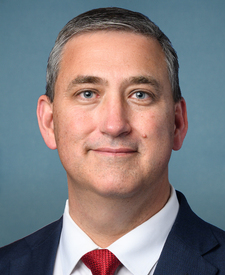
See how Nathaniel Moran actually votes — against your values.
DeepSyte scores Nathaniel Moran's record on the issues you care about — not party, not press releases. Take the 2-minute values quiz to see your personal alignment.
Sign in and take the values quiz to see how Nathaniel Moran's votes line up with your views.
Prediction track record
How often we called Nathaniel Moran's passage votes correctly, from their stated positions on each bill's tagged topics. Excludes “unclear” calls and abstentions.
To prohibit the disclosure of records by the Secretary of Housing and Urban Development of individuals for the purposes of immigration enforcement, and for other purposes.
A bill to provide for appropriate cost-sharing for insulin products covered under private health plans, and to establish a program to support health care providers and pharmacies in providing discounted insulin products to uninsured individuals.
No paired statements and votes yet for Nathaniel Moran
We haven't yet found statement/vote pairs on the same topic for Nathaniel Moran. This usually means either the rep hasn't taken public positions on bills that have come to a passage vote, or those bills haven't been tagged yet. The checker runs as new press releases and votes come in.
Pro analysis
AI rep analysis — Pro
Get an AI-narrated read on Nathaniel Moran's full voting record against your stated values — aligned themes, conflicts, notable votes, and what to watch for.
We haven't extracted campaign positions for Nathaniel Moran yet. Once their campaign website or position pages are processed, this card will track what they said vs how they voted.
Crossing the aisle
Passage votes where Nathaniel Moran broke ranks with ≥75% of Republicans. Threshold catches substantively partisan splits; unanimous-ish or close votes are excluded.
Moran, Young Introduce Legislation to Promote and Expand Apprenticeship Programs
Position: The release advocates for the WAGES Act, which would create a refundable payroll tax credit for employers who maintain or participate in Registered Apprenticeship Programs to offset wages and program costs.
U.S. Representative Nathaniel Moran (TX-01) and Senator Todd Young (R-IN) today introduced the Workforce Apprenticeship Growth and Education Support (WAGES) Act on National Apprenticeship Day, creating a refundable payroll tax credit for employers who maintain or participate in a Registered Apprenticeship Program (RAP). The tax credit offsets the cost of wages paid to apprentices and mentors, as well as the cost of other program expenses.
“Apprenticeships are one of the most powerful—and underutilized—pathways to prosperity in America,” said Rep. Moran. “This legislation changes that by making it easier and less costly for businesses to invest in the next generation of skilled workers through apprenticeship programs. We are making it practical for employers across America to create workforce opportunities from within their organization by utilizing the expertise of their experienced employees to upskill and mentor younger workers, all while doing so by keeping more of their tax dollars.”
“Apprenticeships equip individuals with sustainable skills to advance their careers and offer employers job-ready workers, but too many businesses still face barriers to launching or scaling these programs,” said Sen. Young. “At a time when high-demand industries are struggling to fill open positions, our bill will make it easier for businesses to invest in high-quality apprenticeship programs, strengthening our workforce and expanding pathways to good-paying careers. This is an important step in ensuring Americans are prepared for the jobs of today and tomorrow.”
Karen Kerrigan, President and CEO, Small Business & Entrepreneurship Council (SBE Council): “The Workforce Apprenticeship Growth and Education Support (WAGES) Act is a timely bill that will strengthen America’s workforce pipeline and help small business employers play a more significant role in skills development. SBE Council strongly supports the WAGES Act and applauds Senator Todd Young and Representative Nathaniel Moran for their leadership in sponsoring this important legislation that will expand access and usage of apprenticeship programs by small businesses and our workforce.”
Small Business & Entrepreneurship Council (SBE Council) Support Letter
Neal Couture, CEO of American Society for Nondestructive Testing (ASNT):“Nondestructive testing is essential to the safety and reliability of our nation’s infrastructure, energy systems, and manufacturing operations, yet the industry is facing a growing workforce challenge as more experienced professionals retire and fewer workers enter the field,” said Couture. “Apprenticeships provide a proven pathway to build that workforce through structured, hands-on learning aligned with real-world industry needs, and the WAGES Act is an important step toward supporting employers and expanding access to high-quality training programs.”
The American Society for Nondestructive Testing (ASNT) Support Letter
Alex Rosen, SVP of Legislative Affairs for the American Trucking Associations: “A safe, efficient 21st century supply chain requires a highly trained, qualified workforce to power the trucking industry. The WAGES Act will help meet that goal by providing pathways into interstate trucking while promoting enhanced instruction that will benefit the safety of all road users. ATA applauds Sen. Todd Young and Rep. Nathaniel Moran for seeking to expand opportunities for Americans to access this rewarding, well-paying profession without the burdensome debt associated with other career tracks.”
Sean Kennedy, Chief Advocacy Officer, National Restaurants Association: “Restaurants are one of the last industries where someone can start in an entry-level job and work their way into a leadership position. The Association and our Educational Foundation are committed to supporting that advancement through Hospitality Sector Registered Apprenticeships. More than 5,000 people have already been through the program, and this bill will make it easier for restaurant employers to invest in apprenticeships and scale career pathways across the industry. We appreciate Sen. Young’s and Rep. Moran’s commitment to the career growth of the industry’s workforce and their support of the business owners who employ 1 in 10 people in the U.S.”
Additional Organizations Supporting WAGES Act Include:
National Roofing Contractors Association
Associated Equipment Distributors
American Hotel & Lodging Association
Who Qualifies and What’s Covered?
Maintain a RAP OR participate in one through written agreements, like collective bargaining agreements (CBAs);
Employ at least one qualified apprentice during the calendar quarter; and
Not have received federal payments for the same qualifying wages/expenses.
Covered program expenses include:
Related technical instruction (classroom, distance learning, or another approved format);
On-the-job learning costs and supervision reimbursement;
Mentor wages — the amount paid above a journey worker’s base rate while mentoring an apprentice (capped at $10,000/quarter per mentor);
Program development, registration, and maintenance costs; and
CBA contributions to registered apprenticeship sponsors.
Directly benefits industries with deep roots in Northeast Texas: energy, construction, manufacturing, HVAC, welding, automotive, transportation, and healthcare.
Supports community college and career and technical education (CTE) pipelines already operating in the district.
Reduces upfront cost barriers for rural employers who want to formalize informal training programs.
Applies to both small single-employer programs and multi-employer CBA-based programs—flexible for TX-01's diverse employer base.
Refundability ensures full benefits for smaller employers with limited tax liability.
In 2025, President Trump signed an Executive Order to prepare Americans for high-paying skilled trade jobs of the future, with plans to reach and surpass 1 million new active apprenticeships. This legislation builds on the Trump Administration's efforts to expand apprenticeships. Workers benefit from apprenticeships by receiving a skills-based education that prepares them for good-paying jobs. Apprenticeship programs help employers recruit, build, and retain a highly skilled workforce.
Last summer during a district work period, Rep. Moran held a roundtable with members of the Texarkana Chamber of Commerce. Local businesses and organizations shared a common concern: despite recognizing the value apprenticeships could bring to the community, many lack the resources to take on apprentices. Following this conversation, Rep. Moran set out to find a solution that would make it easier for companies to grow within the community and expand access to apprenticeship opportunities in the region. The WAGES Act is the solution, providing a payroll tax credit to help businesses overcome the financial barriers that have kept them from investing in the next generation of workers.
Moran, Carter Introduce Legislation to Support Timely Reforestation After Natural Disasters
Position: The representatives support legislation that removes tax barriers to reforestation by allowing landowners to immediately expense reforestation costs following federally declared natural disasters, eliminating the current $10,000 cap and recovery periods.
U.S. Representatives Nathaniel Moran (TX-01) and Buddy Carter (GA-01) introduced the Save America’s Family Forests (SAFF) Act to help rural landowners and forestry operations rapidly recover from natural disasters by removing key taxation barriers that currently delay reforestation efforts across the country.
“When a natural disaster tears through a rural community, landowners shouldn’t have to fight the IRS while fighting to replant their forests,” said Rep. Moran. “We are giving Texas forest landowners the financial certainty and support needed to replant and restore forests. Across East Texas, timber represents decades of strategic investment—and now our rural communities have the tools to reinvest quickly and rebuild for the next generation.”
“From South Georgia to the coast, our communities are seeing firsthand the devastating impacts of wildfires burning thousands of acres and threatening homes,” said Rep. Carter. “The Save America’s Family Forests Act ensures landowners can recover faster and keep their forests productive. I’m proud to introduce this commonsense, bipartisan solution to support Georgia’s forestry community.”
This legislation allows landowners to fully and immediately expense reforestation costs following a federally declared natural disaster by removing the $10,000 cap and eliminating long recovery periods—improving access to capital needed to quickly replant and restore forests.
The Piney Woods covers approximately 23,500 square miles across East Texas. Within that, approximately 12.1 million acres (about 54% of the region) are productive forestlands, spread across 43 counties.
In 2024, the Texas forest sector directly contributed $27.36 billion in industry output and employed over 73,000 people. When including indirect and induced effects, the total contribution reached $54.19 billion and supported more than 187,500 jobs.
Texas Forestry Association: “Texas forest landowners face real challenges recovering from natural disasters, and outdated tax policy should not stand in the way of replanting and rebuilding. The Save America’s Family Forests Act gives them the tools to reinvest quickly, keep their land productive, and support rural jobs. This legislation also helps fulfill President Trump’s executive order to boost domestic timber production by ensuring we can keep our working forests healthy and resilient to grow more of the resources America depends on.”
Forest Landowners Association: “Family forest landowners play a vital role in keeping America’s working forests healthy, resilient, and productive, but recovering from natural disasters can create significant financial challenges. The Save America’s Family Forests Act provides a commonsense solution by allowing landowners to reinvest more quickly in reforestation when it matters most. By building on proven expensing policies, this legislation will help ensure our forests remain a strong foundation for rural economies, domestic timber production, and long-term environmental stewardship.”
VIDEO: Congressman Moran’s Bipartisan Foster Youth Education Bill Passes Ways and Means Committee Unanimously
Today, the House Ways and Means Committee unanimously advanced H.R. 7463, the Foster Youth Post-Secondary Education Access and Success Act, during a committee markup. This legislation is aimed at expanding and modernizing the Education and Training Voucher (ETV) program under the John H. Chafee Foster Care Program for Successful Transition to Adulthood (“Chafee program”). U.S. Representative Nathaniel Moran (TX-01), who co-leads the bipartisan legislation with Rep. Judy Chu (CA-28), released the following statement after the bill’s passage:
“Several weeks ago, I had the privilege of hearing from Jaydan Martinez, a student from Stephen F. Austin University, just about an hour from my house,” Moran said. “Jaydan’s story is one of resilience in the face of instability, abuse, and constant uncertainty—circumstances no young person should have to endure. His parents were unable to care for him, and like so many foster youth, he was forced to navigate life in the midst of uncertainty. Unfortunately, Jaydan’s experience is not unique. Thousands of young adults aging out of foster care face similar challenges as they try to build a future.”
Moran cited a Government Accountability Office report that found in fiscal year 2023, 28 states returned unused Education and Training Voucher funds—including more than $1.3 million from Texas alone—despite the clear and ongoing need among foster youth.
“HR 7463 strengthens the Education and Training Voucher program by doing two things,” Moran continued. “First, increasing the maximum amount that can be awarded annually from $5,000 to $12,000—without increasing overall program appropriations. And second, by giving states the flexibility to provide a short, structured grace period for students who are struggling academically. It aligns with President Trump’s directive to ensure that unused federal funds intended for foster youth are actually redirected to support their educational success.”
“This is a practical, bipartisan solution that better aligns resources with the needs and gives foster youth a fair chance to succeed,” Moran said. “We have a responsibility to invest in the next generation, especially those who have had to overcome the greatest obstacles. Students like Jaydan are not just stories—they are inspirations and they are the future of this country.”
“Too often, government bureaucracy has gotten in the way of success for foster youth pursuing postsecondary education,” said Ways and Means Committee Chairman Jason Smith (MO-08). “I commend Representative Moran for introducing legislation that is directly responsive to the feedback of a former foster youth and fellow Texan, Jaydan Martinez, who testified at our roundtable with First Lady Melania Trump and made a compelling case to update the Chafee program to increase the value of the Education and Training Voucher to level the playing field for foster youth.”
Watch Congressman Moran’s Remarks HERE
Moran Celebrates Historic Working Families Tax Cuts on Tax Day, Delivering Real Relief to East Texans
U.S. Representative Nathaniel Moran (TX-01) joined Speaker Mike Johnson (LA-04), Ways and Means Chairman Jason Smith (MO-08) and House Republican Leadership, colleagues, and everyday Americans on Tax Day to highlight landmark tax relief benefitting hardworking families throughout East Texas and communities nationwide.
On July 4, 2025, President Trump signed H.R. 1, the Working Families Tax Cuts, into law. This tax season, millions of Americans are seeing historic refunds—giving them and their families greater liberty and hope for their financial futures.
“East Texans work too hard to hand over more of their hard earned dollars to Washington every April,” said Congressman Moran. “As a member of the Ways and Means Committee, I was privileged to help lead the effort to return more of Americans’ hard-earned dollars back to them and their families, where it belongs.”
“By lowering taxes and rolling back burdensome regulations, we are restoring opportunities for families, farmers, and small businesses to grow, invest, and plan for the future with confidence,” continued Congressman Moran. “East Texans now have greater freedom to keep what they earn, support their families, and bolster their local economies.”
According to the U.S. Department of Treasury, as of April 14, 2026:
Moran, Cornyn Spotlight Rural Health Challenges, Solutions During East Texas Visit
During National Public Health Week, Rep. Nathaniel Moran (TX-01) joined Senator John Cornyn (R-TX) in Tyler for a meeting with East Texas health care providers, educators, and community leaders at the University of Texas at Tyler Health Science Center.
During the visit, Moran and Cornyn met with stakeholders from across the region to hear how the Rural Health Transformation (RHT) Program is helping hospitals, clinics, and providers modernize health systems to better meet the needs of their communities. They also toured the UT Tyler Health Science Center’s new Helicopter Critical Care Transport Simulation Center.
“In our district, we heard from counties that have lost their rural hospitals, and in places like Marion County, there is no medical facility, no doctor, and no pharmacy,” said Rep. Moran. “That’s simply not acceptable. When we see these health care deserts, we must build partnerships with providers to expand access to quality care. The best solutions don’t emanate in Washington—they come from local providers and community leaders who understand the real challenges on the ground. Our goal is to work alongside them to close those gaps and ensure every East Texan has access to the care they need.”
“Congressman Moran and I worked with President Trump to bolster federal investment in rural health care by passing the Working Families Tax Cuts Act, and one piece of that is the $50 billion Rural Health Transformation Program to help hospitals, clinics, and providers in East Texas and around our state, around the nation, to modernize our health systems and provide access to health care,” said Sen. Cornyn. “I'm proud that we secured $281 million in funding for rural access to health care in Texas for one year, and that is going to be done over a five-year period.”
“We appreciate Congressman Moran and Senator Cornyn for bringing providers, local leaders, and educators to the same table,” said Chad Jones, CEO of Wellness Pointe. “Rural communities benefit most when hospitals, health centers, behavioral health providers, and county leaders work from one local plan instead of building parallel systems.”
“We are grateful to Senator Cornyn and Congressman Moran for visiting our campus to engage directly with community leaders and health professionals on the challenges and opportunities facing rural health,” said UT Tyler President Julie V. Philley, MD. “We appreciate all efforts—across government, education and health care—to strengthen access to quality care for rural communities.”
The RHT Program was established under the Working Families Tax Cuts Act, also known as the One Big Beautiful Bill Act, which allocated $50 billion over five years through the Centers for Medicare & Medicaid Services (CMS) to strengthen access to care and modernize health systems in rural areas.
Texas is set to receive the largest share of any state—more than $281 millionthis year.Over the past decade, 14 rural hospitals in Texas have closed, and dozens more are at risk. Nearly 60% of rural hospitals no longer deliver babies, and Texas currently ranks last nationwide in funding per rural resident. Local governments, rural hospitals, and health care providers will be able to apply for grants starting this spring.
Participants included Dr. Julie Philley, president of the University of Texas at Tyler; Kevin Lambing, RHTP consultant for the Texas Organization of Rural Community Hospitals (TORCH); Luke Schwartz, medical student and UT student regent; Jared Smith, CEO of UT Health East Texas; Chad Jones, CEO of Wellness Pointe; Robert Newsom, county judge of Hopkins County; Allison Harbison, county judge of Shelby County; Kaylee McDaniel, hospital administrator of Sabine County Hospital; Becki Mangum, CEO of Andrews Center; and Dr. Kristin Ault, family physician at Family First of Jacksonville.
Tyler Morning Telegraph: Cornyn and Moran: The Working Families Tax Cut Act prescribes real remedies for health care
Position: The authors support the Working Families Tax Cuts Act, which they characterize as delivering meaningful health care reforms including a $50 billion Rural Health Transformation Program and tax relief for working families to improve health care access and affordability.
| U.S. Representative Nathaniel Moran
Javascript must be enabled for the correct page display
Skip to Content
Menuicon
Close Navigation Menuicon
facebook
twitter
youtube
instagram
Open search form
Search Site
Submit
Open search form
Search
Search form
Submit
Hit enter to search or ESC to close
About
Biography
Our District
My Team
-->
Committees and Caucuses
Votes and Legislation
Help With A Federal Agency
Services
Appropriations Request
Government Shutdown Resources
Art Competition
Congressional App Challenge
Congressional Commendation
Flag Requests
Grant Applicants
Help with a Federal Agency
Internships
Service Academy Nominations
Tour Requests
FY 26 Appropriations
-->
FY 25 Appropriations
-->
Severe Weather Resources
Mobile Office Hours
TelePhone TownHall Updates
Inauguration
-->
Issues
Key Issues
Agriculture
Budget
Jobs and the Economy
Legislation
Sponsored Legislation
Co-sponsored Legislation
Voting Record
-->
Media
Press Releases
In the News
Moran Minute Newsletter
Articles
Photos
-->
Videos
Op-Eds
The Countdown to Freedom
Working Families Tax Cut
Contact
Email Me
E-Newsletter Sign Up
Office Locations
Op-Eds
Tyler Morning Telegraph: Cornyn and Moran: The Working Families Tax Cut Act prescribes real remedies for health care
Share on Facebook
Share on X
Print this Page
Share by Email
Washington,
April 7, 2026
We hear from Texans every day who have rightfully grown weary of our health care system. Wait times are too long, bills are too high, and Congress often seems too little too late on plans to fix it. But last year, President Trump and Congressional Republicans secured meaningful health care reforms through the Working Families Tax Cuts Act that will improve health care access and affordability for Texans and all Americans.
First and foremost, the Working Families Tax Cuts Act delivered historic wins for rural communities. This landmark legislation established the Rural Health Transformation Program (RHTP), a $50 billion initiative that represents the single largest investment in rural health care in more than two decades. Texas received $281 million this fiscal year through the RHTP – the most of any state in the nation. The Lone Star State is expected to receive similar amounts annually over the next four years.
These resources will provide a vital safety net for rural communities, particularly in places like East Texas, home to multiple health systems that deliver exceptional care. We will visit with health care professionals at the UT Tyler Health Science Center later this week to discuss how RHTP funding would improve operations throughout East Texas. Bold strides are already being made with the establishment of the UT Tyler School of Medicine, and RHTP funding will only accelerate these efforts, whether through modernizing infrastructure or bolstering recruitment and retention. For smaller providers, RHTP funding could mean the difference between closing and staying afloat. The good news is that local providers who know their communities best will have flexibility in determining how funds are spent.
The benefits to the Piney Woods don’t stop there. Families who live outside the hustle and bustle of city life can rest assured knowing that the Working Families Tax Cuts Act prioritized telehealth as another cost-saving, convenient option. Working parents with busy schedules, seniors with mobility challenges, and folks with compromised immune systems all benefit from receiving care from home. And rural patients can connect with doctors without driving hours to the nearest hospital. By permanently allowing patients with high-deductible health plans access to telehealth services without first having to meet their deductibles, Republicans ensured remote care remains a lasting option for Texans.
The Working Families Tax Cuts Act also bolstered support for elderly and homebound Texans. By expanding access to Home and Community-Based Services, this law gives individuals with disabilities or substance use disorders the opportunity to receive care at home or another setting of their choosing. For many, these services offer a level of specialized care that is beyond the scope of what a family alone can provide. This law also prioritized older Texans by halting Biden-era regulations that threatened the viability of nursing homes and long-term care providers. Ensuring that both home-based services and nursing facilities remain available is crucial to families caring for aging parents and loved ones with complex medical needs.
Finally, the Working Families Tax Cuts Act expanded access to Health Savings Accounts, or HSAs, which allow individuals to set aside pre-tax dollars to cover medical expenses ranging from prescriptions to deductibles. Until now, millions of Americans were locked out of this powerful financial tool. The Working Families Tax Cuts Act helped close this gap by extending HSA eligibility to people enrolled in Bronze-level and Catastrophic plans. These plans typically offer lower premiums but higher deductibles – an attractive option for younger workers, gig workers, and self-employed Texans. Extending HSAs to these lower-tier plans gives individuals the opportunity to plan for health expenses using tax-advantaged savings, giving patients greater control over how they shop for care and prepare for unexpected medical bills.
In full, these reforms represent a shift toward a more patient-centered approach to health care policy. Republicans delivered tangible, practical improvements through the Working Families Tax Cuts Act that lower costs, empower patients, and expand access to care.
Two decades ago, Democrats passed the “Un-Affordable” Care Act on partisan lines prioritizing political expediency over long-term stability. In Obamacare’s wake, premiums climbed, insurance companies’ profits soared, and patients were left with skyrocketing costs and shrinking choices. But now, the health care reforms championed by President Trump and Congressional Republicans tell a different story – one that demonstrates reform is possible. Republicans have more work ahead of us, but the Working Families Tax Cuts Act marked an important step toward healing our broken health care system.
JOIN MY EMAIL LIST
SUBSCRIBE
The Hill: America’s medicine cabinet runs through Beijing
Position: The representative expresses concern about U.S. dependence on China for pharmaceutical ingredients and manufacturing, warning that this dependency poses a national security risk as China pursues dominance in the pharmaceutical sector.
| U.S. Representative Nathaniel Moran
Javascript must be enabled for the correct page display
Skip to Content
Menuicon
Close Navigation Menuicon
facebook
twitter
youtube
instagram
Open search form
Search Site
Submit
Open search form
Search
Search form
Submit
Hit enter to search or ESC to close
About
Biography
Our District
My Team
-->
Committees and Caucuses
Votes and Legislation
Help With A Federal Agency
Services
Appropriations Request
Government Shutdown Resources
Art Competition
Congressional App Challenge
Congressional Commendation
Flag Requests
Grant Applicants
Help with a Federal Agency
Internships
Service Academy Nominations
Tour Requests
FY 26 Appropriations
-->
FY 25 Appropriations
-->
Severe Weather Resources
Mobile Office Hours
TelePhone TownHall Updates
Inauguration
-->
Issues
Key Issues
Agriculture
Budget
Jobs and the Economy
Legislation
Sponsored Legislation
Co-sponsored Legislation
Voting Record
-->
Media
Press Releases
In the News
Moran Minute Newsletter
Articles
Photos
-->
Videos
Op-Eds
The Countdown to Freedom
Working Families Tax Cut
Contact
Email Me
E-Newsletter Sign Up
Office Locations
Op-Eds
The Hill: America’s medicine cabinet runs through Beijing
Share on Facebook
Share on X
Print this Page
Share by Email
Washington, D.C.,
April 6, 2026
Right now, the U.S. is drifting toward a dangerous dependency. America relies on China for a significant share of the raw ingredients used to manufacture medicines — sometimes as much as 80 to 90 percent of active pharmaceutical ingredients. Meanwhile, 477 FDA-registered drug manufacturing facilities operate in China, yet the FDA inspected only 204 foreign drug and device establishments in fiscal 2024.
At the same time, the Chinese Communist Party is pursuing a deliberate strategy to dominate the pharmaceutical sector — from research to manufacturing to global distribution. As Beijing inches closer to ultimately controlling the pipelines for the world’s most important medicines, the consequences will be profound. Just as nations learned during the pandemic that supply chains are fragile, Americans must recognize the risk of relying on adversaries for new life-saving drugs.
We did not always face this vulnerability. For decades, Americans have led the world in drug innovation. Our universities, research institutions and pharmaceutical companies pioneered breakthroughs that improved and saved millions of lives, such as insulin and the polio vaccine.
But today, that is under direct threat from China.
The landscape has shifted dramatically in recent years. China is now the world’s second-largest drug developer and the second-largest market for clinical trials, with Chinese entities accounting for roughly 20 percent of drugs currently under development worldwide. Analysts estimate that about 25 percent of new drug candidates originate from China, and in the first half of 2025, 46 percent of new drug molecules entering human trials came from Chinese laboratories.
These developments are no accident. China’s 14th Five-Year Plan (from 2021 to 2025) explicitly identifies biotechnology as a “pillar” industry and prioritizes developing novel drugs, vaccines and medical technologies. The Chinese government is aggressively recruiting foreign capital, intellectual property and scientific talent to accelerate this effort.
Even more troubling, the system Beijing has created allows drug development to move faster — and often cheaper — because it does not adhere to the same ethical standards required in the U.S. Reports indicate that some clinical trials in China rely on practices that would never meet American standards for informed consent or patient protection. Some of these trials are conducted by the People’s Liberation Army in the Xinjian region where the Uyghur people are under persecution by the Chinese Communist Party. The result of these lower standards is a growing incentive for global pharmaceutical companies to shift early-stage development overseas, hollowing out the clinical research infrastructure that has long anchored innovation in the U.S.
If this trend continues unchecked, the stakes are enormous. Imagine a future in which the next generation of cancer therapies, antiviral treatments, or lifesaving biologics are not only discovered abroad — but produced and controlled by a strategic adversary.
What happens if a geopolitical crisis arises and the Chinese government decides to restrict exports of essential medicines or the ingredients needed to produce them? Even minor disruptions in generic drug supply chains already create shortages that affect hospitals and pharmacies across America.
This is not simply a health innovation question. It is a national security issue.
The solution is not isolation, but leadership. The U.S. must continue to foster the conditions for pharmaceutical innovation and manufacturing to flourish here at home which has distinguished us on an international stage. For Americans, that means new life saving drugs are being developed and launched in the U.S. faster than other countries. Anti-innovation policies in other countries deter the development of new drugs but China’s aggressive and decisive policies have been threatening the very premise that the U.S. is a leader.
Congress must continue to focus on policies that spur pharmaceutical innovation at home beyond the immediate future because China has and will continue to outpace the U.S. Sensible reforms can protect patients while ensuring the U.S. remains the world’s leading engine of medical innovation.
For generations, American researchers and companies have delivered breakthroughs that changed the course of human health. The next generation of lifesaving medicines should be discovered, developed and produced in the U.S.
The stakes are too high to accept anything less. America must remain the world’s leader in medical innovation — not only for the health of our citizens, but for the safety and security of the free world.
Nathaniel Moran represents the 1st District in Texas in the House of Representatives. He is a member of the House Select Committee on the Chinese Communist Party.
JOIN MY EMAIL LIST
SUBSCRIBE
VIDEO: Congressman Moran Warns of China’s Aggressive Push to Dominate Pharmaceuticals and Biotechnology
Position: Congressman Moran argues that the United States must maintain its competitive edge in pharmaceutical and biotechnology innovation against China's strategic efforts to dominate these sectors, emphasizing the importance of protecting intellectual property and supply chain security.
During a hearing of the House Select Committee on the Chinese Communist Party, U.S. Rep. Nathaniel Moran (TX-01) highlighted China’s aggressive efforts to dominate the pharmaceutical and biotechnology sectors and stressed the need for the United States to maintain its edge in medical innovation and supply chain security.
“The United States has historically led the world in medical innovation, and that leadership did not happen by accident,” Moran said. “It grew from a culture that values scientific inquiry, protects intellectual property, and respects the dignity of every patient who participates in research. But the global landscape has changed quickly.
“China has made biotechnology and pharmaceuticals a national priority, with a clear goal: to compete with and ultimately surpass American firms,” Moran continued. “Today, for certain essential generic medicines, China is already the dominant, or even sole, producer of key active pharmaceutical ingredients. That is why American leadership in emerging pharmaceutical technologies is so critical. Innovation is America’s strength. It always has been, and we must ensure the United States continues to lead.”
Watch Congressman Moran’s Opening Remarks and Exchange HERE
Moran Signs Letter Urging Trump Administration to Combat Illegal Chinese Vapes
Position: Rep. Moran and 70 colleagues urge the Trump Administration to prioritize combating illegal Chinese e-cigarette imports in trade negotiations with China, citing public health, national security, and law enforcement concerns.
U.S. Rep. Nathaniel Moran (TX-01) joined 70 of his House colleagues in a letter to Treasury Secretary Scott Bessent and U.S. Trade Representative Jamieson Greer urging the Trump Administration to address the flood of illegal Chinese e-cigarettes entering American markets without FDA approval.
Led by Rep. Mike Carey (OH-15), the letter calls on the administration to make curbing illicit Chinese vape imports a priority in any future trade negotiations with China.
"These illegal Chinesevapes are a threat on every front. They contain toxic levels of lead and carcinogens, and are deliberately marketed to target our kids with candy flavors and social media influencers. They are sold near schools and military bases by foreign nationals, and their 'smart' technology risks funneling sensitive data directly to the Chinese Communist Party," said Moran. "This is not an accident—it is a deliberate strategy by Beijing. Meanwhile, Mexican drug cartels have seized on this trade as a revenue stream, with federal authorities tracing these sales to cartel operations and fentanyl proceeds. The United States cannot stand idle. Any trade deal with China must include a binding commitment to stop this—full stop."
The letter highlights that Chinese vape exports to the U.S. surpassed $10 billion in 2025, that so-called "smart vapes" pose cybersecurity risks to military personnel, and that illicit e-cigarette sales have become a revenue stream for Mexican drug cartels with ties to fentanyl operations.
Full text of the letter can be found here or below:
Dear Secretary Bessent and Ambassador Greer:
As trade discussions with the People’s Republic of China (PRC) advance, it is critical that the United States Trade Representative (USTR) and the Department of the Treasury confront the ongoing exploitation of our trade system. Any new trade agreement with China should require the Chinese government, through its oversight of e-cigarette exports, to take decisive action to curb the influx of illegal, youth-oriented e-cigarettes that openly flout U.S. and Chinese law.
The Administration has made clear that stopping the flow of dangerous and plainly illegal Chinese e-cigarettes is a national priority. We commend the important work of U.S. Customs and Border Protection officers, who continue to intercept illicit, often misdeclared, shipments. Despite these efforts, Chinese e-cigarette exports to the United States continued to rise during the final quarter of 2025, surpassing $10 billion in that year.
These devices are a threat to national security. The Department of Justice has reported that unauthorized vapes are frequently smuggled from China and sold near schools and military bases, putting minors and service members at risk. The Drug Enforcement Administration has investigated vape shops in proximity to military installations and found that many are owned or operated by foreign nationals suspected of deliberately targeting military personnel. One joint operation led to 20 arrests, including three Chinese nationals.
The emergence of Chinese “smart vapes”—which connect to smartphones—poses an additional cybersecurity threat. These devices may enable unauthorized access to personal data, cameras, microphones, geolocations, and networks. If used by military personnel, sensitive information could flow directly to the Chinese Communist Party under China’s 2017 National Intelligence Law, which requires companies to cooperate with state intelligence services.
Given the threat these devices pose, the U.S. government should aggressively counter the source of these products. It is far more efficient to prevent these products from entering the United States from China than it is to intercept such products once they have entered the U.S. domestic supply chain. Chinese law bans manufacturers from shipping e-cigarettes to a country where those products are illegal.8 Although the State Tobacco Monopoly Administration (STMA) exerts extensive control over the e-cigarette- industry in China, including the export of such products, the STMA has allowed massive quantities of illegal e-cigarettes shipments to the United States. This is not an administrative lapse; it appears to be a deliberate strategy on the part of the STMA that capitalizes on gaps in U.S. enforcement. Any forthcoming agreement with the PRC must ensure that the STMA enforces its existing rules on these illegal exports.
The need for action is urgent. Illicit Chinese e-cigarette makers and their U.S. distributors intentionally design and market products to appeal to young people—using candy flavored cartridges, toy-like designs, and packaging styled after fashion accessories. They rely on influencer marketing on youth-heavy platforms such as TikTok and Instagram. These illegal products often contain carcinogens, toxic additives, and high levels of heavy metals like lead, along with other unknown substances.
Moreover, the illicit e-cigarette- trade has become an attractive revenue stream for Mexican drug cartels. Associated Press reporting indicates that cartels have secured a dominant share of the illegal market in Mexico and are continuing to expand their operations in the United States. E-cigarette sales are illegal in Mexico, but demand for these products still exists which has likely led to the rise of cartel involvement in the sale of these devices. The Financial Crimes Enforcement Network (a bureau of the Department of the Treasury) has identified these products as a vehicle for trade-based money laundering schemes tied to fentanyl proceeds, and the U.S. Bureau of Alcohol, Tobacco, and Firearms has similarly traced funds from illicit Chinese e-cigarette sales to foreign adversaries and cartel operations inside the United States.
For these reasons, we strongly urge the USTR to elevate this matter in ongoing trade negotiations with China and to pursue a binding commitment requiring the Chinese government to stop all e-cigarette exports that fail to comply with U.S. and Chinese law. U.S. national security and public health require nothing less.
Fox News: 40+ House Republicans rally behind Markwayne Mullin for DHS, call it a ‘critical moment’ for border security
Position: House Republicans endorse Markwayne Mullin for DHS leadership and express support for targeted immigration enforcement focused on criminal offenders, while praising the Trump administration's border security efforts.
Nearly 50 House Republicans are writing to President Donald Trump backing Sen. Markwayne Mullin, R-Okla., to lead the Department of Homeland Security (DHS) after Kristi Noem's ouster.
The pragmatist GOP Main Street Caucus is taking a formal stance, endorsing Mullin on Monday, as well as backing a targeted crackdown on illegal immigrant criminals in the U.S.
It's a rare formal statement by the House Republican group, led by both Chairman Mike Flood, R-Neb., and Rep. Nick LaLota, R-N.Y., and signed by 47 other GOP lawmakers.
"Senator Mullin has demonstrated a steadfast commitment to border security. His familiarity with the legislative process and his longstanding support for pro-America policies make him well-suited to lead DHS at this critical moment," the letter said. "We are confident he will bring the focus and discipline necessary to further our shared priorities."
Trump tapped Mullin to lead the department last week while announcing that Noem would no longer serve in his Cabinet. He instead established a new role for her as special envoy at a new Trump-created initiative called Shield of the Americas.
The vast majority of Republican lawmakers immediately hailed Mullin's nomination, particularly as criticism was steadily growing of Noem's handling of DHS.
Among the most volatile chapters in her tenure occurred during Trump's immigration operation in Minneapolis, which inspired bipartisan calls for restraint amid city-wide protests over the federal agent-involved killing of two U.S. citizens.
The Main Street Caucus letter revealed that more than two dozen lawmakers in the group met with Trump's Homan last week while praising his handling of immigration enforcement across the country.
"As members of the Republican Main Street Caucus, a group of more than 85 House conservatives focused on governing and producing legislative results, we write to express our strong support for the work of Tom Homan and his efforts to strengthen our nation’s immigration enforcement in his role as White House Border Czar," the letter said.
"Last week, approximately two dozen members of our caucus met with Mr. Homan to discuss the current state of immigration enforcement and the steps necessary to strengthen public safety while restoring confidence in federal immigration law."
Among the agreed-upon initiatives, the letter said, was keeping Trump's immigration crackdown focused on people who commit crimes within the U.S.
"First, enforcement efforts should remain focused on the worst criminal offenders. Prioritizing the removal of individuals who pose the greatest threats to public safety ensures that federal resources are used effectively while protecting American families and communities," they wrote.
It's a notable point given past criticism of DHS, from both sides of the aisle, about indiscriminate targeting of undocumented people in places like federal courthouses during routine immigration appointments.
They also called for the repeal of policies in sanctuary jurisdictions that "undermine public safety and hinder lawful immigration enforcement" and giving federal authorities "access to local jails before criminal aliens are released."
"Finally, we agreed there should be clear communication from ICE to the American people and to Congress regarding its success in deporting the worst criminal offenders—individuals with records of assault, battery, rape, DUI, and other serious crimes," the letter said.
The lawmakers added that "Homan’s approach reflects those principles, and we believe his leadership will continue to strengthen the federal government’s ability to enforce immigration laws in a targeted and effective manner."
Source: GDELT 2.0 GKG, filtered to a curated list of national outlets. Inclusion is not endorsement; opinion pieces and reported news are mixed.
Recent stock activity
Periodic transaction reports filed under the STOCK Act — disclosed by the rep, sourced from public filings.
No disclosed trades on record.
Source: open-data mirrors of the Senate eFD and House Clerk financial-disclosure systems. Disclosure within 30 days of trade is required by law (45 for spouse/dependent trades).
Top PAC donors · 2026 cycle
Political action committees that gave the most to this rep's principal campaign committee this cycle. PAC giving is direct organizational support — industry, ideological, or leadership.
1.BROOKSHIRE GROCERY COMPANY PAC5 contributions$20,300
2.AMERICAN ISRAEL PUBLIC AFFAIRS COMMITTEE PACIdeological4 contributionsFederal PAC arm of AIPAC, established 2021. Backs candidates from both parties who support U.S.-Israel security and economic ties.AI$20,000
3.TEXAS SPINE AND JOINT HOSPITAL PAC4 contributions$20,000
5.NATIONAL AUTOMOBILE DEALERS ASSOCIATION PACBusiness4 contributionsTrade association PAC for new-car dealers — backs candidates supporting dealer franchise protections, vehicle sales regulations, and automotive retail interests.AI$20,000
6.NATIONAL ASSOCIATION OF REALTORS PACReal Estate3 contributionsReal-estate industry PAC — backs candidates supporting property-rights protections, mortgage-lending access, and tax incentives for homeownership.AI$15,000
7.ARDENT HEALTH SERVICES LLC GOOD GOVERNMENT FUND3 contributions$15,000
8.TEXAS FARM BUREAU AGFUNDAgriculture3 contributionsAgricultural advocacy PAC affiliated with the Texas Farm Bureau — supports candidates backing farm-friendly policies, commodity protections, and rural economic interests.AI$14,400
9.HEALTH CARE SERVICE CORPORATION EMPLOYEES' PAC2 contributions$10,000
10.NATIONAL ASSOCIATION OF PROFESSIONAL EMPLOYER ORGANIZATIONS (NAPEO PAC)2 contributions$10,000
Source: OpenFEC (api.open.fec.gov) Schedule A receipts where contributor type is “committee.” Aggregated by contributing committee. Self-transfers from joint-fundraising / victory committees are excluded.
Top individual contributors · 2026 cycle
Itemized individual contributions over $200 to this rep's campaign committee, aggregated by donor employer. PAC giving is shown above; this section is people, not organizations.
1.SELF$26,896
2.CHARTER BROKERAGE LLC$20,500
3.LANIER LAW FIRM$16,000
4.ANTHROPIC$10,500
5.ARNOLD VENTURES$10,500
6.CHARTER BROKERAGE$9,375
7.MEHLMAN CONSULTING$9,000
8.OGR$8,500
9.OFFENHAUSER & CO$7,100
10.SIERRA FRAC SAND LLC$7,000
Source: OpenFEC Schedule A receipts where contributor type is “individual,” aggregated by the donor's self-reported employer. This is a geographic / industry correlation, not a corporate endorsement.